Archive 183: Daily Pix FULL SIZE
(For personal use only: NOT public domain)
(Mmm, right click, add, set as background...)
To: Today's: Desktop size
download , Today's FAQs, SW Archive
125, SW Archive
126, SW Archive
127, SW Archive
128, SW Archive
129, SW Archive
130, SW Archive
131, SW Archive
132, SW Archive
133, SW Archive
134, SW Archive
135, SW Archive
136, SW Archive
137, SW Archive
138, SW Archive
139, SW Archive
140, SW Archive
141, SW Archive
142, SW Archive
143, SW Archive
144, SW Archive
145, SW Archive
146, SW Archive
147, SW Archive
148, SW Archive
149, SW Archive
150, SW Archive
151, SW Archive
152, SW Archive
153, SW Archive
154, SW Archive
155, SW Archive
156, SW Archive
157, SW Archive
158, SW Archive
159, SW Archive
160, SW Archive
161, SW Archive
162, SW Archive
163, SW Archive
164, SW Archive
165, SW Archive
166, SW Archive
167, SW Archive
168, SW Archive
169, SW Archive
170, SW Archive
171, SW Archive
172, SW Archive
173, SW Archive
174, SW Archive
175, SW Archive
176, SW Archive
177, SW Archive
178, SW Archive
179, SW Archive 180, SW Archive 181, SW Archive 182, SW Archive 184, SW Archive 185, SW Archive 186, SW Archive 187, SW Archive 188, SW Archive 189, SW Archive 190, SW Archive 191, SW Archive 192, SW Archive 193, SW Archive 194, SW Archive 195, SW Archive 196, SW Archive 197, SW Archive 198, SW Archive 199, Freshwater
Pic of the Day Link,
|
 |
| Zebrasoma desjardinii
("day-har-din-ee-eye") (Bennett 1835), Desjardin's
Sailfin Tang. Seeing this fish and Z. veliferum at the same
time might cause you to do a double take; they are very similar in
color and markings. Desjardin's Tang comes to the trade mainly
from the Indian Ocean or Red Sea, so one way to distinguish it is
by source locale (or cost). It also has a few less soft dorsal and
anal fin rays (28,29D and 22-24A versus 29-33D and 23-26A for the
Pacific Sailfin) if you can get yours to hold still. Actually, the
easiest discernible difference is the markings on the tail. The
Pacific is white, yellow and gray banded, and Desjardin's is
dark with whitish yellow spots. Juvenile below. Currently
considered the same species as Z. veliferum by some
authorities. A thirteen inch one in the Red Sea. |
|
|
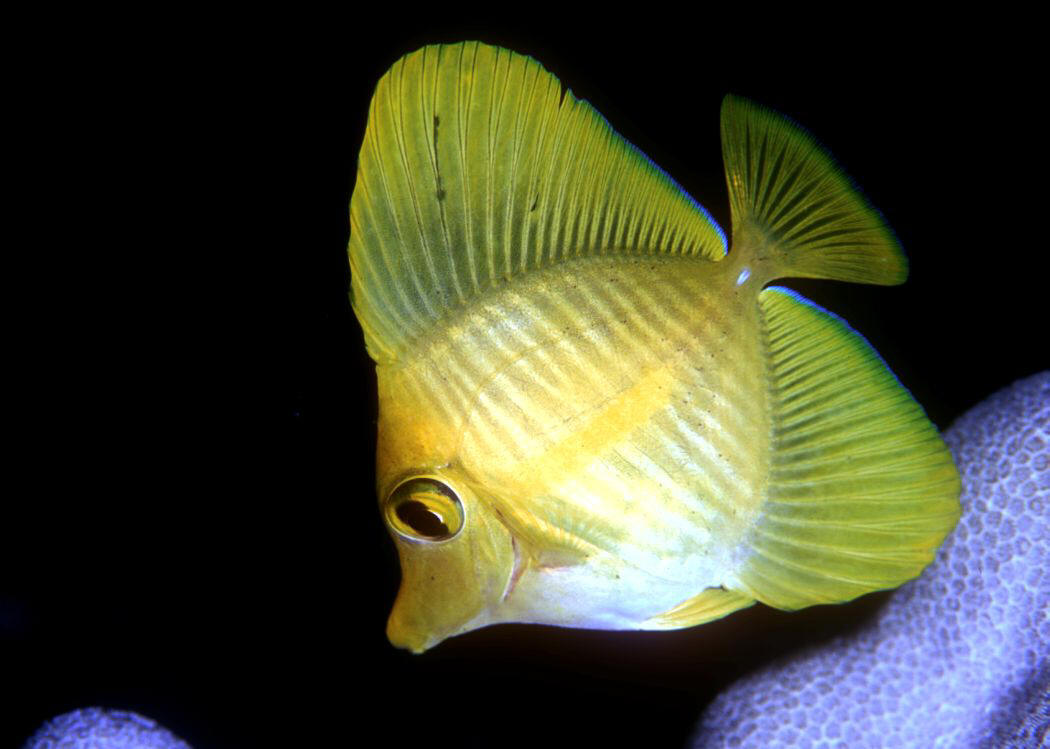
| Zebrasoma flavescens
(Bennett 1828), (lau'ipala) the Yellow Sailfin Tang. This is a
"standard" in the marine aquarium hobby if there ever was
one. Only certain damselfish species grace the tanks of aquarists
more than Z. flavescens. To plate size, eight inches, in the
wild. A one inch juvenile off the Big Island, HI. |
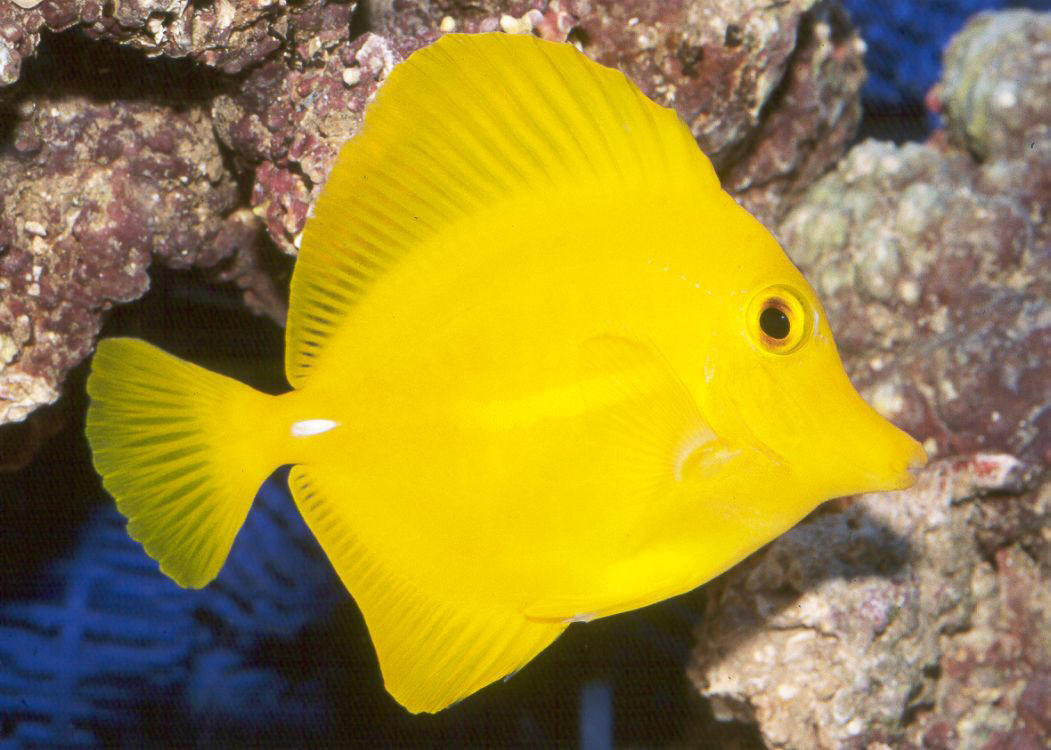 |
| Zebrasoma flavescens
(Bennett 1828), (lau'ipala) the Yellow Sailfin Tang. This is a
"standard" in the marine aquarium hobby if there ever was
one. Only certain damselfish species grace the tanks of aquarists
more than Z. flavescens. To plate size, eight inches, in the
wild. An exemplary specimen in an aquarium |
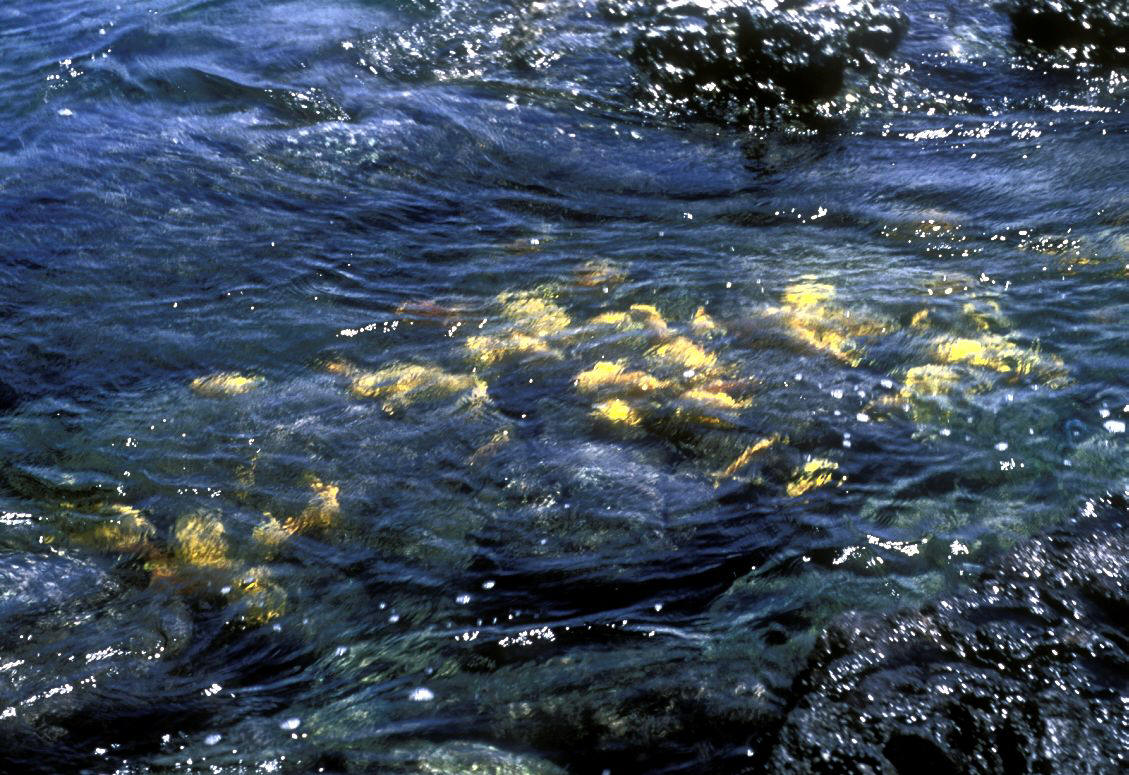 |
| Zebrasoma flavescens
(Bennett 1828), (lau'ipala) the Yellow Sailfin Tang. This is a
"standard" in the marine aquarium hobby if there ever was
one. Only certain damselfish species grace the tanks of aquarists
more than Z. flavescens. To plate size, eight inches, in the
wild. At right: A one inch juvenile off the Big Island. An
intertidal school roving in the shallows for algae, Hawai'i off
of Puako on the Big Island. |
|
|

