|
|
| Home | Marine Aquariums |
Freshwater Aquariums |
Planted Aquariums |
Brackish Systems |
Ponds,
lakes & fountains |
Turtles & Amphibians |
Aquatic Business |
Aquatic Science |
Ask the WWM Crew a Question |
| Please visit our Sponsors | ||||
FW Community Tank 7/5/14 Planted Aquarium Issues...
set-up, op.... Mis-fish-stocking 10/4/11 10 Gallon Planted Tank Question
11/22/10 Planting and fish 10/25/2009 Re: follow-up question... planted tank
planting 9/2/09 Re: follow-up question 9/2/09 Re: follow-up question, GF -- 09/03/09 Questions regarding plants.. 04/25/09 Re: Questions regarding plants..
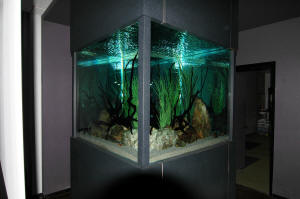
4/26/09 125 Gallon Freshwater Planted Questions, Set-up 2/5/09 Hello: First of all, thanks for the site and all the hard work you guys do. Anyway, I am setting up a 125 (72"X18"X22") gallon freshwater planted community tank with mostly HC planted amongst rock and wood. I'm thinking of trying the dry start technique to get the HC (Hemianthus callitrichoides) going very well before planting anything additional. I hope to have a bunch of tetras, a few angelfish, some bottom dwellers, and anything that wont eat my lawn :) I intend to add a CO2 system to keep all the plants nice and healthy. On to the questions: 1. Filter: After much research I'm debating between getting one Eheim Classic 2260 (502gph) or 2262 (900 gph) or two Eheim's (maybe 2 2217's @ 264 each), that would give me enough filtration for a healthy tank. Also thought about a HOB filter to augment the canister, but I'm not sure if it's worth it and prefer as little equipment hanging on the back as possible. Do you think it's better to get one very powerful canister or two less powerful ones? 2. Lighting: Most likely going the CF route. Trying to decide between a 6 X 55 (189W) kit and 4 X 96 (214W) kit to go in the custom built (under construction) hood. I think the 96 is a better bet, especially if I might want to add 2 more lights later on (for 384W). Which would you recommend? 3: Substrate: I'm most likely going to use Fluorite, as its widely available here in Chicago. Possibly Eco-Complete as well. I really wanted to go with ADA AS, but it got to be ridiculously expensive for a 125g. And shipping it was another $200. Do you think the HC will grow well in Fluorite or Eco-Complete? Would it be worth it to get a smaller amount of ADA AS and mix it with the other substrate? Should I use gravel (or sand) in addition to the fluorite/eco-system/ADA AS, putting a layer on top? I have read many accounts of that with success, but it seems the tanks I really like (with vast expanses of HC) don't use any additional gravel or sand. Thank you in advance for your help, Dan <Hello Dan. The big secret in the world of growing aquatic plants is that virtually all the species we keep are "weeds". All are adaptable, fast-growing plants compared with the sorts of things gardeners fuss over outdoors. While we certainly can rank some species as being easier than others, none is difficult provided it is given adequate light, enough CO2 for its needs, and a substrate that contains suitable mineral fertilisers. The reasons people struggle with plants are usually not because they chose one plant-friendly substrate over another, but because they did something much more fundamentally wrong: not enough light, fish that uproot the plants, insufficient CO2, or a fertiliser-poor substrate. So the bottom line for Question 3 is pick whatever substrate fits your budget. I've had fantastic growth using nothing more complicated than aquatic (pond) soil mixed with silica sand and fine gravel, and I've also had good results with plain vanilla laterite mixed with fine gravel. There may be slight differences between plant-friendly substrates, but the main thing is that they're all far better than plain gravel. I do think using a gravel tidy on top of the plant-friendly substrate makes sense, so that you can add a decorative or functional substrate as required. Catfish for example prefer smooth sand, while a dark, gloomy aquarium for Neons and Angels might benefit from a black sand or gravel. I can't imagine it would be a make or break thing for Hemianthus, assuming the top layer wasn't so deep its roots could reach the good stuff. So, the choice is yours! Now, as for Question 2, the difference between 189 watts and 214 watts is trivial, so choose whatever suits your budget and plans for expansion, if any. Your aquarium is quite deep though, so do bear that in mind when shopping. You're looking for something more or less similar to what would be used over a marine aquarium. There are differences in spectrum, to be sure, but in terms of wattage light-hungry plants are comparable with corals and anemones. I'm not a huge expert on the different types of lighting available to aquarists, and tend to use high-quality T8 tubes (e.g., Tritons) with reflectors, so would recommend that you join an aquarium plant forum if you want serious blow-by-blow discussion of one brand or type versus another. The answer to Question 1 is that external canisters would certainly be the better choice, in part because you can minimise splashing at the surface easily, and so prevent CO2 loss. Hang-on-the-back filters tend to sluice water into the tank, and that's something you don't really want. Also, as you rightly observe, canisters are easier to hide. As for choosing between filter sizes, assuming you're buying small fish, then the idea is for a total turnover 4-6 times the volume of the tank, i.e., 500 - 750 gallons per hour. How you divide that up between filters doesn't matter, so again, budget is as good a guide as any. I will make the observation that two filters will provide a bit more flexibility; you can clean one while leaving the other running for a few more weeks, and so avoid problems with losing the bacteria when you replace media. Or, you can optimise one for mechanical filtration and the other for biological filtration. Hope this helps, Neale.> ATTN: NEALE Follow up on 120 gallon setup
11/25/08 Re: ATTN: NEALE Follow up on 120 gallon setup
11/26/08 Potted plants? Attn Neale: follow-up question 8/22/08 Hello Neale, (or stand-in teammate)! <No, it's me.> I have just about completed the plan for my next system, based upon previous suggestions from you, and ideas that I have gleaned from many W.W.M. articles. I have a follow-up question or two, which I have diligently tried to answer for myself, by searching the W.W.M. site, but to no avail. Since it has been quite a while since I've written, I'll briefly review the planned setup - (most everything purchased already): -120 gallon tank (48x24x24); -Rena Filstar xp4 and (2) big Hagen AquaClear filters; -hard water, with ph of 7.5 (just hired a plumber to arrange that); -"white" silica sand as the substrate; -planned temperature of 76 degrees (F); -weekly water changes, and all other good husbandry practices; -MUCH of the decor will be "fake" wood and plastic plants; -trio of South American puffers; -large school of tiger barbs or other small barbs; <Do choose a "fast" barb rather than something dozy or shy, because the SAPs can be nippers.> -cats on the bottom, (you recommended some that would be safe with the puffers). <Corydoras certainly get nipped. But Synodontis nigriventris (inevitably!) avoid trouble and so do retiring Loricariids like Ancistrus and Panaque. You'd want to avoid anything that was either slow or had long fins, for example Whiptails would be a bad choice, as would Synodontis decorus or Synodontis eupterus.> I am considering the addition of some live plants. I have little experience with this, so I did a bunch of homework. My plan is based upon information that I've learned from your (Neale's) W.W.M. article, entitled, "In Praise Of Hard Water". Below are a few sentences that I've excerpted from that article: "However, some aquatic plants can absorb the carbonate salts and strip away the carbon from them, and use that as their carbon supply. The list of plants capable of doing this includes many that do very well in aquaria, including Ceratophyllum demersum, Cryptocoryne becketti, Echinodorus bleheri, Egeria densa, Elodea canadensis, and Vallisneria spp - all popular and easy to obtain species. If you have hard water and don't want to be bogged down with carbon dioxide fertilisation, then these are definitely the plants for you! Ceratophyllum demersum and most of the Vallisneria are adaptable and easy to keep. Vallisneria spp. are perhaps the most versatile aquarium plants, and few aquarists haven't grown these plants at some point." <Ah, yes. What's known as Biogenic Decalcification.> Okay -- so here is my question. I plan to use silica sand as the substrate. I understand that most plants/roots will not thrive in silica sand. <On the contrary: my plants seem to do very well in it! It packs down nicely, forming an oxygen-poor substrate that plants prefer. To be fair, I use the sand on top of a certain amount (say, an inch) of pond soil mixed with fine gravel. I put a gravel tidy between this mix and the overlying sand. I say "gravel tidy" but it's really just some plastic mesh bought from a garden centre. Said to be pond safe, and hence I've assumed aquarium safe too. This mesh stops catfish digging too deep and bringing the soil up the surface (which would be messy, rather than dangerous).> I do NOT desire to create "layers" of different substrates, or to mix this sand with other substrates that are better for plants' roots. <Oh.> Based upon that, is there a way that I can fill a "basket", of sorts, with good plant substrate, then place the plants into that basket, and then "hide" that basket down in the sand? <Absolutely. This works fine. The easiest approach is just to use those little plastic aquatic plant pots that come with rock-wool fibre. Put your plants in those, and periodically ram in fertiliser tablets. The results aren't perfect, but they're good enough for undemanding gardeners tackling fairly adaptable plant species. I will make the point that this is an expensive approach, not only in terms of start-up costs but also because you'll need to keep adding these fertilisers, likely every month. A good layer of pond soil will keep your plants happy for years without any fuss.> If so, can you tell me how FAR I can expect Vallisneria roots to spread? <The roots of most plants equal the spread of their leaves above the substrate. Vallisneria is no exception, and something like V. spiralis will have roots that easily run 30 cm/12" outwards from the main stem -- and that's before you factor in the daughter plants that healthy Vallisneria will produce in abundance.> In other words, what would be the minimum size for an appropriate basket? <Doesn't really work that way. You're going to put the new plant in a pot, yes, but it'll quickly out-grow that.> If this idea is not a winner, is there an alternative way to accomplish this goal? <If you want to avoid messing about with substrates, then do consider sticking with floating plants and epiphytes. There are numerous species of Anubias -- all epiphytes -- as well as Bolbitis, Java fern, and Java moss. Couple those with floating plants, and you can create a veritable jungle without any fuss or bother. Indeed, there are positive advantages: with epiphytes, you attach them to rocks and wood to create instant results, and because they're all shade tolerant, you don't need to worry about what the floating plants do. The floating plants can be left to grow wild, and in doing so will consume vast amounts of nitrate and phosphate, preventing algae problems. Floating plants are adored by most aquarium fish, which use them as hiding places, for laying eggs, and for sundry other purposes.> Thank you for your knowledge and support. Have a great day! John D. <Cheers, Neale.> Potted plants? Attn Neale: Sending my thank-you'd. 8/26/08 Dear Neale, <John,> As I have observed in the F.A.Q's and in your articles, you are quite thorough, approaching challenges from more than one angle, while never being boring. <Kind of you to say so.> I also enjoy your writing style. I am in the process of setting up (2) 120-gallon tanks, in a fashion that I would have not dared to try, had it not been for your ideas/suggestions/input. <Well let us know how things turn out!> THANK YOU SO VERY MUCH for your help. I hope you are having a great day. Sincerely, John D. <Am indeed having a great day, and its a little bit better for your kind words. Cheers, Neale.> Attn Neale: Please address follow-up plant questions 08/28/08 Dear Neale, <Hello!> Once again -- I took what you suggested, advanced my plans/equipment/stocking list a bit, and then read related articles and F.A.Q.'s from W.W.M. I am really "into" the study portion of this hobby! That study created a few follow-up questions, with which I'm requesting advice. For refreshers, I'm planning on epiphytes that are capable of biogenic decalcification, such as Java fern, Java Moss, & Anubias. <Not sure all these species use much/any bicarbonate; being very slow growing, ambient CO2 in the water will be adequate, even without CO2 fertilisation.> For a floating plant, do I understand that you recommend Indian Fern/Ceratopteris thalictroides? <Yes; this is an excellent species. Do read Bob's review of this plant here at WWM. There are numerous other floating plants that work well. The ones to *avoid* though are the ones that grow well above the waterline such as Pistia and Salvinia; unless you make sure there is ventilation between the lights and the plant, they are easily scalded and die. So stick with low-lying species such as Indian Fern and Amazon Frogbit. I also like Ceratophyllum, but it does tend to go wild and get a bit ragged unless you prune aggressively.> By the end of this email, I would appreciate it if you would recommend a good floating plant for this tank, in light of information that I provide, or YOU provide, below. Since my tank is 120 gallons -- a bit more than 24" deep -- I've noticed that on more than one occasion, you and other W.W.M. writers have indicated that the QUANTITY of light needs to be increased, because of the depth of the tank. <Correct; this is borderline for what good quality T-8 tubes will do, even with reflectors behind them. You can of course lower the water line and allow the plants to grow a few inches above the surface of the tank. This can be remarkably effective, and seeing things like Hygrophila and Aponogeton flower is terrific fun (I've kept both those plants in uncovered tanks just for this purpose). Alternatively, go with the full depth, but either add one or two extra tubes to make up for lost light, or else use higher output lights. Given your plants are low-light species, I doubt any of this will be critical either way. Since these shade-tolerant plants ordinarily do fine with 1 W per gallon, start with around 1.5 W per gallon and see what happens. Maybe go for 2 W per gallon if that doesn't work after, say, 3 months of settling in.> I'm trying to put that advice/rule of thumb into perspective, considering that you've labeled the above epiphytes as requiring "modest" light, AND considering that the floating plants will be very close to the light source. I have three options in mind for lighting. I would like to state those, and have your opinions regarding those three options. While reading my three options, please keep these things in mind: I have read the warnings about using TOO MUCH light, and don't particularly want to go down that road. Also, I plan to only use several of these plants, (NOT dozens), to enhance the appearance of the tank, and to make the fish happy. <Most fish prefer no light at all!> I intend for this to be a "fish" tank, as opposed to a "plant" tank. Option #1: I purchase the Nova Extreme with (8), 54-watt T-5/HO fluorescent tubes. I can get a good price on one right now. If that is a bit much on the light quantity, perhaps I could have one of my timers turn (4) of those bulbs on for 12 hours, while a second timer turns the other (4) bulbs on for only a brief period of time during the day. If I use that approach, I would need to know how long those (4) bulbs should be turned on. <Suspect this will be overkill, both in terms of lighting and costs. Remember, too much light can cause algae to smother slow-growing plants. Mind you, the floating plants will cut out a lot of it. So it rather depends on how much plant life you'd like at the top of the tank. It's worth stating that the long roots and bushy leaves of floating plants can look amazingly effective in quantity, and don't seem to cause problems re: oxygenation, possibly because they're releasing oxygen while they photosynthesise. So, if you can get a good price on this system, by all means go for it, though definitely moderate the lighting with timers to find a balance between growth and algae. Some algae is good, but too much is bad.> Option #2: I use a compact fluorescent fixture that I already own, which has (2) 65-watt tubes. <Would certainly be tempted to go with this first and see what happens. Do use good quality tubes (e.g., Tritons) and put reflectors behind the tubes. Of course it might be slightly too little light, at about 1 watt per gallon, which even in a 12-15 inch tank would be adequate rather than generous lighting.> Option #3: If option #2 is a bit weak, I could still use that fixture, but add a second light fixture, that contains (3), 32-watt T-8, Vita Lite tubes. <Sounds a worthwhile Plan-B. Do balance set-up and running costs with Option 1 though. Having too much light, but cropping it to 10 hours/day and then stocking lots of floating plants would *probably* work best. But this third option could work well too.> Next question: With the T-5/HO and the compact fluorescent options, I see that 6700K tubes are available. Is that close enough to the recommended 5500K to 6500K range? <Should be fine. Plants adapt to pretty much anything. They aren't like Corals in the sense of needing very specific wavelengths of light to thrive. Plants just want plenty of light in the red and blue spectrum, but apart from that, aren't picky.> Final question: With the specific plants that are mentioned above, (and relying upon biogenic decalcification), do I need to be concerned about air/water mixing, creating bubbles, and/or disturbing the water surface, and the effect(s) of these upon CO2? <Likely not. Slow growing plants have zero effect on water chemistry; your weekly water changes should take care of everything, assuming you have at least a reasonable amount of carbonate hardness. Floating plants, particularly above the surface species, use CO2 from the air.> If it's not a problem, I would like to have the option of using air stones, etc, but I won't do it, if it's going to prevent the plants from thriving. <For the same reasons, shouldn't matter. Slow-growing plants aren't growing fast enough to be fussed, and floating plants don't care.> I think that is all. I am ready to purchase the light fixture -- in fact, the sale is going to end soon. I very much appreciate all of your guidance and patience. Thank you for your time and attention. Cheers! John <Hope this helps! Neale.> Re: Ceramic media, air pumps, planted tank set-up 1/27/08 Neale, <Giuseppe,> while still in planning mode for my 46-gal tank I have some more questions for you. I was thinking about the following plan: 1) Use a mix of fluorite (bottom)/fine gravel (top) or laterite (bottom)/fine gravel (top) or Eco Complete (bottom)/fine gravel (top). Please tell me if that would be ok and which one of the choices would be the best in your opinion. <All can work well. All are better than plain gravel. The big secret with plants is to get the lights right first, CO2 second, and substrate third, in that order. I haven't personally used Eco Complete, but I know a lot of people swear by it. I have used laterite though, and found it to be an excellent plant substrate. Really, go by what appeals to you. When it comes right down to it, the lights and CO2 will have a greater impact that choosing between any one of these substrate options, since all three of them are basically sound.> 2) Place rocks and driftwood <Yes, but check the driftwood, and decide how much, if any, you want to use. Driftwood turns the water brown, and that cuts out light. It also lowers the pH. Over time it decays producing a lot of gunk at the bottom of the tank that needs removal. While driftwood can look great, I'm personally moving towards sticking with rock in planted tanks. There's some variation in quality: Mopani wood seems to be particularly long-lasting and clean.> 3) Plant the aquarium with fast growing plants only, which I would place in the back and middle ground <Keep these at the back. Hygrophila and Vallisneria and Cabomba are precisely what you want at first to get the algae situation sorted up front. But they spread, and they can take over an aquarium. Life is a lot easier if they're safely ensconced at the back of the tank where you can trim them without needing to uproot them. In the middle ground they tend to be a nuisance. Save the middle for slower growing specimen plants. Crypts, Echinodorus, and so on. This will give them room to spread without blocking the front of the tank, which is where the fish will mostly be swimming (hopefully: if the fish swim behind the plants where you can't see them, it's kind of a waste!).> 4) Use part of the filter media and some gravel from an established tank <Yes.> 5) Do a fishless cycle <By all means.> 6) Add fish to the mix <Yes.> Do you think that this plan might work? <Yes, beautifully.> Which one of the substrate choices would you recommend? I don't want to make a mistake with the substrate, which would be impossible to fix once the tank is established. <Doesn't matter that much, and ultimately you'll be replenishing with fertiliser pellets anyway. I use plain pond soil under sand or gravel and have reasonable success. What really matters to plants is that the substrate is slightly oxygen-poor, so the iron and other metal ions are in their reduced rather than oxidised state. Beyond that, they don't care. Heating cables go in and out of vogue for planted tanks; do read up on them and decide for yourself.> Regarding the use of gravel from an established aquarium to boost the new tank cycle, I remember you told me that the gravel is dead in terms of good bacteria due to lack of oxygen. <Plain vanilla gravel is indeed basically bacteria poor. It's better than nothing, but not by much. Oxygenated water doesn't travel far through a static gravel bed. Gravel from an *undergravel filter* on the other hand is a thing of beauty, and can be used to see new undergravel filters very effectively.> Is this true or you recommend using some of that gravel placed in a bag to cycle the new tank along with placing some mature ceramic media from the old tank? Consider that I also put an air stone under the gravel of the established tank to give it some oxygen. <Taking filter media from one tank to another tank (of similar water chemistry) works extremely well, and is called "cloning a filter", and this is what I (and I assume most other experienced fishkeepers) do. It's 100% reliable, requires no run-in or cycling period, and is effectively zero cost. A mature filter (i.e., one that's well over the two or three month start-up period) can stand to lose up to 50% of its media without any problems with water quality. Of course, if you install live media in an aquarium without any fish, those bacteria will die off without a source of ammonia, so you must either add fish right away, or keep the filter going by adding a pinch of fish food each day.> Thanks for your help, Giuseppe <Hope this helps, Neale.> Re: Ceramic media, air pumps 1/27/08 Neale, <Ave,> thanks for your prompt reply and, as you may have expected already, I have few additional questions. 1) Substrate. I got what you told me and I just read that some people recommend the use of Soilmaster Select in addition to laterite, which seems to be a pretty inexpensive solution. Do you think this combination would be fine? <It's all good. As I say, all the "pro" substrates are good, and likely to dramatically improve the health of your plants. Since even the best one runs out of nutrients eventually, you're going to be topping up with fertiliser tablets anyway. So choose one that you like, and that suits your budget. Lights and CO2 are far more variable in quality, and far more important in terms of success, so worry about them first.> 2) Light. I bought a compact fluorescent kit that would provide 130W of lights (i.e. 2.8W/gal) <Sounds good.> 3) CO2. - Is it required since day 1 or it will be required only when the tank is heavily planted? <Best used from Day 1, since if you want the plants to settle in, you may as well give them good conditions to start with. You need to get the fast-growing plants in the tank from the start to prevent algae issues.> - I saw different products, from inexpensive solution using yeast in a plastic bottle to expensive ones including CO2 rechargeable devices and CO2 regulator. Which one would you recommend? <Each has Pros/Cons. Yeast systems are cheaper, as you say, but less easy to control. They're safe though, because you're unlikely to add too much CO2 (which is harmful to fish). Electronic pressurised CO2 systems especially are much more accurate at keeping a constant CO2 level in the tank, but they're expensive. There's also the risk of overdosing (mostly an issue with manual pressurised CO2 systems, but if the electronic systems aren't maintained properly, can happen with them, too). There's no harm starting off with a yeast system, and then upgrading down the road if you want to. CO2 is CO2 wherever it comes from, and the plants aren't fussed. All they want is a certain amount in the water proportional to the pH and carbonate hardness.> 4) Filter media. During a fishless cycling would the ammonia that I manually add to the tank enough for the bacteria living in the mature ceramic media to survive? <Yes. NH3 is NH3 whether it comes out a bottle or from a chunk of rotting prawn.> Sorry to bug you so much, but I feel I'm getting there with your help and I really want to do things right with this tank. <We're happy to help.> Thanks!!! Giuseppe <Cheers, Neale.> Planted tank question... set up, Ram spp. sel. -- 10/28/07 Hi there, I have tried researching in the forums for info and couldn't find specifics. This website is great by the way! I just got a 29 gallon tank that I would like to setup as a planted tank eventually. Due to financial costs I have to get the equipment a little at a time and purchase the plants at a later date. I wanted to know: 1) Can I put 2 inches of Eco Complete with 1 inch of aquarium gravel on top, on the bottom and then begin to cycle my tank without putting plants in it right away (for a few months)? I am wondering if any nutrients leak out of the EcoComplete causing things like algae growth and if its necessary to put plants into right away.. <Hmm... I think you'd need to plant right away or else algae certainly will take advantage of the good conditions in the tank. If you're limited on funds right now, some cheap fast growing species like Cabomba, Elodea, Hygrophila and Vallisneria could be pressed into service. These would keep the algae at bay, and could be replaced in due course. Alternatively, floating plants could be used and then thinned out once you start serious planting. It's hard to fault Indian Fern, Ceratopteris cornutus for this. It's cheap, hardy and practically indestructible.> 2) After my tank is cycled I would like to put in a pair of either German Blue rams or Bolivian rams, are they ok with just either no plants/fake plants in the interim? Will they die if they have no live plants around? <As far as commercially bred fish go, they couldn't care less. They are commercially spawned in practically empty tanks with little more than flower pots for shelter and some floating plants above for shade. What cichlids don't like is bright light. So they do need shade and hiding places. But beyond that, real or man-made makes no difference.> 3) I've read so much conflicting info on Germans or Bolivian rams...your personal opinion, which is better personality/hardiness wise? <Mikrogeophagus ramirezi (including the "German blue" variety) is hugely variable in quality. You get what you pay for. Cheap stock is often only brightly coloured because of heavy use of hormones and colour-enhancing food. Once you get them home, they gradually fade away to drabness. Internal bacterial infections seem to be rife among them to, and again, it's the use of antibiotics on the fish farms that keeps them alive, and once they hit the retailer's tanks, they gradually weaken. Wild Mikrogeophagus ramirezi are expensive and not widely available, but they are much more consistent if given precisely the right conditions: very warm (~28-30 C), soft (< 10 degrees dH), and acidic (pH 5-6) water. Mikrogeophagus altispinosus (the Bolivian ram) is altogether a hardier fish simply from the get-go, and while quality varies, these fish are never quite so poor as Mikrogeophagus ramirezi. They are also less demanding in terms of water chemistry, requiring average temperatures (25-28 C) and neutral to moderately hard water. Given that relatively few aquarium plants like the conditions favoured by Mikrogeophagus ramirezi, Mikrogeophagus altispinosa definitely makes a better all-round choice, though this will of course depend on your local water chemistry.> thanks so much and keep up the great work! cheers Terri <Hope this helps, Neale> Tank set up, FW, planted... 7/22/07 hi all what a great site and with so many vastly experienced aquarists it is a joy to research on here ;) I have a 75 gallon tank 90x80x40 gravel substrate about 20 real plants five nice pieces of bogwood and 12 Rummynose tetras , 5 Glowlights , 5 gold tetras , 6 neon tetras , 2 ram barbs , 1 scribble Pleco and last but certainly by no means least my bamboo shrimp. I run a Fluval 405 external filter , a 300 watt Visitherm heater , arcadia over tank Luminaire t8 with 2x 25 watt lights one for plant growth , and a AquaClear powerhead for some extra current , does this sound ok as I have set this up over the last couple of months by just researching on the web. <Sounds very nice indeed> open to any ideas to help me on my way as I'm new to the hobby and I am totally hooked excuse the pun. anyway many thanks to you all and keep up the great work. Mickey <I say, "keep on keeping on". Bob Fenner> New 46 gallon bow front. Planted tank set-up... 7/20/07 Howdy Crew, Hiya Robert - Jorie here this beautiful Chicagoland afternoon...> Love the web site, have already spent several hours reading on it and searching it but of course every situation is different and I didn't find anything that fit exactly my situation. <Yep, always a different fact or two that can change the dynamics of things...> I had a little trouble with a 12 gallon fish tank, broke while washing it. <I just did this recently with my 10 gal. quarantine tank. Not fun.> I moved the Betta from it to another 8 gallon tank, but decided the 6" Pleco needed a better home. <Agreed. Hopefully the Betta is in a filtered and heated tank?> So, off to PetSmart I went and came home with a 46 gallon bow front tank. <Very nice - we've got the same one at home as a saltwater setup.> The Pleco meanwhile was hanging out in a way to small 2 gallon bowl with a bubble stone. He sure isn't happy. <No, I would imagine not. That's pretty much the equivalent of a human being locked inside the bottom of a port-a-potty...> About the setup: 46 gallon bow front with 3ft florescent T8 (I think 32 watts, but it isn't marked) <Important to figure out, so you can calculate wattage per gallons, for the purposes of figuring out what plants you'll be able to keep...> 44 lbs of tiger-eye stones 1/2 the size of golf ball with some pea sized rock under it to give more surface area <You may want to consider mixing in some Eco-Complete or Fluorite, since I see you intend to plant this tank. The three most important things to consider when setting up a planted aquarium are lighting, substrate, and nutrients - check out this article: http://www.aquariumplants.com//Articles.asp?ID=111 > Fluval 305 canister filter (carbon in 3 trays, rock in 3 trays) bubble bar <Pretty, but not necessary> 150 watt heater 100 watt heater <Redundancy is good with heaters - great idea.> Aquarium salt (8 teaspoons, should have been tablespoons but I misread, but didn't add more after reading some fish don't like salt at all) <In such small dosages, most fish won't mind at all, and some will benefit from the use of aquarium salt. There's different schools of thought on the subject, but generally, I believe in the one that says a little bit can't hurt, and can only help strengthen immune systems, etc.> Stress-coat (as directed on bottle) <Not necessary, in my opinion...> Stress-zyme (as directed on bottle) <Also not necessary, in my opinion...> A mystery plant I have had for about 7 years in the bowl (picture attached), if you can identify it I would appreciate it. <Sorry Robert, I don't see an attachment. Try poking around on www.aquariumplants.com and see if you can figure out what it is from the pictures they've got...I generally trust their IDs.> Seems to be a long stem that is happy both above and below water. <Doesn't narrow it down a whole lot...> It was originally in with a Betta I rescued from my mother, water so thick and green I didn't see how a fish could be in there. It lived 2 more years once I put it in clean water. <It's my personal "mission" to rescue as many Bettas from poor homes as I can...I applaud you for doing this!> Two heaters because I live at 9000ft and it gets much cooler where the tank is in winter so from reading I come up with 3~5 watts gallon. <Never a bad idea to have a backup heater in a tank...> I am on my own well, so no chlorine to mess with. If I did the water tests right I have PH 7.8, Iron 0.1ppm, KH 4, and GH 11. All the ammonia and nitrates are undetectable. <Hopefully no nitrites either.> The aquarium has been running stable at 78 degrees and empty for about a week and I am ready to start a few fish. <I would heartily recommend using the "fishless cycling" method...add just a small pinch of fish food daily and allow the ammonia, nitrite and nitrates to spike, then return to zero, respectively. Should take 3-4 weeks in total if you don't do any water changes. Of course, that can't be done with fish in the tank, as all the above-mentioned toxins will harm and/or eventually kill the fish... Do see here: http://www.wetwebmedia.com/FWSubWebIndex/fwestcycling.htm > Anyway, eventually I would like to end up with FW Angel fish, or something else equally pretty and some live plants but not overgrown. Which begs the question of what kind of starter fish and how many to use other than the Pleco? <I am absolutely 100% opposed to cycling a tank with fish. It's cruel and unnecessary, in my opinion. Not to mention so many times people use "hardier" fish, then end up with fish they really didn't want to stock their tanks with. Try the fish food method instead.> I've read recommendations for anywhere from 1 to 12 starter fish depending on tank size, the only thing I can figure out from all of that is one small hardy fish per 10 gallons of water, depending on the fish and if they require company. <Again, please do not cycle the tank with fish. There's really no need to.> I have read many web sites (a couple of basic books on order), and talked to several people and of course I get conflicting answers. Some recommend Gourami, others recommend Barbs and still others Danio. I like the Gourami and the Danio, but don't want to fill up on types incompatible with Angels. <See above.> Plant wise I am thinking Java Fern and the mystery plant from above along with some others that will fill in and be ok with moderate light. <Keep in mind that the more plants the merrier, in terms of helping combat algae. You may be able to get away with most species of Anubias plants, also; they are slow growing, generally speaking, but pretty hearty and beautiful, in my opinion. Also, as to Java Fern, this plant usually does best when secured to driftwood or rocks in the tank; it's one of the few plants that doesn't require substrate. So, you'll have lots of room to add substrate-needing plants! Take a look at Peter Hiscock's Encyclopedia of Aquarium Plants - very useful information in setting up a planted tank. Maybe something tall along the back wall, not sure yet. Any suggestions or problems here? Do I need more light? Smaller substrate? Do I need to add Iron? (Still researching plants, so if you have a good beginner book to recommend, I am happy with that) <I do recommend Peter Hiscock's - see above. Generally speaking, yes, fertilization is good - can be done through liquid or substrate tabs, or both.> Any help would be appreciated, Robert Golden Colorado <Hope I've helped. I'm happy to check in with you as the cycling process continues, and as you set up your plants and eventually, stock the tank with fish. I'm here to help - send your questions this way, if you like! More importantly, keep on reading - the more, the better. Kudos to you for doing your research prior to just "doing"! Best regards, Jorie> Planted Tank ... set-up, maint./op. 3/7/07 Hello Crew, <Hello, Brandon here tonight.> I just started a 20 gallon high planted tank and it seems to be doing ok, but not the greatest. The pH is around 7.4-7.5, phosphate around .10-.25, nitrate about 4-5 and both nitrite and ammonia 0. I have 2 angles in it along with 4 Otocinclus and 10 cardinal tetras. I believe I have too many fish is that correct? <Yes.> I am in the process of moving a few, probably all of the cardinals. <I would remove the Angels, and about three of the Cardinals. The Angels need a bigger tank. They can get quite large. Stock based on adult size, not the size they are when you buy them.> I have 3, 15 watt fluorescent bulbs, 1 flora-glow and 2 CoraLife Trichromatics, so that gives me around 2.25 watts per gallon. <Need more light. I would get a Power Compact fixture with two 40 watt full spectrum bulbs. If you don't have a background on the tank, add one this will help keep light from dissipating.> I do not have any nutrients in the soil which is probably a mistake <Yes.> but I was told running peat in the filter gives off a few nutrients, <It would be better placed under the substrate.> so I am doing that. I do water changes about 1/4 every 2 weeks. <Try 10% once a week.> I have a few species of plants including: Java fern, Anubias nana, some Cryptocoryne spiralis and wendtii, some hornwort, a couple bunches of dwarf sags, and a little wisteria. <A good deal of plants that need bright light.> I add in CO2 by using the yeast and sugar water formula in a soda bottle. My problem is that whenever the Cryptocoryne leaves emerge, they soon disintegrate and just clog up my filter, <This could be an Fe deficiency, or possibly Mn.> nothing seems to be growing much except the hornwort and the wisteria (except the bottom leaves all got brown and fell off so now there is only the tops that have leaves). <They need more light.> What nutrients should I add? <Chelated Iron (Fe), Manganese (Mn) careful with this one it can cause brain damage in too large an amount, Potash (K2CO3), and Co2, which you are already adding with the reactor.> Should I add in liquid or tablet fertilizer? <I have used Miracle Gro peat by mistake before with really good results actually. Didn't hurt the fish either.> I heard of laterite <Good stuff. Holds nutrients.> but I also heard it can be messy if you use it in a tank that is already established. <Sometimes it floats.> Sorry for the long email but I am not sure what nutrients to add in to get my leaves developing fully and quickly. <Please see above, and check out, http://www.thekrib.com.> Thanks! <You are welcome. Brandon> New Set up 125 gallon planted tank. - 02/09/2007 The tank is 48"L x 24" deep. I have a Eheim 2250 canister filter (2) 950 power head, Water heaters etc. It is now time to buy light fixtures and CO2 injection system. I am a rookie whose only experience has been fooling with a 10 gallon the past year and reading as much as I can on the subject. <Good to have some practical experience> The more I read the more confused I am. I want lush grass type plants out front and some Swords in the back with Anubas. <Mmm, Anubias, not the Egyptian god> I wish to float some hornwort. This will be a community tank of Livebearers , Black tetras, some dwarf gouramis and some cichlids if possible. <Small/Dwarf ones of the last> I wish assistance with choosing the fixture type for my lighting scheme and some help/advise with CO2 injection. I am in no particular rush in setting up/cycle the tank. I have no money to waste in these final steps but I want the best bang for my buck. <Good> please make your suggestions easy to understand. Do you have any suggestions/preferences for stocking at plant time. <Oh yes> I plan to use 2-3 inches of Eco-complete substrate mixed with a bag or two of fluorite. <A good choice... is what I use> Fred Jordan <Please read here: http://wetwebmedia.com/PlantedTksSubWebIndex/AquariumGardenSubWebIndex.html The articles and FAQs files on Planted System Light, Lighting... CO2... Bob Fenner> Lighting on 40 gal tank & co2 1/26/07 Hello, <Hi there> I have decided to make the leap from artificial to live plants. After many unsuccessful attempts at fish keeping over the years due to lack of understanding and knowledge of what it takes, I am happy to say that I have had a thriving tank for the last three years. <Congrats!> You should have to pass some sort of training course before going headlong into buying an aquarium and dumping fish into it. <Or life itself IMO> Just kidding, but it kills me to see other unsuspecting people in the LFS do just that without any guidance from the store employees at all. Anyway... I wanted to make sure that I could manage one type of life form before trying another, hence the live plants at this point. There are so many different types of bulbs and so much information out there about lighting that it is overwhelming sometimes and makes my head hurt. So if someone could give me a little guidance I would really appreciate it. <Okay> I have a 40 gal. tank, 36"L x 18"H x 18"D. Currently, I have 1 30W Flora-Glo 2800K, and 1 30W Aqua-Glo 18,000K lights on the tank. I don't have any CO2 system yet - I would like to get the whole automated kit-and-caboodle CO2 setup, but don't know if I want to invest that kind of money on an experiment. <And no real need at this point> I could try the various other methods, DIY, etc. but am concerned about Ph fluctuations and how to guard against them. Any ideas on appropriate lighting for my tank and any words of wisdom on a starting CO2 setup would really be appreciated. Thanks, Kathy <Sure. Please read here: http://wetwebmedia.com/PlantedTksSubWebIndex/lightingags.htm and the linked files above. Bob Fenner> Setup question for new freshwater planted aquarium 1/19/07 I am starting to purchase all of the equipment I will need for a 46 gallon planted freshwater aquarium. My first question is specific to filtration... I am looking to purchase one of the Eheim canister filter products and I am hoping that you can make a recommendation on the model/size as well as the necessary media and the order in which it would be loaded into the canister. I have done some research and am having a difficult time making a selection based on the fact that stated flow rates don't necessarily equate to actual flow rates once distance into account and that fact that the water has to flow through the media. <Mmm, these are pretty close to stated> I was also wondering if you have thoughts on any of the units that incorporate a heater as to the effectiveness and reliability. <I would go with one a bit oversize... in the Profesionel II series... maybe at 2026... stacked with the media provided... http://eheim.com/pro2.htm> My second question which I find differing opinions on is the use of CO2 (necessary vs. not necessary) <Is a necessary item, but not necessary to provide... given a mix of fishes, perhaps invertebrates, their metabolism... plants of density and type, not over-ly illuminated circumstances... can/will be provided> and then if necessary is it easy enough to go with a simple setup (regulator, drip counter, reactor, timer) or is it better to fully automate it with a pH controller/regulator/reactor/etc? Basically is it worth the additional $250 or so to fully automate the process (I realize this is largely a matter of opinion so I am curious of your thoughts)? Thank you, D'Wayne <Is worth considering, but not absolutely necessary... If you have time, patience, a gorgeous planted system is attainable, sustainable w/o supplementation... Good to perhaps experiment for a while with a DIY "pop bottle" generator... see if you like the results. Do bear in mind that other factors, e.g. the aforementioned light... fertilizer, other rate-limiting material need to be provided, balanced... Bob Fenner> 29 Gallon Tropical Freshwater Setup 1/16/07 Hi to the Crewperson of the Day, <Sassie> I've got a 75 gallon saltwater tank and now I'd like to try my hand at a planted freshwater as well. I know most people do fresh first, but I usually do everything backwards... at any rate, I'd like to plan this tank more carefully than I did my saltwater tanks (I do learn, albeit slowly). I've been reading your FAQ's and some books that Jorie recommended and think that I have a plan- but I'd like to run it by one of your crew: <Okay> I've got a 29 gallon tank and stand, and a Rena Filstar XP3 that I was planning on using for filtration. It was briefly used for a saltwater tank, but I think I'll give it a good cleaning and it should be fine for freshwater. Filtering media will be the standard Rena Filstar stuff - bio stars / rings, sponges of differing pore sizes, charcoal or Chemi-Pure (and should I put Polyfilter in there too?). <I would leave this out... removes too much in/with planted tank settings> I'd like to use the existing light hood that I have, which is a Current Dual Satellite Lamp- 65 watt 2-lamp with lunar light (Dual Daylight 6,700/10,000 K and Dual Actinic 420 Nm/460 Nm). <I would switch out the actinic for more white...> Not sure if the lunar light is useful, but it's already built in. Heat source will be a Visi-Therm 100 watt Stealth heater, I believe will be set at 78 degrees, but it depends on the fish's needs. <Yes> Substrate is 30 pounds of Fluorite (can't believe how long you've got to rinse that stuff), and I've got a couple of pieces of artificial driftwood that I'll plop in there. <Keep your eye on this... the pH... some kinds can/do dissolve too readily...> Because I'll only have dual 65 watt bulbs, plants will be mostly Java Moss, Java Lace Fern, and Anubias nana (any other low light plant recommendations are welcome). <Please see WWM re> I prefer to not have to supplement the tank with anything on a regular basis... at any rate, nothing that requires as much fiddling as the reef tank. Depending on the needs of the fish, I can either use our hard tap water (dechlorinated) or R/O water. I would prefer to get plants that do not require CO2 supplementation. <Can be done... w/o CO2, chemical supplementation...> I would like to get 10 or so Cardinal Tetras, a few male guppies (don't want any fry to either raise or see getting eaten), and... the rest is undecided. My rough setup time line is planned as to the following: Set up substrate, water, filter, heater, driftwood-- feed tank a pinch of fish flakes to try to start cycling -- approximately 3 weeks later (or when tests show no ammonia or nitrate), add all the plants at once & turn on lights. Two weeks later, add first fish -- 3 Cardinal Tetras- when no ammonia or nitrite shows on tests, add next fish - 3 more Cardinal Tetras -etc.- until I've fully stocked the tank according to 1 inch of adult sized fish per gallon. I'm not interested in the larger, more aggressive fish, so as far as I have read, this formula should work. My goal is to keep this as simple as possible- I will do weekly water changes and testing, and will do whatever I need to do to keep the fish happy, but I don't want to make myself craz(y)(ier). <Heeeee!> How does this plan sound? Please give me any constructive :-) criticism that you see fit... <Should work out... I'd be planning on some small scavengers, algae eaters... Likely Corydoras, Otocinclus catfishes> Thanks again for this AWESOME resource that you make available to us (for free!), Stephanie D. <Welcome our friend. Bob Fenner> Plant Tank Pep Talk 8/28/06 Hi my name is George. I have a few questions about my tank. I have a forty gallon long. Excellent lighting and good filtration. It is very well planted ( Swords and Anubias), has driftwood and rock work. I included a substrate for the plants, but the leaves don't seem to be doing so well. I have 1 blue/German Ram, 4 Candy cane tetras, 3 panda Cory, and two angels. I still intend to purchase a Mango Pleco when funding is allowed. All the fish seem to be doing well, but the ram stays hidden and his gills are moving rapidly, like its out of breath. The pH is 7.2 and the temp is 82 degrees. I use Black water extract and a liquid fertilizer as my only chemicals. Could you please give some give some feedback on what could be done to improve the nature of my tank as a whole. < Anubias don't require bright light but don't grow very fast either. Swords need medium to bright light in the right wavelength. The lights should be around 6500K. Old lights may wander from this wavelength and need to be replaced. The blackwater extract darkens the water and reduces the light getting to your plants. The rams sound like it has gill flukes. I would isolate the fish and treat with Fluke-Tabs.-Chuck> Revamping tank for plants, south Americans... Read 8/4/06 Hey crew! <Sarah> I've had an eclipse 18 gal tank going for quite some time now (over a year) and am thinking about redoing it. I wanted to change the gravel out to make it more natural and at the same time was going to make it planted. My original plan detailed just laying peat underneath, but now I am thinking of a peat/soil mix with about 50% peat. Does this sound adequate? <Mmm, yes... you might want to consider how you'll keep the soil down...> I keep seeing mixed opinions on whether you should put actual dirt underneath the gravel. I am not planning on going all out with the plants such as adding carbon dioxide, more lighting, etc, but would like what plants I do put in to look nice. <Please read here: http://www.wetwebmedia.com/PlantedTksSubWebIndex/soilags.htm and the linked files above> Now after this change I was planning to keep the couple of mollies <... don't "like" soft, acidic water...> I have in there right now in the tank to maintain the nitrogen cycle. Then I was going to add some of the plants I already have, then switch over the fish I'm keeping, all of this over a period of several weeks. I really want at least a pair of German blue rams, a pair of dwarf blue gouramis, and possibly an angelfish. <Might become too large, "mean" here> I do not have my heart set on the angelfish, especially as I'm not sure it's mature size will do well in my tank. If I do not get it, how many rams and gouramis could I keep? <Posted... on WWM> There will also be a couple cleaner fish, the couple of Otos I have and maybe a dwarf Pleco since my Otos are not keeping up with the algae. How's the stocking density sounding? <Chancy depending on what species of Loricariid> Only a couple more questions. First of all I had heard you could use super glue in aquatic applications and wanted to build a small cave out of river stones with it. <There are better adhesive choices... see WWM...> I would still boil it when done, but I think this would look really nice in the set up I'm planning and any lower level fish I get would probably appreciate it. Also, the water I get is really hard and the pH is high. I had heard adding peat to the filter flow would help to balance this? <Can... also posted> I am trying to avoid chemicals and add natural buffers. <There are only chemicals, space and energy in this universe> Would more driftwood help with this as well? <Also...> I would especially like to lower these considering the fish I am wanting. <Keep reading. Bob Fenner> Thank you guys for your patience! I hope this tank turns out as well as it looks in my mind! Sarah Making the Switch - Reef to Planted Freshwater - 05/19/2006 Good Afternoon, <Well, good morning, now.> Forgive me for my ignorance, but I am normally a saltwater/reef guru of sorts. But I am in the military and have recently moved, and in doing so, I plan on starting my tank back up, but I want to do a planted tank this time. <Ahh! Fun!> I have done as much research as I can, but with these questions I cant find anything definite (so I will ask the experts). I have a 50 gallon acrylic aquarium with a wet/dry trickle filter rated for 175 gallons (overflow max. 600 gallons). 1) Some say that trickle filters are not appropriate for planted aquariums? <I do generally agree. FAR too much gas exchange.... plants might starve for CO2, and you could end up with serious algae problems.> 2) Also I've heard that the sump pump for a wet/dry trickle filter should never exceed the max. rate of the overflow, in doing so there is no need for balancing the return rate, but once I changed my U-tube to a SLIGHTLY smaller U-tube and my overflow wasn't able to keep up, or maybe it could have been something else I did, does the U-tube size matter (problem is I only have that smaller U-tube and I need to purchase a new sump pump, and I don't really know how to rate my overflow for what pump I may need with the smaller U-tube)? <One option is to use a valve to decrease the output of the pump.... but better to get a pump that won't be too powerful. Better still to consider a good canister filter, or some other option that will not give you too much gas exchange.> 3) Also I will not be using my 250watt halide lighting, and I don't want to spend a lot for new lighting (instead a kind of DIY kit), with a little research I found these new spiral CF bulbs available. I planned on using either 2 85 watt or 4-42 watt bulbs 6400K, 85 CRI, 5300 Lumens. Very little info on them as far as aquarium use, what are your thoughts on them? <Do you mean the type for household use? I imagine these would be functional, but I really don't think I would use them for an aquarium. I do not know how well they'd work out for you.> Also for my 50 gal. how many bulbs or what would be your alternative to my lighting dilemma? My aquarium is 36"L X 18"D, and I was only going to use low-medium lighting required plants (Amazon Swords, java ferns, Cryptocoryne wendtii, etc. <My personal preference would be T5 fluorescents, but mainly only because I really like the look of the light from them as compared to that of power compacts. Another source I'd like you to refer to regarding both filtration and lighting (among many, many other things you might want/need to know) is a book called "Encyclopedia of Aquarium Plants" by Peter Hiscock. You'll find that this is a very valuable reference.> Any help will be appreciated greatly, please respond to this email address: XXXX <Done.> Thank You for your time, -Michael <All the best to you in your planty endeavor, -Sabrina> Starting A Plant Tank 4/30/06 Dear WWM Crew, My name is Shawn. I live in Salt Lake City, Utah and have read tons of articles on your website, and really appreciate what you've done here! I have been keeping basic fish tanks for several years, and lately decided that I want to get into planted tanks. So I recently purchased enough Fluorite to fill my 55 gal tank (which took about 5 hours to wash thoroughly!), and 2 shop lights from Home Depot which I fastened together and hung 6 inches above the water's surface. I have 4x40 watts of Phillips Natural Light (5000K, CRI 92, 2200 Lumens) for a pretty decent light setup if I say so myself (It only cost me $35 for my entire light setup, which gives me approximately 3 watts per gallon). And just for the record, I also have a CO2 system. At any rate, I will get on to my real question here in a moment. It's just that I really appreciated all of the details that other people put into their emails. It helped me learn so much. Here's my "conceptual" problem. As is the case with most people I'm sure, our tap water here is very hard. In fact, my tank water GH reads at about 500 ppm! I heard that Fluorite may also have a tendency to increase GH. < Not really.> The plants that I want to put in the tank such as "Glossostigma" thrive in softer water from what I've read. I don't particularly want to go buy an R/O system to mix in softer water. I already have a portable water softener that uses ion exchange; however, I am a little worried that the excess sodium will cause the plants problems. Is this the case? < Excessive nutrients can have an effect on plants and prevent them from uptaking other nutrients.> I also heard peat moss can lower GH, but only mildly. < Peat moss will absorb some calcium in the water but will leave the water brown and impede light from making it down to the bottom of your tank.> What is your expert opinion? If I was to use R/O, would I have to add more supplemental nutrients to the water? I would really like to just use my portable water softener, but I remember Bob mentioning something about salt in the aquarium is bad for plants? < Glossostigma is a very difficult to grow plant even for the experts. In hard water your CO2 will be combined with the calcium in the water to form calcium carbonate and the CO2 may not be available to the plants. I have found that plants do better with a 6500K light, R/O water with a buffer added. You could try a combination of r/o and tap water depending on the species of plants you are attempting to grow. I would recommend try the easier plants (Cryptocorynes, sword plants, etc..) at first before moving on to more difficult species.-Chuck> Anyway, I couldn't find anything regarding this issue on your website, so that is why I am asking. Thanks again! Shawn Beginning Freshwater Planted (II) - 05/07/2006 Hi FAQ Crew!! (Sabrina handled my last series of questions) <Who, me? Hi, Don!> I'm writing you guys and gals in hopes that someone can guide us in the right direction. So that we can avoid the double and triple carrots copied from my last email I'll give you all a quick run down of the system and livestock we have on hand. <Awesome. Incidentally, thanks for including the previous correspondence - such details are great to have again.> 37 Gallon bow-front acrylic magnum 350 canister filter with mechanical filtration and water polisher (micron filter, no carbon) emperor bio-wheel filter with one carbon rite size filter and one ceramic square for extra bio-filtration Coralife compact fluorescent fixture with 2-65w 6700k bulbs copious plants 3 medium sized pieces of real driftwood covered with peat and planted with java moss 1 medium sized artificial driftwood 2 to 3 inch fluorite substrate 2 Corydoras schwartzi cats (new addition) 6 Otos 10 neon tetras 6 Rasbora tetras 9 fancy guppies (we had 6 but realized there was only 1 female - being harassed to no end so we got her some girlfriends to take the pressure off) 7 cherry shrimp 2 flower shrimp 3 japonica shrimp 3 black mystery snails 1 Ramshorn (we moved the other 2 to a quarantine tank (new addition) to cut back on the clutches of eggs we were seeing) 6 Nerita snails, that I mistakenly called zebras before (although I've heard them referred to as both zebras and Nerites) <Nerita is the genus - zebra is a common name or may relate to their species name.> 6 freshwater clams (I've never seen them and understand that they're likely gone) 2 penguin tetras (4 have died in the last 24 hours - the reason for this email) <Yikes!> 4 striped loaches (another new addition - this may be too much for our tank - but they're relatively small, about and inch and a half and I'm willing to part with 2 once the snails are culled) <They're happier in groups. I'd keep the four if your tank can take it - your nitrate levels monitored on an ongoing basis will tell.> So, last I wrote the tank wasn't completely cycled - I'm happy to report that since then we have cycled and are currently working with 0 ammonia, 0 nitrites and probably right around 0, <Sweet!> maybe 5 ppm nitrates (I thought kinda low). <Mm, in your planted tank, this will always be quite low, with all due luck. No worries here.> I've recently discovered that our tank water has a pH of around 6.0 and our tap water is around 7.0 which has been cause for concern because I think it may have had a hand in the deaths of the penguins. <Mm, maybe - many/most tetras appreciate soft, acidic water, but any fish that goes through a major pH change can have trouble.> We are currently doing water changes, approx. 5 gallons 3 to 4 times a week. <The pH difference is from the bogwood and peat. Either allow the pH to remain low and stock accordingly, and make up your water in a separate container prior to changing water, or buffer the tank up a bit with a little crushed coral or aragonite sand in a sack in the filter. Oh, take a look here: http://www.wetwebmedia.com/FWSubWebIndex/fwmaint.htm .> On to the question(s). As I've said - we have lost 4 penguin tetras in the last 24 hours and I'm not sure exactly what could've led to this. My initial suspicion was that it was due to our tank temperature. We usually hover anywhere from 80-84 degrees throughout the day (I'm not sure why it runs so high, but it's partially why we're doing water changes so often) <You could consider placing a small fan to blow across the tank water - this will cool it significantly.> and we leave the heater set at 72. But after checking the pH I'm led to believe that we could've lost them because of the pH fluctuations when we change the water. <Right. Much more likely, in my opinion.> I've ordered a test for GH, kH although it's all Greek to me! <Start here: http://www.wetwebmedia.com/FWSubWebIndex/fwph,alk.htm .> The penguins were one of the original inhabitants of the tank so I'm quite perplexed as to why we've had such a loss in such a short time when everyone else seems happy and healthy. Do you think it could've been the pH fluctuation the temperature or just really bad luck?? <The pH, more than likely. Again, either keep a container of pre-made water of the right pH on hand, or buffer your tank a bit. If you choose to buffer your tank some, do so with caution - start with a couple of teaspoons of crushed coral or aragonite in a filter bag (or even the foot cut off of a clean/washed ladies' nylon stocking - a pair may be cheaper than a filter bag, or if you've got a friend who gets a run in her stockings, maybe free!) Thanks so much for your generosity and expert advice in advance. <And thank you, again, for your kind words. I wish you and Richard the best in this adventure.> Best regards, -Don Anderson <All the best to ya, -Sabrina Fullhart> Questions about my future 29 gal. Planted Tank 2/24/06 Hello Wet Web Media Crew, <Henderson> Sorry to brother you guys again, this is Henderson with a few questions about my future 29 gal. planted tank. Well my system, as of now my system is empty (as in no inhabitants), but the follow items I do have are an Aqua Clear 50 power filter, 100 watt thermal compact heater, and a 130 watt Coralife Aqua light power compact Fixture. For substrate I have regular natural gravel mixed with First Layer Pure Laterite. My first questions is should I scrap the regular natural grave mixed with First Layer Pure Laterite and go for the Eco-Complete Planted Substrate? <Either one will work. I'd likely go with what you have already> Also which bulb should I use in my light fixture? Should I use the dual daylight 6700k/ 10,000k bulb, or could you still use the 10,000k/ Actinic (50/50) bulb that came with the fixture. <The former is a much better choice> I know that sounds like a stupid question, but I was just wondering. I've notice that on some of the FAQ's you guys recommend a canister filter for a planted tank over a power filter, I believe due to the flow. <And surface disruption, loss of carbon dioxide from> So in a planted tank less flow is the way to go, right? <Mmm, not so much flow as surface disruption> So should I replace my Aqua Clear 50 power filter? <Again, not necessarily. This will work fine> Also the plants that I want to keep in this set up is 3 Wisteria, 2 Anubias Barteri, 3 Red Wendtii Crypt, 15 Corkscrew Val, 4 Diandra, and 1 Radicans Sword. I think this will make a nice mix for my future planted garden. Also would I need a CO2 system? <No... helps but...> I was thinking about the Hagen Plant Gro CO2 System. I've read that systems with bright lights tend to need CO2 systems due to the fast rate plants use CO2 due to the bright lights. The fish that will or plan to go in this system is 2 Albino Angelfish, 15 "Jumbo" Cardinal Tetra or 15 Rummy Nose Tetra, 6 Julii Catfish, and maybe about 7 Marbled Hatchetfish. <... I would reduce the number of Characoids... to a third or so...> I was thinking about 5 Skunk or Yo-Yo Loaches, and about 3 Singapore Flower Shrimps, but I figure that would be too much on this system. I might be over stocked already by just what I would like to go in my system. My maintenance schedule will go as follow, 25% water changes 1 to 2 times a week. Test the water once a week. Add any additives when needed. Clean the Filter once a month, and change the power compact bulbs once a year. As always I'll continue to do more research on keeping a successful planted tank, but any feedback, advice will very helpful. Thanks in advance. <Sounds like a workable plan and very nice set-up. Bob Fenner> Setting Up a 30 Gallon Planted Tank 12/9/05 I am setting up my aquarium again and starting from scratch this time; I have 30gal, penguin 330, white pebbles, blue background, bubble wand, Jebo heater, 10,000K white light, and Blue grow light. Of course I want to go live plants. Bulb in the front: Coralife 10000K 20 watts High Intensity Super Daylight Bulb in the back: Coralife Actinic Blue 20 watts. 1- Which do I choose first live plants or the freshwater fish (I want to go with a mix of live bearers and other.) < Go with the plants first.> 2- Are certain live plants for certain types of fish or can I add my plant configuration before my fish? < Aquascape first, then add fish later.> 3- Should I add plants first and wait to get level/bio/bact and acclimate before I add fish? < Add all the plants first and aquascape as needed while your fish are being held in a quarantine tank (two weeks). It has now been acclimating for a week and I am ready to populate it with plants. < Go to aquariumplants.com for suggestions on lighting, substrate and plant selection.-Chuck> New fresh water tank setup 10/25/05 Hey everyone, <hello> I've been using WWM for tons of research and I finally have my first set of questions. I've been doing saltwater for about 6 months now and it's been going great. My g/f wants to get a fresh water tank for her house. I haven't done fresh water for quite some time and even then I never did plants (this will be a fully planted system). I'll just list out what I want to get and let me know if I'm on the right track. The tank is going to be a Clear-For-Life 75g and I plan on running 4x96 PC retrofit. <good> I've read actinic isn't great for freshwater so this will be all 6700 to 10000k daylight. The filtration I want to use is the Marineland Emperor 400. I don't know that I really want to go canister but if it's essential then I will. <canister provides better mechanical filtration!> The substrate is what is confusing me. I read that fluorite is hard on the stomach of Cory cats and that I should have a top layer of smoother gravel. <that is true> I've also run across floral base which seems to be less coarse. <I wouldn't worry about the Cory cats too much> Should I just stick with a 2" base of fluorite and a top layer of a different gravel? <that should be fine> What would you recommend for the top layer of gravel? <I would just go with the fluorite...the Cory cats should be fine> I imagine vacuuming will be out of the question with a full plant system but will I need to worry about any bad bacteria growing like Cyano? <not unless you have high phosphates, nitrates, etc> I'm also a little confused about the CO2 reactors. I don't want to do the DIY but I also don't have quite enough money to buy a big fully auto CO2 setup. Would something like the Hagen CO2 Natural Plant System work? Would this be enough for a 75 gallon or do I even need to worry much about CO2 with this setup? <that is only recommended up to 20 gallons...you would need something bigger than that.> <<I have used two of these units on the same tank.... will do for a larger system, if filled/maintained on a staggered basis.... I staggered mine by two weeks. Worked adequately. -SCF>> Thanks for having such a useful site and I greatly appreciate any and all advice. -Craig <good luck, IanB> Beginning a small, planted aquarium 8/30/05 Is it better to establish the plants in the 5-gallon aquarium first or the tropical fish? Thank you. <Ah, a simple, yet profound question. Better to place the plants first... but do make sure the system, water is still cycled ahead of time. Bob Fenner> Rotting plants, poorly lit 125, unwashed gravel, too much stock too soon 8/22/05 Hi, I have a 125 gallon tank with a FilStar Xp3 filter, a Coralife 48" double bulb compact fluorescent light, <Not enough light...> and a mixture of eco-complete and fluorite substrate.(4-5" high) <Good> The tank has about 50 plants and that is where the problem lies. When I filled the tank and had about 20 plants in it, the tank turned to tomato soup (the Fluorite). <Have to rinse thoroughly...> As it cleared, everything had been covered with the dissolved Fluorite. Soon after brown algae formed over all the plants and driftwood. Then many of the plants turned to mush, for lack of a better term. My guess is that the fluorite on the leaves suffocated the plants, <And? Lack of light energy, perhaps lack of nutrient... maybe water quality...> while creating an environment conducive to algal growth. So my first question is this: What caused this? How should I correct the problem? <... many possibilities... Please read here: http://www.wetwebmedia.com/PlantedTksSubWebIndex/AquariumGardenSubWebIndex.html Yes, the whole of the linked files> The other topic I would like to discuss is the fish. I put four danios in the tank to cycle it <... I would not cycle a system with livestock generally... too stressful, likely to introduce pathogens> and one died on the second day and it was left to rot (family emergency) for 4 days. I have only tested the water once and it was 6 days after I originally got the danios. The results were: Ammonia: 0.25 , Nitrite: second lowest color on test kit. ( around .25) So, it has been a week since I got the danios and I wanted to know if I can remove the them and put 6 Discus in the tank in a week? <... I would not... read for now... your system is not cycled, stable enough> I have heard it best to put all the discus you buy in at once. Is this true? <Usually, yes> Can I do so in one week? Afterwards, how long should I wait to put in 6 German rams? <A month or so> And then, how long should I wait to put in 25 cardinal tetras and 6 Plecos? Thanks, Anthony <Another month perhaps... Study my young friend... too easy to make simple mistakes w/o knowledge of what you're up to, potential circumstances. Bob Fenner> New freshwater project Hi guys! <Hey Ian, how are you tonight? MacL with you> don't be gentle. hehe, a good idea with WWM the info is just... beyond value. seriously. hiring? <Dang we get paid? HEY WHERE'S MY MONEY!!! lol> So I started this project. the idea was to plant a slightly heavily planted main display with fish and inverts and then have a smaller 20% or more at least of the main tank volume refugium heavily planted on reverse lighting cycles from each other. <I can see what you are trying to do very interesting idea for freshwater.> and incorporate inline mechanical filtration by use of floss or sponge media inline to the input and output of the refugium. was that clear? the idea is to correct the plants reverse cycles of o2 to co2 during day and night. also supplying co2 and oxygen to the water at all times. <And avoid problems very interesting> in the interest of diy I bought filtered, sanitized, non-silica Premium Playsand by Quikrete. I used about 2.5-2.75 inches. it ranges from extremely fine to what would be at least 10-25 grains of sugar for lack of a better measuring system at that size. I started with the refugium, cycling it (also with a bag of established gravel in a nylon toe. hehehe)) and adding fish and some Aponogeton bulbs to start. also a power filter while it is stand alone. right now I have with Mardel test strips (I know I know sorry): ammonia=0 nitrite=.5 total alk/buff capacity =60-80 ppm ph-around 7 water temp at=78F I use two pigtail fluorescents 20 watts each in the only spectrum I could find I think 10k, Daylight. Seems white for daylight I feel they misclaim. Grr. questions: this is what I didn't see in my research. some of this I know I could be doing better I just don't have monetary means and I support a few tanks already. am trying to further freelance design career outside of actual design job, anyway right now I'm using a powerhead, cycles I think 90 times an hour. just free hanging, and I'm powering venturi air till plants come in. Should I use any air once plants establish? <Thinking about this, I believe you might want to wean it off slowly and see how your fish do, don't abruptly pull off.> I use Sera Fishtamin and Sera Florena fertilizer. German company, Local Store only carries that brand. any thoughts or exp. with these? <Sorry not familiar with them> what should the flow be like in the proposed tank once plants are in? spray bars or basic return? <I think they are all gonna need flow but not too much to be knocked down, perhaps a spray bar that you can adjust levels on?> I see many claims about livestock that sounds suspicious like 1 Gold clam per gallon over at azgardens.com. how accurate is that? it cant be can it? <You have to take into account their growth rate and full grown size> I wanted to mix clams and shrimp in both the tank and refugium. any thoughts? freshwater clam info is hard to find! <I agree There is some on WWM but its scattered currently, interestingly enough in the pond information for the most part. take a look here http://www.wetwebmedia.com/PlantedTksSubWebIndex/agpltlvstkfaqs.htm> more filtration? canister? I mean the fully submersed media bothers me, a wet/dry should b more efficient, but it robs co2 doesn't it? <And can definitely add nitrates.> so I figured plants , livestock and some mechanical inline with the reverse cycles. am I making a mistake, its hard to b sure of oneself without experience. I read filtration which popped those questions... my apono's started sprouting so I gently popped them into the sand. one is growing outrageously and is just hairgrass looking right now about 1.5 inches tall, about 4 or 5 of these protrusions. tiny green but mostly reddish deep purple I didn't think my lights would support such a plant as the reds have slower or is it needier photo processes. feelings and thoughts on that? will Killies eat plants I have seen conflicting info? <In my experience some will some won't guess that's why you get the conflicting info.> feelings on SeaChem flourish tabs in sand like that? <Friend loves them, no personal experience> thoughts about SeaChem Flourish excel carbonate without co2?? thanks guys you have no idea how much I appreciate this. can I donate or something? I didn't see anything <You know I don't have a clue about that.> Ian Planted tank set-up, CO2 questions here it is my second try bob Hi guys! don't be gentle. hehe, a good idea with WWM the info is just... beyond value. seriously. hiring? So I started this project. the idea was to plant a slightly heavily planted main display with fish and inverts and then have a smaller 20% or more at least of the main tank volume refugium heavily planted on reverse lighting cycles from each other. and incorporate inline mechanical filtration by use of floss or sponge media inline to the input and output of the refugium. was that clear? < OK so you pump water out of the big tank into small tank and then pump the water from the small tank into the big tank.> the idea is to correct the plants reverse cycles of o2 to co2 during day and night. also supplying co2 and oxygen to the water at all times. < So when the lights are on the big tank and the plants are absorbing CO2 and giving off Oxygen then the smaller tank will be generating CO2 because it will be dark and absorbing oxygen from the big tank.> in the interest of diy I bought filtered, sanitized, non-silica Premium Playsand by Quikrete. I used about 2.5-2.75 inches. it ranges from extremely fine to what would be at least 10-25 grains of sugar for lack of a better measuring system at that size. I started with the refugium, cycling it (also with a bag of established gravel in a nylon toe. hehehe)) and adding fish and some Aponogeton bulbs to start. also a power filter while it is stand alone. right now I have with my Red Sea Master Kit: ammonia=0 nitrite=0 gh-8 kh-4 ph-7.6 water temp at=80F I use two pigtail fluorescents 20 watts each in the only spectrum I could find I think 10k, Daylight. Seems white for daylight I feel they misclaim. Grr. <Something with a color tamp of around 5500 K might be better.> questions: this is what I didn't see in my research. some of this I know I could be doing better I just don't have monetary means and I support a few tanks already. am trying to further freelance design career outside of actual design job, anyway right now I'm using a powerhead, cycles I think 90 times an hour. just free hanging, and I'm powering venturi air till plants come in. Should I use any air once plants establish? < Even with live plants you need to provide some water circulation. Check the oxygen levels or watch the fish if they look stressed then definitely add some aeration.> I use Sera Fishtamin and Sera Florena fertilizer. German company, Local Store only carries that brand. any thoughts or exp. with these? < Expensive and many not be needed depending on the plants you are keeping and the CO@ levels.> what should the flow be like in the proposed tank once plants are in? < I still like at6 least three times per hour even though the plants definitely help keep the water clean.> spray bars or basic return? < Check the CO2 levels. Typically aeration releases CO2 from the water, but there is a small amount of CO2 in the air that is absorbed into the water and can be utilized by the plants. Try it both ways and check the CO2 levels and see which one works the best by watching how the plants are reacting to the changes.> I see many claims about livestock that sounds suspicious like 1 Gold clam per gallon over at azgardens.com. how accurate is that? it cant be can it? < Stocking levels are almost always recommendations based on past experience and what usually works for the average aquarist. These can always be modified once you understand the requirements and are prepared to meet them.> I wanted to mix clams and shrimp in both the tank and refugium. any thoughts? freshwater clam info is hard to find! < If you place fish in a tank with invertebrates than you always need to be concerned about medications affecting the invertebrates. Many medications will cure your fish but kill off many invertebrates so stay away from medications that contain any copper. Other than that there is not too much info available to aquarists.> more filtration? canister? I mean the fully submersed media bothers me, a wet/dry should b more efficient, but it robs co2 doesn't it? < I have had poor luck using wet dry filters on planted aquariums. The wet dry filters have such a large surface area that the living bacteria actually absorbed the CO2 making it unavailable to the plants. I use canister filters in my planted tanks.> so I figured plants , livestock and some mechanical inline with the reverse cycles. am I making a mistake, its hard to b sure of oneself without experience. I read filtration which popped those questions... < A good canister that pumps at least three times the tanks volume in one hour would work fine in a plant tank.> my apono's started sprouting so I gently popped them into the sand. one is growing outrageously and is just hairgrass looking right now about 1.5 inches tall, about 4 or 5 of these protrusions. tiny green but mostly reddish deep purple I didn't think my lights would support such a plant as the reds have slower or is it needier photo processes. feelings and thoughts on that? < The bulb may rot if buried in the sand so I would try just letting them lie on the surface of the sand. New growth is often reddish in color wait until they are fully grow and I am sure they will be a bright green.> will Killies eat plants I have seen conflicting info? < There are hundreds of species of killifish and I am sure that there are going to be a few that many nibble on plants.> feelings on SeaChem flourish tabs in sand like that? < The tabs will definitely be appreciated by the plants.> thoughts about SeaChem Flourish excel carbonate without co2?? < There have been many different ways of adding CO2 to a planted aquarium. If you add it every morning when you turned on the lights then measure the CO2 levels at different times throughout the day to see when the tanks need more . The question then becomes if and when you are around to add it and how much will it cost in both money and you time to keep it up. When you spend more time working on your tank you may not enjoy it as much.-Chuck> thanks guys you have no idea how much I appreciate this. can I donate or something? I didn't see anything Ian Planted Tank Questions & Suggestions Hi Crew, I've been reading over the FAQ sections for days and they're all extremely helpful...great website! It's been about 12 years since my last FW aquarium and things have changed a bit or maybe I was just to young to understand all this stuff back then. Anyway, I just set-up a 30G long tank and stocked it with: Green Cabomba; Water Wisteria; Hairgrass; A broadleaf type of grass (don't know the name of it-it's a fore-ground plant though); Green Shale; Some limestone type rocks for buffering (fish store said it would buffer the water like limestone) and 2 pieces of driftwood (which is why I needed to add the buffering rock) All my plants are doing very well, thanks to a drop every other day of "plant 24" by Dupla. I currently have an Emperor 280 filter with two loads of carbon and a bio wheel. My pH is at a low 6-6.2, about 4dH KH and very soft water (I live in NYC) and about 83 degrees. I currently have 2 blue gouramis (2 inches each) in the tank for cycling which are both very healthy and playful. I feed them very little once a day. I have 2 questions: 1-Cycling isn't going too well. I have no ammonia, no nitrites or anything. So I have no idea if I'm doing it right. < So far so good. In an acidic pH the ammonia is attached to an extra hydrogen ion and so you get ammonium instead of ammonia. Your plants are probably absorbing all forms of nitrite and nitrate. As long as the plants are doing well I would add another couple of fish.> 2-Based on the info above what fish can I stock once I'm done cycling (if I ever finish)? You could probably keep anything except for African rift lake cichlids and brackish water fish.> I've been doing some research and have come up with certain types of tetras, barbs and Gouramis as good candidates based on my water chemistry, but I'm unsure if they would make good companions. Can you suggest anything? < The barbs are fast moving fish and can be fin nippers, especially on the long streamline ventrals of the gouramis.> If you feel that my water is too acidic I'm all for changing it, except, I don't want to use chemicals to alter it and would rather just use dechlorinated tap water when I do my water changes. Any advice would be greatly appreciated. Thank you in advance. < I would add fish slowly after a lengthy quarantine period in a separate tank. Treating disease in a planted tank is really a pain. Try to get fish that are around the same size and don't get too big.-Chuck> Starting up a planted tank Hi, sorry to bother you. I am about to start setting up a medium sized aquarium for Discus, Angelfish and Cardinal Tetras. Its 75 gallon but almost cube like in shape. Its pretty deep at 2 foot, which I believe is good for Discus (depth). <I saw a similar tank at a LFS yesterday. I really liked it. I usually don't like cube-ish tanks, but at that size, I think it could be a lot of fun.> I would like a moderately planted aquarium, maybe sand rather than gravel. I am planning on getting an Eheim 2026 pro 2 for filtration. With plants as well, will this be enough aeration and water movement? <I would think so.> Or will additional power heads/air pumps be needed? <Well, that will depend partly upon how many fish you keep; I suppose perhaps the best route will be to test your oxygen levels, to be sure it's adequate for the fish.> I have no particular preference of plant, just living this time. <Ah. Sounds like time for a good plant book, perhaps? "The Encyclopedia of Aquarium Plants" by Peter Hiscock is a great step-by-step, detailed book on properly keeping plants in aquaria. I do recommend it, especially if you've not had planty success in the past.> The wooden hood has two light starter box thingies (excuse my knowledge on the matter). <Excused, no worries. "Thingy" is a perfectly good technical term, in my opinion.> A standard fluorescent tube and a fatter reptile light. Person I bought it off kept an Iguana! With the tank being so deep I'm not sure how much lighting is needed, with possibility of getting plants needing less light. <Well, I would be very concerned that the lighting is of the wrong type for plants to thrive. Is getting a new lighting setup an option, or no?> If I axed the iguana light and replaced with another standard tube would this be enough? <I do recommend ditching the iguana light, and getting bulbs for aquarium plants.> Not a lot of room for hefty lighting equipment. Or possibly add yet another and have 3? <Definitely an option, but lighting depends upon what plants you want to keep.> Types of light? <Again, this entirely depends on what plants you want - I suggest you pick up a plant book, if at all possible.> Sorry here I go again. Now my existing community tanks, 35 gal, has exceptionally hard water! Had this tank running for a couple of years amazingly with no death. <How hard are we talking??> Always tested for everything else and kept in check, but never GH!! My area is not that hard water. I can only assume its built up through evaporation, leaving the calcium etc.. more concentrated. <Uhm, if you're doing regular water changes, I don't see how this is at all likely. Perhaps this is attributable to some decor or substrate in the tank? Do you happen to have any coral decorations? Shells? Crushed coral or aragonite substrate?> Something I need to know before the soft water Discus too! How do I lower it substantially? <I use peat moss and bogwood to soften my water. It does stain the water a yellowy/brown "tea" color, but frankly, I really like this, it gives a more natural appearance.> This tanks filtration is by 2 powerheads and under gravel filtration, making it harder to use a pillow. Would appreciate other advice, maybe not the best filter to get etc.. <I still think it's got to be something in the tank itself....> Is it a good idea to get 2 heaters half the power needed, as someone recommended to me? <Well, yes, but let me modify that a bit - get two heaters, both that can, if necessary, heat the tank on their own, in case one goes on the fritz. So, not half the power, but two of what you would normally get if you only got one. Uh, did that make sense?> Thanks for your time and knowledge, Ian <And thank you, Ian - good luck with your new tank!! -Sabrina> Planted aquarium questions May I ask for a critique of my plans for a planted tank? <Sure!> My objective is an attractive but relatively low maintenance setup of hardy species, nothing esoteric. I have 5 other tanks and 2 ponds so I can't have something requiring laborious time commitment. <Completely understandable.> I plan a 54g (corner) planted tank with an Eheim Pro II canister filter with spray bar, 200w heater, 30" 110w compact florescent (two 55w bulbs), 2" to 4" terraced substrate and a simple Hagen CO2 booster using yeast and sugar. <I'd recommend adding a DIY CO2 system utilizing a 2-liter bottle - the little Hagen systems are grossly inadequate for larger tanks.> Haven't chosen the specific plants yet, but will seek hardy varieties requiring low to medium light levels. Temp will be high 70s, Ph near neutral, 10 - 12 hours lights on daily. <Sounds great!> Fish will eventually be 3 schools (8 - 10 each) of cardinals, Rasboras or Rummynose tetras, maybe tiger barbs; a Kribensis, a few gouramis (pearl, blue, neon blue dwarf, flame dwarf and a paradise fish), maybe a male fancy guppy or two, 4 or 5 julii Corys, and a few Oto cats. Perhaps a Siamese algae eater if algae becomes abundant. Comments? <Skip the tiger barbs - they're serious nippers, and will cause damage to your other fish and plants. I might also skip the paradise fish, as I understand they can get a touch mean, as well. I'll also strongly recommend thinning out your livestock selection quite a bit, according to your tastes - this is quite a hefty bioload, and less is always easier to care for and will require less maintenance, making your life easier.> A few specific questions I have: a.. Considering my objective, is 110w too much light? Should I restrict myself to low light plants? <No on both. Your lighting sounds fine, and you should be great with low- to moderate- light plants.> b.. For substrate, what is the difference/relative value of Laterite vs. Fluorite vs. Flora Base vs. EcoComplete? Which do you recommend? <Laterite is an extremely nutritious, iron-rich, substrate additive. Good Stuff. Fluorite and Flora Base are pretty much the same stuff, just different aesthetically. My own personal preference of the two is the fluorite, simply because I find it more visually appealing. As far as the EcoComplete goes, I haven't used it yet, but it sounds very interesting. I plan to try it on my next small-ish tank. My recommendation would be either - sand mixed with laterite, topped with some smallish gravel; or - a layer of sand, a layer of fluorite/flora base, and then a layer of gravel (grain size larger than the fluorite/flora base). c.. What are the optimal plant nutrients? There are dozens listed and it is confusing. <Indeed.... My preference here is for the Kent line, definitely good products. Iron is an absolute necessity, and anything else will depend upon your plants. With low maintenance plants, you can probably get by with just either Kent's "Botanica Grow" or Seachem's "Flourish Iron", or other equivalent. There are definitely gobs of other trace elements and such to look into.> d.. Can you boost CO2 with an additive like Flourish Excel? <Unnecessary, IMO.> e.. Once running smoothly, do planted systems require less frequent water changes? My other freshwater tanks get a 10% water change weekly. <In my experience, yes, plant tanks can get by with less frequent water changes - but 10% weekly is excellent to aim for.> f.. Any particular species (plant or fish) to seek or avoid? <Some super low-maintenance, bulletproof plants include (but are not limited to, by any means!): Anubias species, Vallisneria species, Vesicularia dubyana (java moss), Microsorium pteropus (java fern - the 'Windelov' form is quite beautiful), Echinodorus species (the Swordplants), some of the Cryptocorynes.... oh, just so many to choose from.... a good plant book will help you here. I might also suggest algae eating shrimp - wonderful critters, becoming more readily available in the 'states. Caridina japonica are the #1 choice for the algae battle, but there are also the littler Caridina/Neocaridina species like bumblebee shrimp and cherry shrimp seen from time to time.> Thanks for your comments! Jeff Zegas <Any time! Hope all goes well with your new plant tank! -Sabrina> Planted aquarium questions, part two Thanks Sabrina...I suspected what you confirmed about the Tiger Barbs, we'll skip them. I actually have a great Paradise fish in another tank, he's not a bully. <Sounds good.> a few amplifications if you don't mind... <Certainly.> Would the plan I outlined below be workable without CO2 boosting? <It really depends on the plants you wish to keep. All plants will benefit from CO2, but some really require it.> If the only negative to that is that the plants grow more slowly, that would be fine, it would make it less work. <Just keep it to undemanding plant species.> Would using less light and only lower-light plants require less CO2 boosting? <Again, it depends upon what plants you want. It is most definitely possible to go without adding CO2, and still have a beautiful tank, but you'll be limited to slow growing, undemanding plants like Anubias, java fern, java moss, etc.> Does Flourish Excel actually boost CO2, as claimed? You referred to it as unnecessary, but I don't understand your reasons. Is it of any value? <I'd said unnecessary with the idea that you planned to do CO2 injection. I honestly do not know the worth of the stuff, or if it really does affect CO2 levels or not. If you want to try it, do, but invest in a CO2 test kit and find out for sure if it's doing you any good at all. Also figure out how much you'll be spending on repeated purchases of it (assuming that it is effective), and compare to the costs and upkeep of a DIY yeast system, see if it's worth it to you (in terms of money *and* upkeep). In addition, I'll mention that the Flourish Excel bottle says to dose daily, I believe.... Don't know if that's an issue to you, but it sure would be, to me.> Thanks, Jeff <You're absolutely welcome, Jeff. -Sabrina> Planted aquarium questions, part 3 Thanks Sabrina, A few more follow up questions on substrates.... <Alright> I'm looking at a Foster & Smith catalog and reading about substrates. One substrate I see in the catalog that says "can be used in freshwater or saltwater" and "will not effect PH" (in contrast to all those containing aragonite or carol which keep PH high) is "Tropic Isle Tahitian Moon Sand." It is black, extra fine grade. Any opinion on this stuff? Would this be good to use as the sand in conjunction with Laterite or Fluorite? <I don't see any reason not to, if it's what you like. But do be aware that if you sandwich fluorite into it, the fluorite will eventually make its way to the top. If you want a black color, just top the whole schmear with a thin layer of smallish (but larger than whatever's beneath it) gravel. Frankly, I like a fine grade natural sand that I get from my LFS in bulk for $15 per 50 pounds. Beautiful price.> I notice Flora Base "maintains a PH between 6.5 and 7 and ...does not require additional carbon dioxide system." Could that be true? <Uhm, this really depends on how you look at it.... I think what is meant by this statement is that the flora base is nutritious to plants and will help 'em out, but it will by no means do for plants what CO2 addition does; I find this statement rather misleading. It's certainly good stuff, but I wouldn't dismiss CO2 addition based on this statement at all.> If it is, I could imagine starting a tank without a CO2 reactor by using Flourish Excel with their daily feeding and a substrate of Flora Base mixed with Fluorite or EcoComplete. <I really think you'd do better adding CO2, whatever route you go, and I think just one type of product (FloraBase, Fluorite, or EcoComplete - or the Volcanic you mention below - sandwiched between your sand and your top layer of whatever will do the trick. Or again, mixing laterite with whatever sand you choose, and topping with a bit of gravel.> Is onyx a good substrate for the sand you recommend? <Onyx does play with the KH some, so this may depend upon what you wish to keep in the tank. It is nutritious, however. Cool stuff. My own preference as far as sand goes is just plain ol' inert fine grade bulk sand for uber cheap.> Do you have any opinion of Volcanic? <Very, very similar to the FloraBase.> All these options may be only marginally different, I wish there were clear answers. Thanks again for your help. <Rather than answers, really, there are differing opinions on 'what's best'. I think you'll find similar degrees of success with any of the plant-tank substrates offered. Laterite is a tried and true, proven, wonderful stuff too, so don't ignore it by any means. Truly, for every person you ask, you'll get a different opinion on which substrate is best. Perhaps you'll find this wonderful article of use to you: http://www.wetwebmedia.com/PlantedTksSubWebIndex/substraags.htm . Wishing you well, -Sabrina> Plan first... (07/31/03) Hi Ananda, <Hi again!> Actually I am new to freshwater. I had 94 gal reef tank for 4 years as well as a 90 gal marine fish only tank at the same time. Both tanks did well. In my reef tank I wad stony corals growing like crazy. I used to break off pieces for friends. But like with the plant tank, I did a lot of planning first to avoid mistakes instead of trying to fix mistakes later. <Always a good idea. --Ananda> Thanks. Regards, Ken More on setting up the planted tank (07/30/03) Hi Ananda, <Hi again!> I'm back again for some further clarification. If you are going to take the dust that you were originally going to get rid of, but now add it to the absolute bottom instead, then why bother going through the process of sifting and shaking, and just take the whole bag untouched and place it on the very bottom? Is this in effect what you are saying? Then just put 1/2" of washed Fluorite on top of that? It sounds good but I wonder if I will have a big problem upon planting. What do you think? <I should have clarified... you *could* just not use the dust. Or, you could put it on the bottom of the tank. My thinking behind the latter option is that using the dust as the lowest layer of substrate would keep it out of reach when you go to plant stuff, so there would be less likelihood of having a dust storm every time you add something to the tank. In other words, if the dust is the bottom 1/4" of substrate, and you put the plant roots down 1" into a 2" bed, you don't contact the dust.> Also when you say "screened larger stuff" Is this substrate that went through a screen and not washed? <Hmmm. No, that would be the stuff that did *not* fall through the strainer mesh. The regular-sized pieces, not the dust grains. That's what I was thinking of for the "middle" layer.> Lastly, I wasn't 100% sure of your comment>>>> >>Plant it before you cycle it.>> Do you mean to plant the tank before putting any water in it? If that is it, since this is my first plant tank, I would rather fill the tank get the filter and CO2 going first so that I can make sure that everything is working properly before planting. This way I can also get the water a little clearer, check the water parameters etc. <Okay. I wasn't sure if you had other tanks running, or not. If this is your first tank, I agree with your approach.> Thanks again. Regards, Ken <You're welcome. --Ananda> Planted discus tank: questions 7/13/03 Knowledgeable planted tank and discus friends, <cheers, my friend> Thanks in advance for your help. <always welcome :) > I am planning a planted discus tank and have been reading/researching over the past few weeks. I'd appreciate a critique of my plans, which are outlined below. While an experienced aquarist, I am new to both planted tanks and discus. After my summary I will list several specific questions I am unclear on. I currently have a 55g goldfish tank that has been set up 6 years with a wet/dry filter for biological filtration. I will move to goldfish elsewhere and was hoping to preserve the rich biological culture in the wet/dry and transfer it to its new discus inhabitants. (Any caveats here?) <Hmmm... not much save for the admonition to raise the temperature slowly from your goldfish temps up to the anticipated discus temps (84-86F) very slowly (week or more) so as to not stress the biological filter> I plan a planted tank starting with 4 young discus (for show, not breeding), a school of 15-20 cardinal tetras, a few Otocinclus cats and julii Cory cats. <be certain to QT all strictly for 4 weeks before adding to display... many can be carriers do common discus diseases for being held in central filtration by the big wholesalers> I plan an inch of EcoComplete Amazon "Black Water" as substrate, a few large pieces of driftwood for tannic acid and both rooted and floating plants (to keep the light subdued). <all very nice/natural> I was thinking of using peat in my filter to keep the water soft and acid (6 - 6.5), <agreed... Hagen brand Peat Plates and the like> and a HOT Magnum filter for mechanical and chemical filtration. Two 150w heaters will keep the temp at 82 degrees. <somewhat of the low end for discus ideally... but may be necessary for the catfish to be mixed in> I will vacuum the substrate for a 10% water change weekly. <and larger WC's in the future as the discus grow. Really larger or more frequent water changes will be necessary. Discus are sensitive to water quality> I expect to feed mostly prepared discus food with occasional frozen brine shrimp, dried Tubifex worms or other treats. <skip the brine shrimp altogether (hollow food). Frozen glass worms and frozen bloodworms should be factored in heavily> Specific questions: a.. The tank is currently lit with two 48" 40w standard fluorescent tubes; I know discus need subdued lighting, but also know a planted tank should have more light than this. What do you recommend? <discus do not need very subdued lighting... just not blazing. If you have any hopes of keeping plants (which will also provide the shade for the fishes)... you will need 3-4 40 watt bulbs minimum> b.. Where do you get peat? I've read about it's value, however have not run across it offered online or in catalogs. Is using something like Discus Essential, Instant Amazon, Amazon Rain or Discus Buffer a replacement for peat? <you can use black water extract by Tetra if you like... else get the actual peat plates from Hagen brand> c.. What types of plants are most conducive to these water conditions? <we could talk/write for quite some time on this subject. Entire books have been written on it. Do seek some good references on Discus. Swordplants, Crypts and Anubias will likely grace your tank> d.. How does EcoComplete compare with fluorite, laterite or other plant substrates? Is an inch enough? <I'm honestly not sure... let me defer you to the message boards and books for an intelligent consensus on this question> e.. Will the CO2 level be sufficient with this fish load, or must I augment it with a CO2 system? <depends on how heavily planted you want the display... likely necessary if you want fantastic plant growth> f.. Do you recommend plant nutrients? Suggestions? <yes... but modestly. Too easily abused. Liquid is as good as tablet (aquatic plants absorb through leaves and stems...not just roots> g.. Is 10% )weekly enough of a water change? <not at all... likely needs to be closer to 25%. I owned a small discus hatchery (2-3K discus on hand) and favored much larger water changes for optimal health and growth> h.. Can/should I keep the micron filter sleeve of the HOT Magnum on continuously? I.. Should I keep the activated carbon on continuously? <not is using peat... just weekly for 24-48 hours will be fine... just before changing peat or adding extract> j.. Will adding a few m/f guppies be an ongoing source of live food for the discus? <a bad idea IMO. They are not natural or necessary> k.. Can the tank support more discus, especially if I stay conservative on other fish? <not recommended... the rule is 1 per 10 gallons max. You are almost there now with 4 after you factor displacement/other fishes> l.. Are there any differentiating aspects of different breeds/colors of discus re: hardiness, temperament, etc? <stick with cultured versus would for hardiness/adaptability> m.. Other fish I'd consider adding once the system in going: pearl Gourami, male dwarf Gourami, Blue Ram cichlid. Comments? <only the ram is appropriate/natural IMO> Thank you very much for your input...Jeff <best regards, Anthony> - What? Some help? - <Good morning, JasonC here...> I have found your website invaluable and in appreciation for the volumes of information I have learned about saltwater tanks, I would like to help in some way. <Thank you for the offer.> I am a VP of product strategy for an internet company (that's still in business!). I am also the lead designer for our product suite. I have used Frontpage over that last 4 years to build hundreds of web pages and it doesn't include complete redesigns to improve the user interface and process flows. I include JavaScript when needed. I think I can help you here if you need it. <Well... I might have just the problem for you. Please contact me direct with your contact info and I'll give you a call at your convenience - jasonc@wetwebmedia.com > I have a 125 that was originally a "high-tech" planted freshwater tank (south American), complete with high lighting, CO2 injection and ph controller, etc.. I realized that the high tech approach puts huge stress on a closed system and I was constantly having to keep hardness, PH, magnesium, iron and other additives. Fluorite wasn't really doing the trick and I was in need of an overhaul if I wanted to reduce the effort. After reading a wonderful book called the Ecology of the Planted Aquarium by Diana Walstad, in which she advocates a very simple approach using actual potting soil, limited lighting and overfeeding to provide dissolved CO2 for the plants, I realized I needed to do a change. I decided to switch instead to saltwater and it has been up and running very stable for 1 year now. After reading your website, I have been correcting some mistakes that I initially made. I am adding aragonite sand over the crushed coral bed to create a DSB and have increased the water flow through the tank. I have also added 2 refugiums 4 months ago (CPR hang on). I would love to increase the size of my sump (only 10 gallons) but the DIY sump designs aren't really clear enough to feel comfortable creating one (could be another area for your website). <Indeed, although OzReef has a pretty good collection already: http://www.ozreef.org/diy/index.html > Your website is wonderful and doing a great service to keepers, fish and corals alike. If you would like my help, feel free to email me and I can give you my cell to discuss in person, if needed. Victor Berg <Look forward to chatting with you. Cheers, J -- > New Plant Tank Hi guys, <Hey> I just set up a 6 gallon Eclipse tank in my office. I actually emailed you earlier about keeping goldfish in this tank, but you talked me out of it. <awesome, they are too funky for a 6gal.> Anyways, my order from Aquariumgarden.com came in two days ago (they're very good btw, and I got two free plants!) After much difficulty, I finally got the plants to stay in the gravel where I wanted them. I put in the heater and a few Aquarium Pharmaceuticals Root Tabs + Iron. The tank has 1.3 W/gal of light and I put in some Sagittaria, 2 Anubias nana, 1 crypt wendtii, and 1 sword radicans (that's one of the plants they threw in for free -- there's not enough light for this one right?). <hmm... what type of light? florescent? full spectrum/daylight? plant bulb? I am not positive on this exact type of sword, but most prefer moderate to bright light, and will get rather large. do a search on Google for this sword, Aquabotanic.com is good plant sight as well.> Currently I have no fish in the tank. I'm thinking of putting a school of 5 or 6 neon tetras in the tank with maybe a shrimp or two. <sounds good, maybe some japonica shrimp.> Will the tetras be okay if I don't feed them over the weekend? (by that I mean ALL weekends, as I don't work much on weekends) <they should be fine, a couple small meals through out the day the rest of the week, and they can fast on the weekend.> Can they graze on random particles until I get in the office on Monday? If I delay putting fish in, will the plants die because there is no source of nitrates? (The root tabs contain no nitrogen) The tank looks great right now, all my co-workers are complimenting on how great it looks and I'd like to keep it that way! :) <Nice> Anyways, those are my two main concerns...I look forward to hearing back from you! <I would get the tank established first as a plant tank, focus on maintaining good water quality before you add the fish, and when you add the fish, add them slowly. Add a couple, wait a week or so, test the water, make sure nothing is out of whack, repeat. -Gage> Hong Re: new 72-gallon tank setup This email is for Ronni at WWM FAQ Crew. This is Paul from Toronto writing you again. <Hello Paul! I hope all is going well!> How's the weather down in Montana?? <Sunny and beautiful! How about there, did it ever warm up?> On the weekend, I got a 72-gallon bowl aquarium with its stand all in black. Even though right now, the tank is empty, I'm very excited and I cannot wait to start the tank going... <Congrats! I have the oak one and much prefer the black but I couldn't complain too much since it was a birthday gift last year. :o)> For the substrate, I decided not to use organic soil as my base as a few people told me that if the soil ever got into the water, it could cause me problems. Instead, I got 3 bags of fluorite which I intend to mix with gravel for my base. <Good plan. I hear of a lot of people adding soil under their gravel but I always wonder about it even though I've never heard of bad problems.> Would you recommend that I add anything else to my substrate in order to be able to successfully grow live plants??? Is the fluorite going to be enough?? <Nope, the fluorite should be plenty.> From what I have read on different sites, the fluorite is suppose to be the best stuff out there. Would you recommend that I add other things like peat moss, vermiculite, etc... <Peat moss is recommended by a lot of people but it does have its drawbacks. It will leach tannins into your water and turn your water a very funny looking brown. It will lower your pH a little so if you have high pH like I do this is a good thing but only if you can stand the brown water. I use peat in one of my tanks, a natural looking stream set-up with a few plants and a fire-belly toad so the brown water looks right in there but I sure wouldn't want it in any of my main display tanks.> As for the lighting, the salesperson recommended and sold me 2 "Coralife Trichromatic 6500k - 40w full spectrum". Do you know if these are good lights to sustain live plants? <These should work good although you might consider changing one of them to the Coralife High Intensity 10,000k.> On many sites, as a rule, they recommended getting 2-3 watts/gallon for the lighting...so that means with my 72 gallon, I would have to get lights totaling 144-216 watts (yikes, that seem excessive) whereas I only got a total of 80 watts (2 * 40w). Should I return the lights or will they be enough?? I'm afraid that it won't be enough. :( <Unfortunately, this is true and is the one major drawback to many of the light hoods sold with tanks today. You can always add a second light strip or go to Power Compact fluorescents but for now I would try it the way it is and just stick with low to moderate light plants. There are some very pretty ones available that don't require a lot of light.> How about yourself?? You mentioned that you also have a 72-gallon...what kind of setup/fish/plants do you have?? <My 72 bow is now my marine tank. It was my FW community planted tank but the 60g that I was using for my marine set-up wasn't working out (I had major salt creep due to the style of the tank) so I swapped the two. So my 60g is now my planted community tank and it contains numerous different kinds of Tetras, a few Barbs, some Loaches, and a couple of other oddballs. My LFS has what they call a Psycho Ward, that's where they put all of the fish that get traded in. I'm addicted to that tank and by pretty much all of the non-aggressive fish in there to put into my tank. It's resulted in an eclectic mix that works well and never fails to get comments. My lighting is 3 30w bulbs and I have Anubias, Amazon Swords (not doing too well at the moment), and a few other soft leaved plants. If you go to http://www.wetwebmedia.com/PlantedTksSubWebIndex/plttkscapefaqs.htm there's a pic of the tank there. A few things have changed since that pic was taken but the overall look is still the same.> Regards, Paul <Take care and send us pics when you get it all set up! Ronni> Re: Silver Dollars I really want to put aquatic plants in my 55gal but I have 2 Silver Dollars that ate the previous plants i have tried. Do you have any suggestions on a particular species that may not taste good to them?. <Some of the tough Anubias species might do here... and the less palatable Java Moss, Hornwort/Coontail (Ceratophyllum) might be worth trying... otherwise, you might consider building a divider blocking access to the plants (keeping the Silver Dollars separated). Bob Fenner> Setting up 300 gallon freshwater tank... temporarily?? (02/20/03) Hello guys <Ananda here today...(one of the gals)> Our family has been into fish for years on a small scale fresh water brackish, African We have acquired a deal on 2 large tanks with filtration etc.. The 175 gal will be our first reef is was set up and running for years. We will be setting up the 300 gal first as a freshwater tank. The boys would like to have a lot of plants and fish. It has never been set up but has all equipment for a reef which after we get into the 175 gal reef I am sure some day we will convert the 300 fresh to a reef. <Converting a 300 gallon freshwater tank to a reef is no small chore. And if you have plants, it would be an even bigger chore. I have both freshwater planted tanks and a small reef tank. Honestly, I find the planted tanks take at least as much work to maintain as the reef tank does. However, a very large planted tank can be beautiful, and the tank size gives you a very wide variety of freshwater fish to choose from.> The 300 has 2 corner over flows a Life reef lf1-300 Berlin filter sump, 6 ft tall Protein skimmer, Life reef automated denitrifier, 25 w UV, we still need lights. <Lighting is often the most expensive hardware purchase for either a reef tank or a planted tank. You will need metal halides either way; for a reef tank you would probably want 2-3 times the wattage of a planted tank, depending on the types of corals you want to keep. I would contact LifeReef about how to set up the sump for a freshwater system.> I figure we should install the sump. Do we need the protein skimmer the denitrifier and the UV filter or should we put them in the loop when we convert to reef on the 300. <The protein skimmer will not work on a freshwater tank. If you plant the tank, your plants will be the denitrifiers. I would consider leaving the UV system off unless the tank inhabitants become diseased. --Ananda> Plant Tank to be! Ok so my plan is to break down my 75g fresh water tank, remove the gravel and the UG plates, drain the water. Add a mixture of Sand, Potting Soil, Peat Moss, and a little Laterite to the bottom inch or 2, then put my existing gravel (very small quartz gravel, 1-3mm) back in on top to hold it all in, which should be about 2 inches I suspect. Here's the question....What do I do with my fish? :/ Could I put some of my existing gravel in a Rubbermaid with 1 of the UG plates and a power head? Would that actually work and if so how long do you suspect 30, 1-2 inch fish could survive in there? How long should I wait before putting the fish back in the tank? <after it is cycled the fish should be added slowly, just like a new set up.> I assume when planting it would be best to only plant the plants into the top 2" of gravel, and let the roots go to the soil mixture below on their own? <depends on the plant and what depth it likes to be planted at, but sounds like a good plan.> Also is there a general IRC room you guys hang in? or hobbyist in general? I know there's #reefs but don't know what IRC network its on, what else is out there? <Not me personally, in their spare time I think the other folks are working on writing books or something, he he he. Maybe ask on the chat forums.> Mark <How big is this Rubbermaid that you speak of? It could definitely work if you do not have another tank to move them to. I would try to rig some better filtration, and a heater for sure, old gravel is good, and some of the existing water. This will most likely be there home for a while. I do not see any reason to rush, so I would set up the tank/Rubbermaid just like a new tank, let it cycle an all that business, add fish slowly. You may find that it is going to take longer than you thought for the plant tank to be ready for fish. Have you checked out this link yet? http://www.wetwebmedia.com/PlantedTksSubWebIndex/soilags.htm Have a good one, hope that server is running well now, Gage> Paludarium advice Bob, You've seen my Reef Tanks; I live in Scripps Ranch. I'm thinking about turning my 240 gal aquarium into a Paludarium and would like to do a waterfall/river/pool set up over eight feet of tank length. Is this too ambitious? <Not too ambitious... a wonderful project> Also, can you recommend someone locally who I can consult with? I appreciate your help. Thanks, Mitch <Mmm, maybe call the service companies listed in the phone books, perhaps the larger retailers for leads... There have been several articles in the print magazines re paludariums the last few years... you could search and look at these at the S.I.O. Library... have you read through the Krib re? Maybe a perusal of our planted tank subweb: http://www.wetwebmedia.com/PlantedTksSubWebIndex/AquariumGardenSubWebIndex.html Bob Fenner> Discus Hi Bob: I think I have the problem in hand. I neglected to mention that I have two skylights in the house (6X2 feet) nearby the aquarium. What I have done is leave the lights off totally. Of course with the addition of the gravel there will be some cloudiness for awhile, but now there is no green in the water. Thanks again for all your help. <Sunlight is "good" if there is some use for it... again, I encourage you to try at least some live plant material in the system to utilize the insulation, available nutrients... maybe just some Watersprite, Ceratopteris... Have recently reviewed new catalogs by Dennerle and BioPlast (from last months Interzoo trade show in Germany)... and they had listings of several species of plants for Discus tanks. Bob Fenner> Sincerely Jane Renno pH and DIY CO2 injector Hi, <<Greetings, Jason, it's Jason...>> I'd like to start by saying your site is really great. <<Well thank you...>> I'm pretty much just starting out with the hobby, I've had a 5 gallon tank for a few years and my Bala shark outgrew it so we moved to a 40 gallon. Now that I have so much more space I want to try to grow live plants in there. <<Well, it sounds like a fine idea on the surface, but you might want to spend some on research and make sure your Bala shark doesn't undo all your planting work. I know there are some larger fish who will dig up everything.>> I have more than adequate lighting (or at least I will when I finish building my CF enclosure (2 -55watt CF bulbs with 92 CRI and 6500 K temp), but I'm thinking about also doing a pop-bottle DIY CO2 system because I've read the extra CO2 will really help my plants take off. <<This is true.>> The concern is that I've also read that the extra CO2 will bring down my pH levels. <<This is true for excess CO2 that is not used by the plants in the tank. The CO2 reactor you are considering isn't really a "high-output" device, so I would think it wouldn't be that easy to end up with excess C02.>> Currently they are at about 7.6-7.8, very hard northern CA water. My 5 fish are Bala shark, 2 clown loaches, 1 queen loach, and a Julidochromis regani (not all from the 5 gallon tank, don't worry, the other three I got with the 40 gallon when I bought it used). I think they could probably handle the lower pH, but I'm worried about the sudden shift from 7.8 to 7 or so that I've read about. <<That isn't optimum, but you could probably get through a pH dip like that.>> Also, since my water is so alkaline, will it resist this shift? <<Not unless there are buffers in the water that will prohibit the dip.>> and if it does resist the shift, does that mean it is resisting the absorption of CO2, making the whole thing mute? <<no, CO2 would be absorbed like normal and eventually the buffers that might exist in your water would be depleted. Again, if the plants don't use up all the C02 you would have an excess and that would alter the pH.>> Thanks, Jason <<You are welcome. Cheers, J -- >> Re: Planted Tank Questions - please help! Hi again . . .
thanks for the speedy reply. <Anthony Calfo with the follow
up> I am still going to use Fluorite exclusively in my 75 g planted
tank because I'm a messy planter . . . any soil would get mixed
into the upper layers of the substrate quickly. I have some MORE
questions for you guys, and I hope you can clarify with me on some
points. 1) What is a practical way to increase the alkalinity (dKH?)
from something like 2 or 3 while bringing my pH from 8.2 (test kit
error?) to some acid measure, so I can enjoy those South American
tetras? <some aquarists like to use a bag of aragonite or
crushed coral (calcite) to passively buffer the water, else small
controlled doses of baking soda are cheap and easy> Maybe I should
have used Onyx Sand (Seachem) to buffer the water? <I have no
experience with this product> 2) What do you recommend for feeding
fish? Flake/dried foods seem to have a 50% protein content and a 8% fat
content. <pellets are cleaner and extruded foods (like
Vibra-grow) are even more nutritious then the high temp baked standard
flakes and pellets. I like Vibra-Gro best for up to 50% of the diet>
I like feeding frozen food to my fish, but it seems so low in
nutritional value (mostly water). <actually, fresh frozen
foods are critical for vitamins and nutrients lost in the formulation
of dry foods. Please continue to use a wide variety of frozen foods for
at least 1/3 or more of a fishes diet. Mosquito larvae (glassworms and
bloodworms) would be ideal for your cichlids> What prepared/frozen
foods do you recommend? Any comments/suggestions on making my
own? <many good food recipes to be had, mixing all good
ingredients together for your convenience (frozen for vitamins,
freeze-dried for protein, dry pellets/flakes for variety, fresh greens,
extra vitamins, color enhancers, etc). Bob has some great recipes of
his own here in the archives... please do review> 3) Do you think
compressed-tank CO2 supplementation is necessary? <certainly
not necessary... helpful when monitored carefully. And expensive
endeavor to do it correctly> I am going to have bright lighting, and
I have read reports on the whole photosynthesis/lights/CO2/metabolism
thing. I am afraid to use it with my unbuffered water.
<agreed> Well, I'm sure I'll think of more questions for
you later, but for now, thanks for all your help . . . Aloha
<Mahalo, my friend. Anthony from Oahu <G>> |
|

|
Features: |
|
| Featured Sponsors: |