|
FAQs on Pondfish Pathogenic
Disease
Related Articles: Koi/Pond Fish Disease, Livestock Treatment System,
Gas Bubble Disease/Emphysematosis,
Pond Parasite Control with DTHP,
Hole in the Side
Disease/Furunculosis, Goldfish
Disease,
Related FAQs: Pondfish Disease 1, Pondfish Disease
2, Pondfish Disease 3, Pondfish Disease 4, Pondfish Disease 5, Pondfish Disease 6, & FAQs on Pondfish
Disease: Prevention, Diagnosis, Environmental, Nutrition, Genetics, Social, Mysteries, Medications/Treatments,
Goldfish
Disease,
Viruses (Viremia, Carp Pox...), Bacteria
(Furunculosis, Ana Aki...), Fungi, Protozoans, Worms of various
sorts/groups (Flukes, Tapeworms, Leeches, Nematodes,
Acanthocephalans...), Crustaceans (Anchorworm, Fish Lice... at
right)...
|
|
 |
Aquatic Gardens
Ponds,
Streams, Waterfalls & Fountains:
Volume 1. Design & Construction
Volume 2. Maintenance, Stocking, Examples
V. 1
Print and
eBook on Amazon
V. 2
Print and
eBook on Amazon
by Robert (Bob) Fenner |
 |
|
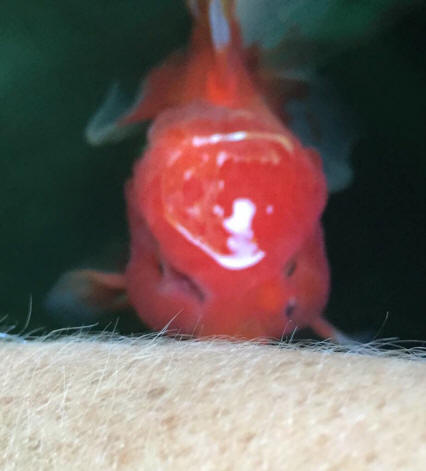
Oranda with raw, white sore on face
Good Morning,
<And you>
I am at my wit's end and hoping you could help us.
<Will do my best>
My mom has a 270 gallon reflecting pool in her back yard (with a fountain two
filters, one of which is attached to a UV light). There are no plants in the
pool. She has kept Orandas for years and is cleans the water regularly.
Currently she has four Orandas. She feeds them sinking food.
<What brand, type?>
She bought Maybe on 06 May 2015 from PetSmart and introduced her into the pool
without any issues. Recently, the pool had been treated when one of the other
fish Fatso had white spots (Ich?); he has been healthy for a few weeks now
(about two).
About 10 days ago there were two black spots on Maybe's face, one of which
developed into a large crack under her right eye on 11 Jul 2015 which is about
1/4" long. Below is a picture where you can see the crack:
[image: Click image for larger version. Name: Maybe_11Jul2015.jpg Views:22 Size:
48.2 KB ID: 173218]
<http://www.fishlore.com/fishforum/attachments/freshwater-fish-disease/173218d1437079547-very-sick-oranda-situation-worsening-maybe_11jul2015.jpg
>
<See this>
- 80% of the water was changed Sunday. My mom had the old and the new water
tested (pH, ammonia, nitrates, salinity, everything). The pool was then
medicated--after the water was changed--with Melafix
<Of no use whatsoever; in fact, detrimental>
(before the water change and after). She turned off the UV light when
she began medicating the water.
<I'd turn it back on>
The situation got much, much worse this morning (more black spots and white, raw
sore under her right eye which looks like it is being eaten away and very raw).
Maybe was lethargic on the morning of 16Jul2015, but she is swimming around
acting normal now, not rubbing her head on the sides or bottom of the tank.
- Maybe was separated yesterday morning (16Jul2015) when my mom
saw her condition, with the same pool water into a about 5 gallon fish
tank
<Too small>
equipped with aerator (mom added a little more Melafix and some stress
coat).
<This tree extract may well be mal-affecting nitrification; DO monitor Nitrogen
waste cycling>
Unfortunately that is the biggest container we have in the house.
She is swimming around normally but she isn't eating today (17Jul2015)
- All other fish appear to be okay. There are no spots on other fish and
they are acting normal.
<Interesting; as my presumption is and was that the source of trouble here
is/was environmental: Hence all would likely be similarly afflicted>
- Maybe was separated yesterday morning (16Jul2015) when my mom saw her
condition, with the same pool water into a about 5 gallon fish tank equipped
with aerator (mom added a little more Melafix and some stress coat).
Unfortunately that is the biggest container we have in the house.
She is swimming around normally but she isn't eating today (17Jul2015)
Could this be hole in the head, or a fungus?
<Maybe>
What is our best course of treatment at this point?
<Perhaps an antifungal (sulfa drug/s my fave), plus a modicum of salts>
Since the container is too small for an Oranda, is there anything else we can
do? We are beside ourselves!
<Get/use a larger container, or treat the whole pond with this Oranda
placed back in it>
The photos below were taken right after she was separated (16Jul2015) showing
the black spots on top of Maybe's wen and then the raw patch under her right
eye:
[image: 173212d1437078847t nasty cracks Orandas wen maybe 1]
<http://www.fishlore.com/fishforum/attachments/freshwater-fish-disease/173212d1437078847-nasty-cracks-orandas-wen-maybe_1.jpg>[image:173213d1437078848t
nasty cracks Orandas wen maybe 2]
<http://www.fishlore.com/fishforum/attachments/freshwater-fish-disease/173213d1437078848-nasty-cracks-orandas-wen-maybe_2.jpg>[image:173214d1437078848t
nasty cracks Orandas wen maybe 3]
<http://www.fishlore.com/fishforum/attachments/freshwater-fish-disease/173214d1437078848-nasty-cracks-orandas-wen-maybe_3.jpg>[image:173215d1437078849t
nasty cracks Orandas wen maybe 4]
<http://www.fishlore.com/fishforum/attachments/freshwater-fish-disease/173215d1437078849-nasty-cracks-orandas-wen-maybe_4.jpg>[image:
173216d1437078849t nasty cracks Orandas wen maybe 5]
<http://www.fishlore.com/fishforum/attachments/freshwater-fish-disease/173216d1437078849-nasty-cracks-orandas-wen-maybe_5.jpg>
Any help would be greatly appreciated!
Hailey
<I'd have you use the search tool on WWM (on every page) with the words:
Goldfish, Fungus, Treatment
Bob Fenner>
|
 |
|
Unknown Goldfish Disease 7/28/15
Dear WetWebMedia,
Please can you help me.
I have a small pond, 700l, with 8 Sarasa Comets that I have had for many years.
There is a good filtration system with UV steriliser, and everything has been
running problem free for years, with no health issues or algae problems and the
fish were happily spawning (three of the fish are offspring).The older ones have
suddenly been struck with an illness that I have never encountered before and I
have lost 2 in quick succession.
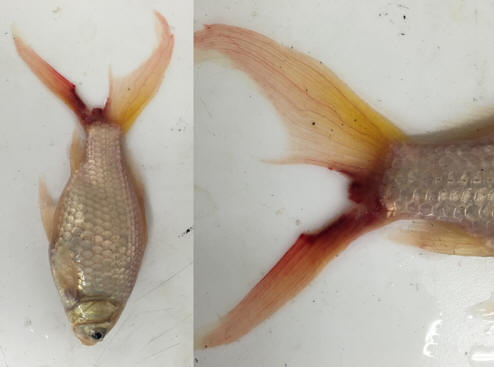
<Your photo... shows some sort of bacterial involvement... maybe an Aeromonad...
but what re root cause... usually environment, sometimes a nutritional
deficiency component.... See/Search WWM re goldfish bacterial infections. Do you
have data to share re water quality measures?>
I don’t know if it’s linked, but 2 of the older ones developed a few rounded
lumps over the last couple of years, which a vet identified as tumours which
were not contagious and not interfering with their lives. 2 months ago I
introduced a new fish after a previous one managed to beach itself outside the
pond. In that time all the older fish have developed sores on their side, and in
particular at the base of the tail. This is now spreading into a red patch and
dissolving the central part of the tail. I have attached a picture of one that
died today.
At the moment the three youngest fish are not showing symptoms. Can you identify
this illness and can it be treated?
<See WWM re Ana Aki... Aeromonas troubles; and their treatment. Do you need help
using the site?>
I don’t want to destroy the biological filtration system that has been working
so well for so many years, and I also don’t want to risk the younger fish also
getting ill. I would hate to do it but am considering if I have to humanely
euthanise the older ones, both to prevent them suffering and to protect
everything else.
Please let me know what you think.
Many thanks and all the best,
Ian
<There are treatments; improving the env., antibiotics added to foods.... Bob
Fenner>
|
 |
|
Re: Unknown Goldfish Disease (Neale; elaboration please)
7/29/15
Thanks for your quick reply.
The water levels seem acceptable - Ammonia/nitrite - 0, Nitrate 40 mg/l,
<Too high by twice. READ on WWM re>
ph 8 (Tap water in London has lots of nitrate and a high ph so water changes
can’t really improve these parameters)
<Ah yes one can... by treating the new water ahead of use. Again; all this is
posted on WWM. Am cc'ing Neale (a UK native as well) to chime in w/ specifics>
They have always been fed Hikari Gold in summer and Hikari wheat germ in winter.
Is that not ok?
<Good foods; but I would be supplementing w/ some useful live plant
material/s... a fave: Egeria/Anacharis>
Re antibiotics, I don’t believe I can buy them over the counter in the UK, also
will they not destroy the biological filter?
<Hard to get there, and yes; some will interfere w/ nitrification>
Many thanks,
Ian
<Cheers, BobF>
Neale's further input 7/29/15
<<Personally I don’t worry too much about the nitrate. When living in London I
had no problems keeping fish. Frequent water changes are important though, not
overstocking, not overfeeding, and I became increasingly reliant on using
fast-growing plants to absorb nitrate and keep water quality good. Floating
Indian Fern for example would do this nicely, as well as provide nutrition for
your Goldfish. Removing nitrate (and hardness) via RO was never cost effective
for me and in terms of ecological sustainability it’s pretty difficult to
justify. Goldfish can and do thrive in hard water and their tolerance for
nitrate is relatively high (under lab conditions over 100 mg/l for short periods
at least) so if the tank is otherwise well maintained, I doubt the 40 mg/l
nitrate in your tap water is causing your problems.
Antibiotics depend on a vet’s prescription here; last time I did that, the cost
was about £20, but you can also get some aquarium antibiotics via eBay, though
the legality and reliability of this is unknown to me (and by the time they’re
shipped from the US, the cost seems about the same as the vet). I’ve found
alternative products can work well, with eSHa 2000 being my go-to medication of
choice. It’s very economical doesn’t harm the filter, treats a wide range of
external problems quickly, and doesn’t cause problems even to sensitive fish
like catfish and puffers. Cheers, Neale.>>
|
Blue Orfe; disease 6/23/14
Hi,
I recently lost a 20inch 30year old golden Orfe with a bad infection
which was mainly internal but also showed up on it's Dorsal fin.
Treatment of the pond on three occasions was in vain as we're salt
treatments. I now have a blue Orfe with similar symptoms, only this started
with a small red mark on it's body. This developed into what looked like a
large red grape.
This has now turned into what I can only describe as a large red piece of
meat sticking out from it's body. The infection has travelled
internally down to it's tail fin and pine cone appearance has started from
the mass down to it's tail. All pond treatments for parasites and bacteria
have failed and I have just ordered some ulcer treatment.
<The only working remedy for this fish to try is antibiotic injection>
Can you please tell me if I am wasting my time and am on the wrong track.
Water condition is all good, it's a large pond with an air supply and good
filtration. I have also put some 50 lbs of salt into the pond at half an
ounce per gallon rate. When I did this the Orfe appeared to pick up and was
swimming and eating ok but the fish has taken a turn for the worse and is
just staying on the top. Any help would be greatly appreciated.
<... You may well have to hire a veterinarian to assist your efforts here.
IF they can acquire Chloromycetin (succinate); I'd have them look at Ed Noga
(Fish Disease; Diagnosis and Treatment) re SOP. Bob Fenner>
Re: Blue Orfe 7/1/14
Hi,
thanks for the info and suggestion, my apologies for the delay in
responding. A few days after your mail the fish got really swollen and the
infection was all over it's body. I felt that it was beyond saving and that
it was better to put it out of it's misery. I appreciate your advice and
help, and have in the past put fish to sleep and injected them in the area
next to the Dorsal fin, but this fish was really sick in the last few days.
Perhaps I should have asked about it a lot earlier and it would have had a
better chance of survival. Unfortunately I didn't expect a small red mark to
develop as it did so quickly, but I will in future. I have treat the pond
again for bacteria and will do so again in a few days. Thanks again,
Regards,
Dave
<Thank you for this follow up Dave. There are some very "rapid onset"
bacterial problems with coldwater fishes... Frightening. Bob Fenner>
poorly fish
8/15/11
hello hope you are able to shed a bit of light on a problem I have
.
<I see... you can't seem to locate the spelling and grammar
checker...
Should be on the top/tool bar area>
I have a pond stocked with the usual Koi ,Ghost Koi ,Goldfish an the
like . All fish were tiddlers when introduced and all bar one are
thriving ,the problem fish is a goldfish about 10 inch
nose to tail we are led to believe this fish to be badly
ulcerated to the point of green plant matter as the best description I
can give growing from the said problem areas.
<Mmm, usually "water mold" issue... with contaminants
adhering to hyphae... Due to physical damage.>
Apart from the fish looking poorly and unsightly it appears happy and
feeds well your prompt reply would be of great help and as the fish is
in our hospital tank now , what are the chances of spreading the
infection to our other fish in our well stocked pond . Ta Ian Henry
<Hard to stop such infections usually. Please look up the causative
organism and read re treatment/s.
Bob Fenner>
|
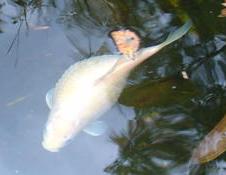
Re: Carpal syndromes 10/16/10
Bob, I didn't say, but I'm with you: wait and see.
That's what I did.
The bloating is worse, to the point of what I believe is termed
"pine-coning."
(Not sure why there is a dash.) I've read the med sources.
Indicators point to an infection, treatable in various ways,
after which she will likely die anyway. I can't see making my
vets any wealthier than they are from our 13-year-old Lab mix,
when the odds are 9-1 against.
<Mmm>
The only change in the environment from before is the water
temp., now 60F, steady for 10 days. And, I'm feeding them
once/day. She comes to the food with the others. She eats, but
not as one would expect the beta f. to eat.
My question to WWM: is she a danger to the other fish in the
pond, all adult, all currently healthy. What would you do?
Max
<Not a danger to the others... I would try Epsom salt (MgSO4)
here... alone... or... if you would like to look into
intramuscular injection... an antibiotic. BobF>
|
 |
|
sick Koi - 5/22/10
Hello. I love your site. First, I wanted to say "Thank
You!" for offering to help people who are having trouble
with their beloved fish!
<A pleasure to share>
I live in New York. My fiancé built me a
pond about a year ago so I am a new pond owner. It is roughly
4,500 gallons (10 feet wide by 16 feet long by 4 to 5 feet deep).
We have a massive water filtration system. We use an
upgraded vortex chamber (275 gallons) a 150 gallon cone brush
chamber, and a 150 gallon biofilter chamber. I don't remember
who makes the system, but a picture of a similar smaller system
can be seen here:
http://www.bing.com/images/search?q=vortex+cone+filtration&FORM=BIFD#focal=7
520c054d3f0d128c082662468dac46d&furl=http%3A%2F%2Fwww.azponds.com%2Fmark_arc
hive%2FCyc2sys.JPG We have a waterfall, but have not turned it on
yet. We also have a air stone in the pond. We have had a handful
of rainy days in the past few weeks. Temperatures have been
fluctuating. Nights from 35f-
65f days from 50f - 80f.
<I hope/trust temperatures do not drop to freezing
there>
I have about 29 Koi that range in size from 1 inch to 24 inches.
I have approximately 14 babies (under 2 inches), approximately 10
fish that are 6 inches or so, 1 Koi that is approximately 12
inches, 3 that are around 18
inches, and one that is about 24 inches.
About a month ago, a friend of mine gave me three Koi (1 12 inch
Shusui, a 18 inch white butterfly Koi with a black stripe down
her back, and a 24 inch butterfly Koi that is mostly black and
orange with a little white).
<Mmmm, I'll comment that you'd do well to quarantine
any new additions... there are a few "stock"
transmittable diseases of Koi about>
I was not aware of how big they were at the time I agreed to
accept them.
The Koi were in big Tupperware containers and were driven about
20 min.s or so to my house in a small amount of water. Due to the
stress the fish underwent, lack of supplies (i.e. quarantine tank
large enough to hold one let alone all of the Koi that size), and
lack of oxygen, the fish were directly placed into the pond. (I
was not happy to do this since everything I have read has told me
not to-but I was outnumbered and felt I had no other choice). The
fish actually seemed okay. As soon as they entered the pond they
started schooling with the original fish. We tested the water
difference between the two ponds. We had a higher pH (7.5) to her
7.0. We had less
phosphate than she did. Our Ammonia, Nitrite and Nitrate levels
were the same (0).
<Okay>
Only my 3 new fish appear to be sick.
The white Koi's fins had started to have a pink tinge to
them. We added Pond Care's Stress Coat.
<Mmm, I wouldn't do this>
Her fins actually turned more red. Now, they are still streaked
red and one of them has what appears to be a small ulcer/tear? Up
until this week, she was swimming with the others. Now, she is
still eating, but stays mostly by herself by the side of the wall
near to the water return except for when it is feeding time.
The Shusui Koi has some small amount of red streaking on its
fins, but only a little bit.
The biggest Koi (orange, black, and white butterfly 24 inches) is
not doing well at all. When we originally got the Koi, it was
missing a few scales but it looked okay. The fish has seemed
healthy and happy, swimming energetically until recently. On
Thursday, we realized something was very wrong. We actually
thought it was dead last week when we found it resting on the
bottom of the pond. It didn't move until we went to scoop it
out of the pond with a net. Then it sped off and started swimming
around like it was fine. This week, we have noticed its skin has
developed a white/grey tinge and its fins look like they are
deteriorating. There is white film hanging off of the fins and it
has some algae growing. The fish is often found resting now. It
is still eating and swims ( a little funny) around
when we come up to the pond to feed the fish.
We called a few Koi vets, but they are way out of our price range
(i.e.: $420 to just look at the fish and test the water)
So we have been trying to research what we could do to help these
fish. We read that adding the stress coat can actually hurt the
fish
<Yes>
(buildup on gills making it harder for them to breathe) so we
have not added any more of this to the pond. We also read that
salt was good to add so we are slowly adding pond salt to the
pond. We use Morton's Pond Salt.
directions say to add 1 cup per 100 gallons so we added only 5
cups. We weren't sure if we should add the rest of the salt
all at once or if it would hurt the fish so that is why we have
been adding some of it slowly.
<Good>
We also weren't sure of the water changing requirements after
creating such salty water. I read somewhere that you could keep 3
% salt for 21 days and then do a 50 % water change a few
times.... But I am afraid all of this
could drastically affect my other fish that are currently
fine.
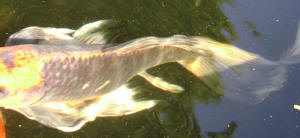
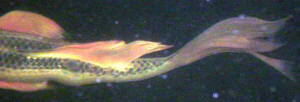
I really don't want the fish to die! I have added pictures of
the Koi. I really hope you could help us and our beloved
fish!
Alissa
<At this point/juncture, there is scarcely any further harm
that can/will be done by leaving these Blue Ridge Fisheries
butterfly Koi in place... the markings you describe are/were most
likely resultant from stress and your
treatment thus far. I would not add more salt or any other
treatment... instead just stay observant, remove any fish that
perish. Bob Fenner>
|
  |
|
Re: sick Koi update
5/23/10
Thanks for your help. I was able to find a professional pond man
who would look at my fish for $50. He sedated the fish and was
able to show me the damage under the fish's body. He
explained that the fish has a severe
internal bacterial infection and took scrapings and a sampling of
her stool.
When he studied them under the microscope he found (and showed
me) skin flukes, ich (he said it wasn't the type that was
white, it was the type that lives inside the body?) and a few
Chilodonella (spelling?).
<Mmm... a host of troubles, which could/would have been dealt
with through quarantine/isolation and treatment ahead of
introducing these fish... as you and I know... But I see below a
plan of action to deal with>
He has me treating my pond with 50 g Praziquantel, 50 g
KMN04,
<Do be VERY careful with this amount of Potassium
Permanganate, KMnO3 likely... this compound is a powerful
oxidizer... and can easily burn, and kill fishes, invertebrates,
even plants>
100# salt and 1 qt Hydrogen Peroxide for this week, 50 g KMN04,
and 75# salt and 1 qt Hydrogen Peroxide next week and then
Medicated Koi food. We are to do a 50 % water change on 21 day
and another 50 % water change a week from that. He also
recommended that I buy medicated food. I bought 3#.
I got home and tried to look up some of the medicated food online
so I can replace it when I run
out, but I wasn't sure which one to get.
<Mmm, medicated for what? The Prazi is for the flukes
(Trematodes) and the Protozoan is likely being treated with the
Permanganate... Are you looking to add Metronidazole here? If so,
it can be purchased as a powder and mixed
in... Please read here for details re making your own medicated
food/s for Pondfish: http://wetwebmedia.com/PondSubWebIndex/holedispd.htm
His are unlabeled. They sink to the bottom. Do you have any idea
of what type of medicated food I can give them when they run out?
He didn't tell me what brand it is and it was $50 for a 3 #
bag. Also, is this treatment going to hurt my biofiltration
system?
<It could well do so... depending on admin., what is in the
med. food>
Is there something I can/should use like microbe-lift to increase
the beneficial bacteria since the KMN04 is an oxidizer? (I was
told conflicting report of whether oxidizers kill beneficial
bacteria)
<They can kill everything... You may want to read re RedOx
measure, implications>
Thank you again for your help!
Alissa
<Welcome. BobF>
|
|
spotty goldfish 5/2/10
Hi Crew
<Good morrow Alex>
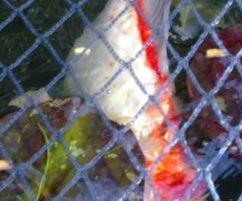
Hoping that you can help a fishkeeper from the UK. I have a 900
gallon pond with 24 goldfish in it. They are all fine except for
"mother" who has developed little raised red spots all
over her. She is eating, swimming fine, not rubbing or flicking.
Water quality is fine, all checked but I cannot find anything to
match what I see. Been to fish shop, consulted vet, no one can
help. Concerned about using chemicals without knowing what it is,
any suggestions please?
<Mmm, need "better" images... ones that are
closer-up, more resolved to have more confidence, but I suspect
this may be "carp pox", or viremia...
Please do send along higher acuity photos if you can, and
otherwise give WWM, the broader Net a read re these search terms
and the word "goldfish", "Koi". Bob
Fenner>
Great site - really informative, thanks
Alex
|
 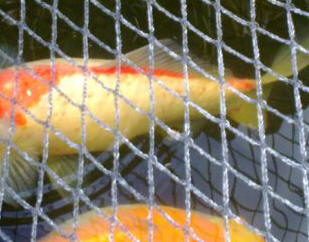 |
|
Mysterious koi illness... study, application...
7/14/09
I have searched every website I can find and ask several pond
specialist in or area but have not found the answer to my koi
problem. All of my water test are good except salt witch I've
been told to add sea salt instead of pond salt specifically for
the koi.
<I would not add salt period... not often useful, but quite
often deleterious>
The problem started after I added three large comets from a
friends pond.
<Mmm, not a good idea to mix goldfish and Nishikigoi... The
reasons are gone over on WWM's pond subweb>
Their pond is a very stable, healthy home to many large and small
comets. Since adding the new fish one of my koi had a black spot
behind the gills. It grew to the size of a nickel then all the
scales fell off. Then I notices black spots on the other koi but
they haven't lost any scales, yet. The first koi has now lost
scales farther back on it's tale the same size as the first.
The only other symptoms I have noticed are the over all color has
changed to a dull orange and it seems to stay on the bottom
sometimes. It still comes up to feed very vigorously and swims
around with the others. The only answer I have found so far is
some kind of disease that there is no cure for that is carried by
gold fish to koi. I'm told that the gold fish do not show any
signs of disease they are only the carrier. One of the pond
stores I use lost $1,800 to this disease. Of course I can't
remember the name of it only that it starts with "P"
sorry.
Before I learned about this mystery disease I treated with
Melafix
<Worthless>
for 14 days with no benefit what so ever. I have now purchased
Tetra Pond fish treatment at the recommendation of a local pond
specialist. They told me they hated to even sell me the Tetra
treatment since we have no idea what we're treating.
<... then why not find out? A simple microscopic examination,
skin scraping... perhaps with a dye...>
Do you have any idea what this is or how
to treat it from my pictures and my description?
<Can only guess... there are a few Protozoans... Likely a
Ciliate... maybe read re Chilodonella, Costia... and the
treatments for such>
The pictures below shows the first koi that showed signs of the
disease. If you can tell it has lost scales on the left of
it's body just behind it's gill and on the right side you
can see where it has lost scales at the end of the top fin before
the tail. It also has more black spots on top of it's body as
you can see. The only other fish that show any signs of anything
out of the ordinary is the comet to the right of the koi with the
white head. That comets head wasn't always white and it has
spread with time.
<"Something" eating it...>
None of the other comets show any signs of disease and I
didn't notice that one until after I realized the koi had
black spots. This pond is over a year old the only other guess I
could make is we may have over stocked it with the addition of
the last 3 big comets. I'm told that would not have caused
this kind of disease.
Please help I hate not being able to do something for them.
Ruth Hall
<Read on Ruth, read on... Bob Fenner>
|
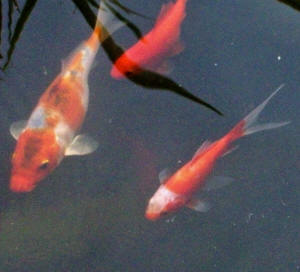 |
|
Re: Mysterious koi illness
7/14/2009
I ask how you came to the conclusion that this is a protozoan? I
can't find anything that comes close to what my fish are
displaying. You also said no salt and it states salt baths on the
cure. I do realize the difference in adding salt to my pond and a
salt bath. I take it you don't believe in maintaining a low
salt level in ponds.
Why is this?
Ruth Hall
<Read, search here:
http://wetwebmedia.com/PondSubWebIndex/Pond%20Sub%20Web.htm
BobF>
|
|
Help regarding Ghost Koi 1/20/08 Dear Wet
Web Media Crew Great web site, which I often look to for
inspiration but this is the first time I've actually tried
posting a question. My question is regarding a ghost Koi who is
about 4" long and has been housed in 40" deep garden
pond of around 440 gallons (2,000.00 litres) with twelve other
smaller or similar sized fancy goldfish. For a while now I have
noticed what I thought appeared to be fungus growing around the
ghost Koi's dorsal fin and the base of the tail fin. <I
see this... pox> But after catching the fish and re-housing
him in a small hospital tank in readiness to treat him with a
proprietary anti fungus fin rot treatment I was surprised to find
what I thought was fungus doesnt look anything like the woolly
mould like growth I was expecting but more like some sort of
ulcer. Other than these various "lesions" growing on
the Koi's body all else seems fine, i.e. swimming normally,
feeding well etc. I have regularly tested the pond water quality
where the Koi was recently caught from and in the two years the
pond has been operational the Ammonia, Nitrite and Nitrate have
never been any cause for alarm. <Good, and well-reported>
If you could spare a few moments to look at the attached photos
of the Koi and any advice you or any one else in the Wet Web
Media Crew good give would be greatly appreciated. Thanks again
for a great web site. Yours in anticipation Simon B <Not to be
an alarmist... as I could be wrong... this doitsu Ohgon appears
to be a bearer of carp pox... Please take a look/read on the
Net... Perhaps via Google, Images... and let's chat further.
Bob Fenner>
Re: Help regarding Ghost Koi Bob Many
thanks for your very prompt reply. After doing a bit more
research as you suggested, it would seem that your initial
diagnosis of Carp Pox was correct. From what I gather Carp Pox is
a viral infection, similar to the Herpes virus in Humans and some
people say that it can be brought on by poor water quality and
stress. <Yes> The fish was purchased in early September
from a well known garden aquatic centre here in Oxfordshire UK.
But was caught by a Saturday moron, who franticly chased the fish
around the tank with an over sized net, before finally catching
it, then roughly manhandling it into a bag after its fin rays
became completely stuck in the nets mesh (I dont shop there any
more) <I certainly don't blame you> so I guess that
could explain the stress part, but like I said my pond water
quality is regularly tested and hasnt ever been a cause for
alarm. I did read that the Carp Pox lesions can often go down by
themselves in the summer months and indeed simply raising the
water temperature can apparently sometimes cause the lesions to
go down. <Yes, sometimes> If this is correct the fact that
the fish is now in a small hospital tank in the heated living
room could put this theory to the test, although the fish doesnt
particularly seem to be enjoying his new smaller surroundings and
seems to rarely venture out of the two flower pots that were put
there to give him a bit of a feeling of security. Do you think it
would be smart to keep the fish in its new home until late spring
now, rather than returning it to the unheated outdoor pond which
is currently around 10 or 11 oC (unusually mild British Winter,
probably making up for all the flooding of July 2007). And from
what I have gathered Carp Pox is incurable but more unsightly
than harmless, is this correct? <Mmm, can be... unfortunately
this "plague" is often tied/linked to incidences of
Furunculosis/Ana aki... Aeromonad infections that can be
trouble...> Or do you know of or have any experience of a
medication that actually works, <Ah, no> because I dont
really want to go needlessly bombarding the fish with chemicals
for a condition that I understand wont kill it and may improve by
its self, is that correct? <Yes> Well thanks again for your
earlier reply and a great web site, I promise I will set up a Pay
Pal account and make a small donation for its up keep. Simon B
<Simon... I do wish we could quickly communicate... such that
your mind might be more at rest. The gist of what you write is
so... there is not much to do other than keep the one fish
isolated (from the rest of your Nishikigoi), do what you can to
provide good water quality, bolster its immune system... and
hope. Cheers, Bob Fenner>
|
|
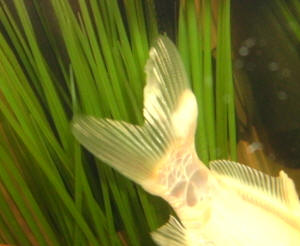
|
Re: Help regarding Ghost Koi 1/28/08
Hi Bob Hope this e-mail finds you and the rest of the wet
web media crew well. <Thank you my friend, yes>
Apologies for being a bit slow with the communications but
our e-mail access hasnt been working for a while and
besides this whole Internet revolution thing passed me by I
bit and I am still a newcomer to it all. <Better late
than...> Any way just to keep you up to date on your
original diagnosis of Carp Pox affecting my Ghost Koi.
Since we did last communicate after I moved the fish from
the pond into the small hospital tank in the heated living
room all lesions appear to have completely disappeared!
Literally to the point where you can now barely even see
any trace them. So it looks like that higher water
temperature has done the trick. <Mmm, yes... and this
"cure" points to another probable root cause
here... Aeromonad involvement/Furunculosis/Ana aki...>
Am still not quite sure what to do with the Koi because I
am thinking that as soon as I return him to the lower water
temperatures in the pond, the Pox lesions will return as
quickly as they seemed to have disappeared. <Likely
so...> But as you can see from the attached pictures his
present living quarters can only be considered as temporary
but at least he seems to be getting used to all the
attention from the cat ( but I think I will keep the
aquarium lid gaffer tapped down just to be sure) If I did
return the Koi to the pond in spring (who knows last April
here in the UK was apparently the hottest since records
began) are the Pox lesions likely to return each subsequent
year as the water temperature drops again in autumn?
<Only time, observation can/will tell... but this is
what I would do> I did a head count in the pond today
and all the other inmates appear to be in fine health but I
was wondering is the carp pox virus only contagious amongst
other Koi or will the other non Koi pond inhabitants
(common goldfish, comets, Shubunkins and a couple of seldom
seem weather loaches). be at risk each year? <The viral
aspect is more universal than Aeromonad outbreaks... which
tend to run in "ones", "twos" unless a
virulent stage and/or severe "challenge"
occurs> Well thanks for all your earlier assistance.
Simon <Please do read here:
http://wetwebmedia.com/PondSubWebIndex/holedispd.htm and
the linked, related FAQs file above. Bob Fenner>
|
|
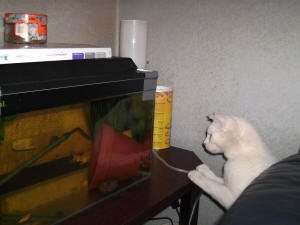
|
|
|
Emailing: Fish2. goldfish tumour 2/22/07
Dear Bob Could you please let me know what is wrong with my fish
. I have just noticed that one has a white ball the size of a pea
on its tail and another has a white lump near its eye . What is
it and how do I cure it many thanks Robert Hawker <Likely a
Viremia of some sort... can be trouble... spread... Or just
resident... like planter's warts. Do step up, and maintain
good water quality, nutrition to keep this spread arrested. Bob
Fenner>
|
|
|
The Dreaded Furunculosis! Preface: I know my Koi
housing is totally inadequate and probably contributed to the disease.
Chock it up to inexperience and a lesson well learned. I have always
wanted an outdoor pond and the cost has made it difficult to achieve. I
will not be getting more fish without first establishing the proper
environment. <<I've seen well-established, properly stocked
systems experience bad outbreaks of this awful disease. While basic
husbandry can exacerbate or alleviate the problem, it is not the
"final word".>> My first experience with sick fish
didn't turn out well. I had 3 Koi, 2 about 8-9", one 4"
(Freckles, Flash and Flip, respectively). After reading your web site
I'm guessing the problem was Furunculosis. Freckles had what looked
like a few hemorrhages beneath the skin along the body and one at the
mouth, one area looked like it had penetrated the skin. He also had
enlarged eyes with a white goggle-like appearance. <<Pardon me,
but wholly sheet, that was one badly infected fish. The infection
wasn't just presenting externally, it was systemic. Poor
fish!>> I put him into a Qtank and began to salinize the water, 1
T. per 10 gal every 8 hours for 3 doses. <<Not sufficient salt,
and not sufficient treatment.>> I did not have available on short
notice, the proper medications but did have and added some
Nitrofurazone based fizz type tablets (Tank Buddies Fungus Clear).
<<Is one treatment.>> I also dabbed his lesions with
iodine. <<Ok. I've read that Neosporin may actually be
effective used in this manner. This is obviously for external lesions
only, cannot address internal/systemic infection adequately.>> I
found little Flip the next day dead in the pond, same appearance,
except the eyes looked OK. So I removed Flash to the Qtank with
Freckles, and increased the saline to 2%, plenty of aeration too.
<<Good move, but again not sufficient. 3% is the place to
start.>> I examined Flash and found no hemorrhagic spots and eyes
looked OK. Next morning Freckles is dead, too. So far Flash is fine, no
lesions, peppy and even eats a bit. Flash is still lesion free 3 days
after this episode began. <<This is very much like what I
experienced with my mother's pond fishes. We have ONE survivor from
our awful bout two years ago, scarred on the side that suffered a
really terrible lesion, but alive.>> My question is how long
should I leave Flash in the brine? Should I bring the saline solution
to 3% or start dilution through water changes? <<Take it up,
definitely. I kept my fish "pickling" for weeks, till they
were lesion-free. I advise the same for you.>> And most important
what about the "pond"? I'm ashamed to say it is only
about 50 gal... my fish started at 2-3". It's a filtered and
planted plastic tub. Is the water (tested fine 1 day before this began)
contaminated with this darn bug or whatever it is? <<Honestly, I
would not be surprised if this organism (sorry, can't think of the
genus at the moment.. it's on the tip of my brain!) is actually
carried in the air. Leaving it fallow of fish during treatment should
be enough. If it has plants, DON'T salt!>> Should I do a
complete water change, filter clean out and start fresh? <<I
would only worry about excess mulm/detritus on the bottom. A filter
cleaning won't hurt, but care for your nitrifying bacteria, rinse
in pond water only, not tap water.>> What about the plants:
Anacharis, frog-bit, and 1 lily and 1 floating-heart in pots? How can I
decontaminate those? <<I wouldn't worry about it.>>
Thank you for your help, Robin Murray <<Robin, here are some
links to good sites on ponds and pond fishes. It doesn't matter how
big (or not) your pond is, this is all applicable. Your Koi, however,
are going to need bigger digs VERY soon. Spend the $5 at Wal-Mart and
get the biggest kiddie pool you can, those are about 100 gallons. Cover
it, the Koi can jump out easily. http://www.ponddoc.com/WhatsUpDoc/FishHealth/SpringOutbreak.htm
http://www.blueridgekoi.com/disease_issues.htm
http://www.wetwebmedia.com/PondSubWebIndex/koidisfaqs.htm
(also search our goldfish disease FAQs). Here you have a start, the
plants are not infected nor do I believe they can spread this
infection. I wish you the very best of luck, I honestly HATE and LOATHE
this disease. Marina>>
|
New pond... goldfish ailment? 7/30/05 Hello again. I
have another problem. One of my fishes was floating but not dead
this morning. I have isolated it, in a bucket, and on examination
it seems to have a hard black protuberance from its anus. This
protuberance is about 10mm long, and the surrounding area of
flesh seems very raw, white with red edges. The fish will swim,
but when it stops it tends to float to the surface, always on the
same side. I am very worried and would like some advise on how to
treat this, and whether all the fishes should be treated. Your
rapid response would be much appreciated. Thanks Wendy <...
impossible to tell you what is going on from the data
presented... I would (of course) check your water chemistry,
change about a quarter of the water, keep a close eye on your
other fish/es... and read... re their care, feeding on WWM. Bob
Fenner>
Re: New pond 7/31/05 Hello again. <Morning> I
have been reading up on your pages and think that I have
identified the problem as Camallanus worms. <Mmm, possible>
Anyway, I am in the UK and can not find any flake fish food with
Piperazine. Do you think my diagnosis is correct, and can you
advise me of any online store that I can order from. <I would
look for Praziquantel instead, or products with this in it> My
isolated fish does not look as if he will make it, any
suggestions on immediate first aid would be greatly appreciated.
<... a level teaspoon of Epsom Salt per ten gallons of system
volume> Other fish are still in the pond, and all appear
lively and healthy so far, yet I do realize that all should be
treated. Your help would be much appreciated. Wendy <Bob
Fenner> Hi again. The world wide web informs me that
Praziquantel is not available to the UK. WHY??? Should I give my
vet a ring in the morning!!? AAAAAGH! with frustration...........
Wendy <Perhaps. Please read... on WWM re vermifuges, -cides.
RMF>
Re: New pond 8/1/05 Thanks for your quick replies. My
sick fish died overnight. I will search online for food
containing Praziquantel as you suggest. Any recommendations of
where to purchase would be much appreciated. <Try online
suppliers of pond goods> Seems medicated fish food is not
available in pet shops around where I live, I spent much of
yesterday visiting stores, only to be met with blank looks and
unhelpfulness by shop staff. A fish encyclopedia I have gives
doses for treatment with Panacur wormer for horses, powdered form
to be dissolved in the pond. I am considering contacting a
veterinarian or farm store if I cannot find medicated food. Do
you think this is wise? <Mmm, if you're going to this
ends... I would take the one dead fish with you and have it
examined... necropsied, to determine if worms are actually
involved...> What happens to eggs of Camallanus when the fish
are treated via food - wouldn't they be alive and well in the
bottom of the pond, ready to infest when ingested by another
fish? <Possibly, yes> And would the eggs be killed if
treated with dissolved Panacur? <I don't know... and am
unfortunately away from printed reference> I will splash out
on a pond testing kit, and also attend to changing some of the
pond water as suggested. There are several newts living in the
weed in my pond, and I have seen frogs and toads in it from time
to time. Can these wild creatures transmit disease to the fish?
<A possibility, yes, though, not common.> I have 6 small
goldfish left at present BTW. Also, could any "pond
treatment" adversely affect the wildlife- I am sure the
newts eat the fishes food. <Some could> Many thanks for
your extremely helpful pages. Wendy <Welcome. Bob
Fenner>
|
Fungus on Koi... 8/6/05 Hello. I have three Koi with an
off-white fungus (I think, after trying to do some research on what it
could be.) <Actual fungal infections are exceedingly rare... almost
all infectious pond disease is directly related to environmental
cause/s> They do not show any other symptoms. I just completed seven
days of treatment with PimaFix in my 1700 gallon pond. <Worthless
"fixes"> It looks like it may have improved slightly, but
the fungus is still there... on their faces, gill area and fins. Should
I repeat another week of PimaFix or try something else? Thanks for your
help! <Have someone come by and look at your system, fish... Please
read here: http://www.wetwebmedia.com/PondSubWebIndex/pdfshdisart.htm
and the linked files above. Bob Fenner>
Outside pond fish... possible Lernaeid 10/21/05 Hi, this is
our first time on your web-site, and we have a question. We have an
outdoor fish pond with 4th generation goldfish! Today I noticed
something on one of the fish. It is gold in color, protruding ( from
under his skin)? or sticking out of his skin, I can't really tell.
It looks like a thick wire sticking out. He doesn't look or act
different, eating as normal. I didn't see anything like this on the
other five fish. Do you think this is some sort of parasite? <Mmm,
possibly... Lernaea... "Anchorworm"...> What would you
suggest we do? <Mmm... place this/these terms on the WWM, general
search engines... read... If this is the cause/parasite, removing the
adults by tweezing, inspecting all fishes, using a organophosphate to
kill intermediates is suggested. Bob Fenner> Thanks Donna
|
Koi hi two of my Koi have some type of white almost pimple
like spots on their tails. One Koi only has one spot the other
has a few. The rest of the fish don't have any. All the fish
including the ones with the spots are all acting normal. The
water quality is all good, all zero except a little nitrate. I
tried to raise the salt to see if it would do anything, but it
has been a couple weeks. There is no redness around the white
areas. It's too large to bee ick and doesn't look like a
fungus. In a few books I read of white blobs being carp pox,
<Yes, this is likely a virus> but these don't look
greasy and the water is pretty warm(76-80). If you have any ideas
as to what this is and what should be done help would be
appreciated. thanks <I would add 250 milligrams of
tetracycline hydrochloride antibiotic per pound of dry weight
pelleted food, shake all in a bag and feed this for the duration
of the warm weather... and not worry. Bob Fenner>
Koi.... again Hi Sorry to be a bother, but can't
get much help from locals. I emailed you before about a Koi that
had white pimples on its tail... A few days ago the same fish
developed a bubble like cyst on its side about size of a marble,
the fish is around 23"). The next day it had popped. I'm
wondering if this also has to do with the pox virus. <Yikes...
does sound like this sort of complaint... or Ana aki. Please read
through this section and images on our site:
http://wetwebmedia.com/holedispnd.htm and the suggested, tried
routes for cures> Also It looks like a brownish blister on
another area. I bought some wound seal to put on the popped
bubble, the thing is I don't know if I'd be doing more
harm than good stressing him to do so. The fish still eats and
acts normally and all other fish are unaffected. If you could
help I promise I'll leave you alone for a week or so....
<Hmm, if your Koi are very valuable you might well want to
contact the veterinary services in your area to see if there is
someone who works on pond fishes... and will attempt to culture
the microbes about the site... this does sound like our old enemy
Aeromonas... Read the bit on the WWM site, and we'll be
chatting. Bob Fenner>
Re: Koi wow quick response. I just have a couple more
questions. Am I correct to assume that this will most likely
spread? and also Will the symptoms (white pimple things) always
show? thanks <These "pox" problems generally
don't spread (though they can... then are termed
"acute" versus chronic)... and generally take a long
time (months) to resolve, disappear under treatment. Bob
Fenner>
|
Argulus (food, pondfish culture, disease control) Dear D.
Fenner Robert, I am a veterinarian working in State Bank of India
biggest Bank financing agricultural and Aquacultural schemes in India.
2.Fish farmers raise Major Indian Carps (Catla catla, Labeo rohita
etc.,) in big freshwater ponds with an extent of 10 acres to 100 acres
Water spread area. The culture period is 8 - 10 months -Weight 1-2 Kg
each. To minimize the feed cost and cost of production, our fish
farmers are using heavy doses of dried poultry droppings organic
manure) to fertilize the pond waters and for production of Phyto &
Zoo plankton. The demerits of this practice is too much infection with
Argulus (sea lice). As a result, farmers are using pesticides Viz.,
Deltamethrin (Butox), Dichlorovos (Nuvon) which are retarding the
growth of the fish. Please enlighten me on the following two points: a.
whether any effective biological control against Argulus is available?
<None that is practical as fast as I'm aware... most practices
are as yours, involving economic poisons in the class of
organophosphates (acetylcholinesterase inhibitors)... as these
crustacean parasites metabolisms are similar to arthropod pests> b.
whether Diflubenzuron/lufenuron (Dimilin) can be mixed with the above
chemicals to decrease the dosage and frequency of chemical application?
<Yes, once again, as far as I'm aware. Dimilin supplanted the
use of DTHP (Neguvon, Dylox...):
http://www.wetwebmedia.com/pndparasitcont.htm in ornamental pond use
(on cyprinids like Cyprinus carpio (Koi carp, nishikigoi) and Carassium
goeblio (goldfish) in the U.S. some years ago. Should be miscible.>
Please send technical information on the life cycle and control methods
in big fish ponds. <I don't have ready access to such, don't
even know if this is part of the literature... would have to search as
you are> 3.Please help me in the upliftment of fish farmers. <I
will gladly assist you in what ways I can. Understand that though my
academic background is in fisheries, I have spent the last decades in
ornamental aquatics... not production. Bob Fenner> Thanking you.
Yours sincerely, Dr. A. Purna Chandra Rao, Chief Manager
Technical),Region-4,Zonal Office, State Bank of India,VIJAYAWADA-520
010,A.P; INDIA e-Mail: ap_purna@yahoo.com ap_purna@rediffmail.com
Ick \ whitespot in large pond. I am looking for dosage
amounts for the use of Penicillin to cure the ick cycle I have in my
pond. <Penicillin and ich? This antibiotic won't kill the
protozoan...> in the past I have quarantined the fish, and treated
the pond with multicure. My pond is 15 foot long, 4 foot wide, 3 foot
deep and houses 30 fish (inc Koi, comets, and fantails) cant seem to
find dose amounts, I have access to multiple antibiotics, please help.
also do you have recommendations for the process etc many thanks in
advance, Dale Brown. Australia <Please read through the Pond Disease
sections on our site starting here:
http://www.wetwebmedia.com/KoiDisArt.htm following the links, FAQs
where they lead you. There is a Google search tool there as well. Bob
Fenner>
"Saddle bags" on goldfish Dear Robert: Diagnosis
SVP? I have a farm pond ( actually a reservoir) some 300 feet by
perhaps another 300 feet with mosquito fish (uncountable) and over 100
goldfish. All have been in the pond for over 7 years. Every once in
awhile a gold fish shows up with what I call "saddle bags" on
both sides of the body. The "saddle bags" are very
symmetrical, oblong, do not look like tumors, and don't resemble
photos of fish with dropsy. <Interesting> Over the years I may
have had one or two fish each season with "saddle bags". Only
one of them died, as far as I can tell; unless a bobcat has fished for
the others. Is this something to worry about? And if so, what is it,
what can be done in such a large water hole? <May be something of
concern. Have you had any of the "saddle bag" fish opened,
looked at internally?> I have planted some water-iris in pots and
lotus here and there around reservoir perimeter; most of the fish like
to cavort around a wooden staircase I use to get into the water myself
to swim with them. <I would have the fish checked out> Any help
gratefully awaited, from the Shingle Mill Pond residents <Bob
Fenner>
Leeches! Help! I've just moved into a house with a fairly
derelict pond, it has about 3 inches of water in it and is stagnant..
lots of weed. Someone told me that the nasty black slug like things in
it are leeches... is that possible in Milton Keynes? <Possibly>
And if it is.. how on earth do I get rid of them... I was just going to
take as much out as possible with a bucket and then clean it up but now
I'm scared to go near it. Sorry if this sounds girlie and
pathetic.. but your advice would be appreciated. <Do move what seems
like water to a "kiddee wading pool" with a cover (just mesh)
and an airstone/airpump... scoop, pump out the muck, refill, treat for
chloramine... and move all back in a week or so... w/o feeding
livestock in the meanwhile. Bob Fenner> Thanks, Terry Howard
|
Pond Deaths Hi, I'm in need of a grief counselor and
pond expert...unfortunately, in that order! <Okay, belly up to
the bar> I have a pond, approximately 2700 gallons. Its been
up and running for five years, maybe six. I have (had) about 20
Koi and a few Rockets, most about five to six years old. Two
nights ago one of my big German Koi was dead. I pulled him out
and there were no signs of an animal attack, no missing scales,
no pooched out gills, mouth eyeballs, nothing...body wasn't
bloated. Following day I saw one of my other big-boys sort of
listless and up close I could see white junk on his scales...not
fuzzy like cotton woolly and not stringy, squiggly like worms,
just sort of breaks in the color pattern. <Yikes> They are
all not eating much. Today six more were dead including two
recent additions to the pond, about 8" white Koi I got from
PetCo. <Bingo... the transmitter... should have kept this fish
isolated on purchase...> I didn't quarantine them before
introducing them to the pond. I've had great success with the
original boys and the newer additions over the years didn't
bring anything bad... I got lazy and complacent and am paying the
price. <Yes, unfortunately> I have cleaned and back-flushed
my filters and taken the pond down a few hundred gallons and
added Melafix to the water. I then brought the water level back
up and repeated this treatment yesterday and today. Any
suggestions as to my fishes afflictions and possible other
treatments would be greatly appreciated. Paul Harford Benicia,
California <What you likely are encountering is a protozoan
infestation like Costia... there are a few courses of action to
consider... formalizing (treating with formalin or formaldehyde)
or a strong oxidizer like permanganate... dangerous... will kill
all beneficial microbes including nitrifiers... or perhaps just a
salt treatment (ten pounds per thousand gallons... put in over
three days time (not all at once) and whatever else you can do to
effect "good water quality"... and a self-cure of
sorts. Going forward, ALL new livestock should be quarantined (of
course for a couple of weeks)... Do utilize test kits for
checking how your water quality is going through this treatment
process... Bob Fenner>
Re: Pond Deaths Thanks... I read around on your site
after sending the email and saw the article on
furnuf!/~#8^=@?)ocluos and recall seeing a 'bare spot' a
little roughed up, not bloody on a few of the casualties
yesterday, but I do have stones and plant stands in the pond and
when the fish are frisky they do splash around... <Good
point... these markings could have little primary bacterial
involvement...> I'm going to go back to basics and get the
water tested and hope for the best. <Good move> No more
short cuts, Paul in Benicia <Good luck, life my friend. Keep
us informed as to your progress. Bob Fenner>
|
Possible anchor worms and CopperSafe First,
I'd like to tell you that your site is fantastic, the best fish
site I've come across, and I've looked at a few. I think
I'm having a problem with anchor worm. <Sometimes difficult to
eradicate once established.> I have three tanks-one 20 gallon with
four (used to be six) very large ex-feeder goldfish which is always
cloudy, yet the ammonia and nitrites/ates are nil and the pH is 6.5 or
so. One tank is 55gallons with two big Koi, three channel cats (two
big), and seven goldfish of varying size (two of which came from the 20
g tank). The other tank is 15 gallons with three very small fancy
goldfish (the ones with the big bellies and the forked tail fin) and a
Pleco which also came from the 20 g tank. Two days ago, I noticed a
goldfish in the 55g had a bump on his skin with a white wormy thing
sticking out. <Does sound like a Lernaeid...> Then I saw that a
goldfish in the 20g tank had two red raised spots with white stuff on
him (the scales were missing from the spots) and one with a veiltail
has red near the ends of his tail fin. The Pleco in the 15g has had his
fins clamped and won't eat very much, and I think I saw some white
stuff on his mouth. He doesn't come out much, it's hard to see
what's going on. These tanks are all well established and have the
same water chem, i.e. no ammonia, no nitrates, and 6.5 or so pH. The
water in the 55g is crystal clear, and a little bit cloudy in the 15g.
They're well established, I do water changes every week, and I
don't understand why they should all of a sudden all get sick. The
transferred fish have been in their new tanks for at least 2 1/2 weeks.
I started using CopperSafe, and it made all these little red worms come
out in the 20g tank, and white worms in the other 2. <The copper
won't "get" the intermediate stages... you'll poison
the fish stock before the treatment can be completed...> No noticed
improvement in the fishes' conditions. How long does this stuff
take to work? What can I expect? Do I have to treat for secondary
bacterial infection? <Good questions. Please read here:
http://www.wetwebmedia.com/PondSubWebIndex/contrpdparasit.htm You need
to seek out a source of this pesticide, follow the directions that come
with it, or the ones posted here> I apologize for the length, but I
really don't want my fish to die and you really seem to know what
you're doing. Thanks in advance. Pati <No worries. Do contact me
if this is unclear, incomplete. This is an easy problem to fix, given
the active ingredient... and cautious use. Bob Fenner>
Re: HELP!!! Comets Sick & Dying! Hi... I have
a very active ornamental pond in our back yard. We had a gruesome
winter and we over wintered about 16 comets. The pond is about 600
gallons. We used a heater to allow gases to escape. We had a few days
of really warm weather a few weeks ago and then cold at night and then
snow and now warm again... <Geez sounds like the winter weve had
here!> I have lost 4 fish during this time and have 4 more that are
sick...They are developing a white fuzzy ring around their tail where
it meets their body - eventually they stay near the top and then
bye-bye. I have changed 25% of the water and used something for fungus
that a pond store gave me (small bottle of yellow powder) and have now
done the second treatment... <Hmm it does indeed sound like a fungus
of some sort. Check out http://www.wetwebmedia.com/FWSubWebIndex/fwfshparasites.htm
and also http://www.wetwebmedia.com/PondSubWebIndex/pdfshdisart.htm
and the related FAQs. You should be able to find more info there.> I
do not think I am doing the right stuff...Any ideas would be really
helpful! Thanks, Ellen Shepard <You're welcome! Ronni>
Bumps on Fish Hello, <Hi> We have a fan
tailed goldfish that has for the last month been producing large,
pimple like balls (coming from under the scales) on its eye, side and
around its anal fin. Each time these bumps appear, about a day later
they seem to somehow be pushed out or fall off? The fish does not seem
unhealthy in behavior and all the other fish seem normal. Could you
tell us what this is and what to do about it? Is there a cure or
concern, it is on about its 6th bump? Thanks, Charles and Tricia
<Check out http://www.wetwebmedia.com/FWSubWebIndex/fwfshparasites.htm
to see if any of the descriptions fit what your fish has. Treat
according to the recommendations given there. Ronni>
Leeches Dear Sirs: <Just PF will do for me, calling me sir
still makes me feel old. > We have a one acre pond in upstate New
York. It was formerly a cattle pond, which was half the size when we
purchased the property. When we enlarged the pond, we had it dredged
and scraped, and it refilled naturally from small springs and
rainwater. We had a problem with algae, and treated it successfully
with copper sulfate for several years, but then that became
ineffective. We then stocked the pond with neutered carp, and luckily,
the pond has been algae free since then. However, a new problem has
developed. We now have leeches, which certainly discourages our
grandchildren from swimming in the pond. We've read that copper
sulphate is the only way to rid the pond of these pests. Do you know of
any other antidote to leeches, and if not, do you know where we can buy
copper sulfate? It is no longer available in New York State. Thank you
for your attention. Yours truly, A. Pearlman <First off, yikes!
Can't get that picture from the African Queen out of my head.
Reading over the FAQs, I saw Bob mentioned using Chloramine to treat
for leeches. That was for a much smaller pond though, and I don't
know dosages, nor how long it would linger in the environment, let
alone if it's legal or not to use (same thing with copper sulfate).
Here's the page on pond parasites, http://www.wetwebmedia.com/PondSubWebIndex/contrpdparasit.htm
. Have you tried contacting the fish and game department, or the
biology department of any local colleges or universities? They might
have ideas. I'm not sure about biological controls, since I'm
not that familiar with leeches and what might eat them. Giving it some
thought, the common bream or sunfish might eat them. As for locating
copper sulfate, I would recommend doing a Google search (http://www.google.com )and looking for a
supplier that way. Best of luck, and I hope you find a solution soon,
PF>
Bloody, shredded tails on pond fish >I have a 1200 gal.
pond with approx 15 goldfish and Shubunkins. Six of these are from
6" to 8", the rest are from 2" to 4" long. About
five days ago I noticed my largest fish had blood in his tail. Some of
the other large ones had shredded tails, one looked like he had a
cotton ball on the tip of his tail. The smaller ones seemed okay. I ran
a garden hose in the pond and let it overflow for a couple of hours.
This should have changed at least 25% of the water. I have treated with
Melafix for four days. I have also been feeding Tetra medicated food
for bacterial and fungal disease. The fish do not look any better. Some
of the smaller ones have now started to develop the problem. They all
have good appetites still. An ammonia test was okay. >>Please
accept my apologies for being so late, I've been battling some
computer issues. This sounds like a bacterial infection to me, commonly
experienced in overcrowded or polluted conditions. Please see this link
--> http://www.wetwebmedia.com/FWSubWebIndex/fwfshparasites.htm
for treatment. When I can restore some of my medication charts on this
box I will try to get them posted, in the meantime, I believe Furazone
or similar would be a better way to go. It will DESTROY all nitrifying
bacteria, so ammonia poisoning must be addressed with frequent, large
water changes. >About one month ago my pump quit (probably for 12
hours). We had to pull the filter out in order to fix the pump. It sat
out of the water for about an hour. >>This, on its own, should
*not* have created a problem unless your system was "on the
edge". >The water was clear before this happened, but is now
green. >>A release of excess nutrients, plus a die-off of
nitrifying bacteria most likely. >It is not so bad that you
can't see into the pond. The pond has a good amount of bog and
submersible plants and some trapdoor snails. I have had this same setup
for several years without any problems. >>Then I take back the
overcrowding comment, unless your fish have been doing what mine have
and spawning like crazy. We just had a large die-off of most of the fry
from this year--to be expected, though, especially with little in the
way of maintenance being performed. >The pond is drained down every
fall in order to catch the fish to bring them in for the winter. It is
drained again and cleaned in the spring about one month before the fish
go back out. >>Aahh.. the joys of living in Southern California
(sorry, can't recollect our zone!). >They have been out since
the middle of May and were quite healthy until now. What else can I do
to correct this problem? >>Do read the link, and also try
searching our site's goldfish FAQ's, as I may have missed
something. More water changes might be in order as well, just in case.
You may need to thin out the herd, so to speak, though in my opinion
having good plantings helps tremendously. Do hope this helps, and
again, accept my apologies for being so late to respond. Marina
Goldfish with black patches Hi, my name is Wynand <Hi
Wynand, this is Sabrina> I have a pond with 10 goldfish in it, have
had the goldfish for about 8 months. All was going well till last week
when simultaneously all of them started to get what looks like black
patches all over their bodies, and it seems to be under the scales. I
have already contacted 5 pet shops and none of them have a clue as to
what the problem is or how therefore, to treat it. The pond has a small
waterfall; the water is changed once every 6 weeks; the fish are fed
once a day with goldfish pellets; there is no sand in the pond only a
few rocks. The fish are not acting abnormally. <This sounds to me
like fish pox (also often referred to as goldfish pox, carp pox, and
Koi pox). This viral disease usually affects goldfish and Koi in ponds
(can be seen on other fish from time to time as well). Usually it will
start out as white to pinkish lumps, that look rather like melted wax.
As it progresses, the lumps turn darker. Please do take a look here:
http://www.wetwebmedia.com/FWSubWebIndex/gldfshdisfaqs.htm
- very near the bottom, you'll find a picture of a red and white
fantail goldfish with this ailment to compare with what you're
seeing on your fish.> Have you got any idea as to what this is and
how I can easily treat it? ( I come from Zimbabwe and we don't have
much of the fancy fish medication available to us). <Well,
unfortunately, there is no remedy for this. However, it can be rather
easily controlled, sometimes eliminated, with maintaining excellent
water quality. Please test your pond water for ammonia, nitrite,
nitrate, and pH - you'll probably end up needing to do water
changes more often to keep this illness controlled. Hope all goes well.
-Sabrina> Please help Thanks!
Large Koi sudden problem. help! My husband is out-of-town on
business and I have been entrusted with the care of his three Koi. They
reside in a 280 gallon insulated pool on a deck 20 feet in the air.
They are well protected from elements and predators. The largest two
Koi have suddenly begun behaving strangely and I have been unable to
locate a reference to their exact behavior on-line. Odie is about 19-20
inches and four years old, Laz is about 14 inches long and as old. The
baby is only 5 inches and has only joined them about a month ago. I
have tested, ammonia, Ph and salt. All are great. The nitrites were a
little high about a week ago so over the last week I did a
Ã'¼ water exchange several days apart adding
appropriate salt and stress coat each time... then tested salt and
nitrites again. They are suddenly changing swim direction and flashing
their bellies as they do. Odie is also floating vertically with his
mouth about an inch below the water surface. He is not gasping or
breaking surface. Dorsal fins are clenched on both fish. Biofilter
system. Intact at bottom of pool opposite end of water return. They
have thrived in their environment until recently. The only thing I
changed prior to this problem was to add two new water plants this
month... and the new addition of the little guy. He is doing great. Can
you advise me of what to check next. Should I test nitrates as well as
nitrites? I don't want to loose my husband's huge fish... help.
< Service the filter and make sure everything is working. Then look
at the fish closely for little white dots on the fins. If you see some
then the ich parasite is attacking the skin of the fish as well as the
gills. They need to be treated. I recommend Rid-ich by Kordon as per
the recommendations on the bottle. I suspect the new guy brought it in
with him. Even though he may not show signs of the disease he can still
be a carrier. -Chuck>
|
Sick Koi Hello Bob, I hope you can help me with this, My
Koi fish is losing it's scales, I haven't noticed any
change on it's fins, those are normal, although its breathing
heavily, today he is at times at the bottom of the tank, barely
moving, just occasionally, he won't even come up to eat, I
have two other fish in the tank, a 25 gal. tank, a Japanese Koi
and a Comet, which are fine. I don't know why is this
happening. Thanks, Miguel Garoz <How long have you had this
fish? How large is it and the other fish in this tank? You do
have filtration, aeration of some sort? Bob Fenner>
Re: Sick Koi Bob, I've had this fish for about one
week, it's 1.5 inch long, same for the Japanese Koi, and the
comet is 'bout 1 inch long, I have a powerhead with a
QuickFilter attached to it, which is under where the sick fish
hides, I also have a 100w heater, the tank's temperature is
at 77 F. Thanx again <Good info... It is likely the one fish
is infested with one or more possible parasites... and these will
very likely spread to your other fishes. Indeed the entire system
needs to be treated. I encourage you to seek out what your local
stores stock in the way of fish med.s that include the compound
Neguvon, Trichlorofon, Masoten... these are all the same
compounds. I would do this soon. Bob Fenner>
|
All my pond fish have open sores Hello, I have a 95 gallon
in-ground pond that has been running for the second year. All of my
fish, seven 4" comets and one 7" calico goldfish have
developed a severe case of open sores. <This is very bad...>
Reading some disease facts on your site, I believe they have
Furunculosis. <Me too... or some extreme environmental insult>
These are the same fish I had last year with no problems. I have been
told by my LFS to use Pond Melafix to treat the pond. <Ehhh...
what?> After 4 days of usage I have not seen any improvement in the
sores. I am at a loss of what to do next. My questions are if I should
do any of the following: Should I continue this treatment, try some
other med, do a large water change, add salt? <Please review the
article on Furunculosis... if all fishes are affected I would encourage
you to commence a regimen of antibiotic laced food/s> I would
appreciate any help you could give me as the situation looks severe.
Background Early this year, I added a bio filter to the existing
bubbler pump to help filtration and a trickling flagstone rock
waterfall. The water has been clear, which I contribute to the
filtering abilities of the thriving water hyacinth, lettuce, and a
water Lily. I have not been in the practice, however, of testing the
water as I did not for the first year which was very successful. The
same has held true for this year except for the open sores in the fish.
I perform a 15 gallon water change about every month. Feeding is once a
day without overfeeding where the fish are always eager and active to
eat. Circulation and oxygenation is very adequate. I have used the
Micro Lift product two times, once in the early spring, and once about
1 month later. Temperatures, as of first noticing the disease, have
been low in the upper 50's to high in the mid 70s. Thanks, Glenn
Koenig <Do you have a sophisticated store where you might take some
of your fish for their inspection? Are the sores emarginated? That is,
do they have an obvious reddish zone about the openings? Bob
Fenner>
Koi Problems Hello, I am hoping someone could
help me. I am a new tank owner. It was passed down so I am not very
knowledgeable about all this. I have a mini Koi and it has a small
white dot on the fin it almost looks like a pimple and it has a red dot
and a vein around that. I have been on the web trying to figure out
what it is and also how to get rid of it... In the past I have captured
the fish and rubbed it off but then a few days later the fish has
another one in a different spot. Do I need to quarantine the fish??
Also I just recently started to put salt in the water, could this be
it?? I am so confused about this?? Where did it come from?? I hope that
you can help me. Thank you and my fish thanks you too. Jodi <Hi
Jodi, Don here. You are describing two different problems. The white
spot is Ick, a parasite. Salt is the very best treatment, so it's
OK that you added it. Please read here for the proper use of salt to
treat ick. http://www.aquariumadvice.com/showquestion.php?faq=2&fldAuto=32
The red streak is bacterial hemorrhagic septicemia. Usually caused by
poor water conditions. Do several water changes a week to get things
cleaned up. Use a gravel vac to remove uneaten food and poop. If he
gets worse treat with Oxytetracycline. Do not treat until the water is
pristine. Good luck>
| Copepod or parasite on Calico Ryukin Great website and
FAQ section, folks! <Thank you> I recently picked up a
gorgeous calico Ryukin for my newly setup goldfish tank. After many
years of tropical freshwater and marine setups, I'm back to my
first love, goldfish! <Ah, outstanding... one of my fave petfish
statements is: "Most people start with goldfish, and if they
live long enough, well enough (go through cichlids, exotics,
marine...) they end up back with goldfish"> Three 3-inch
goldies in a 60 gallon at the moment. Bio-bed still being
established and there's a dual mechanical filtration setup
(undergravel plus over tank). <Some folks would encourage
getting rid of the UG> The calico looks and acts fine. No stress
whatsoever. So it was with a bit of surprise that I noticed this
1-2 mm nearly invisible creature on it's caudal tail. I'm
surprised I missed it while examining the fishy. Mind you, the
calico is multi-colored so it was a challenge. <Neat, and good
pic> With a tweezers, a Q-tip, bowl of aquarium water and shaky
hands, I was able to scrape this little baddie of the tail and take
a pic of it (Ahhh...the wonders of a digital camera!). Any idea
what I'm dealing with here? (pic attached) The calico's two
other companions (a feisty black moor and a dopey lionhead) are
just fine and dandy. Thanks in advance! Regards, Ted <Yes... is
actually a Branchiuran, genus Argulus, a "fish louse"...
Please place these terms in your search tools... and look for a
DTHP or Dimilin based treatment (there are other,
acetylcholinesterase inhibitor/insecticides as well) to take out
the less than adult parasitic forms that are likely now in your
system. Bob Fenner> |
|
|
| Re: Copepod or parasite on Calico Ryukin Thank you for
the prompt reply. <Welcome> After much research regarding
your alternatives, I will look into getting my hands on some
Dimilin (otherwise known as Diflubenzuron, as I just learned!)
<Yes> as it is the only one that will not affect my bio
filter. Apparently, DTHP (otherwise known as Dylox, D50, Dipterex,
Masoten, Trichlorofon, Foschlor or Neguvon) does affect the bio
bed; not a good thing in my eyes for entire tank treatments.
<Mmm, DTHP is about as efficacious as Dimilin in regard to
nitrification> A very interesting piece of tidbit I've
learned from my research. Some people swear by the use of Tin-Foil
Barbs as a way to control fish lice. <Interesting... had not
heard this before> Yes, it is a myth to others, but some of the
posts I've seen appear to back up this claim. Obviously, it
would work in ponds for 12" Koi, but I'm curious as to
what would happen if I plopped in a small barb in my tank with my
3-4" goldies? Might be worth exploring. <Mmm, their mouths
are quite small...> One more question. Your initial reply
mentioned that some folks would discourage against the use of an UG
filter. Why would that be? <Please read here: http://www.wetwebmedia.com/FWSubWebIndex/ug5proscons.htm
and the linked files (in blue, above)> I see it as a way to have
a primary mechanical filter (in addition to the tank mounted one)
and with a powerhead, there is aerobic activity (to foster the bio
filter) as opposed to anaerobic activity (very very bad) with no
water flow through the gravel. We all agree goldies are messy.
Detritus will end up in the gravel no matter what. But at least
with an UG filter, aerobic activity can take place. <Trouble...
in regards to reductive nature principally here, though TBC's
are elevated as well, with concomitant metabolite challenges.>
Thanks for your valuable advice, once again! Even a vet like me can
always learn more. :) Ted <Ah, good. Bob Fenner> |
Pondfish, ich, temperature Robert,
<Michael> I have a 650 gallon pond with mechanical and biological
filtration system. My two 14" Koi and several fan tail goldfish
have ICH parasite. What do you recommend using to eradicate the
parasite? Pond temp. is 60 degrees. Thanks Michael R. Graham <Mmm,
if they are in otherwise good health, a simple solution of Malachite
Green... made by quite a few companies... and labeled variously. Note
to others, I would NOT do this if the temperature were lower, but
instead wait till the weather warmed OR I could bring these fish
"indoors" to conditions where both temperature AND water
chemistry could be monitored. Re this last, do be careful to monitor
ammonia concentration, lest the treatment suspend or destroy your
nitrifying bacteria. Bob Fenner>
Gill Flukes and the Like Hi, I have an 8ft Dia by approx
30" deep pond and its approx 2 years old. the question is that
every year I have had problems with the fish flicking and scraping on
the bottom of the pond (where there is some gravel from the lily's)
I have been told this is probably gill flukes <Maybe... a likely
possibility> and treated in year 1 with an antibacterial solution
<Mmm, flukes are trematodes... a type of flatworm... not
bacteria> over several days treating on days 1,3,5,8 and 10. Due to
the cold weather (below 10c)I had to continue this for 3 weeks to
eliminate the flukes at all stages of the life cycle. But it seemed to
work. <Likely they just "cycled out" on their own... to
return next season...> This year the flukes arrived later in Nov04
and I treated them the same but only for a week...no good came back in
Dec04...Treated at a slightly higher dosage for another week before
Christmas (when I went away for a few days)... when I came back the
fish looked fine. although the temp had dropped. and show no signs of
flicking...do you think this infection will return on the temp rising
?? can I stop this repeat infection every Oct/Nov ?? <Likely yes>
I have 9 fish 2 x Koi, 2 x Ghost Koi, 2 x Goldfish and 2
Shubunkins...the Koi are now about 12-14" long and one was once
scooped out by a fox cub left on the side of the pond but I managed to
save him and he recovered well after a few hours in the hospital
tank... <Neat!> I don't want to lose any of them to disease
and hate to see them suffer...they give me so much pleasure in the
summer months...Thx...Richard <Richard, there are some simple,
relatively non-toxic means to stop these infestations once and for all.
They involve the use of "economic poisons" whose designated
use is for ridding terrestrial arthropods... Dimilin and Masoten (occur
under many other generic names) are either of what you want to
secure/use. Please read here: http://www.wetwebmedia.com/PondSubWebIndex/contrpdparasit.htm
and the linked files above, in blue. Bob Fenner> Spring is in the
Air - Watch Your Pond Fish >Hi Crew >>Hello. >I have a
small garden pond with six goldfish. I have recently cleared it out
after the winter and there were a lot of rotten leaves on the bottom.
Five of the goldfish were very healthy but the sixth appeared with most
of its head eaten away with fluffy strands coming from the opening.
>>This is the beginning of the Furunculosis season, and the
ulcers can allow fungal infections to set as well. You need to watch
all your fish closely now, and be ready with salt and Nitrofurazone.
Also, search our site on these issues. >It was in a dreadful state
and had to be put down. >>Indeed, I am all too familiar with this
awful condition. >Can you tell me what it was and will it spread to
the other fish. >>Furunculosis (ulcerations) is VERY contagious,
and very difficult to treat. If you have pond plants you will not be
able to treat the fish in situ (I wouldn't recommend it anyway).
Kiddie pools work well in these instances. Again, do search our site,
as well as general Google, search for pond societies/websites, etc., as
they're geared towards handling these troubles quite specifically.
>The pond is well aerated with a small waterfall and I have removed
all the leaf debris from the bottom now. >>Take care when doing
this, as you can open up any anaerobic areas which will quickly
suffocate the fish. >Many thanks, Terry >>Marina
Tumor-like growth on pond goldfish I have a beautiful
fan-tailed goldfish in my small pond that has had a strange elongated
tumor-like growth on its side for a year or more. It keeps growing as
the fish has. The fish appears to be healthy and vigorous in every
other way, none of the other fish have this and the pond is healthy and
balanced. What might this be and is there any treatment for it? Carol
Payne <Not much that can be done with such growths... some folks
have tried, or had Vets do surgeries to remove... sometimes, as with
human virally mediated growths these just spontaneously remit... Bob
Fenner>
Bubble type bumps on goldfish in a pond I have an out side
pond with Gold Fish and when I opened the pond after a winters spell, I
noticed some bubble type bumps mostly on the Gold Fish heads. They seem
to be in great shape other than this problem. I have had them for 4
years now and are very large. I also have some Koi in with them as well
as a large Catfish. But they do not have anything wrong with them. Can
you tell me what these bubble type bumps are. On one fish there is a
string of bubble bumps. <Mmm, may be that these bumps are
"pre-nuptial tubercles"... natural growths that occur on male
goldfish during spawning season... if they don't seem to be
mal-affecting them, I would not be concerned, and just continue with
your post-winter Spring clean-up and maintenance routine. Bob
Fenner>
Outside pond fish... possible Lernaeid 10/21/05 <Sabrina,
should we post this to the FW goldfish FAQs as well?<<I
sure think so. Likely will go into Koi, Pond Fish Disease, Goldfish
Disease, and Crustacean Parasitic Diseases. SCF>>Hi, this is
our first time on your web-site, and we have a question. We have an
outdoor fish pond with 4th generation goldfish! Today I noticed
something on one of the fish. It is gold in color, protruding ( from
under his skin)? or sticking out of his skin, I can't really tell.
It looks like a thick wire sticking out. He doesn't look or act
different, eating as normal. I didn't see anything like this on the
other five fish. Do you think this is some sort of parasite? <Mmm,
possibly... Lernaea... "Anchorworm"...> What would you
suggest we do? <Mmm... place this/these terms on the WWM, general
search engines... read... If this is the cause/parasite, removing the
adults by tweezing, inspecting all fishes, using a organophosphate to
kill intermediates is suggested. Bob Fenner> Donna
|
|
Aquatic Gardens
Ponds,
Streams, Waterfalls & Fountains:
Volume 1. Design & Construction
Volume 2. Maintenance, Stocking, Examples
V. 1
Print and
eBook on Amazon
V. 2
Print and
eBook on Amazon
by Robert (Bob) Fenner |
|
|
|

