|
|
| Home | Marine Aquariums |
Freshwater Aquariums |
Planted Aquariums |
Brackish Systems |
Ponds,
lakes & fountains |
Turtles & Amphibians |
Aquatic Business |
Aquatic Science |
Ask the WWM Crew a Question |
| Please visit our Sponsors | ||||
03/02/10 Ammonia issue, Dendronephthya
2/4/2010
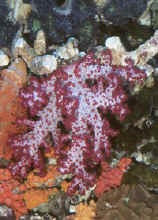
PhycoPure for Dendronepthyas Bob, << Blundell today >> Greetings. I noticed a discussion on WetWeb regarding Dendros. I am fairly new to this hobby but am not new to microalgae. I have been culturing it for academia to biotech to aquaculture for about 20 years now. I have started my own company over the past years producing microalgae products and a friend (scientist) mentioned that he would like to see a quality phyto blend on the market as he was not happy with the processed products available. << Yes, I'm familiar with these ideas. >> I spent 1 year formulating blends and giving them to different aquarists to try-adding species that I have seen be very effective in aquaculture settings. These tend to be the more finicky to culture but hi-nutritious species. The result is a product called PhycoPure that has 7 species plus zooxanthellae clade A or clade B depending on culture status. << I'm also familiar with your products, and am thankful Rhyne talked you into making it. >> The particle size ranges from 2 or 3 um to 25um. I am in the process of evaluating an even smaller size highly abundant reef spp. to be added if all looks good. I produce it weekly in batch so it does not inventory, I get it out to stores within the week it is produced (plus or minus a few days). I recommend stores buying what will move in a month or less and that way it is in the consumer's hands and used within a month. This keeps things fresh and the quality higher. The blend stays live for months in my lab but the species composition/profile changes from what I advertise over time.-truthfully conditions in a bottle or bag are well below optimal for anything living. << Indeed. >> The water used is Atlantic that has been uv'd, charcoaled, ozonated, and tested for specific pathogenic Vibrio. The litmus test has been an effort to raise the Dendronephthya, Scleronephthya. I have read everything by Fabricius and agree with the concept of organics being important. I can say that one spp of Dendros I have reacts to the phytoplankton and remains open a good part of the day. I use hi-flow, low light and feed copious amounts of the PhycoPure blend. << Definitely what we recommend for such corals. >> It seems that orientation is not much of an issue but that still needs further scrutiny. I have had some since May but the twin hurricanes that hit us in Florida took care of that. I am beginning to feel that acclimation is the largest issue regarding success with these critters. << Possibly, but I think it is feeding. >> Other observations include 1) spp coming in thick and then elongating and branching profusely...current? It is somewhere in the realm of 3-4 inches per second. << Possibly. >> 2) a commensal shrimp often accompanies many of the Dendros I have rec'd-pure white except for the eyes and gut tract 3) I feed some gorgonians Cyclop-Eeze and even though.. it appears. that the Dendros do not take the individual Cyclops in (like the Diodogorgia gorgonian) they react by opening and going erect-it could be the algae I mix the freeze dried Cyclops with or the "juice"-organics/lipids/phosphates. whatever. << Yes the "juice" has that affect, and even though the coral doesn't appear to eat Cyclops I think there is good reason to believe they are eating the "juice". >> Any comments, thoughts would be appreciated << Tell Andy that Blundell says hi. And that we appreciate him sending us your product. I think your product is great. I think you could also sell a lot of it if you also offered each species separately and not just a mix. I know people where I live would order them. Also I wouldn't focus on Dendros. While it is true they need this, not enough people have Dendros. But everyone and their dogs have SPS corals. So that is a better marketing area. >> regards, Erik S Stenn President AlgaGen LLC PO Box 1734 Vero Beach, FL www.algagen.com 772-978-1395 << Blundell >> Keeping Dendros Cheers, Brian Thanks to Bob for the cc... I have a little to share on the keeping of azooxanthellate Nephtheids. I have had/seen success keeping some specimens (defined here as healthy captive residence for 3 or more years and/or the successful natural (not imposed) formation of divisions: branchlet dropping only, alas). I am aware of a few folks that have had even greater success... most notably Peter Wilkens. Chatted with him at length about them at MACNA Baltimore I believe it was. The common thread to all so far has been two-fold: 1) identifying Scleronephthya as a lead candidate from among the collective masses of azooxanthellate Nephtheids collectively shipped as "Dendros", and 2) giving up on the outdated and recycled belief that they/all need phytoplankton (bunk IMO). The latter has really been a huge handicap. The present day abuse of bottled phyto plankton products among reef aquarists is significant. Many seem to forget that most corals are carnivores. I'm getting a bit off tangent here with my rant <G>... but know it to be true. Phyto is helpful for most marine aquaria in small portions. But not to the extent to which aquarists are abusing it commonly without proper address of zooplankton generation and the production of "other" matters (epiphytic matter from strong vegetable filters, bacteria, etc). To the point with "Dendros". Indeed, some have been demonstrated to actually consume algal matter (see "Hudi" Benayahu's work on this topic)... but as many such Nephtheids are known and/or believed to feed largely on floc or colloidal matter (ingesting bacteria primarily or incidentally). And many more "Dendros" are found in crystal clear waters and seemingly are feeding largely by absorption. Bottom line: I believe that fewer Dendros than is commonly perceived actually feed to any great extent on phyto. In support of this, friends with long term success with Sclero's are feeding no phyto, but instead stir their DSBs weekly or more often. Wilkens said he has maintained his propagating colony this way for well over 8 years, if I recall correctly. My success and experience is consistent with this. For your Dendros... I believe you will get far greater mileage from a mature (over 1 year olds) and fishless refugium with a deep sand bed than any paste or bottled supplement. In fact, I am sure of it :) I hope this helps. Please do share your experiences in time. With kind regards, Anthony <Thanks Antoine... will be posting. Bob F> Subject: Keeping Dendros > How'd things go on the weekend of your visit? Sorry > I didn't get to see > you off. My diving trip to Monterey was very nice. > <Ahh, good to hear. The surf was supposed to rise to > be HUGE!> > About a year and half ago I did a bunch of research > into keeping the > colorful asymbiotic Nephtheidae (Dendronephthya, > Scleronephthya, etc. AKA > Dendros). The break throughs that Randy Reed of Reed > Mariculture was > having in producing phytoplankton paste made me > hopeful that it might be > possible to keep them. Rob Toonen was hopeful too. > <Not easily kept> > However, I didn't do anything about it. And, Charles > Delbeek tried what > I was considering and his specimens didn't do well. > I e-mailed Dr. Delbeek some questions about his > attempt. I haven't got a > reply yet but it has only been a few days. I've been > corresponding with > Eric Borneman too because he wrote those articles on > keeping, or not > keeping, Dendros. I figure he'd know if anyone had > pulled it off. He is > not aware of anyone who has been successful. > <me neither> > You travel further and wider than anyone I know. > Have you run across > anyone keeping Dendros? > <Not for (very) long. Will cc Anthony Calfo here to > see if he has input. Be > seeing you. Bob Fenner> Aussie Thistles- Aposymbiotic Nephtheids (AKA Cauliflower corals) Anthony, We call Dendronepthyas thistles as they have the prickle look as a thistle. Ahhh yes, thank you my friend!> thistles seem to be hard to keep in an aquarium. Why is this and what are the ideal conditions for it to survive. e.g.: placement in the tank and food sources etc?? Thanks Stu <good question, mate... and not one that we can yet clearly explain/define. Clearly one of the main problems is that we do not adequately understand what they eat or how to deliver that which we do know. Some eat phytoplankton, but require very specific and ultra small prey/particle sizes. Nothing that we can provide from a bottle. IN such cases, a live phytoplankton water on a constant drip is necessary (tedious and something few aquarists are willing to do). Other aposymbiotic Nephtheids we do know (form following function, specific polyps structures, study, etc) that do not (!) eat phyto... some of which occur in crystal clear niches in the sea (little apparent particulate mater to feed on). These specimens we believe to be feeding by absorption... but on what? And other species still we think feed upon bacteria, floc, colloidal matter, e.g. and that is not something we can yet provide in aquaria. If you endeavor to keep these creatures... please do so in a species specific tank with a deep sand bed and a large refugium (fishless) for generating natural plankton. Some advocate sand stirring daily/weekly to enhance feeding opportunities. Best regards, Anthony> Re: Dendronephthya I'm going diving and want to look closer at the Dendronephthya. Do you know what makes it inflate/deflate? is it current, time of day, end of feeding cycle????? <Is most open in moving water, can be larger in day or night. Seems to feed/enlarge when there is greater likelihood of food concentration being higher (night, in current). Bob Fenner> Cheers Peter Sun Coral Dear Mr. Fenner, <cheers, Anthony Calfo in your service> Just a quick THANK YOU for the Q & A page you post. <please tell a friend about us!> I recently got my first salt water aquarium and in what was I'm sure typical "first-timer enthusiasm" purchased only one thing that was NOT recommended. Excited and ready for the challenge I brought home none other than the sun polyp... several of them in fact. <do you mean Tubastrea the stony coral or (Proto)palythoa grandis the zoanthid?> Of course the moment I got home, still thinking what a joy it would be to nurture these sensitive creatures by feeding with a turkey baster. I read up on them and every book I had purchased said 'not for beginners'. <agreed... although they are hardy in a dedicated species tank if fed daily and they can even breed readily via asexual planulae> Over the last few days I had become disheartened and concerned that in my zealous I had sentenced these beautiful creatures to death. It was tonight, only three days after I brought them home that I found your site, and one other www.reefrancher.com both of which proved to be so helpful, and yes even a little uplifting. The other site is a small one with no contact info but it provides instruction on how to build a very simple feeding system that will help protect the rest of the tank from getting contaminated by too much food. <I am very familiar with feeding hats, but strongly disagree with keeping this animal in a mixed reef display with symbiotic creatures. You will either have too many nutrients for most or not enough for your sun coral. I honestly troubles me to see it fearing that yours will likely become a statistic if it stays in a generic tank> I would love to hear what you think of this "Lunar Lander" method if you get the chance. Again thank you so very much for all of your hard work. <I like the method reasonably well but think that it would be best applied to aposymbiotic creatures living in a proper species-specific display> I promise I will do my best to care for the sun polyps and will take them back at the first sign of starvation. <my friend... such is not possible. Irreversible attrition is not evident before it is too late in animals with only millimeters of living tissue covering their skeleton. IMO, you need to commit now to a separate system or get them into the hands of someone that can> I just wanted you to know both the polyps and I now have a better chance of succeeding because of you. Sincerely, Laura Veeder <I admire and am grateful for your empathy... best regards to you in your endeavors. Anthony> Re: Daily Fish Email out WWM (Soft Coral Survivability's) Nice. My Fiji (Walt) Dendro is on its second week of life, but it lost a lot of its spicules in shipping and during it's first day in my tank. Seems to be doing fine, but I really haven't a clue for keeping the guy. <Two weeks is very close to a record... You must be doing "something right". Bob Fenner> Thanks, Todd Dendronephthya Hey Bob, Saw a picture of this coral species in your book and I am in love with it (mainly the red carnation). What kind of requirements are necessary for this coral to thrive and grow. My idea is to put it in a 29g tank as the center piece. This tank has a 175w MH for 7hours a day and a 20w actinic that is on for about 14. The water is crystal clear, and there will be no other tankmates except for maybe a pair of clowns or sea horses. Thanks for the help, Stan >> This is amongst the "holy grail" of difficult genera of soft corals to keep... Please stop me, and yourself if you haven't tried/been successful with other species of the group. Some general comments... most are lost to poor collection/damage in being extracted from the wild (most any tear, and their gone). The highest water quality... with contrarily, very small (so-called nano-) planktonic life (they are, I am very convinced) micro-micro filter feeders... absorbing small life and bio-chemicals from their surrounding water... most don't require much in the way of light (great ones live almost in the dark in the wild)... They do go "flaccid" naturally (generally diurnally) and in captivity... Sorry to be/seem so negative, but do practice for a while on other soft corals... that don't "just die" so mysteriously... and come diving with the rest of us, and enjoy these animals where they do live. Bob Fenner Help with a red coral Bob- I just purchased a red coral that was labeled as just that, "red coral" I think it would be considered a soft coral and it looks like the picture I see on the Aquacon site called a STRAWBERRY CHILI SOFT CORAL- Caroltalcyon but, I can not find any information about this coral anywhere. Any input or insight? The coral is "hard" it isn't flimsy like xenia or an anemone and the surface of it is all red, little 'pores or spicules' rise up off of the red base (they are white at the base with a band of red and small white tentacles at the end). Thanks for your time! Ann <Sounds like a Neptheid of the likes of Dendronephthya... Not hardy, easily kept. I would return it post haste. My further comments on this common name/soft corals are posted here: http://wetwebmedia.com/dendrofaqs.htm Bob Fenner> Dendronephthya I would like to know what requirements this coral has? I have done some research but have not found much. I bought the coral through the mail and can <Likely you meant "can't"> return the coral otherwise I would. I am ready to take care of this animal but just need a little help. I have had it for 3 days now and it was doing fine but this morning it was slumped over and kinda deflated. I have been feeding marine snow and have moved it to a less lighted spot with more current. Any advice would be very, very Helpful!!!!!!! Thank you !! Chris <My best advice... don't order, buy organisms that you don't know enough about... This genus of soft corals is exceedingly difficult to maintain in captivity... non-photosynthetic, nano-planktivorous to chemo-trophic. Please take a look at the scant information, references re posted on our site: http://wetwebmedia.com/dendrofaqs.htm Bob Fenner> Dendronephthya Hi, We are reefers for almost 3 years now, but before that we kept African cichlids for a long time. <Ah, a common personal evolution/unfolding. Me too> We have a 150G reef, with 2 250W metal halides 6500 or 7500K I don't really remember, plus 2 actinic VHO. We have the perfect amount of current in our tank and it contains a lot of live rocks (we stopped counting!!), 10 pieces of Acroporas, 2 Gonioporas, 1 Gorgonia branch and a lot of soft coral. Everything's doing great, we never had any major problems. We use a Tunze protein skimmer in a 33 gallons sump. We are now building up a calcium reactor. <Sounds great so far> Yesterday we've bought a carnation coral. We know it is hard to keep, but we are ready for the challenge. Along with it we've bought marine snow from 2 little fish. The guy told us we had to feed it once a week, but I believe it need to be fed much more than that. Also we don't really know when to feed it. Is it better to feed it at night or in the morning? Very small, exceedingly tiny plankton... These are not hardy organisms for aquarium use as you seem to be aware (now)... can be kept at times, usually in systems without skimming (which removes too much dissolved organic nutrient as well as food particles)... I do encourage you to return this specimen if you can...> What about lighting, some say it needs a lot of light, others say it needs a shady spot, some say it needs high current, some say it depends. I would really like to have as much information as you can give me. I didn't buy this coral without knowing, but I need more info. Thanks a lot, Yannick and Nancy Quebec, Canada <Not strong lighting, most live in subdued situations, under overhangs, in "caves" in the wild, and not strong, but steady current, and non-linear... i.e. reciprocating like some wavemakers, rotating powerheads produce. Do keep working on that protein skimmer, and if you don't return this soft coral, do be ready to remove it when it seems to deflate one last time to where it won't re-rally. Bob Fenner> Hey there, My fianc?bought me something called a strawberry coral, along with it came a purple leather it was on the same rock, well the leather is doing well, however my strawberry coral is slumped over, so i just changed his position and put him in a new place in the tank, what could be wrong? my water is fine, i had it tested yesterday before we bought it, it was fine till this morning, my lighting is a 50/50 Tri something, and a blue actinic light, they said its find lighting for what we have and want in the tank, Please help if u can, thanks I appreciate it Tawny >> Yikes, this sounds like the "Strawberry Corals" of the Soft Coral genus Dendronephthya... and they are NOT easy to keep... if it were me, I'd take this animal back to where you got it and ask for credit toward something much hardier... You can read about this group on my site: Home Page Bob Fenner |
|

|
Features: |
|
| Featured Sponsors: |