|
|
| Home | Marine Aquariums |
Freshwater Aquariums |
Planted Aquariums |
Brackish Systems |
Ponds,
lakes & fountains |
Turtles & Amphibians |
Aquatic Business |
Aquatic Science |
Ask the WWM Crew a Question |
| Please visit our Sponsors | ||||
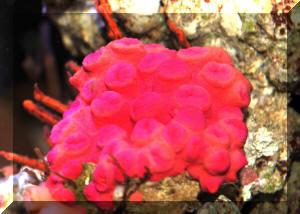
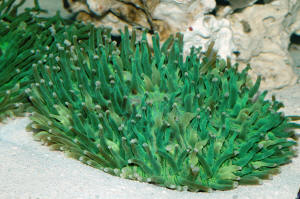
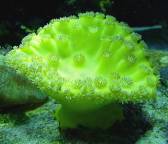
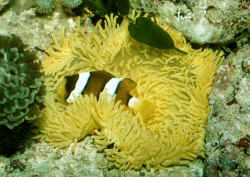
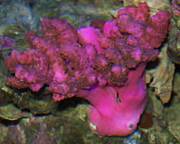
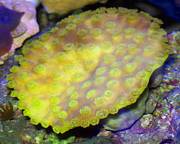
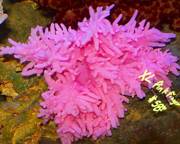
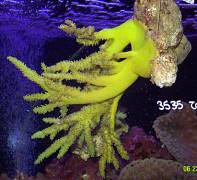
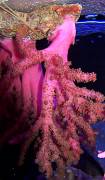
Left: Magenta "Colt" coral Center: Fading yellow "Cup" coral Right: Pink "Finger" coral
The trade in reef animals for the aquarium hobby has seen a recent and
abhorrent novelty manifested in the occurrence of artificially dyed
corals. Normally pigmented Octocorals (soft corals) and Scleractinia
(stony corals) have both been subjected to unnatural pigmentation in
gaudy, unreal colors of pink, magenta and bright yellow, just to name a
few. Most experienced aquarists recognize such animals as inherently
unnatural (and inevitably compromised) and almost intuitively avoid
purchasing them. Regrettably, however, enough uninformed aquarists
continue to discover such wonders of incredulous color and fuel the
trade and practice of dyed corals with their purchases. Some of the
most commonly dyed corals include, but are not limited to:
"Leather/Finger" coral (Sinularia), "Colt"
coral (Klyxum), "Cup" coral (Turbinaria
peltata), "Flowerpot" coral (Goniopora), and
"Trumpet" coral (Caulastrea), as well as sebae
and "carpet" anemones. One could be tempted to say that responsibility
for suffrage imposed upon dyed corals by this technique sits partly
upon the shoulders of the dealers of marine livestock. Dealers could
choose not to order such animals deliberately or pay for those sent as
so-called "substitutes" to effectively tantalize a vendor and
its customers. Part of responsible retail, in my opinion, does indeed
include a conscientious decision by merchants to not make inappropriate
animals available for impulse purchases by uninformed customers that
are largely represented by impressionable new aquarists (hobbyists
least likely to be able to successfully care for diseased, stressed or
dying animals). The argument would proffer the notion that a merchant
should want to take the long-view of farming more satisfied and loyal
customers for the trade with helpful sales and products to encourage
the long-term participation and investment in the hobby by consumers. A
responsible retailer should take heed of such matters out of sober
consideration for the future of their very livelihood, if not with
empathetic concern for (or moral obligation to) the living resource of
the reef environment. It may not even be enough for a good dealer to
simply avoid bad products when another merchant is willing to sell
them, however educating the consumer is in everyone's best
interest. Some of the world's best aquarium products dealers guide
their customers with detailed livestock husbandry placards, seminars
and workshops, good book recommendations and, of course, honest and
accurate advice. Indeed, successful aquarists are the lifeblood of a
dealer's trade in the aquarium hobby and every merchant should be
intimately concerned with attracting and keeping customers when the
rate of attrition (aquarists leaving the hobby) is unnecessarily high.
Obviously, failing and disillusioned hobbyists are not inspired to
continue spending money in the trade while watching stressed and dying
animals in their aquariums. In plain language, however, the ultimate
weapon for empathetic participants in the industry of aquarium science
against dishonorable practices is truly, instead, the educated
consumer.
The Educated Consumer
Aquarists owe it to themselves, if not the reef
denizens that they admire so well, to research prospective livestock
and their captive needs with consideration for the care that they are
willing or able to provide for said animals before making a purchase.
Part of this process of discovery should reveal the history of a
coral's fundamental viability in captivity. Let there be no doubt
that educated consumers alone and single-handedly can make or break the
trade in an animal. Regardless of how many dyed corals are
"produced" by exporters or ordered by dealers, the consumer
has the final word on the lifespan of any such product offered on the
market. In a brief segue, let me offer a topical analogy for
comparison. There has been concern in our society for the escalating
portrayal of violence in popular cinema and what effect it might have
on people and, more specifically, how it might it shape the minds of
our children. In any event, let there be no doubt that the creators of
such movies would not continue to produce multi-million dollar films
with extreme violence, for example, that failed to draw a single paying
customer to the theater. Movie producers, quite like coral exporters
and dealers, are not operating charities! Rest assured that they do not
wish to ever offer a product that will not sell well, let alone incur a
loss or debt. And so, the educated consumer need only vote with their
feet by leaving the establishment selling inappropriate animals and not
spending their money. This will promptly and directly impact what is
offered in the market. On the contrary, a dyed coral purchased by an
aquarist is a vote for the product and will likely be replaced
by another in kind. This article intends to introduce aquarists to the
practice of dyed live corals with the hope of succeeding in helping
folks to identify and avoid artificial specimens, and to assist those
with dyed specimens inadvertently in their charge.
Identifying the Problem
The notion of dying aquatic animals is hardly new even among cnidarians (stinging-celled animals). For many years, exporters have dyed anemones in a dreadful practice that unequivocally compounds shipping stress and rates of mortality in such animals. In the early years, the practice was applied in a myriad of colors before aquarists and dealers began to realize the dismal impact it had on the anemone's survivability. Alas, the practice has not been entirely eliminated, as the occurrence of dyed sebae and carpet anemones is still observed, albeit limited in scope and color. Artificially dyed yellow sebae anemones are perhaps far and away the most common perpetration of the act. Like carpet anemones (Stichodactyla sp.), sebae anemones are naturally brown or green colored (other rare colors too, but NO yellow). And while uncommon color morphs may exist, they are rare and priced accordingly. More often, aquarists will find unusual colors in stressed, bleached or dyed animals. Stressed animals will appear to have a thin or watery visage as with yellow or lime colors in naturally green specimens and tan or red colors in formerly brown pigmented animals. The most severely stressed anemones will appear to be white colored. Bright colored tips (often purple) will remain if they were natural originally, as they generally are not a Zooxanthellae pigment or readily aborted under duress. The paling change of color in stressed cnidarians (coral and anemones) approaching white is the expulsion of life-giving symbiotic algae (Zooxanthellae) under stress. Without Zooxanthellae to provide food/carbon through photosynthesis with adequate light, a "bleached" animal is resigned to starve to death in weeks or months without extraordinary diligence from an aquarist with compensatory feeding of particulate and/or dissolved foods to the dyed victim. The coral or anemone will continue to execute normal polyp cycles, at least in the early weeks after the assault, and this will make direct supplemental feeding easier. A dyed coral or anemone will require the same due care and consideration as a pale stressed or bleached animal.
The fundamental problem with dyed corals and
anemones is that the saturation of their tissue with dye impedes the
penetration of light into, and the refraction of light within, their
Cnidarian tissue for the proper stimulation of Zooxanthellae in
symbiosis. Even without definitive scientific proof to confirm this,
our present understanding of the dynamics of Zooxanthellae in symbiosis
with a host Cnidarian lends a very informed assumption of the
deleterious possibilities of dying live coral tissue. Zooxanthellae
have evolved to utilize very specific wavelengths and intensities of
light. Any shading or corruption in the illumination of these symbiotic
algae as with dye-stained tissue surely impedes their function and
ability to feed and support their host. This assumption is underscored
by the everyday reality seen by aquarists in such animals with
increased stress of acclimation and subsequent mortality as depicted in
the series of photos below. Such corals appear otherwise
"normal" at first with full polyp expansion and cycles (below
left). Soon, however, the natural and full extent of polyp cycles
becomes diminished (below center) and the intensely dyed pigment begins
to fade. The paling color soon reveals an animal that has also lost its
natural pigmentation. What better proof, I say, against ignorant or
unscrupulous dealers of dyed animals that this practice is harmful than
the very absence of natural coloration (life supporting Zooxanthellae)
after the dye fades? Volumes have been written on the function of
Zooxanthellae and it is unmistakably clear what happens to a Cnidarian
that loses or expels its symbiotic algae: loss of vitality and
increased rates of mortality. Without Zooxanthellae, these animals
suffer ever more each day and become more vulnerable to pests,
predators and diseases, not to mention the consumption of their own
tissue from starvation without their Zooxanthellae. In severe cases,
tissue necrosis begins to ravage the animal (below right) and death is
imminent. Under the best circumstances (often with the otherwise
durable Turbinaria peltata "Cup" coral), the animal
will require months to recover resident Zooxanthellae in a process of
misleading blotchy color that lends one to think that the animal is
recovering poorly. Even when such animals survive, their rates of
growth will have been significantly reduced and they may even have lost
mass to consumption.
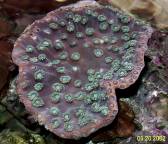
* Stressed, dyed coral: left and center,
Sinularia bleaching of pigmentation (dye and
Zooxanthellae)… at right, tell-tale signs of a severe necrotic
infection on the blackened tips of this newly imported
Sinularia. How to Identify a Dyed Coral
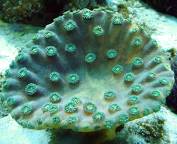
Photos: Turbinaria peltata at
Left, dyed yellow and Center, blotchy dye-fading and recovering natural
color, and at Right, a natural color of the "Cup" coral.
Natural colors include variations of solid or combined brown, gray, tan
and green… but never such bright yellow. There are naturally
occurring bright yellow Turbinaria in other species for which
this animal may be mistaken. However, a cursory exam by even laymen can
distinguish most every T. peltata from any other popular species
in this genus by the presence of large sparse polyps on the corallum in
contrast to the generally tiny polyps of other yellow
Turbinaria. Identifying a dyed coral can be a difficult
obstacle for the novice aquarist for whom the marvel of so many
naturally wondrous colored corals has not yet afforded an eye to
distinguish the few unnatural or corrupted specimens from the many
innate beauties. For all aquarists, the best weapon in defense of such
unwise purchases is, again, being an informed, educated consumer. This
entails conducting adequate research on an animal before and beyond the
biased assurances of a dealer, however well intended that person may
seem. A responsible aquarist will not indulge in impulse purchases of
animals for which they know nothing. As empathetic
admirers of the coral realm, we are obligated to research a coral's
fundamental needs of husbandry such as light, feeding, water quality
and especially viability (hardiness). Unfortunately, some unscrupulous
dealers have been marketing dyed corals as super-colored or
very rare specimens (often at a premium price: the ultimate
insult to the consumer). Such tactics exploit the mesmerized and
uninformed consumer's inclination to make the impulse purchase for
fear of missing the chance to acquire something "special". If
one could see these dyed corals on import, however, the
"special" nature of their color would often be more apparent
as their shipping water is often not-so-mysteriously the same color as
their tissue. In some cases with Scleractinians, the most conspicuous
evidence that such animals are "manufactured" is the presence
of exposed corallum (skeleton) that is stained the same color as the
coral tissue! Let's be clear about this; Scleractinian
"skeletons" almost without exception are white calcium
carbonate. The non-Scleractinian but stony-like Octocorals
Tubipora and Heliopora do produce a red and blue
"skeleton" respectively, but no corals produce bright canary
yellow or neon pink "skeletons" naturally. Indeed, it cannot
be stated any simpler or more emphatically: information is the oxygen
of understanding. Caring for Dyed Coral
For aquarists that find themselves in the
service of a dyed coral for any reason, the single most important
dynamic to remember for improving the animal's chance of survival
is feeding. Beyond the essentials of good water quality
for reef invertebrates, it is critical to feed dyed corals as well or
better than natural corals to compensate for their loss of production
from shaded or expelled Zooxanthellae. Dyed corals are starving
animals. Their metabolism is slower, their immunity is weakened and
they may very well be dying. How much to feed will depend on the coral
species, of course. But take heed that most reef aquarists drastically
underfeed their corals and too many others at large inappropriately
feed their tanks (like with heavy feedings of phytoplankton to
zooplankton feeders). Another significant consideration for
aquarists in the charge of dyed corals is the stress of system lighting
that might be regarded as bright or even average. Indeed, a dyed or
bleached and recovering animal can be quite sensitive to excessive
illumination, which can and does increase rates of mortality if
misapplied. Under-illumination, however, can often be compensated for
with appropriate feeding or perhaps most only with what appears to be
inadequate light (more about this below). Indeed, there has been a
popular and abused trend in modern aquarium keeping towards, what is in
my opinion, the obscenely intense illumination of shallow reef
aquaria with unnecessarily high wattage metal halide lamps. While some
corals tolerate or even need such lighting (favored by many SPS coral
keepers), the overwhelming majority of popular corals can often suffer
in shallow water under banks of 400-watt bulbs. In fact, prior to the
application of "lava-making", high intensity lighting
schemes, most every coral kept successfully in the last decade was
maintained nowhere near its saturation point for photosynthesis.
However, a coral does not need to be illuminated near its saturation
point (indeed a precarious level for corals to live at), but rather
meet its compensation point for survival. And with the reality
of sensible lighting schemes and regular feedings, such coral not only
maintain but also grow very well without being radiated by the most
extreme end of the spectrum. And so, let me suggest that dyed and
recovering bleached corals be kept in low to moderate light, likely in
the bottom third of a well-lit aquarium. In time with evidence of
recovery, the specimen can be slowly migrated up the rocks cape to
brighter light and slowly improved natural pigmentation. For additional
tips on acclimating stressed symbiotic animals please refer to the
chapter on lighting in my Book of Coral Propagation, Volume 1 or visit
our Wet Web Media internet site at http://www.wetwebmedia.com/acclimcoralslight.htm
where the revised excerpt is posted. Responsible
Aquariology… In parting, what can you do to help? First and
foremost, don't buy theses animals! Vote with the strongest weapon
you have… the consumer dollar. If the shippers that execute this
abhorrent practice are too ignorant to know or care about a better way,
and the local retailers are similarly ignorant or worse, then send a
quiet and powerful message: don't spend your money on them. If you
feel compelled or are in a position to be able to help a good dealer
who would embrace a polite education on the practice, then by all means
speak up and please do it respectfully. Perhaps share a copy of this
article or any other bits of information that might seem topically
helpful. Indeed, for every day there is a better way.
The single greatest threat to our industry and the hobby of aquarium science at large is not restrictive legislation on the importation, transportation and sale of exotic aquarium life: it is the attrition of participating aquarists! At times the number of new aquarists entering the hobby and leaving soon seems like a great revolving door. If such aquarists could be better educated and advised to succeed then the hobby at large would benefit tremendously, from the profits of the merchants to the body of knowledge that we know collectively as aquarium science. For this we all need to do our parts with collectors delivering healthy and appropriate livestock, retailers providing honest and accurate service and aquarists promoting education and good fellowship. From the upcoming second
volume of the Book of Coral Propagation: REEF
GARDENING FOR AQUARISTS, by Anthony Calfo 2002/2003
A special thank you to Doug Brummet of the Bay
Area Reef Enthusiasts club (B.A.R.E.) and Amy Larsan for their
assistance in helping to secure useful photos for this article.
Photographs by Anthony Calfo and Tom Cook
Questions for the author or regarding the Book of Coral Propagation, Volume 1 may be directed to anthonycalfo@readingtrees.com Please look us up on the Web at: www.readingtrees.com |
|

|
Features: |
|
| Featured Sponsors: |
MD.JPG)