|
|
| Home | Marine Aquariums |
Freshwater Aquariums |
Planted Aquariums |
Brackish Systems |
Ponds,
lakes & fountains |
Turtles & Amphibians |
Aquatic Business |
Aquatic Science |
Ask the WWM Crew a Question |
| Please visit our Sponsors | ||||
Marine Betta questions; mostly
fdg. 10/29/11 Fish Compatibility, w/ Plesiopsid
4/30/11 Marine Betta / comet Success Story and some general
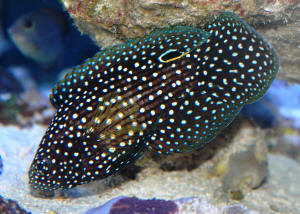
questions\observations 5/16/2010 Calloplesiops altivelis questions 2/13/08 Hello Mr. Fenner, <Charles> I've been enjoying your website for over a year now, and am learning lots. Thank you for putting so much information together in one place. <Welcome> I've been researching Marine Bettas (Calloplesiops altivelis) off and on for a few months. In searching through the FAQ's on WetWebMedia, I found no reference to a site I just found that has some valuable information on sexing these beautiful fish (basically trial and error by introducing two individuals and seeing if they fight or not for forming pairs, but useful nonetheless). http://synchiropus.com/ has some great information in their forums from folks that appear to have been working with and breeding these fish successfully. There's a section specifically dedicated to Comets/Marine Bettas. <Thank you for this referral> I'm planning to set up a 72 gal bowfront with a pair of Marine Bettas. The tank will be a FOWLR, maybe some mushrooms or some such invert that will do well in the low light I plan for the tank (possibly as little as 2 40W fluorescent bulbs) to increase the probability that the Bettas will spend more time out and about. I'll have a 29 gal tank for a sump/refugium with a DSB, Chaeto for nutrient export, and a Mag Drive 9.5 for the return. I'll be using a single Koralia 2 or 3 for additional circulation in the tank. Currently, the protein skimmer will be a SeaClone type skimmer'¦ I know, not that great, but my fish budget is currently broken (trip to Lancaster, PA and That Fish Place did it, but with a 20% off coupon, how could I resist'¦) <Nice place, folks there> I may undertake a DIY skimmer if need be to keep the cost down. <The Seaclone will work here> I hope to eventually breed these fish. <Has been done a few times... commercially even...> I know that the ideal situation would be a species tank, but my wife isn't crazy about the idea of just two shy fish in this tank. (have to keep the wife happy, she's my fish habit enabler =D) Do you have any recommendations for tank mates for these fish? <Somethings small, very easy going... maybe some Microdesmids, gobioids, Blennioids, Anthiines> I was considering a Chelmon rostrata (I've wanted to keep one of these fish for some time, but it just won't fit in my 150 reef). <Do wait till the system is well-established here> My wife and I also like the snowflake moray, but I'm uncertain whether or not this eel would be a good fit with the Bettas or the CBB. <Mmm, not really> I was also considering some neon gobies for cleaning duties. I know'¦this is getting high on the stocking level. Do you think I could do without any sort of 'cleaner' organism and just rely on my quarantine to prevent disease? <Yes> I'm reluctant to not have any cleaners. I've experienced one outbreak of Ich in my 30 gallon tank that wiped out half the fish. My 150 reef had been largely Ich-free until a few months ago. I must have brought some organisms in on a couple pieces of rock that came with some corals I added to the tank'¦ that'll teach me to quarantine inverts as well as fish. My purple and sailfin tangs and Doctorfish get a few spots every now and then, but my three cleaner shrimp have kept it in check. Anyway'¦ getting a little off track here. I know the Bettas will eat any shrimp, and that they are resistant to disease, but I'd like to have some kind of cleaner for any other tank inhabitants. <Do try the Gobiosoma/Elacatinus then> Lastly, regarding the Betta's tendency to consume inverts; does this extend to hermit crabs and snails as well? <No> Wow, this email got really long'¦ Thanks again for all your hard work. I really love your site. -Charles Peguero <Thank you for sharing. Bob Fenner> Marine Betta Not Feeding -- 08/27/07 Hey y'all, After some research and thought I bought a Marine Betta about a month ago. I read that they are shy but wow that's an understatement <Yes... all the Plesiopsids I've encountered in the wild were virtually under rock overhangs...> Beautiful fish, not to <too> skinny and no tale <tell?> tale signs of disease. I went ahead and quarantined it for about a month trying unsuccessfully to get it to eat. <Not likely in quarantine with this species... too "shy", easily stressed in such a setting> I Frozen Brine, Midis Shrimp, Flake Food, Pellets, Blood worms, etc. Then I moved on to live foods hatched some brine shrimp and then tried some ghost shrimp. Nothing enticed the big guy. So, when reading I ran into a suggestion to throw it into my main tank. <Yes... this is what I would do> They claimed that generally the fish will start eating if they saw other fish eating. See as the fish shows no signs of diseased I figured why not give it a shot. So a couple of days ago I threw him into my 250 show tank. Even though he comes out now and then when I feed to see what is going on he does not partake in the fishy feast I present. Any suggestions. <Hopefully is eating "incidental" foods from the substrate, rock... when you're not looking> I could move the guy back into my 100 gallon quarantine tank and keep throwing all kinds of food at him but.... Anyway, I hate to see the fish fast for too long though I realize our cold-blooded brethren can go without food much long than us. Also, I have this zoo ,or maybe rock anemone but it doesn't look like the ones you have pictured, that I can't identify I am sending a picture. <None here... please re-send> If you know what it is great if not no worries mates. Any help here would be appreciated. Thanks, Zach <Does your main display have a tied in refugium that supplies it a goodly amount of small crustacean and worm life? Can you see the Betta from time to time? I would not move it unless it appears to be getting thin... but continue to try to offer foods about where it generally hangs out. BobF> Marine Betta and the Mandarin Challenge!!! Feeding -- 09/29/07 Hey Y'all, I would briefly like to complement Bob on his ability to help me coax my many animals into eating. Especially my notorious fasting Calloplesiops altivelis (aka Marine Betta). Thought I would share with you how I got him to start feeding on frozen foods. <Please do> Most of my other fish "sleep" during the night but he is always awake; so, I decided to try and feed him while he had no competition. Tada, he feasted on Selcon soaked midis <Mysids?> shrimp and blood worms to his hearts content. After a few days, he realized the food I offered during the day was also possible prey and now comes out to feed. I also bought a few hundred saltwater feeder shrimp. He seems to enjoy the hunt :) and seems to be healthy. Anyhoo, want to take on the Mandarin Challenge. I want to put a Mandarin in the aquarium I have in my guest restroom. I have been reading about them and I am pretty sure my refugiums can supply them with enough copedes to keep them properly feed. I have about 200gallons of refugiums thriving with copedes <Copepods...> and worms and full of Caulerpa. I want to keep him alone in a 20gallon tank full of live rock it has tons of copedes and tiny crustaceans but he will eat all of them in a couple of weeks from what I have read so I wan to tie it into my fishless refugiums. I have a few questions and I don't want to kill the little guy that I end up with. Is the 20gallon large enough or should I move up to a larger tank? <Larger would be better...> I would like to keep it as small as possible. If I tie in my refugiums from my show tank will this feed him properly? <Maybe... You should be able to see/discern this... thinness...> If I do this though how would I quarantine him? <I wouldn't quarantine Callionymids> If I decide to run him on a system separate from my main setup how large of a refugium would keep the little guy happy and well feed? <... the bigger...> I want to set this up and I am going to try and do it right. Also, I am wondering if I couldn't feed the Mandarin the rotifers that I culture for my fish fry? <Likely too small...> Do hermit crabs eat copedes <...> I have always keep my refuges completely fallow but I was thinking I might stick a few hermit crabs and snails to help keep things clean? I have read though that these little fish can get killed by another inhabitant looking at them crudely. Thanks in advance for any help you might be able to give, Zach <BobF> Marine Betta Was offered a Marine Betta-----I have a 55 gal. tank, occupied by sm. tang, two med. clown fish. Will they be ok together? ( Betta is about 8",s ) <Your tank is a bit too small... the Clowns might go after the Betta... I give you about 50:50 odds (if there's a large enough rock cave for the newcomer), but about 100% if the system was more than one hundred gallons. Bob Fenner> Marine Betta Mr. Fenner, I work at a pet store and about a month ago we got a box shipped to our store that we did not order. One of the fish that was inside was a marine Betta. After a bit of begging the manager let me take him home to my 125 gallon reef. He is an incredibly shy guy but if I turn the lights out in the room and sit for a bit he comes out and displays in front of the glass for me rather nicely. The problem is that even though he looks great and hasn't lost a bit of weight I haven't seen him eat at all. I have about 150 lbs of live rock that I have had for three years and I was wondering if maybe he has been finding stuff off of that to eat. If you could give me some kind of feeding information on these fish I would appreciate it greatly. <Since he is so shy, start him off with some gut loaded live foods, such as ghost shrimp. Then wean him onto other foods, like frozen krill and eventually prepared Formula-types. Look at the WWM site for info on training groupers and lionfish to eat prepared foods. A varied diet is best. -Steven Pro> Roundhead addition Hey Crew, Last night I was at a local fish store and spotted the most unique looking "Grouper" that they were selling for $20.00. Little guy caught my eye so after talking to an associate about his needs I picked him up to go into my 54 corner. Well..... After doing a little research it looks like I have a Marine Betta on my hands. He is black with white spots and has the (eye) near him top dorsal fin. I am a little surprised at the mistake from the store but now I am unsure of the needs of this fish. What do they eat? Temperature? Cover? Tank mates? Lighting? My tank is mostly a reef setting with lots on live rock and plenty of inverts. Any advise as to how to give this guy a good and happy home? <Please read here: http://www.wetwebmedia.com/roundheads.htm and the FAQs (in blue, at top) beyond. Bob Fenner> Thanks in advance, Michael Bukosky Unhinged Jaw on Marine Betta - 04/05/2006 Hi Bob: <Scotter> Hope all is well with you! <Yes, thank you> I was wondering if you might be able to throw any thoughts my way on possible treatment for what appears to be an "unhinged" jaw on Nadine's beloved 3 year old Calloplesiops altivelis, which has lived a trouble-free life free from any illnesses to date. At this time, the mouth appears stuck in an open, gaping posture. <... not good> We noticed this malady tonight. There are no other signs of trauma or overt signs of illness. Is it possible or advisable to "manipulate" the mouth to get the mouth closed, or is this ill-advised? <If the fish is okay otherwise, I would not manipulate it.> Otherwise, is it best to just see if the fish somehow recovers on its own? Or, is the writing on the wall, so to speak? <Either of these... could be that this is a nutritional/developmental issue/difficulty.. may self-repair or "grow out of"> On a happier note- I was wondering if I might run some of the chapters in the Biotope book that I'm working on by you for your comments/thoughts/critique? I'd love to see have some of your feedback, as I know that this topic is near and dear to you as well. <Please do. Glad to give my input. Bob Fenner> Thanks Much! Scott F. What should I do about my Comet/Roundhead that has a lump in its throat - 03/09/2006 Dear Reefers, <Okay> I have a successful (with your help) 4 foot LPS reef tank with 3 fish. It was set up in August 2003, is a natural skimmerless tank, with 3.5 inch DSB, ample LR and a reverse lit Caulerpa sump. As far as I am aware all parameters are ideal. The first fish introduced in April 2004 was a Comet ( C. altivelis) . It started at 3 inches and is now approximately 6 inches long. In September 2005 I introduced a One Spot Fox Face (Siganus unimaculatus) in order to control Caulerpa and other algae in the main tank, which it has done superbly. Since then the Siganus has grown considerably and is now larger than the Comet. The Siganus has venomous spines (lots!) but as far as I know there are no other venomous inhabitants. The only other fish is a harmless little Kole Tang. The problem arose on 29 December 2005, when the Comet appeared unsettled and would not eat. Up until then it had fed every day. The next day it was hiding behind the rocks and did not come out at all for 5 days until 3 January 2006. It was breathing heavily, with its mouth permanently gaping. It also had a noticeable lump on its throat. <Good observation> Ever since then the Comet has remained in this apparently distressed state, and it appears that the lump is growing - it is larger than a pea. The Comet now only eats every 2 or 3 days, and its mouth is in a permanent gape. The other fish, corals, snails and hermit are all fine. I originally thought that the Comet had rammed the Siganus and been caught by one of its venomous spines. If so, would this not have cleared up by now? <Likely so, yes> Could it be that the Comet swallowed a Cerith snail or a crab and still has this stuck in its throat? <Possibly> If the lump is a cancerous growth, why did it appear to happen almost overnight? <... Another not-too unlikely possibility is a thyroid (actually diffuse Chromaffin tissues in fishes) anomaly... analogous to "goiter" in humans... From a deficiency (or surprisingly from an overdose) of iodine/ide... Do you dose Lugol's? Do you test for Iodine?> Please help me decide what to do now. How long do Comets normally expect to live in captivity? Is the Comet likely to recover? <Can live several years, can recover> Should I carry on feeding it until it dies naturally, or should I attempt to intervene and apply euthanasia? If so, is there a recommended method for fish of this size? Many thanks, Best wishes from the UK, Eric Brightwell <I would soak some of the types of foods this animal is feeding on in an iodide prep. prior to offering. Bob Fenner> Marine Betta 1/31/06 Hello, WWM crew! <Hi Rebecca> I recently acquired a marine Betta for my 165 gallon reef tank, the smallest one I've seen in any LFS (but not that I've seen too many-they seem to be common and rare at the same time.) It's about 4 inches long total, so you know that means about 2-2 1/2 inches of body. I know it will eat invertebrates, but so far it has left the fire shrimp <Not for long.> and the hermit crabs alone-I think the shrimp is too big for it. <Will soon change.> I tried to make it eat frozen food thought starvation, but it hasn't worked. I probably didn't try hard enough. I didn't really leave him in hunger for that long-a couple days at a time. I had read a site that said to feed saltwater tolerant feeder fish, like mollies or guppies, until you can get it to eat prepared food. I realized, hey, why not just feed it guppies continuously since I've for a continuous supply? I have a 30 gallon freshwater tank filled to the brim with guppies in various stages of growth. (I started out with 5-2 female and 3 male.) So I tossed several babies in, after acclimating to saltwater. They were immediately eaten by the other fish, mainly the Chromises. So I tried again later, dumping the baby guppies with one hand while dropping in flake food at the other end of the tank. I don't know if you've ever seen a marine Betta hunt, but it is really neat. It kind of curls it's body around, so it's prey is confused by the eyespot, and it herds the fish into a corner so it can nab it. Anyways, my questions are, since I do have a continuous supply of guppies, is it okay to just keep feeding them to the Betta? Do I really need to acclimate them to saltwater first every time? <No, they probably won't last that long.>I've been just tossing them in one at a time, they don't last long enough to be too stressed out by the changes in temp and salinity. Plus it has other things to be stressed out about ;) How many should I feed per day? <Rebecca, it's OK to feed guppies/mollies as an acclimation food as the marine Bettas can be somewhat difficult to acclimate as far as feeding. Once he has his appetite back, gradually introduced prepared foods (frozen variety). Feedings of two to four times weekly are sufficient. Hard to tell how many guppies to feed per feeding not knowing size etc. Like any other food, feed until he no longer shows interest. The Betta, once acclimated is hardy and disease resistant. Do provide hiding places for him as in nature they are nocturnal and will need to get out of the lights from time to time.> Should I have the guppies soak in anything in particular first that would give more nutrition to the Betta? <Could feed the guppies brine shrimp soaked in Selcon or similar vitamin.> Do I have any more questions? Hmm...Nah, unless you can tell me how I get the Betta to pose for me so I can take a picture. <Tell him to say "cheese".> Thanks! <You're welcome. James (Salty Dog)> Rebecca Marine Bettas 11/21/05 Hi Team <Tim> Quick question about marine Bettas (Calloplesiops altivelis). <Neat animal> I have found information regarding these on your site and advanced aquarist. They say after spawning it takes about 5 - 6 days to hatch. They hatch out at about 3cm long. What would you feed these guys? Enriched brine shrimp, I assume rotifers would be too small? <Agreed> Also do you have any other insights as to how to tell male and female? <No> I have noticed on the two I have (different tanks) the smaller one has finer white dots and more of them compared to the larger which has bigger dots, and not so many of them. Could this be a way of sexing them or could it be more likely that they came from two different areas? <I don't know> Also, do you have any good links about breeding them? <Mmm, just the one piece that was posted in Aquarium System's "SeaScope" a few years back... I would "hit the stacks" at a large library re this, other citations. Bob Fenner> Thanks for the help. Tim Query about Comet fish (Marine Betta) 8/5/05 Hello, <<Hello George - Ted here>> I am an Australian marine tank enthusiast with a 5x2x2 foot tank about 1 1/2 years old. I was told by my local aquarium supplier that WetWebMedia was an ideal site to perhaps find out some answers to my questions about introducing a second Comet fish (Marine Betta) into the tank. I trawled through some of your FAQ's, but couldn't find the answers, or indeed any bold references to Bettas, despite the Google search results listing some encouraging sounding references. So I'm contacting you directly to see if you can steer me in the right direction. I'm happy to pay a subscription fee if you'd like, but I wanted to first find out whether you'd be able to help me. My questions are as follows: Would the new Betta fight with the one that's been in the tank (albeit as a bit of a recluse) for the last 6 months?<<Marine Betta's are found singly, in pairs and in small aggregations in the wild so adding a second one is a possibility. Particular individuals may or may not get along. While fighting could be a concern, I would be more concerned with the ability of your tank to support the food needs of two Betta's? Betta's can be finicky eaters. Is the second fish already eating frozen or prepared foods? Is the established fish eating frozen or prepared foods? The population of pods and other infauna in your system may support one fish but may not support two.>> Would introducing a second one encourage the first to be less of a recluse perhaps? Is the sex of the fish important, and how would I ascertain the sexes of both the existing fish and the proposed new one?<<Betta's are reclusive and the introduction of another will not end the reclusive behavior. Dim lighting may induce less reclusive behavior. With time, some Betta's become less reclusive. Betta's have been successfully bred in captivity but sexing them is difficult. They may be hermaphroditic so that placing a large and small Betta together might increase the chance of getting a pair.>> I hope you can respond quickly, as the offer to accept the second Betta won't last long. Best regards <<Cheers - Ted>> George Lewin Byron Bay Australia Re: Query about Comet fish (Marine Betta) 8/9/05 Hello Ted (and the rest of the WWM FAQ crew) for your prompt reply to my questions. <<Hello George and you're welcome>> I'd love to send you a donation, and will do so as soon as I've written this email, to help you keep up the good work. <<Thank you!>> Before making a decision on the second Betta, I plan to discuss your comments with my local aquarium supplier as soon as he returns from a few days off. In the meantime, does anyone there have any idea about what the worst case scenario might be if I introduce the second Betta - who I believe lives on frozen and prepared food, as does my current tank inhabitant. <<Both eating frozen and prepared food is promising.>> If there's insufficient food for both, am I likely to have two starved Bettas, or will Darwinism triumph? Or perhaps I should start introducing live brine shrimp and/or mosquito larvae as a means of fattening them both up, at least in the short term? <<You should quarantine the 2nd Betta (as you should all new arrivals). Use the quarantine time to fatten both Bettas up. When you place the 2nd Betta into the system, if either should succumb, you will have eliminated disease as the culprit and verified that the new arrival is eating before introduction to the main system.>> Fishing out a dead Betta would probably be quite tricky given the number of caves and hidey-holes in my live rock assembly. <<You can't be certain with individuals from any species, but knowing that you have started with two healthy, eating fish will go a long way towards success. With any luck, you won't be hunting for any missing fish>> Best regards George Lewin <<Good luck - Ted>> Fish compatibility 3/11/05 Thank for the advice. I hear conflicting stories of the Marine Betta (comet). <they are generally well-behaved with anything they cannot swallow whole> He doesn't pay attention to the two smaller fish [right now] but like I said I am selling him back to the pet store as soon as I can get him out without causing chaos. <they really are some of the best and hardiest fishes for aquarium use... wonderful fish> He is really cool but not worth it. So now I just need to decide between clowns and wrasses! thanks Kim <all good... Anthony> Marine Betta Buddies... Hi Guys <Scott F. your guy tonight> I am living in Bangkok, Thailand. Previously Australia. I have just set up my 270ltr (65 gallon) reef tank - about a month old. Wow.. So much trouble to get reliable service and equipment here. I know it's early days but after learning some lessons setting my first reef tank up, I am planning well ahead to avoid the same mistakes. So I am seeking some advice in advance of stocking when the tank is ready. <Glad to help> The tank has no sump, two Rio 3000 powerheads with split duckbill adaptors to direct the current, a Red Sea hang on Berlin venturi skimmer (noisy pump on that model - I don't recommend one - can u suggest a quiet pump to drive it), a canister filter will be fitted to filter for phosphate/nitrate removal, 2 x actinic 30watt and 2 x Clear marine fluorescent tubes that came with the tank Should I change them to 40 watts - the light seems to dim to me), <The more light the better, in most applications> a Resun CL-280 chiller (really efficient and super quiet, low heat output!). About 1/3 of the tanks is taken up by the live rock reef which has lots of caves, good current flow and the base is crushed coral (the only reliable stuff for a base you can get here). It's to be a coral tank mostly (soft and hard corals). <I think that your corals will fare better in the long run if you stick to one or the other (soft vs. hard corals).> Recently I saw a marine Betta (Calloplesiops altivelis) in a store here which the sale guy recommended as placid and reef friendly (people here will tell you anything for a sale, so I am not sure to trust this). Are they ok in a reef, what are some ok tankmates and a clean-up crew to house with them. <They will not harm sessile invertebrates. However, they will prey on small fish, if they can catch 'em. I have had one in my reef tank for some time, and he seems too slow to catch many of the small blennies and gobies that I keep, but I wouldn't put it past him. Also, being a secretive fish, you might only occasionally get a view of him, but it is always a spectacular sight when he emerges!> I was planning to slowly stock the tank with a maximum of 6 to 8 fish. 1 feature fish (maybe the Betta) to not exceed 6 inch and the rest about 2-3 inch max. Is this too many and are the smaller fish going to be in danger from a sea Betta? Your Sincerely, Brett <As above. The Marine Betta can get pretty large (like 5 inches or so), when it can become a realistic threat to small fishes. However, most of the medium sized wrasses, Pseudochromis, etc. could be okay, as long as sufficient hiding places are provided. I'd draw the line at about 4 fishes, plus the Betta. Yes, it's a bit conservative, but I think it will serve you (and the fishes) better in the long run. Good luck, Brett! Regards, Scott F.> Unfriendly Competition? Hello folks, <Hi there! Scott F. with you today!> Does anyone have any idea if a Paraplesiops poweri will get along with a Calloplesiops altivelis? I have a 92g corner bow front with a lot of rock work. In there currently are 2 percula clowns, a small Hawkfish, a finger dragonet and a very small cow fish. Thanks. Tim <Well, Tim- as you know, these fishes are similar in both habits and basic appearance. If it were me, I'd be hesitant to recommend keeping them in anything under a 6 foot long tank. Although both are relatively shy, they are predators, and require a certain amount of space and territory to be at their best. I would not label them as "gregarious" by any means, so I'd pass. They are possible competitors, and this is a good enough reason to avoid mixing them, in my opinion. Hope this helps! Regards, Scott F> Marine Betta Hi, Would a marine Betta be compatible with invertebrates,<nope.. they are closely related to groupers and behave like them...that means they will eat shrimp/crabs etc> and live happily with a potters angelfish, regal tang, and 2 ocellaris clownfish.<If the Betta is big.. then I would not house him with clownfish.. if he is small then you might be ok> If it would, could I be able to keep it until it gets fully grown, or will I have to get rid of it? <I believe they grow to about 6"...you should be able to keep this fish through adulthood in a regular 55gallon aquarium (hopefully you have an aquarium at least this size, good luck, IanB> Regards Daniel... Lions and Marine Bettas 7/1/06 Hi there just a quick question. Would a marine Betta be O.K. with a zebra lionfish in a 30 gallon tank. Many thanks. <No, both get too large for this tank.> <Chris> Lions and Marine Bettas Part II 7/3/06 Thanks for getting back so quick. <Sure> Would there be O.K. in a 450L tank as will be upgrading in about 12months? <If you wait until you get the 450 they should be fine together. However neither will probably make it a year in the 30G tank> <Chris> Marine Bettas, feeding 12/9/06 Unfortunately, you haven't written a nice article or two on this beautiful fish. <I wish I had better pix of other Plesiopsids... but am going to (at your prompting here) add this to my writing projects list> <<Am starting today... 12/22/06 RMF>> I've read through your FAQ's though. I also found a few other brief sources on Marine Bettas. My question is: Given a 200gallon tank with LOTS of liverock (200 pounds)... I have a 14" Snowflake Moray and will be getting a Radiata or Antennata Lion. My other critters would likely be a tang, Foxface, wrasse, an angel... I've read that Bettas can be finicky eaters. <Mmm, do have to be "catered to" as in being reclusive and not outgoing... but will generally take foods offered directly to them...> IF I secure a specimen that will feed flake or frozen prepared foods at the store... and if this fish continues to feed from me during it's 3-4 week quarantine... should I have anything to worry about? <Mmm, no> My worry is that this secretive fish may stay hidden during feeding time and get nothing. I realize he is similar to that of a grouper... but will he feed more like a goby??? <Sort of in-between these examples> Waiting for the frozen/prepared food to float by and then lunge out to eat it up? <Not much of a lunge-r> Do they typically come out for frozen or prepared food once willingly accepting these foods in a quarantine tank? <If very secure/calm> I have a fear this fish potentially starving itself... staying hidden and missing the gravy train. At the same time, sounds like many people keep them successfully? <Yes> I will already be spot feeding my moray eel and possibly the lion.... Thoughts or advice? Regards, Dave Brynlund <Careful observation of intended purchases... Bob Fenner> |
|

|
Features: |
|
| Featured Sponsors: |