|
|
| Home | Marine Aquariums |
Freshwater Aquariums |
Planted Aquariums |
Brackish Systems |
Ponds,
lakes & fountains |
Turtles & Amphibians |
Aquatic Business |
Aquatic Science |
Ask the WWM Crew a Question |
| Please visit our Sponsors | ||||
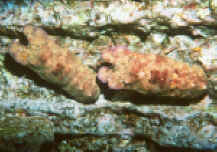
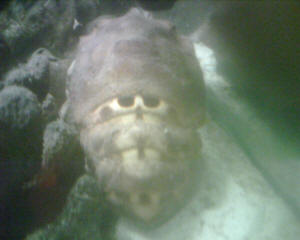
Slipper lobster question 12/17/05 Dear Crew, <Daniel> In Feb. I am buying a 100 gallon wide (72x24x13) and want to create an environment for a slipper lobster. I imagine a three inch sand bed and a cave of live rock will be sufficient, right? <So far, so good> What about adding Hawaiian feather dusters or some Pink-tip anemones? <For what species?> Do you think I will be safe to add a snowflake eel or a larger puffer? <Ditto> Lighting will be from a 175 watt metal halide pendant even though the lobster won't need it. <One pendant won't light this length...> I'm not sure about my filters. I will run two Emperor 400's and a Remora ProC skimmer. Adequate? <A good start> Finally, can you name a few places to buy a slipper lobster. I am not having any luck. Regards, Danny <These are occasionally available from Caribbean, Eastern Pacific and Hawaiian collectors. Have your dealer/s and etail suppliers check with Los Angeles wholesalers for you. Bob Fenner> Correction, identification of slipper lobsters Hi Bob <Michel> I recently entered the www page dealing with Slipper lobsters and I saw that you are reporting Scyllarides squamosus from the Gulf of California. I was not aware of this record. This is a species distributed in the Indo-Pacific and I wonder what is the original source of information dealing with its presence in the east Pacific. The only Scyllarides previously reported in the Gulf is S. astori (also present in Galapagos, actually its type locality). <Yes, have been eating them at Cevicherias all last week in San Cristobal in the Galapagos... visiting in Quito presently> As far as 1991, there was no report of S. squamosus outside the Indo-pacific (see Holthuis 1991, Lobsters of the world. FAO Species Catalogue 13) and I did not report it either in my 1995 lobsters chapter for FAO guide to commercial species in the tropical eastern Pacific. Any clue?? <Do have pix of S. squamosus in Hawai'i, the western Pacific in places... the ones misidentified in the eastern Pacific are likely S. astori> I would appreciate your answer as a colleague and I are currently reporting on new record for S. astori in Ecuador. Sincerely. Michel. <I suspect you are correct re this identification... I cannot say where my ID originated... perhaps with a popular work by Alex Kerstitch or Don Gotshall... In all likelihood this/these are S. astori. Bob Fenner> Michel E. HENDRICKX Laboratorio de Invertebrados Bentonicos Unidad Academica Mazatlan, ICML, UNAM Lobster ID conflict on WWM 8/14/05 Howdy to whomever is on duty. I found a mistake on the "lobster pages", links below. The problem is a duplicated picture. Look at the bottom pic in both links. They have the same pic but one calls them Scyllarides squamosus and the other calls them Scyllarides astori. Not that I mind, since I don't have facilities to house one of these (other than a pot of boiling water). BTW, love your site. You guys rock. http://www.wetwebmedia.com/marine/inverts/arthropoda/lobsters/sliplobsters.htm http://www.wetwebmedia.com/marine/inverts/arthropoda/lobsters/lobsters.htm Matt <Like a "rock lobster!?"... thank you for this... someone ages back sent in a correction to my initial mis-id... the species is S. astori... will correct. Bob Fenner> Double molt on a Zapata? Dear Crew: <Karl> Earlier this week my slipper lobster molted and left a nice, dark, hard and crusty carapace on the substrate. Today I observed a second carapace on the substrate. Unlike the first, which is still intact, the second is very thin, flimsy and lightly colored. And, there is no sign of the animal. Can a slipper lobster molt twice in one week? I do have a reef lobster and the second carapace was found about two inches from the reef lobster's cave. If there has been foul play, another suspect might be my Sally Lightfoot crab. Thank you. Respectfully, Karl Wiedemann <Such double-moltings are not unheard of, but I too am suspicious. Do keep your eyes open for this animal and check and adjust biomineral and alkalinity for its exoskeletal remineralization. Bob Fenner> Slipper lobsters hi bob, my question is...with predation regarding tankmates (sessile/other) w/ the exception being bi-valves and(?) snails(?) would I have problems introducing a reef lobster that I've been housing in another tank into my reef system? I know they can get large enough to accomplish some unwanted excavating. this I can handle. I just don't want to notice things missing day after day. If ecologically feasible I would love to put my lobster in a system that would be more obliging to it's liking. she's one of my favorites! Will it work? or am I entertaining thoughts of an inevitable slaughter? Cleveburd (R.R.S.) <I do like the Zapatas (Slipper Lobsters) as well. Please take a look at my article on them: Home Page But, unless they're kept with tough, fast moving, intelligent fishes, and unpalatable invertebrates, they can/do get into big eating troubles in the dark of night. If you do try mixing yours in with other potential edible tankmates do take care to feed it towards the evening... every night. Bob Fenner> |
|

|
Features: |
|
| Featured Sponsors: |