|
|
| Home | Marine Aquariums |
Freshwater Aquariums |
Planted Aquariums |
Brackish Systems |
Ponds,
lakes & fountains |
Turtles & Amphibians |
Aquatic Business |
Aquatic Science |
Ask the WWM Crew a Question |
| Please visit our Sponsors | ||||
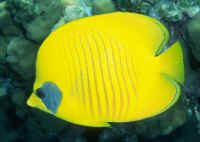
Semilarvatus Butterfly... Reef Compatibility 8/7/06 I just wanted to ensure that this e-mail was received. I sent it about a week ago and I would assume it's floating around somewhere trying to find somebody with a sufficient answer - but my email is flakey so I didn't know if it got lost in cyberspace and just wanted to double check. <Believe this was replied to.> Friends at WWM, <Scott> Just one brief question - does anybody have any idea what corals in particular might be threatened by Semilarvatus Butterflies? I am considering a pair for my 1300g reef, but would like to know exactly what kind of risk I would be running. The tank has around 1500lbs of rock, two refugiums, and they will be kept very well fed. <Some folks say with caution, others, not reef safe. They do feed on sessile inverts in the wild which includes many of the ornamental varieties we keep. If it were my call, I would not chance it. James (Salty Dog)> ScottRe: Semilarvatus Butterfly...Reef Compatibility 8/7/06 James, Thanks for the reply - was lost in cyberspace apparently. I was more curious what type of sessile inverts in particular they delight in consuming. <Anything that can't get away.:) In particular tube worms, small crustaceans, soft and hard corals, may nip at clam mantles, etc.> It's fine if nobody knows, at the very least, I will try them out in a couple of smaller reef tanks and see what they go for and what they don't. <May want to read here and related links above for more info. http://www.wetwebmedia.com/BFsBestWrst.htm James (Salty Dog)> Scott Clown Trigger in a FOWLR? III - 07/03/06 Words of Wisdom... Eric, <<Matt>> Having "digested" your previous response, and having given consideration to the practicalities of "mixing" large predators with b'flies (in terms of water quality required, food types offered and regularity of feeding, and so on) I think it might be better (for me, not generally speaking) to stick with one or the other. <<Intuitive of you...and would serve all fish keepers in "general" to make these considerations (and more) as well. I strongly feel that keeping fishes (especially "difficult" species) becomes easier when they are kept in "natural" groupings, e.g. - not mixing fishes from different oceans, keeping fishes together from the same type environment or niche (high light levels vs. low light levels, shallow water vs. deep water, and with similar habits (active fast movers vs. slow deliberate feeders). I'm not saying hobbyists can't be successful to the contrary, just that it's easier (on both the aquarist and the fishes) when the setting is more "natural" to the fishes>> I have enough info to ponder the pros & cons of a lionfish only tank, hence my query will concentrate of a b'fly type system. <<Okay>> I have also discounted the idea of a trigger in the interest of being able to have a decent clean up crew (stars & snails mainly). <<Mmm, do consider this...I have a 5" male Bluethroat trigger (Xanthichthys auromarginatus) in a large reef system. He shares this tank with two species of Lysmata shrimp, serpent stars, Asterina starfish, Turbo, Cerith, and Nassarius snails...to my knowledge he has never touched any, or even shown an interest...though you'll notice I don't keep hermits so I don't know how he would react to these>> I think the clean up crew is probably even more important to keep down levels of dissolved organics, as will the inclusion of a macro algae refugium (obviously skimmers, and LR etc will all be included). <<Excellent>> If I go for a b'fly set up, I would opt for a pair of Chaetodon semilarvatus, and hence I would probably opt for a Red Sea biotope, so I can keep the s.g. nice and high as recommended by Bob in the "Best B'flies from the red sea" article. <<Indeed...I love biotope displays>> In such a set up, realistically how many b'flies could I get in there? <<Hmm...fewer than you would like <grin> >> I was surprised by Bob's recommendation of allocating 20 gals per fish - at which rate I could put up to 9 b'flies in a 180. <<A "generalized" statement no doubt...other factors to consider as well...adult size, temperament, etc.>> I know this guideline should not be taken literally, so I tried to improvise and extrapolate a realistic stocking rate taking into account the species I am considering. <<Ah, very good!>> Hence, with the Semilarvatus being quite big I was counting them as the equivalent of 2 fish each (i.e. Semilarvatus = 4 equivalent fish = allocation of 80 gals). <<Mmm, a very subjective issue...but I would go with 120 gallons as a minimum for two of these fish>> But that still allows for 5 more b'flies! <<Mmm...>> From the "The Best Butterflyfishes From the Red Sea" article, I chose 4 other species I like (in order of preference): 1 no. Chaetodon paucifasciatus 2 no. Heniochus intermedius 1 no. Chaetodon auriga auriga My feeling is that this would be too many, and would not be very interesting color scheme (i.e. all yellow / black / white). <<Agreed on the "too many", but the "color scheme" would likely not be much issue once you saw them in the display>> Hence, my idea has evolved to part two of my question - could I keep a Maculosus angel, together with the pair of Semilarvatus, and a single Chaetodon paucifasciatus. In Bob's book he recommends "at least 100 gallons of uncrowded habitat to themselves to fare well" for a Maculosus - so my logic is: 2 no. C. semilarvatus = 40 to 80 gallon allocation 1 no. P. maculosus = 100 gallon allocation 1 no. C. paucifasciatus = 20 gallon allocation Total = 160 to 200 gallon allocation. The system is a 180, and will be aquascaped so as to best suit the inhabitants (pending your advice). Does this seem like a reasonable proposition? <<Bob should correct me if I misinterpret, but "100 gallons of uncrowded habitat" reads to me as 100 gallons of open free swimming space, unhampered with by live rock, etc.. To me that would seem to say a 180 is just about right after "careful" aquascaping...but sans any other large fish like the Semilarvatus butterflies>> The order of introduction (and size) would probably be: C. paucifasciatus probably a good 3", then the pair of semilarvatus at 3"-4" medium size, then finally the maculosus as a baby 2" specimen. <<Proper species selection aside, you'll do well to obtain all these species in the 3"-5" range...selecting your larger/smaller specimens within that range>> Do you think this is a reasonable proposition? <<I'm very hesitant about including the Maculosus angel with two Chaetodon semilarvatus in a 180...I would choose "one species or the other" as the prominent display fish, and build the display around/to suit that species>> Would the inclusion of dither fish be a good idea? i.e. half a dozen green Chromis. <<I think so, yes (the Blue-Green Chromis- Chromis viridis, to keep with the Red Sea theme)...will add some visual interest as well>> I wouldn't be pushed either way about the Chromis, but if would benefit the general well being of the system, I would include them. <<Won't hurt>> Sorry for writing such a long email - but I wanted to give all the relevant info. <<No worries mate...helps me to help you>> Thanks again for your help. Matt <<Is my pleasure, EricR>> Addis Pair 5/31/06 Hi, I have emailed previously and found your (Bob's) answer, along with the other articles on the site very helpful indeed so thank you. I am 16 yrs old and still at school in England, so as you can guess, money is quite tight, so as much as I can I have resorted to DIY. I am moving on to my third marine tank, and my final one until I have my own house and no restraints :) <Forward looking. I like this immensely> It is 150 gallons, I realize this is not the largest, but the most I could house and afford. I will run all my old equipment and sump on it, including Deltec APF600, TMC UV Unit etc and 40 gallon sump. I hope to create a Red Sea biotope, I wish to create almost a mini reef containing all the major zones. This way I can save on lighting costs by having my halide over the highest part on one side - "Reef Flat" for SPS etc, my T5's over the "Reef Slope" in the middle for the softies, and my original tubes on the "Sand Flat's" for mushrooms and open swimming space. <And I really like biotopes and the "uneven" approach (lighting more/less intense) you mention. The contrast is of utility and beauty> Does this sounds ok, it just seems a neat way to save money on buying Halides for the whole tank etc whilst creating an acceptable, interesting and diverse environment. <Sounds fine to me> I have a school of 5 small (3") Pseudanthias squamipinnis (1 male and 4 females) that are living very happily in my 60 gallon that are to be swapped over along with all the live rock, corals etc and a further 25kg of live rock is on order. <Good> I will also use my 60kgs+ of Ocean Rock as a base and structure builder. After much persuasion, my parents have allowed me to install my "modified" Carlson surge box in the attic (as I live in a bungalow with concrete floors, weight for the tank is fine, also the attic is only 2 feet from the top of the tank cabinet), because I have heard great results and once again cannot afford ?300 for a "Wavemaker". Do you think this is a good idea and is this type of flow good for coral, fish and detritus suspension?? <Is indeed> I have sealed braces at the ends of the tank so the surface wave deflects back (worked in testing), reducing splash and salt creep. Also should the wave hit into the higher "reef flat" side of the tank or start from this side, i.e. which direction would benefit the corals the most, especially the SPS? <Mmm, direct is best... the "front"> Finally, the burning question, I would love to keep a pair of Addis Butterfly's as they are often observed in the wild. I have done quite a lot of research, and most places seem to recommend a minimum size of 50 gallons so logically 2 would need 100 gallons and more. They are very expensive so I am seeking as much info as I can before committing. Would I be able to keep a pair for several years and maybe forced to give them away but it would still be worth it for me as they have been my most admired fish ever since I entered the hobby?! <Mmm, well this species, most often termed the "Blue Mask", "Golden" or "Semilarvatus" BF in the West is best in even larger systems, but should do fine here with what you list if not further crowded> They would not be crowded as I have always preferred to have less fish - minimalistic, and the Anthias could be removed if necessary if they would be classed as to boisterous. Maybe the 2 Addis as showpieces and then blennies/gobies etc - i.e. no other large fish?! Sorry for all the questions and I eagerly await your answer, and keep up the unrivalled good work :) Many Thanks Oliver. P.S I would never have go this far in the hobby without your help, as unfortunately, my age often dismisses peoples opinion that I can succeed in this hobby, financially but your last email made me realize that I can succeed, so thank you again <You might not be surprised to find how young some of WWM are... or started... myself, considerably younger than your current age. Cheers, Bob Fenner> Butterfly in the reef tank Hi Steven, The snippet below from one of your recent replies to me (different account) suggested a C. semilarvatus. It's a very pretty butterfly and I have been reading widely looking for reef tank safe butterflies. Your WWM listing for this species suggests it eats polyps and corals, though. I don't mind a little Zoanthid nibbling and I don't keep LPS except for Euphyllias but is this one really a possibility for the reef tank? If the risk isn't too high I think I'd try it but I haven't previously seen it mentioned as a reef tank candidate. <Sorry, I did not pay real close attention to the subject line. The Semilarvatus is not a good choice. I made that suggestion to go with the rest of your Red Sea biotope fish.> As for the ones generally indicated as reef say, the Heniochus don't do anything for me but the long nose are pretty. <The two species of Longnose BF's and the Copperband BF are better choices.> Thanks! Marc <You are welcome. -Steven Pro> A Longnose yellow butterfly or 3-4 yellow "Coris" wrasses for some yellow. (I prefer the butterfly though). Would love a pair but I've yet to see one advertised anywhere or in the LFS. <Get the butterfly. Maybe a Semilarvatus?> Re: Golden Butterflyfishes Hi, A few days ago I emailed you about adding some Golden Butterflies to my 800 gallon Angelfish tank. After reading your comments and doing more research I went out and purchased 3 Golden Butterflies to be place in my 500 gallon reef tank. All three specimens are 4-5 inches in length. In the reef tank right now I have 400 lbs of live rock setup up in two large pillars that reach the water surface almost with swimming room in the middle of the tank (I kind of wanted it to look more like the outskirts of the reef with a collection of tangs ). I have various hard and soft corals, along with a few clams and so forth. The tank like my 800 was built on site and is glass not acrylic. It runs on two 90 gallon tubs/sumps and various other equipment that I have rigged up mostly. My reef keeping goes back about 5 years now so the tank itself is doing great. The Semilarvatus' were quarantined in a 75 holding tank in the filter room for about a day and a half. <Hmm, w/o reading further below, I would have left them there for a couple of weeks...> After they started eating I moved them to the 500 which contains the following for fish: Gold Rimmed Tang (nigricans a year old and doing well!) 4 in, Achilles 5 in, 3 Red Sea Purple Sailfins all 3.5 in, Black Longnose 6in, 5 Chromis, 9 Sunburst Anthias, various gobies and blennies, and the reason I came into saltwater my 9" Red Sea Sohal Tang. It was a nightmare getting these fish to coexist for the first 3 months but now everything goes well especially since I stumbled across such a docile Sohal and he kind of intimidates them but never shows aggression. I'll have to check my readings but I think my bioload is good right now. The 3 Golden's settled in and were accepted except by the Nigricans but his nipping soon diminished. My question is how big should I expect them to grow? <Ultimately plate size (yes, several inches)... but quite slowly... an inch or so per year> Also should I worry about my corals? <Not much. Chaetodon semilarvatus are omnivorous, can/will eat SPS polyps at times, but generally prefer other foodstuffs> The fish get tons of food because my system is so efficient but will they still possibly graze? <To a large extent yes... though these are quite hefty, active fishes> Is there anything else I should expect/worry about? I never realized how awesome these fish were until I had them in the luxury of my own home! Thanks again, I love your site! <Thank you, and no, not much to worry re... this is a fabulous aquarium species for folks with adequate space. Bob Fenner>
|
|

|
Features: |
|
| Featured Sponsors: |