|
FAQs on Acclimation Troubleshooting/Fixing
Related Articles:
Acclimation, Quarantine ppt., pt.s 1,
2,
3,
4,
5,
6,
7 by Bob Fenner
Acclimation Articles by Bob Fenner,
Acclimation in the Business by Bob Fenner,
Acclimating
Photosynthetic Reef Invertebrates to Captive Lighting,
Methylene Blue,
Related FAQs:
Acclimation 1, Acclimation 2, Acclimation 3, Acclimating Marine Invertebrates, &
FAQs on Acclimation: Rationale/Use, Tools/Gear, Chemicals, Methods, Controversies, & Acclimating Invertebrates, Acclimation of Livestock in the Business,
Dips/Baths 1,
Best Quarantine FAQs,
Quarantine,
|
.JPG)
|
Acclimation Method When Fish In Transit for 80 Hours-
5/20/17
Good Evening Crew,
<Tricia>
Since there is not very much (thankfully) out there about acclimation
for extreme situations I thought I would share my experience for others
and your critique.
<Ahh; thank you for sharing>
First, props out to the folks over at Fosters & Smith/LiveAquaria for
their packing procedures. Second, shame on the entire UPS company for
their horrible customer service both locally and nationally.
<Thanks; and yikes>
I had a colony of mushrooms and a latticed butterfly shipped for
Saturday delivery. Unfortunately, although the UPS system shows my
address has Saturday delivery, my local depot does not make Saturday
deliveries. My
package arrived at 9:10 pm on Monday night- the inside packing looking
as though it had been shaken, the bags tipped at odd angles and the
heating pack away from the bags.
So I start with livestock in bags for at least 80 hours which sat over
the weekend in the warehouse while we were have nighttime temps in the
high 20s.
Having never had experienced this sort of thing before I worked off one
assumption: the livestock needed to be removed from the bags ASAP. This
was my procedure---
1) Immediately opened the bags. I tended to the BF first, assuming the
low oxygen was a greater concern for the fish. BF was alive, but
breathing so slow, shallow and irregularly it was hard to see.
2) Took temperature (58 degrees), ph (6.4) specific gravity, and ammonia
(over 8ppm) readings of bag water.
<Not atypical>
3) Placed bags and two ice packs (careful to make sure the ice packs did
not touch the bag) in acclimation bucket w/ room temperature water. My
rational was to create water that matched the bag as quickly as possible
and it would take too long for the 72 degree "clean" water and the 58
degree bag water to equalize.
4) Adjusted the acclimation bucket water ph to 6.6. Specific gravity was
already the same and I had previously added an airstone.
<Good>
5) Adjusted the water in my quarantine tank to 7.6 ph. My rational was
to get the fish in something semi-close to "normal" ph that night, but
that getting into the 8.0 range wasn't doable in a few hours given the
stress already.
6) When the temperature in the bag and the acclimation bucket were
within 2 degrees of each other (happen at 64/66 degrees after about 20
minutes) I discarded the bag water and slipped the fish in the
acclimation bucket.
7) Began a slow drip from my quarantine.
8) After 30 minutes checked temperature. It hadn't really changed so I
added a small heater, which I monitored, plugging and unplugging so that
over the next hour the temperature in the acclimation bucket came to 78
degrees.
9) Dripped for 45 minutes removed 1/4 of the water
10) Dripped for 45 minutes, removed 1/3 of the water and increased to a
drip-drip-drip. Around this point the BF started to come around,
righting herself and leaning against the bucket.
11) Dripped for 45 minutes, removed 1/2 of the water and increased to
dripdripdrip. BF gently swimming around bucket.
12) Over the 1.5 hours I removed water every 20 minutes or so, testing
ph as I did so.
13) Around 1:15 am the ph in the acclimation bucket matched the tank and
I discarded the bucket water and slipped BF into the tank.
Around 24 hours after delivery I brought the ph of the quarantine up to
8.0 and the BF started to eat grated shrimp soaked in Selcon. I has now
been 1 week since shipment and four days since delivery and the BF
continues to eat the shrimp but refuses everything else. She exhibits
stress color except when "begging" for food or eating- then she turns
almost "normal" color. Also, she has a several areas of raised scales
that can be seen
from overhead and a white injury spot on her tail fin (although no signs
of velvet or Ich). I have not dipped her or treated with any medication
due to the extreme stress of shipment. Do you have any other advice as
to increase her chance of making it to my display tank?
<Really; just time going by; patience on your part>
Many thanks for all that all of you do,
Tricia
PS- Similar procedure with the mushrooms, but they did not make it. Most
of the colony was dissolving when I opened the bag so I wasn't
surprised.
<Me neither. Again, thank you for sharing. Bob Fenner>
Re: Acclimation Method When Fish In Transit for 80 Hours-
5/20/17
Thank you for the quick response. I will keep my fingers crossed. Have a
lovely weekend,
Tricia
<Thank you Tricia. You as well. B>
Re: Acclimation Method When Fish In Transit for 80 Hours-
5/27/17
Hello again,
<Hey Trish>
I have increasing concerns about my BF in quarantine-- she is still
eating well and seems to have adjusted from the trauma of her 80 hours
in transit.
However, the areas of raised scales are developing a faint brownish
color.
<Mmm; may be residual... but could be sign of "Vibrio" or related
bacteria involvement. VERY common w/ damaged and stressed BFs>
I'm concerned that she may be developing a fungal or bacterial
infection.
I've had readings as high as .25 ammonia and ph as low as 7.8 in
quarantine prior to water changes, so I'm thinking water quality is a
contributing factor.
<Agreed>
I am on day 11 of quarantine and two weeks since shipment and she has no
other signs of illness.
At this point would it be better to place in the display or to try to
treat in quarantine?
<I would very likely move this fish to the main/display system>
I have two cleaner gobies in the display tank, which may help the BF
recover, but I don't want to risk their health either.
Many thanks,
Tricia
<Commensurate welcomes. Bob Fenner>
Saltwater online shipment acclimation problems
4/9/12
Hi Crew,
<Mark>
Last Saturday I received an order of saltwater fish that was in transit
for 15 hours
<Not that long... as you likely know; often they're in transit/bagged
for more than a day... should be adequately prepared for such a
duration>
and I incurred heavy losses (4 of 7 fish died/ one DOA).
<DO contact the shipper re... s/b done ASAP for poss. credit,
replacement>
The remaining fish showed signs of ammonia poisoning
(scratched/flashed/head shaking). Over the past couple of days this
behavior has lessened and the remaining fish are feeding so I am
guardedly optimistic.
Mistake #1
When acclimating I added Prime to the shipping water/fish and used the
drip method from my quarantine tank per the guidelines, as I understand
them, of the company I ordered from. Within 10 minutes of the drip the
fish became agitated/stressed so I stopped, checked the pH (7.7 in
shipping water and 8.2 in my quarantine tank),
<STOP! You did or did NOT adjust the pH of the acclimation water to that
of the shipping?>
and tested the ammonia content (1.5 ppm). As a result I made pH adjusted
(7.7) acclimation transition water and continued to drip for the next
hour or so.
<Ah, good>
This tripled the volume of the container holding the shipping
water/fish).
<Can, should overflow excess volume to waste>
Mistake #2
Then I drip acclimated directly from the quarantine tank, but I forgot
the water containing the fish would have 0.5 ppm of ammonia.
<STOP (again): NEED to drip acclimate w/ the pH adjusted water till
there is NO detectable ammonia>
Were these mistakes enough to kill the fish?
<Could easily weaken...>
If so I would like to repeat (ordering on line, not the mistakes). Would
you mind looking at a fairly detailed acclimation SOP and give me your
opinion as to whether you think it stands a reasonable chance of
success?
<Yes... you can see/read mine on WWM, in books, articles I've penned for
the hobby and trade in ornamental aquatics. Bob Fenner>
Thanks,
Mark
Re: Saltwater online shipment acclimation
problems 4/9/12
Bob, Thank you for your reply and comments. The E tailer I used is very
sympathetic and has done very well by me. They have given me a credit
toward another purchase and have even offered to reimburse my credit
card if I were to decide not to try again. I do not want to disappoint
them by killing more fish. Next shipment (probably 3 weeks, more if the
fish I
have aren't strong enough to go in my display tank) I will definitely
measure pH and ammonia and use acclimation transition water before I
start dripping. I have reviewed some of the articles and FAQ's on
acclimation but still have some questions. Would it be best to acclimate
first to fresh acclimation transition water (not mixed with shipping
water/ no ammonia)?
<Better to acclimate to pH adjusted main/display water>
And if so would a sudden drop in ammonia be harmful (I would test
salinity/ temp to make sure they were similar/same before placing the
fish in fresh acclimation transition water)?
<Better to do this gradually... drip... but as long as the pH is
matched, can be expedited>
I plan on adding Prime and Methyl Blue next go around.
<I'd leave off w/ Prime, any PVP containing compound... a bit
complicated/involved to explain>
Also, I am curious as to why shipping with a small piece of PolyFilter
wouldn't be helpful by removing some of the ammonia (I can only assume
it isn't since fish aren't typically shipped that way as far as I know).
<Would be very helpful; just expensive>
Thanks again, Mark
<Welcome. BobF>
Burned Naso; rdg.
2/26/14
Hello. My name is Marco and yesterday I received a Blonde Naso Tang and
a small goby from liveaquaria.com. There was an issue with
shipping that delayed the delivery for 5 hours.
<Oh... too long in the bag... I do hope you read, used the commercial
acclimation SOP posted on WWM... I see below... nope... Ammonia
burned... need/ed to drip matched pH water on till the ammonia was
flushed out of the specimen>
After getting my fish, I acclimated them using the drip method for about 2
hours until S.G. and ph in the bucket was almost a perfect match with
the water in the quarantine tank. Both fishes were looking very good,
the Naso was swimming all over the place and grazing on the live rock.
This morning the Naso does not look as good as he did last night. His
coloration is rather dark with a couple of grey spots near the gill area
on his right side, the caudal fin is not "opened" (for lack of a better
word) as it was last night. He ate some Nori algae soaked in Selcon but
he looks a little weak.
<Shouldn't have offered food this soon>
I should probably mention that about 1 month ago we had a Naso Tang that
we tried to "rescue" from the LFS since he was losing weight and by the
time we bought him he was weak and he died a few days later from what I
thought was HLL disease and also we have kept a Bicolor Blenny in there
for 2 months now and he is doing great.
Water parameters are:
Ammonia: 0 ppm
Nitrites: 0 ppm
Nitrates: 0 ppm
<? How rendered thus?>
Ca: 420 ppm
Mg: 1350 ppm
Alk: 11 dKH
Salinity: 1.025 ppt <Not the right units>
My question is. Is there something I am missing?
<As stated above>
Something I don't know that is particularly important to pay attention
to when keeping Naso Tangs? Or is this "normal" coloration and behavior
for a new fish of this species?
Thanks for your time and advice. I hope you have a great rest of the
week.
If you need pictures or any other info please let me know.
<Let's take my time to refer you: Read here:
http://www.wetwebmedia.com/acclimppt1.htm
Bob Fenner>
Freshwater dip gone wrong for wrasse and Cardinalfish. RMF
post protocol/ppt 8/14/13
Hi crew,
<Chris>
I'm writing to see if you have any ideas for what went wrong with my
first FW dip yesterday. Basically, the end of the story is that a
carpenter flasher wrasse died immediately and a Banggai Cardinalfish
died several hours later. Here's what happened step-by-step:
1) Aerated and heated fresh RODI water
<We'll revisit this start water...>
for an hour and added about 1 tsp of baking soda. Waited about 20 minutes
and verified that the pH matched my quarantine tank's (8.0).
<... first has to match the shipping water>
Added Methylene blue until the water was dark blue (might have added too
much;
<Not possible>
it was hard to see the fish, one they were in it, without a flashlight,
but I have heard it is hard to overdose; correct if me I'm wrong, but I
doubt this was the fatal step?)
<It is not>
2) Acclimated new arrivals (1 carpenter's flasher wrasse and 2 Banggai
Cardinalfish).
<STOP! What was the pH AND total/ammonia in the shipping water?>
Drip acclimation over 50 minutes with quarantine tank water. Heated the
water in the bucket throughout so that it was always 79F (quarantine
tank temperature) +/- 1 degree. All fish were alive at this point.
3) Placed the fish into the freshwater dip. After one minute, the wrasse
had gone stiff as a board as if he were dead. He was not gilling. I took
him out and put him right into the quarantine tank. He stayed "dead" for
a moment, expelling waste, and then he came to life, swam upside down
across the tank very fast, and then no longer moved. I tried to revive
him (blowing water with a dropper around his gills, then eventually
moving him to a pitcher of tank water and aerating), but he was
certainly dead.
4) Meanwhile, the Cardinalfish seemed okay. They had not seemed to be
gilling heavily in the freshwater dip, nor were they swimming upside
down, but I panicked and took them out as soon as I saw the extent of
the wrasse's problems. They seemed to be struggling a bit to keep still
in the tank (they had been shipped overnight from LiveAquaria, so maybe
competing with my single powerhead was a bit taxing, but I'm not sure).
<... a good source/Dr.s F & S... QM...; but hours in the bag... there
was assuredly lowered pH AND elevated NH4/NH3>
5) About six hours later, one of the Cardinalfish was dead. No apparent
injury. The other Cardinalfish is alive, but is very shy, refusing to
leave the dark area of the tank behind my sponge filter, and I just get
the sense that he will soon be dying as well.
Ammonia, nitrite, and nitrate are all undetectable. pH of the tank right
now is 7.9. It's about 30 hours since I acclimated the fish right now.
I'm not sure where I went wrong. I've read a few other stories on WWM
that feature a very sensitive carpenter's flasher wrasse, but I don't
understand why the Cardinalfish was apparently okay before the sudden
death. As far as I can tell, there are three possible explanations.
1) The two fish were just extremely sensitive. Personally, I think the
whole process just stressed the wrasse so much that he couldn't handle
it rather than just any one component, but that doesn't explain the
Cardinalfish.
2) The pH changed significantly between the buffering and the dipping.
(Incidentally, does Methylene blue affect pH?
<Not by itself; no. BUT w/ any agitation, aeration, it will raise DO, pH
more quickly than w/o>
I use color-based test kits for my quarantine tank, so I can't test the
pH with the Methylene added). The Cardinalfish didn't seem to show
symptoms of pH shock (side-swimming, disorientation, heavy gilling).
3) I overdosed the Methylene blue. Should I be buffering and verifying
the pH of the pure fresh water up until the moment before I add the fish
and wait to add the Methylene blue until that moment, or should I be
aerating the FW mixed with Methylene for a longer period of time?
<No/t a problem>
Which of these options is most likely in this scenario?
<That the fishes were "burned" going from their shipping bags into the
too high pH mix/acclimation water. Please do review the Guerilla, aka
Commercial Acclimation pc. here:
http://www.wetwebmedia.com/acclimat.htm
The SOP is identical for hobbyists dealing w/ "long/er haul" livestock
situations>
I'm at a loss.
If I get new fish, I would probably do the same procedure as above
(although I probably won't dip a wrasse again). I still think
prophylactic freshwater dips are less stressful than the potential of
copper dosing, but I want to make sure I do it right next time, if I
messed something up already. This is the first time a fish has died as a
direct result of something I've done and i feel pretty horrible.
<Please don't be "too hard on yourself"... As you state, small Labrids
are (more) sensitive to handling period; and dip techniques are easy to
confuse. Does (on rereading) the acidification/matching of acclimation
of (flush) water w/ the bag (shipping) water make sense to you? We want
to flush out the ammonia from the mix AND that inside the livestock;
ahead of raising the pH of the acclimation through slow drip water that
is matched w/ the quarantine/isolation>
Thanks for your time. I know you hear this a lot, but your site is the
greatest resource out there on the web for aquarists.
Chris
<IF you have suggestions re improvements; please do forward them to me.
Bob Fenner>
Re: Freshwater dip gone wrong for wrasse and Cardinalfish; still too
much noise, confusion
8/15/13
Hi Bob,
<Chris... due to your prev. and this msg. am decided... to post my
acclimation ppt. presentation on WWM... Spiffed up from giving last wk.
at the UNE Fish Health Conference (and practiced a few times at regional
hobbyist get-tog.s. Watch for it under "New on WWM":
http://www.wetwebmedia.com/Latest%20Articles.htm
should go up today>
Thanks for your response. I hadn't been aware of the different protocol
for acclimating fish transported for so long--all my purchases so far
have been from a store 30 miles away, so it's never been a problem.
<Correct... "not far away" implies two basic differences: Time in bag,
and relative amount (much larger) water>
Thanks so much for bringing the problem with my short-term method to my
attention.
<Am glad... and sorry what we have posted is not clear/er. You are
helping make it so>
I just have a couple questions now about the acclimation procedure after
reading the article. Could you look over this checklist just to check my
understanding of the logistics?
<Sure>
1) Pour system water into a bucket.
<I'd do 3) first, AND check ammonia concentration>
2) Float the bags in tank to adjust temperature. Heat the water in the
bucket.
<As long as the temp. is within 5-6 F. not a worry>
3) Open the bags and check their pH (use the average value?).
<Use more than one acclimation set up if they are more than 0.1 pH point
different>
3)a Maybe also check ammonia to know what I'm dealing with?
<ABSOLUTELY you should>
4) Adjust the system water in the bucket to the correct (bag water) pH
with something like pH Down.
<Okay; but better to do in "another bucket", container... easier to
stir, make/mix up>
4a) Should I also be trying to match the salinity of the bag water?
<For fishes, not so much... as long as they're a few thousandth's
(0.001) density close. FOR invertebrates, the salinity MUST be close: no
more than 0.001 different.
SOME retailers keep their water MUCH lower... but the better/best
wholesalers, etailers (like LiveAquaria) use close to NSW (near
seawater) values>
5) Possibly add Methylene blue to this SW mixture as well and aerate?
<No aeration! Can/will drive pH up too quickly>
6) Drip system water into the bucket until end of acclimation.
<Mmm, no; drip the pH matched water into the bags/or wherever you've
poured them with the livestock; until there's no measurable ammonia
present...>
6a) Should I monitor the bucket's pH throughout to determine when to
transfer?
<Not the pH, but the ammonia>
7) Possibly freshwater dip?
<IF the fish/es appear to be "healthy enough"; otherwise wait for this
till after they've "rested", hardened-up in quarantine; perhaps in
transit to the main/display tank/s>
8) Transfer to quarantine tank.
And finally, would you personally recommend prophylactic FW dips on fish
purchased and shipped overnight like those from LiveAquaria?
<Most fishes, most the time, yes; again, there are exceptions: e.g.
small wrasses, Gobioids, Blennioids...>
It seems to
me that if ammonia was so high and pH was so low in these bags, they are
already incredibly stressed and even a mild mixture of FW and Methylene
blue might push them over the edge in such a state. If I follow this
acclimation procedure next time, do you recommend that I still dip them
at the end of it?
<Keep reading on WWM re dips/baths, acclimation till you understand>
Thanks so much for responding personally, Bob. I really appreciate it.
Chris
<Welcome; and thank you. Bob Fenner>
acclimation 2/6/12
Hi again,
I have just picked up a Kole tang, blue hippo, and a brown
powder tang....they are all in a 30 long qt tank,
<... Not a good idea to jam all these disparate Acanthurids in
here>
and they all appear to be behaving and eating well. The hippo is hiding
under a rock of course but comes out to eat and race around.
<Ah, good>
My question is, the Kole tang is so active and is really trying to swim
fast, I am wondering if I should take him out of qt and put in directly
in my 220 gallon display tank.
<I would move through a prophylactic dip/bath. Read re on WWM:
http://www.wetwebmedia.com/mardisindex.htm>
Or will it be ok for him wait out the full 4 weeks in qt? If he will be
fine for the 4 weeks I would rather not risk an Ich outbreak in my
display...but if he is going to be stressed out in the 30 gal maybe I
should move him?
Thanks
Jess
<Read, search first, then if you still have concerns, questions,
write us.
Bob Fenner>
Re: acclimation. Dip/bath pH 2/6/12
Thanks. I have read through your link and am preparing the dip. I am
having a hard time lowering the ph of the freshwater after raising it
too much.
What can I use to lower it a bit?
<Just dump some and add more tap...>
Your recommended dip time is 5-10 min.s depending on fish behavior
right?
<Yes. BobF>
Thanks again
Re: acclimation 2/7/12
Hi Bob,
So I did the freshwater dip as instructed (just over 5 min.s since he
was breathing really hard and not swimming) and added the brown tang to
my DT.
I just shined the light in there and saw that there were white
spots, like salt, that were falling off of him....and some still
on. He did not have these spots before. I am really really
nervous about having Ich in my tank since it would be disastrous to me
and my fish....do you think I should try to take him back out
and QT him again or just leave him alone?
<Too late... leave this fish and system be>
I would never have bought all three tangs at the same time, but I was
advised that they should all be added at the same time.
<... incorrect. Please, READ on WWM re Tang
Stocking/Selection>
I figured I could QT them all together, but then learned that it was
not a good idea. Please help me prevent a disaster...thanks!
Jess
<Naught to do presently... Well, let me correct myself. See WWM re
the use of Quinine Compounds. BobF>
|
Need your help with new Montipora
12/23/09
Folks, I am hopeful, but scared.
<Mmm...>
I bought a small Montipora frag online - the coral came on time,
about 16 hours after being mailed, packed very well in Styrofoam
box, with heater pack, etc. It looked great in the bag (see
picture Monti 1).
<Okay>
I acclimated it the best way I know how - floated the bag in the
tank and poured tank water into the bag at regular intervals over
approximately 45 minutes.
<Umm, wait... Did you measure the pH of the shipping/bag water
and adjust the acclimation water to it/this? Mistake
otherwise>
The tank water I put in the bag was dosed with Coral dip at the
usual dosage. The coral seemed to tolerate the acclimation in the
bag just fine.
What I did not do is check the pH or salinity of the water in the
bag before putting my tank water in.
<A problem>
At the end of the 30-45 minute acclimation process I took the
coral out of the bag and placed it gently at the bottom of the
tank. It bleached immediately, and has not a bit of color since
(see photo Monti 2).
<Is dead>
Is it dead? What could I have done differently? Is there any way
to save it? Its' been almost 24 hours since I put it into the
tank and it remains completely white.
Here is my setup: 6 gallon nanotank - 11 inches deep with 36
watts of 50/50 PC bulbs.
Water parameters at the time I put the coral in yesterday:
Salinity: 35 ppt
pH 8.2
Ammonia 0
Nitrite 0
Nitrate 0
Alkalinity 3 mEq/L
Calcium 460
Magnesium 1395
Phosphate 0
As you can see, I put the Montipora at the very bottom of the
tank, thinking I would move it up to the very top rock (which is
about 3-4 inches away from the lights) over a couple of days.
Should I move it to the top now? Again, it bleached immediately
after being put in the tank (seconds).
All of my other corals are OK, including the Birdsnest you see in
the top right corner. The tank has been up and running for 2
months and has been very stable. The other inhabitants are:
A few snails and a red-legged hermit as CUC
Acan lord (1) head
Candy cane (1 head)
(Moseleya (1 head)
Birdsnest (3 inch piece)
One 1.5 inch purple Dottyback
All the other tank inhabitants have been in there for one week or
longer (tank stocked in stages).
Please help - I really like the little Monti... BTW, I am new to
the hobby, in case you can't tell.
<Small volumes/systems are hard to keep viable... Please read
here re acclimating:
http://wetwebmedia.com/acclimat.htm
in particular, the second piece on "Guerilla
Acclimation" (or acclimating for the business, and organisms
that have been "bagged" for long durations.
Bob Fenner>
|
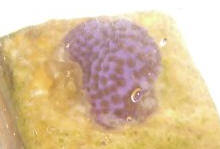 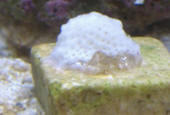  |
Transship acclimation 3/1/09 Hey Bob I was reading
some of your post's and I was concerned about acclimation from a
transhipper .. when I receive fish my method was to cut bags open add
fish and there water they came in to the Styrofoam box, then drip ,
I'm aware this could be wrong because of the O2 and ph difference
.My question is if you can help me . lets say the fish that came in the
bags after opening is 7.2 my system is 8.2 I need to buffer up what the
water the fish came in ? <?! Yes... one REALLY needs to address this
process carefully... dilute the acclimation/shipping water ammonia
out... matching pH... raising this slowly...> do I have separate
water to acclimate and if so when I add my fish to my system my
system's ph is 8.2 . <Are you joking? I take it not... Please
read here: http://wetwebmedia.com/acclimat.htm and the linked files
above... Bob Fenner> can you help me out here thank you so much John
Hartson.
Re: Transship acclimation I am sorry to bother you
I did read those article's and I am trying to follow them and
understand them completely. <... Am wondering, what is so incomplete
re this protocol... I just re-read it> On my first order I had lost
about half of my stock, what I had done was float the bags <... I
would NOT do this... too stressful, takes too long, the animals are in
need of more immediate acclimation> in my water but I didn't
have enough surface room to float all so process took to long, Need to
figure out better way to temp acclimate. <This is BEST done by
dripping the pH-matched water...> I thought dripping from my
system's water would be correct, <?!! No!> but after reading
those articles I know the ph and ammonia act up ect. <No such word
as ect> So if you could help explain to me would be helpful. Ok if I
receive the fish and add the fish in the Styro boxes what should I do
from there? <What? Read where you were referred to> add what
chemicals to ph up? <... idiocy... the pH will be lower...> drip
or don't drip? I will use air pumps . I do not have a separate qT
tanks only display tanks. <Then you should NOT be transhipping> .
My systems have a ph of 8.2 salinity of 1.024 which is the same as the
fish in the bags from the exporters <... not on arrival> , I ask
my exporter for his SG. 1.024, my temp of my tanks are 77 degrees. I
did buy ammonia destroyer but I read somewhere else that if there's
a high ammonia just add fish to main system as it better than leaving
in toxic water, so why add ammonia destroyer as some say? I sorry for
my lack of knowledge on this but would like to understand proper way of
acclimating ..thanks for you time John Hartson <Please... don't
waste y/our time... If you're unwilling to read, please quit our
trade and take up something that doesn't involve livestock. Really.
BobF>
Gill Burn Hi, to the WWM crew!! I am anxiously awaiting your
new book, recently received an e-mail that it may be another month or
two (I'm sure it will be worth the wait)! <I hope so> I
recently received a Golden Puffer, as with all of my new fish I ALWAYS
test the shipping water as a precautionary. The Golden Puffer had
extremely low PH, which was expected, however the ammonia was off the
scales, pretty much as high as it could go. <Not atypical> I
acclimated the fish rather quickly, to get him out of the ammonia.
<Umm, not a good idea... Please read through the marine acclimation
pieces stored here: http://www.wetwebmedia.com/acclimat.htm
necessary to adjust pH slowly (possibly over hours) while the ammonia
and its analogs are present in the water AND in the fish... to keep pH
suppressed till no detectable ammonia in either> However since then
he has had trouble with his gills, occasionally he will close one gill,
and just breathe out of the other gill. I have also noticed some
occasional scratching, and it appears that he is trying to scratch the
gill area. I believe he has some damage to the gills from the exposure
to the high ammonia. <Maybe> The puffer is currently in a 55
gallon QT with extra stress coat (don't know if this is going to
help). He appears to have good color, his eyes are clear, I do not see
any signs of parasite (aside from the scratching). He has not eaten as
of yet. <The single gill movement may be nothing (this happens) and
the fish may well not feed for days> Is there anything I can do to
help reverse the burning damage done to the gills? Is it at all
reversible? <Time, good conditions... very likely this specimen will
self-cure> Can you please explain what happens when the "gills
are burned" and how do I help him? <The epithelium is
chemically challenged, generally by high or low pH... possibly by
concentration of noxious chemicals otherwise. In the worst cases there
is hemolysis (splitting of blood cells) leading to dire physiological
stress> He has a beautiful 240 gallon tank waiting for him. Thank
you for your time and your knowledge, it is greatly appreciated. Jen
Marshall <Patience here my friend. Bob Fenner>
Treating new fish 6/18/03 Hello Anthony, <cheers, mate>
I thought about Formalin, but was worried about its effects on the
filter (which is biological)? <valid... but not so severe as many
other meds (like copper, Methylene blue, erythromycin, etc)> I will
consider a formalin dip, the Melafix was added because I had some and I
thought it would be fine with the shark. <agreed... I do believe it
is safe for the shark... and safe for the parasites too <G>>
how lo would you say to lower the salinity by (if the shark was
removed)? <1.018> I am completely struck on transshipped marines
and I am due a list from Hawaii. Can you suggest any thing from there
that is really good or worth having? <many fine wrasses, a few dwarf
angels... beautiful triggers and Tobies (dwarf puffers)...> in my
mind I am thinking flame angels, potters angel, Lemonpeel angels,
yellow Sailfin tangs, chevron tangs - common but sought after! <the
tangs yes... very much. Great fishes and hardy. The Potters... no way.
They are so delicate that many don't even make it to the US
mainland. Not a strong fish under any circumstance... lets leave those
beauties in the sea. Lemonpeels and Flames can be quite hardy once
established though. Very fine.> Regards, Sam <best regards,
Anthony>
What We Have Here Is a Failure to Acclimate! Hi I like your
web site and I have a question for ya. I have had coral trouble lately.
I couldn't figure it out at first I checked anything from copper to
nitrates and everything was fine , and then I found out that the
store's tank has a ph of about 8.6 and mine was about 8.2 to 8.3.I
had already bought some brain coral and it started to die . So I stared
to put some ph adjuster in and it stop dying but never came out it
started to grow back a little bit but it was to late about two weeks
ago it died .About two weeks later I bought a fairly good size
pineapple brain coral and about a week later it starting to die around
the corners I don't know what could be the matter . I have a little
white crab that has bristle hairs (it came in with some live rock it
sort of looks like a anemone crab but it doesn't hang around the
two pink Florida anemones that I have. (I have never seen the crab on
the coral day or night. I also have seen a long about 2 1/2-3 inch whit
worm . I have never seen it out of the sand I also think I have bristle
worm that I have never seen out of the sand. If it were two my prowling
glass goby would find it as a meal as it does everything else . I was
wondering if you would know if it could be a something in the tank or
the ph . I don't think it's the lighting because I have a 50/50
reef and sun, and the star polyp coral and the anemones like the light.
<I'm guessing that you didn't acclimate your corals
properly. To narrow down some possibilities, water quality wouldn't
be much of an issue in the short run. Lighting wouldn't be an
issue, either, in the short run. I also doubt that the critters which
you described would cause this. I'm left with either A) You have
some type of toxin/chemical in your water which is killing the corals
B) Something in your tank is picking at it C) You haven't
acclimated the corals properly. My guess is that you haven't
acclimated the corals properly or there is a chemical in your water
which is causing this. Acclimation for such corals should take about an
hour or two hours using the drip method (provided you use 1 drop per
second, according to the amount of water volume in the bag the coral
came in). Failure to acclimate could cause this. Some questions I need
to properly answer your original question include: 1. How old is the
tank 2. How long did you acclimate the corals for? 3. What were the
water levels you tested for? 4. What filtration do you have? 5. What
fish do you have? 6. Anything else? Take Care, Graham >
Rapid Fish Deaths So here goes. I browsed previously asked
questions but didn't find anything close. I have a relatively new
90 gal saltwater tank (saltwater in it for 6 weeks now) that has
completed cycling in the last three weeks. I have 150lbs of live rock,
a 4-5" sandbed, turbo classic skimmer, U.V. sterilizer (just
switched on), pc fluorescent and metal halide and water changing about
a gallon a day. Parameters during the period of my tale: Nitrite 0,
Ammonia 0, Nitrate 15 ppm, Calcium 550 ppm, Magnesium 1000 ppm,
Alkalinity 15dKh, pH 7.9, ORP 315, Salinity 1.023. One and a half weeks
after cycling completed I attempted to introduce a few Damsels (yellow
tails). Acclimation was to drip tank water for 60 minutes, remove 50%
of contents, fast drip for 30 minutes and........then the fish died.
<Hmm...> I tried again. This time I added an airstone to the fish
bag, floated the bag in water that was kept between the temperature of
the arriving fish water and the tank (only a 3 degree spread between
these two), measured fish bag pH at 8.0 and tank at 7.9 and arriving
salinity of 1.019 vs. tank of 1.023. Acclimation was to drip tank water
for 1 hour, remove 50 % of contents ,slow drip for 30 minutes (even
slower than first time), remove 50% of contents and fast drip for 30
minutes.............but the fish died. <Wow- something Ain't
right here...> Taking some advice that the acclimation process may
have been too slow with the possibility that the fish underwent oxygen
starvation in the bag, I tried again with a modified acclimation
procedure - floated the bag in the tank for 15 min.s, added a cup of
tank water after 10 min.s and so on for 4 cups, dipped the fish, and
then into the tank. Success - the fish was quite inquisitive for about
10 minutes and then found its way up the intake tub of a powerhead and
in the 5 minutes following the powerhead encounter..................the
fish died. <Yikes...lousy luck!> I tried again. Same acclimation
as immediately above, the fish was inquisitive for about 10 minutes and
just slowly gave into the currents in the following 5 minutes
and..............the fish died. <Okay...not good here...> I'd
really appreciate some suggestions because at this point its no longer
fish slaughter but first degree fish murder if I try again. Thanks
<Okay, I have a few observations/thoughts here. My first
recommendation is to quarantine all new arrivals in a separate tank
before placing them into the display...I know that you are having
troubles just acclimating the fish, but this is a good practice to
start with. My other thought is that you may be getting some fishes
from a source that has questionable quality, or that you may not be
selecting healthy fishes to begin with. Do consider obtaining your
fishes from another source, and really read up on the FAQs here on WWM
concerning the selection of healthy specimens (and how to evaluate
them). The other thought that I have is to think about the possibility
of a toxin of some sort in your water. Your acclimation techniques
sound fine, but something doesn't jibe here...Assuming that all of
your basic water quality parameters are correct, and at proper levels,
as you report, then something else may be going on. Have you used any
type of household cleaning solutions near the tank? Any paints,
solvents, insecticides, etc., which somehow could have gotten into the
tank? Any "additives" that you have been using? Are all tank
items and decorations non-toxic? Have you obtained rocks or decorative
corals from unknown sources, which may have contained a toxic substance
of some sort? Think of all of the possibilities here...From the basics
to the exotic. In the absence of measurable water chemistry problems,
you need to look at all sorts of possibilities. I'd recommend
continuous use of activated carbon and Poly Filter, not to mention some
water changes...Aggressive protein skimming is helpful, too. Just keep
looking beyond the obvious, and think about some of the things that
we've discussed here. Don't be discouraged- you can and will be
successful here...Good luck! Regards, Scott F>(
Rapid Fish Deaths (Follow Up) I have tried two fish sources.
I have been quite meticulous in the care and handling of water and
materials. Although I should be quarantining, these are the first tank
inhabitants so have not done so. <I understand your thoughts, but
you could still introduce potential diseases that can lay in wait for
further additions to the tank. Quarantine is a really good idea right
from the start> I have had indirect contact with the London Aquarium
who are similarly baffled. There has been a suggestion that the DSB has
ripped sufficient oxygen out of the water as it turns anaerobic to
cause depletion. <An interesting theory-I'm not sure of the
plausibility; but worth running an oxygen test to see if this is the
cause...> I have done a 100% water change and will try again. Thanks
<Get up again and keep at it...Your determination and perseverance
are inspiring to others who run into obstacles along the way in this
hobby! Thanks for sharing, and feel free to contact us again if we can
help! Good luck! Regards, Scott F>
Re: new specimen acclimation questions 1/8/03 thanks for you
quick response. let me clarify (it was late, and I was in a bit of a
rush to get the e-mail out)... <Hi Rob. Adam here this time.
Hopefully we will clear everything up! For clarity, I will place ** **
around the rest of my replies.> >1) Last Rabbitfish I got was
from an ich infected tank (yeah, I know, bad move). I Methylene blue
dipped it. <I'm assuming you meant with pH-adjusted freshwater
with Methylene blue in it??? Flesh dripping off sounds like something
was very wrong with the dip.> Looked like the flesh was coming off
it when it died (could see the "teeth" under a flapping upper
lip). Did I dip it too long? <Well... you haven't given many
details about the dip, >but it does sound like it was flawed
somehow.> It was maybe 3 inches. Dipped it for 12 minutes. <That
does seem a bit long - probably doesn't need to be any longer than
five minutes.> It never tried to torpedo out of the dip. <Might
well have been doomed before the dip.> yes, that's exactly what
I meant, a fresh-water ph adjusted freshwater dip (using ph 8.3 from
SeaChem). I had previously used 5 gallons of water (easier to do the
division for figuring how much to add). problem is I always had trouble
finding the fish :) I would leave it in the net just below the surface
so I could find it. **I am a bit concerned about the fact that you
can't find the fish in the dip. I have never used Methylene blue,
but would be surprised if the concentration should be so high as to
limit visibility through the solution.** I've switched down to 2
gallons (which will hopefully make it easier to find when I release it
from the net. thanks for the 5 minute advice. I had always thought
longer is better, so long as they could take it... **To a certain
extent, yes, but the use of medication is always striking a balance
between enough to harm the pathogen, but not so much as to harm the
"patient". It sounds like in this case, the
"patient" didn't do so well. This could be because of
overmedication (overdose or just too long), or it could be because it
was doomed to begin with** >2) I ordered another one, along with a
Scott's fairy wrasse. Should I bother dipping them? Haven't had
much luck. <I dip all my fish, even the expensive ones - you should
too. Check your protocol, perhaps you've been doing something
wrong. More details here: http://www.wetwebmedia.com/dips_baths.htm
> >3) Will they get along together in a 15 gal QT tank? <The
wrasse and the tang? Yes, I think so... fairy wrasses are fairly easy
going, as are Rabbitfish.> >4) Is it advisable to put 2 fish in
the same QT? <Wait... didn't you just ask that question?
Honestly, I wouldn't - will affect your ability to control water
quality - would be better to put them in individual quarantine.>
actually, I asked 2 separate questions: would they get along, and
should you put 2 fish in the same QT. I've never read anything
which said you couldn't, so I was just asking. the literature is
pretty vague (lots of cases when using QT for treatment, not for
prophylactic measures, where it mentions putting the sick fish or
multiple sick fish in the same tank). **In situations where you have
several of the same fish that have been through the same chain of
custody (a school of green Chromis, for example), I would say that it
is OK to quarantine together. In most cases, though, putting two fish
that have come through different chains of custody into the same
quarantine defeats the purpose as one could contract disease from the
other.** >5) I have a UV sterilizer I used with the display tank.
I've been told that it might be a good idea to hook it up to the
QT. <Might be a better place for it.> Isn't that just
delaying the inevitable if the fish are sick? <I don't follow...
isn't quarantine the place you'd want to treat such
problems?> Or is this a good practice? <Is where I run my UV.>
**Strong agreement here. Your UV will be much more effective on a
smaller tank, and is best placed where you expect to treat or want to
stop potential incoming disease. UV on a stocked reef tank has little
utility in disease management because of the large amount of substrate
that can harbor disease organisms.> I view the QT for introduction
of new species as more Darwinian in intent. maybe that's just
because in my experience the fish either die within a couple of days,
or make it through (well, only one has, just to die later through
probable electrocution). <This is a very skewed view IMO.
Quarantining will prevent the introduction of disease into your system.
The value of this will become apparent when a fish develops signs of
disease in quarantine while your whole display tank full of fish
remains unexposed. It will become even more apparent when you wipe out
a tank full of fish after skipping quarantine for a fish that looked
healthy. Even if a newly introduced fish dies without introducing
disease, you will have imported a lot of nutrients that could have been
avoided by quarantining.> probably not the best way to look at it,
but I seem to lose 90% of my fish in QT. which is why I'm starting
to wonder if quarantining is worth it, especially with a fallow display
tank.... <This leads me to believe that you are either buying highly
stressed, doomed fish or that there is a problem in the management of
your Q tank. Do remember that a Q tank has all of the same requirements
for filtration and water quality that the display does, although the
strategies will be different since the Q tank only runs for short
periods of time. As far as your fallow display... You will appreciate
the diversity that is allowed to develop and the patience it took when
you have a well stocked healthy system.> thanks again,-- rob
<Good luck! Adam>
QT and acclimation Hello! <Hi,> At my LFS, there was a
royal Gramma in QT for the past few weeks. Today, they were going to
put it in a display tank, but I bought it instead and took it home. I
don't have room for a QT tank, so I usually shop around for fish
that are being quarantined elsewhere. Is this a bad practice? <Yes,
it doesn't mean that the fish is healthy.> Does it matter
*where* the fish are quarantined as long as they are? <It does
matter because the shipping could make susceptible to getting sick
again.> At any rate, I brought the fish home, and started slowly
replacing its water in its bag to acclimate it. I was planning on
replacing a cup of its "bag" water with a cup of my tank
water every five minutes until most of its water would be water from my
tank. Well, as I was pouring the water and Gramma from the bag into a
small 2-gal container I would use to acclimate it, just before being
poured into the container, the Gramma jumped! <Opps!> It sprang
clear of my container. In my panic to catch the "flying
fish", I knocked over the container (my wife is going to kill me
when she sees our drenched carpet). I had to pick the Gramma off the
carpet and just let it go into my main tank. The poor Gramma swam to
the nearest and smallest cave it could find, and has not come out
since, not even for feeding (I tried feeding "enriched" brine
shrimp, bloodworms). I can tell it's still alive, though, as it
moves slightly when one of my clowns comes near the cave. My Gramma has
NOT had a good day. It's "acclimation" consisted of dry
carpet. I know I should be worried, since there's obviously a
reason you tell everyone to acclimate their fish... but my question is:
HOW worried? Will the Gramma get better? Will it ever come out of its
cave? Will one of my two clowns prevent it from doing so? The clowns
and Gramma are all I have in the tank besides a cleaner crew. <I
would be concerned about the fish but not overly worried. I have done
this before and had fish survive. Grammas in particular are fish that
like to jump out of tanks when scared. If your clowns are picking on
him then his chances are slim. But, if not you should be O.K. Give the
fish a couple of days and then try feeding live brine. This is just to
get it to start eating again.> Last question: Your site says that
brine shrimp is not very nutritional food. My LFS said it was, because
they were selling brine shrimp "enriched with HUFAs. I have no
idea what that stands for, except it's something about fatty acids.
I requested Mysis shrimp. They said my clowns and Gramma would not be
able to handle it since they were too small. I didn't want to sound
like an uninformed idiot, so I trusted what my LFS had to say. So far,
I'm feeding the fish bloodworms and "enriched" brine
shrimp, in addition to the little white critters that came as
hitchhikers on my LR that they regularly feast on. <Discontinue with
the bloodworms. They are freshwater worms and do not provide the proper
balance of nutrients and vitamins for your fish. As far as the enriched
brine goes, it is O.K. for supplemental food but not a main staple
diet.> I did search FAQs (I spent the past three hours searching
your site) and I can't find any other examples where fish were
dropped on the carpet prior to acclimation... <The best thing to do
is to quarantine (I know you don't have one) and treat it with
stress coat. The time spent on the floor probably removed its
protective coating and exposed its scales to infection. If your tank is
not a reef tank you can do that. If you decide that this is the way to
go then watch your protein skimmer for it will overflow. Good luck!
MikeB> Thanks in advance for your responses. Paul
|
Acclimation, Angel 9/12/05 Hi <Hello> I am new to
WWM but have been passively reading many many of your articles to
become better educated in the marine area. <Good idea> I
recently purchased a juvenile emperor angel and placed him in a
quarantine tank for observation before placing him in with my
main tank. I gave him a 2 minute fresh water (straight RO water
at 78 F) bath and then placed him in the quarantine tank. This is
a 10 gal. tank with a 45 degree 4" PVC elbow in it for
refuge. It is again RO water at 78 F medicated with
copper,<copper should only be used when necessary. It's
adding undue stress to the fish.> and aerated with a small
stone and filtered through carbon. The first night and next
morning he (she?) looked fabulous. The fish ate a small amount of
Formulae 2 and one Mysis shrimp that I offered. The fish swam
around curiously and seemed just fine. The next morning I found
him at the bottom not swimming around anymore. I decided to check
the salt content (don't get too mad here) and discovered I
had messed up mixing when I set of the tank (doh!). It was at
1.032 SG! I slowly (over 4 hours) diluted it back down to 1.023
without replacing the copper.<Four hours is too short a time
to drop the SG that much.> He must have found the second
serving of Formula 2 as it was gone from the tank floor by the
end of the day. It has been 2 days since and the fish is still on
the bottom but now his nose is downward and he seems to be
breathing more rapidly. I am concerned I somehow injured him and
fear I will lose him. Any thoughts? <Filter the QT with a good
grade carbon or Chemi-Pure to remove the copper. I'd do at
least a 30% water change with water of the SAME salinity and 24
hours later see if there is any improvement. If he is eating, you
may want to add vitamins to his food, something such as Selcon.
James (Salty Dog)> Thanks in advance for any help you can
offer. Contrite fish-keeper, Mark
Re: New Emperor Angel acclimating trouble - need help
9/13/05 Thank you so much for the super-quick reply!
<You're welcome> I followed your instructions and so
far he is still alive a day later. He is still on his side most
of the time but will move around from time to time and his color
still looks great. I guess all I need to do now is wait to see if
he recovers. Just a follow up question to my terrible start. Do
you think either the copper dosing and/or the total screw up of
the salt could have damaged this fish in a way that would not
kill him but leave him this way long term? <The angel more
than likely went into shock from too many changes at once. Do not
use lighting on his tank. It will make him feel a little more
relaxed.> I know I will find out eventually but I feel so bad
to see him this way knowing that I took a healthy fish and caused
this situation. <It's a good idea to research a fish
before you buy and know it's requirements. James (Salty
Dog)> Mark
|
Acclimation 10/17/05 Hello, My fish store keeps their
specific gravity at 10.14, my aquarium is 10.24. I usually drip the
tank water into a bucket for three to four hours using iv tubing for
acclimation. I've recently lost a few fish within 24 hours for no
obvious reason. Should I be acclimating over a number of days rather
than hours? These fish were in the store for over a week, were eating
and breathing normally. After a few hours in the tank they began to
swim at the surface and breath rapidly. I would appreciate your help.
<I believe your dealer is keeping his salinity at the low level in a
attempt to keep parasitic disease down. <<And to save money on
salt mix! MH>> Twenty four hours is a little short on time
with that much difference in salinity. I'm sure the ph levels are
different between the dealer tank and yours also. You've got a
double edge sword here as 24 hours is too short and a 3 day acclimation
(which would be needed) puts undue stress on the fish. I'd look for
a different dealer whose salinity is closer to yours. If he is the only
one, then you have no choice but to acclimate for a longer time.
Another suggestion is to set up a quarantine tank at the same salinity
level as the dealers, place the fish in there and gradually increase
the salinity on a daily basis. James (Salty Dog)> Thank you,
Rich
Acclimation Situation (Problem Acclimating
New Fishes) - 03/07/2006 Hey crew, <Hi there! Scott F. here
tonight!> I have a problem acclimating new fish, I have several fish
already living in my tank that I acclimated by floating the bag at the
top of the tank and then letting the fish go into a holding tank (same
water as the main tank), but after a day or two the fish is dead. The
store I purchased the fish at quarantines these fish for a two week
period, and dips them. The first group of fish did just fine, but now
it seems that I can't add any new fish. Could you please give me
suggestions on what I need to do to get new fish to thrive in my tank.
Water parameters: Nitrate near zero Phosphate (I have trouble reading
the test kit but) I think it is around .2 mg/l Ph is 8.1-8.4 Alkalinity
is 8.0 dKH Ca is between 410-450 Tank parameters: 180 gallons Needle
wheel Protein skimmer (can't remember the name but it is ASM rated
for 250 gallon tanks) Macro algae in the sump. 5 gallons of water
change a week. The current fish are 1-Neon goby 1-6 Line Wrasse 1-3
Blue Chromis 300 lbs of live rock Branching Frogspawn 10 heads 3 sea
cucumbers (2 I rarely see) 100 mushrooms 40 Zoanthids 4 Ricordea Thank
you for your help. I really appreciate it. Eric <Well, Eric, the
procedures involved in acclimating fish are well-documented here on
WWM. Do read the articles and FAQs for more information. In addition,
I'd consider obtaining my future fishes from another source. It may
not be your tank, or your skills...It may very well be the source of
the fish. Give a new supplier a chance! Best of luck to you! Scott
F.>
Prob.s concerning bio cycle... new to commercial, SW...
parasitic disease, prevention, re-establishing sys. 4/26/06 To
whoever picks this up: Dear Sir, I have been gathering too much info
from your site the past few months while I was trying to establish a
wholesale point for marine fish and I am grateful to you for this. I ve
seen that you help a lot of people with the problems they have and I
was wondering if you can help me too. I have a commercial system with
the power of handling 5 tons (currently use it at its one 1/3 capacity)
<For other readers, often systems are measured elsewhere in their
weight in water> (TMC Marine system) and 25 kg.s of biomass. It has
a 440W UV bio tower sand filter big skimmer... I had it working for a
month boosted with the Abil package for a quick 10 day cycle
establishment. <Theoretically... that is, under some standard...>
The water parameters were monitored and the cycle seemed to be working
fine. The NO2s went up and the then down after increasing the NO3s
(Strangely a white dusty byproduct was left down on the bottom of my
tanks??) <Not uncommon> After that I had my first order coming
from Indonesia. At the first 5-6 days everything was good all the 150
fish (2-3 kg.s biomass) came to balance and got back their beautiful
colors. The next few days they started showing stress they developed
whitespot and started dying. <Very common that wild fish are
infested... you don't (yet) mention acclimation or treatment
procedures... these are extremely important, and detailed on WWM for
commercial and residential applications> Until I realize what's
going on half of my stock was dead my ammonia went to the sky and my
NO2s as well <This is to be expected... from the dead, dying source
of protein...> the remaining of my stock I gave it to many of my
friends because I couldn't watch them die slowly any more. <...
are you sure you're suited to this/our industry?> Now I am
trying to get things going again and this is where I need your advice.
Should I keep the water I have in the system (artificial) or should I
sterilize everything and start from the beginning using sea water and
wait for the cycle to run again? Thank you in advance for the help
Yiannis Christodoulou <Having been in this situation before, and
done both, I would bleach (sodium hypochlorite likely) the system and
start again... with the same water if it is otherwise in "good
shape". Please, do read here: http://www.wetwebmedia.com/acclimat.htm and the many
articles/FAQs files on Marine parasitic disease... Bob Fenner>
|
Emperor Angel, Breathing and Vertical
- 5/11/06 Hi All, <Dave> I am a long time reader, first
time writer who is (or more accurately, whose fish is)
potentially quickly running out of options. I purchased a
changing Emperor Angel from saltwaterfish.com. I have never
before had any troubles with them other than this. I followed my
usual acclimation procedure. I opened the bag and dripped for
four hours to acclimate him to my QT system. The acclimation
container was dosed with Para Guard. This took place last night.
<... four hours? ParaGuard has a toxic component> Since I
opened the bag and first looked at him, he has been breathing
very heavily and bobbing in a vertical position, head down.
<Did you match the pH of the drip water with that in the
shipping bag?> The vendor assured me that the fish is merely
in shock from the stress of shipping and that he would calm down.
<Something to hope for> I don't believe that; I have
seen this sort of thing happen before and an shocked fish usually
comes around within 12 hours. This fish has been in the tank now
for over 24 hours and has shown no signs whatsoever of
improvement. <No quarantine?> He continues to breathe at
give or take 170 gill movements/minute, and bob head down,
<Very bad signs> usually at the top of the tank but will
occasionally move down some. The current seems to toss him around
and when it gets him completely upside down he rights himself
only to resume his vertical position. He is refusing food. He is
sharing the QT system with an Assasi Trigger (separated by
eggcrate, of course) who is eating fine and seems to be in
perfect health. <Oh! Good> I am worried that I am dealing
with disease, possibly the early stages of Marine Velvet.
<Mmm, not likely> The fish has shown no physical signs
other than what I described though; no spots, no off colors, no
scratching. I don't want to dip him if unnecessary as I
don't want to stress the fish any further. I have not seen
any feces to know if internal bacterial may be to blame. What
action would you recommend, if any? Thanks in advance, Dave
<Is a bit late, but to have matched the pH... Please see here:
http://wetwebmedia.com/acclimat.htm
Particularly the Guerilla piece below... This is highly likely
the root cause of trouble here... shock, hemolysis from pH shift,
endogenous ammonia... perhaps with a Malachite burn to boot:
http://seachem.com/products/product_pages/ParaGuard.html
... I would try to stabilize this animal, leave the lights off...
and add a pentose or hexose sugar as proscribed on WWM. Bob
Fenner>
Re: Emperor Angel, Breathing and
Vertical - 5/11/06 Bob, <Dave> Thanks for your quick
reply. I might not have been completely clear in my message, but
wanted to address your concerns to clarify if I had done
something wrong. <Let's do... am a bit blurry from
travel/ing> Unfortunately, the fish died overnight. I am
working with the vendor. However, I think it prudent to do a
"post-mortem" on my acclimation procedure to make sure
I did what I should have done. <Good idea> First, I
acclimated over four hours, but only introduced Para Guard during
the last hour of the acclimation. I followed the directions on
the bottle to the letter. <Mmm, am still (as you will find...
from long practice) not a fan of using Malachite... the principal
ingredient, other than "aldehydes" in this fine SeaChem
product... in dips for newly arrived marine fishes> Second,
the drip water was from the quarantine tank which had in turn
come from the main tank, which was already at 8.3. You are
correct in assuming that I did not test the PH of the bag water
and match it to the tank water. <You will find as well that
this is an incredibly important step in moving marines around in
"long time" conditions... bringing livestock from one
system quickly (let's say an hour or so) from/to another is a
very different matter> I have never performed that step, but
after perusing the acclimation guide (quickly) it looks like you
are talking about a FW dip. <Mmm, no... this is a different
concept/idea... protocol> That is not a step I performed. I
acclimated him to the QT tank's seawater. Third, the fish
exhibited this behavior even before I removed him from the bag.
Nothing changed about his behavior at any time, what I saw when I
peered into the bag even before cutting it open is what I
described, ergo he did not take on this behavior during the
procedure, but rather he arrived this way. <Yes... not unusual
for marine angels, most marine fish groups to exhibit this sort
of behavior... indicative of "shipping stress"... low
pH, coupled with low dissolved oxygen, likely high CO2/carbonic
acid concentration...> Fourth, when I say the fish has been in
the tank for 24 hours I mean the quarantine tank, but I think you
realized that further on in my message. <Yes> Given these
clarifications, would you still say something was wrong with the
way I did things, or was the fish doomed from the start? Thanks
again for your help so far! Dave <Mmm, a matter of
speculation/s and a few possible inputs, but if you had a
hundred, a thousand such fishes to process, you'd find that
using Methylene Blue, eschewing the use of Malachite Green, and
especially adjusting/matching the shipping water pH to the
acclimation/dip water would save a significant number of
animals... this has become an "industry practice" of
high regard... largely due to the efforts of Phil Shane/Quality
Marine and the fine folks at TMC in the UK... to give credit
where it's due. Bob Fenner>
|
Poisoned Jawfish/Poor Method Of Acclimation? 9/27/06 Hi
Everyone, <Hello Caitlyn> Recently I purchased a pearly Jawfish
online. When he arrived today in the mail he was in a tiny amount of
water and looked near dead. I acclimated him anyways but decided the
fish would have the greatest chance for survival if I didn't put it
into a bare bottomed QT tank so instead I put him right into the
display as the only fish. The Jawfish is in an established 12 gal Nano
cube with a 20 gal sump, protein skimmer, four inch sandbed, live rock,
with WQ as follows: temp. 78F sal. 35ppt Ammonia-0 nitrites-0
nitrates-0 pH-8.3 Here's the deal, when I released it into the tank
it was breathing heavily, had dark lines around its gills and a badly
burned tail. It spiraled, did the "death roll", laid upside
down and gasped for about four hours. It then settled in a rock cave
breathing normally right side up. Now twelve hours later it is able to
scoot around the tank sand similar to a goby but still no tunnel
building or hovering. I have heard that ammonia poisoning can cause
damage to the central nervous system. Is it likely this Jawfish will
act normally ever or did the shipping damage him for good? <Shippers
generally will not feed fish 24 hours prior to shipping to minimize
ammonia poisoning in the shipping container. Whether this was done is
anyone's guess. I'm thinking this behavior was due to a poor
method and/or too quick of an acclimation. Don't believe any
permanent damage was done. I'd keep the lights off until normal
behavior is noticed.> <You're welcome. James (Salty Dog)>
Thanks, Re: Tesselata Eel When you say "not if sufficient
aeration added.." do you mean that I should add an airstone to the
Eel's bag while acclimating? <Yes> I heard once that this
will peak ammonia levels, certainly killing whatever is in the bag.. is
this false ? <Not totally false, but highly unlikely... aeration may
raise pH and if there is much ionized ammonia, convert it to a more
toxic format... Best to add something to the protocol here: Check the
ammonia concentration in the bag, if small (less than 0.25 ppm, to
undetectable, add aeration... if more than a quarter of a part per
million, keep changing out shipping water for new acclimation water
till it is lower than 0.25 ppm and then add aeration...> Should I
aerate the bag while adding water? <Same criterion> Thanks again,
I go to pick up the new eel in an hour. (Hope you're near the pc,
:) I'll acclimate it without aeration until I hear from you.. and
will ask LFS if it is a good idea, perhaps they know. Bill Hammond
<They should. Be chatting. Bob Fenner>
Touchy fish acclimation and feeding Howdy Bob! <Howdy,
Chief! Anthony Calfo in your service while Bob sits in a corner trying
to crack brazil nuts open with his forehead> Because of all your
good counsel and website information, my personal contacts are at least
dwindling in their frequency. Thanks again, and I hope you will help me
with a two-part question. < I shall do my best> Because my local
LFS is dealing with some water-quality issues, and I still have a
backlog of pre-paid fish coming in, I have taken to having them notify
me ahead of their arrival (via air freight), and I go right down when
they get them in, and bring them home. Naturally, this isn't as
nice as if they had been living and eating there at the LFS for a
period of time, but it is my present reality. <we do the best we can
with what we can> Anyway, I carefully follow your guerilla guide to
acclimation of my new arrivals, but it is my impression that by the
time I remove them from their
"combo-freshwater-shipping-water-with-blue-green- additives"
mix, they appear more sluggish and 'wiped-out' than the ones
from the same batch who go through an 'LFS standard'
acclimation (of gradually adding tank water into their bags and then
releasing). Watching my fish in their cat-litter-box they just seem to
sit and sometimes their back end curls around a bit towards the front.
I don't want to stress them further, so I don't poke &
prod, and usually, after about 5 to 7 minutes, I gently transfer them
to my lights-out acclimation tank. Sometimes they speed away when I put
them in, sometimes they just seem to barely sink to the bottom, and
hang out. <quite natural> So, part 1 of my question is this: Is
this normal for a fish going through this kind of dip / acclimation
treatment, and (just for reassurance) is it still better because of the
reduced risk of disease than just mixing waters and releasing?
<indeed...cannot mix waters> Part 2. In last night's
delivery, I received a male/female pair of purple queen Anthias (they
didn't have Lyretail). I know they are much more touchy fish, but
they were beautiful looking <Arggghhh... not the best reason when
unprepared> and I had spoken to someone who had had three in a very
small and simple reef for a long while <more than a year and still
fat at that time?> , so I decided to give it a shot. They are still
sitting on the bottom of the acclimation tank, breathing OK, and
watching with their eyes, but not real motivated to eat. I am going to
try "first flake", <I'll eat your hat if they eat
flake for you.. hehe. Need meaty food...may even have to resort to
live> and Mysis shrimp, but wondered if you had any good ideas about
how to tempt one of these pretties into eating? <frozen mysids and
Pacifica plankton are good whole foods in the long run...a good
specialized homemade recipe like in Bob's CMA will be better. In
the meantime, try gut loaded live guppies or ghost shrimp if the fish
are large enough, or enriched live brine (Selcon) if still small>
Thank you so much for your help. Sincerely, Jim Raub <keep us posted
please. with kind regards, Anthony>
|
|

