|
|
| Home | Marine Aquariums |
Freshwater Aquariums |
Planted Aquariums |
Brackish Systems |
Ponds,
lakes & fountains |
Turtles & Amphibians |
Aquatic Business |
Aquatic Science |
Ask the WWM Crew a Question |
| Please visit our Sponsors | ||||
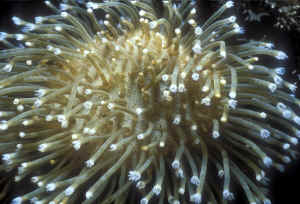
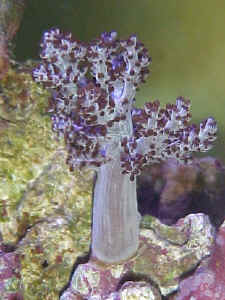
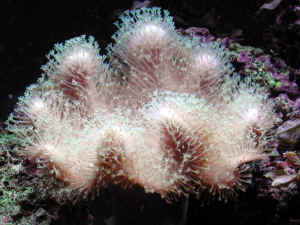
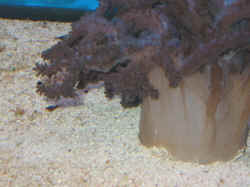
Toadstool Leather 11 Aug 2004 Hello all at WetWebMedia, <Hey Dimitri, MacL here with you today.> I have some questions about a recently acquired Leather Toadstool specimen. I bought this coral on Sunday from an LFS, and its polyps remained closed up until this morning. From what I have been reading it must be a normal thing given it takes time to acclimate. I now can see it is shedding off some skin/wax and some of the polyps are visible - beginning to extend. <Definitely normal and the shedding is normal as well. You can gently help this along with a turkey baster and gently blowing off what its shedding.> I am sending a picture because I wanted an opinion as far as its position in the tank goes. <No picture made it.> I placed it roughly in the middle of the tank (tank height is 29 inches) since this is what I was told by the LFS guy (either top or middle). I glued the coral (piece or rock that came with it) on the side of a pinnacle that I have created in the tank. Even though he was standing up right now he's facing the side of the tank. Should I move him again? <Until he's standing upright and not stressed any more I would not move him. Let him get settled and be okay then you can move him. These corals need to be able to adjust to the water conditions.> I am inclined not to but you can't see the crown/head/face of the coral if it remains like that. Is this going to affect its health on the long run? <He will perk up I am sure and generally they grow towards the light although if the coral is getting enough light he will just grow in that position. The main thing is let him adjust to his water parameters BEFORE you move him.> Will he turn the other way and start rising after he gets acclimated? <He can't physically turn but they can grow towards the light.> The coral is indirectly exposed to the output of water pump (Iwaki 40RLXT) so I think he's getting enough water flow. <Sounds like a good place for him. I would let him adjust and see what he does before I do anything with him.> Also, is it normal to get green coralline algae from PC's? I have a fixture of PC's - and some florescent -overall wattage 290. I get lots of green coralline and then some pink starts growing on top of the green. <Coralline is a very good thing whichever the color.> Is this normal? Tank is 1,4 yrs old. I have recently started stocking it with coral - all corals are doing fine) <Wonderful and sounds like a lovely tank!> polyps, mushrooms, Ricordea, rain, pagoda, trumpet, etc.) Your advice/opinion will greatly be appreciated. Thank you, Dimitri Distressed Leather? I was wondering if you could help me. To give the general info first, I have a 55gallon tank. 2 x 400 GPH filters one at either end of the tank. Protein skimmer (getting lots of dry foam and getting at least 2-3cups a week). I have 130 watts of (50/50) light on a 12hr cycle, and another 80watts (daylights) on a 14hrs cycle (extra 1hr before and after) to simulate a bit of dusk and dawn. Water Info: Specific Gravity: 1.024 Temp: 79 KH: 12 PH 8.3 (evening measurement, never have time during the day) Ca: 400 Iodine: 0.6 Nitrate, Nitrite: 0 Ammonia 0 - 0.25 <Wooooahhh! Do re-check this! Ammonia should be undetectable in a healthy, established aquarium!> Phosphate: 0.3 (Can't seem to get this down despite many water changes) <Do check on your source water. Perhaps the RO membrane needs changing. Do revisit your feeding habits. Are you getting any liquid from frozen foods into the tank when feeding? Are you using lots of dry foods? Both of these can cause phosphate readings. As a remedy, you could also try chemical filtration media, such as Poly Filter, or, you could use one of the "Phosphate-removing" products out there, such as Rowaphos or Phosban. These are only "band aids", of course> The water is all RO+DI, 10% water changes per week. Water is prepared 72+hrs in advance and checked for temp, KH & PH before adding. I add Iodine, Strontium and Calcium, and Reef Builder (Alkalinity Buffer) to the water on scheduled intervals. <Sounds fine.. Do test to confirm the need for the additives used> I purchased a toadstool about 2 months ago. For the first 2 - 3 weeks it opened during the day and seemed to be doing quite well. One of my red claw hermits took a liking to climbing it and sitting on top, and after that it stopped opening up. <A common reaction to continued irritation> It still seems firm enough to stand on it's own, but it is covered with a green/brown substance, and hasn't opened in at least a month. <Hmm...Sounds like it might be algae growing on the coral. A good indicator that something is not right here. These coral do retract their polyps periodically, and shed a waxy coat. However, remaining closed for extended periods of time could be a sign that something is not right...Do review basic water conditions here.> Is there hope or should is this coral dead? Thanks, Derek PS: Have attached 2 pictures, hopefully they are clear enough to see. <Well, Derek- the pictures were a bit blurry to me. As far as sticking by this coral- I would not give up just yet. It is quite possible that it may return to it's former glory. Increasing water flow over the coral may help stimulate it and assist it in completing the "shedding" process of the aforementioned waxy coating. Do keep any eye on things, maintain high quality water conditions, and stand by the animal as long as it looks otherwise healthy. Good luck! Regards, Scott Leather coral troubles - 4/5/04 Hello- I tried posting this first, but no response..... My leather coral (looks like an upside down mushroom) had been drooping for about a week when I realized that he wasn't going to make it back to upright. I have had him for about a year and a little yellow goby had lived with him the whole time. The goby would perch on top and survey the tank. <this is a Sarcophyton correct?> Anyway, yesterday I took a glove and moved him to get a better look and saw that he was going necrotic on me. <Hmmmmm> I immediately took him out with some tank water and added some iodine all into my girlfriends Tupperware and cut off most of his stalk, which was decomposing. I sewed him up to a rock and he actually looked better with polyps a little extended. <Good move in my opinion> It seems that although the polyps are still extended the death is still spreading. Should I cut him down more? <Hard to say without seeing it but if the necrosis seems to be spreading then cut it about a 1/2 inch above the necrotic area> There were no parasites in his stalk. <Weird. Sounds like one to me> All water parameters are all good. Everything else in the tank is all good, from pulsing xenia to clams... Oh yes, there are no corals next to him or even close to him. <Excellent. Look through our FAQS on our site if you haven't already> The closet inhabitant next to him was a sponge that was about 4" from his base. <Well, never know. Sponges can be aggressive as well but probably not the issue though> thanks, <Good luck ~Paul> Miguelito Arias Past & Present, Green Finger Coral - 7/14/03 Hello & top of the day! <to you as well my friend> Anthony, I hope you don't mind seeing progressive photos of a green finger coral you helped me "fix" back in January of '03. <a pleasure to see> Do you remember the "Mash 4077th" emergency surgery you talked me thru? <yep... I do recall... carving out the necrotic area at the base as it were> As my very first coral, this beauty has nearly doubled its size twice over! The series of pictures began in mid January & ends 7-13-'03 (the pic with the shrimp on it!) <much appreciation for sharing, mate.... do need to ask you to send non-zipped files, and shrunk in size for us to view/post (low-med res jpegs)> Every time I look at the coral, I want to call ya and say thanks for teaching me all you have in the course of this tank. What better way than to let you see for yourself how the coral is doing! Many thanks, again for your knowledge & willingness to share with the hobby. Peace & incense, Stormbringer. <its truly redeeming and inspiring to hear my friend. Keep on truckin! Anthony> - Open Close Open Close Open Close... Abnormal Leather! - Hi Guys Yet another question fro you, hope you don't mind. I have a leather coral that seems unhappy at the moment and I don't know why. I haven't moved it or touched, but it keeps on shedding mucus. It will close, then a couple of days later the layer of mucus forms, the polyps under the mucus open until the layer is released and then once it has all been released, the coral stays fully open for a couple of days and then closes and the cycle repeats. This has happened about 4 times in a row now. <Doesn't really sound like a bad thing, although abnormal.> I know it is normal for these to periodically shed, but it is getting to be too frequent, and therefore suggests something is not right. <Well, could be, but it's a tough call.> All of my other corals are ok, my fish are ok. Corals: Pulsing Xenia, White Spot Xenia, Mushroom Anemone, Mushroom Coral (slightly shrinking) & Poly Colony Fish: Fire goby, Fancy Sea Bass, Scarlet Hawkfish, Blackfooted Clown, a couple of Chromis <Make sure none of the fish are nibbling and no coral (besides the xenia) are touching/stinging it.> These are the stats. 36" x 16" x12" Tank RO Water, 5% twice weekly 3 Hagen life Glo fluorescents, 1 actinic 12-14 hrs per day. Berlin Skimmed, HR carbon every 2 weeks, Canister Filter, gravity fed DSB/Refugium(24" x 12" x 12" ), trickle filter Ammonia, Nitrate, Nitrite, Phos, all 0 Calcium 320 falling to 300! <Well, this is a little low, likely not the cause of your leather acting up. I'd correct this immediately.> KH 9-10 pH 8.3 ( Have started supplementing with Kalkwasser ..not much and infrequent (little, test ,little etc) The only thing that could be disturbing it is the Hawkfish. When its closed he seems to like perching on it? <Heh, good ol' Hawkfish. That is probably not the cause because they do that all the time with many types of coral. It could potentially be the cause in this case.> Any observations/comments While I am here I also have a couple of other Q's, not problems really .I have recently set up a refugium/DSB. I managed to get a pure calcium carbonate substrate from a LFS, perfect for the job. They also gave me a few kilos of there live sand from there own refugiums to start it off, and also managed to get a kilo of the gunk that is left after curing the live rock, from another company. <YUM!> ( all hard to come by in these parts of the wood After setting up the DSB I had quite a lot of CaCO3 left so placed 2" of it in the main tank. There are quite a few bubbles appearing in the substrate in the main tank, the question is what are the bubbles? <If the bubbles are appearing between the sand and the glass, they're likely oxygen bubbles from algae photosynthesizing on the glass. They could also be nitrogen bubbles from denitrification, but it's probably o2.> I would have thought that 2" of sand would not be enough to denitrify the nitrate. <It usually isn't> In the DSB there are a few bubbles, Loads of worms/pods already, but no bubbles! <No worries> Sorry I know your busy! just one of those intriguing things (Also should I turn the substrate in the main to stop it compacting, and how often should you feed a refugium/DSB?) <Feed the 'fuge daily if you're trying to encourage lots of 'pods to grow. It's a tough call on the 2" bed though, since it's not quite a DSB. Either way I wouldn't go out of my way to stir it up, there should be little to no compacting. Maybe pick up some Nassarius snails.> Oh and one more question. I have a few what look like flat snails! There look like black slugs, but with hard blue type mother of pearl shells and quite big feelers. And they move so quickly! They just eat the hair algae so think they are useful, just cant ID any ideas?, the thing is the last time I though I found some friendly slugs, they turned out to be predatory Nudibranchs which decimated my polyp colony! ( It did recover) <If you could come up with a picture that would be a huge help. As long as they eat hair algae, they're ok in my book. Good luck! -Kevin> Anyway thanks for your time Cheers Rob ? rare green finger coral from Fiji 6/26/03 <cheers... Anthony Calfo here visiting our good friend Bob in SD> I recently purchased a "rare" or so I was told green finger coral than had been propagated. <not rare at all... but beautiful. As common as sands in the desert. A poor shipper though> Could you tell me anything more about this? <similar care to other Alcyoniid leather corals Also- where could I find a rose anemone from Tonga and a rare pink Xenia from the red sea and about what price will I have to pay? price would depend somewhat on your locale... have you asked your LFS for a quote. Else, do look at Marine Center online> I figure I will have to get them from someone who has propagated it. Thanks, Cathy <do also consider finding a local or regional aquarium society for support, frag trades am fellowship. kind regards, Anthony>
Sarco's acting funny... Hi I have a toadstool leather coral that I bought about 4 days ago. Since I placed it, it has been retracting and coming back every few hours. <First off, never expect a coral (especially a Sarco.) to behave normally in the first week or so as it acclimates to the lighting and the new environment.> Now it is out, but the edge has started to turn white. it's where it looks like it has been cut. <That rock flower anemone looks mighty close to it, could it be getting stung by it?> The store told me to put it in indirect lighting, and low in the tank. Does it need to be moved, or just get used to the lighting? <I'd move it away from the rock flower. You'll need to give it time to acclimate to the lighting again.> Right above it is a green mushroom coral and on the left a rock anemone. could it be that it is to close? I am sending a picture to show where is , Any advice would be a big help. <Good luck with it! -Kevin> Thanks Corey Leather Coral feeling poorly! 6/11/03 Hi Anthony, Hope you and all the crew are well! If you don't mind I have need of your advice again. <cheers, Jenny... good to hear from you> If you remember I asked you a while ago about the hard cancerous patch in the centre of my toadstool leather coral. It had been caused by my two percula clowns constantly swimming and living in the corals polyps. You didn't think at the time that it would be harmful but now there seems to have developed a big deep hole in this calcareous patch and the coral is very unhappy. <interesting... and indeed in need of address.> There are also yellow spots/small patches appearing in places on the coral, these show up clearly because the coral is hardly extending it's polyps now where as before they were always out. The coral is also shrinking in size and I wondered if there is something I can do to stop this determination. <clearly the coral and clowns need to be separated. I personally have never liked clowns in a reef aquarium... they often take even less suitable hosts like LPS corals and kill them. Yet... if you are attached to the clowns, we might simply pull the leather and hope they take a cave next> Everything else in the tank appears to be fine and the only parameter that is not as it should be is the ongoing phosphate problem I have always had and that is gradually diminishing with regular RO water changes. I don't think this is the problem though as this coral has lived happily in this environment for a very long time. <agreed... re: such hardy leathers & phosphate> I think the clowns have caused the damage and am thinking of trading them in but wondered This coral can be revived. <yes... easily> Have you any suggestions that might help? <worst case scenario, the necrotic patches can be cut out with a razor or scalpel> There have been no new additions of either fish or inverts to this tank in the last 6 months and it gets regular water changes of about 15% every 2 weeks. <all good :) > Many Thanks - Jenny P.S Do you know when the new book is going to be dispatched? I'm really looking forward to it arriving! <yes... very soon my friend. They have trucks scheduled to begin shipping it in the US the last week of this month. Hoping you'll see your arrive by airmail to UK early July <G>! Kind regards, Anthony> Toadstool not opening. Hi I have a 40 gal tank reef setup up for 6 months now and all is well but I have a 6 in toadstool with a small frag on the same rock that have done fine all this time but 2 weeks ago they closed up and haven't opened since they are still vertical but the small one looks wrinkled on the stem they seemed to be doing great up until then any ideas what I can do.... <As long as no part of the coral is turning black or crumbling, the toadstool is likely just preparing to shed it's top layer of cells. The crown will appear waxy until this layer begins to peel of. It will open soon after, likely larger than before.> 40 gal, protein skimmer ,80lbs live rock with good coralline growth, 2 rotating power heads, 2 55w pc one day one blue ran 12 on with 1/2 hr startups 2 Percula clowns one Mandarin Goby <I hope your Mandarin eats prepared food. If not, the tank is much too small> one green serpent star misc. polyp corals and hammer corals water am 0 n02 0 no3 0 cal 450 alk 8.4 <I believe you mean 8.4 dKH, if it were in alk there's no way you'd be able to maintain a calcium of 450> iodine .6 <Hope this helps! -Kevin> The benefits of Sarcophyton and pulsating Xenia Hey guys( and gal(s)), My question is for Mr. Calfo. Mr. Calfo, according to your book it has been observed that pulsating Xenia do better when housed with a Sarcophyton. Do you have any more information on this phenomenon? <all anecdotal... not any/much scientific research on this or any aspect of commercial coral culture> Is one type of Sarcophyton better for this purpose than another? <not sure... my experience with Xenia and "leathers" has been favorable with many Alcyoniids though> On an unrelated note, does anyone know if mangroves are legal to buy in California? <I do not believe you are restricted but cannot confirm. I have seen many mangroves in aquarists tanks in Cali though... do pose this question to some of the societies (hopefully you will join some of these clubs <G>). Try SDMAS, MASLAC, Seabay, etc> I emailed the department of agriculture as well as fish and game and have not received a response. Thank you for your trouble, -Cory <best regards, Anthony> The Doughnut technique- trimming down an overgrown leather Dear Crew, <cheers, Howard> One of my toadstools is now 14 inches in diameter. (a small scrap glued to the rock two years ago) It is shading other life and I want to either remove or trim it. <no worries... can/will be done> I can't use Anthony's method of taking it out and cutting around it because it firmly attached by a 4 inch diameter "trunk" to a very large piece of rock which contains other life. Can I safely cut about a 2 inch strip off the circumference working under water in the aquarium with a scalpel? <although not "ideal"... it certainly can be done in the aquarium. Ensure strong water flow for the parent afterwards... use extra carbon/chemical filtration media and aggressive skimming for the ensuing week or more... and do an extra water change or two in the following week> Or, can I just cut the entire top off and let it re-grow from the trunk? <also can be done... but much more risky> Also, I would like your opinion on whether I may have too much live rock coverage. All exposed rock has with pink and purple algae. I wonder if having a half of the visible surfaces of the rock covered with mushrooms, polyp colonies, and corals (and therefore no algae) is diminishing the natural filtration of the rock system? <tough to say... and to some extent can be reconciled with strong water flow throughout the system (assuming your reef is built off the back glass (4" ideal) and not leaning against the back aquarium wall (stifles flow through the reef). Our goal is 10-20X tank turnover in water flow. At any rate... the amount of animals covering the rock is a bigger problem with aggression/allelopathy than stifling rock biotic activity> Howard <be sure to share those propagated cuttings with local aquarists/stores! Kind regards, Anthony> Toadstools run amuck Thanks for the advice, and I got Anthony's book which is great. My problem is that the toadstools are so well attached to the reef that's there's no way to remove them without re-doing the whole thing and I'm reluctant to risk that because the live rock is balanced pretty carefully and to disrupt it would mean also disrupting other corals. Am I correct in assuming that it's a bad idea to trim them while in the tank because of releasing toxic substances? If so, I'm between a live rock and a hard place and may just have to let them take over the tank! Any more ideas? <Well, you have a couple choices....let them go and take over (if they have the room) or trim/frag them with slightly more required dexterity and a longer, sharp razor type knife. Either way the parent would be returned to the system and release some slime in response to being cut, just more *in* the system then outside, that's all. I would run a canister with a bunch of carbon to help with that. Good luck either way! Craig> Yellow Sarcophyton not looking good - 4/16/03 I am at a lost as to why this coral is not doing well in my tank. <Lots of reasons... not the least of which may not be your tank at all but something that occurs with Sarcophytons Let's take a look.....> Any advice is appreciated. <I will do my best. Paul at your service> My tank is a 20 gallon micro reef that has been running for about 3 months. I've been in the hobby on and off for quite some time. The lighting for this tank consists of 100 watts of 5500k metal halide and 40 watts of actinic. Water parameters are as follows: salinity 1.023-1.024 at 77 degrees F. PH 8.0-8.1 Alkalinity 3.0-3.5 meq/l. Calcium 410-430 ppm. Ammonia, nitrite, nitrate, phosphate levels at '0'. Water circulation is good. <Well, I'll take good as meaning that there is a slight moderate flow over it. Hehheh =)> The tank has about a 3 inch layer of substrate on the bottom , 25 lbs. of live rock and a good protein skimmer. The other corals in the tank; pulsing xenia, green star polyp, Blastomussa, Ricordea mushroom, and 3 clams are all doing very well. <Sounds like an awesome tank> I've had this yellow leather for about 3 weeks. <Yellow corals are sometimes known to be the least hardy in the Sarcophyton species but still a pretty hardy coral in my experience> The 1st week it was doing well, but since then it has not been a happy camper. During the day it is not extended, instead it is shriveled and blotchy looking, and appears to be shedding. <this is very normal for a Sarcophyton to not open and extend its polyps, then shed a mucous coat. This shedding is thought to help keep contaminants and detritus from building up on the crown as well is sometimes related to growth.> I've tried various lighting intensities and played around with water current. I also recently ran carbon for about 24 hours. <Not a bad idea to run carbon most of the time in my opinion. I am thinking just "let it be" "let it be" (great song) Let it go through the shedding process and give it up to two weeks to a month in some cases to come around. Use a soft tooth brush occasionally to keep nuisance algae growth from taking over the coral and to help with the shedding.> Nothing so far has made a difference. I should also add that 10 percent weekly water changes ( natural sea water) from local pet shop, are performed on tank. <Wonderful!> This coral is not being harassed by any of the other inhabitants. <Sounds like you are a very observant and a very Conscientious Marine Aquarist. I have many of the various Sarcophytons in my tanks and have noticed this behavior a great many times and I employ the same technique of waiting and lightly scrubbing the crown occasionally. Usually my corals will come around about a week or two later. Sometimes less sometimes more. If everything you tell me is true, I think your coral will be fine provided the coral itself is just not stressed from collection but even with that it will probably recover. Give it time, that is what I would do. I would do my best to not move or muck with it any further as you could be stressing the coral further. These are very hardy corals for the most part. (especially the captive bred/propagated type.)> I think I've covered everything. Any suggestions would be helpful. Thanks, Chris. <Leave it be and keep me informed of any changes, mate. Paul> --- Chris Reynders Lobophytum Issues - 4/11/03 Greetings guys <Hiya. Paul doin' my best>... I have a new Lobophytum (purchased 3/23/03) in my tank. Up until tonight it had been expanded nicely, and a beautiful golden/pink/brown color, with polyps coming out whenever I checked on it. Tonight, within about an hour, this coral shrank to about half it's original size, and turned an equally beautiful shade of purple. <Does happen if something mucked with it or touched it recently. Are other corals near? Fish? Sometimes does happen. Since you sent this a few days ago, has the situation changed at all?> The only thing that has changed in my tank is that on 4/6, I began to drip Kalk to help raise my calcium levels. <Could have something to do with it being so low and then going up, but likely would have noticed a change in the coral relatively soon after the addition of Kalk not a few days later. How are ya' doin' on your water changes?> I've been using B-Ionic (60 ml/day, each part) for a few months. The tank was started on 10/4/02 with live rock. I began to add fish and corals on 2/16. They consist of two clowns and a yellow tail damsel. The other corals are a small candy cane, and some green star polyps. Water params tonight: Temp - 80.2 pH 8.2 SG 1.025 Ammonia 0.0 Nitrite 0.0 Nitrate 0.0 Phosphate 0.0 Calcium 310 <LOW!!!!!> KH 9 <A little low> A little more background - I'm skimming with an ETSS 800 Gemini with an Iwaki 55RLT. Water is turned over by a T4 (about 1100 gal/hr) plus 2 300 gph power heads pulsed on and off randomly. Any thoughts about the devils hand that so radically turned? <Hard to say> Is this a recoverable situation or have I lost it? <very likely not lost at all. Water changes, time may be all the difference. Let me know what you find, and how it turns out> Thanks in advance. <Look to hear from you soon. Thanks for your question and sorry for the lack of a definitive answer, but hard to say. I would not want to put it all on the Kalk. My Lobophytum will sometimes change appearance and shape after tank cleanings, or if something touched it (darn hermits) etc. Keep an eye on it and let me know if it returns back to normal. Pablo> D.T. Lobophytum follow-up - 4/11/03 Thanks a lot for your reply. <Sorry for its lateness> Since I wrote to you in a panic that night, the lobo has changed for the better. <Well, I figured it would> Just before I went to bed that night, I peeked in again, and thought that it seemed to be a little fuller looking, but didn't want to get my hopes up. The next morning, it was looking 95% better, and last night it's back to it's old self. <Yeah either something bumped it (from a snail on up) It's polyps are out and looking good. <Very well> It is next to a candy cane coral, and the fish do have access to it. <Hmmmmmm> Maybe a sweeper from the candy cane touched it? <Could be. I would keep an eye on it if you think there might be a problem.> I don't know. In the rec.aquaria.marine.reefs group, a couple of guys said that their Lobophytum do a similar thing once in a while, but then come back to normal. <I, too, have had similar experiences.> I'm relieved. <Cool> Thanks again for your reply. <My pleasure and sorry for its tardiness> I enjoy your site and trust your answers. <Thank you for your question. Paul> Sincerely Dave Town Fragging/Pruning Sarcophyton Toadstools HI folks, thanks for the great service you provide; if the answer to this is somewhere on the site, I'm afraid I couldn't find it, so here goes: I have a 46 bow front running for about 1 1/2 years. Two of my first critters were a green and a gold Sarcophyton, each about the size of a quarter. Now the green is about the size of a salad plate, and the gold is as big as a dinner plate and growing rapidly. I'm thrilled they're so happy, but soon they'll fill the tank, literally. I've heard there's some way to "prune" them; I just have this one tank or I'd try to propagate them. I might be able to give or sell "cuttings" (if that's what you'd call them) to the LFS, but I have no idea how to go about it and sure don't want to risk hurting them. I'd appreciate any advice you could offer. Thanks very much! <I recommend Anthony's book as it is provides all this info in detail. You wave the toadstool down and lift it out onto a clean cutting board (plastic is best). Using a very sharp razor knife, excise the outside edge/margin completely around the outside, if a large specimen, an inch or slightly more, and return the toadstool to the display. The outside ring can be cut into 1" pieces and allowed to attach to rock rubble. Plastic containers covered with wedding veil work well keeping the new frags in place. Good luck! Craig> The Amazing', Color-Changin' Sinularia! I have what started out as a green Sinularia. It has turned into a yellow Sinularia. Is this because of too much light / too little light or something else? Thank you. <Well, hard to say...Color changes in corals are thought to be partially the result of the zooxanthellae concentrating in the coral tissue in different areas, etc. They are certainly a response to different lighting schemes...Usually, under more intense light, corals tend to become darker. On the other hand, different spectra of lighting can result in different color responses by the coral. For example, I had a Capnella that was a creamy color with light brown/greenish polyps under 10,000k Aqualines. When it was acclimated to 20000k's, it took on an entirely different coloration: An almost turquoise color, with deep brownish-red polyps...It almost looked like a different animal! The point is, corals can change coloration for a variety of reasons. As long as there is still good polyp extension and the animal appears otherwise healthy, I would enjoy the colors! BTW- do acclimate corals to any new lighting regimen slowly, to avoid "shocking" them. Take Care! Regards, Scott F> Sufferin' Sinularia? Hi, <Hello! Scott F. with you today!> Sorry to bother you with another question, but it's a last stab before giving up. <Well, let's see if we can help out!> I have a 180l tank, four small fish, leather and finger corals, one hard lps (cup) coral, shrimps, hermits, snails. Plenty of live rock, good skimmer ( a half / three quarters cup of 'dark and smelly' every other day). <Music to my.. ehh- nose!> Fish feed well. A bright green button polyp, given to me by my LFS, as a single detached specimen and pushed into a small hole in the rock, is now thirty polyps (eight months later). <Excellent!> A star polyp continues to progress across the rock. <Good stuff! Aggressive, but a very prolific coral!> Water parameters are good, everything 0 which should be, Ca 400, Nitrate below 10 and dropping (thanks to your advice about getting rid of the wet and dries). Ph 8.3, Sg 1.025. RO water, top ups with RO mix using Aragamite. Weekly 5- 10 % water changes. <Sounds great!> The problem ... the two finger corals (Sinularia) never open. Actually that's not quite true. About once a month the polyps show for a couple of hours, then that's it. One of the leathers is similar, but tends to open more often and for longer. The remaining leather is huge and growing, to the point where chopping him up and planting the bits might be the only option. <Sarcophyton leathers are easy to propagate, so don't be shy about it!> Plenty of water flow, 4 D&D T5 tubes. I've tried the finger corals in high, medium and slow flow, high and subdued light etc., giving them a couple of months in each location. Any ideas, before I return them to the LFS. I don't want them to die, although to be honest they don't look as if they are about to, no disintegration, shriveling etc. The d**n things just sit there! <Well, since these corals are quite variable in terms of their behavior. It's not at all unusual for them to go for long periods of time without the polyps expanding. They really prefer moderate to strong water movement, and seem to favor a bit more "blue" light than many other softies. With good current, high water quality, and proper light, they should do very well for long periods of time in your tank. I'd try slowly adapting them back to these conditions, and just being patient with them. Thanks once again. Excellent website, first rate service. Brian <Glad you find our site useful! Feel free to contact us again any time! Regards, Scott F> Sufferin' Sinularia (Pt. 2) Thanks for that. I'll try some patience. Unfortunately I came home from work yesterday to find I'd suffered the dreaded heater / stat failure, and a tank temperature of 95 degrees F. My beautiful cleaner shrimps were dead, as was the blood shrimp. All corals, not surprisingly, closed. <Sorry to hear that...Hopefully, things are returning to normal?> By the time I'd gradually cooled the water the big leather was open again, but the cup coral remains closed, and the star polyps haven't emerged yet. All the fish and the arrow crab are ok. <Who said that marine animals are "delicate", huh?> Will this temp rise have killed off the bacteria in the living rock, as this is my main source of filtration (plus skimmer + carbon)? <Well, not the heat itself- but the resulting lack of oxygen, or the die off of a large amount of animals (large and small) could possibly overwhelm the nitrifying bacteria population that is present...> Thanks once again. Brian <In time, with attention to water conditions, and a little TLC, this tank can rebound just fine! Chin Up! Scott F> Soft Corals 3/28/03 Good day WWM Crew, <cheers, mate> I have a Toadstool Mushroom Leather (Sarcophyton) and a Thin Finger Leather (Sinularia) and I just want to ask about some observations I made: 1 ) I have noticed that every morning when I wake up, before any lights come on, that both of these guys have long sweeper tentacles waving all over the place. Do they use these to feed, or are they just used to keep other livestock at bay? <the latter if that's what they truly are... purely defensive> I have noticed that their tentacles and polyps are out in the morning before lights come on, but when I get home from work (5:00 ), the tentacles and polyps are retracted and stay retracted the remainder of the evening. I'm not sure why this is. <because these soft corals feed very little organismally. More so by translocation (of nutrients from photosynthesis) and absorption. Some nanoplankton too... but they really cannot eat any large plankton or prepared foods> It seems to me that the light would stimulate their polyps and tentacles. <not really... the tentacles are a very small part of the photosynthetic tissue overall> 2 ) Do they have to have their tentacles and/or polyps out to feed? <nope> 3 ) I also have some Corallimorphs ( Actinodiscosoma ). I believe they are called Green Fluorescent Mushrooms. How do these feed? <all of the above: organismal, absorptive plus perhaps by mucous too> I have never seen any kind of tentacle or polyp. Most of them are also "folded up", instead of laying flat. What does this mean? <they've been watching depressing news coverage> Note: I just got these corals this past Saturday. <time needed to acclimate for certain> 4) I have been feeding all of the above including a bunch of Palythoa (Green Button Polyps) a frozen algae. I can't remember the name, I think it's Reef Treats. It's not just frozen algae, but has many meaty foods such as brine shrimp, Mysid shrimp, sea urchin, squid, clams, oysters, and scallops. <ahhh, yes... the fine meaty fare is better here> Anyhow, I realize these are filter feeders, so I soak the food in garlic and put in a small blender and use a turkey baster to target feed the corals and coral polyps. I have only fed them twice since I have had them. Is this a good practice, or is there something better to feed? <truly depends on the species. Some like more phyto- than zoo-plankton> As always, thanks Charlie <best regards, Anthony>
Sarcophyton leather and percula clowns 3/27/03 Hello again Anthony, Hope you are well! <cheers Jenny, with hope for you in kind> You may or may not remember advising me to remove my two percula clowns from my FOWLR tank because my Lunare Wrasse would eat them eventually. (You will be pleased to hear that the Harlequin Wrasse is still holding his own in this tank and actually pinches food from the Lunare's mouth and then runs like a bat out of hell! Quite funny to watch as peace usually reigns except for these odd skirmishes brought on by himself being greedy!) <heehee... I do recall> Sorry I've wandered, couldn't resist telling you that! Back to the clowns. So I put them in my reef tank and they immediately took to my Sarcophyton (who also owes it's life to you from long ago when it had a necrotic infection). I thought this was an o.k. arrangement because the leather keeps it's polyps open most all of the time. <agreed... usually OK> It has now started to take them in once evening comes and it also starts to shrink dramatically. It's always done this to a lesser degree after dark but not before lights out as it's doing now. <hmm... may have nothing to do with the clowns. Has there been a recent improvement in light or quality of light> New lamps, wiped down crusty bulbs, improved clarity (carbon use after a long absence), etc?> My first thought was PH but I don't think that is the problem as the lowest reading I get is 8.2 usually it's 8.4 <excellent> and the other corals/mushrooms and fish all seem happy. The clowns 'sleep' right inside the leather at night and I can now see a 'bald' patch in the centre approx 1 to 1 1/2 inches in size, no polyps and a yellow/cream colour instead of it's normal flesh colour of pink . <still not that big of a deal... its simply forming a callus> I didn't notice this before because the leather expands to about 10/12 inches across in the daytime and all the other polyps have hidden the centre from view. Is this bald patch due to irritation from the clowns or is it a coincidence and another problem looms (it doesn't look like the necrotic infection the leather had before.) <agreed... likely from the clowns but no worries> Are the clowns nightly attentions going to kill my leather if I leave them in the reef tank or doesn't it matter as long as the bald patch stays in the centre and gets no bigger? <agreed> On a different note I just thought I would tell you that I have finally got my new tank. (you sent me diagrams etc for drilling as I didn't have your book then). <excellent!> if you remember I had loads of trouble with Watford Aquarium who was going to build it. I got a different tank manufacturer to build it for me and he has put in 4 * 1.5 inch bulkheads and built me a long overflow shelf just like your drawing . He has given me a 5yr guarantee and built a superb cabinet as well. I am in the process of decorating the room before setting it up as it's going nowhere once it's filled! I can hardly wait and I hope you won't mind if I need to ask for more advice when the time comes. <looking forward to hearing from you again, my friend> Many thanks for your valued advice - Jenny <a pleasure. Kind regards, Anthony> Colt Coral 3/7/03 I recently purchased a colt coral (1) week ago which was about 5 inches in height and 2 inch in diameter after 3 days I have noticed a change in size to the colt coral as smaller in height and an larger base. can you give me some advice as how to keep this healthy. <moderate to bright light... keep in top 10" of water if under fluorescents of any kind... deeper with MH is usually fine. Moderate to string water flow is necessary for good polyps extension and sloughing of mucus. Feeding is necessary and this is one of the very few coral in the trade that needs/eats phytoplankton measurably> My reef tank (120) gal. has been running for 2 years in which I have not lost a fish. Presently have tangs, clowns, snails, crabs, excellent mushroom also have calcium reactor working, and do a 25-30 gal water change every 2 or 3 weeks. I love the colors of hard and soft coral but have not had much success in these. Thank You Mark Kuntzman <hard and soft corals do not mix well in the long run... it is best to focus on one group. Stick with soft coral like your mushrooms and colt and add finger and toadstool leathers (Sinularia and Sarcophyton) for hardy candidates. Lobophytum is also very hardy. Avoid the colored leathers at first though (yellow, bright green) as they are rather delicate. Kindly, Anthony>
Loose Sarcophyton attachment - 3-03-03 <--Neat> Dear sir, <Paul will do> May I just comment on your website,<Sure> it is one of the most helpful that I have come across yet and the tips that I get from your letters always seem to work and I have now advised all my fishkeeping friends about it. <Thank you kindly. That is the reason we do what we do. Saving animals one aquarist at a time> Anyway, I bought a soft coral the other day (Sarcophyton), it stands at about 4 inches tall and it came on a small piece of rock which only half of the 'foot' had a hold of. It is a healthy coral and opened almost straight away when it was introduced to my tank, but today when I was doing a water change and cleaning the tank, I accidentally gave it a knock not too hard) but enough to knock it of the rock. <ahhhh....done that before> I examined it and the foot seems to be fine so I attached an elastic band on the rock and wedged the foot of the coral underneath, the elastic band LOOKS tight but it doesn't feel too tight. <OK. I would watch it as sometimes seems they can slip out via current or other animals may also loosen it> It has now shrunk in size and closed completely. <Somewhat expected as the kind of disturbance you generated by "tearing" (albeit accidentally) it off of it's perch is a bit shocking. Analogous to pulling hairs from one's region (of extreme sensitivity)......kind of like that....you get my drift...> Will it re-attach itself to the rock this way and if so how long should I wait before removing the elastic band? <Well, at minimum I would leave the coral placement where it is and check in about 2 weeks for it to attach. May take less time but I would wait. If there is problem with it attaching you could always take a piece of thread or monofilament (thin fishing line) and strike a needle about a 1/2 inch above the "foot" and attach it to the rock again. After about two to four weeks it should attach and then just cut the line and pull out. Anthony Calfo's book "Book of Coral Propagation Vol. 1" details many other tried and true methods of attachment for this coral and many many others. I highly recommend this book if you have the means. Worth every cent in my experience. Hope this helps.> Attaching "Sinularia flexilis" Hello! <Hi there, Paul at your service> I recently purchased a "Green Finger Leather" ( Sinularia flexilis) from my LFS. It is quite nice and it has been adapting on the bottom of my tank.<Very good> The tank is 24" deep. I would like to place him now near the middle of the reef in some moderate water flow, but how do I attach him? <Oh, well, many forms to use here, epoxies safe for aquarium use like Aquarium Systems Holdfast product, Cyanoacrylate based super glue gels (many to choose from here) check your local home improvement store for Cyanoacrylate based gel glues. Also, at the Monterey Bay Aquarium, they use a product called Z-SPAR. Look around for it. It is a marine epoxy sometimes found at boat stores and home improvement shops around the world.> I fear that he will be knocked off his perch by either the water current, crabs, star fish, or whatever else I have in there. <totally understood> I can not remove the Fiji rocks from my reef without upsetting the whole reef! <Also u Thanks, <No worries. Paul> Jeff Re: Attaching "Sinularia flexilis" Hey Jeff. I may be out of town this weekend so if you can send the original question ASAP that would be grrrrreat! I may get to it at latest Monday. I am so sorry about the missing text. Sheesh, what a rookie maneuver on my part. Take care! P.S. For the most part, regarding your question, I believe you would not need to remove rock even if you were to use Super Glue Gel or something to that effect. I put a little on my finger and dab the spot where the coral will be placed, and then put a little on the piece of rock for which the coral is attached. Then combine the two and hold in place (underwater) for a minute or two. Also, there are Epoxy sticks that can be used such as Aquastik or Holdfast See here: http://www.drsfostersmith.com/product/sc_view.cfm?siteid=6&pCatId=3771 or do a search on google for other e-tailers. Also, we use at the Monterey Bay Aquarium a product called Z-spar Splashzone epoxy from a company called Z-Spar. It can be found in the Western Marine catalog (online) You will never have to buy epoxy again though as it is $99 bucks and should last you your life time. You can pass it on to your kids!!! Hope this helps! Gluing Corals with Cyanoacrylate - 2/23/03 Hey Gang! How's it going? well I hope. <Things are well indeed, Scott. Paul in the hot seat today> I need to attach a toadstool leather to a piece of live rock. This coral has a small piece rock attached to the base of the coral itself, however, trying to keep the piece "wedged" in the rockwork is proving to be a futile effort. <totally understand!> I picked up some superglue gel with intentions to attach the coral to a stable rock. <Good> Now for the questions; even though the Cyanoacrylate gel is thicker than normal super glue, it's still thin. How long do I leave it in the freezer to thicken it up? <No need to do so.> When it comes to gluing the coral to the rock, what to do? take the rock out of the tank, dry a section where glue is placed, then apply glue & hold coral in place for 25-30 seconds? <Many methods can be applied here, but I personally put a little drop on a gloved hand, smear it on the rock where the coral is to be placed, then put a drop or two on the bottom of the rock with the coral on it, and attach the two together and hold in place for 30 seconds or so. No need to take any rock out of the aquarium in my experience. For the rocks with larger corals, I use an epoxy that can be found just about anywhere. Look for it in aquarium retailers and e-tailors. Same method. mix it together, then put a little on the rock where the coral is to be placed (yes, while the rock is underwater) and place a small piece on the rock with the coral on it, then place the two epoxied pieces together and hold in place for a minute or so. No problems. Done!> Then place back in the tank? <No need to take any rock out of the water> I haven't done this kind of thing before, so, I'm a little nervous about the experience <Nothing to worry about. Check out Anthony Calfo's "Book of Coral Propagation Vol. 1. Everything you need to know about corals, coral placement, and propagation can be found ,in all their glory, in one place.> I'm fixing to learn! <You're well on you way!> Thanks for the advice. <My pleasure> Scott in Denver <Paul in sunny San Jose> Coral ID - 2/10/03 Hi WWM crew, <cheers> First, thanks for all your help since we have successfully beaten an ICH infestation with your help. <excellent to hear> It hit us pretty hard though, cause we lost most of our fishes. <ouch> But that's the past and we are back on track, with strict quarantine procedures. <alas... too many of us learn the critical importance of QT that way> We decided to try our hand at soft corals. We recently purchased what looks like a finger leather coral. <correct... a good hardy choice too> But we are not sure what family of corals it really comes from. <it is an Alcyoniid... a common Sinularia- AKA "Knobby Finger Leather"> Attached is a picture, though my camera kinda sucks. Can anyone shed some light on this guy ? Also it was attached on a flat piece of rock which we attached to the flattest area we have among the rocks. But it looks like the attached rock broke in half and the coral is slow slipping down to our base rock. Maybe the coral wants to reattach ? <agreed> If you look at the bottom right of the coral, it now detached from the excess rock that is slowly folding upwards. Shall we stuff small pieces of rock to support it from sliding down to the base rock ? <only if you don't want it to attach there> Any other suggestions ? <avoid letting coral attach to huge rocks in the display for convenience in moving them later> Thanks a million, Robert <best regards, Anthony> Clarkii and Sarcophyton (Toadstool) My Clarkii is swimming into my Sarcophyton. <bummer> When this happens most of the Sarcophyton polyps retract. I'm afraid that is the Clarkii continues this behavior the Sarcophyton will die. <its not great, but the leather is tough and will probably take it. Its LPS hard corals that die from such unnatural impositions to host> Can you give me some advice on what I should do? <remove the clowns if it seems to stress the coral> On a side note, I need some help getting the pH of my newly mixed saltwater up. My tanks pH is around 8.2-8.3, but my newly mixed saltwater has a pH of 8.0. I hate to use buffers because my alk is already at 12.6 in the display tank. Should I add Kalk to the new saltwater? <nope... but Kalk to the tank in small but consistent (nightly) doses will help. Baking soda to the freshwater will be fine too> Thanks for your time and patience, Jeremy G <best regards, Anthony> New Leather I recently purchased a Leather Coral from one of my favorite LFSs. I opened nearly fully the same day I got it home and opened fully everyday for 4 days. It has since stayed closed the last 3 days and I'm noticing some whitish spotting. <leathers are finicky about polyps. Likely it is fine. Hands in the tank excessively cause polyps to retract. Healthy leathers going through growth spurts (producing a waxy mucus tunic on the capitulum/crown) do the same (2-3 times monthly for several days)> I'm not sure if this whitish spotting is necrosis or just normal closing of he polyps and mucus. <necrosis is unmistakable... dissolving tissue. Blast with water flow to see> I'm hoping you can make a guess from the picture attached whether I should be concerned for the coral. <looks normal, my friend> Also attached is a picture of the strange polyp I found attached to the coral, any guesses here? <second image did not come through> and if so should I try to remove it? Thanks in advance for your help. Alex <regards, Anthony> He's Into Leather! Guys, thanks again for all of the help, can I ask one last question? I just got a great shipment from FFE which included (yes I took the plunge, could not resist), a yellow Sarcophyton. <One of my favorite corals!> He has been in the tank for 4 hours and is showing signs of life (slowly taking form, yellow polyps seem to be extending slowly :)), but here are my questions: I know these guys suffer from shipping, I did dip him in solution for a few minutes, if I do start to see damage, should I cut it out with a razor blade and dip, or leave it alone? <I would consider carefully excising the affected section, and dipping the coral if this was a serious problem. If there are no obvious signs of damage- I'd leave the coral alone!> I also have sps, do I have a concern with toxins (I know they can sting, but I am worried about environment contamination), I do use carbon (water change might help too, they are in a 55 with two halides and VHOs), and I know this might help, I just want to make sure I do what's best for the leather (outside of having left it Fiji) and for the sps. Thanks <Well, the Sarcophytons are well known for shedding a surface layer of dead, waxy tissue and mucus from time to time, which can cause problems for both the Sarcophyton and your other corals if there is not sufficient current in the tank to carry this material "out of harms way". Use of activated carbon or PolyFilter is highly recommended to help remove some of the allelopathic compounds from the water, along with general good husbandry. With good care, these corals can grow to an impressive size in a very short time. Enjoy this coral! Good luck> PS. That Queen I thought I was going to lose is making progress everyday, I swear I will never feed store bought oysters again! :) came close to :( <Well- you learn something new every day! Keep up the good work! Regards, Scott F> Toadstool leather- removal Hey guys, I have a toadstool leather which I would like to take off of the rock I purchased it on and put it somewhere else in my tank. The rock it came on also came w/ some other type of coral on it and to make sure there is no warfare between the two, I would like to move the toadstool.. So my question... How do I unattach the base of the leather from the rock it is on so I can attach it to another rock? And also I need some advise on how to attach it to another rock. thanks, Jason <although daunting at first, your task is rather simple and straightforward. You have two choices... you can remove the coral on rock from the tank and simply chisel at the rock at the base of the coral and effectively skin the coral off the substrate. This is easy and doesn't require touching the coral... but then leaves you with a sliver of rock to attach or glue (under then coral). You can also simply cut through the trunk of the coral at the base with a razor blade or scalpel. This will leave tissue that is likely to regrow for better or worse. The extracted parent can then be stitched with nylon sewing thread or clean fishing line to a new piece of rock or rubble. If you are interested in even more detail about propagation and attachment, I have written a book on the topic (Book of Coral Propagation). Please feel welcome to ask more questions about this specimen specifically here again, if need be though. Best regards, Anthony Calfo> Mystery Leather Coral Good Morning Gents, <Hi there! Scott F. with you today!> My local fish store has what it is calling a Tonga Carpet Leather Coral. I have been searching WWM and the web for info on Carpet Leather Corals without much success. I have found Carpet Anemones and Leather Corals but no Carpet Leather. This coral appears very different from my current Leather Coral (much smaller polyps, bunched closer together, and doesn't extend as far out). I am looking for some type of identification information and the difficulty in keeping these corals. Any information would be appreciated. <Hard to be sure without a picture, but it really sounds like a fancy name for a Sarcophyton elegans to me. Common names are frustrating for both the hobbyist and people in the trade, because they don't really identify the animal!> I'm looking for a second opinion (an unbiased) opinion. The LFS states that they are very hardy and easy to keep with my power compacts. Thanks for the help. J.T. Craddock <Well, J.T., if it is the S. elegans that we're talking about, it can do well with PC's, if placed high enough on the rock. The bright yellow Sarcophytons really keep their color under metal halides (they tend to respond best to "daylight" spectrum lights), but tend to go to "brown" under inadequate lighting. They are rather easy to keep, in my experience, but do handle them carefully, as they "bruise" easily. They derive pretty much all of their nutrition from the water, and don't require any supplemental feeding. Hopefully, we're talking about the same species here! Good luck! Regards, Scott F> |
|
||||||||||||||||

|
Features: |
|
| Featured Sponsors: |