Part 1 of 3, On to 2, Over to 3
|
Photography is all about controlling light. All the gear, film,
processing, and reproduction equipment used in photography is for
the purpose of manipulating light.
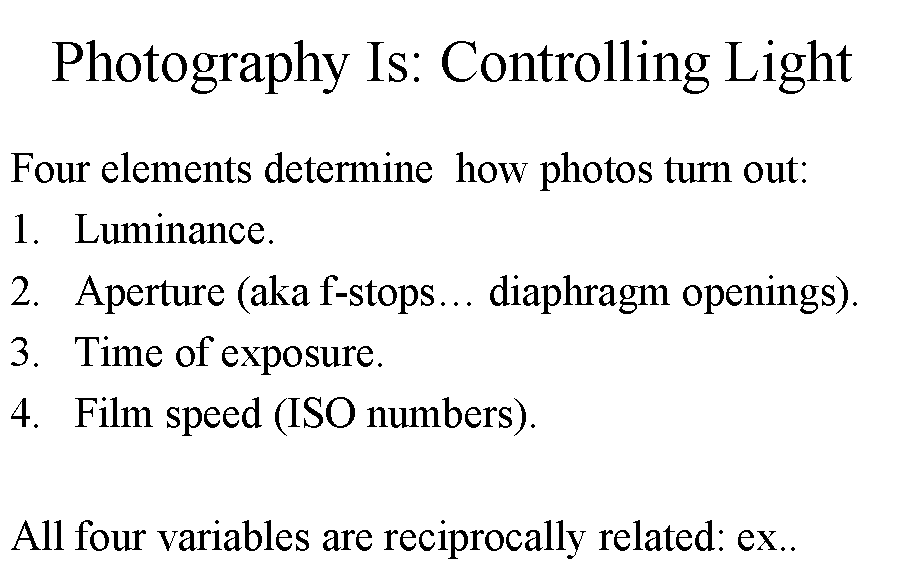
There are only four elements that determine a photograph.
Let's go over each of these and give some nuts and bolts
examples of common errors and solutions for each of their
consequences.
These aspects are all interrelated as you will know.
|
|
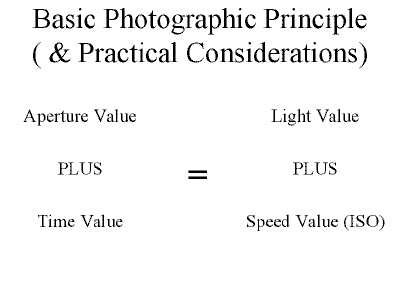
| This is the basic formula for how the elements of
photography are related... very fundamentally, Aperture value
(f-stop) or the opening/diameter of your lens diaphragm plus the
amount of time the film plane is exposed is equal to a measure of
entering light (incandescent and reflected) plus the chosen films
capacity (ISO) for recording light energy. You can see that by
dividing one value you can isolate it and express its relationship
to the other three... Practical applications here are such things
as doubling the aperture value allows for halving the exposure
time... to result in the same amount of light reaching the film
plane... |
|
|
First off, we should define a few terms, and narrow this
necessarily huge subject area down to something manageable within
the time frame, interest levels of all here.
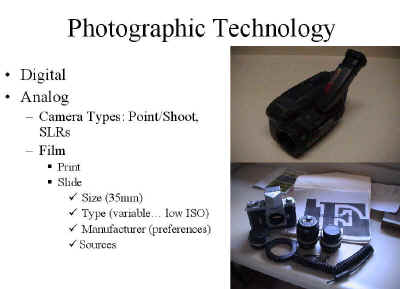
Yes, there are electronic image making devices (digital), and
yes, they can make useful images for hobby and business use. Some
of their use is identical, other more peculiar to this new
medium. For the most part we will focus on analog (film)
photography, in particular the making of transparencies (slides)
as this is the current industry standard. <Give pers...
ex.s>
|
|
| Luminance is a measure of all the incidental light
emanating from an object... and is measured in a few ways (lux = 1
meter-candle, = about 0.93 lumens...). It is composed of
incandescence (black body radiation),
luminescense/fluorescence/phosphorescence as themselves and as
reflected light energy. Basically, we register all of this as
"light". |
|
|
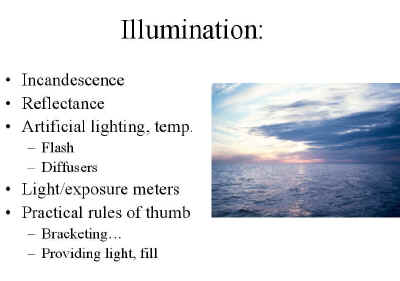
As we've agreed, photography is all about controlling light.
As such, it is paramount to either understand the light available
to you, or to augment, replace the light with quantities and
qualities you can provide. There are many dangers here. The human
eye, coupled with your brain is an able deceiver... the best
lenses can discern about nine f-stops, you can make out thirty
some...
Light meters are invaluable tools. From simple "in
camera" types to flash/reflected ones of spot to broader
area application... they can/will save you time, money...
|
|
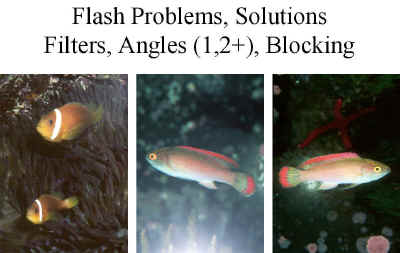
| There are more difficulties to making a correct
exposure than knowing and controlling the four aspects of image
making... Very commonly, simple mechanical errors in placement of
flash, lighting units will spoil aquarium photographs by
"flare", reflection outside and inside a tank. Best to
have the outside dimmed, and carefully place ones light sources at
angles, away from the camera. <Examples: Grier/Tepoot,
myself/others, polarized filters...> |
|
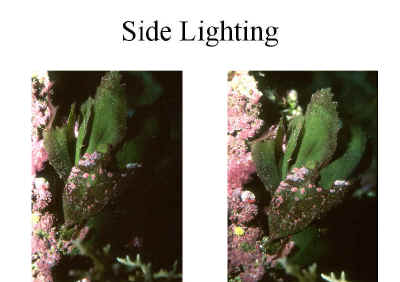
| Side lighting can yield desired, dramatic effects.
A seasoned photographer will take many shots moving the lighting
source/s about. |
|
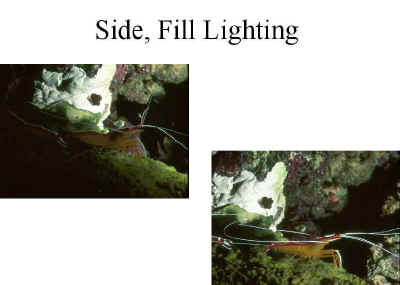
| Even if your intended subject appears well lit to
your "naked" eye, adding some "fill light"
can/does serve to "fill-in", accentuate details that
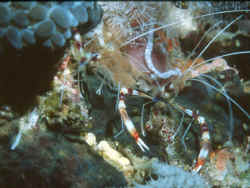
might/do otherwise go unexposed on films. In this case, the Lysmata
shrimp was side lighted from the upper right relative to the film
subject and camera. |
|
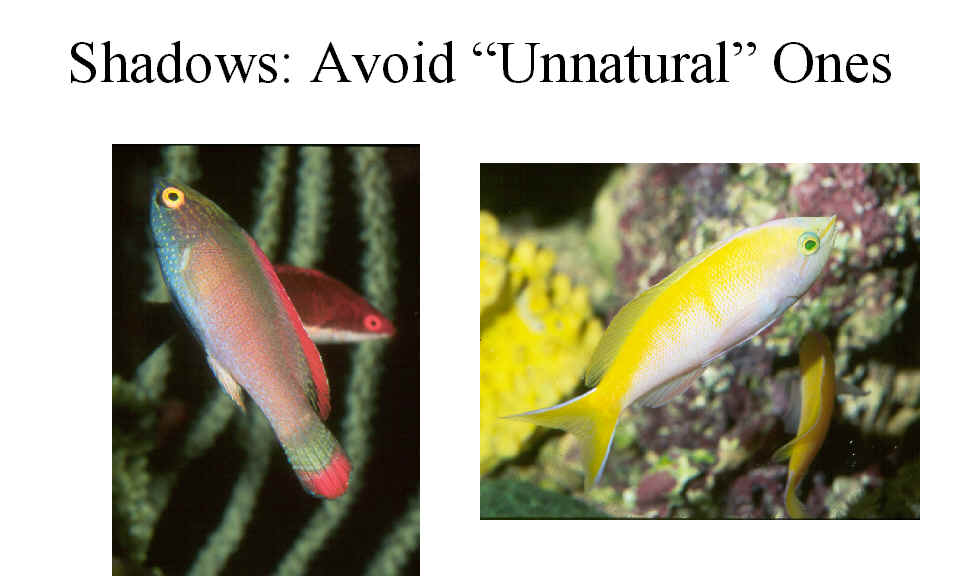
| Shadows can and do lend definition and depth
perception to images, but they can also easily detract from the
subject matter or otherwise clutter your intended effect. As in so
many other aspects of reality, it's not just "what you
have in", but "what you exclude" that makes such a
difference. |
|
|
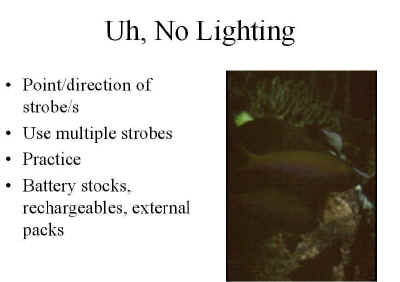
Why I'm like Bruce Lee: I can throw, from so much practice,
two by two slides where I want and make them stick into the
wall... Very common to be tossing a bunch of your efforts in the
trash as a consequence of "no light"... these are the
principal causes... and solutions.
<Ex.s Show my Nikon set up>
|
|
| How wide the lens is open, what materials it's
made of, and how the elements are arranged determine "how
fast" or slow your lens can gather light and focus it onto the
film plane. In life there are all sorts of trade-offs and with
lenses, the size of the opening (f-stop) is directly related to how
deep the depth of field you have (doubling f-stop doubles depth of
field) and the amount of light you need to make a
"correct" exposure (keeping time of exposure and film ISO
constant)... |
|
|
>
You want to set your f-stop high for the maximum depth of
field... but on the other hand, you need to set it low to allow
in the greatest amount of light... or you could increase the
length of time your shutter is open... but then the image might
be blurry... or you can switch to a faster film (higher ISO), but
then the image may be too grainy or not as color rich... Maybe a
trade off, adjustment between these four variables,
hmm?
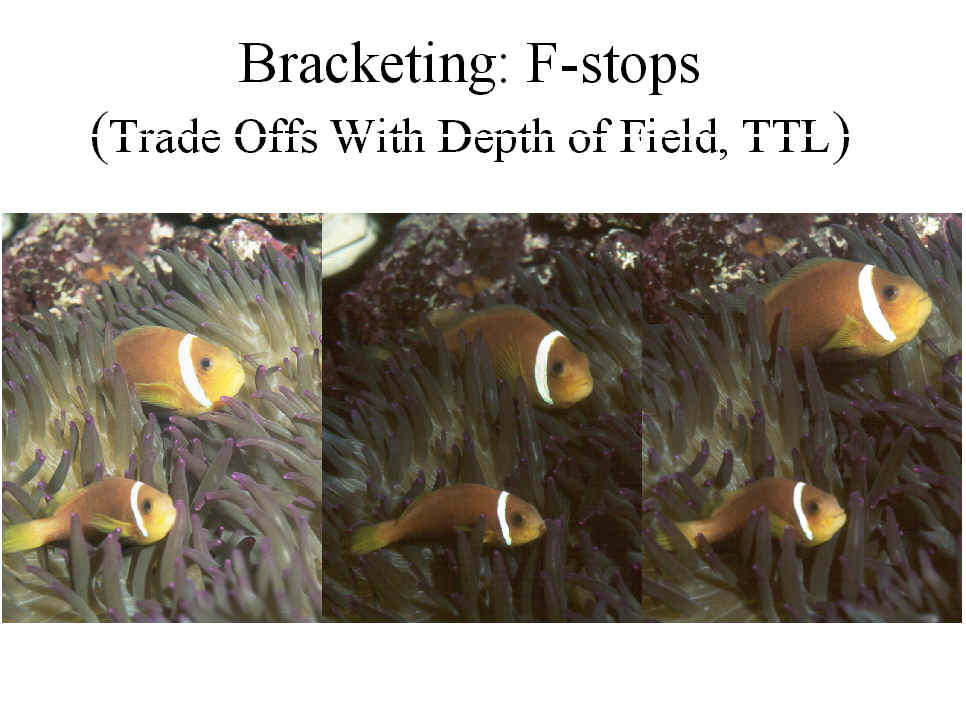
Images showing about a full stop over and under exposed, and
one "about right".
|
|
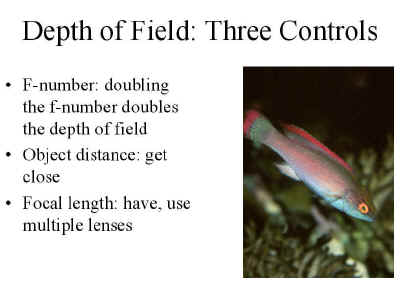
| There are three practical things a photographer can
do to adjust for depth of field: In actual practice, plan on doing
all three. |
|
|
|