|
FAQs about Bivalve Mollusk
Reproduction
Related Articles: Tridacnids, Bivalves, Mollusks,
Related FAQs: Bivalves 1, Bivalves 2, Bivalve
Identification, Bivalve
Behavior, Bivalve
Compatibility, Bivalve
Selection, Bivalve Systems,
Bivalve Feeding, Bivalve Disease, Tridacnids, Tridacnid Clam Business, Tridacnid Identification, Tridacnid Selection, Tridacnid Compatibility, Tridacnid Systems, Tridacnid Lighting, Tridacnid Placement, Tridacnid Feeding, Tridacnid Disease, Tridacnid Reproduction, Flame Scallops,
|
|
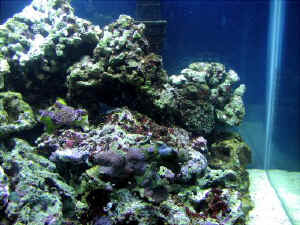
| Something in my liverock >Hello.
>>Greetings! Marina this afternoon. >I am new
to your site and it was recommended to me by Mike at
FFExpress. >>Excellent, our thanks to Mike, though I was
under the impression that FFExpress is now defunct/bought out by
the Dr.'s (Foster & Smith). In any event..
>My name is Tom and I have just recently (in my 4th week) set up
a 65 gal salt water tank. I have Live rock, mushrooms, green stars,
green polyps, green bubble, leather coral, a cleaner shrimp, algae
eating snails, and two clowns. I plan on getting a little more live
rock and in time more coral and a couple more fish and crustaceans.
>>Right, just be sure to go very slowly, and quarantine ALL
new additions, 30 days is protocol. >MY QUESTION is a center
live rock piece I use for a shelf has some organism that emits a
little cloudy substance about every 20 minutes or so.
>>Boring clam. No, not uninteresting, boring as in
mining. Completely harmless and nothing to worry
about. Actually, it means that your conditions make it
quite happy. >it has done this for about two weeks now and
although it doesn't seem to be hurting anything I am just
curious about what it could be and if it could hurt my tank down
the road. I paid close attention to where this little cloud came
from and it appeared to come from either the red growth in the rock
or something underneath it. It must be something small as I tried
to use the turkey baster to suck it out or remove it and nothing
would budge. The cloud is a quick short burst as if being blown
out. It appears almost like a little slimy and milky emission that
disperses in the water then dissolves away. I cant explain it any
better than that. >>You've explained it very
well. You have one of the goodies people hope for with
good quality live rock, and hope not to lose during the curing
process. >Like I said it has done this for a couple weeks now
and I have tested my water taken my water in to be tested and so
far so good. What do you think about this or do you know what it
could possibly be. Thanks for your time. Sincerely
Thomas East >>Right, I really think it's a
boring clam, and certainly nothing to worry about. Have
fun with him, they're odd little beasts! Best of
luck with your new endeavor, it appears that your setup is looking
very good (a bit unusual for many newcomers AND such new
setups). Marina |
|
|
Culturing the Thorny Oyster? How about Keeping it Alive?
7/18/04 Hi, great site. I read everything you had about
the thorny oyster, and have been searching the internet with only
limited success. <there is not much info known/published
on them for aquarium use... they are extremely difficult to keep alive
and most responsible aquarists leave them in the ocean, or at least
don't buy them> I have become a great fan of the thorny oyster
and have decided I would like to have a crack at spawning and/or
culturing the animal. <keeping them alive for even a
year would be a great feat in itself. Most hang in for some months (a
few over 6 months) before finally succumbing to
attrition/starvation> I was hoping to find a source of spat or small
oyster seed and/or instructions on how to induce spawning.
<do look into the fisheries data (use university libraries/databases
for this) on Tridacnid clams and other better studies bivalves. There
is much info there to be assimilated I'm sure. Gerry Heslinga is a
pioneer here and did some great papers on the sub-family Tridacnidae.
Temperature, salinity shock were used at times... also serotonin
infections as well as other hormonal treatments. Some bivalves will
simply spawn just by the sensation of an egg in the water (sacrificing
a ripe specimen for eggs top disburse). This all presumes that you can
even rear your oysters to be sexually ripe/ready, and frankly... no-one
can clearly say what it is that they eat in captivity or how to provide
it. Bottled phytoplankton is unlikely to be a solely adequate
staple> I have three oysters from local fish stores. I
have read everything I can find on Husbandry of the Giant Clam, and a
bit on Cultivating popular eating oysters. Can you direct me
to a source of oyster spat/seed for the Thorny Oyster, and/or groups
doing oyster raising locally in the US. Thanks, Kevin Meade <I share
your admiration for this animals... but as my third query of the hour
from a person that bought an animal that they do not know how to keep
(what they even eat or if they can provide it), you have honestly
bummed me out mate. No hard feelings. but please do consider the
seriousness of the matter. If you are the one man that knows how to
feed and keep Thorny Oysters in captivity for a full lifespan and not
just a few weeks/months from purchase, then you need to do the industry
and science a favor by telling us how (with all due respect here,
sincerely). If not, I assure you that yours will be dead inside of 12
months. I have no wisdom to share other than above here.
Anthony>
|
|

