|
| |
Species/Notes of Interest to Aquarists:
If you think you've seen a Bass species before, you probably have seen an a
member of the genus Epinephelus. With some one hundred and one described
species, this is a super-genus.
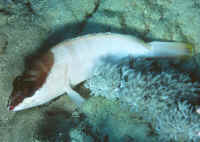
| Epinephelus adscensionis (Osbeck 1765), the Rock
Hind. West Atlantic. To about twenty four inches in length in the wild.
Shy, but occasionally collected for the aquarium interest. This one in the
Bahamas. |
|
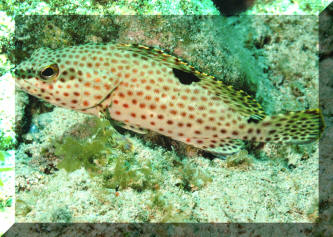
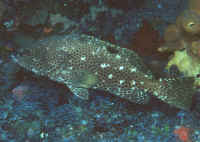
| Epinephelus coeruleopunctatus (Bloch 1790), the
White- or Smallspotted Grouper. Indo-Pacific. Often confused and sold
as/with, E. ongus, E. summana, E. corallicola. To thirty inches in
length in the wild. This one photographed in the Maldives. |
|
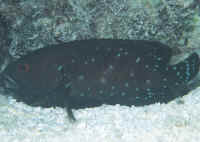
| Epinephelus corallicola (Valenciennes 1828), the
Coral Grouper. Western Pacific. To eighteen inches in length. One of the
most common Basses used in the aquarium hobby. Shy and retiring, this fish
needs a dark space to escape to and sleep in to feel comfortable. Aquarium
image. |
|
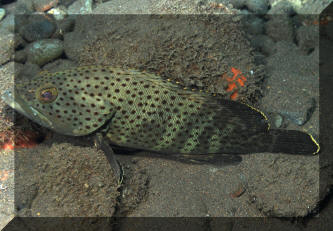
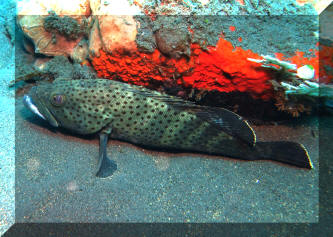
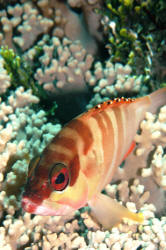
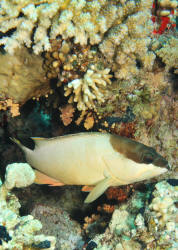
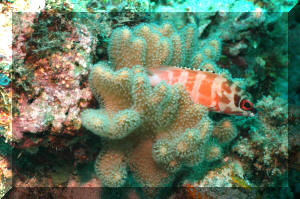
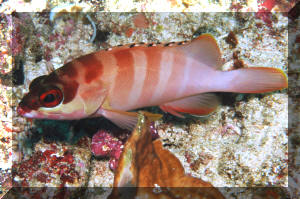
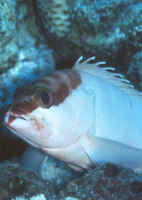
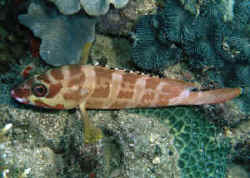
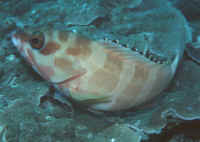
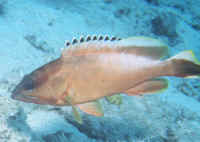
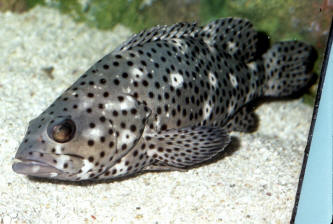
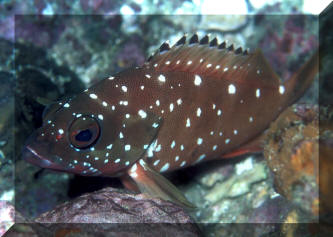
| Epinephelus fasciatus (Forsskal 1775), the Blacktip
Grouper. You might think "fasciated" might be a better common
name for this Bass, until seeing how changeable its coloring is in the
wild. Indo-Pacific. to sixteen inches maximum length. At right, one in
Nuku Hiva, Marquesas. Images below: first
taken at Australia, the other two in the upper Gulf of Aqaba, Red Sea. |
|
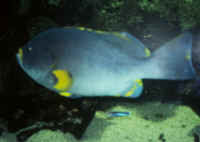
| Epinephelus flavocaeruleus (Lacepede 1802), the Blue
and Yellow Grouper. Indian Ocean, but not the Red Sea. To almost three
feet in length in the wild. This one photographed in the Wilhelma
Aquarium, Stuttgart, Germany at about two feet in length. |
|
| Epinephelus fuscoguttatus (Forsskal 1775), the
Brown-Mottled Grouper. To more than thirty inches in length. A gentle
behemoth that is occasionally "accidentally" collected for the
trade. A shy species for getting so large. Red Sea profile and Malaysia
images. |
 .JPG)
|
| Epinephelus guttatus (Linnaeus 1758), the Red Hind.
Tropical west Atlantic. To more than thirty inches in length in the wild.
A beauty and easy to keep when small. Like all members of the genus, will
"cross the line" inhaling fish and motile invertebrates for
food. |

|
| Epinephelus itajara (Lichtenstein 1822), the Jewfish.
Eastern and western Atlantic and Eastern Pacific coasts. Now that's a
Bass! Up to eight foot in length. Appropriate only for Public Aquariums,
like this one here in Florida. |

|
| Epinephelus labriformis (Jenyns 1840), the Starry
Grouper. Tropical eastern Pacific. To two feet in length in the wild,
though most are under a foot. A beautiful aquarium fish when you can find
it... Not often offered in the trade, and then hiding most all the time.
Ones off of Punta Chivato, Baja, Mexico and the Galagapos. |
 
|
| Epinephelus lanceolatus (Bloch 1790), the Lanceolatus
or Giant Grouper. To eight feet and three hundred kilograms. The largest
bony fish found on coral reefs. Sold as juveniles at times in the aquarium
trade! A too-large food fish that ought to be left in the seas. Public
Aquarium image. |

|
| Epinephelus maculatus (Bloch 1790), the Spotted
Grouper. Indo-Pacific; Cocos-Keeling through Micronesia. To 60 cm. A
juvenile in Fiji and a larger one in N. Sulawesi. Eat reef fishes,
crustaceans and octopi in the wild. |
 
|
| Epinephelus malabaricus (Bloch & Schneider 1801),
the Malabar Grouper. Indo-Pacific, including the Red Sea. To seven feet
long. Another unfortunate "accidental offering" from time to
time. Happy ones in the Red Sea. |
 
|
| Epinephelus merra Bloch 1793, the Honeycomb Grouper.
Indo-Pacific, but not the Red Sea. To about a foot maximum length. A real
beauty and common in the aquarium trade. Images from Bunaken/Sulawesi/Indonesia
and Fiji. |
 
|
| Epinephelus mustacynis (Poey 1852), the Misty Grouper, |
|
| Epinephelus ongus (Bloch 1790), the White-Streaked
Grouper. Indo-west Pacific. To about a foot long. One of the more common
small basses regularly offered in the aquarium interest. Fast learner in
getting along, feeding in captivity. Aquarium and Malaysian photos. |
 
|
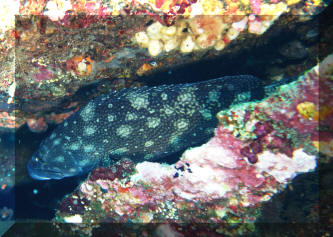
| Epinephelus polyphekadion (Bleeker 1849), the
Camouflage Grouper. Indo-Pacific, including the Red Sea. A beauty, but
grows to about three feet in length. Mostly feeds on crabs and fishes in
the wild. This foot and a half specimen in the Red Sea. Formerly known as E.
microdon. |

|
| Epinephelus quernus Seale 1901, the Hawaiian Grouper.
Only found in the Central Pacific, the Hawaiian Islands, Johnston Atoll.
To some three feet nine inches in length. This gorgeous juvenile specimen
photographed at the Waikiki Aquarium, Oahu. |

|
| Epinephelus spilotoceps Schultz 1953, the Foursaddle
Grouper. Indo-Pacific, but not the Red Sea, and punctuated distribution in
the west Pacific. To fourteen inches in length. Periodically imported into
the ornamental aquatics trade. This one in a typical repose in the
Maldives. |

|
| Epinephelus striatus (Bloch 1792), the Nassau
Grouper. Tropical west Atlantic. To more than three feet in the wild. A
noble game and pet-fish for large systems. This one foot juvenile in the
Bahamas. |

|
| Epinephelus tauvina (Forsskal 1775), the Greasy
Grouper. Indo-west Pacific, including the Red Sea. To three feet in
length. Another "accidental", "miscellaneous"
bass/grouper import at times. Adult in the Red Sea. |

|
| Epinephelus tuka Morgans 1959, the Potato Cod.
Indo-West Pacific; East Africa, Red Sea to Australia. To two meters long,
100 kg. At times a friendly "dog-fish", but can be aggressive in
other settings. Friendly five foot one here at Cod Hole, Queensland,
Australia. |

|
| Epinephelus undulatostriatus (Peters 1866), the Maori
Grouper. Western Pacific; Australian endemic. To two feet in length (in
the wild, much smaller in captivity) One and two foot specimens off of
Heron Island, GBR, Qld. |
 
|
| |
|