We'll cover these two genera together as their
members are all large fishes of moderate survivability (all 2's).
Due to their size and feeding requirements these fishes are really only
suitable for all-fish set-ups. Hemigymnus, with two species are
commonly called "Thicklip Wrasses", a related reference to
their behavior of ingesting the substrate and sieving it for food
items. Hologymnosus, comprising four species, are frequently termed
"Ring Wrasses" for their circular body markings and tubular
shape. This genus feeds primarily on other fishes. Most losses of
fishes in these genera are related to mouth damage. Check out
prospective buys carefully. Like most wrasses, they are great
jumpers.
Genus Hemigymnus:
|
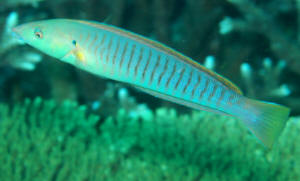
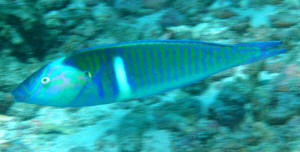
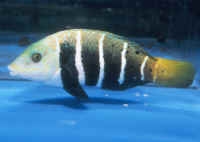
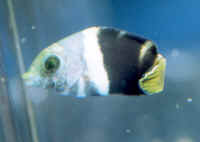
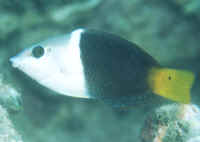
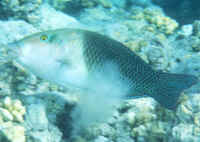
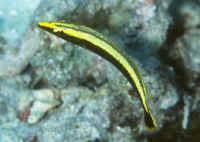
Hemigymnus fasciatus (Bloch 1792), the
Barred Thicklip Wrasse (2). Indo-Pacific, including the Red Sea,
east to Tahiti. To thirty two inches long in the wild. Pictured
are a six inch juvenile in an aquarium, Fiji,and a two foot adult in the Maldives.
|
|
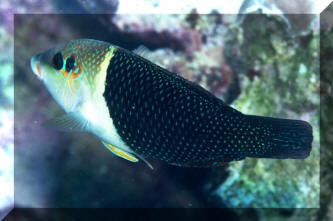
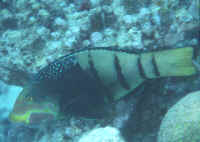
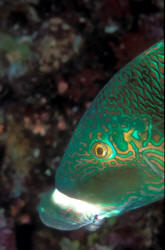
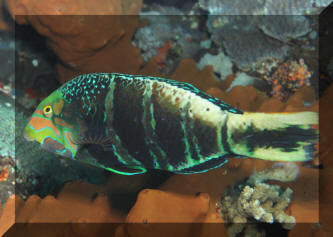
Hemigymnus melapterus (Bloch 1791), the
Blackeye Thicklip Wrasse (2). Indo-Pacific, including the
Red Sea, east to Tahiti. To thirty six inches in the wild. Shown
are a too-small, two inch juvenile in captivity, a four inch
individual in Fiji (about the best aquarium starting size), one of fifteen
inches in N. Sulawesi and a
sixteen inch adult in the Red Sea.
|
Bigger PIX:
The images in this table are linked
to large (desktop size) copies. Click on "framed" images
to go to the larger size. |
|
|
Genus Hologymnosus:
|
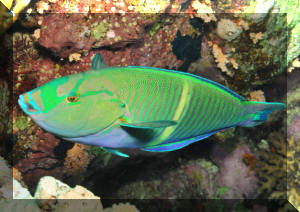
Hologymnosus annulatus (Lacepede 1801), the
Ring Wrasse (2). Indo-Pacific, including the Red Sea east to the
Marianas. To sixteen inches in length. Here are images of a
juvenile (3"), female and male in the Red Sea.
|
Bigger PIX:
The images in this table are linked to
large (desktop size) copies. Click on "framed" images to
go to the larger size. |
|
%20MD.JPG)
|
|
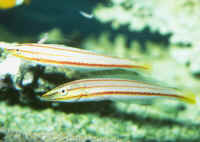
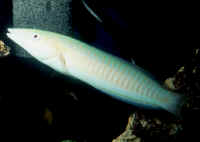
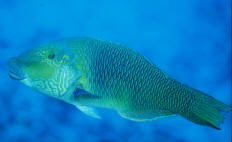
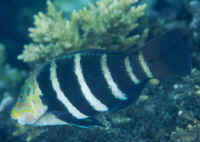
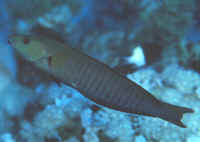
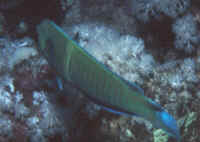
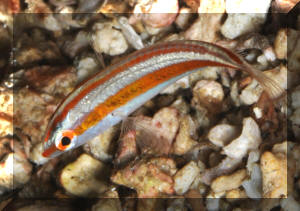
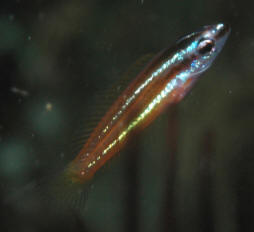
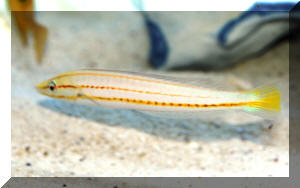
Hologymnosus doliatus (Lacepede 1801), the
Pastel Ring or Candycane Wrasse (2). Indo-Pacific east to the
Line Islands. To eighteen inches. Images: Right: juveniles and
adult female in an aquarium. Below: A whole series, a very
young juvenile, initial/juvenile phase, initial and terminal
phase individuals in Raja Ampat and Fiji.
|
  |
|
|


MD.JPG)
%20MD.JPG)
%20MD.JPG)
%20MD.JPG)