|
Related FAQs: Fishes of
Hawai'i, Articles on: The Best
Butterflyfishes of Hawai'i, Triggerfishes of
Hawai'i,
Related Articles: A
Fishwatcher's Guide to the Marine Aquarium Fishes of
Hawai'i, Introduction to
Fishwatcher's Guide Series
Pieces/Sections, Scott's Trip to
Maui/Hawai'i, Holualoa property,
A Fishwatcher's Guide to the
Marine Invertebrates of Hawai'i
Part 3 of 4, To: Part
4, Part 2, Part 1,
|
|
|
Bob Fenner
|
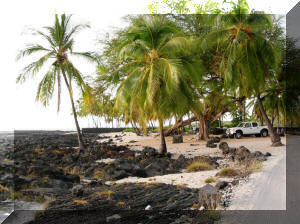
Behind the City of Refuge... Come visit!
|
Bivalves:
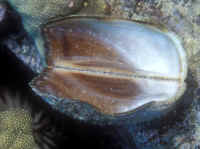
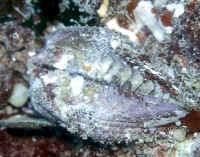
| Arca ventricosa Lamarck 1819, the Ventricose
Ark Shell. One of eight species found in HI. Found through-out
Indo-Pacific attached to rocks with straight hinge facing outwards.
to eighty feet in depth, three inches in length. A dead shell and a
live, attached animal off of the Big Island,
Hawai'i. |
|
| Pinctada margaritifera Linnaeus 1758, the
Black-Lipped Pearl Oyster. THE pearl oyster of the South Pacific.
Indo-Pacific all the way to the Eastern Pacific. To almost a foot
in length. Hawai'i pic. |
|
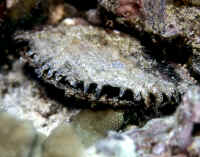
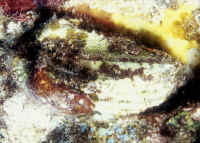
| Spondylus violacescens Lamarck 1819, the
Cliff Oyster. As the common name suggests, this bivalve is found on
the undersides and clefts of rocks. To four inches in diameter.
Empty attached shell often with white middle, purple or orangish
ring on inside perimeter. Big Island, Hawai'i. |
|
Crustaceans:
Shrimps:
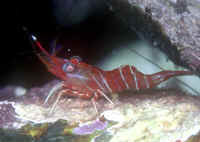
| Cinetorhynchus hiatti (Holthus & Hayashi
1967), Hiatt's Hinge-Beak Shrimp. Found in shallow, rocky areas
of the Indo-Pacific. Kailua, Hawai'i pic. |
|
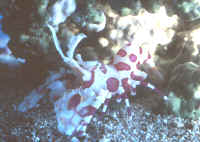
| Hymenocera picta Dana 1852, the Eastern
Harlequin Shrimp. Anterior first pair of legs look like tweezers,
second pair covering them. First antennae flap-like... waved around
side to side. Live in pairs only. Noted for their feeding
exclusively on echinoderms; starfish and urchins. Central Pacific.
To about an inch and a half in length. Aquarium photo. Have
red body spots encircled in yellow. |
|
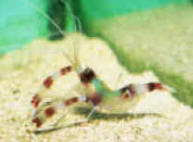
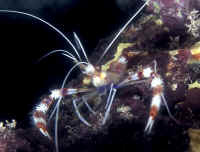
| Stenopus hispidus Olivier 1811, the Coral
Banded Boxing Shrimp. Worldwide tropical distribution. Males
smaller, more slender than females. Keep in reef settings with a
cave of their own. May consume small fishes, other crustaceans. Eat
most all meaty foods. Aquarium and Hawai'i underwater
pix. |
|
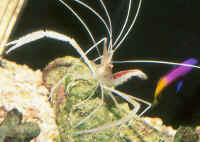
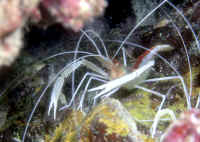
| Stenopus pyrsonotus Goy & Devaney 1980,
the Ghost Boxing Shrimp. Indo-Pacific, including Hawai'i. Not
as hardy as Stenopus hispidus, coming from deeper
water. Aquarium and Hawai'i pix. |
|
| Lysmata amboinensis (De Man 1888), the
Indo-Pacific White-Striped Cleaner Shrimp or Ambon Shrimp.
Widespread in the tropical Indo-Pacific and Red Sea. Telson white,
uropods with two white dots. Can be kept singly or in groups. A
hardy Cleaner. Need hiding places to avoid predators during molting
periods. Conds: temp. 20-27 C. At right: in Hawai'i. |
/Lysmata/Lysmata_amboinensisHI.jpg)
|
Lobsters:
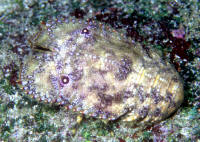
| Parribacus antarcticus, the Sculptured
Slipper Lobster. Circumtropical but mainly caught out of the
tropical West Atlantic for aquarium use. Nocturnal, and wary of
humans. Capable of great bursts of strength, speed in swimming
backward. One out at night off of Hawai'i's Big
Island. |
|
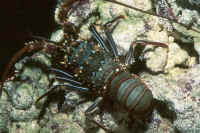
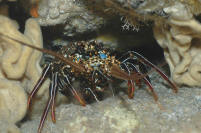
| Panulirus penicillatus (Olivier 1791),
the "Hawaiian" Blue Lobster,
typically collected out of Hawai'i for the trade, also found in
the Eastern Pacific. Conspicuous yellow white lines on brown to
green legs. No stripes on back. Dark green tail fan. To about
sixteen inches in length. A notorious
non-scavenger amongst aquarium lobsters. |
|
| Enoplometopus debelius
Holthuis 1982, Debelius' Soft-Bodied/Reef Lobster. Indonesia to
Hawai'i. Covered with red/pink spots. Legs, cheliped ends and
antennae are colored yellow-orange. to five inches in
length. |
|
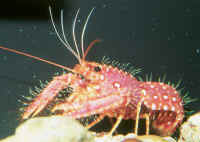
| Enoplometopus occidentalis
(Randall 1840), the Hairy or Red Reef Lobster. Found throughout the
tropical Indo-Pacific. White emarginated spots all over the body.
Nocturnal. |
 |
Hermit Crabs:
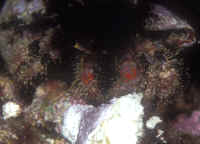
| Aniculus hopperae
McLaughlin & Hoover 1996, Hopper's Hermit Crab. Sometimes
imported from Hawai'i. Not a hardy aquarium species; apparently
a sponge feeder in the wild. To an inch in length. Black eyes,
yellow eye stalks, bright red claws bear black tips. Hawaiian
endemic. Big Island pic. |
|
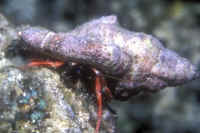
| Calcinus laurentae Haig
& McLaughlin 1983, Laurent's Hermit Crab, Family
Diogenidae. Orange-yellow antennae. Claw-limbs brown, other legs
pink with white junctions and black tips. Hawaiian endemic.
Common. To about 1/5" carapace length. Kona pic.
|
|
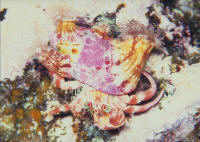
| Dardanus gemmatus H. Milne-Edwards 1848,
Jeweled Anemone Hermit Crab. To two inches carapace length. With
Calliactis anemones on its shell. Hawai'i image. |
|
Crabs:
| Charybdis hawaiiensis
Edmonson 1954, the Hawaiian Swimming Crab. The most common large
crab in HI. Striped eyes and yellow swimming paddles on last legs
are definitive. To about three inches in carapace width. Found in
Hawai'i, the Tuamotu and Society Islands. Hawai'i
pic. |

|
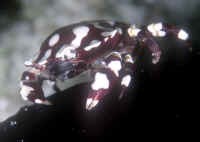
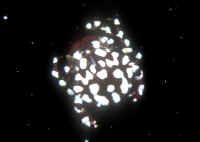
| Lissocarcinus orbicularis
Dana 1852. Harlequin Crab. Variably marked, colored. Free-swimming,
but usually found in association (in or on) sea cucumbers and
anemones. To about half an inch in carapace diameter.
Indo-Mid-Pacific; Hawai'i pix. |
|
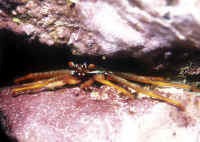
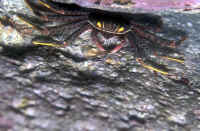
| Percnon planissimum
(Herbst 1804), the Flat Rock Crab. Found in shallows on roundish
boulders scurrying out of view. Carapace about one inch in
diameter. Nuka Hiva, Marquesas, Polynesia, and Hawai'i
pix. |
|
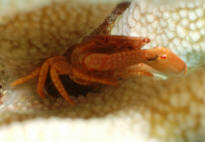
| Trapezia flavopunctata
Eydoux & Souleyet 1842, the Yellow-Spotted Guard Crab. Similar
marked to its host, Antler Coral (Pocillopora eydouxi). To 1
inch carapace diameter. Indo-Pacific. Hawai'i
photos. |
|
To: Part 4, Part 2, Part
1,
|
|

