 |
|
| Home | Marine Aquariums |
Freshwater Aquariums |
Planted Aquariums |
Brackish Systems |
Ponds,
lakes & fountains |
Turtles & Amphibians |
Aquatic Business |
Aquatic Science |
Ask the WWM Crew a Question |
| Please visit our Sponsors | ||||
Sea Vegetable…Nori - 02/01/08 Having been involved with marine systems for many years, I have accumulated a large selection of books on the subject. <<Me too!>> Just want to say that Bob Fenner's book 'Conscientious Marine Aquarist' is positively outstanding and my constant reference when contemplating adding another critter to my collection. <<Indeed… And at the risk of sounding like a kiss-up… Bob's experiences and knowledge across virtually every aspect of the hobby lends to some very valuable insights. And, after getting to know him, I can say he is truly "in it" for the hobby's sake. Also, I think Bob is currently working on an update of the book…am sure it too will be well worth owning>> I recently added a dwarf lion because I learned from the book why my first one died (goldfish :< ) <<Mmm…>> Just one question... The book mentions marine sea vegetables and so I went to my health store and purchased Nori. My fish love it! <<And you are surprised? [grin]>> What worries me though is on the list of nutrition facts Iodine is 70%. <<Yes…as a "natural" source>> Is this safe for my fish? <<It is…and as a whole, this "seaweed" addition to their diet will enrich their health>> I could not find any reference to it on the FAQS. <<Got one there now! [grin]>> Thanks for a terrific web site! Carol <<Most welcome…is a collective effort. Regards, EricR>> <Ah, yes. RMF> Iodine Article part 1 07/27/07 Bob. I think we can call this done for part 1. This version of part 1 is still longer than I wanted but I am 'more happy' with this version than the previous writes. With some editing we could break it down further if needed. However, when fully completed it should accomplish these goals: Testing is critical The halogens are some serious chemicals that should be handled with care Each aquarium is different and needs to be viewed as such Livestock hail from different places and have needs that evolved (separate from our tanks) Some of the common and repeated terms are in charts for easier reference Should clarify the FAQs we have already as I went through these line for line looking for common themes and concerns Part two will be easier. I purchased both the Seachem and Salifert test kits (this is the tough part: getting all the testing I want done without buying more kits). I am going to try and contact both of the companies tomorrow and see what I can dig up from them before I start. I also want to contact Kent so when I test their products I don't get surprises on the data from stabilized iodine species. This part also is where I can get into the types of dosing, technique and some lab tips from years of experience to help reduce error. I have had little contact with my old boss and can assume he is not on board here. This is what forced my hand on the testing regimen. I did want his input and wanted to write this with him but have no response. Email me any changes or questions you see fit. As for pictures I had considered some shots of iodine containing items such as foods (labeled and not), supplements also containing iodine and the iodine test kits (or iodine additives I will use- both from Kent: Lugol's and the Iodide). I also know full well now why this was not done sooner by anyone… don't get me wrong it has been fun, but a nightmare to arrange! ; ) Sincerely, James Zimmer <Well done James. Will review the first section hopefully later today. BobF> Re: Iodine Article part 1 07/27/07 Thank you Bob. <Thank you James. Have just finished reading through pt. 1... I do like the brief coverage of the chemistry here... as well as the tentative nature of your statements...> This was a tough topic. It would very easy to only say "add x drops of Lugol's for a 100 gallon tank." However, this would be irresponsible, I simply don't believe we know what could be a realistic depletion rate or how the element is converted and or reconverted in so many different settings. For instance, do I have a phytoplankton population at all or are my corals consuming it? <Yes... as all "broad topics", particularly ones outside the general public's background, it is dangerous to make sweeping statements... Am sure you sense this precaution in my brief remarks to folks on WWM, in articles et al... Of a necessity, one can only state in this category that "following directions", testing, and non-continuous use are suggested> The addition of a halogen should be well thought out and thoroughly understood. I never forgot the precautions we took in fume hoods working with bromine and iodine. The hazards for those reagents were well understood for those of use in the chemical field. Over time many have died or had shortened lives from not knowing the full effects of the reagents they handled. <Yes... all they want is one more electron... and they WILL steal it from most anything else> I find that there are more questions one should as about there own tank than general answers can provide. I had a series of questions that each aquarist should ask in one of the versions. I think I will include these in part three. <Mmm, okay... though I would try to limit this to two parts...> I simply believe most people know very little about the marine animals they purchase. This was the point for the one section on livestock. We may not be able to get satisfactory answers in great detail. However, all these ocean treasures deserve better than the mandarin fish get being stuck to starve in so many tanks by those who just don't know better! There is a lot of 'wrong' to be seen in any given fish store when you are not in the know. <Yes... agreed. But, to the point. What are we going to do about it/this? I say keep writing, sharing... > I think the best thing I did for both myself and my salty pets was reading your book before I ever started. I may have made some mistakes along the way but it kept me on a good path and my little wet friends as healthy and happy as I can make them in their captive homes. <Hence our efforts. Cheers, BobF> Sincerely, James Zimmer Oil on top of water maybe from yellow head Jawfish?? Iodine article almost complete. 9/13/07 Bob and or crew. <James> Sorry for the delay on the iodine article. I have had a summer of tank issues as had my associate (mostly temperature fluctuations but also the following question). I have lost some frogspawn colonies and his corals have seen better days with a dramatic temperature shock when the heater burned out attempting to maintain tank temp on a cold night with a fan left on from the hot day. <Yes> Before going away I prepared some frozen food for my mother-in-law to feed the fish. I used the usual thaw and decant the pack liquid method and thought I did a reasonably good job of removing the excess pack juice and oils. Upon return there was a layer of oil on surface of the 24 gallon tank (the 75 gallon tank cleared up much easier). I first blamed the food as one brand of frozen matched the general consistency and odor/color. This was discarded. It has been two plus months and the problem continues to persist. Despite skimming the oil off with a plastic container and letting the top layer drain into the cup the oil continues to return. I parted ways with the Condylactis anemone (to reduce tank load) and have increased the frequency of small water changes. Temperature fluctuations have been a big issue all summer with inconsistent air flow and 5 degree F temperature swings sometimes occurring despite my best efforts and abilities to keep the upstairs air conditioned or windows open when conditions allow. Could the oil on the top of the water be from the Jawfish (stress response perhaps)? <Mmm, no... Could be from another endogenous source but much more likely from an exogenous... Simple cooking oil use, aerosol in closely contained indoor environments very often entail such coatings... Can be an important impediment to gas exchange... I'd keep wicking off with plain, white, non-odorized paper towels...> Bob, please send me an email with some contact information to send the iodine article. <Oh! Can send along here as an attachment or my personal addr.: fennerrobert@hotmail.com> Writing it has been a struggle to keep it both an easy read yet stay true to the science behind the halogen family. <Ahh!> My associate has done the testing and is less than impressed with the test kits thus far. <Heee!> One of his former occupations was water testing in an environmental lab. Again, sorry for the delay. Thank you. James Zimmer <No worries. Bob Fenner> Re: Oil on top of water maybe from yellow head Jawfish?? Iodine article almost complete. - 09/14/07 Actually, there are fewer worries (about it going to happen) since I got laid off this past Monday. Now it is done. <Okay...> I now have quite some time to get the sources and rewrite (hopefully final on this one) once again. I love/hate the article as is. It almost tells it like I want to impart the knowledge. I keep asking non-technical people to read it and let me know what is and is not clear. <A good technique> I am also concerned about giving the green light on any amount to just pour into a system. Any dose amount is easily conveyed out of context in the form of "oh, I read use X drops of AAA material for 50 gallons... sure that should be fine." The fish and coral within a tank are very much captive and stuck in case of an overdose. <I am in total agreement...> I keep wicking and skimming the oil. I will continue of course. Odd it is just the one tank if it is external; otherwise why not both from cooking oils or grease? Different flow and filtration dynamics might come into play there. James <This and different biotic make-up... Bob Fenner> Re: Oil on top of water maybe from yellow head Jawfish?? Iodine article almost complete. - 09/14/07 Yes, very true. Hmmm... I underestimated just how much different the two tanks could be on a biological level (I felt that more a capacity issue) since they share so many similar substrates, live rock and inhabitants going back and forth (vacationing... lol). Here again, many dynamics are at work in similar systems even under the same roof. It is little wonder how much things can and will then be changed going from different source waters and areas of the world. This gives a true appreciation for just how different our little aquatic worlds can potentially be and why so much time should be invested in research. <And valuable insight to our perceptions of reality... finite and infinite... games> This is yet another data point for why indiscriminant applications of tank additives are generally a mistake. <Yes> I have to think the best value/dollar spent is on more salt mix and water changes. We really all manage an import export business in tank nutrients when we get down to it. <One way to look at this> However, no matter how well we perform, there is no way to manage this as efficiently as the currents of the seas to which all our pets (aside from tank/captive raised) adapted to over the ages. It never ceases to be amazing to learn about the little worlds we create. <One way...> It is also nice to see the visual cues and behaviors when you manage to do things they all like and do well with. James <B> Iodine drip 6/13/07 Hello Bob and crew. <James> I wanted to add my thoughts on dosing with iodine and pose the idea of using a pre-made solution and drip it in as one use calcium or Kalkwasser (assuming proper testing for need of course!). Does this seem a more reasonable approach than just adding a dose at a time? <Mmm, marginally so... there are a few factors to consider... One is the transient nature of the various valence states of this halogen in biological marine water... Dosing "all at once" likely results in getting some to all parts of the system...> Reading of the FAQ(s) led me to the conclusions: iodine is depleted quickly and is sometimes accidentally overdosed. <More the former than latter by far> Preparing a stock solution with DI water <Distilled is best... and dark bottle storage...> ahead of time seems to be a reasonable way to control the dose and the frequency of addition into a system. I would believe that before one would attempt to do this (or add at all) they should do some vigorous testing with a baseline of iodine at time of addition of the new water, water in the tank before and after addition and then periodic tests over a given frequency (hours/several hours) to measurable depletion in order to ascertain the baseline need of iodine in the system given present parameters and stock. <Yes> This information can then easily be graphed and documented for future reference using Excel. <Mmm, actually, need to continue to test each time... to be sure...> It would also be good to note the components of and residents (known) of the system as these conditions do change over time (replacement/new fish, corals and equipment). <Ah, yes> I spent a great deal of time reading up on iodine when I came up with my idea of dosing as a preventative antiseptic for an injured fish knowing that iodine is poisonous. It pays to read up before good intentions send our tanks to possible oblivion. I have to believe that as an antiseptic the levels needed would be harmful to any main tank and also so in quarantine. The chemistry responses in the FAQ(s) were cool. <Well... of a necessity, and by plan, very scant... One must need be so on the Net... Too easy to "give" folks some fact/oid that they can/will cling to as useful, actionable, w/o enough understanding here> Is there any news of an article coming regarding the chemistry of iodine in our tanks in the near future? <Actually... I'd like to have you pen this... Gather the pet-fish literature (even just the Net) together, a quick read through a public library's holdings on I2... compile, syncretise, toss in a few aquarium examples...! There are extant good works by the likes of Randy-Holmes Farley et al... but we could use a reminder, update... I'll help you sell this into the print mag.s and here on WWM's CA> Additives are a touchy subject but the debate makes us all the wiser or perhaps more cautious in how we treat our aquatic charges. Sincerely, James Zimmer <What say you? Bob Fenner> Re: Iodine drip - 06/14/07 Bob. <James> I would be delighted to give this a go. I don't recall whom you had charged with this task (no small task at that) in the FAQs previously. <Yes. Never done> Salt water is an ionic soup and reveals few clues to the naked eye. <Well put... perhaps the opening line of your next article...> I imagine the further I dig the more questions I will find myself asking. <A joy eh?> I mentioned this endeavor to my boss and he would like to collaborate on this as well. <Great!> We are presently discussing setting up our own test laboratory which would help us do research at our whim in the near future. It would be nice to contribute to the hobby and hopefully help some folks out of the confusion that the shelves full of bottles (advertising claims) can instill at the stores. This could be a lot of fun too. <I agree> I want to keep this project an easy read but I also want to dig into the chemistry and mine some data for my own peace of mind. Sincerely, James Zimmer <"Make it so"! BobF> Re: Iodine drip; back from vacation and beginning work on this endeavor - 7/3/07 Hello Bob. I have returned and am beginning work on this endeavor. I am discussing the test regimen and specifications with my boss/associate and we are lining up our test parameters and tank types. This should be interesting. I am also trying to define a focus of the article past summary of present literature and (though I love the chemistry) make this a both a worthy read and one people will actually read and understand without a degree. <Good> Thinking back on passed <And past?> experiences: people not wanting to spend money on protein skimmers as opposed to spending identical money on livestock I have to conclude that exotic, intricate and or expensive test kits go straight out the window. <Or more likely, never come in in the first place> I am digging out my chemistry and biochemistry books and will list all references. This is fun. Thank you very much for asking me to do this. LOL, this may end up becoming a research work and a basis for a further science degree. Sincerely, James Zimmer <I look forward to seeing your synthesis. Bob Fenner> Lugol's Solution/Dip 4/7/07 James go Hi Mark here, <James with you today, Mark.> I am trying to disinfect some coral before putting them in QT then on into the main tank. I did a long search on how to perform a Lugol's dip but couldn't find anything. I also went out on the web, and mainly only found information on products with no specific directions, or they were vague as to how to mix and which corals could be dipped and which not, except zoas and Acro's and monti's. Im a total newbie at this so please try to be patient and kind I only have soft corals including shrooms, Kenya Tree, and two photosynthetic gorg.s. So I would like to know how to perform a Lugol's dip 1.) How do you mix? How much Lugol's solution to how much water 2.) What corals can be dipped? I am speaking of all softies Kenya Tree, shrooms and gorg.s. 3.) For how long should the dip be preformed for each coral. 4.) After the dip should I rinse in fresh SW temp, PH matched afterwards or not, or straight to QT? 5.) Will Lugol's solution also disinfect macroalgae? <No.> If there is anything else I am missing in my questions or information which I need to know please feel free to add it in. <Mark, I would get this idea out of your head. Lugol's is a very concentrated solution and is quite easy to overdose. You may be causing more harm than good. The iodine content in seawater averages around 0.064ppm. As you can see, a very low concentration. Corals absorb this element and it is known to be beneficial to them. Higher amounts can have drastic effects to their health. Do read/learn more about corals and their health before attempting anything like this. Is much better/safer just to quarantine the corals before adding to your display tank. Most dealers do not keep their corals with fish, so chances of any parasitic disease being introduced into the display are low to non-existent. I have never quarantined a coral, but again, corals that I buy come from dedicated coral systems.> Thank you <You're welcome. James (Salty Dog)> Mark Lugol's Solution/Dip 4/7/07 Bobs go Hi crew! Mark here, I am trying to disinfect some coral before putting them in QT then on into the main tank. I did a long search on how to perform a Lugol's dip but couldn't find anything, I also went out on the web, and mainly only found information on products with no specific directions, or they were vague as to how to mix and which corals could be dipped and which not, except zoas and Acro's and monti's. Im a total newbie at this so please try to be patient and kind <Mmm... I would use a "stock solution" of Lugol's... at a strength of two drops per gallon of dip... lower the specific gravity of the dip water (from your current main display)... by a couple of thousandths from ambient (likely to 1.023) and move these Octocorals IN water into the dip water... and out five minutes later... IN water (don't worry re the Iodine move...) to the new digs> I only have soft corals including shrooms, Kenya tree, and two photosynthetic gorg.s. So I would like to know how to perform a Lugol's dip 1.) How do you mix? How much Lugol's solution to how much water 2.) what corals can be dipped I am speaking of all softies Kenya tree, shrooms and gorg.s. <All of these> 3.) For how long should the dip be preformed for each coral. 4.) After the dip should I rinse in fresh SW temp, PH matched afterwards or not, or straight to QT? <Straight> 5.) Will Lugol's solution also disinfect macroalgae? <Can, yes> 6.) Can a gorgonian be dipped or not? <Can> If there is anything else I am missing in my questions or information which I need to know please feel free to add it in. Thank you kindly Mark <We've (WWM) gots to get some pieces on Iodine/ide/ate use penned, placed... including addending the dip/bath files... Bob Fenner> Re: Lugol's Dip and Gorgonians... Bob... 4/8/07 Dear Mr. Fenner, <Mark> An honour that you answered my question about Lugol's solution dips for Gorgonians and other soft corals. My main reason for the question was as follows. I know that after a good quarantine that the risk of transferring parasites is minimal. <And so much more in the way of benefits> I would like to know more specifically about bacteria, especially Vibrio and Myco bacteria, as well as parasites. <... Please see Ed Noga's "Fish Disease, Diagnosis & Treatment"> I would like to know if the Lugol's dip would have any type of effect on possible bacterial and or parasitic contamination in an aquarium, and if it would help to get rid of any residual bacteria such as Vibrio or Myco bacteria and or parasites which might have been the cause of death to one of the seahorses in my tank. <Mmm, not likely "rid"... but perhaps reduce the incidence, virulence of...> The reason I ask this is at the moment I have a fallow tank that had Hippocampus Kuda in it, and I would like to transfer and utilize the live rock and corals which consist of mushrooms a Kenya tree and two gorgonians to a new tank with a new sand bed. The old tank is fallow at the moment because one of horses passed away from what appeared to be a tumor (we are not sure a necropsy was not done. There were no external signs of infection present and she ate and swam up to the day she died), The one with the tumor died from one day to the next, the tumor appeared the next day she was dead. The other kuda had a fatal accident which was my own stupidity, but was never ill, nor did he develop any of the signs and or symptoms the other kuda displayed. I have been told a range of things from do not to use any of the things from the old tank, to use at my own risk because it is probably full of bacteria and pathogens, <Mmmm, these "come and go"... are like "terrorists"... are more made than borne...> to it is okay to use if I dip everything in a Lugol's dip. All this in order to utilize the live rock and corals from the existing tank. I would like your opinion on this. Should I scrap everything and start new? <I would very likely re-use...> Let the tank stand fallow it has been fallow now for 6 weeks, and transfer all contents except the sand bed to the new tank with a new sand bed. Or should I Lugol dip everything first, place in quarantine and then place it in the new tank. Again it is an honour thank you kindly for your help Mark <Again... I would take (with acquired knowledge) a/the long-term view here... Utilize the existing materials... they are very likely fine. Bob Fenner> Re: Lugol's Solution/Dip 4/8/07 James... Thank you James for a very nice, clear and precise answer. <You're welcome.> You mention that any chances of a parasitic disease being introduced into the display are low to non-existent. <No, being introduced by the addition of corals as mentioned below.> I am very well aware of quarantining everything before placing it into the display. I would, however, like to ask another question regarding the transfer of disease and that would be in the area of bacteria, especially Vibrio or Myco bacteria. Is the risk of transferring the same, higher, lower, and or does it fall into a grey area which is not really clear at all. My intent with the Lugol's dip was to kill bacteria. <The amount of Lugol's you would have to add to be effective would more than likely kill the animal you are trying to rid of bacteria, if any are present at all. I think you are going overboard here. If good maintenance practices are carried out, and your tank is not overstocked, you should not encounter bacterial problems. Bacterial problems generally develop from poor water quality. My policy is, do not treat an animal that doesn't need treatment.> Once again thank you very much in advance for your time and energy, as well as your insight. <You're welcome. James (Salty Dog)> Regards Mark Re: Lugol's Dip and Gorgonians, Pete, will you take a look at, refer? & bacteria f', human dis. - 4/10/07 <Yowsa Pete! Thanks as usual for this dissertation! BobF> Dear Mark: Bob forwarded your email to me and asked me to lend a hand with your dilemma. It's very difficult to say what may have caused the demise of your H. kuda but I would be happy to share my thoughts on the matter with you for whatever it's worth, sir. Like all fish, seahorses do occasionally develop various granulomas, malignant neoplasms, tumors and fibrosarcomas associated with certain diseases or the aging process, but these primarily affect internal organs. Furthermore, such growths are not characteristic of vibriosis and, judging from the symptoms you described -- or lack thereof -- it seems unlikely that a Vibrio infection was involved in this case. I am more concerned about the possibility that the tumor may have been a granuloma symptomatic of a Mycobacterial infection. Granuloma disease is caused by gram positive, acid-fast bacteria from either the genus Mycobacteria or the closely related genus Nocardia invading the tissue and internal organs and organ systems. Both of these bacteria can affect the skin as well as the internal organs, causing nodules and granuloma. And both Mycobacteria and Nocardia can be transmitted to man, causing a localized, unsightly skin rash after entering through a cut or break in the skin. Here is an excerpt from my new book (Complete Guide to the Greater Seahorses in the Aquarium, TFH Publications, unpublished) that discusses mycobacteriosis in more detail, Mark. It may help give you a better idea whether or not the tumor you noticed could have been associated with granuloma disease: MYCOBACTERIOSIS, A.K.A. PISCINE TUBERCULOSIS Mycobacteriosis is also known by the following synonyms: fish tuberculosis, piscine tuberculosis, granuloma disease, swimming pool granuloma, fish tank granuloma, and acid-fast disease (Aukes, 2004; Leddo, 2002a). Like all fishes, seahorses are susceptible to Mycobacteriosis. It is not uncommon in wild-caught seahorses obtained from pet stores and is the second most commonly seen bacterial infection of syngnathids at large public aquaria after Vibriosis (Bull and Mitchell, 2002, p20). Cause: Fish tuberculosis is caused by pathogenic Mycobacteria, of which two different species are the primary culprits: Mycobacterium marinum and Mycobacterium fortuitum (Giwojna, Sep. 2003). Unlike most bacteria the plague fish, these Mycobacteria are gram-positive, and take the form of pleomorphic rods that are acid-fast and nonmotile (Aukes, 2004). When cultured on solid media, they form cream-colored to yellowish colonies (Aukes, 2004). Mycobacteriosis is worldwide in distribution (Giwojna, Sep. 2003). All fish species are considered susceptible to it (Aukes, 2004). Although this disease can in fact infect almost all fish, certain species are more vulnerable than others (Giwojna, Sep. 2003). The most susceptible species are freshwater tropicals such as black mollies, all gouramis, Neons and other tetras, all labyrinth air breathers, and most species of the Carp family (goldfish and koi, for example), Aukes, 2004. Mycobacteria are ubiquitous and waterborne, and the aquatic environment is considered the disease reservoir for fish tuberculosis (Aukes, 2004). Mycobacterium marinum has been cultured throughout the world from swimming pools, beaches, natural streams, estuaries, lakes, tropical fish tanks, city tap water and well water (Aukes, 2004; Leddo, 2002a). Human epidemics of granulomatous skin disease have occurred from swimming in infected water, and in fact, this mode of human infection is far more common than infection from exposure to infected fish tanks (Aukes, 2004; Giwojna, Sep. 2003). Clinical Signs: There is a very severe or peracute form of this disease, in which fish can simply be found dead without showing any telltale signs or symptoms (Bull and Mitchell, 2002, p20), but that is quite rare. In my experience, Mycobacteriosis is a chronic disease that progresses quite slowly in aquarium fishes (Giwojna, Sep. 2003). It may take years for an infected fish to develop any symptoms of apparent illness and much longer before it becomes fatal (Aukes, 2004). The glacial progression of the disease makes it difficult to diagnose. Some early signs to look out for include lethargy, fin loss, emaciation, skin inflammation and ulceration, edema, Popeye, and peritonitis (Aukes, 2004). There may be superficial skin lesions that take the form of small subdermal lumps or pus-filled nodules of granulation tissue (Bull and Mitchell, 2002, p21). These are simply the outward manifestations of a systemic infection that may already involve many of the major internal organs (Bull and Mitchell, 2002, p21). In later stages, nodules may develop in muscles or skeletal structure and deform the fish. (Giwojna, Sep. 2003). As difficult as slow-moving TB may be to diagnose while the infected fish is alive, once the victim expires, postmortem examination will reveal clear, unmistakable signs of Mycobacteriosis (Giwojna, Sep. 2003). The telltale granulomas will appear as gray or white nodules in the liver, kidney, heart and/or spleen (Aukes, 2004). There is often black, necrotic tissue eating away at the internal organs, and there may also be skeletal deformities. Diagnosis is then confirmed by the presence of acid fast bacteria in tissue sections (Giwojna, Sep. 2003). Treatment and Control: There is no practical method for treating mycobacteriosis or granuloma disease at the hobbyist level. As discussed below, good aquarium management can prevent Mycobacteria/Nocardia from becoming problematic. Prevention is the watchword for this condition. Transmission: The bacteria can be transmitted through the water from open ulcers, through contaminated food (including live foods such as shrimp or molly fry), via feces of infected fish, or through the consumption of infected, dead or dying fish in the tank (although the latter does not apply to seahorses), Aukes, 2004. Contributing factors: This disease is not highly contagious and does not seem to spread from fish to fish readily (Aukes, 2004). However, fish TB it is often associated with poorly kept or dirty tanks with poor water quality (Aukes, 2004). Chronic stress from factors such as overcrowding, malnutrition, or aggressive tankmates often plays a role as well (Giwojna, Sep. 2003). Mycobacterium, the causative organism, is believed to be ubiquitously present, making it very difficult to eliminate it entirely. However, if good aquarium maintenance and management is followed, including vacuuming of the gravel along with good filtration and regular water changes, combined with a nutritious diet and the addition of an enrichment product rich in vitamins, the problem can be minimized and eliminated as a cause of mortality (Aukes, 2004). Any dead fish should quickly be removed and disposed of properly. Diseased live fish should be isolated and treated in a hospital tank (Giwojna, Sep. 2003). Transmission to Man: The seahorse keeper should be aware that piscine tuberculosis is one of the few forms of fish disease that is communicable to humans (Leddo, 2002a). This transmission usually manifests itself as an unsightly skin rash involving one or more granulomas on the arms of the fish-keeper (Leddo, 2002a). In severe cases, these nodules of inflamed tissue can become large and disfiguring. They can spread and be very difficult to eliminate. The granulomas often take some 2-4 weeks after exposure before manifesting themselves, so the individual is frequently unaware of how he or she contracted them and the condition very often goes undiagnosed (Giwojna, Sep. 2003). The Mycobacteria that cause the disease typically gain entry through a break in the skin such as a cut, scrape, or abrasion on the hand or arm of the aquarist (Leddo, 2002a). Although unsightly, the granulomas themselves are not a serious problem and are almost always localized and most certainly curable in healthy individuals. But for those of us whose immune systems are compromised by AIDS, kidney disease, diabetes, liver dysfunction, chemotherapy or the like, the infection can sometimes become systemic or, on rare occasions, even life threatening (Giwojna, Sep. 2003). Awareness is the appropriate response to the risk posed by fish tuberculosis. The seahorse keeper should be aware of the remote possibility of being exposed to Mycobacteria via his aquarium, and take appropriate precautions, but there is certainly no need to be overly concerned (Giwojna, Sep. 2003). The aquarist should merely remain aware of Mycobacteria and follow the usual sensible precautions. Nets, aquarium accessories and equipment, and any other items that may come in contact with the fish should be sterilized between uses to prevent cross-contamination (Giwojna, Sep. 2003). Avoid mouth-siphoning of the water in a Myco-positive tank (use a hand pump instead). Mycobacterium cannot penetrate intact skin -- it only causes infection after entering through open wounds or source, so make full use of aquarium gloves and don't place your hands or arms in the aquarium if you have any cuts or scrapes (Giwojna, Sep. 2003). Handle sick fish carefully, dispose of deceased specimens properly, and scrub up afterwards. Do NOT dispose of dead fish by flushing them down the toilet, as this is a prime way to spread disease. Place the fish carcass in a plastic bag or wrap it in some foil and dispose of it with the solid waste of the household. And don't feed dying fish to larger carnivorous fish, since this an excellent way to spread infection (Giwojna, Sep. 2003). One thing hobbyists who are worried about fish TB can do to allay their concerns is to get their seahorses and live foods (crustaceans such as shrimp are known vectors for Mycobacteriosis) from a High Health facility such as Ocean Rider rather than from their local fish store (Giwojna, Sep. 2003). Seahorses at OR are routinely screened for pathogens and parasites by independent examiners from an outside agency (DVMs with the Department of Agriculture), and I know for a fact that Mycobacteriosis is one of the diseases they specifically check for (Giwojna, Sep. 2003). Thus far, multi-organ histopathology has found no granulomas and tissue sections have revealed no acid-fast bacteria -- conclusive proof that Ocean Riders are free of Mycobacteria. <Close quote> That's the rundown on mycobacteriosis or granuloma disease, Mark. The very similar Nocardia is a gram positive, acid-fast, filamentous bacteria and is even more insidious than Myco. Nocardia is closely related to the Mycobacteria that cause piscine TB or granuloma disease and, like Mycobacteria, it can affect the skin as well as the internal organs, causing nodules, granulomas and pyogranulatomous cysts. And like Mycobacteria, Nocardia can be transmitted to man, so be sure to take appropriate precautions if you suspect granuloma disease may have caused the death of your H. kuda. Here is some information from Paul Anderson explaining how professional aquarists typically deal with Mycobacterium/Nocardia: Fellow Seahorse Enthusiasts: Mycobacterium is a genus of bacteria that are ubiquitous in almost all environments. Mycobacterium infections occur in many (if not all) vertebrate taxa (e.g., mammals, birds, fish, etc.). Some studies that have looked at prevalence of infection of Mycobacterium in wild animals have often found that a small percentage of wild animals are infected, even without clinical signs. The most common Mycobacterium species found in seahorses are M. marinum, M. chelonae, and M. fortuitum. There is currently no cure for mycobacterium infections in fish. The options available are to 1) depopulate and disinfect the system, or 2) maintain the fish but prevent cross-contamination by observing strict biosecurity protocols. The second option is often chosen by public aquaria with long-standing displays, when aquaculture/production of the infected fish is not an issue. Many mycobacterium spp. can cause disease in humans, especially if the species is a rapidly growing one and/or if the person is immunocompromised. Of the three species mentioned above, M. marinum is a slow grower, and grows at 25 degrees Celsius incubation, but not at 37 degrees Celsius. The other two are rapid-growing species and grow at both temperatures of incubation. The significance of 37 degrees is that it is human body temperature. While most infections of otherwise healthy people are limited to lesions on the extremities (even with infection by a rapid-grower), there is a greater risk of the rapid-growers to cause systemic disease (especially in immunocompromised people). In a Myco-positive tank, the best option is not to come in contact with water or fish; wear gloves (sleeved gloves if necessary). Avoid mouth siphoning (use a hand pump). Having said that, in an aquarium situation mycobacterium only causes infection if it enters a wound; it cannot penetrate intact skin. Effective disinfectants against mycobacterium include spraying with 70% Ethanol and allowing the equipment to air-dry, and bleach baths (I use 50ppm bleach baths with a minimum contact time of one hour, this has been reported to be effective against M. marinum) followed by sodium thiosulfate neutralization baths. Ultraviolet light sterilization is also recommended in Myco-positive systems. If you've got Myco-positive tanks among other systems, common sense suggests performing husbandry on these systems last in your rounds. A note on ethanol: I have found in my experience that seahorses are very sensitive to ethanol, so I advise being very cautious to avoid overspray into tanks (while we're're on the topic, has anybody else observed this?) Check out the following for more information about mycobacterium infections in fish/aquaria: <_ http://edis.ifas.ufl.edu/VM055_ (http://edis.ifas.ufl.edu/VM055) > <_ http://www.mdsg.umd.edu/Extension/finfish/FF9.html_ ( http://www.mdsg.umd.edu/Extension/finfish/FF9.html) > Mainous, M.E., and S.A. Smith. 2005. Efficacy of common disinfectants against Mycobacterium marinum. Journal of Aquatic Animal Health 17: 284-288. Paul Anderson Ph.D. Candidate Department of Fisheries and Aquatic Sciences University of Florida That's the situation when Mycobacteria is confirmed in an aquarium, Mark. As long as you observe the proper precautions and practice good aquarium management, it's a problem the aquarist can sometimes live with... Nocardia is a different matter. When Nocardia is confirmed in an aquarium, the only real recourse is to break down the entire aquarium, discard the live rock, substrate, and invertebrates, sterilize everything, and start over from scratch. The problem is that Nocardia is saprophytic -- it doesn't require a host to survive and it will persist in your system indefinitely. These bacteria live off any kind of dead or decaying organic matter; in nature they are commonly found in soil and wastewater -- in your tank, Mark, they are no doubt entrenched in your substrate, live rock, filters, everything -- where they act as a disease reservoir, ready to infect any new fish and invertebrates (or careless humans) they encounter when the opportunity presents itself. The risk of cross-contamination of your other tanks and specimens is great, compounded by the fact that human health (primarily yours, Mark) is also at risk from this organism. If your H. kuda was infected with Nocardia, then everything in your 25-gallon aquarium has been exposed to these bacteria and is potentially a source of infection. Leading the tank lay fallow indefinitely will not help with Nocardia whatsoever. If Nocardia killed your kuda, you must consider all the equipment, decor and specimens in the tank to be contaminated, Mark -- treat them like you would toxic waste or any other biohazard. Even your invertebrates are a risk. Your coral, macroalgae, etc,. are all sources of organic matter, and can therefore harbor Nocardia and carry the infection. Do NOT disperse your live rock, substratum, Gorgonia and soft corals, macroalgae, equipment or accessories from the 25-gallon tank to your other aquaria, Mark, or you will be inoculating them with Nocardia and spreading the infection to all your tanks! And you must be extremely careful to avoid accidentally cross-contaminating your other tanks from your 25 gallon aquarium. Any nets, hydrometers, or other equipment used in your 25-gallon aquarium should be sterilized after every use and not placed into or used in any other tanks. Avoid working in infected aquarium with your bare hands, scrub/disinfect your hands and arms thoroughly after working on the tank, and do not place your hands in the 25-gallon tank and then place your hands in another aquarium. These bacteria can even be transferred from one aquarium to another by splashing water droplets or as an aerosol via the mist generated from a protein skimmer or an airstone. Be careful! That is what I typically advise hobbyists when Nocardia has been confirmed in their aquaria, Mark. I hesitate to recommend such drastic measures when Nocardia or Mycobacterium have not been confirmed. And the tumor that you described is not typical of the pyogranulatomous cysts that characterize Nocardia. They most often present as greyish-white pimple like lesions on the skin. They are often motile when manipulated and may release a cheesy exudate when compressed. That does not sound like the hard mass you detected beneath the skin near the vent of the H. kuda. So you're going to need to use your own judgment, Mark. To be 100% safe, you could discard the contents of your 25-gallon aquarium, sterilize everything, and start over from scratch. Or you could dip the live rock, Gorgonia, and corals with Lugol's solution as a precaution and then trust to good aquarium management to keep the seahorses in your 40-gallon aquarium healthy and happy. Since Mycobacteria and Vibrio bacteria are virtually ubiquitous, and normally only become problematic when the seahorses have been stressed and their immune systems have been impaired, I might be inclined to take the latter course in your case. If you can provide your seahorses with optimal water quality, a nutritious diet, and they stress-free environment, the chances are good that your livestock will not be affected by granuloma disease or vibriosis. Starting out with seahorses from a high-health aquaculture facility that you obtain directly from the breeder will further increase your chances for success. As an added precaution, you may also want to consider installing an ultraviolet sterilizer on your 40-gallon seahorse tank after it has cycled completely and the biofiltration is well-established. Best of luck with your new seahorse tank no matter how you decide to proceed, Mark! Respectfully, Pete Giwojna, Ocean Rider Tech-Support Re: Lugol's Dip and Gorgonians, Pete, will you take a look at, refer? - 4/10/07 Dear Bob: <Pete!> I'm always happy to help when I can, sir. <And you do a fine job of it, I assure you> When I receive inquiries from aquarists regarding Mycobacteria/Nocardia, I feel it is very important to provide them with as much information as possible because of the possibility of human transmission and because they may be confronted with the decision as to whether or not it's necessary to depopulate their aquarium, sterilize everything, and start over from scratch. So I make it a point to try to arm them with all the facts they need to make an informed decision in that regard. <Yes... and one of the principal reasons for my encouraging the publication of your book, your articles (as well as others... including my own!) to get "complete answers" to folks... in a speedily manner> Hopefully, once we get my new book on seahorses published and into the hands of the hobbyists, there won't be a need for us to devote so much time discussing these issues on the forums. <Heeeeee! You'll see...> Happy Trails! Pete Giwojna <And to you, Bob Fenner, out in HI, at times visiting with Carol and Craig and their (now four year old!!!) boys, Dylan and Cooper> Re: Lugol's Dip and Gorgonians - 04/11/07 Dear Mr. Fenner, <Just Bob, please> I would like to personally thank you for all your help and the wealth of information which you were able to provide to me. It was very kind and thoughtful of you. <Velkom> I have three last questions and I hope this will be the last time I need to consume so much of your valuable time. I take it by stock Lugol's you mean anything off of the shelf made by any of the well known companies like Kent etc. Correct? Do you happen to have a brand that you prefer? <No... all Lugol's are the same> Dosage is 2 drops per gallon of pH, temperature matched water. Total dip time for all things be it live rock, Kenya tree, shrooms, and gorg.s is 5 min. Correct? <As previous...> My last big question is, is it possible to dip invertebrates such as Nassarius snails, Cerith snails, Nerite snails and scarlet legged hermit crabs? If so for how long? <W/o the lowered spg the same> If you were to dip macro algae how long would you dip that for? <Not at all> Once again thank you for your time and patience, and pardon the redundancy on my part, it is not with mal-intent, however, more out of wanting to do things right the first time around, and secondly not being totally familiar with this system. Highest regards Mark <B> HLLE Iodine Dosing Question... Hello Bob, I hope I may be able to ask you a question? <Sure... you just did> I have a Blue Tang that I believe is developing HLLE. I was reading your FAQ's and noted that it is recommended to soak the food intended for the fish in an Iodine supplement. <Mmm, actually... better to use an overall vitamin/appetite stimulant complex... Iodine is only part of a possible treatment scenario... and makes foods rather unpalatable... try it... You won't like it> I purchased "Kent Marine Concentrated Iodine" shown in this link: http://www.drsfostersmith.com/product/prod_display.cfm?pcatid=4820&Ntt=iodine&Ntk=All&Ntx=mode+matchallpartial&Np=1&pc=1&N=2004&Nty=1 It doesn't state anywhere on the bottle what the recommended dosage should be if used as a food supplement. Is this a good Iodine supplement or would you recommend something else? What dosage would you recommend if I would be soaking the fish food in it over-night (drops per cube of frozen)? Thank you for your assistance in this matter. Robert Miele <You could try a drop... but I would look to other means... Have you read here: http://wetwebmedia.com/hllefaqs.htm and the linked FAQs files above? Bob Fenner> Iodide 12/8/06 Hello wet web, I read on your site that iodide is depleted very quickly in reef tanks. <Typically, yes... or more accurately, this valence state, others of the Halogen element Iodine, are readily converted to non-useful compounds in these settings> I have a 80 gal reef, Boyd ChemiPure carbon and AquaC 120 skimmer. <Proper nouns are capitalized...> I'm getting zero reading with my SeaChem test kit. <For... Iodine/ide?> Should I keep adding it until I see it get to .06? <Mmm, no, I would not...> My clam seems to be getting a little flimsy around the edges of the mantle. Can this be due to the absence of iodide? thanks for the help Mike <A bit more reading is advised... http://www.wetwebmedia.com/iodfaqs.htm, elsewhere... I would supplement some format of this essential nutrient weekly... with water changes/testing, and/or with purposeful feeding of target organisms. Bob Fenner> Iodine supplements vs.. B-ionic 11/22/06 Dear WWM crew, <Hi> Learning more and more by reading and asking, so here goes with a dumb question. <No dumb questions.> I'm skeptical about something I was told by a supposed 'expert' in reef maintenance, etc. <Skepticism will take you far in this hobby.> He suggested the use of only a 2-part buffer, such as B-ionic, etc., and stated that the addition of iodine would not be necessary. I have been adding iodine in my system with automatic dosing pumps, and checking with a test kit. <Good with the testing.> It is within the range! So, basically, if I were to discontinue the iodine, does a 2-part buffer system introduce enough iodine to sustain those iodine craving animals. I might add, and maybe I'm wrong, that I utilize my leather corals as a kind of barometer. If they have full polyp extension, then they must be happy. <The canaries.> My concern is that over doing it with iodine could cause nuisance algae blooms? No? <Could contribute to it.> Again, thanks for your time. Keep up the good work. George <As far as I know Iodine is not an ingredient in any of the name brand B-Ionic solutions, although the exact formulas are often considered corporate secrets. But as long as you are testing and getting the appropriate levels I would keep doing what you are doing.> <Chris> Iodine help 11/5/06 Crew, I have a 60 gallon DAS tank with 80 pounds live rock, 110 pounds live sand, 1 small pulsing xenia, 1 branch hammer coral, 4 blue/green Chromis, 1 Red Fromia star and of course my cleanup crew. Who all benefits from Iodine? <Is an essential "micro" nutrient for all listed... and yourself!> How much should I be adding regularly? <Possibly... again as with your own health... through water changes, foods... possibly supplementation directly... with testing if so> Is this something that can be toxic if too much is added? <Yes> Is there a safe amount I can add without testing or is testing mandatory for Iodine? <Mmm... well, dilute amounts can be added blindly w/ not much concern...> We have been adding 8 drops daily for the xenia is this sufficient? Thanks, Doshia Brown <Please search WWM re... there are general stmt.s made/recorded re iodine/ide/ate use, Xeniids... I would not add such daily... would encourage this sort of "blind" adjunctive use with water change periodicity. Bob Fenner> Best time to add calcium 10/2/06 Crew, <Mark> I have a 60 gallon DAS tank with 65 pounds live rock and 110 pounds live sand. We also have a hammer coral and a xenia. When is the best time to add my calcium, iodine and strontium? Right now we add these in the morning but my wife would like to not have the cloudiness from the calcium so I am curious if there are any ill effects if I added these at night after the lights go out? Also we currently use Purple up liquid calcium. I add 7 ml a day. <Calcium is best added when the tanks pH is at its lowest. This is usually hours after the lights have been off and can be determined with a quick ph test or monitor. I suggest using a two part liquid calcium system as these will give you easy control over your calcium and alkalinity.> What are your suggestions? <Concerning dosing iodine and strontium you need only add these when testing dictates. You may be holding at acceptable levels with regular water changes, and might actually do harm/waste money by dosing without testing. Please test for anything you add to your tank. Testing may not be the most fun aspect of our hobby (for most people), but it can save your tank as well as you wallet.> Thanks, <You're welcome, wish you the best! Emerson> Mark Ozone Usage/Amounts...Iodine Supplementation - 08/30/06 Dear Bob, <<EricR here>> I have a 180g FOWLR. 1 large Emp angel, 1 large majestic, 1 Foxface, 1 Heniochus butterfly, 4 skunk cleaner shrimp. 2 perculas, 1 macaroon, 1 blue damsel, 1 goby, hermits and snails. The system has been up for 1 year and doing fabulous. I have 2 wet-dries and use bioballs for media. 2 sump located skimmers AquaC EV-180 and Euroreef RS 130, <<Good skimmers...some authors recommend using multiple skimmers of differing design to optimize the efficiencies re>> One UV 55-watt Aqua UV. 10% water change weekly. I have started using ozone injected thru the JG fitting of the AquaC and the results are visible: crystal clear water. <<Indeed! I find ozone to be more efficient than carbon is this respect>> I note that AquaC recommends 50-100 mg/hr of ozone but not more since skimmate production deceases with higher amounts. <<Mmm, yes...and I have read some debate on whether this is desirable or not. Some speculate breaking down the organic molecules with ozone makes the skimmer less efficient...some speculate breaking down the molecules make the organics more readily available to assimilation by the corals...some say "what the heck", the skimmer is still as "efficient" as it ever was (just has less to skim), the corals "may" be finding more food (just be aware nuisance alga too will have more fuel), so if nothing is being malaffected what is the concern? I tend to fall in to the latter category I have a Red Sea 200mg/hr ozonizer with integrated controller. Tank ORP is 315-320mV during the day and rises to 340mV just before the lights go on in the AM. <<Sounds about "ideal" to me>> I have been using 175 mg/hr of ozone in this tank. At this level the amount of skimmate has gone down from both skimmers. <<I have experienced this phenomenon as well>> The ECV-180 has 275 gal/hr flow rate and the Euroreef system has 180 gal/hr rate. Would you recommend that I go to AquaC's recommended 50 mg/hr? <<Based on your ORP readings and the fact you don't mention any deleterious happenings re, no, I would not drop the production rate that low>> Is it absolutely necessary that the skimmer effluent be carbon filtered? <<No...the amount/concentration of ozone produced by these hobbyists units is easily burned-up in/blown-off by the skimmer>> Would using higher doses of ozone oxidize Iodine or other elements to the point of detriment where HLLE may be a concern? <<Addition of Iodine with water changes is recommended...else test/dose as needed>> Thanks, Have a nice day. <<Same to you my friend>> Jimmy <<Regards, EricR>> Iodine/ide/ate... James' article 7/10/06 Bob, Sent out feelers to people in the know on this subject along with my searching. Not a whole lot of info gathered by me. Seems to be much, much more info on iodine for medicinal purposes than any other. Didn't give up on it yet... Regards, James <I'm countin' on ya. BobF> IODIDE VERSUS IODINE 6/18/06 Hello Mr. Fenner, <James today.> I am pretty confused with so much information about iodide and iodine, that I do not know if I should add it to my reef tank or not. First, I would like to know the difference between the two of them and which one should I use as I have some mushrooms in my tank and would like to have a xenia in the near future. I appreciate your help. <Both can be used. Iodide is a compound of iodine with a more electropositive element. Lugo's solution (iodine) is what most reefers are using. As far as differences between the two, other than what I have said...don't know. Bob may inject something here, he is well educated in the chemistry field. James (Salty Dog)> <<... James, I ask you to write "an article" on the use of this element, its valence states... This will be instructive and "very time consuming..." RMF>> Val Valenca. Re: IODIDE VERSUS IODINE 6/19/06 Bob, <Salty> Will do more research on iodine and will do, but as of now, I'm waiting on Zo to send me the opened PDF files on my lighting article so I can finish that. Thank you for asking. Regards, James <We'll see... RMF> Re: IODIDE VERSUS IODINE 6/19/06 Bob, <James> Whoa... I'm looking at valence as the combining capacity of an atom determined by the number of electrons that it will lose/add/or share when it reacts with other atoms. I'm thinking by this, you mean how this benefits invertebrates that have a need for iodine, react with this element present....? <Among other things, yes. I think you and we would all benefit from your investigating, reporting on various aspects of aquarium chemistry. Including necessary elements, their sources, importance, measure, toxicity...> As far as chemistry goes, I'm on the tenth floor, but can/will research information as to the needs/reactions of inverts that benefit from an iodine supplement. Regards, James <Yes... get writing my friend. Bob Fenner> Iodine and crabs 6/3/06 Thanks, how do I dose with iodine, in water or feed, dose rate, what does iodine actually do? <Iodine assists in the molting process, it is added to the water. Dosing rates vary based on the brand, so follow the directions on the bottle. It is available through most LFS or on-line.> Regards Angus C. <Chris> -Locked out- - 04/10/2006 Hello WWM, <Steve>
I've a porcupine fish that is showing signs of lockjaw,
and I'd like to start treating with iodine. Is there any
brand treatment you'd recommend? The LFS carries
Lugol's Solution, but I wasn't sure if that would work.
<Should be ok, but any pure iodine solution is fine. Also
mixed iodine and reef supplements are good to dose the tank with to
maintain iodine levels constantly to avoid future
issues. Kent's essential elements is a good one.>
Thanks, Steve
FORM - 01/24/06 Hello, I am using the Mark Weiss product called FORM. <Another copy cat Miracle Mud...> Apparently this adds iodine, strontium and magnesium. <...> Is there no need to add these products singularly, or should I be doing both? I was using Kent iodine etc. but in South Africa, we are paying 4 x the price you pay in the US. <Look into Lugol's instead... can be bought from the pharmacist for a fraction> As I have a big tank I am hoping the FORM does replace them. <Not IMO> Also, I have just bought a big leather coral. When I took it out the bag it had a terrible smell. A day later it smells ok, like the sea. He has all his tentacles out and looks fine, but he does have a couple of yellow patches on him. Does he sound ok to you? <Maybe> Bob's booked just arrived in the post. woohoo! <Am sure you will enjoy, gain by its reading> Kind Regards, James Barclay <And to you. Bob Fenner, who would skip the FORM, all of Weiss' line> Iodine and Additives 01/18/06 Hi Bob, <<Hello Linda. Ted on this end>> Wow I couldn't believe how fast you got back to me about my question re: compatibility of different types of cleaner shrimps - thank you very much!! I have a different question the aquarium stores [2 salt water ones in my area] have not been able to answer for me to my satisfaction. The question is about additives. I have a 40 gallon reef tank, with about 12 small corals, a couple of crabs, 2 shrimp, 2 star fish, snails, a sea urchin, a cucumber & 2 small fish. I clean my tank about every 2 1/2 to 3 weeks [about 10 to 12 gallons change], use Instant Ocean reef crystal salt & distilled water. I add a teaspoon of calcium as directed every day. Recently, I have been adding 8 mil. [as directed] per day of an additive called "Reef Solution" by EcoSystems that is supposed to have multiple minerals & minor trace elements found in natural sea water so that you don't have to add any other additives. In the past, BEFORE I used this product, I had been using the Kent products - calcium daily [I still do] + a teaspoon of Iodine weekly + a teaspoon of strontium/molybdenum 2x a week. The reason I switched products is because of the distilled water - I was concerned my tank lacked iron, etc. as found in normal water & I am afraid to use tap water as it caused my tank to crash with my very first water change. <<Why not use RO/DI water instead of distilled?>> I am now concerned about Iodine for my shrimp & crabs. I read you have to be careful how much to add because it may cause premature molting, but yet there is no test I can find to test the iodine levels - not even at the aquarium stores! What would you recommend for additives? Do you know of any test kits I can buy & what are the optimal levels that will make everybody in the tank happy? <<I don't recommend the extensive use of additives. Instead, I recommend frequent water changes. High quality salts (like Instant Ocean, Tropic Marin and others) contain the appropriate levels of iodine and other elements. Small, frequent, water changes using a good salt mix will provide the appropriate levels and make everyone happy. If you supplement calcium, do measure the calcium levels in your system and dose accordingly. As far as test kits, I personally like Salifert and SeaChem brands.>> Thank you for your time, Linda Campbell, beginner coral tank enthusiast <<You're welcome - Ted>> Iodine? - 01/12/2006 James, It seems that in the greater Las Vegas area, no one carries Selcon (hard to believe),<Yes it is> however found someone who gave us a website to mail-order it. Should we be using the iodine as well? <I think it helps. Normally used with inverts, crabs, shrimp, to help in the molting process. Most corals do benefit from its use also. will try to get him to continue eating ghost shrimp until the Selcon arrives ( approx 4-7 days) , please advise about the Iodine. <If you have a canister filter or are using a sump, the use of Chemi-Pure will definitely aid in your water quality. (To clarify, Chemi-Pure has to be placed somewhere where water can flow through it.) I swear by it, use it on a regular basis.>Thank you <You're welcome. James (Salty Dog)> Iodine depletion in my system 12/22/05 Thanks in advance. I have a 12 gal setup w/a fuge in the smallish sump. I'm running the lighting for the fuge opposite of the display lighting. I have a baseball sized clump of Gracilaria for the fuge. I have a great growth of coralline in the display which is encrusting everything. My question is does red macro use a lot of iodine? <No> In this 12gal tank there is only actually 7 gal of SW after LR and LS displacement. I do a 21 oz wc daily except on sat and sun. The question stems from getting loads of different advice and when told I did the daily wc's the majority opinion was not to supplement w/ the Kent's iodine. I had been before and my skunk molted on several occasions w/out a hitch. I introduced a peppermint and stopped the supplementing of iodine. 6 days later when he attempted to molt, he was DOA. I've read that w/the Kent's or SeaChem's potassium iodine is so diluted that it shouldn't hurt the system. Can someone give me a definitive answer. <I believe it is better to dose than not. I use the Sea Chem product myself on a weekly basis. The iodide/iodine definitely helps with the molting process. I'll paste a email I received from SeaChem a while back regarding this.> "Our Iodide is stabilized as Iodide and therefore it is less harmful than Lugol's. However we do still recommend to use a test kit when dosing a Iodide supplement (any supplement to be exact). If a person does not want to test iodide they can still get some through the use of Reef Plus twice a week. This dosage is minimal and even with few to no iodide absorbing animals the iodide level stays low." Best Regards, Seachem Tech Support~~~~~~~~~~~~~~~~~~~~~~~~~~~~~~~~~~~~ Thanks, Mike. <You're welcome. James (Salty Dog)> Epaulette shark with goiter I purchased a female epaulette shark yesterday that has been captive raised from a pup. It is now about 24 inches. I currently have a 34" male and am hoping to breed them. I have a 1500 gallon shark pond that is 10'x10'x3'. The female I just purchased appears to have goiter. It is eating well, and I feed with Mazuri shark and ray vitamins. Will being fed a proper diet with the vitamins correct the problem or is there something else I can do. Also can sharks absorb Iodine from the water or is it only through food? <Not much from the water (but some), but I would definitely be administering iodine/ate through the animal's foods> I currently dose the tank with Kent's Lugol's solution and am wondering if this will help at all. Thanks <I would look to dosages encapsulated, the capsules placed inside hand-fed food items here... and quickly. Bob Fenner> Re: Epaulette shark with goiter Do you have any idea where I can purchase Iodine supplement capsules? The Mazuri shark and ray tabs don't have iodine listed as an ingredient. <Mmm, yes... at GNC or similar food stores... or you can buy the empty capsules from such places and make your own. Bob Fenner> Iodine and molting Hi, I have a question about Iodine. I read in the Reef Central that there is no scientific proof that Iodine is necessary for molting and that it could be Iodine is irritating the shell of the shrimps and crabs so they molt more often. Is there any scientific proof that Iodine is even being used in molting process? I think by adding Iodine all I'm really doing is helping nuisance algae to grow. <Hans, I really don't know if there is scientific proof. But I do know that iodine is present in shrimp. My wife for one cannot eat them unless they are deep-fried. Her doctor told her that the iodine content in steamed shrimp causes her to break out in hives. Also, when I first started using iodine, whether coincidence or not, both my arrow crab and cleaner shrimp molted the same night. Too much iodine can be detrimental. You really need a test kit to determine how much is being absorbed. Recommended levels are 0.06 to 0.08mg/L. James (Salty Dog)> Iodide verses Iodine Hi there, Wanted to know if Iodide is as good as Iodine? Should I use one over the other, both or just one or the other? Thanks in advance for your advice. <Mmm, I "swear" this is NOT advice... but the beginning of what could become an all-consuming conversation/debate... Do study up re the element Iodine please... and it's practical use in aquarium husbandry... "it" comes in three valence states, is photically and otherwise quite unstable... and hence, solutions of it are presented in mixed formats... for instance, Lugol's. Ingredients: Iodine 5% (I2) Potassium Iodide (KI) 10% and Purified Water... I am a bigger fan of Iodide use... but stock solutions, such as Lugol's are fine. Once again, use only with testing (kits) IMO, or vastly under treat... once per week, twice per week... maybe only with water changes... and be aware of the transient nature of this essential micronutrient. There, have said very little and way too much. Bob Fenner> Iodine causing Xenia problems? Hey Crew, I had a problem with my red soft corals losing some of their color. My LFS sold me Lugol's iodine and I starting with very small amounts increasing to one drop a day four times a week (90 gallon tank). But now my once thriving pulsing Xenia are not looking so good. << Really? They usually do better with Iodine. I would do a water change and stop adding Lugol's for a while. >> It looks like some one let the air out of them. I stopped using the Lugol's and they are starting to look a little better. Do you think this was the problem. I thought Xenia love Iodine? << Yes, but maybe you have over-dosed the tank. It is toxic at high enough levels. >> or should I be using a different produce maybe one that has Iodide? << No, don't try more chemicals. >> Also I had a problem with my skimmer. After reading your site for two hours I stumbled onto someone with a similar problem as myself. I have an over flow box with a few return jets up high for surface current. After bringing those down a bit my skimmer seems to be working more efficiently. Do you think this is the right move? << Hey if it is working better, then I guess so. >> Every time I see someone else's tank they seem to have a lot of surface current. Thanks again for all the free advise. If you ever decided to charge for this site. I would be the first on line. << Blundell >> Re: Chronic Fish Death Well I've arranged to buy a 10 gallon to use as a quarantine from now on we'll separate new and sick fish. I've decided it's well worth it. So thanks for setting me straight on that. As for iodine... Is there still iodine in water if we buy RO water? Is there any way to test for toxic levels of iodine so that we may rule in or out that theory? Sorry to pester you with so many follow-up questions. It's only because I find your information very helpful. Lindsay >>>Hey Lindsay, It's no trouble! You should be doing water changes once a month or so, and enough iodine should be present in the water. I can't remember off the top of my head if there are iodine test kits or not quite frankly. <There are. RMF> For the moment, do your water changes as I said, and you shouldn't have to worry about it. If you do decide to begin adding iodine again, once a month would be plenty. Cheers Jim<<< Re: Chronic Fish Death Is there any way to quarantine a fish without setting up a second complete system? Don't the cleaner shrimp need the iodine to be able to molt? Thanks for your help! To make matters worse we have to move the system next week. The good thing is it will force that 50% water change. Lindsay >>>Hey Lindsay, The whole point of quarantine is to keep the fish separate from your display system. If you don't set up another system, there is no quarantine happening. Certain critters need iodine. How much is the question, and if you overdose it, it does more harm than good. There is normally enough in the water without adding it via supplements. I don't add it, and my crustaceans molt just fine. Jim<<< Iodine/Iodide Some say neither of these are needed. I have mostly soft corals, some LPS, and plan on adding some moderate light SPS. My xenia seem to close and stop pulsating when I stop using it or reduce the amounts. <I have to say that my xenia seems to need it as well.> My bubble coral doesn't look as good without it either. I use to use Kent's Lugol's Iodine but was told it was safer to switch to Iodide as you can't overdose with Iodide. <you need to test if you use either Iodide or Iodine.> I still have both but just felt safer with Iodide. Right now I am dosing 1ml for each 20 gallons once per week. Is this enough? <Personally I do it every TWO weeks but that's what works for my tank. And I test it to keep the levels in balance. Please invest in a test kit.> Too much? What is your opinion? <Good luck, MacL> Iodine Questions? Adam, << The other Adam here, Blundell that is. >> I was reading through the Iodine FAQ, (just out of curiosity) and found a post from 3/22/04 regarding the difference between Iodide and Iodine. As I understand your response, Iodide is usually potassium Iodide KI, which dissociates into K+ and I- ions in aq. solution. where I- combines with Oxy to form IO3 (as you have stated), but 1/3 of the I2 combines with DOCs (or you stated simply Organics) which will then not be measurable via test kit.... now to my question... What causes the I- to from IO3 rather than becoming diatomic I2, and then combining with the Organics??? And for a purely chemistry question, why is I2 more Oxidizing than the IO3 (maybe I should consult a periodic table with Ionization potentials) Or the CRC handbook...... Which leads me to think, If I2 combines with the Organics (which I am presuming to be DOCs in the water column) will this new molecule be extracted by the Skimmer??? IE filtering out your recently dosed Iodine, or does it 'precipitate" (or otherwise remain for consumption via inverts or Algae) to metabolize the Iodine????? I do not dose KI/I2 because I am uncertain what is proper, but I have heard that the usefulness of KI/I2 is only that which is present within the invert (presuming it is somehow metabolized) allowing them to molt etc, and external KI/I2 is poisonous to the organisms (from the anti-bacterial props).... Thank you for your help. Partly I was thinking on paper, and pardon my spelling, because the corrections usually cause me to break my train of thought..... (tried to correct afterwards) Ben << Here is a submission from a friend of mine, who is much better than I at oxidation states. Hope it helps... I- (-1 oxidation state) -> I2 (0) -> IO3- (+5 oxidation state) The -1 and +5 are the most stable states for iodine in water. Elemental iodine (I2) is the form that is used as an antibiotic the other two common forms are not really very toxic. Lugol's solution contains I2 and I-. The I2 is not stable in seawater at all and converts to I- and I+. The I+ then presumably reacts with a myriad of other molecules, including organics, to eventually end up as I-. It is estimated that nearly 90% of the total iodine in Lugol's ends up as I-. And I'd say yes, if the iodine is complexed with a skimmable organic molecule then it will be skimmed away. I- is the form to dose in an aquarium, IMO. Corals and macro algae preferentially uptake I- over IO3-. Phytoplankton will consume IO3- and release I-. That is likely where the I- in the ocean comes from. As you go down in depth all the iodine is in the I03- form (meaning the I- is the more biological active molecule). Notice the similarity between the IO3- molecule and the NO3- molecule? The phytoplankton (and presumably even denitrifiers) can extract the oxygen from the iodate molecule, use the I (+5) iodate ion in ReDox reactions and excrete the "waste" I (-1), iodide From what I've read regarding iodine I'd say there's more questions then answers. There are some very complex reactions that can occur and it's not easy to track them at such low concentrations. I can look for sources to the above info if needed and hopefully I've remembered everything correctly. ... Blundell >> Iodine use Hi I have constructed a 500 gallon system for cryptic filter feeders. There is an algae scrubber and a skimmer. I will be importing tunicates, sponges, Dendronephthya, file clams... water movement is via a fast current generated by a large water lift into the scrubber, and a Wave2K. The system has three tanks and two refugia, so that I can isolate and experiment. There is an automatic top off unit for RO water. My question is- is there any problem (other than the controversies about using iodine at all) with putting the iodine in the freshwater top off tank? << I don't there is a problem, but I would probably dose into the tank. >> This would allow continuous infusion. Also, if no problem, can I also add two part alkalinity/calcium supplement to the same reserve with no interactions (i.e. does iodine precipitate on calcium carbonate)? << Well you can't add the two parts of a two part solution together. You could add buffer to your RO water, or add calcium, but you can't add both. Soooo, I would suggest dosing iodine and calcium, and adding your buffer to your RO water. I wouldn't mix calcium or iodine in, because you don't really know what reactions may take place. >> Thank you so much! Charles Matthews << Blundell >> Iodine (7/1/04) Hi Crew, <Steve Allen tonight> In one of the hundreds of postings I have read on WetWebMedia.com (and I think in Bob or Anthony's book), I remember reading a recommendation (from Bob or Anthony, I think) to just use standard iodine from a pharmacy in a reef aquarium. I have been unable to locate Lugol's solution in any of the local pharmacies. <Can be had on-line at www.liveaquaria.com> I can only locate Povidone iodine, which I understand to be Potassium Iodide plus "inert ingredients". My concern is that the "inert ingredients" are either "pareth 25-9" or nonoxynol-9 <the spermicide used in condoms> (depending upon brand). Both brands of Povidone iodine contain NaOH and one brand also contains ascorbic acid (neither of which concern me) but I am concerned about these other "inert ingredients". <I would not use Povidone-iodine. It is meant as a disinfectant (bactericidal agent). Better to use the Lugol's or another iodine supplement meant for aquariums, IMHO.> Would "pareth 25-9" or nonoxynol-9 be harmful to anything in a reef aquarium? <These are poisons.> I did not realize nonoxynol-9 was used for anything other than a contraceptive, so I find it a little odd that this is even added to iodine solutions, unless it does kill simpler life forms <yes> (in which case I would be concerned about the effects to my filtration system and to my 'pod population). What recommendations do you have for using (or finding) standard pharmaceutical iodine? <Personally, I'd just buy a reputable brand at the LFS or on-line and follow the directions strictly. BTW, it is always best to test before adding. Most people will tell you that you don't need to add iodine if you are doing regular water changes. The whole issue is controversial. Hope this helps.> --Greg - Using Iodine/dide and Rose Bubble Lighting - Greetings from Tampa, <Greetings from Boca Raton.> I work at an LFS and have some experience with freshwater and FOWLR systems, with little to none in corals ( not that I pretend to have any when anyone asks)(it has definitely given me the right starting point on basic questions of inquiry in troubleshooting), but let me say that with WWM I at least have somewhere to go to do some homework and at least have something to say about things am unfamiliar with. <Good to hear.> Quite simply, I am in an eternal state of gratefulness towards this site and all its contents and would have felt a lot less confident/ informed otherwise. So here's a big thank you, now on to the varied questions :) - I've heard some differing opinions on the use of iodine/iodide dosing in tanks, this also happens in the WetWebFotos forums as well where some people swear by its use and others do just fine by saying water changes are enough and using those added into their salt, I also find little information in The Conscientious Marine Aquarist book which keep at the store where only 1-2 sentences are dedicated to it. at the same time I've seen some email responses advocating its use on a daily basis where other staff members would consider it much less important. Anyway, its hard to find literature on this, could you recommend a website or another reading material that is comprehensive on the subject? <None that I can think of, although I'd add Eric Borneman's Aquarium Corals to your reading list - some good information there.> At most I'd like to give an informed response to customers to the best of my abilities. at most I understand the basics, utilized by some corals, depreciates quickly, useful for molting of inverts. dosing is needed based on its consumption and is somewhat replenished via the salt, but there's are all somewhat laymen and I kind of desire a little more in-depth coverage of it, any help would be useful. <I'm afraid I don't have a link for you.> also, concerning BTAs, primarily a rose anemone, in your exp have you found any clown that doesn't take to these? <Most perculas and ocellaris won't but there's always exceptions to the rule.> because so far I've found that Clarkiis, maroons, and Sebaes (sp), have all taken to this anemone. and after searching through the FAQs and articles I have yet to find a general specification towards their lighting (am assuming VHOs/ halides would be sufficient but would one placed within around 1watt/gal fluorescents be sufficient in any case? <No... they need more intense lighting.> I know these are rather basic but the best way for me to learn is by asking the dummy questions first, at least you can somewhat offset lack of experience in some cases with a plethora of information. thanks for your help (WetWeb + FAQs and everything) I'll be bugging you soon am certain Jared <Cheers, J -- > Tech - I from Kent Marine, and limpets 5/22/04 Good morning to all, <and to you in kind> Just a few questions for you, hopefully you can help. You usually have all the answers. I am curious if tech-I iodine supplement from Kent is okay to use. The label says it has free iodine. My test kit says it is a bad thing. <somewhat subjective here. There seems to be two "camps" regarding advocacy of Lugol's strong iodine solution (the nutritive iodine of color/odor) versus clear Potassium Iodide solutions. The other troubling thing is several keyhole limpets in my hospital tank. I believe both can be useful, both can indeed be abused/overdosed too. I favor Lugol's based solutions FWIW. I'm not a bog fan of some bottled supplements though... then ones that do not date their products for products with a definable lifespan/shelf-life. Iodine loses efficacy over time once mixed ion solution> scoured WWM and have found two different opinions. Bob says okay and Anthony says they will eat soft coral flesh. I did find a big one sitting on my flower leather, so I pulled him off. <some Limpet species are algae grazers, and some are predators on various reef invertebrates including corals (these tend to be the colorful ones with frilly/fleshy mantles). It depends on the species.) Thank you for always being there for me and my tanks. Thanks, Hopeless reef keeper- Daniel <best of luck, Anthony> Iodine vs. Iodide 3/22/04 Quick question for you. I have the Kent Iodine product as well as Sea Chem's Iodide. What is the difference between the two and should I use just one or both? I was told that iodine converts to iodide which is what the corals actually use and that using Iodide is just a quicker/safer method of dosing??? The type of invert/corals I have are as follows: Cleaner Shrimp Emerald Crab Bubble Coral Zoanthus Metallic Green Moon Brain Coral Rose Anemone Green Star Polyps Hawaiian feather duster Sand sifting stars Flame Scallops Hermit type crabs Thank You, Robert <Just like any other supplement, I don't advise dosing Iodine or Iodide without testing. As far as the difference, I actually had to go search this one out! Iodine is I2 or two iodine atoms joined into a molecule. Iodide is usually supplied as KI or potassium iodide. When dissolve in water, KI dissociates into K+ and I-. I- combines with oxygen to form IO3, and these two forms of Iodine are the most common in sea water. Up to 1/3 of the iodine can be combined with organics, and won't be measured by a test kit. I2 has strong anti-bacterial properties because it is a strong oxidizing agent. Most of the bad occurrences that are reported with iodine supplements are due to I2 or Lugol's, which is a mixture of KI and I2. I would recommend sticking with the Iodide product. Kent makes both an Iodide product and packages Lugol's for aquarium use. If you are unsure, visit Kent's website to be sure which you have. Best Regards. Adam> Iodine Deficiency? Hi all! <Hi there! Scott F. with you today!> I have a question about iodine and shrimp! I have a pair of scarlet cleaners and at their last molt they seemed to have some trouble and one of them now has crooked antennae and weak joints (they seem to bend just because of his weight, it's not normal at all) This is the first time their molts have gone bad and I just recently added new lights so of course the algae is growing more. So could the growth of the additional algae have soaked up all the iodine? That's all I could come up with for the problem because I've had both these shrimp for several months and they've never had problems. <Interesting theory; unusual, but I suppose, possible.> I add calcium twice a week so I don't think they're calcium deficient. <My easy solution to the possible iodine problem is to test for it. If you do find it a bit low, you can address the problem with regular water changes (which will replenish this and other beneficial compounds), or, if absolutely necessary- with iodine supplements. Remember to test for anything that you intend to add to the tank, okay?> And one other thing, some of the house plants I keep are showing necrosis of the leaf tips because of the fluoride in the city water, could too much fluoride be causing the shrimps' problems too? <I really don't know- I suppose that is possible, but I'm leaning towards your iodine theory> My LFS suggested buying "Reef Evolutions" Potassium Iodide concentrate and adding it regularly. will this do the trick if Iodine is the problem? <It will, but again- I implore you to test before adding any kind of supplement to the system> So many questions! At the very least I can say I've never learned so much from a hobby as I've learned from keeping saltwater. <It keeps you on your toes, huh?> Crazy, confusing, amazing, beautiful stuff. <Great description of the hobby, huh? Highly accurate, though!> Thanks for your help, I really appreciate all the time you guys put into helping out the little people (and their little pets) Have a fantastic week! Rachael <Well, I'd like to thank the Academy, my agent, the manufacturers of Tropic Marin...Seriously- we are happy to be here for you. I'm a hobbyist, just like you. We learn as much as you do every day! Good luck! Regards, Scott F> Where does all the iodine go Hi, <Hi Nate, Adam here today.> In browsing your FAQs, I came across a number of statements that iodine disappears from an aquarium very rapidly, maybe lasting only 6 hours. Where does the iodine go--is it absorbed by critters, precipitate out of solution, "broken down" by the skimmer. <Hmmm.. "broken down" may be a poor choice of terminology. Iodine changes form, binds to organics and is absorbed by organisms (particularly algaes). That which is bound to organics may then be exported by the skimmer. Also, depending on the chemical form it takes or if it binds to organics, the iodine may be present but not detectible by a standard test kit.> Even assuming daily doses, how can the denizens of a home reef system get enough iodine if it is only present 1/4 of the time (6 hours out of every 24)? <Well.... It really isn't gone, and even if it was, most critters get quite a bit (enough to meet their needs in most cases) through food.> Also, how does iodine in the ocean stay in a useable state? <Again, different forms can be taken up by different organisms and the iodine then enters the food chain. Also, the ocean represents such a vast pool of any of the elements it contains, the concentrations rarely change.> One last question--is it worth it to dose strontium or magnesium--or should I simply rely on regular water changes? <Water changes probably will meet these needs in most cases. I would suggest testing for either before adding. The range of opinions on Sr ranges from poison to mandatory. I no longer add it, and don't think it has made a difference.> Thanks Nate Terry <No worries! Adam> Iodinating Foods (1/9/2004) Hi, thanks for taking my question. I was reading info regarding HLLE and how iodine additions to food may be one way to help. <Nothing proven here.> How would I do this? Should I just soak the food in a few drops of iodine before feeding? Should I use a Lugol's solution or go with a Kent type iodide product? Thanks, Angelo <General improvement of water conditions and overall nutrition seem important here. HUFA/vitamin supplements may help. Soaking the food in a marine iodine supplement could be done. Don't know if it will help or hurt. Iodine is usually added to the water. I think Lugol's could be too strong. Do read more here: http://www.wetwebmedia.com/iodfaqs.htm Hope this helps. Steve Allen.> Lugol's Solution Hello, <hi> I was thinking of trying Lugol's Solution for my iodine supplement into my 55G tank. Is this a bad move? I see where you have to be very careful with it. I read where I could dose it to 1 drop per 25 gallons. Now I assume I have to account for LR and LS displacement so would probably dose 1 drop every day. <Lugol's solution must be used carefully ONE drop per day is way to high to start off. You should dose 1-2 drop per week. Then slowly move up the dose if needed if you start to notice brown algae forming on the glass faster, you are adding to much> I guess I'm asking if this is a good product to use or should I just use regular Iodine? < I have used Lugol's for the past 5 years and have had no problems .Just follow the directions. Good luck MikeH> Thanks, Mike Interpretation Of Iodine Test Results... Howdy. <Hi there- Scott F. here today> Dosing with Lugol's and had been using Salifert I2 test kit that is based on pink color of supernatant. That test never produced detectable iodine so bought new kit. New kit is much different (simpler, better?) and breaks out iodide, iodate, iodine. Instructions say that formation of precipitate with iodide test means concentration is greater than .2ppm. What is not clear to me is whether or not they mean if precipitate forms at 2-minute mark or if it forms at all. At 2 minutes, yellow color matches .04-.06ppm color chip. At 3 minutes, dark ppt forms. Are you familiar with this kit? <I have used it in the past, but I do not have any recent experience with it. You bring up a good point...Not sure if the precipitate forms at the two or three minute mark...I would not assume anything, either.> Does formation of ppt at 3 minutes mean that I need to back off dose? Salifert Web site is under construction and LFS is no help, Thanks, George. <Well, George, what I might try is the "end run" to get hold of someone at Salifert that may have the knowledge of the workings of this kit...I'd talk to the LFS and find out what wholesaler they get the kits from, and-in turn, who supplies the wholesaler (hopefully, Salifert or their domestic sales reps). Yep- it has all the makings of a wild goose chase, but it may help you locate someone at the company who can help. In fact- here's an open call to any WWM reader that might know the answer to this question, as well....Regards, Scott F> -Undetectable iodine and strontium levels?- Thanks Kevin! Forgot to add that I do have an Aiptasia-friendly Lysmata amboinensis but no peppermint shrimp. How would peppermint shrimp get along with its tank mate? <They'd get along fine and dandy> When I looked when I got home this afternoon, I could not find the smallest of the Aiptasia. Do you think a snail or hermit crab found them? <Doubtful, it may have gotten stepped on and retracted.> I would think that feeding to support all snails and hermit crabs may be too close to over-feeding. Is it appropriate to feed for the fish and corals and let the chips fall where they may in terms of carrying capacity? I assume that means some shrimp and hermit crabs will become food for each other. <You got it> I have been testing and St and I have been almost undetectable. <That's bizarre, I doubt that the tests are accurate.> Have read that one may not want to add these nutrients or much else when fighting unwelcome inhabitants. Should I keep those levels up anyway for the sake of the animals I want to keep? <If you are going to add anything, you should be testing for it. Since both of those levels are undetectable, you may want to verify with another quality test kit, because quite frankly I think they're dead wrong! Good luck! -Kevin> Cheers, George. -Low Sr. and Iodine- Okay, maybe they are not undetectable but they are at the low end of the spectrum. Using Salifert test kits. <Very reputable> I guess my question is, should I go ahead and bring Sr and I concentrations up to what would be considered adequate or keep them low for now considering the presence of Aiptasia. <If your goal is to best replicate NSW, I would keep these concentrations at NSW levels. Adding either of these chemicals shouldn't result in an increase in Aiptasia in the tank. Good luck! -Kevin> Thanks again, George. - Removing Excess Iodine - Dear Folks, <Good morning, JasonC here...> I believe I have overdosed my tank with an iodine additive. I had a brand new test for it, which kept telling me I had none at all. Finally realized the test was wrong and the levels were sky-high. <Oh my...> I have lost several clams and a zoanthid colony. My question is this: Other than water changes and carbon is there any way to remove the offending element quickly? <If you have an efficient protein skimmer the iodine will get blown out fairly quickly - within a week.> I have been doing water changes and carbon replacements every other day for over a month and the levels still seem to be high (got another test, duh). I thought iodine was supposed to deplete quickly, but it's been six weeks! <Then something is wrong with your test kit(s). Iodine is reactive enough that the carbon and water changes should have eliminated it quite a while ago.> Any advice you could give me, other than quit dosing the tank, would be appreciated. <Well... stopping the dosing will help too, but do check with the folks where you obtained your test kit - something seems wrong with either the kit or your methodology.> Thanks! Pam <Cheers, J -- > I AM CONFUSED BY SUPPLEMENTS ETC.. Bob, Anthony, et al.., thanks for all of your help, I never would have been able to achieve the success I now welcome without all of your help! Several weeks ago I contacted Anthony regarding what type of lighting addition to use, I must say that his response guided me toward the purchase of an additional 175W MH, one will be 10,000k one 20,000k as Bob states in his book (this is on a 55 so I have some heat to get rid of!!!) <no worries... a comparable fluorescent light system would need to be so close to the water that you'd have the same heat issues. All are tempered by a good open canopy and inexpensive muffin fans to run> My question is this, I have been following the GARF method of supplements and have had a bit of success, but all of the reading I have done seems to indicate that IODIDE dosing is very important, <agreed... and I favor small daily doses while Bob likes weekly> particularly to certain corals. Are there any adverse affects to other species such as Acros from high levels? <you'd have to define high levels. I suspect that reasonable doses (stock solutions listed in Sprung's book, my coral prop book, etc... are no trouble at all. And iodine is unfortunately removed from any system VERY fast... about 6 hours (hence my daily dose rec' for fast coral growth> I use SeaChem, should I stay with the manufacturers recommendation or dose heavier? <Unless you are farming corals, stick with mfg dose and break it down daily IMO> Also, my temp fluctuates 3 degrees per day (79 at night to 82 w/ current halide) is this too much of a fluctuation? <a bit much for fishes (Ich). Exhaust lights better by day and add a second heater for stability. Set temp to 82 F even> Addicted- Tom <at risk of committal- Anthony> Iodine for HLLE Hello, I was reading your HLLE FAQ page and you mentioned to use iodine. How do you use this? Is it a food additive, water additive, what is it? <Iodine is usually used as a water additive. Merely follow the manufacturer's directions for its use.> Thanks <You are welcome. -Steven Pro> Using Iodine for HLLE II Thanks, does iodine work real good? Just wondering how effective it was. <It is not a cure for HLLE. It can be helpful when used with improving overall water quality, diet, etc. Please read the article and FAQ files on www.WetWebMedia.com concerning HLLE. -Steven Pro> Dosing Iodine Hey crew! I haven't bothered you guys for quite a while....and that fact is bothering me :) <Not a bother! Really! Scott F. here tonight> My tank's been set up for three months and I now have a cleaner shrimp. I know they need iodide to molt correctly. I've read on your site faq's that iodide is difficult to test as it escapes the system quickly. All I have is one cleaner shrimp and a blenny in a 55g with 60lbs of LR. Any safe dosing plan I could use for my tank size without using a test kit? <To be honest with you, I've always subscribed to the theory that Bob offers: If you're going to dose something, be prepared to test for it. To try to use "seat of the pants" dosing for iodine (or any other additive, for that matter) is just not a good idea. Every system uses iodine at a different rate, and it's impossible to generalize how much to dose (well, maybe not impossible- but really difficult!). How much iodine to dose for a couple of small shrimp? Who knows! In my opinion, it's much better to employ frequent small water changes (like 5%-10% twice weekly) to assure that your level of vital elements (iodine included) are replenished. You and your animals will be happier in the long run.> I have a bottle of reef iodide from Seachem that I've had for 5 years maybe. Think it's still potent? <I'd contact the manufacturer on that one> >One more thing, is it ok to have two cleaner shrimp in a 55g together? <It depends on the type of cleaner shrimp that you are referring to. Lysmata and Periclimenes shrimps can do fine in groups, but the larger shrimp, such as Stenopus hispidus (the Banded Coral Shrimp) will tear each other to shreds in most cases unless kept in mated pairs. Do check the WetWebMedia.Com site for more information on these shrimp.> Thanks as always for your fantastic help...Justaguy. <Thanks for stopping by! Good luck> Iodine supplementation Hello Crew, I'm confused about iodine supplementation. <Great... you're better off than I am: I have a much longer list of things that I'm confused about!> I have various invertebrates and some turtle grass. It's my understanding that iodine supplementation benefits both plants and inverts. <Indeed... an essential trace element> I recently bought Seachem Reef Iodide and a Salifert I2 test kit. I originally tested my water and got nil for a reading. So I added iodide as per directions. After 12 hours, I tested again and got nil result. So I repeated the procedure the next day. Again, nil result. <yep... not a big surprise either. Iodine lasts in most systems for about 6 hours. Hence the need in my opinion for small daily doses> I have since read that iodine ions "escape" the system readily and are not detectable after only a few hours. <agreed... when dosed small and or in systems with good skimming, heavy bio-load and/or active chemical filtration> If this is the case, what good is supplementing and it appears that the test is rather superfluous as well. I think there's something I'm missing here. Thanks, Mike <I'd begin with the manufacturers recommended daily dose and divide to daily doses. Use that for 2-4 weeks. If you do not see an increase in brown diatom algae, then you are not dosing too much. In time you can slightly increase the doses (and wait 2-4 weeks after each increment) by using diatom growth as an indicator for how much you can push the envelope. More is not better with Iodine, but daily is highly recommended in small daily doses IMO. Best regards, Anthony> Iodine for mushrooms and soft coral I read on your web site, mushrooms need iodine. <all corals, especially soft coral, need iodine> My salt which is one that says it has every trace minor major element in it like iodine, will this be enough till next week when I buy some liquid iodine <yes... a week delay is fine. But iodine only lasts for 6-12 hours in most tanks. That is why some people prefer to dose a very small amount daily> I also noticed brine shrimp adult centimeter in size could I feed them this do they need to be dead? Thanks, JM <brine shrimp is a very poor grade food (low nutrition). Other frozen foods would be better like krill, plankton and especially Mysid shrimps. Anthony> Iodine Test Hey guys, I keep reading about how I need to make sure my iodine levels are correct but I don't seem to be able to find a test kit for it in my local pet stores. What exactly am I to look for? Thanks Robert <Hey Robert, jump on over to one of the WetWebMedia.com sponsors and look at Seachem or Salifert test kits for iodine. You can jump to any WetWeb page and hit one of the links. Custom Aquatics, Foster and Smith, all have them. Craig> Iodine and HLLE Hello, I have been reading your site and seen something about iodine and HLLE. Where would I be able to get this and how do you use this? Thanks! <Hi Mark! HLLE is a nutritional deficiency in fish. Iodine itself won't do anything to resolve or treat HLLE. For the FAQ you were reading, go to WetWebMedia.com scroll to the bottom of the page and type "HLLE, iodine" into the google search. For the information you want on iodine, type it into the search engine and you will find gobs of information on iodine and it's usage. It is available in two forms from most marine fish stores. Hope this is what you had in mind! Craig> Overdosed with Potassium Iodide Bob, Yesterday I mistakenly over dosed my 65g system with 1/2 teaspoon of pure potassium iodide. <Yeeikes!> After I realized it, I immediately did a 50% water change, however the system still smell like medicine cabinet, and all fishes and corals are looking sick. Is there a quick way to neutralized the potassium iodide other than doing the water changes? <Yes. Please immediately add about half a pound of activated carbon in your filter flow path... and/or a unit of PolyFilter...> As always appreciates your quick response and help. Thanks Wayne <Be ready to move, remove organisms if/when they die. Bob Fenner> Ro unit, Iodine Bob, I have been trying different methods of controlling green and red algae. One method was purchasing distilled water from a local store and using that to make salt water. <Expensive, time-consuming, bulky> I use RC salt because I am slowly adding soft corals to my tank. I would like to use my tap water instead of buying it. What kind of RO unit could I buy to help with my problem? What exactly should I be concerned about besides phosphate in my tap water? <Please read here: http://www.wetwebmedia.com/water4maruse.htm and go to the R.O. FAQs link on top...> I would like to starve the green and red algae. I even have Caulerpa, but that helps a little. My protein skimmer works hard daily, I have to clean it out every 2 days. I purchased bubble coral and Xenia. The bubble is doing great, but the Xenia was acting funny until I add iodine and then 2 days later it was back to normal. What exactly is in the iodine that the Xenia likes and how much lighting does it need (hours)?)? <Please look up the Xeniids, FAQs on WetWebMedia.com. For the latter, it's the iodine/iodide element, ion itself... this matter is a part of Pulsing Coral (and our) essential nutrients. Bob Fenner> Calcium (and iodide/iodine) hello guys, I have a quick question. am a bit confused about the difference between iodide and iodine as supplements for my shrimp. <different forms in solution. Iodide is "safer", Lugol's solution is a nutritive Iodine and more potent. Bob favors iodide, I favor Lugol's (iodine mixed with iodide)> calcium, do ya need it or does the sand, shells, etc in tank supply it.. <depends on draw from inverts in the tank... if low demand, water changes will bring enough in ... but do get a calcium test kit and aim for 350-450 ppm (the low end is fine)> thanks a lot. I only have two clowns two snails and two cleaner shrimp......Jennifer <ahhh...yes. Save your money for now on supplements. A small weekly water change will give you these benefits and so much more. Anthony> Re: ich freaking me out hello again.<Anthony Calfo back in the seahorse saddle of WWM> can I use Betadine in a dip? or is it toxic. <can be toxic is abused like most meds, but in this case it would only be effective (or mostly so) in treating/preventing secondary infections from the wounds caused by the parasites... not the little suckers themselves> also...what is the best value skimmer for a 100 gal fish/invert tank, hate air stones. have 200 bucks... brand and model please. <Aqua C or Turboflotor easily would fit your budget. Do look hard at the EuroReef and see it you want to make the stretch. Even easier and more consistent skimming IMO. Model will depend on your preference and space limitations> you guys are fantastic. even if my fish are croaking like crazy. 7percula left of 11, 1 red fire clown of 10 <alas.. another hard lesson chalked up to import without a strict 4 week quarantine> all my inverts alive and well in my Pseudo rescue 10 gal. all 40 of them. man is that tank packed. I have 2 Fluval 402 and a backpack skimmer, 2 hanging filters and 2 heaters. also the whole 4 foot pc light fixture right on top. my carpet never looked so good. same with the purple tentacle. <good news indeed> tight quarters. 4 gal water change every other day. <yes... please keep up with the daily wc's... necessary> save the clowns.\ I finally set up 2 quarantine tanks in the basement, caught all fish like you guys taught me. so easy...5 min after emptying tank to one inch. <yes!!! the best and only way... low stress to you and the fish... and really doesn't take long to drain and refill with a large bore siphon and a pump/powerhead> my Rubbermaid leaked while doing so, the cleanup took 4 hours. <Ughhhh!> carpet smells now. not anemone, family room. <hehe...> now my copper/formaldehyde erythromycin tank (75gal) is sans fish. I wonder if my bioballs died. <not touching that comment... er, well... OK. Yes, I think some of the biological activity died (Erythromycin is hostile to nitrifiers). And the longer you go without fish the more the filter dies back... but all will be recovered in time.> now what. <2-4 weeks of disease free looking fish before their return to the main display. Move over the seeded (dirty) filters from the QT when you do... watch water quality very closely in the display for some weeks after and do water changes as necessary... then sit back with a shot and a beer and enjoy the tank <smile>. Best regards, Anthony> Re: Iodine dipping, calcium testing > Hello Robert, > <Anthony Calfo in your service> > I have been reading up on dipping corals in iodine before adding them to the tank but was wondering what the concentration of iodine is in Kent?s > Concentrated Iodine. The bottle states 22.5mg/oz. > <we do not know their "proprietary" concentration, but some aquarists believe > that it is simply undiluted Lugol's solution of iodine> > How many drops per gallon would you recommend for a dip solution. > <undiluted Lugol's solution as a therapeutic dip can be applied at 1 drop per five gallons of bath water in a SEPARATE bucket/vessel for up to fifteen minutes daily (strong aeration/circulation please).> > Also. My calcareous algae (Halimeda sp.) is growing only so, so. A lot of new growth but the older growth gradually turns a marbled white and then solid white. > <somewhat normal, but what is your alkalinity? And are your Ca and Buffer > solutions dosed VERY consistently? If not, it can easily cause the > growth/death cycle you have noted> My alkalinity is always quite high at 4.5-5 meq./liter without buffering. My Ph also is high at 8.4-8.5. An odd note. I only add Kalkwasser, somewhat erratically I might add, but with an Aquarium Systems Ca Test Kit the Ca level reads more than 550. <honestly...this seems highly unlikely. I'm wondering if your readings are accurate. To have such high free calcium/alkalinity without a crystalline precipitation is very uncommon. Begin by taking a cup of aquarium water and ameliorating it with another cup of DI/RO water (calcium free)...(essentially diluting a sample of your tank water in half)... then test for calcium and double the reading that you get to see how close you come to the perceived 550ppm. I suspect that you will not get a match.> I don't know if that is because of the difficulty of distinguishing that dark purple from the "true blue" color you are supposed to achieve. I have two of the same kits and they read the same. Since then have been using the Red Sea Test which reads 400. <wow.. that is one heck of a discrepancy!> > My water parameters are very good with calcium levels according to Red Sea test at 400. I just ordered some iron/Mang additive and hope that will help. > My Dictyota algae on the other hand does quite well. Any ideas? > <Dictyota is lovely but can be a real nuisance unchecked... heavy handed iodine doses encourage its growth> > Thanks for your help. Craig > <best regards, Anthony> Re: Iodine dipping, calcium Yes...the trick indeed is very consistent (daily) calcium dosing. A fast growing plant or coral has a similar or steadily growing daily demand for calcium. If, however, the availability of said calcium fluctuates wildly from abundant to minimal from day to day, then you get the strange growth/death spurts that you have observed. Anthony Potassium Iodide Bob, I got some advice a while back about feeding the fish baby vitamins, and a potassium iodide solution. I have finally got some of the Potassium Iodide (dusty and been on the shelf of the Local Drug store for ions), but it is in Crystalline form, about the same granule size as sugar. How do I make this solution? <A few approaches... my advice pertaining to all I suggest: make a stock solution of whatever strength (do you have a gram scale? No matter... can make, use an approximate concentration to use), in a dark glass bottle (and store in a dim, dark place once made up) with as clean a water as you have (distilled on down)... in a small quantity (an ounce or so)... and use this solution with a test kit... a few drops added to the tank... and test an hour, day later... adjust per your livestock needs, administer for most systems (unless you have a lot of pulsing corals/Xeniids...) once a week or so...> And I guess I just put a few drops on the food? Thank-you <Not in the food. Time to study my friend. Bob Fenner> John Sodium Iodide Dear Bob, I would like to know, is it possible to use sodium iodide as water additive instead of potassium iodide? <Yes> As always appreciate you help. Wayne <Be chatting. Bob Fenner> Iodine and HLLE <Rob, Anthony Calfo here while Bob travels in search of new and undiscovered species of microbreweries> I am currently treating my purple tang who has HLLE. The tang has a very healthy appetite and all other fish are healthy. I have a 75 gal FO tank operational for about two years and maintain the tank with weekly water changes. No ammonia , nitrite and 15-20 p.p.m. nitrate. I installed a grounding probe just to be on the safe side. I have been adding iodine( 1ml.) per serving, two servings per day, the last week or two along with Selcon when feeding. Would this constant addition of iodine adversely affect the healthy fish or is it O.K. to keep on using. Or should I alternate iodine like every other feeding? <without qualifying its efficacy for HLLE, iodine can be used consistently as per the manufacturer's full dose recommendation without fear of overdosing...to an extent. The fish will be safe. Iodine is very reactive and does not stay in solution for more than a few hours unless chelated. It will improve ReDox and is arguably antiseptic. However.. it is a nutrient, and if abused or added to a system without sufficient nutrient export processes (skimming, chemical filtration, etc.) you may stimulate some nuisance algae growth> Thank You, Rob <best of luck to you, bud. Anthony> Serpent Star? Iodide/Lugol's I have a few questions about a variety of aquarium subjects. First, I received some rock from Marine Depot Live (a very good company in my opinion) <Yes, friends> that was covered in Caulerpa algae. In the midst of the algae I noticed what appeared to be four + arms. These arms appear about .5 mm in diameter, and they are banded maroon or red and white or light blue. The arms seem to radiate from a central vicinity but I cannot locate the exact center. These thin arms are long and stretch out and contract. They seem to move slowly forward and ?feel? in front of them before they grab on (the arms appear to be at least 10 cm long when stretched out). What I was wondering is if this is a serpent star (Ophioderma rubicundum possibly). If no, what would you identify this as? How could I help to keep this alive? <Should be able to keep alive... might actually be a polychaete worm of some sort alternatively...> Now onto other questions about additives/medications: Would you recommend Lugol?s Solution or the commercially available coral dips to do a protective dip for soft corals and/or other invertebrates? <I do recommend such dips... generally not with Lugol's but simple potassium iodide solution. Please read here: http://www.athiel.com/html/iodinerivers.html> I lost my old e-mails so I need to ask you this again: How would I make citrated copper sulfate solution (percentages, etc.)? <About ten percent (by weight) citric acid, copper sulfate pentahydrate (you can work out percent/weight composition), and distilled, DI or RO water> How would I make a potassium iodide solution to dose a saltwater aquarium (I have some KI crystals ? I just need to know measurements)? <See the above reference. Bob Fenner> Thank you, Kevin Iodine, shellfish, table salt... Hi Rob, I have a query... I know from reading the site that the presence of iodine ions in the water is important to shellfish during their moulting processes. Given that commonly available table salt contains iodine in much the same way that many municipal water supplies contain fluoride, would it be feasible to use iodized salt (sparingly) as a source of iodine for the marine tank? <Yes> Do you happen to know whether this has been done (to save money), or of any hazards that doing so might present (other than the unknown concentration of the iodine in table salt, and the fact that adding salt to the system would obviously change the salinity)? <Mmm, actually not that dangerous, but also not that efficacious. Better, faster to use potassium iodide solutions in stock (much more concentrated) preparations, with a test kit to assure you're getting enough into your system... there is abidingly little iodide in "iodized salt" as you will find> Just curious because I'm crafty and cheap ;-) <Good qualities... well, at least ones we share. Bob Fenner> TJ Iodide/ine, lower vertebrate endocrinology... ROBERT I do not have the CASCO system. I have the Trident system here. I don't have the same issues they have about their water quality, per se. The iodide I am treating with is the Kent Tech I. I add 1200 ml per week as per instruction on the bottle since I have a 6000 gal system. <Wowzah!> How does the macro algae work? <Do you mean "how" as in how to set-up, or actual insights as to its function? Both are touched on in various places on our site (WetWebMedia.com)... maybe use the Google Search tool there> I might want to set one up in my sump area. I plan on having my pipes camera'd since they cannot handle a high water load down them without burping and causing supersat. <Hmm> I am seeing increased algae growth, as was expected, with the iodidetreatment. I add 200ml once a day for 6 days for the next week and a half and then we half dose it and then just supplement. <Do you actually see/record a residual a day later? Is there any "standing" concentration?> I have a case of goiter that I think is about to die, since she is breathing awfully heavy like the other cases did. Goiter is increased thyroid production due to a blockage in the uptake of iodide. <Hmm... more like a lack of T4 et al. hormones due to a lack iodide...> It creates tumors usually near the ventral side of the gills causing impediment in breathing. I was told by other large aquaria that that has helped in their system and even reversed those that were symptomatic. <Interesting... my Master's work/thesis involved lower vert. endocrinology: Hormonal manipulation of Mullets...> If they have internal parasites, is there anything I can put in the food to get rid of something like tapeworm? <Mmm, yes... there are not-so specific anthelminthics, vermifuges... I would not use these without maybe sacrificing, cutting up and searching some otherwise lost fish livestock first.> They eat like hogs, so that would be the easiest means of treatment. Let me know. Thanks, Deb., <We can, maybe should chat a few issues over first. Am back "in town" for a while now, sorry re delay of response. Bob Fenner> Iodine level question Bob, I have a 58 gal tank with about 120 lbs of live rock, several colonies of mushrooms, and I have just added a green button polyp rock and a leather coral. The setup is about 9 months old. Fluorescent lights (2 actinic/2 trichromatic) for 8 hours/5 hours per day. Last test readings were PH 8.2, Alkalinity 4.3 <assume meq/l> , Nitrite 0, Nitrate 9, Calcium 430, Iodine/Iodide 0. About a month ago, I started testing for Iodine/Iodide, and the level was zero. I started to add Seachem's Iodide supplement, a little at a time because I read that the level should be raised gradually. <Yes, correct> I started with .5 ml daily, and worked up to now 2 ml per day for the last several days added in my RO makeup water. I still am not getting a reading with the test kit, (but the reference sample included in the kit is right on the money). So it would seem that all the iodide I am adding to the tank is going somewhere faster than I am adding it. <Hmm, it's possible... but would test the stock solution and test kit together by making a bit of water and it together and testing immediately...> I have read in your faq on iodine that you suggest 10 drops weekly, <Depends on strength/concentration of stock solution, type of gear, livestock... of course> which is far less than I am putting in daily. I have two Skilter 250's on the tank, with one bag of Seachem Purigen in one of them. Could the Purigen be removing the Iodide from the system? <Ah! Yes, this is possible> How much do you think I could be safely adding without it becoming toxic in the initial rush? <Let's send this off to the fine folks at SeaChem (I'll cc them). I would remove the chemical filtrant, try on the low dosage side (2 ml. per twenty gallons) again till you get a reading that and the next day.> Thanks for your insight on this, and for all the information you have provided on the WWM web site. Bob Dundon <Thank you my friend, for contributing to same. Bob Fenner> Re: Iodine level question >I have read in your faq on iodine that you suggest 10 drops weekly, ><Depends on strength/concentration of stock solution, type of gear, livestock... of course> >which is far less than I am putting in daily. >I have two Skilter 250's on the tank, with one bag of Seachem Purigen in one >of them. Could the Purigen be removing the Iodide from the system? ><Ah! Yes, this is possible> No, Purigen won't remove the iodide any more than it would remove the chloride in the water. However, iodide is utilized rapidly but it is also depleted rapidly chemically via oxidation to iodate. Iodate can in turn oxidize iodide to iodine which will be slowly depleted by gassing off. Iodine in turn can be reduced to iodide. We stabilize Reef Iodide with reducing agents to keep it stable in the bottle and to extend its effectiveness in the water after use. One could extend its useful life somewhat by using a water conditioner such as Prime that contains reducing agents (normally used to reduce chlorine to chloride, in this case to reduce iodine to iodide and prevent iodate formation). However it's hard to say how much would be needed and for how long the life would be extended as this depends on numerous variables in the tank. >How much do you think I could be safely adding without it becoming toxic in the initial rush? ><Let's send this off to the fine folks at SeaChem (I'll cc them). I would remove the chemical filtrant, try on the low dosage side (2 ml. per twenty gallons) again till you get a reading that and the next day.> Yes, this makes sense and is what we would recommend as well. You don't need to remove the Purigen however. I'd also recommend testing say, 10 or 20 minutes after dosing so you can prove to yourself that it is there right away, but then is being slowly used and depleted throughout the day. BTW, what is the url of your website that the other gentleman referred to? <WetWebMedia.com, thank you for this input. Bob Fenner> Seachem Laboratories, Inc. www.seachem.com 888-SEACHEM Iodine/Iodide Bob, Thanks for the all the info. I don't believe there is a more complete and informative site on the web. <Thank you my friend. We try> This is a basic chemistry question, forgive my ignorance. <We could start a club> What is, if any, the relationship between Iodine and Iodide? <An electron per... a difference in ionic charge... the actual supplied valence state in products?> I recently purchased a Seachem test kit for the two of them as that the only way it came, with the understanding that I would be getting an Iodine reading. However, the kit has only Iodide reagents with natural sea water parameters for only Iodide, which are .06 mg/L. I also must ask, contained in the body of instruction, they mention that ozone releases toxic free halides such as chlorine, iodine and bromine. <Hmm... I really don't like this explanation... if there is iodide present perhaps....> Why do they call iodine in this context a toxin? <Mmm, it actually is.... You may prompt me to get off my duff and write something in the way of a more complete "article" on this matter...> I thought it to be a useful supplement. <It is my friend... please don't be overly concerned here... this situation is a matter of human laxity/laziness re terminology... what people are actually supplying, the organisms using is largely iodide... but sloppily termed iodine (the element...)> Am I getting a reading for concentrations of Iodine using this kit? If so, what are the concentrations I should be looking for? <I should let the fine folks at Kent do their job here.... you are measuring iodide...> Should it added to a reef with a few and stony soft corals and many mushrooms? <Yes> If so, should I supplement the tank or just rely on water changes which I make weekly. Thanks for you time. Brett <Better to best added per dosage requirements of the maker about once a week along with your water change schedule. Bob Fenner> Iodide, Iodine Hello Bob, I have now been running a calcium reactor using KORALLIN 'Natural' CaCO3 Media for about 3 months, (this is on a 30 gallon mixed reef). All corals are doing well and coralline is progressing. One thing I do notice is that my green polyps are more of a faded color and not so green anymore, and the coralline only seems to be covering the glass and not the rocks. During this time of using the media I have never added anything but occasional Selcon. The only test I do is to check the DKH of the effluent drip, (shooting for around 50 DKH). After reading more of your FAQ in the Iodine section I found that I probably should have been adding Iodine during the past 3 months. <Mmm, and checking the pH of the effluent, the calcium concentration in your water....> Do you think this could be the reason for the lack of color in my polyps and the lack of coralline on the rocks? <Not directly... more likely an "imbalance" in the amount of other biominerals... calcium and magnesium principally.... You need alkaline earth minerals AND alkalinity to be successful...> The Iodine I have from the past when I dosed everything is Seachem's Iodide. In using this is it necessary to test for Iodine levels? <It is a very good idea to test for EVERYTHING one adds to a system> Or can I obtain a adequate level by dosing a few CC's a week, without worry of overdosing? I can remember when I dosed Iodide, (prior to using a calcium reactor) I would have to add anywhere from 5-8 CC's a week to keep a adequate level. The down side was spending $30.00 every 3-4 weeks on the test kit. <Time to shop for better, cheaper test kits my friend.> One other question if I may? I have a Galaxea that had fallen on to a Tongue coral for no telling how many hours. During the past few weeks the Tongue has completely recovered the spots where the Galaxea had laid. Unfortunately the Galaxea had 8-10 corallites that where affected. Since this unfortunate crash they have not recovered, but yet are bald and stick out like a swore thumb, and it look as though corallites next to them a now being affected. Is there anything I can do, will they come back? <Just wait... they will come back, but oculinids are slow to heal. Bob Fenner> Thank you so much, Rob Seachem's Iodide What could be some of the adverse effects in using this or other products of this type? >> You mean iodide, iodine? Practically speaking, there are probably no real possible direct problems of elemental iodine or using other valence states/compounds of it. That being said, I'm wondering how much trouble I could be getting people into here. Do be aware that the material attached to the iodide... -ate may cause trouble... (e.g. potassium). But iodine itself is transient in biological systems, and therefore needs to be added regularly... and is not very toxic in "higher" initial concentrations... Bob Fenner, who asks, do you want more (scientific) info. ? Iodine and Nitrate Question Mr. Fenner, First let me congratulate you on another new book - Keep up the GREAT work. I have a 125Gallon Reef - sparsely populated with 15 kinds of corals and the like, and 10 small fish. I have been doing water changes of about 15 gallons every 2 months. <I would do these more frequently, smaller amounts> I have a RS Berlin XL Skimmer running 24/7, 125 pounds of LR, and about 1" of Crushed coral substrate. I ONLY does B-Ionic 2 part Calcium in the tank, this hasn't been a problem since I set it up in June of 2000. Things have been growing well, and I have had no problems (nothing major). For the last month or so, I've noticed that my Xenia are barely pulsing, my Umbrella Leather doesn't extend all the way, I had a Maze brain die, and a Torch Coral wilt and loose the flesh on two of it's six "branches"... I had the water tested by a LFS and found the following: Ammonia: 0ppm Nitrates 15ppm Phosphates: 1ppm Iodine: Undetectable >;-( Looks like I screwed up a bit... I know the Phosphates came from a bad DI cartridge. The nitrates are actually down from the last time I tested them (20ppm). I've been researching LS beds, mud filters and Algae Scrubbers to help with the nitrates. <Good> And I've purchased Lugol's Iodine. I added some Sawtooth Caulerpa to the tank, to help with Nitrates and have added 5 Drops of Iodine yesterday. The heart of my questions are below: 1) How much Iodine should I dose to get my reef back to the correct level in the shortest amount of time? <Best to add some... like five drops as you've been doing, daily till you get some readable amount... and then to administer this material once a week (other folks opinions do differ)... and then, only to the extent that some register the next day depending on the dosage...> 2) How much Iodine should I dose for maintenance (weekly). 3) What are your suggestions for lowering my Nitrates? <Please see the articles: Nitrates, Algae Filtration, Maintenance... and associated files and FAQs posted on the www.WetWebMedia.com site> I don't really want to Deep Sand bed or any "sand" in the tank as I think it detracts from the LR and Corals with all the "dust". <Agreed... I would only remote such a very deep bed area or plenum in a separate sump> I wouldn't mind a deeper Crushed coral substrate but I'm not sure it would help. <It would... and relatively safe... another inch or two...> I've really liked the idea of a mud filter with Macro's; Thoughts? <Really do work... continuously lit... We use ones that utilize soft calcareous types of live rock, not mud per se as catalyst> Thanks in advance as always. John <Be chatting, Bob Fenner> Overdosing Iodine Sorry for all the questions but can overdosing Iodine lead to unwanted algae blooms? I'm using the KENT MARINE product. Thanks so much, Adam >> Not really... all things else being equal... you might be able to goose the growth of cool water phaeophytes with the Iodine... but, no, not really in tropical aquariums. Bob Fenner Lugol's iodine solution I just need to know what would be a good general dosing amount of Lugol's iodine solution for a 90 gallon reef. Thanks , Paul Groth. >> Hmm, a tough one... depends on the strength (concentration, age, storage history) of the Lugol's, the chemical, physical make-up of your water.... amount, kinds of livestock in your system, including the substrate, live rock... And your desires... boosting, maintaining the growth, health of organisms making use of the iodine... BUT, given these provisos input... about ten drops a week for the tank. Bob Fenner |
|

|
Features: |
|
| Featured Sponsors: |
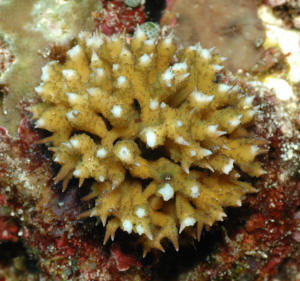
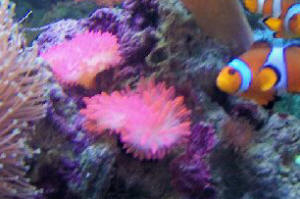 Do appear dyed eh? Color loss from simple
dilution/division?
Do appear dyed eh? Color loss from simple
dilution/division?