|
|
| Home | Marine Aquariums |
Freshwater Aquariums |
Planted Aquariums |
Brackish Systems |
Ponds,
lakes & fountains |
Turtles & Amphibians |
Aquatic Business |
Aquatic Science |
Ask the WWM Crew a Question |
| Please visit our Sponsors | ||||
Isopod parasite 11/29/13
Munnid problem? 3/22/10 Re: Munnid problem? 3/22/10
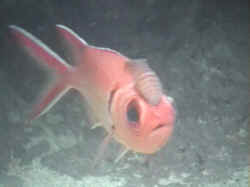
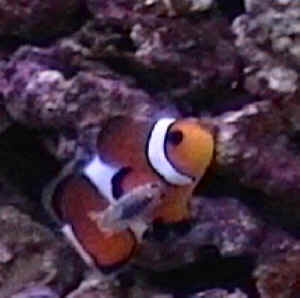
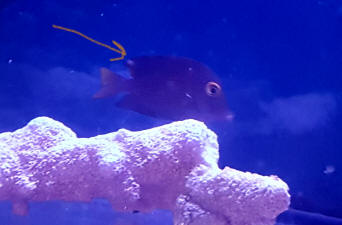
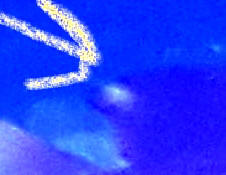
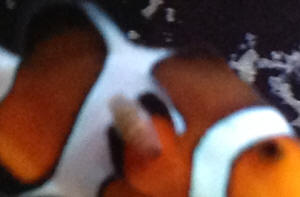
Creature from movie" Alien" has got my pajama cardinal! Guys, woke up today to find this creature, isopod I guess, clamped on the face, mouth, of my cardinal. Did not look like the poor fish could open his mouth, just like in the Alien movie. Tried to catch fish but impossible in 450 reef tank. Worried these monsters could get out of control, only seen one though. Does any type of fish eat these things? <Not really. Good idea to get/use a fish trap (these are sold in the pet-fish industry (there's an ad in FAMA currently...) or from large warehouse stores (they're the same plastic traps for small rodents, but no fish sticker...> I recently moved a few pieces of rock from refugium to main tank and assume that is how this thing got into main tank. It is quite large, over 1/4 inch. Thanks, Paul <Maybe... bizarre. Catch the host, remove and toss. Bob Fenner> I have a powder brown tang which has picked up a quarter of an inch long light brown crustacean on its anal fin. The bug looks kind of like a terrestrial rolly poly or pill bug. Also this thing seems to be pinching the fin. I already have a cleaner wrasse and shrimp. Do you know what this thing is and if and how I should get rid of it? I bought your book this weekend and there the bug was right on page 148. Also I have a white faced tang and I now feel pretty bad about buying that cleaner wrasse. Anyway the copepod disappeared after about 8 hours so I assume the cleaners got it. I am glad I bought your book. It answered a lot of questions and gave me a lot of ideas. Thanks for your time and Ill investigate further before submitting a question. Everett West >> Yes, this is a parasitic isopod... an aquatic type of rolly poly... and it is best to remove it by catching the fish and prising it off with a stout tweezers... Get ready and at the same time, daub a little mercurochrome or Merthiolate on the remaining sore with a "q-tip"... Bob Fenner Isolating Isopods Hi JasonC, Good job filling in for Bob. <<why thank you... >> Can you give me some advice. I have a Sailfin tang with a parasite hanging on to its bottom fin. I'm pretty sure the parasite came in on a piece of liverock, but regardless its there. The thing looks like a white worm. Maybe 1/16 of a inch long and 1/32 of an inch thick. Pretty small but large enough to see some features on the parasite. I first noticed it about 2 weeks ago, and since it has doubled in size. There is now a small hole developing in the fin where the things mouth is. The tang does not show any signs that he is distressed yet, but I am afraid of letting this thing get to big, or if it reproduces god help me. I have a cleaner shrimp that cleans the tang from time to time, but the shrimp never touches this fin. I waited these two weeks hoping the shrimp would get it, but to no avail. Do you suggest a neon goby or cleaner wrasse to be added to the tank? If I could catch the tang (yeah right), would a fresh water dip be a better option? Would scraping it off with my nail work again if I could catch the tang. Last night I did notice 2 tiny white dots on another fin. I'm afraid these are small versions of the same parasite. <<Two courses of action here that I can think of, and both will require you to catch the fish. You can either manually remove the isopod, either with your fingers or tweezers OR freshwater dip it off - either one will work - the manual method will probably be quickest with the lowest trauma to the fish. Doubt the small dots you are seeing are the same thing, but if you've got one, you could have two... keep your eye on it.>> Thanks Mike T <<Cheers, J -- >> Help with Treating Parasitic Isopods, Copepods Bob, <<Not Bob, but JasonC filling in while Bob is away diving.>> I visit your site quite frequently and have found it to be extremely helpful. <<happy to hear it.>> I have a bit of a problem. I have had my tank for about a year now. 55 gallon Marine setup with Emperor BioWheel filter, Protein skimmer, UV, Magnum 350 canister filter. FO tank. It seems I have a parasite problem, but I need some help to identify and eradicate it. My Lunar Wrasse had been acting very strangely for a few weeks. He is losing his appetite more and more these days. There were no visible signs of parasites. All other fish were OK. Within the past week, I noticed a lump developing just above his belly and saw a few spots on his face. Upon closer inspection, the spots appeared to be something "hitching a ride" on his face. They are under 1/8th of an inch in size, translucent white, and oval in shape. They appear to be attached at a single point... otherwise free floating. Tried to figure out what they may be, but can't find anything on the site. <<sounds like isopods - little "pill-bug" type things?>> Even more disturbing is my clown trigger now seems to have a couple of these hitching a ride on his eyeballs. <<that doesn't sound like fun at all.>> All other fish are still OK. Today, I noticed that the wrasse now has a small hole in the lump on his belly, almost as if something was nesting under his flesh and decided it wanted out (Almost seems like the movie alien!) <<that would definitely be no fun>> SG=1.23 Ammonia=0 Nitrites=0 Nitrates=60. I feel as though I keep the water quality at its finest at all times. <<those nitrates could be a great deal lower, say between five and ten.>> The only variable that has changed is that I lost a Kole Tang due to HLLE, so I replaced him with another. I know I SHOULD be using a q-tank for newbies, but I haven't had a problem thus far without one. <<ok, but you are going to get one now, yes?>> Please help. I'm not sure what it is I'm dealing with. <<really does sound like isopods>> I know the worst thing to do would be to panic and throw all sorts of chemicals in the tank (a bitter lesson I learned the hard way when I started the tank!), but I want to keep this problem under control. No inverts, so I could use copper if need be. Any help you could offer would be greatly appreciated! <<Well... most times isopods are best removed with tweezers and are much like pulling ticks off a dog. Your clown trigger though, I don't think I would advise this here as you'd end up with a blind fish. You should probably try an extended [longer than normal], pH adjusted freshwater dip, perhaps even with Methylene-blue to help ease the whole thing. Check the link for Bob's protocols for dipping your fish: http://www.wetwebmedia.com/dips_baths.htm and the isopods... http://www.wetwebmedia.com/parasiti.htm >> Thanks, Jon Beeson <<You are quite welcome. Cheers, J -- >> Help with Treating Parasitic Isopods, Copepods... (continued)
Thanks for the advice.... but now another twist to the plot... This
morning, I noticed a brown wormlike parasite protruding from the
wrasse's lump. <<Egads>> Should he be removed from the
tank? Is this a danger to the other livestock? <<well, you've
obviously got these and other things a-plenty so if the fish aren't
in danger today, they will be in time. I would definitely take
action.>> The wrasse likes to sleep under the substrate... could
this have contributed to him getting this worm? <<sounds quite
likely but impossible to know for sure.>> Also, how do I treat
this worm? Can I pull it out of him with tweezers? <<could, I
think I would try the extended, pH-adjusted, freshwater dip and start
with that... go after it with the tweezers as a last resort. Many worms
can lose an entire chunk of themselves and never miss a beat - grow it
all back - kinda like a bad monster movie. If you were to pull at it
with tweezers and only get a chunk, likely the rest would survive just
fine in your wrasse - nasty. Try the FW dip first.>> Thanks in
advance. Jon
Cirolanid isopods I hope I'm being helpful... What I've found so far: Fresh water dips may or may not be effective. Reports of these things living for hours in freshwater are not uncommon. Some respond immediately to freshwater dips, others not. <Yes> Putting raw fish into a narrow necked vase can be used to trap them. I'll assume that the cut off coke bottle top inverted into bottom of the bottle would work as well, but see no reports. <Can work... I like a clear tube (plastic, glass) with coarse filter fiber jammed on either side of the meat bait... to entangle the to-be-removed pests (so they don't get out when you're retrieving the trap). The white polyethylene "Grobflocken" by Eheim is best IMO here> There is some talk of juvenile hogfish being effective, but some doubt among others. Some report of Canary blennies, but they seem not to be effective. It seems that the pods will attach to the inside of the blenny's mouth, tongue, or gills and drop off as though it were external upon lights on. The hogfish are reported to be smart enough to chew before swallowing. They reproduce sexually, about 30 at a time. I'm trying the vase method. We'll see. Some have reported trapping over a hundred of them. Reef Central is replete with mail and articles on the critters. <Thank you for this. Bob Fenner> Creature from movie" Alien" has got my pajama cardinal! Guys, woke up today to find this creature, isopod i guess, clamped on the face, mouth, of my cardinal. Did not look like the poor fish could open his mouth, just like in the Alien movie. Tried to catch fish but impossible in 450 reef tank. Worried these monsters could get out of control, only seen one though. Does any type of fish eat these things? <Not really. Good idea to get/use a fish trap (these are sold in the pet-fish industry (there's an ad in FAMA currently...) or from large warehouse stores (they're the same plastic traps for small rodents, but no fish sticker...> I recently moved a few pieces of rock from refugium to main tank and assume that is how this thing got into main tank. It is quite large, over 1/4 inch. Thanks, Paul <Maybe... bizarre. Catch the host, remove and toss. Bob Fenner> Cirolanid Isopod Hey bob, I've noticed a wide spread of Cirolanid Isopods in my 18gal live rock tank. I'm guessing the liverock has introduced them into my tank. I read that you recommended a wrasse in trying to exterminate these "bugs". What type would you recommend? <Mmm, would try baiting, trapping these out in such a small system... likely any Labrid that might do the job would be too big. You can make a tube (plastic pipe, clear or not) lightly stuffed with "filter fiber" with a meaty food in the middle... and "fish" at night> Would a common cleaner wrasse do the job? <No> thanks, Jason <Catch them, remove them, study them. Bob Fenner> Parasitic Isopods 6/11/03 I recently managed to capture a small .5 inch isopod in my 10 gallon reef aquarium. <yikes!> Amazingly, I had to pull an all nighter to capture this bug in a mantis shrimp trap in which we thought the isopod was a mantis. I have tried the last several nights to find another one using the same method, yet i have not seen one since. <indeed... many are only nocturnal> I am not quite sure if they are all gone, or maybe i have more, so i was wondering if there might be any more methods of capturing another and possibly the babies. Alex <meat in a cage... literally. And a sacrificial fish in a mesh container just the same if you must. These parasites can be scary and hard to remove. They certainly can bite you just the same... look out :p Anthony>
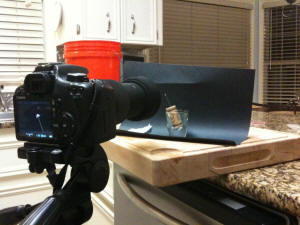
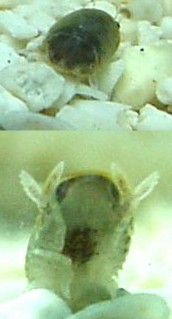
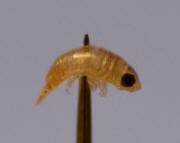
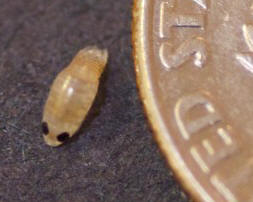
Isopods? 4/6/04 Much appreciated Anthony. I really cannot track anything back to an Atlantic addition to this new tank. <and they are not restricted to the Atlantic, or even tropical waters for that matter - they are global... like Elvis. They simply are most common in our hobby from Atlantic substrates> The only things that had been in the tank when they were first noticed are sand (CaribSea) new bags, and Marshall Island Live rock from Premium Aquatics. Tank and all filtration were new. It has to be the LR! <yes> I am going to set up a trap method tonight with 1" airline tube, filter floss, and thawed fish. I could seal and send you a specimen? <I'm really not an expert on microcrustaceans... Ron Shimek really is more experienced/able and interested in such matters. Do consult him at reefcentral.com to send a sample perhaps> Any thought on taking a good out of water pic? Steve <above or below the water in a confined area (deli cup perhaps)... I prefer using a flash most always for fast shutter speed. Anthony> Parasitic Isopods And The Aquarists Who Hate Them! Thank you for your reply, Scott. I originally believed that velvet killed my new fish and did not look very closely at the dead bodies for other causes. The velvet was so obviously all over each fish. Now that I have found the isopods, I also wonder if they played any role in the fish deaths, and that I simply did not think to look for multiple causes at the time. I'm beginning to think these isopods may not parasitic. From a couple of sources, it is said that isopods which can roll up and swim upside down will be detritivores. My bugs do both, but I am still very confused. <I have not heard that, but it seems like an interesting theory! I suppose that they could have played some sort of role, but I agree that velvet was probably the primary killer..> As you stated in an earlier reply that feeding the tank meaty foods would definitely prolong the parasitic isopods' lives. Are you now saying that any decaying food, even plant matter, would give these guys enough to eat until a tasty fish comes their way? <In theory, yes! That's why it is tough to eradicate these little pests.> If so, I'm sorta scr*wed, then, aren't I? <Nope...Just challenged...You will win this battle...> How about if I add household non-scented ammonia to the tank instead of meaty or vegetable foods that will decay? <Personally, if it were me, I'd simply leave things alone, and I'd conduct regular maintenance on the tank. I believe that respiration and metabolic processes of the existing fauna in the tank will provide sufficient ammonia to keep things going> The tank is 72g, with 80+ lbs of LR, lots of soft corals, some unidentified but beautiful macroalgae, 3" aragonite sandbed, and about a mix of 30 Astrea and margarita snails. Any suggestions to save the tank but kill off the isopods, if they prove to be parasitic, are very, very welcome. Again, thank you for your time and expertise. <Well, it is certainly possible to employ biological controls, such as hogfish, and Meiacanthus species blennies, to mention a few. They are not 100% reliable, but they have been cited by some hobbyists to be predators against these little nasties. In the end, careful observation and patience will be the best counterattack for you. Remember, although they can be dangerous, many fishes can survive the attacks of these creatures until you can treat them. Usually, very small fishes or fry are more likely to suffer fatal occurrences as a result of isopods. Again, I think that diligence and patience on your part will win out. Short of totally breaking down the tank, this is your best strategy! Good luck! Regards, Scott F.> Parasitic Isopods Hello guys! <Hi there! Scott F. in today> I really need some help. I just set up a new 150 gallon reef and released some fish I've had for some time into it. About a week later (last night) I discovered a small (1/8 to perhaps 1/4 inches) isopod has attached itself to the tail of one of my pajama cardinals. <Yuck> I have not had a chance to even try to capture the fish yet. I know I must capture and remove. I guess what I am asking is I have heard that once you have one (one RC) you likely have a lot more and a typical nightmare. Please tell me this isn't true. It doesn't say that in Bob's book! If it is what should I do? Thank you all so much. Brian <Well, Brian- where there is one, there could be others. Don't run off headless and do something that you'll regret later. Short of "nuking" the tank with aggressive medications (which I DO NOT recommend), you just need to stay very vigilant, and be prepared to remove any fishes that become afflicted with these guys in the future. Remain calm, observe your fish very carefully, and stay alert! Sometimes the best course of action is not to do anything...Regards, Scott F> Pesticides for killing isopods... Ahhhh, No. 5/10/04 Hi Guy's <howdy!> Great site! <thanks kindly> Was wondering what your thoughts are on the use of dog heartworm medication (Melbemycine oxime) to eradicate Cirolanid Isopods. <a dreadful idea/advocation... its efficacy runs the gamut, but more importantly, it will kill far many more desirable crustaceans in the main display than bad ones. The bad ones should be/have been easily screened in a proper 4 week quarantine on arrival> I'm aware I'll loose all crustaceans, at least the ones I don't remove, but see very few options. <Ahhh.. OK. Although I cannot agree> I believe they arrived in the aqua cultured LR that I cycled the tank with. <yes... they are common in Florida live rock... especially that dreadful heavy stuff from shallow coastal waters (many parasites there)> Tank has been up and running for about 6 months. The predatory Isopods made their presence know, at least to me, only this past week. I've caught and removed 3 pods from two different fish. <sigh... I regret you have learned this way as many of us do. But QT is not an option, and must be done for all things wet: fishes, corals, live rock, sand, plants... everything! There are too many pests, predators and diseases that can and will be carried in with live products> A tank raised Perc. And a bi-color angel. The tank is 72g bow front, 85lbs of LR, 4inch sand bed, Thanks for your thoughts on this. Mike <remove the fishes to QT and trap for isopods in the display with meat. Read more on this in the FAQs on this subject in our archives at wetwebmedia.com. Anthony> External Parasite Good day, <And thou> I recently purchased a Percula Clown fish and he is doing well. The next morning I observed something attached to his rear tail fin. It was transparent like having 2 small black eyes and many little legs underneath. It was almost like a pill bug but more skinny in width and see through (you can see its insides). It even had a tail of some sort and closely resembles a small crustacean or something. What is this? <Likely as you describe, infer... a parasitic isopod> I immediately removed the clown fish and placed him in a freshwater dip for about 3 minutes. This thing obviously didn't like the fresh water and soon fell off swimming in circles on the bottom and eventually dying. <Good move!> Did this thing come from the live rock in the tank (I have 27 pounds in a 55 gallon setup). It obviously came from somewhere because it was not attached to the clown when I purchased him at the store. I searched long and hard to find a photo of this thing and I can't find out what it was. So far this is an isolated incident. Should I be on the lookout for more or should some sort of treatment be started. Or, did I do the right thing and I can sit back and relax because this won't hurt the fish. If this happens again do I proceed the same way? <Yes, yes, yes> Thanks for taking the time to help, Dave <Take a read here Dave: http://wetwebmedia.com/isopoda.htm and the Related FAQs (linked, in blue, at top)... such incidents are rare, but do happen in aquariums. Bob Fenner> External Parasite Good day,<Hello, MikeB here.> I recently purchased a Percula Clown fish and he is doing well. The next morning I observed something attached to his rear tail fin. It was transparent like having 2 small black eyes and many little legs underneath. It was almost like a pill bug but more skinny in width and see through (you can see its insides). It even had a tail of some sort and closely resembles a small crustacean or something. What is this? I immediately removed the clown fish and placed him in a freshwater dip for about 3 minutes. This thing obviously didn't like the fresh water and soon fell off swimming in circles on the bottom and eventually dying. Did this thing come from the live rock in the tank (I have 27 pounds in a 55 gallon setup). It obviously came from somewhere because it was not attached to the clown when I purchased him at the store. I searched long and hard to find a photo of this thing and I can't find out what it was. So far this is an isolated incident. Should I be on the lookout for more or should some sort of treatment be started. Or, did I do the right thing and I can sit back and relax because this won't hurt the fish. If this happens again do I proceed the same way? Thanks for taking the time to help, Dave <Dave, try looking up Planarian on the internet. My hunch is that it is a flatworm parasite. It can be prevalent in fish that are purchase and not quarantined for an extended amount of time. I would suggest keeping a close eye on the fish an make sure it doesn't come back. If it does then quarantine it. Thanks MikeB.> <<Likely is a pill bug... a parasitic Isopod. RMF>> Isopod with a taste for Beef Steak Dear Bob, <Bob is out right now. Mike G here> I just woke up this morning to find that my young tomato clown, Beefsteak, had some sort of external parasite attached to his posterior dorsal fin. <Never a good sign.> The organism appears fairly complex and I can observe a segmented body along with two spots which seem to be eyes. I would estimate it's size to be somewhere around 2-4mm in length and of a light grey color, darker grey near the head. <Sounds to me like a Cirolanid Isopod> My best guess would be that this is some form of an isopod although I've never seen one attached to a fin in this way and it is rather small. <Everything starts small and grows when provided with nourishment. In this case, your fish is providing the nourishment.> I don't know if I'd be able to get the little clown out of my 55 gallon reef without destroying anything in the process. Do you think I should worry about this little parasite, because I most definitely am. <ANYTHING attached to and feeding on your fish should concern you.> I mainly do not want him spreading to any of my other fish. Any information you can give me would be much appreciated. <Here are a few articles and FAQs on Cirolanid Isopods. http://reefkeeping.com/issues/2002-05/rs/index.htm http://www.wetwebmedia.com/isopoda.htm http://www.wetwebmedia.com/isopodfaqs.htm I wish you the best of luck in exterminating this parasite. Mike G> |
|

|
Features: |
|
| Featured Sponsors: |
 crop
crop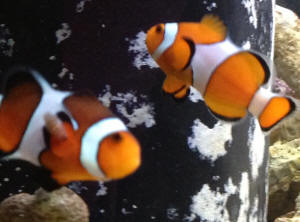
 U.S. dime at right