|
|
| Home | Marine Aquariums |
Freshwater Aquariums |
Planted Aquariums |
Brackish Systems |
Ponds,
lakes & fountains |
Turtles & Amphibians |
Aquatic Business |
Aquatic Science |
Ask the WWM Crew a Question |
| Please visit our Sponsors | ||||
|
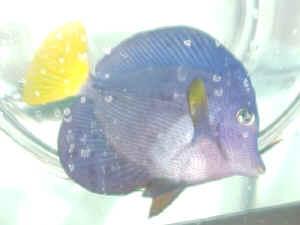
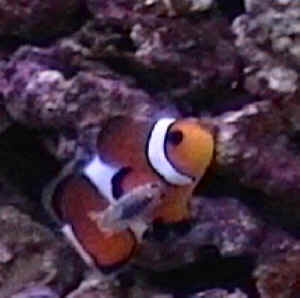
Fish problems A few weeks ago I purchased a Kole Tang for my 75g tank. Before I introduced the fish into my main tank I did a freshwater dip. I have Lionfish, Basslet Fish and a Foxface Rabbitfish already in the main tank. The store owner told assured me that the Tang was healthy and told me to do a freshwater dip prior to introducing the tang into the main tang to ease my peace of mind. <Freshwater dips are usually done to combat parasites if you don't have a quarantine system.> I got home dipped the fish and put him into the main tank. The first few days the tang was fine. He was a little tattered because the Basslet fish got very aggressive but, after a few days he was fine. The Tang and the Foxface Fish grazed on algae in the tank. I couldn't get either one of them to eat the algae tablets. <Really not all that surprising and if he had an adequate supply of algae he wouldn't have needed them.> Nevertheless the Kole Tang died in about a week. I thought it was because he wouldn't eat or maybe he got stung by the Lionfish. <Okay why would you think he got stung by the lionfish? Did you see any aggression in the direction? Did you see any marks on the tang?> I noticed that the Lionfish started hanging around the top of the tank near the filters. He has never done that before. I've had the Lionfish and Basslet fish for almost two years and never had any problems. A few days ago I decided to try my luck with the Kole Tang again so I purchased another one. He was one the healthiest fish I had ever seen in a Pet store and quite large. I also bought fish supplies because I noticed that my Lionfish was hanging out near the top so I figured I needed to do a major water change. <Always a good idea when you are having any kind of problems. I'm very much afraid though that you introduced a parasite into the tank.> I got home with the new fish still in the bag and began working on the water change. I took all of the fish included the Tang in the bag and placed them my QT tank so I could clean the gravel while changing the water. <Okay I have to ask, if you have a quarantine tank why not quarantine the Kole tang before you put him in the first time. I know the fish store said he was fine but you just never know what they have gone through while they are there.> While I was doing it some idiot hit a fire hydrant in my neighborhood and it knocked out the water pressure and eventually the water was turned completely off. <Ouch major pain.> I was in the middle of the water change when the water was shut off. I didn't know how long the water would be off and I couldn't add the fish back into the main tank because it was almost completely empty. <Big water change. Usually I recommend doing 25% water changes at least once a month.> So I had no other choice but to keep all the fish in the QT tank and take new Tang out of the bag and set him free in the QT tank too. <Good place for him to be.> Once the water came back on several hours later, I continued with the water change and put all of the fish into the main tank. I figured the damage was already done and it couldn't get any worse. The tang looked and acted very healthy. <He very well could have been but anything like that would have stressed him. Then to move him from one place to another and have three changes would really stress him. Do you always move all the fish out when you do water changes? Because if you start this partial water change system you shouldn't have to move your fish totally out of the tank.> Today I came home from work and all of the fish were fine. I went upstairs to take a nap and came back downstairs and noticed that my Kole Tang was laying on his side and he was covered with white spots. <Definitely a parasite, probably ich.> I immediately thought about Ick but wasn't sure so I removed him from the main tank. <Good choice.> I put him in the QT tank and he fluffed up for a little while and moved around. <Can I ask what your quarantine tank consists of? What type of filtration etc?> I got online and started reading about fish parasites and other things from your website. <You are definitely on the right track and obviously care for your fish.> I read that I should try to do a freshwater dip. <Freshwater dips will kill the ich cysts on the fish and give him some relief, the problem is that before you see the ich they have often damaged the gills of the fish.> I took the tang out and put him in the freshwater dip for about five minutes. At first the fish laid there breathing then he would jump and swim around the bag and then fall back on his side. <That is typical dip behavior.> I took him out of the bag and noticed that the white patches on him had faded away along with his color. <Once again that's normal. Sometimes you'll even see little marks on the side of the fish that look like divots where the ich was. I noticed that especially in the dark tangs like a purple tang.> When I put him back in the QT he went immediately to the bottom and laid there. <Typical once again. When you did your freshwater did you adjust the temperature to the same as his tank and the ph as well? That often is something people are not aware of and something that greatly assists in a freshwater dip.> He hasn't moved. <Poor guy, I know you feel for him.> I checked the other fish in the main tank and noticed that all of the fish in the tank have white spots on them. <NOT GOOD> My Lionfish color looks faded and it looks as though his eyes are starting to cloud up. I tried to feed him because I knew he was hungry and he didn't eat. I turned the air on the powerhead and he immediately went up to the stream of air bubbles and floated there with his mouth open like he was getting a massage. LOL. <Actually a great thing to do because it put additional oxygen in the tank and aids in his breathing. If you don't have any corals or invertebrates in your tank you should consider trying hyposalinity on your fish immediately. This is taking the salinity down to a more therapeutic level for treatment of parasites. There is quite a bit on the site about it.> I was wondering is it possible that all of my fish are sick and I need to medicate them with copper? If so can I medicate them all in the main tank or do I need to put them in QT tank which is only a ten gallons. <You can treat the main tank with copper but once it is in there it is ALWAYS in there.> Also, I do have two pieces of live rock in the tank with a couple of inhabitants on them will they be able to handle the copper? <No the copper will definitely kill them. You could move the live rock to the quarantine tank while you treat the main tank with hypo salinity and move it back when you bring the salinity back up.> My Kole Tang is in the QT laying on his side but breathing. He looks a little better after the freshwater dip his color returned a little but he isn't doing much of anything other than breathing. <That's okay, he's fighting off the effects of the parasite and the dip.> Should I put him back in the main tank and medicate him in the main tank as well or keep him in the QT and medicate him there if he survives. Sorry for the long message I wanted to explain the situation as to get the best possible solution. <You message is great. I hope I was able to help and please follow up with me. My name is MacL and I'll be looking for you.> Parasitic, environmental... two, two, two diseased condition influences working at once! Hello Bob, <Jeremy> My name is Jeremy Gosnell, and I have been an aquarium hobbyist for many years. I have kept until now only freshwater fish, mainly African cichlids and discus. Just recently I set up a 30 gallon Saltwater Aquarium I cycled the tank for about 2 weeks <Will likely need more time...> and used Oceanic Sea Salt as the salt mix, crushed coral as a substrate, and currently have about 25 pd.s of live rock in the tank. For filtration I opted for the Aqua Clear 500, undergravel with dual Aqua Clear 301 power heads. For lighting I installed a 65 watt Coral Life compact fluorescent. <Okay> It seems like every new fish that I place in this tank gets some type of parasite. <Mmm, likely to a large degree environmentally induced... your system is small, probably not completely cycled> It begins looking like typical marine ich so I treat them for ich, then they get covered in ich like spots but these are much much smaller than traditional ich. They are white in color and literally coat the entire fish. As if someone had sprinkled a very fine sugar or salt all over the fish. This disease has taken many of my fish including 2 Sebae Clownfish, A pacific blue tang <This tank is too small for this species> and more. The only fish I have that remains healthy and free of this odd condition is my Juvenile Yellow tang. He had a short bout with ich that cleared quickly. <It's still there... in your system> I have used a variety of treatments trying to eradicate this. Malachite Green, PimaFix, MelaFix, Clout, have all been unsuccessful in clearing the condition. I am now trying a product called KickIch - a 14 day treatment that may hopefully help. I know you are the experts expert and wondered what your opinion was on this. I do have invertebrates in the tank several crabs and shrimp and some turbo grazer snails. The parameters are as follows: Temperature - 78 degrees F Ph: 8.3 Nitrite: 0.0 Ammonia - 0.0 I used both Stability by Seachem and Bio Spira by Marineland Labs to cycle this tank. Would that have any effect, its been running for about 1.5 months. Any help would be great Jeremy J. Gosnell <Time to take a few steps backward... I take it you have been trying to cure this parasitic problem in your main tank... contraindicated... you are disrupting the system, hurting your livestock's capacity to ward off further infestation by impugning their environment. There is not a whole lot to study to understand the gist of what you're up to here... Please begin by reading: http://wetwebmedia.com/mardisease.htm and on to the Related Articles and FAQs (linked, in blue, at top)... especially the FAQs files on infested tanks. Stop poisoning your main system, and instead invest in a separate treatment tank... Study now and save your fishes, money, good nature. Bob Fenner> External Parasite Good day,<Hello, MikeB here.> I recently purchased a Percula Clown fish and he is doing well. The next morning I observed something attached to his rear tail fin. It was transparent like having 2 small black eyes and many little legs underneath. It was almost like a pill bug but more skinny in width and see through (you can see its insides). It even had a tail of some sort and closely resembles a small crustacean or something. What is this? I immediately removed the clown fish and placed him in a freshwater dip for about 3 minutes. This thing obviously didn't like the fresh water and soon fell off swimming in circles on the bottom and eventually dying. Did this thing come from the live rock in the tank (I have 27 pounds in a 55 gallon setup). It obviously came from somewhere because it was not attached to the clown when I purchased him at the store. I searched long and hard to find a photo of this thing and I can't find out what it was. So far this is an isolated incident. Should I be on the lookout for more or should some sort of treatment be started. Or, did I do the right thing and I can sit back and relax because this won't hurt the fish. If this happens again do I proceed the same way? Thanks for taking the time to help, Dave <Dave, try looking up Planarian on the internet. My hunch is that it is a flatworm parasite. It can be prevalent in fish that are purchase and not quarantined for an extended amount of time. I would suggest keeping a close eye on the fish an make sure it doesn't come back. If it does then quarantine it. Thanks MikeB.> <<Likely is a pill bug... a parasitic Isopod. RMF>>
Help, Sick Fish Mr. Fenner, I got your e-mail address off of a sick fish forum and need your help. I have tested my water and the parameters are as follows: nitrite - 0, ammonia - 0, nitrates - 10, kH - 12, and pH 8.3. My puffer fish and cow fish are recent acquirements and I noticed little white spots on the pufferfish that I originally thought were salt deposits. I now believe these are ich from what I read. After coming back from thanksgiving, my cowfish is not moving on the bottom of my tank. What can I do to help them out? Thank-you, Jason Edwards <Jason, please read here: http://wetwebmedia.com/pufferdisfaqs.htm And onto the Related FAQs (linked, in blue, at top) and articles on Marine Ich/Cryptocaryon... and their related FAQs. Bob Fenner> Ammonia Questions ?? Hi Bob <John> I have the following problem, please help! Sorry for the long email but giving some history. I have a 3 foot tank that I set up as a quarantine tank. I took some media (ceramic balls) from the trickle filter, some media (ceramic balls) from the sump and 100 litres water from my display tank (Running for 10 Months) and placed it in the quarantine tank canister filter. Also added an AquaClear 200 filter on the tank with only a new sponge for media to build up some bacteria. I put a piece of live rock (as big as two fists together) in the tank as well. I put a clown trigger which I bought in the QT tank for a week. I checked the ammonia, nitrite and nitrate twice daily. For 7 days everything was fine within acceptable limits. The fish also looked good with no signs of any disease. I put it into my display tank. (I know this is a bit soon but needed the QT for other fish). I bought 3 regal tangs of about 50 - 60 mm each. (These are scarce in my town so I had to get them!) <Not an easy species to keep alive... do check into Pablo Tepoot's food line "Spectrum"... about the only thing I've seen that works to get this species going in captivity... especially when small as yours are><<RMF confused Paracanthurus with A. lineatus>> They where flicking in the shop before I got them so I put them in the QT. The salinity at the LFS was 1.018 so I lowered my QT salinity to 1.018. PH is at 9.5 <9.5? This is WAY too high. Please read re and adjust slowly down to 8.2-8.4> and temp at 27.5 to 28 C. On day 2 of putting the new fish in QT I dosed Red sea Paracure (copper) at 0.3 as recommended to clear the infection on the fish (they had "white-ish" marks on them and still flicking, not sure if ich or Oodinium). On day 3 started to see ammonia 0.25 ppm on the card. On day 4 ammonia was at 0.5 ppm on the card (Red sea copper test kit) so I did a 25% water change with water from my display tank. Ammonia down to 0.25. Added Paracure to get back to 0.3 (Nitrite and nitrate is near to 0) On day 5 ammonia was back at 0.5 ppm so I did a 25% water change again with water from my display tank. Ammonia down to 0.25 again. Added Paracure to get back to 0.3 (Nitrite and nitrate is near to 0). The fish seem fine now and are not flicking any more but still have small "white-ish" patches on them. Here are the questions now as I need advice on what to do next: 1. The Paracure label said that it does not affect the bacteria in the filter. Is this correct? <Doesn't appear so, but...> If so why do I have the ammonia problem? <Likely the copper or lowered spg killed off or induced a physiological check in your nitrifiers> 2. Technically the tank should be cycled as it has all the water from the display tank as well as the filter material. Is this correct? <Was likely, but as stated one or both of the medicants and altered spg bumped off or stalled the process, processors> 2. Does the lower salinity have an impact on a) the biological filter, <Yes... will kill most microbes> b) copper dosing and c) ammonia? <Yes> 3. According to the Red sea ammonia test kit NH4+ is less harmful. This it the 0.25 to 0.5 that is measured on the card. How bad is this for fish and how long can fish handle this amount of ammonia. How does it affect the fish? <Mmm, hard to state... weakened fish livestock may die as consequence in hours, days at this concentration. 1.0 ppm is almost always toxic within hours, days> 4. According to the Red sea ammonia test kit NH3 is toxic ammonia. This value is about 0.016 when calculated at 0.25 NH4+ and 0.032 at 0.5 NH4+ . How bad is this for fish and how long can fish handle this amount of ammonia. How does it affect the fish? <Good question... once again, not a black/white scenario, but as an added source of "stress", any detectable ammonia/ammonium is bad news> What I thought of the problem is that the biological filter is failing and therefore the ammonia spikes. How can I fix this problem (Would it helped if I put in some Hagen Cycle? <This product might help... as might adding some more filter media from your established system, but the best move is to change out good percentages of the water with used as you've been doing... and possibly risk dipping the Regal/Clown/Lineatus tangs and moving them to the display> Any recommendations please of what to do next as I would like to keep the fish in QT for at least another 2 weeks. Thanks for the help and excellent web site. Regards John Squier <The "call" is up to you. I would dip/bath these fish and move them. Bob Fenner> Fish parasites Hello whoever is there today. << Blundell today. >> Thanks for your recent help with my Cyanobacteria problem. I took all your advice and the outbreak has all but cleared. I need some more help today please. A few days ago my Clarks clown had a parasite (fluke) hanging off the side of his body. Looked like a small flat flake. While I was getting ready to try and net him, whatever the parasite was disappeared - must have fallen off. Now my peach Anthias has a small raw looking area on its body just in front of the tail fin. I don't know if the 2 incidents are related at all or is this is a bacterial infection. The colour has disappeared in a small patch on the flesh and there appears to be a little hole on its body. << Doesn't sound good. >> I have tried in vain to catch this fish, nets, traps aren't working. He is swimming and eating normally. Can you suggest anything to put into the tank to help with this fish. << Adding garlic to the food for sure. Also, I'd consider getting a cleaner shrimp if you don't already have one. >> What do you think of trying something like garlic extract, or Rally? << Great idea. >> I have a 75 gallon reef tank with live rock, many corals, 2 bubble anemones which have been splitting regularly so I am loathe to remove them, and lots of snails, hermit crabs, 2 starfish, a sea urchin and a very healthy worm population - besides my fish. I don't want to upset the equilibrium. The LFS said that a UV sterilizer may work. << Yeah that is costly, but it may help in this case. >> I have been soaking the fish food with Selco to try boost the fishes resistance and have also raised the salinity of the water to 1.025 to discourage parasites. I would welcome your opinion. << The salinity treatment is backwards. To discourage parasites you lower the salinity. Lets say down to 1.020. This isn't good for your corals and other inverts, which is the trade off. But I wouldn't be raising it. >> Many thanks, Sharon J << Blundell >> Fish with parasites? I have a 46 gallon tank with 2 percula's, a rainfordi goby, pygmy angel, bi-color blenny, cleaner shrimp and lots of live rock. Tank checks out perfectly, 0 nitrates, 0 nitrites, 0 ammonia, ph at 8.2. I have noticed that the blenny is scratching on the rocks and utilizing the cleaner shrimp quite a bit. It is fascinating...the blenny will lie against the live rock and just wait...while the shrimp cleans. Angel is also visiting the shrimp quite a bit, no noticeable spots (yet). It has only been a day since I've noticed the scratching. I turned off my protein skimmer, added a little stress coat. << Keep the skimmer on. >> The blenny visits the shrimp quite a bit....do I need to be concerned about parasites? << Yes, I would start adding garlic to the food immediately before things become a real problem. Also, a water change is a good idea. >> Nothing noticeable that I have seen yet. Tank is established..... L << Blundell >> Pestering Parasites! Thanks Scott. <You're quite welcome!> Quick follow-up. I have read or have been told somewhere along the line that parasites are often present on most fish ? even healthy fish - and are merely latent. <Many parasites are continuously present on fish, but Cryptocaryon (the causative protozoan of Marine Ich) is not always present, based on much of the research that I have done.> I suppose in the case of Ich, they don?t get through the slime coat on a healthy fish or are not present in sufficient numbers to cause stress. Is this true? <Yes to the first part, but the second part is controversial!> If so, going back to my case, I?d like to be assured that they?re dead before adding a fish to the main system. If no meds, what would you think about 1) no substrate in the hospital thank (there is none currently), 2) running a small UV sterilizer or I?ve also read where people have used germicidal lamps instead of the regular light bulbs, and 3) with frequent (daily or every couple of days) water changes from the main tank to try to capture the Ick while they?re in their non-swimming phase? <Well, that's very similar to a technique that has been proven to do the job every time: A bare tank, with 100% daily water changes, will do the trick. This way, you're destined to get any free-swimming parasites if you keep it up or 3 weeks...> Thanks! <Give the 100% changes a try...Good luck! Regards, Scott F> J.D. Hill Ready to Call it Quits (10/31/04) Hi....I said 155 gals., not right, 55 gals is my tank. I'll keep an eye on Swampthing. The 3 clownfish died. <Sorry to hear.> They had a Viral Infection or something. They turned white up on their faces & their eyes got cloudy. <Perhaps Brooklynella?> I'm not putting anymore fish in that tank. If they die, I'm giving my tank to the Thrift store. I didn't know it was going to be that much work. I knew I had to check the tank everyday & all the chemicals in there but fish kept dying & my starfish is gone & I don't know what to do. I'll keep an eye on Swampthing. Thanks for all your help, Valerie. <Don't give up just yet Valerie. Most fish diseases will die out if there are no fish in the tank for several weeks. I'd suggest you leave it fishless for several months, while attempting to nurture the population of fascinating invertebrates that come on life rock, including copepods, mini featherdusters, etc. Maybe get a couple of cleaner shrimp or a single Coral-banded shrimp. Consider returning the Green Brittlestar as it will eat the kinds of hardy, beautiful fishes that are appropriate for this size of tank. A lot of folks have been having bad luck with clowns since "Finding Nemo," probably because they are being over-bred. Once the tank has had a few fishless months to clear up, you could start adding fish, taking care to QT each new acquisition (Set-up costs less than $50--check the FAQs for ideas.) for 4 weeks. Ideas would be the Royal Gramma, Firefish, Banggai Cardinals, Shrimp Gobies, Flasher Wrasses--all hardy, colorful, and relatively small. You could top the group off with a Flame Angel, which would be an appropriate centerpiece fish for a 55. Patience is the key here. Hope this helps, Steve Allen.> Sick Firefish-Or Funky Behavior? My purple Firefish has been
in Cupramine for nearly two weeks. I treated it because it
looked like it was flashing. On occasion it would dive down,
touch its belly on the bottom and then dart up. It did this
again today after 12 days of copper. Could this be something other than
ich? It never rubs its gills, always the
underside. Also, would it still be doing this after 12 days
in copper? I know that these fish bury themselves in the
sand and I'm wondering if the behaviour I saw is normal. <Good
thought...I have seen similar behavior in Halichoeres species wrasses,
and it can easily be mistaken for "scratching". If the fish
is otherwise appearing healthy, without other symptoms commonly
associated with ich or other parasitic diseases, then I'd back off
the meds and observe the fish for a few more days. If all looks good,
I'd repatriate him into his display tank> If you think it is
ich, after 14 days should I do a water change with display tank water
and try formalin in a few weeks? <May not be ich, as stated above.
I'd opt for observation before another round of stressful
medication.> Many thanks, Peter <My pleasure, Peter! Good luck!
Regards, Scott F>
More Parasitic Problems? Some of the fish in my tank started to show signs of ick in the middle of September. <Yuck!> My porcupine puffer, sail fin tang, Misbar clown, and two of my three Cardinals showed signs of ick (white spots covering eyes and body). My Yellow Tang started to show signs of black spots. My Valentini Puffer, remaining Cardinal, Hawkfish, Damsel, and three blennies showed no signs at all. I treated with Coppersafe on 09/21/04 and also used Maracyn 2 for any secondary infections. I was able to net and dip with Methylene blue the Porcupine Puffer, the Sailfin Tang, and the Misbar clown. I couldn't net the other fish because it was causing too much stress in the tank. The Misbar clown and two Cardinals have since died. <Sorry to hear that.> The Porcupine Puffer and Sailfin Tang cleared up nicely and seem to be doing fine. The Yellow Tang continued to hide in the back of the tank and still showed some signs of black spots. On 09/30/04 I noticed that the yellow tang had red blotches along his fin line and on his body. On 10/01/04 most of his fin material was gone and the red blotches had spread. He was having difficulty breathing and swimming. He died within a few minutes. I attached a photo of the yellow tang for you to see. The chemicals in our tank are as follows :PH-between 7.8/8.0, Ammonia- 0, Nitrite- 0, Nitrates- 20/40. The temperature is 76-78 throughout the day. Was this some sort of disease or water quality issue? <I'm leaning toward a disease, but it's hard to be completely certain here.> Should I worry about the other fish catching what the yellow tang had? I don't have another tank to use for a quarantine or as a hospital tank. Any advice that you can give will be greatly appreciated. Thank you in advance, Julie. <Well, Julie, I am a big believer in quarantine and treatment of sick fishes in a separate tank. Even a large Rubbermaid container or other type of container to hold water will serve as an isolation tank. At this point, I'd let the fishes stay where they are, and keep observing for any signs of problems. Sometimes, a rush to treat can be more problematic. Keep calm, observe carefully, and take action as necessary. Good luck! Regards, Scott F.> From Bad To Worse? (Parasitic Disease Treatment) Hi <Hello there! Scott F. here today!> I have a Powder Blue Tang and a large Emperor Angel that I bought a week ago. I put them into a quarantine tank. Two days later they had white spot. I used SERA COSTAPUR, which contains Malachite green. After the 5 day treatment the fish seem to have "skins" over their eyes and sides of their heads. They also seem to have very fine spots, much smaller than white spot. This does not look the same as the white spot when it started. Please help! What can I do now and what is wrong? I thought of lowering the salinity to 1.010. Would this help? Thanks John Squier <Well, John- you could be looking at a more virulent malady, such as Amyloodinium (Marine "Velvet"). The symptoms that you describe could be part of this disease, a secondary infection (the eyes), or even collateral damage caused by the medication. Are the fish displaying other signs of this disease, such as difficulty breathing, listlessness, lack of appetite? if so, you nay very well be looking at Amyloodinium. After you have confirmed that this is, indeed what you're dealing with, then I'd get the fish into a separate tank for treatment with a copper sulphate or formalin-based remedy (copper may be tough on the tang). Standard treatment protocols for this parasitic disease are outlined here on the WWM site. Follow generally accepted treatment methods, and monitor your fish carefully. With quick action on your part, these fishes can pull through. Good luck! Regards, Scott F> Marine parasites Bob! Troubled times... Out of my six marine units, two have ich and one has marine velvet. <No fun... next time, at least pH-buffered freshwater dips... will save you from 99 + % of such troubles...> Would it take a full 4-6 weeks for marine ich to be out of a fallow system when treated with hyposalinity and elevated heat? <Maybe so... if it were me, my shop, I'd "nuke" the affected systems (lightly bleach them per WWM pitches), and re-cycle with some substrate, water from one of the clean systems> I want to condense the fish with ich to one unit, and treat it. I spoke with Dr. Prescott from Fish-Vet and he swears up and down on his "No-Ich", so I thought I'd give it a shot. <He is the real thing, has good products> I thought I could just leave the other unit fallow (and further treat with hyposalinity) so if it doesn't at least one is on it's way to being relieved. Marine velvet...is there anything you can recommend to speed up the process on that unit? <... bleach.> I have the fish QT'd and being treated. How effective is it to dry it out? <Not enough... the causative organism/s can dry, wait out...> I want to be done with this. I can't afford to have two completely empty units, and one on the mend (that's 75% of my fish-fish tanks). I also can't afford to put fish in tanks with parasites. Are there things that can/should be done from a retail display tanks that aren't recommended for home display tanks? <Lots... as you can read for instance in our posted suggestions for acclimation... some procedures are for hobbyists, others for the trade> Since I have taken over the fish department I have started freshwater dipping incoming livestock but we have no established quarantine system. For 1200 gallons of marine retail space, how many QT gallons should we have? <Depends on your volume... if you sell pretty much all every two weeks (a given quarantine cycle) than half the space should be devoted to each> As a retail store how long should we quarantine for? <Two weeks is about right> Also, where is formaldehyde commonly sold? <... chemical supply houses that deal in organics (see your "Yellow Pages"... the trade sells enough volume, sizes of formalin likely for your use (see Kordon/Novalek re...) Are you in California? There may be a usage issue here> Are there any big pet industry wholesalers that carry it? <... some. Again, ask your drygoods suppliers if they carry Kordon products. They should... Like Novaqua, Amquel, Wonder Rock... Bob Fenner> Thanks and be chatting, Scott Critter Cabana Pounding Parasites! (Another Medication?) Chloroquine for parasites? You guys have a great website for information! <Glad that you find it useful! We enjoy bringing it to you every day!> I have been battling a persistent ich infection and potential velvet to boot. DON'T ASK. I am now a quarantine believer, but 1 fish too late. <Well, better late than never. As long as you learned your lesson, the fish did not die in vain...> I run a protein skimmer, UV sterilizer, and a canister filter (convenient for carbon, etc. when needed) along with two other powerheads for circulation in the tank (100 g acrylic). I had previously treated quarantined fish with a round of CopperSafe for 14 days to an apparent cure and allowed my main tank to go fallow for 4 weeks. After returning the fish for a 4 week disease-free period, I purchased 2 more fish (purple tang and Foxface) from a very reliable dealer that quarantines and dates their fish arrival (fish had been in same tank for months), therefore did not freshwater dip due to stress issues that I had previously experienced. <I have a bad feeling about this...> After a 2 week quarantine in my own tank (disease free) I added the fish to my main tank (100 gallon FOWLR with 60 lbs LR). After another 2 weeks I suddenly had a pearl-scale butterfly stop eating and dead the next day with no other outward signs of disease. 1 week later purple tang and Foxface had signs of gill problems (gulping air and increased breathing), followed by a couple days later with external signs of ich on the purple tang. Tank chemistry was great, temp constant. <I'm wondering if this was Amyloodinium, not ich. The "gulping" and difficulty in breathing are symptomatic of either advanced ich or Amyloodinium...> Now my 20 gallon quarantine was not big enough for the fish (and my wife not tolerant enough for more tanks)....soooo .... I remove all invertebrates and live rock to my 20 gallon (I have no plans for corals) and treated the main tank with CopperSafe. (I realize you are cringing at this point, but this was a very calculated move that was made with much thought). <I wouldn't have done it this way, but I can certainly understand your reasons for doing this...> Problem solved.. ich gone after 3 weeks of measured copper treatment.. removed all traces of copper and 2 weeks later replace the live rock, followed by invertebrates to the tank. All is great for about a month and suddenly had ich again and a dusky appearance on the purple tang (maybe velvet). Repeat the above with lowering spg to 1.016 and added a cleaner goby and am using Cupramine this time instead of CopperSafe. <Grr...> Am now finished with the three week treatment using appropriate daily measurements of copper levels (as before). All fish are eating great, look full bodied and healthy, except for lateral line with the purple tang (not surprising given the copper). <Good observation on your part! One of the potential side effects of copper with tangs...> I will remove Cupramine for the next two weeks with PolyFilter and carbon, increase the salinity, and then return the live rock, followed by the invertebrates once I see the pods living well. On the upside the 20 gallon quarantine has great pod growth with no fish to eat them. <Good to hear that!> Other than the downside of treating my main tank can I do anything better? This is not a scenario I want to keep repeating. <Agreed...I might leave the tank fallow for a longer period of time- like 6 weeks or more. This can really disrupt the life cycle of the causative protozoa.> Given my prior persistence of parasite and the nagging fear of an ongoing velvet infection will I get any advantage from additional treatment with Chloroquine biphosphate? <I'm skeptical at this point. Could do more harm than good.> What is your opinion on using Chloroquine biphosphate? Can it be removed from the tank with carbon after 10 days? <Carbon/Polyfilter an remove many medications effectively..> It is very difficult to find any good information on Chloroquine, since few people seemed to have used it much. Thanks for your help. Have a great day! Nick Lukacs <Well, Nick personally have not used the stuff, either. I am more inclined to go fallow longer than I would be to "nuke" the tank with yet another medication. Tough on the fauna in the tank, as well as the fish. Short of thoroughly breaking down the tank and starting over, I'd go for the longer fallow period, myself. Good luck! Regards, Scott F.> Don't Give Up Just Yet (9/9/04) Hello WWM, <HI. Steve Allen tonight.> Great web site. thanks for the helpful info. <Our pleasure.> Anyway.. I have lost almost every fish in my reef tank (tank is 8 months old). I believe the problem was Velvet. <Nasty disease that can indeed wipe out an entire tank.> I have spent thousands on trying to get the tank set up using the best equipment. UV sterilizers, skimmers, etc.. I guess a quarantine tank will be my next purchase before I throw in the towel. <Should have been your first. The solution to this problem is not a costly high-tech one, it is a QT that can be had and set-up for under $50.> Ok.. All corals seem to doing extremely well, Wish I could say the same for the fish. <They do cause a lot of problems for many folks.> My question is: I am left with (3) fish that don't look like they are affected (1) Blue/green Chromis (2) sailfin mollies (fish left over from tank cycling) & (1) fox face with spots and cloudy eyes that is not looking to good (probably will die also). <You may be able to save it in a hospital tank with proper meds, including antiparasitic and antibiotics. Search the articles an FAQs on marine parasites, and velvet in particular, for tips.> Do I take out all the fish and let the tank go fallow. <Yes, at this point, I would recommend 8 weeks without fish and a strict protocol of 4 weeks in QT for ALL new acquisitions. All you need is a large Rubbermaid container, a sponge or power filter (I use a Penguin 170 on mine), a heater and a thermometer. I Keep mine in an unused basement shower so that I can quickly dump water and then add new from a plastic water storage container when doing the frequent water changes often required for a QT.> Or should I leave those three fish in? <They will just perpetuate the parasite life-cycle even if they appear (to the naked eye anyway) unaffected.> I test my water constantly and do a 10% water change every week. HELP!!!! <I hope this does.> This is the second time I have lost all my fish to the same situation. I wish I would have found your site a month ago. I would have had a quarantine tank. <Too bad that so few LFS recommend this. So many arrogantly assert that their merchandise is disease-free, despite vast evidence to the contrary.> Thank you! <Hang in there. With QT and patience, you will succeed.> URL for microscopic pix of marine parasites? Hi Guys, Can you tell me where on the web I can get comprehensive microscope pictures of the various parasites that invade salt water aq fish. Thanks Ian <Wish I could... as far as I'm aware there is no such reference online. Maybe you will assemble, maintain such. Bob Fenner> <<Oh, there ARE book references of such. RMF>> Is It Ich-Or Isn't It? Hi, I have noticed that 3 out of 4 of my fish have white spots, but only on their fins. It has been there for about 2-3 weeks but I initially figured it was just sand, so I ignored it. But now 3 fish have it, Volitans Lion, Harlequin Tusk Wrasse, and a Dogface Puffer, but my Yellow tang seems unaffected. <That's a switch!> They are small sugar-like pieces. I called liveaquaria.com's phone number and they said it was likely bacterial. I have noticed in the last week that the lion has been near the heavier water current rather than sitting in a corner. Thank You, Jonathan <Well, Jonathan, he symptoms sound more like ich or another parasitic condition to me. Of particular interest is the fact that the lion has been positioning himself in the current...I'd read up on he WWM site on this illness, confirm if this is indeed what you are dealing with, and take the proper action. Good luck! Regards, Scott F> Many Woes Due to Parasites (8/23/04) Hi there. <Steve Allen here tonight> I was as excited as a Cheese head at a Green Bay game <I've been in Lambeau Field in January--c-c-c-cold!!> when I saw we could contact Mr. Fenner and his staff. <'Tis my pleasure to be a small part of his great work at this site.> That book is indispensable. <My saltwater bible.> Had to admit, though, that I thought anybody as knowledgeable as you folks would have to be, well, rather geeky. It comes from years of working with IT people, who really ARE geeky. <The ones I work with really aren't. Really.> Read your intros, saw the pictures -- you're not even a sociable, entertaining and smart group but you're darn attractive folks too! <Head swelling rapidly. It certainly is a remarkably diverse group sharing the same passion.> I scoured the FAQs, the forum, other web sites, still am a little stymied. Please help: <I'll give it a shot.> My husband and I headed upstairs Thursday evening to watch a delayed broadcast of the Astros/Phillies game (the good guys won). <And that would be??> I went over to feed the tank -- 45-gallon hex -- and noticed that the sponge I knew was not doing well but thought was still alive -- had disintegrated. <Toxic discharge!> Three of my fish were dead. <So sorry to hear. Some sponges can do this.> The Humu trigger was panting hard. We grabbed some water from the tank downstairs and salvaged him, a large Zebrasoma purple tang and two perculas and brought them to the big tank. Realize in retrospect we should have put them in a quarantine tank but it wasn't up and operating then...we were having no problems at all with either tank but for the sponge. <For future reference, you can store some biomedia in your sump to put in a QT and cycle it up rapidly. If you have an LFS that carries Bio-Spira Marine, this will work too.> The tank downstairs is 200 gallons. Carries: 1) 2 triggers, clown and Niger (now 3, incl. the Humu/Picasso) 2) 3 yellow tangs (small) -- plus now a purple tang 3) 1 juvenile annularis 4) 1 marine Betta/comet grouper 5) 2 hippo tangs (small) 6) 2 wrasses, Halichoeres and Thalassoma 7) 2 small perculas (now) <These Tangs are going to tear each other apart when they get bigger. Don't be surprised if the Clown kills everything else once it gets close to 10" or so--will get even bigger. This tank has way too many fish with very large eventual sizes. Some will have to go as they grow.> We have a UV sterilizer on it, run RO water. <Smart. Many on the crew do not advocate UV. Be sure to use proper wattage and flow rate for best effect.> Water quality is good. <We do like numbers here as "good" is a very flexible term.> Tank has been in operation for about 5 years now; <cool> the purple tang is from the inaugural purchase when we moved up from a 75-gallon. Aragamax substrate, last partial was 3 weeks ago, 25%. Noticed tonight that we have a little bit of crypto creeping onto the hippo tangs and the annularis. <So much for UV. Flow rates for parasites should be much lower than for other things. Check the manufacturer's recommendations for your size tank.> Started coppering. <Goodbye biofilter, live rock and inverts. Always best to treat in QT. Read all about copper woes on WWM.> Also noticed a singular white spot on the dorsal fin of the Humu. Same spot is on the body of the purple tang, just in front of the tang projection. Saw the same spot on a yellow tang, also in front of the tang projection, and on the annularis. <Sounds contagious if they all have it.> It's about the size of the point of a ballpoint pin. And of course, to top it off, the other two yellow tangs suddenly showed up with the initial phase of black spot disease. <Yikes, what a mess.> I know we stressed the fish by tossing in those four new guys but we were afraid we were going to lose them. Socialization isn't a problem <for now>; the Humu is an inch and a half long, the perculas are smaller than that, and there are plenty of hiding areas and living space among the live rock and barnacles. We can send a photo of the white spots if needed. <If you can get a good one, it may help. If this is the beginning of ich, it will either spread or go away with the copper you used.> Only one per fish, showing on four fish. Definitely not affecting appetite or swimming yet. Is not crypto -- we know that one! -- and doesn't look like those cauliflower pictures I'm seeing, specially since it's not on the lips. <Lymphocystis (fish warts) can occur anywhere on a fish, though fins & lip may be more common. If by being certain that it is not ich because of the copper, this is not so because the live rock absorbs the copper (only to continuously leach it or months or years) and makes it very difficult to achieve and maintain therapeutic levels. You really should consider getting all of the sick fish into some sore of QT arrangement for observation and treatment. You may lose them all to ich or Blackspot if you don't get this under control. Do read the articles and FAQs about parasites in general, ich, and Blackspot. Also, you may want to read Steven Pro' excellent series of ich articles that began 8/03 at www.reefkeeping.com. Also, consider joining our chat forum at http://wetwebfotos.com/talk/ and getting ideas from that group. Lots of experience and willingness to share there.> Any ideas?? <Hope these get you started.> Thanks, Susan Kooiman Re: Disease forming, we think Hi, "Will" here - Susan's husband. <Hi. Steve Allen with you again.> We know how to deal with crypto and yellow-tang black spot. <Good. I hope this works out well. Some people really struggle with this and eventually give up. We discourage copper in display tanks because of its hazards to desirable organisms and its propensity to bind to live rock and remain.> We're not worried about those except that it's a sign of stress/water quality. <Definite factors. Nothing you could really do to avoid the sponge disaster.> I know our water quality isn't as good as it should be, but it isn't too bad. <We all would love to have better water quality.> The phosphates were a little high (around 2.0), so we did the Kent Marine phosphate sponge for 2 days, then we did a 20% partial. The nitrates had been around 40 before the partial. That was 3 weeks ago. <Sounds like a good approach. Neither of these are dangerous if kept reasonable, but certainly promote nuisance algae.> The white spots are new to us. The largest is about half the size of a pencil eraser. <I agree that this cannot be ich.> The smallest is about half of that. I'm attaching a picture of our Picasso trigger. <Kinda fuzzy, so hard to be sure what this is. Is it raised or flat?> There is one white spot on each of 4 fish. They resemble a salt crystal, but they're a lot larger than crypto. The Picasso looks like it is swollen just under the spot, but it's hard to tell because it is near his fin. The other fish don't seem to be swollen. The spots are all on the back 1/2 of the fish. I don't see any fuzziness or "streamers" hanging from the spots. The fish that have the spots also have a mild case of crypto. <Perhaps a localized more intense inflammatory reaction or bacterial infection. Hard to be sure. Optimum, stable water quality, excellent nutrition, and minimal stress all may be helpful.> After a .25 dose of copper for 4 days, the spot is almost gone on two of the fish. I can't tell that well on the annularis because he hides a lot. <Sounds like it may be related to the ich in some way.> We've only had him for about 2 weeks. The bump/spot on the Picasso hasn't changed. My guess (key word is guess) is some kind of parasitic isopod or copepod. <Another possibility. Does it look like one of the pictures you've seen? There is info on WWM about how to remove these if so.> I've never seen those pests except in books. Can you make out anything in the picture? <Too blurry> Any ideas? <As above. Hard to think of much you haven't already. If it doesn't go away, one option would be to catch the trigger and examine with a magnifier.> If this is crypto, it must be an opera singer. <LOL> The fish aren't acting weird yet. They aren't scratching. They aren't breathing hard. They're eating and swimming like nothing's wrong. <All are very reassuring & encouraging indicators.> Incidentally, we've done well in the past. We usually keep a fish for 3-5 years. We usually take them back to the store in good health to be sold again - for a change in scenery, not because they are too large or too aggressive. <Interesting strategy which has the added benefit of preventing aggression as they grow and keeping things from getting too crowded.> We had something like 7 tangs of varying species w/out any aggression to speak of. <Good> We also had 4 triggers - for 3-4 years - again, no aggression. <Sometimes it takes longer, perhaps they get mean in their old age. These fish can live well beyond 10 years. Glad to hear yours are still "mellow."> Sometimes things don't work out,<Things happen sometimes despite our efforts, right?> but that's only happened a few times in 7 years. We've had 2 fish kills - the orange-finger sponge toxification and a power outage while we were out of town. <Tow things we all fear, especially having something bad happen when we're not around.> Thanks for your input. It helps a lot. <Glad to chat.> Will. <Do keep us posted if you get a better picture or somehow figure this out. Sometimes things just go away without one every knowing what they were.> 2 Parasitic Diseases- One Big Headache! Hi Crew, <Scott F. your Crew member tonight!> Great site & great contribution by your team. Please keep up the great work. <Thank you so much for the kind words! we're glad to bring it to you every day!> I am confused at how to tell the difference in symptoms between Clownfish disease & Marine Velvet. Can anyone tell us in clarity what's the major difference between the two? <Well, "Clownfish Disease" (Brooklynella) is a virulent parasitic disease that mainly affects-you guessed it- Clownfishes! It's primary symptoms are a really thick, whitish mucus coat on the fish, lack of appetite, faded color, rapid respiration, and "gasping". Marine Velvet, also known as Amyloodinium, is equally virulent, but is evidenced mainly by blemishes or cloudy areas on the skin, heavy scratching, rapid respiration, and just maybe, some visible very fine spots, visible under magnification> I understand that treatment are NOT the same too. Clownfish Disease requires Formalin baths, whereas Velvet requires Copper based treatment. Is this true? <True, but you can certainly use copper for both, if administered carefully.> Would you recommend JUST hyposalinity & once in 3 days fresh water dip as sufficient treatment for the diseases mentioned without getting involved with chemical treatment? <Gosh...lots of opinions and controversy on the effectiveness of hyposalinity and dips. In fact, we just had a series of emails among Crew members on the relative effectiveness of these techniques, and there are lots of points of view on this. My personal feeling is that these dips can possibly help, but they are not a "cure" in the strict sense. Virulent illnesses like the ones you are describing require medical intervention, IMO> What's minimum duration for fresh water bath to be ABSOLUTELY effective & yet the fish is still "alive" ( your site says 3, 5, 10 min etc) ? How about baby size small fish ? <Tough to generalize. And, as I indicated above, they are more of a supplemental therapy, and will generally not "cure" the disease on their own. I would not dip a fish more than 15 minutes. 10 minutes is about as long as I'd generally want to go, however.> Do you have experience that entice a Regal Angel to feed? I need some direction/help here. Thanks, SC <Another tough one. I'd consider using a food like Ocean Nutrition's "Angel Formula", which does contain sponges, which are thought to be a principal part of the Regal's diet. HTH! Regards, Scott F.> Parasitic Disease Follow Up Hi Scott, <Hi there again!> Thank U Big time. You are so helpful. I have really learnt something. Appreciate this valuable lesson. Best regards, SC <Glad I could be of assistance, my friend! We are all learning together, each and every day! Best of luck to you in your fishy endeavours! Regards, Scott F> Possible Parasitic Problem? Hi There, <Hey! Scott F. here today!> I recently purchased a pair of clowns (well two days ago actually) the one has adapted really well and is diving around the place however the other looks very lethargic and is breathing heavily. Tests all show OK. <I assume that means no detectable ammonia, nitrite> I appreciate that other posts ask similar questions however there is no slime on the fish nor white spots. He hangs in his hosting coral all day and hasn't fed on two occasion (but nor has the other clown.) Is this really bad? <Well, it's hard to be sure. Sometimes, a fish can have Amyloodinium ( a virulent parasitic disease) without the other obvious external signs; just lethargy and difficulty in breathing. I'd keep a careful eye on this fish, and be prepared to take aggressive action if it becomes necessary. If you've eliminated the possibility of environmental problems, focus on the possibility of parasitic illness. Use the resources that we have here on WWM on parasitic diseases, and feel free to ask questions again if we are able to help you out. Good luck! Regards, Scott F.> Thanks in advance. Chris I have a 40 gallon Chromis tank with an AquaMedic 2000 P/S, 2 powerheads. Tank is 10 weeks old; I have three shrimps, 10 snails, 10 hermit crabs, 1 lobster, and 35 lbs of live rock. The only fish are the two clowns. Calcium 460, KH 8.3, nitrite, nitrate & ammonia 0, salinity 1.026 temp 26.5 (in the day). Moorish Idol Woes / Parasites (7/22/04) I was hoping you could help me with a disease diagnosis and treatment. I recently purchased a Moorish Idol 3 weeks ago. He has been eating everything I give him and has been doing fine. <Ostensibly, anyway.> Until today he has developed small "dusty'" white powdered spots over his body. It does not look grainy or sandy like ich. <Ich doesn't necessarily look that coarse. Velvet tends to be powdery, perhaps this is it.> It looks like it is under his skin, nearest his gills and eyes. He is still eating normally and swimming around as normal, maybe a little faster than normal. There does not seem to be any gasping or clamped fins. <Good signs all.> He is the only tank member that looks like this. <I'd get him out of there and into a hospital tank for treatment.> He also has developed one cloudy eye. <May be bacterial infection.> It is slightly enlarged and grayish in color. <Search "Popeye" on WWM for info.> Have treated with Epsom salt but has not helped. All help is welcome. Thanks <This certainly sounds parasitic. In your shoes, I'd get him into a hospital tank for treatment. Read the parasite articles/FAQs for options. Steve Allen.> Amyloodiniumiasis or Brooklynellosis or neither! Hi, I just finished reading this month's issue of "Conscientious Aquarist" magazine. Awesome. One more reason to surf the web at work! << I enjoy it as well. >> I have a 72 gallon tank with 6 shrimp, 1 hermit crab, 1 Banggai cardinal, 1 Ocellaris Clown and 1 Orchid Dottyback -in that pecking order! Almost everyday the Dottyback has a patch of mucous on it's surface, body or fin, that is about 1mm by 1mm. << This wouldn't worry me. >> It moves around day to day and even morning to evening. All fish were quarantined -3 weeks for the cardinal and about 2 weeks for the other two. Nothing showed up then. The Dottyback has been in the display for over 6 weeks now and has been showing these symptoms for the past 4 or 5 weeks. << If he swims well, and eats, I say don't worry. >> This isn't ich, as I've dealt with ich before when it wiped out everything in my tank twice!!! Upon reading WWM, these symptoms appear to be Amyloodiniumiasis or Brooklynellosis, except for the fact that the fish is behaving fine and has been for over a month -knock on wood! Could this just be damage from scraping against rocks and decor -he is a pretty jittery fish! << Usually fish will scrape and rub against rocks to rub things off of them. >> Tank had been set up for 11 months now. The shrimp have been there since day one, crab since December, cardinal since April, clown since mid-may and the dotty back since 5/28. No additions since then. Salinity -1.025 Nitrates -don't register on test kits... Ph -8.0 -slowly increasing it to 8.2 with Seachem Marine Buffer Temp -78.8F just before lights out to 78.1F early morning -consistent everyday. 20% water change 3 times a month. Should I be concerned? Every time I move a fish to the hospital tank for treatment I end up killing it, so that's my last option. << Well here is what I would do. I would buy a tank raised cleaner goby, and maybe a cleaner shrimp. If it is a parasite problem they can really help. I wouldn't go with the hospital tank, unless you have to. As long as the fish is out swimming and eating, I wouldn't be too worried. >> Thank You! Narayan << Blundell >> A Risk Worth Taking (Parasitic Disease Treatment Assumption) Hi there, <Hey! Scott F. with you today!> I'm writing from Australia and I just wanted to say what a great site you guys have over there, its a treasure trove of information and thank you for making it as accessible as it is. <You're quite welcome! We're thrilled to bring this site to our fellow fishy friends all over the world each day!> Anyway, to the reason I am writing: I have a problem with a pair of non-mated black Ocellaris clown fish. A little over a month ago, I introduced a pair of juvenile Black Ocellaris clowns into my 180 liter FOWLR. Tan Ocellaris, relatively mature (2 odd years old). These were the first fish to be introduced into this tank apart from 5 Trochus snails and 10 hermit crabs (as its previous occupants had been moved to a recently set up 750 liter a couple of months earlier). When introduced the water parameters where good (PH-8.4, Alk-200ppm, temp 26deg.C, Ammonia-0, Nitrites-0 & Nitrates-0). The fish took a while to start eating. The larger of the two (late juvenile stage) took 4 days to eat and the smaller of the two, did not eat at all, and consequently withered away (with no visible signs of any sort of disease). I found this odd as they where supposedly tank reared. In any case I put the death down to stress (and they where enticed with a whole range of live and fresh seafood). <Very frustrating. Although the tank raised Clowns should be categorically more hardy than wild-collected ones, thee are still some low-quality specimens out there on the market. also, the handling along the chain of custody from breeder to LFS could have resulted in a great deal of stress, as you suspect> The survivor picked up after "she" started eating, and was/is very lively. 5 days ago I added a potential mate for my lonely BOCF, a 2.5cm juvenile (smaller the survivor). When introduced (and not QT'd (I realize the mistake made here and will in future change my philosophy)), "He" seemed to adapt relatively quickly, taking food within half an hour, and apparently getting along with his tank mate. Anyway, yesterday he began to act a little lethargic and swam very slowly in an area of little current. <Hmm...not a great sign> When I placed some food in the tank he perked up again and ate. When I checked them after work today, I noticed that both fish had markings on them; "He" has a pinkish/reddish legion or discoloration that extends unbroken from his rear white stripe to his middle white stripe and is about 2mm thick. He also has another similarly coloured blotch on his front white stripe (2mm dia). The marks do not appear to be raised off the skin. He did not seem too interested in the eating, would only go after bits that floated near him. <Well, the fact that he is still eating is a hopeful sign, but the skin discoloration could be a possible symptom of either Amyloodinium or Brooklynella- bother very deadly diseases which ca kill quickly if not addressed> "She" has a similarly coloured but 1mm thick extending in a similar fashion, from under her pectoral fins to her tail. The same pectoral fin is also scraggy, it looks kind of frayed and is in parts translucent (unlike her other pectoral fin which is jet black). She also, where possible not using that fin to swim. When fed, "she" ate like a pig!! <Well, as stated above- feeding is very good...But I think prompt action may be necessary> As can be seen by the length of this email (which I apologize for), I am deeply concerned for the well being of my charges (and I trust that I have provided enough information). <Yes, you are- and the information provided was very helpful> I have trolled through your FAQ's and have been unable to find a similar question. I would ask that you help me in identifying the problem and a possible cure?? I do not know if this is a physical scratch, fungus, or disease (I have ruled out ich, as there are no visible white dots). Thank you very much for your help and keep up the good work. Cheers, Eamonn <Well, Eamonn-it's hard to be absolutely certain without a picture, but some of the symptoms that you are describing (i.e.; lethargy, hanging in the current, blotchy discoloration) are similar symptoms to some of those common to Amyloodinium or Brooklynella. Other signs to look for are difficulty breathing, discharge of thick mucus off of the fish's body, and loss of appetite. I usually don't rush to treat unless I'm 100% certain what I am treating, but I'd err on the side of caution here and assume (gulp) that I might be looking at one of these two illnesses (try a key word search using our Google search feature on the WWM site just to verify), and set up a treatment tank and begin using a copper sulphate or formalin-based medication (exactly per manufacturer's instructions). If this is either of the two aforementioned diseases, hours count. I'd rather lose a fish in an attempt to save it then to watch it die a rapid death without taking the chance at treating it. I think that this is a risk worth taking. Good luck! Regards, Scott F.> Internal Affairs? (Possible Internal Parasites) I have a red Coris in a 55 gallon tank with a blue devil (I removed him) and a jaw fish. My Coris and jaw fish are both belly up and are still alive. My Coris has a swollen anus (and I have heard that Coris usually have internal parasites) and my jaw fish has white stringy mulm that comes out 24/ 7 (My royal Gramma had the same thing and died a few months back). They got along with each other (surprisingly) until they got sick. what do you think is wrong with them? <Well, I'd have to agree with you...The internal parasite hypothesis seems like the one that I'd research further. Do read up more on these conditions on the WWM site to see if you can find something similar. Use or Google Search Feature or check on the Parasitic Disease FAQs and articles for more. Good luck! Regards, Scott F> White spots that come and go 6/2/04 Hey all, First, I'd like to say thanks for the great website. Very informative and a necessary tool to me. <Glad you have benefited!> I have a 20gal tank that is 2 months old now. I have 15# of live rock, 30# Aragamax substrate, Red Sea Prizm skimmer, Penguin Bio-wheel 170 power filter, 2 turbo snails and 2 saddleback clowns. Up until three days ago I also had a Yellow-tail Blue Damsel that I gave away to a friend two days ago as he was a nuisance to the clowns. <All sounds fine. Do be aware that bio-wheel type filters tend to lead to nitrate accumulation.> Have been doing 20% water changes every two weeks (religiously), the most recent change was 5 days ago. Current water levels are PH 8.4, gravity 1.022, temp 78F, Ammonia 0.25, Nitrate 2.5, Nitrite 0.1. I certainly noticed this increase in the nitrate level occur over the last 2 day period as it was at 0 for nitrate and .05 for nitrite for the last 2-3 weeks. Am going to do another water change tomorrow (just need to get salt mix from the store) to lower those nitrates. <Nitrate is nothing to worry about, but ammonia and nitrite certainly are! Do check your test kits against others.> Last night I noticed white spots on both clowns that I have had for almost 6 weeks now. This morning I couldn't see the spots at all but did a freshwater dip on them anyways. Everything seemed clear but tonight I notice the spots are back. After doing the dip this morning I noticed that one of the clowns eye became hazy. I first thought this was Ick hence why I did the dip. Their behavior seems fine right now. They have been eating, swimming around, but they do seem to breath at a quick pace. Not sure if this is normal or not as they have been doing it since I bought them. They sure seem to be happier without the damsel chasing them around. <Could be Ich, could be velvet. The fast breathing is more consistent with velvet, but also comes with very advanced Ich.> Any idea what the spots could be if not Ick? After reading the FAQ's I thought about the possibility of low oxygen in the water. However, I would imagine that the skimmer does a pretty good job of oxygenating the water while scrubbing. <I agree that low O2 is probably not the problem.> If this is a lymph... would two weeks harm them as I don't have the money at this time to buy a cleaner shrimp? Am thinking that this is due to environmental factors but cannot explain the spike in the nitrates as they had previously done that and had been down for the last 2 1/2 weeks. <I am not sure why your ammonia and nitrite went up. I don't know what you mean by lymph. If it is ich or velvet, they need to be treated immediately.> Anything that I am missing? I don't have a QT so am hampered to do everything within this tank. Am still learning the salt water fish so started off with a small tank till I have the experience (and the space) for a larger system. Thanks much, Leonard <My advice is to pick up a 10 gallon tank to use as a hospital tank. Set the tank up by filling it with equal parts of water from your tank and newly mixed salt water. You can use a couple of flower pots or pieces of PVC pipe to provide the fish cover. Move the BioWheel to the new tank and let it run for a day. Move the fish to the hospital tank. Over a couple of days, lower the salinity in the hospital tank to 1.014. If you can find Aquatronics brand "Marex" or "Quinsulfex", these can be added as a one time dose at 35mg/gallon. Hold the fish at the lower salinity for two weeks. Raise the salinity back to normal over another two weeks. Hold the fish for two more weeks at normal salinity (total of six weeks). At this time, they can be returned to the display. In the mean time, do not add any other fish to the display since parasites may still be present. Best Regards. Adam> Parasitic Illness Counterattack! After doing much research, I decided to purchase 2 captive-bred ocellaris. One reason I chose captive-bred was to avoid the many health problems that seem to come with wild-caught. <A good reason, among others> After a 5 minute freshwater/Methylene blue dip, I put my 2 new fishies in my 10 gallon Q tank last Friday. <Awesome.. Glad to hear that you are embracing this procedure!> Both are eating enriched frozen brine shrimp, but one is just not very interested in eating. It eats a few bites, then mostly samples & spits. I've also tried flake, frozen Mysis, and even went and bought a few live brine to try to get them more interested. Anyway, after about a day in quarantine, I noticed they both have stringy feces. Hmm, so much for buying captive-bred to avoid problems. My reading says this is probably internal parasites. <That would be my hunch, too.> I've placed an order for Pipzine and it should be here tomorrow. To complicate matters, one clown is breathing a little more quickly today, with its mouth open. <That is not good...could be a sign of something more problematic...> This is the fish that's less interested in eating. I'm guessing we're going downhill from here, and more reading makes me think Brooklynella. But there aren't any slime coat issues yet. <Good news, but this could be the beginnings of this serious illness. If the water conditions are good (i.e.; no ammonia and nitrite), this parasitic disease is a definite suspect> I went out and bought some formalin, and the 2 are currently in a bath of 1 gallon of water from their Q tank, with 1ml of formalin, and an airstone. They seem to be tolerating it well, and I plan to leave them in for 30 minutes. <Good procedure> Enough background. Now the questions. 1. Am I doing the right thing? <Yes, although some people use formalin in the tank continuously, as you would copper sulphate or other meds.> 2.How often do I need to repeat the dip, and how many times till I'm done? <I'd repeat daily, and do it for about 5 days, or until symptoms subside> 3.When the Pipzine gets here, do I use it? <I'd actually hold off on this for a bit. You really don't want to expose the fish to a potentially stressful "cocktail" of ingredients. Besides, if this is Brooklynella, it is a very serious disease; one which must be licked before you attack the potentially less serious internal parasitic problem> 4.Assuming the Brooklynella parasites are now in the Q tank, do I need to do something after treatment to keep them from being reinfected? (I actually have some biological filtration going that's effectively controlling the ammonia. Do I need to treat the tank for the parasite, thus eliminating my filtration?) <I'd opt to dose the formalin directly into the quarantine tank, myself. I think that a sustained dosage may be more effective than brief dips. If you are dealing with Brooklynella, the quarantine tank must be thoroughly broken down and sterilized when you're done with the treatment process.> Many thanks. Suzanne <My pleasure, Suzanne. Hang in there and follow through with your treatment course. You've done everything right so far...Keep it up! Regards, Scott F.> Parasitic Isopods Hello guys! <Hi there! Scott F. in today> I really need some help. I just set up a new 150 gallon reef and released some fish I've had for some time into it. About a week later (last night) I discovered a small (1/8 to perhaps 1/4 inches) isopod has attached itself to the tail of one of my pajama cardinals. <Yuck> I have not had a chance to even try to capture the fish yet. I know I must capture and remove. I guess what I am asking is I have heard that once you have one (one RC) you likely have a lot more and a typical nightmare. Please tell me this isn't true. It doesn't say that in Bob's book! If it is what should I do? Thank you all so much. Brian <Well, Brian- where there is one, there could be others. Don't run off headless and do something that you'll regret later. Short of "nuking" the tank with aggressive medications (which I DO NOT recommend), you just need to stay very vigilant, and be prepared to remove any fishes that become afflicted with these guys in the future. Remain calm, observe your fish very carefully, and stay alert! Sometimes the best course of action is not to do anything...Regards, Scott F> Counterattacking Parasitic Diseases Hi, <Hey! Scott F. at your service!> We bought a blue tang, and stupidly did not quarantine it. <A lesson learned, huh?> Within two days, it died after lying on the bottom of the tank breathing furiously, covered in white spots. <Yuck> We also have an Orange Bar Tang, two Percula Clowns, and a Zebra Dartfish. We have quarantined them into a separate tank now. <Good to remove them to a separate tank for treatment/observation> Would flushing the old tank and washing the components in freshwater, even leaving it with freshwater for a few days and heating to 80F whilst treating the quarantined fish with copper supplement and increased temperature work, and would this clear the system? <That is certainly one way to help rid the system of potential parasites. You could also use the "fallow tank" technique that we advocate on the WWM site, and you won't have to refill the tank with fresh water. Just leave it fallow for 6 weeks or so, and that should do the trick in most cases> I really want to clear this up pretty quickly! <Well, it's a faster process to eradicate the parasite from the fish than it is to eradicate it from the aquarium itself. Take your time and be patient. This technique will generally work well!> I have been reading your site, and am now dreading losing the other fish. Please let me know what I can do to sort this out. Thanks a lot Elizabeth Montague-Brown <Elizabeth, you are absolutely on the right track! Use a commercial copper-sulphate medication to treat the infected fish in a separate tank, and let the display run fallow. It's really as easy as that! Here is a link to an article that I wrote on this very technique. Hopefully, it will be useful to you: http://www.wetwebmedia.com/ichart2mar.htm Good luck! Regards, Scott F.> Taking The Fight To Parasites! Okay, I am hoping for some advice here. <I'll give it my best shot! Scott F. here today!> A few days ago, my Powder Blue Tang, which I have had for 6-8 weeks, and my Coral Beauty Angel, which I have had for almost 5 years, have both broken out with ich. I guess it must have come in on a new coral? <Hard to say, but cysts could have dome in this way. Another reason why we advocate the quarantine of anything that goes into your tank...Well worth the effort.> I did place one coral directly into the display tank, because both of my quarantine tanks were holding new arrivals (fish) with low salinity and copper. <Good reason NOT to place the coral in that tank!> Anyway, whatever the source, the fish are both sick. None of the other fish (Sixline Wrasse, Marine Betta, Black Blenny, Target Mandarin, and three Chromis) are. Water parameters are good. Calcium is a little low (340) but I am working on bringing that up, and I don't see how it could affect the fish. PH is 8.3, Nitrates are about 0.5 ppm Salinity is about 1.024. The Coral Beauty is pretty well infected, and Powder Blue is absolutely covered. Body, fins, even eyes are covered in white pimply dots. But both fish continue to swim, behave and eat more or less normally. A little lethargic, but not bad. No dazed hovering, erratic swimming, bumping into things or ignoring food. <All good signs, if you can use that term! The fact that the fish are eating is a good thing, though.> Part of me wants to remove these fish to a quarantine tank with copper and low salinity, possibly using a freshwater dip on the way to the new tank. But aside from the fact that both QT are full, I can't help but wondering if the stress of netting, dipping, and moving to an unfamiliar, smaller, relatively barren tank wouldn't do more harm than good, stressing the PB, leading to infection, and ultimately death. The fish have been surviving the infection for three or four days now, though it continues to get worse. Would you recommend moving these fish? What treatments would you recommend? <I would recommend moving the fish to a separate facility for treatment. I am a big advocate of copper sulphate, but with tangs and Centropyge Angelfish, it is recommended to avoid this treatment. I'd use a formalin based product, instead. The mild stress of moving the fish is infinitely less dangerous than the potential for further decline if you leave the fish in the tank, untreated. If it were me, I'd do it the old-fashioned way: Get the fish out of the display and into a separate container for treatment with a commercially available formalin-based product. Follow manufacturer's directions to the letter. Yes, you can use copper, but you need to very carefully monitor the concentration, and discontinue its use if further problems arise. Long-term copper exposure is bad for tangs, particularly.> All I have been doing thus far is feeding them food laced with Kent Garlic extract, and praying. I'm tempted to leave them where they are and hope for the best. I don't want to lose either fish. Any suggestions? Jim Jensen <Well, Jim, as above- I'd get 'em out and treat them. It's vital to take quick action with these illnesses. The longer you wait, the more potential for damage and secondary infections there is. Good luck! Regards, Scott F> Cysts at Night? Hello and thank you in advance for your time! <No problem! Ryan with you today> Here's my problem...I have a 10 month old tank. It was stocked sparingly with various soft corals, a few inverts, and two fish. The two fish being a Blue velvet damsel and a Tomato clown....both , VERY healthy. <Great> At this point having relatively a "good" feeling about things, I decided to spend a little money on a Coral Beauty Angel...I watched it in the store for a week...watched it eat and thrive...etc. Well, long story short...after two days in my tank I noticed spots...ONLY at night. Well despite an emergency fresh water dip...I lost the Angel. <I see- Coral Beauty Angelfish have a relatively good reputation- But it's not well earned in my book. I'm not sure if it's collection techniques, holding facilities, or what exactly, but I have had bad luck with this fish as well.> Now for the heartbreak!!!! My very well established clown now has the same symptoms...again, ONLY at night. <Ich cysts on his skin?> I know what coming...so I guess my question is.... How, without copper, can I break this cycle?!?!?!? <No way without copper, quarantine. Garlic can buy you time, but the ich will win someday without proper treatment> I should also mention the Damsel is unaffected...which adds to my confusion! <He will be. Fish are able to maintain health while exposed to disease- for some time. Once stress levels rise, disease has an entry. Some fish are just able to "kick" some ailments...for a time.> Just for the record...my water tests fine.... and my corals are thriving....I'm a newcomer to this hobby and very discouraged...Please help! <Please read the FAQs about setting up a very cheap, safe quarantine system. It's well worth it's weight in gold.> My sincere thanks for any help you may be able to offer <I hope that I have- No magic cures here, but we all have been down this road, and are happy to show you the way. Ryan> D. McMorrow Sick! (4/27/04) hello-- <How goes it? Michael here> I seem to have a sick Volitans lionfish, he is breathing very heavily. <Not good> I just purchased a Valentini pufferfish and after about a week it seemed to have ich <You didn't quarantine the puffer?> so I put the required amount of Kordon's rid-ich in tank and after second day of dose the lionfish started breathing heavily. <Likely stress from the rid-ich...are you keeping good flow and aeration in the tank?> I then stopped administering the rid-ich and put the carbon back in filter and 3 days later the problems have not gone away. <Crypto is too tough to kill in 3 days, sadly enough> My tank is 55 gal. fish only with a small green wrasse, tomato clown, lion fish and Valentini puffer. <Your aquarium is way overcrowded. Just the Volitans will attain 12"+. Larger quarters are needed!> All water tests have come back well ,salinity is 1.023,78 degree water with a Magnum 350 filter with two BioWheels. <What about pH? Ammonia, nitrite, nitrate? Also, clean the mechanical pre-filter in your magnum every 3 days or so, with the current bioload> About 3 months ago I had different lionfish and put the rid-ich in the tank with the same results and the lionfish died about 2 weeks later. <Then it obviously wasn't a good idea to do it again - try Seachem's Cupramine or Paraguard> Any idea what I am doing wrong <mostly listed above> if anything other than not having a hospital tank. <Quarantining is essential! Good luck, and read our FAQs regarding Cryptosporidium. M. Maddox>
Is It Ich? (4/11/04) Hello, <Hi! Steve Allen tonight> I have a marine aquarium that is about 6 weeks old. I have a single Chromis, 6 red legged hermit crabs, 4 turbo snails and have as of today - introduced 2 Blue Cheek Gobies. <Did you quarantine them?> Today, I have noticed the Gobies are rubbing themselves on the coral sand occasionally. They do not seem stressed at the moment but I fear it may be whitespot as I can see a few tiny tiny specs on their fins. <This is alarming.> What is the best method of treating this? <Start here and read all related FAQs: http://www.wetwebmedia.com/ichartmar.htm Everything you need to know is there.> Do I need to treat it or is it something that goes way? <It does not go away as long as there are untreated fish in the system--merely stays low-level.> Any info appreciated. <Hope this helps.> White patches on a blue tang - sounds parasitic 4/10/04 Hi, guys. Great site. I could use some help. Please take a look at the attached pic. She's my favorite fish. <the pic did not come through my friend (only as hypertext). It looks like you or your mail server tried to embed the image rather than attach it. A glitch regardless> This may or may not be related: I recently added a Coral Beauty to the tank. On the 2nd day I noticed some Ich on her fins so I did two treatments with Greenex two days apart. (I has several inverts.) That cleared up the Ich on the CB but now this on the tang. <several serious concerns here... the Greenex on the CB was very high risk (dwarf angel sensitivities to organic dyes and metals). The addition of any new fish, coral, plant, algae, etc (anything wet) without quarantine was the scariest of all. It is the reason your blue tang is afflicted and it is a habit that will infect or wipe out your tank one or more times in the future if you continue to add unquarantined fish my friend. I cannot emphasize the importance of QTing all new animals enough. Please read more on our website (articles and FAQs) on the how's and whys of this. Furthermore, you know need a QT/isolation tank to pull fishes back to because you cannot medicate fishes effectively (not to mention the damage/killing of your biological filters) in tanks with substrates (sand/gravel buffer and absorb meds while allowing pathogens to fester)> Any help? Mark Robokoff <get ye' a bare bottomed QT tank ASAP and follow the prescribed treatments for parasitic infections (Formalin and/or FW dips) outlined in the disease data archived on our free content website wetwebmedia.com. Best of luck! Anthony> Do White "Hairs" Indicate a Parasite? 4/9/04 BACKGROUND - Friend broke down tank and gave me a 4" blue tang - The tang has pale pits all over its head suggesting lateral line disease, though the line looks fine <natural sunlight and improved feeding will improve this> - Tail is frayed and oddly bumpy near its base - These symptoms have remained constant for 6 months <hmmm... does not sound likely pathogenic for lasting this long without getting better/worse> - Behavior completely normal for a blue tang (healthy swimming, appetite, etc) - I have provided no treatment - Goby and Banggai Cardinal tankmates exhibit no signs of illness NEW SYMPTOM - I just noticed a series of white "hairs" sticking out from his back, directly below the dorsal fin. <odd> - These bristles are parallel to each, angled from front to back (like hair blowing in the wind), the thickness of thread, and number about 10. QUESTIONS 1. What's wrong with this fish? <not sure by the text description... a clear photo would help. Else do consult a good manual like Untergasser's Handbook of Fish diseases (TFH)> 2. What should I do to help him? <ID the symptom first before any move or treatment. Get your Quarantine tank ready if needed if its not still running> Thanks in advance for any relevant info/advice. - David <I see that you are form Boston... do check out the excellent local club: The Boston Reefers. They have their own website (slips me now... do a keyword search) and they have a forum on reefcentral.com They are also hosting the national conference this year in September.. an event not to be missed! Anthony> Mauritius Aquarium quarantine issues - 3/31/04 Hi Mr. Fenner....... We are experiencing a number of problems with the public aquarium project here in Mauritius. As a result of inadequate quarantine procedures fish in most of the aquariums have developed either Cryptocaryon or Amyloodinium ( or both) and we have been forced to delay opening. All fish have been removed from the aquariums and we intend to let the tanks go fallow for a minimum period of 3-4 weeks. <Just flush with fresh water for a few days> Will this period be enough? <Again fresh water for a few days> If we were to drop the S.G. to 1.018 <Not low enough. Drop salinity to 15ppt not sure what specific gravity would be> would this help and can we shorten the fallow period? Would a freshwater flush-out of the system help? <Yes as per above> Presumably this will destroy beneficial bacteria. <It will kill them but also kill the crypt> In addition to smaller species, we hope to stock some large species (i.e. Trigger fish, parrotfish, surgeons etc. measuring 8-14 inches in length) ....what procedures do other public aquariums operate to quarantine fish of this size? <Same as with small fishes fresh water dip (temp, pH matched water, no ammonia) for three minutes, then immediately remove the fish and place in quarantine tank and the two options for treatment Formalin and copper (one or the other) For Formalin: 5 treatments one every third day 1ml. per gallon for one hour and flush system and refill. For copper: .2ppm for 28 days flush and retreat as needed to maintain water quality. For the long term display tanks drop your salinity to 15ppt not sure what the specific gravity is but easily found.> and Should we incorporate UV in our closed system? <It will help> If so what dimension wattage etc..... For your information the aquariums are set out in four separate shelters( each shelter with its own biological filtration system) Each shelter contains approx. 12 tanks containing 1500 gallons in total. The pump used for each filter is rated at 32 cubic metres per hour. <You will need to go to the manufacturer of UV unit you are looking at and get the ratings for flow and volume before purchasing or you can base your UV unit on the volume of the system and flow rate of the pumps> We should be grateful for any advice as to procedures used by other public aquariums and persons we may contact who specialize in public aquaria systems. <No worries ~Paul> Thank you once again for your awesome site. <No problem> Michael Parasitic Disease Counter-Attack! Hi Scott. <Hello again!> Thanks for your help with my problem <My pleasure!> since my last email I have lost the yellow tang and fox face, :( the first fish I ever bought. <Sorry to hear that!> Whatever it is has also taken 2 fire shrimp and a cleaner shrimp. <Hmm...may be a coincidental demise of these inverts. Ich is not really a n invertebrate disease> The Cuprazin I have mentioned is a copper- based treatment available here in UK, I have now cleaned out the quarantine tank and my reef occupants are in there (fish only). Copper not good for the inverts!?! <Nope- not good for them at all!> The reef is running fine on its own with just the inverts and live rock, So I will run this on its own. <Nothing wrong with that!> The 5 ft tank is running ok now after the 100% clean out, so hopefully this will help with the reef? <Well, if you are dealing with a parasitic problem, running the tank without potential host fishes is your best bet here> I will keep you posted as to any further developments, many thanks, again Scott J Millar <My pleasure! Hope that success in combating this nasty disease comes soon! Good luck! Regards, Scott F.> Fighting The Good Fight Against Parasites Greetings! <Hi There! Scott F. with you today!> I believe I have an infestation of some sort in my tank which I can't determine what. Most of my fish are breathing hard and some of them are scratching a lot though not a single spot is visible. <Could be a parasitic disease, possibly Amyloodinium. This disease does cause rapid breathing, general sluggishness, and more of a "powdery" appearance, as opposed to dots like Ich. It's a lot more lethal, too...Fast response is important> Nevertheless, I'm planning on moving all of my fish to separate hospital tanks and to treat them with copper (if in case I'm dealing with ich). Since this would be my first time to use copper, I have a couple of questions: would it be safe to treat some of my fish which might be sensitive to copper, namely a juvenile Emperor Angel, B&W Heniochus, Ocellaris Clowns and a 1.5" Blue Tang? <I'm partial to copper, but you are correct in assuming that some fishes can be sensitive to it. I'd probably avoid treating the tang with copper, and exercise caution with the Emperor. You could use a formalin based product with these fish> The copper product that I'll be using is sera Oodinopur, which suggests to be used at .30 ppm, which seems too high, can I use it at half dosage? <I would follow manufacturer's instructions to the letter with any medication, especially copper. Don't "free lance" here...> Would the copper kill all the beneficial bacteria in the filter sponge? <Usually not too problematic. Frequent water changes and testing (to make sure that the copper stays at a proper therapeutic dose) are mandatory, however.><<RMF disagrees. Therapeutic doses of copper often depress nitrification.>> I'm a bit apprehensive about continuing with this plan, but I'm out of options right now, unless you have any suggestions. By the way, all parameters have tested fine, and subsequent water changes have shown very little improvement on the fish, which led me to believe this is a parasitic infestation. <My thinking too> I would truly appreciate your response. Sincerely, Mitch <Well, Mitch, I'd use the "two front" approach that I frequently advocate on WWM: Treat the fish with an effective anti-parasitic treatment in a "hospital" tank, and leave the display tank "fallow", without fishes, for at least a month or so. This technique can usually do the trick! Good luck! Regards, Scott F.> Another Ich Battle! It's official, I am truly a huge fan of your site which has taught this biology teacher so much about marine life! I must thank you again upon your assistance with helping my clown successfully recover from Brooklynella after giving him his 15 min. freshwater bath (eternity for the poor guy) and four months later, he only has a small battle scar. <Cool! Glad to hear that!> Now I am concerned with my Coral Beauty (had him for about a month and did QT him). He appears to have Cryptocaryon, but I am wondering if there are other possibilities out there. Yesterday, he looked like a pinch of salt was thrown on him - and has my 2 clown and yellow tang looked healthy, I just threw the "ichy" one into a fresh water bath for 3 minutes - the most he could handle. All 4 fish act healthy. Today I began to slightly lower the salinity of the thank to about 1.020 (it's a live rock system with snails). And raise the temp to about 80. Before I get into chemicals or other drastic measures, I want to be sure of a diagnosis. <Well, if you are dealing with a more virulent illness, Amyloodinium (Marine Velvet), then you're probably seeing other signs, such as rapid breathing, excessive body slime/mucus, and lack of appetite. This disease can kill very rapidly if left unchecked. Sounds to me like it may indeed be ich, which can be treated in a relatively straightforward manner, as you are aware> Coincidentally, I also noticed extremely small white worms - looks like a smaller version of the pinworm parasite - on the glass of the tank. They are so small I wouldn't be able to take a picture for you so I thought maybe it was a larval form of a parasite. They do not look like they are ciliated, just thin and much, much smaller than an eyelash. Related? <I doubt it. Cryptocaryon is a ciliated protozoan. The Cryptocaryon tomonts are around 200-400 microns in diameter, and are round in shape when they are encapsulated in their protective cyst. It sounds like what you're seeing attached to the glass is unrelated, some type of worm or other benthic life form that would be tough to identify without a clear picture> Or is this Ich - should I do the copper treatment and let the tank go fallow? <It really sounds to me like you're dealing with ich. As you may know by reading my responses and writings on WWM, I am a strong advocate of the "fallow tank" technique. That would be my choice if the diagnosis was confirmed as ich> Oh, one more question, are my snails alternate hosts? <Not to my knowledge> BTW - my water condition is excellent. Thanks for your time, Nadine <I think that you're on the right track here. Ich is the most likely candidate...Attack it hard, and you'll be successful. Good luck! Regards, Scott F> Could It Be Ich? Hello, <Hi there! Scott F. with you today> For the past few days, my Purple Tang has been hiding in the rocks. He is breathing hard, and just today stopped eating. He scares easily, and if I get close to the tank he starts darting about the rocks. I'm really worried. What do you think this is. Scott. <Well, Scott, the rapid breathing, lack of appetite, and "spookiness" can be a couple of things. My first suggestion is to check on your water parameters. If you detect ammonia or nitrite, then you should take immediate action to correct these problems. On the other hand, if water quality is good, and other symptoms begin to manifest themselves, such as excess mucus, spots, etc., then you may be dealing with Cryptocaryon or Amyloodinium, both rather nasty parasitic diseases. The preferred course of action would be to remove the infected fish to a separate tank for treatment with formalin-based medication. Follow manufacturer's instructions to the letter, and monitor the fish carefully. You can beat these nasty illnesses if you intervene quickly enough. Read more under the Parasitic Disease FAQs on the WWM site. Good luck! Regards, Scott F.> Ich Again! Hi Scott <Hi there!> How r u? <Doin' fine!> I have very suddenly lost two fish in a week, first my butterfly and now my pink headed wrasse. <Sorry to hear that> The wrasse was eating well, but I noticed he has some fine white spots all over his body, and now my Coral Beauty also has these spots. <Sounds like ich or Amyloodinium to me. Do you quarantine all of your new arrivals?> I am regular with my weekly water changes so I don't seem to see the problem, however I am gonna be taking my water in to my LFS for some testing. <I don't think it sounds like a water quality problem. This sounds like a parasitic disease, and requires treatment (in a separate aquarium) to eradicate. Check under the Parasitic Disease FAQs on the WWM site for much more on diagnosis and treatment than I can go into here> I also have these white dots on the front glass of my tank, I have been told that it might be snail eggs not sure they are now turning purple and have been there for over a week. <Very possibly snail eggs, or even coralline algae!> Why the white spot, what could be the problem, I was doing fine up till now. Thanks Ziad <Well, Ziad- lack of quarantine, environmental stresses, and livestock selection issues are probable causes here. Please do some reading on the WWM site- we have all of the answers that you need. Good luck! Regards, Scott F> Regards Ziad Limbada - Mystery Spots - Hello crew, Thanks for your earlier responses. I have a 55g salt water aquarium with live rock and lace rock. The livestock is as follows - yellowtail blue damsel, cinnamon clown, yellow goby, arc eye hawk, chalk bass, scooter blenny and coral beauty + about 8 red leg and blue leg snails. I have added the last 3 fish about 2 weeks back (I have been told now to add 1 at a time). For the last 3 days I have noticed something with the coral beauty and Arc Eye Hawk and am unable to identify. I see real tiny white spots on them. The weird thing is that I see the spots only in the evening/night. In the mornings and during the day I don't see a single spot on them. Is it Ich? <Could be, could also be sand if you have a sand bottom - fish do tend to rest by lying on the bottom of the tank... if the spots are going away during the day, could be ich but fish at this moment are in excellent health, and shrug this off... have observed this before has become more of a problem in time.> I am under the impression that the spots don't appear and disappear at this frequency for Ich. <Not normally.> Both these fish and all the others too are eating food actively and show no signs of sluggishness. <That's good.> I did not want to treat with copper without actually confirming that it is indeed Ich. <I would not treat the main tank with anything at this moment.> I have a 10g quarantine tank. Please suggest the best course of action. <I would catch both of the suspect fish and all of them if you have the energy, and give these fish a pH/temperature-adjusted freshwater dip for five minutes, more if the fish is taking it well. This should act as a first action, perhaps to be done again if the spots return in numbers in the next couple of weeks. Consider getting another quarantine tank for future use - you should have the capacity to remove all your fish from your main tank and be able to keep them somewhere outside of the main system.> I have added about 10lb of live rock about 4 days back. does this have anything to do with it... <It could if the rock was not well cured.> could these spots actually be tiny water bubbles in the tank that are adhering to the fish as it swims during the day and disappear @ night when it is underneath the rocks. <Doubt it would be air bubbles - more likely that this is sand.> Is it loose dirt from the new live rock that I added? <Also possible.> I am new to the hobby and have been stumbling as I am learning. <No worries - keep a sharp eye out.> Thanks, Raj. <Cheers, J -- > - Mystery Spots, Follow-up - Hello again, OK. the mystery spots are not a mystery anymore. I am fairly convinced it is Ich. the spots came back and stayed and increased a little bit on the coral beauty. <Trouble...> I see 1-2 spots on the hawk and it hasn't changed a lot (the hawk acts a little agitated the past few days). I gave the coral beauty a Methylene blue freshwater dip for 10 min.s day before yesterday and looked like the spots were completely gone... but they came back yesterday and are again gone today. meanwhile I am concerned now with a white cloudy formation at the base of left fin its been there for the last 3 days. the fish is still eating well and picking stuff off the rocks. is this a fungal infection? <More likely bacterial.> should I move the coral beauty to a QT and treat with copper immediately or should I treat with Maracyn? <I'd move it to quarantine and start with a low dose of copper.> please let me know. for lack of a bigger QT can I buy a 30 gallon Rubbermaid container and use it as a quarantine tank. <Certainly.> also what kind of filtration do I need for the QT. <I'd just use a cheap air-lift sponge filter... prepare for regular, large water changes.> If I add a biological filter... won't the medication kill the biological media? <It will at least stall it out... hence the need for daily to every other day large [25-50%] water changes.> please I need advice desperately. In the meanwhile I'll be doing a 15% water change. Thanks a lot, Raj. <Cheers, J -- > What are those little bugs? (2/24/04) Hi, <Howdy. Steve Allen here> I hope you have the answer. <I'll try.> We have a 55 gal. saltwater that has been set up for about 5 months. All our fish are well, level readings are normal. Problem is what appears to be lice like parasites on the walls of the tank. <Probably not parasites.> Are they a danger to our fish and how should we treat them. <Most likely no danger at all. If they swim/crawl around, they are almost certainly harmless (actually beneficial) mini-crustaceans known as copepods. "Fish lice" are isopods that hang directly on fish. If they appear to be attached to the wall, they may be some sort of harmless marine worm.> We also noticed larger white parasites that appear to be snail like with a fan tail, also on the walls of the tank. <Do they move? May actually be a mini featherduster worm.> Any advice would be appreciated. <None of these are likely harmful. Enjoy the diversity of life in your tank. Read here to be more certain: http://www.wetwebmedia.com/invertidfaq4.htm http://saltaquarium.about.com/cs/pestscopepods/a/aa061200.htm http://www.wetwebmedia.com/copepodfaqs.htm http://www.rshimek.com/Invertebrate%20Key%20to%20Major%20Taxa.htm > Thank you. <Hope this helps.> Parasitic Problems... Dear WetWebMedia, <Hi there! Scott F. here today> Hi, my name is Eugene and I am new to the aquarium hobby. <Welcome!> I have a problem with my clownfish and pygmy angels. Every time a place a clownfish or angel in my tank they accumulate white spots and in a few days die. What's odd about this is that I have a Firefish, a watchman goby, 2 cleaner shrimp, 2 peppermint shrimp and hermit crabs that have been in my tank for two months and are doing fine but every time a attempt to add a clownfish or pygmy angel they die within a week. I have attempted using anti-itch medication and even used cleaner shrimp. Is there a way to solve this problem? Thanks, Eugene <Well, Eugene. It sounds like you are describing a rather virulent parasitic infection, such as "Marine Ich" (Cryptocaryon), or more likely, "Marine Velvet" (Amyloodinium). The latter is the more deadly of the two. The best treatment for either disease is, of course, prevention. Initial quarantine of all new arrivals for a minimum of three weeks can help isolate the disease and give you the opportunity to defeat it before it hits the display tank. Once it is in your system, my preferred treatment method is to remove all affected fishes to a separate tank for observation and or treatment with a commercial copper sulphate or formalin-based product. Be sure to leave the display tank "fallow", without fishes, for at least a month, which will cause a "crash" in the population of the causative protozoa populations in the absence of hosts. You can check out the Parasitic Disease section and FAQs on the WWM site for lots of good information on diagnosis, treatment, and recovery. Good luck! Regards, Scott F> |
|
|||||||||||

|
Features: |
|
| Featured Sponsors: |