|
|
| Home | Marine Aquariums |
Freshwater Aquariums |
Planted Aquariums |
Brackish Systems |
Ponds,
lakes & fountains |
Turtles & Amphibians |
Aquatic Business |
Aquatic Science |
Ask the WWM Crew a Question |
| Please visit our Sponsors | ||||
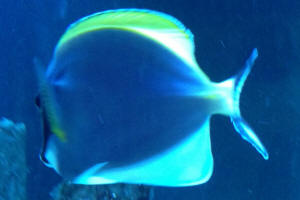
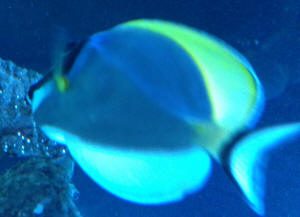
Powder Blue Success 9/10/16
Acanthurus leucosternon, stkg.
3/14/12 puffer... actually Powder Blue Tang reading 9/6/08 Hi I have a 90 gallon saltwater tank with a 20 gallon sump and 170 pounds of live rock. I have a protein skimmer too. The livestock is 1 coral beauty angel, I blue hippo tang, I yellow tang, 1 powder blue tang(new) <Oh> I six lined wrasse, 2 false percula clowns, I 4 stripe damsel, 1 purple fire goby, 1 fire goby, 1 bullet goby, 1 blue mandarin, and 1 one inch Hawaiian blue puffer. The only fish I would like <Stop!> to add are 1 copper banded butterfly , and if I can a valentini puffer. Could I add a one inch valentini puffer with my other puffer. Will they get along if they grow up together. Also will my powder blue tang, hippo tang, and yellow tang get along. <Mmm, not likely... the A. leucosternon won't likely live here period. Read: http://wetwebmedia.com/powdbluetg.htm and the linked files above> The hippo was first added and is about 3 inches. Then I added a 2 and a half inch yellow tang a few months later. Then I added my powder blue tang today. Will they get along. Should they. At first it ignored my hippo tang and chased my yellow tang. Then the yellow tang and the powder tang went their own ways and are fine and then he did the same with the hippo tang. Should they eventually get along. Thanks <Keep reading. Bob Fenner> Re: puffer... still not reading... re PBT... -- 09/07/08 So the powder blue and the yellow tang are great buddies they even sleep in the same territory and the hippo occasionally gets chased but not bitten and the chase doesn't even last 3 seconds. And will the puffers get along they are both one inch babies one of my better LFS said that they will be fine cause they are growing up together. is this true. The powder blue tang was at the store for 2 weeks and ate like a pig he is 4 inches long. Will he be ok with the hippo in the ling run . now they are fine. <... read. This system is too small for this species... Your system is very likely infested... RMF> Powder Blue Tang... dis., sel.... -- 08/27/07 Good Mooring, I'm so glad that there is a resource for advice about marine fish, thank you! I have a powder blue tang that I moved to quarantine 7 days ago because he contracted ick. <Mmm, a mis-statement, perhaps misunderstanding... this fish did not contract such... it simply expressed what it already had/has. Further, it's not in a quarantine setting, but a treatment one... lastly a note/hope... that all fishes in the previous system are under treatment, as assuredly all and the system itself are infested> I'm treating the water with Copper safe and after 3 days all signs of ick were gone. <Uh, no... just cycling to another generation> Today the 7th day I noticed he seemed irritated, swimming back and forth fast, restless, rubbing his body on the power head. I'm concerned about copper poisoning so I did a 20% water change and added carbon to start removing the copper thinking that this might be the source of his irritation combined with his irritation of being in a 29 gallon tank. <Maybe... but...> He is only about 3 inches <Total length? Undersize from what I consider ideal to start> but has always been a very active fish. He eats Mysis and Spirulina soaked brine without a problem. <Good> In the main display there is tones of live rock and plenty of macro/micro algae for him to eat. Right now I'm concerned that his dietary requirements are not being met in quarantine. He barley <I like this as an ingredient in beer, barely> notices the macro algae that I offer and has never gotten to were he would eat the dried seaweed that I add. <Takes a while...> I feel good about this fish in general. But, because his stress level is increasing in quarantine I want to add him back to the main display in a couple of days or sooner but I know that he has not been in quarantine long enough and the main display has not gone fallow. <You'll learn...> The other inhabitants have not shown signs in a week and I removed him with in hours of his first symptoms, once I was sure it was ick and not fish slime stuck sand. I know this fish is prone to ick. <Oh yes> And because of that I know my main display will be subject to it as well. Do you feel that putting him back in the main is the wrong move at this point even though he has a better food source and lots of room to roam or worth seeing if his natural immunity will kick in and help him fight any major out breaks of ick like he other fish, I do have two cleaner wrasses and two cleaner shrimp to help out. <A possibility...> The cleaner wrasses are so used to being fed that they are not aggressive cleaners. <Good> At this point all the other fish are OK and I do not feel that they need to be taken out and treated unless one comes down ick and that really seems unlikely to me. <Only time, experience, reflection can/will tell> I just don't want to make the wrong move <Too late> and I'm finding that I'm a little nervous with him because of the history with powder blue tangs. I guess my main concern is that even though he eats the food that I'm giving him I'm noticing some weight loss and he is not able to graze and that is such a major thing with this fish. Thank you, Mark <Up to you to make the general "trunk" choice of returning the PBT... I do hope that this is the last fish to be added... that in future stocking you'll take the time to read, do prophylactic dips/baths at least, quarantine incoming fishes... Good luck here. Bob Fenner> Yes another PBT question about the FAQs 9/19/06 Dear Bob & Crew, <Adlai> After about 15 months managing my current reef system, I plan on getting a PBT (Powder Blue Tang). I have read the FAQs thoroughly and before I make this leap to purchase this very difficult and ICH prone fish I have some questions about the information I have read in the FAQs and on the site ( plus I have Bob's book) . First of all I plan to do a FW dip w/ Methylene Blue upon arrival of the PBT, followed by a QT period of 6 weeks. I plan to use Seachem's Paraguard for the first two weeks and then hypo the remaining 4 weeks as a preventative measures. I am paying extra for the fish because the source is well regarded among hobbyists i.e. Live Aquaria.com (plus they have a 2 week guarantee). I have never had Ich in my system (thanks to the crew!) <And you!> and hope by doing the above I will not be introducing it into my tank. I understand about the life cycle of the Ich parasite but I am confused about some of the reported results I have read in the FAQs about hobbyists who dipped and QT'd a PBT but still got ich almost immediately. <Yes> Assuming the QT and dip were performed correctly and the tank or its inhabitants did not have the parasite how is this possible?. <Mmm, possibly deeply embedded parasites... maybe a fault in the dipping protocol> I understand that there are no guarantees but I thought these preventative measures practically eliminated the possibility. Can a perfectly healthy fish in an ich free environment still get ich? <Mmm, nope. There are SPF (specific pathogen free) facilities... have seen, been in them... that have no Crypt...> This would mean that ICH is always somehow present in the tank and factors cause it to be appear. According to the information in Bob's book and the site this should not be the case. I am banking that good selection and good preventative measures will eliminate the potential Ich challenge. <And a note to non-and European marine aquarists... we don't have the immuno agents that are sold/available out of Germany here in the States... yet> Secondly I plan on upgrading my tank to 120 gal - 4ft X 2ft - is this big enough for the PBT- the WWM site advises 100 gal plus but some answers seem to focus on a 6ft long tank? <Mo' bigger, mo' bettah> I will have the following fish in the tank with about 40X turnover, skimmer, sump and refugium 1 coral beauty 2 Ocellaris Clown fish 1 Six Line Wrasse 1 Royal Gamma 1 Longnose Hawkfish and possibly a Yellow Watchman Goby. Is my bioload to heavy? <Mmm, no... a good mix as well> FYI All fish will go through a similar QT period Thanks again for all that you do for the hobby. <And you for sharing. Bob Fenner> Schooling PB Tangs 8/25/06 Bob, <Scott> Re - this statement - "On the issue of how many, one is the magic number for all but the more huge (thousands of gallons) systems." My client has a strong affinity for the Powder Blue over all other tangs. Would his 1300g (8x8x30) <Neat... but man oh man... not easy to work in!> be large enough to keep a small school in your opinion? <Mmm, yes> And if so, how many would you keep? <Three> It's a very, very decked out system and will be peaceful and understocked (by normal aquarium standards). They would be the fish showpiece of the aquarium, next to only a Naso Tang. Scott <Could try five, but I'd go with three... that are super-clean... at least thoroughly dipped/bathed... Am sure you know the route. Bob Fenner> Powder Blues 6/5/06 Hi Mr. Fenner, Once I talked to you when you were here in Dallas-TX about how difficult it is to keep an Acanthurus leucosternon and I don't remember what you told me about the two ranges of Powder Blues and which one is hardier, you told me about the ones from Maldives and I cannot remember where the other one is collected from. <Likely more closely to the western Pacific> Another question is when you say that they do better in more mature tanks you mean a tank that has not been disturbed for a longer period of time? <Actually ones that have been set up longer> I am asking you this because I have had a reef tank for over 3 years now but I have not been successful with any of the powder blues I bought (4 so far)!!! But every year I upgrade to a larger tank, so I don't know if when I transfer my tank to another if the maturity of the tanks is lost, as I notice a bloom of diatoms! Could you help me? I would love to keep a powder blue in my tank!!! Which range is hardier Maldives or the other one? Thank you, Val Valenca. <The Maldives are excellent, as are the Andaman Sea area, other places further into the Indian Ocean... though these are hard to access/get here in the U.S. Have you read here: http://wetwebmedia.com/powdbluetg.htm and the linked files above? Bob Fenner> Unsuitability of powder blue tang Dear WWM, <Frank> I would like to reiterate to all readers that they should fully research all potential purchases through WWM or other reliable sources!! I bought a small (mistake), thin (bigger mistake) but beautiful Powder Blue Surgeonfish from my local fish store on impulse as it was such a striking specimen. Upon returning home I decided to do some post- purchase research and found out that the tang was not suitable for my setup or in truth not really suitable for any modest home aquarium. The upshot of this story is the tang seemed in perfect health for a week, but would ONLY eat brine shrimp no matter what other more suitable foods were offered. He never the less appeared happy and hungry until the eighth day, when he suddenly (and I mean suddenly) got covered with what appeared to be visible signs of ich, over the space of two to three hours, and was dead within 12 hours. I must stress that many publications advise against taking this fish from its natural habitat including articles by Mr. Fenner and I am left in the situation where I wish I had researched and heeded the advice given by said articles!!!! Thanks for all the help you give when I read advice before making stupid purchases. Yours, Frank from Glasgow <Thank you for relating your experience. You have likely saved many others several specimens of this and many other organisms. Bob Fenner> Powder Blue Tang - They Said WHAT??? If I had the Maroon Clown, Flame Angel, Longnose Hawkfish, Longspine urchin, and a Chocolate chip starfish, you think I could add a Powder Blue Tang with them or are they not so hardy because in the Pet Solutions Catalog it says that the Powder Blue Tang is hardy. <Pet Solutions are skirting right on the edge of false advertising. The fish itself, with a minimum of a 120 gallon tank (my opinion) is hardy with proper care from an experienced and knowledgeable aquarist. They are one of the best ich magnets to start with, and the average aquarist with the 55 to 70 gallon tanks will more than likely not have the fish around much more than a month. Please read this link, then make your decision. As far as the tankmates you have, all should get along. James (Salty Dog)> http://www.wetwebmedia.com/powdbluetg.htm. James (Salty Dog)> Powder blue tangs Mr. Fenner, I have been involved in a lively debate regarding the suitability of powder blue tangs for the home aquarium. I don't remember where I read the statistic, but it seems to me that I read that upwards of 90% of these fish do not survive over 3 months from time of capture. <That is my opinion, relating actually of historical survivability of this species (Acanthurus leucosternon)> Do you believe the mortality of powder blue tangs (Acanthurus leucosternon) is truly this high? What is your opinion of keeping this fish? <Please see my "rundown" on this species, genus, family.... posted on our site: www.WetWebMedia.com> Thanks for your advice. Brian Daniell <You're welcome my friend. Be chatting, Bob Fenner> PB tangs Hi Bob, Quick question, bit of a yes / no type thing really. I would like to get a powder blue tang. I realize success with this species is largely dependent on getting a good specimen. As you might recall, I get all my live stock via TMC, so a good specimen is practically guaranteed. <Agreed> Do you think this species would be suitable for my system? Tank : 84" x 18" x 20" high (hope to upgrade to 8x2x2 next June, 2001) Stock: Emperor angel 5" Queen angel 5" Yellow tang 3" Regal tang 4.5" Clown trigger 2.5" Future possible additions would be either a flame angel OR a Miniatus grouper ........ but that will not be for at least another year. The powder blue is planned in the near future ..... next month or so. I have also read both your article on wet web media, and the surgeon fish chapter in the 'Conscientious marine ..... '. I know you do not recommend the PB tang, due to poor survivability, but hope to avoid this problem by getting one from a TMC source, which I presume are all handled well. Please correct me if I am wrong. Thanks for reading, regards Matt (Co Cork, Ireland) <Thanks for the thoughtful write-up and pre-preparation... Still am a "negative" in general on Acanthurus leucosternon, but if anyone I know can have success with this species it's you... Do quarantine, freshwater dip/bath the specimen for a couple of weeks... ahead of placing it, mainly to avoid parasite introduction. Bob Fenner> Acanthurus leucosternon survivability elsewhere, travel, life Hi Bob Very interesting comment on poor survivability on A. leucosternon here in the UK and one that surprises me. Certainly our experience with them is excellent although I would agree that survivability would be reduced from the extended supply chains that supply this fish out of say Indonesia and to some extent even Sri Lanka. With short supply chain lines where the Leucosternon are not stored in antibiotics but are shipped fresh (similar to yellow tangs style from Hawaii which I'm sure you can relate to!!) then survivability is high and I feel then that this is a very strong species. <Yes... certainly a/the largest factor to my mind, experience> Bob, do you think that exposure to antibiotics for a long period of time before the fishes arrive in UK/USA is not the main reason for bacteria being destroyed in the gut of the fishes?? <One of a few... the mere acts of capture, holding, lack of feeding/other natural behavior, absence of biological cleaners... all add to "stress"... I really like the model proposed by Stan Sniezsko and lifted by me for the pet-fish fields of "The Three Sets of Factors that determine Livestock Health"... please see the version posted on the WWM site (www.WetWebMedia.com)... of three interlocking/acting circles of considerations: Initial state (genetic and developmental), Suitability of the Env. (a huge set of ideas), and Presence/Pathogenicity of disease causing organisms... all three play out together dynamically in our daily lives as well as fish tanks...> It's an interesting subject and one I guess we could rattle on for ages about. <Indeed... perhaps we shall> I hope all is good on your side. Are you heading off on any trips soon?? When are you coming our way?? <Yes... to Betty Ford run with drunken HHH (hashers) friends next weekend, then to Monterey here in California for the Western Marine Conference and a week dive/photography trip in Cabo San Lucas, Mexico next month, out to Pittsburgh to give a couple of talks then Bali/Lombok/Gilis to SG to ? (thus far) for a week ahead and after the Aquarama show... and elsewhere for the rest of year... to Bahamas for the Oct. "booze cruise" diving/pix making with friends, a talk at the MACNA due in August in Baltimore... maybe to England with friend Peter (who's from York originally to visit with friends at TMC..., take pix about), and wife Diana has some very reasonable vouchers (about a hundred US) to go to Munchen or Frankfurt for "a long wknd"... so maybe enroute sometime then... How 'bout you? Any fab plans for travel? Do know of some openings on a liveaboard to Malaysia 7/31-8/11 if you're interested... and will be getting out to Maui and the Big Island of HI a couple times more this year for about a week at a time... No real time commitments for the most part, so just always looking for, dreaming and scheming about trips, inexpensive fares... and have plenty of film, batteries at the ready.> Take care. Best for now, Derek. <Will you be attending Aquarama? Any interest in dive/adventure travel with us? Bob Fenner> Powder blue tang When I first started with my 125 gallon tank, I was bent on getting the powder blue tang (A. leucosternon). Over the course of three years, I tried this fish three times. Each time it failed. This is the fish that took me from the freshwater side of this hobby to the marine. Although I doubt I can get one in my 125, since I plan on getting a Sohal tang (they wouldn't get along...would they?) I would like to know your opinion on the proper selection and husbandry of this fish. Each time I got this fish, it died of Cryptocaryon and took the rest of my tank with it. I am reminded of a line in your book where you are speaking about the regal angelfish, you say "Watching one die in your aquarium is not a pleasant experience." Is there anyway I can keep this fish? Would he do ok in the fifty five set up I asked you about ( Eheim filter for a 75 gallon tank, protein skimmer, live rock) What does this fish need water parameter wise? How can you prevent ich? I read in an old edition of FAMA that there are ich medications that use hot pepper as a base, do these work? Are they safe? >> Your keen interest and intelligent, passionate interest in the hobby are obvious... There are institutions that have kept the Powder Blue Surgeonfish for decades... so it is indeed possible. One needs to start with a very healthy, minimally damaged specimen (unless you have truly huge systems, they are best kept singly)... and cause it to be as "specific pathogen free" as possible... in practical terms, freshwater dipping and quarantining the animal for a minimum of two weeks... at low specific gravity (1.016) and higher (84F.) temperature... with vigorous aeration (Tangs are heavy breathers requiring close to saturation in dissolved oxygen)... And then the fish needs to be placed in a system that has not experienced an ich or velvet infestation... with peaceable tankmates, in a tank that has been well-established, has macro and micro algae to graze... I would not place a Sohal with an A. leucosternon... the former is too "alpha" for the latter. Bob Fenner >> Powder blue tang First, I want to thank you for answering my questions so thoroughly. I really appreciate the information you gave me about this beautiful, and unfortunately difficult fish. However, as you probably already know, I don't give up that easy. It seems odd to me that the powder blue, which looks and behaves so similarly to other Acanthurus tangs, like A. japonicus. ( my observations are based in a huge FO tank at the NY Aquarium, where this and many other Acanthurus, Zebrasoma and Paracanthurus tangs are kept as well as angels, damsels, hawkfish, butterflyfish, etc). It also seems to come from the same areas as other indo-pacific tangs, once again, like A. japonicus. I was wondering then, if collection made a difference, perhaps the powder blues from the red sea are hardy? I have read books on Hawaii's fishes and they don't seem to live their. However, perhaps this line of questioning is kinda dumb since A. Achilles comes from Hawaii and its not hardy according to you and most books/ my pet store. Any insight would be greatly appreciated. With thanks, Yaron Aronowicz >> >> Have never seen the Powder Blue shipped out of or in the Red Sea... Though it is found in the upper Indian Ocean... Who can say why some species are so touchy? Some, like the Achilles are "soft-bodied" and I think their massive mortalities might well be largely due to handling... For the Powder Blue, definitely receiving a healthy specimen, as fresh from the wild as possible... and treating it through acclimation and quarantine to ensure it is specific pathogen free... and placing it in an idealized, high and stable water quality system OF SIZE is important... As you have observed, yes the leucosternon tang can be/is kept for long and in good shape in Public Aquariums. Bob Fenner You've been misquoted! Hello guys... specifically Bob. Are you in any way affiliated with marine depot live? <The owner, Ken Wong, his girlfriend/fiancé Amy and others there (esp. Alvin) are friends, associates in the trade> The reason I ask is that several of their fish descriptions are copied literally word for word from the pages of your website. Many of the photographs are the same as well. Of particular concern to me is the fact that they have misquoted your description of the powder blue tang. Below is your description of the fish, and in caps is the part they chose to include on their site: ACANTHURUS LEUCOSTERNON (BENNETT 1833), THE POWDER BLUE TANG; besides being notorious carriers of parasitic diseases, most specimens don't even make it through the capture and shipping stages. But'¬¦some of you are screaming, "this isn't a difficult fish! "¦I'VE KNOWN PEOPLE TO KEEP THE POWDER BLUE FOR YEARS! THOSE HEALTHY FEW THAT ARE WELL RECEIVED AND CARED FOR - WITH LOTS OF LIVE ROCK AND ALGAE IN LARGE, WELL-ESTABLISHED REEFS - DO occasionally LIVE FOR EXTENDED PERIODS." Needless to say, the omission of the first section, along with their cleverly leaving out the word "occasionally," completely changes the meaning of your words. You would think if they were going to lie about the ease of caring for this fish, they could at least write it themselves and not take your words and mess them up. Also, you are not cited anywhere on the site that I could see, so I guess they are guilty of plagiarism as well (is that spelled right?) In conclusion... sue the pants off these guys. They must be loaded, right? Well, maybe I'm going a bit far, but it upset me to see them repeatedly copying you word for word and in this one instance (and maybe others) completely altering the context and meaning of your advice. You've been a big help to me and my tank in the past, and I thank you all. keep up the good work! -Mario <The company did buy a bunch of images from us for internet use, but not our "spiels"... will bring this to Ken's attention. Thank you for the head's up. Bob Fenner> Powder Blue Tang <Hello, Ryan with you today> I just purchased a PB Tang from my LFS and he looks to be real healthy. <Hi, these questions are posted online for everyone to refer to for help- Abbreviations such as PB for Powder Blue should be avoided. Thanks> I slowly acclimated him into my tank (Yellow tang, Fox Face Lo, a Zebra Moray Eel, and some corals). I have read so many different things on this fish that I am beyond confused about caring for him. Some web sites say that they are impossible to keep and others say they are ok to keep, some say feed this for best results and others say different. So I figured that I would shoot you guys an e-mail because I really trust what you say. Can you tell me how to have the best results with my PB Tang? I really want him to be a success. Is Nori with Garlic and Vitamin C, flake, citrus fruits, and live rock grazing enough? <May want to try some "Sea Veggies" for a variety of macro-algae.> I am buying today a lot of extra live rock just for him because I read that you need a lot for this fish (I have some but will have a lot after today). <Yes, but it will take some time for algae to colonize the rocks- This preferably would be done prior to purchase.> The person at the LFS said that he will eat Mysis and Krill, should this be part of his daily diet as well? <He'll eat the meats you offer other fish, he doesn't need it specifically.> Any advise on this fish to help him thrive would be greatly accepted. <This species is highly susceptible to infectious disease. I encourage you to quarantine all new arrivals. The more variety of greenery you can offer him, the better his health will be. Be advised that this fish truly needs 300+ gallons to be in full health and personality. Good luck, Ryan> Thank you, JB Got the Powder Blues As I
love marine life, I am going to try and do as much research as possible
before I make a big decision in my little biotope. I just purchased the
nicest looking specimen of Z. desjardinii, about 2" long, a few
days ago. He's doing splendid on the Ulva and other assorted
macroalgae I've been growing in my refugium just for him. I have
read that Z. desjardinii is one of the most docile members of a very
aggressive family of fish. My question is this, I also really think
Acanthurus leucosternon is a beautiful specimen as well. Since the Z.
desjardinii will be introduced into the system first, and will have
more than ample time to adapt, would it be possible to add the
Acanthurus sp. with a chance of coexistence? The tank is a 180G reef.
Thanks in advance. ***Hey Brandon, Z. desjardinii is one of the largest
Zebrasoma species. While hardy, and a great fish for larger tanks, I
wouldn't mix it with any other tangs in a tank that size. 180
gallons sounds like a lot, but it's still only 6' of real
estate. These tangs can get rather territorial. About the powder blue.
Stay away from them. They are an extremely delicate species, and
shouldn't be collected/imported. Most don't make it through
collection and importation to begin with. Those few that do mostly die
in the wholesalers and stores. Of the very few that are left, most die
in hobbyist's tanks. Although there are success stories here and
there, those are the exception and should not be used as a barometer to
gauge the hardiness of this species. It's a large, active, surge
dwelling species with a huge territory in the wild. It doesn't
adapt to being kept in a glass box. It's one of those fish that
should be left in the ocean, the few that acclimate and live do not
justify the further collection of this fish. Regards
|
|

|
Features: |
|
| Featured Sponsors: |