|
|
| Home | Marine Aquariums |
Freshwater Aquariums |
Planted Aquariums |
Brackish Systems |
Ponds,
lakes & fountains |
Turtles & Amphibians |
Aquatic Business |
Aquatic Science |
Ask the WWM Crew a Question |
| Please visit our Sponsors | ||||
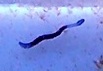
Hitchhiking worm. Commensal?
8/18/10 Spiraling worm attack: Over and inappropriately stocked
tank, blind and inappropriate use of a (non) medication.
7/18/2010
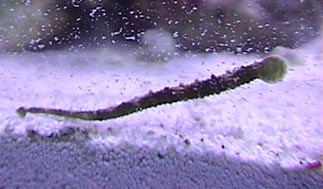
Not So Friendly Ribbon Worm 11/22/09
Worm ID 8/3/08 Let me start off by thanking you for all of the information (especially your honesty about the aquatics industry, I haven't had a wink of sleep, but I can't say you didn't warn me in your FAQ's). My husband and I have recently purchased a LFS (not so aptly named "The Jungle"). <Congrats!> One of my customers, and I, have discovered new worms in our tank within the last few weeks. I'm sure I should know this, but I've only been a saltwater hobbyist for a few years with no "official" education. Anyways, both of our worms have the same characteristics with the same natural habitat. Neither of us can identify these worms, Mine is solid white and creeps out of a small hole in my live rock and my customer's is black with a white crown. The worms are not exiting their homes in the live rock, but simply slowly and fluidly pulling out for inspection of surroundings. No livestock seems to even be remotely interested in the newly found habitants. The worms are probably only 3mm in diameter and they have not made themselves visible until the tanks were due for their bi-monthly water change this weekend. They do not look like bristleworms, but rather more like freshwater tapeworms. <Mmm, not these... are all internal parasites...> P.S. We have owned our LFS for 5 weeks and already sold three copies of "The Conscientious Marine Aquarist." <Call my yacht broker!> I have been reading your website for years and just with that I have made it through a fraction of your knowledge. Thank you for everything! Krystal Wessel's The Jungle <Again, welcome to the trade. Do know that there are thousands of such worm species... the vast majority of which are much more beneficial than potentially deleterious... If anything, I might address the conditions that are allowing this population... vacuuming gravel, cleaning other filter media, cutting back on feeding... But, not to worry... am VERY sure you have much else to take up your time! Bob Fenner> Amphipod/Shrimp Question... and Rock mining worm?? 6/20/08 Thank you guys for hosting a great site! Most of my questions and concerns have been addressed by browsing your QA's, but, alas, I still have more questions! <Fire away.> Background: 29 Gallon, 4 weeks old, 35# LR (UBER LIVE at that).. dual powerhead, emperor 280 bio-wheel mechanical filtration, protein skimmer on order, installing in 3 days. Ammonia, Nitrite, Copper and Phosphorous are at lowest range for my test-kit, near zero. Calcium 460ish (high). Ph is 8.0, target 8.2. KH is at 10. Temp is (cringe) 81-82 but a temperature solution is in sight. <Temp is fine as long as it is stable.> Living things I selected to put into tank: 2 young (1" ish) captive-bred Ocellaris. 10 Nassarius snails, 8 turbo snails and 1 small rock with 8 purple Mushroom corals. <Ok> Living things that came with the rock: Aiptasia Anemones (treating with a calcium paste stuff directly applied, made by Blue Vet); tiny starfish (Probably Asterina, not out of control), tiny (supposed) brittle stars hiding in rocks acting like filter feeders (their leg shape is too distinct to be anything else I've seen, also seems to fit with behavior); <Micro stars are very common and harmless.> HUNDREDS of various feather dusters (up to 3/4" while out), spaghetti worms and other types of "happy" filter feeders; 4 brown w/green center Zoanthid-polyps; 2 (or more) small red and purple (bi-color?) bristle worms, 1 mystery white-tipped polyp (waiting to see how it grows) and the two critters I am concerned about... I only wish I had a camera to photo these items, but... Concern 1: possible shrimp or amphipod. it was seen in the light, moving like a bouncy flea along the sand. It is approx 3/16" long and banded in a red/white pattern like a red banded millipede, but with white instead of black. It remained curled up while bouncing. No noticeable larger front appendages, but, that isn't saying much with the size of this critter. Before I scared it off under a rock by looking at it, I sat and watched it dig in the sand like a dog in a cartoon digs in the yard for a bone; it never burrowed, just sifted and inspected. I don't know what this critter is, and if it is potentially a pistol or mantis shrimp... it looks like a very opaque amphipod... kinda. I R BRINY NOOB. Any information you have would be great. <Sounds like an Amphipod of some sort, I would not worry about it unless you see it doing something harmful, and I doubt you will.> Concern 2: thing, maybe worm. Black, tube shaped, lives in hole, doesn't come out. (now, with IQ) The hole is shaped like a miniature Hot Tamale Candy, or an elongated circle, and is approx 3/32" wide, and perhaps 3/8" long. The sides are unusually parallel. Inside this hole, *appears* to be a living, black, "single-tube coffee stirrer"... it will retract slightly when we use the turkey baster to disturb the algae (our first bloom, don't want it to settle)... but, the STRANGE part is... it seems to be mining out the rock. <Many creatures will borrow into rock to make their own home.> The best way to put it is that the barely visible part of this animal is a conveyor belt. every second or so (irregular timing) a tiny grain of sand will come down the top-outer side of this coffee-stirrer-worm-thing (not from inside the tube, instead it is magically balanced on top) and drop off onto my brown zoos. It has never come out of the hole in the slightest, it reminds me of a discovery channel show on how they bore tunnels now, with the conveyor of rocks coming out and dropping off. the diameter of the tube opening doesn't seem to be an irregular circle, it seems to be VERY circular. My first guess was Peanut worm, but, that just didn't fit, this is hollow. <Interesting, my first guess would also be a Sipunculids/peanut worm.> There is another hole in this same rock the SAME shape and dimensions... with sand coming out 1 grain at a time, just no visible "coffee stirrer" in it. <I'm guessing its the same thing, just deeper borrowed.> I almost wonder if this *thing* is the last survivor from Roswell, NM. <Get some tinfoil hats ready! Might want to try to contact Dr. Ron Shimek over at the Marine Depot forums, IDing these types of creatures is one of his specialties.> While I have someone with knowledge reading, I'll go ahead and ask if you think my tank has space for 1 royal Gramma, <Yes> 1-3 shrimp (cleaner, maybe a peppermint for Aiptasia) <Sure> 2 green "clown/gumdrop" gobies, <Be aware that these are very difficult to feed often, mostly eating Acropora coral in the wild.> and months later a Flame Angelfish as the main show fish. <The tank is too small for this fish unfortunately.> Any suggestions you might have for these two mystery critters would be great. -A. Beretta <Chris> Spag. worm control 4/26/08 Hi Robert, would you mind if I combined this email with another question I had? I've been asking everyone and nobody seems to know. Do you think you could help? I need something that is reef-safe and will consume spaghetti worms. I know they are beneficial, but my tank has become oversaturated with them and I'm starting to think that they are irritating the hell out of my softies. I know that CBS and Arrow crabs will eat Bristleworms, but will they go after Spaghetti worms as well? <Should, yes> I've seen Red Scooter Blennies go after bloodworms, would they go after the Spaghetti worms? (Same size/shape) Any help would be appreciated. Vince <I'd go the suitable crustacean route here myself. BobF> White worms? SW, comp. 2/14/08 Hello, hope all is well with the wet web crew, happy belated new year! I need some help to ID some worm like critters who recently took over my sand bed and are now on my rock. I did take the time to review your worm ID sections, but the only thing close was a pic of your spaghetti worms showing thin white strips, almost hair like, spread out across the live rock, but this is not what I have. <There are thousands of worm species... several phyla... mostly microscopic> Tank background information: I have is a 10 gal mini reef with Aqua Remora hang on Protein Skimmer, mechanical filtration, live sand bed (which I supplement with a few pounds a couple times a year), lots of live rock and good water quality. I am just starting my third year with the same tank. I have the basics, xenia, polyps, hammers, leathers, one clown fish, one yellow watchman goby and one emerald crab (the first and only emerald I ever put in the tank). <... all this in a ten gallon?> I faithfully conducted 25 percent water changes weekly using RO water for LFS. Because of this site's advice, I have had very few problems (seriously, thanks a lot!). From what I have read, it is possible that what I have is harmless, may have came in the form of larvae (seeded my tank with live sand activator GARF once) and it does appear to feed like a worm. They are relatively new, last six months or so, but are now "taking over my sand bed," living in the rock and in between the polyps, etc. The must have a cement gland because they use the sand to build an anchor like cavity and they can actually throw themselves on the live rock by hurling their bodies to swing the sand-made anchors into crevices on the rock (it's actually pretty cool to watch them crawl p the rock in this fashion. You can easily brush them right off except when they get into a nook and cranny that can't be reached unless you use tweezers. In the sand bed, along side of the rocks they build like a chimney pipe. <Fancy term, they're tubiculous... tube-building/living... still thousands of possibilities, a few phyla> I do not have a camera and can't draw to save my life. This description is all I have. I am concerned about the volume of them and the possibility of a nutrient problem, but everything checks out water quality wise (nitrate, nitrite, calcium levels, water hardness, PH, etc.). I will soon be going to a larger tank in the spring and don't want them to follow because they are turning the top layer of sand into course like clumps and this can't be good for the live sand bed. I am hoping for an ID and a natural way of eradication (other then the tedious act of picking all them off each, which some will inevitably be missed). Please help me if you can, thanks from Long Island, NY. <I don't think these worms are a problem, nor will be. If it were me, mine, I'd leave them be, continue the maintenance you've been doing. Bob Fenner> Huge Peanut Worm and Bristleworm - 1/23/08 Hi
Crew, <Hi Jeff> Getting back in the hobby after a 3 or 4 year
hiatus (after moving from KC to ATL). <Wonderful! I see in your
follow-up mail that it's a 28g nanocube -- neat!> I have 30 lbs
of live rock and a small CUC. Last night I noticed what I think is a
HUGE peanut (Sipunculid) worm. He was coming out of one rock and going
into another. When I shined a light on it, it retracted into the lower
rock. I could see the 'fuzzy' head and it is tan in color with
black bands, so I am pretty sure it is a peanut worm. <Does sound
like it, except for the part about it coming out of one rock and going
into another. They're usually fairly stationary. Did it come
completely out, or was it just reaching out/exploring? Maybe he was
looking for a new home, perhaps something with a nice view [grin].>
However, this thing is thicker than a pencil when stretched about 4
inches from one rock to another. Do these guys really get that big?
<Yes, they do. Supposedly, they can get up to around 6' in
length, but most we see in aquariums are much smaller. Thankfully,
they're all harmless detritivores.> I read somewhere that in
tanks that are fed sparingly they can starve to death. <Sadly,
yes.> With this guy being so big I am worried about the water
pollution that could result from his death. Should I try removing him?
<I understand your concerns, but I wouldn't. Chances are, you
wouldn't get him out in one piece. Plus, you'd have one heck of
a time just trying to grab hold of him. They're very quick! I'd
keep an eye on the situation. If you notice your hermits gathering at
the 'front door' of the Sipunculid's "home",
I'd take the rock out and try to flush out any remains. You can use
something like a turkey baster and saltwater. Until/unless that
happens, I'd continue to enjoy him.> I also have a very active
fireworm (grayish pink with setae on its sides). As far as I can tell
he is about 5 inches long. So far, he has not bothered any of the 8
snails or 2 scarlet hermits I have. <Have seen some this size+ in my
tanks, and although I'll admit they do give me a slight case of the
'willies', they've never been a problem. Just depends on
which type you have.> Is there any way to definitively tell if this
guy is friend or foe? <Yep, if he eats your corals, he's foe!
Sorry, couldn't resist! There are two commonly discussed
hitchhiking Amphinomid/bristleworms: the notorious coral/gorgonian
eating Hermodice canunculata (aka the 'Bearded Fireworm'), and
the scavenging/beneficial Eurythoe complanata (common bristleworm). The
less common Hermodice canunculata usually has bright red/pinkish areas
(gills) at the base of the setae ('bristles'), while the more
common Eurythoe complanata does not (all white). Also, the
'bristles' appear more compact/densely arranged in Hermodice
spp. compared to Eurythoe. It's a distinctly different look that
stands out once you know what to look for. There are also some
differences regarding their heads (caruncles), but you'd have to
get in close to see them. Both, however, can sting the living daylights
out of you, so be sure not to touch them with your bare hands! Getting
back to the friend or foe issue, if you've got a common bristleworm
(Eurythoe sp.), no problem. They're mostly harmless/welcome
additions that add to the diversity in a reef tank. Unlike most crabs
that I consider guilty until proven innocent, these worms should be
considered innocent until proven guilty. They're often wrongfully
blamed for killing fish, snails, shrimp, etc., when in reality
they're scavengers/detritivores that are not equipped for
grasping/killing healthy livestock. For example, they don't have
the eversible grasping jaws that a predatory Eunicid has. Bristleworms
don't have jaws at all. What they do have is a sort of rasping
device that essentially 'licks' the food into the worm's
mouth. These worms sniff out the dead, or dying, and help keep our
tanks clean. If that Sipunculid dies, a bristleworm will be one of the
first at the 'dinner table'! One thing of note that I've
come across regarding Amphinomid/bristleworms is a general rule of
thumb stating that if the worm is larger than the diameter of a pencil,
that you should consider trapping/removing it. Personally, if it's
not doing any damage, I'd leave it. On the other hand, if what you
have is definitely a fireworm, Hermodice canunculata, I'd recommend
removing it. If you see it out and about, simply use some tongs and
carefully lift it out. Otherwise, you can use a commercially available
trap or homemade version. There's a wealth of information on this
at WWM and on the internet. Please see these links for photos and more
information regarding worm diversity:
http://www.wetwebmedia.com/polychaetes.htm
http://www.reefkeeping.com/issues/2003-04/rs/index.php
& http://home2.pacific.net.ph/~sweetyummy42/hitchworms.html > Thanks in
advance for your help, Jeff <You're very welcome! Take care
-Lynn>
Spaghetti worms - marine 1/14/04 I've looked and looked and looked and can't really seem to find the answer to this questions, so could you PLEASE HELP??? Are spaghetti worms something to worry about in a salt water aquarium tank? <they are very helpful... detritivores. I'm not sure where exactly you were looking... but a simple keyword search on Google or another large search engine turns up hundreds of references to these desirable denizens of marine substrates> I've just discovered some coming out of the live rock. Let me know if they need to be fished out or are actually a good critter to have in there. THANKS! Jen <they are as good as gold if you could breed and sell them. Keepers. Anthony>
Nuisance worms in reef tank 12/16/04 I have several reef systems in my house. The are all doing well but I have one common problem...I have an infestation of small white worms. They remind me of white hair, there doesn't seem to be any segmentation, just thin and white. At first I thought they were dog hairs, but I don't have any white dogs. They don't seem to be harming anything, but they are ugly in the tank. It's as if someone dumped hair in my tanks, except they're alive! <they exist only because there is a food source... if you limit the nutrients, you will limit them my friend. I promise you that if you add a large powerhead or two to the tank for improved water circulation and increases your water changes (10-20% weekly ideally), then they will reduce in mere weeks. Making your skimmer yields several cups of dark skimmate weekly by fine tuning with help this occur even faster> I've tried hermit crabs, Sixline and Fourline wrasses, Fridman's and Neon Dottybacks. Nothing seems to stem the tide of these white worms. <you are treating the symptom (worms) and not the problem (nutrients) my friend. I suspect they exist because of weak water changes, poor protein skimming, less than 20X water flow in your tank and perhaps some overfeeding or overstocking> Do you know what they might be, any pictures so I can verify if we are talking about the same thing, and what can I do to get rid of them or at least decrease the population? Thanks and Happy Holidays! Bobby Williamson <many possibilities... do check out the writings of Dr. Ron Shimek at ReefCentral, reefkeeping and advancedaquarist.com websites. A keyword Google search of his name will help. Anthony> Worms everywhere in TX I work for an aquarium maintenance company, and I have a client who has the weirdest things swimming around in his tank. The rundown on the tank is a 55 with two large parrots (4") three large clown loaches (5") and a large angelfish. It is filtered with a Aquaclear 300 and a twin canister Rainbow filter. The Rainbow also powers a reverse flow U/G plate that covers more than half the bottom of the tank. Water changes are 50% every three weeks. Full gravel vacuum, and clean beneath the U/G. These guys really make a mess! Recently I have noticed white worms, which must be living under the gravel because they only come out after I have disturbed the bottom. They are about 1/4 to 1/2 inch long, and can swim and crawl up the glass of the tank. <The worms are non-parasitic, but they are a sure sign of overfeeding. I know how maintenance customers can be, I own an aquarium maintenance company. See if they cannot cut back on the feeding somewhat. With that and your water changes schedule, you should be able to get the population under control.> I've tried treating with Clout, as the directions stated. It didn't do anything to them. They didn't do much either. Any suggestions? They are beginning to get into the thousands... <Clout is an awfully strong med. I use it as a last resort only. I am somewhat surprised the worms could tolerate though. Cut back of food and they will starve out. -Steven Pro>
Predatory creature ID? Hi WWM Crew, <Howdy!> Question of the, this morning after discovering one of my peppermint shrimp half eaten, cause of death yet to be determined. I noticed a lot of new creatures in my tank. they were approximately 2 to 3 mm long, white, and swam like an eel. Now the weird part. They would swim up to the glass and seem to get stuck on the glass, then a few seconds later they would start to squirm and wriggle out of a translucent film that was left on the glass and then swim away. the film that was left, seam to get washed off the glass after a few seconds by the current. any ideas? <none whatsoever... thanks for asking :p> Thanks, Barry <in all seriousness... there are many worms commonly imported with live rock and sand and few if any short of a huge bristly fireworm could have killed your shrimp. Do look for another culprit. Test water chemistry and do a water change for starters please. Anthony> Phoronids and shrimps 8/25/05 Hello <Hi there> I'm
grateful that I found your site when I started this hobby in January. I
probably would have quit but thanks to your site, I'm still around
and as excited as ever. I bought The Conscientious Marine Aquarist book
and found answers to most of the basic questions and concerns I had.
But here's a question I haven't found answers to. I have 2
Phoronid worms living in my tube anemone. Due to this fact I
haven't bought any shrimps for my tank yet as I have heard that
some shrimps might eat them. <Possible> I'd like to get at
least one shrimp for my tank but I'd like to be sure that the
Phoronids are safe. I was thinking that they might be ok as they live
so close to the tube anemone's tentacles and all the fish and
inverts avoid that area. <Oh yes...> What kind of shrimp would be
the safest bet? I've asked people on Reef Central and nobody seems
to know. Thank you in advance for your help Cole <Members of the
family Palaemonidae are your best, though not absolutely safe bet...
avoid Stenopids... Bob Fenner> |
|

|
Features: |
|
| Featured Sponsors: |