|
FAQs on Anchorworms, Lernaeid Parasites of Freshwater Fishes
Related Articles: Freshwater Diseases, FW Disease Troubleshooting, Ich/White Spot Disease, Choose Your
Weapon: Freshwater Fish Disease Treatment Options
by Neale Monks,
Related FAQs: Crustacean Parasitic Diseases, Organophosphate Use, Fish Lice (Argulus), Aquarium
Maintenance, Freshwater
Medications, Freshwater
Infectious Disease, Freshwater Fish Parasites, African Cichlid Disease 1, Cichlid Disease, Ich/White Spot Disease,
|
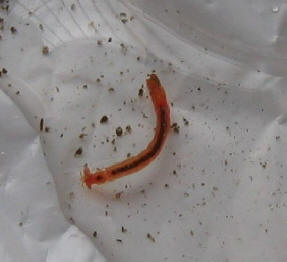
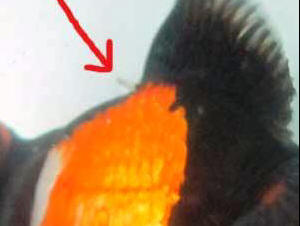
Look like an anchor, a worm? Is a crustacean parasite of fishes
|
 |
New Print and
eBook on Amazon
Goldfish Success
What it takes to keep goldfish healthy long-term
by Robert (Bob) Fenner
|
eye “thread” 8/2/19
Hello,
<Hello William,>
I have a male blue gularis killifish. He was in
quarantine for a month with no problems. I moved him to the display tank
about a week ago. I now notice what seems to be a single, small, white
mucus-like filament coming from the exact center of each eyeball.
<Yikes!>
The filaments are less than the thickness of a human hair and about 1-2
mm long. I tried to take pictures, but none captured it. My first
thought was Anchorworm, but nothing of what i have read says they can
embed in the eye.
<Indeed, but there are other crustacean parasites that certainly can.
Diplostomum (a fluke/worm rather than crustacean) is another eye
parasite, though internal, so results in a cloudy eye.>
I also thought of a Columnaris thread, but it does not look like any
Columnaris i have ever seen. The killie is otherwise happy and healthy,
feeding and playing (even though his female companion was predated by a
7” blue sheatfish in the first hour she was in the tank!!)
<Why is there are large, predatory catfish in the aquarium with these
small Killies?>
Two days ago i euthanized a praecox rainbow who has been sick for a
couple of weeks, hiding, labored breathing, and had unilateral PopEye
that was dark and cloudy.
<Pop-eye to a single eye usually indicates physical damage. If there's a
predatory catfish in there, or at least one trying to be predatory, that
could easily have alarmed the Rainbowfish, who then swam into a rock or
something else and so damaged its eye.>
Tank has been running for about 7 years, with several inhabitants still
alive from the beginning. 400gal total volume (inc sumps), stable ph
7.7, ammonia 0, nitrite 0, nitrate ~30. 70 gal water change each week.
If you have any thoughts, let me know. Thanks for the great information.
Best,
Bill
<The threads on the eye sound most like an Anchor Worm-type parasite,
i.e., an external crustacean, and my immediate suggestion would be to
treat as per Anchor Worm. Diplostomum (or "Eye fluke") is unlikely to
cause a thread to emerge from the lens, but is worth considering.
Similarly, fungal (as opposed to bacterial) infections can produce
threads, but you'd expect to see them across the fish rather than just
one specific place on each eye. Cheers, Neale.>
Re: eye “thread” 8/3/19
Thanks for getting back to me. So I should attempt to remove the thread
from the eye, like is normally done per anchor worm?
<I would not.>
That freaks me out a little, tweezing something from the eye.
<Indeed.>
Can you direct me to any reading on technique? .......
<I would use medications as per Anchor Worm; removal creates wounds that
need sterilising (e.g., with iodine) which isn't practical here.>
Also, the sheatfish do not bother anyone who is too big to eat--they
have been in there for two years. The euthanized praecox was sizable at
about 5 years old.
<Perhaps. But even if the catfish didn't kill the Rainbow, it's activity
at night could have been enough to startle said Rainbowfish into a
startled escape response -- and from this the damage to the eye. As a I
say, pop-eye on one side tends to be physical damage (both eyes tends to
be environment) so assess and act accordingly.>
My error was indeed putting the female killie in the tank, thinking she
was large enough. She was about 2". The male is over 3" and I chose this
species because of its larger size, with the male reaching 4-5 inches.
And interestingly, I have albino Ancistrus that have spawned, and I
returned 10 one-inch fry to the display tank (after selling 128 to my
LFS), and none were predated, now all over two inches. The sheatfish eat
exclusively off the substrate, which I found odd, so I was concerned for
the small Ancistrus. But there was no problem. These observations led to
my error in assuming the 2" killie would be safe. I was wrong.
<Indeed.>
PS. While the sheatfish were sold to me as Kryptopterus cryptopterus,
they most certainly are not that species; they have a pronounced nuchal
concavity. My best estimate is that they are K. parvanalis. Many thanks
for this public service that you provide.
<Interesting. Ompok app are quite commonly seen in the trade, so do look
at these too. Indeed, so many Kryptopterus and Ompok species out there,
and the two genera being difficult to separate, that I'd tend to be very
open minded about any name offered by retailers. Cheers, Neale.>
Re: eye “thread”
Got it. Many thanks.
<Most welcome. Neale.>
|
Anchor worms in a freshwater aquarium
7/29/19
Hello Crew,
I want to start by saying what a great resource your website is for everything
you need to know about keeping fish and more. I have spent hours reading through
articles and FAQs about parasites and swordtails.
<Thanks for the kind words.>
Although I did learn a bunch, I couldn't find an exact match to the odd
situation I am experiencing. I have been keeping planted aquariums for about 7
years. I have had this 25 gallon setup for a while...only 1 male guppy and 2
shrimp have been in here for quite some time. I sold my 120 gallon tank, so I
revamped my 25 gallon with some plants and driftwood from the big tank (and a
Fluval 405), and set out to buy a few fish from a local fish place that
sells its livestock out of outside concrete block *ponds*.
<Understood, and the outdoor maintenance does indeed explain the Anchor Worm
situation.>
I bought fancy guppies, crystal shrimp, long fin Bristlenose Pleco, and 3 Kohaku
swordtails (1 male, 2 females). Everyone is happy. A couple weeks later I am
staring down the male swordtail as he's munching on some Repashy, and I notice
this whitish/greenish thing dangling...so well camouflaged next to his white
anal fins ...after some research it turns out to be an anchor worm...which is
common in *ponds* and in koi...and my fish came from a pond but aren't koi...so
after a round of treating with API general cure and nothing happening (better or
worse), I realize whatever chemical would kill the crustacean parasite will also
kill my beautiful shrimp (and/or plants)...
<Correct. Anchor Worms are very difficult to treat without specific medications,
and these are, as you understand, toxic to other types of crustaceans as well,
including shrimps and crabs.>
So I caught the fish and pulled the worm, it came out easy, so I think the worm
was dead. I have been doing 50% water changes every day since (3 days) I pulled
the worm in hopes to remove any eggs/larva swimming in my system...I also
started treatment with Maracyn for 2 reasons.
<Won't do much for Anchor Worms, but yes, can be useful if infected wounds are a
risk. Antibiotics have a low level of toxicity towards fish and invertebrates,
so your main risk is making sure the filter bacteria aren't bothered. Always
worth doing a nitrite test every few days following use of antibiotics. Mostly
you'll be fine, because these antibiotics are formulated for use in aquaria, but
it's worth checking even so, especially if you see evidence of filter problems,
such as fish gasping at the surface.>
1. Because of the tiny wound the parasite left on my fish from being removed and
because 2. ever since I bought the swordtails, their gills have the slightest
red coloring...not sure if it's their normal coloring or an irritation from the
anchor worm larvae or another annoying bacteria/fungus/parasite. I also have 5
guppy fry that are getting pretty big and starting to swim among the adults. The
male swordtail is recovering nicely and his wound is barely noticeable anymore.
So after that long winded story, I guess my question really is, can or would
this parasite keep living in a tank vs. a pond?
<Anchor Worms switch between a free-living juvenile stage and a
parasitic adult stage. Provided the juveniles are not removed by the
filter, they can swim about and either infect the same fish or some other fish
in the tank. This is different to the case with many other pond parasites that
have a second host, such as a snail or fish-eating bird, that the parasite needs
to go through to infect another generation of fish. So short answer, yes, Anchor
Worms can and do reinfect fish under aquarium conditions.>
Most of the information I find online is about anchor worm in koi ponds, not
fish tanks. I am starting to hope they just won't complete their life cycle in
the aquarium setting as this seems to be quite a nasty bugger to deal with.
<Among the nastiest, and a major problem to fish farmers, let alone aquarists.
There are some highly effective medications, but you will need to remove the
shrimps while they're being used. After the full course of the treatment is
done, a series of water changes, plus the use of carbon in the filter, should
return the tank to being "shrimp friendly" but I'd suggest only putting a few
shrimp in first to see how they do.>
I am so worried I am going to come look at my tank one morning to see everyone
covered in anchor worms. What else can I do besides water changes?
<See above. The old school approach of using potassium permanganate is
deprecated nowadays because this stuff is rather toxic and difficult to use
safely. Likewise, physical removal of the adult Anchor Worms is difficult
without stressing the fish or exposing the wounds to secondary infections.
If all you had were livebearers, then making the tank brackish for a while (5-10
gram/litre; 4-6 weeks) would probably kill off all the Anchor Worms, and this
sort of approach is similar to what fish farmers do when moving trout in and out
of sea lochs to kill off skin parasites of various kinds.
But your catfish won't appreciate salty water. Generally, the safest
approach is to use specific Anchor Worm medications, but as we both understand,
these are toxic to shrimps. Cheers, Neale.>
|
|
Re: Anchor worms in a freshwater aquarium
7/30/19
Wow! Thank you so much for the prompt response Neale, that was amazing to wake
up to and so reassuring when going through stressful situations like this...
<Most amazing.>
What wasn't so amazing was finding another adult on one of my male guppies (I
hope I am not going crazy and seeing things). I caught the fish and tried to
pull it off, but all I got was the tip...much harder to pull off, so I think
this anchor worm must had still been alive.
<Agreed, and when they're alive, if you pull at them, they're more likely to
"dig in" and thereby cause wounds. So approach with caution. Guppies can handle
seawater for long periods (wild ones, indefinitely) so a seawater bath for 5-10
minutes would stress, if not kill, the Anchor Worms, and
maybe make things easier to do. 35 gram/litre non-iodised salt will replicate
seawater adequately well.>
I am going to bring that guppy back to the place and not accept a new fish in
return, they can't give me enough store credits to make up for this incident,
that they will more than likely smugly brush off as my problem and not a problem
with their livestock (that are sold out of ponds). I have been buying fish here
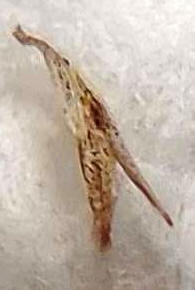
for a long time and I have never experienced this before. I included a pic of
what I pulled off today.
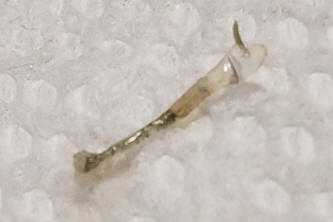
<Indeed, does look like part of an Anchor Worm.>
I am hoping that daily 50% water changes and prompt removal of adults will fix
this problem without having to break down the whole tank and start over.
<May do, but I'd be medicating. Cheers, Neale.>
|
 |
|
Lice - Solve 6/13/18
I used Lice – Solve last night on my happy active fish and this
morning 16 of my fish are dead leaving only 5 left alive. I am
heartbroken that despite using the correct amount and following
instructions to the letter that I have inadvertently killed my beautiful
fish with this product.
Jay
<Hello Jay. Lice-Solve is a product for killing off Argulus,
Anchor Worms, and other (external) crustacean parasites. It's basically
an insecticide, and should have low toxicity to vertebrates such as fish.
Consequently the chemical inside Lice-Solve, Emamectin, has been used on
fish farms where the food produced ends up on our dinner plates. With
that said, insecticides can cause problems for fish if used at the wrong
dosage (so double-check that) and can also cause problems to 'sensitive'
fish species. If we're talking about pond fish, that's going to mean
things like Orfe and Sturgeons, and possibly other species as well.
Goldfish and Koi should be fine though. One problem with using any sort
of poison is that if other things in the pond die as well, such as
insects in the pond, and there's enough 'dying' going on to reduce water
quality, then the fish may suffer as oxygen levels drop. It's often
recommended that aeration be increased when medicating, which in a pond
situation might include using a fountain or air bubbler. In a pond
without filtration or aeration, it's entirely possible that even
irritation to the gill membranes caused by the medication can be
sufficient to stress, or even kill, your fish. I'd certainly reach out
to the manufacturers to see if they can offer some insight, but I agree
with you that this is a very unfortunate outcome. Hope this helps,
Neale.>
|
Identification of possible parasite
5/19/17
<Karan... we ask that folks send image files of a few hundred Kbytes; yours
is some 17 megs... >
Hi there
I have a very poorly Betta who has been battling a number of issues for a
few months. He has PopEye in one eye which has not responded to any
treatment - daily water changes, Indian almond leaves, Epsom salt baths,
Myxazin, meth blue baths (all treatments spaced out over a few months).
<Unilateral exophthalmia can be the "Dickens" to cure, depending on root
cause, how entrenched it has become>
He has lost a lot of colour and energy but still eating and I have
now spotted something attached to his side which I think is a
parasite but I'm not sure. Would you be able to help identify if it is a
parasite and what
type it is and what treatment you would advise?
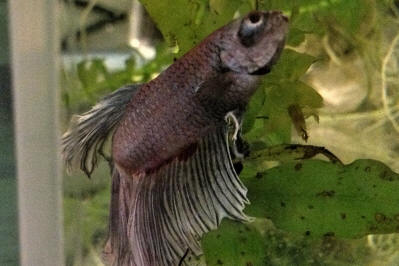
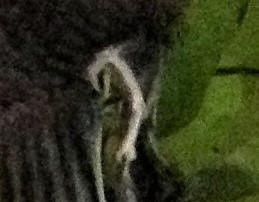
<Yes; I see what appears to be an "Anchorworm" (actually a crustacean
parasite) on the "chest area"; please see here re:
http://www.wetwebmedia.com/fwsubwebindex/anchorwrmfaqs.htm
He is in a filtered 12L hospital tank (half filled as not swimming to bottom
great - swim bladder?) temp 82 with ammonia and nitrite 0 and nitrate 40
(tap water 40 too at the moment) I use Prime to condition water.
Cheers!
Karan
<Please write back if your course of action is not clear here (after
reading); I would carefully tweeze this adult Lernaeid off, dab the wound
site w/ a proscribed topical antiseptic... and treat the system per the
above reading to eliminate unattached stages. Bob Fenner>
|
 |
|
Re: Identification of possible parasite
5/20/17
Thanks Bob. Apologies for size of pics! I attempted to remove the parasite but
it didn't go well and the head is still buried.
<Ahh!>
I now have one very stressed out fish and half an anchor worm!
<Well; a bit more chance for secondary infection... but the rest will decompose
in time>
I'll get some Waterlife Parazin and treat with that. Hoping that will sort the
worm and improve his overall health if he survives tonight.
Thank you :)
<Steady on Karan. Cheers, BobF>
|
|
Goldfish (Bob, can you double check?)
2/15/17
<I concur w/ your analysis and suggestions Neale. Bob Fenner>
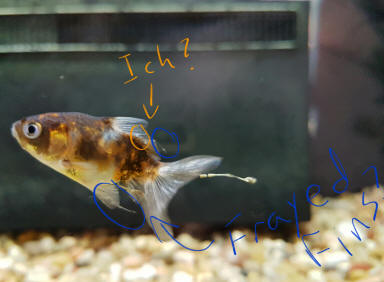
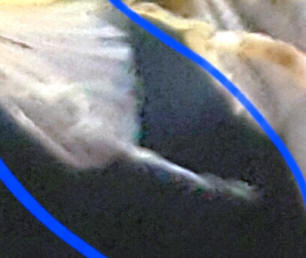
I got my first goldfish a few days ago, and just noticed that she seems to
have white, string-like strands coming from her fins. I'm not sure if it's
the beginning of fin rot or something else.
She also has two white dots on her dorsal fin that I'm not sure about,
whether they are the start of an ich infestation or just part of her
pattern.
Tank info; 2" fantail goldfish, 25 gallon aquarium, filtration, ammonia 0,
nitrites 0, nitrates 10-20.
I've attached some pictures, please don't mind the poop (I've heard that's
normal for goldfish?)
For now I might pick up some Paraguard...
I really appreciate your help!
Lena
<Lena, I'm fairly sure these "threads" are Anchor Worms or some other
crustacean parasite of that type. This is a pain to treat! Traditionally
people used potassium permanganate baths, but products like Waterlife
Parazin are probably safer (and certainly easier) to use. Regardless, once
the parasites die and fall off, you need to keep a sharp eye out on the fins
and skin. The white "pock" marks on the fins could easily be wounds from
previous parasites, and have a tendency to become infected. I wouldn't
medicate immediately (healthy fish should recover quickly in good water
conditions) but if there's any sign of Finrot, such as raggedy edges to the
fins or pink/white speckles on the fins, then medicate with a good quality
antibiotic (such as Kanaplex). Salt, Melafix and other such products are NOT
what you want here, despite their "cure all" reputation. Let me also have
you do some reading:
http://www.wetwebmedia.com/fwsubwebindex/anchorwrmfaqs.htm
http://www.wetwebmedia.com/fwsubwebindex/goldfish101art.htm
Cheers, Neale.>
|
 |
|
Re: Goldfish (Bob, can you double check?)
2/16/17
Thanks so much for your help! I'll look into those meds and keep a close eye
on her. I'll also read through those pages.
Thanks again!
Lena
<Glad to help and good luck. Neale.>
|
Anchor Worm Question 10/9/15
First and foremost:
I am a novice when it comes to fish tanks. I’ve maintained two 28 gal tanks for
one year without losing some of my initial small goldfish and barbs, adding in
other tetras and angels. This combination has worked for me. I keep a close eye
on them because I’d been cautioned about this mix of fish, but only have seen
minor quarrels between two dominant angels occasionally.
<Understood. Not all barbs are nippy... it's a myth that they are. Some wouldn't
say boo to a goose. Pentazona Barbs can be frightened of their own shadows,
while Cherry Barbs are among the best community fish around. But others, Tigers
and Rubies especially, are confirmed nippers, though usually when insufficient
numbers are maintained.>
However, my pressing issue is this. I spotted a tank of small fantail goldfish
at a department store that were sick a week ago. They were covered in, what I
Googled and found out to be, anchor worms.
<Yikes!>
I was lucky to talk the store into letting me take them and I pulled ~ 20 worms
out of four fish total. I brushed the area with a q-tip and hydrogen peroxide
and have them in a 2 gallon fish bowl I’m changing twice a day and treating with
appropriate amounts of water conditioner, API brand Melafix, and Stressful, and
some aquarium salt. It has been a week, and the four fish look ok (scabbing/
dark appearance where worms were, but seem to be healing), they are eating fine
and no more anchor worms have appeared yet. I also took a two calico fantails
exposed to the worms but not presenting symptoms and not 'in from the same
vendor’ that the gold fantails came from (according to the store employee I got
the fish from). Do I need to treat the fish further? When will they be safe to
take out of quarantine? Any help would be appreciated because they and I would
like to be done with anchor worms and would die if my tanks got infected.
<Anchor Worms don't always re-infect fish in aquaria if physically removed, but
it can happen because they do produce eggs and larvae that can, sometimes,
survive in aquaria. So while you might choose not to medicate further, you would
still want to keep an eye on them for a few weeks. At tropical temperatures the
Anchor Worm life cycle is a couple weeks, so quarantining for a month should
reveal whether or not they have a second generation of Anchor Worms on them.
Still, it's a crap-shoot without using appropriate medications. Any new Anchor
Worms might be so small you can't see them, so the longer your quarantine, the
better.>
Thanks,
Anna Marie
<Cheers, Neale.>
Re: Anchor Worm Question 10/10/15
Thanks Neale!
I really appreciate it. Just a couple of follow-up questions:
Is there something I can put in my tanks as a preventative when I do put them in
the tank? I heard mention of a few products specifically for anchor worms,
whereas I went down the physical removal route. I wasn’t sure if those products
killed the worms too (and maybe were preventative in new outbreaks)?
<There are specific medications for Anchor Worms. The problem is that they're
all pretty toxic, not just to the fish but to you too. Potassium permanganate
and various insecticides have been used in the past. Some modern medications are
marginally safer, but use very carefully and follow the instructions to the
letter. Sensitive fish (such as loaches) may be killed, and invertebrates
(snails and shrimps for example) almost certainly will be. I would be tempted to
leave things be for now, quarantine for an extended period as discussed, and if
all seems well, move the new fish into the main aquarium, and then thoroughly
cleaning out the quarantine tank and anything else (like nets) that might
harbour the larval stages of the parasite. With luck you'll have broken the life
cycle and all will be well. Just keep an eye out for "flashing" (fish scratching
against solid objects) and other behaviours that suggest their gills have become
parasitised, often the first sign of this sort of Anchor Worm infection. If that
happens, you'll need to buy and use a commercial anti-Anchor Worm medication.>
If so, should I get one of those products to treat the affected fish now and the
tanks for later once quarantine is over (just in case)?? It may be overkill, but
I’d rather fair on that side. Again, THANKS for your help!
<Most welcome.>
Amazingly two of the four sick fish look completely better! What a difference a
week makes!
<Quite so.>
p.s. Both my established tanks are ‘community’ tanks with a variety of fish. In
the tank the ‘Anchor Worm Crew' fish are destined, I have a red tailed shark,
three tiger barbs, an albino barb, and a green barb in with med. & sm goldfish
of differing varieties (Blk moor, calico, fantail, ‘rescue’ feeder fish, etc.,
and two med/lg marble angels plus some different tetras. The barbs chase each
other some, but leave everyone else alone, (no nipping) and the tiger shark
isn’t a menace either…
The only nippers I’ve had were Dalmatian mollies. They’re little gang got
disbanded and went back to the aquatics store.
Luckily my local aquatics shop takes/ resells trade-ins so they all have a place
to go no matter their size or disposition if I can’t make something work!
Anna Marie
<Sounds a most useful retailer. Cheers, Neale.>
Dreaded Lernaea. Thank goodness for quarantine tanks
9/25/14
Greetings Crew, My biggest nightmare came true. Upon receiving a
shipment of Shubunkin goldfish, I noticed a fish with what looked like a
damaged dorsal fin. Almost looked as if a dorsal ray was protruding.
<Ah yes; quite common in pond raised, reared goldfishes>
I was a little worried about anchor worms but having never encountered
this parasite(only heard of), I shrugged it off and tossed fish into
quarantine tank. Coincidently I had to go on 7 day trip the following
day. Upon returning I noticed all fish were severely infected, some with
gaping wounds. All fish have passed away. Now I'm worried about my
quarantine tank. I was planning to let tank run without livestock for 30
days. Is it possible that nauplii would die off in this time frame and
break life cycle
or should I bite the bullet and treat with organophosphate to be on the
safe side?
<Mmm; I'd bleach (chlorine) the entire contents... gravel if present,
filter/s... Leave running for an hour re the SOP posted on WWM re
sterilizing systems>
Is there another medication I could use in this situation(hopefully less
toxic)?
<There are, but the Cl biocide is the easiest, cheapest, most assured
way of elimination>
Is there certain times of the year when I should avoid buying these pond
fish?
<Mmm; no; not really... in terms of avoiding parasitic issues. >
Thanks as always for the great site. Aloha Brandon
<Ah, welcome. Bob Fenner> Re: catfish emergency 3/7/14
Greetings WetWebMedia crew,
I noticed some sort of insect larvae (looked like a small dragon fly
larvae)
<Unlikely to be a dragonfly larva. But Anchor Worms are a possibility in
pond fish, though extremely rare in aquaria.>
attached to the wound of my Pangasius. I tried to syphon the insect but
it escaped. I don't think this is a normal parasite but in my fish's
weakened state may be more vulnerable to attack.
<Indeed. But fungus and even strips of decaying tissue can be mistaken
for parasites.>
The other possibility is that the insect could be beneficial, feeding on
dead tissue. This is a large fish(24") and has been recovering
from a Columnaris infection(I've corresponded a few times in the last
week or two in regard to the Columnaris infection).
My other problem is he is still not feeding. I've only tried floating
and sinking pellets.
<Will when healthy. If unhealthy, won't want to eat, and trying to force
it will mostly make things worse.>
I do have on hand a wide assortment of livebearers of all sizes, cichlid
fry, red wigglers (composting worms) and Neocaridina shrimp. I
normally don't live feed any of my fish but under these circumstances
I'm thinking of using these guys. I could also purchase brine shrimp.
This fish is not skinny and has been living in a 2000gal outdoor pond
with ample insect life (blood worms etc) and plant life,
<Ah, the plot thinnens. Do look up Anchor Worms.>
but hasn't fed in a month, to my knowledge.
<In a pond will likely have access to a variety of additional foods
including insects, algae and decaying plant matter. Unlikely to starve.>
(this fish was given to me 30 days ago and broke out in Columnaris
infection 24hrs after arrival and hasn't fed since introduction).
Any suggestions?
<See above.>
He has been healing nicely in a 300gal hospital tank as side from
that.
The fish seems active and the white tissue surrounding head and tip of
caudal fin have disappeared. Although there are patches of red
remaining,.
I've noticed if I shine a flash light he shys away, I'm hoping his
vision is in intact. I've been doing 50% water changes every other day
and he seems to really respond to that.
<When fish perk up after water changes, it's a good sign environmental
stress/stresses are to be blame.>
Do you think I should be worried? Thanks for all the great information,
Brandon
<Hope this helps, Neale.>
Re: catfish emergency 3/7/14
Thanks for the response Neale. Although the insect larvae was definitely
not an anchor worm. I'll try to capture and photograph. Thanks, Brandon
<Real good. Now aware of any insects that latch onto fish as parasites,
though some will of course eat (very small) fish as prey, e.g.,
Dragonfly larvae. There are some crustaceans and leeches though that may
parasitise fish, of which Anchor Worms and Fish "Lice" (Argulus spp.,
for example) are the most common. Cheers, Neale.>
Anchor worm? Recurring fin rot?
Please help diagnose.. 9/22/13
You folks helped me tremendously a few months back with my angelfish. I'm
hoping you can assist me again. I have a 55 gallon tank with 5
adolescent angelfish, 4 blue rams, 2 Denison barbs and a Bala shark.
<This last will get very large... might prove to be trouble for the
other fishes; with its nervous, "jumpy" behavior>
All of them together are about 17 inches of fish. They don't seem
over-crowded yet, but if you tell me that's my issue, I will fix the
situation.
<Will be an issue w/ the Bala in time>
I am trying to let them pair, and then rehoming them. I recently had to
treat for Camallanus worms with Levamisole. These worms didn't show up until
2 months after the fish was added, and I have added no new fish, plants, etc
since. The Levamisole seems to have worked, but I will still administer the
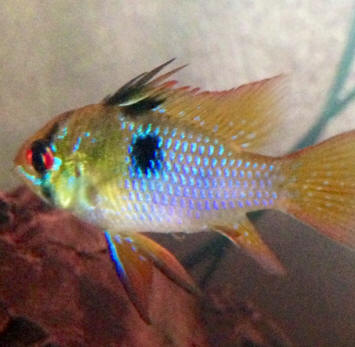
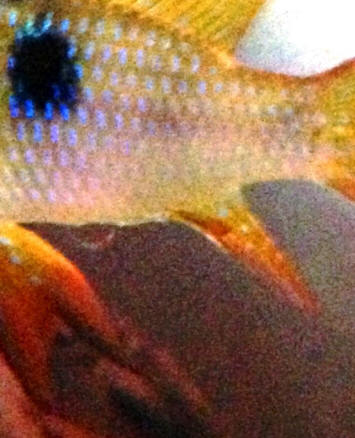
second dose next week. My biggest problem now is a blue ram with a
red thing sticking out near his anal fin.
<I see this>
It is bigger than the Camallanus worms, and there is only 1 It looks like
a piece of red toothpick stuck in his side normally. However, when he gets
angry, or during feeding time, it appears more like the "thing" comes out of
him, then loops back up in him. It comes out if his side, not the anus.
He is very aggressive at meal time also. I have (in a QT tank) tried
Metronidazole, Praziquantel, CopperSafe, Methylene blue, salt baths/dips,
Nitrofurazadone, and he was in the main tank for the Levamisole treatment.
<None of these will treat for Anchorworm>
I have not seen anything like this on any other fish, and I can't diagnose.
I've researched and looked at so many pictures and descriptions, my brain is
scrambled. I keep thinking it's an anchor worm, but no new ones have
appeared, and it doesn't fork at the end.
<May in time or not. Still could be Lernaea... I'd catch this fish now, hold
gently but firmly, and pull this out carefully with a tweezers>
It looks like "color", until he swims away from you, and the anal fin moves,
but the "thing" doesn't. I would be so grateful for your opinion on what
this could be. I'm going to ask a few other questions, because I wonder if
all my problems aren't related. Two of the angelfish keep getting pinholes
in their dorsal fins, and the dorsal looks raggedy.
<... this could be "nothing" disease wise. Would NOT treat for>
They also have missing scales, or little indents in their sides, that I
thought were the result of pecking, but I never see pecking, and now I
wonder if it's not bacterial!
<More likely the Bala Minnow Shark or medicine exposure; can't see much in
your images here>
I've attached a picture of my black angel, who looked like he scraped a
piece off his side near his dorsal fin. It looked like mowed grass. It
looked that way on both sides. These things keep happening. The indents and
patches go away on their own, but it keeps happening. My parameters are
good, but I try water changes anyways. Then, I treat with KanaPlex.
<A poor idea to keep pouring in such>
The fins get better, but it keeps coming back. Another odd symptom is that
ALL the fish seem to tap their bellies with their ventral fins, as if trying
to get something off. I've even seen a ram rub his belly in the gravel (not
during breeding). I'm sorry for throwing so much information at you, but no
one seems to have any idea why I keep having problems. I medicate (except
for the Levamisole) in a QT tank. I only use medication when I fear the fish
is dying. I try everything else first. The blue ram is a part of a pair that
has laid eggs twice. I'm really hoping to diagnose and treat him. I would
also like to keep the angelfish healthy, as they seem to be starting to swim
in "twos", so any suggestions on their care is appreciated. I do weekly
water changes with prime. My tank cycled 3 months ago. Readings- ammonia,
nitrites: 0. Nitrates: never over 20. Ph: 7.2. GH: 7-8, KH: 5-6. I use 2
filters, a Purigen, sponges, and a nitra-zorb. No carbon. I mix 1/4 tap with
3/4 RO water. I was wondering if this might be making the ph shift, causing
the fish to stress, and causing my problems.
<Not likely; no>
I test replacement water for kH, gH, ph and temperature. But, I don't add
buffers or other chemicals. Does RO water need trace elements replaced
and/or something added to keep ph stable?
<Not if made up some other way; in this case mostly by the 1/4 tap>
Or is the tap water enough of a buffer?
<According to your test results, yes>
One last question: can a fish KEEP getting the same illnesses, or do they
build immunities?
<Some acquired immunity for some infectious, parasitic diseases has been
demonstrated/observed in many fishes>
I feed them blood worms
<Stop! Do search the net re these Chironomid sewer worm larvae. I would NOT
use them, or restrict their use>
or brine shrimp soaked in vita-chem in the morning, and omega flakes at
night (all eaten in 3 minutes). Any help is greatly appreciated, as I'm
really hoping to breed these fish.
Thank you,
Kelly
<Thank you for sharing. Bob Fenner> |
 |
|
Anchor worms - Help!! 8/18/13
Hi WWM,
<Kristen>
I made a foolish mistake and added 3 juvenile Boesemanni Rainbows to my
established 60 gallon tank (populated by 3 silver dollars, 2 pictus
cats, and 2 adult Boesemanni). I bought them from the same reputable
seller where I'd bought their tank mates between 5 and 3 yrs. ago. No, I
didn't QT them.
No obvious signs of infection were present & I took a gamble. Kicking
myself now!! My water quality is always good (I make sure that the
nitrates are below 25 ppm & do twice monthly water changes). I am by no
means the most expert fish keeper, but I am not a newbie & have been
maintaining 4 healthy tanks over the past 12 years.
<Happens>
To cut to the chase, these new Rainbows were infected with anchor worm
(I actually removed some w/tweezers & salt & confirmed their identity)
which I have never seen in an aquarium.
<These two are seasonal infestations... from pond-raised fishes>
Some of my pond Koi had this a couple of years back - I treated
w/Anchors Away & they pulled through just fine. They are large fish,
though. These small Rainbows were not so lucky, as they had multiple
worms coming out of their gills and near their eyes, that showed up
within a week of purchase.
I've ordered Hikari CyroPro & it's on it's way, but unfortunately, those
poor fish all succumbed.
<Ahh!>
I am REALLY worried now because my Silver Dollars started displaying
what I thought could have been the beginnings of Ich, only on their
fins, and I was going to treat for it (already raised temp. to 86) but
now it looks to be turning into these same worms!!
<Actually crustaceans>
Is that possible, so quickly?
<May be>
Would it only be showing up on the fins?
<Not usually, no>
I think I've seen nearly every other kind of FW fish disease, and this
doesn't look like any of them. I do not have a pic because the lesions
are still pretty small & the fish won't sit still.
My main question is: do I treat immediately for anchor worm, or should I
be more concerned about the possibility of Ich & treat for that first?
<Not Ich... and/or the elevated temp. will take care of. I would treat
for Lernaea>
I really DON'T think it's Ich now. Maybe I was just seeing the lesions
where the tiny copepod larval stage was attaching itself?
<Again; possibly>
I feel inclined to treat for the anchor worms right away...
<Yes; I would>
Thank you in advance for your help!!
Kristen
<I take it you've read the bit we have on these pests/parasites on WWM.
Steady on, Bob Fenner>
Re: Anchor worms - Help!! 8/19/13
Bob,
<Kristen>
Thank you so much for your input! You've reassured me that I'm on the
right track. I'll keep my fingers crossed and hope that all goes well.
Best,
Kristen
<Please do send along notes re your further experiences, observations.
BobF>
Re: Anchor worms - Help!! 8/20/13
Hello, Bob-
<Kristen>
Thank you for your continued assistance! I actually would like to have
your take on the current state of the fish, if you have time.
<Sure>
I finally received the CyroPro,
<Hikari product; cyromazine (N-cyclopropyl-1,3,5-triazine-2,
4,6-triamine).
No reviews on Amazon.com...>
did the requisite 90% water change, and now, four hours later, the Silver
Dollars' fins look like this (see attached). It happened very quickly.
The Pictus look fine.
<Burn baby burn>
These aren't the best pictures - sorry! There are dried water droplets
on the glass, casting shadows, so that's what accounts for the dark
spots. The fins are not ragged, just looked a bit cloudy prior to the
dosing (no more Ich-looking lesions), but they started to display this
within an hour or so of dosing. Very strange! I hope that the medication
is just taking effect, and may have simply irritated the growing
parasitic crustaceans.
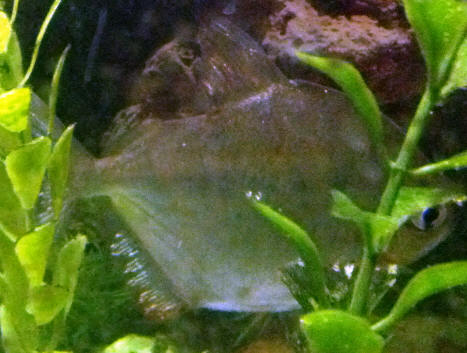
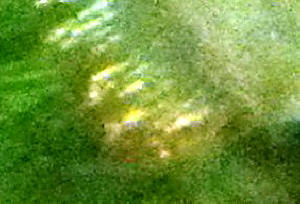
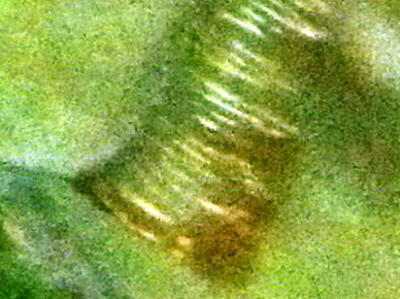
<Maybe... I do see what appears to be an adult Lernaeid on the anal fin
of one of the dollars. Have cropped two of your pix and tried to enhance
(posted on WWM)>
I did pull a smallish worm off of my largest Rainbow, near the eye. It
came off very easily, a couple of hours after dosing w/the CyroPro. I've
read that it works by interfering with the growth of exoskeletons.
Anyway, I just hope that I'm doing the right thing to help my fish!
<Yes; this is what I'd do as well>
Thanks for your input!
Kristen
<Thank you for your ongoing sharing. Bob Fenner>
|
 |
|
Re: Anchor worms - Help!!
8/21/13
Hi Bob,
<Kris>
Yes, I did pull a worm off of an SD today.
<Ahh>
I sure hope the CyroPro is working! I don't know how effective
it is against fully mature Lernaea.
<Not nearly as much as young, intermediates>
I can now see one protruding from the inside of a Rainbow's mouth. I think
this is a strange and particularly aggressive form, which, at least in
the Rainbows, seems to specifically target their eyes, gills, and mouth
areas.
<Yeeowch!>
It's a 3 week long course of treatment, so I'll just keep hoping for the
best. Thank you again for your help! If anything significant happens, I
will send an update.
Best,
Kristen
<Thank you, BobF>
|
Red Devil with sore/parasites <Lernaea?> 12/31/12
Dear Crew/Neale/Anybody,
<This is Rick, but I'm leaving this note in the inbox so Neale can take
a crack at it also..>
Where do I start.....
First off.....I am a advanced fish aquarist, I know my stuff so I will
get right to it so to speak. Please bear with me I am not a good letter
writer.
<No problem>
I have a Red Devil ( Midas) he lives alone in a 110 fish tank, age
almost 2. He has been thriving and doing beautifully for at least
a year.......all of a sudden Bubba develops a sore about the size of a
dime, it happened within a matter of two days!!!!!!!!!!
When I first spotted it I about dropped over, in hindsight I
should have recognized his behavior was off, he wasn't greeting me
or eating as robustly, I mean he literally jumps out of the tank
for his pellets. Attaching you tubes so you can see the
sore when it first was spotted. It was horrible, I knew I had to
get him on something quickly, I started him on Furan 2.
After two days the sore came to a head and I got my fish out of
the water and I lanced it.......pus came out and I swabbed it with
A&D. I put him back into the tank with furan 2 for two more
days and it started to mend nicely......so I put him back into the
110, I just use salt and Melafix and thought I was on my way to healing,
I don't like to medicate fish, I don't even use carbon in my filters!
<sometimes necessary.>
Yesterday I did a large water change and his sore was ok, today I looked
at my fish and I am besides myself........inside the sore two worm like
things are hanging out and one is actually coming out of his gill
at the bottom, it's red/blackish, I am going to attach a video of
that when I finish typing this to you.
<I did not see the parasites in the videos.>
Evidently the Melafix isn't working, so I don't know what to
do!!!!!!!!! Should I get him back on Furan 2, or Parasite
Guard? I have both in the house. Do I pull those
wormlike things out with tweezers? I am besides myself here
not knowing what to do now........He was doing beautifully, the
sore was mending, how could things pop out of the affected area
over night?
<Hard to predict when you don't know the root cause in the first place.
The MelaFix might be helping the sore itself but worthless against
parasites.
Take a look at this page:
http://www.wetwebmedia.com/fwsubwebindex/anchorwrmfaqs.htm and see if
the parasites you observed match Anchorworms. It's a place to
start, anyway.>
My water params are fine, I am a breeder of cichlids, I raised Discus so
I know water changes trust me.
<Trusting, but for the reference of people with a similar problem who
check this forum five years from now, the parameters are useful.>
This fish gets water changes weekly at 60%
and always has since a baby. Please get back to me email
wise so I don't get lost in the shuffle. I need help
asap, I can't sit and do nothing here, this fish is my child fcs.
<Start with the Anchorworm FAQs I linked. It has a photo at the top of
the page.>
I appreciate any help or advise, Neale you helped me long ago, I hope
you or anybody can come thru for me now. I am attaching
three video's so you can see my dilemma. BTW, My fish has
never eaten a feeder fish in his life, I know they are worthless.
<I'd say feeders are risky rather than worthless. Depends on a lot of
things, but I digress.>
First Video of the sore ~~~~~~> _http://youtu.be/06TisLU6ILs_
(http://youtu.be/06TisLU6ILs)
Another vid of the sore ~~~~~> _http://youtu.be/JO-jARSQBf0_
(http://youtu.be/JO-jARSQBf0)
it started to mend very nicely after I lanced it, something has happened
literally overnight with these things protruding out from that affected
area. Plz Somebody Help Me!
<Surely the parasites were there when you lanced, only out of sight.>
Can you please email me back so I don't lose my correspondence in the
muck of things. Thanks very much, sigh, I am besides myself.
This is what is happening now ~~~> _http://youtu.be/dOd5jmjETyo_
(http://youtu.be/dOd5jmjETyo)
<Let's start with comparing to Anchorworms and also see what Neale or
Bob can contribute.
- Rick>
Re Red Devil with sore/parasites 12/31/12
Rick,
<Julia>
Thanks for getting back to me so quickly, especially on a night when we
all should be out having a good time sigh. Just having somebody
know my problem has made this a lot easier on me.
<Sharing the load often helps.>
I did read about the anchor worm, and I think you hit the nail on the
head!!!!!!!
<Ah, good!>
When that sore first started, it was the worm/parasite working
it's way out, when I lanced that area, you were right again, it didn't
show
itself yet and that is why I didn't see it at all. I do believe
the Furan 2 and the Melafix helped him survive that outbreak but
now the worms are showing their ugly heads, they are to small for
me to grab, and like the article said when the fish comes out of the
water they suck back inside......how on earth am I ever going to
be able to grab it.....I feel I need to wait until the worm/worms
are hanging out more before I even attempt to do anything at all.
I did get Parasite Guard into his tank, I knew it was a parasite of some
kind today when they came out and showed their ugly heads, I know I am
going to have to do a surgical removal on them, I have no problem
saving the life of my fish, I have to do this for him but I feel I
can't grab it now it's to small......what a horrible situation I
am in here. My sister will have to assist me yet again while
I do this.
<I had similar trouble with a nematode outbreak a few years ago.
Frustrating.>
I am going to wait two days to see if they come out more, I have salt in
the tank along with the parasite guard, 1 tablespoon per ten gallons of
water. I don't have the heart to put him back into a 50
gallon tank at this point, he's just to big now, so I have to keep
him in his own 110.
<Well, it may be wise to move him anyway. Much easier to treat in a
smaller volume of water. If the eggs have hatched, there will be
free-living juveniles in the water that can remain alive without a host
at least five days. According to my favorite book (Manual of Fish
Health by Andrews, Exell and Carrington, best work for a reasonable
price) the tanks should be treated with an organophosphorous
insecticide such as metriphonite, but there may be better proprietary
options out there. (Neale/Bob??) Says to allow active ingredients
to dissipate over ten days at summer temperatures, so probably longer
this time of year.
Also, for the adults, swift removal with a fine forceps, which might
need repeating after two weeks or so if others emerge. Dab area with a
topical antiseptic. Book recommends mercurochrome. Minimize time out of
water. I'm not sure how available these kinds of meds are to
regular people (as opposed to veterinarians).
Is there anything else I should be doing while waiting on the worms to
show?
<I'd still move to the smaller tank and perhaps feed an antibiotic food
as part of the diet. Infection is a concern here.>
I will also state that my fish is oblivious to being ill, he's
eating as always and is demanding as ever, it breaks my heart to
see these things
hanging out of that sore though, I swear this hobby is going to do me in
if I lose him.
<That he is still strong is a positive, for sure.>
Also I wonder what brought this on? I have sand as my
substrate and I am always careful to stir it on water changes because of
anaerobic gases etc, I wonder if I laxed in some way perhaps wiping down
the sides of the tank, I have NO idea what brought this on.
Old food maybe? I don't give night crawlers to him either.
His diet is varied in all ways but his main staple is Hikari Gold
Pellets.
<Hard to say. I don't see any obvious vector unless maybe you added new
plants or inverts recently.>
Oh a question.....should I bump up his heat or keep it at 78-80?
What would help the most?
<I honestly don't know as my book says nothing on this topic. Lacking
any other information, i would keep the tank at the optimum temperature
for the fish.>
I will wait on hearing from Neale or Bob Fenner ( I hope he is kind
;-) )
<Oh, Bob is a sweetheart.><<Oh, I wouldn't go this far. B>>
and see what they have to say back to me. This fish has stolen
my heart.....I have a female RD and I love the species. This is my
third RD, but Bubba is more Midas and is a beauty and very girthy
and much wider than a regular RD. I am rambling now,
so I will close and wait to hear back from the others.
Have a safe and sound New Years Eve tonight, my best to you all at
WWM.
<Good luck>
Sincerely, Julia
<Rick>
Anchorworm issue 12/31/12
Bob/Neale
Just FYI, there are two emails in the freshwater area from somebody
fighting Anchorworms. I answered the queries, but left them in the
freshwater area in case you want to comment or add something to what I
told this person. I've not dealt with Anchorworms before so everything I
said is right out of my books.
Rick
<Will take a look. Thank you Rick. B>
Neale or anybody please help me......plz plz help me.
12/31/12
Dear Crew/Neale/Anybody,
<Bob Fenner here, WWM's common progenitor. Rick asked myself (and Neale)
to look over your messages, his responses. I do concur w/ his statements
and encourage you to read the prescribed link on Anchorworms. These
crustaceans can be eliminated w/ the instructions detailed there>
Re: Neale or anybody please help me......plz plz help me. (Maybe not
Lernaea) 1/1/13
It isn't obvious to me what's the deal here, but my guess is some sort
of ulcer. Whether there is also a parasitic infection of the skin as
well is hard to say. In any event, I'd medicate the tank with both
Metronidazole and Nitrofurazone, and I'd also use seawater dips
(aquarium or marine salt, 35 gram/litre).
Such dips are very good for cleaning external infections and preventing
further decay of the skin. Amphilophus spp. have a high tolerance for
salt, so anything up to 20 minutes will be suitable -- remove the
cichlid before that time if it shows signs of severe distress, such as
rolling over. Do make sure the seawater dip is the same temperature and
approximately the same pH as the display tank.
You could also add salt to the display tank at 3-5 gram/litre. Won't do
any harm and may do some good.
The aquarium does look rather small for this fish.
Cheers, Neale
Re: Neale or anybody please help me......plz plz help me
1/1/13
> Ok I am still at a stuck point. Parasite Clear has the metro it
in. Furan 2 has the Nitro in it....Two products I have and are
using but not at the same time. I am going to finish up the rounds
with Parasite Clear, in two days I am going to see if I can tweeze out
whatever is in that sore. I will finish up the recommended amount.
Then I will move him over to Furan 2, continue the salt. Is my
fish going to be able to withstand all this medication? I am going
to go to Wikipedia now.
<Should be fine but do 25-50% water changes between finishing one set of
medications and starting another. Keep water chemistry, temperature the
same. Cheers, Neale.>
Re: Neale or anybody please help me......plz plz help me
1/1/13
> Neale thanks again for all info. I am going to tackle
this, I must do this for my fish. I only wish I knew how he got
this Neale, it scares me not knowing for sure. I will
let you know what happens after all the meds have been giving and what I
get when I tweeze out what is hanging. I am scared to do this but
I have to. Julia
<Good luck. Next time, do please try and write via WWM rather than our
personal e-mails; that way, other crew members can chip in, and
hopefully, WWM readers can benefit from your experiences. Cheers,
Neale.>
<<Ah, t'was I forwarding the query to you Neale... to speed a response
along. B>>
parasites in fish and humans... Lernaeid confusion
7/26/12
I had an anchor worm problem this year with some of my 1-2"
goldfish that I had in a brand new 600 gal pond that I dug up this
spring. I only had about 10 small goldfish in the pond, but the
pond was drying up fast from the lack of rain this year 2012, so I moved
the fish back into there 25 gal tank inside the house.
After about a month fish started to die, I had no idea what the
problem was till there was only 3 fish left, then I started to look
real close and that’s when I noticed the anchor worms, new to this
problem I treated the tank with PraziPro,
<... Anchorworm is not a worm, but a crustacean parasite... Prazi won't
cure it. Read here:
http://www.wetwebmedia.com/FWSubWebIndex/anchorwrmfaqs.htm
and took out the carbon out of the filter, but it was to <too>
late for the fish. 4 days later after I treated the tank I took the
dead fish out and looked at the worms with a loop and I can see that
some were still alive. My question is how long does it take
for this product to kill the worm?
<... it won't. Read... >
Also how does this parasite effect frogs and tadpoles in a pond?
<Won't hopefully... unless worms present dying cause issues>
And the most important question I have is If children or adults
are playing in a small pond like mine catching frogs and tadpoles that
is infested with parasites/anchor worms and eggs and someone gets these
parasites or parasite eggs in an open wound/mouth/eyes will they become
a problem and how will it effect the human body?. Thanks
Frank
<Won't affect humans either... but, cheap/comet goldfish in America
invariably have several infectious and parasitic issues...
I'd keep them out of the pond. Bob Fenner>
Goldfish blood spots
10/29/11
<Hello Hope>Are u able to tell me what to do about blood spots on
some of my goldfish? <Likely to do with water condition, tank
size> What can I do about them and why do they have them. <As
above> I feed them frozen food and flakes. I change them a thirty
gallon tank. <Assume you mean you have
them in a 30 gallon tank. How many? Goldfish are messy and in this size
more than a couple of fish will likely make water conditions poor>
One time per month. <Needs to be more often. Small water changes
around 15% weekly> And add something to the water as per the dosage
suggestion on the bottle. <What? Assume this is some kind of
conditioner to remove chlorine and other toxic elements in tap
water?> It is something for their bodies and the water. <Again,
you really need to get with the basics and figure out what you are
adding to the water. Aquasafe is a brand that works well for what I
have mentioned above> I forget the name off hand. I do about half
the tank change.<As above, smaller changes, more regular> And add
water. Just a little during the month when the water evaporates.
Thanks
for your help. <From the above description it does sound like you
have an issue with water chemistry that is likely resulting in poor
fish health. Please test you water for ammonia, nitrites etc. You also
want to look at the number of goldfish you have in this space. You can
read more about caring for your fish here -
http://www.wetwebmedia.com/fwsubwebindex/goldfish.htm
Good luck! Sugam>
Re: Goldfish blood spots 10/29/11
Hi and thank you. <Hi Hope, sorry to hear about the loss> I took
a water sample to the fish "whisperer" <Hehe!> this
a.m. He tested for everything. Including ph, nitrates nitrites. All
well. <Good. That's one area ruled out.> One fish has already
succumbed to it. Two had it. Now one. The others. No. He is stumped as
well. He is a local but a very knowledgeable person. So I trust his
judgment. I use Amquel when I
do the change one time per month. I would almost describe it now on one
fish as a parasite. <Have you added fish or anything else lately? I
would think linked to stress from crowding/conditions has made them
vulnerable to secondary infections > Maybe I will send you a photo
of the remaining fish to this email address. Via the iPad. He said give
it 72 hours and then he would come by and take a look. I will however
follow your advice and change the water more frequently and less taken
out. <Good! These helps keep the water conditions stable and good.
About 15-20% weekly> Maybe.
It's too much to take out so much. <More of an issue of changing
it less frequently than needed> Less is more. I appreciate that you
answered the question(s). It almost seems like it is easier to keep
guppies!!!!! <Yes. Goldfish, despite the way they are advertised,
are not the easiest to keep and as I mentioned before, require lots of
room.> I have four good sized goldfish in a thirty gallon tank...
<Did you read the link I sent? That's not enough room for
them.> Again. Maybe less is more!!!!????? <Indeed>
Thanks again. <You are welcome. Sugam> Hope
Re: Goldfish blood spots 10/29/11 11/2/11
Hi and thank you. I believe that those blood spots are in fact
anchor worms!!!!! <Yikes! I have experience with
these from a massive outbreak when I first set up my tank. Nasty
creatures and difficult to get rid of them.> I went to the pet store
and got a product called clout. <Not familiar with this product but
do keep in mind that most of the medication that is specifically for
anchor worm is highly toxic (for you and for other pets)> I have a
thirty gallon tank. I placed. Three tablets in the tank as per the
directions 2 days ago. Repeated the three tablets the next day and was
told to do a small water change today by the "fish
whisperer".
They are no better. All the fish have them now. They appear to be
lesions with a bony appendage like sticking out of the lesion. <Take
a look here. May help you make a firm identification -
http://www.wetwebmedia.com/fwsubwebindex/anchorwrmfaqs.htm
Actually. I bought a fish unknowingly a month or so ago. From the shop
and saw a lesion and projectile on the fish after my purchase. I did
not notice it in the store before my purchase..... Only when I got home
and put it in the tank. It never seemed sick though! <Yes. Sounds
about right. The way these critters operate makes the fish look mostly
healthy in the early stages.> In fact I believed it was injured
somehow on the way home.
<Unlikely if you see a wound with a small whitish tail hanging out
of it.>
In a few days the lesion and bony protrusion disappeared. <Not
entirely bony but it is a firm protrusion for sure.> I guess it was
the worm falling off and the fish healing. <These critters attach to
fish for nutrition and have a life-cycle of their own.> Now I guess
the eggs have multiplied and are attaching themselves to all the fish.
<Would seem to be the case.>
They seem very active however I realize the fish will succumb to the
parasites unless I can rid of them. <Aha! yes> What do you
suggest I do now knowing that I have administered clout for 2 days and
have done a slight water change. I really appreciate any help you would
be able to give me. You doing a great service for people. Thanks
<Hope, the approach I am about to propose isn't conventional to
say the least but I did find it effective with the infestation I had.
If your fish are of a decent size, dip them for a very short while in
salt water. This will weaken the anchor worm's grip and then you
will be able to pull out the worm with tweezers (the fish in a net, not
in the hand). Please be extremely careful when doing this! If you
don't get all of the worm out, it will just regrow and if you pull
too much, there is a chance of killing the fish. Please look at adding
some kind of antiseptic post this treatment so your fish don't pick
up secondary infections. Do keep in mind that this proposed approach
may be too much some of the fish but will certainly help with most. Was
shown this technique by my own "fish whisperer" and it proved
effective in my case. I wish you luck! Sugam>
Re: Goldfish blood spots 10/29/11
Re: Goldfish blood spots now identified as anchor worm
11/4/11
Hi. <Hello again Hope> They are definitely anchor worms. <Okay
that's half the battle won. Now we know what to treat.> I will
try to do what you suggested when I get up some nerve. <As I said,
there is also medication specific to this issue but use with caution.
It is highly toxic and by that I mean not just for the fish!> How do
I make the salt solution <In a bucket. First add water, then sea
salt (not table salt). About 100-120 grams per gallon should do the
trick. Wait for the salt to mix in completely and the water to become
clear. You will need to put a small powerhead in the bucket to help
stir the solution. Dip for about a minute and keep a close eye on the
fish. If the fish seems to be too stressed by the dip, remove
immediately. The worm should come out easily immediately after the dip.
I do realise that this procedure sounds quite rough and as I said
before, it is definitely unconventional. Please do consider whether
you would like to pursue this route or whether you are more comfortable
dosing a medication under the supervision of a vet. Either way, I would
recommend treating the fish soon before the anchor worm weakens it to
the point of no return. Do remember to add some kind of antiseptic
(Melafix perhaps) post removal.>
How much salt. How much water. <As above> Thanks <Good luck!
Sugam>
Re: Goldfish blood spots now identified as anchor worm
11/5/11
Hi. I just am not able to do this. <Hi Hope, as I said, the
prescribed approach does sound harsh but really is the best way to
go.> it is very sad to see these beautiful fish being infected by
the parasite. <Indeed> Here is what I did. For 2 days I used the
clout as prescribed. On the third day I removed a small amount of water
and replaced it with new water I stopped the medication because I had
already used it one more day than it said to use it. <I am not
familiar with this medication but you can find but there are many
brands of pesticides that will help treat the infection in the tank. Do
follow the instructions exactly. Too much risk of toxicity here.>
Yes. I realize that the medicine is very toxic. Basically I haven't
come into contact with it. The fish are no better. Now all of the have
the worms. They have spread and some have four or five on them.
One, the one that came in with the parasite and infected the others now
has one on the edge of and a little inside his gill therefore I could
not remove it. <Yikes! Please do remove the worms from the other
fish as recommended and quarantine the one with the massive infestation
if you haven't done so already.> When I saw that I gave up sorry
to say. I am thinking that I should repeat the medicine. <Again, not
familiar with the brand but from your description, does not look like
it is working.> If so.
How much, for how many days and when should I begin again. If I loose
<lose>the fish, and I hate to be pessimistic here what should I
do to the tank to decontaminate it before placing other fish into it?
<The pesticide based medications will decontaminate the tank.>
How long would u say the eggs can live and under what conditions?
Should I discard the gravel?
Rocks fake plants? Once again. <Once the treatment is done, please
replace your carbon in the filter. Assume you have removed the carbon
during the treatment?> Thank u
<Hope, I do believe the best approach is manual extraction. I am
also putting your questions to the rest of the crew to see if there is
any further they can offer or something I may have missed. Cheers,
Sugam>
<Clout won't likely do... Ingredients: Phenylbenzylindene,
dimethyl, phosphonate, methylnitro and inert ingredients as non-toxic
binders Please read here (I believe you've been referred
already):
http://wetwebmedia.com/FWSubWebIndex/anchorwrmfaqs.htm
and here: http://wetwebmedia.com/FWSubWebIndex/fwcrustdisfaqs.htm
AND here: http://wetwebmedia.com/FWSubWebIndex/organophosphatefaqs.htm
re Organophosphate use for such Crustacean parasitic situations. Bob
Fenner>
Re: Goldfish blood spots now identified as anchor worm 11/4/11
11/19/11
sort of at a standstill here no better no worse yesterday I took the
plunge and removed five of them the worms that is it is a very very
tricky maneuver because just for you and other people's information
when you remove the fish from the water the worm which is translucent
blends into the fish body and it's very difficult to see it even
with a magnifying glass which I tried to use. Definitely they are
anchor worms! Thanks for your recent help. <You are welcome. Really
glad you tried the suggested approach! I agree on being quite tricky
but really one of the only ways to go with anchor worms. I am sure you
did this but ensure you get all of the worm. If it snaps, it will
simply grow back. You should now see some gradual improvement in the
fish. Do remember to treat with iodine or Melafix! Cheers -
Sugam>
|
Unusual tag-like growth on black moor, Lernaea
6/21/11
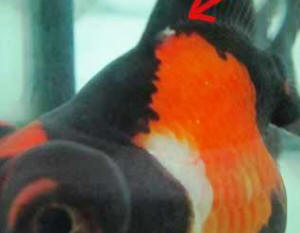
Hello WWM crew,
One morning I woke up and noticed my black moor developed this
flat white-grayish growth near its dorsal fin. It is difficult to
describe as it's not quite a growth but more like a tag.
Regardless it does stick out from the fish's body but there
is no red sore near its base. The "growth" does seem to
have a head of some sort that is slightly whiter in colour while
the "body" seem more translucent.
At first I thought it was a parasite but after a few days of
research online, I cannot seem to find a description that would
match what my black moor has. It does not have a forked end like
an anchor worm nor is it moving on its own. Although it looks
string-like it isn't really. It's flat. As a precaution I
isolated the black moor from the two other smaller goldfishes I
have into a smaller tank. I added aquarium salt and a bit of
Fungus Clear to the smaller tank and observed the black moor
carefully. I also did daily water changes for three days and a
change of carbon filter with the main tank as I noticed that the
water is cloudy and has a smell to it. Perhaps it's not a
coincidence but as soon as I removed the black moor from the main
tank, the water quality improves.
A bit of history: the smaller goldfish developed a split in its
dorsal fin and out of fear that it's fin rot, I treated the
whole tank with Fungus Clear. It cured the fin rot but my black
moor became lethargic. It would sit at the bottom of the tank. I
placed the carbon filter back into the tank, did a 50%-60% water
change, gave the black moor a salt dip, and everything seem to be
fine. (In the past the black moor can be frequently observed
doing some flashing but a quick salt dip usually
lessens/eliminates it.) About two weeks later, the growth
appeared.
The black moor still rubs its body against the bottom of the tank
but other than that, it shows no other unusual symptoms. It eats
and it's energetic.
(The fish moves so much that it took me a very long time to get a
good photograph.) There are no open sores, no gasping that I am
aware of, and no unusual spots. It had a small split in its
dorsal fin a few days earlier but the following day the split
mended itself. It has been three days since I've isolated the
black moor and there seem to be no significant changes.
The tag could be growing longer but it could also be from staring
at it for three days. I am at a complete loss as to what this is.
I don't want to re-introduce the black moor back into the
main tank for fear of it spreading whatever it has to the other
fishes. The Fungus Clear didn't seem to have had any
effect.
I've included some pictures and here's a video in case it
helps:
http://imageshack.us/clip/my-videos/543/d1n.mp4/
Any insight into this would be very much appreciated. I am
completely at a loss as to what to do!
Sincerely,
Jenny
<Hello Jenny. Does look like Anchor Worm or some close
relative. Can be treated with Anchor Worm medications --
essentially insecticides -- ideally under veterinarian
supervision because these are quite toxic (including to you and
your other pets). Alternatively, if it's just the one fish,
try dipping in seawater for 30-60 seconds (i.e., 35 grammes sea
salt in one litre of aquarium water) to weaken the Anchor Worm,
then cleanly remove with forceps. Try not to damage the fish by
tearing; if the salty water has done its job, the worm will
loosen up. If it isn't loose, dip again. Short dips in
seawater won't harm large fish if you're careful and
remove before it becomes obviously distressed, e.g., by rolling
over. Dab the fish with iodine ointment to clean the wound, or
alternatively, medicate the water with some sort of mild
antiseptic, such as Melafix. Hope this helps, Neale.>
|
|
|
|
Re follow-on to answer on 6/19 -
goldfish with small bump 6/22/11
Hi again,
<Salve!>
I just wanted to follow up on your reply (I've put it at the
bottom of this, for your reference) over the weekend for me; I do
appreciate Neale having put in the time to reply. I'd like to
clarify, and make sure we're both talking about the same
thing. Hagen has renamed/renumbered their filters somewhere in
the last 5 years; the 110 is rated at 500 gallons per hour (it
used to be called the 500), so I think that puts me safely over
the 6 changes per hour that your FAQ talks about for my 75 gallon
tank; would you still consider that to be a modest filter?
<It's fair to middling, about what you'd use for a
community tank with tetras, barbs, etc. Whether it can handle the
sheer volume of mess created by Goldfish is a whole other matter.
If you have zero ammonia and zero nitrite, and your tank
isn't murky, and the fish don't gasp at the surface for
oxygen, then yes, it's probably fine.>
Or am I missing some component? I also neglected to tell you that
I do have a 12" bubble stone for aerating, and that I use
both the carbon filter sized for that 110,
<Carbon largely pointless in freshwater fishkeeping.>
plus a "50" size (smaller) ammo-rid tucked in with it
,
<Again, ammonia-removing media is usually pointless
too.>
plus the foam and bio-max material. (I didn't care for the
Zeo-Carb for some reason, but this combo seems to work well) That
is probably helping to keep my numbers good (0 ammonia, 0
nitrite, I don't have the test for nitrate). Given the
additional information, would you still consider it to be
slightly overstocked (7 fantails, from about 1.5 - 3.5" body
lengths)?
(and what about 6, read down a few paragraphs for why) And thanks
for telling me not to bother with the salt; I had read elsewhere
that a low amount of salt was beneficial for goldfish, but
I'll just save my money and time on that one!
<Quite.>
I was interested to see in your FAQ and email about such
substantial water changes; I guess I still have the mentality of
10% a week "freshens" things without disturbing the
fish. I'll bump it up, now that they should be used to the
higher pH at the new house.
<Yes.>
Per your reply, I put the fish back in the big tank, and he was
quite happy for a few hours, but then started celebrating by
chasing and nipping at everyone else, nonstop.
<Glad to see his friends.>
I watched him do that for an hour, and decided to put him back in
the quarantine until I can set up a 29 for him to live in
splendid isolation, given his nasty behavior. That does, however,
explain the occasional ragged fin (shaped like a bite mark) that
I had seen in the past on the others. He was just never so
blatant about it that I caught him at it before; guess he was
making up for a month's worth of lost aggression. (I did try
shaking my finger at him and saying "bad fishie", but
it just didn't have the effect that I desired). I do thank
you again for giving me the go-ahead to stop being worried about
the bump on him.
<Does sound as if you've established the problem here.
Males develop distinct spawning tubercles on their heads at
breeding time. Such fish are often "chasers" or
"bullies" for a few weeks, months around this time of
year.>
Best regards, and have a great week, and summer solstice!
<Thanks, and you too.>
Jill
<Cheers, Neale.>
|
|
New Betta...Help! Not eating, env., Lernaea
5/3/11
Hi There-
<Shanda>
I am hoping you can help me with my new Half Moon Doubletail
Betta. I bought him from Petco 11 days ago and when I first got
him home he was very energetic but has never been willing to
eat.
<!? Is this system heated, filtered?>
I know that they can be picky eaters so I have tried a couple
different brands of food. I previously had a Betta for over two
years that finally died a few weeks ago. He loved the Hikari
pellets so that is what I have tried to feed the new fish. He
initially swam up ate it and then spit it out. I tried again the
next day and the same thing happened. I went and bought Betta Min
Tropical Medley and tried that. The fish swam up to it and then
swam away. I have been trying every day and the fish swims up
like it is hungry and then swims away. I tried crushing the
pellets thinking that maybe they were to big but he eats them and
then spits them out. I have noticed over the last 2 days that he
seems lethargic and he looks like he his starting to float on his
side. I have also noticed him with his nose to the top of the
water (straight up and down). I have been scooping out the
uneaten food so that his water doesn't get contaminated.
Today a friend of mine gave me dried blood worms to try and the
fish swam up and looked at them and swam away.
He is in the same tank that my old Betta loved. It is a gallon
bowl with rocks and a plant.
<...>
I used Aqua Safe for the tap water and added a drop of stress
coat to it. I got a thermometer and it said it is between 72 and
75 degrees. Not sure what else to do. Any suggestions?
<Read here: http://wetwebmedia.com/FWSubWebIndex/bettasysart.htm
Thanks so much for you time!
Shanda
<Welcome>
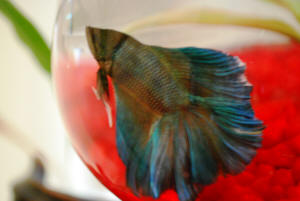
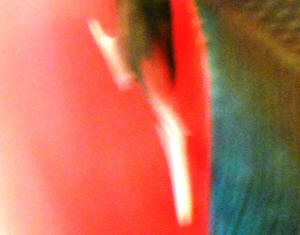
P.S. I have attached a picture. He also has these little white
things hanging from his bottom fins. Is that normal?
<Mmm, no; these are anchor "worms". Read here re:
http://wetwebmedia.com/FWSubWebIndex/anchorwrmfaqs.htm
Likely contributing to this fish's troubles, non-feeding. Bob
Fenner>
|
|
|
|
Re: More re: New Betta...Help! Lernaea
5/3/2011
Thanks so much Bob!
There is so much information on here so I am hoping I am reading
correctly.
This is what I am thinking that I need to do....please let me
know if I am incorrect. =)
<Okay>
I need to take the fish out of water and carefully remove the
white anchors with tweezers (grabbing it right at the entrance
spot) and then dab the wound with Mercurical.
<Yes>
I am a little unclear about what to do about the tank since it is
a small tank. I am thinking I need to wash the bowl and throw out
the gravel, put new gravel in, treat the water with stress coat
to take out the chlorine and then add some aquarium salt???
<Mmm, no... I'd wait, see if any intermediate forms have
been released by the adults on your Betta. Perhaps they
haven't>
Also, should I throw the plant away or just wash it? I know the
parasite was on the fish when I bought it. I am hesitant to take
it back to the store because they probably won't even bother
to treat it. I am praying that I can fix him.
Again, thanks so much for your time. Your website is so
helpful!
Shanda
<Did you read re Betta husbandry, where I referred you? Your
fish needs warmer (steady, as in w/ a thermostatic heater) water
and a filter. BobF>
|
My fish have splinters!!! 12/29/10
I have two three goldfish in a 10 gallon tank. I taking them out of the
tank yesterday to clean it and I noticed that the smaller goldfish had
splinters (or maybe bones?) growing out of him/her. I checked the other
two and they also have them but not as much. I tried to take them out
with some tweezers but I couldn't and the splinters were hard like
maybe bones. I have no idea what it is or what to do. Can anyone please
help me.
<Mmm, yes; I think your goldfish may have Lernaea/Anchor Worm
parasites...
Please see here: http://wetwebmedia.com/FWSubWebIndex/fwcrustdisfaqs.htm
re effective treatment. Bob Fenner>
Re: My fish have splinters!!! 12/29/10
Thank you very much. Your help is greatly appreciated.
<Ahh, welcome. Am happy to help you. BobF>
White Worms on Goldfish 11/7/10
Hello, I have a question about white worms on my goldfish. I've
searched the site--thank you for all the information and help you
provide, but am not finding cases that are similar to mine. I have a
55gal planted goldfish tank with 5 fancy goldfish, 1 Oto and a handful
of Nerite snails. I do 40% water change weekly, the basic water
parameters are; ammonia=0, nitrite=0, nitrate<20, pH 7.4, tamp 70. 2
of the fish, cute Ranchus, are new--they were introduced to the tank a
little over a month ago. The smaller Ranchu at about 3-1/4" has
had white worm looking things on his body and fins after she joined the
family. These worms are white and thin, about 1/16" or less in
length, and they look like short white threads or small white stitches
on this Ranchu's body and sometimes fins. Some of them come and go
(or move around, I'm not sure) over night, and some stay on the
same spot for days. My first impression was that they were small
Planaria that attached themselves to the fish, although I've never
read any articles stating Planaria can attach themselves to fish.
I've seen Planaria in my tank water and walls from time to time,
but I've always thought they were free swimming worms rather than
parasites. My orange fantail (largest and gorgeous fish at 6")
used to get a few of the same thing on his body/fins occasionally, but
with him they always went away after a few days. I'm starting to
get worried for the little Ranchu if this is in fact a case of
parasitic infection and she is not able to shake it off on her own. I
was told by the supplier of these Ranchus (dandyorandas.com) that they
were treated with Prazi while in his care. Additionally, they had a
ParaGuard/salt bath upon arrival, and they were fed Jungle
Anti-Parasite Medicated Food (Metronidazole 1.0%, Praziquantel 0.5%,
Levamisole 0.4%) for a full course of treatment according to the
instruction. I'm not able to get any clear pictures since the
Ranchu is active. She eats well and appears happy otherwise, no obvious
signs of distress or flashing. My only concern with her is that she is
currently the smallest fish in the tank, and the more I worry, the more
it seems as her scales are rather rough and lacking luster compared to
the others. Do you have any idea what I'm dealing with, and do you
suggest any further treatment? Thank you in advance for your help, I
look forward to hearing from you. Yuko
<Hello Yuko. I'm fairly sure you're dealing with
Anchor Worms, Lernaea spp. Although not common on
Goldfish kept indoors, they do occur from time to time, and may persist
for months or even years unnoticed at very low densities. There are
commercial medications for removing Anchor Worms. Do also read here for
more: http://www.wetwebmedia.com/fwsubwebindex/anchorwrmfaqs.htm Do
note that despite being called "worms" these aren't worms
but crustaceans, kind of in the same way koala bears aren't bears.
So medications like Praziquantel might be used against true worms,
they're useless for treating Anchor Worms. Cheers, Neale.>
Anchor worm on Synodontis catfish? 8/7/10
Hi,
<Hello,>
There is what looks like a worm buried into the side of my Synodontis
catfish.
<Oh?>
It is white and attached at both ends giving the appearance of a small,
white staple, so I can't see a forked end to positively identify it
as an anchor worm, but I don't know what else it would be.
<There are various similar parasites of this type beyond Anchor
Worm, and wild-caught fish do sometimes bring them along when
they're caught.>
It is about 1/4 inch long (the part that is visible, that is.). There
has been nothing (plant or animal) added to the aquarium for probably a
year.
<Has this "worm" not been visible in the last
year?>
No live food is used. Can you please help with what it might be and how
to treat it, given that she is a (very sweet!) scaleless fish?
<Assuming this is Anchor Worm, and we need a photo to be sure,
treatment in this case is going to be two-fold. Firstly, you need to
physically remove the worm. Use forceps or tweezers for this, and be
incredibly careful. Restrain the catfish with a wet towel. Don't
rush -- the fish can handle being out of the water for a good few
minutes so long as its wet -- but thrashing about is going to damage
you and the fish. Remember, catfish are equipped with sharp spines and
WILL NOT hesitate to use them, so don't allow your fingers to get
between the spines and the body or the fins will clamp shut and cut
your fingers nastily. After removing the worm, dab with a little
antiseptic; iodine for example would be ideal. Use a cotton swab for
this. Removing the worm opens the fish up to a secondary infection, so
the second step is to prevent that. Use either a broad spectrum
antibiotic or some sort of mild antibacterial such as Melafix.>
Thank you, Constance
<Good luck, Neale.>
Re: Anchor worm on Synodontis catfish? 8/7/10
Thank you!
<Most welcome! Cheers, Neale.>
goldfish - spot turned into a spike, Lernaea likely
7/28/10
Hi. I hope I am not wasting your time, but I can not find what I am
looking for anywhere on the internet. I have a very dark goldfish,
almost black, and had him/her in a quarantine tank on it's own for
several weeks. I bought it at the local aquarists, where I have
previously purchased a tench that had mouth rot and died within a week
or so. I should have learnt my lesson and not gone back. The black ones
were not selling in their tank and were getting big, so were being sold
cheap. Thing is, as the pond fish are sold, more fish come in and they
go in the same tank/water, as far as I can tell. I thought that as this
black one was big it must have been there a long time and so disease
free.
<Mmm, "shop" goldfish are typically festooned with good
parasite counts>
It must be around 6 inches including a large flowing tail.
<Likely a "comet" variety... will get bigger if it
lives>
Within a day or two of getting it home I could see that it had 2 very
pale whitish spots on it's mouth, one on the upper lip and a
smaller one on the lower, around 1 to 2mm diameter.
<Could be "just colour">
I didn't really think much of it as the fish has a pale belly, and
as nothing seemed wrong I assumed it was just it's colour
pigmentation. I have had him at least a month now, and had recently put
him into a tank with other goldfish, for observation before release
into my pond. So, I was considering freeing him into my pond outside
last night, but when feeding him first, I noticed that the spot on the
upper lip had formed a spike, very very small, less than 2mm long. It
looked like something was protruding from the white area of the white
spot, maybe in place of the white spot.
<Mmm, any chance of sending along a well-resolved image of this
area, spike?>
I have had goldfish with worms before and have a bottle of Prazi
pro
<Mmm, not useful here... as this is likely a "crustacean"
parasite... Lernaea, Anchorworm>
in my store cupboard. I have gave him a dose of this, about 24 hours
ago, but am really unsure if this the right treatment as I am so far
unable to identify the disease, or parasite. I have looked at pictures
of anchor worms,
<Oh!>
but I don't think it is this as the 'thing' has not
attached itself to the fish, but grown outwards from within.
<This is the life cycle... and do look like "spikes"
starting out>
Now I have just caught him into a small transparent box (while emailing
you) to have a better look at him, and the white thing seems to have
gone, and in place of both the white spots are pinkish bits, looking a
bit like pin-prick holes.
<This too can be indicative>
Could the white things have 'gone back in', or come out, or
been killed by the treatment?
<Maybe the latter, but I would still treat the system (all fishes in
contact) with an organophosphate>
While in this small observation box I have noticed streaks of red in
his fins, obviously signs of stress. I wonder if you are able to tell
me what this parasite is and whether I may have cured it as I am
anxious to get this fish back into a better environment as I don't
like to think that it is stressed/diseased.
Obviously may aim is to be able to free it into my pond. Also, should I
treat the other fish it was temporarily housed with, I have been
reluctant to do so as this larger tank houses snails which I do not
want to kill. I do not know if Prazi pro will kill snails.
Any help much appreciated.
Wendy
<Please read here: http://wetwebmedia.com/FWSubWebIndex/anchorwrmfaqs.htm
and look at the images of the infested goldfish near the bottom... and
read the linked files above re treatment. Bob Fenner>
Re: goldfish - spot turned into a spike 7/28/10
Many thanks for your reply and for the links.
Anchor worm is a lot nastier than I thought !!
<Yes... not to be/appear too reverse anthropomorphic, but
OUCH!>
After e-mailing you last night, and as the thing(s) had appeared to
have dropped off with the use of Prazi pro, I removed all the snails
from my big tank containing the fishes pending to go into my pond, and
stripped out the gravel and did a thorough clean down, 30% water
change, and added Prazi pro to them as well. There are no signs of any
health problems with these fish, and I can not find out how long I need
to keep an eye on them before I can be sure they are parasite free and
OK to release outside. Can you tell me?
<A few weeks>
Thank you for your comments suggesting organophosphates, which I have
researched this evening, to find are not available in the UK. I
remember I had to order the Prazi pro on the internet from abroad (US I
think) as it was not available here, this was a few years ago now, but
I can not find anywhere that will ship Dimilin or similar to the UK
either.
<I encourage you to ask among your stockists... and/or a Vet.
re>
I am keeping a close eye on the dark fish, which appears no different
tonight than last night. I have tea tree and salt in my store cupboard,
and wondered if these would be of use to fight any infection that may
grow due to the holes.
<Not really, no. More likelihood of exacerbating problems by
increased stress, decreased biofiltration with their use>
How long should I leave the fish in the Prazi pro treated water?
<... I don't think this vermifuge will do any real good here,
but three-four days finds the compound losing potency>
- (And is the possible dropped off thing still alive and able to hop
back on?)
<No... but if there are some present on the fish, there may well be
intermediate forms in the system itself... Hence the call to remove
adults (via tweezers) and treat the water/system>
- as I would like to get him out and into a bigger less stressful
space. He is in about 4 gallons at the moment.
<Put in the tank, treat all>
Also, on reading about organophosphates I read they are not suitable
for Orfe or tench.
<Are to degrees toxic and tolerable to all>
I have both in my pond, and Orfe in the potentially infected tank. It
is likely also that I have released into my pond already, fish that
were previously in my tank when for a short while the sick fish was
present.
<Ohhhh>
Would the parasite, if it is anchor worm, have been at a contagious
stage when I first purchased him, with the only signs a couple of pale
spots?
<Possibly, yes... the egg-bound females are quite a bit larger, more
obvious>
After a few weeks he went in with the other fish in the big tank for a
few days, and then I took some of the fish that were present at that
time, out, and released them into the pond. And I thought I was doing
such a good job at Quarantine! Still a novice - I have kept pond fish
for about 7 years.
I can take some pictures if it would be helpful, but there is no spike
to see at the moment.
Thanks for your help.
Wendy
<Let's wait, hope that all is to be well at this point. Cheers,
BobF>
Re: goldfish - spot turned into a spike 7/29/10
Thanks.
I am very impressed with your site and the amount of information
available to those needing help! Also with the speed of replies - fast
help when it is most needed. :-)
<... Wendy... you've sent 13.5 megs of ill-resolved, worthless
images... we don't have space for more than a few hundred Kbytes...
which is what we ask people to limit theirs to>
Have you heard of parazin P ??
<... yes>
I have been searching for ages for treatment available in the UK for
anchor worm, and eventually found this, from
Waterlife, and available on eBay.
I have purchased a tub of tablets, with which to treat the black fish,
he is still in isolation by the way. I didn't want to return him to
the rest as none of the others have shown any sign of any problem at
all ever. I will play the waiting game and just 'see', before
they go in the pond. And I will have the tabs with which to treat any
future problems. All this trouble began as we were building a bigger
pond. I moved all my old fish from their old home, 100 gallons small
pond in the front garden, to new home 600 gallons formal pond at the
back. Then I decided I did not have enough fish, and bought a couple at
a time, mostly small, that have lived in a tank in the house while
being watched/quarantined and while growing bigger ready for release.
As my small pond is empty other than original plants and water, pump
still flowing, etc, I an now thinking of releasing the dark fish into
that, where he will have more room, can still be observed, and I can
treat him safely alone with the Parazin P when it arrives. I guess I
have been lucky that I have had enough tanks/ponds to hand, and already
had a spare filter in the main tank etc. I do take try to take good
advice on board, ready for those 'in-case' occasions.
<Real good>
I have just caught him again for a few pictures. See attached. There is
no spike, but it is clear in at least a couple of these, that there are
pinkish patches, that today look less like holes - one on the top lip
and one on the bottom. During taking these I noticed a pale blob on his
face, left hand side below his eye and just forward towards his mouth,
again about 1-2mm.
I took about 20 pics, but could not get this blob to show up. I am sure
this was not there when I last looked up close, 2 nights ago. I am
sorry these photos are not clearer, but you can see their size - the
fish is around 6"
nose to tail. Do you think this is anchor worm?
<Can't tell>
I hope you don't mind me asking you look at another fish picture.
When moving my fish from the small pond to the larger one I found one
of the original fish I had around 7 years ago. Very slim, Orfe in
shape, brownish on top with red fins. I rarely see him in the pond as
he is nearly invisible, but I was surprised and pleased to see he is
still going, alive and well, though surprisingly small for his age,
maybe 5" long. The orfes I have grown rapidly in this time, and
are always at the surface. Are you able to identify this fish for
me?
<No>
Thanks once more for all your help.
Wendy
<B>
goldfish - spot turned into a spike, Lernaea likely
7/28/10
Hi. I hope I am not wasting your time, but I can not find what I am
looking for anywhere on the internet. I have a very dark goldfish,
almost black, and had him/her in a quarantine tank on it's own for
several weeks. I bought it at the local aquarists, where I have
previously purchased a tench that had mouth rot and died within a week
or so. I should have learnt my lesson and not gone back. The black ones
were not selling in their tank and were getting big, so were being sold
cheap. Thing is, as the pond fish are sold, more fish come in and they
go in the same tank/water, as far as I can tell. I thought that as this
black one was big it must have been there a long time and so disease
free.
<Mmm, "shop" goldfish are typically festooned with good
parasite counts>
It must be around 6 inches including a large flowing tail.
<Likely a "comet" variety... will get bigger if it
lives>
Within a day or two of getting it home I could see that it had 2 very
pale whitish spots on it's mouth, one on the upper lip and a
smaller one on the lower, around 1 to 2mm diameter.
<Could be "just colour">
I didn't really think much of it as the fish has a pale belly, and
as nothing seemed wrong I assumed it was just it's colour
pigmentation. I have had him at least a month now, and had recently put
him into a tank with other goldfish, for observation before release
into my pond. So, I was considering freeing him into my pond outside
last night, but when feeding him first, I noticed that the spot on the
upper lip had formed a spike, very very small, less than 2mm long. It
looked like something was protruding from the white area of the white
spot, maybe in place of the white spot.
<Mmm, any chance of sending along a well-resolved image of this
area, spike?>
I have had goldfish with worms before and have a bottle of Prazi
pro
<Mmm, not useful here... as this is likely a "crustacean"
parasite... Lernaea, Anchorworm>
in my store cupboard. I have gave him a dose of this, about 24 hours
ago, but am really unsure if this the right treatment as I am so far
unable to identify the disease, or parasite. I have looked at pictures
of anchor worms,
<Oh!>
but I don't think it is this as the 'thing' has not
attached itself to the fish, but grown outwards from within.
<This is the life cycle... and do look like "spikes"
starting out>
Now I have just caught him into a small transparent box (while emailing
you) to have a better look at him, and the white thing seems to have
gone, and in place of both the white spots are pinkish bits, looking a
bit like pin-prick holes.
<This too can be indicative>
Could the white things have 'gone back in', or come out, or
been killed by the treatment?
<Maybe the latter, but I would still treat the system (all fishes in
contact) with an organophosphate>
While in this small observation box I have noticed streaks of red in
his fins, obviously signs of stress. I wonder if you are able to tell
me what this parasite is and whether I may have cured it as I am
anxious to get this fish back into a better environment as I don't
like to think that it is stressed/diseased.
Obviously may aim is to be able to free it into my pond. Also, should I
treat the other fish it was temporarily housed with, I have been
reluctant to do so as this larger tank houses snails which I do not
want to kill. I do not know if Prazi pro will kill snails.
Any help much appreciated.
Wendy
<Please read here: http://wetwebmedia.com/FWSubWebIndex/anchorwrmfaqs.htm
and look at the images of the infested goldfish near the bottom... and
read the linked files above re treatment. Bob Fenner>
Re: goldfish - spot turned into a spike 7/28/10
Many thanks for your reply and for the links.
Anchor worm is a lot nastier than I thought !!
<Yes... not to be/appear too reverse anthropomorphic, but
OUCH!>
After e-mailing you last night, and as the thing(s) had appeared to
have dropped off with the use of Prazi pro, I removed all the snails
from my big tank containing the fishes pending to go into my pond, and
stripped out the gravel and did a thorough clean down, 30% water
change, and added Prazi pro to them as well. There are no signs of any
health problems with these fish, and I can not find out how long I need
to keep an eye on them before I can be sure they are parasite free and
OK to release outside. Can you tell me?
<A few weeks>
Thank you for your comments suggesting organophosphates, which I have
researched this evening, to find are not available in the UK. I
remember I had to order the Prazi pro on the internet from abroad (US I
think) as it was not available here, this was a few years ago now, but
I can not find anywhere that will ship Dimilin or similar to the UK
either.
<I encourage you to ask among your stockists... and/or a Vet.
re>
I am keeping a close eye on the dark fish, which appears no different
tonight than last night. I have tea tree and salt in my store cupboard,
and wondered if these would be of use to fight any infection that may
grow due to the holes.
<Not really, no. More likelihood of exacerbating problems by
increased stress, decreased biofiltration with their use>
How long should I leave the fish in the Prazi pro treated water?
<... I don't think this vermifuge will do any real good here,
but three-four days finds the compound losing potency>
- (And is the possible dropped off thing still alive and able to hop
back on?)
<No... but if there are some present on the fish, there may well be
intermediate forms in the system itself... Hence the call to remove
adults (via tweezers) and treat the water/system>
- as I would like to get him out and into a bigger less stressful
space. He is in about 4 gallons at the moment.
<Put in the tank, treat all>
Also, on reading about organophosphates I read they are not suitable
for Orfe or tench.
<Are to degrees toxic and tolerable to all>
I have both in my pond, and Orfe in the potentially infected tank. It
is likely also that I have released into my pond already, fish that
were previously in my tank when for a short while the sick fish was
present.
<Ohhhh>
Would the parasite, if it is anchor worm, have been at a contagious
stage when I first purchased him, with the only signs a couple of pale
spots?
<Possibly, yes... the egg-bound females are quite a bit larger, more
obvious>
After a few weeks he went in with the other fish in the big tank for a
few days, and then I took some of the fish that were present at that
time, out, and released them into the pond. And I thought I was doing
such a good job at Quarantine! Still a novice - I have kept pond fish
for about 7 years.
I can take some pictures if it would be helpful, but there is no spike
to see at the moment.
Thanks for your help.
Wendy
<Let's wait, hope that all is to be well at this point. Cheers,
BobF>
Re: goldfish - spot turned into a spike 7/29/10
Thanks.
I am very impressed with your site and the amount of information
available to those needing help! Also with the speed of replies - fast
help when it is most needed. :-)
<... Wendy... you've sent 13.5 megs of ill-resolved, worthless
images... we don't have space for more than a few hundred Kbytes...
which is what we ask people to limit theirs to>
Have you heard of parazin P ??
<... yes>
I have been searching for ages for treatment available in the UK for
anchor worm, and eventually found this, from
Waterlife, and available on eBay.
I have purchased a tub of tablets, with which to treat the black fish,
he is still in isolation by the way. I didn't want to return him to
the rest as none of the others have shown any sign of any problem at
all ever. I will play the waiting game and just 'see', before
they go in the pond. And I will have the tabs with which to treat any
future problems. All this trouble began as we were building a bigger
pond. I moved all my old fish from their old home, 100 gallons small
pond in the front garden, to new home 600 gallons formal pond at the
back. Then I decided I did not have enough fish, and bought a couple at
a time, mostly small, that have lived in a tank in the house while
being watched/quarantined and while growing bigger ready for release.
As my small pond is empty other than original plants and water, pump
still flowing, etc, I an now thinking of releasing the dark fish into
that, where he will have more room, can still be observed, and I can
treat him safely alone with the Parazin P when it arrives. I guess I
have been lucky that I have had enough tanks/ponds to hand, and already
had a spare filter in the main tank etc. I do take try to take good
advice on board, ready for those 'in-case' occasions.
<Real good>
I have just caught him again for a few pictures. See attached. There is
no spike, but it is clear in at least a couple of these, that there are
pinkish patches, that today look less like holes - one on the top lip
and one on the bottom. During taking these I noticed a pale blob on his
face, left hand side below his eye and just forward towards his mouth,
again about 1-2mm.
I took about 20 pics, but could not get this blob to show up. I am sure
this was not there when I last looked up close, 2 nights ago. I am
sorry these photos are not clearer, but you can see their size - the
fish is around 6"
nose to tail. Do you think this is anchor worm?
<Can't tell>
I hope you don't mind me asking you look at another fish picture.
When moving my fish from the small pond to the larger one I found one
of the original fish I had around 7 years ago. Very slim, Orfe in
shape, brownish on top with red fins. I rarely see him in the pond as
he is nearly invisible, but I was surprised and pleased to see he is
still going, alive and well, though surprisingly small for his age,
maybe 5" long. The orfes I have grown rapidly in this time, and
are always at the surface. Are you able to identify this fish for
me?
<No>
Thanks once more for all your help.
Wendy
<B>
|
Re: Hi, Guppy, Lernaea, reading -
03/30/10
Hi, thanks for the help that you have given me few weeks ago, I
see that some of my fish's health are improving. I also found
a pair of anchor worms in one of my female guppies (V shape from
her bottom).. I pulled one out with a tweezers.
<Yowch! Easy to kill such small fishes with such
extraction>
but still am trying to pull the other one out..not sure why but
that other anchor worm keeps going back into her body when I fish
her out to try and pull it out.
<Umm, their name is a hint>
So far that guppy is in quarantine...
<Still need to treat the main system to eradicate the young
Anchorworm crustaceans there... lest they develop, infest your
other fishes>
I removed all fishes that looked sick into a separate tank
(each). Any other ways to treat that guppy with the anchor worm
or I have to just wait for it to come out and try again till I
succeed?
<Read here:
http://wetwebmedia.com/FWSubWebIndex/anchorwrmfaqs.htm
and the linked files above>
Back then a couple of my male guppies have problems opening their
fins because of fungus. Right now though...although their fins
look fine now..I notice that one of the male started developing
something that looks like
black patches around the fins and tail...I attached the best
picture that I can take..Hope it helps.
<And here:
http://wetwebmedia.com/FWSubWebIndex/gupdisf4.htm
and the...>
Thank you.
<Welcome. BobF>
|
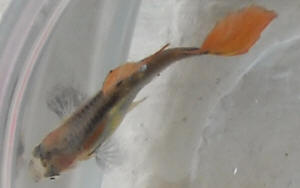 |
Calico Fancy Tailed Gold Fish, Lernaea, more hlth. issues
11/24/09
Hi Crew
<Hello,>
Please could you help?
<Will try.>
I purchased a Calico, Red Cap Oranda Gold Fish 18 days ago. He is about
14 centimeters in length.
<Good size!>
He was put into a quarantine, when purchased. Its a 40 liter tank and
all basics in water quality have been checked and are good.
<Good? Not in a 40 litre tank they're not. Seriously, this tank
IS TOO SMALL for a Goldfish this size. Indeed, it's too small for a
Goldfish of any size. I cannot stress this point too strongly. Minimum
aquarium size for Goldfish is around 110 litres.>
On close inspection when I got his home I discovered he had 3 anchor
worms.
I am treating with Parazin. First treatment of 14 days released 2 of
the worms. (I did a 50% water changed after completion of the first 14
day treatment), waited 48 hours, and now have added a second table of
Parazin, for a second 14 day treatment to try and rid him of the one
stubborn anchor worm. I have also added 1 teaspoon of salt, per 2
liters of water.
<Okay.>
My concern is he also has two dark black foreign clumps of matter,
(Never seen this before) about 2 mm in size, embedded into his Wen,
both, just above his right eye.
<Black specks on Goldfish are typically ammonia burns. They can be
caused by other types of physical damage, but ammonia burns are the
most common.
Because the aquarium is so small, I have little doubt that water
quality is either the direct cause or aggravating whatever background
problem there might be.>
These were present when I bought him, don't seem to worry him and
have not changed is size, colour or shape, over the 18 day period.
There are no other visible signs of these black crustaceans anywhere on
his body. It is more visible with the first 2 days of treatment of
using the Parazin, as the flesh directly above these spots, seem to
open up a little, giving a visual of the dark black spots embedded into
the skin. They are berried about 2mm into the skin. By day 3 of the
Parazin treatment, the (Hole) tiny opening seems to close, and the
black spots are once again covered by the flesh of his Wen and look
like dark black shadows, under his orange Wen, almost undetectable.
He is eating well, has a varied diet of green peas, bloodworm, daphnia,
flake and pellets, and on the whole, looks pretty healthy, swimming
actively with his dorsal fin extended.
Do you have any idea what this would be? and what and how I could treat
it.
<Do read here:
http://www.wetwebmedia.com/FWSubWebIndex/goldfish101art.htm
Almost all problems with Goldfish come down to people keeping them
badly.>
Your assistance is appreciated ....
Many Thanks
Petrina
<Happy to help. Good luck, Neale.>
PLSS HELP - Something wrong with my Flowerhorn - Unable to
diagnose. Env. -- 09/08/09
Hello,
<Hi there>
Something definitely wrong with my Flowerhorn... I will try to be as
descriptive as possible..I have not given any pictures in this post..
because picture in this case will not tell you anything...
Background
Tank - 48 X 18 X 18
<In inches I'll take it, not cm.>
Filter - Canister 1200 L/H
Air Curtain for aeration...
Small pebbles in the ground, not as a substrate but more of him to play
with...
<At times gravel is useful to necessary to foster biological
filtration>
A bog wood - on which the air curtain is tied around
Sunday (August 30th 2009) - Performed a major cleaning of his tank.
Cleaned glass, he had quite few number of pebbles as gravel to play
with, had to remove some of them, because they were very dirty..
Cleaned the canister medium only partially... changed water over
50%...
<Mmm, I would usually keep such changes to 25-20% maximum>
Wednesday (2nd September) - Got hold of a brand new packet of Ching Mix
Sp100 (from US) - Started feeding him in small quantities morning and
evening..
Thursday (3rd September) - Noticed an unusual thing in the evening.. FH
has passed poo usual in color, but the poo was floating on top of the
surface instead of settling down..
<Can be just the food>
Problem
Friday (4th September ) -
Morning - Changed water 20%.. added salt..
<... why? What sort of salt/s? Unless added to raise dKH or such,
not necessary or advised with Neotropical Cichlids>
usual appetite for him and usual aggression.. he had his feeding (Ching
Mix)
Evening - Went home to see him lying on corner of the tank.. color
darkened.. The whole tank is spread with this Poo.. very unusual for a
FH poo.. not continuous, but small granule like structure, black in
color spread all across the tank floor...
Performed water change once again, cleaned the mess and added salt....
felt that he also had trouble in swimming... (is that a swim
bladder??)
<...? No>
Saturday (5th Sep) -
Morning - Color improved... no signs of stress, but most of the time
resting down...when swimming, swimming is normal.. tried showing him
his food packet.. he became excited for feeding.. did not fed him
though - Diagnosis, may be minor constipation... Stomach slightly
bloated..Thought I should be stopping Ching Mix...
<I would>
Evening - Situation remained same.. Throughout this day, he did not
passed any poo...
On account of heavy rainfall where I live...temperature of the tank was
showing 27.4 degrees, Changed water 20%, added heater, salt, had set
the temp to 30 degrees.. Did not fed him for the whole day...
Sunday (6th Sep) -
Morning - Still no sign of improvement.. most of the time resting
below, he comes up only when someone approaches his tank.. But he had
appetite...No food... Water change 20%, added salt
<Don't add salt>
Evening - Situation remained same...resting down.. not passing any
poo... Tried him 1 pellet soaked in water.. I had to find out what was
wrong... he ate that single pellet literally gulped it (Hikari cichlid
staple)... Moment after consuming the pellet, vertical black stripes
appeared out of no where and he went down to rest in the corner...
Monday (7th Sep) -
Morning - found him resting below, color darkened.. Started
Metronidazole treatment... Metrogyl 400 mg dissolve in luke warm water,
pellets soaked in that solution for 15 min.s.. fed him.. usual
appetite, usual aggression while feeding... once completed, body turned
black.. went down to rest...
Evening - Went home, found him resting on a corner.. he has passed Poo
- this time normal in structure but dark yellow in color? When someone
approaches, he swims fine... otherwise whole day resting in a corner -
Stomach bloating disappeared...
Water change 20%, added Salt
<...>
Tuesday (8th Sep - Today) -
Morning, same situation resting, dark stripes in the body... fed him
few pellets with Metrogyl soaked... He has passed Poo, small in
quantity but dark yellow in color
Help me guys what is going wrong??
<Salt... water quality likely, some toxicity...>
1. Looking at his swimming pattern - he does not have a swim
bladder...
<... Cichlids do have such>
Sometimes he jumps to catch the pellet..
2. Internal Infection - He is not passing any white poo
3. Stomach is not bloated...
4. Immediately after food, the dark stripes come in, remains for some
time and then disappear..
Does he have a internal blockage???
<Doubtful>
One point wanted to mention here -- The bottom edges of his tank is
covered with some kind of a yellow/white film which I thought was water
mark on silicon gel..The fellow who prepared this tank had actually
emptied 1 full silicon gun on my repeated warnings of leak...
<... When was this done? What sort of Silicon/Silastic was used?
Some has mildewcide in it... for window use... is toxic. Could be at
fault here>
This yellow/white kind of things keeps coming out from those edges,
specially when i change water or when there is a turbulence... some
part gets sucked by the canister, some again settles in the
bottom...
Since yesterday I am also observing the same kind of this thing is
hanging from this dorsal fin.. ?? Is he also having an fungal
infection?? This is a new symptom came out of no where
Some ideas friends --- I am fearing, that I should not be late in
corrections.. he still has appetite for food... if he looses that, then
the damage would be done already...
Regards
Nimo
<Do get hold of the Silicon cartridge, read what the intended use
is. Bob Fenner>
Re: PLSS HELP - Something wrong with my Flowerhorn - Unable
to diagnose Lernaea? 9/10/09
Hi Bob,
<Subhankar>
First of all thanks for stepping in to help me out
<Sure>
Update on the situation...
Yesterday I had first roller coaster ride in my 10 yrs of hobby..
The diagnosis was wrong..
I observed him sulking in a corner in a slanting position.. I observed
him lethargic, I observed him turning dark in color.. so the first idea
which anyone gets is an internal stomach problem...
But the confusion was
1. He had the usual appetite
2. His stomach was not bloated
3. He was passing poo normal in color
Tuesday (8th September 2009)
Evening - I observed whenever he sulks, he sulks in the same position
in whichever corner of the tank he chooses... He sits in a posture
where both his pelvic fins are covered in the ground, I also observed
that he has a very mild movement pattern sitting in the same position,
as if swinging like a pendulum...
I observed he had two red scars in his pelvic fin and a pure white
thread like structure 1 inch in length hanging from both the scars -
Worst part is that thread has a sac like structure or a ball at the
end....
Wednesday (9th September 2009)
Morning - Saw the thread like structure has disintegrated from one of
the scars, one still has a reminent, very small in size..
Three new white pimple like structure arrived on his tail.. they were
new... looks like some kind of a white pimple...
Afternoon - My all doubts were Anchor worm, ...
<Ahh! A too-common parasite for pond-raised fishes, or kept with,
fed fishes from...>
I had seen this before with one of my friend's goldies, So i knew
how does an Anchor worm look like so, at the same time was not aware of
what is the commercially available medicine, whether will get it in
shorter time.. from anywhere..
He was always sitting in bottom, in a posture, which used to cover both
of his scars.. and he used to move some time to and fro as if rubbing
those scars...
Decided to go for KMNO4 (PP) treatment..
<Mmm, not for Lernaea... Better the organophosphate route... DTHP or
Dimilin... Please read here re:
http://wetwebmedia.com/FWSubWebIndex/anchorwrmfaqs.htm
and the linked files above. You will need to extract/remove the adults
on the fish itself with tweezers>
Had a 23 litres tank - dosage of 10mg/litre of PP, prepared a PP
concentrated solution (25 mg in 500 ml of distilled water) and had put
5 ml of that in the 23 litres tank resulting in 230 mg of PP...
<Potassium permanganate is too strong an oxidizer for "casual
use"... too easy to serious burn fishes>
Transferred the FH into that tank, and allowed him to be there for 20
minutes with heavy aeration...
By god's grace he took the treatment well.. he was swimming.. all
through the treatment... there was heavy bubbling inside the tank.. the
clean water of PP was filled up with very small disintegrated
particles....
After 20 minutes took him out to a freshwater tub...
Cleaned his hospital tank thoroughly, filled - refilled twice,, and had
put him back again....in his small hospital bed
<Good>
Then came the easy but the most tedious part.. had to again disinfect
his 300 litres tank with KMNO4... this time did not measured the KMNO4
amount.. just poured it liberally in the tank with all decors inside...
allowed the tank to sit for 30 minutes.. with PP solution...
<Yikes... stains most all. I would have used hypochlorite/chlorine
bleach... Per the protocol detailed on WWM>
Then cleaned all his decor, refilled and cleaned 300 lites twice, till
i was sure not a trace of KMNO4 was visible... poured it up with water,
dechlorinator, salt started heavy aeration for 4 hours.. then
transferred him back to his main home..
Immly he became white, all colors gone.. fed him two pellets, switched
off the lights,
Thursday (10 th September) - today morning
Colors got back to normal...he ate pellets, active than before but
still relatively lethargic..
<But... did you remove the adult Anchorworms/Crustaceans from the
fish?>
Out of 5 pimples, 2 have vanished, 1 still exists, remaining 2 has very
slight traces.. I am just hoping, that those are dead by now and would
vanish in 2 - 3 days time..
I will be keeping a close watch on him...
Now the million dollar question i have, is how did this thing entered
in my tank..
On last Sunday (30th Sep) - I did a major cleaning of both of my 4 feet
tanks.. Till now i do not see anything to my Malawi Setup.. but the FH
got affected..
I had kept him in a very good condition - I know difficult to believe,
but people who have seen him as regarded my tank as one of most clean
ones..
but still ...
I just hope that I am done.. and these remaining small spores would go
away with Salt and temperature and I do not have to treat him with PP
once again...
Had to do this, because these damn freaks were sucking all that I was
feeding him...
Just hope he pulls through...
<Me too>
Regards
Subhankar
<Thank you for sharing your experiences... observations and
reactions. Bob Fenner>
Dalmatian Molly, dis.; was: platies 8/27/09
Thank you again. I have another quick question about my Dalmatian
molly.
She is about 2 months old or so and has developed this whisker like
thing on her "nose". It looks stiff and about 1/8 in. long or
so it actually splits into 2 but comes from one spot on top of her
"nose " area. Is this
something to worry about - a parasite or just an abnormal growth.
<More than likely dead skin, and as such, a possible precursor to
Finrot.
In the case of Mollies, the number-1 cause of such problems is keeping
them in the wrong environmental conditions. Mollies do best in hard,
basic water with a little marine salt mix added, around 3-6 grammes per
litre being ideal. Marine salt mix (as opposed to the largely useless
"livebearer salt", "tonic salt", or "aquarium
salt" on sale) contains not just salt but also minerals that
harden the water and raise the pH. The overall effect is to create
slightly brackish conditions that suit Mollies extremely well.
Whilst Mollies are found in freshwater habitats for the most part in
the wild, and less often in brackish and marine habitats, for whatever
reason, they do best in saline conditions when kept in captivity. There
are several explanations about this, but the most probable answers are
to do with the stable basic pH and the reduced toxicity of nitrite and
nitrate in salty rather than freshwater conditions. If you read through
our Molly disease FAQs, you'll see this issue comes up again and
again, and the only explanation can be that people buy them before
reading any books first: practically every aquarium book written since
the dawn of time has stated clearly that Mollies prefer slightly salty
conditions. Anyway, my advice would be to add marine salt mix (e.g.,
Instant Ocean, or whatever generic marine salt mix brand your pet store
sells) at the dose suggested above.
Other livebearers won't mind this, and in fact are likely to be
healthier, particularly Guppies, though Platies and Swordtails
aren't from brackish water habitats and won't appreciate the
addition of marine salt mix above 6 grammes/litre. At this dose,
you'll find using marine salt mix very economical: you're using
about a sixth the amount used in marine tanks, so a box suitable for 20
gallons of marine strength salt water will make 120 gallons of water
for a Molly aquarium. Most hard water tolerant plants will adapt fine,
but most freshwater fish will not, but then, as is clearly stated on
WWM numerous times as well as in practically every aquarium book ever
written, you don't keep Mollies in community tanks. They aren't
community fish, and never have been. The fact they often need saline
conditions simply makes them untenable for such systems, though they
work brilliantly well in livebearer, brackish water, and even marine
community
tanks. I'd even argue that Mollies are such beautiful fish, and in
the cases of Sailfin Mollies, so very large when properly cared for,
that they amply deserve a tank all their own.>
She eats and acts fine with no other signs of distress. Thanks for your
time. Donna
<Cheers, Neale.>
Re: Dalmatian Molly; was: platies. Dis., Lernaea?
8/29/2009
Hi Neale,
I found that not only does the molly have this thing but one of the
baby platies has one hanging from it's bottom. I thought it was
feces. At closer observation it looks like a Y comes from one spot and
splits to a y
shape. I have gotten the salt - should I just continue with that and
nothing else? I also had the water tested and it is fine. Again thanks
for the input to a very novice aquarist.
Donna
<Donna, the shape is *strongly* suggestive of something like an
external crustacean parasite. Google "anchor worms",
"Argulus", and "fish louse" to see what you get. In
general, these are best removed by [a] dipping the fish in a seawater
solution (35 grammes non-iodised salt added to a litre of aquarium
water) and then [b] forceps used to gently pull the parasite off.
Maintaining the aquarium at SG 1.003 to 1.005 (6 to 9 grammes marine
salt mix or tonic salt per litre) should also do the trick. If
you're maintaining the tank as a brackish water aquarium, then
raising the salinity using marine salt mix should shift the parasites,
but if it
doesn't, then use forceps. Grip the parasite as closely as possible
to the fish's body, holding the fish firmly without squeezing.
Don't rush! If you dip the fish in seawater for one to twenty
minutes, the parasite should
weaken, making this easier. Clean the wound with antiseptic (something
like a dab of iodine or even Melafix) when done. Cheers, Neale.>
Re: Dalmatian Molly; was: platies, Lernaea
8/28/2009
Hi Neale
Yup that's exactly what it looks like when I Googled it.
<Very good.>
My concern is actually removing the thing. I'm nervous about taking
the fish out and hurting it.
<May well "hurt" as you pull the thing out, but much less
dangerous (or painful) than the constant sucking of blood.>
Is there anything special I need to do, do I just hold it in between my
fingers?
<Not fingers; must be forceps, or something similar, like tweezers.
Have you ever removed a tick from a dog? Not dissimilar; must remove
whole thing, including mouthparts, taking care not to snap the body in
two and so allow secondary infections. Your aquarium shop may sell
certain Anchor Worm specific medications, e.g., Anchors Away, but these
are often fairly toxic in themselves, and can harm sensitive fish
(e.g., Loaches, Catfish) as well as invertebrates (snails, shrimps).
They aren't always effective, either.>
I have the Melafix also - do I just apply only once after pulling it
out or do I repeat that until the wound heals - or should I just add
the Melafix to the tank after wards also. I do also have the stress
coat stuff to add
to the tank for the slime - is that also suggested?
<I'd dab a little neat Melafix with a Q-tip onto the wound, and
then dose the tank as suggested by the instructions. Stress Coat
shouldn't be required, and in fact I recommend against mixing two
or medications unless you know it is safe to do so.>
I was hoping that with the salt treatment it would fall off but of
course it did not.
<How much salt did you add? At one extreme, if you transferred
Mollies to a marine aquarium (or similar added 35 grammes marine salt
mix/litre water) the Anchor Worms would quickly die. In a freshwater
tank you can add up to a specific gravity of 1.005, or 9 grammes salt
per litre, which should certainly weaken the parasites without harming
salt-tolerant fish like Platies as well as Mollies. Of course,
non-salt-tolerant fish may not accept such conditions for long.>
My other question is do I have to do anything else to ensure that the
anchor worm is gone from the tank?
<There's no 100% reliable way, but usually removing the worms
you see, and if any others occur afterwards, removing those, breaks the
cycle.>
A 25% water change I'm guessing.
<Won't do much of anything against Anchor Worms, since these are
attached to fish, not swimming about.>
Also is there anything I need else I need to do to ensure recovery of
the fish?
<Usually the fish recover very well.>
I know nothing is "for sure" but I want to give it as good of
a shot as possible. We haven't added any new fish - besides the
babies - in quite some time I'm wondering how this parasite got
in.
<Typically, Anchor Worms breed in ponds, and in the case of
livebearing fish, this would have been outdoors on a farm in Florida or
wherever.>
Any ideas on how not to get a re infestation?
<Observe new fish carefully, quarantine them, and if you see Anchor
Worms, remove them before placing them in the main aquarium. Anchor
Worms are actually pretty rare among aquarium fish, though they are
more common on pond fish.>
Sorry for sooo many questions but as I've said I feel there is no
better site than yours and trust everything you suggestion. Again thank
you for your time and patience.
Donna
<Happy to help. Good luck, Neale.>
Re: Dalmatian Molly; was: platies, Lernaea
8/30/2009
Hello again Neale,
<He's marked "out till Tues.>
I added the salt as per the recommendation on the bag. Just to make it
slightly brackish for the molly. We have all platies except for the one
molly who we've had as a fry and who just appeared in our tank one
day. We had an adult who had passed a while before hand due to ick but
must have been pregnant. Anyway 2 adult platies, 2 platy babies ,one
baby molly and a clown Pleco in a 29 gallon tank. All but one baby
platy has an anchor worm. I will try removing the ones I see and let
you know.
<Do take care here, with their extraction... the adults' removal
can/does cause a great to mortal amount of damage. Read here:
http://wetwebmedia.com/FWSubWebIndex/anchorwrmfaqs.htm
and the linked files above; particularly re the use of
organophosphates>
But as I stated before a bit worried about doing that. I was wondering
how to hold the fish actually - with my fingers or laying him out on
the net?
<The net>
Will this just stress them out?
<Will>
As you can tell a really new fish hobby. But if I don't ask I
won't learn!
I really appreciate your time. I'm just wondering if the anchor
worm has eggs and more develop - that was the reason I questioned about
doing the water change.
Again thanks Donna
<My sis' name... whom I'm moving an armoire with currently.
Bob Fenner>
Re: Dalmatian Molly; was: platies 8/30/2009
Thanks Bob,
texting and moving an armoire at the same time - nice
multi-tasking!
Donna
<Donna, Bob, just wasting time at CVG airport. Thanks for taking the
time to answer this query, Bob. Donna, yes, removing lice is tricky but
not difficult, and dipping in saltwater, as mentioned earlier, weakens
the crustacean sufficiently that removal isn't hard. Will bow to
Bob's better knowledge of organophosphate insecticides for
treatment, but my understanding is that these have reduced/zero impact
on "attached" lice. It
is telling that much research in aquaculture is towards
"manual" removal via cleaner organisms; in the UK, the
favoured "cleaner fish" on salmon farms being juvenile
wrasse, analogous to cleaner wrasse behaviour in the tropics. Cheers,
Neale.>
medication, Lernaea
Hi crew, a quick question about medicating my tank. I had medicated it
for anchor worm - which didn't work
<... doesn't work on embedded adults>
so now onto pulling them out manually, but replaced the filter to get
the medicine out. How long is this process because after I attempt to
remove the anchor worms I was told to apple Melafix
<... no>
on the spots and treat tank with the Melafix for about a week. If I do
that I have to take the carbon out of the filter. So I want to make
sure all the medication is out first. Thanks for any input. D
<Depending on the quality of the carbon employed, the amount, volume
of the tank, circulation through it... a few hours. BobF>
Re: Dalmatian Molly; was: platies, Lernaea
9/1/2009
Hi crew,
I removed the anchor worms with tweezers but not really sure if the
head came with it.
<Is distinctive...>
I tried my hardest to get the fish still but of course one jumped as I
was pulling and not sure if the whole thing came out. The anchor worms
were all in uneasy areas (right next to fins and one by the mouth) and
hope I didn't harm the fish, they are very hard to distinguish
between when they are out of the tank everything is so translucent.
They all seem shaken by the ordeal as I am also. If I didn't
successfully remove the head can I say these fish will eventually
die?
<Mmm, no; not necessarily>
I used the Melafix on them and am treating the tank with it also. Now
just wait and see? I'm so upset by this whole endeavor. What else
needs to be done? Thanks for your time and patience - kind regards
Donna
<When, where in doubt, keep reading. B>
Re: Dalmatian Molly; was: platies, Lernaea
9/1/2009
Hello AGAIN,
I'm glad to hear that they may not die, I last spoke with Neale who
suggested using the Melafix after wards is this a sufficient tonic for
recovery.
<Ah, no, perhaps I wasn't clear. It is standard practise after
physically removing Anchor Worms and other "skin biting"
parasites to dab the wound with an antiseptic such as iodine. If you
have Melafix, then this might be used in the same way, as a topical
antiseptic, or perhaps added to the water to reduce the chances of
secondary infection. In and of itself, Melafix won't cure Anchor
Worms, and as Bob is intimating, Melafix isn't altogether reliable,
and you may still find the wounds become sites of secondary infection,
in which case an appropriate anti-bacterial or anti-fungal would be
used.>
Is there a different solution? I got a different answer from Bob.
Needless to say they are tight finned right now and not looking happy.
I had put some Cycle in this morning - suppose to help with fish loss?
Anyway I'll heed any info you throw at me. Have read all the FAQs
about the anchor fish on your site but will take any other info if you
have. Again thanks for your knowledge sharing! Donna
<Physically removing parasites from fish shouldn't cause undue
stress,
<<!? Lernaea extraction I've seen cause outright death...
being netted, handled, having a large (%) mass removed from the body,
bleeding... RMF>>
and usually they recover quite rapidly from the stress of being removed
from the tank and handled. The chances of secondary infection
aren't great, but it does happen, hence the need to keep your eyes
open for signs of bacterial or fungal growth. Cheers, Neale.>
Re: Dalmatian Molly; was: platies 9/1/2009
Hi thanks again, I see that most of the fish are back to normal from
being on the bottom to up and swimming around and eating.
<Good.>
One in particular is swimming about at the top head up tail down
clenched fins. Should I be worried.
<Yes, particularly if it doesn't show signs of improving over
the next day or so.>
And lastly should I continue for the recommended 7 days with the
Melafix in the tank or should I use the Cycle instead or along with the
Melafix?
<Don't Melafix and Cycle do different things? Nutrafin Cycle is
a largely useless product that is supposed to improve the performance
of biological filters and (supposedly) speeds up the rate at which new
filters become colonised by bacteria. I'd be surprised if it did
much of either, frankly, but I'm sure of the many ways to spend
money, it's among the more harmless.
So if you want to use it, go ahead, but it isn't going to make your
fish healthier or a properly maintained and mature filter any better.
Melafix is a tea-tree oil solution that has mild anti-bacterial and
anti-fungal
properties. Some aquarists swear by it, but others, including Bob, are
much more critical. I can certainly report that many aquarists who have
used Melafix still go on to have bacteria or fungal problems, so at
best, it's an unreliable "cure".>
cheers to you! Donna
<Cheers, Neale.>
Re: Dalmatian Molly; was: platies 9/1/2009
Ok cool I'll just use the Melafix - you know I'll always listen
to you guys rather than the supposed fish experts at the LFS.
<I'm glad we can help.>
What should I do about the one I should be worried about - she's
eating (a little) but no signs of anything on her body just the hanging
out at the top and tail down.
<Is this a Molly or a Platy? With Mollies, fin-clamping is a common
symptom of stress, sometimes to do with water chemistry or water
quality, but sometimes because they're too cold. Oddly, while
Mollies are subtropical to tropical fish in the wild, with a very broad
temperature tolerance (they live as far north as the Carolinas in the
US) the tank-bred forms need really warm conditions to do well, quite a
bit warmer than the average community fish. So whereas Platies thrive
best around 24 C/75 F, Mollies are usually better kept a bit warmer,
around 26-28 C/79-82 F.>
The one and only male is definitely feeling better because he's
"courting" her again and bothering her to no end.
<Clumps of floating plants will help.>
Didn't take long for him to be up and running.
<Indeed! Cheers, Neale.>
Re: Dalmatian Molly; was: platies... Lernaea f'
9/5/09
Hello,
I'm at a loss again they seem to be making a turn for the worst -
hanging at the bottom and when they do come up for food their heads are
up tails down. But they are eating. Any advice on what to do?
<Keep checking water quality, being observant>
Not sure of what's wrong. There are no visible sign of anything
physical just that I extracted the anchor worms so could that be the
problem? They are flashing on things too. Thanks for any advice.
Donna
<Maybe. RMF>
Anchor worms and quarantine 6/4/09
Hi
<Hello,>
I've poked around on the web, but haven't found anything that
can answer my question. On Monday I bought 2 new goldfish, a calico
fantail (3cm) and a orange-and-white fantail (4cm), to add to my 10
gallon with a 6cm fantail (upgrading to 60gal at the end of the
month).
<Glad to hear you upgrading this tank! Ten gallons isn't nearly
enough for three Goldfish.>
I've had that fantail for a year and a half, with no problems. This
morning (Thursday) I noticed that there are thin string-like things on
the tips of the white-and-orange fantail's tail, he also has a
scale that is dark (looks like a wound) that I noticed when I bought
him home.
<Now, there are three things to think about here. The first is some
type of external parasite like Anchor Worm, just as you suggest. But
the two other things to consider are Finrot and Fungus. Finrot erodes
fin tissue, leaving behind what we call fin rays (the bones) until
these snap off. It's actually very common for Finrot to take the
appearance of receding fins and trailing fin rays. Fungus is
characterized by the presence of the hyphae that make up the
"body" of the fungus, and these look like cotton wool
threads. They can, in some instances, be quite long, over 1 cm. So
that's another thing to think about. Both Finrot and Fungus are
latent in all aquaria, even well maintained ones, since the bacteria
and fungi responsible normally do good work breaking down waste
materials.
Consequently they have the potential to come out of nowhere when
conditions turn bad in the aquarium. Anchor Worm, and indeed most of
the other large external parasites, have complex life cycles that
cannot be completed in aquaria. They only really become problems in
ponds, and because Goldfish are farmed in ponds, it's newly
imported fish that are likely to carry them. Once exterminated, Anchor
Worms rarely turn up in aquaria ever again.>
I've done some reading about Anchorworms and I've decided to
quarantine him, because he doesn't seem to have any other wounds
where the worms could've reproduced. Should I keep him in
quarantine and treat him, or should I treat the main tank?
<Quarantine, treat and observe the fish until you are happy he is no
longer infected. Free living parasites could potentially hitchhike from
the quarantine tank to the display tank via buckets, nets, etc. so take
care to
isolate the two tanks as fully as possible. Disinfect buckets, nets,
etc. using a strong brine solution (50 g/litre cooking salt should do
the trick). Anchor Worms are normally treated using organophosphate
insecticides to kill the free living stages, with the adults ideally
removed by hand. This is fairly tricky to do, but worthwhile if the
insecticide isn't killing the adults quickly. Place the goldfish in
a waterlogged towel, wrap the fish securely to hold it firmly, and then
pull away the adult Anchor Worm using forceps from its head, NOT
it's tail (it's a lot like removing ticks from dogs, if
you've ever done that). Dab the wound with some sort of antiseptic
such as mercurochrome, iodine, tea-tree oil, etc. It would be a very
good idea to use something like tea-tree oil proactively in the
aquarium once you're finished to prevent secondary infection,
though if only the tail fins are affected, the risk of trouble is very
small. You may decide to dip the Goldfish in seawater for a few minutes
prior to manual removal of the parasites; although this won't cause
serious harm to the Goldfish, and doesn't kill the parasite, it
does weaken the parasite, making it easier to remove them. Make up
seawater using 35 g per litre non-iodised cooking salt or aquarium
salt; don't use regular
marine aquarium mix because that raises the pH and hardness, which
won't be appreciated by the Goldfish. Dip the fish using a net, and
leave for several minutes, potentially 15 minutes, but remove the fish
at once if it
shows signs of distress such as rolling over. You can now pull of the
Anchor Worms a bit more easily than otherwise. After a couple of weeks,
if there's no sign of any more parasites on the fish, and
you've finished the treatment of insecticide, you can then move the
Goldfish into the display tank.>
I know this isn't fin rot, there is nothing else wrong with his
fins or with him, he's eating and swimming....
Thanks for your time!
Nadine (South Africa)
<Hope this helps, Neale.>
Anchor worm and platy fry 12/30/08 Good evening,
<Hi,> I'm new to the hobby and about a month ago I introduced
a female wagtail platy into my cycled tank. Little did I know, I soon
had a brood of fry :) Wanting to ensure the safety of the fry and it
being a well planted tank, I moved the mother to another tank.
<Floating plants the way to go with these livebearers; instinctively
the fry seek shelter in the leaves/roots of floating plants, and
it's easy to see them there and scoop them out. The fine roots of
species such as Limnobium trap algae and organic detritus, providing
lots of good "grazing" for Platies, both newborn and
adult.> A few days later, in the fry tank, I noticed small
crustaceans which I first thought we daphnia--either way the fry were
happily eating them! After a lot of reading on my new hobby, I spotted
a male adult anchor worm in the tank today. Needless to say, I removed
the little b*****! <Are you sure it's an Anchor Worm? Actually
NOT AT ALL common in aquaria, and while can be introduced on live food
collected from a garden pond, unlikely to come from farmed Daphnia
bought in a reputable pet store. Because Anchor Worms need intermediate
hosts to complete their life cycle, they die off eventually in aquaria,
rarely reaching population sizes large enough to do any serious
harm.> I've seen spotted a couple of adult female anchor worms
in there and they have gotten the same treatment.. My question is with
the platy fry being about two weeks old and only about 4 millimeters
(excluding tail) can the anchor worms do any damage or should I treat
the tank or move the fry to another tank? <In theory at least,
Anchor Worms can harm any fish, in part as parasites themselves, but
more seriously by creating wounds that can become infected. But I
honestly don't believe this is the issue here. Portions of live
food from the pet store may contain other crustaceans alongside
Daphnia, some of which might be mistaken for Anchor Worms. They're
difficult to treat without recourse to insecticides such as
metriphonate, but in an aquarium, the cycle is broken anyway, so there
shouldn't be a long term problem.> Thanks for a great web site
and, of course, any help, Sam <Cheers, Neale.>
Goldfish Parasite 11/07/08 Hello crew. Recently I
looked at my goldfish and noticed sort of a white thing sticking out of
his skin. It looks sort of like a pimple. I researched, but I could not
find a picture that looked like the parasite on my fish. Can it be some
type of anchor worm? Are there many different species, because this
parasite does not look exactly like the pictures online. For example,
it does not have a forked tail. What should I do? Pull it off? In the
meantime, I dosed the tank with a 0.3% concentration of salt. Hopefully
it will kill the parasite. Thanks. <Greetings. Anchor worms are very
distinctive, and obviously look like small black anchors stuck to the
body of the fish. They're pretty uncommon in aquaria, and are more
of a pond thing. Anyway, fish can get "pimples" for all kinds
of reasons. Goldfish have spawning tubercles on the face when sexually
mature, and many aquarists mistake these for parasites. Small wounds
cause by rough objects in the tank or careless handling can develop
into little blisters. These usually go away by themselves, but treating
for Finrot/Fungus proactively isn't a bad idea. Whitespot and
Velvet both form white cysts on the skin. Dead skin looks like white
fragments; Finrot looks similar but with red inflammation, while Fungus
looks like white cotton threads. There are also things called Fish Lice
(Argulus) that may be observed as round, off-white parasites on the
skin. These are also a pond rather than aquarium problem most of the
time. In other words, without a better description or a sharp
photograph, we can't diagnose the problem. I've listed the more
probable explanations here: now spend some time researching each of
them to diagnose the problem yourself. Cheers, Neale.>
|
Anchor worms on Rainbowfish, reading 8/9/08 Hello WWM
Crew! You are the best! After finally getting our 20 gallon tank
established and balanced - got rid of Planaria problem after
being educated about overfeeding habit - we decided it was safe
to introduce 2 Turquoise Rainbowfish to our community - 3 Emperor
Tetras, 3 Scissortail Rasboras, 1 Swordtail and 2 Mystery Snails
that I would like to get rid of, but my daughter loves them - and
no one in Orlando sells Nerites. We also have 1 surviving Gourami
hatchling (3 wks old and a little bigger than 1 cm > now) in a
breeder net being fed baby brine shrimp that we hatch ourselves.
(Parents are off to a new home after spawning). Thought I was
safe getting the Rainbows from my local reputable LFS, so sadly
did not quarantine - and lo and behold - Rainbow 1 has a big fat
anchor worm (almost 1 cm long) just below his dorsal fin near his
tail, also has a little wispy white fuzz on his mouth. Rainbow 2
has slight fuzzy mouth as well. I checked your site and others
pretty thoroughly and am confident this is really an anchor worm.
Not sure what's on the mouth though. Picked up Clout today -
have no hospital tank, so treated entire tank with Clout this
evening <Need to remove the adult Anchorworm (with tweezers)
and the snails> - per instructions - and will pray for the
best. Question, after treatment is complete - and IF I am
successful in getting rid of the parasite(s), would you recommend
a complete teardown of the tank to clean the substrate as well?
<Mmm, no> Or is the Clout treatment sufficient? <Can
be> I would hate to have a reinfection. <Actually,
reinfestation> The tank is well planted and I read on WWM,
that I can dip the plants in alum and water. Do I rinse in clean
de-chlorinated water again before re- planting, or just straight
from alum dip back into tank. <I would not dip/bath the plants
in alum...> Also - would a complete teardown require
re-cycling the tank before re-introducing <Depending on how
thoroughly the tank, contents were sterilized. Again, I would not
take the tank down...> the fish, or is the filter biomedia
safe once treated with the Clout in the system? <Safe?
"It" is largely unaffected by the ingredients> Just
learned you have written 2 books on marine aquaria - will you
writing one for freshwater enthusiasts as well? <Mmm, have
done... parts/most all of which is "in articles" that
are WWM in part...> Thanks again in advance for your help that
is always spot on! Sandy <Please do read (again?) here:
http://wetwebmedia.com/FWSubWebIndex/anchorwrmfaqs.htm Again,
adult Lernaeids must be physically removed... the organophosphate
will NOT treat/kill them on the fish... the Mystery Snails must
be removed during treatment... Bob Fenner>
More help needed please Re: Anchor worms on Rainbowfish
8/9/08 Today: Rainbow 1 - the main part of the Anchor Worm
has fallen off, but small trails remain. <So?> Rainbow 2
developed a smaller anchor worm extension, which is now gone.
Mild fluff remains on both mouths - is this Ich, or something to
do with the Anchor Worms? Is it treatable with Clout as well?
<... not likely> Since the anchor worm is still partially
in the fish - I will attempt to remove and apply mercurochrome as
well - <Ahh!> should I administer a second dose and if so,
how much longer can I safely use the CLOUT to ensure eradication?
<Is posted on the package...> If so, I plan to do partial
25-30% water change and then add second dose according to package
instructions. <Good> After much reading, I have learned
that there are probably anchor worm eggs throughout my tank now
and that Clout will not kill the eggs. <Correct> How do I
get rid of this problem for good? <Keep reading> I saw your
link about DTHP, but that was for use in a pond. How can I use it
in a small 20 gallon aquarium safely? <Mmm... you are using
it... more reading> ALSO NOW - I noticed one mystery snail
slowing down today. <... what is going on? Oh... not enough
reading> I removed both after reading your reply. <Ah,
good> Thanks. I put them in a bag to acclimate them to the
other tank when I noticed what I think are small black parasites
on the fleshy part of one snail and some in the water in the bag
- about a dozen. They are smooth, narrow and elongated about
2-3mm long each and less than 1 mm wide. I noticed some at the
top of the gravel as well. What can this be and what do I need to
do about it? >Nada...< So now they are in a bucket with
clean tank water from another tank until further notice. I
specifically asked my "expert" at the LFS if Clout was
safe for the snails, - he said yes. I will have to find a new
LFS. <Blame the act not the child> Besides the Rainbowfish,
all others are healthy - so far - but I assume I have to treat as
if they have also been infected/infested - correct?
<You've treated the system...> Would it be wise to add
Aquarium salt as a therapeutic measure for the rainbowfish right
now? <No wisdom; no> What about the water temp? Would it
help to elevate the temp or not? Temp is usually in the 78-79
degree F range. <Ditto> Off to get mercurochrome and wait
for your reply. Thanks again ever so much. Sandy <Bob>
Final update with question Re: More help needed please Re:
Anchor worms on Rainbowfish 8/10/08 I did TRY to get any
remaining parts of the anchor worm out, but it was too limp to
grasp even with tweezers. I ended up grabbing a scale and thought
it best to stop there. It seems a bit more firm today, so I will
try one more time. <Mmm, likely no to not enough need/use in
such trying... if dead, the adult will simply dissolve...>
After reading some more and watching the snails in the bucket, I
think what I saw was actually just copious snail waste - I hope
so. <Likely so> Both Rainbows seem to be on the mend. They
seem to be swimming less erratically now, and the others seem no
worse for wear. Will stop the treatment today and insert new
carbon into filter. Will do several water changes every few days
over the next few weeks. I read that because of the anchor worm
life cycle, I need to watch closely over the next few weeks to
see if they come back - and that they probably will - and then
will have to treat with Clout again. <Yes> I also came
across this:
http://www.zamzows.com/Default.aspx?tabid=1688&newsType=ArticleView&articleId=659
I assume Clout does not contain Dimilin, or else it would state
that it would also interrupt the life cycle. <... Please...
stop just speculating... The contents of this AP product are
posted:
http://www.aq-products.com/MSDSsheets/Regular%20Line%20MSDS/CLOUT%20%20CL%20%20ISSUE%201%20.doc
Avail yourself of what is pertinent, useful... Wishing you and
your livestock well, BobF>
|
Salt- Koi- Goldfish... and Anchorworm evidently 8/5/08 Dear
WetWeb Crew, Could someone there tell me the correct amount of salt to
use for medicinal purposes-salt bathes. My Koi and Gold fish have a
parasite on them. It looks like a barb or needle sticking out of the
base of the dorsal fin. Also how long should I leave them in the salt
solution. I would greatly appreciate your help. Thanks for your time.
John. <The following is a table modified from "The Interpet
Manual of Fish Health", a useful little book: --- 0.1% (1 gramme
per litre): General additive for livebearers or in tanks where fish
show physical damage (i.e., lesions, fin damage). Use in the aquarium.
0.3% (3 g/l): Reduces nitrite toxicity or to treat physical damage. Use
in the aquarium. 0.3-0.5% (3-5 g/l): To control Hydra. Use in the
aquarium for no more than 5 to 7 days, then change water to gradually
reduce salinity. 1% (10 g/l): To treat ulcer disease on coldwater fish.
Acclimate fish gradually and then reduce salinity gradually once fish
are cured. 2-3% (20-30 g/l): To remove leeches from pond fish. Use as a
bath, with fish put into bath for 15-30 minute dips. --- In you case,
it sounds like you have leeches or anchor worm. Salt dips will
certainly deal with leeches, but anchor worms will need a specific
treatment of some sort. Salt won't help because the free-living
stages are in the water column, so even if the adults are killed,
another generation of anchor worms will find their way onto your fish.
See here: http://www.wetwebmedia.com/PondSubWebIndex/contrpdparasit.htm
Your local pond supplier may well have a variety of other treatments
available. Cheers, Neale.>
|
sick orander - stick like
threads sticking out of bodies... Mis-stocked, uncycled Goldfish
system of too small size, Anchorworms 4/19/08 Hi, Firstly
apologies if there is info on your site about this. I have
scoured Google and your site for many hours and finding nothing
that sounded like this, I finally decided I need to ask for
direct help! About 4 and a half weeks ago we bought a 15 gallon
cold water tank, under gravel filter, pump, gravel, and live
plants as a present for our 4 year old son to start having his
first pet. Before buying it we went to the pet store and asked
advice about what we could have in it, how long we needed to run
the tank before introducing the fish, which ones could go
together etc etc. They recommended two small Oranders
<Orandas, fancy goldfish... will need more room than
this...> and said the tank needed to run for at least 48 hours
before introducing the fish. <Uhh, no... more time... to
cycle... read here:
http://wetwebmedia.com/FWSubWebIndex/gldfshsystems.htm> We let
it run for 72 hours, floated the bag with the fish for 20 minutes
and so our journey began. 'Goldie' and 'Parp'
(he's a four year old boy - what do you expect him to call
them?!) appeared happy at first but on day three we became
concerned about Goldie 'she' was listless and hanging at
the top of the water but not gasping. The shop suggested she may
be stressed by the change and recommended a tonic containing
Bronopol, Copper EDTA, Formaldehyde and silver Proteinate.
<... a very poor idea> By the next day she was much happier
as were we. Two days later (5 days after fish introduced) we
noticed Goldie's tail and 1 or her fins were ragged and
disappearing, we then saw Parp nipping at her. We researched on
line and many sites said this can happen with a new tank and it
should settle down. <Mmm, no. Most often fish's die from
such treatment> She also appeared to have a white thin thread
coming from her side. We spoke to the store the next day who said
it may have been that she had fin rot and parp was trying to make
her better and to try Phenoxyethanol. <...> She improved
greatly, the thread dropped off and all was well until the water
began to cloud (about day 6). We did 10% water change we had been
told to do, using a gravel vac and the next morning the water was
very cloudy. <... ammonia, nitrite?> My husband went to the
store and they recommended bringing in a sample the next day. By
the time we got home the store was closed, we could hardly see
the fish and they were gasping at the top of the water. Again we
turned to the internet and were recommended a 50^% water change
with the suggestion it was bacterial bloom. The fish settled
down, although the water didn't. <Cycling...> Back at
the store the next day they tested the water and the test went
bright purple - they said we needed to bring down the PH. They
said the problem may have been from using two treatments with
less than a 7 day gap (as the last store had advised us to do!)
They said not to change anything that day as we had changed so
much water already, and do a 20% change the next day, then two
days later take back another sample. After the 20% change, the
water really cleared and all appeared to be improving - until!!!
- the stick/thread like things appeared again, this time out of
both of the fish. <Anchorworms... Lernaea... Read here:
http://wetwebmedia.com/FWSubWebIndex/anchorwrmfaqs.htm> The
shop said the water level was much improved, ammonia was up a bit
but not vastly (they didn't give me numbers) <Any amount
present is toxic> and another water change two days later and
reduced feeding should sort that. <Ah, no> They also tried
to contact their suppliers to see if they had any idea what the
attachments could be. <Ditch this store> We reduced feeding
to once every two days on advice but now one is hanging at the
top, one sitting on the bottom, or occasionally hanging almost
vertically mid tank and we don't know what else to do or
where else to go for help. I have tried desperately to get
pictures, but am obviously not meant to be an animal
photographer. The attachments are about 1 cm long and then at the
end are split in two. The are essentially white, although one or
two have become a little darker tonight. <Good description...
these are crustacean parasites...> They don't appear to
move at all but are just like little sticks. Parp has one at the
base of 'his' tale but that has now developed a white
fluffy area at the bottom of it. PLEASE can you help? I just
don't know how to help them. Thanks for your time Erica (and
more importantly Goldie and Parp) <Please read where you were
referred to above and here:
http://wetwebmedia.com/FWSubWebIndex/fwestcycling.htm and the
linked files above. You have made a few simple though drastic
errors... as you will soon realize... the means to possibly fix
them will be detailed in the reading. Bob Fenner>
Re: sick orander - stick like
threads sticking out of bodies 4/22/08 thank you for your
help. Your advice was really useful - feel like we have been
trying to be really responsible and get advice, but now find it
was bad advice - unfortunately it is the fish that suffer.
<Yes> Sadly Goldie died yesterday, but she had become very
ill. Parp seems to be beginning to recover, so we are crossing
our fingers we can get through this bit to get him steady and
once again a happy fish. Still concerned over the cloudy water,
but following the advice from the links you sent and crossing our
fingers. Thanks again Erica <Welcome. BobF>
|
|
Goldfish developing lumps in fin and red sores on body -
Urgent help needed! -04/11/08 Hi, Thanks for maintaining this
wonderful site, it really has tons of useful info. <Welcome
and sorry for the delay in reply here...> My two new goldfish
have a problem and I am unable to diagnose even after going
through the diseases FAQs, could you please help? <Yes... have
looked at your pix and have a good/high confidence re the root
cause and cure here> My tank is 90 gallons and there are 5
fish in it - 2 Orandas (Lionheads I think) which are about 4
inches long (body only), 2 baby Ranchus (2 inches long) and 1
Pleco (5 inches long and I will soon remove it). <Mmm, I keep
Hypostomus... one of the "medium size species" Plecos
with my fancy goldfish... not usually a problem in this size/sort
of system> The water is (and has been) clean - 0 NH3, 0
Nitrites, 10ppm Nitrates, pH is 8.2 though (my tap water tested
8.0). Water is aerated constantly and has a filter which pumps
water overhead and back through sponges. Some background - I got
the 2 Orandas eight days back and they have been fine so far,
eating well and not constipated. One of them (store said it is a
she) is a bit plump and spends a lot of time just floating near
the filter in a dark corner. Sometimes, she floats a bit lopsided
(leaning to one side). On one side, her tail fin seems a bit bent
and this makes her swim with a clumsy, wriggly movement (the tail
fins don't open up fully at all). I am not sure if she has
some swim bladder problem or if the tail fin hurts when she tries
to swim but she does seem happy otherwise. The 2 Ranchus were
brought in 2 days back and are so far eating and swimming
actively with no visible signs of disease. Today, both of them
have developed what seem like whitish lumps inside their tail
fins (mostly near the base). <I see these> Also, one of
them (not the floater) has developed three or four red sores on
its body (it looks like a scale has been peeled off here and
there exposing the blood behind). There is no worm sticking out
of the sore, <There will be...> no mucus, no yellow, just
red like it was poked with something sharp. The two little
Ranchus seem to now be chasing them to try and get at the blood
and the lumps (the Orandas don't seem to be harassed too much
by this though). I have attached some photos which show the lump
and the sore (marked in white). I can sense that they are going
to get worse tomorrow so could you kindly let me know what it
could be and how to treat it? I am planning to move them to
quarantine now after giving them a 10 min treatment in a
10mg/Litre solution of Potassium Permanganate with an aerator in
a bucket. <Mmm, it's obvious you've been studying... I
would not use the KMnO3... too harsh and won't solve the
issue here> Thanks again in advance, Shankar <And now
(finally!) my input. This is very likely the beginning of
"Anchor Worm"... a crustacean parasite complaint... at
times common with pond-reared goldfish... Needs really to be
treated with an organophosphate... usually Dimilin or
DTHP/Masoten/Dylox/Neguvon... and other generic names... Please
insert the term "Anchorworm" in your search tool, or
the one on WWM. Cheers, Bob Fenner>
Re: Goldfish developing lumps
in fin and red sores on body - Urgent help needed! 04/14/2008
Dear Bob, Thanks very much for your reply. You are right, it is
indeed turning out to be Anchorworms. <Ahh! and ouch!!!> I
have tried and removed them whenever I see them dangling out more
than 2 mm and have been mostly successful (except a couple of
cases where I couldn't get the whole worm out). Dabbing the
worm with a swab of cotton soaked in potassium permanganate
seemed to help while pulling them out but I cant say for sure.
The whole thing seems to be subsiding but, to make sure, I
started treating the tank with Paracidol (copper sulfate based
medicine). <I would not do this... too toxic and not likely to
kill the free-living forms> The bottle says 3 doses alternate
days and that it will remove ich also, hopefully I should have a
clear tank in a week. <Again... the use of an
organophosphate> Another thing - the guy at the pet shop told
me it is a 360 litre (~ 90 gallon) tank but when I actually
measured the dimensions of the water column (minus some allowance
for rocks), it looks like I only have 65g! <Very common to
have such a difference in real volume> So I guess I will have
to restrict to just 4 or 5 goldfish:-( <Good point, call>
Thanks again for the wonderful site, I now read it everyday
because it is so informative (and entertaining). -Shankar
<Thank you my friend. Bob Fenner>
|
|
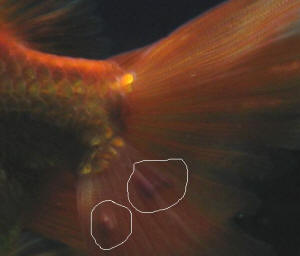 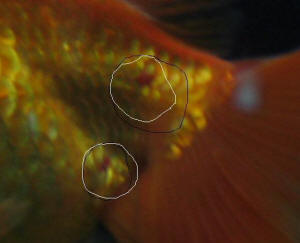
|
Spots on my Kissing Gourami, likely lernaeids
-12/14/07 Hello, <Stephanie> I have had a kissing Gourami for
a couple of years now but over the last few days it has developed about
some spots which I put down to a bacterial infection <Mmmm> and
so I've been treating with a fungus, Finrot and bacteria treatment.
But the spots, which appear to be only on one side of it's body
have turned a peachy/orange colour and each seems to have something
like a black barb type thing sticking out of it - almost like a
splinter. <Ahh!> There are approximately 5 of these spots and
they are in different places on the body and one near the eye. The fish
seems to be well enough at the moment it is eating and behaving as
usual. Do you have any idea what this might be? <I do... most likely
a lernaeid, aka Anchorworm... Please see here re:
http://wetwebmedia.com/FWSubWebIndex/fwcrustdisfaqs.htm and the linked
files above. Had you recently added "something live" (new
fish, FW food, plants) to this system? The parasite had to have been
added some how... See Google Images for the common name as well...
Cheers, Bob Fenner> Many thanks, Stephanie
Re: Spots on my Kissing Gourami -12/14/07 Bob,
<Steph> Thanks so much for your response. Thanks for the link and
"yuk" it looks like Anchorworm! I bought some new plants
about a week ago. So, up go my sleeves! <Ahh!> I've pulled
the things off with tweezers and now breathe a sigh of relief - so does
my Gourami! <I'll say!> I've bought a bottle of
parasiticide which I'll have to administer tomorrow as I have been
treating the fish for a bacterial infection and it says to wait 48
hours before using. <Good> Thanks so much for you swift response
and the link - much appreciated! Stephanie <Welcome my friend.
BobF>
Newbie /anchor worms and Camallanus worms, FW
12/12/07 Dear Crew, First let me apologize in advance for any
posting errors. I have never posted anything before. I have read just
about everything I could find on your site and the web, and still
haven't found a clear answer to my question. <Welcome> My
eight year old son and I are relative newbies to freshwater aquariums,
but we are learning fast. Several months ago, we got a 5 gallon
aquarium, with one live dwarf Amazon sword plant. We have a small under
gravel filter from our previous 2 gallon tank, a small heater and a
corner box filter, air pump (suitable for up to 10 gallon tanks). There
is a tiny snail, which I have only seen once. I assume it came with the
plant, and I don't know if it is still alive. After a couple of
weeks we got 1 fancy guppy. We had him about three weeks, and then got
another guppy and an Otocinclus. We did not quarantine (a lesson which
I have since learned), I also learned about water testing around this
time. Within a couple of days, the new guppy died of fin and tail rot,
and the Oto had ich. I treated the tank with MelaFix and malachite
green. <Better to simply elevate temperature here.> The Oto
struggled with ich off and on for several weeks, and eventually died.
Throughout all this, the original guppy appeared healthy. As I learned
about water testing during this time, we have been at ammonia 0,
nitrites 0, nitrates 2.5-5, ph 7.6-8.0. now for several weeks. We
waited several more weeks, before attempting to get any more fish, and
on 11/24/07 decided to get 2 more Otos to help with the algae. <Mmm,
I would not place Otocinclus in such a small volume, with such a high
pH... better to seek out other means of algae control. Posted on
WWM> They are currently quarantined, and so far appear healthy. The
day we brought home the new Otos, I discovered a parasite hanging off
the side off the guppy. After investigating on line, I am sure it was
an anchor worm. I removed the box filter/charcoal and I started to
treat with Jungle Parasite Clear, which said it was good for anchor
worms <... but adults, on host fish/es... must need be physically
removed...> and would not harm the plant like Coppersafe. The anchor
worm fell off, leaving a gaping wound in the side of the guppy. Despite
this, he continued to eat and was active. A few days later, several red
worms protruded from his anus, and one from the gaping hole in his
side. After more searching on line, I am sure from the photos I have
seen on line that he had Camallanus worms. <Mmm... no... these
Nematodes are stark white, round in cross section... Likely what you
are seeing are other/new Anchorworms...> I continued to treat with
the Jungle Parasite Clear which contains Praziquantel, Diflubenzuron,
Metronidazole, and Acriflavine. <Mmm... none of these will treat
for, kill Lernaeids... Please read here:
http://www.wetwebmedia.com/FWSubWebIndex/fwcrustdisfaqs.htm and the
linked FAQs file above on Organophosphate Use> This appeared to have
no effect on the worms, and the fish has now finally died (whether from
the worms or the wound). So my basic questions are these? <Likely
crustacean... Anchorworms> What do I treat the tank with to ensure
anchor worms (which I know is not a worm) and Camallanus worms
(theoretically they have a 30 day life cycle) are gone (since the
Jungle Parasite Clear didn't appear to treat the worms)? <Not
worms... just appear worm-like> What is safe for the plant?
<Please read the above...> Is the snail an intermediary host?
<Mmm, no> How long do I need to wait, keeping in mind I have 2
Otos in quarantine, waiting for all the algae in the tank. Do I need to
take down the whole set up and sterilize and start over? <Mmm,
possibly the best approach here now> If so, how? <See here:
http://www.wetwebmedia.com/clnaqfaqs.htm> How do I keep the bacteria
going in the tank since there are now no fish in there? <They will
be there> Thank you in advance for your advice. I have learned much
from your site. I wanted to introduce my son to the pleasures of an
aquarium, and all he has seen so far is a bunch of parasites and sick
fish. I realize we have just a tiny set up, but I had an aquarium when
I was growing up, and I wanted him to have the same pleasure it gave
me. I'd just like to get the new Otos settled. We know the 1 inch
per gallon of water rule, so we know we can only have a few small fish,
but we want them to be healthy, happy fish. Thanks again for your help.
Vida <Thank you for writing so well... Clearly and completely. I
want to state, make it known to you that the difficulties you and your
animals are suffering are not of your origination... The livestock you
have received has been infested, compromised... and not easily cured by
anyone's efforts. I would either bleach-wash and start over here,
moving the water from the Quarantine along with the Otocinclus... and
feed carefully till the system is established. Otherwise, Clout (tm),
Fluke Tabs (tm), other DTHP or Dimilin containing pesticide can be
added... Do please write back if you have further concerns, issues. Bob
Fenner>
Re: newbie /anchor worms and Camallanus worms
12/18/07 Mr. Fenner, <Vida> Thank you for your prompt reply.
I think I will take every thing down and bleach it out. Is there any
way to save the plant? <Yes... can be peremptorily dipped/bathed in
an alum and water solution... See WWM, the Net re> We like having a
live plant as opposed to plastic. Likewise, how does one safely add new
live plants, as I realize they can introduce parasites? <Rare, but
yes... most all that is wet can/may> If we are starting all over, we
will probably add another plant or two, and definitely don't want
to introduce any new parasites. The Otos in quarantine appear healthy
and thriving, and my son would like them in the tank. Here are some
photo links, which show the photos why I believe the fish had
Camallanus. This looked very different from the anchor worm on its
side, and definitely appeared to be multiple red worms in the anus.
They would pull in and appear much shorter at some times than at
others. The anchor worm did not do this, it was the same until it fell
off and left the wound on the side of the fish. My husband, who has a
background in biology and a PhD in genetics, also felt that the
organisms protruding from the anus were Camallanus and not the same as
the anchor worm.
http://www.inkmkr.com/Fish/CamallanusTreatment/experience.html
http://img520.imageshack.us/img520/2897/parasiteen0.jpg
http://www.gaem.it/pubblico/articoli/malattiepesci/Camallanus/camallanus03.jpg
<I must commend you on your photographs. Some are very nice
indeed... These do appear to be Nematodes... reddish from feeding
likely> I had tried elevating the temperature of the tank to between
85-90 degrees (normally it is at 76 degrees) and adding a small amount
of aquarium salt for the ich, but was conservative with this because of
the plant and the oto. The pH of the aquarium was running 7.2-7.6
before treating with the Jungle Parasite Clear. I suspect some
component of the medication fizzy tab has increased the pH.
<Possibly...> Thank you again for your assistance. Vida <Thank
you for this follow-up. Bob Fenner>
Goldfish lice -- 08/02/07 Hi how are you.
<Tolerably well, thank you.> I had emailed earlier for the
goldfish lice. <Yep.> It had happened to all my 9 fishes. But
then I removed it with my hand and then all of them became fine except
2 which died. <OK.> Now after 3 months I again discovered 2 lice
on my 2 fish. However I have removed it and now none are seen in the
tank. But pls tell me that what more precaution can I take. Any
medication. Or what. <Try and understand how the lice get into the
tank, for example, by buying fishes from retailers with a goldfish lice
problem.> Also pls tell me that why these lice happen. Any reason
behind it. <Reason? Evolution. Parasites have evolved to take
advantage of host organisms. But why they occur in your tank? Simple:
you aren't quarantining your fish. If your fish are isolated from
infected fishes, they won't get the parasites. If you dump infected
fish from the shop into your aquarium, your fish will get infected.>
I had bought 3 fishes a week before and added in the tank. Is it
because of them because among the 2 which got infected one was the new
one. <Likely, yes, assuming you killed off the lice last time
round.> Pls tell me the reason behind it and what precaution should
I take <The usual precautions will work: buy healthy fish from
trustworthy retailers. Quarantine new stock, treating for parasites if
you suspect they are infected. Hope this helps, Neale>
Re: Goldfish lice -- 08/02/07 Thank you for your
efforts and advice. Pls tell me that how can I quarantine the new
stock. Any medicines. Also the fish vendor from whom I purchased the
fishes say that the fishes are always under the medication in his shop.
Pls tell me any medicines or antibiotics so that I can cure them. Also
after finding 2 lice what more precaution can I take so that other
fishes don't get infected. Pls help <Hello Mr Bond. Quarantining
is described in most aquarium books, and is simple enough to
understand: keep new fish in a *separate* aquarium for a few weeks,
long enough for you to observe their health. Six weeks should do the
trick. In that time, you should see evidence of fish lice, whitespot,
or whatever and be able to treat it safely. After quarantining is over,
you move the fish into your display aquarium. All fish retailers will
say they quarantine their stock. Can you imagine them admitting
otherwise? To be fair, most actually do quarantine their stock to some
extent. But the problem is that display tanks in the store mix lots of
fish together -- they have to, since the retailer can't place one
goldfish per aquarium! So, simply by being placed on display, the fish
are exposed to diseases. Medications for treating fish lice depend on
what's available in your area. In the UK, it's products such as
Interpet #12 Anti Crustacean Parasite and Waterlife Sterazin. In the
US, you have things like Mardel CopperSafe and Aquarium Products
Fluke-Tabs. Visit your retailer, and see what they have available.
Saltwater dips might also work. In this case, add 20-30 grammes of salt
per litre of aquarium water in a bucket. Net the fish, and immerse in
the bath for 5-20 minutes depending on the size of the fish (bigger
fish tolerate dips for longer). Repeat daily, and with luck the lice
will drop off. I'm not a vet, so can't comment on antibiotics,
but since antibiotics are for bacteria, there's no reason they
would work on lice. Hope this helps, Neale>
Re: Goldfish lice --
08/02/07 What are the medications available in India for fish lice.
Here all stupid people sell fishes and so they don't know anything.
Pls recommend it. Is there any particular reason why these fish lice
happen <Mr. Bond, some manners please. How about saying
"please" or "thank you"? Over here in England we
still take these things seriously. Anyway, as for brands of fish lice
medication in India, I haven't a clue. The following medications
are used in the US, UK, and Europe to treat fish lice, and some may be
available in India. For all I know, there may be Indian pharmaceutical
companies producing their own brands. A bit of time spent visiting
aquarium stores or shopping online may help. - API General Cure -
Aquarium Products Clout - Aquarium Products Fluke-Tabs - Aquarium
Products Life Bearer - Hikari CyroPro - Mardel CopperSafe - Seachem
Cupramine - Seachem PolyGuard - Interpet #12 Anti Crustacean Parasite -
Kusuri Parazoryne - Waterlife Sterazin - JBL Gyrodactol - TetraMedica
ContraSpot You probably want to see if there's an Indian or local
fishkeeping club you can join. That's often the best way to make
friends among fishkeepers near home, and so learn about the best places
to go shopping and what products and traded. As for "why"
parasites happen, I think I explained that before. When a healthy fish
and a parasitised fish are brought together in one tank, then
there's a good chance the parasite will infect the healthy fish.
Your job is to prevent that happening. Bob's written a nice intro
to the subject, here: http://www.wetwebmedia.com/quaranti.htm . Hope this helps,
Neale>
Anchorworm, using WWM 7/7/05 Hi, Thank you for creating such
an informative website. I learned so much from it. :) I just plucked an
anchor worm off the tail of my goldfish. I could not find information
of what to do with the goldfish - should I quarantine it or release it
back into the container pond? At the moment now, it is in a 1 gallon
tank. I don't have space in the townhouse to set up a real QT tank.
All the other fishes seem healthy. Thanks, Lai Hwa <... go to the
homepage of WWM: http://www.wetwebmedia.com/index.html put in the term
"anchor worm" in the Google search tool... Bob Fenner>
Anchor worm on a molly? We have a gold dust molly
we purchased her with a mate about 6 months ago her mate died about 1
month ago and now she seems to be get fat quite fat under her belly she
has a white round opening and it seems to have a well I am not sure
what it is it looks like 2 red thin things sticking out it sort of
looks like one have of a sword tail maybe I am really not schooled in
fish and the fish belong to my 9 year old daughter she wanted fish so
my husband them for her we have a 30 gallon tank with 6 fish neons, the
molly, and zebras, and a head light tail light with 2 of the cleaning
fish one is large and one is small I am worried about the molly my
husband says fish lay eggs but from my research I see that is not
correct please help clueless <Does sound like anchor worm, Lernaea
(actually a copepod).... please put this name, term in your search
engine, look at pix... and if this is so, consider carefully pulling
these adults off the fish (with tweezers)... W/o intermediate hosts
(snails) they cannot (likely) reproduce in your system. Bob Fenner>
Parasite in Parrot Gills Hello I have lost two parrot fish in
the last three months. They all have long red tubular growths coming
from the inside of the gills. The gill area has busted open since they
got this and is growing out of the gills. The aquarium store told me it
was most likely gill flukes and so I treated them repeatedly with no
cure. They told me that they were a hybrid fish and if they appeared to
be OK them let them go. I did and I lost one parrot 3 months ago and 1
last night. I noticed last week that the red tubular growths had purple
tips on them and that the rosy barb in the tank was sticking its head
into their gills and eating it. Please help. I've had these fish
for over three years and I am very attached. The aquarium seems to
think they may be anchor worms. There are two angel fish, a Pleco and a
rosy barb in the tank and they do not have these growths. Kathleen <
To get rid of either gill flukes or anchor worm I would recommend
Fluke-Tabs. If your local store does not carry them then you can order
them online at DrsFosterSmith.com.-Chuck>
Anchor Worms Hi, I have a 90x37x32 tank with various
livebearers in. By the way I have 10 tanks of various sizes. I recently
purchased a couple of platies and 4 Siamese fighter females and 1 male
with about 4 new plants. (Not from a reputable dealer!! - mistake no
1). The tank has been running for about 4 months now. In the past 3
weeks my male Siamese fighter and 3 females had anchor worms (worm with
a v tail) which I have treated successfully with Interpet No13. I treat
the fish in a hospital tank. I purchased 4 more females of which two
acquired the worm again. They are undergoing treatment. <I suspect
this is the economic poison Dimilin... or the older DTHP (Masoten,
Dylox...) Please see here: http://www.wetwebmedia.com/PondSubWebIndex/contrpdparasit.htm>
My question is how do I cure the tank without damaging the plants which by the
way are stunning. I do realize that I will have to strip the tank which is no
problem. My plants are my concern. <The plants should be fine if the product
mentioned is either of these organophosphates. If it is something else, please
write back, Bob Fenner> I trust to hear from you soon. Kind Regards, GRAHAM
LIGHT SOUTH AFRICA
|
|
New Print and
eBook on Amazon
Goldfish Success
What it takes to keep goldfish healthy long-term
by Robert (Bob) Fenner
|
|
|

