|
|
| Home | Marine Aquariums |
Freshwater Aquariums |
Planted Aquariums |
Brackish Systems |
Ponds,
lakes & fountains |
Turtles & Amphibians |
Aquatic Business |
Aquatic Science |
Ask the WWM Crew a Question |
| Please visit our Sponsors | ||||
How to remove the Maconkey Agar in aquarium, FW algae
control?
7/3/19
Brown algae... FW? using WWM 12/3/16
Sudden bright green algae problem
4/3/14 Outdoor acrylic algal issue
3/15/14 Algae from sunlight, FW, SW, doesn't matter...
4/1/13
Lighting and algae 5/16/12 Tufa Rock and Hair Algae
3/1/12 Planted Tank, fish sel. for pest
control 11/9/11 Retail Questions. FW Algae control and GF
issues 8/23/11 encourage algae ?
8/21/11 Feedback/Algae Control
7/21/11 algae in new planted tank 10/26/10 Re: Sickly Dwarf Gelius Barb, now kinky loaches, algae on
(nee) Echinodorus 10/2/10
Re: Angelfish Compatibility Question, now, Algae issues
2/22/10 Re: Empire State of Mind - FW soft/hardness, and HPO4,
algae... 2/1/2010 Re: Empire State of Mind - FW, HOP4, algae
2/1/10 Re: Angelfish Compatibility Question, now, Algae issues
1/16/10 Algae problems. On plant leaves
1/15/10 10 gal. FW with Grn alg. prob...
12/11/09 Algae, FW, prob., reading 11/15/09 Re: algae 11/16/09 FW algae problem 11/13/09 FW Algae control, Feeding and General Questions.
8/6/2009 Fresh water aquarium, Algae issues I have a fresh water aquarium that I set up a couple of months ago. I do my regular 1/4 water changes once a week and I can't keep my aquarium from turning green. <Oh? Quite common for aquaria to experience algal bloom within the first few weeks. Usually settles down.> I was given the aquarium by a friend and he used it as a salt water aquarium. It is a 75 gallon tank. I thought it might be the lights so I removed the blue lights and left the white ones. I tried replacing all the water twice and it still turns green. <How much light is there? If there is light but no plants, then algae will prosper. The more light, the faster the algae grow. Marine aquaria tend to have very strong lights because corals need a lot of light. Unless you have a lot of fast-growing plants, particularly floating plants, then algae can become a real problem if the same lights are used on a freshwater tank. Assuming you have "strong" lights (by which I mean upwards of 2 watts per gallon) I'd be sure and stock the tank with lots of fast-growing plants. Some good choices would be Hygrophila polysperma, Cabomba, Vallisneria, and as floating plants, either Indian Fern or the Amazon Frogbit (Limnobium laevigatum). These will "use up" the light and inhibit algal blooms. It will take a few weeks for the rooted plants to become established, but floating plants usually settle in at once.> I am using the correct amount of water conditioner and salt. <Salt? In a freshwater tank? Unless you're keeping brackish water fish, there's no need to add salt, and good reasons not to.> I test the water myself and take a sample to the pet store also for testing and its always perfect. what can I do? <Cheers, Neale.> FW green thread algae question... red algae...
Cyano? 12/5/08 Crew, As always, thank you for any
knowledge you can impart herein. I have a green thread algae problem. I
have a 120g FW setup. Substrate is about 3" thick of a mix of
equal parts pond soil (Schultz's), sand and eco-complete. Some
gravel on top of that. A lot of Mopani wood. Plants include crypts,
java fern, wisteria, water sprite, Anubias and swords. lighting is
6x54w t5 HO, 6500k bulbs, 3" from water surface, individual
reflectors, 10 hours/day. Filtration is 2 overflow boxes to 1 1/2"
drains, down into a 40g sump, which is about half full. The bottom of
the drain pipes are always below the water surface. Those flow into 2
drain socks, which I change about every 3-4 days. They are pretty brown
when I pull them, but not too clogged (I never got water pouring over
the top of the socks). I run a DIY 'tube' off a Rio pump that
is rated at 400gph no head. The tube is 4" in diameter, and
roughly a foot long, filled with biomedia and some carbon. The tube has
a screen pump side, then some poly floss to help get small
particulates. I check the bio media every couple of weeks in there, but
end up having to rinse out only every few months...the filter socks
catch just about everything. The floss catches what little the filter
socks don't. The sump also has a couple of heaters and
thermometers, as well as a Quiet One 4000 return pump. By my
calculations using the head less calculator on reefcentral.com, it is
pumping about 600 gph (or roughly 5 times the water volume when
calculating about 100 in the main tank and 20 in the sump). The returns
are split left and right, with wide nozzles, pointing down away from
the surface (trying to minimize surface disturbance and CO2 loss). I
have no CO2 supplement currently, although I am trying to figure out a
way to do it DIY...which isn't easy for a 120g tank (can't fit
a 5g bucket with water, sugar and yeast under my tank!!! :) ) As off 3
weeks ago, inhabitants were as follows: 6 signifer rainbows, 1 to 1
1/2" 7 harlequin Rasboras, 1" 6 turquoise rainbows, 1 1/2 to
2" 6 Irian Jaya rainbows, 1 1/2 to 2" 5 Congo tetras, 2"
2 roseline barbs, 2" 2 golden nugget Plecos, 4" and 3" 1
queen arabesque Pleco, 2" 1 king tiger Pleco, 3" 1 spotted
prawn, 5" body (but surprisingly mellow and non-confrontational) 3
albino Corys 3 sterbai Corys 1 tinanti cichlid (also very mellow, not
overtly territorial) a few mystery snails and some unidentified
hitchhiker snails (brown shells, get about 3/4" in diameter) I
know - a lot of stocking, but it is a big, deep and tall tank. I then
pulled the Rasboras and signifer rainbows out - didn't like the
look. Too 'busy.' I was right - the tank looked a lot better
after pulling them out. At the same time, I also changed my feeding
routine from every day to 3-4x per week. I feed mostly black worms,
with some flake and blood worms mixed in. Whatever I feed is consumed
within 1 minute. I also put some cucumber and zucchini in there from
time to time, and it looks like the Plecos munch on it. I throw some
wafers in the tank at night, as well as some Spirulina flakes. I also
hooked up a Fluval 405 canister filter with the filter pads, some
filter floss, and some more biomedia. I did this to try and polish the
water (however, it didn't really make a difference). Also put in 4
led moonlights. All fish are growing very well and are well behaved.
The plants are doing okay - green, but not growing much, with the
exception of the wisteria, which is doing well. I don't know what
the limiting factor(s) is/are...could be ammonia (biomedia too
productive), nitrate or CO2. With those plants, I don't think that
330w of t5 HO lighting is an issue. Tank is about 7 months old. Water
parameters have been constant for many months - 7.5-7.6ph, 77-80*F,
55-70alk, 0 ammonia, 0 nitrite, and less than 5 nitrates. Even when I
went on vacation and didn't change any water for 2 weeks, the
nitrates still were about 5ppm. Phosphates are present, between 1 and
4ppm (the API drop test isn't the best quality). TDS, if it
matters, is usually in the 200-250 range. Water changes are typically
every week, somewhere between 30-40%. I use a mix of RO/tap to get the
parameters I am looking for. Problem - I've always had a trace of
green hair/thread algae, but it has just been that - a trace. nothing
every more than 1/2" long, and that was rare. I don't physical
remove..something gets it (snails would be my guess). But after pulling
the fish from the tank, changing the feeding routine as well as putting
in the Fluval, it is getting much worse. It is now attaching to the
glass with little black dots, and it is starting to grow rather long,
and is very pronounced. Any thoughts? Less food and less fish should
mean less waste, which means less ammonia, less phosphate and less
nitrates, right? My tests don't show any significant changes. Could
it be the additional flow with the Fluval? The moonlights? The
substrate (yeah, I know, that is a lot of substrate)? I've always
been one to let the tank adjust to changes, and it usually works out
just fine. Does anything stand out to you? thanks Paul <Paul, the
short answer is you have red algae (the long threads) and these are
very difficult to shift once mature. As you understand, few fish eat
mature red algae threads, at least, not the sorts of fish you'd
want to keep in an aquarium! Moreover, unless you remove the infected
leaves, there's no manual way to reduce red algae problems. Red
algae is most common in tanks that are heavily stocked and with
relatively high levels of nitrate/phosphate. The "antidote"
is bright light and lots of fast-growing plants. You'll have to
physically remove the existing red algae, but once the fast-growing
plants are established (which will take a few weeks) they will have an
allelopathic effect, minimising red algae growth. Certain fish will
nibble on new growths, particularly things like Crossocheilus siamensis
and Jordanella floridae. Cheers, Neale.> HELP!! FW? Algae... no data of use or reading
9/24/08 Fish tank inquiry, algae
9/1/08 Dear Crew, <Hello,> A part of the wall in my fish
tank is covered with little brown and sort of green dots. Is it algae
or something else. <Likely algae; if moving about, then possibly
planarians. In either case harmless, though planarians thrive best in
dirty tanks where there's stuff for them to eat.> Also, the tips
and leaves on some of my artificial plants have brown stuff smeared on
them. The same brown stuff is on some areas of my gravel bed as well.
Is it just algae or dirty stuff? <Algae.> I do water changes
often but they still remain. After I was the brown stuff off it comes
back even with lots of water changes. Thanks <Golden-brown, slimy
algae is typically diatoms, and these are a particular pest in tanks
with poor lighting and variable water quality. Adding additional lights
so that you can install fast-growing plants usually deals with diatoms
pretty briskly, and most snails, but especially Nerites, will eat them.
Red algae (despite the name) looks dirty green and usually forms tufts,
often on the edges of leaves. Again, this implies poor lighting because
the plants can't grow fast enough to hold back the algae. High
nitrate and phosphate tend to favour red algae. Finally, there's
blue-green algae (and again, despite the name) can appear in a variety
of colours. It's very slimy and has a nasty musty smell when
removed from the water. This is VERY strongly associated with tanks
that have poor water quality (high nitrate/phosphate) and not enough
water flow. A little algae is no problem, but if algae become a pest,
covering the gravel and plants, then you need to figure out what's
favouring them, and act accordingly. A photo of your mystery brown
spots will help, as will data on the tank, especially size, filtration,
water quality, and lighting. Cheers, Neale.> Algae... where is it? FW 7/22/08 Hi, I have three guppies in a 20 gallon tank. I would like to add a couple more. However, I have a question. I have no algae in my tank. I was told this means I have an unhealthy tank. <Wouldn't worry about it. You almost certainly do have some, just not much, and the Guppies will eat much of it anyway.> Why would no algae form? I don't know if any of this makes a difference, but I do turn the light on for them during the day and they are in a room that gets natural light through a door with a window that faces the side of the tank and indirectly through windows. Thanks. <All sounds fine. If the water quality and water chemistry are good, I'd not worry too much about the lack of algae. Enjoy your tank. Cheers, Neale.> Nuts!!! Algae *ell in freshwater, planted 75g. tank!!! reading 6/26/08 ...I don't really expect an answer BUT after reading your info. on WWM, I still cannot find an answer as to why algae is running amuck in my barely 2 month old freshwater planted tank? I have about 20 Otos which when bought, was assured they would take care of the problem; NOT. <Depends... on the type/s of algae... many are unpalatable, some even toxic> ...I have had freshwater and saltwater tanks for years and have never had the mess I have with this new tank. OMG!! Why did I think this was going to be easy? <You tell me> ...I am a 61yr, still working 40 hr week, <Yikes... hope you enjoy the work> female and want to address this problem and ASAP would be nice. Im getting ready to yank out the plants, give the fishes away, remove the substrate and send this 75g nightmare to tank heaven; otherwise known as the garage. PLEASE, can you help or advise or pray or something? D.L. Sanders --...it's belief that gets us there... Dodie <... Need info re set-up, water quality tests... Please read here: http://wetwebmedia.com/PlantedTksSubWebIndex/AquariumGardenSubWebIndex.html scroll down to "Algae Matters". Bob Fenner> Green water, lights out, chemical savior? FW 6/19/08 Hi again crew, <Hello> I know there are tons of articles on "green water" algae blooms on your site, but can't seem to find the specific advice I'm looking for... <Ok> My tank is a 55g FW, new setup, lightly planted so far. Lighting is 260W of CF, and I'm using CO2. Cycling was done with the aid of Bio-Spira and a couple of hardy paradise fish. Ammonia, NO2, NO3 are all 0, and except for a brief and barely noticeable "spike" in NO2 they've been reading 0 all along thanks to the Bio-Spira. GH is around 5 dGH. KH maybe a bit high at 5 dKH? pH at 6.8 - 6.9 depending on if the lights are off or on. <Sounds nice.> I'm pretty sure know what caused the bloom-- I cleverly dosed the tank with nitrogen fertilizer, thinking that since I had very few fish to produce nitrates, my plants would appreciate some vittles. I used half the recommended dosage, but 2-3 days later I had 55 gallons of pea soup. Tank was just too sparsely planted to use up the nitrogen, I guess. <Probably> I tried turning off the lights for 1 whole day, which actually cleared up the water amazingly well. But after 2 days with the lights back on, the bloom was back with a vengeance. <Expected> So, my questions are: 1. Will keeping the light off for 2 days straight be likely to deal a more long-lasting blow to the algae? <nope, need some water changes to remove the excess nutrients.> 2. Will 48 hours of darkness significantly harm my plants-- a variety, including some crypts. <Doubtful> 3. Would it be as effective (and kinder to the plants) to have the lights on for a short part of the day -- if so how many hours would you recommend? <I would leave as is, light is not what is fueling the bloom.> 4. I thought read something in your FAQs about using potassium permanganate, but is that safe for fish (at a dose that will put a dent in the algae)? <I would skip it, nutrient control is the answer here, water changes will help greatly.> Thanks! <Welcome> -Dave <Chris> Algae, wood use, using WWM -- 06/02/08 HI Crew, My question is that I have a 125 gal. fresh water tank. I have noticed light and dark green spots all over the gravel. my temp is 81 deg. soft water ph 6.5 .Does this pose a threat or do I need to get it treated. and how. can you use any driftwood for fish tank. Thanks For Al l You Do. Darby Woody. Morganton NC. <...? Please see WWM re Freshwater Algae, Drift/wood use. Your answers and more are already posted. http://wetwebmedia.com/ Bob Fenner>
Black coloured algae in tank -05/15/08 Hi I have a 3Ft tank with African Cichlids in it. My water has always looked great... last week my Electric yellow died for no apparent reason and the same day I noticed lots of fry in the tank. Did she die during childbirth? <Unlikely. Perhaps she starved to death, since they can't eat while mouthbrooding, which is why you *must* isolate the females for several weeks (ideally months) to "fatten up" before placing them in a tank with males of their species. If she died, the fry could easily have swum out.> I removed the fry and then all of a sudden this creamy/brown slimy stuff appeared everywhere. I did a water change, taking out almost half the water, the tank seemed fine for a few days and then all of a sudden the tank is now very cloudy with black soot looking algae? all over the rocks, gravel and plants (all artificial). <Doesn't ring any bells I'm afraid. Blue-green algae is notorious for suddenly appearing, but is very distinctive in appearance. The usual "black" algae is hair algae, actually a dark reddish-green, but again, it is very distinctive.> I cant seem to find any info when I Google images for black looking algae, nothing looks like the stuff in my tank. yesterday I vacuumed the tank, took out and cleaned the plants and rocks and its all back again just as bad as yesterday. <A photo would help. But by default, here are the things you do: First check water parameters, at minimum nitrite and pH. Secondly clean the filter, obviously taking care not to harm the bacteria but otherwise rinse out any detritus. Finally, do a big (75%+) water change and give the gravel a deep stir and siphon while taking out the water.> Thanks in advance for your help. <Cheers, Neale.> Lighting Freshwater Aquarium/ Algae Control 5/12/08 Greetings to the Crew. <Tom> Simple question, I think. I am trying to gain control over an algae (BBA) problem in my 180 FW tank. I use bio-ball filtration. I do a 40 gallon per week water change. I have 20 boesemanni rainbows and 4 clown loaches and a couple of Cory cats. I feed judiciously. Anyway, after selectively killing large chunks of the BBA with a feeding syringe of 3% H2O2 (being careful to keep from directly hitting fish), I now want to kill it off the rest of the way. What do you think of only lighting one half of the tank? <It will deplete the algae in the non-lit half and spur more in the lit half.> That way, the rainbow fish could hang in the lighted part when they wanted to, and the loaches would be comfortable in the darkened side. I would still cycle the lighted side in regular day-night pattern. Do the fish 'need' more light? <No.> There are no plants in this aquarium. The lights I have are two T-5 strips (50 watts, I think for each.) <The fuel source for the algae is coming from somewhere, water used in water changes/feeding. You will need to track it down, otherwise you are treating symptoms and not the problem.> Thanks Tom <Welcome, a link and related FAQ's pertaining to your issue below. Good luck, Scott V.> http://www.wetwebmedia.com/fwsubwebindex/fwalgcontrol.htm Questions. Always with the questions. FW Algae learning 4/25/08 I have a l55 gallon freshwater tank that's currently inhabited by 13 Neon Tetras and 3 Platies and a number of live plants. I know this isn't the best combination of fish, but I didn't realize that when I started out and bought the poor buggers. Eventually I'll separate the Neon's into a smaller plant less tank (with some Cory's too), but not until I've fixed the problems in the current one. By problems, I mainly mean a persistent algae bloom that I can "control" through frequent water changes and the heavy use of a diatom filter. Basically, I do a 30% to 40% water change, pop in the filter, leave it in for a few days and then take it out. A few days after that, when the algae bloom is really starting to gain ground again, I repeat the process. <Ahhh> I've taken the following actions to control the algae bloom. They all seem to work a little bit, but none of them by themselves or in concert vanquishes the green stuff. - Repeated dosing with Algaefix, an algaecide by API. <A poor idea...> This worked to an extent but never eradicated the bloom entirely. I can get better effect by using the diatom filter, so I've stopped with the Algaefix dosing entirely. <Good> - Restriction of the fish to an every other day feeding cycle, and being stingy with the food on the day they get fed. Poor fish, they always seem so hungry. The idea here was that if the cause of the bloom was from excess nutrients in the water coming in via excess feeding, restricting the amount of food provided would reduce the level of nutrients to a point where the bloom would go away. - Reduction of the amount of light to the bare minimum necessary to keep the plants from dying. Originally I had two 40W Aqua-Glo fluorescent bulbs. I found that if I dialed the timer back to where the bulbs were only on 8 hours a day, the bloom would grow slowly enough that I could go nearly an entire week before it got to a point where the diatom filter was needed. I subsequently replaced one of the aqua-glo's with a sun-Glo (4200K) which is not supposed to have the correct wavelengths of light to stimulate photosynthesis so that I could leave the lights on for longer than 8 hours. The algae bloom is a bit stronger now, but that could be because of the longer days now that we're heading towards summer. - Frequent monitoring of the level of ammonia, nitrates, pH, KH and GH. I know from my monitoring that the tank's *pH* is a rock solid 7.8 and that the *ammonia and nitrate* levels are pretty much zero as near as I can tell (thanks to the algae, likely). <All good...> So, with all this information, I've been able to narrow down the source of the algae bloom to one of three causes. (1) The artificial lighting. The thing is, I know that most people with planted tanks have much higher light intensities than what my tank has, so the artificial lights cannot, by themselves be the source of the problem. If that was the case, then everyone who had a planted tank with a higher intensity than mine would be having exactly the same problem that I am. (2) Light coming in from a nearby window. I knew it wasn't a great idea, but I installed my tank near a window. The thing is, the window is underneath a second story deck and never gets direct light except during the summer and even then only in the hours before sunset. Even then, there's never direct sunlight on the tank. There's a window shade that, while not opaque, does reduce the intensity of the light that does come in. So, it's entirely possible that the source of my problem is the light coming in from the window and the only solution is to move the tank. Boy, I really don't want to do that. (3) The third possibility is that there's too much phosphate in the water. I went out and bought a phosphate test kit and found that my tank water has a phosphate concentration of around 0.5 ppm. <This is high> I thought this was odd, as I hardly feed my fish at all and do frequent water changes. Besides, the algae does a great job of keeping the nitrate levels down near zero so why wouldn't it do the same with the phosphate? <Not a/the rate-limiting factor... is in excess relatively> In a flash of insight I thought to check my tapwater, and lo and behold it has a phosphate concentration of 0.5 ppm. <Ah, yes> So, I have a couple of courses of action and I wanted your advice on a couple of things. As I see it, I can move the tank to as far from a window as I can get it and I can buy some sort of system to get rid of the phosphate in the tapwater. <Is what I'd do, in addition to... boosting competition with the use of other photosynthates... plants> I'd prefer to do neither, but before I do either I want to know if one is contributing more to the problem than the other. So, here's my questions for you folks: (1) Is a phosphate concentration of 0.5 ppm by itself enough to cause a persistent algae bloom like I'm describing? <Mmm, along with other factors, yes> (2) There's this stuff out there called Phos-Zorb. The idea is that I can put it in a filter and use it to pull all the phosphates out of the water in the tank. If I then maintain the water level of the tank with distilled water for a while, I should be able to see whether removal of the phosphate alone takes care of the problem. Is doing this with the Phos-Zorb a good idea, or am I somehow going to kill my fish or something by using this stuff? <Better to go the longer-haul-fix of getting, using a blend of RO water... and for you to use the RO as well for your drinking, cooking purposes> (3) If removal of the Phos-Zorb takes care of the problem, what sort of RO/DI system do I need to get. <Mmm, just a "cheapy" from a large hardware store... learning to divert the "stored" water nightly to a container for water change use...> I gather that an RO system by itself doesn't remove Phosphates and that I need a specific resin to take care of phosphates, but I can't really tell from your FAQ's what specifically I want. Here in the NW we have extremely soft water. I have to add salt to the water I put in the tank to keep the Platies alive. Otherwise, they die quite quickly. <Mmm... I'd look into other means of raising the bar here... on alkalinity> Anyhow, thanks in advance for your advice. You guys were great when I was having problems (the soft water issue) with my platies a few months ago. Regards, Aaron Cooke <A bit more reading on the use of simple aquatic plants (perhaps just Ceratopteris floating... or Myriophyllum... the RO device, time going by, perhaps a bit more circulation, mechanical filtration (the addition of a large hang on or canister filter...) I wouldn't get into the chemical filtrant habit. Bob Fenner> Tank questions about 2 different tanks... Endogenous algae prob.s/SW, Piranha tank plant sel. 04/14/2008 Hello, <Hi there> Tank- 200 gal (7'Lx2'Wx2'H), 130+ pounds LR, 40 gal refugium plus a large hang-on refugium, 3-XP3's canisters, 2 Rio 2100 (694gph) and 3 Penguin 1140 (300gph) power heads on sides and back of tank. And a Coralife 220gallon Protein Skimmer.\\ <Mmm, I'd upgrade> Fish- 8" Russell's Lionfish, 3 triggers Niger, Humu, and a Bursa all 4", 2 yellow Tangs 4", 5" Foxface Lo, and a 13" Wolf Eel. I also have a lot of Red Mushrooms, Button coral, and 2 different leathers. And I do a 30gal water changes (w/ RO water) every 2-3 weeks. This tank has been up and running for over 3 years. I get brown algae out breaks, I also have green (hair) fuzz algae on most my rocks and back and sides of tank. I was told since I clean my canisters once a month (not often enough), <This is so... I'd clean them at least weekly> that the entire gunk they collected just creates more Nitrate, lots. What I should do is over time keep the skimmer and get rid of the canisters and add more power heads for more current so that the LR (and refugiums) can do there jobs. (20gph times your tank size ((4000gph)), so I need 1720gph more in my aquarium) Does that sound alright? <A beginning...> I do use Chemi-pure and Phos-Zorb in each filter. I also test water a Reef Master Test kit. My Nitrate and Phosphate are both low and are in the safe ranges but they both show up, always have. <These measures of nutrient ability are not entirely "accurate"... the real bulk of this matter is being expressed, taken up by the algae and BGA (the brown stuff)> I also have allot <Won't correct this time... a lot> of this bright yellowish-greenish sponge (Cecilia I think) <Not this feminine appellation; though a fave Simon and Garfunkel tune> growing on my LR. Is it bad or good? <Mmm, more of the latter> I'm setting up a 90gal (4'Lx18"Wx2'H) FW, I'm going to get 3 baby Red Belly piranhas. I do plan on having plants growing out the top of my aquarium. Just the roots will be in the tank. So with that said should this set-up be OK for 2-3 adult size Red Belly piranhas in the long run? And what kind of plants besides Bamboo should I use? <Yes and if only one, my fave, Ceratopteris> Thanks for all your advice Matt Owens <Welcome. I'd get a better skimmer, perhaps ditch the canister filters altogether, or clean out weekly as stated... add more/new live rock... and likely skip the Serrasalmines (too skittish and boring as you'll see)... Cheers, Bob Fenner> Green Water -- 03/18/08 Hey there! My RES is a little over 6 years old and everything has been going great!! All of a sudden after the last water change my water has turned green! So green that I cant see my turtle swimming in tank, and that can't be fun for him either! He's no where near the window so there is no direct sunlight and the tank is as clean as it could possibly be! Is there any other things that it could possibly be??? Thanks Hillary <This is, as you seem to suspect, algae. It means you aren't doing enough water changes and the filter is inadequate to the task. Sunlight + nutrients in the water = algae. So do more water changes, and upgrade the filter. For terrapins, you need a filter providing not less than six times the volume of the tank in turnover per hour, and I'd recommend at least 8-10 times the volume of the tank in turnover per hour. A bigger tank will also help by diluting the problem. Nothing else will work. While the terrapin likely doesn't care about the algae as such, the fact you have algae at all indicates poor environmental conditions, and long term that opens you up to healthcare issues that are expensive to treat and painful for the animal. Cheers, Neale.> Redfield Ratio for algae control 2/26/08 I love your website. This is my first question, and I'm a little apprehensive that you may have answered it previously and I failed to find it. I tried... <No worries> What do your experts think about use of the "Redfield ratio" as a metric to guide water chemistry for the control of algae? <An interesting observation: http://en.wikipedia.org/wiki/Redfield_ratio re a proportionality of principal bio-elements in the sea and the phytoplankton there> I have a 110 gal planted freshwater tank that's been up and running for 9 months. I use RO water to replace evaporation and to keep GH and KH where I want them. I inject CO2 to control pH and nourish plants. I rarely change water, but I have zero measurable ammonia, nitrate or nitrite. I have never tested for phosphates. Plants and livestock are doing well. I do have to work to keep algae under control. I've reduced lighting -- which helped. I still get hair algae which I remove manually as best I can; what I think is black algae which grows in clumps and seems to like my bogwood; and the uniform short green "fur" that grows on flat surfaces under direct light. <Can be bugaboos> What I've read about Redfield ratio seems to make sense. I haven't seen any specific guidelines for how to keep the nitrate: phosphate ratio at 16:1 which supposedly is the magic number. Have any of your experts used Redfield ratio? <I have not> What are their impressions? <Well... limiting "something" (typically soluble phosphate) IS a general approach to limiting pest algal growth... but some HPO4 is absolutely necessary for your "real" plants...> Any easy rules of thumb or products for adjusting nitrate and phosphate or am I on my own to figure it out? <Is an interesting speculation... but I don't think trying to establish this ratio in a captive system is going to work... However, there are other means... of mediation (anaerobic bacterial most celebratedly)... I do encourage you to read about, seek out a useful phosphate test kit... measure your source water, the system... Though bear in mind that these are dynamic patterns... the "amount" of phosphate available is not going to "show" as much is bound up in the algae, your plants, mulm to a smaller extent... and being added via feeding on your part on a regular basis> Thanks for your patience, assistance and a great resource. Mark in Easton, KS. <Thank you for your sharings. Bob Fenner> Beneficial bacteria, reading re FW algae/BGA 2/26/08 Hello. How are you today??? <Fine; and you?> Im e-mailing you because I have a question (obviously.) Anyway, I have a 45 gallon tank with cichlids and a whisper power filter. However, there are mushy stringy slimy things growing in the "net" thing in my power filter. Is this gooey stuff supposed to be the beneficial bacteria? <Mmm, not likely... Is probably algae, perhaps a type of algae amongst a group that is bacterial... Cyano...> Or is it just dirty stuff I need to clean out? What does the beneficial bacteria look like? Last, how do you clean the filter without killing too much beneficial bacteria? Thanks a ton. -Dave <Read a ton: http://wetwebmedia.com/FWSubWebIndex/fwbgafaqs.htm and the linked files above. Bob Fenner> Algae problems, FW 2/21/08 Good day Crew, Here is my hoping that you may be of help to me. My girlfriend and I have a 55 gallon tank that has Two Jack Dempseys as its inhabitants. The male being 9 inches the female bout 7 inches in length. These fish were raised (believe it or not) on dry Cat food and are two of the most colorful Jacks that I have ever seen anywhere. A while back say 4 months ago I added a Corallife power compact 110 watt light that I had from and old Salt water setup. The light contains twin 55 watt 50/50 bulbs, actinic /10k. In the last couple of months a green fast growing algae has begun to invade and take over the tank. I have tested the tank water and found 10 ppm nitrate and 1 ppm phosphate (Salifert). I have also tested the tap water used to maintain the tank and found it to be free from nitrate and or phosphate. I have stopped the Dry cat food feeding and started a more traditional method, Cichlid pellets. Also we have been doing weekly water changes and gravel vacuuming in an attempt to get a handle on this scourge. Filtration is an Emperor 400 with BioWheel running. Other that the obvious Cat food issue (possible source of PO4) and the odd lighting arrangement, what would be your guess as to the root cause of this sudden outbreak. thank you for any help that you may provide me. Mark <Hello Mark. Algae is always a problem in tanks without fast-growing plants. Without fast-growing plants, there's really nothing you can do about it. Sometimes the rate at which algae grows isn't very fast, but then you change something (e.g., replace the light bulbs) and suddenly it becomes more obvious. Direct sunlight is another trigger, and at certain times of the year your tank will be getting more sunlight than at others. Adding fast-growing floating plants like Amazon Frogbit or Indian Fern is the obvious way to tackle the problem head on. But otherwise, don't worry about it. Fish like algae, and virtually all cichlids eat at least some, so it's good to have it in the tank (especially if you plan on breeding your fish). Increasing water circulation can help as well. The easiest thing is simply to scrape away the front glass and leave algae to grow everywhere else. Cheers, Neale.> Algae on My Snail, Causing Me Discomfort - 02/07/2007 <Hi there! Mich here tonight.> My snail has algae all over it, it can't be good for it. <It's really not detrimental to it.> What do I do? <If it really bothers you, you can remove it with a little manual manipulation, perhaps with a paper towel. Hope that helps. -Mich> Unidentified algae, FW, reading -- 1/26/08 Dear WetWebMedia, <Rachel> I have a question about my 20 gallon tropical fish tank. My question is about a weird type of algae that I can't identify. Here is what happens: first, I'll have just cleaned my tank completely because the algae gets so terrible and completely green, and then my tank will be fine for about two weeks until it starts to get really cloudy. <Mmm, not good... Very hard on your livestock...> After about a week or two of the cloudy water, the water starts to turn green. The algae isn't growing on any of the ornaments or anything, it just seems to be growing in the water. <There are "free floating" types...> It'll get so bad that I have to then clean it again. <Ahh, no> I don't know what I'm doing wrong because I haven't changed anything and the tank has been set up for two years and I've never had this problem. <Mmm, things unseen change, changing here... a dominant life, cycle establishing itself...> It isn't in sunlight and I don't have my light on any longer than I used to. <Good point> I have guppies, zebra danios, and platies in the tank, along with a Cory catfish. I don't overfeed them. I just don't know what to do anymore. I have a filter in there that is for 20-40 gallons. I just have no idea. Please help me out. Thank you so much. Sincerely, Amee <Likely adding some redundant filtration, circulation, possibly a chemical filtrant will help here... Perhaps a higher-plant competitor... Please read: http://wetwebmedia.com/FWSubWebIndex/fwalgcontrol.htm and the linked files above. Bob Fenner> UV TurboTwist 3x and Fluval 404... FW filtr., alg. contr. - 1/24/08 Great site, very helpful! I've got a 55 gallon tank with two Aquaclear 50, each with a small piece of foam, and then filled with carbon. A Fluval 404, bottom two sections foam, top two Bio-max. <Hmm... I tend to consider carbon a waste of time in freshwater tanks. Here's my pop-quiz for you: what does carbon do that water changes don't do better? Bzzz... Nothing! Carbon in Old School fishkeeping from back when people avoided water changes, doing 25% per month or even less. Carbon removed the organics from the water, stopping it go yellow. Since we now do big water changes every week, the organics never reach a concentration where they cause problems to freshwater fish, so the carbon is redundant.> It's a healthy tank, with 9 Discus, from 2" to 4". Two Cory cats, a small Pleco, and a Tiretrack eel. I've added a Coralife Turbo-Twist 3x (9 watt) mostly for green water algae. <Green Water is not normally a problem in freshwater tanks. It's more a pond issue. UV filters have next to now effect on things like hair algae or the diatoms that cover the glass. Healthy plants are a far better way to deal with algae, to be honest.> Can I still run my Fluval at full blast? If I have to slow down the flow for the UV, how will that affect my biological filtration? <It's a Catch-22. If the water is pumped too quickly through a UV steriliser, the microbes aren't all killed. But canister filters need rapid water flow to keep the oxygen supply inside the canister adequate for the needs of the bacteria. Realistically, I'd always favour filtration above UV; I'd sooner have 100% biological filtration capacity but only 50% UV efficiency than the other way around. UV is undoubtedly useful in marine tanks, but in freshwater systems it's a luxury, so there's no need to squeeze out every drop of performance from the contraption. Regular water changes, rapid plant growth under strong lighting, and control of nitrate and phosphate levels will have a dramatically greater impact on fish health and algae control.> Thanks, Joe <Cheers, Neale.> FW algae problem 1/14/08 Hello Crew, (Neale?) Thank you for great site. <Thanks for the kind words.> I have a question about my 20 g planted tank. Tank is about 4-5 months old. Fish: harlequin Rasbora(6) cardinal tetra(6) ram(3) <All nice fish, carefully selected by the looks of things.> Plants: Anubias, Vallisneria, water sprite Temperature-84 F NH3-0 NO2-0 NO3-5 ppm Light-2 w/g No CO2 <OK.> The problem is that the Vallisneria quickly grow to the top of the water and it looks to me like water sprite is dying because of the Vallisneria. <Vallisneria can, will dominate given the chance. You have to be fierce at pruning time, removing excess plants on a regular basis. Do also be aware that Vallisneria softens water, removing carbonate hardness. So rampant Vallisneria growth can have an impact on the water chemistry of an aquarium.> Before that the water sprite grow very nicely. Now algae is becoming a real problem. <Specifically, which sort of algae? Red algae (actually looks blue/green and forms long straggly threads) is a major problem with Vallisneria. It sticks to old leaves close to the surface. The only solution here is to remove infected leaves FROM THE BASE OF THE PLANT as soon as you notice the algae. Green algae (tufts of short, grassy looking algae) is generally less of a problem and is adequately controlled using snails, shrimps, algae-eating fish of various types. Anubias will always get covered in algae in brightly-lit aquaria. It has no ability to prevent this, and apparently wild plants live in shade, so these plants actually PREFER darker aquaria. In any event, the easiest way to deal with algae on Anubias is to wipe the leaves manually. Since Anubias is correctly attached to rock or wood, you can sometimes remove the plant (and its perch) to the kitchen sink, and wipe down the leaves carefully with your fingers under a gently running cold tap.> What options do I have stop algae grows? Can I add a few Oto cats to my tank? <If the algae is green algae, then Otocinclus may be an option, but they don't tend to do well in the warm water Rams need. They are also far from easy to maintain. So I'd tend to reject them in favour of something easier to look after. If your tank has neutral to slightly basic, moderately hard water then shrimps and snails are definitely good choices. Nerite snails won't breed and do an excellent job of eating algae, and the value of Amano shrimps and Cherry shrimps as algae eaters is well known. In acidic conditions, your best bet would be juvenile Ancistrus, though adults would be too big for your tank, or at least too disruptive. Ditto for Siamese Algae Eaters (Epalzeorhynchos kallopterus). Do remember that fish and invertebrates essentially manage soft green algae; they have little to no impact on brown algae ("diatoms"), red algae ("hair algae"), or blue-green algae ("Cyanobacteria").> Should I add some more plants? <Certainly worth a shot. Perhaps replace (or at least reduce) the Vallisneria planting in favour of reliable algae-beaters such as Hygrophila or floating plants like Ceratophyllum. Do also try other things: check the tank isn't receiving direct sunlight, and also try controlling the amount of light. A siesta period between light periods seems to harm plants less than algae. Set the timer for the lights to 5-6 hours on, 2 hours off, then another 5-6 hours on.> Thank you for your help Mark <Cheers, Neale.> Am I right to let algae grow? 1/9/08 Hi there, Found your website the other day and I'm hooked (no pun intended!). <Glad you enjoy.> I've been reading various articles on the site about algae and the control of it. I have algae in my tank but have left it, let me go into a bit more detail. <OK.> I'm new to fishkeeping and bought a Rena Aquacube from Pets at Home, a good starter tank and all is well. I have 3 White Cloud Minnow - I did have 5 but 2 died, though they seem happy and content with just the 3 of them. 3's a crowd can't be described for these fish. I also have 2 platies. I have about 1 and a half inch worth of substrate and I have live plants which look very nice, despite the algae on them. <The Rena Aquacube contains 43 litres of water, or about 11 US gallons. This isn't much water, and well below what you really need for either White Cloud Mountain Minnows or Platies. On the other hand, WCMMs especially need to be kept in groups of at least 6 for long-term success.> I did have 3 types of plant but removed one type, sadly can't remember the name. This plant seemed to be causing most of the algae in my aquarium, plenty of hair algae too so my friend who used to keep fish advised I removed it to see if there was a change, which there was. I still get algae but not as much as what I used to. The fish seemed to liven up too. <Plants DO NOT cause algae; quite the reverse in fact, they are the ONLY thing other than manual removal that will reduce algae. If you have insufficient lighting (less than 2 watts per gallon) then plants won't grow, and in dying, they pollute the water, encouraging the growth of algae. Adding "algae eater" fish doesn't help either, because while they may trim back algae on some surfaces, they also pollute the tank in the process, speeding up the rate at which algae grows.> I bought some anti-algae stuff in a bottle but upon reading the rigmarole about how to use it I decided against it. <DO NOT USE THIS STUFF! Creates more problems than it solves.> I clean my tank weekly, but seeing as one of my Platy's (Phoebe) decided to give birth unexpectedly I've increased my cleaning routine to twice a week. However, algae still forms. I have a fake rock formation, made of plastic which is where the algae likes to form, also the glass gets green spots on which I remove with magnets. I clean the glass and use a gravel Hoover to suck up detritus (love that word!) and also clean the breeding net the fry are in. I have left the rock formation and has a good coating of algae but the water is still crystal clear. <Algae is basically harmless. What it tells you is that the tank is not "balanced" in the sense that there is more nitrate/phosphate in the system than the plants (or water changes) are removing. In tanks with lots of fast-growing plants (i.e., plants that need trimming every couple of weeks) you get virtually no algae, however much lighting the tank receives, and almost regardless of stocking levels. Strange but true. The mechanism is unknown for certain, though allelopathy probably has some role.> I just want to check to make sure that I'm ok in doing this. The 2 Platy eat the algae from the plants, rock formation and also suck it off the breeding net, I wouldn't say it is out of control but just wanted to know that I'm ok leaving algae in. <Platies do indeed enjoy algae.> Apologies for prattling on just for a simple question but I just like to make sure I'm doing the right thing and that I'm not harming my fish/aquarium by letting algae grow though not out of control. <No, no harm done.> Keep up the great work! <Thanks!> Adam <Cheers, Neale.> ... Corydoras repro... algae/"mold" poor English 12/16/07 hi WWM crew I've been keeping my tank maintained perfectly, its a 25 gallon community tank. but last week I noticed a lot of mold on the bottom so I started cleaning it and I got a snail. this week I noticed even more mold growing on the bottom. so I started cleaning it and I saw baby Cory catfish -.- just my luck probably sucked up a fee of them. so now what can I do to get rid of the mold and keep the babies safe, I probably have about 10 babies also I noticed some small worms wiggling around every once in awhile and fish eating them. Mmmmm? thanks for your help <Greetings. Assuming these are something easy to rear like Corydoras aeneus or Corydoras paleatus, your best bet is to move the fry to a floating breeding net/trap for the first month or so, and then to another tank. Corydoras fry grow quite slowly, but after about 2-3 months they are safely mixed with their parents. Cheers, Neale.> ... Corydoras repro... algae/"mold" poor English... bad to worse 12/16/07 this doesn't answer my question, what's going on with my tank? whys the mold growing and how do I get rid of it? and I cant move the babies since they are good hiders and they are big enough to be with their parents. <Feel free to say "thanks" and extend common courtesies such as using proper spellings, grammar, capital letters, etc. Certainly avoid taking the attitude that you paid for my services and I didn't deliver. The "house rules" for messages to WWM crew are on clearly posted on the FAQ address page, so there's really no excuse for not making an effort to be polite. Your bad manners dealt with, let's turn to your fishkeeping skills. Mould grows in dirty tanks and can't grow in clean tanks. Period. End of discussion. Moulds can't grow on clean gravel or bare glass because they can't find anything to eat there. If your aquarium truly has fungi growing along the bottom of the tank, then you have a lot of organic detritus there for them to eat. So clean and/or replace the substrate and keep in clean as part of your normal maintenance regime. Dirty tanks lead to high rates of fry mortality. When rearing fry "the cleaner, the better". Cheers, Neale.> Big time algae problem... FW? 11/29/07 Hey, ladies and gentlemen! It's been awhile since any major problems, but I've got one now for you! I noticed a few weeks back that I started getting a "dark green/brown" algae on a lot of the rocks in my tank. It's pretty "stringy/grassy" I guess, maybe a few centimeters long, but it's getting out of control and looks terrible. Parameters seems to be ok, tank has been up and rolling strong for a good 9 months. I've also been keeping my tank around 79-80 or so with lights on for around 9 hours per day. Any thoughts on how to fix this nasty issue? Ps: your stuff is super helpful! <Aaron, it sounds like you have "hair algae", actually a kind of red alga despite its appearance to the contrary. In any case, it is one of the most difficult algae to shift once established. Essentially you have to physically remove what you can, and then use strong lights (2 watts per gallon upwards) to boost very rapid plant growth using fast-growing species like Hygrophila and Cabomba. The plants will (in ways not fully understood) suppress the growth the hair algae. There really aren't any fish that do much to destroy hair algae, though Siamese Algae Eaters will eat a certain amount if sufficiently hungry (i.e., not fed anything else for several days). Neither do snails or shrimps have much impact. As with any algae problem, adding "algae eaters" can (will!) increase the nutrient loading in the water, speeding up the rate at which the algae grow. The triggering factors for hair algae are typically low to mediocre lighting, moderate to high levels of phosphate and nitrate, limited water movement, and direct sunlight. If you have a fish-only tank with either no plants or only a few slow-growing species, then it's easiest to mechanically remove what you can and learn to love what's left. Fish happen to like the algae, and small fish and shrimps especially love foraging in the stuff for tiny bits of food. It's a natural part of the aquatic world, and can actually look quite nice when allowed to grow over dramatic rocks and big bits of wood. Cheers, Neale.> Re: Green water -continued 10/20/07 Hi Bob, (note: the previous message is attached below) I don't think that the problem is a lack of denitrification. Not to go against what you are saying because I wouldn't be writing if I didn't respect your advice... It's my fault because I didn't explain my situation correctly. <Okay> I do not have a high nitrate problem, which I believe would indicate a need for more denitrification. I use to have horrible nitrate problems (before June) until I changed to the new filter, and btw, when I said I had "bio-balls" I meant that I have round sintered glass beads ranging in size from 3/16" to 3/8" in size. <... different> In total I have 3 liters of them in the filter. <Great> In addition to the "beads", I have 1 liter of sintered glass tubes (rings?), a foam pad, and 2 fiber pads. My Nitrates will usually rise about 5ppm per week if I do not change out any water (is this normal, low or high?) <Is low-ish> Lately however, I have been changing out so much water (2-3 20% changes per week) that my nitrates are barely detectable. Still my water wants to turn cloudy green. <Interesting> I have been using a DE filter to clean the green out of the water, but when I am done you can see the problem returning within 8-12 hours. Understanding that the algae need nutrition, and since all other bases have been covered, could it be possible that there is a shortage of heterotrophic bacteria? <Yes... and Protozoans> Can algae feed directly on organic waste? Since I do not have the nitrate problem that I once had, I am wondering if my system is just not producing the ammonium that it should, but rather, is directly feeding the algae. If so, how does one address this issue? <A few approaches... again, more live plants, more substrate... other avenues of increasing the diversity of the habitat, surface area> Lastly, to put it all on the table to see what you think. In June I made several changes, which 1 or a combination of has brought about this issue. 1) I got rid of a huge 12" Pacu in trade for several small fishes of much less total body mass. 2) I got the new filter, with media. 3) I added 3 pieces of drift wood. <This might be having a discernible effect.> 4) I changed from using pure carbon, to using Chemi-Pure. I have discussed the other changes with you in past discussions, but what about the Chemi-pure? What is in that stuff? <GAC and a resin... in a Dacron bag...> Could it be a contributor? I noticed a stain on my fiber filter pad that looked like rust. Do you know if Chemi-pure has iron oxide in it? <Does not> Does it introduce anything else into the water that could promote algae? <Not likely> Lastly, lastly, I have thought of spiking the filter with bio-Spira, but that is costly if not necessary, besides I do not know if it would even provide the necessary bacteria. What do you think? Thanks for your site and your time, Scott <I do wish there was a simple way of tying a live sump/refugium into this system... growing some plants, having a DSB with an alternating day/light cycle with your main tank. Whatever organism/s (likely BGA) that have established themselves, you've got to disrupt them somehow... to re-establish a dynamic favoring your livestock... and you. Bob Fenner> Re: Green water -continued 10/20/07 Bob, <Scott> I read your article on BGA. I had not seen it before, but I think this is now starting to make sense. <Good> I went to my LFS today and the guy there insisted that if I change out my florescent bulb and lower my Ph that my problem will go away. <Possibly> After reading your article I can see why he suggested this. My bulb is about 3 years old which he says will increase the "bad" wavelengths and is 6000K of light, and the one he suggested is 18000K and puts out more red and blue wavelengths and less green. Also, lowering my Ph (although it is only 7.6 and not 8.0+) seems to agree as well. Btw, he recommended Sea-Chem Acid Buffer which does not contain phosphates. This is great because I was not happy with my other choices of either high Ph or high phosphates. <Okay> He thinks that if I do this (above recommendations) and continue with my DE filtering and excessive gravel vacuuming that my problem will go away soon. Do you concur? <Might... You could add a UV sterilizer and it would definitely go... but would this address causative issues?> To me it seems like an awful simple solution to a very old and elusive problem, but I think I will try this approach for a month or so and see if it works. I like simple, especially if it works. Scott <Me too... Consider myself simple... though I don't do much work! Heeeeee! I would try what was suggested Scott. BobF> Algae issue - short black fur 10/3/07 Hi WWM crew, I have hunted everywhere for a solution to my algae issue with no luck. It looks like short dark brown/black fur. It's about 6-7mm (0.3 inches) long and really thick (just like fur) and it's covering all of my rocks and even most of the plants. I have been looking for solutions such as creatures to eat the algae, but have had no luck. I have other tanks in more daylight and they don't have this algae problem so it's not a question of light. The tank with the problem is a 200L community freshwater with alkaline pH, 26 degrees Celsius, low population (2 small calvus, 2 Bristlenose cats, 5 small to medium rainbows, 1 small dickfeldi, 1 medium butterfly, 1 medium Kribensis). The tank is mostly landscaped with rocks, but there are some hardy plants (still getting shredded by the fish!) and 1 long, thin piece of driftwood. Hope you can help because my once beautiful tank is looking like some weird furry alien landscape - very bleak and dull!! Thanks!! Lachlan <Despite the blue-black colour, this short furry algae is a type of red algae. Nothing really likes to eats it. Almost certainly the problem is lack of natural plants while having relatively bright lighting. For example, you usually see this sort of algae in either unplanted tanks or tanks with slow growing plants like Anubias and Java fern. So, there are two options. The first is to add fast growing plants like Hygrophila, Cabomba, or even floating plants. Through allelopathy, these plants will prevent algae of all types growing. You may need to increase the lighting in the tank for this to work though -- paradoxically, algae is more of a problem in poorly lit tanks than strongly lit ones! The alternative is to accept it as part of the environment. The fish certainly won't care, and especially at breeding time, this hair algae forms a home for the micro-organisms baby fish like to eat. About the only fish I know of that eats this type of algae is Jordanella floridae (the Florida Flagfish) though only when hungry. How effective they will be against an established population I can't say, but since they're nice fish in their own right, definitely worth a shot. Cheers, Neale> Freshwater Algae ID? - 10/07/2007 Hi Crew, What the heck are these things? Since the photo is somewhat un-focused, let me explain what you are looking at. They are 3/16" green cylindrical, growths on the glass directly under the sides of the light. They are built with concentric rings and refract the light in a bow-tie fashion like a CD ROM (you can see the refraction in the photo and if you move your head the "bow-tie" shaped reflection rotates around the growth. I looked at them with a magnifying glass and can see nothing in the middle. Also, my Pleco's are not eating them, but keep the rest of the tank spotless. The tank is a fresh-water, South American biotype, and water conditions are close to perfect. There are no live plants in the tank because the silver dollars eat them upon entry. Thanks, Scott <Difficult to say for certain... photo too blurry. But probably some sort of calcareous green alga. Such things do exist in freshwater habitats. They can be difficult to remove, though a safety razor blade will do the trick. Generally a sign of good water quality and relatively bright light. Cheers, Neale> <<The image appears to have been lost.... -Sabrina>> Bamboo shrimp, green water 9/28/07 Hello - I am raising plants in a tank that gets 2.5+ hours of direct sunlight a day (it is a bit of an experiment on my part). Surprise, surprise, I've get a green water problem. While the plants seem to be slowly winning, I thought I would accelerate the process by introducing a bamboo shrimp. He appears to be happily eating. My question: is he eating the single-celled algae that are the green water, or is he *just* eating the daphnia that are the other animal I introduced to try to combat the greenness. Thanks! -- Greg <Hello Greg. The answer is a little from Column A, a little from Column B. Atyopsis spp. shrimps are opportunistic feeders, and will take both zooplankton and phytoplankton. They also eat decaying organic matter, which in terms of aquarium husbandry means they happily eat things like catfish pellets and algae wafers. If you're looking for a way to turn green water clear, Atyopsis almost certainly *won't* do that. They just don't strain the water efficiently enough at the size bracket of things like planktonic green algae. The true phytoplankton specialists in freshwater ecosystems are things like bivalves at the large scale and planktonic crustaceans (including Daphnia) at the small scale. Cheers, Neale> Re: bamboo shrimp, green water -- 10/09/07 Thanks for the input. Interestingly, the water has gotten much less green since the shrimp's introduction, and he is producing poo pellets at a riotous rate. Perhaps phytoplankton species come in different sizes, and he is filtering out the larger varieties? If you are interested, I'll keep you apprised on how the experiment goes. -- Greg <Hi Greg, Thanks for the update! I imagine the water is getting less green for other reasons than the shrimp (typically, "green water" comes and goes in blooms). But if you're finding evidence to the contrary, so much the better. Useful to know, and share with others in similar situations. And yes, do let me know how things work out in the long term. Cheers, Neale> Re: bamboo shrimp, green water -- 10/09/07 Thanks for the input. Interestingly, the water has gotten much less green since the shrimp's introduction, and he is producing poo pellets at a riotous rate. Perhaps phytoplankton species come in different sizes, and he is filtering out the larger varieties? If you are interested, I'll keep you apprised on how the experiment goes. -- Greg <Hi Greg, Thanks for the update! I imagine the water is getting less green for other reasons than the shrimp (typically, "green water" comes and goes in blooms). But if you're finding evidence to the contrary, so much the better. Useful to know, and share with others in similar situations. And yes, do let me know how things work out in the long term. Cheers, Neale> Please help with this problem!!!!!!!! -- 08/31/07 <<Hi, Kelley. Tom here.>> I have four rubber eels, a ghost fish, four neons, three algae eaters. <<And a 'shift' key on your keyboard, Kelley. (You've kept your post short but it still needs to be proofread before I can send my response to you and our site.) ;) That small 'editorial' moment aside, you've an interesting collection of life going on. You don't specifically describe your 'algae eaters' (the list is a long one) but I would guess that they're not of the bottom-dwelling Plecostomus variety. Your eels (Caecilians) would have made their presence, and teeth, known to a nice, plump Pleco laying on the dinner table!>> My tank is green! <<Either an algae bloom or, your algae eaters are on strike. I'll assume the former.>> All of the algae destroyers say don't use with invertebrates. What now? <<Turn off the lights and block any sunlight that might be reaching the tank. A large water change might help to get things started but won't 'cure' the problem. The main thing is to cut out the light source(s) for a few days. Don't use 'chemical' means to get rid of the bloom. Unattractive as your green water may appear, it's not dangerous/toxic for the fish or eels.>> Please, I'm so afraid my eels will get hurt. <<They won't if you keep the chemicals out of the tank, Kelley.>> Thanks, Kelley <<You're welcome. Tom>>
Tank specific question(s); FW, maint... alg. cont. 8/8/07 Hi, I recently found your web resource and am impressed with the audacity of your sites premise. You offer something that is foreign to web content - you intend to give personal attention to as much incoming traffic as possible. Being conscious of this, I'm sorry that I have the types of questions that I do. I almost feel like this should be some sort of pay service! But, here goes: <Heeeee! Okay> info - I re-setup my 55 gal. freshwater tank ~8 weeks ago. I cycled it with 6 diamond tetras that were then immature (1-1.5 inches) and a 1" alto compressiceps. They were added to the tank with 4 fairly large live plants, mature swords + crypts, and 2 Microswords. The tank has an undergravel filter that I am running with 2 powerheads ( one powerhead has a small air intake that helps add oxygen.) I also have a 5-15 gal. waterfall filter that I use with a simple sponge media (i.e. sans carbon). I have this filter on there just because I had it sitting around. If the water gets stirred up or if I notice stress I will, infrequently, use carbon in the filter media just to try and remove any trace elements that might be causing the problem. In terms of pertinent tank info, I have about 130 watts of lighting and the tank is tall so it is ~18 inches to the bottom from the fixture. I do weekly 9 gal. water changes since week 3 of the tank's cycle. At week 3 I started to have algae problems (I had just started water changes and was also fertilizing my plants so this probably started from unfavorable water conditions) and by week 4 I added 5 Siamese Algae Eaters and about 30 Nerite snails. I now have way more algae eating capacity than I need and no algae problems. At week six I added 2 golden balloon rams from my LFS and at week seven 2 Ludwigia and a crypt spiralis. Throughout this process I have had 3 large rocks in the tank which contain many caves and crevices that the fish like to frequent. I feed 2 small pinches of Spectrum general formula 1mm sinking pellets and 1 H20 stable spectrum wafer 2x a day intermixed with frozen brine shrimp substituted for the pellets every other day. I also add a green vegetable regularly for the SAE's and the snails. On to my questions. 1.) The compressiceps is very slow growing, but at some point he will mature and reach 3-4". Right now he is ~2" and semi territorial but in no way aggressive beyond a minor chasing of interlopers. In other words he only adds stress to new fish but not current fish. As he grows should I worry about his interaction with the 2 rams that I have in tank? <Possibly... some variability in this (and most all other species)... but in this volume I give you good (enough) odds of these getting along... If not...> He pretty much ignores them now, and all the other fish as well. All information that I can find points to him being fairly communal but If he is going to get worse with age I want to prepare in advance. I don't mind him eating any, and all, eggs/fry that appear. 2.) In terms of my algae eating brigade, I have a few questions. In a tall 55gl I know I have too many things eating algae. I am shooting for a planted tank and I do have 2+ watts per gallon combined with plant fertilizer 2x a week, so my concern is poisoning the rest of my tank with overfeeding in order to ensure that my bottom feeders and suckers have enough to eat. I don't want to have algae problems but I also don't want poor water quality from overfeeding either. So, what number of Nerite snails and SAE's do you recommend? <Mmm, am not such a fan of the snails... and your SAEs may fight "too much" at the current stocking rate... and are "the devil" to catch out in such settings... You may find yourself trapping out a couple... and possibly harvesting the molluscs occasionally (a glass ash tray or such... with greenery in it overnight...)> The SAE's are very active and I have been thinking of moving 2-3 of them along with 10-15 snails to another tank. I'm hoping to add about 1 wafer per day for the algae crew that I keep in this tank instead of the 2+ that I need now in order to keep everyone from wasting away. <A good plan... use two nets with the minnows...> 3.) As this is (at least hopefully) a planted tank I've been doing a little DIY CO2 addition. I've been using 2 2-liter soda bottles with 2 cups sugar and 1/4 teasp. yeast. I change them every 2 weeks. Do I need this addition for the plants that I have? <Does likely help> The comp. doesn't seem to mind the extra acidity and the rest of the fish actually enjoy the resulting lower PH so I don't mind having it, but it does add extra labor that the species of plants I have may not require. ( plus I have no reactor and, I'm pretty sure, a small leak so the amount of CO2 I'm getting from my setup is minimal) Also the PH will vary night and day because of my simple system and if its not necessary I want to remove this element of stress to the fish. Sorry I don't have numbers for my buffering capacity or my night/day PH but I'm a poor hobbyist without a testing kit. (instead I try to stick to the slow and safe approach to everything. ) <Mmm... a good philosophy this last... I would get/use an alkalinity test kit... check periodically/record...> 4.) The diamond tetras are voracious eaters and I sometimes worry about them out competing the rams for grub. I always watch the feeding and make sure that something either falls to the bottom or ends up in the ram's mouth. I don't want to overfeed however so the bottom is perhaps a better indicator. Will the rams successfully find food that has already found its way to the top of the gravel? The SAE's wont touch the pellets that have gotten into the gravel. <They will/should, yes> 5.) I would like to have my fish be comfortable enough to spawn. Is this realistic given the distribution of species I have? <Mmm, yes> The rams are clearly mated. They swim and interact with one another 95% of the time. And I have enough tetras that they ought to find at least one mating pair. <More of a group effort> So far I have seen no sign of spawning amongst my fish. <Easy to miss> The tetras are mature but the rams are still immature as they are recently acquired from the LFS. Any tips? <Patience, study, observation> I plan on covering one of my rock faces with java moss ASAP. Any other tips? I don't care if the eggs/fry survive but the actual occurrence of spawning is indicative of happy fish and I want to get that far (at least). 6.) I have a glass tank cover, is there an advantageous distance to keep the water from the top? <Mmm, just a crack/opening to the surface... unless you have livestock that can/will exit...> I want to maximize O2 and CO2 transfer. The farther I make the distance, the more my waterfall filter ruffles the top and removes CO2 from the tank. My only concern with filling the tank too high is a reduction in the O2 entering the water (maybe my plants compensate for this?) <Very likely you are fine here with the pump/powerhead induction... mixing at the surface> 6.) Finally, my generic question that you are going to refer me to past articles on ( I did look beforehand ) I thought that these diamond tetras were much hardier than the rest of the fish in my tank but the last time I did a water change and also added 3 plants they acted strangely. I was in the tank with my arms 3-4 times over a day because of a floating plant and I changed the direction of the water current. As a result all 6 of the tetras went to the center, bottom of the tank and floated together without moving. They are generally VERY energetic in their movements. Is this sort of activity enough to make them herd cautiously in the center of the tank, or should I be looking for other elements related to water conditions? The comp, rams and SAEs are behaving normally. This behaviour has been on going for ~24 hours. <Interesting... Maybe this is/was "just" behavioral... as you hint, from being "scared" by your hands in the tank... > Thanks in advance, and sorry if I've rehashed old questions. The accessibility of old articles does affect my, and other's, penitent towards researching our questions. I wouldn't go so far as to complain about the past articles organization, but I would say that accessibility is adequate but minimal. <Thank you for sharing, writing so thoroughly. Bob Fenner> Mysterious Catfish Deaths (and brown algae) -- 07/03/07 Hi crew, <Hello.> This is my first time writing to you. I have been an avid reader of your pages for almost a year, and I have gathered much information. I have also kept fish for quite a long time, and I have never encountered these problems. <OK.> Firstly, aquarium stats: 29 G glass bowfront, about 6 months old. Inhabitants include 3 green cories, 3 Oto, 1 medium angelfish, 4 various platies, 2 neon rainbowfish. Moderately planted (a couple of swords, sparse java moss, a couple java ferns, some floating elodea), 24 W T-5 lighting, no CO2 or air pump, filter for 60 G (300GPH). Ammonium, Nitrites = 0, Nitrates = 10 ppm. Substrate = Eco Complete. 1 piece of driftwood. pH = 8.x? (it is really high, and the tests have not been very accurate). Water changes are 25 - 30% once a week (very regular), siphoning the unplanted areas and under the driftwood and replacing with treated tap. <The high pH is alarming. It may be an issue with your test kit. Test kits designed for the "low end" around pH 5.5-7.5 tend to be inaccurate at the "high end" around pH 7.5-9.0, and vice versa. So, check that. Second, what's the pH of the water straight out the tap? Your selection of fish wants a pH around 7.2-7.5, but what matters more than pH is hardness, so you want to check that as well. If you live in an area supplied with exceptionally hard water (such as water from a limestone aquifer) you can easily have a pH slightly above 8.0. Not ideal for things like tetras and angels, though they can adapt.> Issues: Cories with degenerating barbels/fins. The cories (had 6 at first) were fine for the first few months. They grew from baby size into adult size and were super active. They also had nice fins and barbels. Then, java moss began growing everywhere, and their barbels started deteriorating. Then a couple died. I thought it might be the Java Moss collecting debris and making high local nitrates. But I cleared out almost all of it and the curies still seem to be suffering from fin rot/barbel degeneration. I put in a new Cory from QT a few weeks ago and it's barbels seemed to be deteriorating! Then it died. Why is this? All the mid to top dwelling fish (including the angel) are active and eating very well, and have nice fins. Also, the curies seem lethargic and hide under the driftwood all day, only coming out to get food. <Almost certainly the water quality at the bottom of the tank and especially in the substrate is suboptimal. The reason the new Corydoras died was it couldn't adapt to these conditions, whereas the old Corydoras have (to a degree) adapted. Anyway, check the water circulation. Many filters do a good job of moving water around the top of the aquarium but the water flow at the bottom can be relatively poor. If the Java Moss is accumulating silt, then that's a good clue that this might be the problem. Adjust the filter, or add an airstone or two at the bottom of the tank to improve water circulation.> Additionally, the Otos like to hang out near the top of the tank. If I recall, they used to like hanging out on the plants. But there seems to be something bothering them because they hang near the surface and don't eat much algae. This lead me to think there was something near the bottom that bothers them, but I can't identify it. I do siphon the unplanted areas of the bottom every time I do a water change. <Sounds as if there's a lack of oxygen at the lower levels, again suggesting poor water flow. Otocinclus are fishes of fast-flowing streams, and are exceptionally sensitive to static water.> Is the Eco Complete doing something strange to the fish? What could the culprit be? Usually fin rot is associated with nitrates but I tested the water at the bottom of the aquarium, and the nitrates were at 10 ppm! (same as the surface). <I can't imagine the Eco Complete is the immediate problem. Are you using under tank heating of any kind? When using deep, rich substrates, under tank heating is recommended. Basically you thread a heater cable through the substrate, and when this is warm, it sets up convection currents that slowly circulates the water. Works very well and the plants thrive, but it's a little more expensive to do than a regular heater.> Finally, a there is a large amount of brown algae infestation in my tank. It is covering all of my plants and the java moss too, making it a furry brown carpet. To the best of my knowledge, it doesn't seem like there should be a lot of algae. Is the lighting causing this? I don't have a CO2 system, and it is not convenient for me to install one, so I was wondering if there was any other way to combat this problem. I don't mind the algae on the glass, because I can scrape it off, but the algae on the plants is what's bothering me. <Brown algae -- diatoms -- are almost always a problem in [a] new aquaria and [b] tanks with insufficient light. If your tank is more than a few months old, then the problem is probably lack of light. Fish and snails have modest impact on brown algae though they do eat some. Much better to boost the lighting levels. For various reasons plants prevent algae from growing when they are doing well. So make sure you have at least 2 Watts per gallon of water, and that you are using the right type of light (i.e., a plant-friendly one rather than a generic aquarium light).> Thanks for your advice, Alex <Good luck, Neale> Nitrates and Green Water 6/10/07 Hello! <<Hello, Vicki. Tom here.>> I've been reading through your FAQs on green water, since my tank has a sudden and terrible case of it. All of the responses stress the importance of testing the nitrate and ammonia levels in the tank. My question is this - is there any way to lower ammonia or nitrate levels without increasing the number of water changes? I'm worried that if I change the water any more frequently, I'll destroy the beneficial bacteria and have to cycle the tank over again. <<Vicki, provided the water changes are performed correctly, there's little chance that these will harm your bio-colonies which are housed primarily in the filter media. That said, you can also change your water too frequently which might seem at odds with what your research has turned up. We'll take this up later in your post but for the time being, think in terms of the quantity of water changed versus the frequency of the changes.>> Here's a little background: I have a 10 gallon freshwater tank with 4 mollies, 2 guppies, 3 tetras, a kuhli loach, a horsehead loach, a Corydoras catfish, and a snail. <<Off the subject just a bit, Vicki, but your ten-gallon tank is over-crowded with incompatible species. For example, Mollies prefer hard, alkaline water (consider these to be brackish water fish) while Guppies prefer soft, acidic water. Same goes for your Loaches. As an aside here, Corys are highly social little critters that really do best in groups, not alone.>> The PH is stable at 6.9 and the temperature is 78. <<This isn't too bad for any except for the Mollies.>> Up until three weeks ago, I had a goldfish instead of the mollies. He died, I replaced him with the mollies, and within a week, the water was cloudy and green. <<Skip Goldfish until you're in a position to get a much larger tank, 30 gallons or better.>> First, I tried reducing the lighting (the lights are now on about 1 hour/day). <<An appropriate move here, Vicki.>> Then I tried adding about a tablespoon of aquarium salt (replacing it proportionally after water changes). <<The correct methodology but unnecessary. The Cory, Guppies and Loaches don't appreciate salt in their water and, under different circumstances, the proper salt to use for Mollies is Marine salt, not aquarium salt.>> I also added plants - I now have four of them. <<Good move for several reasons.>> When none of that worked, I tried taping a piece of water to the outside of the tank on one side, to reduce the small amount of sunlight that comes in. For the past two weeks, I have been doing 20% water changes every two days. <<Let's pick up on this once again. The green water you're experiencing is the result of an algae 'bloom' likely caused by an excess of nitrates and/or ammonium in the water. (The reason for testing for nitrates is pretty straightforward since these are largely responsible for the nutrients needed for plants/algae to thrive. Checking for ammonia/ammonium may be a little less obvious but ammonia (NH3) exists as ammonium (NH4) at lower pH levels. This is also somewhat temperature-dependent but pH is the bigger factor here. Since ammonium is also used by plants and algae -- in some cases before nitrates are -- this explains why this test is also important.) You've got a lot of life going on in a small environment which contributes to a proportionate amount of waste from the fish and, potentially, uneaten food. In a stable tank, a 20% water change once a week, or even two weeks, would be sufficient. In your case, however, I would recommend a single, 'massive' water change as opposed to multiple, smaller changes. My rationale is that a 20% change still leaves ~80% of the suspended algae and nutrients behind. These increase rapidly over a couple of days and you're back at 'square one', i.e. the reason why the smaller changes aren't really correcting the problem. One massive change on the order of 80%-90% will dramatically reduce both the algae and nutrients and allow your other measures to take hold and combat the algae growth.>> I've changed the filter cartridge once, but left the plastic sponge in, which is supposed to house some of the beneficial bacteria. <<You haven't specified the size of your filter, Vicki, but it's possible/probable that it's smaller than what is needed based on your stocking levels. Good for you, however, that you left the sponge in place. This is where the lion's share of the bacteria reside.>> I've also thoroughly vacuumed the substrate. I used to have a small amount of algae on the tank decorations and glass, but this has all died while the green water problem continues to flourish. <<Part of your plan is obviously working, Vicki. We just need to get rid of the suspended stuff.>> I admit, I haven't purchased a nitrate or ammonia test kit, yet. They seem fairly expensive and I'm not sure how the nitrates or ammonia could be high after all the water changes I've done. <<You don't need to start with an entire test kit if it's not in the budget right now. Individual kits for ammonia and nitrates, alone, can be purchased from virtually any LFS in your area. It's a good bet that you could find these even cheaper online. As for how these compounds could still be high, simply put, you have more going in than coming out. Algae is exceptionally prolific and you've got plenty of sources of nutrition in your tank right now.>> If the levels do prove to be high, should I change out even more of the water? <<Yes, but by quantity, not frequency.>> Won't that kill off the beneficial bacteria and cause my tank to re-cycle? <<Not to any significant degree. Fish rid their body systems of ammonia through specialized membranes in their gills, not through their waste. In other words, your fish will be providing the bacteria with a pretty steady supply of ammonia even after a large water change.>> Thanks very much for your help! - Vicki <<Happy to do so, Vicki. You may want to re-evaluate the size of your filter, as I mentioned. Within the realm of common sense, of course, it would be pretty hard to over-filter your aquarium as you currently have it set up. Best of luck to you. Tom>> Brown splotches 3/13/07 I have a 55-gallon freshwater tank. Conditions okay according to dipstick. <<Does not tell me anything. Do you have number readings?>> I have brown stuff growing on sides of tank/on plastic plants. Is this nothing more than brown algae? <<Diatoms.>> I have a "golden mystery snail" or something like that that I thought would take care of it because it is supposed to eat algae. It has never been at all interested. Should I purchase a different animal to consume this, or am I wrong about it being algae? <<Much is posted on this on WWM. Try decreasing photoperiod, lowering nitrates, DOC's through more water changes. ..and please use the search feature...much is there for your use.>> Thanks! <<Glad to help. Lisa Brown>> Changing rocks in an established tank - 03/10/07 Thank you so very much for your time and help with my occasional questions. My fish and I appreciate it. Hopefully this one is a very quick one. I'm bored with the current color of the gravel rocks in my aquarium, so I bought enough bags of a new color to replace the old ones with. Are there any concerns I should be aware of before making the switch; i.e.. Remove the fish temporarily into a container while doing the change? <<Catching on your fish may prove more stressful than working around them, especially if it is pebbles and not cloudy. My only concern might be the amount of your bio-filter that will be removed with the substrate. Might be prudent to remove in smaller amounts over time.>> When opening the bags of gravel rocks, should I wash them first? <<Rinsing will do.>> Should I put a new filter in my tank (old one is okay, but just want to be safe)? <<Not unless you want a new/additional filter.>> Are there any additives or extras needing to be put in the water? <<Aside from dechlorinator, no.>> This is my first ever tank which I set up about one year ago so is well established, no unusual deaths (not counting the live fry eaten by the parents). Been using a product called Nitraban, <<No need to use this in an established tank.>> Do partial water changes regularly to keep from nitrate build up. <<Partial water changes are key to a healthy tank. Keep it up.>> and about once a week drop in an anti-ammonia dissolving tablet just in case. <<This is not beneficial to your tank. Nitrifying bacteria feed on ammonia, and your tank is well cycled, so no ammonia should be readable; these tabs aren't necessary.>> The youngest fry are currently 2-3 months old -unless I have more hiding somewhere since I keep abundant decor so everyone can hide if they want. Also, my tank is in a room in an underground basement, so it's impossible for any outside light to get in. I don't have a bad problem with algae, but noticed it builds up faster the longer I have the tank light on, often for several hours per day. Tank is by the computer and I really enjoy them, and named most of my fish. I've read that using anti-algae formulas will do something that "starves out oxygen" in the tank. Is this true? <<Can be, are often hard on biofiltration, and ignore the source of the problem. I am not a fan at all. Try limiting the hours the aquarium light is on.>> I do have an aeration pump. I've just been cleaning the fake plants and decor by hand and discarding the filthiest of rocks, hence a part of the reason I want to dump the white rocks and put a new color in also. I've already read mollies are a vegetarian type of eater, so am I right to assume it's okay to leave some algae on plants to allow them to peck at? <<Not strictly vegetarians, but certainly need lots of vegetation in their diet. It is best to leave some algae for them to pick at.>> My Corydoras I read are carnivorous and blood worms are healthy for them. The mollies enjoy them also. Are blood worms healthy for mollies? <<Can be part of their diet certainly. Do be sure to offer all of your fishes as varied a diet as possible for optimum health. Lisa.>> SK 10 gallon fish tank with algae! FW -- 03/09/07 Hello, I have a 10 gallon tank with 4 baby fry starburst platy's. I've had this tank set up for about 4-6 wks. I've done a 25% water change last week and I took out the contents and washed them with water, shook them out and put them back in. I did this to clean off the algae that won't stop growing. The tank looks dirty with this alga. It literally only took days for it to look worse than it did before! What do I do?! <<Likely diatoms. Lowering nitrates/phosphates/DOC's and light will help. Tends to lessen with maturity.>> I'm afraid to get a Pleco for fear it will eat my little babies. <<Most Plecos are far too big for your tank, and are major waste producers, which will not help your situation.>> I'm also afraid to put that anti algae stuff in the tank for fear it will harm the babies. <<I am not a fan of such products.>> Is there any way to treat this problem without killing the baby fry?? <<See above 'and patience.>> Thanks in advance, DTJ <<Glad to help. Lisa.>> Re: 10 gallon fish tank with algae! FW -- 03/09/07 Thanks for your reply. What are DOC's? What are diatoms? <<Dissolved organic compounds. Diatoms are a common occurrence in tanks 'nothing to really worry about.>> I have a water testing kit and can check it again but my last check on Feb. 25th showed a pH of 7.6, high range pH of 8.0, ammonia of .5 ppm, nitrite of .25 and nitrates at 0. Since this date I did a 25% water change. <<Your tank is not even cycled yet. Get on large daily water changes and tests until both ammonia and nitrite are ZERO. This will also help keep nitrates down, so long as your source water isn't introducing them. A quick test of your tap water will tell.>> How do I reduce what you mentioned? <<As stated above.>> I read that the light shouldn't be on more than 10-12 hrs per day. How much time do you recommend the light be on? <<If you are not growing plants, can be very few hours, for your viewing. Timers help keep these hours consistent.>> Thanks again, (in advance) DTJ <<Glad to help again. Lisa.>>
Staghorn Algae, FW 3/3/07 Hello Crew: I've searched your website but can't find any information specific to "Staghorn algae". Is there another name for this? <I have seen references to Compsopogon sp. being a possible name. I'm not really sure though, as my last search led me to an article about marine algae> I am encountering considerable trouble with excessive growth of Staghorn algae. I have tried reducing the amount of light the tank receives and have cut the light time to 10 hours per day. I have tried using Algumin from Tetra (active ingredient: Simazine) <I am not familiar with this. Some sort of algicide perhaps?> <<Yes... and toxic... the principal ingredient in a few pet-fish and pond algae "remedies". RMF>> to no effect. I have tried frequent water changes and removal by hand as well as removing infested plant leaves. <Removing the leaves is one suggested course of action> I do not seem to be having an impact and it is getting worse and starting to grow everywhere. The tank has two Plecostomus and 4 Otocinclus, but they don't seem to be eating it. The aquarium does not get exposure to direct sunlight. <I have heard that rosy barbs (Barbus conchonius) will do the trick here, but I cannot verify that.> Water parameters are: ammonia: 0 ppm nitrite: 0 ppm nitrate: 25 ppm pH: 7.5 I am running out of ideas to try and combat this problem. Is there any other course of action I can take to reduce the growth of this particular type of algae? The tank lighting consists of two 18W florescent bulbs. One has a 10,000 K spectrum (Sylvania AquaStar) and the other is a special grow-light (Sylvania Gro Lux) with spectral peaks at about 400, 420, 550, 600 and 650 nm. <What you have here is a nutrient imbalance that is favoring the algae. Try increasing the level of chelated iron, free nitrogen, phosphate, potash, and dissolved C02 in the water. Also your lighting is way less than optimal for plants. Even if you had a 10 gallon tank you would be just scratching the surface. A general rule of thumb is 2-4 watts per gallon. Or 30 watts per square foot of surface area. Obviously this is going to be higher if the water is dark due to dissolved tannins, perhaps lower depending on the species of plant, much higher if you have swords. Try increasing the water flow in the tank with a small powerhead or two. Read here, > Any suggestions would be most welcome as it is becoming quite the problem. <See above. http://aquaria.net/articles/plants/barr-dose/, http://www.wetwebmedia.com/PlantedTksSubWebIndex/groplts101.htm, and http://www.thekrib.com I hope that you find this helpful, Brandon.>
FW UV use, algae impact - 12/06/06 Hi. <Greetings to you! Michelle here.> I understand that UV will kill free floating algae. <Yes.> I assume that if I have algae already growing on my rocks, the UV will not hinder it. Would this be correct? <This is true.> I have Tropheus that graze, so I don't want to cut down algae growth on the rocks. <No need to worry.> Thank you for your assistance. <You are welcome. -Mich> Algae Problem 12/5/06 Hey crew, My tank has algae. How can I get rid of it? Thanks Kyleigh < Algae is caused by too much waste in the water and too much light. Do a 50% water change vacuum the gravel and clean the filter. If you have live plants then leave the lights on for no more than 10-12 hrs per day. No live plants? Then just turn them on when you want to see the fish. Feed the fish only once each day. Feed them only enough food so that all of it is gone in a couple of minutes. Some algae is normal. Scrapers are available to get algae off of glass.-Chuck>
FW Algae 11/19/06 Hello there: My name is Cody and I have a couple of questions for you. <<Hi, Cody. Tom here to answer them 'hopefully. :) >> First one is that I have a 55 FW. It's been up and running for 4 years or so. In the past few months I noticed some spots of dark green hair algae growing on some of the fake plants and other items in tank. I was just wondering if it would harm the fish or not. The fish have been in the tank for about 2 years. <<No harm to the fish, Cody. Just an indication of excess nutrients and lighting in the tank. The 'kicker' here is that this type of algae utilizes nitrates and phosphates, among others, which can be readily introduced into the tank via water changes. You may want to examine any changes that you've made in the last months that could account for the appearance of this algae. Has there been a change in lighting or in the duration of lighting for the tank? Are you using the same source of water for changes, i.e. have you changed from using RO or RO/DI water to using tap water? Definitely a few variables at play here but, to answer your specific question, this algae won't harm your pets.>> Second question is that I have a 29 FOWLR. I noticed that it has some green hair algae growing on the fake lava rock but not on the live rock. Why is that and is it normal? <<In a word, competition. The micro-organisms and, yes, algae that occupy the live rock are out-competing the green hair algae for nutrients. A similar principle to utilizing live plants to handle algae problems by having something in the tank that deprives the nuisance algae of what it needs to proliferate. In your case, the hair algae is only being out-competed at the site of the live rock and not elsewhere which is why it seems to be showing up on the fake rock. Kind of interesting that the nutrient levels are walking such a fine line but I don't see anything 'abnormal' about this.>> Thanks Cody <<You're welcome, Cody. Tom>> Spring water versus well water; preventing algae
growth in new tank 11/8/06 Hey guys... <and
girls - Jorie here!> I just happened upon your site today and have
spent a better part of the day reading! <Wonderful!>
What a great service you are doing to all us
"beginners". <I learned much of what I know from
WWM...> I currently have a 10 gal with 3 Cory cats, 1 (it said blue
at the LFS, but my research says it is a 3 spot (?) Gourami, a couple
Neons and 2 black skirt tetras. I have had this tank for
almost a year (from start to current only 4 casualties-yeah!!!)
<Ummm, you aren't suggesting four fish deaths in a year is good,
are you?! Many freshwater fish live for years when kept in
proper conditions...> Anyhow, my question is NOT about my 10 gal
tank, but about the 55 gal. I just purchased. <OK.> I have not
set it up yet, but will soon. <Glad you are reading first.> I
have well water with (of course) a water softener system. I have never
had my well water tested, as I use bottled spring water for my little
10 gal. tank. <Spring water is often lacking essential elements and
minerals the fish need. Better to use DI (de-ionized) or
RO/DI (reverse osmosis/de-ionized water) instead, and add back certain
essential elements...> (My brother-in-law used well
water for his 30 gal. tank and was OVERRUN with thick, green algae,
changed to the bottled water, and has not had a problem since.)
<Yes, bottled water won't have phosphates, which is likely what
was present in the well water to cause the algae, but again,
there's other essential elements missing...> I have never had a
problem with algae in my tank, in fact, do not even have any type of
"algae eater" in my tank. <Don't need an algae eater
with proper amounts of water changes, not overfeeding, proper lighting,
etc. I also like to use a filter media called
"PolyFilter" to help combat phosphates in the water.>
My problem arises here, I REALLY don't want to buy 55
gallons of spring water PLUS extra water for regular water changes.
(what will I do with all those empty jugs!!) and I don't
want to end up with all that algae. I don't (and never
have) used any treatments in my established tank, so I really don't
know the best course of action here for the new 55 gal with well
water...HELP! <I highly recommend investing in a quality RO/DI unit,
such as the Typhoon III from www.airwaterice.com. Yes, it's a bit
expensive upfront, but you only have to replace the filter cartridges
approximately yearly, and the membrane once every three years or
so. I then use a combination of Aquarium
Pharmaceutical's Electro-Right and pH Adjust to add back those
elements which are missing from the purified water. Again,
to combat algae, the suggestions above will likely do the trick.>
Thanks for such a great site and any help you may provide. Roni Knox
North Carolina <Best of luck, Jorie, Aurora, Illinois.> Question on algae growth 9/19/06 Greetings to all of the WWM Crew! I hope this day finds all of you as happy with life as I am. <Ahh, thank you> I have an odd question and, I guess, a confirmation of thought process. We have some actively breeding cichlids; yellow labs and yellow peacocks for now, hoping my black Pembas will be next. We currently have some labs, peacocks and Kribensis in a 30 gallon grow out tank and a yellow lab with a large buccal pouch in a 10 gallon isolation tank until she releases her fry. <Sounds like a business there!> By the time her fry will be large enough to go into the grow out tank and not be eaten, the other fish will be large enough to head to the LFS. Here is our dilemma. The 30 had a large amount of algae in it from overfeeding the previous residents, which the cichlids went through like power lawn mowers. After we empty the 30g, how can I quickly encourage a lot of algae growth so the new fry will have an additional source of food when we move them in? <Mmm, I would not be so/too fastidious in scrubbing all the algae from the glass/sides... the residual will re-populate the tank in a short while> The algae was so bad in the other tank that it was waving in the current off of the sand and it took the babies less than a week to clean it up (approx. 22 babies). If I put a good pinch of flake food in the tank every day for a week or so, would that help or is there something additional that I can do? <Could offer more small foods, more frequently... but this sounds/reads fine> Of course, I also want to keep the good bacteria in the biological sponges in the 2 Whisper 40 filters that we use on the tank. <Just rinse these gingerly in tank water...> As an additional note, the pH is 8 and the dKH is 14, which I think might be a little too harsh for plants. <Not all types, species...> When was the last time you had someone ask how to create a nuisance instead of eliminating one :-)! <... all the time> All of you at WWM provide an awesome service and have been very beneficial in our endeavor to become "fish keepers" instead of "fish havers". <Ahh!> My wife and I thank you as do our charges; 150g African cichlid tank, 75g community tank with Gouramis and Rainbowfish and our grow out tanks. Thomas N. (Tom) Bilello <Bob Fenner> FW Algae ID... for a book 7/12/06 Hi Bob! You seam to be an expert on marine algae. I don't know how much you know about freshwater algae? <About the same degree of paucity> I am writing a book on freshwater aquariums and I am looking to find the Latin names of the most common freshwater algae.... A least down to genera's.... <Just genera> Can you help me or can you point me in the direction of someone who might know..? Best Regards Peter Petersen Copenhagen, Denmark <Mmm, I'd send a note to Hans Baensch in Germany here. The actual genera are quite mixed... depend on the country in question, what they've placed (mainly in the way of live plants) that determine what becomes dominant... and as with marines there is "succession" in freshwater systems... Bob Fenner> Green Tank 7/10/06 Dear Crew, <<Greetings, Isabel. Tom>> I have a 20-gallon tank with only three fish in it. I have had this tank with the Whisper filter for a long time. Everything was going smoothly until we moved. We lived in a village and had village water. We now have moved to a lake and have a well. The first thing we did was have the water tested and installed a water softener. My husband and I cleaned the entire tank because it was getting cloudy and green. We thought it was probably due to the move and length of time since we had cleaned it after the move. <<Might have been due to the move but seems unlikely that you would develop a serious algae problem without extenuating circumstances.>> Two weeks later the water is so green that you cannot see through it. <<Hardly makes for an "attractive" aquarium, does it?>> I bought a new filter thinking mine was too old. I now have the new and the old filters running (they are not getting dirty) and I put in a gadget that "blows" the water around for circulation. <<I'm glad you didn't simply go with a new filter and discard the "old" one. At any rate, filtration isn't the problem.>> When I changed the water, I used the start right drops and the drops of chlorine as I have done in the past. <<Jungle (TM) purports that 'Start Right' dechlorinates water so, if true, adding chlorine (not a good idea) would likely be ineffective. Your algae "burst" is due to the nutrients in your well water. These become most prominent in the summer months when the water warms in the lake and the "goodies" at the bottom of the lake rise and make their way into your water table and, hence, your well. The water softener, as you've already deduced, don't eliminate these. In a nutshell, algae will proliferate where there is a supply of nitrogen (such as "run-off" from lawn fertilizers - my folks lived on a lake in Michigan), phosphorus, potassium and, of course, light. I'd bet good money your well water has all of these...except the light.>> I need help. I do not know what is wrong. <<Technically speaking, Isabel, nothing is "wrong". It just isn't "right" for aquaria purposes. I don't vouch for the efficacy of the product but "Algone" reportedly clears up aquariums with the problem you now have. Should you choose to use it, we'd like to hear back from you as we like to share this information with our readers. Good, bad or indifferent. We support products that "work" and will gladly advise against those that are simply a waste of money.>> Isabel <<Hope I've been of some help. Tom>> My 27 gallon planted tank, mis-mixed livestock, lacking bio-filtration 7/7/06 TANK: 27 gal. Fluorite + Florabase, Eheim 2222, 9W turbo twist UV, CO2 via Milwaukee regulator (daytime only), Hagan bubble ladder as diffuser, Coralife 55x2 (4 wpg, often just burning one light to reduce algae threat), LED lunar lights FAUNA: 3 Panda Cory, 2 Dwarf Oto, 2 Yoyo loaches, 1 Clown Pleco, 1 Dwarf Gourami (removed from tank to 5 gallon because acting aggressive), 2 platies, 2 mollies and 4 guppies FLORA: Anubias Nana, Hygro Tropic Sunset, Crypt Wendtii Gr/Br, Water Hyssop, Dwarf Crypt, Rotala rotundifolia, Hygro corymbosa, Taiwan moss, Stargrass, Riccia, Cuba, Pearl Grass, Weeping Moss, Microsword and much, much more. CHEMISTRY: pH 6.1 <A tad low> No2 0.3 <Should be zip> kH 20 ppm GH 60 ppm nHh3 0.6 <Dangerous> Po4 0.3 <Too high> Routine 50% H2O changes weekly. Bottled fertilizer applied weekly. QUESTIONS: (1) The female molly just gave birth to 30 fry (+ 5 stillborns). I bought fry food and feed twice daily (before and after work). Apart from keeping their fry cage clean, what more should be done to help improve them mature? <... need harder, more alkaline water... Have you read on WWM re the nutrition of Mollienesia?> (2) The mollies and guppies (unfortunate gifts from a well-meaning friend) need salt. But my panda Cory's don't like salt. Which suffers? Do I add salt for half the tank, or deprive them of salt to appease the other half of tank inhabitants? Which need is greater? <Yours... for another system to separate these two> (3) The dwarf gourami is aggressive with all other fish. Is he ok in a 5 gallon tank or should I find him a new home? Or is there possibility that his aggressiveness will subside? <How many females do you have present?> (4) My ammonia seems high. <It is... deleteriously so> There is no fish or plant rot that I can see. There is blue-green algae on the glass between the tank and substrate which I keep disrupting by trying to remove by scraping clean. Apart from water changes, is there a way to reduce the ammonia? <... You likely have inadequate provision for/of biological filtration... Please read here: http://www.wetwebmedia.com/FWSubWebIndex/fwammfaqs.htm and the linked files above. Bob Fenner> Julianne McCaffrey FW Cyano in a Service Acct. 7/6/06 I have a tank that I maintain that has really bad Cyano. It's a lightly planted 55g tank. It's got 260w of new (several months) PC lighting - Coralife, a new Eheim canister, a Maxi-1200 for flow, a few rosy barbs, a couple of angels and a few tetras. They replaced an older acrylic tank with a new glass one. When I put the new tank in I replaced most of their deco and all of the gravel. I did a 75% water change at that time as well. Since then I have been doing 50% water changes every two with RO/DI water every two weeks (for two months now), and manually (by hand) exporting all the really thick Cyano. I know my water is clean - I make it myself and use it in all my store tanks which stay pristine. They (the tank owners) swear up and down that they've cut back on their feeding, and they're using NLS pellets. <NLS we'll take as Pablo Tepoot's New Life Spectrum... a fairly "clean" food> For the life of me I can't figure out where it's even getting the nutrients to grow, but this Cyano is THICK, and I can't kick it. Nutrient control has always worked for me and I'm just baffled. Thanks for the input. Scott <Mmm... well... because you are in the trade, know what you're doing, and this BGA has been so persistent and dominant, I would likely remove the fish livestock and either "nuke" this system and all its gear with a bleach solution, or even go the Erythromycin/antibiotic route. If it were you/my home system, I would try massive water changes, adding some aggressive live plant/s (likely floating...), some source of alkaline earth material (to "feed" the vascular plant/s). Bob Fenner> Freshwater Algae Bloom 6/5/06 I have a 75 gallon freshwater tank, ammonia, and nitrite are 0, and nitrates are 20-40, <A bit high...> My water is cloudy most of the time. <... insufficient filtration, circulation?> I used a diatom filter for 3 days and it cleared up nice, <A "band-aid"> but the diatom filter matter was plugged solid with green algae. I have some ferns in the tank and also a lot of lighting, 2 65watt dual bulbs 10000k/6700k and 2 65 watt actinic 460/420k. <Not this> My actinics are on at 7am, and at 9am the 10000k/6700k are on. The 10000/6700 turn off at 8pm and the actinics are off at 10pm and then the lunar lights are on all night. I would try an algae remover but I have some crustaceans. Would using CO2 help?? <Possibly> Will this bloom make my fish sick?? <Could> Thanx for your help. Bob <Please read here: http://wetwebmedia.com/PlantedTksSubWebIndex/algcontags.htm and the linked files above. Bob Fenner> FW algae problem 5/28/06 <<Hello, Sharon. Tom here today.>> I'm in the process of setting up a 75gal freshwater tank which will eventually house 5 fancy goldfish. I've had the tank set up for about a month (no fish) because I want to let it cycle correctly. <<Well done! Love to hear this.>> I have the lighting on a timer to come on twice a day for about 5 hours in the a.m and 3 in the p.m. I think because of this I now have a bad green algae problem. <<Not likely a contributor to an algae problem, Sharon. Where lighting is an issue, it's generally because someone is leaving their lights on for periods in excess of 10-12 hours at a time. If your tank is getting direct sunlight, however, this can be an issue.>> It's all over my plastic plants and the one ornament I have I'm constantly scrubbing the walls of the tank to keep it at bay. I bought Algaefix which really hasn't fixed anything! <<Toss this product out. We never advise the use of chemicals to treat algae problems since they can/will be a detriment to other life in the tank. One suggestion, if you aren't already doing this, would be to follow up the "scrub-down" with a healthy water change to help remove the algae that you've dislodged from the tank walls.>> I would like to know if I have to tear down the whole tank and start over or what treatments would you suggest I use to finally resolve this problem. <<Strongly consider adding live plants to the tank, Sharon. These will tend to out-compete the algae for nutrients and, essentially, starve the stuff out. Also, be aware that algae growth is typically self-limiting in that it almost always shows up in new tanks only to disappear or, at the very least, become far less problematic. On a final note, when you do introduce your fish to the tank, feed them appropriately and keep the bottom of your tank clean of uneaten food/detritus. These contribute to nitrates, in particular, which lend themselves to supporting algae growth.>> Thanks for a great site. Sharon <<Good luck with your new tank and new pets, Sharon. Tom>> Attn: Bob Fenner, Variety of questions... on Bettas.... health... and snails... comp.... and algae 5/2/06 Hi Bob (if you don't mind the familiarity), <Not at all... is my name...> Thanks for your reassurances. Terrence and Edmund are both doing fine, in fact Edmund's fins look a bit less curly. I did get Terrence to try bloodworms and he loves them. <Few Bettas can resist these> The patchy white spot hasn't spread, though I haven't seen him blow any bubble nests lately. With more frequent water changes (10% 2x a week, 40% once a week out of a 2.5 gallon tank) the water is still 0 ammonia, now 0 nitrites, and the nitrates are hovering around 20 ppm. I've been feeding less-- skipping a day occasionally, and when I do feed, 2-3 Betta pellets with sometimes a bit of bloodworm, or sometimes just a bloodworm. Still too much? <Not likely> I have a good number of Malaysian burrowing snails-- I'd hazard a guess of 10. <Soon to be more> Except for two old ones of maybe 3/4 of an inch, they're all about 1/4 inch or smaller. I used to have a large population of small Ramshorns, but not long after the move to this new tank, the Ramshorns have gradually died off except for one, whose shell is covered with white scratches. (I'm it's because my water is soft and slightly acidic. All the Ramshorns started looking that way as time went on, though the burrowing ones haven't shown any shell problems.) I was wondering if the die-off may have raised my nitrate levels, and if the waste of the current population could be contributing. The snails came in with plants from my LFS (and then proceeded to multiply); I knew they were coming and kept them in hopes they'd help keep the tank clean. If you think they should go, I'll remove them via blanched zucchini or something similar. <Might want to just do this occasionally to keep the numbers in check> I've also had some small smudges of algae on my tank walls, and true to your word in the snail article, the snails aren't eating it. It's not very noticeable unless it's right between you and the tank light. It showed up after I added aquarium salt-- any connection? <Likely so> There is also some green on my filter floss where it's moist but not underwater, as well as an iridescent sheen on the surface of my water. The filmy iridescence has always been there and I take out as much as I can with water changes. The green growth I've seen before. Any advice for getting rid of any of the above stuff? <Posted... see WWM re> I have been keeping my light on too long (about 14 hrs) so I'm setting up a 10-hr timer, and I'm assuming the growth has to do with the high nitrates as well. I scraped some of the algae off the walls... should I go after the green stuff on the filter floss? Thanks again, Terrence's mom (attached is my last email) <Be chatting, reading. Bob Fenner> I Have read that high nitrates can cause unwanted algae blooms... 4/9/06 <Can> I have a 37 gallon and a 10 gallon tank. In the 37 there is A huge goldfish, 1 gourami, 4 platys, 2 Corys, 2 angelfish. <Goldfish not good to keep with tropicals...> My nitrite is finally down to about 0 for about 3 months now but the problem is my nitrates. They are so high! <How high?> Same in my 10 gallon which has 7 zebra danios and 6 neon tetras. I have no clue how to get my nitrates down. <... Please read here: http://wetwebmedia.com/FWSubWebIndex/fwnitrates.htm and the linked files above> I do excessive water changes - about 20% every weekend. I have been at this forever and they are still really high! I read that plants may use nitrates for something (can't remember what) so I added some potted plants (in little yogurt containers with soil and rocks on top) and they are actually growing little roots! <Good... takes a while> I added them into my 10 gallon tank so I could experiment because it is easier to take care of the plants because the tank is small and I can easily move things around. Also, the 10 gallon is shallow so I don't think I need exact and strong lighting because the light is so close and so strong for a 10 gallon tank, right? <Mmm, not necessarily> I have just some 15 watt regular white bulbs that my LPS sold to me. These are my first MAJOR tanks, I had little things when I was little, now I'm 15. My mom has a successful 250 gallon pond in our backyard and I understand that algae is natural, but I have the ugly brown stuff when she has nice green fluffy stuff. Should I add more plants because on one of the FAQ sites of yours I read that plants use about the same nutrients as algae. <Possibly... read> I also read the brown stuff will go away on it's own but it has been about 4 months since it has come... I set the 37 tank in the end of December. How long will it take for this stuff to as you said "go away on it's own?" <Maybe never> Will more plants reduce the time? <Likely so> The plants also look really nice when they are alive! I always went to PetSmart and got plants and brought them home and put them in my like 1 gallon bowl for my fish when i was like 6 and they always died! If you could email me back that would be great - this is the first time i have used your site so I do not know I you post my question and your answer and I have to go searching for it. Thanks! - Marc <Read my young friend. Bob Fenner> FW Blue Green Algae Problem - 03/25/2006 Hello, I am currently enjoying your web forums under the name (Bmage29). I had posted a post on suggestions on how to rid my 55 gallon FW community tank of hard dot algae, but got little/no response. I have had the tank for three years or so, and have noticed the algae at the end of it's first year. I easily scraped it of, and only a small almost foggy imprint of where the algae was remained. Today the algae has rapidly developed along the corners of the tank right next to the silicone. I am currently using the Kent Scrapers and a magna-float algae scrapper and having very little success. I have read that the use of a razor blade will work, but I fear I will scratch the glass in the process. If I try to clean using the Kent scrapers, it will occasionally slip and take off some silicone. Do I need to fix what breaks off? Are there any other ways to get rid of this algae?? I will readily try any suggestions since the tank is my display and I have a major family event in a few months. The last thing I want them to see are the green corners of the tank. < This blue-green algae can easily be removed with a single edged razor blade on a glass tank. On the silicon it then becomes a different story. These algaes are usually found on tanks that have been set up awhile. I suspect it is a combination of an excessive nutrient and old lighting. I would recommend that you rub the corners with and algae pad to remove as much of the algae as you can. Then do a 50% water change, vacuum the gravel and clean the filter. Then change the light bulb(s). As florescent lighting gets older it changes and loses some intensity. These weaker lights sometimes promote these type of algaes. I would also recommend that you increase the volume of water when you do your water changes or do them more frequently. Siamese algae eaters and some species of Plecos help control this stuff too.-Chuck> What is this black stuff? - 03/11/2006 I have used your site many times and have found an abundance of useful information, but I can't seem to find anything for my particular problem. (This may be due to the fact that I'm not completely sure *what* my problem is.) <Or not unlikely that there is not much re posted... will never be "finished"> Anyway, I have this black "pepper-y" looking stuff covering the bottom of one of my tanks. (This particular tank has been a handful recently.) I recently had a bacterial infection which was treated with Maracyn as per package instruction. <Ah, a good clue> A few days after treatment, I noticed these black spotty grains covering the gravel and plants (artificial, by the way). I removed all of the fish to another tank seeing as how I don't know if this stuff is dangerous. <Not generally in systems with good maintenance...> My question is, what is this stuff, and how do I get rid of it? <Likely a type or types of blue green et al. algae. Will "go" in time with your system re-centering itself... You can "speed up" the process by doing extra frequent partial water changes, using chemical filtrants (hence removing chemical food)...> I don't mind tearing down the tank, but I'm not sure if I should throw out all of the decorations and sterilize the filter system, or if this is something that I can control without doing so. <Is> The tank is currently empty, as I am not sure if it poses a threat to the fishies. <Some, but not much. There are some algae-eating animals, like many "Plecos" that can be negatively effected, but most fishes, no> Any help or advise would be greatly appreciated. Could this be a strain of algae, another form of bacteria, or something else entirely? Again, thank you, and kudos on such a wonderful site! -Mandy <I would leave off with a total tear down here if you have time, patience... allow the "good" microbes (they were harmed by the Maracyn/antibiotic) to re-establish themselves, add the chemical filtrant and all should settle itself in your favor in a few to several weeks. Bob Fenner> Rust colored deposit... FW 2/6/06 Thank you for your response. all but one neon are now gone.....but the harlequins are fine. The Pleco will be getting a new home soon (getting too big). Any thoughts on what the rust colored deposit is? thanks Chris <Algae, likely mostly diatoms... see WWM... Bob Fenner> One Out of Four Tanks With An Algae Problem - 2/4/2006 My parents in the Philippines have 4 flower horns each in a separate 20 Gallon Aquarium but there is this one particular flower horn that within a day of cleaning the tank the water turns green and streaks of green (is this algae??) < Probably.> can also be noticed on the base of the tank. They have tried replacing half of the water of the tank to almost 3 times in a week but the problem seems to be persistent. The tank has a pump & an overhead filter but this doesn't seem to help. The fishes are fed with 'Grand Sumo' - the brand name of the flower horn fish food they've been feeding the 4 flower horns for almost a year now. They don't have any problems with the 3 other tanks but only with this one. Do you have any suggestions or answers with this kind of problem? Thank you so much in advance and hope to hear from you soon. < Check the water in all four tanks for nitrates. If the readings are all the same and the filtration is all the same then the problem is indirect room lighting. Light from an adjacent window or lamp is probably the answer. remove or block the light source and the algae should match that of the other three tanks.-Chuck> Sudden Death of Fish, Heating Issues I have a 10 gallon tank, heated. I did a partial water test today and here's the results: pH - 7.2, Ammonia - 0, Nitrites - 0, Nitrates - 40 - 80ppm (too high but since I just did a water change (25%) last week - should I do another one? <Yes... I would do "serial" water changes (once a week here) of about 25% every week until your nitrate reads below 20 ppm., and look into means to restrict its accumulation. These are gone over on WWM> Will all these changes stress out my fish?) <Possibly... an issue of balance, choice... of which is more stressful> Tankmates are: 1 male black molly, 1 "rotund" sunset fire platy (she's figured out to hang out underneath the fry net during their feeding times and to eat the fry food as it sinks), 3 SF platy fry, and a GAE. <Mmm, a CAE?> This morning I noticed my tank was down to 77º (I always keep it at 80). I fiddled with the heater some and before long it was up to 79 again (whew - no broken heater). Anyways - I lost a SF platy (the "skinny one") today. It was just lying in the bottom of the tank. No injuries or anything that I could see. I'm guessing the temperature change is what did it in. <Maybe a minor contributing "cause", but not the sole contributor here> The heater I have is a fairly cheap one from Wal-Mart. Could you recommend a more reliable brand? <Look to Ebo-Jager, the Aquarium Systems products lines...> I prefer the internal/submersible ones as they fit inside a decorative "log" that also holds the filter. <Me too> Also - my GAE has begun chasing the remaining fish around. <Ahhh... time to remove, trade this animal in> The GAE is constantly scouring the tank (day or night) but if the other fish swim too close he'll chase them. I've read on your site that he may grow up large enough to do them harm. <Yes> I feed him algae pellets every now and again but the other fish eat them first so I don't know how much good that does. He's not very big (1.5" or so) and he seems to be keeping the tank fairly clean - how much should I feed him? <You can try bits of blanched terrestrial vegetables... which won't foul the water... but, as stated, I would remove this animal> Finally - last question (sorry to pester but you guys are so darned helpful!) my littlest platy fry is acting weird. She sits on the bottom of the fry tank (mesh) and barely moves. If I jiggle the net a bit she'll wriggle around but I'm thinking she may have a swim-bladder issue as she really can't seem to get off the bottom of the tank. Please advise. Thanks so much for any/all help - you guys rule!!! :D ~~ Jill ~~ <Likely environmental and/or genetic influences at play here. I would not act/treat the system overtly. Bob Fenner> Nitrifying Bacteria Doing Their Job 12/24/05 I was wondering if you could help me. I have a fresh water tank with under 10 mid size fish. I am pumping the water fairly fast into a (vertical) plastic bottle with holes cut in it filled with bio balls and some white filter cotton material. the water also goes through a mechanical filter (sponge) first, and I replace about 20% of the water once a week and clean a quarter of the balls once every 2 weeks. However, algae is growing like crazy in my tank...there is not too much light either. Do you think this is because my bio balls have become a nitrate factory? <Check the nitrates. I am sure they will be high. Filters catch the waste and break it down from toxic ammonia and nitrites down to less harmful nitrates. They do not remove the nitrates. These must be removed or diluted with water changes or by using live plants. You can get ahead of the game by cleaning the filter often, vacuuming the gravel while doing a water change, and by feeding your fish once a day. Fed them only enough food so that all of it is gone in two minutes. Ring out the sponge too. This should help.-Chuck> Goldfish, Algae, and Tankmates - II - 11/25/2005 (Um.. it's 12/2/05) Thanks for all of the information! <Sure thing.> I just have one more question. <Okay.> The algae on the rocks has spread to the plastic plants and tank decor. Is this harmful or just a "cosmetic" problem? <Mm, mostly cosmetic.... but could be an indication of an overabundance of nutrients (nitrate, phosphate....)> What can I do to get rid of it?? <Read, on WWM, about controlling algae - there's a lot of info in the Freshwater Plant section as well as the Freshwater section.> Thanks again!! <You bet!> Amanda <Wishing you well, -Sabrina> Algae Eater With Guppies - 10/17/2005 Hi, <Hello.> I have a 36 gal tank with guppies and live plants. I have had some algae growth on my plants and hoped you might suggest a good fish to add to my tank that will eat algae on the plants but is safe to keep with guppies and their fry. One of the people at the LFS I use a lot suggested Otocinclus. <A very effective, but very sensitive fish.> I've also read about using Plecos, but that they can damage plants if they are large. <Ancistrus "Bushynose" Plecs are a good choice, and stay under 5" roughly.> The algae on the plants appears to be mostly green hair algae. There is some on the glass and a little on the substrate that appears to be more of a green slime. Any suggestions you have would be greatly appreciated. <You might consider shrimp of genus Caridina or Neocaridina.... the "algae-eating" shrimp, Caridina japonica, and the "cherry" shrimp, Neocaridina denticulata sinensis v. red, are both readily available in the hobby now and excellent consumers of algae. Not to mention cute!> Thanks, -Rob <Wishing you well, -Sabrina> Trout Pond, BGA, illiteracy 7/27/05 Hi there, I was just on a website where I found your name and i <The personal pronoun "I" is capitalized> was kind of curious to know if you knew much about Blue Algae, And the effects on rainbow trout, <A bit> I have a trout pond in Alberta, Canada that is stocked with about 400-500 fish and I recently noticed a problem with blue algae on the shore, <... the color may have nothing to do with...> the pond is aerated and is fairly large but now I have nothing but dead fish. What Are your thoughts and how can I fix this problem so it doesn't happen again. Dan <... you need to buy a microscope... read re identification... easy to do. And, yes, can be quite toxic... easy to avoid in most settings... some bits re this posted on WWM. Bob Fenner> Algae on Rocks 7/18/05 Hi, I'm new to the hobby , and I am having a problem with excessive algae on my lace rock, I asked the question at a local pet store how to solve this problem, the expert at this particular store informed me that I should soak the lace rock in a heavy concentration of bleach solution over night and then rinse it in the morning for ten minutes then throw it back in. Do you think this is a good idea or not, I'm a little concerned about my discus and live plants. Thank-you George < This is good solid advice and will work well. The key is to rinse it very well before putting it back in the tank.-Chuck> FW Green water I have a 180 gallon tank and it has been up for 2 years. 2 days ago the water turns green like lime green and is very cloudy. I don't know what's going on. I changed the carbon and sponge and poly filter in the sump and have a large skimmer running. I changed half the water yesterday and i look at it today and its better than yesterday but still cloudy and still green. What is this and what do i do? How's it caused? >> The green water is caused by a free floating algae. The source is likely a change in lighting conditions, perhaps your tank is getting more sunlight than usual, or you have changed the artificial light. Best way to get rid of this is complete darkness for a week or two, coupled with 50% water changes every 4 days or so. You can use a blanket - with the lights off - and keep the tank dark. The algae will die off, so you will have to be sure to do the water changes. Good Luck, Oliver Bubble algae? Hi, I've just been to the Roman Baths at Bath, and noticed some floating green bubbles in the water, fairly spread out. I think I noticed about four, but I wasn't really searching for them. Anyway, the bubble was mostly above the water and there was a hair-like thing trailing from it. It always seemed to have a "forward" motion, as the "tail" swayed and waved behind and beneath the bubble as it moved, as if the hair were propelling it. It seemed fairly obvious nonetheless that the bubble thing wasn't moving on it's own accord. I could try to describe the size but it would not be accurate at all. <Smaller than a breadbox? Larger than Czechoslovakia?> I was thinking it might be one of those ones that floats until it can attach itself to a rock, as there seemed to be some of that sort around the edges in the corners, but something like that also sounds like it should cover more area unless the heat keeps it in check (I doubt the Baths are cleaned...). I have no picture and cannot find one online. Any idea what it is? Thanks a lot. -Jen- <No clue. Bob Fenner> Green Water Hi. I received a 6.6 gallon plastic aquarium for my birthday, but I seem to have a problem keeping it clean. The water turns green within a week, put new filter cartridge in and after a week it's pretty green. I tried the changing 20% of water, it makes no sense to me. I use a bubbler, I have upgraded to a better filtration system. I only have 2 swordtails in it, is this a problem? One pet store told me this is natural process. This is very confusing to me, my mother always had an aquarium & her water was never green! I don't get any joy out of looking a nasty looking fish tank, when I go to the pet store and they have a hundred fish in 10 gallon tanks & always bright & sparkling water! I also have a Betta in a huge jar & a smaller tank with 3 guppy's. I am already losing interest as I can't seem to get the problem corrected and I seem to get a different story each time I speak to the pet store. It always costs me more money and I'm not seeing any results! Would I be better off with different fish in it? Is using a plastic tank causing the problem, would I be better off buying a glass tank? Any help would be appreciated, thank you. LLG <Continue with the water changes and reduce feeding and the time the lights are on. It will clear. Adding plants will also help. The green, free floating algae you have is not uncommon in a new tank. It is part of the normal cycling process. The algae is feeding on the nutrients in your water. Water changes and reduced food and light will starve it out. Don> Hey Crew (Diatom or Cyanobacteria problem) Hey Crew <Yo!> I have a buddy who has a real problem, and a real fish problem. <Fishaholics Anonymous... trade one crutch for another I say!> I told him to email you guys, because you haven't steered me wrong with my marine setup, but he asked me to do it, and please direct me to any links if you have already answered this question. <Will definitely do> Here are the specs 55 Gallon Long Crushed Coral Substrate 2 Emperor 400s Water Quality Superb Ammonia: 0 Nitrites: 0 Nitrates: 0 11 African Cichlids Large Pieces of Slate and Granite for the aquascaping Weekly 30% water changes Here's the problem: My buddy continually fights with a red substance that sticks to everything. When you put your finger on it and wipe away it just disappears like dust, but returns in a few hours. First of all what is this substance (We have been reading and we think its Cyanobacteria.)? <I think you're likely correct> Our LFS told my friend to treat the substance with EM tablets for a few days, and then do a water change. Is this a recommended strategy for this type of problem? <Negative... Erythromycin will not "cure" the root cause/s here. Don't stoop to antibiotic use...> Do you have any other suggestions to take care of this substance? <Please read here: http://www.wetwebmedia.com/FWSubWebIndex/fwalgcontrol.htm and the linked files above> Could it be the granite or slate? <Not likely... not a source of nutrient... and the hardness and alkalinity they're adding is of benefit> Could it be the water source? <Always a factor> The reason this perplexes us is that he has another 10 gallon tank that has a very large cichlid in it and the substance came and went away, and has not reared its ugly head since the inception of the tank. <This does happen... perhaps a better "microbial mix"> Please advise when you get a chance Thank you, and always in awe of your genius, Eric Ross <Well, the thanks I'll gladly take... Bob Fenner> Brown Algae, Green Algae, Freshwater Algae Hi all! After
checking the search as well as the forum I can't seem to find an
answer to my question. First a background: Tank size--50gallon set-up
for month with holey rock and some Val's. Fish--15 juvenile
Peacocks and an Oto Parameters: Ammonia--0 nitrite--0
nitrate--20ppm PH--between 7.8 and 8.4 GH--300ppm KH--100ppm My problem
is that I'm not only getting brown algae, (told this is normal in
new tanks), but also what I can only assume is brown hair algae. There
is some green algae starting to grow but I'm more concerned with
the hair. Any suggestions/comments? Thanks! I've found your site to
be very helpful in all my fish endeavors! :) <Most algae are caused
by excessive nutrients. Your holey rock from Texas is nothing more than
limestone leaching minerals into the water and feeding the algae. The
Oto will not like the hard water generated from the minerals in the
water. Get some Africans that will eat the algae and like the same
water as your peacocks. Try and find some Ps. saulosi. They are pretty
and not very aggressive.-Chuck> Green Water I have a 55 gal freshwater tank that has been setup since January. It has lots of plants I don't know all the names, but they are all doing well and growing. In the last two weeks the algae bloom has gotten worse I have been doing water changes weekly 10 to 15 gals. Lately with the algae problem Twice a week. I last did a water change on Wed. today Sunday the tank is so green that you can't see the plants in the back. The problem started two weeks ago when the 10,000k coral reef light burned out after two months. I replaced it with a full spectrum 65,000k light. I also have a aquarium plant light on the tank. Both lights are 4FT and on 12 Hours a day. Nitrates, nitrites, ammonia are all at zero. Phosphates are high at 5. I put a Phos-Zorb pillow in last week but it hasn't helped. The fish are 4 dwarf Gouramis, 2 Bettas Male and female, 2 tetras, 2 green catfish, 1 spotted catfish,1 panda catfish, 1 angelica catfish, 2 Siamese algae eaters, 1 giant Danio. I also stopped the CO2 that I was putting in using the yeast method at the same time figuring it was contributing to the algae problem. Any suggestion would be appreciated. Would a product like Algone help? <I'm not a fan of chemical cures. And this type of green water outbreak is fairly common in new tanks. Anything that reduces the amount of food in the water will starve it out. Including increased plant growth. I think your best course of action is a big water change. Enough to get some light down to your plants. Then a series of smaller daily water changes, 10 to 15 gallons, until the water clears. Between the water changes and increased plant growth you should clear in a week or so. Don> FW Red Fungus I have had a fish tank for about six months now, and got a light to put in the tank at Christmas. Since then a layer of red fungus has formed on the stones. I clean the tank every 4 - 6 weeks, and change only 20 - 30% of the water as I was advised by my local pet shop, AQUARIUS. Since Christmas I have had seven dead fish, five Neon Tetras which I got in October and were fine until Christmas, and two Corydoras, which, as with the Neons had been fine. Both breeds I have kept successfully before now. Does the red fungus have and part in the death of my fish??? <You are correct here... this is no doubt a "Blue Green Algae"... and is at least indirectly linked to your fish losses... That is to say, whatever the conditions are that have allowed/favored the BGA have also contributed to their demise. Please read here: http://www.wetwebmedia.com/FWSubWebIndex/fwalgcontrol.htm and the Related FAQs (linked above). Bob Fenner> Fish poisoned with algicide/clarifying agent Hi there. I used a product called Accu-clear in my tank, which was going green with an algae bloom. It had 2 of my breeding discus in it. Both discus instantly got sick and one to the point where it was lying on the bottom of the tank and gasping for air. Can you help me and give me some information on what I can do to help this fish? <Change the water IMMEDIATELY... as much as you have good water (about the same chemistry, temperature) on hand. Increase aeration... Bob Fenner> Algae Problems Help. I just added some No More Algae to my
fish tank to try and get rid of the algae growing in it. I just re-read
the bottle and noticed that I was supposed to remove the carbon while
using this. I've now removed the Whisper Bio-Bag from my filter.
How long do I leave the Biofilter Bag out of the filter? If I take out
the filter my tank won't be clean and the fish won't be able to
breathe. I am new at this and don't want to kill my kids fish.
Please reply soon. Linda < Some algae is a normal part of
every aquarium and is to be expected. Chemicals may treat the symptom
but the problem will return. If algae is a problem then you need to
kick up the tank maintenance. I would recommend a 30% water change
while vacuuming the gravel. Clean the filter by rinsing the bag out
with a high pressure garden hose and replace the bag. Feed only once a
day and only enough food so that all of it is gone in two minutes.
There are also many algae eating fish that do a great job. Ask your
local fish store for suggestions on which ones will suite your needs.
Weekly water changes of 25% should really cut down on the algae. If
bright light is a problem from a nearby window then cover that |
|

|
Features: |
|
| Featured Sponsors: |
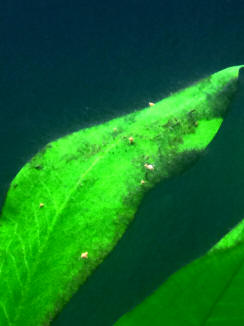
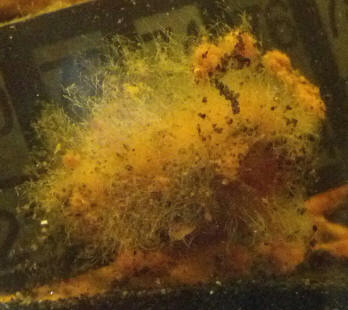
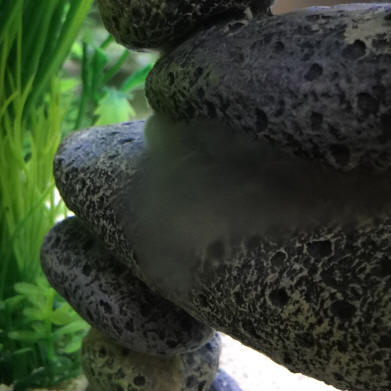
.JPG)
.JPG)