|
Archive 317: Daily Pix FULL
SIZE
(For personal use only: NOT public
domain)
(Mmm, right click, add, set as background...)
To: Today's: Desktop size
download , Today's FAQs, S SW Archive
270, SW Archive
271, SW Archive
272, SW Archive
273, SW Archive
274, SW Archive
275, SW Archive
276, SW Archive
277, SW Archive
278, SW Archive
279, SW Archive
280, SW Archive
281, SW Archive
282, SW Archive
283, SW Archive
284, SW Archive
285, SW Archive
286, SW Archive
287, SW Archive
288, SW Archive
289, SW Archive
290, SW Archive
291, SW Archive
292, SW Archive
293, SW Archive
294, SW Archive
295, SW Archive
296, SW Archive
297, SW Archive
298, SW Archive
299, SW Archive 300, SW Archive 301, SW Archive 302, SW Archive 303, SW Archive 304, SW Archive 305, SW Archive 306, SW Archive 307, SW Archive 308, SW Archive 309, SW Archive 310, SW Archive 311, SW Archive 312, SW Archive 313, SW Archive 314, SW Archive 315, SW Archive 316, SW Archive 318, SW Archive 319, SW Archive 320, SW Archive 321, SW Archive 322, SW Archive 323, SW Archive 324, SW Archive 325, SW Archive 326, SW Archive 327, SW Archive 328, SW Archive 329, Freshwater
Pic of the Day Link,
|
.jpg) |
| Dendrochirus brachypterus
("Brack-hip-tur-us") (Cuvier 1829), The Shortfin Dwarf or
Fuzzy Lion is a rarer, more heavy bodied dwarf, often showing up
with a good deal of yellow, brown and green mixed with red
markings. Brach dwarfs are aptly named in reference to their very
large pectoral fins with almost no emerging ray tips. This is one
of the most personable marine species, quickly getting to recognize
and respond to it's owners presence. N. Sulawesi
09. |
|
|
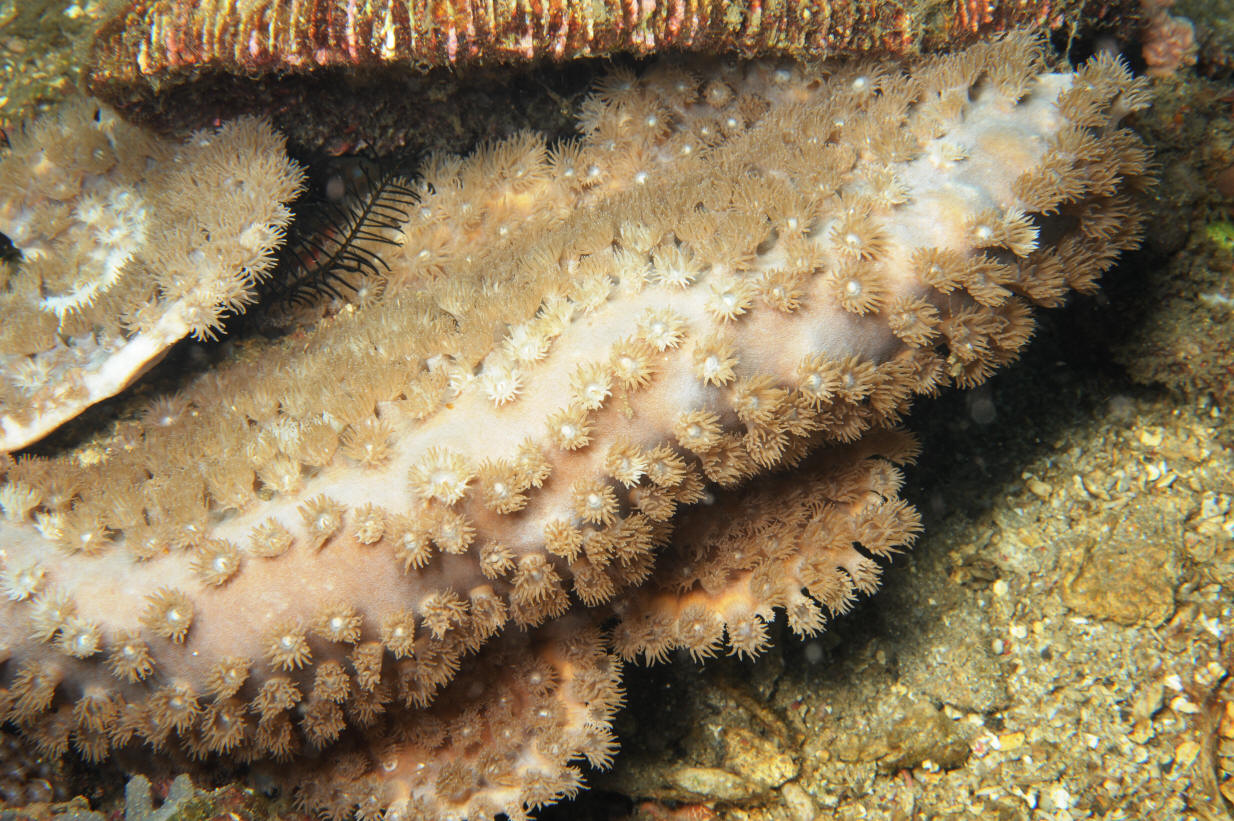
| Genus Turbinaria Oken : Form large colonies
with mainly laminar growth forms, common with several species.
Round corallites which are immersed to tubular in
appearance. A commonly offered and kept aquarium genus, whose
members prove hardy amongst a wide range of conditions. Being
hermatypic and sponsors of symbiotic algae, they do best in medium
to bright (25k-50k lux) light and brisk water movement. The
thinner, more laminar species and individuals (growth dependent on
conditions...) are harder to keep than the more fusiform members of
the genus. KBR 09 |
.jpg) |
| Diadema antillarum, the Long-Spined Urchin.
Tropical West Atlantic. 4-8 inch diameters with spines. Come out at
night to feed, hide during the day within rock crevices. Younger
ones with white banded spines. What the world needs more of now...
Here at the Denver Aquarium 09. |
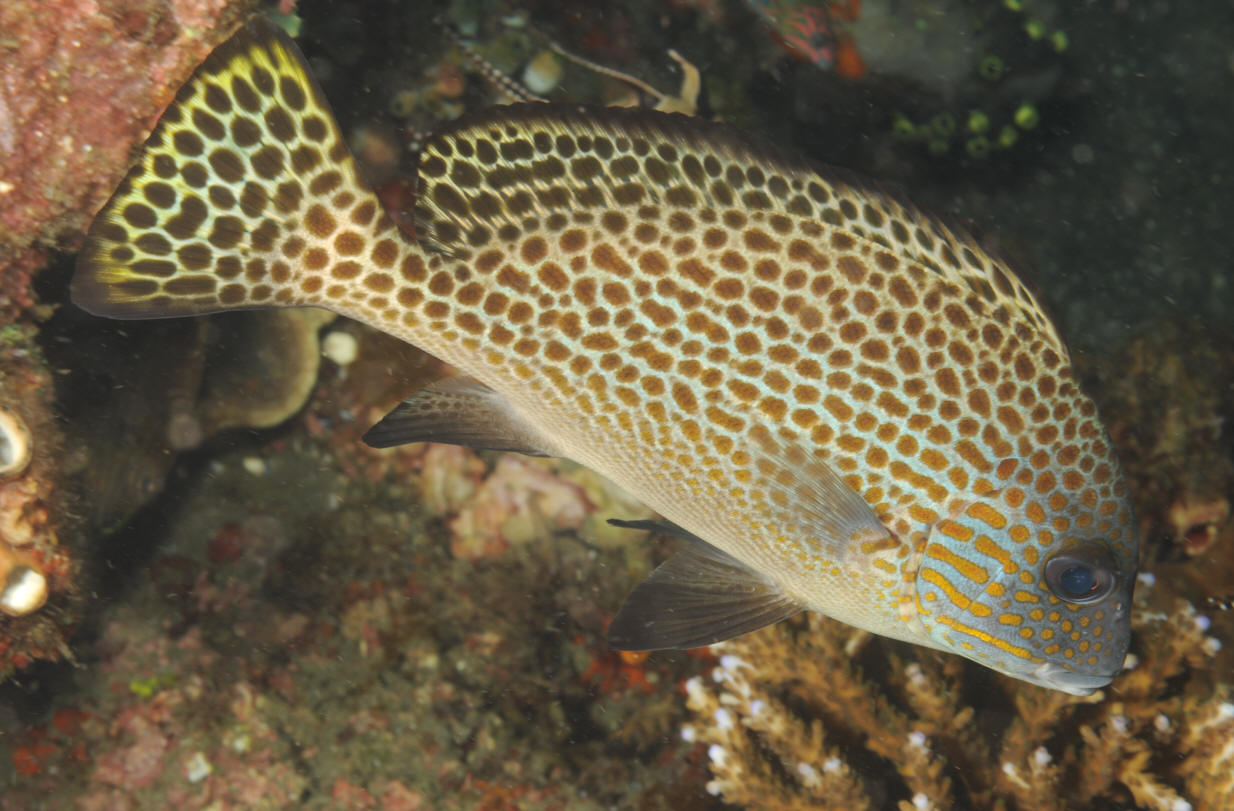 |
| Diagramma pictum (Thunberg 1792), the
Painted Sweetlips. Indo-West Pacific; Red Sea, eastern Africa to
Japan and New Caledonia. to about a meter total length. N. Sulawesi
09. |
|
|

