|
Related FAQs: Ecsenius Blennies, Ecsenius Identification, Ecsenius Behavior, Ecsenius Compatibility, Ecsenius Selection, Ecsenius Systems, Ecsenius Feeding, Ecsenius Disease, Ecsenius Reproduction, True Blennies:
True Blennies, Saber-Tooth Blennies, Blenny Identification, Blenny Behavior, Blenny Compatibility, Blenny Selection, Blenny Systems, Blenny Feeding, Blenny Disease, Blenny Reproduction, Blennioids & their Relatives, Algae-eating Blennies,
Related Articles:
Combtooth Blennies,
Algae Eating
Blennies, Blennioids and their Relatives, Sabertooth Blennies, Family
Blenniidae/Tribe Nemophini, Algae
Control, Triplefin Blennioids,
/The Conscientious Marine
Aquarist
Combtooth
Blennies of the Genus Ecsenius
|
|
|
By Bob Fenner
|
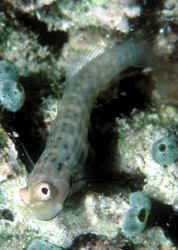
Ecsenius stictus
|
The genus Ecsenius deserves special attention in
the family Blenniidae; with forty seven species these are delightful,
small (to four inches) fishes that do superbly well in peaceful fish,
invertebrate and reef systems.
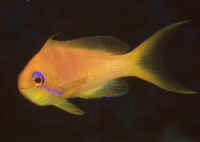
The quintessential member of the genus is the Midas
Blenny Ecsenius midas, with changeable yellow, purple, brown and
pink & blue. The Midas is a good assay organism as they exhibit
rapid and extreme color changes when stressed. Considered to be a mimic
of the Coralfish Pseudanthias squamipinnis among other Basslets
over it's wide range, this little beauty is very un-blenny-like in
its disposition to stay out from cover hiding amongst its adopted
"school".
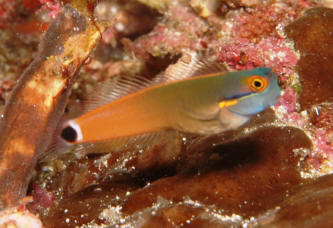
Two other favored Ecsenius are the orange and
purple Bicolor, E. bicolor, and the gorgeous yellow and blue
E. gravieri.
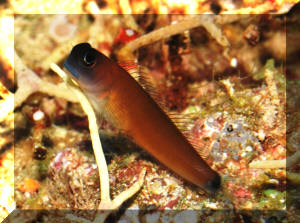
| Ecsenius aroni Springer 1988, Sharm el
Sheik, Egypt. |
|
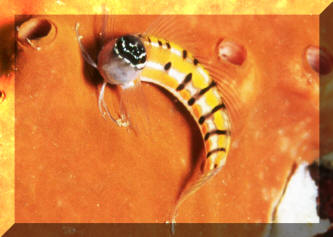
| Ecsenius axelrodi (Springer 1988),
Axelrod's Blenny. Western Pacific; Admiralty Islands, PNG,
Solomons. To three inches in length. This one hanging out on a
sponge in Bunaken/Manado in Sulawesi/Indonesia. |
|
Bigger PIX:
The images in this table are linked
to large (desktop size) copies. Click on "framed" images
to go to the larger size. |
|
%20MD.JPG)
|
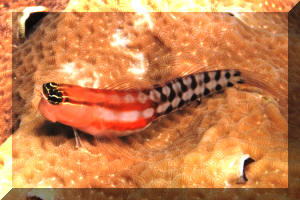
| Ecsenius fijiensis Springer 1988,
the Fiji Blenny. Endemic to Fiji. To 3.9 cm. Bligh waters pic |
|
Bigger PIX:
The images in this table are linked to large
(desktop size) copies. Click on "framed" images to go to
the larger size. |
|
MD.JPG) MD.JPG)
|
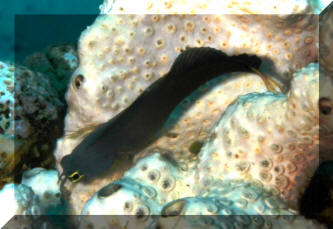
| Ecsenius frontalis (Valenciennes 1836), Smooth-fin
Blenny. Red Sea and Gulf of Aden. A few color varieties exist. To 8 cm. Red
Sea 2008. |
|
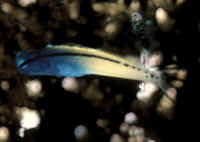
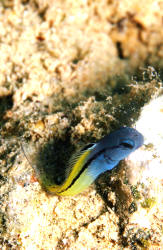
| Ecsenius gravieri Pellegrin 1906, the Red
Sea Mimic Blenny. Western Indian Ocean; Red Sea, Gulf of Aden. To 8
cm. Mimic of Meiacanthus nigrolineatus (see page of
Fangblennies). Na'ama Bay, Sharm image. |
|
Bigger PIX:
The images in this table are linked to large (desktop size) copies.
Click on "framed" images to go to the larger size. |
.JPG)
.JPG) |
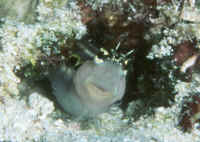
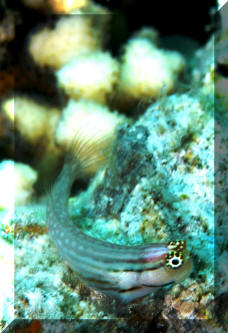
| Ecsenius lineatus (Klausewitz 1962), the
Linear Blenny. Indo-West Pacific; Mauritius to the Philippines. To
three and a half inches in length. This image shot in the Maldives.
Another beautiful member of the genus well-suited for aquarium
use. |
|
Bigger PIX:
The images in this table are linked
to large (desktop size) copies. Click on "framed" images
to go to the larger size. |
|
%20MD.JPG)
%20MD.JPG)
|
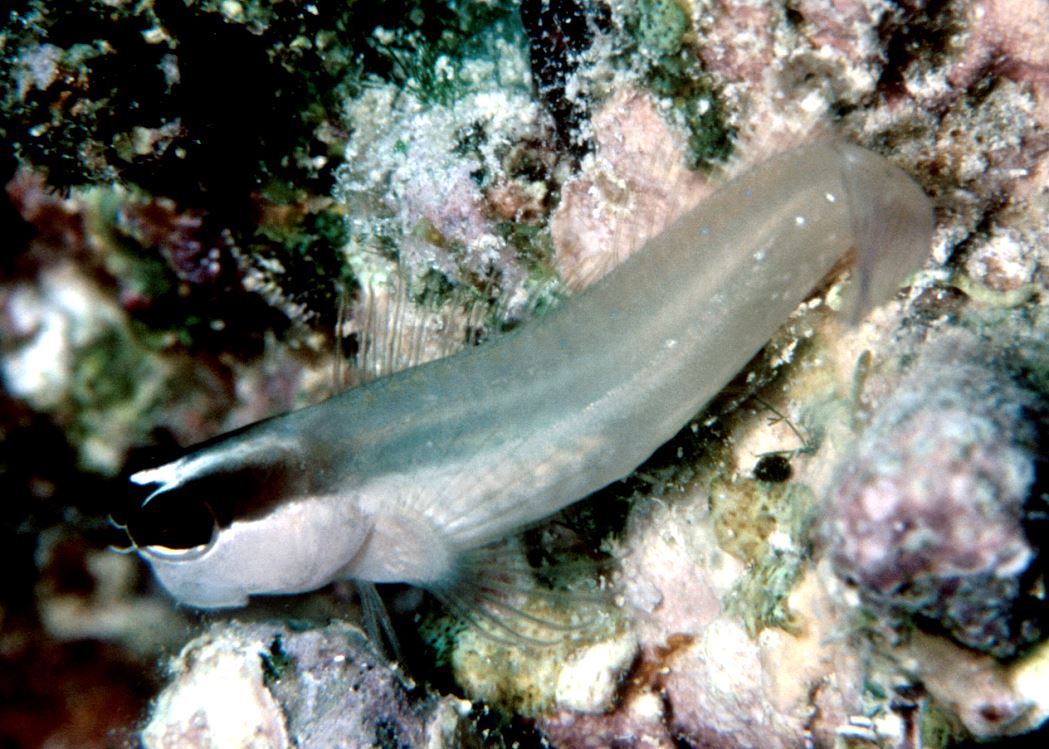
| Ecsenius mandibularis McCulloch 1923, the
Queensland Blenny. Only found in the southern part of
Australia's Great Barrier Reef. To three inches. This one off
of Heron Island. |
|
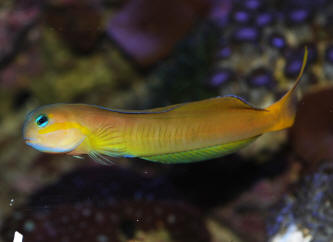
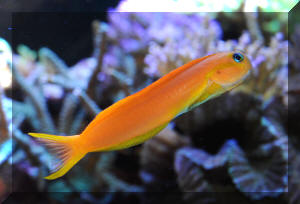
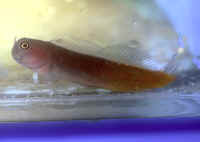
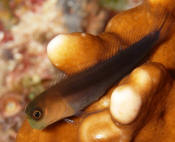
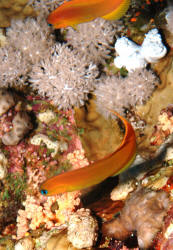
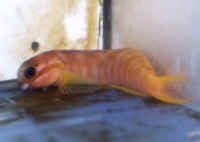
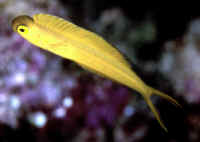
| Ecsenius midas Starck 1969, the Midas or Persian
Blenny. Indo-Pacific; Red Sea to the Marquesas. To about five inches in
length. At right, one at the SDTFS show. Below: Sometimes found in association with
the Basslet Pseudanthias squamipinnis (at right), which it
resembles, feeding on zooplankton. Aquarium, Fiji,
aquarium images. |
|
Bigger PIX:
The images in this table are linked to large (desktop size) copies.
Click on "framed" images to go to the larger size. |
|
|
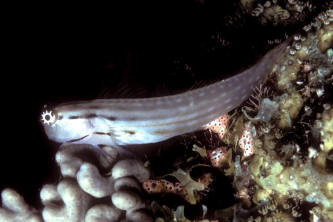
| Ecsenius nalolo Smith 1959, the Nalolo.
Western Indian Ocean; Red Sea down African coast. To two and a half
inches in length. This image made in the upper Red Sea. |
|
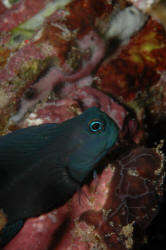
| Ecsenius namayei (Jordan & Evermann 1902),
Black Combtooth Blenny. To 11 cm. W. Pacific; Taiwan to Solomons. This one
in Raja Ampat. |
.JPG)
|
|
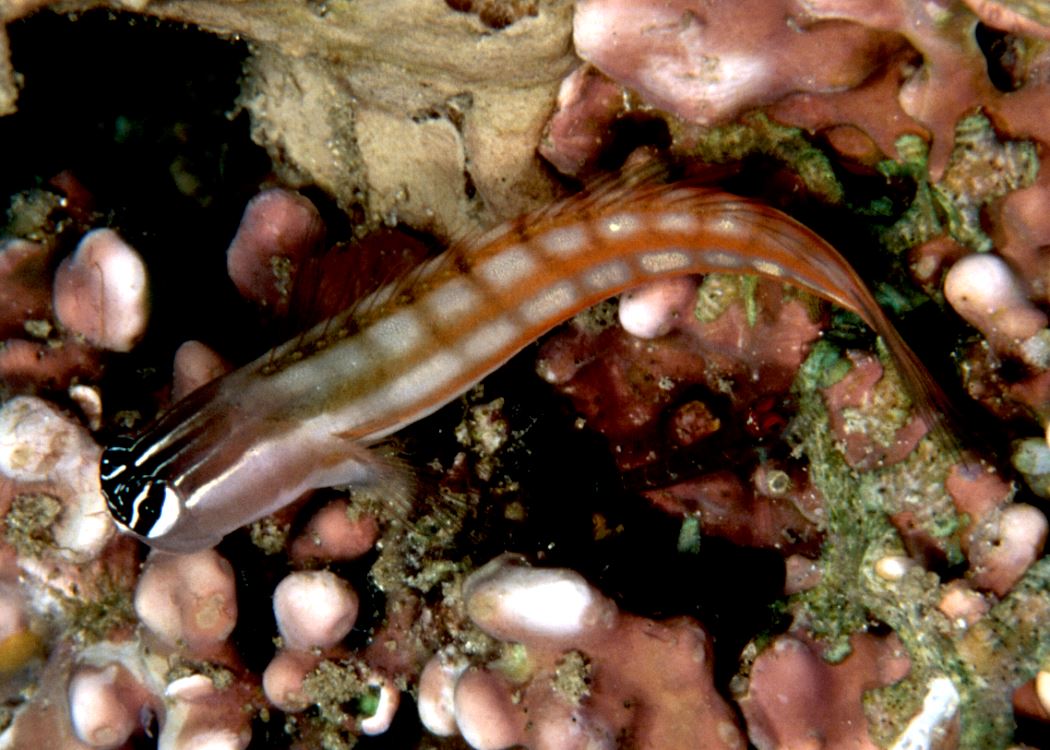
Ecsenius opsifrontalis Chapman & Schultz 1952.
Pacific; Micronesia to Samoa. To two inches in length. This one
outside its known range (or a mis-id!) in Pulau Redang, Malaysia.
Re: A nice Ecsenius opsifrontalis pic Bob: You should
get Springer's paper (1988) on Ecsenius (Smiths. Contr. Zool.
number 465, with 14 color plates. E. opsifrontalis is now
a complex of species. Aloha, Jack (Dr. Randall) <Thank you for
this Jack. Will post your input on the coverage on our site:
WetWebMedia.com on the True Blennies FAQs. Bob Fenner>
|
|
Bigger PIX:
The images in this table are linked
to large (desktop size) copies. Click on "framed" images
to go to the larger size. |
|
%20MD.JPG)
|
| Ecsenius schroederi McKinney
& Springer 1976, the Spoke-Eye Blenny. N.W. Australia to
Moluccas, E. Indo. To 5 cm. Raja Ampat pix. |
%20crop.jpg)
|
Bigger PIX:
The images in this table are linked
to large (desktop size) copies. Click on "framed" images
to go to the larger size. |
%20MD.JPG) |
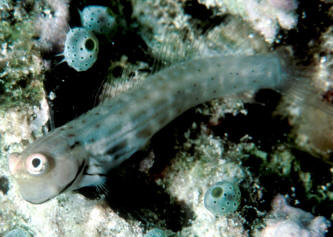
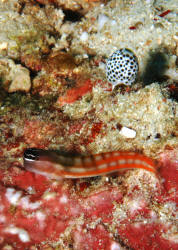
| Ecsenius stictus Springer 1988, the Great
Barrier Reef Blenny. Endemic. To a maximum of 5.8 cm. This one of
many off of the Whitsundays, Queensland, Australia. |
|
|
|


%20MD.JPG)
%20MD.JPG)
%20MD.JPG)
%20vert.JPG)
.jpg)
.JPG)