|
|
| Home | Marine Aquariums |
Freshwater Aquariums |
Planted Aquariums |
Brackish Systems |
Ponds,
lakes & fountains |
Turtles & Amphibians |
Aquatic Business |
Aquatic Science |
Ask the WWM Crew a Question |
| Please visit our Sponsors | ||||
Angel Fish Questions... stkg./sel. and by species
5/7/13
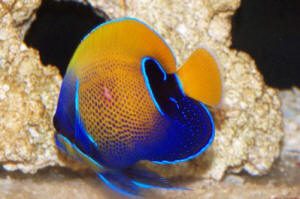
Re: Blueface angel, dis. f', HLLE 12/26/11 Mr. Fenner, Thanks for the quick reply on Christmas. You work to hard. So I pulled out the charcoal today. I have been checking my Nitrate, Nitrite, and Ammonia. One thing I have not been checking is my ph since I converted it from a reef to a Fowlr tank. It was at 7.2, now it is at 8.3. <?! I would NOT change pH this fast... are you familiar w/ our/WWM's search tool?> Do you think that had something to do with it? <Of a certainty, yes> So here's my plan. I feed new life spectrum pellets once a day, every day. Every other day I feed Angel formula, and every other day I feed Mysis. I always soak them in Selcon and garlic Do you think that will do the trick, Plus keeping superior water quality? <Only time can/will tell> How long should I remove the charcoal for? <... see WWM re carbon use> Anybody reading this and thinking of putting a Blue Face Angel in a reef DONT DO IT! My angel nipped at lps, soft, sps and mushrooms corals. <Thank you for this... also posted on WWM> The only one thing he never ate is Lavender Mushrooms, and that is because my two clown fish live in it like a anemone and protect it from the Angel, Me and anything else that gets near it. lol I know a guy that has a 600 gallon reef and had Blue face Angel in there for a couple of years and he had to be pulled out because he started eating everything. Live Aquaria says, they are reef safe with caution. There <they're> full of it! I wanted to give you a update on the Cowfish, Emperor, and the 265 tank. I took the cowfish back to my lfs store. The cowfish was to <too> slow of <an> eater to make it in my tank. I was hand feeding him, but it just seemed like he never was getting enough food, and I think he would of starved to death. I went and looked at 265 tank for $4500. It was a mess. Lots of plywood, spray paint, homemade horrible stand, pvc pipe scattered in three different rooms coming off of it. My wife was with me when I looked at it. She said, there's no way we are putting this in our house! <Heeee! Great that she went along> Of course she said it right in front of the guy selling it. She lets me do pretty much what I want when it comes to my aquarium, but that tells you what a mess it was. lol So I took the Emperor to my lfs too. I don't know now when I am going to get a bigger tank since they are in between. and cant afford $10000 to set one up brand new. I know The Emperor would of rather lived in my 55, then in my 180 getting bullied by Blue Face. So I think It made a good choice. I just hope that the lfs does sell him to somebody and they put him in 20 gallon tank. I seen that crap on you tube very sad! Thanks, Jim <And you, B> Re: Blueface angel 12/27/11 Thanks for the quick response Mr. Fenner! <Welcome Mr. Ivy!> I am sorry to share my drama about Murphy, (blue face angel) but I thought maybe I might be able to save at least one reef tank from disaster. It was great that my Wife went, but she could care less about my tank. <... perhaps in time> Its my hobby and She knows how expensive it is because we share a Banking account. BOO! I will look the ph and charcoal up on WWM. I will keep you updated. If you here of any tanks for sale up in the North West send me there number. ; ) Have a great New Year, Jim <Thank you Jim. B> Majestic Angel Sel.
5/30/11 Majestic Angel Question,
stkg./sel. 4/16/11 Your Thoughts On A Blue Face Angel
6/21/10 urgent help needed for Blueface angel... fdg., sel.
7/8/10 Blue Faced Angel, sys., sel. --
12/14/09 Re: Purchasing an Established Majestic
Angel/Also...... update: Eric R. & James (Salty Dog)--
02/21/09 Greetings to you all, <<Hello again
April>> Eric Russell requested an update on my situation
regarding purchasing an established 8" Majestic Angel from the
taco shop. <<Ah yes'¦thank you for this>> James
(Salty Dog) also replied to my query, so this is to both. <<Will
share'¦>> Thank you kindly for your wise, generous
feedback on this issue. <<We are pleased to help>> It
proved invaluable. <<Ah!>> I decided not to get the
Majestic. <<Oh?>> I fed my brood, and was reminded with all
of the fish colors whizzing around that my occupants are a pretty
lively bunch at feeding time. I went to the shop to see how the
Majestic ate, and saw that he swam like a sea turtle. I'm afraid he
wouldn't have a chance at a good meal with my group.
<<Hmm'¦>> He is so used to his cramped quarters; I
feel he'd suffer some hunger over here until (if ever) he got the
hang of how feeding time works with us. He's in there with a Blue
Hippo, a Jawfish, a Yellow Tang, and some Blue Chromis. Getting him out
of his established home would be stressful on him as well as the Blue
Hippo, would hate to trigger Ich. <<I think the Angel would learn
to get its share of food'¦and would also likely become
'king fish' in your system. And yes, fishing the Majestic out
of the display would be stressful to all in the
short-term'¦and may well result in the need for some treatment
to all re'¦but it would also measurably improve the
environment for those fishes remaining'¦assuming the owner of
the tank didn't throw another large species in to take the place of
the Majestic Angel. But no worries'¦is your decision. And it
is also possible the Majestic may well already be
'damaged''¦ Attributed to living/growing up in the too
small system (possibly both physiologically and
psychologically)>> His home is too small, but I'll just leave
him where he is and get a nice 4" French Angel I see at my shop.
<<A wonderful aquarium species'¦and 4' is a great
size for introduction to a captive system. These are beautiful
fish'¦a mature adult is even more attractive than the
juveniles, in my opinion. This Pomacanthus species does get
considerably larger than the Majestic (18' for the French vs.
12' for the Majestic'¦in the wild), but should do fine in
your 300g display if not too crowded (either with too many other fishes
and/or too much structure/live rock)>> Bob rates the French
pretty high for hardiness, so that's a much better choice.
<<Much agreed>> I actually have been feeding my fish those
New Life Spectrum pellets for 2 years now along with 5-6 other types of
foods. <<Excellent!>> Thanks Eric! My local shop highly
recommended them when I was first setting it all up, so it was great to
read that you endorse them, as well. <<Indeed I do'¦and
very highly at that! In addition to my fishes being vibrant, VERY
colorful, and healthy which, in addition to other elements obviously, I
attribute to their acceptance/feeding of this highly palatable and
nutritious pelleted food. I also have a 'spawning' pair of
Macropharyngodon meleagris that eat the Spectrum pellets with gusto.
There is no doubt in my mind that this difficult-to-keep species'
social development, indeed their very survival for more than four years
now, is due in no small part to the inclusion of the New Life Spectrum
pellets in their diet. But enough of the fish food commercial
[grin]>> My Coral Beauty and Bi-Color Pygmies are so fat and
colorful from that food. <<Ah yes!>> This Majestic's
home situation taught me a good lesson about the careful and
conscientious stocking decisions Bob and the rest of the Crew teach all
the time. <<Though they may sometimes seem harsh, and considering
the broad audience and experience levels that view these
recommendations/comments are often a bit reserved and leaning to the
side of caution, we really do have the best interests of the
livestock'¦and the hobbyists'¦in mind>> So much
more thought and planning must go into your system than just the
dazzling looks of a show specimen. <<Indeed'¦impulse
buying dooms more animals than many can imagine>> Thinking long
term is the way to start out. <<Yes'¦always>>
Thanks again for all of your time and attention! <<Is a pleasure
to share>> I'm sure this French Angel will work out great.
<<Magnificent fish'¦yes indeed>> April <<All
the best my friend. Eric Russell>> P.E. xanthometopon 05/14/08 Hi All, <Daren> You guys/gals rock! Love the site! Been successful with the hobby in the last 3 yrs because of it! Much kudos gang! Real quick question that I haven't been able to find. Is there any difference between the Blueface angelfish that have the black eye spot on its tail and ones that do not? Thanks, Daren <Just the spot... about the same (low) adaptability/survivability in captivity. Bob Fenner> "The Conscientious Marine Aquarist" Euxiphipops suitability/sel. 4/1/08 Mr. Fenner, <Craig... Oh, I used to work for a Dr. Kaplan in San Diego... taking care of a fish tank in their waiting room...> I would like to begin by saying that my son and I thoroughly enjoy your book. Even though it has been a number of years since it was initially published, the message remains the same. <Ah, yes... and I've been told the 2d ed. is due out next week (first time a book by myself has made such...)> There are a number of fish and invertebrates that for one reason or another are totally unsuitable for captive maintenance. I applaud your stance on this subject. Until the market dries up, they will continue to be imported. I have seen numerous Regal Angelfish and Moorish Idols waste away. But, because they are uneducated, people continue to purchase them. <Yes... a shame... for all> I would like to ask you about a particular fish, Pomacanthus [Euxiphipops] xanthometopon. Or, as it is commonly known, the Blue-Face (or Yellow-Face) Angelfish. In your book (on page 251), you say that this fish does not have a good survival record in marine aquariums. <This is so historically... though, many better specimens are to be had... and have had several good reports of success with small "Bali" individuals> I was surprised by this as I have had a running salt water aquarium for more than 30 years and have considered this fish to be a good choice for all but first time aquarists. We had a fire in our home in December of 2004 that totally destroyed the home and all of our belongings. At the time, I had an Oceanic 58 gallon marine aquarium. My fish survived the fire. Since the fire department had pulled the meter from the home thus cutting off the electricity, the UPS took over and kept the pumps running. When my son and I entered the house once the fire was extinguished (4 hours later), we found that the fish had survived. I ran several extension cords out the window into my neighbor's garage to keep the tank running. The next day, I captured my fish and took them to my local fish store.<Quite an ordeal!>It took 1 year, 10 months and 16 days to rebuild the house. We moved back in on October 20, 2006. A couple of months later, I purchased my new aquarium, a 150 gallon tank. We have it stocked with only fish and run copper in the tank <Ahh, you and I are old-timers> and use an oversized UV sterilizer in order to minimize the chance of parasites causing problems. The king of the tank is a Blue-Face Angelfish. This fish eats everything that we feed. We use the Lifeline Herbivore and Carnivore food supplemented by other types of food in order to provide a variety. Honestly, my experience shows the Blue-Face Angelfish is a tough, hardy fish. Nearly all of the fish that make their way to the stores in my area (Orlando, FL metropolitan area) come through wholesalers in either Tampa or Miami. In the same Genus, my experience is that the Navarchus is a little bit less bold and shy. But, if it is added early in the process and it has lots of places to retire, than it too can be a long lived aquarium specimen. I have found the Sexstriatus <Sexstriatus... the six line... My fave of the subgenus> to be, perhaps, the hardiest member of the Genus. I have had them begin to feed minutes after being released into their new homes. In fact, the Sexstriatus can be a bully at times. I have kept them with triggerfish of the same size and they have done well. I'm sure you have first-hand experience that led you to your opinion. But, I wanted to let you know that (as regards Pomacanthus [Euxiphipops] xanthometopon) my experience has been the exact opposite of yours.<I thank you for this. Do understand that I have many more "data points", having traveled, help establish many collecting stations, had MANY conversations with folks in the livestock wholesale trade over decades...>I still enjoy your book and recommend it to others. I will watch for additional titles in the future. Best wishes to you! Craig L. Kaplan <Thank you for sharing. I will accumulate/post your input on WWM. Cheers, BobF in Borneo> Re: Was Large Angelfish et. al... now Navarchus sel. 11/3/07 Bob, I have given some thought to what you said about a pair of Golden Butterflies. I think I'm going to do it. However, I would like to know the difference (if any) between a Majestic angelfish that comes from Bali vs. Solomon Islands ?? Is it just color? What about hardiness or temperament? Thanks Kirk <Mmm, don't know much about the livestock coming out of the Solomon's currently, but the subgenus coming out of Bali has been steadily good for years... The small/er specimens readily accepting foods... And not apparently cyanided. BobF> Blueface Angel (Pomacanthus xanthometopon) 1/16/06 I'm thinking about purchasing a small adult only 3 inches for my 90 gallon plus 20 gallon sump that I have running. <This is too small a system> my question is after reading a few articles I know that these fish enjoy sponges, do you know anywhere that you can purchase sponges that could be placed in the tank for the angel to eat??? <Most wholesalers carry some Pacific sponges... some oriental food stores sell dried...> Right now I have a dogface puffer, clown trigger, Huma trigger, and a Niger. All are around 3 inches or smaller. <Too crowded> I know that this angel will get big, but I have a deal with a local friend that buys the fish that I have that out grow my tank and puts them into his display tanks at local businesses. <Will/would be miserable in the meanwhile... short answer. Don't do it> Do you think all of these fish would get along??? <No> I really would like to add a Blueface, harlequin tusk and maybe a bird wrasse???? what do you think???? <Mmm, that you should work in a public aquarium, perhaps a large marine-oriented fish store... save up for larger systems... Plan on a career in aquatics. Bob Fenner> thank you greatly André© Marine Angels Euxiphipops 10/6/05 Hi, I have a 90 gallon FOWLR tank with 85 lbs of live rock and I was wondering if I could keep a medium sized blue face angelfish (4-6 in). <I would not advise this, the adult length of this fish is considerably over a foot.> My LFS told me fully-grown adults need at least 100g <Your LFS's estimate was modest at best, and that's being polite. This fish will eventually require a tank in the 180+ gallon range.> but I also heard that in captivity they don't tend to reach they're full length. <This is somewhat true, but the common myth that 'Fish grow to size of their tank' is ludicrous. As responsible aquarists we should plan for the largest potential size for any of the animals in our care. Furthermore I have personally witnessed the specimen in question to grow to 18' in length in private aquaria.> Do you have any suggestions? <I would not purchase this fish. While I'm pretty sure I made it clear that its potential size disqualifies it from being a good candidate for you, I did not even begin to discus the specifics of (Euxiphipops xanthometopon). This fish is notorious for not adapting to captivity or captive foods. It is best left to veteran aquarists with large mature tanks. For more info on this fish please research via the WWM FAQ's. Adam J.> Marine Angels Hey Bob, how's it going? <Bob is in Cozumel right now. Steven Pro at your service.> I have a question, I have a 55 gallon FOWLR, 45lb LR about 3" of LS a protein skimmer will be upgrading soon to a AquaMedic, a Fluval 404 canister filter, 2 MaxiJets powerheads on a WaveMaster for circulation and a Tessellated eel it's been set up for 8 months now. I was going to set up a 55 gallon reef tank until the other day I saw a Blueface Angel at the LFS that left me and my girlfriend amaze and from that day on I been researching info on these spectacular fishes and I was reading that these fishes don't last long on captivity <They are not the hardiest of Angelfish.> and also that they need a minimum of 100 gallon for them to be happy. <I would even say larger.> Could you tell me what is there average life span in captivity <Their average lifespan is probably remarkably short due to all the losses in the chain of custody. If you obtain a healthy specimen, though, you could expect it to live for ten years or more.> and could I keep small specimen in my 55 gallon for a while? <I cannot recommend this.> I know is kind of small, could it last more than a year in my tank? <There is a greater likelihood that this additional stress of being cramped would be more than your fish could tolerate.> I am still going to school and do not have space in my apartment for a bigger fish tank but I am looking forward in keeping a 125-180 in a year or so from now. <I would get a dwarf Angelfish for now, something in the genus Centropyge.> Thank you for your help. By the way I love your website. <You are welcome. -Steven Pro> Large angelfish selection 7/17/05 I just wanted to say thank you, I was convinced that I had to have a 6 banded angel, and that no others would do! That was until I read your article and realized that it would be so selfish of me to buy this beautiful creature only to have it die after only months. <Likely weeks, even days.> I would never want to be a part of the death of such a magnificent creature! Your article has convinced me to get a Koran when I am ready for one! I really appreciate all of your wonderful advice, especially since my LFS has NO IDEA about anything. ( They recommended and I now own the problematic SeaClone 150!) No longer will I take their word for it! I think people like you and sites like this can help hobbyists realize that many are out to push the product, and not truly interested in the well being of the fish! Thank you again, Tanis Montminy <Thank you for your acknowledgment and bolstering our sense of what we're doing here. Bob Fenner> Blue face angel, large angel sel. HI and thanks for the opportunity for my question. I have the opportunity to purchase a 30 cm Blue face angel. I personally think it's wrong to capture fish this size for the aquarium trade but means nothing to the blue face I'm thinking of buying. I would like to ask you if you think it's wise buying a fish this size, <I do think it's a poor idea to send such illiterate messages... use your spelling, grammar checkers, please> ( I really feel for the poor thing and it is a stunning fish), and what size tank should it really belong in so it's quite comfortable. I have a 550 litre tank, 4x 2 x 2 ( sorry we work in litres in Australia) to accommodate this fish while another tank can be established. Any advice you can give would be greatly appreciated. <In general large specimens of Pomacanthids collected wild fare poorly... You can read re my opinions re Euxiphipops on WWM. Bob Fenner> Majestic angels Hi Bob, Bob I have a 100gal fish only tank Sunset Wrasse, Purple Tang, Clown Trigger, Min. Grouper, Volitans Lion, Clown Tang & Potters Angel I just had an Ich problem that I had to treat in my Main Tank with copper the spots went away but the fish continued to scratch now the clown trigger & purple tang look pale and all of the fish are constantly scratching the clown is getting cauliflower like spots on his fins I've done a water change and added some TLC now I have a 20Gal. QTANK setup what should I do. By the way they are all eating good just scratching and it looks like there fins are starting rot please advise. Thanks Rock >> Well, the twenty won't hold all these fishes for treatment or any other purpose... so it's back to treating them in place... Did you use a copper test kit? From the sounds of the looks of the animals and their behavior... it looks like they were alternatively over-coppered, and the Ich-under-coppered... You/they still have it... Did you manipulate specific gravity and temperature? There are many possibilities here... and a need to figure out what is going on and make some changes... NOW. Take a read through all the input on Parasitic Diseases under the Marine Articles section of my site www.wetwebmedia.com.... and get ready to add nitrifying bacteria (from the twenty? if you can culture it quick... maybe with some live rock there.... Or from commercial cultures...) and do successive water changes.... Bob Fenner, who doesn't like "this ride" either. Thanks for your reply. Much appreciated. I think it most likely I will not be getting a Navarchus angel ...... I have had a couple of warnings about them, but saying that I was thinking perhaps they just got bad specimens, so I said I would get your advice and go with that instead. As they say, if one person says it, you think "maybe", if two say it you still think "maybe", when three say it you think "maybe not", and when everyone says it, chances are they're right ! So I'll take your advice, and cast my vote my not buying one, to let them where they are best left .... in the ocean (and keeping my money where it is best left .. in my pocket.....LOL). <Or for that new system!> Thanks again, I'll be speaking to you again, no doubt. Regards, Matt >> <No doubt. I wish you well. Bob Fenner> Euxiphipops angels I recently bought Scott W Michael's Marine Fish (the pocket guide). His book, like your is published by microcosm. His fish rating system is 1-5, 5 being the hardiest, one the worst. He rates the Euxiphipops angels at three for Navarchus and Sexstriatus and 4 for xanthometopon. I was just wondering if you would agree with this ( I'm not sure how to translate the 1-5 w/ your 1-3 rating system. Also, the emperor angel is a three, making it less hardy than the Blueface? I was just curious... thanks for your insight - Yaron Aronowicz >> Have Scott's works... and do rate the subgenus much lower (1's for the Blue Face and Navarchus, 2 for the Six Striped...) than he does... Scott worked in the retail part of the trade, in Nebraska... I have worked in all aspects of the trade... in Japan, the Philippines, and southern Calif. in the U.S.... and probably have seen more of the "real spectrum" of what the industry is like... Scott's views are accurate no doubt... for the probably excellent specimens he has come in contact with in the middle of the U.S... If you only got "hand picked" members of these species, that hailed from other than Indo. the P.I..... yours would likely do better than the "average" as well... I rate the Emperor about a 4 (to five for ones from further into the I.O, Red Sea... on this scale... Bob Fenner Blueface Selection I purchased a blue faced angel two days ago. He's about 3 1/2" and almost his full adult color. Upon doing some research, (a couple of different books and hobby notes from ff express) I thought this fish would be the perfect last addition to my tank, keeping with the indo pacific theme. Just yesterday I came upon your article at wet web media (unfortunately a little too late) which states that these angels don't do well and will more than likely die. I'm devastated and don't know what to do. I currently have a 135 gallon tank with trickle filter, protein skimmer, UV sterilizer and the water quality is very good, I also have 60 pounds of live rock. The tank currently contains a purple tang, Sailfin tang, raccoon butterfly, Valentini puffer, lemon peel angel, coral beauty and a couple of purple Firefish. The blue faced angel was going to be the last fish added and possibly replacing the coral beauty and lemon peel. He is currently in my quarantine tank after a dip, and I would really like to keep him. He is currently eating spinach, but will not accept any meaty foods yet. My question is A.: What can I do to increase his chance of survival; B: When placed into my main tank, do you foresee any compatibility problems with any of my other fish; C: Do you recommend medicating a delicate angel as a preventative measure and D: Should I return him and choose not to take on the challenge and do you recommend any other Angels? Thanks, Bob. From Tom >> You are right in thinking my opinion is as you state... Most Blue Face Angels (Pomacanthus Euxiphipops xanthometopon) don't live for long in captivity... But you are by far not the "average" hobbyist... you've no doubt gotten an excellent specimen if it is eating spinach in a/your quarantine tank, have an established reef system of size, with peaceable tankmates.... that the Blue Face can dominate.... I rate your chances very good... I don't see any social dynamics problems... I would not "medicate" the fish (just quarantine it for two weeks, maybe adding a biological cleaner for insurance and company), and not worry otherwise. Bob Fenner Majestic Angel Hi Bob, Thank-you for answering my previous questions. You have been a tremendous help! I have another question and would love to hear/see your input about a 4" adult Majestic angel (Euxiphipops Navarchus) that has been in my local retail store for the past 2 months. I understand you have stated that this angel is a poor choice for home aquarium. However, the Majestic is eating and accepting various food types frozen/flake). The owner told me that he has given 3 formalin baths to the Majestic the first month, but did not administer one since. The angel appears to be healthy and behaves "normal".<Sounds like a very nice... and well-adjusted specimen.>Here is my question, since this Majestic has been in captivity for some time (2 months), do you think it will be wise to purchase this angel or should I leave this specimen alone?<If I were ever going to buy one, this specimen would be it>Your thoughts/comments are greatly appreciated. Thanks. Dan<Most of the three members of the subgenus Euxiphipops don't "make it" through the first couple of weeks of captivity, handling, shipping... Ones that have survived these rigors and are eating a variety of foods are likely to do well... As I stated, if ever there was one I would buy, it would be one with these qualifications. Bob Fenner> Majestic Angels In your experience, have Majestic Angels been more hardy from certain collection areas, such as Australia? thanks <Yes, there is a significant difference in hardiness of this species (Euxiphipops Pomacanthus Navarchus). The best ones I've seen are small individuals (3-4" overall) from Bali. Bob Fenner> Euxiphipops Navarchus Hi Guys - My LFS has had an exceptional specimen for the past week now - It is full bodied and healthy looking. I have gone each day now for a week and observed it feeding and becoming less shy. All the literature suggests that this is not an easy angel to keep, however based on the suggestions from Bob's book I feel I have a good candidate here. I was going to pick your brain for any other suggestions that the group may have regarding this particular species. Any thoughts that you have would be most welcome. Regards, Ric Raley <I do have a few suggestions for this challenging fish. First off, select what appears to be a healthy specimen, which it seems you have. You need a large tank, at least 90 gallons, and a good bit of live rock. Another good piece of equipment would be a refugium connected to your main tank. Not so much for the plankton it would generate, but to give your live rock a place to re-grow some more food stuff for the angelfish. You might want to cycle rock from the main display into the refugium for a month to recover from overgrazing. Best of luck, Steven Pro> Marine Angelfish I have lost a Navarchus angel due in part to me. I had a friend watching my tank and the pH dropped and was not corrected until my noticing, which was too late. The angel in particular I lost was the Navarchus. However, this fish was eating which to my knowledge (and said on WWM) is the main problem with this particular fish, not water quality. <a common obstacle> Was I lucky to have gotten a healthy eating fish? <not at all... many thousands are imported eating well... just some mishandled ones have imparted this reputation> This specimen I have traced back to being bought from Quality Marine wholesaler, which to my knowledge sells good quality. < a very fine wholesaler historically> I was wanting to get another angel because I had already purchased a 125gal.tank for this Navarchus when he grew up. In your opinion is quality marine a quality place that can be trusted to send another Navarchus in healthy condition with a healthy appetite? <absolutely. I have used them for the better part of a decade and consulted many stores that have used them even longer with pleasure>> Or should I invest my money in another species? I am also fond of Annularis, Asfur, and Imperator angels also. Thanks for the help. John <the Annularis Angel is far and away the HARDIEST of all mentioned. It is and incredible fish and gets my vote above all. Anthony Calfo> Australian fish worth the extra cash?- Dear WetWebMedia crew <Hi!> Is it worth it to buy a fish from Australia? <Sometimes> Are they more colorful? <Sometimes> Or hardier? <Pretty safe bet that they've been net collected at least.> Or just more expensive. <Usually!> I know red sea specimens are worth the extra money (but this angel doesn't come from there) Just wondering and can't find it in the FAQs (looking at purchasing a Blueface angel from marine center). <Since they still commonly come from the Philippines, getting an Australian one will pretty much guarantee you that they have been properly handled and not been juiced. The color may be better as well, but that varies specimen to specimen. Enjoy the new angel (hope you have a large enough tank!) -Kevin> Thanks Gary Peterson
|
|

|
Features: |
|
| Featured Sponsors: |