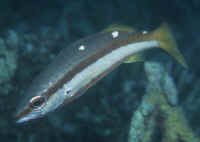
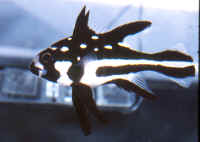
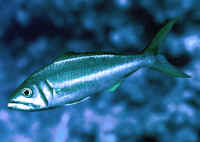
| Aphareus furca (Lacepede 1802), the
Small-Toothed Jobfish. East Africa to Polynesia in distribution. To
sixteen inches in length. This one off of Queensland,
Australia. |
|
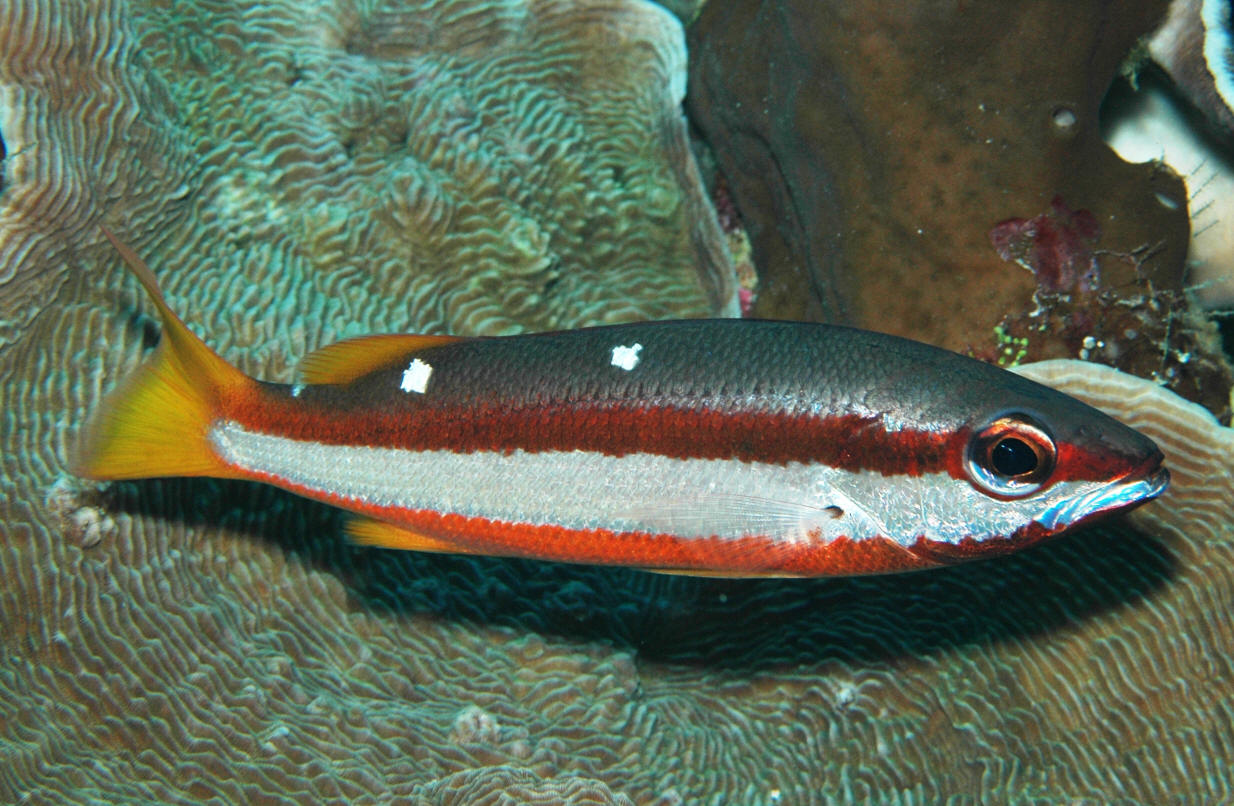
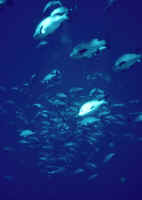
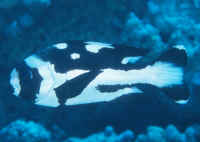
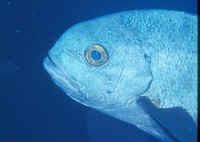
| Lutjanus bohar (Forsskal 1775), the
Two-Spot Red Snapper. Indo-West Pacific; Eastern Africa to the
Marquesas, south to Australia. To a maximum length of three feet.
Shown, a juvenile in Fiji, an adult off of Queensland, Australia,
and an aggregating, reproductive school off of Ras Mohamed,
Egypt's Sinai, Red Sea. |
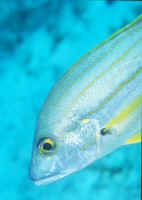
| Lutjanus carponotatus (Richardson 1842), the
Spanish Flag Snapper. Northeastern Indian Ocean and Western
Pacific. This one off of Heron Island, Australia. To sixteen inches
maximum length. Not used in the aquarium interest, but could
definitely be. Good looking, hardy, stays small enough... numerous
and easy to catch... |
|
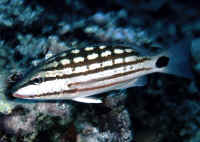
| Lutjanus decussatus (Cuvier 1828), the
Checkered Snapper. Western Pacific and Eastern Indian Ocean from
New Guinea to Southern India. This one off of Gili Air, Lombok,
Indonesia. To one foot in length. |
|
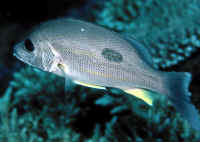
| Lutjanus fulviflamma (Forsskal 1775), the
Black-Spot Snapper. East Africa, the Red Sea to Samoa. To fourteen
inches in length. This one off of Queensland, Australia. Note the
yellow lateral stripes that the similar L. russelli
lacks. |
|
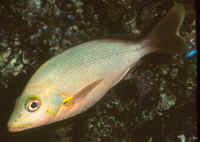
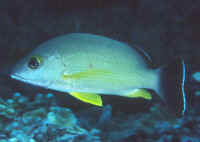
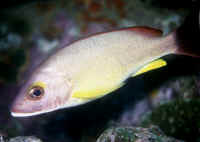
| Lutjanus fulvus (Forster 1801),
the Blacktail Snapper. Indo-Pacific; East Africa to Marquesas, Line
Islands, Japan, Australia. Occasionally used as an aquarium fish.
Young found in sheltered bays, around mangroves. Adults on
surrounding reefs near boulders. Feed at night on fishes,
crustaceans, sea cucumbers, squid and octopus. Pix from Hawai'i
(aquarium at Waikiki), Bunaken, Indonesia and Nuku Hiva, Marquesas,
Polynesia.
http://www.fishbase.org/Summary/SpeciesSummary.cfm?ID=262&genusname=Lutjanus&speciesname=fulvus |
 |
 |
 |
|
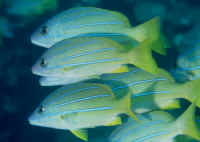
Lutjanus kasmira (Forsskal 1775), the Common
Bluestripe Snapper. Indo-Pacific; Red Sea, eastern Africa to the
Marquesas, south to Australia, over to the Southeast Atlantic;
South Africa. Here in the Maldives and Australia. Note the lower
third of the body is white and the presence of only four blue
stripes... distinguishing marks from the Five-Lined Snapper
below.
|
|
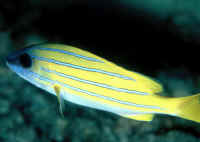
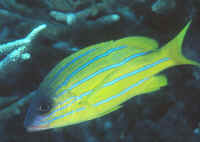
| Lutjanus quinquelineatus
(Bloch 1790), the Five-Lined Seaperch. Persian Gulf to Fiji. To
fifteen inches in length (most much smaller). This eight inch
individual off of Heron Island, GBR, Australia. |
|
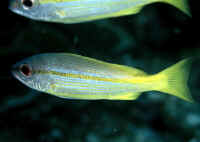
| Lutjanus vitta (Quoy & Gaimard 1824),
the Brown-Striped Red Snapper. Indo-West Pacific. To sixteen inches
maximum length. This one off of Pulau Redang,
Malaysia. |
|
|
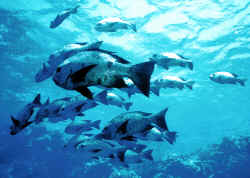
The one "species to avoid" as being too
touchy in this assemblage is the black beauty, Macolor
niger. Some friends in the wet pet industry and other authors
give this fish grand marks, but I have yet to see a juvenile of
less than five inches live for any length of time. Make sure the
one you are buying has been around a few weeks and is feeding.
Below: An aquarium juvenile, intermediate (six inch long) stage
individual in the Red Sea and ugly one foot adult of Macolor
niger. Red Sea group at right.
|
|
|
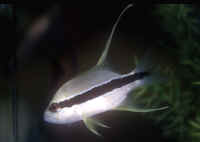
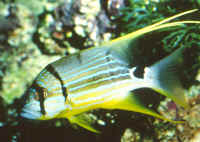
In good stead with the Emperor and catch all
"miscellaneous" snappers from the Indo-Pacific are the
threadfin snappers, Symphorichthys spilurus (Gunther 1874)
(aka the Majestic Snapper) and Symphorus nematophorus
(Bleeker 1860) (the Blue-Lined Snapper) which must be seen in
person to be fully appreciated. These two have golden yellow
bodies flanked by bright blue horizontal bars, two vertical black
head bands and a dark caudal spot. They look touchy but are as
tough as the best snappers. To two and three feet maximum length
respectively. Here are gorgeous juvenile and adult Majestics in
captivity.
|
|
|
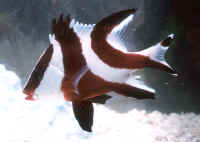
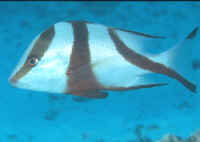
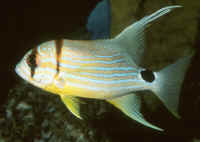
Symphorichthys spilurus (Gunther 1874), the
Sailfin Snapper. Western Pacific. To two feet in length in the
wild, about half that in captivity.
|
|
|
|