|
Related FAQs: Stethojulis Wrasses, Wrasses, Wrasse Selection, Wrasse Behavior, Wrasse Compatibility, Wrasse Feeding, Wrasse Diseases,
Related Articles: The Diversity of Wrasses,
Family Labridae, Cook Islands
Wrasses,
/The Conscientious Marine
Aquarist
The
Spastic Wrasses of the Genus
Stethojulis
|
|
| Bob Fenner |
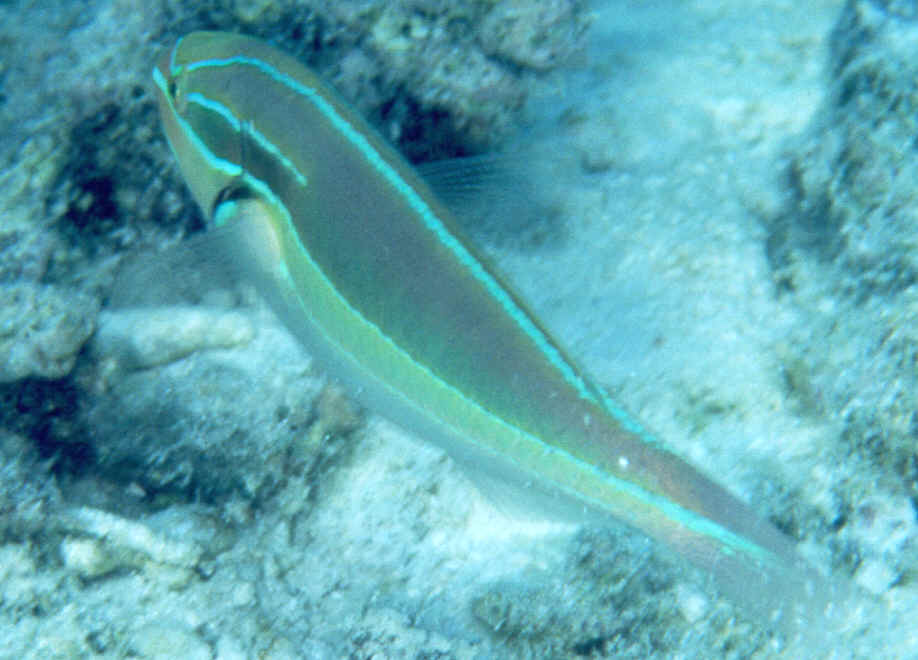
Stethojulis albovittata, Maldives
|
The common name of this group is the Ribbon Wrasses, but
if it were up to me I'd call them the "Beautiful Zoomers"
for their bold coloration and spastic reef cruising; these fishes are
constantly going 110%! Though Stethojulis are planktivorous and
don't get too large (most are about six inches long maximum) they
do have one shortcoming: they rarely live for any time in captivity.
They should only be tried in HUGE, well-established reef systems.
Bigger PIX:
The images in this table are linked
to large (desktop size) copies. Click on "framed" images
to go to the larger size. |
|
%20MD.JPG)
|
|
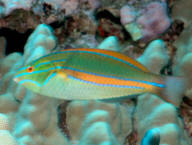
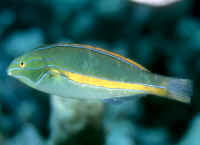
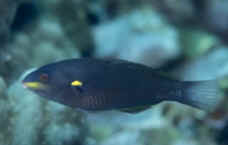
Stethojulis balteata (Quoy & Gaimard
1824), the Belted Wrasse (3), is an Hawaiian endemic. This is the
most common and hardiest member of the genus, but still has a
dismal survival rate. Two male pix and a female off of the Big
Island. To six inches long.
|
|
Bigger PIX:
The images in this table are linked
to large (desktop size) copies. Click on "framed" images
to go to the larger size. |
|
%20MD.JPG)
|
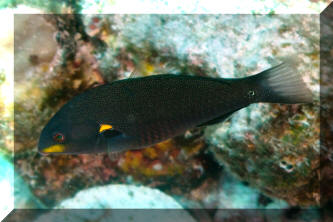
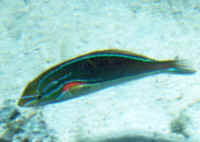
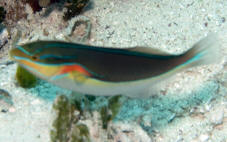
| Stethojulis bandanensis (Bleeker 1851), the
Red-Shoulder Wrasse. Indo-Pacific, from eastern Africa to the
tropical eastern Pacific coast. To six inches in length. Shown:
Males in French Polynesia and S. Sulawesi. Female in S. Leyte below. |
|
Bigger PIX:
The images in this table are linked
to large (desktop size) copies. Click on "framed" images
to go to the larger size. |
|
|
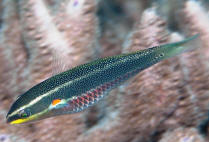
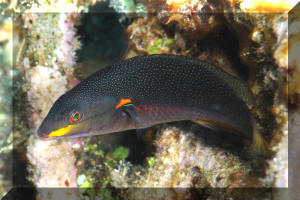
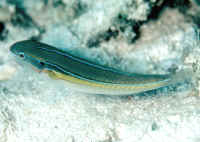
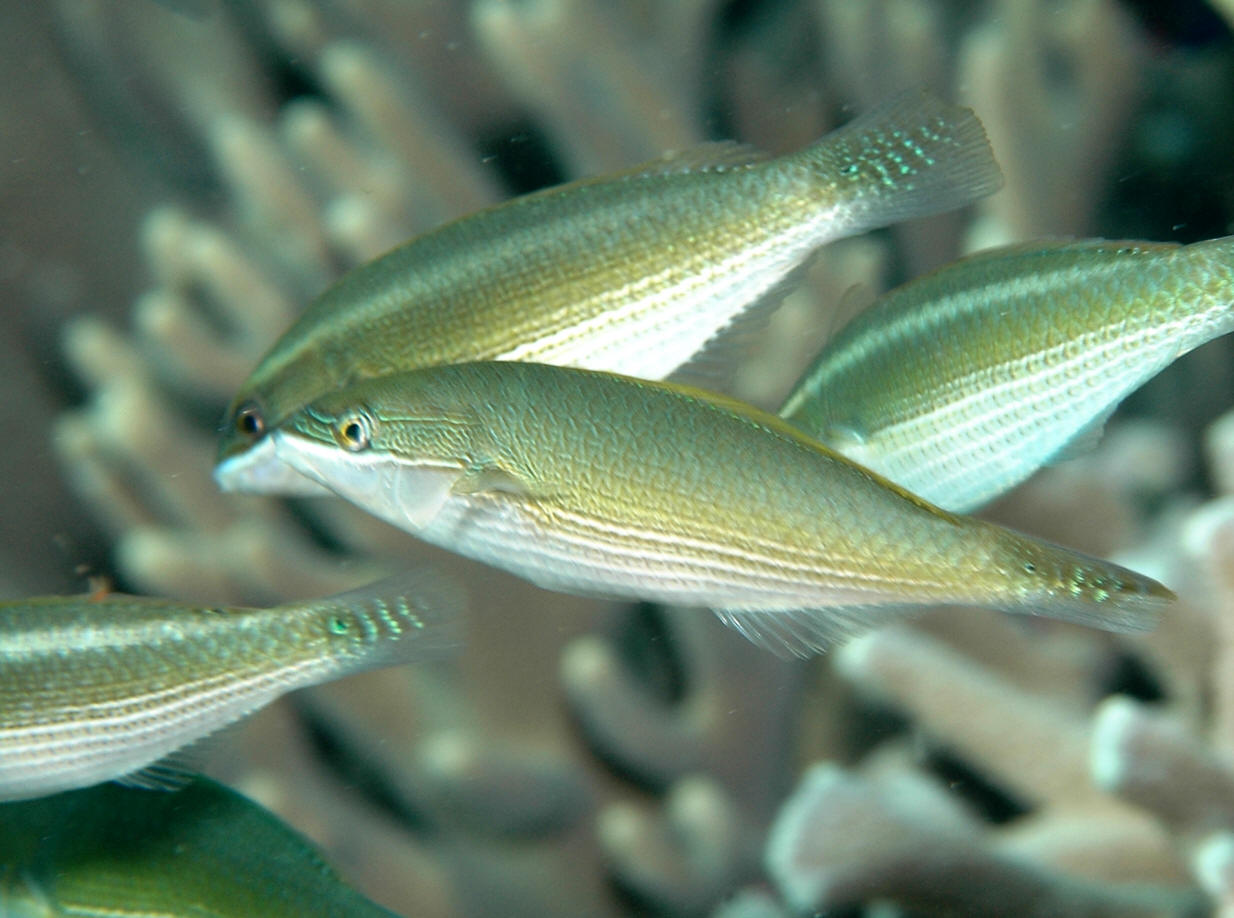
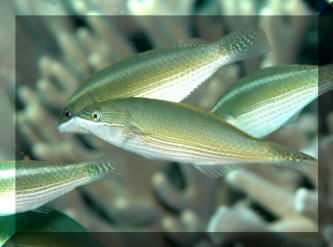
| Stethojulis strigiventer (Bennett 1832), the
Stripebelly Wrasse. Females are actually striped on their abdomens.
East Africa to Samoa, Micronesians. A male off of the Whitsundays
in Queensland, Australia, and a nice grouping of females/initial
phase individuals in S. Sulawesi. |
|
Bigger PIX:
The images in this table are linked
to large (desktop size) copies. Click on "framed" images
to go to the larger size. |
|
%20MD.jpg)
|
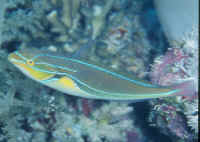
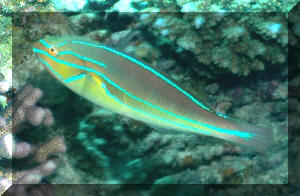
| Stethojulis trilineata (Bloch &
Schneider 1801), the Three-Lined Wrasse. Indo-West Pacific;
Maldives to north Australia, Palau, Samoa, southern Japan. To six
inches in length. A washed-out male in captivity and one in S.
Sulawesi shown. |
|
|
|