|
|
| Home | Marine Aquariums |
Freshwater Aquariums |
Planted Aquariums |
Brackish Systems |
Ponds,
lakes & fountains |
Turtles & Amphibians |
Aquatic Business |
Aquatic Science |
Ask the WWM Crew a Question |
| Please visit our Sponsors | ||||
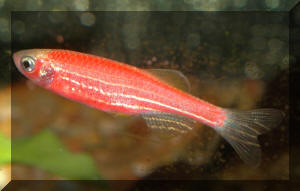
Brilliant Rasbora life
span 4/14/2011 Trigonostigma espei
behaviour 7/10/10
Barbs. Beh.
2/2/09 I was just wondering why my barbs are always
hiding? They don't even come out to eat. They have lots of places
to hide and take advantage of them. Is there any way that I can make
them a little more comfortable with being out in the open so that I can
see them? <Hi Pete. How many barbs do you have? And which species?
Some are shyer than others; Puntius pentazona for example (the 5-Banded
Barb) is one of the shy species and becomes nervous when kept with
larger or more boisterous tankmates. In general barbs need to be in
groups of 6 or more specimens of *each species* being kept. Fish also
tend to become nervous and/or shy if conditions aren't right for
them. A common problem is that the tank is just too small, and they
feel trapped. Even the smaller Barbs will need a tank at least 20
gallons in size, and bigger species much more space. Cheers,
Neale.> Flipping Rosey Barb - 6/20/08 Hi, My Rosey barb will be swimming normal, then just start flipping and spinning, then go back to swimming normal again. Sometimes it's just 1 or 2 flips, other times it goes on for about 15 seconds. She (?) appears to be fine otherwise. Her appetite is good. I thought maybe she was constipated, so I tried giving peas for the dinnertime feedings for a week. (Morning feedings are either flakes or shrimp pellets.) She loved the peas, but it didn't stop the flipping. She shares the 40 gallon tank with a Pleco, 4 adult platies and 12 baby platies. The platies and Pleco are all fine. The water temp is 80, the nitrate is 0, nitrite is 0, water is soft, alkalinity is 80 and the pH is 7.0. I change the filter and 25% of the water weekly. The flipping has been going on for about 2 months. Any suggestions? Lisa <Hello Lisa. There are diseases that can make fish swim in odd ways, such as the 'Whirling Disease' caused by Myxobolus cerebralis, but to be honest these are rather uncommon, and usually introduced via live foods (especially Tubifex) and don't get "caught" by jumping between fish in aquaria. That's why they don't just appear out of nowhere. Also, given this fish has exhibited these symptoms for 2 months and remains otherwise healthy, I'm more inclined to put this down to (perhaps) genetics or nervous system damage. If she remains happy, then just assume she's a bit quirky, and love her all the more because of it. Cheers, Neale.> Tiger Barb Mortality Rate 11/5/07 Dear WetWebMedia, <Hello,> I have a rather perplexing issue. I recently had a spare 55g setup that was cycled and in good shape. Ammonia, Nitrite, Nitrates all 0, pH = 7.6, GH = 160 ppm, KH = 100 ppm (hard water). I also have a cycled 10g QT tank of the same water chemistry. Also, I do keep aquarium salt in all my tanks at the recommended dose. <Hmm... no recommended dose of salt in my fishkeeping world. Salt is simply not required in a freshwater aquarium in this modern age of proper filters and regular water changes. The main job of salt these days is to make money for the salt manufacturers and the retailers.> All of the fish mentioned below are juveniles, about 1 inch long. I decided I wanted a barb tank so I started with 4 Black Rubies. Two weeks in the QT, all survived and into the 55g. Next came 5 Rosy barbs, same procedure, 2 week in QT then into the 55g. Here comes the problem. <OK.> I placed 6 Tiger barbs in the QT tank. By the time the 2 weeks were up only 3 were left. The three that died started breathing heavily, then hiding, then floating, then dead. I have not seen this type of death in anything other than Neon Tetras which I don't keep anymore as they are not compatible with my water chemistry. The 3 that survived went into the 55g and are happy and healthy, but being Tiger Barbs 3 are not enough. <Very odd.> I went to a different fish store and got 6 more Tiger Barbs, only 2 survived of this lot. Is there something about Tiger Barbs and my water chemistry? <Sounds unlikely. Tiger Barbs are tolerant across a range of water chemistry values. They should be fine in your tank. How much salt do you add? Taking fish from a retailer's tank without salt and sticking them in a tank with salty water could be problematic. But to be honest unless you're adding masses of salt (more than, say, 9 grammes per litre) than it's hard to imagine this would a cause of death.> Since they are so closely related to the Black Rubies one would think they would have a similar mortality rate. <Agreed. They are basically identical in terms of needs.> I am currently on hold with the mass executions of Tiger Barbs. Any advice would be greatly appreciated. <Do you do any gardening? Sometimes a species of plant just doesn't take no matter what. I think fish can sometimes work like that too. A combination of factors makes them unsuitable for your aquaria: water chemistry, diet, water change regimen, tankmates, etc. For me, that species is Neon Tetras; no matter what, they never last. So I don't bother with them. So my advice is skip the Tiger Barbs and try something like Puntius pentazona instead.> Regards, Larry <Good luck, Neale>
A few questions... Tiger Barb beh. 10/10/07 We have just set up our first, what I like t call, 'proper' fish tank with tropical fish in. We have 4 Tiger, 6 Green, 3 Albino Tiger Barbs, 3 Black Widows and several Neons. My main reason for asking a question is that two of the green barbs seem to kiss each other and then swim side by side and nudge each other. Can you suggest why they are doing this? Or is it normal behaviour? Also, what level should the nitrate and pH be? Thanks in advance! <Greetings. Tiger, green (moss), and albino tiger barbs are all the same species of course (Puntius tetrazona). They are intensely social fish, and spend much of their time jostling for position in their hierarchy. They don't normally fight, but they can get a bit rough. That's what you're seeing at the moment. It's normal. For the selection of fish you have, aim for a nitrate level of less than 50 mg/l. In many English cities at least this might not be practical; Thames Water for example comes out the tap at 50 mg/l thanks to urban development and intense agriculture. But provided you don't overfeed your fish and you do 50% water changes per week, the nitrates should stay love enough not to cause long-term harm. Certain fish (such as mollies and many cichlids) are nitrate-sensitive, but for the most part barbs and tetras are quite tolerant. The pH should be somewhere between 6 and 8 for these fish. The ideal would be around 7. Don't focus on pH though; what matters is hardness, since that's what directly affects the fish and the water. Your fish will appreciate soft to moderately hard water, though barbs and black widows at least can prosper in very hard water (Neons tend to be a little more sensitive). One last thing: all three varieties of barb and the black widow tetras are NOTORIOUS fin-nippers, so under no circumstances add anything slow moving or with flouncy tails. No angels, Gouramis, fancy guppies, Bettas, etc. Just fast moving fish. Good luck, Neale>
Danio inter-species schooling? 8/5/07
Dear WWM Crew, I'm working on starting (in the next month or so) a
10 to 15 gallon tank as my first serious bid at fish-keeping, and
I've been trying to figure out what would be best to keep in such a
small tank. Since "friendly," "active," and
"playful," all sound good to me, I have been leaning towards
a small (5-8) school of Danios for my tank. Of course I'll have
some activity on the bottom with maybe a couple Corydoras and Ghost
Shrimp, but those aren't of concern right now. My question
(finally), is: Are different species of Danio (Zebra, Pearl, Leopard,
Bengal, etc) compatible tankmates, and will they school together? I am
trying to keep some variety of color/pattern in my tank while keeping
it friendly. Thanks so much, Tito <Hello Tito. Danios are
interesting fish in terms of social behaviour. While they can make
excellent community fish, they have a level of energy a full
"quantum level" above that of many other fish. For example, I
had a tank with Glowlight danios (Danio choprai) and cardinal tetras
(Paracheirodon axelrodi) and all the danios did was chase the cardinal
tetras almost all the time. To the point that the tetras mostly hid,
and the bullying danios took over the open water areas of the tank. So
while mixing them with shrimps and Corydoras is an excellent and
reliable combination, if you choose to add tetras or barbs as well,
choose species that are equally energetic as the danios. Now, to answer
your specific question. Yes, you can mix Danio species. However,
following on from my initial comment, mixing danios of different sizes
can cause bullying problems, especially in a small tank. In all
honesty, a "long" 20 gallon tank is the MINIMUM you could
keep even the smallest danios in -- they are just too hyperactive for
anything less. If you are stuck with a 10 or 15 gallon tank, then avoid
danios, and go for something that doesn't move about so much, such
as Glowlight tetras, neon tetras, or cardinal tetras. These fish tend
to lurk in the shadows most of the time. Moreover, Bengal danios are
about twice the size of the other species you mention, and not only are
likely to bully the smaller species, but will also need a bigger
aquarium (30 gallons+). One last thing. You get best value (and best
behaviour) when danios are kept in decent size groups *of their own
species*. Keep no less than 6 of any one species. Small groups tend to
turn on themselves and peck each other, often to the point many fish
die prematurely, so you're left with one or two aggressive males.
Been there, done that! Cheers,
Neale> White spots and Tiger Barbs - 03/02/07 Hi, <Hello> I am very confused. <Hopefully we can help with that.> I don't know what is wrong with my tank. I have a 30 gallon freshwater tank. My particular concern is with the tank itself. There are white, salt-like dots on the inside of the tank. When you run your fingers on the tank walls, they feel bumpy and come off fairly easily. I also think they are on the live plants I have. They do not seem to be getting worse, but I don't know what to do. The pH is 7.0, temp is 79-80 (I have airstones), ammonia, nitrates and nitrites are all negative and I have verified this with two different test kits. I cannot attach a picture because any pictures I have tried to take, you cannot see the dots. <Wondering if it might be calcium precipitate? Do you have very hard water? Are they hard to the touch or squishy?> Also, I have three tiger barbs, and I think one of them is bullying the other two, to the point of extreme stress. <Not atypical for this species.> One of the tiger barbs is changing colors and not due to the light. <Stress coloring.> One second he is his usual darker color and the next second he is very very light. This color change happens so quickly and is constant. I have also noticed he sometimes hides in a corner with his head pointed down. <Hiding from the aggressor.> I do not know if this is a symptom of bulling or not. <Yes unfortunately.> He seems to be eating fairly well, however he does not like to come out from his corner a lot. <As long as he is still eating there is hope.> He has never been incredibly social, but he is becoming more and more withdrawn. <The weakest of the trio, lowest in the pecking order.> He is also breathing very fast. I have not noticed anything on him, such as cuts, parasites, etc. Should I remove the other fish from the group or is he sick? <Well stress often allows illness to take hold, but without more symptoms I would guess he is just getting picked on. Might want to remove the Alpha fish for a couple weeks if possible, give the weaker ones a chance to fatten up and establish themselves. Depending on other stock might want to add a few more so one does not get all the attention, best if kept in odd numbers, so add 2 or 4 more. Watch the weak one closely for signs of disease and be prepared to separate if necessary.> Thanks for your help. Sara <Chris> Headstanding barbs - usually a sign of nitrate
poisoning 3/1/07 Hello <Hi Rick, Jorie here> I
have tiger barbs and green barbs. Both are doing what I
would call head stands (i.e. they are nose
down). The green barbs are losing their
colour. They seem to hide for a while and when they come out
they are doing these head stands. Any idea of what I can
do? Is there a cure? Water has been by the local
pet store and they suggested I contact you. <This behavior is
usually a sign of too-high nitrates. Did you by chance ask the pet
store who tested your water what the actual ammonia, nitrite, nitrate
and pH readings were? "Acceptable" can be a very subjective
term when it comes to water parameters. Better yet, I suggest you
invest $15 in a quality liquid test kit, something like the one put out
by Aquarium Pharmaceuticals. It's not too complicated and truly, it
is better to have the kit and home and at your disposal, so you can
test when you need to without relying on anyone else. How long has this
tank been established? How large is it, and how many barbs are in it?
Are there any other fish? My educated guess is this is a water-quality
problem. Without more info., I'd suggest doing a water
change ASAP - it can't hurt, and may indeed help. Thank you in
advance Rick McInnis <You're welcome. Best of luck,
Jorie> Tiger barb sick or just
stressed? 1/7/07 Crew: <Karen> I have searched
the internet and your website for a solution to my current problem but
haven't come across much good information about tiger
barbs. <A neat species... many beautiful
"sports" nowadays> I have 46 gallon moderately planted
bowfront dedicated to tiger barbs. It's been up and
running for a couple months now with 9 barbs (3 tiger, 3 albino, and 3
green). The tank parameters as of yesterday were ammonia 0,
nitrite 0, and nitrate 10. All the fish have been active
until recently one of the tiger barbs has been hanging out in a top
corner of the aquarium. It is probably the smallest of the 9
barbs in the tank. It just doesn't seem to be thriving
very well. <Mmm, and should do fine here... enough
space, good water quality...> I try to watch at feeding time to see
if it is eating. It will ignore feeding time at first then
start to seem interested. It swims over to the food with the
others but as soon as another barb comes along it hurries back to
it's corner. On the occasion it gets to some food, it
just spits it back out. It will try this a few times then
just give up and hide in it's corner. I have been
observing the feeding behavior for the past few days. The
hiding in the corner behavior has been going on for 1-2
weeks. <Likely a social/psychological component at play
here... the one may be a smaller male, with other males badgering it a
bit> I wondered if it was just a stress/getting picked on situation
as there is one albino barb that seems to be the dominant one chasing
the others around the tank. <Mmm, yes, possibly> I
have had more barbs in quarantine waiting to go into the tank, so
yesterday I added 4 of those to try to divert the dominant one's
attention and give the "runt" a chance. <Good
idea> Last night I removed the ailing or stressed barb to a divided
portion of the quarantine tank (the fish are disease free, just waiting
to be added slowly to the main tank) to give it a chance to rest and
get food without competition. <Also good> Do you
suggest I just wait and see if it starts eating or could there be some
sickness going on? <I would do the former, not worry re the
latter... Next trial, I'd move the alpha fish... to the quarantine
for a week or two> The only reason I would think it might have some
kind of infection is the taking food in and spitting it back out
behavior. All the other barbs it's been living with seem
to be fine. <With this much time having gone by (since setting up,
stocking) there is very little chance of this being an expression of
infectious or parasitic disease. Could be genetic, developmental...>
I do have medicated food I could offer it but since it's not really
eating currently I don't see how that will help. I have
other medications but I don't want to go dumping them in when
I'm not even sure if it is sick or not. Any suggestions
you may have on what course of action I should take would be
appreciated. Thanks! Karen <I would do as you have thus far... Do
you have a bit of greenery present for multiple purposes? Food, making
cover, improving water quality? I suggest adding a "bunch"
(un-tied) of a grass type plant... my pick would be Elodea/Anacharis.
Please read here re: http://wetwebmedia.com/PlantedTksSubWebIndex/elodea.htm
Bob Fenner> Re: Tiger barb sick or just stressed?
1/8/07 I ended up adding the barb back to the main tank as it
didn't seem to be interested in eating anything while in quarantine
and I like to think conditions are more favorable environmentally in
the main tank. <Yes, likely so> There are plants
available in the tank for them to browse on. <Good> I
specifically added some Anacharis to the quarantine tank, but still no
interest. <Mmm, takes time... days to weeks for fishes to
"settle in" to being moved> I'm thinking I will just
let it be in the main tank and see what happens. It's rather
emaciated it seems at this point so I'm not sure this will end up a
success story. <Mmm... do want to mention another possibility...
that the wasting mentioned might be due to (Myco) bacteria or a
protozoan... the last very common with freshwater cultured fishes from
the Far East (where these Barbs very likely originated... can be
treated with Metronidazole/Flagyl...)... Do keep your attention on the
other fish for such sign... and be aware of treatment probabilities>
I guess I will just hope he turns around soon unless you have other
suggestions? <Mmm, none at this point> I haven't
tried eliminating the dominant one as there hasn't been much
behavior like that going on since new barbs were added, so I
wouldn't be able to guess right now at which one has been
dominating. If I happen to notice a specific one I will see
about taking it out of the tank. Thanks for your help! Karen <And
you for this follow-up. Bob Fenner> Tiger Barb Beh. 1/6/07 Hi folks, <Doug> I am VERY sorry if this information is already here, I did use the search engine, but I was not able to find what I was looking for. <Many topics not discussed, as yet> I am also sorry if this is a silly question, because I feel pretty sill asking it! I have had 4 tiger barbs darting around like little bumble bees in my 30 long for a couple months now, but I noticed something for the first time the other day.... Are their stripes green????? <Mmm, depends on the angle of viewing, light source/quality... these small minnows have chromatophores (color) and iridophores (reflective) that give their appearance a variable quality> I know I have seen green tiger barbs, but I suppose I never paid attention to the stripes on the "regular" tiger barbs. The reason I ask, is that I just want to make sure it is not a sign of illness. <Mmm, unlikely> Also, I noticed a few folks talking about their Tiger Barbs doing headstands. Mine do this as well, and I have seen it in some of the LFS tanks also. <Mmm, typically a response/reaction to too much feeding... particularly of dried foods... better to feed more frequently, smaller amounts> When mine do it, they do it "in formation" noses straight down, tails straight up. Sometimes for 5 minutes or so at a time, and typically they quit in a day or so. No change in appetite, no changes in the water quality no ammonia, nitrates or nitrites, no discernable pattern as to when (i.e. before/after water changes, night or day, ) they will do it. Just thought I would share... <Appreciate this> Thanks so much! You folks are GREAT!!!!!! You should be given some type of world recognition award! Doug Alley <You've just done so, and I/we thank you. Bob Fenner> Minnow behaviour & health 10/3/06 Hi <Hello there Charlotte> I have four pairs of minnows (2 zebra danios, 2 coldwater, 2 long fin and 2 yellow ones: apologies for the lack of description by proper name but I can't remember). <Perhaps a small journal you can keep...> They all get along quite happily with four fancy goldfish and a coldwater Plec and all seem in general good health, having joined the goldfish approx. 6 months' ago. On Sunday, I purchased 3 very tiny fantails (one smaller than the zebra minnows!) and all seem well. Today I have noticed that the yellow and long-fin minnows seem to be displaying to each other by opening their fins wide and synchronized swimming! I have been trawling the internet and my books but none give any indication as to what this behaviour means. <Perhaps reproductive behavior... maybe just dominance displays> Is it possible that it's due to the slightly reduced territory now there are 3 new fantails (albeit very small ones) or is it a breeding thing (one of the yellow ones looks a bit portly)? <How large is this system?> As a secondary point, on reading various articles relating to minnows I noticed in one of yours reference is made to a bent spine indicating TB infection. <One possible cause of several... covered on WWM.> This concerns me as one minnow has a very bent spine. He's always looked like this, has grown well since purchase, as have all the other fish. As mentioned above, all of the fish in the tank seem in general good health and water quality is fine. Should I be concerned about TB or do I just have a minnow with a wonky back? Your comments would be greatly appreciated. Many thanks, Charlotte <Please read here: http://www.wetwebmedia.com/FWSubWebIndex/gldfshsystems.htm You may need more room, less fish livestock. Bob Fenner> Supporting A 20 Gallon Tank 9/9/06 Greetings all, My first (and most -pressing-) question has to do with the position of my tank. My boyfriend and I live in a small one room apartment, we came across a 20 gallon tank out with the trash one day and decided to give it a new home. Currently, we have it set up on a sturdy dresser (there is also a piece of cardboard beneath the tank), the dresser faces towards the door but we have the tank set up so the "front" of it faces our all-purpose eating-sitting-sleeping area. However, the tank is about two inches longer than the dresser is wide, and so is unsupported for about an inch on either side. It has been full of water for about two weeks now, and so far so good, but the visual thought of the seams giving out from stress are really cringe inducing. Do you think this is an "okay" setup, or should we really reposition it so that the entire tank is supported? (I know of course the latter would be preferable, but that would put the tank at a really crummy angle for observation of the fish.) If you think this isn't "okay" could you say whether it's an inevitability or just a not entirely remote possibility? < Remove the tank and place a piece of 3/4 plywood under the entire tank and than place in back on the dresser. This Tank with water will weight close to 200 lbs. The tank should be OK as is but I would feel better with a little extra support on the end pieces. The plywood will also help protect the top of the dresser. Some dressers are made of particle board and not solid wood. I would start looking for another stand if your dresser is made from the particle board.> Secondly, I have a question about our fish. After cleaning the tank (just with a new sponge, and soaking it in water for a day), setting up the filter/airstone/heater/gravel/etc., and letting it run for about a week we went out and got three scissortail Rasboras to keep in it. This was three days ago. (These seemed like a good candidate to survive the cycling.) They range in size from about an inch and a half, to 3/4s of an inch. The two larger fish have seemed pretty much content, actively swimming and the like. However, after maybe 6 hours the smallest fish retreated to a corner of the tank. If the other fish swim over to him he either ignores them, or darts over to the other side of the tank. He also comes out briefly after the lights are turned off for the night, but goes back to the corner within a few minutes. He comes out to eat, and seems to get his fair share, and otherwise looks healthy. I'm wondering if because of his relatively small size the cycling process/stress of transportation/some other factor is hitting him harder than the larger fish. Or, if he's perhaps just trying to separate himself from the establishment of the pecking order. (Initially the other two fish chased each other, and each claimed a nip from the other's tail. The chasing seems to have stopped, and the little fish still has very nice full tail fins.) Or, if perhaps there just simply aren't enough fish around for his schooling instinct to kick in. Other information that may be useful to know: we have (assumedly) soft water with a pH (that has remained steady) of about 7.3. In our excitement we neglected to test the water from the pet shop, but since it is just around the corner we assume it was similar. We took about 45 minutes to acclimate them by adding doses of water from the fish tank into the bag. We have been changing a gallon of the water daily. There are two large, two medium, and three small fake plants in the tank, along with a large rock (bought at the pet store), and another largish decoration. These are mostly oriented towards the front and the back, hopefully providing plenty of both cover and swimming room. We have been feeding them about 8 tetra flakes daily (two feedings of 4 each). Sorry for such a long-winded explanation for one little Rasbora, but it would do my heart good to not loose any fish due to preventable circumstances. < Schooling fish like these prefer to be in groups of at least six. After cycling you can add some more fish and he will feel better and come out more.> One last question, if you will. We definitely plan to add more Rasboras, knowing well that three isn't a proper school (not to mention that I find them delightfully amusing). I have read that if schooling fish are introduced singly to a group they sometimes get unduly harassed. For this reason, we are reluctant to add them one by one. Also, we anticipate the need for some sort of "janitorial" fish. In your opinion what should take precedence, reducing the bioload, or getting these guys into a proper school? (Of course we don't plan to add anything until we test and find ammonia levels to be 0). < Get the school up and running first, but really you could add the others at anytime as well.> Finally I would like to thank you guys for your wonderfully informative site, and also your time in reading (and answering) this letter. It is greatly (greatly) appreciated!-Krisi < Thanks for your kind words.-Chuck> Tinfoil Barb In Charge - 08/26/06 Heyla. as before, I have a question that I can't seem to find the answer to on your website. Maybe I didn't look hard enough or overlooked it, but I don't know. I own a 55 gallon tank now, and have 1 Oscar, 1 Pleco, and 3 gold tinfoil barbs. Now, they seem to be getting along decently without any major mishaps, but the largest of the 3 Tinfoils has been eating quite a bit. That doesn't sound like a problem, but let's say I put in 7 pieces of food, then the tinfoil will gulp down as many as he can get, and even the Oscar is having trouble getting food now. The smaller Tinfoils barely get anything, and I'm worried they might starve. I put in a lot of food, and then drop some near them thinking the larger tinfoil would be too busy eating the first amount of food to bother theirs, but I've been wrong on that account. Should I remove him from the tank? Or is this normal behavior for an alpha fish in a school, if there is such a thing? I thought about netting him at meal times, but that would disturb the other fish from eating. Any suggestions? Thanks, and sorry for the trouble. < In every tank their is a pecking order. More aggressive fish get most of the food and increase their chances for survival. This is why in many public aquariums a diver is needed in the bigger tanks to feed the fish. This is the only way that smaller fish can be fed. I would begin feeding a high fiber vegetable type food at first. When the tinfoil is full then add the more nutritious food with higher protein. try to feed the smaller fish out of your hand. I know the Oscar will learn to do this. After he starts then the others will learn how to do it too.-Chuck> Tiger Barbs and fin recovery 7/20/06 Great web page, we have really enjoyed it and learned a lot. I think you have saved a lot of fish! <Aye, yes> I have a twenty gallon tank with six Tiger Barbs. We started with three Tiger Barbs and added three more after they spent time in the quarantine tank. The three / three idea was courtesy of the LFS. Both tanks have cycled and water tests look good. We added the second three barbs a week ago and last night I noticed one of the Barbs had a damaged tail fin. <Not uncommon... nippy species> He appears well otherwise, so I suspect he was "nipped" by a tank mate. One of the barbs is VERY dominant. <Very common> I quickly moved the injured fish to the quarantine tank. Because the damage doesn't appear to go too far into the fin, will the fin heal? <Likely so, yes> How is the little guy going to fare on his own during recovery? <Should be fine> I hear Tiger barbs don't care to be alone. Should I have removed the aggressive Barb? <Keep observing... you should be able to discern who the culprit is... I would "switch out" the mean one for the nipped one in a few weeks when the latter is healed... And consider adding or removing one to maintain this batch in an odd-numbered school... Much better for dynamics...> (I'm not sure he's the guilty one) Thanks Tom <You will be. Bob Fenner> Danio Swimming into HOB Filter - 3/16/2006 Hey Crew, here is a new one...to me, anyways. I have three zebra danios in a 10 gallon cycled quarantine tank. I am seeing some very odd behaviour from one (or perhaps two) of these fishes. Twice in the past 24 hrs., one of the danios has found his way up into my hang-on-the-back power filter. I say "one" of them, but I am not sure...it could have been two different fish who did this. On both occasions, I have found the fish swimming around in the confines of the filter's media chamber, unharmed. Does this behaviour signify anything, other than the antics of hyperactive fish? <<It is likely out of curiosity, but could be a sign of something else. How are your water parameters? It could be due to aggression from the other fish as well. Keep an eye on them, just in case.>> Is there any device I can employ to stop them swimming up into the filter? <<If there is no screen in the intake, try some filter floss, or a bit of screening of some kind to fashion your own.>> It is rather alarming to me that they are doing this, not to mention risky to the fish when I have to retrieve them. <<Risky in general. Do cover the intake!>> Any help you can offer is appreciated. <<Glad to help. Lisa>> JM Fish behavior... Tiger Barbs f' 2/8/06 Hey Guys! I am a new Mommy to my new fish and your website has been by far the most informative out there! When I went to the pet store for the first time, I told the clerk I wanted a starter tank with as many varieties and colors of fish. She ended up selling me 2-yellow platys, 2-powder blue Gouramis, and 2 tiger barbs. <Do keep your eye on these last... become overly nippy at times> So here I have all my beautiful new fish with my new tank and I got the whole set up with the pretty live plants and the colored stones and I got my heater and thermometer and the water is healthy and the fish seem live and healthy. Except after watching these fish and how they react with one another, the only thing I didn't think I needed to pay attention to was the psychology of these creatures. -The yellow platys are very active, They don't bother each other or anyone else. -The powder Gouramis are more laid back and don't get to eat as much because the platys and barbs snatch most of it up first. They seem to nip at each other and raise their back fins up at each other and the tiger barbs. -The red tiger barb constantly chases after the green one and the red one also nips at the Gouramis. The red one is definitely the most aggressive out of everyone. <Yes... good descriptions> Do you think this is a good group of fish to have together in a 10 gallon tank? <Mmm, I would have chosen other barbs or related fishes (gold, checkerboard, cherry...)> Someone is giving me their 20 gallon tank so at that point would it be a good idea to add fish or get rid of fish? If I should add, what kind and how many? If I should get rid, what type? <Oh! I would separate the tiger barbs, keep them with more aggressive fishes... and keep them in a small odd number... 3, 5, 7... reduces individual aggression...> Thanks so much for your time and I hope to hear from you soon! Jennifer Greoenendaal <Bob Fenner> Tiger Barbs, Fading, Feeding - 12/13/2005 Hey guys, I was searching the FAQ'S for a while and saw nothing on tiger barbs fading. Do tiger barbs fade with age? <Some yes. Many/most fish do.> And is there a way to keep their colors bright without fading? <You can prevent or reduce the normal fading that comes with age by feeding good, high quality foods like frozen/thawed human consumption aquatic meats (shrimp, scallops, etc.), fresh, blanched human consumption green veggies (cucumber, zucchini, etc.), and high quality prepared foods like Spectrum, Ocean Nutrition, and Omega One dry and frozen foods.> Thanks, -Jay <Wishing you well, -Sabrina> Mad-Crazy Barbs! We have two tiger barbs, one small and one much larger. Unusually, from what we have heard, they pretty much totally leave our other fish alone, only acknowledging each other. Mostly the little one chases the fatter one all over the tank non-stop, but every once in a while their colors will darken and they will do this thing where they spin in a circle, nose to nose, sometimes for several minutes at a time. They don't appear to be fighting for real, as neither sustains injuries. Is this some sort of play fighting or sparring for dominance, or something else? >>Yes, your barbs are sparring. Tiger barbs are schooling fish that will chase each other all the time. Because you have only two the less dominant animal is always under stress. The little more slender fish may well be a male, the fatter fish a female. It may be a good idea to add two more tiger barbs. Good Luck, Oliver << The Beach Boys Givin' off Good Vibrations? 4 Vibrating Green Tiger Barbs Hello! <Hi there> I have a 37g tank with 4 green tiger barbs and 1 albino Pleco. It's running an Eheim 2026 with all biological filtration: Ceramic noodles and Eheim EhfiSubstrate. I do ~10% weekly RO water changes. I've tested nitrates which are < 20 ppm, nitrites don't register, nor does ammonia. The water has running a bit warm at 80. <Okay> My problem is this: especially later in the day, the tiger barbs stay towards the bottom of the tank and vibrate, mostly in the same spot. Have you ever heard of this type of behavior? I'm at a loss to what to do. Could it be the temperature? I'm going to go through my master test kit and test all the water parameters... anything I should look out for? <Have heard/seen this... and do think it's temperature related...> Thanks! - Chad <I would add a mechanical "bubbler", some sort of added circulation, aeration here... turn your heater down, or if the lighting is boosting temperature, set this on a timer and leave off during the mid-day... see if you can add surface disruption and keep the temperature under 78 F. Bob Fenner> Danios -- Strange Behavior Dear Crew, <Andrea... "woman of the sea"> I have a 30 Gallon tall aquarium with an eclipse BioWheel filter that has been up and running for about 6 weeks now. The pH is 7.2, ammonia 0 ppm, nitrites 0 ppm, nitrates 10 ppm. The temperature is 78 degrees. I started the tank with some purple passion danios, <Heee! Great name> and all but one died. He took to spending all of his time hiding in a plant, and rarely swam around at all. <This is a social species... can't school by itself> About a week and a half ago, when the ammonia and nitrites had been at zero for nearly two weeks, I added 4 more danios of the same type. The reclusive one immediately came out of hiding and began schooling with the others. Then, after a week, one of the fish died. I noticed that it seemed fatter than the others, but not hugely swollen or anything. One morning it was just very sluggish, not swimming much, and by evening it was gone. Since then (it's been about a week now), the remaining four fish have taken to hiding in the plant and under a piece of driftwood. They don't swim around anymore. Sometimes I see them out when the lights are off, but when I turn them on in the morning they freak out and go hide. They barely come out to eat and when they do only three of the four show up, though I've seen the fourth one and he is still alive, just hiding. The only other fish in the tank is a small Pleco and he doesn't bother them. Any idea what the problem could be? Do they need a bigger school to act normally or do you think they are ill? <Mmm, actually... I think you have a situation like here: http://wetwebmedia.com/FWSubWebIndex/FrightChemsFWArt.htm there is a "fright contagion" chemical residue left from the dead/dying danios mal-affecting the present ones. This is best removed by using a bit of activated carbon in your filter flow path and serial water changes...> I vacuumed the gravel, rinsed the filter media, and did a 20% water change on Tuesday, but this has not changed their behavior. I live in Baltimore and use the city tap water, adding Stress Coat to remove chlorine and chloramines. I want to add a pair of angels to the tank, but not if the behavior of my danios indicates some problem with my water. Thanks for your time! Your website is fantastic. <Thank you, and thank you for writing so well, thoroughly... Bob Fenner> ~Andrea Photosensitive Harlequin Hi folks <Denis> I was wondering if you have ever come across a photo-sensitive fish? One of my harlequins has developed a strange habit of hanging around with slightly clamped fins near the surface while the aquarium lights are on. When the lights are switched off he moves around and feeds as normal. This has been going on for around a week. The other harlequins are perfectly healthy and behaving normally. The tank is 180 litre and very lightly stocked with currently only 4 panda Corys, 4 harlequins and one female blue ram. The tank is at 79 degrees and PH is about 6.9 and I am doing 10% water changes weekly. I recently have added a small amount of peat into the filter to soften the water. Any suggestions welcome. Thanks for your time. best wishes Denis Donoghue <I have seen such behaviour before... in both marine and freshwater fish species... Wonder what, if any survival value it may portend? Bob Fenner> Heavy Breathers <Maris... Anthony Calfo here with bells on, in Bob's stead> Could you tell me why my tiger barbs all time very fast breathe and very often stand with the heads to ground, fast breathing? <Perhaps because they know that the Pittsburgh Steelers are going to win the Super Bowl (I'm feeling and acting the same way myself)... but all joking aside, the symptoms you have observed are not necessarily normal or healthy. So many things it could be... high water temperature, gill damage from medication or infection, impending outbreak of a pathogen, toxin in the water, etc. Do the fish act normal at feeding time or through most of the day with other fishes? What readings do you get with water chemistry test specifically? How old is the tank and how well is it stocked? Please reply with more info. Thanks kindly, Anthony> Re: Tiger Barbs <Maris... your English is very good. My apologies for making the joke about football that was not familiar to you (smile). It is a pleasure to hear from you from so far across the world!> And so you said me to give more info about my tiger barbs. I have 45 litres tank, the temperature is about 27-29 0C. I don't now how much it is in the Fahrenheit scale. <good but perhaps a tiny bit warm. I would maintain 27C as the maximum temperature... especially in a well stocked tank to allow for more dissolved oxygen> But maybe you know. I have only 2 these tiger barbs in my tank, I have 9 other fishes living in this tank. I now that they don't have enough room, but I don't think that this could be the reason of so strange behaviour of barbs. <yes... a bit overstocked which makes it more difficult to maintain water quality. Check the pH if possible. If it is lower than 6.5, that may also cause such strange behavior from acidosis with this creature> I don't have the this water chemistry test equipment. I live in Latvia (If you know this country. It lays at Baltic sea), where this water chemistry test equipment that costs not so little money, how it could cost in America. My tiger barbs at feeding time act normally, they only catch food very fast. In other time my 2 tiger barbs all time try to catch each other, I own them almost 2 years, <wonderful and mostly normal> and they stand with the heads to ground very often all these 2 years. <again... not terrible, perhaps normal. My main concern is the rapid breathing> And I know that they are healthy. My tank is clean too. Maybe you didn't understand something of my story, because my English isn't very good. But I hope you understood something. <very clear and understood, Maris. I wish I could do you the honor of speaking in your language p.s.: Maybe you could tell me how often it is necessary to change the water of tank and how much? <25% monthly is a good start for water changes. With heavy fish loads you may want to try 10% weekly which is even better> I hope I didn't bother you much. I see you love bowling or maybe it is football. <no bother at all... my pleasure! And yes, I am a good American football fan and we have a championship event coming up... Go Steelers! Best regards to you, Anthony> Tiger barbs acting oddly (06/21/03) <Hi! Ananda here today....> I have a ten gallon tank with Tiger Barbs (2 male?), Black Mollie (I think a balloon, 1 female), Pineapple Swordtail (2 female), Cory (copper?1), Frog(1), a fry net hanging off the side with two baby mollies, and a few plastic plants. <Ouch! Your tank is quite overcrowded....I would suggest a substantially larger tank. Both the tiger barbs and the Corydoras fish are happier in larger groups.> I have two questions, first, the barbs occasionally sit nose down in the tank, is that normal? <Nope.> The smaller of the two has recently gotten into the habit of doing that more often, I'm worried that it may be sick? <Check your water quality: ammonia, nitrites, nitrates... if you have *any* ammonia or nitrites, do water changes to get the levels down. The fish can take some nitrates, but you should try to keep those levels under 40.> My second question is just recently one of my swordtails turned belly up on my and i was thinking of replacing her with a male, but i don't know if i should do to the barb nasty fin nipping. <Nope! You need another tank, first. One for the barbs, one for the fish with fancy fins.> Let me know what you think, any help would be appreciated! Thank you Dave <You're welcome. --Ananda> Aggressive little barbs This is driving me crazy trying to find why my male black ruby's mainly 2 of them chase each other from head to tail in a complete circle for hours at a time nipping at each others fins but only after they have gotten darker in color. please can you tell me the reason for this i only have 3 females in tank to 6 males plus 2 tiger barbs <Stock and maintain them in small, odd-numbered schools; 3, 5, 7... this non-even arrangement tends to reduce aggression between the barbs and their tank mates. These fish are fin nippers and tend to chase each other around. Do read this page on Barbs and the FAQ's to go along with it http://www.wetwebmedia.com/FWSubWebIndex/BarbsDaniosRasborasArt.htm, good luck with the barbs, IanB> Arnold Nervous Tinfoils Hi there, I've searched your site but can't find any answers to my problem. I hope you can help. <Ill definitely try> I have four tinfoil barbs (currently about 7 cm long) in a 350 litre tank. The only other fish are three platys and two small Plecos. My problem is that the Tinfoils are very nervous. When I walk by the tank they scatter to the back corners and appear very disturbed. Even when watched from a distance the hug the gravel and are ready to run away. They are damaging themselves, (loosing scales etc) banging into rocks and the tank sides. However, when I feed them they will happily eat from my fingers. When I get this opportunity to look at them they appear generally healthy. I have tested the water and ammonia, nitrite and nitrates are all OK. There is free swimming space in the middle of the tank, but either end has plenty of rocks and plants for cover. Water temperature is 24c. Filtration is a large Eheim external power filter I have had them about 8 weeks and thought that it would wear off as they got used to their new environment. This hasn't happened. Have you any idea what might cause this, or what possible solutions there may be? If you need any more information to aid diagnosis then please let me know. Thanks in advance. Steve <Have there been any changes in the environment that may have caused this? Sometimes something as simple as the addition of a new plant or changing the placement of the return flow from the filter can cause this behavior. Since these are relatively new fish I'm assuming this isn't the case but its something to consider. If it were me, I would give them a while longer to settle in and see if they calm down, they may not though, some fish are just this way. You may have to remove some of the rocks and such that they are damaging themselves on. Also, make sure your Plecos aren't picking on them. This does happen once in a great while and would cause the nervousness. Sorry I cant provide more help. Ronni> High pH, Fighting Danios Hi guys. You have the greatest website! I got my first tank two weeks ago. It is a ten gallon freshwater community tank, several plastic plants, 50 watts heater, two thermometers one internal and one external, one fake rock with 3 holes on it, one undergravel filter, two inch deep gravel strata (rounded and more or less pea sized), one aqua-tech outside power filter, one small sponge filter. The pH of our tap water is about 7.4 to 7.6. I added water conditioner (Tetra Aqua Safe), Stress Zyme, five teaspoons of salt for freshwater aquarium. At the beginning the water got a little cloudy. I waited one week and added 3 Zebra Danios Next day I added one ounce of Bio-Spira freshwater bacteria from Marineland. The water became clear again within 24 hours. The Danios (one small male, one small female and a larger older individual whose gender is a mystery to me) were fine. They were exploring and racing around. Then the two smaller Danios began to dance in circles at the bottom of the aquarium. The older individual took possession of the upper and middle part of the aquarium and began to chase and bump-fight the small male while the small female was hidden in the plants. Within 48 hours the small male stopped racing and eating and died. I examined the body. There were no signs of disease or injury. The older individual still chases the small female every time they meet. The small female is fine but she is confined to a corner of the aquarium that is covered in plants most of the time. She ventures out often, but she goes back when the larger Danio chases her. When I feed the fish, I feed them very little food, twice or once a day. I try to feed them the minimum amount of food possible. I underfeed them because they are too busy fighting each other to eat all of it. Although the Danios come immediately to the food, they promptly begging to fight and some flakes end up sinking and the fish remain hungry. I worry about the food sinking. My last pH reading is in the range of 7.6 to 8. My ammonia reading is 0. My nitrite reading is 0.2. I have several questions: What could have happened to the small male Zebra Danio? <<Aggression, high ammonia, nitrites. What did your ammonia test at last week? Must have been some, there has to be ammonia for it to be converted into nitrite. Do you have nitrates yet? You should be testing this tank everyday.>> What is it with the large Zebra Danio (I was told they are peaceful fish)? <<They are not. And a toxic tank will not make them any nicer, either...>> Could the small female Zebra Danio be hurt by constant harassment? <<Certainly>> Is it a good idea to add other fish to the tank? <<No.>> If so is this list a good list: one male Beta, two more Zebra Danios, two female Guppies and two small Cory Cats? Are this fish too many (taking into account all my filters and that I am willing to do a 25% water change weekly and a mayor water change monthly)? Would they take my pH as it is? How can I modify this list to avoid disaster? <<Do NOT add any fish now. Your tank is still cycling. Hence the high pH, etc. And certainly don't add all of these at one time! And definitely avoid putting guppies and a Betta into a tank with Danios. Disaster awaits if you do.>> Until now I have resisted the impulse of applying pH-lowering product to my tank but What can I do with my pH (7.6 to 8.0)? Should I make a 25% water change now (taking into account that the food keeps sinking because of the fighting of my Danios)? <<As I said, your pH is high because the tank is CYCLING. It will stabilize in a month or so. Have PATIENCE, please. Do not mess with your pH, you will not be helping your fish if you do. The pH will end up all over the place, and your fish will end up dead from a combination of pH shock, nitrite poisoning, and stress..>> Finally, If Bio-Spira is so amazing, why are some dealers against it? Thank you for your help. <<I personally like Bio-Spira, it's an excellent product when it's being used properly. However, results will differ from tank to tank. Dealers simply don't like it when people with no experience try to cycle with it and end up with dead fish, as in your case. Please do some reading, buy yourself some ammonia, nitrite, and nitrate test kits, and be PATIENT. Test your water regularly, do water changes when readings become high, and do NOT add fish until the tank has NO ammonia and NO nitrites left. Keep two small fish in the tank during cycling. TWO! not more! Keeping a written record of your test results will help. :) -Gwen>> Rosy Barb Aggression Hello, I learn a lot from your site. I couldn't find the answer to the following problem I'm having, so I thought I'd send along a question. I have a 150 gallon pond in my backyard. I live in Southern California, so the water temp tends to stay in the 60s (probably mid to high 50s in the wintertime). The pond is densely planted--the bottom is covered with Anacharis; water hyacinths cover about 60% of the surface; and watercress grows in the waterfall that feeds the pond. The pond was built about 10 years ago (by previous homeowners, who left it as a "water feature," without fish or plants). I have set it up for plants and fish over the last 3 months: plants have been in for about 2 1/2 months, and fish have been introduced over the last 2 months. I now have 9 Gambusia (introduced 8 weeks ago), 24 white clouds (introduced 5 weeks ago), and 6 rosy barbs (2 males and 4 females, introduced 2 weeks ago). The guys at the LFS claim all these species will survive the So. Cal winter outdoors, but we'll see. Here is my problem. All was very peaceful in my pond until I added the rosy barbs. They never pick on the other fish, but the 2 males can't seem to get along. The pond is large enough that they often stay apart, but whenever they see each other, they end up going at it, and this lasts sometimes for 30 minutes at a stretch. I have not noticed any injuries on either of them (although it is difficult to get an up-close view), and it also seems that neither of them clearly has the upper hand. When they fight, they spin around in circles, with one going after the side of the other one, and they often end up flapping around sideways at the height of the conflict. The female rosy barbs often come out to watch the proceedings and sometimes even swim right next to or between them. This doesn't seem to have any effect on the males. Is this normal competition between male rosy barbs? I didn't realize they would be so aggressive towards each other in a school of 6. If this isn't normal, is there something I can do to make them settle down? I'm worried that one (or both) of them is going to end up dead or maimed. For their part, the females are very peaceful, as are the white clouds and Gambusia. My pond test strips register no ammonia, no nitrites, and no nitrates. The water is crystal clear. At present, all the fish seem alert and healthy, including the male Rosies. Thanks very much for your advice, Darius <<Dear Darius; It sounds perfectly normal to me, good ole fashioned males fighting for females. I would not worry much about it. Even though it is a "school of six" there are not six males, and the two males will surely fight for the four females. And with females present, the males have something to fight over. For a second, I entertained the thought of telling you to add more males, but then I had a thought... in a normal aquarium, the addition of other males would spread the aggression, but in a large pond it may not help at all, since the fish have so much room, they may only run into each other once in a while, with the ensuing half-hour skirmishes as each male runs into each male. If the aggression truly bothers you, you could leave the males, and remove all the females. (Good luck catching them!) However, if it was MY pond, I would simply leave things the way they are, chances are you may end up with rosy barb fry :) Let nature take its course. -Gwen>> Harlequin Rasboras & schooling at diff. ages Hi, in January I purchased 6 relatively young harlequin Rasboras. (since then one died of unknown causes but the remaining five are large happy fish - maybe 1 inch long although its hard to say due to the refraction of the water, I would probably guess more like 3/4) There are also 3 scissortail Rasboras and 2 cardinal tetras (I got six but sadly 4 of them died, I am going to fix my pH and try to get a quarantine tank and try again in a month or two), and two Otos and a Cory in the tank. I'm wondering if I were to get more young harlequins (I usually see them in the pet store half the size of the ones I have now or smaller even) if they would be 'safe' from the older fish, and if they would grow up to school with the older harlequins? < Schooling fish seem to developed somewhat of a pecking order. The larger ones will surely push around the smaller ones for awhile. As long as you introduce a group of smaller ones to the tank at once then I think you will be OK.-Chuck> Thanks for your help and no urgency on the reply, I'll be out of town for a few days and its not like it's an urgent question anyway. :) ~Anna Danio We recently set up a 48 gal tank and we purchased 4 Long Fin Zebra Danios. One of the Danios is chasing the other three and actually taking pieces out of the other tails. The pH is 7.6 and all other readings are in spec. The aggressive Danio is not bothering the other fish in the tank. It seems the other 3 non-aggressive Danios are not bothering each other, it is just the one that is aggressive. Should we isolate the aggressive fish? Any help would be greatly appreciated. Love you website. < You could either add more Danios or take out the aggressive one. I am afraid that if you remove the aggressive one then another one may become dominant and chase the others as well. A 48 gallon tank should be big enough so that they should have room to get away. I usually recommend that schooling fishes like these be kept in groups of at least 6.-Chuck> Bob Some not so green Green Barbs Your site kicks xxx <butt>. I never new there was so much to aquariums. <Just glass, glue, and some plastic trim> I'm new on the block when it comes to fish and aquariums, its helping me to no end. I've only got a small set up, 40L tank, with a 55W heater and AquaClear 200, which was given to me by a mate. I recently introduced some moss green tiger barbs to the tank, and they are/were traveling fine, although they have started to lose the really deep green they had when I first got them. I've kept the pH at 7, am not sure whether it has something to do with this, or the temperature or what. <Keep temp steady and in the mid to high 70's> They haven't really questioned off with respect to their activity, except for chilling out under a rock setup I have. Is there anything I'm doing wrong that you may be able to think of? Thanks heaps for your help. Cheers for now. Brenton <Hi Brendon, Don here. How long has the tank been running? Do you do partial water changes? Test the water? If so, post the numbers. If the set up is new, then it must cycle. Until then the fish will be stressed by the build up of their own waste, ammonia. Also, you said you have "kept the pH at 7". Was it something different at one time? pH is something better left as is, unless very high or low. It's the swing in pH that does the most damage. If all that is good, then look into a good quality "color food" or a more varied diet to get the brightness back. Darker substrate will also deepen the color of the fish.> Nipping Tigers I have just introduced my fish to my first tank (126ltrs) setup. It has been maturing for 2 months (ammonia 0ppm, Nitrite 0ppm, Nitrate 40ppm, very hard water with pH of 8.4). 4 days ago I introduced 12 very small tiger barbs, 6 striped and 6 green. All has been fine until today when I came home and found one of the striped barbs dead and missing a piece of tail and another stripped one alive but missing its whole tail. Is this likely to be due to 'fin nipping' or could it be some sort of fast-acting infection that it rotting the tails or something? Before deciding on Tiger barbs I had read that they had a reputation for fin nipping but didn't think it might amount to this. Does it? If it is fin nipping I have seen on the FAQ pages that I should be keeping them in odd numbers, so I will do that, but would it also be better to increase the size of the group? How many tiger barbs would a tank of 126ltrs cope with? I was thinking of introducing some angel fish at some point in the future (when I gain some confidence as an aquarist), but I wonder if that it wise if it is aggression that has caused the above problems. I would welcome your experienced views. Paddy < Probably the tiger barbs are establishing a pecking order and a few nipped fins are normal until they get things sorted out. The major damage is being caused by a bacterial infection initiated by the nipped fins. I would clean the filter and do a 30% water change to reduce the nitrates to under 25 ppm. Vacuum the gravel and treat with Nitrofuranace. Watch for ammonia spikes because the antibiotics may affect the good bacteria that reduce the ammonia and nitrites to nitrates.-Chuck> Nipping Tigers - Follow-up Ah ah, that would make sense! I have a bacterial filter, does that affect the advise given above, i.e. if I clean one half of it will that be ok? < If you have an undergravel filter then go ahead and vacuum half the gravel this time and gravel the other half in a week. If you had a filter with a bio-wheel you could simply remove it and store it in a damp container until you were done medicating.> Will the Nitrofuranace kill off my 'good bacteria' in the filter? < It may. That is why I would start by reducing the nitrates and then if you still have problems then medicate.> Also I have a sand substrate so should I just leave that alone? < Good bacteria live on the sand as long as there is enough oxygen in the water. I would still vacuum as recommended above.-Chuck> |
|

|
Features: |
|
| Featured Sponsors: |