|
|
| Home | Marine Aquariums |
Freshwater Aquariums |
Planted Aquariums |
Brackish Systems |
Ponds,
lakes & fountains |
Turtles & Amphibians |
Aquatic Business |
Aquatic Science |
Ask the WWM Crew a Question |
| Please visit our Sponsors | ||||
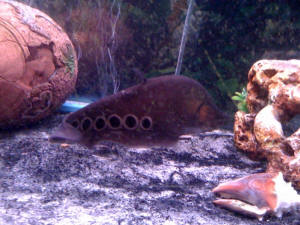
My clown knife fish
6/7/19 Baby Arowana, and Clown Knife 10/1/18 New
African Knife fish not eating/RMF 10/4/09 New
African Knife fish not eating/Neale 10/4/09 Re: New
African Knife fish not eating 10/5/09 Re: New
African Knife fish not eating 10/5/09 Re: New
African Knife fish not eating 10/5/09 Re: New
African Knife fish not eating: MORE... & FW NO3 f' -
10/05/2009 Re: New
African Knife fish not eating: MORE... & FW NO3 f' -
10/05/2009 Re: New
African Knife fish not eating: MORE... & FW NO3 f' -
10/05/2009 Re: New
African Knife fish not eating: MORE... & FW NO3 f' -
10/06/2009 Clown
knife questions, fdg. 9/26/09 African
Knifefish trouble 7/19/09
Black clown knife with pop eyes? 2/25/09 Hi! Hopefully you can help me with a problem..within the last week. my black clown knife's eyes have been bulging and they are getting worse. I have done a 50% water change. but the BCK is now swimming by the top and I want to help him. but don't know what meds to give him. Can you help? Thanks! Karen <Hello Karen. With Popeye, there are usually two causes. If there's just one eye popped, it's likely physical damage or aggression, so you need to look at things from that angle, checking the tank is big enough for the fish, doesn't contain aggressive tankmates, and so on. If both eyes show a similar degree of swelling, it's usually an environmental issue, in which case you need to review water quality and water chemistry stability. Clowns are big, messy fish and need extremely generous filtration to stay in good health. For an adult specimen (at least 60 cm/24 inches in length) you'd be looking at a tank around 750+ litres (200+ gallons) in size and equipped with a filter rated at 8-10 times the volume of the tank in turnover per hour. 50% weekly water changes would surely be essential. I'm mentioning all this because unless the environment is fixed, the eyes won't heal. So far as treatment goes, an antibiotic like Maracyn coupled with Epsom salt in the water at 1-3 teaspoons per gallon should do the trick. http://www.wetwebmedia.com/popeyefaqs.htm Cheers, Neale.> Thank you for your help! :0) I do appreciate it! :0) -Karen <Happy to help. Good luck, Neale.> Royal Knifefish: wean off live food. 2/17/09 Hi Crew, Thank you for a great site and all the help I have had in the past. Please may I get some expert input on the following issue: My Royal Knife fish are giving me ulcers and sleepless knights... I don't want to use feeders because of disease, parasites, fatty goldfish, ethical issues and the risk that some of the other chaps like Eels, Bichir, Ropefish, etc. may also take the opportunity to become fussy too. I understand that it is possible that Chitala can be trained to take dead food as they are facultative piscivores. I just haven't worked out how to get them to do so. It doesn't seem likely that healthy specimens will starve themselves to death? I have read everything I can find on every forum, websites, articles and FAQ areas I could find, including Neale's excellent articles on the Feeder Fish Debate. I have also trawled the internet for other information on Chitala that I have missed up to now. The fish: 21cm (8.5") Royal Knife fish - They are the biggest fish in the tank, but very thin... (it has been almost 8 weeks and I'm getting panicky). Neale has advised that "if it takes 6 weeks to starve them, so be it". I have followed that but it is now almost 8 weeks, what do I do? Various other sources also advocate patience with persuasion by starvation, so I know it is good advice. I just wonder how much longer? Will their digestive system not be damaged? Will they starve to death? I have had them for about 5 months and have given them live food up to 25 December last year. That makes it almost 8 weeks. (54 days). My nerves are finished! The water: Am:0, Ni: 0, Na: 10-20, Ph 7.4 constant. GH =6 (120ppm). KH = 70ppm. Weekly 20% change by vacuuming. The tank: Established tank. 2500 litre (550gallon) rectangular (wider than deep for big surface area), with lots of hiding spaces and several air-stones. 7000 litre per hour pump. 0.6 inches of fish per 5 gallons. No-one bullies or chases them at all (ever). General Behaviour: Once the lights are dimmed they come out and sometimes even with the full spectrum lights on. No conflict or territory issues between any fish, except some shoving between 2 medium (15cm) Jewel parrots and some strength testing between 2 Giant Gourami's (15cm). No-one bothers the knifes (ever). Besides the general anorexic appearance, they certainly look alert and in good health. We spend hours in front of the tank and no fungus, blemishes, unusual colouring, spots, are visible. They occasionally shoot up to the surface but just will not eat. This tank has had no problems with Ich, white spot, etc. or any parasites that I know of, and fortunately have not lost a fish from this tank yet. (...touching wood...) The food I've tried: Small shelled prawns, mussel pieces, earthworms, crickets, insect larvae, sinking protein pellets, Koi pellets, even grubs and meal worms. I have tried several different slivers of fresh fish (mackerel, hake, butterfish, sardines). I have tried various moths, crickets, grubs delivered to them with long tweezers. I feed once the other fish have been fed and the lights have been out for a couple of minutes and at the same time. I have tried with a dull torch and when only the dim blue led lights are on. I have tried ox-heart, bloodworms, Tubifex pellets. I have used various options like small dead fish on a piece of string, different tongs, allowing the pieces to float, soaking them to sink even dropping them into the Knifes cave. I have tried small dead fish but the 2 spiny eels seem to have learned how to get there first (they fetch their food from tweezers) Some FAQ answers recommend small dead fish defrosted and dropped into the return water flow to flicker like small live fish. My return flow is small pipes across the whole base of the tank, but I will use a spare pump to try to create small fish movement near the knifes' cave. Some more advice I have seen: Soak fresh fish slivers in garlic? Garlic...? Should I try that...? Blend precooked seafood mix in a blender and refreeze into blocks? I have seen some advice on giving one feeder to keep them going and then keep trying to wean them off. Is that an option? What if they only eat the feeder? I really hope not to have to breed feeders myself as I consider the bought ones too high a risk, even with quarantining. I honestly don't know what else to try or how to do it. Any suggestion or comment will be highly appreciated and I will try anything irrespective of the effort. Thank you again for the invaluable advice! Gail <Hello Gail. You are absolutely right not to use cheap feeder fish for your Chitala. Whilst ethically I'm against the use of feeder fish in most cases, I do accept than in some situations they are essential. Where you have an "obligate piscivore" that only recognizes live fish as food, then the only safe option is to rear your own feeders at home. By preference, the safest feeders are killifish (pupfish) and livebearers, both of which are easy to breed and most crucially are herbivorous in diet. This latter is important because feeders need to be "gut loaded" with plant or algae foods prior to use. Carnivores in the wild obtain their vitamins via their prey, and in particular through the gut contents and internal organs of prey animals. I'm sure you've seen photos of carnivores like lions eating, and it is striking that they always go for the gut and liver before the bits we find tasty, like the muscles. Since humans are omnivores, we top up the nutritional deficiency of muscle by eating fruit and vegetables, but carnivores don't do that, so need to be more choosy about which bits they eat first. Anyway, if you breed, say, Mollies, you'll have a perfectly safe diet for an obligate piscivore. The feeders to avoid are primarily the Cyprinidae and the Cichlidae; the cyprinids because they're fatty and contain thiaminase, and cichlids because they're spiny and can choke inexperienced predators. Now, if your Chitala is point-blank refusing dead foods, then home-grown feeders may be an option. The downside is that to produce enough feeders for something as large as a Royal Knife is going to be a major undertaking. Even if you feed it one or two fish per week, that's going to take a lot of effort. There are alternative live foods, and these are extensively used in the UK because the fishkeeping culture here is largely against the use of feeder fish (though contrary to a widely held misconception, it isn't actually illegal). Earthworms (in the US, 'nightcrawlers') and river shrimps (Palaemon spp.) are both very useful and readily taken by most predatory fish. Since both types of animal are largely herbivorous, they're also an excellent source of nutrition. Earthworms especially can be obtained from fishing bait shops inexpensively, and farming them at home is also very simple. Chitala spp. Knifefish can be trained to take dried foods such as floating pellets, but PFK writer Richard Hardwick explains that the trick is to keep them with fish that feed from the surface, such as barbs. As the barbs dart up at the food, the Knives learn the trick. http://www.practicalfishkeeping.co.uk/pfk/pages/show_article.php?article_id=43 While I've not tested this myself, it sounds plausible, and certainly I've observed different species of fish learn from one another what's edible. To some degree, you might think about social issues as well as when you're feeding. Knifefish are nocturnal of course, and I'd find it hard to imagine that if you had put some freshwater shrimp or earthworms in the tank at night, they'd still be there in the morning. But if there are other animals stealing the food, then the Knifefish might not get a chance to feed. If there are super-aggressive midwater feeders, and you're offering food by day, then the Knifefish will have no chance to feed either. As to your question of whether a fish can starve, then yes, it can. Eight weeks is probably the limit. Cheers, Neale.> Clownknife feeding - 01/24/06 I have a 6" Clownknife a 3" Oscar and a 9" Arowana and they all get along fine but I find it difficult to fee the knife be cause the Oscar hogs all the food. What can I do? Mark <Fill the Oscar up with pellets, trying to feed it about the same area/time daily... then feed the Knife. Bob Fenner> Re: Xanthichthys auromarginatus/freshwater killer... feeding and Notopterus comp. 2/4/09 Thank you for the email, After sending it, I realized that blue throat triggers eat the smaller foods like Mysis shrimp and brine shrimp. (are those the same thing?). <Nope> Anyways I put some frozen brine shrimp in (enriched, I'm getting some Kent Zoa« today) and he swam around eating it. <Ah good> To answer your question the two eels are echidna nebulosa and Gymnothorax richardsonii. they are small right now, at about eight inches, and I vary their diet with frozen silversides, live mussels, clams, and crabs, and frozen or raw crabs and frozen or raw shrimp. <Sounds good> On the freshwater topic, I was just curious if a protein skimmer would work on a freshwater tank, or if one would need a skimmer. <Mmm, not really and no...> I am not planning to ad one or anything, I am just curious. Also, when the clown knife gets bigger, would it be wise to separate him from the king tiger Pleco, and the black ghost knife? <Yes> Do you think the tire track eel and the silver dollars will be safe in the long run too or is it best to separate them when he gets to a certain length? <Could be inhaled with a big "Whomp" some evening...> thanks for all the info, will <Welcome. BobF> African Knifefish Problem.. it died. - 7/2/08 Hello, Recently I had bought two more fish to add to my 75 gallon tank; a Senegal Bichir and an African Knifefish, a Domino Synodontis and another Senegal Bichir were already in the tank. The first night the African Knifefish was added I had noticed a white spot on his side that looked almost like a bite. <Likely what it was. Whilst the fish listed here can work acceptable in robust community tanks, both Polypterus and Xenomystus have the potential to be aggressively predatory, particularly if they are hungry. Neither has good eyesight, and both hunt primarily by smell and using their lateral line. Or put another way, they sometimes bite whatever comes in range!> The Bichirs I have are very calm and peaceful and didn't mind the Knifefish, actually when we got them from That Fish Place they were in the same tank together. The catfish rarely comes out of his hiding spot and never bothers any of the other fish, so I do not know how he would have gotten a bite. <Synodontis do tend to avoid being bothered by other fish. For one thing they are quite heavily armoured (and armed). Synodontis also have a few behavioural features that help. They are, as you note, very retiring. They also tend to attack things that annoy them. Finally, they make "clicking" sounds that disturb other fish, and seem to work as quite a useful anti-predation mechanism (in Africa, Synodontis are known as Squeakers).> Over the next day that spot had gotten larger, it didn't even seem to bother him though. He was eating and very active. That night the spot had spread to an off-black color and began to stretch across the other side of his body. <When wounds get larger, even if they don't seem to "bother" the fish, you need to do two things: [a] establish the cause; and [b] treat preemptively for Finrot and Fungus.> I did a 20% water change and set the temperature to 80 degrees. Yesterday he seemed to be doing fine, even the spot looked like it was shrinking. This morning when I turned on the light he was on the bottom of the tank upside down. I'm just wondering what could have happened to my Knifefish. <Quite likely a secondary infection, perhaps exacerbated by stress or starvation, depending on how well settled and how well fed the fish might have been. Juvenile Xenomystus are somewhat gregarious, and the singleton might have been bullied by the Polypterus senegalus. That said, P. senegalus is generally very well behaved, particularly when compared to other members of its genus, so to be honest I'd be surprised if this combination of species didn't work in a tank of decent size and adequate numbers of hiding places. I'd review water quality and water chemistry simply as a matter of course; whilst Polypterus and to some extend Synodontis are "hardy" in the sense of being easy to keep, Xenomystus (like other Knifefish) are FAR from hardy in aquaria, and can be killed by ammonia/nitrite, rapid pH changes, many fish medications such as those containing copper and formalin. So there's a range of things to review there.> Any information at all would be wonderful, thanks. -Carly <Cheers, Neale.>
Mixing Apteronotids and Notopterids, Dempsey color, UGs... 9/10/07 ok a couple questions... <The beginning of sentences are capitalized...> could I house a black ghost knife and a clown knife together? <Not a good idea> my blue Dempsey is about 2 inches long , but he hasn't become blue yet. a little in the head and tail but not solid. rest of his body is just white. water quality is great so is there something wrong with him or does the color just come in time? <Likely> what's your opinion on undergravel filtration? <Tried and true. Can work in many applications. RMF> thank you. African knife fish (Xenomystus nigri) fish/system compatibility question 8/4/07 <Hi Matt, Pufferpunk here> I have read much of your site (actually just about everything in your freshwater fish section and half of the planted aquarium section) in my leisure time at work and I could not find a definitive answer to my query. <I wish I had that much leisure time at work!> I currently have a 120 gallon tank with seven 4-5" silver dollars, an 18" common Pleco and 6-8 Cory catfish (plus about 200 plus snails of various species). The tank is well established, (ammonia 0, nitrites 0, nitrates... too high, I wont be getting the knifefish unless I can controllably get my nitrates to under 20ppm) has a variety of floating plants such as Anacharis, Watersprite, and duckweed (which my silver dollars regularly nibble) and there is a large piece of driftwood which keeps the tank at a steady 6.6 - 6.8 pH. <I would suggest huge weekly water changes but I think that may cause the pH to fluctuate too much. Maybe a large sump/veggie filter is in order here. Definitely no adding of new inhabitants now.> I have built a PVC pipe condo with 2 inch diameter pipes that are 12 inches long each, into a pyramid type structure consisting of 15 tubes held together by Gorilla glue. I would like to buy between 5 and 7 African knifes to put in here. I have had one before (a while back in a different smaller tank) which only ate frozen food and instantly spit out flake food when tasted. I have read that these knife fish are somewhat sociable, not to the point of schooling but in that they do hang out together and when being fed dry foods, they would be more likely to consume it due to competition. Is this a sound theory that is tried and true? <I'm not sure where you got that info. According to Baensch: "Difficult, larger animals are solitary and aggressive towards other Xenomystus nigri". In other words, 1 per tank. I also think topping out at nearly 1 foot, you are dreaming of way too many knives in your tank.> Is it fish dependant? Or will it just take some time to wean them off but in the end, most should be used to flake food? (with the bi weekly frozen food treat of course). <Although fed a variety of foods (my knife lives with 7 discus) I have never seen my knife move from his hiding spot to eat anything on there than live worms. Although I read the fish can get used to strips of raw meat.> And also, is the size of my tank large enough for such a mixture? <I'd say that one of this species would work well with your set up.> Right now, the silver dollars mostly stay at the middle level and the Corys are also at the bottom and never in the PVC pipe condo, so I figured that maybe this would be suitable. My last question being, will the knife fish get along when they get older or will they become antagonistic like other knife fish? <No> I just bought a new light which has moonlight LED's so now I can actually observe the knife fish swimming around without sitting in the dark and holding a small flashlight on the tank, so I am rather excited for this purchase. <Cool!> The only things holding me back are my high nitrates (about 120ppm +/- 40ppm) and fish compatibility. <That IS high!> I only hope that my new aquatic plants (with their new 260watt full spectrum fluorescents and actinic bulbs, as opposed to the old 60 watt mercury bulb) and removal of my giant canister filter (Fluval FX5 aka nitrate factory) will be enough to reduce the nitrates in the coming weeks. Thank you very much for your help and for having such a detailed site. I myself work as a chemist in a machine coolant company so I often read many things which actually pertain to my job, which is always a plus. Thanks again. <Look into a large veggie filter for that tank. http://www.thekrib.com/Filters/plant.html#8 Please note that when purchasing, most of these fish that are bought as juveniles do not survive the first month. Enjoy your knife! ~PP> Matt, NJ Clown Knife Fish Non-Live Food Training 06/28/07 Hello, Your website is great! Unfortunately I could not find anything about training a Clown Knife Fish to eat non-live food. I've tried even warming krill/shrimp, I've tried Shrimp Pellets, Freeze dried Bloodworms, and Flakes. My 6" clowns just don't eat it. I have to revert to Live Ghost Shrimp, but I do not want too. Please help me find a way to train the Clown Knife to eat other prepared foods? Step by Step, please. As you know, Feeding time for these guys is only at night when the lights are off. Hope you can help? Thanks <Greetings. Training Knifefish to accept dead food follows the same pattern as with any other opportunistic carnivore -- patience and a little starvation! As you realise, many people keep Knifefish by feeding them goldfish and minnows. This is very dangerous in the long term because of the risk of introducing parasites and the poor nutritional value (high fat and thiaminase content) of goldfish and minnows. So well done on doing the responsible, sensible thing by weaning your Knifefish onto safe alternatives. Small Knifefish are fond of (wet) frozen bloodworms, i.e., the kind you keep in the freezer. I have yet, in 20+ years of keeping fish, to find anything that likes freeze dried bloodworms or brine shrimp. I know people use them, but I've never had any luck with them. So get the wet frozen kind. These smell yummy and even difficult fish seem to accept them readily. If you train the baby Knifefish to take frozen foods, feeding the adults becomes very easy. Larger Knifefish in the wild eat fish, large insects, and crustaceans, so these are the things to concentrate on. One of the best ways to use frozen whitebait (or any other small, silvery fish) is to defrost it and then throw it into the current of water coming out of the filter. The flash of silver mimics the movement of small fish, and predatory fish will usually strike at the flash, and eat the food. I have personally found small pieces of oily fish (such as salmon or herring) extremely good for tempting predatory fish, presumably because of the smell, but be warned that oily fish *heavily* pollutes the aquarium and you will need to do a big (50%) water change afterwards. As well as fish, crustaceans like unshelled prawns and crayfish are excellent foods for adult Knifefish. If all else fails, alternate live foods, such as earthworms, mealworms, and crickets can also be used. Once the Knifefish learns to accept a variety of foods, tempting them onto floating pellets is not difficult. It helps if they share a tank with other fish that feed from the surface, like Tinfoil Barbs or Giant Gouramis. The Knifefish will see where the food is coming from, and take the floating pellets. Obviously, Knifefish are big and potentially aggressive, so don't mix with smaller fish or anything likely to pick a fight (like cichlids). Cheers, Neale> Re: Clown Knife Fish Non-Live Food Training 06/29/07 You guys are great! Thank you Neale for the information. <You're welcome. If you love Knifefish, keep an eye out for a book called "Jurassic Fishes" published by TFH. It's a beautiful book, sadly out of print, but filled with the loveliest photos of Knifefish as well as other "monsters" like Arowana and gar. One of my favourite books! Neale.> Feeding Clown Knife 03/17/07 Hi <Hello Ray, Brandon here.> I've had a clown knife for a couple of months now, and during that span it has grown from 3 4 inches to 6 7 inches. At first, when he was smaller, I fed him a combination of brine shrimp and blood worms (frozen) along with small (not goldfish feeders) fish. However, I had to leave for college during that time (I got it during my winter break), but not without telling my parents what I would like them to feed it (e.g. continue feeding it brine shrimp and blood worms along with the occasional fish). However, they started to feed it the minnows that are commonly found in pet stores. <Mmmmm. Minnows are bad news. This is a really good way to introduce disease into the tank, and to your fish. Ever hear of hole in the head? This is one of the ways that your fish can get it.> So, upon coming home for spring break, I find that my clown knife refuses to eat anything other than brine shrimp and blood worms along with live fish. <Define anything. Have you tried any other crustaceans?> Given his size now, wouldn't brine shrimp and blood worms be too small and not nutritious enough for him? <Depends on how much you give it. It is never a good idea to stick to one variety of food though.> I went out and bought frozen krill in order to try to wean him off of live fish but he refuses to eat them. He just lets them drop to the bottom before proceeding to ignore them (the first time I put them in he ate one but then quickly spit it back out and since then has ignored them). <Seems that the Chitala chitala does not regard these as food.> I even tried cutting the individual krill into smaller bits in case they were too large for him. Thus, I have not been feeding him anything lately (this has gone on for about 3 days now). Just wondering, how long can I go without feeding him without starving him to death? <Three days is not going to starve him, but it will definitely stress him. I would say it might take a month or more before he starves to death.> Also, what is the best way to wean him off of live foods (save for an occasional snack) and what food should I use to do this (if not krill)? <Krill is not really a part of this fish's natural diet. It is quite possible that you will never wean him off of live food. I have had to come to this realization, with one of my saltwater fish. I would say that the best way to proceed when faced with this sort of thing, is to set up a 10 gallon tank, with some gravel, and a plant or two, and put about three dozen ghost shrimp in it. Feed them a high quality food (gut loading), and give the Chitala chitala about three - four a day. If it is taking blood worms, you might try mixing something that you want it to eat with them, eventually the fish will ingest the other food, and could start to recognize it. Another resort is to try a small piece of store bought fish attached to the end of a feeding stick, wiggle it around and see if the fish takes it.> Finally, I have one final question that has nothing to do with feeding him sorry. <No worries.> I plan on building a new tank him during spring break, but I have read conflicting reports as to how large they will get. While I know that they grow to 4 feet in the wild, I have read that they usually dont grow past two feet in captivity. <I dont usually show up late for work but it happens. I would plan on a four foot max length just to be on the safe side. There is no guarantee that this fish will get to four feet, but there is no guarantee that it wont either. Everywhere I have seen them sold, I have seen a sticker posted that stated that the max length was 48 inches.> However, I have also read in some places that they can grow up to 3 3 ½ feet in captivity. So my question is this how large can I expect my clown knife to get and based on this, what size tank should I make with what dimensions? <I would plan on four feet. I would also advise you to go and buy the tank. Shoot for 150 gallons. It will cost about the same to buy the tank, as it will to make it, and the store bought tank will most likely be (not to insult your abilities.) more well made. But since you asked, I will say that the dimensions should be something like, 72 ½ inches long, 18 ½ inches wide, and 28 ½ inches high.> Thanks for taking the time to read this long question and thanks for making such a great website (I've read through many articles and FAQs just for fun. Wait, is that bad? :-) ). <You are most welcome. Thank you for the kind words. Good luck with the Chitala chitala. Brandon> -Raymond Clown Knife Life-spans in wild/captivity - 12/07/06 First thanks for the excellent site and knowledge, when all else fails you guys have the answers. <Welcome> I have been researching the Clown Knife (specifically Royal Clown Knife - Chitala blanci) life-spans. I am about to adopt a pair from a friend that have been raised in a 300 gallon tank for the last 2 years from 4" to 16" each. I am moving them both into a 240 Long (96x24x24). I am very interested in the average lifespan of them in captivity or in the wild. Can't seem to find much on the net to support an educated guess. I have read that they rarely grow past 24" in captivity, but can reach 4' in the wild (may be pushing it IMO). Thanks for any insight you can provide. Joe <I've been to the "new" Bangkok aquarium just two months back... and they have some Notopterids of this and related species that they've had for teens of years. Unfortunately fishbase.org doesn't have a chart/data for this species' length/age relationship... in the wild. Bob Fenner>Clown Knife Fish 2/9/06 Hello, <Hi there> I am a recent aquarium addict (1 year) and need some information / help. I have 3 aquariums (started with 2 Betta bowls for decoration that never made it home before I rationalized purchasing an aquarium), one 30 gal (filtration - penguin 125) and a 55 gal (filtration - penguin 350). The very BEST purchase I've ever made!!!!! In my 55 I have a 7" clown knife, one Plecostomus, two 4" tinfoil barbs, two 2 1/2" albino tinfoil barbs and 4 giant Danios (did have four 1 1/2" but two of them weren't fast enough to duck the knife so I replaced them with two 3" ones) . <These will also be inhaled...> I plan to eventually get a 125 gal for all in the 55 gal, is this enough? <Not for the knife eventually> I plan to put filtration rated for 175, what do you recommend? <That you read WWM> Also, I started out feeding my knife pellets that it appears to not be eating - partly because of the greedy 6" Pacu (purchased in error due to bad information from LFS) I got rid of before adding the barbs and Danios. So I for obvious reasons (disease / filtration) reluctantly started feeding him 12 Rosies every 3-4 days and some ghost shrimp which he of course happily devours. He recently ate all 12 Rosies in about 2 hours, should I be concerned? <Re what? Going broke? Disease? Behavior modification?> He has no problems with his tankmates as he comes out of hiding from time to time throughout the day (unlike with the Pacu) but still ignores the pellets. How if at all possible can I get him to eat the shrimp pellets without starving him to death lacking live food? <Not likely to eat pellets...> Also, during the pellet spell he developed a 1/4" white stripe or spot which disappeared when he started eating live Rosies. Might that have been stress related because he was waiting for a real meal? <Yes, good way of putting this.> I'm sure part of it was the skittish and supper fast Pacu, <Heeee!> but it started going away while the Pacu was there and I fed live food. Although the tinfoil barbs are fast as well, they don't seem to bother him nearly as much because he comes out a lot more during the day. He looks to be in perfect condition on his new diet. My other question is once I get the 125 gal, what more colorful tankmates do you recommend for my clown knife? <... perhaps some easier-going Neotropical cichlids like Juraparoids... or large/r minnow sharks that hail from the same part of the world as the knife...> Also, my 30 gal....heh, heh...thought I was finished eh....*grin*? I have 4 tiger barbs, 3 albino tiger barbs, 2 albino rainbow sharks and a Plecostomus. My only concern is the sharks seem to fight from time to time. <Very common> Well really the bigger one (3 1/2") chases the smaller one (2 1/2"). Will putting all fish from the 30 into the 55 once I upgrade to the 125 help this problem with the sharks? <Likely will help> The Plec will be put in the 125 once it gets too big. What other algae eaters do you suggest for the tiger barb / rainbow shark tank, because I only want 2 Plecos in the 125 and I know they get too big for the 30 and 55? <See WWM...> Or will a common Pleco be ok in a 55 gal? My third tank....ok...ok...I'm wrapping it up. I kept an iguana in a 55 gal aquarium that I want to use for fish. Is it safe if it's cleaned and rinsed well? <Should be, yes> Yes....definitely an addict...how did I go from Betta bowls to wanting 125 gal setups? Are there any support groups out there? <Yep... Aquarium Clubs! And the Nets specialized BBs! Enjoy and keep sharing. Bob Fenner> Clown Knife Behaviour - 11/01/2005 My (Clown) Knife often breathes from the surface (I read that they are capable of breathing atmospheric air) is this in any way stressful for him? <Uhh, no, not unless water quality is forcing him to do so.> If so would adding an air pump help this situation? <I would test water quality - be sure to maintain as optimal (0 ammonia, 0 nitrate, less than 20ppm nitrate).> Also, he/she has recently begun keeping its mouth open constantly with it's tongue partially out. Is this an indication of anything bad? <Possibly so. With no information about your system, there's not much I can go off. Do please be testing your water.... if it is not optimal, make it so with water changes. Wishing you well, -Sabrina> Clown Knife Vision, Navigation - 09/02/2005 Do Clown Knifefish have good eyesight? <Nope, pretty crappy, actually.> Also, do they possess and use the electrical organ for navigation like Black Ghost Knifefish and Elephant Noses? <These are actually very different from the clown knife.... The clown likely uses scent more than anything for finding food and such. Please see here for more: http://www.wetwebmedia.com/FWSubWebIndex/osteoglossiforms.htm .> Thanks, Kristen :) <Sure thing. Wishing you well, -Sabrina> Clown Knife, Cory Cat - 08/16/2005 Greetings Bob, <Hi, Richard; Sabrina here, this morning!> This morning I noticed my clown knife had something in it's mouth and it turned out to be a Cory cat. <Yikes!> I knew that the clown knife ate live fish but I didn't think it would until it was much bigger. My knife is about 6-7 inches long right now. <That's plenty big for any knife to start eating small fish.... These are very efficient predators.> The Cory seems to be stuck in his mouth. <Not good.... Chances are, he spread his dorsal and pectoral fins to prevent being eaten. I suppose it worked, sort of....> It has been in his mouth now for a few hours. Is this normal? <No, and yes. It's a normal reaction for the Cory to prevent himself being eaten, and it's normal for a clown knife to try to eat smaller fishes.... If the Cory is dead, and the knife is in obvious, extreme distress, I would try removing the Cory's pectoral fins with thin, VERY sharp scissors, then pull it out - GENTLY - or have a vet do so, if you've got a vet who would. If the Cory is alive, let 'em have some time to work this out. Watch the knife very closely for a while. This may work out fine on its own.> This is the first time I have seen my knife eat live food. Please advise. <Err, this is probably obvious, but whatever the outcome of this instance, remove all smallish catfish from the knife's tank, or you'll be sure to see this happen again!> Warm Regards, Richard D. Warren <Wishing you well, -Sabrina> Clown Knife, Cory Cat - II - 08/16/2005 Sabrina, <Hi, Rich> Thank you for your help. <Any time.> Unfortunately my knife didn't make it. <I am so sorry to hear this.... So sorry for your loss; they are such beautiful, interesting fish!> I appreciate all your help though. <I wish I could have been of more help. Perhaps in the future, you might look to Xenomystus nigri instead of the clown.... Though it might still have the same issue with small Corys and Otos, it would stay small enough to be safe with larger Corys and other catfishes.> Rich Warren <Wishing you well, -Sabrina Clown Knife not eating 7.23.05 I have a clown knife fish and I moved him from a 45 to a 75 and know he is not eating. He was eating at least 55 Rosies and mixed with some goldfish now he goes on his hunt eats maybe one or two. Its been two weeks since I put him in the new tank. Ph and everything is fine with water. Help me please <As long as your water parameters are in good shape I would not worry too much, make sure he has somewhere to retreat to and hide in the new tank. He may still be getting used to his new surroundings. I am sure he will come around. -Gage>Clown Knifefish system 7/10/05 Hi, I have recently just purchased a Clown Knife Fish and am confused about what PH the tank should be. <Where they live in the wild the pH ranges from 6-8, so anywhere in that range, as long as the fish is properly acclimated, will work fine> So far my tank is at 6.8 as suggested by the place of purchase, but I have been reading that other people have their tanks set at 7.0 or higher. <6.8 will work fine> I really enjoy having my fish and don't want anything to happen to it. I have a 55 gallon tank right now and would also like to know any suggestions you may have on a good tank mate for my clown knife fish. I would really appreciate your feedback. <Be aware that the clown Knifefish (Chitala chitala) attains 4 feet+ in length, and will most definitely outgrow your 55. It will eventually need a ~500+ gallon tank if you are to keep it to adulthood. As for tankmates, anything not too aggressive, and nothing that is a fin-nipper. If you're looking for big (for that future 500 gallon tank ^^) you could go with a 'Royal Pleco'> Sincerely, Steve <M. Maddox>Clown knife problem 7/5/05 Dear Bob, I hate to bother you with this, however you seem like one of the only people that might be able to help me. I have a clown knife, approximately 7 inches long. He was accidentally overfed and became grotesquely bloated. I haven't fed him now in a month, yet the bloating has not gone down. I spoke to the owner of a local fish store who advised me to add salt to the water. I have been doing this but it doesn't seem to help. I have never seen this before and I am having a difficult time finding anyone who can help. <Mmmm, what sort of salt? I would try a level teaspoon of Epsom (Magnesium sulfate) per ten gallons of water> Have you ever seen or heard of this before? If so, what should I do? If not, can you refer me to someone? Thanks again for your time. Warmest Regards, Janet Sanders <Some sort of gut blockage... what were you feeding? Hopefully not goldfish... Bob Fenner>Re: clown knife problem 7/6/05 Dear Bob, <Janet> Thanks for the quick reply. Unfortunately, it is goldfish. I had fed my fish the night before leaving on a business trip. The next day, my son (not knowing I had just fed the fish), fed them again -- my fish has been sick since. What should I do? Thanks, Janet <Try adding a level teaspoon of Epsom salt per ten gallons of system water... Hopefully this will "move" the blockage. Bob Fenner>A budding pet-fish ichthyologist, Pantodon plants, Knifefish selection - 1/30/2006 Yes, I have... however I'm only fourteen and I don't think they'd take me. <You might be (pleasantly) surprised here... Do speak with your parent/guardian re the time commitment, pledge to maintain your current school work, and look into arrangement of a "work permit" from your school, and ask the management to consider hiring you part time... This is how many of us "got started" in the industry... at and below your age> I have two Big Al's, aquariums west and some Petcetera's (Canadian chain stores) nearby, though, so when I get older I will have some options. By the way, I got the butterfly fish, I believe it is female as there are 13 rays in the caudal fin. <Indicative in Pantodon> It seems to have an appetite for, surprisingly, pellet food. <Ah, good> You'd think with that huge ramp mouth it might go after something else, but it just waits for the pellet food. She (?) won't even eat freeze dried Tubifex or blood worms that float on the surface, and gets along great with my two new upside down cats (!!). Thank you for your valuable advice. I have moved my CAE into my 20 gallon hospital/quarantine for now because it is starting to get an appetite for my other fishes' slime coats. <Am very glad for your close observation and action here> I hope to give it away sometime in the near future, as it is around 4 or 5 inches, maybe 6 with the tail. By the way, I was wondering if you could give me some advice on any floating plants for my tank? <Sure> I have heard that they keep the butterfly fish from jumping, <Helps, yes> and I only have some Cryptocorynes and Sagittaria right now. My tank is fully covered, but I do not want her hurting herself on the hood. <Look for Ceratopteris... water sprite... my fave here> I also checked Big Al's for knife fish while buying the African butterfly, and they carry brown knifes (Xenomystus nigri?)! <Mmm, yes... this is a Notopterid... a "Featherback Knife"... see elsewhere re these Knives... perhaps a search on Fishbase.org> These apparently stay smaller, so I will look into them once I have a larger tank up and cycled. Thank you for all of your help. -Eddy <Welcome. Bob Fenner>Clown Knifefish, Tiger shovelnose feeding, Toadfishes Dear Bob and Associates, I am a relatively experienced freshwater aquarist, but I have a little problem that I have never been able to find a solution to. I have a juvenile clown knife (Chitala chitala, 6") and a juvenile tiger shovelnose (Pseudoplatystoma fasciatum), and I am stumped as to what to feed them besides live foods (ghost shrimp and mollies/Platies - never "rosy reds" or goldfish). I understand the enormous size these fish will attain, and I do not want to feed them unhealthy live fish (i.e. - goldfish) as they grow. Do any of you have experience with these fish? Since they're nocturnal, I assume that it would be best to try whatever non-live foods you suggest after lights-out in the aquarium. <I would feed these guys glass worms, blood worms, plankton, Mysis, etc. Live ghost shrimp on occasion. Pelleted foods if they will eat it. If you are going to continue with the mollies and Platies you should gut load them with the above foods.> I also have developed a huge fascination with toadfishes. I am particularly interested in the three-spine toadfish (Batrachomoeus trispinosis, commonly sold as "freshwater lionfish", though I know it's heavy-brackish to marine). Do you know of any web sites with comprehensive and DETAILED information on these fish (or toadfish in general...I have looked on fishbase.org, posted in the WetWeb forums, etc. and had no luck)? I would like to set up a "community of toadfish" fish-only marine tank, but I don't want to go into it blind. <Unfortunately I do not have much information on these fish, I would start with a search on google.com. Have you checked http://reefcentral.com/ There is also some information at the link below http://www.wetwebmedia.com/batrachoididae.htm Best Regards, Gage> Any info you could give (whenever it is convenient for you...no rush) would be greatly appreciated. Have a great day! Thanks, Matt Parkison My new Clown Knife & Ropefish I just purchased a Clown Knife (about 6"). I put him in a 25 gallon hex with a Rope fish and they seem to be doing fine. I've been told that both can grow quite large. Do you think they'll be ok or should I return them. <Return them.... My clown knife grew to a length of 25 inches long! It is now living quite comfortably in a 650 gallon tank... It was originally living in a 150 gallon tank but outgrew that! The clown knife will reach 18 inches long in about a year and a half, this fish will NOT be able to live in a 25 gallon tank. As for the Ropefish (Erpetoichthys calabaricus) These fish will get over 36 inches long as adults... and require a 90 gallon tank. So, that too will not be able to live in a 25 gallon tank. I suggest you do some research before purchasing fish, there are many fish that will do quite nicely in a little 25 gallon tank. Many of them are just as interesting as these fish. Trust me it's no fun having a fish that is in a tank to small for it. These fish are sick all the time, and you have to constantly be changing the water to keep up with the waste output. Good luck. -Magnus> Clown Knife I am thinking of purchasing a Clown Knife fish and I was wondering what size of aquarium I should purchase? I was also wondering what are common tankmates for a clown knife? <I raised knife fish for many years, and the Clowns are some of my favorite species! They get really (really) big, they usually stay around 2 feet long in the home aquarium. In the wild you can find these fish around 36 inches in length. The largest one I had was just over 25 inches long and was being housed in a 150 gallon tank. though she seems slightly cramped in there. I would say that a 150 is the bare minimum for an adult clown knife. I eventually moved her to a 650 gallon tank since she was so large. As for tankmates, Clown knife fish aren't aggressive. They don't typically pester other tankmates, unless they are very small. The other tankmates MUST be larger than the clown knifes mouth. If they are bite-sized fish they are gone! My clown was over 18 inches long within the first year and a half, and at that size it could easily swallow a 3+ inch goldfish. I kept a school of tinfoil barbs with my clown, these fish were about 8 or 9 inches total in length. The barbs were very active and didn't seem to get in the way of the clown at all. Also in the tank was a Pleco, and surprisingly a large Raphael catfish. It seemed that my clown disregarded any bottom dwelling fish (though not sure if it's true with all clownfish). As for other tankmates, the requirements are that they must be fast fish, in case the clown does get testy. The tankmates can not be aggressive, if a clown knife should become injured, or it's anal fin damaged it will not be able to swim. And the fish will stress itself to death. Cichlids are not to be kept with knives. And the biggest concern is that the fish need to grow faster than the mouth on the clown (which will grow quickly). They will need to be big fish. If these fish are larger than the clown can swallow, then the clownfish will not even care about them. Other concern with the clown is that you will need to offer it a place to hide. I used a large piece of driftwood in my tank along with giant fake plants (4 feet long varieties). This made a natural looking wall for the fish to hide behind, thus making it more comfortable. I also found that I only left one side of my tank lights on (the side opposite the hiding spot). As well as have one of the plastic plants floating on the surface of the water, shading much of the tank. Clowns prefer to hunt at night, and don't typically come out during the bright day. Doing this I found my clown would tend to come out more often during the day without the intense lighting. Be sure to get your clown on food other than live fish. I spoiled mine when it was young by only feeding it feeder fish and when it was older I couldn't get it to switch easily. I found myself purchasing 2-3 dozen goldfish ever couple of days to feed it. Fact: An adult clown knife can eat 2 dozen medium sized goldfish in a single night. Good luck on the fish. They are very enjoyable, and quite impressive. -Magnus> Everybody To The Limit! - 04/13/2004 I purchased a knife clown about 5 days ago. He's about 3 to 4 inches long. <Aww, just a little baby! Just to check, you do realize that these beauties get over four feet long, yes?> I have him in a 30 gallon tank with 2 gouramis, 2 tiger barbs, 2 angels, a large Pleco, a 4 inch silver dollar, a small Cory cat, a small tetra, and a Kuhlii loach. <Uh, and a partridge in a pear tree?? This is, nicely put, a little much for a 30 gallon tank, I'm afraid.> I realize knife clowns grow rapidly and that I will not be able to keep this one in my tank for long. <Or any tank.... A few hundreds of gallons would do for a couple of years.> However, I have fed him fish flakes, freeze dried plankton, freeze dried Tubifex worms, brine shrimp and feeder guppies, and he has exhibited little to no interest in any of these. I have yet to see him eat, though he swims around freely during feeding time. <Try frozen bloodworms, pieces of krill, squid, prawn/shrimp.... and skip the feeder guppies, unless you breed them yourself; they run a *terribly* high risk of giving your fish disease.> All the other fish chowed down. I have also noticed that his fins are nipped. <Uh, not to be cruel or anything, but what do you expect? A thirty gallon tank is not suitable for the sheer volume of fish you've got, and *especially* not suitable for a knife capable of growing taller than your average school kid.> I have noticed the silver dollar nip at him a couple of times. <I would not doubt it. The barbs are undoubtedly to blame, too.> Any suggestions? <First and foremost, I would forget about the knife for now. I hate to be harsh, but there is just not a place in your tank for such a fish right now. If the stress from the crowd doesn't kill him, the barbs and silver dollar will, I'm afraid. Then I'd recommend focusing on how to hone down your bioload some; characins are schoolers, and need to be with others of their kind to thrive; you might consider doing a separate tank for the silver dollar, and get him a couple pals, and include the barbs in that tank, and the tetra with some friends, too. That would take you down to two Gourami, two angels, a Pleco, a Cory, and a Kuhli in your 30g. The Plec will be next to need a bigger home, if he doesn't already; you implied that you planned on moving the knife to a bigger tank - perhaps instead, you could upgrade, and move this batch (Gourami, angels, Plec, Cory Kuhli) into the bigger tank, leaving the characins in the 30g? I'd add a couple more Corys and a couple more Kuhlis, too; they, too, are better in groups. Then, after that's settled, you might like to consider Xenomystus nigri, the African Knifefish, for your larger tank. This is really the only knife available in the trade that will not grow far too large for the average tank; they top out at about eight inches. Here's Fishbase's rundown on 'em: http://www.fishbase.org/Summary/SpeciesSummary.cfm?ID=5065&genusname=Xenomystus&speciesname=nigri .> I am at a loss for what to do next. <There is really nothing you can do to make the current mix work.... I do not foresee the knife surviving in the current scenario. I hope that this has been of assistance to you.... Please forgive the "nagging"; I only have the interests of you and your fish in mind.> Thank you in advance, Mariella <Wishing you and your finny pals well, -Sabrina> Ghost Knife Changing Colors What causes a black ghost knife to start to lose its color and turn a silvery white? <The first thing I would do is test my water, poor water quality, stress, age, diet, there are many things that can attribute to these fish changing color. Gage> Clown Knife and Algae Eater Hey, I just bought a large-size clown fish with 2 other medium-size tropical fish in a 55 tank. I've learned that the knife is a predator and will eat anything smaller than its mouth. I'm concerned that if I put an algae eater in, the knife might swallow it as food. Since my tank is full of plants and rocks, it'll be difficult to clean the algae. What should I do!? Thanks for your time. <<Hello. The best way to control algae is by doing water changes. Once your tank is established, test your nitrates regularly, and do the water changes accordingly. Algae thrives on organics in the water, and even the best filter will not prevent build-up of organics, you need to remove them by doing partial water changes. Especially with a large predator in your tank, weekly water changes will be necessary. Is this tank still cycling now? You must test your ammonia and nitrites as well, each week! And keep in mind that your clown knife will eventually outgrow a 55 gallon tank. You will need to upgrade if you want to keep him alive. -Gwen>> Knives, Spines, Rope and Fire. OK to add Claws? Hi, thanks
for the info that you've given me so far, but I've got another
question. I've got my 130 gallon tank set-up with a 10" clown
knifefish, 12" spiny eel, 6" fire eel, and 12"
Ropefish. African Knifefish - 11/03/2004 I recently bought a brown knife fish. <Xenomystus nigri.... Usually called the African knife, sometimes sold as the brown knife. Is this your fellah? http://www.fishbase.org/Summary/SpeciesSummary.cfm?genusname=Xenomystus&speciesname=nigri There *is* a fish more similar to the black ghost knife referred to as the brown ghost, but I've only seen this fish once or twice offered for sale.> (It's been about 10 years since my last aquatic impulse buy. I was due.) <Tsk tsk.... ;) > I put him in a 55 gallon aquarium containing 5 hatchets, 7 harlequin Rasboras, 5 zebra Danios, <All of these may one day be food....> 1 sunset Gourami, and 3 Cory cats. He doesn't seem to be bothering any of them. He's only about 4" long now. Brown knifes don't get as big as clowns, do they? <Hoo, goodness, no! The clown gets over four feet long! The African knife is, perhaps, the *only* regularly available knife suitable for your tank, topping out at about 12", and often a bit smaller than this.> Will my tank be big enough if I don't add any more fish? <I believe so.> When he gets bigger, will my other fish be in danger? <Plausibly. I would try very hard not to be too attached to your smaller fishes, right now....> Since I don't get to see much of him, how do I know if he's getting enough to eat? <Feed after lights-out on the tank. Leave a small light on in the room the tank is in; just enough for you to see by. After waiting an hour or so, sneak in with some stinky yummy treats (I've seen these relish frozen bloodworms like nothing before!) and wait until he finds it. You can use a cone-type worm feeder. If this doesn't get him biting, you might try live ghost shrimp or live Blackworms; the former is the "healthier", "safer" choice.> How do you feed live earthworms to them? <After lights-out, try holding the worm by hand so that some/most of it is in the water near the knife. Wait. See if he bites. Don't fear, eventually this fish will be easier to feed, and will recognize you as the bringer of treats.> I know from past experience (with fire belly newts) that they try to burrow into the gravel before they get eaten. How do I keep the worm where the knife will find it? <Again, try by hand, or perhaps you could use a dish of some sort to place the worm in?> I really appreciate any advice you can give me. JoLynn <Good luck with this new knife.... One of my favorite oddities, by far! Wishing you well, -Sabrina> Freshwater tanks - African Knifefish question, cichlid in/comp. 12/28/06 Hi there. <<Hi, Stacy. Tom here.>> Can I put a Black African Knife Fish in with a couple of African Cichlids? Just starting a new tank and am not sure of this. <<It depends a great deal on the size of the tank that you're starting, Stacy. Less than a 50-60 gallon tank would be too small. These fish can grow to a foot in length. Factor in the size of the fish you want as tank mates as well. Compatibility-wise, they need to be with large fish since smaller fish might look like lunch. (Tank size again.) You'll need to provide cover, i.e. hiding places, for them since they're not particularly active during the day. Beyond this, your question is a bit difficult to answer without more information regarding what I've already mentioned and the species of Cichlids you'd like to house your Knifefish with.>> Please help. Thank you. Stacy <<Youre welcome even though its only a start. If this isnt enough to go on, you know where to find us. :) Happy Holidays to you. Tom>> Clown Knife Growing Pains 2/14/06 Well, I indeed messed up pretty badly. I was fascinated by a Clown Ghost Knife at Wal-Mart that was only 5 bucks, which is cheaper than I'd ever seen them before so I bought it. The disgruntled store employee so gratefully neglected to tell me how big they got. < Probably didn't know.> Right now I have in a 20 gallon tank with one Cory Catfish, 2 Black Mollies, and 1 White Mountain Cloud, and the name of a small silver fish I've forgotten. At this moment right now he is about 3 and a half to 4 inches long. How long will it take for him to outgrow this tank and when he does what size tank should I invest in? < They get up to three feet and will be full grown in a couple of years. You will need at least a 100 gallon tank and you will have a pretty hefty food bill too.> My folks I'm 14) will be none too happy with this news when I finally decide to tell them as I just bought a 55 gallon tank to start saltwater. So I would like to know a recommended size tank to buy if I were to put 1 or 2 other fish in with him. What fish get along with Clown Knives?? < Other fish that the knife cannot eat.> Contrary to what I've read over the internet my Clown Knife is very hardy. He's eaten just about everything I've given him except for flake food. That including frozen shrimp, common garden worms, meat from the table, and my ghost shrimp -.-' (which he wasn't supposed to eat). He also managed to survive a 45 minute ride home over not too smooth roads and being from a none too reputable petstore. He has earned what I find an appropriate name for him, Anvil. Quite frankly I've fallen in love with him as he just fascinates me. So after you recommend whatever size tank and how long till he needs it I'll probably be working all summer to earn it. I wouldn't be able to stand to give him away. Great thanks through my ramblings. < A 100 gallon+ tank will be expensive to set up and operate. Hope your parents are as understanding as mine were when I was you age.-Chuck> Clown Knife Fish 2/9/06 Hello, <Hi there> I am a recent aquarium addict (1 year) and need some information / help. I have 3 aquariums (started with 2 betta bowls for decoration that never made it home before I rationalized purchasing an aquarium), one 30 gal (filtration - penguin 125) and a 55 gal (filtration - penguin 350). The very BEST purchase I've ever made!!!!! In my 55 I have a 7" clown knife, one Plecostomus, two 4" tinfoil barbs, two 2 1/2" albino tinfoil barbs and 4 giant Danios (did have four 1 1/2" but two of them weren't fast enough to duck the knife so I replaced them with two 3" ones) . <These will also be inhaled...> I plan to eventually get a 125 gal for all in the 55 gal, is this enough? <Not for the knife eventually> I plan to put filtration rated for 175, what do you recommend? <That you read WWM> Also, I started out feeding my knife pellets that it appears to not be eating - partly because of the greedy 6" Pacu (purchased in error due to bad information from LFS) I got rid of before adding the barbs and Danios. So I for obvious reasons (disease / filtration) reluctantly started feeding him 12 Rosies every 3-4 days and some ghost shrimp which he of course happily devours. He recently ate all 12 Rosies in about 2 hours, should I be concerned? <Re what? Going broke? Disease? Behavior modification?> He has no problems with his tankmates as he comes out of hiding from time to time throughout the day (unlike with the Pacu) but still ignores the pellets. How if at all possible can I get him to eat the shrimp pellets without starving him to death lacking live food? <Not likely to eat pellets...> Also, during the pellet spell he developed a 1/4" white stripe or spot which disappeared when he started eating live Rosies. Might that have been stress related because he was waiting for a real meal? <Yes, good way of putting this.> I'm sure part of it was the skittish and supper fast Pacu, <Heeee!> but it started going away while the Pacu was there and I fed live food. Although the tinfoil barbs are fast as well, they don't seem to bother him nearly as much because he comes out a lot more during the day. He looks to be in perfect condition on his new diet. My other question is once I get the 125 gal, what more colorful tankmates do you recommend for my clown knife? <... perhaps some easier-going Neotropical cichlids like Juraparoids... or large/r minnow sharks that hail from the same part of the world as the knife...> Also, my 30 gal....heh, heh...thought I was finished eh....*grin*? I have 4 tiger barbs, 3 albino tiger barbs, 2 albino rainbow sharks and a Plecostomus. My only concern is the sharks seem to fight from time to time. <Very common> Well really the bigger one (3 1/2") chases the smaller one (2 1/2"). Will putting all fish from the 30 into the 55 once I upgrade to the 125 help this problem with the sharks? <Likely will help> The Plec will be put in the 125 once it gets too big. What other algae eaters do you suggest for the tiger barb / rainbow shark tank, because I only want 2 Plecos in the 125 and I know they get too big for the 30 and 55? <See WWM...> Or will a common Pleco be ok in a 55 gal? My third tank....ok...ok...I'm wrapping it up. I kept an iguana in a 55 gal aquarium that I want to use for fish. Is it safe if it's cleaned and rinsed well? <Should be, yes> Yes....definitely an addict...how did I go from Betta bowls to wanting 125 gal setups? Are there any support groups out there? <Yep... Aquarium Clubs! And the Nets specialized BBs! Enjoy and keep sharing. Bob Fenner> Re: Clown Knife Fish - 2/11/2006 Thank you for your reply Bob. I did read quite a few articles in WWM prior to my inquiry. Unfortunately, I was unable to obtain any specific information to my questions because WWM has comments from your staff stating the clown knife will get two feet in some articles and three or four in others. <All good "guesses" for genus Notopterus... see fishbase.org re... Have seen them near three feet in Thailand's public aquariums, though two feet is a good general maximum for captivity in the West... see this: http://fishbase.org/Summary/speciesSummary.php?ID=8765&genusname=Chitala&speciesname=lopis> Therefore I am unaware if a 125 gal aquarium will be large enough for the tinfoil barbs and clown knife. <Not "ultimately"> I understand the giant Danios will eventually be eaten, I got them so the knife would get some extra exercise chasing them. Is that a good idea? <Not IMO> Since it's not likely the clown knife will eat pellets, what can I do to limit disease from live Rosies? Thank you. Orlando <... Culture or quarantine them for weeks ahead of time... I'd train the knife to take cut meat... Bob Fenner> Clown Knife With Problems 12/24/05 Hello, I've skimmed over the articles on clown knife fish and haven't really seen anything about what I've got to ask .Recently I purchased two clown knives. Each is now no more than six inches long. For now, each is in a separate tank until I can get one larger tank at the beginning of the year. Both are fed live feeders , which I'm beginning to learn isn't the best idea , but one will take shrimp pellets at times . I have been unable to find squid ( other than at the grocery store and am not sure if that's the correct way to feed them) or live krill in my area. One seems to be getting a little fatty in the belly. At first I simply took this to be a by product of healthy feeding because this fish can put away the little live feeders . Only now the seemingly distended belly remains . I don't recall it's sides poking out so when I first got it. But at the pet store both of the fish were in the same tank with several other kinds and now it has much more elbow room. I also keep my tanks and filters clean on a bi-weekly basis. I haven't had any outbreaks of any kind among any of my fish for a long time. My question is : Is my fish healthy? <A fish that has a distended belly doesn't sound too good.> Overfed? < Clown knife fish can be real pigs. It is easy to over feed them.> Or ,possibly , infected by some internal parasite and ,if so, how can I be sure and what treatments would be necessary? < It could be an internal bacterial infection. If it is it needs to be treated with Metronidazole .> And if the fish is healthy - does that mean the slimmer one isn't and I should up it's rations? < I would feed no more than can be consumed in two minutes once each day.> Something which may be related : How often should Clown Knives be feed ? Daily ?Or just every other day ? < Bigger knifes can be fed a couple times a week as their metabolism slows down as they grow.> On a side note , Do you receive many complaints about pet shop owners either giving less than knowledgeable advice or just not giving any to people ,especially those just getting into the raising fish , purchasing the more exotic fishes - outside of the guppies , goldfish , mollies Etc.? < If pet shops and fish stores were giving good advice all the time then we would not be answering questions.> It's just that I've had to make major tank purchases and accommodate them within my home simply because the seller did not elaborate on just how big some of these fish can get. I know they are in business to stay in business through sells and I have gotten better informed since I began but in listening to other customers when making their choices I rarely hear the seller say ' How big of a tank do you have ? or What other kinds of fish do you have in it ?' I've come to deal with only one seller in my small area and I've learned and am still learning the right questions to ask but even then I don't get the entire story . What worries me is that most people I meet can tell you ' Yes , an Oscar can get very big ,' but they couldn't tell you how large a clown knife can get or an electric catfish and yet when they step into the pet store and see that fish and think to themselves how neat it would be in their tank , the seller does little to inform or dissuade . I've grown to enjoy and love fish in the last year but if I'd never messed up and purchased an electric catfish when I was just starting out I'd never would have learned what I have. However there must be so many fish that get flushed or die from lack of proper care simply because the buyer wasn't informed and was ignorant of the fact he/she needed to be . It may be different in a large city or other areas but I think there should be some movement towards having the tanks at the pet stores labeled as to level of care , mature size/ min. tank size , proper food and feeding because often the owner maybe absent and the clerk may just not know and the customer as well as the fish deserve better. Thank you for your time, Thomas Tuck <It is a business, like any other, to make money. Unfortunately ignorance at all levels of this hobby is something that we here at WWM try to overcome everyday. Find a store that gives you good service with a friendly knowledgeable staff and continue to patronize that store even if their prices are not the lowest. Nobody knows everything. That's why we have a crew here instead of just one person. Next time you see a fish that looks interesting I would recommend that you go over to the book section of the store and try to find out some info about it before purchasing the fish.-Chuck.> Clown Knife, Cory Cat - 08/16/2005 Greetings Bob, <Hi, Richard; Sabrina here, this morning!> This morning I noticed my clown knife had something in it's mouth and it turned out to be a Cory cat. <Yikes!> I knew that the clown knife ate live fish but I didn't think it would until it was much bigger. My knife is about 6-7 inches long right now. <That's plenty big for any knife to start eating small fish.... These are very efficient predators.> The Cory seems to be stuck in his mouth. <Not good.... Chances are, he spread his dorsal and pectoral fins to prevent being eaten. I suppose it worked, sort of....> It has been in his mouth now for a few hours. Is this normal? <No, and yes. It's a normal reaction for the Cory to prevent himself being eaten, and it's normal for a clown knife to try to eat smaller fishes.... If the Cory is dead, and the knife is in obvious, extreme distress, I would try removing the Cory's pectoral fins with thin, VERY sharp scissors, then pull it out - GENTLY - or have a vet do so, if you've got a vet who would. If the Cory is alive, let 'em have some time to work this out. Watch the knife very closely for a while. This may work out fine on its own.> This is the first time I have seen my knife eat live food. Please advise. <Err, this is probably obvious, but whatever the outcome of this instance, remove all smallish catfish from the knife's tank, or you'll be sure to see this happen again!> Warm Regards, Richard D. Warren <Wishing you well, -Sabrina> Clown Knife, Cory Cat - II - 08/16/2005 Sabrina, <Hi, Rich> Thank you for your help. <Any time.> Unfortunately my knife didn't make it. <I am so sorry to hear this.... So sorry for your loss; they are such beautiful, interesting fish!> I appreciate all your help though. <I wish I could have been of more help. Perhaps in the future, you might look to Xenomystus nigri instead of the clown.... Though it might still have the same issue with small Corys and Otos, it would stay small enough to be safe with larger Corys and other catfishes.> Rich Warren <Wishing you well, -Sabrina Clown Knifefish system 7/10/05 Hi, I have recently just purchased a Clown Knife Fish and am confused about what PH the tank should be. <Where they live in the wild the pH ranges from 6-8, so anywhere in that range, as long as the fish is properly acclimated, will work fine> So far my tank is at 6.8 as suggested by the place of purchase, but I have been reading that other people have their tanks set at 7.0 or higher. <6.8 will work fine> I really enjoy having my fish and don't want anything to happen to it. I have a 55 gallon tank right now and would also like to know any suggestions you may have on a good tank mate for my clown knife fish. I would really appreciate your feedback. <Be aware that the clown Knifefish (Chitala chitala) attains 4 feet+ in length, and will most definitely outgrow your 55. It will eventually need a ~500+ gallon tank if you are to keep it to adulthood. As for tankmates, anything not too aggressive, and nothing that is a fin-nipper. If you're looking for big (for that future 500 gallon tank ^^) you could go with a 'Royal Pleco'> Sincerely, Steve <M. Maddox>Clown knife problem 7/5/05 Dear Bob, I hate to bother you with this, however you seem like one of the only people that might be able to help me. I have a clown knife, approximately 7 inches long. He was accidentally overfed and became grotesquely bloated. I haven't fed him now in a month, yet the bloating has not gone down. I spoke to the owner of a local fish store who advised me to add salt to the water. I have been doing this but it doesn't seem to help. I have never seen this before and I am having a difficult time finding anyone who can help. <Mmmm, what sort of salt? I would try a level teaspoon of Epsom (Magnesium sulfate) per ten gallons of water> Have you ever seen or heard of this before? If so, what should I do? If not, can you refer me to someone? Thanks again for your time. Warmest Regards, Janet Sanders <Some sort of gut blockage... what were you feeding? Hopefully not goldfish... Bob Fenner>Re: clown knife problem 7/6/05 Dear Bob, <Janet> Thanks for the quick reply. Unfortunately, it is goldfish. I had fed my fish the night before leaving on a business trip. The next day, my son (not knowing I had just fed the fish), fed them again -- my fish has been sick since. What should I do? Thanks, Janet <Try adding a level teaspoon of Epsom salt per ten gallons of system water... Hopefully this will "move" the blockage. Bob Fenner>Clownin' Around - Clown Knife Behaviour - 12/03/2004 I have a 55g. tank with two clown knife that are about 6 inches in length, along with a glass cat, a Pleco, and a fiddler crab. <A few problems, here - not the least of which is the size and territoriality of the clown knives. Please note that the glass cat may likely end up as clown food, and the fiddler crab really requires a way to get out of the water for long-term survival, and really ought to be in saltwater - or at least brackish conditions.> They are all doing great together, however, my one clown will go over to the other side of the tank near the other clown knife. They do not pick on each other but they rub their bodies together for a few seconds then they go their separate ways. <I would assume that this is either courtship or aggression - and far, far more likely to be aggression.> Also when the one clown gets close to the other one, he ends up rubbing his body up against the rainbow rock I have in the tank. He does this in front of the other knife fish only, like he is marking territory or showing off. I see no signs of any parasites, no Ick, no frayed fins, great appetites as well. <I would guess this is part of the aggression issue - but possibly an indicator of gill parasites. Please observe the fish for heavy breathing or any other abnormalities.> My knifes even come out and swim during the day until I get too close to the tank. All in all, I have been watching them very closely for any signs of illness, I am out of practice as far as fish, I worked in a great pet store for 10 years and kept up to date on every single animal we sold so that I could give the best information as well. <Always wonderful to hear of reputable fish stores - thank you for being informed on your livestock!> But clown knives were not one on my list, my boss took care of those strictly. Can you think of any other reasons why the clown knife would be doing this in the presence of the other clown knife only? <If there are gill parasites or another ailment at play, it could be purely coincidence - perhaps the "best" rock to scratch one's operculum on just happens to be next to the other knife's digs? Otherwise, again, I might attribute this to a display of aggression/territory, as you suspected.> He doesn't do it any other time at all and the temp is usually around 78 degrees F, ph is around 7.0, I keep up on water changes and monitor levels and test regularly as well. <I am assuming, then, that ammonia and nitrite are at zero, and nitrate is below 20ppm?> Also I was keeping a few red eye tetras, some head standers, zebra Danios and some swords in with the knives. I had to take them all out and put them in another tank because the knives were tormenting them to death. <Heh, yeah - all of those would make tasty snacks for the knives!> A few got Ick and the knives are still fine after I took the other fish out. Which they did eat a few of the Danios and a red eye as well. <This is concerning. How long ago were the fish removed? It is quite possible that the knife does, in fact, have ich on its gills.> I know they are eating well. I read all the info you have given to everyone on knife fish and it was very educational for me as well. <So glad to hear this!> However I did not see in great detail about the actual personalities these fish generally have. <Well, to be honest, not a great many folks can really provide adequately for this species.... Cared for properly, the fish can and should grow to be roughly four feet in length - a four-foot fish requires a *much* larger tank than would easily fit in the average living room. And keeping them just while they're young isn't really the greatest idea - what will you do when they hit a couple feet, have outgrown the 250 gallon tank you've upgraded to for them, and can't find a public aquarium that is willing to take them on? Please think very seriously about the ultimate size of this fish, and what you plan to do as they age. If they are already intolerant of each other at six inches in a 55g tank, imagine what they'll do to each other in another foot or so, if they allow each other to live that long.... At the very least, I would remove one of the knives.> Sorry this is so long but this is pretty much the only web site I could find that has a lot of valuable info on it pertaining knife fish. <And thank you very much for writing in, and thereby helping us expand the information available.> Also if you think my clown knife does have parasites or some other disease, what should I be treating him with? I know there are many meds out there not to be used for scaleless fish, and I suppose the parasites will spread to the other fish in the tank as well? <You are correct on both accounts - knives, especially, are tremendously sensitive to most medications. I would avoid treating the fish with medicines at all costs. Watch the "scratcher", and if you begin to suspect that he has ich, I would add salt to the tank. Be sure to use a salt marketed for freshwater aquaria, and test on a sample of your tank water first to ensure that the salt will not alter your pH undesirably. I would slowly (over a few days) raise the temperature to the mid-80s (84*F-86*F), increase the salinity to a specific gravity of 1.003 (use a good hydrometer to measure this) and hold it there for at least a week - perhaps a little longer. Always make salinity changes VERY slowly - spread the change out over a few days. The ich cannot survive at this salinity, and the temperature increase will cause the ich to speed up its lifecycle to bring it to a vulnerable (killable) point in its development sooner.> Thank you for any info you can give to me. <And thank you again for writing in. It seems as though you greatly enjoy the Knifefishes. I would like to recommend, if you choose to relocate both of the clowns due to size issues, that you consider Xenomystus nigri, the "black" or "African" knifefish. This little fellow won't get much more than eight inches in length, and has many of the same qualities of the clown (same general shape, temperament) packed into a MUCH more manageable size. Though it lacks the beautiful markings, it is still a very attractive, very interesting fish, and I highly recommend it. It would live quite well and happily in your 55g, for the full duration of its lifespan. Please feel free to write back if you have any further questions, and thanks again for writing in!> Shannon <-Sabrina> Everybody To The Limit! - 04/13/2004 I purchased a knife clown about 5 days ago. He's about 3 to 4 inches long. <Aww, just a little baby! Just to check, you do realize that these beauties get over four feet long, yes?> I have him in a 30 gallon tank with 2 gouramis, 2 tiger barbs, 2 angels, a large Pleco, a 4 inch silver dollar, a small Cory cat, a small tetra, and a Kuhlii loach. <Uh, and a partridge in a pear tree?? This is, nicely put, a little much for a 30 gallon tank, I'm afraid.> I realize knife clowns grow rapidly and that I will not be able to keep this one in my tank for long. <Or any tank.... A few hundreds of gallons would do for a couple of years.> However, I have fed him fish flakes, freeze dried plankton, freeze dried Tubifex worms, brine shrimp and feeder guppies, and he has exhibited little to no interest in any of these. I have yet to see him eat, though he swims around freely during feeding time. <Try frozen bloodworms, pieces of krill, squid, prawn/shrimp.... and skip the feeder guppies, unless you breed them yourself; they run a *terribly* high risk of giving your fish disease.> All the other fish chowed down. I have also noticed that his fins are nipped. <Uh, not to be cruel or anything, but what do you expect? A thirty gallon tank is not suitable for the sheer volume of fish you've got, and *especially* not suitable for a knife capable of growing taller than your average school kid.> I have noticed the silver dollar nip at him a couple of times. <I would not doubt it. The barbs are undoubtedly to blame, too.> Any suggestions? <First and foremost, I would forget about the knife for now. I hate to be harsh, but there is just not a place in your tank for such a fish right now. If the stress from the crowd doesn't kill him, the barbs and silver dollar will, I'm afraid. Then I'd recommend focusing on how to hone down your bioload some; characins are schoolers, and need to be with others of their kind to thrive; you might consider doing a separate tank for the silver dollar, and get him a couple pals, and include the barbs in that tank, and the tetra with some friends, too. That would take you down to two Gourami, two angels, a Pleco, a Cory, and a Kuhli in your 30g. The Plec will be next to need a bigger home, if he doesn't already; you implied that you planned on moving the knife to a bigger tank - perhaps instead, you could upgrade, and move this batch (Gourami, angels, Plec, Cory Kuhli) into the bigger tank, leaving the characins in the 30g? I'd add a couple more Corys and a couple more Kuhlis, too; they, too, are better in groups. Then, after that's settled, you might like to consider Xenomystus nigri, the African Knifefish, for your larger tank. This is really the only knife available in the trade that will not grow far too large for the average tank; they top out at about eight inches. Here's Fishbase's rundown on 'em: http://www.fishbase.org/Summary/SpeciesSummary.cfm?ID=5065&genusname=Xenomystus&speciesname=nigri .> I am at a loss for what to do next. <There is really nothing you can do to make the current mix work.... I do not foresee the knife surviving in the current scenario. I hope that this has been of assistance to you.... Please forgive the "nagging"; I only have the interests of you and your fish in mind.> Thank you in advance, Mariella <Wishing you and your finny pals well, -Sabrina> Need Help I am at a complete loss, and I'm now turning to online resources in my desperate attempt to find a solution to my problem. I found your site to be very impressive; very rarely does one find a resource that contains such a wealth of valid information. I work at a large chain pet store, in the aquatics department. All of us in the department are extremely knowledgeable about fish and their care, and rarely have any problems with any of our fish. However, whenever we receive a shipment of black ghost knives or clown knives, the fish systematically die off within a couple of days. We have no problem with our brown knives, ever. We keep each species in their own tank, the brown knives in a larger tank with zebra Danios (they never come in large enough to eat the Danios), and the ghost and clown knives in their own smaller isolated tanks. We offer ample hiding spots for each type of fish. We feed each frozen food, such as bloodworms, nightly. Our pH is a little high, around 7.8, and our water hardness is through the roof, but our temperature is a consistent 78 F. We always carry juvenile fish; the knives never come in larger than 4 inches or so. We would like to carry ghost and clown knives, but not if it means continuous losses such as we have experienced. If you have any advice as to what we might be doing wrong, and what we might to do rectify this, it would be greatly appreciated. My thanks in advance. L Barker <<Hello. I need to know if you guys are putting these fish into properly cycled tanks. I know it sounds simplistic, but it would make me feel better if you could provide me with information on ammonia levels, nitrite and nitrate levels in these tanks. The problem with being a store is that as the fish are gradually being sold, over time, the beneficial bacteria can die off without us being aware of it...then along comes a new shipment, and twenty fish are suddenly put back into tanks with limited bacteria. The ammonia level can skyrocket the first few days, resulting in sick knife fish that never fully recuperate due to all the stress from shipping combined with new surroundings...and undoubtedly bad nutrition before you received them. Also, smaller knives are even more sensitive than larger ones. You may have a better survival rate if you can specify 3 inches or LARGER when you order your knife fish. Try, and see. In the meantime, prepare your knife fish tanks either by keeping them full of other species at all times to keep the biofilter alive, or by using pure ammonia to keep the nitrifying bacteria alive, until the shipment lands. You can also try running some peat moss to help lower pH and hardness levels, though these, in and of themselves, should not be enough to kill all the newcomers alone, but it doesn't help when added to the other stressors the fish are facing. Also, keep in mind that knife fish are aggressive amongst each other, and make sure to provide plenty of PVC tubes for the ghosts, at least one per fish!! Keep the lighting low for the first few days, as well. You can cover the tanks with Styrofoam lids to diffuse the lighting, or leave the lights off entirely. -Gwen>> SICK JACK THE KNIFE I have an African Knifefish and it is pretty hard to find useful information about this species. I have a 55 gallon tank that recently got ich as a result of a fairly new clown loach. The loach died and gave it to a Danio and another loach I had. I raised the temp to 85 degrees and I have raised the salinity to 1.003. (Over a period of a few days of course). The loach's spots went away as well as the Danios and I haven't found any other traces of ich. Things have not been going well however. Yesterday, I found a dead African dwarf frog and today I found a heavily bloated Danio who is probably dead by the time you read this. My other Danio looks like his stomach is protruding a bit as well. I checked my knife and he has these two big patches of white. I didn't know if it was ich because it isn't small dots it is a very large patch (about 3cm) and another patch (about 1 cm). I have two small Plecos that I haven't noticed any problems with and I really don't want anything to happen to my knife. Are the large patches ich or something else? They have just showed up today and were not there yesterday so I am catching it pretty early. Any suggestions? Thanks for any help and great site. < Your tank is breaking down from the water treatments. Drop the water temp to 78 to 80 degrees. The high water temps are stressing your Danios and causing the bloat. Do a 30% water change, and vacuum the gravel. Service the filter too. Check the ammonia and nitrite levels, they should be zero. Check the nitrates. They should be lower than 25 ppm. Now that the tank is cleaned up you need to treat those bacterial infections on the knife fish. Use Nitrofurazone and back off on the salt. This medication may affect the good bacteria that breaks down fish waste so watch for ammonia spikes.-Chuck> Request for bibliographic help on the Featherback Knifes, Notopteridae Dear sir This is Sathish s v from India working for PhD on induced breeding in fish n Notopterus . hence I am in need of your valuable references (reprints) related to the above .kindly send them to the below find address. <What little I have is mainly pet-fish related and referenced (the intended use) and posted here on our site: http://wetwebmedia.com/bonytong.htm Bob Fenner> SATHISH S V DEPARTMENT OF ZOOLOGY GULBARGA UNIVERSITY GULBARGA -585106 KARNATAKA, INDIA Clown knife with a bulge My clown knife looks as though it has swallowed a small rubber ball.. the kind that you get out of a gumball machine... All of my other fish are still in the tank and still have all of there parts... my clown knife will not eat now but is moving around fine... <Is the clown producing feces at all? If so, is it normal and brownish, or white and stringy?> We have had Mercury for 2 months now and have NEVER seen this before... I understand and have seen the "bulge" after eating, but this is NOT that!! The bulge he has now is huge and very round, again, like he swallowed a rubber ball.. no other way to describe it... <Sounds very much to be a gut blockage or constipation. I'd suggest to dose the tank with Epsom salts at a rate of 1 to 2 tablespoons per ten gallons (this *should* help), and if the fish looks like he may accept food tomorrow, offer daphnia or mosquito larvae, or possibly (depending on size of the fish) a small earthworm, if the other items are too small for him. These foods are high in roughage content and may possibly help to pass the blockage.> The owner of the local pet store thought maybe it was a bladder infection <Hmm.... a swim bladder infection is characterized by abnormal swimming (and occasionally accompanied with dropsy) - I do not believe this to be the case.> and told me to wait until tomorrow and see how he was.... <Go ahead and dose with Epsom salts tonight, it may very well help a great deal.> I cannot find ANYTHING on the net regarding this.... CAN YOU PLEASE HELP????? <I do wish to bring up another issue that this may be - there's the possibility that this is a tumor. That you seem to imply that it happened suddenly and that the fish is not eating lead me to think constipation far more likely. If it is a tumor, though, there's really nothing to be done, unfortunately. Hopefully you'll see some improvement soon.> Thank you in advance.... Heather O <Wishing your fish a quick recovery, -Sabrina> Clown knife with a bulge - II THANK YOU very much for the speedy reply!!!!! <You bet!> This morning when we checked in on him.. the one side has gone down completely and the other side is much smaller but now , no other way to explain it.... but it looks like a huge zit with a white head... half an inch long by 1/8 of an inch wide... <Hmm. That doesn't sound good. possibly an injury, perhaps infection....> it definitely looks better than last night at 9:00pm.... <That's certainly a good sign!!> as for producing feces.. I am not sure... <Sounds like he passed the most of it. Still, do try to feed foods with a high roughage content for a few days.> Mercury is about 7 inches long now... and has been doing wonderful until last night... he gets along great with our other clown knife Neptune, who is about 12 inches.... we also have a convict, a scat, an iridescent shark, and a Plecostomus...all live happily together.... <You seem to have a taste for the very, very large.... Ultimately, hope you've got a really big tank! ;) > He still isn't eating... but as I said.... I think that he looks much better.... <Good.> Again, thank you SOOOO VERY MUCH for the speedy reply... this is a site that I will keep handy in the future!!! <Excellent. Pass it along to all your fish friends, too!> Oh, I almost forgot... I do have aquarium salt in the tank... but will add Epsom salt if you still think that will help! <I do think it would help, perhaps, especially if Mercury is still a little bloated. Also, please keep a *close* watch on that strange mark - if it's an infection of some sort, you'll want to quarantine and treat with an antibiotic. Hope all goes well, and glad to be of service! -Sabrina> Heather O Feeding a Clown Knife Hello guy's I just have a little question to ask. I have a clown knife. it's probably six or seven months old (guessing). He has been eating Rosie's and small gold fish on a regular basis. He can eat about two dozen in a couple of days. My question is this, would it hurt him to eat earthworms? He's only had two, but he loves them. Gobbled one up before it hit the bottom of the tank. Just wanting to know so that I don't hurt him. >> No, earthworms are fine, he will likely eat some frozen foods also, try him on frozen Krill, smelts or Mysis! Good Luck, Oliver |
|

|
Features: |
|
| Featured Sponsors: |