|
FAQs on Freshwater Environmental Disease
7
Related Articles: Environmental Disease, FW Disease Troubleshooting, Freshwater
Diseases, Choose Your Weapon: Freshwater
Fish Disease Treatment Options by
Neale Monks,
Related FAQs: Environmental Disease 1, Environmental Disease 2, Environmental Disease 3,
Environmental Disease
4, Environmental Disease 5,
Environmental Disease 6,
Environmental Disease
8, & Cycling Trouble-Fixing, &
Toxic
Situations, Popeye/Exophthalmia, Nutritional Disease, Aquarium
Maintenance, Establishing Nutrient
Cycling, African Cichlid
Disease 1, Cichlid
Disease,
|
 |
Community tank stocking
(filtration; health) -- 2/21/09 ok please help..i have a 60
gallon tank which has 2 small spiny eels. 4 medium angels. 2 large
adult angels.2 adult silver dollars.. 1 yo-yo loach. 2 striata loach..1
small talking catfish..and 1 Pleco aprox 14 inches..i have 1 Fluval
underwater filter pump and a separate air box pump putting air
in..water temp is 78.about 1 week ago i noticed 1 of my large angels
had a black spot on its head..i rang the fish shop and explained and
they said it was normal as adult angels get lumps when they are trying
to breed so i left it thinking it was fine (mistake)..after about 4
days i noticed that the angel with the black spot now had a lot of
white lumps all over it...it wasn't white spot I've seen that
b4 this looked very diff..i rang the fish shop again ..explained
again..and again they said this was normal for angels...so i left
it...after about a week and a half..nearly every angel in my tank had
started to get the same white lumps..i then realized this was not
good..so i took some pictures with my phone and went into another fish
shop and showed the guy..he told me it looked like Finrot and fungus
and that this was the treatment i should use (anti fungus and Finrot) i
took the stuff home and began treatment..followed instructions to the
letter...it has been aprox 3 days since adding the treatment..it said
in the instructions i should increase the air as the treatment kills
the oxygen so i did..after about 2 hours of increased air my hole tank
has gone very murky milky colour...i left it another day thinking this
was fine...earlier today all my fish was swimming around fine..i was
awoke by my wife from this evening approx. 5 hrs earlier they all
looked gd apart from the lumps which seemed to be getting worse on the
angels..and .....i had 4 dead medium angels on bottom 1 adult dead 2
striata dead...i was in shock and very upset I've had these fishes
over a year..i could see that the other fish all looked as if they was
dying also.i looked across the room at my 4 ft tnk which currently has
breadng kribensis in it and medium sized babies..aprox 20 ish cribs all
diff sizes from 3 previous breads. 2 small Plecs. 2 small red claw
crabs..what else cud i do..i moved the 2 silver dollars in. the talking
catfish. the 2 eels. the yo-yo loach and the last remaining large
angel..all the fish seem to have come back to live except the angel it
is laying on side gasping for air ..i have put it in a breeding net in
the tank to keep the other fish of it..i think the cribs think it is a
running buffet (...i don't understand what has happened to my
tank..i do water changes every 3 or 4 weeks..always use haloex
dechlorinator aprox 15 drops to a bucket of water..my fish have never
been ill it all seems to have gone horribly wrong in 2 short
weeks..could i have been diagnosed with wrong fish illness and the meds
of killed them i am not happy..i have got to take my prize 14 inch Plec
and give it to fish shop toms just so it gets out of the tank as there
is no room in my 4ft and is still in the tank all the fish got the
white big lumps in..none of the fish i have transferred have any signs
of the white lumps which the 5 angels that dies had. also the 2 striata
that was dead had no marks or lumps on.. maybe help diagnose what it
was..and advice on the tank..i think empty maybe once Pleco has gone
and clean gravel and glass and start fresh...pffff..i love fishkeeping
so much this has knocked me for 6...in advance thank you for taking the
time to read this and for ure advice <Hello Roxanne. For the love of
God, please use some capital letters, proper spellings and basic
punctuation next time! This was horrible to read! Bob usually just
bounces back e-mails like this one, but I'm in a good mood, so I
read through it. Next time I won't be so lenient! We do ask
specifically for properly written e-mails on the "front door"
of the FAQ section. Anyway, no, it isn't normal for Angelfish to
get lumps when breeding. I'm not sure what "black spots"
might be as these aren't obviously any one disease. But the two
commonest problems with Angels are Finrot and Whitespot. Finrot looks
like patches of white or bloody tissue on the body, and often the fins
start eroding as well, with distinctive red patches along the edges.
This is either caused by poor water quality or, less often, physical
damage, e.g., but fin-nipping or aggression. Whitespot looks like a
sugar has been sprinkled on the fish. Both are relatively easy to cure
if diagnosed early. Some treatments are definitely better than others.
Things like salt and Melafix/Pimafix are of marginal (zero) value. So
the first question I have is what medication are you using? The second
question is about water quality. Assuming this is Finrot (as I think it
is) it's extremely likely that water quality isn't as good as
you think. Grab a pH test kit and a nitrite test kit and test your
water. The pH value should be somewhere between 6-8 for Angelfish, but
it should be stable from week to week. They don't like changes. The
nitrite level should be zero. Not "trace" and not "in
the safe zone" but exactly and precisely zero. If you find your
test kits exhibit problems in either of these particulars, then
that's your immediate problem and you'll need to act
accordingly. While your tank is fairly large, 60 US gallons isn't
an enormous amount of space, and I'm concerned you're tank is
(significantly) overstocked and/or under-filtered. Aquaria with biggish
fish like yours should have a filter rated at 6 times the volume of the
tank in turnover per hour. So a 60 gallon tank will need a filter rated
at 6 x 60 = 360 gallons per hour. If your filter isn't rated at
that amount, then that's a major problem and you'll need to fix
this, perhaps by adding another filter. I'll make the point here
that the "estimated tank size" given by filter manufacturers
are wildly optimistic, in the same way that cereal boxes say they
contain 25 servings and motor cars supposedly do 35 miles per gallon.
Hence we should be using turnover as the measurement, not what the
manufacturer suggests. So, please, review the following: medication,
water quality, stocking, and filter rating. Between these, I think
that's your problem. Cheers, Neale.>
Hello... Rambling... overcrowded Goldfish and
Pleco... another sys. w/ Peru Angels... another anomalous env.
cond. 12/30/08 Hello, my name is Tash. I have had
freshwater fish for a couple of years. I have two fish tanks with
tropical fish and one with fancy gold fish. I have had a problem with
my gold fish for a while. It's a 45 g tank with 7 gold fish (two of
them are about a foot) and two Plecos over a foot long. So I know the
tank is way overcrowded, I'm just waiting for a chance to put them
in something bigger like a pond. Now I have two 110g filters running,
but before, since I got the big gold fish, they had bloody stripes all
over their fins. I tried to treat them with a few different antibiotics
because I was told it was a bacterial infection. <Mmm, not
directly... is/was environmental... bacteria were secondary. Need
better "water quality"> None of the medicine helped so I
gave up. It has been a few months now and they're doing ok. The
spots are still there, but it didn't get worse. In my other 45 g
tank with 12 eight-month-old 'Peru' angelfish, I noticed about
a month ago, a little bit of redness at the base of their fins. I
called the breeder and he told me to raise the temp. to 88 degrees for
5 days, and do a lot of water changes. <Good advice> The redness
did get smaller, but so far it did not go away. Any way, my main
problem is my 55 g community tank. Two weeks ago I noticed that one of
my male angels (I have two breeding pairs in the tank) had the same
kind of redness. About a week ago the male and another female were in
bad condition with red stripes all over their fins breathing fast and
didn't eat much (or at all) since then. Other two angels are marble
so I couldn't see if they had red spots too. I, recently, put new
fish in that tank without quarantining them. I knew I made a huge
mistake so I decided to medicate the whole tank. I used Furan 2 (which
was recommended by a friend of mine that owns a fish store). We figured
that it was Hemorrhagic Septicemia. After four days of treatment they
did not get better. Now they all have white slime all over their body
and look very sick. I have moved them into a 10 g tank. I think that
the rest of the fish are ok and that it's only the angels. Now
I'm using Triple Sulfa and Maracyn Plus. I tested the 55 g tank and
the PH 7.8, nitrite 0.3, ammonia 1.2, but with water changes and
filters running it should get back to normal. I just don't know
what I'm dealing with and I don't know how to fix it. Please
help. Thank you <Help with what? I would continue to do water
changes, monitor your water quality... I strongly suspect you have high
accumulated DOCs... likely evidenced by nitrate accumulation... Fix
your water quality... and that's about it here. Bob Fenner>
Sick goldfish... "feeder"
blocks, sys./Env. dis. 12/02/08 I have two
orange head Orandas in a 15 gallon tank. All was fine until a few days
ago. I put a long term feeder in while away on the holidays and when I
returned I noticed a white film on the fins of both of them. The water
is clear, the tank is clean and yet they have this film and are
lethargic. The only thing new was that feeder. Very Truly Yours, Amy
<Amy, "feeder blocks" should NEVER be used. End of story.
They're rubbish, in fact worse than rubbish. All they do is make
the aquarium dirty. Fish can go a couple weeks without food, even
longer if there are some aquarium plants for them to eat. Moreover,
your tank is too small. What the feeder block has done is tipped the
balance, and likely what you're seeing is a reaction to poor water
quality. Goldfish should be kept in tanks upwards of 30 gallons, and
provided with decent filtration. The clarity of the water is neither
here nor there, and can't be used to judge whether the tank is
"clean" or not. Broadly speaking, the stuff in the water that
kills fish is invisible. Lots of fish are perfectly happy in water that
looks like milky coffee, but you can have crystal clear water with
ammonia in it, and that ammonia will quickly stress and kill your fish.
Do read here:
http://www.wetwebmedia.com/FWSubWebIndex/goldfish101art.htm Cheers,
Neale.>
Fish at the bottom of the tank (Communities;
overstocking!) and mis-... env. dis., iatrogenic
12/02/08 I have a 20 gallon tank, and we have 1 big eyes
goldfish, 1 sucker, 2 angel fish, 1 red tail shark and,1 fancy
goldfish, and 2 other's that i have no ideal what they are. My
question is that they are sitting on the bottom of the tank. I have
checked everything. What can I do about that. I hope that you can help
me, Thank you <Your tank is WAY overstocked. Four Goldfish would
need a tank at least 40 gallons in size. A pair of Angelfish could
easily dominate a 20 gallon tank, bullying everything else once
spawning. A "sucker" could be anything, but I'm assuming
either a Pterygoplichthys catfish (maximum size: 45 cm/18 inches) or
Gyrinocheilus aymonieri (35 cm/14 inches). In either case, has no
business in anything smaller than a 55 gallon system. Red-tail sharks
are notoriously aggressive and territorial, and given their size (15
cm/6 inches) deserve a tank 40 gallons or more in size. The water
quality is likely incredibly poor, and there's almost certainly not
enough oxygen in the tank. Your fish are showing signs of stress; soon
enough they will get sick, and then die. Time to sort through your
livestock, and re-house them as required. There's no way you can
humanely or responsibly keep them altogether in the tank you have.
Cheers, Neale.> Baby BiOrb tank - my fish have died,
advice for future please. -- 09/07/08
Hello there,
<Good morning,>
I am in desperate need of some advice.
<Oh?>
About 5 months ago I bought a baby BiOrb tank.
<Please understand this tank contains just 15 litres (less than 4 US
gallons) of water. It is not suitable for fishkeeping, end of story.
It's a very expensive, very attractive, bucket. A total con? Well,
depends on how you define "throwing your money down a hole"
but the image on the front with Goldfish and such is completely
misleading. At best, it could house a single Betta, or alternatively a
few Cherry Shrimps and funky Nerite snails. But that's it. No other
fish of any type whatsoever will be happy or easily maintained in a
tank this shape or size. The small volume means that fish wastes
can't be diluted effectively, and the tiny surface at the top
(because its a sphere, not a box) means very little oxygen diffuses
into the water. By any standards, it's useless for
fishkeeping.>
We slowly introduced 6 guppies, a loach and 2 platys. When I brought
the platys home and put them into the tank to adjust in the bag I
noticed there were 9 babies in their which must have been born on the
way home. This is the first time I've had fish so I wasn't sure
what to do with them. As I had already had a guppy baby survive to 4
months (at that time) and bearing in mind it was after shops closing
time I decided to add them all to the tank.
<Long term none of these fish will survive. As they grow,
they'll expect more "resources" in terms of oxygen and
waste management, so there will come a point where the Baby BiOrb is
overloaded, and they'll sicken and die.>
All of the babies survived, 6 of them lived in the filter (which it
seemed they could swim in and out of) and three were happy hiding in
the rocks at the bottom of the tank. The guppies also had babies and
two of these survived by living in the filter.
<OK.>
Two weeks later I noticed that one of the guppies had a fur on her and
was waving her head from side to side, then I noticed another had white
spots/. After researching on the internet I discovered this was Ick. I
immediately went to my pet shop and was recommended the BiOrb
First Aid filter. I carried out the instructions and hoped for the
best. Removing the existing filter managed to kill all the platy babies
which were living in it (I was distraught about this).
<Right; the "fur" is Fungus, and typically means poor
water quality. No great surprise really. The Whitespot/Ick is a
parasite likely brought in with the new. Both diseases need prompt
treatment with specific medications.>
Gradually day by day all the fish have died including last night the
two guppy babies. I am left with only the loach which doesn't seem
to have developed Ick. This has been a very upsetting experience and I
was wondering what I should do now. How do I find out whether the
loach has Ick (he doesn't appear to have any spots or fur) and how
do I go about introducing new fish and ensure that this experience does
not repeat?
<You absolutely cannot add any more fish to this system. Please,
re-home the Loach. What species is it? I'm guessing a Clown Loach
(orange-and-black creature) or a Weather Loach (mottled brown, eel-like
thing with long whiskers). Either way, completely unsuitable for this
system, and being both gregarious species need big tanks that allow
them to be kept in groups.>
I was also wondering what I should do when the babies are born. We have
lots of ceramic media in the bowl for them to hide in but if they are
living in the filter how do I get them out and what happens when they
get too big to swim out and get trapped?
<Rearing the babies is the least of your problems. But do see here
for the basics:
http://www.wetwebmedia.com/FWsubwebindex/poeciliids.htm
>
I would appreciate any help and advice.
<Take the fish out of the darn thing, and either put shrimps/snails
in it or sacrifice it to the Fish Gods. Either way, it's of no use
for what you want. The pet store sold you a "bill of goods"
as the Americans say... (in other words, you were taken advantage of as
someone who didn't known what they were buying). Have a read of
this:
http://www.wetwebmedia.com/FWsubwebindex/fwlivestk.htm
And then get back to us if you're still unsure about what to do
next and we'll do our best to help. Do also invest in an aquarium
book, or at least borrow one from the library. Beginners often start
with very small tanks (by which we mean anything less than 90 litres/20
gallons) and these are notoriously difficult to stock with suitable
fish. Maintaining good water quality in small tanks is hard work too.
So it pays to be upfront about the problems, and make sure you've
done your research. Fishkeeping is a very simple hobby if you do things
precisely "by the numbers" in terms of fish requirements and
water chemistry; but if you try to make things up as you go along, or
worse, rely on the advice of the store clerk, you'll almost
certainly end up with dead fish.>
Many thanks,
<Most welcome.>
Lucy
<Cheers, Neale.>
Re: Baby BiOrb tank - my fish have died, advice for future
please. -- 09/07/08
Hi Neale,
<Hello Lucy,>
Thanks so much for this advice. The loach is a weather loach
<A lovely fish; needs at least a 25-30 gallon tank though -- gets to
20 cm eventually, and does want some buddies. Does great with Goldfish
in an unheated tank indoors. Lots of character.>
and I will see if I can find a bigger tank in which to rehome him.
I'll do some research and check out the links you recommend first
as you suggest.
<Very good.>
I really appreciate your no-nonsense and speedy reply. I certainly do
not want to repeat this experience, it has been heartbreaking.
<I understand. We've all been there. What we try to do here is
to show how keeping fish can be rewarding, rather than
upsetting.>
Many thanks,
Lucy
<Most welcome. Cheers, Neale.>
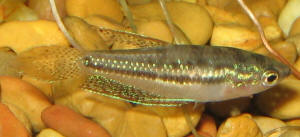
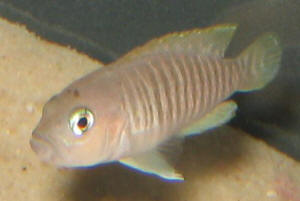
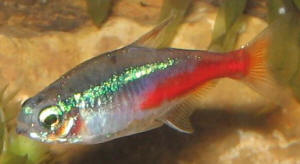
| Brown blotches on fish 8/19/08 Hello
WWM Crew, I'm hoping that you can help me figure out what is
going on with my fish. They have developed little brown blotches
mostly on their heads and backs. <I see these in your excellent
photos> It started two months ago with a single spot that
appeared on the back of one Gourami (Trichopsis pumila). I
researched fish disease in books and on the net, but I couldn't
find anything similar, so I figured the spot was just normal
coloration, or possibly a bite mark, or bruise. I waited, but the
spot never got better or worse. After a few weeks, a second Gourami
developed a few spots on her back also. Then another, and another,
and last week, I noticed the neon tetras have the spots too. The
fish don't seem bothered; their behavior is normal. The tank is
45 gallons, established 1 year, with a canister filter, gravel,
bogwood, plastic plants, and floating anacharis. Residents are 20
Zebra Danios (only 6 adults), 12 male guppies (only 2 full grown),
2 darters (Etheostoma nigrum, 1 inch juveniles), 13 Trichopsis
pumila (only 3 adults), and 5 Neon tetras. <What about the
African Cichlid?> I know that sounds like a lot of fish, but
most of them are less than 1 inch, and the big boss of the tank is
a whopping 2 inch female Zebra Danio. I do 10% water changes daily
<Wow! Disciplined> and vacuum the gravel monthly. <I'd
switch this to 20% or so weekly doing both> Ammonia 0, nitrate
10 ppm, pH 7.6, temperature set at 74F (but has been up to 80F some
days this summer). Fish are fed twice a day from a menu of standard
flake, Spirulina flake, frozen bloodworms, and live baby brine
shrimp. Once or twice a week, I give them a pea, lima bean, or
cooked spinach. <I'd skip this last...> The danios,
darters, and guppies don't have any spots (yet?). <A good
clue> Yesterday, I noticed similar looking spots on my shellies
(Neolamprologus multifasciatus) who are in a separate tank.
<Oh> I have a pair of shellies with fry in a 20 gallon tank.
I just noticed the tiny fry in the female's shell a couple of
days ago, and since then, I've been paying closer attention to
their tank. The male has a couple small spots on top of his head,
and the female has a small spot on her chin. I don't know if
this is the same thing that the gouramis and Neons have. <Likely
similar "cause"> The Shelly tank has sand substrate,
ph 7.6, ammonia 0, nitrate 5-10 ppm, and temperature set at 76F
(but also overheats on hot days). Do you know what these spots are?
<Only guesses...> The Gourami, which originally developed the
first spot, was in a tank with female guppies at the time. I had
been keeping my 3 gouramis in their own 10 gallon, until a pair
formed and turned on the third. I found her one morning hiding in
the corner with her fins badly nipped, so I moved her to the female
guppy tank. A few days later, I noticed the spot on her back. Her
fins eventually healed, and the spot didn't get worse, so I
moved her into the 45 gallon, where she is now. After the pair
spawned, I moved them to the 45, and when their babies turned eight
weeks old, I moved 10 of then to 45 and traded-in the rest. Now
about half of the gouramis in the 45 are affected with brown spots,
as are 3 of the 5 Neon tetras. Do you know what is causing these
spots? Are they harmful? How should I treat them? <I would try
discovering a likely cause of toxicity... the spinach, bogwood...
and see if by their exclusion for a month or more, this symptom
subsides. This sort of "Melanophore expression" is not
uncommon, usually a result of exposure to something in the water...
No "treatment" necessary or advised otherwise. Bob
Fenner> Nathan |
 |
 |
|
Accident or murder?? FW env. dis... Psych.
crowding, physiol. stress 8/16/08 Hi Crew,
<Ave,> I'm hoping you can help me explain what seems to
be a sudden and mysterious death. I started with two Gouramis
(one gold, one Opaline), one algae eater and three albino
Corydoras. On the advice of the LFS (as a first time fishkeeper)
I had them all in a 7 gallon tank before realising that this was
waaay too small. <Quite. Corydoras paleatus get to about 5-6
cm, and should be in a group anyway, and I'd class them as
fish for the 90 litre/20 gallon aquarium. Three-spot Gouramis,
Trichogaster trichopterus, can be aggressive, the males
especially, so aren't fish to "cram" into any
system. Generic algae eaters tend to be either the big and nasty
Gyrinocheilus aymonieri, or just big Pterygoplichthys spp., in
either case unsuitable for most community tanks, and certainly
nothing less than 200 l/55 gallons.> I recently upgraded to a
42 gallon tank. <Nice. However, if you have Gyrinocheilus
aymonieri this will still be too small and once mature the fish
will become aggressive and really very mean. Most
Pterygoplichthys species will outgrow this tank within a couple
years: they can reach 45 cm/18".> I set it up with new
substrata (small smooth granite-like landscaping pebbles and
aquarium gravel). <Not wild about using gravel with Corydoras;
they prefer sand. Do watch out for abraded (i.e., short)
whiskers: it means they're being damaged by the
substrate.> Being mindful of new tank syndrome I added all the
plants from the old tank and put some of the old filter material
into the canister with the new material and let it run for a few
days. I then did ammonia and nitrite tests (zero) and added seven
long-finned zebra danios to help the tank cycle. I left them
there for almost a week, then did another water test (zero) and
introduced the three albino Corys. A few days later I went
through the same process to gradually introduce the algae eater,
then (a few days later) the Opaline Gourami then (a few days
later) the gold Gourami. I introduced the gold Gourami the day
before yesterday. During the whole process I was doing small
water changes every few days. <All sounds good. You
"cloned" the filter, one of the best ways to create a
new tank safely and quickly.> I had yesterday off work (my
tank is in the office) and when I returned today my gold Gourami
was dead! Everyone else seems ok. I immediately did another water
test and both ammonia and nitrite are still showing zero. The
test water for both tests changed colour almost imperceptibly
compared to the last test, but nowhere near enough to take the
colour to the next level up from zero (which would be 0.25ppm for
each). I did a 10% water change and the water was a bit smelly,
which has not happened before (maybe from the dead fish?) <It
sounds as if you didn't move enough filter media: you need to
put 50% of the media from the old filter into the new one to
mature it. Also, how many days did you leave the filter running
without fish? The bacteria need ammonia, and if you don't add
fish within about a day, the filter bacteria start dying off. Not
all of them, but some of them. I'd predict that if you hold
back on the feeding, and then do nitrite tests every day or two,
while doing 25% water changes daily, within 4-5 days it should
all be fine.> What could have gone wrong for the gold Gourami?
I had her for about 17 months. Could it have just been the stress
of the move, or of being left by herself in the old tank for a
few days? <If the first Gourami you put in the new tank was
male, it is entirely possible he turned aggressive when a
"new" fish appeared in his territory and killed her.
There's a theory called "Dear Enemy" in animal
behaviour that essentially explains why fish ignore other fish
they're used to, like the ones they've grown up with, but
become aggressive to any new fish added to the tank.> Thanks
for your help. Leanne <Hope this helps, Neale.> Re:
Accident or murder?? (FW sys; Trichogaster hlth, soc.
beh.) 8/18/08 Thanks very much Neale. I've
checked on fishbase and I believe I have a gold version of
Gyrinocheilus aymonieri so he/she will be moving to a new home
asap. <OK.> Re; sand for the Cory's - I live in a
remote town with only one LPS which does not stock sand
especially for aquaria, so what kind of sand could I use? I have
access to builders' sand, river sand etc. <Go ask for
smooth silica sand (also called smooth silver sand). It's
widely used in gardening, and I buy mine from a garden centre. I
believe its used to improve the drainage of potting compost and
the like. Really, any lime-free (that's critical) sand that
feels smooth rather than sharp will be adequate. River sand is
sometimes okay, but some river sands contain lime and will raise
the pH and hardness. There's nothing wrong with gravel _per
se_ in a Corydoras tank, but it does need to be smooth
("pea") gravel or similar, otherwise the poor little
catfish do tend to get infections, particularly on their bellies
and whiskers. And I'm sure Dante mentioned a level of Hell
set aside for people who are mean to Corydoras!> Thanks again.
<Most welcome.> Leanne <Cheers, Neale.>
|
|
Can you help me? Platy hlth.
7/22/08 WetWebMedia, I'm new to your site and I
understand that you don't want questions that have already
been answered. I took the time to look at Neale Monks' chart
and I'm still unsure as to what plagues my platy. <Oh?>
I have a 10 gallon tank with 6 platys. <To be honest, a bit
small for this species... likely to be prone to poor water
quality and pH instability.> All the fish are looking healthy
and fine, except one. He is a large male platy- a twin sidebar-
and the biggest fish in the tank. When I got him from the store
he was perfectly healthy. I've had him for about a week and
half and he was fine right up until the drastic Ph drop. <Ah,
and there it is: small tanks experience pH crashes more easily
than big tanks. Either you aren't doing enough water changes
(I'd recommend 25-50% weekly) or else you have water lacking
in carbonate hardness. If the latter, I'd recommend grabbing
some marine salt mix -- not "aquarium salt" -- and
adding 3-5 grammes per litre. The carbonate salts in marine salt
mix will provide extra carbonate hardness, inhibiting pH drops.
Platies will tolerate the slightly brackish conditions very
well.> Most of the fish showed signs of Ph sickness, but I
brought the Ph back up slowly and now all my fish are seemingly
fine, except the big fish. I think he has some kind of internal
parasite, because when he swims he seems to be using his head
instead of his tail to move. He looks as if he's literally
shaking his head at everything- I know this can't be normal.
<It's not a mystery parasite; this is standard issue
"Shimmies" or similar. A generic reaction to stressful
conditions in livebearers. Most often seen with Mollies. No real
cure as such, but if conditions improve, it should get better by
itself.> He didn't do this when I first bought him. I
would consider maybe water quality, temperature issues, but the
other fish are fine. <Not everyone succumbs to stress at the
same rate: not humans, not fish.> They're happy and
normal. No one else seems to be getting what the big fish has- it
doesn't appear contagious. On top of the constant
'wagging' motion of his body, he also can't seem to
recover from the Ph spike. First he was floating at the bottom,
tail clamped, now he's floating at the top, tail clamped.
Other fish will swim past him and bump him and he won=E 2t move
or react sometimes- something is definitely wrong. Maybe I read
over the list of symptoms and simply didn't know what to look
for? I'm sorry for troubling you. Can you please help me?
<Do first check the pH. It should be 7.5-8, and it should stay
there week in, week out. Use marine salt mix (Instant Ocean, Reef
Crystals, etc.) as an additive as described above. Will help
considerably. Also keep up with your water changes. Your Platy
will recover if conditions are good. Cheers, Neale.>
Re: Can you help me? 7/23/08 Neale, Thank you for
your advice. <Most welcome.> I'm going to try the
marine salt out. I already have dissolved aquarium salt in the
tank, so does this mean I should change all the water before I
put the new salt in? I don't want to over-saturate the water
with salt. <No need. Add the marine salt mix to each bucket of
water (at the dosage stated, taking care it dissolves before
use). So when you take out a bucket or two of water this weekend,
replace with a bucket or two of water with 3-5 grammes/litre
marine salt mix. Always be careful not to overdose. If you're
not good with sensible measurements of mass and volume, I have a
software tool (for Mac and Windows) that helps you calculate
salinity and convert between Metric and US units.
http://homepage.mac.com/nmonks/Programs/brackcalc.html > Can I
ask you one more question? <Fire away.> Around the same
time I bought the large male platy in question, I also bought a
smaller male who is yellow and slightly see-through. When I first
bought him I noticed he had some red around his gills, but I
chalked this up to his natural coloration. <Likely just the
blood in the gill filaments being visible through the gill
covers. Quite a common "thing" on fancy versions of all
sorts of different fishes.> While researching the symptoms of
my fish in question, I came across information that stated red
gills could be an indication of ammonia poisoning. I had never
heard of ammonia poisoning before and didn't even know that
fish secreted ammonia through the gills. Is it normal to buy a
yellow twin side bar platy and see red coloration around the
gills? <Don't worry about this. If the fish had Ammonia
Poisoning, it would be obviously very sick -- e.g., skittish,
gasping at the surface, clamped fins, etc.> I don't mean
to be paranoid, but the coloration around the gills seems to have
darkened. I'm worried my ammonia levels could be out of whack
because I don't have equipment to monitor ammonia.
<I'd highly recommend buying those little dip-strip test
kits. Over here you get 25 strips for about £10, but
you can slice each strip down the middle to make twice as many.
These have ammonia, nitrite, pH, hardness, and sometimes other
useful tests -- all on the one strip. While expert fishkeepers
will make the point they're less accurate than the tests with
liquids and plastic bottles, I think these dip-strips are
indispensable, especially for beginners. In general, if you
don't have nitrite in the water, you likely don't have
ammonia, so I'd not be worried anyway.> This should be my
last question- I don't mean to bother you. <No bother.>
Again, thank you for your help. I really appreciate it.
<Cheers, Neale.>
Re: Can you help me? 7/23/08 Neal, Thank you so
much. You need not reply back and your questions have been very
helpful. I will do all you suggested! Thank you! <Glad we
could help. Cheers, Neale.>
|
|
White scum/slime growth 7/22/08... FW dis. trbshtg.
I've had a problem with my new aquarium. Its about 20g with a
air pump, aqua clear filter and many decorations. At first I
started off with 2 mollies. One got swim bladder and died shortly
after and the other died the next night from unknown causes.
<Not "unknown causes" at all -- from poor water
quality.
http://www.wetwebmedia.com/FWsubwebindex/fwestcycling.htm A new
aquarium needs to be cycled first, and you are best doing this
WITHOUT fish. The simplest way is to grab some live filter media
from another aquarium and at least half-fill the new filter with
it. Failing that, there are products like Tetra Safe Start and
Bio-Spira that add bacteria to the system. Used properly, they
speed the cycle up so you can add a few small fish at once. If
you can't get those, then leave the tank devoid of fish, and
add pinches of food every couple of days for about 3-4 weeks.
This will give the bacteria something to "eat", so they
multiply in the filter. Keep testing with your nitrite test kit,
and when nitrite is zero, add some fish.> I tried again with 2
more mollies but after 3 days they became sluggish and slow and
just died. <No surprise at all. Mollies are extremely delicate
fish when kept in freshwater tanks. While bullet-proof in
brackish/marine conditions and often used to cycle tanks, they
cannot ever be used for this purpose in small freshwater systems.
See here: http://www.wetwebmedia.com/FWSubWebIndex/mollies.htm
> I checked my nitrates and ph and ammonia but all the levels
were extremely low. <No such thing as "extremely
low" with regard to ammonia and nitrite; these need to be
ZERO. As for pH, for Mollies this needs to be around 7.5-8, so
"extremely low" means nothing at all in this
context.> I tried again with two small angle fish but the same
thing happened to them as did with the mollies. <Angelfish
are, if anything, even worse for a new tank than Mollies. Please,
it's time to read about keeping fish and start making some
SENSIBLE choices. At the moment you are not only killing a bunch
of innocent animals needlessly, but also wasting money. At least
one, and preferably both, of these issues should concern you.>
I left for Peru for three weeks and decided to leave the tank
fishless and allow the beneficial bacteria to take over. <The
bacteria need food, and in a tank without fish (or the addition
of some protein source like flake food) no maturation will take
place. Use some logic. The bacteria break down ammonia and
nitrite, and these come from the break down of protein, either by
the metabolism of the fish or simple decay. Without ammonia and
nitrite, there's nothing for the "good bacteria" to
eat, so they won't multiply.> Coming back I put in a Pleco
to take care of the brown algae growth that occurred and two
guppies. <Oh the humanity... you do realise that Plecs get to
about 45 cm in length, and moreover are so heavily polluting that
in an non-cycled tank sticking one in a tiny 20 gallon aquarium
is practically a death sentence.> The pet store told me the
fish may have been sick at the time of purchase but if it were to
happen again to take and immediate water sample to them and the
dead fish for testing. <Hmm... Did you tell the pet store
people you were sticking fish into a tank without a mature
filter?> On closer inspection of the tank I saw a white film
growing in a mound on the bottom of the tank, it almost looks
like a old Kleenex in the water but its not. Any idea of what it
could be and is it harmful to my fish. <The white scum is
likely nothing more than opportunistic bacteria and fungi. In
themselves not harmful, but you don't see them in healthy
tanks, just really, REALLY unhealthy ones. The bit that is
harmful to the fish is YOU. Quite clearly, you have only the
vaguest idea of how fishkeeping works, so before buying any more
fish, please please PLEASE read a book. Specifically, about
cycling tanks and the nitrogen cycle. These are where you're
going tragically wrong.> Also I have another tank that runs of
the same water I used for my new tank. I keep a fantail goldfish
and a Pleco in it and they have not had any problems. What could
have caused my fish to die so quickly in that other tank?
<Non-cycled aquarium; ammonia/nitrite; overstocking; lack of
understanding.> Thanks for reading and any answer would be
appreciated, thanks, <Certainly done my best.> Dennis
<Cheers, Neale.>
Re: White scum/slime growth 7/22/08 That
makes a lot of sense. I haven't seen many of your mentioned
products here in Canada but we do have similar ones. I had added
cycle to the tank while I was gone, its dormant beneficial
bacteria and becomes active in the presence of oxygen.
<"Cycle" has a mixed reputation in the hobby, but
I'm sure its better than nothing.> I put several capfuls
in before I left and added several more when I got back. <Is
this what the instructions say? With these products it is
important to do precisely what is required.> I had a nitrate
and ammonia absorber pad in the filter media but have since
removed it, it was from Hagen, a common brand around here. My ph
is around 8 right out of the tap from our well. The bacteria had
some fish waste to live of while I was gone and some uneaten
food, and possibly some dead algae. <Doesn't necessarily
work this way; the bacteria grow in response to a regular
provision of ammonia. A big lump one day and then nothing for a
week won't necessarily work.> I had also added Waste
Control to the tank before and after my trip, its another
beneficial bacteria product. <Hmm...> The new fish seem to
be doing fine, just because I'm waiting to feed them for
24hrs after introducing them to the tank. The pet shop definitely
does not tell you all the information you need like what fish to
start your tank off with and the limit, they based it by size of
the fish, they said the smaller they are for instance mollies you
could start with 2 or 3 max but obviously not. <Before
spending money on fish, spend some of a book. This will be the
wisest money you will spend. There are two ways to keep fish: the
easy way and the hard way. The easy way involves buying a book,
reading it, understanding the basics, and then making informed
choices regarding fish species. The hard way is to buy a tank and
some random fish, throw them in, and try to fix the problems as
they occur. Expensive, dangerous for your fish, completely
unrewarding and ultimately likely to seem more of a chore than a
hobby.> If my Plecos get to big I know a nice home for them at
a local restaurant indoor pond. <Unless you have a 50 gallon
tank right now, don't waste your time with the Plec. If you
keep it properly, it will be too big for anything smaller within
6 months.> I also forgot to mention that the newer tank has
some aquarium salt in it but not enough to classify it as a
marine tank. <Aquarium salt is primarily a trick used by
retailers to extract money from the ignorant. You should never
need to add aquarium salt to a freshwater tank. It serves no
practical purpose. If you add enough salt to benefit brackish
water species (like Mollies) you should be using marine salt
anyway, which is a different product, and in the amounts required
to be beneficial will stress most freshwater fish. Again, put
your wallet away and put your reading glasses on!> I am doing
weekly water changes on both of my tanks of 25-30% of the water
with gravel vac. <This is a good water change routine to
maintain. You shouldn't need to clean the gravel weekly, but
if you want, go ahead. Will do no harm. Plants of course
don't like the gravel being shaken up though.> How long
should I wait before I can do Bi-weekly water changes and do I
ever need to do a complete tank cleaning like emptying everything
out and washing everything down, I know that would eliminate a
lot of the nitrifying bacteria and that would be bad for the
fish. <In a well run tank you should never really need to do
this, though some folks (like me!) enjoy doing this every couple
of years. Hope this helps, Neale>
Re: White scum/slime growth 7/22/08 Is
there any book in particular you would recommend for beginners?
<I happen to like 'Practical Guide to Setting Up Your
Tropical Freshwater Aquarium' by Gina Sandford (2000).>
Also because I have seen one of my fish get swim bladder in the
past, what can you do once a fish gets it, is there any
medication or certain foods to give them to reverse the condition
or once they get it are the goners? <"Swim Bladder"
isn't a disease. All fish have a swim bladder. Well, not all
of them. But most of them. Anyway, what you almost certainly mean
is your fish go sick, swelled up, and died. This almost never has
anything to do with the swim bladder. It is rather more likely
your fish got struck with a system bacterial infection, and that
almost always follows on from poor water conditions. While this
is hard for inexperienced fishkeepers dealing with problems to
accept, the fact is healthy fish in a properly run, properly
stocked aquarium hardly ever get sick. Seriously, if you do
things precisely "by the numbers" your fish won't
get ill, except perhaps from an (easily cured) case of whitespot
brought in by new fish that aren't quarantined properly. Do
read my article here on Livestock Selection, paying attention to
the "sickly species" as being exceptions to the rule.
http://www.wetwebmedia.com/FWSubWebIndex/fwlivestk.htm Otherwise
you can reliably expect your fish to do very well. I have a 16
year old catfish in my aquarium next to me here! Lots of people
keep fish that routinely live for 10+ years, even relatively
small things like Angelfish. Done right, this IS a low effort
hobby!!! Cheers, Neale.>
Re: White scum/slime growth 7/23/08 I did some
research on some recent symptoms of my guppy. Not long after
feeding she began swimming awkwardly and stayed near the bottom
of the tank. One cite said it was most likely caused by consuming
dry food to fast so my question would be what to do at feeding
times. <Sounds dubious.> Should I tear up the flakes
somewhat and soak them in a glass of water and then place them in
the tank, and the glass of water should I take the water from the
tank so that Im not putting in untreated water. <Waste of
time. But if you want to do this, go for it!> Also if this is
right how long should I soak the food, basically I think my fish
had indigestion because I'm testing my ammonia, nitrite and
phosphate and the ammonia and nitrite was 0ppm and the phosphate
was 1ppm. <If your fish keep getting sick, then the
environment is bad. It may be improving now (let's hope!) or
the problem may be about stability, with the water sometimes
being good and sometimes not so good.> I did a 30 percent
water change and gravel cleaning yesterday and this morning my
guppy was back to normal and swimming around with its friend.
<If you do a water change and then the fish behave better than
before, this is a VERY GOOD sign water quality is the
problem.> In my other tank I am sometimes having trouble with
green water, the phosphate reads zero and I do have a phosphate
absorbing pad in the filter but a few days after the water change
the water gets a green tint and slowly gets darker, I used
P-Clear to clump the particles and trap it in the filter and it
seems to work. Is there anything I can do to prevent it, I only
light the tank for 8 hrs a day and there are 3 live plants in
there. <What sort of 'live plants' are these? A lot of
less experienced aquarists get conned into buying terrestrial
plants under such dubious names as "wheat plants" and
"umbrella ferns". See here:
http://www.wetwebmedia.com/FWsubwebindex/keepoutfw.htm All these
do is gently rot, messing up the water quality. Other plants are
slow growing, like Java ferns and Java moss. These will have no
positive effect on water quality at all. Then you have plants
that aren't growing because the lighting isn't right.
Almost without exception, the default lights on most aquaria are
too weak to support things like Amazon Swords and Hygrophila;
these need at least 2 watts per gallon, and this is usually FOUR
tubes running across the top of the tank, not the usual one or
two. Again, all these things do is sit there, usually dying by
inches, messing up the water.> It doesn't get direct
sunlight and the goldfish consumes all the food I give him so
there isn't any waste but the Pleco doesn't always get to
his food right away, but it is a sinking tablet and it dissolves
and spreads across the gravel then he eats it. <Pretty normal.
In any case, you should be doing 50% water changes per week with
this combination of fish, and unless your tank is VERY big -- 55
gallons upwards -- you'll quickly reach a point where the
fish faeces just make a complete mess even if the filter somehow
keeps the water (technically) safe even if it is cloudy.
Remember, solid waste is unsightly, whereas invisible waste is
deadly. The job of the filter and water changes is to take care
of both issues.> Sometimes my piggy goldfish finds it first. I
only feed the Pleco every three days and only a third of a tablet
so that he still sucks up the brown algae growth in the tank.
<Starving the poor Catfish won't achieve much, so be
realistic. A juvenile Plec 5 cm long should be getting about
one-half algae tablet every other day. I'd augment that with
fresh vegetables, such as cucumber, tinned peas, sliced courgette
(zucchini) or sweet potato. I weigh these down with lead weight
of the type used to hold aquarium plants in bunches. Feed these
as much as you want: they have no effect on nitrite/ammonia being
protein-poor foods. Remove uneaten food when it starts to get
messy though.> Im going into town today do I will look for
that book you recommended. <Good luck, Neale.>
|
Re: problem with aquarium system, disease... emphysematosis,
induced... no reading 7/8/08 Hi, The system is run by a
1 hp pool pump. <... For this many gallons? Why? You want to
read/look into a better, non-high-pressurized pump... this one will
"drive you into the poor-house"... See WWM re Pump Selection:
Here: http://wetwebmedia.com/ca/volume_3/cav3i2/External
Pumps/External_Pumps.htm and the linked files at the bottom> There
is a lot of air/water mixing in the strainer chamber so i guess there
is pressurized water there. <... yes... this is along with the
improper pump, the cause of the trouble here> Is there a possibility
of having too much oxygen in the water which is causing "the
benz"? <As in Mercedes? Yes> i notice that when the fish
were removed they recovered quickly in a medical tank using MelaFix.
<... you're joking right? Ridiculous> the water renters the
tanks through 1" tubes emptying by the top and there are fine
bubbles in the return water into the tank. The bubbles on the fish
though are coming through their skin, not attaching to them. The pH is
8.0 (African cichlids) ammonia is 0, nitrite is 0. Thanks! Don <...
read here: http://wetwebmedia.com/PondSubWebIndex/PdBblDisease.htm and
the linked file related at top. BobF>
Re: problem with aquarium system, disease... emphysematosis,
induced... Thanks for all the help! I'm off to shop for a new
pump! Don <Ah, good! BobF>
|
Fish Bent in Half: Improper Housing - 7/1/08 Hey guys!
<Hello! Benjamin here today> My fish is in a bowl on his
own, fed regularly but only a small amount, washed regularly and
given attention. <Hee! I don't know if he needs
'attention' but it sure is fun to watch our fish! On the
other hand, there really are no fish that are suited for life in
a bowl. I assume you have a Betta or a goldfish- a Betta needs a
heated, filtered aquarium; a goldfish requires at least 15
gallons of living space to prevent toxic build-up of wastes.
Please read on wetwebmedia.com re the specific needs of whatever
the denizen of your bowl is> He is currently almost bent in
half and led on the bottom of the bowl. When he swims, he swims
in circles but keeps sinking to the bottom. Can you please tell
me what is actually wrong with him and if there is anything I can
do to help him? <Based on his living space, probably poisoning
from ammonia or nitrite compounds; otherwise a late-stage symptom
of internal infection of the coelom or gas bladder. If your fish
has not reached expiry by the time you read this, small frequent
water changes with dechlorinated water may help- as will some
time spent reading about proper husbandry for this fish and
future charges> Thanks in advance, Vicki <Best of luck,
Benjamin>
Re: Fish Bent in Half: Improper Housing: Since the Sun has
Risen Yesterday, Surely Tomorrow... - 7/1/08 Hello! I have
kept fish in the same tank for years and most usually live 3-5
years. But thanks anyway for your advice. <Past successes do
not dictate future ones...Bacon would have things to say here...
<<! A new high! Sir Francis evoked on WWM!!! RMF>>
the point in case here is that your fish is improperly housed and
one way or another its demise is imminent and hastened by being
kept in a bowl. Please read re basic fishkeeping, ethics on
wetwebmedia.com. If this is a Betta spp. you are slightly under
the expected lifespan; if this is a goldfish you have barely
reached a sixth of their low-end life expectancy. Ultimately,
although bowls may be popular they simply cannot be used
conscientiously- that they are safe or adequate for any fish is
false. As G.K. Chesterton points out, "Fallacies do not
cease to be fallacies because they become fashions">
Vicki <Benjamin>
|
|
Struggling guppy, New Tank Syndrome 6/17/08 Hi. I am
hoping you can help me. You have helped me with fish in the past
that I have had to return due to poor retail advice. <Will
try.> I have 3 guppies in a 10 gallon tank. I have been
bringing my water in to be tested weekly for about a month, as I
wanted to add another but want the water to be right. I have had
the tank for about 2 months and the guppies for about a month or
more. The water keeps testing high in ammonia. <This is a big
problem, perhaps you need more filtration.> I started with 4
guppies and one died (I'm assuming ammonia poisoning
-bloated, gasping, stayed at the very top and then the bottom
before I separated him and he died.) <Sounds like it.> I
would like to get a new one to replace him and maybe dwarf Corys.
<I would not even think about adding anything until you get
your water parameters in check.> Last time I brought the water
in, the salesperson told me to start with a Ph test kit. I have
been using it. This sounds like a dumb question, but after
reading a previous q&a on your web site, I want to be sure.
If water is testing at 7.6 or higher... which do I use, the up or
down solution. <For guppies I would do neither, that is just
about perfect for them. They prefer hard, alkaline water, even
slightly brackish water.> Of course, confused again because
the salesman the week before said that the ph was fine, ammonia
high. But, this salesperson said that the ph drops would help
with the ammonia. <It tends to make the ammonia a little less
toxic, but having ammonia at all is such a big problem that
finding ways to rid it from your tank is more important than
slightly reducing its toxicity.> Also, one of the guppies was
the smallest to begin with. The other two guppies play with each
other all day and ignore him for the most part. He doesn't
get much food, he is slower to the take and they grab it. I have
tried to feed them first and while they are eating, drop flakes
right at the other fish, but they always get it first. He is
showing signs of fin rot. He is losing most of his orange tail.
He also seems to be struggling with thicker orange poop. What can
I do. <Improve conditions, perhaps separate to allow it to
feed and get stronger. Guppies are very tough on their weaker
tankmates.> My husband is ready to "toss the tank"
--- that it shouldn't be this hard and the kids are affected
each time since they are their fish. Thanks so much in advance.
<Keeping exotic animals alive in small glass boxes is more
difficult than most people expect. Check out this excellent
article by Neale Monks for a start, and read through our guppy
sections for more.
http://www.wetwebmedia.com/FWSubWebIndex/guppies.htm
http://www.wetwebmedia.com/FWSubWebIndex/fwlivestkindex.htm .
Also be aware, contrary to popular opinion fancy guppies are not
the most robust fish, and beginners in the hobby often struggle
with these fish which were sold to them as starter fish.>
<Chris>
Re: struggling guppy 6/17/08 Thank you for such a quick
reply! <Welcome> One more question. I have been told that
frequent water changes can just delay the cycle. However, with
poor water tests, how often and much would you recommend I be
doing? <Since you have fish in there, they may be necessary to
do daily, ammonia is extremely toxic and needs to be controlled
in this situation. This will slow down your cycle but really you
don't have much choice.> Also, the tuxedo guppy still has
the "poop" he was struggling with when I left over an
hour ago. I guess it's more brown than orange. Is this
probably "poop" or could it be something else? <Most
likely poop.> Thank you again. Your quick reply was truly
appreciated! Beth Crenshaw <Welcome> <Chris>
|
FW Cardinals, and something sinister- Stressed Fish
Start To Have Problems 06/15/08 Hello WWM crew.
First, I have to thank you again for this great resource- your time and
expertise help so many people. You helped me a great deal in the past
with the curious subcutaneous worms plaguing my Cardinal tetras. Thank
you so much. < Thank you for your kind words.> Treating the tank
with Seachem's Cupramine at ¾ of the recommended FW dose
worked well; every single Cardinal pulled through! The only
"casualties" were a clutch of eggs that my male M.
altispinosus decided to eat despite his mate's valiant efforts at
guarding them (they are usually a great breeding pair). That being
said, something sinister seems to have creeped into the tank. About a
week ago, I found a Cardinal looking emaciated and lethargic. He had
hidden too well in the plants and I had not found him in time to effect
any positive change. A few days later, a heat wave struck. When I
arrived home, the temperature was close to 90 degrees F! Everyone was
either floating oddly or lying on the bottom. Off with the lights, on
went the AC, and I floated sealed bags of ice on the surface.
Remarkably, everyone recovered fully except for one large female
Cardinal, who I found the next morning. Yesterday, another Cardinal
started "shedding"- imagine a dog shedding its winter coat,
but a fish shedding its scales. He also appears to have popeye! This
evening, another Cardinal appears to have the beginnings of popeye. One
Cardinal could have been an isolated incident. The second could have
been an accident. But four Cardinals within a little over a week? I
DON'T like those odds. Everything sounds environmental, but-
Ammonia = 0, Nitrite= 0, Nitrate=0 (aquarium is long
established/cycled, I just have a lot of very happy plants), water is
soft (RO mixed with tap, cleaned at least weekly), pH is 6.6,
temperature is 82 degrees F. Is there something else that I should be
testing for? Could there be another connection between these incidents?
There has only been two recent change to the tank: one day before the
first Cardinal's death, I added a new Fluval canister filter to the
existing tank filtration (which remains in place), and I had begun
using new ferts for the flora (iron enriched "Plant Gro" by
Nutrafin, since I can't find Flourish with iron locally- but I do
use Flourish root tabs). Coincidence, correlation or causation? Tank
mates include: 28 Cardinals (not that I can actually count them) 4 M.
altispinosus 3 Otocinclus (Very fat and happy) 1 Longfin Bristlenose
Plec 1 SAE Last edition to the tank was the Plec, but I have had him
for a long time and transferred him to my main tank because guests
always commented on how beautiful he was. Everyone was quarantined for
no less than one month prior to their introduction to the tank. Their
diet (in case it is relevant at all'¦) consists of mashed
peas, thawed frozen bloodworms, Nori (which I think they play with more
than actually eat), Spirulina flakes, Tetra granules and Nutrafin Max
flake food (and whatever eggs/fry tank mates manage to steal from the
rams and the Otos). I would greatly appreciate any insight into my
Cardinals' plight- advice, guidance, suggestions, musings,
criticisms or reasons why atmospheric pressure is conducive to the
integration of pachyderms into society. Thank you so much, and enjoy
your weekend, Tianna < Here is what I think is going on. During the
heat wave your fish and biological filtration were stressed. Oxygen
levels were low and metabolism was up. Not a good combination. You fish
may have somewhat recovered but the stress made them vulnerable to
bacterial infections. For a short time period you probably didn't
have much biological filtration because the beneficial bacteria died
off during the heat wave. If nothing else their numbers may have been
affected. As bacteria start to colonize the canister filter they
consume oxygen. Some filters get to the point they consume all the
dissolved oxygen going into the filter. Make sure that the return tube
forces the returned water to the surface so it can be oxygenated. The
infections can be treated with Furanace but this will turn the water
green, and the plants and bacteria will be affected. I would recommend
to isolate any diseases cardinals and treat them in a hospital tank
with Furanace type of antibiotic.-Chuck>
HELP-URGENTLY PLEASE... FW... hlth./env.
6/12/08 Hello, I have a 500L tank which consisted of the following:
6 Oscars, 2 Yabbies, 2 blue Acaras, 1 Texas, 1 Synodontis nigriventris,
2 Severums. Things have been running smoothly for about the last 6
months. About a week and a half ago one of the yabbies died, not to my
knowledge as it was hiding in a cave at the back of the tank. The tank
then started to get cloudy, I did a water change and then realized the
yabbie was dead. He was in pieces, At first I thought it was one of the
Oscars who had attacked him a I could see the rest of his body. A day
or two later after the water change I found the rest of his body and
discovered that the other Yabbie had also died. I got the rest of all
the yabbies out of the tank. <By "Yabbie" I assume
we're talking about crayfish here? Oscars eat crayfish in the wild.
That's why they evolved those strong jaws -- not to catch fish as
many people think, but to crunch the shells of crabs, crayfish and
snails. So mixing crayfish and Oscars isn't a brilliant idea.> A
day or two later the tank started to get a little dirty again, I looked
and found more bits of Yabbie. I'm getting into detail with this as
I'm not sure weather this was the cause of the problem I had now
with an increasing number of my fish or it was just the start of the
problem (My suspicions are that it was the cause as there have been no
change in food, no new fish and no change in my very strict routine in
caring for them, but can not be sure.). That night after cleaning the
rest of the Yabbie out of the tank I went to feed them and realized
that the Texas was gasping at the top of the water and her colour was
nearly black and had a pale film over one eye, I removed her straight
away and put her in my smaller tank which has a small variety of other
fish, as I don't have a hospital tank. <My instinct here would
be to assume the dead crayfish wrecked water quality. Cichlids are very
intolerant of nitrite and ammonia, and that's the issue with the
Herichthys. No need to move any fish -- just to a 75%+ water change,
make sure the filters are in working order and not blocked with grunge,
and if possible add some aeration to help the cichlids recover.> The
same night I took one of the Acaras out as he looked a little down
sitting on the bottom so just to be sure I put him in with the Texas.
<I'm amazed the Aequidens hasn't been destroyed by the
Herichthys yet. Matter of time... While Aequidens rivulatus is robust
enough to mix with Central Americans, Aequidens pulcher certainly
isn't.> At this time all the other fish looked fantastic and the
water was looking great. Two days went by and the Texas had improved
dramatically and the Acara looked fine, so I put the Acara only back in
the tank. The next night he was gasping under the log and had a bulging
eye which was cloudy. <Classic cichlid reaction to poor water
quality. Do check nitrite and nitrate, this latter being very dangerous
in cichlid tanks.> A the same time I noticed my Synodontis
nigriventris had holes of flesh taken out from all over his body which
looks more like a flesh eating disease. <Hmm... not sure about this.
Synodontis nigriventris is a small catfish and could potentially be
damaged by these robust cichlids, or for that matter by large catfish.
As you perhaps don't realise, Synodontis nigriventris is also a
gregarious species, and should be kept in groups of 3 or more
specimens. Singletons are very shy.> I took them both out and put
them into the smaller tank, a day has gone by and there has been no
improvement. <There won't be. Once the bacteria and/or Hexamita
infection gets started, you need to treat with suitable medication. Do
see here: http://www.wetwebmedia.com/FWSubWebIndex/fwfishmeds.htm
http://www.wetwebmedia.com/metranidazole.htm Would recommend doing the
antibiotics first, and then the anti-Hexamita medication next. Cichlids
won't "get better" by themselves -- they die.> I have
now also noticed that two of the Oscars have which looks like pop eye
only in one eye, I was looking at a third one and he looks as though he
is starting to form a film on his eye. Otherwise the other fish look
fine. <Treat. Now!> I am doing a 50% water change tonight as
thought it would be the safest option. I'm wondering what you think
the best option for me to do next to treat these problems. Thanks Teags
<Hope this helps, Neale.>
RE: HELP-URGENTLY PLEASE 6/13/08 Hi, do you
recommend using one of the treatments listed under the "Bacterial
Infections (internal)" heading first? for example API erythromycin
or an equivalent we could find in our country Australia) <Outside of
the US, antibiotics (as opposed to antibacterial drugs) are usually
only sold with a prescription from your vet. So with that in mind, if
you need to use Erythromycin, you'll need to call your vet. This
doesn't add dramatically to the cost, but it is another hoop to
jump through. This said, with cichlids your first line of call will be
to use Metronidazole to medicate against Hexamita, the more likely
pathogen at work in your system. Again, outside of the US this is a
prescription-only drug, though some alternative, over-the-counter
medications may be available. In the UK for example, there are things
like eSHa Hexamita 'Discus Disease'. Invariably these
alternative medications only work if used early on in the disease
cycle. Cheers, Neale.>
|
Extremely contagious and
lethal(?) Disease 4/4/08 Dear WWM Crew, I have
two, freshwater tanks. One is 55 gallons, and currently is
stocked with 1 Pacu, 2 kissing fish, 1 Pleco, 1 blue Gourami and
1 powder blue Gourami, the tank currently has 0 ammonia, 0
Nitrite, 0 Nitrate, a ph of 6.4, and moderate alkalinity. <I
hope you realise how big the Pacu will get! Seriously, even a 250
gallon aquarium will be too small for this fish, let alone a 55
gallon one! These things are gigantic! Up to 1 m/3' in
length, 30 kg/70 lb in weight.> The second tank is my hospital
tank (recently converted from an isolation tank for a catfish who
killed 8 other fish) which is 10 gallons, and I believe is
currently overstocked with dying fish. These fish are, 1 catfish,
2 tetras ( species unknown, they are roughly silver dollar sized)
and 2 goldfish. The ammonia is 0, the nitrite is very low, 0.5 to
1, and the nitrate is around 5, and the ph is 6.4. <Well yes,
dangerous overstocked. There is no such thing as "very
low" nitrite. It's like being pregnant, it either is or
it isn't. If you have nitrite in your aquarium, it's
dangerous to the fish. Period. So you need to get those fish out
of there. A 10-gallon tank is certainly not viable for Silver
Dollars, Goldfish, or most catfish except perhaps dwarf species
of Corydoras.> Both tanks have a temperature of 84 degrees
Fahrenheit (probably too high, high in hopes of killing mystery
sickness). <Why do you think this would help? And yes, it is
too warm and likely stressing at least some of these fish.>
The tanks also have a tablespoon of aquarium salt for every 5
gallons, and 5ml of Stress Coat by API for every 5 gallons.
<Again, why do you think salt is helping? None of these fish
come from brackish water. Adding salt to the water is at best
pointless, and at worst another layer of stress.> The 5 fish
all have a variety of symptoms, but all of them seem to have the
same root. <Unquestionably poor water quality.> The
goldfish both suffer from quickly decaying fins (since I first
noticed on Sunday, march 30th) one, only having bloody stubs
where fins are supposed to be They also suffer from scale loss,
having "bald spots" where scales once were. <Finrot
and/or Fungus and/or Mouth Fungus. Curable, but caused by
environmental conditions so those will need to be remedied as
well. Fix water, and treat with something like Maracyn or eSHa
2000.> The tetras I have had for 2 years and used to be my
most resilient fish. One is blind in both eyes ( the eyes being
covered by a thick, slimy, white coat) and one eye has a red,
organic mass hanging out of it. The other Tetra is only blind in
one eye, and I only discovered this today. <From bad to worse.
Likely bitten out by aggressive fish, though perhaps caused by
poor water quality.> Both tetras also suffer from mildly
decaying fins, and the inability to find food ( will they starve,
eventually?). <Oh dear oh dear oh dear. "Mildly"
decaying isn't really all that cheery; it merely means
they're not at Death's door just yet. Same
causes/solutions as the Goldfish.> The catfish has a bad
record, and also suffers from the same kind of blindness the
tetras have, which is remotely an upside, because now he
can't find, and eat, his tank mates, he too also suffers from
mild fin rot. What is this disease? <Basically the disease is
YOU! You can't keep fish, or at least aren't making any
effort to keep them properly. If I could, I'd be around to
your house to rescue these poor animals! Since that's not an
option, let me tell you what you need to do. Firstly, these fish
need much bigger tanks. Some of them likely can't be kept
with tankmates at all. So you need to sort that out. Send us
photos, and perhaps we can identify the fish and tell you
what's friendly and what's not. You need to massively
upgrade your efforts at keeping your tanks clean. That may mean
additional filters, and it certainly means less feeding and more
water changes. You need to be striving for zero ammonia and zero
nitrite every single day. Big fish need big tanks and big water
changes. You should have filters offering not less than 6 times
the volumes of the tank in turnover per hour, so a 55 gallon tank
needs a filter rated at more than 330 gallons per hour. You need
to be doing 50% water changes every week. And you need to spend
some time reading books on fishkeeping. You're making lots of
mistakes, and your fishes are suffering horribly. This is a
catalogue of animal cruelty, and you're getting a lot of very
bad karma. So fix things, make your fish happier, and really
enjoy the hobby.> And where did it come from? Most
importantly, how do I save my sick fish? Thank you, for your
time. Koda <Hope this helps, Neale.>
Re: Extremely contagious and
lethal(?) Disease 4/4/08 Dear Neale: Thank you
for your input about the tank. My son was just looking for some
sound advice not shitty criticism. As a 13 year old this is the
beginning of his fish hobby which I hope he continues after the
really crappy things you had to say, such as "the disease is
you". I will not be recommending your site any longer to
anyone, as, well, you seem to be a contaminate yourself. I hope
your fish are happy with you because from the brief encounter I
have had I am sure you do not make too many other PEOPLE in your
life very happy. Thanks again! Jennifer <Hello Jennifer.
I'm sorry you didn't feel my advice was helpful. But
being thirteen years old and starting out in the hobby
doesn't allow someone to treat fish badly and let them
suffer. The fish your son has had either died, had their eyes
bitten out, or developed severe Finrot. In no way at all were
they being cared for properly, and there was no sign at all that
research had been done prior to purchase. For example no-one in
their right mind buys things like a Pacu for a beginner's
aquarium. As I said, these things can (and will) get to the size
of big dog. Your son asked me what was going wrong. I gave it to
him "straight up" rather than candy-coated -- the
problem was how he was keeping the fish. Period. End of
discussion. I then went on to suggest things he could do to
correct things. I took half an hour out of my life to spend
reading and analysing the problem. My e-mail was constructive
even though it was highly critical. If you feel your son was
offended by something I said, I apologise. But that doesn't
let him (or you) off the hook as far as those poor, suffering
fish goes. If you choose to ignore my advice, and watch yet more
fish suffer and die agonising deaths, then that's between you
and your conscience. I've done the best I can. Cheers,
Neale.><<Well-done Neale. RMF>>
An apology for Neale In this
case, I mean apology in the sense of "in defense of".
4/4/08 <Indeed?> Neale has received a few nasty remarks
lately because of his direct answers, which for most readers seem
to be just what they need. When he responds, the information is
always well laid out. Suggestions for improvement are presented
in a procedural manner that anyone can follow. He evaluates the
situation like a mechanic evaluating a problematic car. Whereas
most people don't feel offended when their mechanic says,
"Your oil is dirty" or "Your brake pads are
worn", certain people take it very personally when he
explains what is likely to be wrong with their aquarium.
<Certainly what I try to do. But as CJ once said in 'The
West Wing', "we can all be better teachers". If in
trying to explain things to someone I only succeed in making them
angry, then obviously I'm not doing the best I can.> To
refer to a specific example, an enraged mother wrote in after her
son asked for help and Neale laid out the facts. Thirteen years
old seems like old enough to know better to me... nevertheless,
every child matures differently, so let us accept that this young
man truly never considered that it might be *him* that is the
problem and not the fish. How could any responsible parent just
watch their son's aquarium crash and burn? And how exactly
could Neale's words be more off-putting than the rising body
count of dead fish? <I would tend to agree here.> I work at
a library, and I see several books on rodents and ferrets being
checked out. Most people read about pricey reptilian pets such as
bearded dragons and iguanas before they purchase them as a family
pet. If replacement fish were not generally so cheap, parents
would perhaps be more attentive to the mishaps in their
child's aquarium! <I think this is at the heart of things.
Community tropical fish are cheap. Many species cost only a
couple of dollars. Cut flowers are more expensive than many
tropical fish! So people tend to view them as disposable things.
I have made the point many times here at WWM that while fish are
wonderful pets for children, it is up to the adults to ensure
that the needs of the fish are met. No-one would buy a cat or dog
and leave it to their child to ensure it was fed, taken to the
vet, and so on.> Sorry, I digress. In short, Neale is a
fantastic writer! His wit and candor make the daily FAQs all the
more enjoyable to read. It's a shame that a few take offense,
but please don't be discouraged, Neale - the majority of us
are so grateful you came aboard, gracing us with outstanding
content. I have bookmarked several of your articles, many of
which I have passed along to other fishkeepers who need a jumping
off point. I appreciate that your articles are sophisticated
enough to engross a more experienced freshwater aquarist, yet not
too technical so as to put off a complete novice. <Thank you
so much for the kind words!> EVERYONE does a terrific job at
WWM...but a special thanks to you, Neale! <Very much part of a
team, alongside whom I am glad to work.> Have a nice weekend,
everybody. Nicole <And likewise to you Nicole, and happy
fishkeeping! Neale.>
Re: Extremely contagious and
lethal(?) Disease 4/4/08 4/5/08 Neale, Bravo! Well Done!
Five, yes 5, gold stars for you. Its replies to 13 year olds, and
their parents, like this one that I personally think should be
more of the norm when situations dictate. Bloody well done mate!
Craig <Hello Craig! Thanks for these kind words! I'm not
sure WWM necessarily wants to have a reputation for savaging
errant teenagers, but as you observe, perhaps once in a while
it's not entirely out of order. Sincerely,
Neale.>
|
Boesemani Rainbows in trouble. New tank
syndrome... - 3/21/08 Hi guys, <Andrew> I've
learned much from your website in the past, but so far have not been
able to find any sort of real answer to my question. I have been
keeping marines and corals for about three years now, with great
success, but recently decided I'd like to go back to my roots and
set up a small FW tank. In addition to my 75Gal deepwater reef setup
(LPS and soft corals) I've had a 20Gal tank that was home to a nice
BTA and clarkii clown, along with a yellow coral goby and Gold headed
sleeper goby (who put on heaps of weight after purchase!). Anyway, the
idea was to move what stock I could to my main display, and traded the
BTA and clarkii back for store credit. I stripped and cleaned the tank
THOROUGHLY and refilled it with new filter media, and substrate, and of
course FRESH water. I ran the tank for three days and tested PH only
and it was 7.2, with temp of about 78 (which fluctuates cause of the
ambient air temp here in Aus) I got myself 6 neon tetras and popped
them in, and they seemed to be quite happy despite the fact that they
like slightly acidic water usually. <Mmmm... how was this new FW
system cycled?> The whole idea behind this tank was to raise some
juvenile Boesemani Rainbow's and move them to a new home when big
enough, so seeing that the tetras were doing fine I bought 8 X 1 - 1
1/2" rainbows. Now I know that this is a rather large load for a
new filter, but was able to use a little filter media from another
healthy FW system to get it started (this is starting to read like war
and peace!). <Mmm, no... this is far more exciting> After about
three days of happy swimming (and daily 15Gal water changes with
dechlorinated tap water) the fish began developing white opaque patches
on their bodies, one at first then the others day by day. It did not
look like anything I've seen before, almost like slightly cooked
flesh! and though I could not try it looked like it might rub of with
your finger. I continued with the daily water changes as per plan to
alleviate filter overload, but the fish continue to succumb to this
white patch. after about a day, each fish moves to the surface where it
breathes rapidly and dies almost hours later. Of course after seeing
the first fish with the gasping symptoms, I cranked the Air bubble up
to max to help with oxygen saturation in the water, but it had no
effect, as I imagine their gills were likely coated in the same
"substance". I also tried using Stress coat (with aloe vera)
as I thought this might help, though I've never used the product
before. <Is a good product... but not efficacious here... for what
you have going on won't work> Strangely enough the Neon tetras
seem to be unaffected, and none have any signs of disease. I have now
lost 3 Rainbows in total, and expect to lose another over night. Now I
know by now you neck must be sore from all the shaking with contempt,
but any help would be much appreciated = ) Andrew <Is really very
likely "just" new-tank syndrome... the Rainbowfishes being
more sensitive than the Neons... I would either look for a real
bacteria culture product like BioSpira or Dr. Tim's equivalent...
or move the Melanotaeniids to a better-established setting. Bob
Fenner>
ick in an uncycled tank, Oranda treated with heat and
salt. acidity in water. Iatrogenic troubles, reading 03/16/08
FW Daily? <? all are posted> Hello. First, thank you for your
website, which I have perused many times over the last 2 years while
getting interested in keeping fish. I have mainly been interested in
the cold water section, as my parents have a pond and I have been
helping them with their Shubunkin issues. My interest in their fish led
me to get really interested in aquatic life in general, particularly in
goldfish. <Ahh!> Now to my current issue which concerns my new
fish, and temporary tank. I am building a 55 gallon tank for them next
week when I get paid. Last week on Friday, I bought 2 x >1.5"
Orandas and placed in a 20L tank with filter (un-primed, but dosed with
Stress-Zyme) <Mmmm, this won't work... the system needs to be
cycled> and an air-stone, and thermometer. The filter has a heater,
so I switched it to minimum (18C), for a stable temp <Good> (it
can get cold in our house at night). They were acclimatised to the temp
for one hour in the bag and then I mixed tank water into the bag three
times over the next hour, then released them (with the water which I
now regret). I added dissolved rock salt to 0.1ppm, to help them settle
down. I kept the tank light off until day 2. Their daily routine is
(and has been since): curtains open, 30 minutes before tank light which
is on for 8 hours, then tank light off while room light on for an hour,
then room light off; and darkness until morning. I didn't feed
until following day and gave them cucumber. Next day, a part of a pea,
next day a blanched leaf of romaine lettuce and dried blood-worm, next
day some dried Nori which I soaked first. I noticed red-cap fish
flashing against the airline tube on the 2nd day. The other is an
orange Oranda. From the outset, I checked parameters 3 times a day (pH,
ammonia, nitrite, salt level, occasionally checking nitrate). Their
water was always conditioned with dechloriminator at water-change time
(and upon the first tank-fill). I changed 25% per day. On the 4th day I
started to see ammonia, so I did PWC partial water change, and added a
drop of ammo-lock. <This is only a temporary fix...> I used
Stress-Zyme to help prime the filter. <Won't do this> The
red-cap was flashing still. I was still feeding lightly with greens as
above, including blanched spinach. Back to the 3rd day, I was shocked
to see my red-cap covered in white spots. I Googled, diagnosed Ich, and
Googled some more. I added more salt up to 0.2ppm. <Not an effective
cure...> The feeding continued, very lightly, with different greens.
On 4th day, added more salt up to 0.3ppm and increased the temperature
slowly. Following days; I kept up with parameter tests, increasing
temperature until 29C over two days. The water was going more and more
acid, down to between 6.5/7.0 (my tap water comes out at 7.5). I also
noticed fluctuation in temperature, so bought a second heater, and
installed it too. I set it to 29.5C, <!> and bought another
thermometer. The temp in the tank was stable at 30C on the thermometers
and the salinity was stable at 0.3ppm. Both fish seemed fine, no
gasping for oxygen, I was watching them day-in, day-out. Plenty of
aeration, filter making a waterfall, bubbles breaking the surface well.
On the 5th day, the infected fish started losing its spots, and on the
7th they were all gone (so I am timing 70 hours until I turn the heat
down gradually, or earlier if necessary, or later if possible). Also,
the few black coloured ammonia burns that only the red-cap had, started
to go away. Both their appetites are great, they try to eat my fingers
when I put them on the surface. <A good sign> The water was
beginning to smell a bit rich, I thought it must be the heat. Not bad
smelling, but rich. Organic and a bit fishy. Some slight foaming around
the tank corners. Last night (day 8), the pH was down to 6 (yellow on
test card) with only another 2 days to go before I start to lower the
heat over a period of days. So I tried not to panic, and decided to do
an immediate PWC. I looked at my change-water, already heated to the
correct temperature and matched in salinity, and decided to throw it,
and get some fresh. The reason being, I used the hot tap to fill it,
and let it cool rather than use the cold tap, just for convenience. I
panicked that the carbonates were being depleted with this method,
<You are wise here> and I didn't want to add more acid water,
or rather water which wouldn't buffer. So, I mixed fresh cold and
warm water together, aware that I should err on the side of caution
with pH, and added the salt as before, and heat, and dechlored it.
Meanwhile, still panicking, I thought I would add the tiniest pinch of
bicarb, premixed with a little water. Well, I tested the tank 5 minutes
later and the result was a little more green, but still green-yellow
6.5. This could have been a whole .5 raise, and of course I felt
terrible that I could have altered it too much, too fast. I kept the
lights dimmed in the room the whole time to keep the fish calm. But I
think I saw one of them go upside down in the bubble stream (the orange
one who didn't get the Ich). The red-cap seemed fine. I regret
adding it, because I read afterwards on the net, that goldfish will
tolerate a pH down to 6 if it was gradual, but on the other hand, I
heard that Orandas were more sensitive than other goldfish. I learned
about panicking after I did this. I kept the lights dimmed, but sat and
watched for a while. Only the orange fish was acting abnormally,
although I could have been imagining it. It seemed to be dazed, and
rather than resting, it was just glass-staring and going to the corner
and back, and repeating. The red-cap seemed fine, perusing the gravel
looking for things, like he does at night, in dim light. After a while,
I put a bit more light on and approached the tank. They were both full
of life, and excited to see me. I talked to them a while, then checked
the temperature of my change-over water. It was matched, so I did a 25%
change, checked the pH again, it was still green-yellow 6.5. <No
worries> My plan for the next day (now this morning), was to do 4 or
5 small small water changes throughout the day. I want to reduce any
DOC (concerned about the smell and acids) and get any poop from the
bottom before it goes acid. I will continue with this the following
days, and see if the pH rises any. Otherwise, it must be my Dechlor, or
ammo-remover, or bio-load turning the water acid. I was leaning toward
ammo-lock and bio-load. The fish will have to fast until I've
worked it out. This morning at 8 am, checked the pH and its more
orange-yellow!!! I panic again. I don't think under 6 is going to
be good for my fish. I added the tiniest pinch of bicarb this time,
more diluted in filtered water, and dripped half the mix in the water,
then a 25% water change too. I added some activated carbon but there is
no room in my filter because I put a lot of filter wool in it, so I
placed 3 pieces in the various currents in the tank. It then occurred
to me to flush the filter media with temperature-matched
salinity-matched dechlored water. Having done that into a waste bucket,
I now know where most of the problem was coming from. There was a green
leaf salad and waste in there (the Nori, and possibly bits of cucumber,
and green poo), so I flushed it out of the media, and replaced the
filter. The foaming on the water has reduced, as has the smell. Just
more water changes today are planned and panic over, I'm sure. I
also stood by with the net, because my fish were pooing spinach like
machines. Any more pH rises when I change water should be gentle with
smaller / more frequent water changes, and any acids in the water are
now minimised I hope - wouldn't you say? <Mmm, no... see
below> The carbonates in the water won't be eaten so quickly
too, but I don't want the pH to get too far back to neutral until
the ammonia phase is over. An hour later (now), tested for ammonia and
it was up to 0.25. <... toxic...> My change-water Isn't
heated yet, so added a drop of ammo-lock. Not worried too much as the
pH is still 6.5. ; then dosed the filter with Stress-Zyme. In another
hour, will do a 25% change, and test the ammonia and pH. if the pH is
still 6.5, I will do another 25% (or less) a bit later ??, and remove
the carbon. Update: have done the above water change, pH 6.5, ammonia
between 0 and 0.25 - slightly green coloured. This is all notes as
I've gone along, from about day 5, written up to give to you for
help. If you can offer me any advice on how to get through the next
days, and help me out with this fear that it's all going to go
wrong, I'd really appreciate it. My fish seem perfectly well, I
just want them to stay that way. Thanks very much, David.
<Troubles... initially... This volume is too small for these fish...
it wasn't, isn't cycled... Your reliance on chemical treatments
won't work to adjust for nitrogenous accumulation... the Salt...
I'd be setting up the 55 gallon, using a bacterial prep. to cycle
it stat.! And moving these goldfish ASAP. Bob Fenner>
Dying black neon tetras... Iatrogenic mis-stocking
issues, FW 2/24/08 Hi, yesterday I went to a
Petco and bought 5 Neons tetras, 5 black Neons, 3 cherry barbs, and
some weird looking catfish its white and black. <Need to find the
name of this fish...> I already had a plecostomus about 6 inches an
orange finned shark, <Incompatible> 1 black skirt tetra, and 10
guppies. About 4 days ago I bought a 29 gallon tank, my old one was 10
gallons. the temperature is about 78 and ammonia pH nitrate levels are
all fine. <What does this mean? And... how is this new tank
cycled?> So far since yesterday 2 black Neons have died and 1 is
swimming awkwardly and seems to be losing some color. I don't know
what is wrong with it also another one of the tetras seems to have a
bite mark in it. do you know what is wrong? <Likely the minnow-shark
is bullying the others, perhaps the catfish as well... You've
placed too much, and incompatible life too quickly here> also one of
the cherry barbs seems lonely it is laying on the ground in the back
corner of my aquarium and only come out to eat, while the other two
barbs are swimming around peacefully and full of energy, it also looks
like this barb has the beginning to a shredded tail. Is there anything
I can do to have the barb become more energetic? Thanks <... Need to
go back a few steps here... Look up the physical needs, temperaments of
the life you have jammed in to this too-new setting. What you list is
incompatible... some likes hard/alkaline cooler water, others
soft/acidic more tropical... What you have will not work. I suggest
looking up, reading re... starting where you were initially instructed:
http://wetwebmedia.com/WWMAdminSubWebIndex/question_page.htm Bob
Fenner>
Um.. I'm worried... Oscars... simply fighting, or
an electrified situation? 2/18/08 I have 2 albino tiger
Oscars. A couple of nights ago my larger one started freaking out and
trying to almost jump out of my 55 gallon tank. <Yikes! Two of these
fish need more room than this...> I would hear a crash and splash
and it seemed he was almost unconscious in the water. My other one
seems to be following his pattern because I picked him up of the ground
this morning. I do have a top but they jumped threw the lid. <Yes...
can happen> They are both very scared up and have almost knocked
them selves out. It keeps happening but there's nothing wrong with
my other fish in the tank. Im really worried could you please help me
with your advice.,,,Aki <I do hope so... I am concerned that you may
have a situation here of "stray electrical current"... making
these fish "jumpy"... DO be careful around the tank till this
can be checked, solved... Have someone check with a volt meter... FIND
the fault... DO install a GFCI on all aquarium gear that uses
electricity... IF this is not the root cause here, I suspect the two
Oscars were "just" fighting... need to be separated,
ultimately placed in a system of twice this size or larger... Bob
Fenner>
|
Sick jack Dempsey I haven't got a clue!!!
Poor English, no reading... 2/8/08 hello, my jack
Dempsey and 2 Plecos have something sticking out of their anus
and he appears to have a white film on the top of his head. It
doesn't appear to be nematodes its little (less then a
centimeter) on all 3. The tank is a 75g with a1 one and a half
inch flower horn, a one inch jewel, 5 or 6 inch convict,5 or 6
inch ob peacock, two 3 inch clown loaches, the 5 or 6 inch jack,
one 1 or 2 inch Texas ,and a 4 or 5 inch Brazilian. The ph has
been at 6.2 for 3 months plus <This is much too low...
indicative of?> but everything else seems to be fine when I
test the water. <... data> Iv been doing 20%water changes
weekly and just noticed that they were sick a few days ago. His
body isn't swollen but maybe a little sunken in and he is
still eating. My fish now have ich. <Also indicative of poor
water quality, stress> He and the convict are the only two
that don't have visible symptoms I am using Maracide
<...> and hope to get ether get Maracyn oy Maracyn 2 but
don't know what med. to treat <None> him with??? So the
description as I see it is its white and short kind of stubby
there is no sign of his anus being swollen as in swim bladder
(which I had a case of also not to long ago which has been
treated) if you could offer any help I would greatly appreciate
it!! Iv been looking every where and have found nothing. thanks a
lot, Kristin <Likely the root problem here is environmental
stress... I recommend reading, water changes and the use of your
spelling/grammar checker. Please start here with the second:
http://wetwebmedia.com/FWSubWebIndex/cichliddisfaqs.htm and the
linked files above. Bob Fenner>
Re: sick jack Dempsey I haven't got a
clue!!! 2/9/08 Thank you, <Kristin> I've tried
chemicals and nothing seems to work for the ph. <Mmm, what did
you use? We should start as far back as you think... to see what
needs doing here> So I put some sea shells in Tuesday night.
<Can we start with your tap/source water? What is the pH, and
alkalinity or hardness?> and tested the water last night to
see if there was any change, the alkalinity was up to 40 from 0
<!?> so I thought that was a good sign. I did use the spell
check!! Thank you for your help!! I was also wondering I have a
turtle also and I put one of his decorations from about a year
ago in the fish tank sun. night after washing it off and Monday
the fish had ich could it be that they got the ich from the
decoration??? <Mmm, no... the ich had to have been in the
tank, on the fish already... but in a low population... not a
very infectious state...> Thanks again, Kristin <Will you
please test your water again and report to me? In the meanwhile,
do keep making partial (10-20%) water changes daily. Bob
Fenner>
Thank you for your help!!! Re: Sick Jack
Dempsey, Water Testing f' 2/14/08 hello, I
contacted you last week about a sick jack Dempsey. I took a
sample of water both from the fish tank and the tap to the LFS
and everything was fine the ph is 7.2 the nitrates are fine!!! I
was using a test strip which they said is inaccurate after a
couple times of opening the bottle. I had no clue, the gave me
some different ich med. because my fish are dying fast!! I would
have not taken my water up if you hadn't suspected a problem
so thank you very much for all of your help!!! Kristin
<Welcome! BobF>
|
|
|

