|
FAQs on Freshwater Environmental
Disease 8
Related Articles: Environmental Disease, FW Disease Troubleshooting, Freshwater Diseases,
Choose Your Weapon: Freshwater Fish Disease Treatment
Options by Neale
Monks,
Related FAQs: Environmental Disease 1, Environmental Disease 2, Environmental Disease 3,
Environmental Disease
4, Environmental Disease 5,
Environmental Disease 6,
Environmental Disease
7, Mis-stocking issues (incompatibility
behaviorally and/or environmentally), & Cycling Trouble-Fixing, &
Toxic
Situations,
Popeye/Exophthalmia, Nutritional Disease, Aquarium
Maintenance, Establishing Nutrient
Cycling, African Cichlid Disease
1, Cichlid
Disease,
|
 |
|
Killer ferts? 2/8/19
Good evening WWM crew,
<Linda>
I think I may have injured my Bolivian ram with dry fertilizer.
<Mmm; for all (you and browsers into perpetuity), a good idea generally (unless
using specially diluted, slow-release FOR AQUARIUM products) to dilute such in
water, use sparingly; with test gear>
I do EI fertilizer dosing in my display tanks with dry fertilizer. I generally
dose K2SO4, KH2PO4, and CSM+B, and let the fish take care of providing the NO3.
<Okay>
Shortly after I dosed my 120 gallon a few days ago (following the usual
50% water change), I happened to walk by the tank and notice that my
male Bolivian ram was not with his mate (quite unusual; they were a breeding
pair and generally don’t wander far from one another). After a few moments, I
spotted him lying on his side, still breathing (a bit rapidly, but not gasping)
and still moving his pectoral fins. He’s full grown; I’ve had them both for
about four years, and I thought perhaps he got in the way of the ferts and got
stunned, so I left him there to see if he’d recover.
<Mmm; well; a note re such large water changes. Given that so many places have
varying water quality, concentrations of sanitizer (chloramine mostly in the
west), I encourage folks to limit percentages to 20-25% at any one time... AND
if at all practical, to store, heat (add supplements) to new change out water...
Perhaps keeping it a week ahead of use. In other words, I'm inferring that
perhaps some influence here may be due to the new water, not simply the
fertilizer>
Parameters in the tank were 0 ammonia/nitrite and between 10-20 ppm nitrate.
Temp was between 74-76F (room temperature in my house), pH 7.2, gH and kH in the
50-100ppm range (I use remineralized RO/DI water so my parameters are very
consistent in that regard).
<Good>
A few hours later I checked on him; he’d moved a bit, swimming backward and
still on his side, and wedged himself between two stems of Rotala. He was still
breathing and moving his pectoral fins, his color was good, and he didn’t appear
bloated or have any visible signs of disease or injury other than his lack of
buoyancy control. His mate seemed to be watching over him anxiously. I left him
there, and hoped for the best.
The next day he was in the same spot, and I assumed he had passed ... but when I
went in to remove him, he swam away — still upside-down. His condition was no
better or worse than the day before.
However, at this point I decided to put him in quarantine to see what I could
do. He’s now in a bare bottom tank with the same parameters (little to no
nitrate) at 80F and 2g/L NaCl; so far, no change, but he does seem to be
swimming a bit more. If I set him upright, he does the ‘belly scoot’ for a
moment and then falls over again.
<Mmm; I'd've left this fish in place; would move it back now.>
Before I start throwing meds at him, I figured I’d check with the experts so I
don’t accidentally make him worse. I haven’t tried feeding him, but I doubt very
much that he’ll eat in his current condition, and I know the first-line
treatment for swim bladder issues usually includes fasting the fish.
<I would NOT add medicine, nor do anything extraordinary in the way of offering
foods>
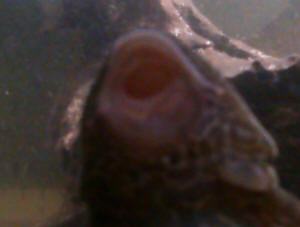
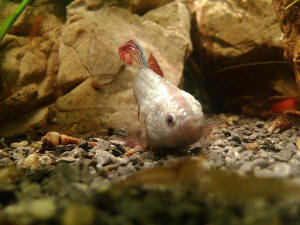
Photo included in case you see symptoms I missed. Sorry about the lighting; my
QT and hospital tanks are inside my stand.
Thanks for reading,
Linda A
<Thank you for sharing. Again, I would move this Cichlid back to the
main/display; pre-mix fert.s, pre-make and store change-out water. Bob Fenner>
|
.jpeg) |
Aquarium problems; overfed FW 8/21/18
I have recently been on holiday and left the fish with an auto feeder but
come back to a very over fed tank I have done my best to remove as much of
the food asap with a water change and will do another in a few days along
with a filter clean, is there anything else you can recommend doing.
<Yes! TEST your water for ammonia and nitrite, and do NOT feed if either is
present. DO mix up some replacement water (in advance) in case there is a
need for a large water change>
Another question is my fish specifically the dwarf rainbow fish that has for
a wile and the dwarf cichlid have been opening as if gasping but not at the
surface of the water the tank flow is slow but here are many plants so a bit
stuck on what is wrong can’t find anything online any ideas are appreciated
thank you.
<Other water quality issues. Some mentioned above>
On a lighter note I did come back to one of the dwarf fry about 5mm long and
looking healthy probably enjoyed the extra food.
Thank you for your help
From Josh
<Do please keep us informed. Bob Fenner>
Fish Not moving around the tank
2/12/18
Hi Guys,
<Shriram>
I have a couple of Angelfish and a discus which I got recently. I did a
water change yesterday and had some changes done to the decor of my tank
by adding a plant and moving the driftwood and rocks to one side of the
tank.
<How much water change?>
Since yesterday I have observed that all my fishes have stayed to one
side of the tank and don't seem to explore the tank or move around.
<Something amiss here environmentally. I'd remove the driftwood, add
chemical filtration>
Is this a normal behavior and will get normal over time or is there
anything that can be done to solve this. The Fish seem normal though and
don't seem to be chasing each other.
Thanks and regards,
Shriram Natarajan
<Welcome. Bob Fenner>
Black Ghost Knifefish; hlth., NO3 file
11/24/17
Hello Crew,
Stumbled onto your site, read some stuff that sounds very helpful.
<Okay>
I have a large about 30cm long single BGK fish, I had it now for a few
years in a 645Ltr. mostly African (both Tanganyika/Malawi) a pair of
buffalo heads, clown loaches and Chinese Glass cleaners.
<Quite a mix>
All doing well.
At one stage awhile ago I was concerned about Nitrate/ Nitrite but have
given up, could not get it right, hence small regular water changes,
water always clear, no diseases, fish have been happy, some have bred
For some reason I have noticed BGK with swollen belly not eating, see
him more often than not. Hangs vertically near the water outlets from
the filter & not in usual hiding hole. BGK fish was large when I bought
him, could he be getting old? But why the swollen belly?
<Perhaps "just" over-eating... could be a blockage, tumor... even a
bacterial et al. infection>
I would greatly appreciate any advise regarding my Black Ghost Knife
fish, he’s cool.
Regards
Gavin
<I'd read on WWM re NO3; endeavor to keep it under 20 ppm via various
methods, introduce a "laxative" food item (e.g. Daphnia, Artemia) to the
BGK for a week or so. Bob Fenner>
Re: Black Ghost Knifefish 11/29/17
Thank you Bob,
<Welcome Gavin>
Knife fish died. I'm thinking tumor or blockage. I don't feed fish for
days at a time sometimes due to shifts I work.
<I see>
Appreciate you getting back to me though.
Thanks again
Gavin
<Thank you for this follow up. BobF>
Re: Black Ghost Knifefish; now Nitrate f' as well 11/29/17
Hey Bob,
Any tips for getting the Nitrate down?
<Ah yes; avoidance from the get go, water changes, biological
amelioration, chemical filtrants. Gone over in detail here:
http://www.wetwebmedia.com/fwsubwebindex/fwnitrates.htm
and the linked files above>
It's got me beat, the Ammonia reads 0 ppm to 0.25 ppm if that, as I
stated previously I do regular water changes, vacuum the substrate but
the Nitrate stays up.
Have tried a little bit of Poly-Filter about the size of the Ammonia
Test kit box as recommended by the Aquarium place I bought it from.
<A worthy product>
But if the fish (Electric Yellow & leleupi) have laid eggs their got to
be happy right?
<That or stressed; either end of the spectrum elicits reproduction,
reproductive behavior>
Up until the Black Ghost Knife fish became crook I've had no problems.
Regards
Gavin
<And you, Bob Fenner>
Re: Black Ghost Knifefish 11/30/17
Thanks again, Bob really appreciate your help.
I will have a read of that site you forwarded.
Kind Regards
Gavin
<Real good mate. BobF>
Re: Black Ghost Knife fish; Nitrates f'
12/2/17
Righto' Bob,
Sorry to annoy you.
<Not an annoyance Gav. We're here to share>
I read the literature on the web site you forwarded, even though it
mostly spoke of Marine set ups, it did in parts touch on Fresh water and
in part mention the filter system.
That got me thinking do I NOT clean my filter regularly enough? Is the
filter the reason my Nitrate/Nitrite is high?
<This is definitely a possibility as source of NO3. Mechanical filter
media, accumulating materials that can/do break down into Nitrate is a
principal source of this nitrification product>
All most people say is do regular water changes.
I am under the impression don't mess with the filter, clean it when you
notice the flow rate drop, say every 6 months.
<Mmm; well; we need to expand on our ideas, terms here. "Filtration" is
a very large concept; for instance, it encompasses denitrification, a
set of processes "in reverse" that convert Nitrate largely to Nitrogen
and Oxygen... under anaerobic conditions. Are you aware of this?>
I use an Aqua Pro 2200 Canister Filter. The 3 sponges & wool in the
bottom basket, the rest filled with Biohome Standard Media and a tray of
BioBalls which is all suppose to allow for colonisation of bacteria's
and alleviate
Nitrate/Nitrite problems with less cleaning time.
<Actually... you may want to investigate a bit more here. I would switch
out the Bioballs and if you have more of the Biohome Standard Media or
other sintered glass (e.g. Siporax) filter product, use it in the
BioBalls space. These balls drive the forward reactions of nitrification
too much, too fast. You will likely see a difference on their removal,
substitution within a few days>
Should I be cleaning the filter more often? Have I got the filter set up
wrong?
<Just the BioBalls part here>
In the tank it's self are two air stones (bubbles/water movement), a
sponge filter, an Aquael Turbo Filter 2000 internal filter and I use it
with just the sponge like a power head pointed from one corner of the
tank to the
width of the tank so no dead spots (2 Ft..) more bubbles/water movement,
right? Also an Eheim streamON+5000. Optimum water circulation with a
natural, smooth current formation.
As I have stated previously, the fish seem happy, there colour is bright
except for one has dulled since I bought him (was red, now more brown)
one has completely change to a better colouring, Nice dark blue with a
bright
yellow streak from his mouth through his Dorsal fin to his tail (a Hap).
There is lots of water movement and air ration in my tank I think Bob,
so is the filter the problem? What do you think?
<Fishes and non-fish aquatic life can become accommodated to higher NO3
concentration over time... but I would still aim for a reasonable
number. There are other mechanisms to control; e.g. live plants use,
Deep Sand Bed (in the tank or a tied in sump/refugium), ....>
Once again, again thank you for your knowledge/ information.
<Like tools rusting in a basement, only worthwhile if employed eh?>
Kind Regards
Gavin
<And you Gavin. Do write back if something is unclear, incomplete, or
you have further questions. Bob Fenner>
Re: Black Ghost Knife fish; ongoing... NO3 12/6/17
Hello Bob,
<Gavin>
I read the literature on the web site you forwarded, even though it
mostly spoke of Marine set ups, it did in parts touch on Fresh water and
in part mention the filter system.
That got me thinking do I NOT clean my filter regularly enough? Is the
filter the reason my Nitrate/Nitrite is high?
<Might be a factor; best to only clean/change out "part" of the filter
media at every interval. As an example, if you're using two units of
Chemi-Pure let's say, take out the oldest one and leave the less old
one, adding a new unit>
All most people say is do regular water changes.
I am under the impression don't mess with the filter, clean it when you
notice the flow rate drop, say every 6 months.
<Mmm; no... better more frequently. Like every month for the mechanical
media... the chemical should be switched out/some rotated for new about
this same interval>
I use an Aqua Pro 2200 Canister Filter. The 3 sponges & wool in the
bottom basket, the rest filled with Biohome Standard Media and a tray of
Marine BioBalls which is all suppose to allow for colonisation of
bacteria's and alleviate Nitrate/Nitrite problems with less cleaning
time.
<We had this convo.... I'd remove the BioBalls, use ChemiPure in the
space instead>
Should I be cleaning the filter more often? Have I got the filter set up
wrong?
<.... Yes>
In the tank itself are two air stones (bubbles/water movement), a sponge
filter, an Aquael Turbo Filter 2000 internal filter and I use it with
just the sponge like a power head pointed from one corner of the tank to
the width of the tank so no dead spots (2 Ft..) more bubbles/water
movement, right? Also an Eheim streamON+5000. Optimum water circulation
with a natural, smooth current formation.
<Okay; good to have more circulation, and aeration helps... most
canister filters are deficient here>
There is lots of water movement and aeration in my tank I think Bob, so
is the filter the problem?
<Not a problem, other than the driven nitrification from the bioballs,
but could be improved as I've stated>
Once again, again thank you for your knowledge/ information.
Kind Regards
Gavin
<Welcome. BobF>
Re: Black Ghost Knife fish 12/11/17
Hello Bob,
<Gavin>
Thank you again for your advise.
<Welcome>
I will try the Chemi-Pure and a more regular cleaning of the filter.
So many people tell you different things, for me it's very confusing.
<Mmm; don't allow it to be. SEEK to understand the underlying science;
question opinions>
I will let you know the results. Until then Merry Xmas & Happy New Year
Bob.
<And you and yours. BobF>
Kind Regards
Gavin
Re: Black Ghost Knife fish
1/24/18
G'day Bob,
<Gavin>
Just giving you a little feed back about my aquarium as I said I would.
<Ah, thank you>
While waiting for the delivery of the Chemi-Pure I ordered online I
shopped around looking for it.
One aquarium shop had a big sale on De-Nitrate and told me it would do
the job. So I cleaned the filter, added De-Nitrate to the filter, made a
small water change, left the aquarium to settle tested the water.
Ammonia reading = Perfect. Nitrate = SKY HIGH, so I'm thinking you rip
off barstaaards.
<Mmm>
Chemi-Pure arrives, clean the filter add the Chemi-Pure & leave in the
De-nitrate, do another small water change, after a couple of days,
Ammonia reading = Perfect. Nitrate = right up there again. So then I
take everything
out of the tank, flush it all clean, find buffalo head cichlid eggs in
one rock in their area, take out nearly all the water vacuum the
substrate , put the tank back together leave it to settle, Ammonia
reading = Perfect.
Nitrate = same - NO change high as a kite. THOUGHT BUGGA THIS, took a
water sample to a pet store, they tested it for me, guess what? Every
thing Ammonia, PH, Nitrate and a fourth thing (can't remember) PERFECT,
SHOCKED AND STUNNED, obviously I have a faulty Nitrate kit, although it
doesn't expire until 2020. Get this the wife says told ya so..
<Ahh, good that you checked the checker>
All that worry, money wasted, time spent goggling and seeking advise all
for nothing, so obviously the Black Ghost Knife fish and a Peacock
Cichlid both died (a couple of months apart) with swollen bellies had a
Parasite or something happening.
Anyway the aquarium is crystal clear like the fish are suspended in air,
I'm a lot more satisfied, I have left the filter media as is:- sponges
and wool in the bottom basket, then the Marine home bio balls with
De-nitrate in the next basket, then the Bio-home filter media mixed with
De-nitrate, in the top basket is the Chemi-Pure also mixed with the
De-nitrate, there was a lot it and I still have one bag of it unopened.
<Good; best to rotate one unit out (the older) and replace it w/ new
every month or so>
Now I will leave the filter alone for awhile, but I will order some more
Chemi-pure ready for when the current lot expires. Eventually the
De-nitrate will expire as well.
Have a good one Bob and many thanks.
<Cheers Gavin. Bob Fenner>
Complete Wipe Out of Most of My Fish
10/14/17
Dear WetWebMedia Crew,
<Lynnie>)
While I was away from home, something unexpected happened that wiped out all but
four of my fish. I had left my fish in the care of my family, and the
monthly aquarium service that comes to do a more thorough clean down,
and the fish were perfectly healthy. I had left a care guide for my family, and
they were doing weekly water changes and feeding the fish a mix of dry and fresh
foods. They had done this for my past two years of grad school without issue.
<Rats!>
However, two days after the service came, the tank completely clouded over,
becoming opaque white, and almost all the fish abruptly died. I was not there,
but my parents complained to the service, and the service claimed they had had
accidentally not dechlorinated the water properly. They then came a few more
times to clean up the mess, and the water is clear now.
The remaining four fish are healthy, and there is no nitrite or ammonia in the
water, so it appears the biofilter was not destroyed.
<Ah, good>
Because I was not there, I do not have a lot of information, so I apologize in
advance. However, I have to wonder what it is that could have happened.
Here are the possibilities that were raised:
1. Too much dechlorinator used. This was the excuse the service gave, but
I was under the impression that unless aquarium conditions were 'marginal' the
deoxygenating effect of dechlorinators is not much of an issue.
<You are correct; it is very hard to overdose water conditioners>
2. Faulty heater. Apparently the temperature in the tank got stuck at 82 degrees
Fahrenheit after the service came. But again, not sure if that would be enough
to wipe the fish out (the tank is 105 gallons, so it's not small.)
<I doubt this as a cause>
3. Clorox. Apparently the service used bleach to clean the decor before putting
back in the aquarium, and there is the possibility they did not wash it off
correctly. The service claimed this is something they regularly do without
issue, but I have never seen them use Clorox before.
<Very easy to make mistakes here>
4. The service removed a lot of snail shells that were in the gravel. Is it
possible they could have abruptly changed the pH by doing so?
<Very doubtful; the CaCO3 in shells is not very soluble>
5. The fish are regularly given fresh vegetables. However, one of my family
members gave them green bean slices that were in the fridge for 10 days prior.
Could they have been rotten and killed the fish?
<This I do not know>
I need to acquire a new nitrate, pH, and GH test kit, so all I can say is there
is no ammonia and nitrite at this moment, unfortunately.
-Lynnie
<Will share w/ Neale, as he may have other useful input. Bob Fenner>
Complete Wipe Out of Most of My Fish Neale's
take 10/15/17
Dear WetWebMedia Crew,
<<Hello Lynnie,>>
While I was away from home, something unexpected happened that wiped out all but
four of my fish. I had left my fish in the care of my family, and the monthly
aquarium service that comes to do a more thorough clean down, and the fish were
perfectly healthy. I had left a care guide for my family, and they were doing
weekly water changes and feeding the fish a mix of dry and fresh foods. They had
done this for my past two years of grad school without issue.
However, two days after the service came, the tank completely clouded over,
becoming opaque white, and almost all the fish abruptly died. I was not there,
but my parents complained to the service, and the service claimed they had had
accidentally not dechlorinated the water properly. They then came a few more
times to clean up the mess, and the water is clear now. The remaining four fish
are healthy, and there is no nitrite or ammonia in the water, so it appears the
biofilter was not destroyed.
Because I was not there, I do not have a lot of information, so I apologize in
advance. However, I have to wonder what it is that could have happened.
Here are the possibilities that were raised:
1. Too much dechlorinator used. This was the excuse the service gave, but I was
under the impression that unless aquarium conditions were 'marginal' the
deoxygenating effect of dechlorinators is not much of an issue.
<<Unlikely, unless they did something dumb like use the (super-concentrated)
pond dechlorinator in your aquarium.>>
2. Faulty heater. Apparently the temperature in the tank got stuck at 82 degrees
Fahrenheit after the service came. But again, not sure if that would be enough
to wipe the fish out (the tank is 105 gallons, so it's not small.)
<<If the tank thermometer was set this high, and the tank actually warmed up to
28C/82F, then it is certainly possible for low-end tropicals (Danios, Platies,
Neons, Corydoras) to become stressed, especially if oxygen
concentration wasn't that high to begin with. On the other hand, short-term (a
few days) exposure to high-end tropical temperatures in well-filtered tanks with
lots of water movement shouldn't be an issue. Still, if the
heater is set too high, and the tank also receives direct sunlight, it is most
than possible for the aquarium to get much, MUCH hotter, and that can/will
stress, or kill, fish that aren't adapted to prolonged high temperatures.>>
3. Clorox. Apparently the service used bleach to clean the decor before putting
back in the aquarium, and there is the possibility they did not wash it off
correctly. The service claimed this is something they regularly do without
issue, but I have never seen them use Clorox before.
<<This can/will kill fish very quickly if significant amounts get in the tank.
But merely cleaning ornaments, and rinsing thoroughly, shouldn't be a problem.
Of course if one of the guys was new to the business, and didn't
know how well to rinse things, then there's a risk.>>
4. The service removed a lot of snail shells that were in the gravel. Is it
possible they could have abruptly changed the pH by doing so?
<<Unlikely. While snail shells do dissolve in water, and quite rapidly (a few
weeks, even) if the water is soft and acidic, in chemistry terms the process is
slow, and unlikely to cause significant changes fast enough to kill the fish.>>
5. The fish are regularly given fresh vegetables. However, one of my family
members gave them green bean slices that were in the fridge for 10 days prior.
Could they have been rotten and killed the fish?
<<Depends on the amount of greens. Large amounts of decaying vegetation can/will
remove oxygen from the water, leading to oxygen stress in the fish. But you'd
need serious amounts for this: for a 200 gallon tank say,
I'd be thinking a couple cupfuls of greens rotting away would be necessary, not
a couple string beans!>>
I need to acquire a new nitrate, pH, and GH test kit, so all I can say is there
is no ammonia and nitrite at this moment, unfortunately.
-Lynnie
<<All very mysterious, but hopefully not likely to be repeated. Did the service
company offer any explanations? The fact the tank became white suggests a
bacterial or diatom bloom, the former if it was a more milky white, the latter
if there was a golden tinge. Anyway, both are connected with environmental
instability, the classic being "new tank syndrome" but it could equally easily
be a change in water chemistry caused by the addition or removal of some soluble
chemical such as lime, or else clumsy maintenance of the filter that removed too
much of the mature filter medium. The latter scenario would indeed cause a rapid
die-off of the fish, as the filter capacity drops, but once the 'surplus' fish
have died and been removed, the remaining biological filter capacity would be
adequate for the remaining fish, so you wouldn't detect an ammonia and nitrite
spike if you only sampled water quality after the event. Make sense? Cheers,
Neale.>>
Re: Complete Wipe Out of Most of My Fish 10/16/17
The service’s explanation was they used too much dechlorinator, but that sounds
doubtful to me.
<Indeed, but see previous reply.>
My family carefully meters out the food, and the amount of green beans was only
a couple of small slices. They’ve done it many times before so I doubt it was
the cause.
<Agreed, that being the case.>
The water is well oxygenated with a lot of water movement. The tank also doesn’t
get any direct sunlight.
<Good.>
I’m personally leaning towards the bleach, or at least overcleaning the
biofilter media.
<Quite so.>
I’ve never seen them use bleach before, so it is very possible the person using
it wasn’t very experienced with it.
<Agreed.>
I’m honestly not sure exactly what to do now. I know I at least need to replace
the giant Danios soon (there is a sole survivor, and he is not happy at all
without his school) but if the biofilter has been reduced a lot I guess I need
to do this very slowly.
<Yes, but in fairness, even if the filter is down to 10% of the bacteria it
originally had, it'll "cycle" within a few days. It's not like starting a filter
from scratch. Plenty of bacteria in the tank to colonise the sterilised filter
media.>
-Lynnie
<Cheers, Neale.>
Inherited fish and made emergency tank
6/19/17
Hello to whoever gets this and all the crew at WWM!
<Hi Steve>
I'd like to share a bit of a story and seek some advise. I had to make
an emergency aquarium in a pinch. Forgive me if this email comes across
as a novelette.
<No worries. Take your time (to communicate completely)>
My stepdaughter was staying with her father for a couple months while my
wife and I were moving. During that time her Dad and Grandmother bought
her some fish. It has been 2 months since her return to our home, and I
had no clue that the fish were coming here. I called my wife from work
on Thursday this past week and found out that they had brought the tank
to my home. I was told that the fish, a gold barb and a neon tetra,
<Mmm; both do poorly as singles, in small volumes...>
had been in there for months. "Two species of schooling fish", I
thought, "Seems the pet shop was just out to make a buck."
Anyway, when I got home I was horrified to see these fish in a 3 gallon
tank.
<Ugh>
And not just the tank size: the water level was about 50% down, and the
little internal/HOB hybrid style pump wasn't even able to pump water
properly, nor was the heater fully submerged. It was after midnight, and
I had literally no access to water conditioner (they live in town tap
water and using the same source would've been ideal), so I took a leap
of faith and bought the only bottled water available in town from a
nearby convenience store. This allowed the pump to aerate the water.
Within an hour, I noticed that, while not truly active, the fish were
far less
listless acting (phew). One decent thing I learned was that my
stepdaughter's Uncle has been doing water changes. Although it was clear
that they had not been using a gravel vac, I at least took solace in the
fact the water was not months old (although based on the low level older
than it should be).
The next day before work (my hours prevented me from being able to get a
tank prepared) I went to feed them. To top off this craziness, the food
they were being fed was pulverized Betta food, not even big enough to be
considered a flake.
Fortunately, I was able to scrounge enough money for what I did on
Saturday.
My emergency setup was an interesting hodgepodge. I had an unused 10
gallon tank with a hood, along with a heater, gravel vac and
thermometer.
Finances prohibit me from purchasing a 25 or 30 gallon, but I'm at least
certain 10 is better than 3, and far better than the 1 1/2 gallons they
were in on Thursday. I had intended to eventually start a Betta tank,
but you know, emergency. I also had some gravel from a 5 gallon Betta
tank I had years ago (again, emergency) which has long sat in a
colander.
<? In a strainer?>
My finances were limited, so I purchased some standard tropical flake
food, a bottle of Prime, a Tetra Whisper pump, along with an airstone
that I would be able to attach to an air pump and hosing I already
owned. I also
purchased a clean bucket and a bottle of bacteria in a bottle.
Unfortunately, I simply can't afford a test kit until next week, and the
Prime makes the available test strips give a false reading, so my friend
Mr. Internet will be my store of choice. I rinsed the gravel thoroughly
in pure bottled water, rinsed my tank, and from there essentially it was
standard assembly. I even added a miniscule dose of Prime to the 3
gallon tank to alleviate ammonia that might be in there since the fish
were going to be waiting one more night. I also fed them some of the new
food, and the barb acted as though it was the first meal he had in
months.
I bought a small critter carrier and used it to transport the fish in
the water they were accustomed to up to the new tank. I then added some
new tank water slowly to the carrier to acclimate. After about 10
minutes I finally netted them into their new home. Its been a couple
hours since then as I write this and both fish are FAR more active in
their new home, especially the barb. I noticed that if the neon swims to
the left side of the tank, the barb chases him off, but if the neon is
on the right side and the barb is nearby, the barb essentially ignores
him. They've actually
schooled together some on the neon's half of the tank. I'm guessing that
the barb has staked his territory, but if push comes to shove, I'll just
have to get some Plexiglas and make a divider. The poor barb was so
listless in his old tank that I couldn't believe the instant turnaround
I saw.
In short, they are housed in a less than ideal home with less than ideal
company. I simply can't afford a truly proper setup, but at least it is
(I think anyway) a huge improvement. Now I must ask some questions.
Considering the small setup, and providing that they survive this
ordeal, would it be wise to add a single one of either specimen to
balance out potential bad behavior?
<Mmm; better to trade in one and go with a small group (7-9-11...) of
the other. Even the small/er barbs are too nippy to be housed with small
tetras>
Are there any recommended dietary needs of either fish?
<A good staple dried food will be fine for now. Going forward, I'd add
some frozen food/s in the AMs>
Is there a chance that the barb will turn the neon into a snack?
<Yes; all too possible>
What test kit is best when using Prime to not get a false reading?
<Mmm; a bunch could/might be stated... Just take the (salicylate)
reading quickly (once the reagents are added, mixed):
http://www.seachem.com/support/forums/forum/general-discussion/2512-prime-and-false-positive-ammonia-readings
A better approach all the way around is to store new water for a week or
so ahead of actual use... NOT rely on the Prime, but allow air exposure
to dissipate any ammonia>
I just want to give these little guys a fighting chance. Thank you for
your time
Steve
<Thank you for writing, sharing... Please do write back if anything
comes to mind. Bob Fenner>
Re: Inherited fish and made emergency tank 6/20/17
Thank you for your response. I've had tanks in the past, but I never
inherited poorly housed fish. To make our situation even more "lively",
about a week prior to getting the fish we got a group of 4 kittens and
we have a hyperactive 4 year old child, so we also guarding against
outside threats.
On Friday night when I was at work, my stepdaughter fed her fish while
still housed in their old tank, and my 4 year old wound up adding extra
food. After transferring the fish yesterday to their new home, I left
the old 3 gallon job sitting without its top in our dining room. The
aforementioned 4 year old opened the bottle of Prime and dumped some
into the now empty 3 gallon. To avoid any damage to the new tank, I'm
stashing the food and Prime in my bedroom. Murphy's Law truly struck in
this household.
To answer your question mark about my use of the word colander, yes its
basically a strainer. I used to work in the restaurant business and
still have a habit of using "official" terminology.
<Ahh; I see>
As I write this, the fish are still swimming actively. When I get spare
time later this week I'll see if my local fish store will take back one
of them (likely the barb) and try giving a couple tank mates to the
neon. Or if the store takes them both, I'll just convert my setup to a
Betta tank.
Either way, I'm really glad to see them out of that 3 gallon. The
problem with these pet shops is they are typically more concerned with a
rate of sale rather than housing living creatures properly. Years ago I
purchased pet mice from the same store, and was not impressed when the
worker fetched my mice via grabbing them by the tail.
I'll write back with any questions. Thanks again!
Steve
<Cheers mate. BobF>
|
Hi WetWebMedia Crew! Disease help please!
6/1/17
Hello crew!
I've been using your site for years now and have always come back to read
the FAQ's and ask for advice. Once again, I require some disease
identification and treatment help.
<Okay>
My mother's freshwater tank has been setup for 2 years and ,according to the
all in one test strip, it has the following stats:
GH: 0 ppm
KH: 0 ppm
<This lack of hardness is a huge issue here. I would be adding at
least baking soda, if not a modicum of Neale's "Malawi Mix" here. Read here
Re:
http://www.wetwebmedia.com/fwsubwebindex/fwsoftness.htm
and the linked files above>
pH: 6.5
no2-: 0.5 ppm
<Debilitating to outright deadly toxic. Needs to be addressed immediately:
http://www.wetwebmedia.com/FWSubWebIndex/NO2ContrF.htm
no3-: 20 ppm
temp: 28 degrees Celsius
Her tank is 45 gallons.
Her stocking list consists of:
6 Rummy nose tetras
1 Siamese algae eater
3 Discus
4 Julie Corydoras
9 Harlequin Rasboras
Now for the spicy advice we need. So I will go chronologically from what it
seems started her downwards spiral. 1. The new rummy nose tetras she
purchased died the day after. 2. Her pre-existing rummy nose tetra developed
white balls/tufts on the centre of its eye.
<Both these are environmental insult manifestations; only secondarily
pathogenic>
3. Her white discus's eye became cloudy. 4. The eye began to protrude and
the white tuft continued to push outwards. 5. the red discus(not pictured)
is beginning to show clouding in one eye.
<This as well>
We treated the tank with the proper cycle of tetracycline (the instructions
are not off the top of my head) and she did some impromptu Methylene blue
doses.
<No treatment is going to work till you fix the environment/water quality>
After the treatments and the results looking as poor as they did before. I
told her to do water changes every other day for a week and to replace her
carbon.
Now seeing the current issue at hand, I am wondering what to do. We are
quite lost and need some disease identification(doesn't look like typical
cloudy eye) and some treatments.
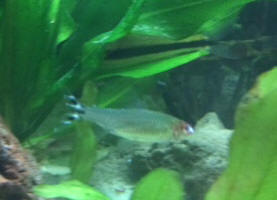
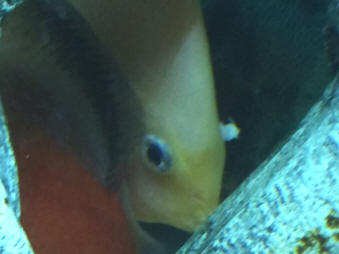
Pictures should be attached in no chronological order whatsoever
Thanks for the help,
Kellan
<The reading ASAPractical, modification, fixing next. Bob Fenner>
|
 |
I need some major help. Neale, your input too please. FW
iatrogenic mess; mis-stkg., soap... 3/24/16
OK my daughters tank is having some major issues. Here is the full
background of the tank. We had an awesome setup. We had 3 small
goldfish ( won at the fair) and 2 neon tetras in a 10 g tank
<... these fish species are incompatible. The GF requiring hard,
alkaline,
coolish water; the Neons the opposite... and ten gallons is too small
for
even one comet goldfish in time. Read here:
http://www.wetwebmedia.com/fwsubwebindex/gldfshsystems.htm
and here:
http://www.wetwebmedia.com/fwsubwebindex/neontetras.htm >
fed every day and 50% water changed every few months
<Better by far to change out about a quarter every week. Read here:
http://www.wetwebmedia.com/fwsubwebindex/fwh2ochgs.htm
and no algae problems. The only thing i did was weekly add 2
drops of melaluca.
<Worse than worthless. See WWM re MelaFix>
Well she purchased fish from PetSmart which were ill with ick and God
knows what else and in a matter of 2 days every fish we had was
dead.
<Poisoned>
So I took everything out cleaned it with Dawn dish soap
<No!!! Soaps, detergents; surfactants are toxic to aquatic life; and
very hard to remove entirely>
and bleach, baked everything in the oven for 4-6 hours to kill any thing
possibly left. What I could not bake got thrown out and replaced except
for the tank it's self. We set the tank back up with 3 neon tetras 2
glow light tetras and a black skirt tetra from a high end fish shop. $8
per neon tetra!!!!
<Yeeikes!>
Water is taken to the high end pet shop weekly and I have Been told my
water is perfect. The new setup is 5 weeks Old. Well 4 days ago at 2 am
l get a call from my neighbor to come help their tank was leaking. By
the time I got there we were scooping fish off the floor!!!!! We were
able to save 1 large fancy goldfish 2 molly and 1 sucker fish. The
sucker fish lasted 3 days in my tank the others are swimming happily
around. Yes I know my setup is to small for the tetras and the rescued
fish but it's better than flushing. I plan on upgrading soon. ( in the
next 2 weeks)
<The goldfish elsewhere... with the Molly>
Here is the deal I have. I just had my water tested today and was told
it was perfect ( never given any number)
<This is not data of use, but a subjective evaluation. Need values,
units>
but when I come home there are very small fuzzy white spots on the gold
fishes tail and on the black skirt tetras tail. The spots are mainly on
the edges but are peppered threw out the tail. It does not look like ick
the spots are to large and almost look fuzzy. Could it be fin rot? Or
some other illness?
<Yes... but all likely stemming from water quality issues. I'd be
utilizing activated carbon; likely other chemical filtrants here... to
remove any remnants of soap residue>
I could not find anything that looks like whats on the fish. And believe
it or/not they won't stay still for me to take their picture. I need to
know what's the best way to treat this issue.
<The best way... Likely for you to ask about for someone who has
useful knowledge to come by, visit with you, go over the basics of
aquarium keeping; advise you on stocking, purchasing of compatible
livestock, maintenance... iatrogenic problems you're causing yourself.
You're starting "too far back" as it is; killing your livestock through
simple mistakes. Are you a reader? Please see, and look for (Amazon,
Bookfinder...) some works suggested by Neale here:
http://www.wetwebmedia.com/fwsubwebindex/bksfwbrneale.htm>
The Molly's and smaller tetras are not showing any signs.
<They'll all soon be gone if you don't read, act soon. Bob Fenner>
I need some major help. /Neale
3/25/16
OK my daughters tank is having some major issues. Here is the full
background of the tank. We had an awesome setup. We had 3 small goldfish
(won at the fair) and 2 neon tetras in a 10g tank fed every day and 50%
water changed every few months and no alge problems.
<As Bob has mentioned, not really an "awesome" set up in the long term.
Goldfish can, will eat bite-sized fish like Neons. They're inept
predators, but in the confines of a small aquarium, it's pretty much
shooting fish in a barrel! Next up, Neons need rather different water
conditions. Neons want low-end tropical, soft, acidic water. Goldfish
want room temperature, hard, alkaline water. Can I direct you to
some reading, please?
http://www.wetwebmedia.com/ca/volume_5/volume_5_3/stocking.htm
http://www.wetwebmedia.com/fwsubwebindex/goldfish101art.htm
Neons are a bit of a waste of time really because they're so badly
plagued with bacterial and protozoan infections. In all honesty I'd not
recommend them as beginner's fish. If you have soft/acidic water,
Cardinals are a much less risky choice, though usually two or three
times the price. That actually reflects the fact Neons aren't cared for
much on fish farms, and mass produced with very little effort to stop
diseases spreading between them.>
The only thing i did was weekly add 2 drops of melaluca.
<Worthless.>
Well she purchased fish from PetSmart which were ill with ick and God
knows what else and in a matter of 2 days every fish we had was dead. So
I took everything out cleaned it with Dawn dish soap and bleach, baked
everything
in the oven for 4-6 hours to kill any thing possibly left. What I could
not bake got thrown out and replaced except for the tank it's self.
<Understood.>
We set the tank back up with 3 neon tetras 2 glow light tetras and a
black skirt tetra from a high end fish shop. $8 per neon tetra!!!!
<See above; also do review species prior to purchase. All tetras are
best in groups of at least 5-6 specimens. Glowlights are rather timid,
and though better than Neons on the health front, they do need
soft/acidic conditions, not to mention subdued lighting. Otherwise they
don't last long. Black Skirt Tetras are pretty tough, but they're
fin-nippers if bored, and a singleton will certainly qualify as that.
Half a dozen, on the other hand, will need more space than 10 gallons;
more like 20-30 gallons. An excellent choice for life alongside
Corydoras and Danios, which would
both make good beginner's fishes if you had a bit more space.>
Water is taken to the high end pet shop weekly and I have Been
told my water is perfect.
<"Beep, beep... does not compute!" Perfect for Goldfish is not
the same as perfect for Neons, so something is wrong here. If you can
tell us some numbers from your/their test kits, that'd be a heck of a
lot more useful than their subjective interpretations. Do bear in mind
retailers are in the business of selling fish and equipment, rather than
keeping fish alive on nothing more the food and water changes! So
without being cynical, while there are some excellent retailers who are
hobbyists as well, many of the clerks in "big box" pet shops have only
the vaguest understanding of the hobby, but a much better training in
customer relations and sales.>
The new setup is 5 weeks Old. Well 4 days ago at 2 am l get a call from
my neighbor to come help their tank was leaking. By the time I got there
we were scooping fish off the floor!!!!! We were able to save 1 large
fancy
goldfish 2 molly and 1 sucker fish. The sucker fish lasted 3 days in my
tank the others are swimming happily around.
<Thanks for being able to help, and I'm glad at least some fish
survived.>
Yes I know my setup is to small for the tetras and the rescued fish but
it's better than flushing.
<Likely so.>
I plan on upgrading soon. ( in the next 2 weeks) Here is the deal I
have.
I just had my water tested today and was told it was perfect ( never
given any number) but when I come home there are very small fuzzy white
spots on the gold fishes tail and on the black skirt tetras tail.
<Stress; environmental problems of some sort; treat as per Finrot and/or
Fungus, depending on how it looks. Finrot looks like dead white patches,
often alongside pink or red signs of irritation. Fungus is very much a
cotton wool-looking thing. Some medications will treat both, making life
easier. Here in the UK, a product called eSHa 2000 ticks that box. In
the US, Kanaplex. There are others. But avoid the ones based on tea tree
oils, garlic, and other herbal/homeopathic remedies. These are
hopelessly unreliable, so the fact they're cheap is irrelevant. Prayer
is even
cheaper, and a good deal more likely to work.>
The spots are mainly on the edges but are peppered threw out the tail.
It does not look like ick the spots are to large and almost look fuzzy.
Could it be fin rot?
<Yes.>
Or some other illness? I could not find anything that looks like whats
on the fish. And believe it or/not they won't stay still for me to take
their picture. I need to know what's the best way to treat this issue.
The Molly's and smaller tetras are not showing any signs.
<Again, do review the needs of Mollies, which are much different to
tetras:
http://www.wetwebmedia.com/fwsubwebindex/mollies.htm
Nice fish, but not easy to keep in soft water. Cheers, Neale.>
Could low KH/GH be making my fish sick? Yes
1/13/16
I seem to be having some trouble, or maybe it's just coincidence, with my
fish tank.
The tank is:
- 220l,
- planted quite heavily with mostly stem plants,
- filtered with a Fluval external (about 7 years old: I've forgotten the
model) that's rated for a bigger tank.
- lit with T5 lighting (the current bulbs are meant to be "good for
plants"
- I replaced one recently but the other may be up to a couple of years
old)
- temperature 26 degrees
- nitrate level very consistently 10-20ppm
- pH 6.6
- KH and GH so low they are hard to measure
<Not good.... esp. w/ such a low pH. Does your source water just have
no/appreciable hardness? You need to ADD it>
- stocked with 13, soon-to-be 12, Congo tetras, about 8 kuhli loaches,
about 8 Corydoras trilineatus, now only one Corydoras panda, and now only
one Siamese algae eater (Crossocheilus siamensis), plus a heap of cherry
shrimp.
I do water changes of 20-30% every week to 10 days. I aim for every week,
but it's been a busy year so I've gotten slacker lately.
<Do it every week. Sunday's are my day>
The most recent addition to the tank were the kuhli loaches, in December
2012. I'm not doing much with the tank recently because we're hoping to
move sometime soon, so I've been resisting the temptation to add any new
fish lately.
Anyway, I seem to be losing fish. I lost one of a pair of long-surviving
panda Corys sometime in the last few months. I didn't see them both
together very often anyway, so I'm not sure when one disappeared, but I'm
now pretty sure one is gone because I've looked carefully and not spotted
two at once. They were old: maybe 10 or 11 years old, so I'm happy to put
it down to natural causes.
I also lost the larger of my Siamese algae eaters this week. He had been
swimming increasingly poorly in the last couple of months - clearly had a
problem with balance, so I figured it was old age too (the fish was
probably 8 or so, I'm not certain).
But now one of the Congo tetras is sick: pale and pineconed. I've only
had
those since March 2012, so I wouldn't think it would be old age with her.
So given that I seem to be about to lose two fish in a week after years of
the tank being very stable, I'm worried that something is wrong with the
water.
<Indeed>
So I did my water tests (don't do this very often recently) and found that
everything was pretty normal, but the pH was lower than usual (it's
normally 6.8, measured 6.6), and the KH and GH were so low I wasn't sure
if
I was measuring anything at all. Usually they would be KH or about 2
degrees and GH of about 3 degrees. Them being so low is plausible - the
tap water here in Melbourne is extremely soft, and it's been ages since I
put anything like sea shells or eggshells into the tank to buffer it up a
bit.
<No to these sources.... too insoluble and too little useful material. USE
baking soda; or better make your own mix, buy a commercial prep. READ
Neale's piece here:
http://www.wetwebmedia.com/fwsubwebindex/fwh2oquality.htm
and the linked files above>
Assuming the GH and KH have been very low for some time, would that make
these species of fish sick?
<Yes>
My understanding is that all my fish prefer
soft water and that a pH of 6.6 isn't anything to worry about.
<Need more/measurable hardness>
I've added in some seashells to gradually dissolve, and will add eggshells
too when I have some. I've hunted unsuccessfully for a jar of "rift lake
salt" I used to have but must have thrown out.
<Forget these>
I do have some Epsom salt
and bicarb soda - are either of those useful to add to the tank, in small
quantities?
<READ>
I know that bicarb will increase the KH, but don't remember
what Epsom salt is useful for in aquariums.
What do you think? Could this just be bad luck? Am I right to aim to
slowly increase the KH and GH? Or do I need to look further for a cause
of
the problem.
Thanks very much for your time and advice.
Helen
<Ah, welcome. Bob Fenner>
Re: could low KH/GH be making my fish sick?
Thanks very much Bob.
I'll read and act.
<Excellent Helen. B>
Helen
|
Sterbai Corydoras ((Corydoras sterbai) illness /RMF
9/2/15
<Four megs of uncropped pix files...>
Crap the email wasn't supposed to be sent yet, sorry!
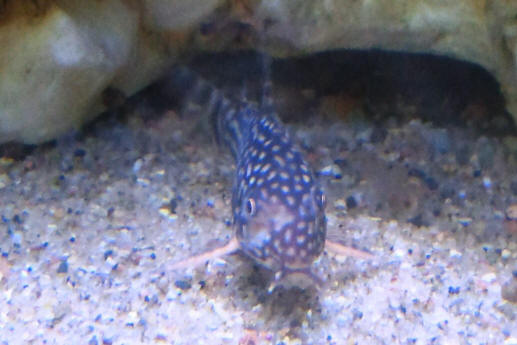
Hello, I am writing to you today because one of my Corydoras Sterbai is ill. It
looks like the front part of his face is missing or has been eaten off
but the day before or possibly 2 days ago it looked like that area was a little
white.
<Just two days?!>
I had another Corydoras Sterbai pass away from what I think is the same thing
about a month ago. This Corydoras Sterbai does seem a little more sluggish then
the others, of which there are 4 left, but he is still eating and swimming
around.
As for tank mates it started as a cherry shrimp colony with common red and
blue Ramshorn snails,
<These won't hurt fishes>
I would estimate somewhere in the realm of 40 shrimp of various ages at this
point and same with snails. I did recently get 2 electric blue rams about 2
weeks ago. So I don't think it was anything I introduced with the Electric blue
rams.
<Perhaps just the Rams themselves.... are biting this Cory>
The tank is 20 gallons has been running for around 3 months now if not longer. I
have 2 sponge filters and an AC 30 filter, all that have been running for the
entire time the tank has been running. I have a large colony of Java moss as
well as some small Marimo moss balls with several large stems of Giant
Hygrophila. I don't use any fertilizers on the plants as they seem to be doing
fine on their own.
For food I feed frozen mysis shrimp for the Corydoras Sterbai and the Electric
Blue Rams, as well as Nutrafin Max sinking pellets with krill and shrimp meal. I
am very careful with over feeding and try to make sure even the pellets are gone
inside of an hour.
The water parameters as of 1 hour ago is GH 60 , KH 60 , PH 7.5 , Nitrites 0 ,
Nitrates 60,
<NO3 too high by three times. See/READ on WWM re>
I did a water change today, 16 litres exactly were removed and added, the new
parameters are as follows,
New test shows GH 60, KH 60, PH 7.5, a tad lower but still showing up as around
7.5 , Nitrites 0, Nitrates 40.
<Still too high>
I do a water change every week
<Good>
at the same amount and since I put the Rams in the tank I started doing a
Monday, Thursday water change schedule
because I have read that they are sensitive to higher Nitrate levels then other
fish. I think this is all the information that I can think of to include that
would make a difference. I wish I had a better camera for pictures but this was
the best that I could get of him.
<I see.... Well; pathogenic disease doesn't operate so quickly as to cause
the pitting evident; otherwise I might speculate that you have a Hexamita
issue.... I'd be separating the Rams from the Cats here. Bob Fenner>
Sterbai Corydoras ((Corydoras sterbai) illness /Neale
9/2/15
Hello, I am writing to you today because one of my Corydoras Sterbai is ill. It
looks like the front part of his face is missing or has been eaten off but the
day before or possibly 2 days ago it looked like that area was a little white. I
had another Corydoras Sterbai pass away from what I think is the same thing
about a month ago. This Corydoras Sterbai does seem a
little more sluggish then the others, of which there are 4 left, but he is still
eating and swimming around.
<Looks as if there's been some sort of infection of the sensory pores around the
face. What's often called Hole In The Head disease (HITH). If a fish suffers
trauma, like from a fight, there's usually some bleeding and dead tissue, and
the way the damage is done it's pretty obvious the fish has been whacked or
bitten. HITH tends to look different. It starts off
with the pores getting ever so slightly bigger, so they become more visible than
before. Because the pores are arranged in neat rows, the widening pores make
distinct trails that arc around the face. Sometimes they 'weep' off-white
material. Over time they get bigger, fuse together, and you're left with a much
larger ulcer. So, if this is trauma, the wound would have
come out of nowhere. But if we're looking at HITH or some other infection of the
sensory pores, then it'll have taken weeks to get to this point.>
As for tank mates it started as a cherry shrimp colony with common red and blue
Ramshorn snails, I would estimate somewhere in the realm of 40 shrimp of various
ages at this point and same with snails. I did recently get 2 electric blue rams
about 2 weeks ago. So I don't think it was anything I introduced with the
Electric blue rams.
<Do not trust Ram Cichlids with Corydoras. Rams are confirmed molesters
of these catfish, from nipping through to biting off their eyes. A lot
depends on the size of the tank, but a 20 gallon tank sounds (to me anyway) too
small for both species to get along.>
The tank is 20 gallons has been running for around 3 months now if not longer. I
have 2 sponge filters and an AC 30 filter, all that have been running for the
entire time the tank has been running. I have a large colony of Java moss as
well as some small Marimo moss balls with several large stems of Giant
Hygrophila. I don't use any fertilizers on the plants as they seem to be doing
fine on their own.
For food I feed frozen mysis shrimp for the Corydoras Sterbai and the Electric
Blue Rams, as well as Nutrafin Max sinking pellets with krill and shrimp meal. I
am very careful with over feeding and try to make sure even the pellets are gone
inside of an hour.
The water parameters as of 1 hour ago is GH 60 , KH 60 , PH 7.5 , Nitrites 0 ,
Nitrates 60,
I did a water change today, 16 litres exactly were removed and added, the new
parameters are as follows,
New test shows GH 60, KH 60, PH 7.5, a tad lower but still showing up as around
7.5 , Nitrites 0, Nitrates 40.
I do a water change every week at the same amount and since I put the Rams in
the tank I started doing a Monday, Thursday water change schedule because I have
read that they are sensitive to higher Nitrate levels then other fish. I think
this is all the information that I can think of to include that would make a
difference. I wish I had a better camera for
pictures but this was the best that I could get of him.
<Trauma best treated as per Finrot. HITH best treated with Metronidazole.
Perhaps use Metronidazole alongside an antibiotic just in case. Regardless,
don't forget to remove carbon during treatment. Cheers, Neale.>
|
 |
|
Fish are dying in our 15 gallon tank.... prob.s
7/9/15
<17 megs of pix? Why? >
I was hoping that you could help me with our one tank. We have a 15 gallon tank
that we set up in December and finished cycling in the beginning of January. In
the past two weeks, we have lost 2 ember tetras and our Betta that we
have been treating for constipation.
<What are you feeding?>
We are afraid there is some kind of disease in our tank but have no idea what to
treat for.
The tank is 15 gallon with SeaChem Onyx Sand substrate and live plants with
driftwood and dragonscale rocks.
<Remove these last two; likely source of poisoning>
We first added red cherry shrimp to the tank and after being in there for a
couple months they started breeding have been successfully breeding since then.
A couple weeks after we added the shrimp, we added 8 ember tetras and a male
dragonscale Betta from the same LFS. Two of the ember tetras were missing one
eye each. After drip acclimation, we added the fish to the tank. The one male
tetra (with a missing eye) was hiding and was pale and didn't make it through
the night.
The rest were fine.
At the end of February, the one female ember tetra became extremely bloated.
Before she died, she stopped eating for a couple of days and kept herself away
from the rest of the school. We believed she was egg bound, since it seemed like
we could see the eggs in her. (see picture attached) After that, everything was
going well until the end of May when our Betta
stopped eating and seemed to be constipated. We fasted him for a few days and he
got so bad that he was laying on the bottom of the tank breathing heavy.
Following your advise, we added Epsom salt to the tank and he slowly got better.
By the end of the week, he was eating every day and we were feeding him daphnia
and occasionally baby brine shrimp (since that is small enough for the ember
tetras).
<Okay>
Some days the Betta would act like his normal self and other days he would hide
more but still come out to eat and come out when we came to the tank.
We thought he was better but was still giving him daphnia since we were going
out of town for a week at the beginning of July and didn't want our pet sitter
to have to deal with constipation.
A few days before we left at the end of June, the one ember tetra that has had a
big stomach since we lost the one in February, stopped eating and stayed in the
back of the tank and was dead in a couple of days. We still didn't think too
much of it.
During our trip, our Betta was doing well until last Friday. Our sitter called
and said that she thought he wasn't acting right. She said that he was hiding a
lot, that when he would go up to the surface to breathe he would just kind of
float back down to the bottom. I had her stop feeding him (which was only a day)
and start treating him for constipation. The next day, she found him dead. When
I could look at his body a few days later, he still had a big stomach but it was
soft to the touch.
So we have been watching the ember tetras because now we are not sure what is
going on. If there is a disease we want to treat it but can't find any
information online. This morning, all the tetras ate. Two have been hanging away
from the others, which isn't uncommon for them. I checked on them after
supper, and the one was hanging at the surface, pale. She died in a matter of
minutes.
In the last two weeks, we have lost two ember tetras and our Betta. Each one was
bloated and stayed away from the other fish. We have no idea what is going on
and what to do at this point.
<And perhaps add some activated carbon>
The cherry shrimp are doing well and we also have Malaysian trumpet snails in
the tank that are breeding. Our water parameters are: Ph- 7.6, Ammonia 0,
Nitrite 0 and Nitrate between 5 and 10. GH is 5 and KH is 6. It was increased
when we added the Epsom salt but did remove the salt after a couple of
weeks. Water temperature is around 81. We do a 25% to 50% water
change every week with planted R/O water from our LFS.
<.... planted RO? >
I am hoping you can help because I have no idea what is going on and what we can
do to stop this.
I have a picture of the tetra we thought was egg bound, the Betta a day before
he died and the tetra that just died.
-
Thank you,
Stacy
<As above; and see our limits on file size; your msg. was sent to the Junk
folder here. Bob Fenner>
|
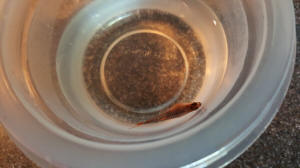
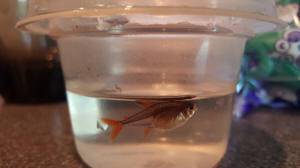
 |
|
Re: Fish are dying in our 15 gallon tank
7/10/15
Sorry about the images. I was panicking and resized them like I did before. I
resized and attached new images.
<Thanks>
For feeding, we were feeding tropical and brine shrimp fish flakes (because that
is what our Betta would eat) twice a day and we would occasionally treat the
tetras with baby brine shrimp.
<What brand/s here? I'd ditch these and go w/ a national brand like Tetra; or
better, a very fine pelleted like Hikari>
We would occasionally treat the Betta with frozen brine shrimp or frozen
bloodworms.
<See WWM re these last.... sewer worm larvae; implicated in many anomalous
losses. I'd ditch these tambien>
Once a week, they would get the daphnia in place of a meal. After the
constipation, we were feeding the Betta daphnia once a day and the tetras would
get daphnia and baby brine shrimp. Sometimes, the Betta would eat the baby brine
shrimp.
The Betta may have also been eating some cherry shrimp even though we never
witnessed this.
I wasn't sure from your response if you were asking us to remove both
the driftwood and the dragonscale rocks or just the rocks?
<Both if it were me. If you'd like, you can boil one, both and use the water for
some "bio-assay" experiments; to try, determine whether they are involved>
The driftwood is from an existing 46 gallon tank that we had no fish deaths in.
That tank is still set up (without the driftwood) and we are raising Rainbowfish
fry in.
The dragonscale rocks are from ADA and were purchased from our LFS for
aquariums. Could something made for aquariums be poisoning the fish?
<Unfortunately; yes. There are several present examples and many past>
The cherry shrimp are not being affected at all. If it was something like
poison, wouldn't the shrimp be affected first?
<Ah no; depends on what the toxins are>
Would fish poisoning cause bloating in the fish?
<Perhaps>
http://www.adana-usa.com/index.php?main_page=product_info&products_id=824
The planted RO water is RO water from the LFS that have minerals added
specifically for planted tanks.
<Okay.... but is there some reason your tap/mains water is not being used?>
The minerals they add are from SeaChem.
We use it in all of our fish tanks after we had a bad experience with our tap
water.
<Ahh, I see>
I also forgot to mention that a week after we added the fish back in January
there was a Ich outbreak that only affected the tetras that we treated with
raising the temperature. We didn't lose anyone.
<Good>
We also had a Betta floating log from Zoo Med in the tank that the Betta would
sleep in. Some of the paint may of chipped off of it, I don't know if that could
be the cause? We removed the log a couple of days ago.
<Good>
After the Betta got constipated, we also added Tantora Betta Spa.
http://www.tantora-intl.com/index.php?lay=show&ac=article&Id=539763697
<Worth trying>
I hope I got your questions answered.
<Yes; thank you for this further input. BobF>
Re: Fish are dying in our 15 gallon tank
7/10/15
Thanks for your responses. All the frozen fish food we use is either Hikari or
San Francisco Brand. We also use it in our other tanks and feed our fry with it
and never had an issue in the other tanks.
<Good brands I'd warrant>
The driftwood was boiled before we added it to the 46 gallon tank. When we
removed it from that tank, it sat out for a couple of months but we boiled them
again before added it to the 15 gallon tank.
<Good SOP>
If it is the dragonscale rock, we can remove it from the tank but we also bought
more of the dragonscale for our new 150 gallon which we haven't set up yet. So I
don't want to add that rock to another tank if that can be the cause.
<I'd be testing>
Our filter pads do have carbon already in them, but I can add more
carbon if you think that will help.
<A bit goes a long way>
I will also keep the Betta log out for now.
Maybe find another alternative for another Betta to sleep in. We want to get a
new Betta but want to make sure there is nothing wrong with this tank before we
do so.
<Mmm; well; your losses could be "anomalous"; i.e., not due to anything you've
done... Genetic, accidental... I would not let them delay you from restocking
here>
So I am guessing that you think the issue is some kind of toxin and not a
disease, correct?
<Correct. Dubious that the issue here is pathogenic. Else all would be similarly
mal-affected>
And is there anything else we can do besides removing what we think may be
causing the issue and adding more carbon?
<There are other general purpose chemical filtrants... Do read a bit re
PolyFilter... a piece cut off a pad, put in your filter/s... might be of use
here; and by color change perhaps indicate a source of poisoning. B>
|
Emergency! FW trauma 6/27/15
Hey guys, so I really need some help. I have a 10gal freshwater quarantine tank
and a 60 gal freshwater display tank. Today while doing water changes I got
distracted and accidentally drained all the water from the tank. :'(
<Oops.>
I instantly filled it back up and managed to save them before any had
suffocated, but so far one guppy has died, and now my 2 year old angelfish is
laying on her side on the bottom of the tank. I didn't know what else to do so I
put her in a net and, fearing an ammonia spike in the display, stuck her in my
cycled 10 gal. Did I do the right thing or should I have left her?
<The latter. To be clear: draining the tank for a few minutes won't harm the
filter bacteria. So long as they're damp, they're happy. As for the fish, once
put back in water, they'll either recover or not, as the case may be. Moving
them to another tank can be just another stress on them.>
Is there anything else I can do? Right now she's laying in a tank net (I have it
held up by the tank lid) near the top of the water for better oxygen. Any help
as soon as you can would be great! I'll let you know if anything changes.
<Time, turning the lights off, keeping her close to the outflow/most oxygenated
water will all help. Cheers, Neale.>
|
Cold water shock in cichlid
/Neale 1/31/15
Hello,
<Marie,>
I e-mailed you around the same time last year about my blood parrot
cichlid. Although she didn't make it your advice really helped.
Unfortunately, my other blood parrot cichlid is in trouble now and I was
wondering if you could tell me if cold water shock is treatable?
<Yes. If no serious harm is done, cichlids will recover as the tank
warms up. May take a couple hours, during which they'll be a bit
"loopy".>
After a water change in my 75 gal. Freshwater tank, I thought the water
had warmed up enough because the water at the top felt the same as the
water I had my fish in. My thermometer broke about a month ago, but the
heater (Fluval) had been set at 80 degrees for an hour and a half. After
letting the water mix a little, I let my blood parrot cichlid swim into
the tank on
his own.
<For a 75 gallon tank, you need a heater around 300 W in size. Any
smaller and the heater will be on constantly, increasing the risk of
failure. Remember, heaters can fail two ways: they can stop working, or
they can stay on constantly, and this latter can/will boil your fish
quickly. Anything smaller than 250 W would be dangerous in a tank this
size. You can of course use multiple heaters, so long as they add up to
300 W; so two 150 W heaters would be fine, or a 100 W heater and a 200 W
heater. Whatever. Actually, having two heaters is considered the safest
approach with big tanks. If one stops heating up, then the other will
work long enough for you to get a replacements. If one gets stuck on the
"on" setting and overheats, it won't be big enough to boil your fish.
Make sense?>
Everything was great for about 20 min. That's when I found Desi at the
bottom, vertical, and not moving. I panicked, scooped him up and put him
back in his bowl. Apparently the heater is broken.
I ran to Wal-Mart and got a new, cheap, heater and thermometer.
<Do see above. Also, while there are bargains out there, some cheap
heaters fail quite quickly. Look out for cracks in the glass and water
droplets inside the mechanism. Get a named brand you're comfortable
with. Eheim, Fluval, etc. are all generally pretty good. Suspiciously
cheap heaters aren't necessarily wise investments.>
The temperature went from being 60 degrees last night at 1:00am to now
being 80 degrees. 10:12pm. Last night he had either stopped breathing or
was too slow for me to notice. Today he is still on the bottom of the
tank, but if I nudge him he swims perfectly straight like a champ for
about a minute and then falls on his side and stays.
He is 8 years old and I really don't want to lose him. It sounded like
swim bladder to me so I added salt to the tank and I gently force fed
him part of a thawed pea.(w/o the shell) If there is nothing else I can
do to save him, I might have to put him down using clove oil. Any
suggestions? Salt bath or anything?
TL;DR: 8 yr. Old Blood parrot cichlid in temp. Shock since last night.
Looking for treatment to save him. He has symptoms that resemble swim
bladder disease. 75 gal. Tank
pH: normal
<Saying "normal" means nothing. Rather like if I asked you your eye
colour and you said "normal". There's a correct water chemistry for
Blood Parrots, and then there's incorrect water chemistry. What's
correct is moderately hard and alkaline, with a pH that's slightly
basic; aim for 10-25 degrees dH, pH 7-8.>
nitrate/ammonia: normal
<Again, zero is the correct value; anything else is dangerous. Lots of
folks think traces of ammonia or nitrite are normal, but they're not.>
Tank temp: 75-80 (the new heater won't go any higher)
<That's a big-ass variation! Get a cheap sticky-on thermometer and affix
to the front of the tank, ideally about halfway down the tank, and not
too close to the heater. Adjust the heater until it says 25 C/77 F. Wait
a few hours. Check to see if the thermometer says 25 C/77 F. If it's
below that, turn the heater up one notch. Wait a few hours, then read
the thermometer
again. Repeat as required.>
Added salt
<Not necessary unless you live in a soft water area.>
Sincerely,
Marie
<Most welcome. Neale.>
Cold water shock in cichlid
/RMF 1/31/15
Hello,
<Marie>
I e-mailed you around the same time last year about my blood parrot
cichlid. Although she didn't make it your advice really helped.
Unfortunately, my other blood parrot cichlid is in trouble now and I was
wondering if you could tell me if cold water shock is treatable?
<Mmm; can be; if not too much shock... too large a temp. difference too
soon>
After a water change in my 75 gal. Freshwater tank, I thought the water
had warmed up enough because the water at the top felt the same as the
water I had my fish in. My thermometer broke about a month ago, but the
heater (Fluval) had been set at 80 degrees for an hour and a half. After
letting the water mix a little, I let my blood parrot cichlid swim into
the tank
on his own.
Everything was great for about 20 min. That's when I found Desi at the
bottom, vertical, and not moving. I panicked, scooped him up and put him
back in his bowl. Apparently the heater is broken.
I ran to Wal-Mart and got a new, cheap, heater and thermometer.
The temperature went from being 60 degrees last night at 1:00am to now
being 80 degrees. 10:12pm.
<Yikes... for browsers into perpetuity here; I would only have raised
the temp. to 70 F from 60... and very slowly therein (a degree or two a
day), back up to eighty>
Last night he had either stopped breathing or was too slow for me to
notice. Today he is still on the bottom of the tank, but if
I nudge him he swims perfectly straight like a champ for about a minute
and then falls on his side and stays.
He is 8 years old and I really don't want to lose him.
<This hybrid can live for twice this long>
It sounded like swim bladder to me so I added salt to the tank and I
gently force fed him part of a thawed pea.(w/o the shell) If there is
nothing else I can do to save him, I might have to put him down
using clove oil. Any suggestions? Salt bath or anything?
<Just time going by at this point; really>
TL;DR: 8 yr. Old Blood parrot cichlid in temp. Shock since last night.
Looking for treatment to save him. He has symptoms that resemble swim
bladder disease. 75 gal. Tank
Ph: normal
<?>
nitrate/ammonia: normal
<... less than 20 ppm and zero>
Tank temp: 75-80 (the new heater won't go any higher)
Added salt
Sincerely,
Marie
<Patience and hope. Bob Fenner>
re: Cold water shock in cichlid 1/31/15
Okay, how long do you guestimate it will be before he starts
getting better?
<Could be soon to never>
He's been on his side on the bottom of the tank since Wednesday night. I
just saw my e-mail says last night but it was because I copy/pasted it
from a Reddit post. Sorry, I didn't catch that before. I just don't want
him to be suffering. I can continue to feed him by hand and everything,
he doesn't seem to mind that much. If it goes on more than a week, I
just feel like he would be miserable. Do you agree?
Marie
<Patience. BobF>
Re: Cold water shock in cichlid 2/1/15
I did what you said and he's been up and swimming all afternoon!! :D He
even ate a little bit this morning. I attached some pictures. Thank you
so much!
Marie
<Glad all worked out well. Cheers, Neale.> |
 |
Most creatures are less active 1/16/14
> Hi,
> Our tank was a Christmas present for our 12 year old.
> <A worthy gift; proffered at a sensitive/appreciative age>
> In the middle of
> December we put water, gravel, decorations etc in, and she put her
first
> fish (a male Betta) in on 29th along with 2 (zebra?) snails.
> <Mmm, what was done to "cycle" this system?>
> stock has been
> added over the last 2 weeks, and now there are 3 algae eating fish,
> <Yikes... how large is this tank? Do please look up the name
> Gyrinocheilus/"Chinese algae eater"... these are inappropriate... as
are
> larger suckermouth catfishes of the family Loricariidae ("Plecos") in
small
> volumes>
> several
> red cherry shrimps, 2 Ramshorn snails, a lava snail, 2 giant shrimps,
and
> some rabbit snails. the fish and snails are a lot less active over the
> last
> 24 hours compared to when they were introduced. some snails haven't
moved
> any distance for 24 hours.
> <Oh oh... good reporting of bad behaviors>
> the shrimps don't seem to be as affected -they
> are still feeding, but have always stayed 'out of the way' as the
Betta
> liked to take a closer look at them initially. The snails seem to hide
in
> their shells some of the time too, I even thought one had died and the
> shell left empty!
> The water seems to be fine - ammonia isn't tested on the dip strips I
have
> (API 5in1), but no3
> <If you'll search, read on our site, you'll find that I/we don't trust
> "test strips" (liquid colorimetric assays/kits are far more accurate,
> precise: reliable)... and the fact that you have no measurable Nitrate
> (NO3) indicates this system is NOT cycled... this is likely THE
principal
> cause of your livestock malaise, trouble here. You MUST be very
careful
> (little feeding, careful water changes...) to avoid poisoning/killing
the
> stock here... AND do what you can to urge the system to cycle
(commercial
> product, old media...) AS gone over here:
> http://wetwebmedia.com/FWSubWebIndex/fwestcycling.htm
> and the linked files above: READ>
> and no2, nil, pH7.5, KH 180, GH 180. Tank size approx.
> 50 litres. Are you able to give any idea why the activity in the tank
is
> reduced? I'm not sure if there may be Whitespot on one of the Bettas
side
> fins (by gill) but don't know how to treat it with snails and shrimps,
or
> how diseases might affect them. no spots on other 3 fish though.
> Thanks for your advice,
> Susan
> <STOP feeding for now and READ. Do write back if you have further
> questions, concerns. Cheers, Bob Fenner>
Re: Most creatures are less active 1/16/14
Hi,
My husband has done most of the setting up of this tank....
<Do show, review w/ him our corr. here>
I think we probably put a commercial cycling product in, and I know we
added a bag of daphnia - my husband thought they might become
established providing a food source for the 'proper' residents of the
tank, but I suspect the treatment they get before reaching us renders
them sterile, and the lifespan isn't that great! I'm sure they will have
helped create great bacteria in our filter.
<Possibly; but... where is the accumulating NO3? It should be detectable
in a ready-cycled system>
The fish he has included to eat algae off the glass etc, are definitely
not Plecs - looking at the ID pages on here I think they may be
Otocinclus.
<Ahh, these are fine... compatible... just not very hardy in most hobby
systems>
We had no means of measuring hardness with our older test kits, and
weren't sure how reliable the they would be with their age. Also, we had
ran out of nitrate reagent, so bought the dipsticks when we got her
tank. I have done tests with the chemicals for ammonia and nitrite today
confirming the negligible reading on nitrite, and 0.1 on ammonia
<This MUST be zero, .0.0>
My daughter learnt her lesson on overfeeding with a mishap in our tank
and is now very careful, and I help her keep on top of water changes.
I did realise overnight that someone (probably her) had flicked the
switch to override the lighting timer, leaving the tank lit
continuously. There seems to be more movement today after no light on
for16hrs. Hopefully they will all feel less stressed, and my daughter
can get back to enjoying them.
Now to catch up on my reading matter:)
Thanks
Susan
<A pleasure to aid your success, enjoyment. BobF>
instant fish death due to possible environmental conditions
8/2/13
Hello,
I'm writing in a bit of a shock right now, because just a few hours ago
I lost two of my Polypteridae fishes. One was Polypterus senegalus
albino and the other Polypterus teugelsi, respectively 3 years and a few
months old, 5 and 3 inches long.
Fish died within 30 minutes of one another, few hours after a 1/4 water
change
<... how was this water treated? Was it stored for any period of time
(days) ahead of use?>
in the 30 gallon planted grow out tank. The first fish just rolled over
in front of my eyes, while I was trying to understand why its behavior
changed suddenly: one second normal, the next moment - chaotic, the
third - dead.
The second fish I actually caught still alive, gasping and darting along
the top and placed him into 55 gallon established tank, to no avail.
Both showed the same symptoms - quick darting movements to the surface
and back and very heavy gasping.
Now both I and the local LFS did water tests and everything looks
ordinary!
<What tests were performed?>
The only abnormality was ammonia result - higher than 0 but under .25. But
I would not expect Polypterus to succumb to it so quickly. I had a tank
near-crash years earlier and, while I was able to save some of the
inhabitants, the large 5 year old P. Senegalus was the only fish that
did not show any discomfort!
<Poisoning likely>
To add to my confusion, I changed water today in the other 3 tanks as
well and see no problems anywhere else.
<CALL your water supplier (number on your bills); and ask if/what
they've been pulsing into the supply. Could be (very common) a
hyper-dose of sanitizer (chloramine)... That municipalities will
overdose if/when they find either the titer is too low distal in their
system of distribution and/or that there is bacteria present. Did/does
the water have a smell? Are the folks at the water plant using a
surfactant, a flocculent...?>
The affected tank had the Eheim 2213 canister filter out for about 4
weeks (but with weekly water changes, thick plant growth and no fish
except for 2 little bichirs, I was not worried, foolishly), as well as
heater (I don't use AC and so the water temperature right now in mid to
upper 80-s, heaters are off in all 4 tanks right now).
<High/er temperature is also a factor here. Less oxygen, higher
metabolism... But, as you likely know, Polypterids are facultative
aerial respirators: they can/do come to the surface to gulp air to
breathe>
Substrate in the aquarium is a few years old, but in the spring, before
putting polypteruses in I turned it and added some oyster grit.
Could the substrate somehow deteriorate so much and poison the water
without affecting test results?
<Not by itself... again; the prime suspect at this point is your
mains/tap water... UNLESS you've added something else that you've not
mentioned... DO you treat, and/or store your water as per the S.O.P. on
WWM, ahead of water changes? Due to vagaries in tap nowayears I am a
huge fan of this practice>
If so, why would it happen immediately after the water change, when
substrate was not disturbed?
Also, - why are the Ramshorn and trumpet snails are OK?
<They're not as easily mal-affected by the types of poisoning we're
referring to. Their survival is actually a good clue>
But just as well - a 55g planted aquarium is even older and has more
driftwood, and garden soil under gravel, - and all fish there are fine.
<The plants, driftwood... help here>
From your significant experience can you shed the light on what can be
the problem here? At least some guesses?
<As the above; with questions>
The tank will be torn down tomorrow, but I still would like to have a
chance of understanding what could cause such sudden death of usually
very hardy fish!
<Something to do w/ the new water; its treatment (or not); the elevated
temperature...>
thanks!
Elena E.
<Please do relate your further findings. Bob Fenner>
Re: instant fish death due to possible environmental conditions
8/3/13
Bob, thank you for quick reply!
This gives me a few things to think about.
Now as of answer to your questions:
Water was treated the same way for all 4 tanks (3 regular set ups, and
one hospital tank, that currently holds a single female Convict) - with
API Tap Water Conditioner.
<Mmm, I'd switch to Prime, Amquel, StressCoat...>
Yesterday, as usual, I poured in the dosage of conditioner (i
measure it to amount of water to be added, not to entire tank volume).
Then I stirred the aquarium water lightly - right before adding
tap water.
<Mmm... again; and to the point. I would NOT do this this (treating new,
to-be-added water) way. You're still exposing your livestock to the
sanitizer/new water AND the conditioner. Better by far to treat the new
water outside the tank, and yet again STORE it for several days (a week
or more ideally). This is gone over HERE:
http://www.wetwebmedia.com/water4maruse.htm
For the Cory Cats & Minnows & Weather Loaches tank I pre-mixed the dosage
in a gallon jar of tap water and add that to the tank to reduce
scale-less fishes' exposure to chemicals.
<Ahh, much better>
Can you recommend a better way?
<Yes; please read through the cited file above... and the linked files
in the header of the article if there's time/interest>
Given that I have two 55 gallon tanks, a 30 gallon tank and a hospital
10 gallon, storing water ahead of time is hard!
<Mmm, still; a worthwhile routine... The municipalities nowayears
"pulse" in sanitizer at high dosages at times, sometimes flocculants and
other chemicals... Most all this can be rendered safe w/ the SOP
outlined in the article>
At this moment I cannot find information about water services dozing the
tap supply with anything.
I have to call them later to confirm (oh the officials, got to love
them!)
<There are good/valid reasons for this/their practices here>
But there is a distinct chlorine (swimming-pool like) smell to tap
water.
<... I would; do use RO for all potable uses (reminds me, I've got to
get up and fix coffee)>
What did you mean by "store your water as per the S.O.P. " ?
<Standard Operating Procedure. Sorry for the lazy acronym/s>
Tests performed on the water:
by me - Ammonia, Nitrate, PH
by LFS - Ammonia, Nitrate, PH, KH, GH, and high PH.
Results on Ammonia and PH were the same between two batches of tests.
PH slightly high (around 8).
<Very high; and trouble with the presence of unionized ammonia in any
concentration>
How sensitive are the young polypteruses to chlorine? To chloramine?
<To Chlorine, very highly sensitive, a bit less to chloramines>
I was under impression that being facultative air breathers they have
lower sensitivity than, say, Convict cichlids or Minnows.
<Not so>
I have another 2 large bichirs in the driftwood filled 55g aquarium -
they seem fine.
<Smaller specimens are more sensitive than larger... have more gill
surface area per unit volume; less "slime" to resist poisoning. Another
good clue>
Those two guys are P. senegalus, 10 years old and 10+ inches long and
similarly sized 2 year old P. ansorgei.
Their tank also keeps 6 female Convicts, and an Electric Blue Jack
Dempsey, and is supplied with a larger canister, to handle the bioload.
Can working filter make so much of a difference for overdosed tap water
situation?
<Can help a good deal. The "mulm" contained w/in is useful for
complexing, absorbing>
BTW. A night after the fish died (and were removed from the tank
immediately!) - the tank water STINKS of rotten fish! I can even smell
it in the next room.
<A further clue...>
Will have to use gas mask tearing the set up down :)
Elena E.
<Some activated carbon in the filter/flow path... Perhaps a unit/bag of
Chemi-Pure>
Re: instant fish death due to possible environmental conditions
8/3/13
Bob,
sorry, missed it in the first email - I don't dose water with anything
except the water conditioner before adding tap. Except for the hospital
10 tank (no issues there) that has Erythromycin to treat the convict
cichlid.
Actually, are there any tests that can be performed on the tap water
prior to water change?
<Of use... yes; there are total and free Cl-- and Chloramine kits...>
thanks,
Elena E.
<Welcome. BobF>
|
Plecs gill has popped out 6/24/13
I have a problem with my Plec that I cant seem to find an answer to so
any thoughts would retreat please, it's gill on the right has been
swollen for a few weeks but now it seems to have completely popped out I
think see pic, He seems ok and is behaving normally, he is in a tank
140l with 1 kissing gourami 2 opal gourami 3 golden barbs and 2
goldfish, one of the goldfish has a small growth on his side but has had
this since I inherited them over 18mths ago so I don't know if there is
a link there.
Thanks for reading and any help you can offer x
Lisa
<Hello Lisa. "Gill Curl" is almost always environmental;
specifically, the fish in question is kept in an aquarium that's too
small, inadequately filtered, and/or not given enough water changes.
Given an adult Plec needs upwards of 200 litres, minimum, to do well, my
money would be on a combination of all three, especially when you factor
in the other fish,
some of which, like the Kissing Gourami and Goldfish, need a fair amount
of space themselves. No "treatment" as such; Gill Curl usually fixes
itself once conditions improve. If you can't move the Plec to a bigger
tank in your home, a phone call to your local aquarium shop may be
useful in rehoming; in the UK, the Maidenhead Aquatics chain usually
takes in fish and rehouse them without any hassle. Hope this helps,
Neale.>
|
|
|
|
Re: Plecs gill has popped out– 6/24/13
Thanks for your help, i am moving the goldfish to the pond outside so
hopefully this will help and i will save up for a bigger tank. Many
thanks
Lisa x
<Ah, sounds like a good plan. Good luck! Neale.>
|
molly and platy/novice tank trouble (Emergency!), new. sm.
sys., poor lvstk. choices... 3/19/13
Hello all. Thank you for this site. I have searched your existing
materials for info on what I am experiencing but I have found that each
situation is unique, thus I am posting this scenario to you in hopes you
all will be able to advise.
I am a novice aquarist. A little background first- I started
with a 10 gallon tank about 4 months ago. I initially (after
prepping the tank for ten days),
<Mmm, not much time to "age"/cycle a new system>
introduced a molly and a place (sucker fish).
<Not good choices here>
Admittedly, I did not research before I began this endeavor and have
learned painfully some things. The Pleco died within a month. I think
maybe because he did not have enough to eat. At the time I did not know
you could substitute their diet. So then it was just one molly. She had
some fry. I separated them. There were only about 5. If there were more,
she must have eaten them early in the morning because I look at the tank
a lot. They were not in there the night before. I soon started having
trouble with high nitrate/ammonia. I did partial water changes (20% at a
time), every 2 days for almost two weeks. All the fry died. I finally
learned from researching that I was overfeeding and presumed that this
was the cause. I reduced the feeding to a few flakes every other day
while I tried to stabilize the water. I could not get the water to
cooperate no matter what I did, so I bought a 20 gallon tank and started
it on its cycle (with no fish of course)in hopes that it would be ready
and I could transfer the molly before she died.
In the meantime, she developed ick. I tried "ick away" but nothing
seemed to help. Once the new tank was ready, parameter wise (0 nitrate,
ph 7.2, temp 76), I transferred her over. Within a few days her ick was
gone and she looked healthier than I have ever seen her. She had more
fry. 14 I counted. I have found that they are really good at hiding so I
didn't separate them. Only one made it. It is still alive and is about
11 mm long or so now. Since the tank and the molly were doing well, I
decided to get a couple more fish.
I added two platies (both male from what I can tell) three days ago. The
female molly and one of the plates nip at each other a lot. The
nitrate/ammonia went up to .25.
<Toxic, debilitating... see WWM re>
I did a partial water change and vacuumed the gravel. There are no dead
fish decomposing and I do not overfeed. I added "Stress Relief" and
"Quick Start" to help with the addition of new fish and the partial
water change.
And now her ick is back. And she is sometimes vertical in position.
My tank water also has a slightly cloudy look. I added "copper safe"
today for the ick but that's too soon to see if it will help.
<I would not copper this system. Too toxic and likely to kill off your
beneficial filtration bacteria>
I don't know what to do. I just checked the water again and the ph was
7.6+ and the ammonia is now 2.0!!
<Ahh, yes... as stated>
I added a dose of ph down but have not added anything for the ammonia.
Please advise! I am really trying to do the right thing here.
<... do you have another tank?>
I have never owned fish until now. I have had dogs and cats (I currently
have 6 cats and one dog) all my life and I am quite the expert in that
area. I am finding fish to be much more challenging! Thanks in advance
for any assistance you can offer.
Tish
<I salute your sticking w/ this process... First off, stop feeding
period (your fishes won't die of starvation, but will do so from
metabolite poisoning), next, change half the water out (to dilute the
Cu); lastly, try the Quick Start product again, or see WWM re other
brands (SeaChem, Dr. Tim's...) that can get cycling going... The
root of your issues, disease, losses, are environmental... this system
is small, uncycled... Bob Fenner>
Re: molly and platy/novice tank trouble (Emergency!) 3/19/13
Ah, thank you so much for your reply. I do have another tank, but it is
empty and is only a 10 gallon.
<Ahh! I would set this up, using the half of water changed out from the
existing>
I will change 50% of the water this evening and add another dose of
quick start Should the molly and the platy be able to get along okay?
<In time, yes>
Thank you for your help, so much.
<Welcome. BobF>
Ich... GF, Molly sys. 2/16/13
Hello i am new tank owner i have a 5 gallon tank with a
whisper filter (one for a 5-30 gallon tank). I only have 2 fish
a goldfish (Luna) and a marbled marlly (cookies amd cream).
<Both need more room than this... Your troubles are self-caused... and
can only be solved by providing an appropriate environment>
I just noticed today that Cookies and Cream has little white puffs coming
from his skin, and its all around his eye. It looks like ich even
through there has been no rubbing on other things. :( Im scard because i
love my fish but I dont have a heater as i didnt see it nessisary to
have one for the fish i have.
<Shouldn't have to have one for these species in a large enough system>
Im worried that Luna will also get ich. The thing is i really dont know
how to treat it, i am on a tight budgit because of college. If there is
any way i can do this without having one or both of my fish dying i
would be the happiest person alive. Thanks for any and all help! :)
<Read here:
http://www.wetwebmedia.com/FWSubWebIndex/mollysysfaqs.htm
and here:
http://www.wetwebmedia.com/FWSubWebIndex/GldfshTksF.htm
and the linked files above. Either save up for a new system, or trade in
your present fishes, re-stock w/ what can live here. Read here re:
http://www.wetwebmedia.com/FWSubWebIndex/stkgSmFWSysF.htm
READ and learn. Bob Fenner>
Stressed Freshwater Fish/Cloudy Water 1/18/2013
Hello WWM!
<Alisha>
You are a wonderful/knowledgeable site, and I very much appreciate your info and your willingness to help those in need, like myself. So, the facts: I have a 30 gallon long, freshwater tank, with Fluorite/gravel substrate, bogwood,
<Mmm, do remove this wood for now... likely a factor>
and lots of live plants with dense growth. I have an Aquaclear 50, 2 airstones, and an Aquaticlife 2x39 watt light (which I have on 11 hours a day). I have 2 German Blue rams, 4 Julii Cory Cats, 2 Platys, 3 Balloon
Mollies, 3 Otos, 1 Bushynose Pleco, 1 Farlowella. I feed them a variety of fresh veggies, flake, small ml pellets, algae wafers, and Rapashy twice a day. My current water stats are: GH 30, KH 120, PH 7.8, Nitrite 0, Nitrate 10, Ammonia .25, my temp is 79/80. I do 20-30% water changes 1-2 times a week, and I lightly rinse the filter in the discarded water at the same time. I have been keeping fish for a bit over a year, and I upgraded from a 25 gallon tall to this tank November 25, 2012 using the bioballs and water from the previous tank, but adding new Fluorite/gravel and adding additional plants. The fish were basically the same, but I added the Rams December 15. 3 Days later the Rams had a small amount if ICK showing, so I raised the temp for a week, and it cleared up, no one else showed any signs of stress. Everything looked fine until the water slowly started turning cloudy approximately
January 2, 2013, so I figured maybe I needed a beneficial bacteria boost and added 20ml of Stress Zyme.
<Mmm, not a bacteria, or boost for same at all... See WWM re purposeful nitrifying bacteria products>
But this has had no effect, in fact the water is even cloudier, like someone dropped 2 cups of milk in the water. I will do a water change, but it’s back to where we started 24 hours later. Then the signs of stress began Jan 8 and this is where I am presently stuck, no one has died, but of course, I don’t want to get to this point! The stress signs:
Mollies and Platys hovering at the top corners, and hiding in the plants. Loss of color on the Rams.
Mollies (all 3 female) dropping slimy golden balls (one is the mamma, she has not dropped anything, the other 2 are her fry, and they have never been in the presence if a male. Both Platys are also female). All are eating fine, and pooping fine, but all hide when I approach the tank, and generally are staying hidden in the plants, which is not their norm. The Pleco and
Farlawella and just fine, the Cory Cats are mating happily (but I do see occasional flashing), and the
Otos are just Otos…hard to tell if happy or sad. What direction would you point me in?
<Likely the elevated temperature triggered "something"... I'd stick w/ water changes, small gravel vacuuming, monitoring for nitrogenous metabolites and the bacteria addition.>
I would like to address the stressed fish, the cloudy water, and additionally, I have some spot green algae on my Brazilian Pennywort, and Moneywort, that I just can’t seem to clear up. Any hints there would also be great.
<See WWM re algae in planted tanks... Sorry to state, I'm out in an area w/ poor Net conn., so I can't look up for you, others>
Thanks soooo much in advance, I have a lot of respect for you, WWM and your staff that help fish lovers like myself learn more about this wonderful hobby! -Alisha
<Ahh! Keep reading/learning and sharing. Bob Fenner>
Fish not eating after water change
8/21/12
Hello WWM Crew,
<Hello,>
I have a 55 gallon freshwater planted tank with a Black Ghost
Knife, 5 Roseline sharks,
<You do realise these are subtropical fish? Won't live for long above,
say, 25 C/77 F, especially if oxygen levels are low. Given you have a
Black Ghost as well, and these are extremely sensitive to low oxygen
levels, your 55-gallon tank will be quickly overstocked as these fish
mature. Presumably you have plans for a bigger tank?>
6 cherry barbs, 2 Bala sharks,
<Yikes! These get huge, and ideally are kept in bigger groups than two.
Okay, let's rephrase: your tank is going to be *very* overstocked within
a year or two. Start shopping for than 100+ gallon aquarium with a
big-ass, good-quality external canister filter like an Eheim!>
and a few various tetras. The tank has been set up for 11 months and for
the first time we hired a reputable aquarium maintenance company to
clean our tank, and it was a disaster!
I won't go into detail about the horrendous experience (which we will
never do again), except to tell you they washed all our filter media in
our tap water, which does contain chlorine.
<Shouldn't actually do any harm. While it's not exactly something you'd
recommended in a textbook, rinsing live biological media under plain tap
water (assuming it isn't hot water) shouldn't kill too many bacteria.
It's very unlikely that doing this would damage the media so badly the
filter would be "dead" and need to be cycled again.>
They did add Prime to all the new water, and the temp was matched but
they did not wash there hands before putting them in the tank either.
<Again, not normally a problem. Yes, if you have soap on your hands and
then stick them in the aquarium that isn't a good idea. But a 55-gallon
tank is big enough to dilute this problem, surely?>
(Oh If I could have strangled them!)
<Hold back on your murderous thoughts for now!>
My problem is right after the service our fish began schooling together
and staying in the bottom corner of the tank.
<If the maintenance team did a big water change, and were less that
gentle about how they cleaned up the tank, then this isn't unnatural
behaviour.>
Then they began flashing, and my BGK was laying down on the substrate
(which he's never done in the 5 months we've had him). The two Otto's we
had both died right after, but they had really fat belly's for awhile so
I wasn't that surprised.
<Quite so. The red belly on small catfish typically indicates a
bacterial infection caused by dirty substrates and/or poor oxygen/water
circulation at the bottom of the tank -- very common where poky filters
are used. Do review your filter. Hang-on-the-back filters for example
aren't very good at circulating water all around the tank because the
inlet and outlet are
close together; external canister filters, with the spray bar at one end
and the inlet at the other end, work much better. Regardless, with an
overstocked tank containing lots of high-oxygen, cool-to-middling
temperature fish (Apteronotus albifrons, Puntius denisonii, Otocinclus
spp.) you'd be crazy to filter a 55-gallon aquarium with a filter
"rated" as suitable for 55 gallon tanks! Anything offering less turnover
than 8 times the volume of your tank per hour (i.e., 440 gallons/hour)
would be insufficient, and more than likely that's going to a filter
rated for a tank up around the 100-gallon mark.>
The following day my BGK stayed hidden under driftwood and none of the
fish would eat. The next day they continued to flash, so we didn't
try to feed them. Today again I tried to feed them the BGK ate but
none of the other fish did, some tried to eat but spit the food back
out.
<Don't feed them for a few days. Check the filter is working properly
and check the temperature. Do a test for nitrite; if you detect nitrite,
then yes, you have a problem with the filter. But given your tank is
badly stocked already, blaming the maintenance guys could be somewhat
misleading.
They may have triggered the problem, but they were like the guys who
make a noise a trigger the avalanche -- the pile of rocks was already
there waiting to fall down! Same here, you have an odd mix of fish, some
of which get extremely large, and even if you run the tank at 24 C/75 F,
your tank would be towards the warm end of what some of those fish
prefer. Without knowing about your filter (type, gallons-per-hour
rating) I can't confirm whether your tank is adequately filtered, and
even if nitrite and ammonia are zero, water movement may be
insufficient, hence low oxygen levels at the bottom (and consequent
"odd" behaviour from benthic fish). If the maintenance guys moved the
filter a bit, it may have been you had just about adequate flow of water
before, but not any more. Again, the problem may have been there all the
time, just now the maintenance guys turned it from a theoretical,
upcoming problem into an actual one.>
They are still acting very odd, and I'm at a loss. I've checked
your site for the last couple hours but have not found any solutions to
my issue, so I'm hoping you can help.
Our water parameters as of today:
PH- 7.2
Phosphate - 0.5
GH- 5
KH- 2
<Carbonate hardness is a bit low; how to you keep the pH stable?>
Nitrate - 30
Ammonia- 0
Nitrite- 0
Should we do another water change right away?
<Small, daily water changes are never a bad idea when fish are unhappy.
Change 10-20%. Lower the waterline half an inch or so, so that you get
maximum "splashing" at the top to drive off CO2. Check the filter flow
is maximum. Look to see if there's good water movement at the bottom.
Adjust inlet and outlet taps/positions if possible (mostly an external
canister filter option). Don't feed the fish at all for a few days, and
then offer a tiny amount of something very delicious, such as
chopped/minced (depending on the size of your fish) shrimp or white fish
fillet.>
Is there something else I can test for? I'm worried they De-Cycled
our tank by washing the filter media!
<Possible but unlikely, and if you have zero ammonia and nitrite, then
there's no evidence at all the filter is unhappy. So work from the basis
that something else is wrong, unless and until you detect nitrite or
ammonia.>
Please help.
Sincerely, Roberta
<Hope this helps. Cheers, Neale.>
Re: Fish not eating after water change 8/21/12
Hello Neale,
<Hello Roberta,>
Thanks so much for the quick response and helpful information.
<Welcome.>
To give you more background we have a long air stone in the back of the
tank and are running a 70 Aquaclear filter on this aquarium, I had
always thought about getting a second 70 Aquaclear filter for the other
side of this tank since there are live plants I feel the filter gets
dirty rather quickly.
<Sounds a good analysis. Bubble strips are pretty, and they do help
quite a bit with water circulation, but their overall value isn't as
great as a whole other filter. So if space is limited, and you want a
second filter, go for it, and don't feel shy about removing the
bubbler.>
Would this work for getting more circulation and oxygen?
<Can do, yes.>
Or should we scrap the AquaClear's and just get a canister filter?
<Well, the Aquaclear is quite a good unit, and hang-on-the-back filters
have some advantages, including the way they mix air and water inside
them, which helps top up the oxygen levels. I admit to being a bit
biased in favour of canisters because they work well with the sorts of
fish I keep (messy catfish, communities of medium-sized fish). But in
truth, so long as you have enough Aquaclear filters, and ideally put one
at each end of the tank, you should get pretty good filtration. It's a
300 gallon/hour filter, so two of them gives you 600 gallons/hour, which
would offer brisk (eight-fold) filtration for a 75 gallon tank.>
Our tank temp is kept at 77-78 F normally, so we will slowly lower the
temp over the next few days.
<Wise. Do review the temperature preferences of the fish you have (the
SeriouslyFish web site is great for this) and set accordingly.>
We did a 10 gallon water change yesterday hoping they would appreciate
more new water, maybe get the nitrates down a little lower as well.
The fish again started acting very strange, darting around the tank and
flashing.
<Flashing often means an irritant in the water. Could be Whitespot or
Velvet (if the maintenance guys brought in contaminated buckets and
pipes used on infected tanks) as well as toxins: nitrite, ammonia,
chlorine, copper, chloramine. Do check your water conditioner removes
chlorine, chloramine, copper and ammonia.>
This morning I woke up and saw that our two Bala's had died.
<Oh dear, not good. Sudden deaths like this usually mean a poison rather
than disease. Is there anything being used in the house that gives off
fumes? Paint for example.>
Could there be something else in our water that caused this?
<For sure. Bala Sharks are sensitive fish.>
The Bala's looked fine, no bulging eyes or spots or red gills. Needless
to say I'm very upset.
<I would be, too.>
As far as our tank size to fish size ratio, yes we do plan on moving the
fish to a bigger tank in the next few years when we move into a house.
<Cool.>
We would turn the fish into our local fish store if they got too big for
the existing tank, just wanted to enjoy these beautiful fish for as long
as we could.
<Ah, I see. That said, Bala Sharks travel poorly, so they aren't a
species to move from tank to tank.>
I'm very upset the Bala's have perished, they were about 3" in length
and we've had them for about 8 months. Thanks again for all your help,
we will do whatever it takes to keep our beloved fish healthy.
Sincerely, Roberta
<Hope this helps, Neale.>
Tank Issues, FW deaths, env. likely
1/11/12
Hi!
I have a 25 gallon 8 month old tank that I have had almost no problems
with until the last 3 days. I have 1 Betta, 2 Glofish, 3 jumbo neon
tetras, 2 red platy wags, 2 albino Cory catfish and 1 snail. I do not
know the species of snail as I adopted it from friend (mystery
snail...)
<See WWM re:
http://www.wetwebmedia.com/FWSubWebIndex/MollusksFW.htm/MystSnailsF.htm
the snail has moments when it is super active and then flips
over and stays motionless for hours on end.
<Bad sign... environment...>
Then it goes back to normal speedy snail behavior. But 2 days
ago I found the Betta, 1 Glofish and 1 platy wag all bloated.
I expect the platy and the Glofish are pregnant, because their behavior
is perfectly normal. However the Betta is another deal. He is almost
completely inactive and will not eat, even the frozen peas I gave him.
The snail has been on its backside for 24 hours now. I haven't done
anything differently and cannot figure out what is wrong with the Betta
and the snail.
Any ideas?
Thanks!
<I'd be checking water quality, doing a good percentage water
change, stopping the use of dried/flake foods, reading on WWM re these
species health, systems... Bob Fenner>
help again please! -- 11/08/11
hi guys I have wrote to you before, please help again
I have a 95 litre tank in it I have: 1 Dalmatian mollie,
1 fancy tailed male guppy,
1 fancy tailed
female guppy,
2 coral red platy,
2 dwarf Gourami,
5 neon tetras
1 catfish,
and a Suckermouth.
my problem is in the last 2 days I have lost 2 female guppies, a male
guppy, and a male mollie. my cat fish has became slow and just sits at
the bottom of the tank, my remaining mollie sometimes floats about the
tank as though she is a piece of paper and my Gourami are just sitting
at the bottom of the tank. my ph levels are down to
6.0
<This is at least part of the problem>
and I am finding it difficult to fix that. is this why my fish are
dying?
please help me I love having my tank but I cannot seem to get it right
to enjoy it and it is really stressing me out. thank you
<Read here: http://wetwebmedia.com/FWSubWebIndex/fwhardness.htm
and the linked files above. I would be adding/mixing a commercial
buffer (or at least Baking Soda) in with some system water... Stat! Bob
Fenner>
tropical fish aquarium, FW, env./water quality losses
5/31/11
Hello my name is Chris and I have just recently set up my first
tropical freshwater aquarium. A list of the equipment
I have is a 40 gallon tank, a Marineland Bio-Wheel power filter penguin
200, a AP150W Aqueon heater, a Marineland LED single bright lighting
system, a model 40 whisper air pump for my airstone, and a co2 bio
system by Red Sea. When I began setting up my tank I first added some
medium sized substrate, there is about 2 to 3 inches in the bottom. I
did rinse it through first before putting it in.
Then I started adding water, the water I added was first put through a
reverse osmosis filter (keep this in mind for my questions later). Once
my tank was completely full I started up my heater and filter and they
are running fine. After 1 day of it running I added some TopFin
bacterial supplement to get my bio wheel started. After around 2 weeks
I tested my water for PH, nitrate, nitrite, total hardness, total
chlorine, and total alkalinity using Jungle quik dip test strips. My
first test results were nitrate 0, nitrite 0, hardness 0 very soft,
chlorine 0, alkalinity about 140 ideal, and my PH 6.2. After seeing my
PH so low I added some API proper PH buffer 7.0. I have now had my tank
for around 4 weeks. And everyday I have been adding 4 scoops as
directed of my PH buffer and still it reads 6.2.
Why is this? I believe that the reverse osmosis filter has a
lot to do with my PH being so low and my water hardness being low
because I tested regular tap water and the results were a lot higher.
After about the third week I added 5 hardy plants to my tank and they
are doing fine. After about another week I added 3 more broad leaf
plants and they seem to be doing well too. I use Seachem plant food for
my plants. I add about 1/2 capful 2 times a week. I also have a few
rocks in my tank which I purchased at a garden center. A week after I
added my plants I bought 3 fish for my tank.
A Pleco, a Cory catfish, and a black molly. At first all fish were
doing fine for about a week. After the first week my Pleco died. My
tank had literally zero algae in there. I did drop 2 TopFin algae thins
in the tank each day but the Pleco just stayed on the glass and never
ate. So do you think he just starved or do I have a water problem? Just
this morning (5/28/11) I noticed my black molly was not swimming right
and was gasping for air, very quick gills. He actually a few times went
belly up... He wad been eating fine for about a week. So after testing
my water again and got all similar results except for my nitrite which
is now at .5 I took the black molly out and put him in regular
untreated tap water in a bucket and he is doing much better, he's
eating and breathing fine. I decided to change 25% of my tank water to
regular tap water and now just waiting to test the water levels again
tomorrow. So can you give my some tips as why my levels are off and why
the fish are dying. Would it be better to just use regular tap water
for the whole aquarium? What is the best thing I can do right now for
my fish and my tank? thanks for the help!
<Hello Chris. Start by reading here:
http://www.wetwebmedia.com/fwsubwebindex/fwh2oquality.htm
Then read here:
http://www.wetwebmedia.com/fwsubwebindex/fwsoftness.htm
And then here:
http://www.wetwebmedia.com/fwsubwebindex/mollies.htm
If you're starting with fishkeeping, you don't want to be
adjusting water chemistry. Stick with plain vanilla tap water (not
water from a domestic water softener though!) and choose fish species
that enjoy or tolerate the water you have. For example, if you have
hard water, choose livebearers, rainbowfish, or those tetras that
tolerate hard water, like X-ray Tetras, Bloodfins or Penguin Tetras.
Don't even think about adjusting water chemistry by adding powders
or potions to the water -- that won't work!
Even if you have an RO system, don't use it until you have the tank
up and running for six months or more. Get some experience under your
belt first.
Read, understand, go slowly. Cheers, Neale.>
Re: re: tropical fish aquarium...? Molly hlth... 6/3/2011
hello again crew! my black mollies fins are going almost see through.
like transparent. is this normal? or does he have fin rot or something?
thanks for the info before. tank is doing better already
<Transparent, like cellophane, good; opaque, like rice paper, bad.
Fins should be whole and smooth at the edges; fraying or raggedy is
bad. White fluffy bits imply fungal infection. White clots can be fin
rot; salt-like grains, usually Whitespot. Cheers, Neale.>
Oscar... hlth. 3/24/11
Hi,
I have a 6 year old red Oscar and over the last week he has been
swimming at the top of the tank with his mouth constantly open, seems
like he is having problems breathing.
<Might well be... The collection of gas-impervious material (cooking
oil, other aerosols, "dust"...) is very often a cause of
oxygen deprivation issues>
When I look down his mouth I can't seem to see his tongue....also I
have notice a small lump under his mouth, I'm worried because I
haven't seen him eat or relax for the same amount of time. and
I'm worried he is suffering..please help.
Kind Regards
Holly.
<... I would be dipping water from the surface (to remove possible
mentioned film), gravel vacuuming and changing out a good portion of
the water... Adding aeration/surface circulation. Measuring pH,
ammonia, nitrite and nitrate pronto! And not feeding at all till I
discovered and solved the source of trouble here. Have you looked on
WWM, used the search tool re "Oscar breathing problems"? Bob
Fenner>
Transparent Film at Surface of Aquarium
3/18/11
Dear Crew,
<D.G.>
I recently began a new aquarium six days ago. Yesterday, I realized
there was something of a transparent film at the surface of the
water.
<Actually quite common... and often a source of real trouble for
aquarists, their charges... as such films can greatly reduce the ease
of gaseous transmission to/from the aquarium water>
I have no idea what this substance is.
<Often aerosols... from cooking mostly... but other materials...
Best either to use a pitcher, dip it at an angle to remove, or wick the
material off w/ non-printed, odorless paper towels>
I cleaned most of the film off of the water (it was difficult because
it would break into smaller pieces) with my net then I did a partial
water change. This took away most of it. What I'm mainly wondering
is: Will it affect the water quality?
<Can indeed. Best to add the film-removal technique of your choice
to weekly maintenance on your system/s>
I have never experienced this problem before.
Thank you,
Dante G.
<Welcome. Bob Fenner>
|
urgent help needed (Bob, any other
ideas?) <<>> - 10/09/10
I own a 55 gallon fish tank that houses (2) silver dollars, (2)
Bala sharks, (2) blue Goramis, (2) cichlids, (3) angel fish, (2)
clown loaches, one mystery snail. I have purchased ALL of my fish
from the same aquatic pet store over the past 4 years, I have
never had any problem with any illness or maintenance of the
tank. I change 20% of the water every 3 weeks. I currently have a
problem that has presented itself over the past few days. As it
stands all of my fish are terribly ill. my cichlids, Goramis and
smallest angel fish are at the very top of the tank- I'm
assuming this is due to difficulty breathing, both of the silver
dollars, one of the Bala sharks, and the largest angel fish are
meandering at the very bottom. describing their condition is kind
of difficult to do so I have included several pictures along with
this message. The silver dollars and Bala sharks seem to have a
grey-ish powder like coating over them, accompanied by slightly
cloudy eyes and are almost still on the tank floor. the cichlids
have split fins, with blood seemingly pooling at the tail fin and
red tinted gills, the Goramis have red tinted fins. The most
alarming physical attribute of all of my fish belongs to my
largest angel, who has a blood red abscess/ ulcerative patch
above its eye. please help as there are no pictures of any
illness' that affect fish I'm lost. from what I've
read it seems to be something like red pest, fin rot,
ichthyosporidium, fin rot, Costia, velvet, toxins shock I
don't know'¦
<Greetings. Yes, you do have a bit of a crisis there! I'm
not 100% sure, but my guess would be one of two things. First,
check water quality. All of these symptoms could be associated
with non-zero nitrite and ammonia levels. Do also check that the
pH is stable. While most community fish are fine between pH 6 and
8, what they won't tolerate is a sudden change, and if your
water has a low carbonate hardness, a sudden pH drop can take
place that causes much the same symptoms as you described,
what's called "acidosis". The second thing is the
addition of something toxic to the water. Has anyone used paints
or anything else with nasty vapours recently? Also, make sure you
are using a good dechlorinator that treats chlorine, Chloramine,
ammonia and copper. Tap water sometimes contains more than just
chlorine, and if you're only treating for chlorine, and your
water board now adds Chloramine, the fish can be stressed. The
raggedy fins and lethargic habits are standard reactions to
stress, while grey patches often occur when fish increase mucous
production because they are reacting to something in the water.
Quite clearly your fish are suffering from bacterial infections,
most likely secondary to some stress, and an anti-Finrot
medication should do the trick. While I don't rule out
something like Mycobacteria completely, I will observe that these
tend to affect just one fish at a time, and often only a single
fish with all the others remaining healthy. For all the fish to
weaken at the same time suggests that the environment is the key
factor. Oh, one last thing. You don't mention what your
"cichlids" are. It is entirely possible that aggressive
cichlids to batter their tankmates to death, and you could be
witnessing that here. Jewel Cichlids are the classic examples of
fish sold as community fish but are not. Also, 55 gallons is far
too small for all of these fish, so that's a problem that
needs fixing ASAP. Two Bala Sharks and Two Clowns would
comfortably use up 100 gallons, even kept by themselves. Phew!
That was a lot of ideas. I hope this helps. Cheers, Neale.>
<<Env... fix this! NOW! Check water quality, make (daily if
necessary good percentage water changes), utilize chemical
filtrants... stop feeding if there is discernible ammonia,
nitrite... Get some good help locally. BobF>>
|
 |
A long sad story, FW env. dis. 09/29/10
So, several months ago, we had a large 40ish gallon tropical
tank set up in the living room.
<Yes'¦>
The contents of this tank consisted of 1 small High fin Spotted Pleco,
1 Bar-tailed Platy, 1 Oto, 1 Female Betta, and somewhere near a million
mass populating Guppies.
<Right.>
Sprinkle in some Rotala (or something along that line (made me think on
supple rosemary)) floating on top (my husbands idea of a perfect fish
nursery) and a pair of Sword Tailed Ferns (I believe. and planted this
time, I insisted). Substrate consisted of mid-sized round pebbles. One
big happy tank all in all.
<Quite so.>
Now, we had been thinking of down sizing eventually.
We finally did do to getting a fairly large TV.
<Shame!>
So all the Fish and plants, some rocks and a shelter went into
a 10 gallon tank in the bedroom. This tank has: 1 Tetra
Whisper 10i Filter, a heater (TopFin I think), and a hood with lamp.
Lamp is designed to promote plant growth while producing enough other
light to make fish bright.
<A lot of these small lamps actually suck when it comes to growing
plants. You need at least 1 watt per gallon even for shade-tolerant
plants such as Java Fern, Anubias, and Java Moss. Virtually every other
plant will need at least 1.5 watts, and like 2+ watts per
gallon.>
Using API Stress coat+ for conditioner, and Stress zyme for bacterial
supplement (only when needed)
<Water conditioner is certainly important; but the other thing is a
waste of money. An established aquarium doesn't need
"bacterial supplement" any more than your back garden
doesn't need "earthworm supplement"! Once the tank is
matured after 6 weeks of running, it'll have all the bacteria
it'll need until the end of Life on Earth. Seriously. Unless you do
something that actually kills the bacteria, your aquarium should remain
rich with bacteria. Your retailer will sell you all kinds of potions,
but apart from water conditioner, none of them are necessary.>
About a couple of weeks later we added my Stripped Raphael Catfish to
this over populated fish soup. (In our defense we were slowly putting
the guppies into my Oscar tank)
<Why? They'll get eaten. Let's be clear that feeding live
fish to predators such as Oscars is not only ethically questionable, it
also increases aggressiveness in the Oscar and makes it more likely the
Oscar will get sick. We get dozens of sick Oscar queries here, and most
of them come down to either a small tank or the use of feeder
fish.>
One fat but happy catfish went from a world of giants to a world of
dwarfs. (his fatness had been around for a while was having no ill
effects on him.)
<Who we talking about here?>
Despite months of rare water changes, and even rarer filter changes,
this 10 gallon was having absolutely no problems. No sudden deaths, no
odd behavior, not even cloudy water.
<So far. The nature of overstocked tanks is that things
'work' for a while, then suddenly go wrong. It's like
overloading a pick-up truck -- everything seems okay until you're
halfway across a field and the back axle snaps in two. I'm not a
big fan of Guppies in 10 gallon tanks because they don't usually
"play nicely" in such small quarters, and none of your other
fish belong in such an aquarium at all. Let me direct you to this
article all about stocking small tanks:
http://www.wetwebmedia.com/ca/volume_5/volume_5_3/stocking.htm
>
Just this past month the weather around he went a little chilly (sticky
thermometer on tank still reads mid-ish 70s F.) and wet.
<I assume this aquarium has a heater'¦?>
About the same time the Guppies started to act strange, sharp
movements, tight schooling in one corner at the top, etc. Not being
able to find these symptoms as anything but maybe Livebearer Disease I
recommended an extra dose of Stress Coat and crossing of fingers.
<No such thing as "Livebearer Disease". I will bet you all
the money in my pocket against all the money in your pocket that the
problem here is environmental. The aquarium is too small, the tank is
overstocked, the males are stressed from fighting within an enclosed
space, the fish are overfed, the pH is varying too much between water
changes'¦ some collection of these issues. Because
you're keeping the Guppies badly, their immune systems have failed
and random bacterial infections have taken advantage. Simple as that.
Read up on what Guppies need:
http://www.wetwebmedia.com/fwsubwebindex/guppies.htm
>
The Platy however showed no symptoms, confounding me. Less than a week
later, they started dropping off... first one, then a couple, then
several, all of them acting very strange only hours before turning up
dead.
<I'm not confounded at all.>
We took out the plants to keep bodies from hiding. Added in an air pump
(Elite with a few numbers after it) and a bubble wand, in a desperate
hope that it was just hope that it was just a lack of oxygen.
<I think the word "desperate" hit the nail on the head.
Given you managed to maintain the fish well in a 55 gallon aquarium, I
suspect you know as well as I do that putting all these fish into such
a small aquarium wasn't going to work. Deep down, I'm sure you
know that. You were hoping that wasn't the case, but unfortunately
Nature doesn't bend to our whims. Kind of like the folks who
maintain humans aren't damaging the environment and changing the
climate. For various selfish reasons they might hope humans aren't
doing these things, and they might prefer that humans aren't doing
those things, but deep down they know the scientists are probably
right. Same thing here. The tank is too darn small.>
Treated for Fungus with Jungle fizz tab Anti-Fungus. Checked ph,
ammonia, Nitrates, and Nitrites, all turned up within normal bounds.
After about 2.5 weeks of misery, finally, the last guppy died. We
crossed our finger and hoped that non of the other fish were not
subject to this problem. Then... the Oto started to act strange,
swimming on his side mostly. He died by the end of the day. Next the
platy started hiding, mostly in the stone shelter. A day or two later
he was found dead behind the filter.
<When one fish dies, it might be a random data point. When they all
die, you know the aquarium isn't working. If one person in a
restaurant got sick the day after, it might be anything; if all the
diners got sick, you know there's something wrong in the kitchen.
Right? Same here. This aquarium is so obviously overstocked and so
badly maintained that it's a death trap.>
Now, there is only the Pleco (who has shown no problems so far), the
Betta, and the Catfish.
<All of which are air-breathers, and therefore able to tolerate bad
conditions for longer. But don't push your luck.>
The Betta has recently developed a small white bubble close to her tail
fin, perhaps the size of 4 scales. The bubble is currently a clear sack
of sorts, and hangs limply. She has no behavior changes, eats with
enthusiasm, and is appt to interact with us at the front of the
aquarium. She is perhaps 2 inches long at the most.
<I spoke too soon. Your luck's running out. Likely Finrot and/or
Fungus.>
Now, the whole reason I'm writing you. Garfield (the catfish)
isn't doing so great. Most of this time he spent doing his favorite
activity, sleeping under the shelter. Then he came out. He'd sit on
the bottom, breathing fast.
<As Homer Simpson would say, Doh! The tank is too small. THE
TANK IS TOO SMALL! He can't get enough oxygen to breathe.
The filter likely isn't up to the job of keeping the water clean.
Remember, just because the filter is adequate for a 10 gallon tank,
that doesn't mean it'll handle a 55-gallon fish wedged into a
10-gallon aquarium. A small engine might be nice and sporty in a
European city car, but stick it under the hood of Mack truck and do you
think it's going to work so well? No.>
This activity perplexes me cause it's normally a sign of low air
quality, if anything the air should be better.
<Why?>
There are fewer fish in there and the bubble wand provides even better
oxygenation.
<Irrelevant.>
A day or two later he spent the whole day swimming up in a corner.
Around this time I noticed that his gill covers looked as if they are
deteriorating. For the last 3 days he has been sitting on the rock
shelter, breathing heavily. And now, it looks like his whiskers
(barbells) and being burned. Like a wick that's been burned at one
end it looks shriveled and dead, then there is a line where it stops
and the rest looks fine. I'm starting to be really concerned about
Garfield, but I'm not sure what to do about it. I could treat for
Fungus again, but that didn't help the first time. Beyond that,
there seems to be no more straws for me to grasp at.
<The straws have long since been grasped, bundled, fed to the cows
and recycled as compost. We're past that stage now.>
Please, help us save Garfield and the other two.
<I think you and I both know what the issues are here. Unless
you're prepared to keep these fish in a 55 gallon tank, then
it's time to sell them on. Depending on where you live there may be
shops, fish clubs, or whatever that'll help you out. Here in
England you can call your nearest Maidenhead Aquatics, these stores
usually taking back fish without any quibbling, even ones they
didn't sell. If you live someplace else then you'll need to do
your own footwork there.>
Thanks ahead of time,
Cristal
<I hope this helps. Good luck rehoming these fish. Cheers,
Neale.>
10 gallon tank problems 9/25/10
Hi,
I have a problem with my 10 gallon FW tank. After the cycling process
was over, on September 10, I brought home 3 Glowlight tetras. One week
later, September 16, I did a 20% water change and had the following
readings: nitrate 0, nitrite 1, hardness 120, alkalinity 180, pH 7.2.
So on September 23, I brought home 4 more Glowlight tetras and now I
can't get my water chemistry back to where it should be...I did a
20% water change in the mid afternoon then checked the water
chemistry...and it was: nitrate 10, nitrite 5, hardness 120, alkalinity
80, pH 7.6. I then did a 20-30% water change and then rechecked the
water...but the readings were the same, even though 5 hours had passed.
I rechecked it earlier this morning and the only thing that changed was
the alkalinity, it had now gone to 180. This afternoon I did a 50-60%
water change and 3 hours later, the results are still the same. I also
tested my tap water and got the following readings: nitrate 0, nitrite
0, hardness 120, alkalinity 80, pH 7.6. I am using an airstone, a
Marina S10 slim filter, with a carbon filter inside it. I have not
rinsed or replaced it. I am also using Nutrafin Aquaplus tap water
conditioner, and Mardel 5 in 1 test strips...I going to get testing
supplies for the ammonia this week. The seven glowlights are the only
things in the tank besides the 3 plastic plants and the gravel and are
not showing any signs of illness or anything...what else can I do to
correct this?
Thank you
<Hello Heather. In this case I think the first thing to do is to
establish the water chemistry of your tap water. Draw some water, set
it to one side, and wait at least 12 hours. This allows the water to
de-gas and also for any unusual water chemistry such as that typical of
well water to settle down. Then do your pH and hardness tests. My guess
is that your water is relatively hard and slightly basic, but the gas
in the water when it is drawn causes the pH and carbonate hardness to
be lower than expected.
Anyway, assuming your tap water has water chemistry around pH 7.5,
general hardness 100-150 mg/l, and carbonate hardness (or alkalinity)
around 100 mg/l, it should be fine for your fish. Simply leave water
overnight before doing water changes, and limit water changes to
relatively small but frequent ones, 20% a week. Keep the tank lightly
stocked and don't add too much of anything likely to alter water
chemistry, i.e., don't use bogwood or seashells, and instead stick
with inert or artificial objects like slate, granite, ceramic and
plastic ornaments. Do that, and I think you should be fine. Cheers,
Neale.>
Typical newbie mistakes, tank too small, trying to fix and
avoid fishy massacre/ FW stkg., env. issues mostly 6/7/10
Hi Crew,
<Hello,>
Thanks very much for all your hard work on the Wet Web. I've read
and read and read, and laughed out loud several times, and now my brain
hurts.
<Cool.>
Unfortunately as a typical fish newbie, I was sold a 35L tank (approx 9
US gallons I think), an Elite with light and 'Stingray' filter
(marketed as a Goldfish tank, which after reading your site worries me
slightly!).
<Hmm... "slightly" is perhaps an understatement.>
I added a 50W heater so I could have tropical fish. The heater is set
at 22 degrees Celsius, and the temp gauge (at the other end of the tank
to the heater) reads 24-25 degrees Celsius - so I figure the water temp
is somewhere between the two.
<Go by the thermometer, not the heater.>
The tank has been running for 3 months, and I ran it for 4 weeks before
adding one fish (a male orange platy inherited from a friend's tank
after she had several deaths - but she is running a 35L bio-orb thing,
which while pretty does seem to be a bit of a death sentence -
she's replaced most of her stock as they keep keeling over...).
<Indeed, BiOrb aquaria are very close to useless, as fish tanks at
least.
Might be nice as piggy banks or places to keep a collection of
matchboxes.>
My local fish store is Pets At Home, which is much like PetSmart in the
US.
<I know it/them well.>
The staff appear knowledgeable, but evidently I have had some bogus
advice.
<Does vary. I've visited some P@H stores where the staff clearly
did know their stuff and were competent hobbyists. But I've also
been to P@H stores where the staff were close to clueless.>
They happily tested my water several times and said it was
'fine' (I didn't know to ask for the values: test kit on
its way to me in the post now! will do it myself in future) but have
told me I can have 8 Platies in this tank, together with the 3 Otos, as
well as 6 tetras.
<An awful lot of fish for an aquarium this small.>
I now think that's probably about 10-12 fish too many, so just
nodded and smiled and didn't buy any more fish.
<Indeed.>
I added the 2 female Platies after mistakenly adding a male as a
companion for my lonely orange male - took him back to swap for the
ladies after a week, and now Mr. Orange is much happier.
<I see.>
I currently have 3 Platies - the orange male, 1 blue female and 1
yellow-black female, and 3 Otos.
<Platies aren't the idea choice for an aquarium this small. The
main issue will be the male, who may become aggressive towards the
females in time. I recommend around 50-60 litres/15 gallons as the
minimum for Platies.>
The Otos were added after two months.
<A difficult species to maintain in the long run, with an appalling
mortality rate. Despite the marketing, these fish can't survive on
algae alone, and do need some sort of direct feeding, e.g., algae
wafers.>
The tank has a plastic hollow log, 3 real plants, gravel, a plastic
plant, a silk plant and a lump of rose quartz. The light is on for
about 5 hours a day.
<Why so little?>
I feed with Tetra min flake, very small amount of 2-3 flakes twice a
day, and they get a little bloodworm (the gel-set variety) or a
blanched pea instead of their flake once or twice a week (I've
ordered some vegetarian 'crisps' for them too). I was concerned
about overfeeding as they seemed to poop more or less constantly, but I
cut their food down and they seem to be less poopy now.
<Solid wastes aren't normally a problem in terms of water
quality, and in the case of herbivorous fish like Platies and
Otocinclus, copious defecation is natural and indeed healthy.>
I fast them one day a week. I put in half an algae wafer daily for the
Otos, but more often than not the Platies eat that too. I am reassured
that the Otos are all still alive after several weeks so they must be
getting enough food... there is a little visible algae growth, but not
loads, hence I add the wafer.
<Good.>
I do a 15-20% water change, vacuuming the gravel, once a week, adding
water conditioner to the replacement water and trying to get it to
about the same temperature. I've also been doing mini-water
changes, vacuuming out the massive amounts of poop, about a litre, when
it looks like there's more poop than fish (sigh, hoping the reduced
food helps with this).
<Remember, this isn't the aim. If there's a lot of solid
waste in the aquarium, then filtration is clearly inadequate. It's
the job of the filter to remove solid waste.>
The female Platies are fat and look pregnant and have done for several
weeks, but no fry as yet - is that an indication that my water quality
is not good enough?
<Fry do need hiding places at the surface, e.g., floating Indian
Fern.>
Or that the tank is too small?
<Yes.>
Everyone seems healthy, no spots, popping eyes or chunks missing, no
floating near the top, everyone is lively and active, keen to feed (of
course as soon as I send this email someone will pop their
clogs...).
<!>
Anyway, from everything I have read on WWM, my tank is too small. I am
therefore about to order a 125L tank, and just want to be sure I get
things right and don't kill any of my poor fish.
<Cool. Platies and Otocinclus aren't a bad choice provided your
water isn't too hard. Platies need moderately hard, slightly basic
water, and Otocinclus will tolerate this; 10-15 degrees dH, pH 7.5
should be fine.
Both are "low end" tropicals so you're aiming for 22-24
degrees C, no higher.>
I intend to change out half my filter media so I can float one bit in
the new tank (the one I have my eye on has a Fluval U3 internal filter
included with it), plus put half my ornaments and a net bag with a few
handfuls of my current gravel. Will that be sufficient, or will I have
to feed the tank too?
<When cycling a new aquarium, you must have a source of ammonia,
whether alive or not. If you already have an aquarium, the easiest
thing is to move fish and existing filter to the new aquarium, connect
the new filter alongside the existing one, leave the thing running thus
for a month, and then remove the old filter if needs be.>
Or, can I put my current filter, and all ornaments and a big chunk of
gravel, in the new tank to run in tandem with the new one, and put my
fish in immediately?
<Yes.>
I won't be adding to the bioload as I won't add more fish for a
few weeks at least.
<Good.>
I'm happy to let nature take its course with the platy fry, and I
understand that mixed-colour platy would not really be of interest to a
pet shop, but would a floating plant in my new, bigger tank be nice for
the adults too?
<Oh my, yes. Plus, floating plants are easy to grow and remove
nitrate and ammonia.>
I like tetras but know they are sensitive: should I stick to Platies,
which I really like, and my Otos, or would a small tetra school be
ok?
<Because Platies need hard water, tetras are poor companions. The
only exceptions would be those that naturally inhabit and tolerate hard
water.
The X-ray tetra, Pristella maxillaris, is perhaps the pick of the bunch
in this regard. But otherwise you will do much better looking at
Rainbowfish.
The Celebes Rainbowfish, Marosatherina ladigesi would be an ideal
choice.
Another good choice would be the Dwarf Rainbowfish, Melanotaenia
praecox.
Both of these will do well at 22-24 C.>
And the question you must be sick of answering: how many?
<In 125 litres, I'd go with one male/2-3 female Platies; 5-6
Otocinclus; and 6 small Rainbowfish of either species mentioned above.
See how things progress before adding anything else. In theory, a
school of 5-6 Corydoras paleatus or Corydoras aeneus would fit into
this community rather well.>
I would much rather have fewer, happier fish, so would 8 of each be
sufficient?
<Platies don't really "school", though Otocinclus
do.>
With a once-weekly 15-20% water change?
<Fine.>
I also like the look of Bettas, and would like to re-purpose my old 35L
tank as a bachelor pad for a flashy male. Is my Stingray filter too
strong?
<Might well be.>
I can alter the direction of the outlet so I can aim it toward the side
of the tank rather than out across the tank, would that be ok? And real
plants, not plastic, right?
<Whatever you want; Bettas themselves really only appreciate/use
floating plants.>
I intend to stick a shrimp or two in there to tidy up/become lunch, but
is 35L too big for one lonesome Betta?
<No such thing as "too big".>
Would it be ok if I put in *lots* of plant material?
<Depends where those plants are.>
By this point, after reading lots of stuff on your site, I am more
scared of causing agonising fishy deaths than I was when I was in
ignorance, I'm not sure which is better!! Also I promise to try to
persuade my friend to upgrade from the Bio-orb/torture bowl (or I
suspect I will be inheriting more than one lonely Platy).
<Cool.>
I thank you, and my fish thank you (hopefully by not dying of anything
other than old age). Sorry to have gone on and on.
<No problems.>
Regards,
Louisa
<Cheers, Neale.>
Re: Typical newbie mistakes, tank too small, trying to fix and
avoid fishy massacre 6/7/10
Thanks so much, Neale, for your speedy reply!
<No problem.>
My test kit arrived this morning and I got the following results:
Ph - 7
<A bit on the low side for Platies, but if they're okay,
wouldn't worry too much.>
Ammonia - 0
Nitrite - 0
Nitrate - between 5 and 10
<Fine.>
I don't have a hardness tester, but I live in the Severn Trent area
where the water is described as 'hard', 15.57 on the Clark
scale.
<One Clark degree of hardness is about 14 mg/l calcium carbonate, so
this is about 220 mg/l. There are about 17.8 mg/l per German degree
(degree dH), so that's a bit over 12 degrees dH. So yes, that's
moderately hard, and acceptable for Platies.>
I've turned the heater down 1 degree, and will reduce by another
degree in a few days if that's not enough.
<Good.>
My new tank will have 2 20W bulbs, one of which claims to be bright
enough for plants. The tank will be out of direct light. I'll
adjust my timer so my current light is on for longer - is 10 hours
sufficient?
<Assuming you have enough wattage for the plants you want, then yes,
10 hours is usually adequate. One approach is to try two 6-hour
lighting periods with an hour or two "siesta" in between
where the lights are off. This is easy to rig with a timer. While
usually used to combat algae -- with varying degrees of success --
it's also a good way to let the water cool down a bit during hot
summers.>
P@H told me only to have it on when I want to see the fish!
<Of you don't have live plants, then yes, you can use lighting
as little as you want. The fish couldn't care less.>
Is there a minimum 'night time' requirement?
<Ideally, they need at least 10 hours darkness to sleep. But you can
leave the lights on continuously for a couple of weeks if needs be, and
I do this when on holiday and I want the plants to grow in an aquarium
where a timer isn't usable. Do add some floating plants or similar
for overhead shade if you do this.>
I hope the inadequate filter problem will be fixed with the more
powerful one in the new tank. My Stingray is supposed to be ok for up
to 50L, and turn over 200 L per hour. I'll take it apart and have
at it with a scrubber, maybe some gunk got where it shouldn't.
<The Elite Stingray is a fairly basic filter not really suitable for
anything other than the smallest, cleanest fish and shrimps. Frankly,
not what I'd buy given the option. If you're on a budget, an
air-powered box filter is the best choice for a small aquarium, or else
if you can stretch to £20, something like the Eheim
Aquaball is a good, reliable internal filter.>
I'll look into Rainbow fish for my bigger tank, they are very
pretty!
<Yes they are, and should thrive in your water chemistry.
They're often a little expensive, and sometimes difficult to buy,
but adults colour up dramatically compared to the juveniles, and kept
properly are more disease resistant than Guppies or the more commonly
sold tetra species like Neons.>
Thanks very much for your advice, and for all the hard work you all put
into the website.
<Happy to help.>
Regards,
Louisa
<Cheers, Neale.>
|
Betta and platy questions... hlth./env.
5/19/10
Hello,
<Hello,>
I have a Betta and two Platies (in separate tanks, of course) and
they each seems to have their own issues.
<Indeed.>
I am new to the aquarium hobby and am doing the best I can by
heeding the advice of other aquarists and the pet store
professionals (the latter seems to be less and less of a good
idea the more I learn).
<Quite so. Before you do anything else, buy or borrow an
aquarium book. Pet store sales clerks at best offer advice of
variable quality, and tend to tell customers what they want to
hear. Not all aquarists are much good
either, so you need to be choosy. If you have a friend who's
kept fish for 20 years, he or she is probably well worth asking.
But someone who's just set up their first aquarium a month
ago wouldn't really have a clue.>
First is Thor, my Betta. I am keeping him in a heated 2.5 gallon
tank
<Bit small to be honest.>
which stays at a steady 78 degrees. I do 100% water changes every
week and feed him 3 or 4 pellets a day with a fasting day once a
week. My issue with him right now is that he has this red patch
on his back which wasn't there
when I first got him. It is shown in the included picture.
<If it is, I can't see it. Bettas can change colour
naturally. But if the red patch looks like a sore, then it's
like Finrot, which is very common when fish are kept
badly.>
His behavior seems normal although he is a bit skittish when I
come near the tank.
<Again, non-zero ammonia and nitrite levels tend to make fish
nervous -- they know they're going to die, perhaps!>
He retreats quickly when I approach, and will only surface to
eat. Is he just stressed, or maybe infected?
<Can't tell without a better photo and some measurements
of ammonia and/or nitrite levels.>
Next are the Platies. I have 2 Black Platies (assumed to be male)
in a still cycling 5 gallon tank.
<Much, much too small. This species needs 15 gallons,
minimum.>
The temperature is a steady 78 degrees.
<Much too warm; 22-24 C/72-75 F is the ideal range for
Platies. Again, you must READ before buying.>
As of right now the nitrates and nitrites are 0, chlorine is 0,
pH is 7.2 to 7.8, alkalinity is about 80
<Too low.>
and hardness is about 150 to 300. The hardness seems like a wide
margin, I used a Jungle brand dip strip.
<Fairly crude instruments.>
On the dip strip the hardness square falls right between the
"Hard" and "Soft" markers on the included
graph.
<Needs to be unambiguously in the hard range for this
species.
http://www.wetwebmedia.com/fwsubwebindex/fwh2oquality.htm
http://www.wetwebmedia.com/fwsubwebindex/poeciliids.htm
http://www.wetwebmedia.com/fwsubwebindex/fwset-up.htm
>
Also, ammonia is at about .25.
<Dangerous.>
The smaller of the two Platies seems to be getting aggressive and
his top fin is always flared out.
<The tank is too small.>
The included picture doesn't exactly show this very well, I
apologize for that. The bigger one is also starting to act
aggressive toward the smaller one and this activity between them
seems to be increasing.
<No surprise there.>
I have noticed them scratching against the plants but not very
often.
<Ammonia is irritating their gills.>
They occasionally dart around when I approach the tank. They eat
voraciously and finish every last flake. Sometimes I see them
scouting for more. Is feeding once a day not enough?
<Least of your problems here.>
In comparison to each other, the larger one seems to be acting
fairly normal and the smaller one seems to be frantic and
stressed on general. Oh, also the smaller one is a replacement
for another one that died of the
shimmies, if that matters.
<Matters a great deal. Join the dots yourself.>
Thank you for taking the time to read my questions and I will be
happy to give you any more information you need to know. Sorry
for the low quality of the pics and I hope they help.
Rob
<Read, learn, apply. Hope this helps. Cheers, Neale.>
|
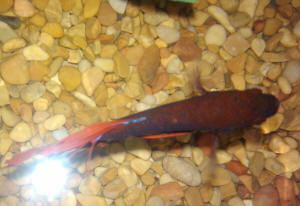  |
Re: Update on catfishes in 20 gallon, no filtration (!)
3/2/10
Hey again Melinda,
<Hi, Jordan!>
my old Email some how got hacked
<Sorry to hear.>
and I made this one, anyway Neale told me that predatory
catfish like Raphael ones like water movement so I
ordered the Marineland penguin 200 filter
<Okay.>
and I am uploading a video of my fish tank on YouTube so you can see it
there is a video of my tank before it was cloudy and a video of my
guppy tank :) you could check that out.
<Sure.>
None of my fish have died how thankful!
<Good news.>
Ralf is eating a lot haha.
<I'd stop feeding until the filter is installed.>
My filter is coming on Friday so I will still have to do daily water
changes.
<Sounds like a good plan.>
Thank you Melinda! Have a nice night!
<You're welcome. Have a good night, too.>
I'll send you a link of my YouTube profile next email once the
videos are uploaded thanks for all the help!
<Okay. Were you ever able to re-test the parameters that you sent to
me?
They sounded fishy (no pun intended!) so I think it would be a good
idea to re-test, since you're new at testing. I'm still worried
about these guys with no filtration, and as I mentioned above, I
wouldn't feed anyone until the new filter comes. Make sure those
water changes are frequent and at least 30%! Talk to you soon.
--Melinda>
hey my test results and YouTube.
Hey Melinda, me again with test results and YouTube videos.
<Hi!>
The test results are:
pH:6.0
<Very, very low... and .6 below the reading you gave me last time.
Please take a water sample to your fish store and have them test for
KH. In the meantime, read here:
http://www.wetwebmedia.com/FWsubwebindex/fwh2oquality.htm. I know of
this problem firsthand. When pH dips so low, the biological bacteria
which handle waste products are severely debilitated. This could be the
cause of the Ammonia you list below. Of course, since this tank may not
have cycled to begin with, and now there's no filtration, I
can't say for sure. There are a lot of variables here because
there's so much going wrong! However, it still stands that your pH
should be higher, and the way to do this is by raising KH with the mix
described in that article. This is cheap, easy to measure, and easy to
add.>
Ammonia:.25ppm
<The presence of Ammonia without the presence of Nitrate indicates
this tank isn't cycled. It either was, and isn't anymore,
because of the filter breaking, or because of the pH, or it never was,
and it's just starting.>
Nitrite:0ppm
<This is what makes me think it's just starting to
cycle.>
Nitrate:0ppm
<Again, not good. You want to be seeing some Nitrate here, which
would indicate a cycled tank. Presence of Nitrate at all would indicate
that at some point in the past, the tank was cycled, and now that cycle
has been interrupted for one of the reasons mentioned above. Since
there isn't any, I'm thinking it is just beginning to cycle,
but this is going to be really hampered by the lack of filtration at
the moment.>
and my YouTube video channel link is:
http://www.youtube.com/user/jordanwildmercure
<It looks fine in the first video, and not so much in the second!
Again, please stop feeding your fish until you at least get a filter.
Definitely keep up on huge, daily water changes to combat the Ammonia.
Good luck with them!>
thank you so much Melinda!
<You're welcome.
--Melinda>
Amount of food... send to WWM bb
Hey Melinda!
<Hi, Jordan.>
About feeding them until I get the filter, instead of no food could I
feed just very little? It's 10:30 I better get to bed, good
night!
<There's no reason to feed them at all. Fish can go for a good
long while without food, and a few days won't hurt these guys at
all. However, it's ultimately up to you, but this is a situation --
uncycled tank, no filter, etc. -- where you need to tread very lightly
in order to avoid a huge ammonia spike.
--Melinda>
Using WWM 3/2/10
Jordan, the nature of your questions/chatting, and stage of
understanding the hobby show that you'd be better served by our
bb:
http://bb.wetwebmedia.com/
Sign up, go there.
Bob Fenner
10 Gallon Tank rapidly declining 2/24/10
Hello,
<Hello Kerry,>
I have a 10 gallon tank that currently has a few snails, 2 Mickey Mouse
Platys, 1 Neon Tetra, 2 Golden White Clouds, a male Betta, and 2
African Dwarf Frogs. In the last two months, we had 4 Platys, and 3
Danios die
quickly showing no obvious signs of distress until the end. I have had
the tank for almost a year and half, and the Neon is the only remaining
fish from when the tank was originally set up.
<Now, before we go any further, let's be clear that 10 gallon
tanks are [a] poor choices for beginners; and [b] difficult to stock.
Few of those animals belong in a tank this small. I'd skip Apple
snails for a variety of reasons, not least of which is they don't
live long in fish tanks. Platies need at least 15 gallons, Danios the
same if not more, and certainly a tank 60 cm/2 feet end to end, simply
because they are so hyperactive. Neons and White Cloud Mountain Minnows
could be kept in a 10 gallon tank, but in groups, and because they need
somewhat different conditions, you wouldn't tend to keep them
together, though it's certainly possible. Both prefer fairly cool
water, around 22-24 C (72-75 F) and that's much colder than Bettas
tolerate, so you can't mix them. Plus, Bettas are targets for nippy
fish, and Neons and Danios are known "Betta harassers".
Hymenochirus frogs are fine in 10 gallon tanks, but on the whole mixing
frogs with fish is risky, and something to approach carefully. Let me
direct you to this article about stocking very small tanks like
this:
http://www.wetwebmedia.com/ca/volume_5/volume_5_3/stocking.htm
To some extent, what you keep depends on your water chemistry and the
temperature. If you had soft water, then Neons would be a good choice.
If you had hard water, then Endler Guppies (a dwarf species distinct
from common Guppies) would be sensible.>
To start off, I noticed white "flaky" spots on the Platys
before they died (each one got sick and died separately from the
others). I did my research and determined this was Ick and treated with
QuICK Cure drops.
<Ick looks like salt/sugar. Flaky patches on the Platies are more
likely caused by Finrot or Fungus, in which case a different medication
will be required. You have said nothing at all about water chemistry
and water quality, both of which are crucial.>
This did not help during any of their quick demises, so I would look to
make sure I saw no signs of Ick on the other fish, and I discontinued
treatment until the next one got sick. This happened for separate
times.
<Likely environmental. Without data about the water chemistry and
water quality I can't be sure, but I'd bet dollars to doughnuts
that you either have poor water quality or the wrong water chemistry
for the fish you're keeping. Perhaps both.>
2 of my Danios seemed to just go. I couldn't understand what had
happened with them, and Google searches did not help. They each died
separately and seemingly unrelated.
<Again, this points strongly at a water quality issue. Do make sure
you have cycled the aquarium before adding any fish, and that you test
for nitrite every few days to make sure cycling is progressing. The
easy way to cycle a tank is to fill it with water and plants -- but no
fish -- and add small pinches of flake food every couple of days. Do
this for 3-4 weeks, doing 25% water changes once a week. By the 3rd or
4th week, the nitrite level should have peaked and dropped, and once it
hits zero again, you can add a few small fish. Half a dozen Neons, if
you have soft water, would be appropriate. Let them settle down, test
the water every few days, and don't even think about adding any
more fish for at least two weeks. Sure, this sounds time consuming, but
better 4 weeks of an empty tank than 4 weeks of dying fish. Do read
here:
http://www.wetwebmedia.com/FWSubWebIndex/fwset-up.htm
>
Fast forward to last weekend, I did my normal water change (roughly
20%), I added AquaSafe in as usual, and then I noticed my Betta was
VERY lethargic. This Betta was my sister's fish at school, but she
found transporting him to and from school during every break was too
stressful and gave him to me. He has always been a "lazy"
fish, not incredibly active in the tank, and he enjoyed lounging on the
leaves of plants. However this weekends behavior
was extremely unusual even for him. I did some research and read about
aquarium salt helping to aid fish in better respiration and disease
treatment.
<How told you this gem of misinformation? Salt does nothing of the
kind.>
I got API Aquarium Salt and according to the directions on the box,
added 2 tablespoons of salt. I also purchased Lifeguard All-in-one
treatment of parasites including Ick (I was not treating with QuICK
Cure currently).
Since Saturday, I have lost a Platy and a Danio.
<I bet. You haven't understood the actual problem here, and your
"cures" are only making things worse.>
The Platy died much the same as the others, but the Danio had developed
a white thing coming out of his rear (which I only noticed Sunday
night).
This morning, the white thing had not changed, but when I got home, he
was gone and his anus was SEVERELY inflamed and red. I scooped him out
of the tank as soon as I got home.
<Oh.>
The frogs seem ok, with the exception that one has become very thin and
stays on the bottom of the tank.
<Starving, will die soon. Needs wet-frozen foods like bloodworms and
mosquito larvae; won't "scavenge" on fish food,
flake.>
The snails seem to be thriving, and I have had to remove several sets
of eggs in the last week, and I have discovered 2 new sets today.
<As is their nature, though overuse of medications can kill them,
and that means you have lots of rotting snail corpses in the
tank.>
The only other medicine I have put in the tank is Clarity, because
after Saturday's water change, everything looked cloudy. Also, I
have removed my water filter according to the Lifeguard box's
directions.
<Hmm...>
I fear I will lose my entire tank before I figure out what is going on.
The water tests are normal, except for a low pH, but that is not highly
unusual for my tank.
<I need numbers. For a generic community tank, you're aiming for
pH 7-7.5, hardness around 10 degrees dH, and a temperature of 25 C/77
F. Ammonia and nitrite should both be zero.>
I'm planning on doing a partial water change tonight. Any help
would be very appreciated.
-- Kerry H.
<Cheers, Neale.>
Re: 10 Gallon Tank rapidly declining 2/24/10
Neale,
<Kerry,>
Thanks for your quick response.
<Pleasure.>
I just went to test the water to send you data, and discovered I used
the last strip yesterday morning. I will get more tonight and send you
accurate data when I get home.
I'll go in order of my testing strip:
Nitrate - 0
Nitrite - 0
Total Hardness - 150 GH
Total Chlorine - 0
Total Alkalinity - 120 KH
pH - 6.2
<Whoa! This pH is far, far too low. Do understand filter bacteria
are happiest around pH 7.5 to 8, and when the pH drops below 7,
filtration diminishes. At pH 6, it stops altogether. Moreover, only
some fish tolerate acidic conditions. Tetras (mostly) like acidic
water, but livebearers can't tolerate it at all. So Platies,
Guppies, etc. aren't viable additions to this community. Do read
here:
http://www.wetwebmedia.com/FWsubwebindex/fwh2oquality.htm
>
Water temp holds pretty well around 75 F (I do have a heater)
<Fine.>
I realized I did not say last night that when I discovered the low pH I
put in a "Correct pH" to get it back to neutral.
<Do not do this. Do not use potions of any kind that come in
bottles. If the retailer offers you a bottle of magic potion, run. All
of these products are notorious for leading beginners into total
mess-ups. You need to add a portion of Rift Valley cichlid salt mix,
perhaps one-quarter to one-half the recommended dose, to each bucket of
water you add. This costs pennies, and the key thing is it adds
carbonate hardness to the water, and that stabilises water chemistry.
For a mixed community, you're aiming for about pH 7.5, 10 degrees
dH. This is acceptable for a wide range of fish including tetras,
catfish, barbs and (most) livebearers (not Mollies).>
Should I put the filter back in? Should I change more of the water?
I've had all these fish for at least 10 months (if not longer) with
no problems, then all of the sudden they're dropping like
flies.
<Read the above link. Act accordingly.>
What should I do? I feel like I've been a poor aquarium owner, but
I am trying hard to help those little guys...
<Yes, you've made some mistakes. But time to move on. Providing
good water chemistry is cheap and easy: all you need is a bag of Epsom
salt, a bag of baking soda, and a bag of marine aquarium salt
mix.>
Kerry
<Cheers, Neale.>
Re: 10 Gallon Tank rapidly declining --
02/25/10
Hi Again Neale,
<Hello Kerry,>
I read the page you sent me while at work, and went out to buy marine
salt, new test strips, and blood worms (for the frogs).
<Very good.>
I got home and put in a new filter, did a small water change with the
Rift Valley Salt mix, and tested the water. Here is what I got:
Nitrate - between 80-160
<Yikes!>
Nitrite - 1.0
<Ah, this is lethal; be under no illusions.>
Hardness - 150 GH
<Fine.>
Chlorine - 0
Alkalinity - between 120-180
<Fine.>
pH - 7.2
<Fine.>
I was SHOCKED when I saw this!! My other strips (same brand) must have
been duds!
<Can happen. As they say with breakfast cereals, "store in a
cool, dark place". It's also fair to say that they aren't
especially accurate at the best of times.>
I know that the Nitrate is WAY high, will getting the filter going
again help this?
<No; biological filters fix ammonia and nitrite, not
nitrate.>
Or do I need to do a large water change?
<Water changes. I'd to 50% today, and 25% tomorrow. After that,
the usual 25% weekly should be fine.>
Thank you for your help! So far Indigo, the Betta, is still hanging
on!!
<Cool.>
Kerry
<Cheers, Neale.>
Re: 10 Gallon Tank rapidly declining 2/26/10
Just wanted to write a quick thank you note to Neale!
<You're welcome.>
I did my 50% water change tonight. My water data is much much
better!
<Good.>
After the water change:
Nitrate - 40
Nitrite - between 0-.5
Hardness - 150-300
Chlorine - 0
Alkalinity - 180
pH - between 7.2-7.8
Tomorrow I will do a 25% water change.
<All sounds promising.>
Indigo is still here! I can hardly believe it! I hope he will get
better
now, but I think I'll just have to wait and see.
<Good luck.>
I did lose another Platy, however.
<Hopefully, as nitrite drops to zero, things should improve. Almost
all premature fish deaths come down to either poor water quality (i.e.,
non-zero nitrite/ammonia) or the wrong water chemistry (most often, the
water is too soft for the fish being kept, rather than the other way
around).>
But at least I know now to buy another set of test strips if I seem to
be getting unreliable numbers when there is stress to the fish.
<Indeed.>
Thanks again!
Kerry
<Cheers, Neale.>
|
please help with my sick loach and suffocating fish...
1/9/2010
I have a 55 gallon tank fully stocked with angels, loaches, tiger
barbs, Neons, etc. I received two loaches that are similar to the
zebra loaches (but I cant located their specific name) about a
year ago..everything has been great but two days ago I noticed
the smaller one laying flat on its side. now, they have tricked
my husband and I with this. they will just lay there let us
thinking they are sick or dead but once we get the net buy them,
up they go and swim off. they like to play possum.
<Yes... many Cobitids exhibit this behavior. May have survival
value eh?>
about three weeks ago I switched to a canister filter
<Do rig the discharge across the surface, to produce
agitation...>
that I am still figuring out (from the old hang on the back
filters)
<There are new/er models... Would be a good idea to run both
types here>
and have been trying to regulate my nitrates, nitrites &
ammonia...anyhow, two days ago I noticed the small one doing this
and didn't think anything of it. when he was still in the
same place a few hours later I began to be suspicious. so I have
been monitoring him but no change. he is now caught in my big
fish net, just laying there. labored breathing but no signs of
illness. no Ick, no cotton, inflamed gills. I look at him and he
looks great on the outside. but he wont move or eat, and he is
breathing hard. I checked the water and everything was out of
whack. my nitrates were 40-80, ammonia was 3.0-4.0, nitrites were
1.0
<Yeeikes! Deadly toxic>
and ph was around 6.8-7.0.
<Thank goodness the pH was relatively low... Nitrogenous
wastes are far less toxic at such>
I was so shocked that I did multiple water changes within a
couple of days hoping that would bring everything down. it has
but I don't know if I have traumatized the rest of my
fish...
<Evidently so>
the loach is in a sick tank labored breathing and on his side but
has begun to flop and flail around swimming all over the place
and then lays back on the bottom on his side or even back (upside
down). I have attached a couple of pick with him in the net but I
don't have a clue what to do. anyone have any opinions?
<... yes>
oh, I'm already using my sick tank to quarantine a few new
fish I got from someone so I cant pull him out. my other loach
has no problems at all and is swimming like normal...
<I'd apply (and quickly) one of the commercial "stop
gap" ammonia et al. "water conditioning"
products... Liquid or solid: e.g.:
http://www.thatpetplace.com/pet/cat/infoL3/22876/category.web>
also, with my 55gallon, I just noticed, an hour ago, that every
single fish (even the Neons, who stay in the middle to the bottom
of the tank) were literally floating at the surface of the
water.
<VERY bad... You need to act NOW>
my angels were all up at
the top to..I thought everyone was going to die on me from stress
of changing the water so much but my husband had mentioned to me
that they might be trying to breath.
<Maybe both>
with my new canister filter, the water that shoots back into the
tank doesn't hit the surface of the water to bring oxygen
back into the water.
<Arrange the discharge as stated above... with two
"els"....>
since the hang on the back filters actually dropped the water
into the tank, there was always a supply of h20...I pointed the
diffuser from the water output hose to the surface and added a
air tube to my power head to try and get some air into the
water.
<Good>
they fish seem to be doing better now and not all at the top but
is this normal for a canister filter?
<If tanks are overcrowded, over- or mis-fed, the inhabitants
in trouble already...>
there were no directions as to how I should be placing tubes and
hoses, or how to incorporate h20 into the water.
thanks so much for your help..
Lisa
<Please see WWM re canister filters, Ammonia, Nitrite,
Nitrate... but FIRST, address the current issue... get to the
store, NOW. Bob Fenner>
|
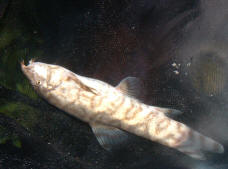 |
Re: please help with my sick loach and suffocating
fish... & Acrylic tank cleaning & & &
1/10/2010
you guys rock! so quick to get back to a question! love it...
<I sensed the need to respond quickly>
wow, what a panic attach I hat at midnight! so, after I applied
the power head with air, and pointed the canister filter output
nozzle at the surface of the water, it is 7:47am the next
morning. I think I had nightmares about my poor fish.
<Not good to have such apprehension that one loses
sleep>
everyone looks good. I lost two large green tiger barbs from the
high ammonia/nitrites and no oxygen but other than that, everyone
looks to be good. my loach in my sick tank is still acting funny.
not swimming properly, labored breathing, but will get a burst of
energy to flail around the tank and then lay on his side at the
bottom again.
<Patience here, and NO feeding, till the ammonia is below 1.0
ppm>
I'm monitoring the sick tank ammonia, nitrites and such and
they are good. because of my no oxygen scare I put a small air
bubble wand into my sick tank.
<Won't hurt, might help>
I figure I can wait a few days to see if the loach gets better
but the water quality is good. I will pick up ammonia stuff today
but last night was too late.
nothing was open but because of my water changes the ammonia is
down to 0.
<Very good>
ok, second scenario...I have just purchased a used 150 gallon
acrylic custom tank from someone who was using it as saltwater.
its 48" long, 24" tall, 30 wide. it took me three days
to clean the pink and white coral off but it looks great! (pics
attached).
<Good job!>
fyi, credit cards work good on acrylic (after I abused two of
mine on this project) but the plastic putty knives work even
better.
<Thank you for this input>
I saw them after I was almost finished so I used them the last
day of cleaning. I have multiple questions I have been trying to
find an answer for:
1) the canister filter I just bought is intended for my 150
gallon. it says it can filter up to 150 but is that always
true?
<Mmm, best to think of such gauges as rough guidelines...
there are other "rules of thumb" re flow rate vs.
volume of system served, but obviously, more highly stocked,
heavily fed systems need more filtration, circulation,
aeration...>
I have bought a second one thinking I would need it but do you
think I will?
<I'd put it on in any case. Better to have more than one
source of filtration>
it is a Marineland multi-stage canister filter c-530. I was told
to buy an Eheim.....
<Eheim's are superior, but...>
after I had already hooked this one up, but it hasn't gotten
bad reviews so I'm hoping it works out. this is the filter
that didn't come with any directions at all (actually very
disappointed about that),
<Write the manufacturer... they have a website...
http://www.unitedpetgroup.com/>
didn't come with information of how the full system works
with the bio balls, etc, or directions of where the impeller is,
how to open the lid without all the water from the tubes running
out, etc. simple stuff that a novice of canister filters woulnt
know. grrrr.
<I agrrrreee!>
2) if I should get a second one, should I just stay with the same
one as my first so I can utilize the same parts, filters, etc? or
would it behoove me to switch and go Eheim?
<IF money is not dear, I'd get/use Eheim... I have for
decades... though our businesses (retail and service) sold,
serviced other makes>
3) I am planning on doing a FW planted tank. so far I have one
plant left that my algae eater has not managed to fling out of
its corner with his tail. my questions is...since its 24"
tall but 30" wide what type of lighting would be good?
<Please read here:
http://wetwebmedia.com/PlantedTksSubWebIndex/AquariumGardenSubWebIndex.html
the fourth tray down...>
everything is for coral with the actinic blue lights but I
don't need that. but because of the width and height I am
confused as to which light would be the best option. compact
fluorescent or High output lights?
<These could work... I'd look into T5
technology...>
I live in a HOT environment in the summer so I want to stay away
from metal halide (not to mention a bit out of my price
range).
I'm also living overseas (husband is military) so getting
items can be a challenge. a chiller would be nice but out of the
question at this point in time.
4) with the acrylic tank, there was a cubbie hole in the back of
the tank to hide all the hoses and as a overflow for saltwater.
is it easier to keep it as a overflow and just figure a way to
attach my canister hoses to that so the holes in the bottom of
the cubbie hole (that the hoses come out of) don't leak water
out of the tank or should I find something that will seal the
holes and use the canister filter output and input tubes to hang
over the side like I do currently? not sure which is the best
route to go.
<Either more plastic sheet cut to accommodate the hoses, or
tape or such over them to prevent jumping>
5) I mentioned the current freshwater plants that I do have, but
they are the same size I bought them a year ago. they don't
die but they don't grow.
not sure if its because I don't add fertilizer but with the
amount of fish I have it shouldn't be a problem. I have a
compact fluorescent tube light from the diy store which I thought
would be good but they just haven't thrived.
any ideas?
<Please read...>
I am wanting to do a planted tank but so far, I have failed at
it. my fish uproot them so they always float to the top or they
just stay stagnant....
I have more questions but this is all I can type for now. I
received my tank three weeks ago and these are the questions I
have been researching online but to no avail. people give me
their ideas on lighting but they come from a saltwater community
so I don't feel that they are fully knowledgeable...thank you
so much for your time with me! I
<Bob Fenner>
Re: please help with my sick loach and suffocating
fish... Now lighting 1/11/10
thanks for pointing me in the right direction with so many of my
questions but I am still a bit unsure for the lighting.
<Using "Command-F" (or whatever) to Find stuff on a
page is very helpful!>
now, I was told that my large 150 gal would need anywhere from
176-269 watts of light, which would fit most fixtures since they
are 260 watts, but looking into WWM planted fw tank info, it says
I need anywhere form 2-3
watts per gallon. that would be anywhere from 300-450 watts for
my tank.
so I'm confused as to how much I would need, not to mention
the tank is 30" deep but only 24" tall.
<A good approach is to start with something between 1 and 2
watts per gallon. Use reflectors behind them. Such a system
should be economical and easy to assemble. Get a mix of plants,
including some shade-tolerant hardy
species (Cryptocoryne wendtii, Anubias nana, Java fern, Java
moss, floating Indian Fern) and a few still hardy but more light
hungry species (Vallisneria, Hygrophila, common Amazon Swords).
Avoid anything known to be delicate or demanding (Rotala,
Hairgrass, Cabomba, etc.). Install an at-least semi-decent
substrate (perhaps a couple of inches of fine gravel mixed with
laterite or fancy aquarium plant substrate) and then top it off
with another inch or so of plain gravel. Use a gravel tidy
between them if you have fish prone to digging. Plant the tank,
decorate, add the fish, and perhaps a few Nerites, Cherry Shrimps
and/or Ancistrus for algae control (recommend you avoid
Otocinclus spp. because they are quite delicate and often
don't thrive in community tanks). Enjoy aquarium. Now, over
the next 2-3 months it should be very clear which plants thrive
and which ones don't. If you're happy pulling out the
failing plants, then your job is done. If you REALLY want to keep
even the finicky ones, then think about whether you need to add
fertiliser to the water, more light, or CO2; do so accordingly,
and again, wait and see what happens for a few months. Every
aquarium is different, and there's no point looking at a
photo of an Amano-style aquarium without realising that creating
such tanks is expensive and labour-intensive. It's also
misleading in a way, because Amano-tanks are built FOR A SINGLE
PHOTO and not to run like that for even a few months, let alone
years. They also contain virtually no fish. Much better to build
your planted tank up over the course of a year, adding plant
species, trying our technology, and seeing what works for you
(and fits your budget).>
I have looked into the T5 lighting like you had suggested but,
I'm then confused about the wattage. do I need 4 bulbs at 65
watts or the fixtures with around 55 watts (or something like
that). I will be doing a lot more reading on your planted fw tank
info regarding co2 and substrate...
<T5 lights are a little more intense than traditional T8
tubes, but not dramatically so. In other words, choosing between
1-2 watts/gallon with either lighting type should work well,
though the T5 tubes will seem brighter and may support somewhat
fussier plant species that bit better.
Nothing to lose sleep over though, and many aquarists continue to
maintain lovely planted tanks using T8 tubes. As a ball park kind
of figure, something like 3 watts of T5 lighting seems to equate
to every 4 watts of T8 lighting. This does assume both are around
6,500 K in colour temperature, which is more or less what plants
are happiest with, and nice clean reflectors help get the best
from both. Cheers, Neale.>
Re: please help with my sick loach and suffocating
fish...
so I think I found a light fixture that should work for my large
tank.
http://www.drsfostersmith.com/Product/prod_display.cfm?pcatid=13733
is on dr. foster & smith (love them and they ship to military
addresses).
its for freshwater and has the wattage I need. as for my sick
loach...still doing eh..laying on its side and gets a burst of
energy flies around the tank and then back to the bottom.
<Will not get better until water conditions improve... you
really do need to fix water conditions.>
I ordered clove oil so if he's not better by the time I get
it then its time to put him out of his misery.
<Would be very careful about what you're doing here... the
loach isn't "sick" but stressed, poisoned. Needs
consistently good water conditions for good health. Without
providing these, none of your fish are going to last
long.>
four days later and my tank has finally regulated. ph 7.0-7.2 (a
little higher than before but the water changes increased it a
bit), nitrite 0, ammonia 0, nitrate 10ppm. Ahhhh, so relaxing
now. anyhoo, I'm in the process of trying to plug the holes
in my tank where the salt water sump hoses came through. I wont
be using those and I want to seal it well. I hope my choice in
freshwater planted lighting is correct. now my project is to
build a stand for this puppy...hopefully it wont take me six
months!
haha. thanks again for ALL of your help. you get a lot of the
same questions but still reply with a great attitude. thanks a
bunch. you have NO idea how helpful you all have been!
<Cheers, Neale.>
Re: please help with my sick loach and suffocating
fish...
what is the difference between compact fluorescent bulbs and
power compact fluorescent?
<Marketing. Cheers, Neale.>
|
Plastic poisoned tank?-- 12/04/09
Hi guys, I hope you're well this afternoon.
<Am trying to "get w/ the program" fresh this
AM...>
I'll try to be succinct here...2 days ago, I helped my mother build
and install a java moss wall in her freshwater planted tank. We used
PVC pipe to make "goal posts", hung over the side. Then used
plastic, black "pet proof" screen for windows and screen
doors, fastened with plastic zip ties.
I have used the same PVC and the same zip ties in my FOWLR tank for
many years with no ill effects (same brand, same store even).
<These, the pipe, screen and panduits are all chemically-inert/safe
for aquarium use as far as I'm aware. I've used them all for
many years myself>
I sandwiched the moss between two pieces of the screen, tied on with
fishing line.
<This last is also fine IME>
All the stuff was new, clean, and not contaminated with anything. The
java moss was stuff we pruned out of the same tank, put in the clean
water-change fishtank-only bucket, and then put right back into the
tank, attached to the screen.
The rest of that day, and all of yesterday, everything was fine.
Then this morning when she turned on the tank lights and sat to look at
it, the entire animal population of the tank had died except 3 lone
stragglers (2 Gourami and an Aust. rainbow, who don't look like
they will make it either). This was a 48 gallon, well established tank
with about 15 small tetras, some Corydoras, and another rainbow in it.
Also a huge population of tiny snails that bred like crazy in the
plants. All dead, in a matter of hours.
<Yeeikes!>
The moss in the screen seems fine, all the plants are unchanged.
We removed the remaining fish to quarantine, and have started doing
water changes. But without any clue as to what would cause this, we are
at a loss. Presumably, somehow, a PVC and plastic moss
<Wait; "plastic moss?" I thought this was the real
plant>
wall leached something into the water and killed everything =( The
screen itself is just plastic or rubbery material coating a
"core" of nylon fiber.
<And sorry for misunderstanding here as well. I was referring to
"stock" plastic screen door material. I don't know what
it is you're using here>
We have ruled out temperature problems, aeration problems, kids
throwing stuff in the water, electrical leaks, all the usual. What
could have possibly caused this and what can we do?
-distraught, Earl Clay III
<Mmm, I'm thinking a bit of experimentation might be in order
here... with just one of the materials used in a large pickle jar,
bioassay organisms (perhaps "feeder" guppies)... But am
considering that something altogether not mentioned may be a/the cause
of mortality. Soap on someone's hands for instance, or some other
toxic material in/on a container used in the whole set-up process...
Perhaps a glass cleaner, or cooking oil or such in the air the day of
the work or just after... As the possibilities of poisoning are vast
here I suggest your read: http://wetwebmedia.com/toxictk.htm
and the linked files above. Yes, including the "marine"
input. Please make it known if this reading brings anything live to
your consciousness. Bob Fenner>
Re: Plastic poisoned tank? 12/4/09
Hi Bob, thanks much for the fast (and early!) response.
<I felt the direness/need to reply ASAP>
Hope it's warmer where you are than here by Lake Michigan...
<Have got my "Holmes" portable heater on low... but right
next to me>
looks like it's gearing up for what we like to call an "ice
hurricane", what in kinder areas would just be called
"snow". I have read all WWM's info on toxicity and ruled
out all the usual culprits like aerosols, soap on hands or in buckets,
and the like. Barring that, nothing that hadn't been there in
routine use for the whole life of the tank, which makes me look hard at
the moss wall, which is the only thing that changed in the time between
a thriving tank and a dead one.
The java moss is indeed live Vesicularia dubyana , grown from a tiny
sample into a monstrous several-pound mass within 8 months or so.
<This is assuredly not the root cause here>
The screen we used is the following stuff:
Pet D Fence Pet-Resistant Screening
Made of vinyl-coated polyester, fabric is much heavier than traditional
fiberglass or aluminum screening. Resistant to tears and damage caused
by household pets.
<Mmm... I did a Google search with the question: "is polyester
toxic to fishes?" and here:
http://www.google.com/search?q=is+polyester+toxic+to+fishes%3F&rls=com.micro
soft:en-us:IE-Address&ie=UTF-8&oe=UTF-8&sourceid=ie7&rlz=1I7GGIC_en>
So, vinyl and polyester...could this have leached stuff into the
water?
<I do think the Polyester might be implicated here>
Or possibly killed the snail population, which maybe then resulted in
killing the fish? Or maybe the culprit killed the substrate microbial
population, resulting in the same chain of events, in less than 48
hours?
<Mmm, the last is not too likely, the former, less still>
Our plan for now is to get some small snails as bioassay animals and
maybe put some of the screen in with them in a quarantine setup and see
what happens. After the day of water changes (35 gallons changed) the 3
surviving fish seem to be hanging on (with the Australian rainbow
seeming none the worse for wear). Might there be visible signs on the
fish, that I could look for, which might give further clues as to the
specific toxin/gypsy curse involved?
<None to look at grossly on the surviving fishes... but do remove
the screen if you haven't done so already... and add some
Granulated Activated Carbon (in a bag in the water flow path)>
The plants are all still showing no signs that anything ever happened.
So if nothing else, if we can isolate what killed off every last snail
out of a monstrous population of them, while leaving plants intact, we
might be able to strike it big selling our new pest snail removal
technique.../head desk
<Mmm, I do like the way you apparently think. Or should I state,
"It appears we think alike">
Thanks again, hope to catch you at a convention sometime, I owe you
some beers!
<Ooooh, now you're talking. Do please see the search above...
Think over your impressions... And do report back what your
experiments, further experiences reveal. Cheers (and biers),
BobF>
Re: Plastic poisoned tank?-- 12/04/09
Hi Bob,
<Hello Neale>
A few comments that might be helpful.
I doubt the tiny snails suddenly "bred", but if conditions
turn poor, substrate-living snails like Melanoides will make a brisk
bee-line to the surface. This is often a very good clue that a
freshwater tank isn't working. Lack of oxygen is the classic
stressor, but I've also witnessed them do this when the pH suddenly
drops. Your correspondent would be wise to check the carbonate
hardness. If he has soft water, biogenic decalcification can
dramatically change the pH, and in doing so stress/kill the
livestock.
<Oh! Please do retrieve, or I will, the sent corr. and send this
note on to the original querior. Please don't think you're
"doing me wrong" for intervening, offering your useful
input>
Plastic products sold as safe for aquaria should be perfectly safe, and
I always recommend people buy such items unless that can be sure other
products are safe (e.g., because the item is sold as safe for holding
potable water, or for use in ponds, etc.). However, you do need to be
careful with items sold for use in vivaria, as these may not be
designed to be constantly submerged. I'm also skeptical of
suspiciously inexpensive dyed silk plants, fake ferns, etc.
<Agreed>
My final comment is that the two times I have seen sudden mass deaths,
they were indirectly my fault. The first time was underestimating how
quickly Vallisneria would decalcify soft water when photosynthesising
rapidly, and the second time when I placed some wood in a tank without
knowing that wood had been recently sprayed with insecticide. I'd
encourage your correspondent to review any recent changes to the tank
or its immediate environment. These are, I feel, more likely to be the
problem than gradual poisoning by something that was already in the
tank.
Cheers, Neale
<All excellent advice. Will forward. Cheers, BobF>
Please help... FW, CAE... fish hlth, env.... reading --
11/1/09
I really need fast advice.
<That's why we recommend buying a book about fishkeeping before
you buy any fish. Sounds pedantic, but nothing beats having some
reliable, edited text in front of you that tells you what you need to
know.>
I have a 4 yr old 55 gallon FW tank. 1 Gold Gourami, 6 tiger barbs, 3
cherry barbs, 2 young Chinese algae eaters, 1 red tail shark, 4 Cory
catfish, and 1 clown loach. Since my CAE are young and small, I feel
it's
not over stocked.
<Well, good luck with that. I'm afraid I have little time for
this fish species. It's widely known to be a trouble maker, and
there's no Earthly reason at all why anyone would add one to a
community tank. They're
aggressive, they're bullies, and they can physically damage other
fish while fighting or simply attacking them to rasp away at the mucous
on their bodies. All around, a bad fish.>
I do regular water changes about 1 a mo., about 20-30 gallons. I lost
my clown loach, 1 tiger barb, 1 CAE, and it seems as if, all the rest
want to follow.
<Oh dear. Now, when you have a series of different fish species
dying, it's a good sign the environment is wrong at some
level.>
My Nitrate levels for some reason are sky high!!!!
<Great! You're ahead of me here. So...>
I immediately did a water change...( I'm currently waiting for the
water to reach 77-79 degrees and put my fish back in :) I added new
carbon to 1 filter.
<Carbon = largely useless in this type of aquarium. Even
nitrate-removing filtration media would be massively overwhelmed.
Remember, nitrate-removing media are designed to be economical in tanks
that are very lightly stocked and receive very little food, i.e.,
marine reef tanks. They are not economical in tanks "stuffed to
the brim" with community tank species.>
Should I continue to do water changes until nit3 and nit2 reach
zero?
<Nitrite should be zero all the time, every day. If it wasn't
zero, that's why your fish are dead. Nitrate is a more subtle
stressor, and while certainly toxic in the long term, particularly to
cichlids, it isn't normally an immediate cause of death. For
standard community tanks, levels above 20 mg/l are fine provided they
don't exceed 50 mg/l.>
I really love my fish and have had all but the CAE for about 4 years.
only down fall in doing the water changes daily is waiting for the
water temp. to reach the correct temp. due to it being cold here.
<Actually, adding warm tap water to your bucket of new water
won't do any harm. I assume you're not using straight RO or
rainwater with zero hardness, because that would kill your fish pretty
quickly too. So let's assume you're using plain vanilla tap
water. That being so, mixing warm and cold water in the bucket is fine,
and just add water conditioner. Any decent brand of conditioner will
neutralise the copper from the hot water tank as well as the
chlorine.>
Please advise me of any chemical I may use, if any to prevent me from
losing any more of my beautiful fish...
<"Adding" chemicals (other than dechlorinator) usually
doesn't help at all.
Do read here:
http://www.wetwebmedia.com/FWsubwebindex/fwmaint.htm
http://www.wetwebmedia.com/FWsubwebindex/fwh2oquality.htm
>
Thanks in Advance :)
Melissa
<Cheers, Neale.>
Sudden change in Gourami behavior 10/2/09 Env. dis.,
social
Hello, I've had a 10-gallon tank with a golden Gourami, a black
molly, and a Pleco in it for about four months now.
<This tank is far too small for these species. There's no
discussion here.
The Plec can get to some 45 cm/18 inches in length within two years, so
it won't even *fit* in this tank, let alone stay healthy in it.
Mollies are too sensitive to poor water conditions, and really need
slightly brackish
water to do well. Since they're quite big fish and certainly
active, they're fish for tanks above 90 litres/20 gallons.
Three-spot Gouramis, Trichogaster trichopterus, are also too big and,
in the case of males, too
aggressive for tanks this small. Three strikes and you're out,
I'm afraid.
Not one of these species belongs in this aquarium.
http://www.wetwebmedia.com/ca/volume_5/volume_5_3/stocking.htm
Most any advice I offer now will be pointless without a bigger
tank.>
Up until about a week ago, they all got along fine.
<Famous last words.>
Occasionally the molly would follow the Gourami around, but they never
fought.
<Female Mollies at least are somewhat gregarious, and males, though
aggressive towards one another, will expect a certain amount of company
of their own kind. Normally one keeps Mollies in groups of one male per
2-3 females.
http://www.wetwebmedia.com/FWSubWebIndex/mollies.htm
>
The Pleco stays completely out of it all.
<Moot point, really. Needs a tank 5-6 times the size of the one you
have.>
Now, the Gourami will chase the molly all around the tank until it
hides either in the hollow stump or below some plants the Gourami's
too big to fit under. I do a 25% water change every 3 weeks, feed them
once a day, and add Stress Zyme weekly.
<Water changes should be weekly, and it's dollars to doughnuts
that the Molly eventually sickens and dies in this aquarium.
They're too sensitive to nitrate when kept in freshwater
conditions.>
I'm at a loss here--what could cause the change?
<Male Trichogaster trichopterus are aggressive.>
I suppose I should also mention that the Gourami darts all around the
tank when a human approaches, and if you catch him chasing the molly
and point at him (not tapping the glass), he stops dead in his tracks
(this is actually pretty funny--if you go along with that kind of
anthropomorphic thought, he acts like a kid caught doing something
wrong).
<More likely switches from territorial behaviour to either fear
(worried you're a predator) or expectation of food (associated you
with the appearance of food).>
Please and thank you for any help you can give!
Katie
<Katie, much as I like to encourage people to enjoy keeping fish,
you've done everything wrong, and give no impression here of having
read a darned thing before buying the aquarium and your fishes. None of
these fish, repeat, NONE OF THESE FISH, belong in a tank so small as
this one. Take them all back. You're stacking up problems for the
future, and even if you ignore me, stuff will just die as the fish grow
and the filter becomes overwhelmed. Try reading a book (or this web
site) before spending any money.
http://www.wetwebmedia.com/FWSubWebIndex/fwlivestk.htm
Do feel free to write back and ask for advice on fish *before* you buy
them, and I'd be happy to tell you what they need, whether
they'd get along with other fish, and how much space they require.
Cheers, Neale.>
New tank syndrome and fin rot in Betta... No reading,
mis-using WWM 9/11/09
Hi , I bought my Betta about 4 weeks ago. He is in a 2.5 gal tank. The
tank came with a filter but was too strong for my Betta. I changed to a
sponge filter and had the filter for about 2 weeks.
<Good move>
I started to notice a strong ammonia smell coming from the tank and
noticed that my betas tailfin
was starting to look shredded and transparent near the tips.
<You could smell ammonia?! Any present is toxic, damaging>
I was having my water tested weekly at Petsmart where I purchased my
fish.
The ammonia was borderline
<See above... read on WWM...>
but I knew that the tank was still cycling.
<Needs to be done w/o aquatic life present>
One week later, my betas fins were getting worse. I decided to take out
my sponge filter from advice from a petstore and replace it with a
whisper filter. they told me that would improve my water conditions,
along with doing partial water changes. Now I fear that I made a big
mistake by removing my sponge filter. I know that it was probably
cycling but I didn't want to lose my fish to poor water quality. I
have done small water changes over the past two days and added some
aquarium salt. Just yesterday I took out my carbon from my filter and
started treating my fish with Bettafix (more advice from the
petstore.)
<This material's as useful as Pinesol... Not suggested... Had
you followed directions, searched WWM before writing...>>
My Betta still is acting fine but I fear that the fin rot with
eventually kill him. I have gotten so many mixed reviews that I
don't know which way to go.
<... Read what we have here... WWM is a growing reservoir of
QUALIFIED factual input>
I have also bought a heater to keep my temp. from fluctuating. I have
not installed it yet. The heater that I
bought keeps the tank at a constant 78 degrees. My tank is currently at
72 degrees.
<Too low>
Will this stress him more when his temp suddenly climbs to 78
degrees?
<No; less>
Should I continue treating him with the Bettafix or will doing a
partial water changes with aquarium salt cure the Finrot?
<Likely the latter>
I'm afraid that not using a carbon filter for a week while treating
him with Bettafix will make the water quality even worse.
<I agree>
I have read mixed reviews about this product. Also, will I have to
cycle the tank again after treating with
the Bettafix?
<Is possible>
I understand the cycling process, but I don't know how to avoid
losing fish to disease and ammonia poisoning until the tank cycles.
<A matter of having system/s cycled ahead of livestocking
mostly>
Will daily partial water changes keep the fish healthy while the tank
cycles?
<Not likely>
If so how often and how much water do I replace.
<... this is all covered over and over...>
I condition the water and add aquarium salt to each water change. I
also just bought a five gallon tank
with a BioWheel and carbon filter.
<Ahh! Much better>
It has been set up for a week and I just added a Betta to that tank
today.
<... w/o it having cycled? No!>
I don't want to make the same mistake with him.
<You already have>
Can you tell me how to get through the cycling process with this fish
without running into the same problem.
<Read on WWM re...>
I am hoping that I can fix the Finrot with my other fish before it gets
too far advanced. Please help!!
<Help yourself... tens of thousands of folks use our site
daily>
I am very attached to my little buddy and do not want to lose him. I
also do not want to put my other Betta that I bought today through the
same misery.
Thanks, Stacy
<Bob Fenner>
Re: Fish system problem, FW... env. 9/6/09
Thanks for the info. I added oxygen and changed the conditioner.
<Ah, good... Please do report back your observations re incidental
mortality, behavior... esp. of the Loaches and Balas>
We will see what the next shipment brings. Should I attempt to
eradicate the mycobacterium form the system?
<Mmm, how would you do this? This genus of bacteria is pretty much
omnipresent in aquatic biological systems... Only becoming pathogenic
under "bad conditions"... Please read here re:
http://wetwebmedia.com/ca/volume_6/volume_6_2/mycobactera.htm
and peruse the files linked at bottom>
That would be quite a challenge. Since you seem to have some experience
with this type of system, do you think there is anything I can do to
improve the overall system?
<There is indeed... more circulation and aeration (added per tank)
are very good first steps. Changing out the Rainbow/Pentair UVs for
something like Vecton units is also excellent... Pulling the plastic
biomedia, adding filter bags (that will have to be serviced daily...
switched out for rotating/cleaned ones... on the discharges fed to the
sumps... Monitoring nitrates in these systems... doing what can be
done... at most probably changing out large volumes of water... to keep
NO3 below 20ppm... Perhaps adding a contactor (likely simply a carbon
type) on the source water to treat ahead of dumping into the
systems>
I read somewhere about adding liquid vitamins to the water. Do you
think this might help?
<In freshwater, minimally. FW animals don't "drink"
their environment (unlike the majority of marines)... so material/s
added to their water that are intended to get inside them do little
good>
I am stuck with this system, and anything I can do to improve it would
be a good step forward. Thank you so much for all your help. I really
appreciate it.
Virginia
<Let us indeed keep conversing Virginia. I can and will help you,
your system, efforts to improve the lives of the organisms in your
care. Bob Fenner>
... FW... overstocked... something re saving...
9/2/09
We have a 55 or 75 (not sure exactly what size it is, I have been told
it's both sizes by different people) gallon tank at the school. It
currently has the following cichlid fish: 2 Oscars, 1 Midas, 1 Red
Devil, 2 jack
Dempseys, 2 Zebra Convicts, 6 Pink Convicts, 2 Jewel Cichlids, 3 Gold
fish, 1 Blood Parrot, 2 algae eaters (look like Plecos), and 3 other
smaller fish (2 look like small angel fish and one looks like a
miniature shark). What should I do to save the fish in this tank?
<What do you mean "save"? What's the particular
problem? Assuming these fish are adults, then you're dramatically
overstocked, and you do need to thin your livestock list a bit. You
want to avoid larger fish eating smaller fish -- this is obviously a
bad thing for the smaller fish, but it's also a good way to make
your bigger fish sick, since things like farmed fish (including
"feeder fish") often contain parasites or chemicals
such as thiaminase that cause problems. Cheers, Neale.>
Re: My fish died last night ... culprit
might be pH? 9/1/2009
Hi Neale. A month ago I had a convoluted set of issues. Earlier note is
attached below. Your recommendations were great!
<Glad to hear it!>
My main problem was low KH. So ph was crashing.
<I see.>
I've been fiddling around with different percentages of Rift
Valley.
Trying to find the best mix. Before I add more fish. Now I only have a
couple platys left. Would like a mixed freshwater tank. Following are
test results. Using a dropper test kit. No more pesky test strips.
My tap water is (ammonia, No2 and No3 all zero):
ph 7.2 ... KH 2 ... GH 8
<Somewhat low carbonate hardness, but with regular water changes,
this would be ideal for soft water tetras, cichlids, etc.>
Using 50% Rift Valley mix (although can't remember if this was
seasoned water or right out of the tap). The bucket tested at:
ph 7.8 ... KH 9 ... GH 22
<Ideal for livebearers, Goldfish, Mbuna, Tanganyikans and Central
Americans.>
Elsewhere for a mixed tank. I think you said KH should be 5-10. GH
6-18.
So I figured this GH is too high.
<Actually less of a deal than many suppose, unless you're
breeding. Visited Southern Ohio last couple of days where people are
breeding Angelfish in "liquid rock" very similar to
this.>
First, I reduced just the Epsom salt % in the mix. To knock down GH
only.
Did baking soda @ 50%, Epsom @ 33%, marine salt mix @ 50%. That bucket
tested out at:
ph 7.6 ... KH 8 ... GH 15
<This would be ideal for a wide range of fish that don't need
especially soft water. Livebearers would thrive, and barbs,
rainbowfish, catfish and many other community species would also do
well.>
I figured that was pretty good. But when I put it in the tank via 20%
weekly water changes. Half way through the week KH is down to 2-3.
Although ph stays pretty stable in that time frame. I've been
afraid to wait much longer (for a 20% water change). Afraid of another
ph crash.
With so-low KH.
<Indeed.>
Then I figured to boost KH only. Try goosing the baking soda %. So I
did baking soda @ 100%, Epsom @ 33%, marine salt mix @ 50%. That bucket
tested out at: ph 8.0 ... KH 13 ... GH 14
<Somewhat too high for standard community fish, but the hard water
fish mentioned earlier (livebearers, Mbuna, etc.) would thrive.>
To me that sounded like probably acceptable KH and GH. But ph too
high.
I'm scared to dump it in my tank.
<I'd actually use one bucket of that mix, and one bucket plain
water, and see what you got. 8 degrees KH and 7 degrees dH wouldn't
be a bad mix for a wide range of community tropicals.>
I thought of trying. Baking soda @ 50%, Epsom @ 33%, marine salt @
100%.
But figured let me ask first. If this makes sense. Or I'm going
down the wrong road. Fiddling with these percentages. Chemistry was not
my thing in high school. As you can probably tell (yuck, yuck).
<Pretty much everyone comes down to this. While the Rift Valley salt
mix is a good starting point, many people find they have to
"eyeball" the dosages to match whatever comes out their
tap/faucet. Someone with hard water probably won't need as much
salt mix as someone with very acidic soft water.>
In other words. Does the ratio of the 3 Rift Valley ingredients NEED to
stay constant? E.g. 50%-50%-50%. Or 25%-25%-25%. But NOT
50%-33%-50%.
Or 100%-33%-50%. The way I've been trying.
<You are free to experiment as much as you want. Don't expose
the fish to wild changes in pH or hardness (like from pH 6 to 8 in 20
minutes!) but broadly speaking, making changes from one day to the next
doesn't usually harm most community species. Indeed, many fish are
quite able to adapt to changes in water chemistry, and have to, e.g.,
when photosynthesis cases pH to rapidly changes during the day, or
rainstorms suddenly dilute the amount of hardness in the water.>
If so, how high is too high for GH?
<For most community fish, somewhere around 10-15 degrees dH general
hardness is ideal. Lower levels will suit soft water fish, but
livebearers and other species that need hard water will complain. Most
community species will adapt to 20 degrees dH, including most barbs and
Corydoras,
even though they inhabit softer water in the wild. But there are some
fish, like Cardinals and Ram cichlids, that never quite adapt fully to
very hard water, and tend to be disease prone or simply short lived
above 10 degrees dH.>
Sounds like fish can get used to almost anything.
<Pretty much. Oddly perhaps, hard water fish are more sensitive to
soft water than soft water fish seem fussed about hard water.>
But I'm worried if my GH is sky high. Vs. the pet store tank.
I'll shock new fish I'm adding to my tank. Even if I slowly
transition them. By adding small amounts of tank water (to the bag
they're in). Over 2 hours or so.
<Should work fine. See the "drip method" as used by marine
aquarists.>
Any thoughts? Of the best way to increase KH. Without driving GH
through the roof. And I don't want to raise my ph too high
either.
<I'd think about the ph 7.8, KH 9, GH 22 mix as a starting
point, but for each bucket of that you add, add a plain vanilla bucket
of tap water. I suspect you'll get something around pH 7.5, 4-5
degrees KH, and around 10-12 degrees dH. That would suit virtually all
but the fussiest community fish. Provided you did regular water
changes, I wouldn't expect pH to drop much between weeks. If you
find pH changes rapidly from one day to the next, check your water
isn't "funky". Some folks find their water drawn from the
tap *before* adding salts has a certain pH and hardness when fresh, and
then 24 hours later is totally different. It seems the test kits are
"fooled" by unstable chemicals in certain types of water
(often well water, but sometimes water treated with flocculants and
other chemicals).
So, you need to leave the water overnight, test it, and then add your
salt mix. That way, you'll have a more reliable product.>
I'm anxious to decide what Rift Valley mix is best. Then I'll
stick with it. Looking forward to adding more fish. These platys are
getting lonely.
<I bet!>
Thanks! Rich
P.S. mixing Rift Valley. After swirling the water in a circle. When the
current settles down. I notice a decent amount of black granules
collecting in the center. Seems like the mix isn't dissolving
completely.
Even after a day or two. I figure it's no big deal don't worry
about it.
<Don't worry about it. Cheers, Neale.>
Fw: My fish died last night ... culprit
might be pH? 9/1/2009
Amendment to yesterday's note (attached below). Turns out my prior
"bucket tests" were right out of the tap. Instead of 24 hour
aerated water. So pH is higher (about .4) than I thought. Sorry!!
<A-ha! Yes, this is often the case, as I just wrote in my preceding
e-mail.>
Yesterday I re-did prior tests using 24 hour seasoned water. Seems like
anything close to 50% Rift Valley mix. Gets my pH up to 8.0.
<Which, in itself, isn't a big deal. Most community fish
tolerate this just fine, and livebearers love it.>
So I'm going to go with 25%-25%-25% (consistent percentages) Rift
Valley mix for a while. And see where that gets me. If I have to change
water more often I will. I figure gauge how long it takes for KH to
drop to say 2-ish. Hopefully I catch it before a pH crash.
FYI here's what my 25%-25%-25% Rift Valley bucket tests out to
(using 24 hour aerated water):
pH 7.6 ... KH 4 ... GH 8
<Not bad at all... keep on top of the water changes and you should
be fine.
A little soft for some livebearers, particularly Mollies, but Platies
should be fine.>
My tap water (24 hour aerated water):
ph 7.2 ... KH 2 ... GH 7
<Very soft indeed, or at least, very lacking in carbonate
hardness.>
Thanks you're the best! Rich
<Glad to have helped. Cheers, Neale.>
Re: My fish died last night ... culprit
might be pH? 10/17/09
Hi Neale. During my first 6 months of fish keeping. You were a GREAT
help. That's why I just made a donation (to WetWebMedia). It's
only right. You're a volunteer. Without you, I probably would have
given up.
And put the tank in the basement. To gather dust.
<Thanks for the kind words.>
Thought I'd give you a status report. Things are MUCH better now.
Your guidance below was invaluable. Along with all your prior
guidance.
<Glad to help.>
I ended up choosing Hagen Aquaclear for filtration. It's made a
HUGE difference. My water is like glass now. I find it stunning. I
never had water like that with the Penguin. Algae seems less of a
problem. The sour odor is gone. When I vac my gravel, it's not as
funky looking. And my fish seem more active. Especially the Corys.
Before, they would inevitably become lethargic. Float to the top. Then
die. It happened a couple times over. Now they're happy, energetic
& getting bigger. Yea!
That tells me they're healthy.
<Sounds as if the filter was the key!>
Instead of one Aquaclear 150 for my 28 gallon. I got two. Turning the
speed control down halfway. That way the current isn't too strong
for my small fish. Someone suggested this. I thought it was a GREAT
idea.
<Indeed. Because hang-on-the-back filters have the inlet and outlet
next to each other, having two smaller units rather than one big unit
allows you to ensure better circulation throughout the tank.>
Advantages:
1) two filters vs. one = twice the filtration volume (without too
strong of a current, when you turn filter speed down to medium),
2) to quickly clean up dirty water, you can temporarily turn the speed
up to maximum (i.e. 300 gph in my 28 gallon tank). It works perfect. I
do this to clear up the junk vacc'ing stirs up. The fish huddle in
a quiet spot for a while. Seems like no problem at all for them.
They're fine when I turn the filter speed down.
3) you've got an automatic backup (if one breaks down or to start a
new tank),
4) you can alternate cleaning the filters. So you'll never destroy
enough bacteria to cause problems. Like I think I did with the Penguin.
When I changed cartridges. Or that pesky BioWheel stopped. Which it did
a couple times.
<All well said.>
I almost didn't go with Aquaclear. Because online I read it's
difficult to prime.
<This is an argument made against canister filters, but to be
honest, "difficult" merely means there's a trick to
learn. Once you've done it, it's easy.>
And wouldn't restart after a power outage. But if the water level
hasn't dropped. So the "siphon" isn't lost. The
Aquaclear restarts just fine.
No need to prime at all. So I'm not that worried about a power
outage.
Frankly, the Aquaclear restarts with less ruckus than the Penguin. And
I always had to re-prime the Penguin.
<Not familiar with the Penguin filter, but I'm sure you're
right.>
Also, I had to shut off the Penguin for 20-25% water changes. Because
the water level went below the upper intake opening. So it had to be
re-primed every water change. Vs. the Aquaclear doesn't draw water
from the top level of the tank. So I can leave it running during
partial water changes.
<Useful.>
I don't even shut off the Aquaclear during feeding. Which I did
with the Penguin. Because its return water hit the surface like a
bucket of bolts.
Knocking food to the bottom before the fish ate much. So I had to
re-prime my Penguin. Each & every time I fed my fish.
<Leaving the filter on while feeding fish is sensible, and I rarely
do otherwise.>
Vs. you can leave the Aquaclear running during feeding. Just turn the
speed control all the way down. The water hits the surface so gently.
It barely knocks any food to the bottom.
<Cool.>
The only time I shut off the Aquaclear is for cleaning. After which it
needs to be re-primed. But doing so is no harder than re-priming the
Penguin. Taking about the same time. As long as you turn the speed
control all the way up. Until the siphon restarts. It's fine. No
problem at all.
<Sounds a good filter.>
Sorry, this wasn't supposed to be an advertisement for Aquaclear.
But I'm so impressed with it. Vs. the Penguin. It's better
designed. And more effective. Even in terms of noise level Aquaclear
wins. It's practically silent. Vs. the Penguin could be heard all
around the room. And down the hall.
<Don't worry about sounding too "commercial". Folks do
ask us about whether a particular brand is any good, and it's
useful to have reports from users we can direct them too. This is
doubly so with filter for which we have no personal experience, as
would be the case here.>
Anyway ... I'm still using your Rift Valley mix (100-33-50) for
water changes. It works perfect. And it's inexpensive (I can't
thank you enough!!). Tank is a steady 7.8 pH. GH is a steady 10-12. KH
goes up to 5 after a 20% water change. Which I still do 2/week. To
avoid KH dropping too much. I learned the hard way that KH of less than
2. Is trouble about to rear its ugly head. Having had a couple pH
crashes.
<Great! I'm glad you have the water chemistry issue
fixed.>
Now I'm experimenting with Purigen & Chemi-Pure in the
AquaClears. Instead of plain carbon. Thinking these might (indirectly)
help the dropping KH.
And yes, I still have that hunk of driftwood in the tank. I know
it's an aggravating factor. But my fish are in love with it (me too
yuck, yuck).
And carbon/Purigen seems to suck all the yellow tinge out of the water.
So not a negative, appearance-wise.
<Cool.>
The bottom line is. Things are great now. Because of you. So thank
you!!
Rich
<My pleasure, and thanks for writing back to us with this
update.>
P.S. someone else said the AquaClears draw so little current (6 watts
each). I should plug them into a UPS (uninterruptible power supply)
designed for computers. These are inexpensive. And also protect against
power surges (that fry electrical equipment). I have one for my work
computer. Which draws a lot more current than a couple AquaClears. So I
imagine it would keep them running for a long time (during a power
outage).
Sustaining filtration + aeration + keeping my bacteria alive. I just
need to do a little more research. Re the right size (capacity)
UPS.
<Bob and many other of the experienced reefkeepers do strongly
recommend the purchase of UPS devices for their tanks. While freshwater
fish are more tolerant of power outages than marines, there's no
question at all that having a UPS is better than not having
one.>
A UPS setup to run one's chosen filter. Seems a lot more sensible.
Than buying that Azoo battery powered air pump. Which would only aerate
the water. No filtration. No keeping bacteria (inside the filter)
alive.
<Indeed. But one way to keep filter bacteria alive outside a filter
is to put the sponges or whatever in a shallow bowl or basin, just
covered in water. This allows oxygen to get in. The bacteria die when
kept in enclosed spaces (like the inside of a filter) because they
can't get enough oxygen.
External canister filters are notoriously bad in this regard since they
have almost no opportunity to get oxygen from the air, being connected
to the water via narrow hoses.>
FYI link below is the UPS I got for my computer. 390 watts. WAY
stronger than I'd need to run two 6-watt AquaClears. So I'll
probably choose a less expensive, lower capacity model. Although $64
isn't bad. Considering the Azoo "battery backup pump" is
$59 on sale (in drsfostersmith.com). And it's only an air pump. Vs
a UPS could power anything you plug into it.
Except for a heater I suppose. They draw so much current. It would
probably wipe the battery out pretty quick. Unless you bought a huge
UPS.
Too pricey for me. I'd rather bear hug the tank to keep it
warm.
http://www.staples.com/CyberPower-AVR-685VA-8-Outlet-UPS/product_616051_HC2?
cmArea=FEATURED:SC3:CG75
<Do read Mike and Merritt's article on surviving power outages,
here:
http://www.wetwebmedia.com/ca/volume_5/volume_5_3/power.htm
As I say, while freshwater fish tolerate power outage problems for
longer than most marines, there's certainly a good argument in
taking the same precautions for a freshwater tank as you'd take for
a reef tank. Cheers, Neale.>
A strange happenstance or two: FW Fish Deaths and
disappearances. Likely Overcrowding\Aggression\Water Quality
8/19/2009
Hi Ladies & Gentlemen
<Hi Mike.>
Hopefully you may be able to assist where all others have, apparently
failed, including myself.
<We shall certainly give our best effort.>
After reading hundreds of lines of search results, 50% of which had no
relevance to my question, I finally saw a shining star in the east;
well I live in Norfolk (UK) and that's pretty eastish! and stumbled
across your website. You did not have the answer to my question but you
seem a pretty knowledgeable crew, made up I guess, from people who do
the job (Keep Fish), rather than sell the product?
<Correct.>
I apologise in advance for any strange spelling you may encounter but
assure you it is the correct (English) spelling.
<'tis not an issue, I was a guest at several RAF stations a
number of years back myself., and I spell the colour grey rather than
gray>
And I am old enough to have taken and passed my 11+ exams, before the
Beatles had sold a record! Only teasing guys, I really do need a little
advice, guidance please?
<Certainly.>
I am a new keeper, having had the tank for just 4 months now. I have an
80 Litre Tropical Freshwater Tank (Approx 17.5 gallons) that is gravel
base, planted quite heavily, a mixture of natural and artificial stock.
I have an internal water pump and filter (Separate changeable media -
Juwel), heater(Temp stable at 79F - 26C) , an Air stone, bogwood and
stone accoutrements. I set the tank up and left it for two weeks, I
then introduced 4 silvertips and some live bacteria, left it two weeks,
had the water tested at the aquarist shop and added a few guppies, left
it a further week. I had the water retested and then slowly, over the
next few weeks, gradually added more fish.
<I think I see a problem already. 80 liters isn't exceptionally
large. If I may also suggest, I would purchase your own test kits
rather than have to rely on a shop to do them for you.>
My problem is I am losing fish, all species and over a span of 1 to 2
months. When I say lose I mean disappear.
<It is the fish law of anti-matter, a 1 inch fish can vanish in a 1
gallon fish bowl with nary a trace it was ever there. Kidding aside, do
you have a cover on the tank, if so, are there any openings big enough
that a fish could jump out?>
<Some fish can and will "carpet surf" and wind up behind
he tank, or under the stand. If you have any other animals in the house
(cat or dog), they will clean up the bodies very quickly. Fish will
cannibalize any corpses as well - sometimes quickly, but yes, there
should be some remains left over. Have you looked under the plants,
under the filter intake, and in the filter itself?>
The original tank setup, after everything had settled down was, two
black angels, 5 silvertips, 5 guppies,
2 Corydoras. Over time I have lost the two angels, 3 silvertips and 3
guppies. Of all of them I have only ever found 2 bodies. The fish seem
to just fade away. I understand that some of the stock I have will
strip dead bodies fairly quickly but I would expect to see something
remaining sometime?
<Ah ha, I think I see the problem.>
This weekend, after having the water re tested, I bought 3 snakeskin
mollies to top up the tank.
<Two issues here, again, please purchase your own test kits, Actual
test values would be very helpful here, or may be the 'smoking
gun'. I know your shop say the tests are 'ok', but in
truth, here are the minimum acceptable values - anything other than
this is not ok:
Ammonia: 0 ppm
Nitrite: 0 ppm
Nitrate: < 30 ppm., lower if you have mollies.
pH: Varies depending on the species of fish. Have a read here:
http://www.wetwebmedia.com/FWsubwebindex/fwh2oquality.htm >
You see, Mollies do very poorly in a FW tank, despite every pet store
in existence claim to the contrary. Mollies are actually a brackish
water fish. I have two of them in my marine tank.>
Have a read here about them:
http://www.wetwebmedia.com/FWSubWebIndex/mollies.htm >
We had all 5 Monday morning, this morning I have lost one. We have
rooted amongst the plants but cannot see the body anywhere. I also had
two Silver dollars, one I had to destroy last night as something and I
don't think it is fin rot, had eaten the fins and the poor creature
was struggling to swim. Today, it's partner is dashing around the
tank like a demented dervish bumping into things and doesn't seem
to be able to rest. They have always been the most laid back fish in
the tank, except
at feeding time!
<Based upon your information, I am suspecting that you are suffering
from two different problems:
1. You tank is overcrowded. Overcrowding can cause aggression in fish
that would get along in a larger aquarium..
2. I suspect that because your tank is overcrowded, your water quality
is suffering for it. Have a read here:
http://www.wetwebmedia.com/toxictk.htm >
The current stock is and I apologise I don't know the Latin
names;
<No worries.>
5 Fantail Guppies
3 Mollies + 5 babies (Don't know where they came from, well I know
about the birds and bees, but they don't have any characteristics
of the only male Mollie which is black, while the mother is white and
the fry are all white?)
<If there is a female molly, and she has been in a tank with a male,
it is best to just assume she is pregnant..>
2 Silvertip Tetra's
2 Penguin Fish
2 Peppered Corydoras
1 Silver Dollar
<Silver dollars are inappropriate for a tank of this size, silver
dollars get large - 15+ cm when fully grown. They will also devour any
real plants in your system, and can become aggressive, perhaps enticing
smaller fish to jump...>
I do 15 to 25% water change every week, vacuum weekly and wash the
filters(in the removed aquarium water) on a rotational basis. I check
the water quality with a water test kit every couple of weeks. I
recently had the water tested at a reputable aquarium / vivarium
stockist who declared it
was as good as they have seen. I feed once a day with flakes and every
Friday supplement with dried bloodworm.
<Ahh, You have a test kit - what are the actual values?>
Can you think of anything I am doing wrong? I have asked at both the
fish shops I use and both say I have done everything correct and am
still doing everything properly. They have tendered various solutions,
none of which required me to buy anything expensive from them. At one
shop two members of staff chatted with me for over half an hour asking
pertinent questions without any sales pitch so I tend to think they
were giving the best advice they could?
<I would agree.>
As I said previously I have searched and read endless pages on line,
some of which bore no relation to my question and just exhorted me to
buy some weird and wonderful cure all magic elixir.
<All too common I'm afraid.>
Now I have come to the Masters, hopefully, in real expectation you can
assist a very frustrated late comer to fish keeping; no pressure
guys.
<Hehehe. Do check the things I suggested above. Do write back with
any additional information.>
Best Regards
<My pleasure.>
Mike
<MikeV>
Abstract Questions from a Freshwater Aquarist
7/31/09
Hello.
<Hi,>
I just have a couple of questions that I couldn't seem to place
under the same category (hence the name). Okay, my first question is
can ph kill fish?
<Yes. Rapid changes alters blood pH, and this turn affects the
ability of the blood to carry oxygen and carbon dioxide around the
body. The wrong pH will severely stress, eventually kill, those fish
adapted to particular pH levels. A Rift Valley cichlid for example will
not do well at pH 6, and will become much more prone to opportunistic
infections than otherwise.>
I recently bought 5 goldfish for my aquarium, I set the bags in the
water for 15 minutes, then netted the fish and put them in my aquarium.
Three hours later (literally) they all died. I checked my water
chemistry soon
after, and the only offending thing I could see was a ph below the
charts (anywhere from 5-5.4, judging by the color) Nitrate: 40 Nitrite:
0 Ammonia: 45-ish Hardness: Moderate Temperature: about 76 at time of
death.
<Goldfish will tolerate pH values across a broad range, at least for
a while, but they do best at basic pH levels between 7 and 8. If your
pH really was as low as 5, then [a] biological filtration wouldn't
be working,
and [b] that low pH could easily have shocked or killed the Goldfish
outright.>
My second question: are store-bought fancy guppies of poor (I
mean very poor) quality?
<Can be. Essentially the question is the same as this: which are
hardier and more long lived, pedigree dogs or mongrels? The answer is
of course mongrels, which, on average, consistently outlive their
pedigree cousins.
Guppy breeders select in favour of certain traits, such as tails of a
certain length, or particular patterns on the body. But they don't
select in favour of hardiness or longevity By contrast, evolution
selects in favour of "fitness", the ability to survive and
breed. There's actually good experimental evidence that supports
this. Fancy Guppies cannot be acclimated to living in seawater, whereas
wild Guppies and "feeder" Guppies
both can. In other words, when breeders create Fancy Guppies, they seem
to throw away some of the genes that made Guppies hardy in the first
place. Now, there are differences in quality of Guppies just as there
are differences in the quality of pedigree dogs. The Guppies you buy
from a pet store were bred to a price, not a quality, and often fish
farms use antibiotics to "support" their fish so that they
can stock lots of them in breeding ponds without being too worried
about healthcare. By contrast, breeders at fish clubs will be taking
more care, selecting the best fish, and looking after each group of
fish carefully, as a labour of love. None of this gets away from the
fact that Fancy Strains are often very inbred, with father-daughter,
mother-son crosses being very common, so even under the best of
circumstances, Fancy Guppies are genetically "weak". But
there is a difference between good quality fish and mass produced
fish.>
I've heard that the guppy is supposed to be the easiest and most
enjoyable fish in the hobby, and yet I've also had experience (and
read on other sites) that suggests otherwise, mostly due to inbreeding
and the breeders only selling low-quality fish to pet stores.
<Pretty much. Wild Guppies are astonishingly adaptable, and
that's why they became popular in the first place. Fancy Guppies,
like fancy varieties of most aquarium fish, are much less
adaptable.>
My third question is if I breed natural (feeder) guppies with Fancy
guppies, will (some of) the fry be fancy and hardy?
<No; they'll all be "feeder" Guppies, or at least,
mongrel Guppies with a mish-mash of colours. To my eyes, such Guppies
are lovely, resembling the wild-type fish, which are wonderfully
variable. The old name for Guppies, Millionsfish, referred to the fact
that there were so many of them, and every one was different.>
My last question is that I've heard (on this site and others) that
Hornwort is an amazing and under-appreciated plant.
That it eats up Nitrates and Ammonia, looks good, reduces water
hardness, sucks up CO2, puts in O2, increases water ph, and is easy to
keep. How many (if any) of those things are true?
<Like high-fibre breakfast cereals, while it certain does some good,
it isn't a magic bullet that will cure all life's ills!
Hornwort, or equivalent floating plants such as Floating/Indian Fern or
Amazon Frogbit, are great additions to tanks with livebearers. Your
Guppies will nibble at them directly, and also peck away at algae
growing on the roots. Yes, they absorb some nitrate (and even ammonia)
at a rate depending on light
intensity (i.e., growth rate) and yes, floating plants provide
excellent hiding places for newborn fry. I strongly recommend them, but
I would expect them to replace your standard protocols for water
quality and water
chemistry management.>
I'm looking for a beneficial plant to re-place my withering ones
(might help those plants if I turned off/down my air-stones), and then
stumbled across the Hornwort.
<Hornwort does need strong lighting at tropical temperatures.
It's less demanding in coldwater tanks and ponds. In tropical
tanks, sometimes wastes away if the lighting is poor to moderate.
Indian Fern and Amazon Frogbit are, in my experience, a bit more
forgiving.>
Hope I wasn't any trouble!
-Koda
<Cheers, Neale.>
Effects of Gill Curl -- to Neale (RMF, can you add
anything?) 7/30/09
Hello Neale!
Happy belated birthday!
<Thank you! But having turner 38, I'm not really sure I want to
be reminded...>
I have been conversing with platytudes on the message board, and she
suggested that I contact you with some questions I have about my
Red-Tailed Catfish's gill curl.
<I see.>
Guido, my RTC, lives in a 1000 gallon indoor pond with two Red Belly
Pacu.
<Sounds great!>
He is about 20 inches, or maybe 22 inches, long. Originally, I had only
planned on one Pacu, but after seeing him try to school with the
catfish, I thought he could use a friend. The two do interact quite a
bit, so I'm glad I did add the second one.
<Indeed, Pacu do seem fairly sociable, but watch them: they can be
unpredictable, and have incredibly strong jaws.>
My question, though, is about Guido and his gill curl. I have
researched the internet on gill curl, and am aware of its supposed
causes, none of which I believe Guido has been exposed to, as he has
always had plenty of room, a varied diet, and good water quality, and
has never eaten a feeder, but alas, he began showing signs at about
eight inches long.
<Right. As you've correctly established, Gill Curl is usually
associated with catfish exposed to stressful conditions, typically
overcrowding and/or poor water quality. It is almost entirely a problem
seen with big fish, and presumably these are the ones most likely to be
kept in tanks without enough space or oxygen. I'm not sure I've
read anything convincing about its causes; hypothesis vary from
bacterial infections of the gill membrane through to lack of exercise
because the fish isn't moving much! Cures vary from surgery to
remove the curled tissues (not something I'd recommend without
going to veterinary college first) through to simply adding salt to the
water to see if that helps. It should be noted that large Pimelodidae
have quite a good tolerance for brackish water, so adding a little
salt, 1-3 grammes per litre say, across the short term wouldn't do
much harm. But really, I've not come across anything convincing in
terms of precise causes
or cures, simply that Gill Curl usually appears in fish that are kept
in limited space and, if caught early, can go away by itself. Do review
water quality, and even if you have the 0 ammonia, 0 nitrite, and below
20 mg/l nitrate recommended for Red-tail Cats, do also reflect on water
circulation and oxygenation. Because these catfish live at the bottom,
they're especially sensitive to sluggish water currents that
don't carry oxygen
down from the surface. I'd be looking at turnover rates of 10 times
the volume of the tank where Red-tail Cats are concerned to match their
riverine habitats. If you already have an adequate filter, then a pond
pump like that used to drive a fountain might be just the thing to
safely add some more current at the other end of the pool. Do also
review temperature; the big Pims almost to a man (fish) like things a
little on the cool side; after all, they inhabit the deep, shady parts
of rivers rather than shallow swamps or streams where the sunlight can
warm the water. So, you're aiming for something in the 22-24
degrees C bracket (72-75 degrees F). Anything warmer will reduce the
amount of oxygen in the water while simultaneously raising the
metabolic rate of the catfish, a combination you definitely don't
want. Your Pacu, by the way, won't object to slightly cooler water
either.>
The little bit of information I find about its effects seem widely
varied.
I have read that it causes frequent bacterial infections, chronic pain
for the fish, and early death. In any case, Guido acts completely
normal, and eats well, and grows, grows, grows, so I don't think he
currently suffers
any ill effects from his condition.
<The problem is that it can get worse, because in theory, Gill Curl
obstructs ventilation of the gills, making breathing difficult.>
However, I'd like to know your opinion on what effects this
condition might have on him, both now and in the future.
<Since it's all speculative so far as hobbyist discussion goes,
and none of my fish health books say anything about the disease, this
would be one of those times locating a fish-friendly vet would make
sense.>
For example, should I be on the lookout for bacterial infection, or
possibly treating every now and then just in case?
<I'm not a huge fan of "treating just in case". More
often than not, you're wasting money, and potentially, you're
poisoning your fish. Better to wait until you have a positive ID on a
problem, and then pick your medication. On the other hand, given good
conditions, many problems can fix themselves, and the use of things
like salt and Epsom salt carry little/no risk to even delicate fish, so
can be used proactively without too much guilt.>
I thank you for your help on this. Additionally, I very much enjoyed
both of your recent articles; one, on the community aquarium, and the
other, on Corydoras.
<The ones in Aquarium Fish magazine? Glad you enjoyed!>
Thanks for what you do!
--Melinda
<Cheers, Neale.>
<<Neale, Melinda... I concur with what Neale has written. I would
NOT attempt to but away the deformity of the gill covers, NOR treat the
water. BobF>>
Re: Effects of Gill Curl -- to Neale (RMF,
can you add anything?), pump sel. 7/30/09
Hello Neale--
Thank you so much for your quick reply!
<My pleasure.>
The filter of the pond is built-in, with about 7 ft by 1.5 ft by 3 ft
of plastic spaghetti/filter pad stuff. We use pond pumps to run water
over the wall, under the pads, and then it comes back up, creating a
waterfall.
Right now, we only run pumps which equal about 4000 gallons per hour,
which I know will not be enough in time, but we're up to three
pumps!
<Well, that's the problem with huge tanks!>
What are some large pumps that you can suggest? I'd love to run
only two, and still filter 10x per hour.
<Honestly, this is well outside my range of expertise; for one
thing, I've never had a tank this big, and for another, my
experience of fishkeeping is largely in the UK, where the manufacturers
are different. Do read Bob's piece of pumps for ponds, here:
http://www.wetwebmedia.com/pondsubwebindex/pdpumps.htm
The linked articles and FAQs may help, too. If you want to write/send a
separate message for Bob, I can make sure he looks at it and offers
some hardware recommendations, if relevant.>
The pond has its own breaker, but another can be installed if the large
pumps require it. Right now all of our pumps are Tetra Pond. The
temperature does stay quite cool in the pond, ranging from 70 to 78,
depending if the air conditioner is on, or not. There are two large
airstones with TetraTec Deep Water Air pumps. I was able to locate a
fish vet in my area, and am going to speak with him when he is in the
office.
<Ah, probably the best thing all around.>
Thank you for your advice. I want to do the best for Guido; he really
is a wonderful fish, and we are quite attached to him (obviously, this
pond wasn't in our house before... it's all for him!). Thanks
again.
--Melinda
<Good luck to you both! Neale.>
<<Mmm, the Sequence line of pumps (variously re-labeled and
sold... but all with Baldor motors) is still exemplary for these sorts
of applications (lower pressure, higher volume, low cost of operation,
quiet...). BobF>>
My fish died last night ... culprit might be pH? --
07/28/09
29 gallon. 6 weeks old. Have been using Kordon products. Novaqua+ for
new water. In the beginning I started with dry "Amquel plus
buffers". I misunderstood, thinking it was "Amquel+ and
buffers". 3 weeks ago I switched to regular Amquel+. I put it in
weekly or so. Everything seemed fine.
<Whilst maintaining a steady pH is important, it is usually a bad
idea to do this by adding pH buffers. Why? Because aquaria have a
background tendency to acidify anyway, so even if you tweak the pH of a
bucket of water one way or another, that may not prevent acidification
in between water changes. Ideally, choose fish suited to your local
water chemistry.
If you must, add a Rift Valley cichlid salt mix at a half- or full-dose
to make water that is moderately to very hard, depending on your needs.
For most community fishkeeping, moderately to very hard water is the
optimal, since high levels of carbonate hardness inhibit pH changes. Do
see here:
http://www.wetwebmedia.com/FWSubWebIndex/fwh2oquality.htm
There's a Rift Valley cichlid salt recipe there, and it's a lot
cheaper and easier to use than buffering potions.>
Got ich about 10 days ago. Started with Kordon Ich Attack. Seemed to
work in a couple days. Lost 2 Cory cats & 1 platy. The 2 Corys were
floating up to the surface. They struggled but just couldn't stay
near the bottom.
They kept floating up. Same problem I had with the first 2 Corys. Then
switched to Rid Ich+ 4 days ago (took out the carbon). When I noticed
clear jelly like stuff collecting around the base of a couple
artificial plants. Seemed like part of the ich or fungus. Figured I
needed something stronger. Also because Rid Ich+ mentions ok for Corys,
figured it might be less of a problem. Everyone seemed to be doing
ok.
<Catfish react to certain copper- and formalin-based medications,
and while Brand X might be safe under one set of conditions, if
there's something else going on in the tank stressing them, that
medication could cause harm.
By default, choose the heat/salt method when treating Ick in tanks with
catfish, loaches, and other sensitive species.>
Testing all along has shown ammonia, NO2 & NO3 zero or very close.
With the Amquel+ I figured. The only problem has been the ph. My
municipal tap water (Connecticut) tests @ 7.2. But, the tank is 6.0.
Even with water changes it barely raises.
<It sounds as if your water has little to no carbonate
hardness.>
Anyway, last night I got another test kit that goes below 6.0 ph. The
test indicated 5.5 I think. I read online that's too low.
<Yes.>
Less than 6.0 and the bacteria won't grow, all that.
<Oh, there certainly are bacteria that thrive in acidic conditions
-- just not the filter bacteria we want!>
So it said you can raise ph by putting some sea shells in.
<Not really worthwhile.>
I put a couple in and everything was ok. One platy even hung around the
sea shells. Then at the store a guy told me they have to be crushed up
sea shells. So I came home and crushed them up. Leaving them in a net
so they wouldn't all get mixed in.
<Hmm... solid chunks of calcium carbonate (crushed shells, crushed
coral) can work, but only if placed somewhere with a strong water
current, i.e., inside a canister filter or else as part of an
undergravel filter.
Otherwise, there simply isn't enough water moving past the calcium
carbonate to "absorb" carbonate hardness at the required
rate. Furthermore, such calcium carbonate only works while it is clean:
once covered with bacteria and algae, it's insulated from the water
and stops working.>
Two hours later I came back because the room had a horrible sulfur
(rotten egg) smell. Really strong. And every fish was dead except 3
platys. I lost 3 Danios, 5 Neons & 2 Cory cats. This am the strong
sulfur smell is gone it's ack to normal pretty much.
<The sulphur could be caused by simply decay, particularly anaerobic
decay.
Hydrogen sulphide is certainly toxic to fish, though almost never is it
available in sufficient quantities to cause serious harm. You see,
hydrogen sulphide reacts instantly with oxygen, so as soon as it
bubbles out from the anaerobic pocket in the sediment where it formed,
it reacts with oxygen in the water, becoming sulphur dioxide. This is
why the hydrogen sulphide produced in the black, anaerobic mud in ponds
doesn't kill your goldfish.
Anyway, if you smell sulphur, it's likely to imply decay, but
rather than being the direct cause of death, you should be more
concerned about the decay in the aquarium, and the effects that'll
have on acidification and oxygen availability in the water.>
I figure it had to be those damn shells. But with < 6.0 ph I thought
I better try to get it up. Figured the shells would do it slowly.
Didn't put a lot in. Maybe 1/4 cup (crushed up). And what was that
sulfur stink all of a sudden.
<Were the shells clean? It's a silly question really, but it is
important
the shells were cleaned and didn't containing dead snails or
whatever.>
Also that new test kit (dip strip type) last night showed: total
hardness: 25 (scale 0-1000)
<25 what? 25 mg/l? If so, that's a trivial amount, and far too
low for most fish.>
total alkalinity 0 (scale 0-300)
<Here's your problem. Right here. Zero carbonate hardness means
your water has zero ability to prevent acidification.>
Ammonia, NO2 and NO3 0.0.
And again, ph under 6.0 it looked like. But the colors aren't exact
so hard to tell. And these test strip types aren't too good
I've heard.
<The precise pH doesn't matter. Yes, it should be around 7 to
7.5, but precisely where doesn't matter within the range so long as
its steady from week to week. On the other hand, pH 6 is far too
low.>
The only other thing is I had a piece of driftwood in the tank. Pretty
good size. That's why I figured the ph dropped vs. the tap.
<Yes, driftwood produces tannins, and these lower pH.>
Plus in the beginning, I was thinking the Amquel with buffers might
have messed up the pH. But I've probably done a dozen 20% water
changes since then. Periodically & due to the Rid Ich+. And I
figured the driftwood would have less of an effect over time. It's
been soaked a lot. Now, barely turning the water a tea color any more.
Well, hard to tell I suppose with the GREEN/BLUE Rid Ich+ in there huh!
But the guy in the store said it should be fine. They prep the
driftwood before they sell it.
<Even cured driftwood will lower the pH over time. It's what
driftwood does, period, end of story.>
Just for grins retested the water this am (after the fish died).
It's all the same except hardness looks like 75 not 25 like last
night (before the fish died).
<Still too low. You're aiming for something like 100-300 mg/l,
with about 200 mg/l being optimal for the widest selection of community
fish.>
Any help you could give me would be appreciated. I'm thinking the
shells did the deed last night. Big mistake. But can't understand
why I've had two sets of Cory cats. And the same thing happened to
both. They start floating up to the top and stay there. It's a
struggle to get down to the bottom of the tank.
<May be insufficient water circulation, at least in part. Catfish
get their oxygen from the water at the bottom of the tank, and if the
water quality down there is dire, they're going to be the first
fish to die.>
A couple times they got themselves pinned under some overhang. To keep
down. Or they'd just float back up. Seems like they just get
exhausted and die. That's why I did the shell job. I was thinking
pH is the only measure off whack in my tank. Ammonia, NO2 & NO3
seem pretty good all along. I hope that made sense! Thanks!
<Do read the article mentioned earlier on. Read, digest, and if
you're still stuck, write back. Don't add any more fish until
you've stabilised pH from week to week, and have learned how to mix
a Rift Valley salt mix such that you produce buckets of water with
adequate carbonate and general hardness. Cheers, Neale.>
Re: My fish died last night ... culprit might be pH? --
07/28/09
The site you provided was incredible
(http://www.wetwebmedia.com/FWSubWebIndex/fwh2oquality.htm).
<Glad you liked.>
Re the Rift Valley salt mix. It's ok to use in a freshwater tank?
Sounded like it.
<Yes.>
But I got a little concerned reading the section titled, "Aquarium
Salt".
When it said, "marine salt is not really a viable option...".
So with freshwater would it be safer to:
1) invest in a commercially available freshwater product (if I can find
one with no salt)?
<Marine salt mix is a key ingredient, and at the dosage used,
won't harm freshwater fish in the least. Yes, you can buy
commercial Rift Valley cichlid salt mixes, and these will work very
well. But the recipe given in the article here at WWM is just as good,
and costs pennies per month to use.>
2) prepare the Rift Valley mix but skip the marine salt ingredient?
(only use baking soda & Epsom salt)
<Don't skip the marine salt mix if using this recipe.>
3) mix Rift Valley as indicated. But reduce the dose to 25-33%. Plus
choose soft water fishes. Not sure where to check what fishes are
particularly adverse to salinity.
<You misunderstand... my point here is you can't use marine salt
by itself to harden water for freshwater fish unless you know they
tolerate both salinity and hardness. Mollies and Guppies for example
will do perfectly well in brackish water, or even seawater, so if you
live in a soft water area, one way to keep these fish successfully is
to switch to a brackish water aquarium. But other hard water fish
won't tolerate such conditions.
Mbuna cichlids for example don't tolerate brackish water, and are
in fact made sick by it.>
Re the sulfur smell. Wow maybe you're right. The last time or two
vacc'ing the gravel I was surprised what came up out of there.
Pretty dark and rude looking. Maybe the cycle never got going. With
that way low pH (since day 1). Vacc'ing weekly I have noticed the
gravel getting skunkier. I gassed my poor little Cory's!!
<Yikes!>
Re circulation. I have a 12" bubbler buried under the gravel. And
a Penguin 150 filter (whose return makes some bubbles).
<When was the last time you checked the diaphragm in the air pump?
Most need this little bit of rubber changed every year or two. If you
don't, they push less and less air, and your bubbler won't be
doing much good.>
Maybe a canister filter would be better. This was a cheap setup.
<Well, there's certainly an argument that says one big, decent
filter is better than a poky filter and an airstone. The Penguin 150
filter has a turnover of 150 gallons per hour. For small fish, turnover
should be at least 4 times the volume of the tank. Since 4 x 29 = 116
gallons per hour, your Penguin filter should be adequate. But do check
it's working properly, that the media selected are logical, and
that you are maintaining it correctly. Specifically, make sure the
media are mostly biological in nature (carbon and zeolite are largely
useless in this type of tank). Clean the filter every 4-6 weeks, but
remember to rinse biological media in buckets of aquarium water so you
don't kill the bacteria.>
Also I've been shutting off the bubbler at night. To make it easier
for the fish to sleep. I figured a less strong current to fight. Means
better sleep. Maybe not.
<Not. Leave filters and air pumps running 24 hours.>
Thank you Neale. You're da best!
<Thanks!>
P.S. I didn't clean the shells. Rinsed & crushed them. Then
microwaved to sterilize.
<Ah, while microwaves will *kill* bacteria and such, and organic
debris, like dead, dried snails, will still be there.>
Until the towel they were inside got charred--whoops.
<Cheers, Neale.>
Novice Makes a Ton of Mistakes That May Kill Fish. Is the
problem fungus? FW 7/21/2009
Hi. Great site!
<Hello and thanks.>
I really hope you can help me with some of my many problems, though you
already have with a few! I'm sorry this is still so
long'¦ I've done my best to edit it, but I'm really
trying to be as thorough as physically possible. It seems like I've
so far done a very, very BAD job with my aquarium, mostly because I
rushed into it before thinking anything through. I'm going to see
the lady who runs the local pet store soon, and she has always been
helpful, but I'm hoping to receive either new ideas or consolation
that whatever she tells me is true. Sorry to say I'm feeling a
little cynical, and overwhelmed.
<Oh.>
I'm super new to aquariums, and have a lot of questions about a
'problem tank' I seem to have brought upon myself, so prepare
to roll your eyes, but keep in mind that I've only had a beta
(lived three years!) who came in his vase/glass jar, and didn't
know any of the rules except that I needed to feed them'¦ (I
know I should have researched it now, but it was a split second
decision, which landed me with a 55g tank, light and filter system for
$20, for my 'lake fish' (his name was Herman, caught him a net
myself, he was less than an inch long'¦) who died before I
got the tank home.)
<I see.>
First of all, you should know that my tank is roughly 55g, freshwater,
20 with aquarium salt,
<Don't know what this means. "20" what? The thing with
salt is you either have a brackish water aquarium, or you don't.
Unless you're using salt for treating Ick, there's no need to
add salt otherwise, and any amount of salt adequate for brackish water
fish will eventually kill freshwater fish. There's no "middle
ground". It's a binary thing, like being pregnant. You either
are pregnant or you're not, there's nothing in between.
Likewise you either have a brackish water aquarium with sufficient salt
for those brackish water species, or you don't.>
and currently a dosage of methyl blue, pH stabilizer, and the
anti-ammonia crud; all of which I am adding in accordance with the
directions, and slowly, because I really don't need any more
problems with the tank.
<Why are you adding any of these? Let's review. Ammonia-remover
removes ammonia from tap water; it will not, repeat, will not, remove
ammonia produced by fish. So if you have some amount of ammonia in an
aquarium because there are too many fish or an immature filter, adding
ammonia-remove will have no useful impact. Secondly, pH stabiliser is
almost always a bad idea unless you are an expert fishkeeper. A
brackish water aquarium will have a stable pH because you add marine
salt mix. A hard water aquarium for Malawi cichlids or livebearers will
have a stable pH because you add Rift Valley salt mix (which you can
make for pennies at home). The only situation where most aquarists need
pH stabiliser is where soft water fish are being kept in a (typically
small) soft water aquarium. Once the pH goes below 7, the chances are
carbonate hardness is very low, so pH tends to drop between water
changes. Unless you're doing that, using pH stabiliser is not
really going to help, because you're not tackling the water
chemistry problem head-on.>
I have 1 single waterfall, 1 double waterfall, a bubbler that is
currently going through a curtain, and a heater, which I'm not sure
I should run (the temperature is about 80F, which is ok, (I think) for
cichlids, and I'm afraid of the heat fueling the fungus, if
it's cotton mouth?).
<Fish need a certain temperature to be healthy; above or below it
their immune system weakens, and Fungus and Finrot become probably. For
things like Malawi Cichlids, that temperature is 25 C/77 F, and
anything above or below that value becomes increasingly stressful.
Summertime highs a few degrees above shouldn't do any harm because
the tank will cool a bit at night, but do try and avoid temperatures
above 28-30 C/82-86 F for any length of time.>
I'm planning on taking out all of the gravel so I can sit it out,
let it dry, bake in the sun to hopefully kill the fungus, (will that
work?)
<Not really, no.>
and rewash it, and replace it when (fingers crossed!) my fish are
finally healthy. I'm also going to take out the live plants and
various ornaments.
<Why?>
So here is the list of fish and their ailments. I have in total seven
fish and two fiddler crabs, that I have moved to another tank because
they need land, and do not tolerate most fish meds as well as others.
(I have 1 Green Spotted puffer, one orange African cichlid, one grey
convict (who my friend is sure is some other type of cichlid, he's
grey with vertical black stripes, and shiny blue-ish green lines and
dots), one I believe is a green terror, a long dark blue one with
horizontal light blue stripes, and a mystery cichlid that is purple wi
th darker purple vertical lines and orange fins.
<These fish are largely incompatible. The Green Spotted Puffer
absolutely must be kept in brackish water; 1.005 at 25 C, around 9
grammes marine salt mix/litre is the absolute minimum for long-term
care. Extended exposure to such conditions will kill the
cichlids.>
All but the puffer were sold under the name cichlid with some list
after them, but I can't remember them all. All of the fish I have
bought from the local PetSupermarket have passed on (and I think it was
those feeder fish who brought the diseases too, they have warts, but
the lady at the store assured me they were eggs'¦ later to
find the guppies are live birth! Not that it's not my
fault'¦ but I'm going to be stubborn about it and
boycott'¦ at least until I get a quarantine
tank'¦ which, only having one fish, I didn't know
about.) I'm going to make up genders for them, because though I
think I know some, I'm pretty sure most of them are wrong.
<Indeed.>
Green Spotted Puffer: Her name is Afragorica (ugly'¦ I know,
but I was trying to say something else and it stuck.) I got her from
Wal-Mart (didn't know it would be a problem'¦ and I
don't believe it was this time. Got lucky, I guess) and haven't
had a problem until yesterday, wayyy after some of the others went
downhill, even though she was among the first added to the tank.
Unfortunately she now has a slimy white fungus? (like the stuff on Oink
(the mystery fish's) eye) on parts of her body and mouth. She may
have a dark spot on her belly, too, but it comes and goes with the
lighting, and I can't tell if it's there or not (if it is,
it's minor, hardly noticeable, and possibly a color marking,
because it is only seen near the borders on her white belly, and does
not grow.) There does not appear to be any kind of rot yet, and
it's not grainy enough to be ick. What is it?
<Fundamentally, the standard reaction of GSPs to being kept in
freshwater tanks. Putting her in brackish water as outlined above
should prevent the problem happening again, and treatment with an
anti-Fungal should fix what she has now.>
Should methyl blue fix it?
<Methylene blue should work, yes, but in conjunction with improved
environmental conditions.>
I gave her a 30 minute bath in the 10g 'hospital tank' with
twice the dosage (as directed'¦ good or bad? Is methyl blue
ok for scale-less fish?) and she seemed happy enough, but there seems
to be little improvement, though I've done it twice over the course
of the day. She's eating well'¦ though she's
disappointed because I haven't put in much live food over the
course of the last week due to the ailments, and bad water. There's
one (wart free!) feeder guppy left, and she chases it, but it's
about her size so she hasn't managed to catch it yet.
<Do not use feeder fish.>
I'm guessing the fact that she's still making the attempt is
good. She's been eating the flakes, and some cichlid crumbles.
Where she is not infected she seems very shiny. What can I do?
<GSPs should eat a mix of seafood plus some greens. I'd
recommend a bag of frozen seafood from the grocery store (cockles,
mussels, squid and prawns here in England). You can also use wet frozen
fish foods including lancefish, bloodworms, krill, etc. Offer cooked or
tinned peas occasionally. Make the diet as varied as possible to avoid
problems with thiaminase (mussels and prawns have high levels of
thiaminase, and over time, this causes severe health problems.>
Orange African Cichlid: Her name is Starshine. She seems healthy,
eating, and swimming normally, BUT she has developed green
'eyebrows' and 'half a mustache.' It's not fuzzy,
and doesn't seem to be growing (I noticed it a week ago, but
it's too small, and I don't ha ve a clue what it
is'¦) Is it possibly new coloring, or is she sick? Would you
like a picture? I'm pretty attached to her, and would hate to see
her go, especially because it seems like it's just starting, if
it's anything at all.
<Again, likely an environmental issue. Malawian and Central American
cichlids need hard, basic water.
http://www.wetwebmedia.com/ca/volume_5/volume_5_2/malawian_cichlids.htm
http://www.wetwebmedia.com/ca/volume_6/volume_6_1/central.htm
Aim for pH 8, general hardness 15+ degrees dH, carbonate hardness 5+
degrees KH. See here:
http://www.wetwebmedia.com/FWsubwebindex/fwh2oquality.htm
There's a Rift Valley salt mix; use it! Also treat for
fungus.>
Convict: His name is Moonus'¦ No problems for now, though he
did have some tail-rot just after I got him. Should I take him out and
treat him separately? Can I leave him be if I take him out? He
doesn't seem to be sick at all.
<As for the Orange cichlid.>
Green Terra: I named him Oliver, because he's an orphan fish, I
adopted him from another tank because, though he's bigger than my
fish (probably two inches long), he's very timid and was getting
his behind kicked by another fish. No problems still, but I still gave
him a bath. Can I take him out too?
<Aequidens rivulatus and Aequidens pulcher are widely confused, so
check which you have. Adult Aequidens rivulatus can get along with
Convicts rather well, given space, but Aequidens pulcher is a big,
fairly peaceful community fish. Aequidens pulcher is a soft water fish
by the way. Aequidens rivulatus is as well, given the choice, but does
just fine in moderately hard water.>
The 'big blue one:' He's not so big as he is long, but
hasn't got a name yet. He's very aggressive, and still likes to
chase the other fish, but seems like he may have the fungus on the
edges of his fins, though it's not fuzzy or filmy like the others,
and seems opaque'¦ This has not grown or receded, though he
is too fast for me to catch to put in the bath, and the
'fungus' may even be faded coloring'¦ because
I'm sure if the illnesses don't get these guys the stress
I'm putting them under might. Is this possible? Or is it the
fungus? Do you want a picture?
<It's all pretty generic really. Fungus and Finrot (and indeed
Columnaris, called Mouth Fungus) often occur together and are caused by
the same things: poor water quality and the wrong water
chemistry.>
The mystery-PetSupermarket-Cichlid- Oink: Firstly, I realize that Oink
is probably going to be lost, but I'd really like it if he
didn't die, because he's quite nice when he isn't busy
being sickly. The first indicator of illness (in all of my fish), Oink
began his plight two days ago, when I noticed he had an extremely
cloudy eye, but it seemed to be a fuzzy film, identical to many fungus
pictures, but on his eye. I am guessing it came in the night, because I
didn't see it beforehand except as 'eyebrows', (which I
suspected were ich, due to the amount of itching all of my fish had
been doing before I added meds'¦ and put in an anti ich
called 'QuIch') and found it early this morning covering his
eye so thickly that I couldn't see the eye through the film. Can a
fish get fungus on its eye? I did a water change and added methyl blue
to the tank (too much?).
<You are likely medicating without logic, and used carelessly,
medications will interact with each other, or else poison the fish. Do
identify the problem first, the attempt to remedy the causative
factors, and finally treat -- sparingly -- using the correct, not
random, medication.>
Everyone still seems fine, but the eye was still terrible, so I did
some research and gave him a bath, which cleared it up so much that I
thought he would be clean the next time I did (decided to give him some
time between the baths though he seems to enjoy them more than he does
the tank, because he does more swimming and less floating.) I gave him
another bath a few hours later. Unfortunately, whatever it was grew
back within five hour s, so I gave him another bath (though the
recommended dose is two a day'¦ he was looking so bad I
thought he may die if I did, or if I didn't.) I'm afraid he may
lose his eye, in which case I'm lost as to what to do'¦
Do I need to catch it, to keep the others from eating it?
<Ideally.>
Can I somehow make it easier for him to deal with his loss? (Seriously,
I have been warned, but I think it may devastate me. I can't stand
thinking it's going to happen and I can't do anything for him.)
It's apparently a little bulgy, but, in all honesty it looks the
same to me as the other, and no different than hours before. I
mentioned he likes to float which brings me to the fish that Oink was
meant to replace.
<Fish live just fine with one eye. I'm sure they'd like
both, but they manage fine. Their lateral line system is a sort of
"radar" that helps them to a degree we really can't
imagine. That's why fish are perfectly happy in water so dark or
murky they can't see anyway.>
I had a cichlid, who seemed fine in his PetSupermarket tank but very
very ill in my own. As soon as I brought him home he began gasping
(like possible gill flukes?) and spent much of his time on top of the
water. He died within 24 hours, and I couldn't figure out what was
wrong with him (aside from the gasping) until another one of my fish
died from the same thing, eventually laying on the bottom of the tank
and letting the others eat him until I pulled him out of there and put
him in an empty 10 gallon my boyfriend's brother had gotten the day
of, and graciously lent me in hopes of saving his favorite fish, and is
now serving as a hospital tank. He died wi thin hours, but I'm
wondering if the flukes were caused by a parasite or something equally
as contagious, because the other fish was extremely healthy before the
new one was put in. What's going on? How can I fix it? Is it over,
or is it hiding somewhere in my tank?
<I honestly doubt a "mystery disease" is the thing here.
It's all so generic that it simply screams "water
quality/chemistry issues".>
Currently I am doing LOTS of water treatment, with the antifungal, the
aquarium salt, and 50% water changes. Can I do anything else for them?
There are (what I believe to be) actual fungus spores floating in there
and I scoop those out too'¦ I think they come off Oink's
eye'¦ but Oliver likes to eat them, which scares the
daylights outta me. Speaking of lights'¦ on or off for
fungus? I realize I messed up, and really, really, need help, and have,
in fact been researching fish ailments until two in the morning three
nights in a row, (once again, great site!), in addition to spending
most of the day on water and fish treatments. HELP ME!
<Do really need [a] water chemistry, at minimum pH, and ideally
carbonate and general hardness too; and [b] water quality, at minimum
nitrite, but ammonia and nitrate useful too.>
Hoping for anything'¦
Kim
<Hope this helps. Cheers, Neale.>
On an unrelated side note, I'm watching my friend's fish, which
include a black molly, and a sunset molly. A different molly died
before everyone left, and I believe it's because her bubbler is not
only out of the tank, but unplugged (?) I wanted to know how long the
two could stay that way...? Her tank is really small, I think probably
a travel tank of about a gallon (give or take half). Should I put the
bubble r in the water for a little while everyday, or leave it in?
<Mollies will die in tanks one gallon in size; really need 20+
gallons to have any chance of survival, and the water needs to be warm
(around 28 C) and slightly brackish (5 grammes/litre upwards). Frankly,
would put this poor fish out if its misery... it has no hope.>
She said not to worry... but they're pretty new and one already
died, and the oxygen situation is looking bad. The fish are pretty
sluggish, they hide and ignore food... I've put the bubbler in
once, should I do it again?
<Read, have your friend read.
http://www.wetwebmedia.com/FWSubWebIndex/mollies.htm
Cheers, Neale.>
Re: Novice Makes a Ton of Mistakes That May Kill Fish. Is
the problem fungus? 7/21/09
Thank you very much for your help. They all seem to be much better this
morning, the puffer is completely clear, and only the mystery fish
seems to be having any trouble at all, but also seems to be much
better. Currently the only thing in the water is methyl blue, and the
chemistry seems better.
<Good news.>
I was under the impression that cichlids like aquarium salt because the
lady at Petco told me they could be kept together, and the cichlids in
the store also used the salt. Do I need to get it out, or let it run
its course?
<Just do regular water changes, and over the weeks, the salt will be
flushed out safely. Over the long term, salt seems to be a triggering
factor for Malawi Bloat in African cichlids. Salt doesn't harden
the water
or raise the pH, which is why it's of no use when keeping cichlids
from Malawi, Tanganyika, or Central America. (Though that said, some
Central American cichlids tolerate brackish and even saltwater
conditions very well, but none actually need brackish water, and adding
a teaspoon of "tonic salt" per gallon doesn't make
brackish water anyway; you need marine salt mix for that.)>
I think I've learned a lot, and I won't make the same mistakes
again.
<Cool.>
Thank you again!
Kim
<Happy to help.>
As for my friend's fish, I've tried to explain it to her, but
she's not hearing it... I don't know what to do, but feed them,
and maybe fix up the tank, but I'm sure they'll die because
I'm only watching them this week,
and will not listen about the tank size. :[
<Ah, the same frustration as I often feel here, when I tell someone
their Goldfish needs a 30 gallon tank, or their Betta needs to be kept
warm, or their turtle needs dry land and a basking lamp. You do what
you can do; the rest is up to them; call it Karma, if you will. Cheers,
Neale.>
Problems with PH. FW Community 7/2/09
WWM Crew,
I'd like to start by thanking you for the immense amount of work
that goes into creating and maintaining a site such as this, as well as
the time spent responding to issues such as my own.
<Thank you.>
I do hope not all of my questions have been answered in the recent
past, as I have checked and did not find solutions. I'll start with
some information on the tank( 36 US Gallon) up and running for 3
months.
Stocked with:
6 Julii Cory Cats
4 Sword Tails 1M 3F 1.5 -- 2 in.
4 Assorted Platy 1M 3F 1.5 in.
<These should all be compatible, and share a similar preference for
relatively cool water, around 23-24 C.>
1 Red Tail Shark 2 in.
<Will likely become too aggressive for this tank as it matures, so
be prepared to move it to a new home; typically needs a well-planted
tropical tank at least 120 cm in length.>
4 Badis Badis .75 in. New Additions
<Would be extremely surprised if the Badis does well in this system.
They're almost always impossible to wean onto anything other than
live or wet-frozen foods, and even then, they feed very slowly.
They're suitable for single-species tanks, or else tanks where the
tankmates pose no threat in terms of competition for food; Hatchetfish
and halfbeaks, for example, would be ideal because they only take food
from the surface.>
1 Dwarf Gourami
<My thoughts on these fish are surely well known by now!>
Tank Water:
PH 6.4 -- 7.0
<Far too acidic for livebearers!>
Ammonia 0
Nitrites 0
Nitrates 10ppm before water changes and 5ppm after
KH 0
<Yowser! You do need a bit more carbonate hardness than this for
livebearers, and indeed most tropical fish, since without carbonate
hardness, pH will be prone to dropping between water changes.>
GH 300ppm (currently)
Tap Water
3 dKH
<This is too low for livebearers, but acceptable for soft-water
fish.>
140ppm GH
<Too low for livebearers.>
PH 8.4
<Bizarre.>
I recently made the novice mistake of adding fish directly to my tank
with no quarantine period. 12 hours after the introduction Ich had
infected all my livebearers. I raised the temp to 82 and used an Epsom
Salt treatment and rid the tank if Ich. This was last week and I'm
still changing the salt out of the water, explaining the very high GH
tank reading'¦.I think.
<Epsom Salt doesn't cure Ick.>
My main problem lies in the fact I can't properly maintain the PH
of my water. I have very high PH tap water but I can't keep the
tank over 6.6.
<Of course not. Without sufficient carbonate hardness, you'll
never have a stable pH.>
Just changing 25% of the water raises the PH from 6.4 to over 7. The PH
falls back within 3 days. I'm assuming the swings are not good for
my fish. I selected primarily livebearers because of the high PH water
and would like to maintain the tank in the mid to low 7's. I
acquired, after reading many of your PH crash FAQs, a hardness test kit
to see just how much KH my water had out of the faucet and in the tank.
I was surprised to find my tap water so low, but also to find a
difference between my tap and tank water. Can water lose buffering
capacity naturally?
<If there's sufficient acidity being produced in the aquarium,
yes, all the carbonate hardness can be used up. Similarly, if you have
a lot of fast-growing plants that perform biogenic decalcification (not
all do, but species like Elodea and Vallisneria will) this also reduces
carbonate hardness.>
I've read many suggestions to use a marine/Epsom/baking soda salt
mix to add KH, but I don't think my non-live bearers would
appreciate the addition.
<They'll be fine. Read here:
http://www.wetwebmedia.com/FWSubWebIndex/fwh2oquality.htm
Use the Cichlid Salt mix, but at, say, one-third to one-half the dose
per bucket of water added during water changes (don't add it all to
the tank in one go!). The Badis can't stay in this tank anyway, but
the other fish will be fine at pH 7.5, 10-15 degrees dH, 4-5 degrees
KH. Try a one-third dose on a single bucket of water, do water tests,
and then adjust the amounts you add per bucket up or down as required.
You'll need to experiment a bit, but once you've established
how much to use, you'll be able to do this each time you do a water
change.>
Is there a way other than salting to add KH without sending the PH too
high considering my tap water?
<No.>
I bought a buffer/stabilizer that claims to set water at 7.5 by
bringing it down if above and maintaining if at of below. My worry when
reading the ingredients is it uses a 'proprietary blend of sodium
and potassium salts'. Would a 5g per 10 US Gallon addition raise
the salinity enough to bother the cats? Any recommendation on what to
do would be very much appreciated.
<Wouldn't bother; it's always best to adjust all water
chemistry parameters at once, rather than just pH.>
My second and hopefully final issue has to do with the death of two
Dwarf Gouramis. I lost the two fish suddenly two days apart after the
Ich treatment. There were few outward signs of distress. One fish went
from normal to dead, and the other skipped an evening and morning
feeding and died in the afternoon. Neither had Ich spots but were
subjected to the eight days of 82F temps and 1 TBS per 5 Gallons of
Epsom salt. Did I do something wrong, other than selecting such a weak
species?
<It's tonic salt (sodium chloride, kosher salt) you need, not
Epsom salt. In any case, Dwarf Gouramis are rubbish, unless you can
secure locally-bred specimens.>
Thanks in advance,
Adam
<Cheers, Neale.>
Re: Freshwater Community Tank 7/6/09
Dear Neale,
<Hello again,>
Thanx a bunch for the speedy reply...in spite of the huge number of
mails you people probably getting every day and I sincerely apologize
for the spelling mistakes :-)
<It's the "text messaging" speak I really don't
like... misspellings are fine; we all make them!>
I would like to further get some more Professional advices on my new
tank...as I stated earlier I have 5 fancy goldfish with one serpae
tetra in a 60 gallon tank
<I see.>
With one UG filter and one top-box filter...this tank is actually new
and the cycle is not yet fully established.
However my problem is that one albino goldfish has ragged fin for
almost one week from now. I guessed that the tetra Might be nipping its
fin but in that case other GFs should have show ragged fin too...to
some extent...however they r fine.
<I'd still put money on the Serpae tetra. Let's be clear
about this: Serpae tetras (Hyphessobrycon eques) are notorious
fin-nippers; in the wild they view the fins of slow-moving fish as
food, and when kept in small groups --
or singly -- they become even more aggressive. Serpae tetras also have
a true "feeding frenzy". This means that when they're
feeding, they bite at anything, and often this means other fish! Serpae
tetras were the first tropical fish I ever kept, and I learned the hard
way that they are not -- repeat NOT -- community fish.>
So plz tell me if its fin rot disease and if yes how to treat it.
<Remove the Serpae tetra to another aquarium. If the Goldfish gets
better, that's your answer.>
My second question is that I tried to use live plant (short Amazon
sword) in this new tank and used coarse sand as substrate...
But almost all plants died and so others I returned to dealer...now I
read in a book to use clay+sand as substrate...also I think the clay
might make a cloudy water.
<No real point using plants in this tank: Goldfish will uproot
plants, and they eat many plant species as well. Would recommend
floating plants, such as the excellent Indian Fern (Ceratopteris spp.).
These will provide lots of shade as well as food for your Goldfish,
while removing all the nutrients they need from the water. This would
allow you to use plain sand on the bottom of the tank.>
Will it be ok for the fish?
My current ph is b/w 7-7.5.The tap water here is normally mildly
hard.
<Cheers, Neale.>
Ammonia (Bi Orb tanks; fatalities; poor water quality; the
usual, really...) 6/21/09
Hi Guys
<Hello,>
Hope you can help, tried everything I can from various web sites but
getting know where .
<Oh?>
I've a 30 l /8 US Gal Bi Orb which has been running for about 6
months, set up end of December , added fish slowly as suggested and got
up to 6 Tetras and 2 Guppy's by mid March with no problems but was
aware was now getting to maximum tank occupancy .
<Do understand that 30 litres, 8 US gallons is much below the
minimum recommended size for tropical fish aquaria. Even 10 US gallons
would be borderline for things like Neon Tetras. More importantly, Bi
Orb tanks are an "odd" design that actually isn't all
that good for keeping fish. They look nifty, I admit, but the spherical
shape is the worst possible for fish in terms of surface area to volume
ratio. The key thing is that there isn't a lot of oxygen getting
into the water. So while they're widely sold, I strongly recommend
against people buying them.>
For no apparent reason started to get an ammonia reading at the start
of April , 0.25 , done partial water change about 10/20% added water
conditioner and added cycle , following day all reading back to normal
,
tested water again couple of days later and ammonia starting to appear
again , this is still happening now .
<It's probably not a "no apparent reason" issue, but
rather something that's gradually developed. Ammonia comes from the
fish, and it's removed by the biological filter. If you have
ammonia in the water, it means you
either [a] have too many fish; [b] have insufficient filtration; and
[c] you're adding too much food, and what the fish don't need
is ending up in the filter and rotting. It's also worth mentioning
that as time passes a
variety of things happen. The fish grow, for one thing, and a fish
twice the length it was will actually be eight times the mass, so as
fish grow, they produce much more ammonia than we think. As time
passes, silt clogs up the biological filter media, be they sponges or
ceramic noodles, and the silt suffocates some of the bacteria. So over
time, filters process less ammonia, and to remedy that the media needs
to be rinsed off
periodically.>
I've done partial water changes now , vacuuming the gravel media ,
anything from 10% up to 50% , 2 to 3 times a week but after a couple of
days ammonia starts to come back and rises very sharply . At first I
was adding Ammo Lock or Ammonia Remover but haven't done this for a
month now , just the water conditioner and cycle , at water changes ,
however even when I add cycle now I don't get a biological bloom
.
<Sounds to me as if this tank is overstocked, insufficiently
filtered, and perhaps too much food is added.>
All other readings are fine and have never changed .
<What are they?>
The tank currently has only 5 Tetras in it now as 1 of them and the 2
Guppy's have died , they showed no sign of illness and were
behaving normally , they didn't go all at once and were taken
straight out once found , last one to die was the Tetra about 2 weeks
ago .
<Hmm...>
The current tank conditions are Temp 26 , ph 6.4 , ammonia .25 ,
nitrate 0 nitrate 0
<Woah! Guppies cannot possibly be kept at pH 6.4! These are fish
that need hard, basic water: around pH 7.5 to 8, general hardness 10+
degrees dH. If you live in a soft water area, it's best to keep
Guppies in a brackish water system, adding 6-9 grammes of marine salt
mix (not aquarium salt or tonic salt) per litre of water. This will not
be acceptable for Tetras though.>
Hope you can help
Many Thanks
Paul
<Cheers, Neale.>
Need desperate help- possible wipe out :( (RMF, thoughts?)
4/8/09
Hi. I am desperate. I need your help.
<Oh?>
I don't even know where to start. Okay. I have a 250gallon
freshwater mainly discus tank. I have 10 discus, 2 Bala sharks, 2
angels, 5 gold nugget Plecos, 2 electric blue crawfish, 3 ghost knife,
4 rams and an ornate bichir. I have had this setup with no problems for
about 7months now.
<Quite a heterogeneous collection of fish!><<I'll say!
RMF>>
Water parameters-
temp 82,
nitrite 0,
nitrate 0,
ammonia 0,
ph 6.7-7.3 (ranges with water changes).
<This is a bit more of a variation than you really want; if your
water is on the soft side, then the use of a commercial or home-brew
buffer would be useful.>
Okay so here's my problem. My bf and I decided to do a water change
today since its been about a month- 2 days ago I checked the water
quality and to my surprise everything was 0 except nitrate was 1.0
which I didn't think was a big deal.
<Nitrate or nitrite? Nitrate at 1.0 mg/l is trivially low, and
actually rather good for freshwater fishkeeping. Nitrite, on the other
hand, at this level can be lethal.>
Bf and I have been on vacation the past 3 weeks on and off. We also
decided to add a new ornament and more sand to the tank.
<Ah, assume the ornament was something made for aquaria? Rather than
some random knickknack? As for sand, this should be used carefully, as
some kinds of sand can cause problems with pH or abrasions to
fish.>
Rinsed the sand very well. We took 50% of the water out and decided to
put the sand in while the water was low.
<Wise.>
I noticed the black ghost knifes, some discus's and some Plecos got
caught under the sand a little.
<You should take the fish out before adding new substrate, unless
you do it very carefully, using for example a large mug to gently pour
quantities onto existing substrate a bit at a time. In all honesty,
I'd remove fish before doing serious "earth
moving".>
Figured it was no biggy, they swam away with no problem. We begun
filling up the tank like usual. As the tank was filling I noticed the
fish still had sand on their bodies and the knife fish were turning a
little white.
<Sand does get stuck to body mucous, but in itself this causes
little/no harm.>
I thought it was maybe just a little stress and decided to just keep a
good eye on em'. An hour later I checked on the fish and noticed
almost all the fish were turning white with a white tint/haze/layer
over their eyes as well.
<Sounds like exceptional mucous production as a reaction to some
sudden change in the environment, e.g., pH.>
I got extremely nervous and started researching. Found out aquarium
salt could help with the situation.
<No, no real reason salt will help. Do understand aquarium salt has
no impact on pH, and when keeping soft water fish such as these any
minor therapeutic benefits can be offset by osmoregulatory
stress.>
I put in 1 spoonful for every 5 gallons... put a little less because I
was nervous to use it. I went to work and 4 hours later came home to
all the fish looking really bad! Most of them were white, some with
peely looking skin, flaking skin/scales, white eyes, breathing slow, a
couple discus at top of water, fish that weren't affected before
work are showing negative signs as well. I cried!
<Sounds extremely like a sudden, negative change in the environment.
What kind of sand were you using? Inert, smooth silica sand is harmless
and won't react with the water at all, but other types of sand can
cause the pH to change. It's also important to understand that some
sands are industrial by-products from the glass industry, e.g.,
Tahitian Moon Sand, and these are highly abrasive. If somehow dumped or
otherwise coating fish, they cause severe irritation.>
Didn't know what else to do. I did a little research, couldn't
find much and decided to do another 50% water change. Almost
immediately after the water change the fish started looking a little
better.
<Ah, again, this sounds like an environmental shock.>
Its extremely late so I'm going to try and sleep but I'm hoping
to wake up to all my fish alive.
<Big water changes, supplemental aeration, dim (no) lighting usually
help.>
What do you think caused this?? The sand not being rinsed well
enough?
<Possibly.>
Bucket I used somehow have chemical in it that got in tank? Adjusted PH
to suddenly (used PH down..maybe used too much)?
<How did you change the pH? My recommendation is that freshwater
aquarists should not adjust pH directly; the risks are too great. Much
better to find the stable pH of your tap water, add some quantity of pH
buffer to each bucket of water to help keep it there, and simply allow
the fish to adapt to this stable pH, even if it isn't
"ideal". Fiddling around with the pH in the tank, or worse,
trying to lower or raise the pH far beyond the normal pH of the tap
water, often ends in problems.>
Stress?
<Perhaps, but I don't think stress is the cause, rather the
symptom.>
I read online about osmotic shock... what is that? Also the Fluval,
when it started back up again, spit out nasty old
food/debris/waste.
<Unsightly, but unlikely to cause much harm.>
Its done this before but not as much- wondering if nasty bacteria could
have caused this?
<Don't think so, though in theory, if the filter was heavily
cleared of debris, it could suddenly start consuming more oxygen than
normal, and this might, if your tank was overstocked/lacking in water
circulation, end up stressing the fish. But never seen that happening,
and my canister filters are pretty gunky at the best of times!>
I'm so confused! I use dechlorinator so I don't think that was
the problem.
<Did you change brands? Did you use enough? Has the water supplier
switched to chloramine recently, and your dechlorinator doesn't
treat that?>
What should I do?
<Nothing beyond water changes, pH tests, and observation.>
If I wake up in the am and it got worse what would you recommend I
do?
<A water change while maintaining stable pH as much as possible! The
idea is to flush out whatever might be causing problems, without
causing new problems by bouncing the pH up or down.>
Use an ick/parasite treatment?
<Why?>
Do another water change? I don't have a hospital tank- wish I did.
I would appreciate any help. Oh yea, I added a little more salt and
raised the tank temp to 84.
<Go easy on the salt; much myth related to this particular white
powder...>
Thank you so very much
Christina
<Cheers, Neale.> <<I do concur with your observations,
speculations Neale. RMF>>
Re: Need desperate help- possible wipe out :( (RMF,
thoughts?) 4/9/09
Hi. Thank you so much for your advice! I woke up this morning and the
fish were their normal color. The Bala sharks still had a little white
haze over their eyes but overall they were 90% better. Almost all the
fish ate today.
<Good news.>
The ornate bichir was swimming around a little and was at the top of
the water a little but overall looked better (usually hiding). I tested
my PH and it was at 7.6 which is extremely high to me but the person I
bought my discus from uses tap water and he's been breeding for
over 8 years now.
<pH largely doesn't matter in freshwater fishkeeping, and
domesticated Discus can do well between pH 6 and 8, provided the pH is
STABLE.>
He has close to 1,000 discus (including babies) in his garage. So
I'm just going to leave things the way they are... I've been
fighting this PH since I've had the new set up (use to have
saltwater).
<As I say, best to keep a stable pH rather than fuss over the
precise value.>
I was told its better to let the fish adjust to tapwater PH then using
chemicals (which you've semi mentioned as well.
I noticed you said nitrate at 0 is hard to keep- its never been more
than 1.0 for me.
<Lucky you! Urban water supplies here in Southern England are often
20+ mg/l nitrate right out the tap.>
Also, noticed you mention Tahitian moon sand as being abrasive well
that's exactly what kind of sand we use. We had 6 bags already in
the tank and yesterday added 2 more and that's when we noticed the
white color so maybe you hit it dead on- the sand agitated the
fish.
<Quite possible. If you visit the Carib Sea web site, you'll see
they specifically mention this sand as being unsuitable for use with
burrowing fish. It's fine for midwater things like tetras and
Discus, but I wouldn't let it anywhere near catfish or
loaches.>
Or maybe even the combo of sudden PH change and the sand?
<This sand is chemically inert, so shouldn't react.>
But then why right after the water change the fish looked better?
Hmm.
Either way I'm just happy we didn't loose any fish. I will be
extremely careful with everything I do now. Also I did switch
dechlorinators, maybe I will switch back to be safe.
<Do visit your water supply web site, and check whether they use
chlorine and/or chloramine. You might also review your tap water for
copper and ammonia, both of which can cause problems.>
Thank You so very much
Christina
<Happy to help, Neale.>
Please help me! I'm really new to this...
03/26/09
Hello, WWM crew,
Great site! Thank you for taking my question.
<Happy to help.>
I looked around, but couldn't find what I'm looking for
though...:(
<Do use the Google search box; helps find some things much more
easily than browsing.>
I bought a black "female" swordtail on January 31st at
Wal-Mart and put "her" (it's actually a male; I want to
have my fish breed!) in an Aquatic Gardens Hanging Betta Bowl I got at
Petco (they also have it at amazon.com).
<Not a chance. This "tank" is simply the cruelest thing
I've ever seen in the fish business.>
It has no filter, no air pump, no heater, nothing except some colored
gravel and a colorful Aqua Cave.
<A Swordtail fish needs a tank 60 cm long simply to be able to swim
happily, and of course needs a heater and a filter. TAKE THIS FISH OUT
OF HERE BEFORE IT DIES!!!>
Our house stays pretty warm most of the time though, and Blackie seems
happy...oh, and the tank is 2.78 liters I think and I have NO IDEA what
my water parameters are.
<Unless you live in the tropics, your house IS NOT warm enough for a
tropical fish. The clue is in the words "tropical fish",
meaning fish that come from the tropics. As opposed to fish that come
from North America or Western Europe, which would be called something
else.>
I know that's terrible but I can't get anything bigger.
<Take the fish back then. Keeping a living animal in a situation
where IT WILL die is wrong, and doubly so if you already know that
fact.>
I would if I could...I also have a Penn Plax Betta Double Tank Kit, and
it currently has nothing except a beautiful blue Betta named Pishty,
some gravel and a filter grid. On both tanks I do a 100% water change
weekly (I know it's a bad idea, but it gets really icky in there
and else how am I supposed to get bits of debris out of the gravel?) I
can't afford a gravel vacuum. The fish seem fine.
<"Seem"?>
Exactly a month later I got an orange male with a HUGE sword and
gonopodium. Blackie started biting and chasing him, but didn't hurt
Freddy.
<There's two Swordtails in this torture chamber now?>
That's when I saw Blackie's anal fin was getting pointy (it
said he was a molly on the receipt, but he is most certainly a
swordtail-I've seen black mollies, and they don't have
transparent fins or white stomachs or a greenish shimmer on the
scales.
<Colours have nothing to do with whether it's a Swordtail or
Molly. Body and fin shape is what you're looking at. Swordtails
have a tapering, streamlined body and the males at least usually
(though not always) a sword-like extension to the lower half of the
tail fin. Mollies or much stockier, almost robust in build, and have
more or less rounded tail fins, though some man-made varieties have
extensions to the tail fin, e.g., the Lyre-tail Molly.>
Well I didn't want them to get hurt, so I pulled Blackie out and
put him with Pishty (no separation). Pishty did not attack him UNTIL
the tank was back in its place. I put the separation in but I
didn't want to crowd the fishes, so I put Blackie in the plastic
drinking cup I use for water changes.
<From bad to worse...>
This was on Sunday, and I had to place the cup on top of the medicine
cabinet above the sink when we had to go out fast. We bought two male
guppies and a female swordtail (I hope!) at Petsmart, as well as 3
mystery snails (1 of each black, gold, blue).
<Please, is this a joke? My blood pressure is already through the
roof.>
How do I get them to breed?
<How can you keep them alive?>
And how do I get them to aestivate, or how do I tell males from
females?
<Are we talking about the snails here? You can't easily
aestivate Apple snails in captivity, which is why most die after a year
or so. In the wild they alternate about 9 months of activity with 3
months buried in mud. You need to replicate this if you want them to
aestivate. As for sexing them, male Apple snails have a large structure
above and in front of the gills containing the penis and associated
structures. It's difficult to describe, but if you have male and
female Apple snails in front of you, the difference is easy enough to
spot. Would recommend a book called 'Apple Snails in the
Aquarium' for more information on these animals. Probably the
single best source of useful information.>
Well we came back and found Blackie drying out in the sink. My mom
thought he was dead, but my sister notices he was still opening and
closing his mouth. He'd left pigment and mucus "kiss
marks" all over the sink, and worse, he was stuck! So Mom pulled
him off the sink and he jumped off her hands. She managed to plop him
back in the cup only after wetting him with tap water.
<Out of the frying pan...>
He was swimming fine but lost a piece of his tail and some scales and
had a slightly red tail.
<Finrot on its way...>
I called the pet store, and they told me that the Betta medicine I was
using was 'fine if it worked for me' (it's Aquarium
Solutions Betta Revive; we got a new ½ gal and he's
in that right now. I'm using 2 drops per day and I just
discontinued use, but his tail still looks red.
<The pet shop is taking advantage of the fact you don't have a
clue what you're doing; they're selling you any old thing. You
need something like Maracyn or eSHa 2000 for Finrot.>
He acted normal, only today he's not as active. What can I do for
him?
<Get him a proper aquarium. There's no discussion here, and
nothing, repeat NOTHING I say or advise will help keep these fish
healthy. Unless you decided to keep your fish on land, there's
really nothing worse you could be doing. Everything is wrong.
Swordtails need a 20+ gallon aquarium, heated to a constant 24-25
degrees C, equipped with a reasonably fast filter providing water
turnover of 4-6 times the volume of the tank per hour. These fish come
from upland streams where the water is clean and contains a lot of
oxygen. Hard, alkaline water is essential. They can't survive in
the way you're keeping them.>
Sorry I've been so long-winded about this. Thank you!
G. 11 y/o
<I hate writing messages like this where it seems like I'm
shouting at you, so please, understand I'm both furious at what the
pet store allowed you to do, while desperate to help you keep these
fish properly. So please, print off this message and let you mom/dad
have a look over it and see what they can do to help. Otherwise I urge
you to return these animals; if you cannot provide what they need, you
have no business keeping them. If you want more help, please get back
in touch. Cheers, Neale.>
|

|
Features: |
|
|
