|
|
| Home | Marine Aquariums |
Freshwater Aquariums |
Planted Aquariums |
Brackish Systems |
Ponds,
lakes & fountains |
Turtles & Amphibians |
Aquatic Business |
Aquatic Science |
Ask the WWM Crew a Question |
| Please visit our Sponsors | ||||
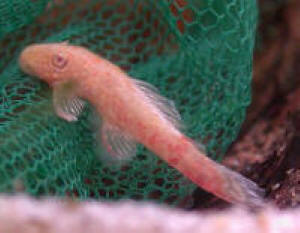
Unlucky Loricariids, and Why To Quarantine Plants - 02/20/2007 Hi Crew, <Hi, Carmel! Sabrina with you today.> I have an unusual situation which I have been dealing with since December. Several tanks all containing assorted catfish. Just prior to onset of illness (about 3-4 weeks prior) I added a new Longfin B/N and an Amazon sword plant to one tank. <Quarantine, even of plants, is essential.... I have always recommended quarantining or dipping plants, and the one time that I chose not to, I introduced Ich into a well-established tank.... Sigh! These things do happen. I hope at least the new fish was quarantined, yes?> In a nutshell, peppermint b/n were the first to develop lesions on head and back areas, resulting in death. 4 weeks later the common b/n's displayed the same lesions. Have worked closely with LFS & vets, during the last 2 months and in desperation sent specimens and water to our Dept of Agriculture (who also work for our Fisheries Dept). They have identified a protozoan, similar to Chilodonella, but which they cannot positively identify. <Often protozoan parasites are present even on quite healthy fish; this is usually not a big deal. It's when the Protozoans opportunistically "take over" (fish is sick, weak....) and multiply to virulent quantities that you've got a problem that can then easily spread to your other healthy fish. Sounds like this is what happened.> This report came to me today and I am about to commence treatment of formalin/malachite green in one tank & Octozin (Waterlife) in another. This still leaves me with more tanks & I was wondering if you may have any ideas on a treatment (result of cross-contamination) as we are all as unsure of the treatment as we are of the outcome. I think I will treat at the full dose, but gradually add the meds over a few hours. <Formalin and Malachite Green are toxic, especially to these scaleless animals.... There is a strong likelihood that even your healthiest Loricariids will not survive a treatment at "full dose". I would re-thing this. The Octozin, provided that it is Metronidazole as I suspect, is fine to use at the full recommended dose. Try to find out if it is in fact Metronidazole. Another option might be a salt treatment, though Loricariids don't "like" salt, it would be much less dangerous than a full dose of the Formalin/Malachite Green cocktail. The method I would try, if I did this option, is detailed here: http://www.aquariumadvice.com/article_view.php?faq=2&fldAuto=32 .> It would seem these fish are doomed otherwise anyway. Also, any ideas on a positive ID of the invader would be gratefully received. <If you have any means of providing us with a microscope photograph of the protozoan, I would gladly try to identify; I have a fish pathologist friend that would probably be glad to take a look and tell us what he thinks.> Regards, -Carmel <Best of luck to you and your Plecs, -Sabrina>
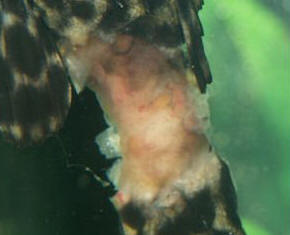
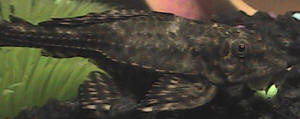
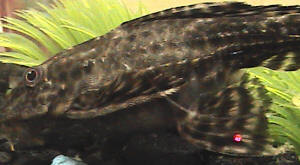
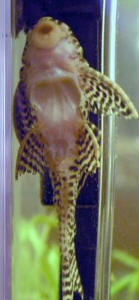
Pleco health info! 11/5/06 Hi <<Hello, Frank. Tom>> I'm having some problems keeping Plecos, and maybe you can help and tell me what I'm doing wrong. My water temp is 79 degrees and pH is 7.0. They seem to last a couple of months and then I lose them. Is it maybe my water is too hard? I do have some Algae in the tank and I also throw in algae wafers. I'm not sure what else to do. <<There's not a lot of information in your post, Frank, but I'll toss out a couple of tips/ideas. The tank temperature is fine and pH level is equally good provided it stays at 7.0 with little or no change. You don't mention how often you perform water changes and high nitrate levels can adversely affect pH, i.e. push it downward. (Make sure you use tap water or R.O. water for your changes. Distilled water should be avoided since it has no "buffering" capacity and will put your pH levels at risk.) Your water could be harder (re: GH levels) than your Plecos may prefer but these are pretty hardy and adaptive animals. A couple of months should be enough time for them to acclimate sufficiently. You mention 'some' algae and algae wafers as your pets' diets. You might try adding a slice of zucchini to the tank as well as spinach to bolster their diets. (Neither of these foods should be left in the tank more than a day or so without changing them for fresh food.) Since Plecos come from fast-moving streams in the wild, they like water movement and plenty of oxygen. An airstone or two for surface agitation would be helpful and a powerhead for water movement might also be appreciated. They will gulp air at the surface -- rather violently at times -- and probably utilize this oxygen to a limited degree for breathing. Primarily, this is 'gulped' for buoyancy purposes allowing them to attach themselves in a variety of positions in the tank, though. Finally, Plecos are nocturnal by nature. They tend to 'hide out' during the day and feed at night. They should be provided with 'hiding' places during daylight hours and kept away from light sources during the evening. (The first Pleco I had started off in a 20-gallon tank and made very short work of whatever algae was available. He soon 'graduated' to a 50-gallon tank and did the same service there. Unless yours are in a very large tank, I'd be curious as to why you have much algae for them to feed on unless they're, in fact, not feeding. Something I'd look into.)>> Thanks, Frank <<You're welcome and good luck. Tom>> Infect-a-Plec - 10/22/2006 Hi: I would appreciate if someone could have a quick look at the attached two photos of one of my two Plecostomus who has over the last month developed an increased white coating to the head region. None of the other fish in the tank including the other Plec have any such signs. Is this fungal, bacterial? Thank you, Tom <Ouch! Your fish is in bad shape. I would start with pristine water in a QT tank. Then treat for a bacterial infection. I would also add about two to three tbls of aquarium salt per 10 gallons of water. Under no circumstances should you treat in the main tank. Doing so will nuke the beneficial bacteria needed to control your water quality. An ammonia spike is the last thing your Plec needs right now. Good Luck, Don> Sick Sailfin Pleco With Bloat - 10/21/06 I have a rather large common-Sailfin cross Pleco that is showing signs of discoloration and his armor it starting to stick out. I have tried krill shrimp to boost his color. I have treated with a medication made for many illnesses including parasites and scaling. I even tried feeding him algae wafers. I am all out of options. I have seen that one of my fiddlers is missing. Can a Pleco eat a fiddler by accident? If so can this make him sick? He is a male. < Plecos eat anything including algae and a fiddler crab if he thinks he can get it down.> I was also wondering if I need to get him a mate or another larger Pleco? <No not needed.> I have a tiny tot, the baby Pleco which is the same breed as he is. He by the way is fat and happy. I did put my Bettas in the tank with him while I cleaned their tank and the female is a bit more aggressive than the male. Could they of stressed him out? < No, not really.> I feel I am running out of options he's not even full growth potential yet he's supposed to get up to 18 inches and he is only 10. Could it be old age? < Not likely.> He is a rescue fish from a lady that didn't want anymore. Do I need to get him more tank mates? < No, that is not the problem.> Please help in stuck up the creek without a paddle... < I think that your fiddler crab may have died and you Pleco tried to eat him. The hard exoskeleton of the crab is probably lodged in his digestive system somewhere. Bacteria in the gut are now working on the skeleton and breaking it down. In the process they are developing gas and distending the gut of your Pleco. Try treating with Metronidazole and hope he is able to move this waste through his gut.-Chuck> Sick Sailfin - 10/22/2006 We have a Sailfin Plec who is very poorly. He seems to have developed some sort of fungus/disease (I thought it was the disease 'Velvet' at first) which has made large parts of his body discolored, almost red raw and what must be extremely sore. There are approx 3 whitish 'eaten away' marks on his body and he has redness along his fins, tail and top lip as well as near the white marks. He has lived happily and problem free for a number of years in our tank and has always been a hardy fish so we are upset at watching him decline in this way and are feeling quite helpless. He has been lying on the bottom upside down breathing quite rapidly and seems to be stressed. We were told to try applying sea salt to his wounds which we did approx 4 days ago where his condition seemed to improve but now seems to have taken a downward turn. No other fish in the tank are effected (we also have Corydoras, tetra and silver dollars) and we are at a loss at what to do. We have also changed approx 50% of the water following the salt treatment. What would be your advice? Many thanks. M. Bradshaw Devon, U.K <If he is laying upside-down on the bottom it would seem your fish is near death. There may not be anything you can do at this point. But since the salt seemed to work, I would pull him away from the others and add about two tablespoons of aquarium salt to the water. Take the temp up to 82 to 84 and add an airstone. Good luck. Don> Plecos Poor Survival in Tank 9/16/-6 Hi there, <Hi Cali, Pufferpunk here> I have a 20 gallon hexagon freshwater aquarium. I've had it for about a year and a half now. I have 2 red rainbow fish, 2 strawberry tetras, 2 silver/white mollies, 1 black molly, a frog, <Dwarf frog, I hope!> 1 powder blue dwarf Gourami and an upside down catfish. <The Synodontis (upside down cat) can grow quite large & so do the rainbows--way too large for your tank, especially with the lesser swimming room in a hex. The rainbows need a very long tank to swim across.> I have fake silk plants and some tank decorations. I have tried several species of Pleco fish over the last year and none of them survive. I have algae and when there is no algae I supplement with algae tablets. The longest surviving Pleco was a butterfly variety and that lasted about 2 weeks. Considering they are supposed to be hearty fish, I'm not sure why they keep dying. Any suggestions? <You want to start by testing your water parameters for ammonia, nitrites (should be 0 at all times), nitrates (should be under 20) & pH (most Plecos prefer low pH but can handle neutral, 7.2). If all that is good, then the next Pleco you buy (must be a dwarf species for such a small tank), be sure it has a nice convex tummy--not caved in. Most Plecos are wild-caught & need to be treated for internal parasites after purchase or they will quickly waste away. You might have better luck with the dwarf Bristlenose Pleco, as many are tank-raised. ~PP> <<Likely the species involved need much more room as well. RMF>> Thanks, Cali Day Pleco Problem? 9/11/06 Hello! I have a 30 gallon, year old aquarium with 3 Bala sharks, <Will be too small for these three in time> one Pleco, two spotted catfish, and one cherry barb (it's buddy died recently). The Pleco, otherwise healthy in appearance, has a white/yellow layer on his belly, <Mmm... may be natural...> and his colours seem slightly lighter all over than normal. <Good observation... these fishes will change to lighter in bright light, light colored surroundings, under stress... I'd be checking your water quality here> He is still eating and behaving normally. The pet store suggested an Ick treatment <I would not do/use this... too toxic and this is not Ich... or all your fishes would exhibit symptoms> that seems to have done little but maybe give his belly more of a yellow hue. I haven't been able to find out why the barb died, other than being chunky, he seemed healthy too. Thank you for any help you can offer. Lindsay <Water changes, water tests... What species of Pleco is this? Loricariids don't like hard, alkaline water like the minnow fishes you have. Bob Fenner> Bristlenose Plec dis. 9/9/06 I have a male Bristlenose catfish, two years old he is four and half inches long. He is in a 300 litre tank, he used to be kept with Neons, Glowlights and platies. He was very happy, I fed him on catfish pellets, algae wafers, bloodworms, brine shrimps and daphnia. Now he is living with tinfoil barbs. he's not as happy and hides under the filter, he is only getting the catfish pellets and algae wafers, as the tinfoil barbs eat everything else first, I have noticed that he is not cleaning the tank as well for the past week. And he has a lump on his snout in front of one eye, I have telephoned all my local aquatic shops, no one seems to have heard of this before, I'm very worried, to me is looks like a cyst, apart from this his colouring and general condition is very good. I hope you can help me, as the children are very fond of catty! Wait to hear from you, Sue < As your Pleco roots around for food he probably injured himself on a piece of wood or rock. The area may be infected. I would recommend treating him in a hospital tank with Nitrofuranace or Kanamycin as per the directions on the package.-Chuck> Bloated Pleco 8/20/06 Hi, I have recently noticed that one of my Pleco catfish (the ones that get along with goldfish) has a bloated stomach, and it looks like he has a ball stuck in him, or something similar. I know it can't be a piece of gravel, because the Plecos are very very small and the gravel is large, and also because I have larger Plecos (the tropical ones) in a tank with smaller gravel, and they are doing perfectly fine. He looks like he is dying and I would like to know the cause, and if possible how to treat it. I checked my tank for Ammonia, Nitrite and pH, and they are all perfect. Ammonia was 0, Nitrite was 0 and the pH was 7.0, so everything was fine! I am really confused, also because my black moor has only recently gotten Ich! I am treating it with Melafix, and may use salt, but I have read that Plecos and salt don't mix. Thanks for all the help you've given me! < Your Pleco has developed an internal infection. Plecos are normally tropical fish and require water temps in the mid 70's to low 80's F. When kept too cool the food goes though their long intestine at a very slow rate. Sometimes it stops all together and the bacteria begin to feed on the rotting food and produce a gas that distends the belly of the fish. Warm the water up to the low 80's and treat with a combination of Metronidazole and Nitrofuranace. Treating this early is the key to a successful recovery. The goldfish will not like the warmer water temps but then the Pleco really didn't like the cooler water either.-Chuck>
Pleco with skin disease? 8/18/06 Hello, <Hi there> I have a Bristlenose Pleco who seems to be losing his colour. When I first got him, he was dark brown, but now patches of his skin are a lighter tan colour (I would send a picture, but it's very hard to coax him out into the open when it's light out, and he hides whenever anyone goes near the tank anyway). <Mmm....> He's in my cichlid tank, and ammonia and nitrite are both 0, nitrate is always less than 10 ppm. This change is very recent; he was fine a couple of days ago, and he's been pigging out on algae, but his colour certainly doesn't look healthy. What could be causing this, and how do I go about treating it? Thanks! <Not likely that this is something "treatable"... either just a behavioral/physiological change from the animal being exposed to bright light, light colored gravel... or a fright reaction to the aggressive behavior of its tankmates. I would not "add" something to the water here, but consider moving this animal to other quarters to check this hypothesis. Bob Fenner> Re: Pleco with skin disease? 8/19/06 Thanks Bob, <Welcome Kate> Now that you mention it, I think you might be on to something with the "fright reaction," although the problem isn't his tankmates, who ignore him (except when they steal his food), but it might have been my fault. I had to remove every single rock (!!!) in the tank to catch one of the fish the other day, and I imagine the Pleco was quite disturbed by this turn of events. <Oh yes> Also, the rocks in question are white (or at least they are now that the Pleco has finished cleaning them), so maybe it is just a "camouflage" thing. Thanks for setting my mind at ease. Kate
Ill Loricariid 8/1/06 Hi. <<Greetings, Emma. Tom>> I have a leopard Sailfin Plec who is about 5 - 6 yrs old, lives in a community tank. Over the last few days I have noticed the tank glass getting dirty inside, he usually cleans it well. Tonight I have noticed he has gone very, very pale. At first I thought it may be the sunlight coming into the tank, however I pulled the curtains and he has stayed the same pale colour. <<The "paling" in color is almost certainly stress related rather than tied to a specific pathogenic problem. Not all that uncommon with Plecos, in general, but pretty disconcerting when you see it for the first time...in an otherwise healthy animal, no less.>> The water temp is between 25 and 27degC; normal for my tank. No new fish have been introduced or plants, in fact, nothing has changed in the tank at all. The water test is also normal for my tank. <<When a problem occurs and nothing has seemingly changed to cause it, I look for the "unusual". In this case, Emma, the one thing you haven't mentioned is your Pleco's diet. All fish, regardless of what their primary food source is, appreciate variety to some degree or another. Cichlids, for example, kept on a perfectly healthy, yet boring, diet, can/will become ill, sometimes to the point of death. With nothing else to "hang my hat on" here, Emma, I'd look into a change of diet to see if your Pleco snaps out of it. If, by any chance, you observe something else that you can share that might give us more to go on, please post back to us. I, for one, am interested in this one.>> Please can you help Emma <<My best. Tom>> Re: ? FW... What? Disease... no prev. corr., no prev. title... Search FW dailies to match up... Ahh... Ill Loricariid 8/1/06 Hi <<Hi, Emma. Tom once again.>> Thank you so much for your reply.... <<Any time, Emma, and happy to do so.>> I always feed him on algae tablets, cucumber and courgette but a few days ago a friend gave me some home grown VERY large courgette/ marrow. <<Which, as you are no doubt aware, is nothing like what you purchase at the produce store. Tough, fibrous and tastes like (fill in the blank). :)>> He tucked into it but on looking at him very closely something strange has happened to his mouth. <<Without going further, I can pretty much guess...>> It seems to be torn and there are small possibly fungal growths around his mouth. He can't suck on to the side of the tank. I have tried holding him and putting food on his mouth but with no luck he just will not suck. He seems to be starving to death.... <<To put you a little more at ease, starvation isn't our immediate problem. He's most likely torn up his mouth on the "homegrown" courgette and, while laying on the bottom of the tank - as he is wont to do - has "inherited" a bacterial or fungal infection. Aquarium salt is effective but Plecos aren't very tolerant of it and we've got enough stress going. MarOxy, Maracyn, Furanace (Furanace) or Sulpha-based antibiotics may be used for this. My recommendation - albeit not from "firsthand" experience - would be MarOxy. It's purported to be effective against external bacterial infections as well as being an anti-fungal, and (importantly) should be easy to come by.>> He is also getting very frustrated and thrashing round the tank. <<Understandable. You'll want to start the treatment ASAP.>> I really don't know what to do. I am not sure if it is the courgette/marrow I have given him. He has normal courgette from the super market all the time with no problem. <<Last time around, I mentioned that I look toward the "unusual". You gave it to me. Courgette/marrow that you purchase at the market is harvested at a very immature stage of its growth. Not the same "critter" as the veggie (actually "fruit") that's left on the vine for a long time. Very, very different textures and possibly/probably the cause of the problem. Regardless of the "cause", we've got an "effect" and it needs to be treated promptly.>> It's desperate to watch him, I just don't know what to do. Any advice I would be most grateful. <<You have the best that I've got right now, Emma.>> Thank you Emma <<Keep me posted, please. Best regards. Tom>> Re: Ill Loricariid 8/2/06 Again thank you, <<No problem, Emma.>> I will get that in the morning for him. Will this treatment affect my other fish at all? All community fish. <<Worst case (thus far), Emma, this is Columnaris, which is highly contagious. Ideally, you'd medicate any single fish in a quarantine tank (QT). I think it best that you medicate the entire tank, removing any carbon filtration you have going. Follow the manufacturer's instructions with the medication. You'll be instructed to replace the carbon media/filter at the end of the medication period to remove the med's from the tank. Following this, discard the carbon media/filter. It can't be re-activated or "cleaned" and is, therefore, worthless to you. Also, follow the water change protocol that should be included with the instructions. Typically, this will call for a change of about 30% prior to starting the treatment.>> Emma <<Tom>>
Mysterious Bristlenose death... African Cichlid sys. as well 7/12/06 Hi, I hope you can help me figure out what went wrong... <Will try> Yesterday, I brought home a healthy-looking 3.5" Bristlenose to add to my tank, which currently houses 5 small African cichlids. <Mmm, don't often mix... I also keep African Cichlids...> I floated the bag in the tank for about an hour and a half, gradually adding tank water, before releasing him. He seemed fine yesterday; he explored his new home and found himself a cave in the rockwork. I offered him an algae disk last night, which he didn't touch, but I wasn't too alarmed, since I know it often takes a day or two before new fish will eat. Anyway, this morning, I awoke to discover him quite dead. I immediately tested the water and obtained the following results: NH3 - 0 NO2 - 0 NO3 - 0-5 ppm pH - 8.0 <... too high. Most Loricariids live in soft/er, acidic water. Please see here: http://www.wetwebmedia.com/FWSubWebIndex/loricariids.htm> Temp - 79 F I then did a 20% water change and added a bit of aquarium salt. <And don't "like" salts...> All of my other fish are fine. I would appreciate any insight as to what went wrong. I would like to keep one of these cute little guys; is there anything else I should do next time? Thanks, Kate <I would look for a larger specimen of one of the species that lives in similar, or closer quality water... Likely a Hypostomus or Pterygoplichthys sp. of at least five inches in length to start with... provide it with adequate hiding space (perhaps a PVC pipe it can get into w/o the Cichlids... or, resolve yourself to do as I do... hand-scrub down your tanks once a week during water changes. Bob Fenner>
Pleco deaths 7/12/06 Hi Crew, <Spyros> I am facing a really bad situation and I hope you could help me find a solution. During the past 4 months I have introduced 3 Plecos in my aquarium all of which have died (one after another). The first of them died on 17/3/2006, it was around 1 year old. This one was being bullied by one of my Firemouths, so having checked all the water parameters (no ammonia, no nitrite, very low nitrate level) I concluded that it probably died out of stress. <Likely so> Immediately afterwards I added 2 small Firemouths (now I have a total of 4 in a 30 gal aquarium) <Would be crowded if two "pair up"...> and 1 leopard Pleco. The leopard Pleco was very small (3 cm long) and died after 2 days. <Small Plecos/Loricariids do tend to die "easily"> I bought another leopard Pleco, which until now displayed natural behaviour (normal feeding patterns, very active all day long). This Pleco died yesterday. I checked all the water parameters and did not find anything abnormal. <... what were your test results?> I have to note that there is enough algae growth in the aquarium to sustain a Pleco. <Mmm, some types are toxic... others are unpalatable... taste bad> I also have to note that as I live in Greece the water's temperature rises during the hot summer months. <Yes... have been there a few times... Athens, the Saronics, Cyprus...> Do you think that the death might be due to the high temperature of the aquarium (30-31 C)? <Could be a contributing factor... but I suspect you are right re the stress level here, the small tank size. Please read here re: http://www.wetwebmedia.com/FWSubWebIndex/loricariids.htm and the linked files above. Bob Fenner> Thank you in advance Spyros
Cindy Du Mond Questions, Skinny Pleco 6/9/06 Dear Fearless Leader, I talked to Steve at the Cichlid Exchange and forwarded Cindy's email. He said it was entirely possible that a skinny Pleco went out with out him knowing about it . <Easy to have happen... for sure> The store that they sell fish to in her area never bought any small or female peacocks. They checked their records and the only things they ever buy is adult show males so they don't know what is the problem is with the female peacocks. <Mmmm> Steve never heard anything back from the store about the Plecos until this email. Steve will contact her and will work something out. I asked Cindy to contact me when things got resolved. I don't think you want to make WWM an aquatic version of Consumer Reports <I don't mind at all> so I will try and get everything done offline. Can you imagine the emails we would get if every aquarist started to complain about their local fish store!!!!!YIKES!!! <A way to make things better... Cheers! BobF>
Pleco Melting Away - 04/11/2006 Hello I have always found your site very helpful in the past, I am hoping you can help me now. My mum has a Plectropomus fish that she has had for about 8 years, he's not very big about 13" long. The thing is all of a sudden he has become very sick, his back fin is all peeling away and looks all shredded and the surface of his body has started going a lighter colour and he has now started getting white looking smears around his mouth and gills. The thing that is worrying me the most is the speed that all this has happened in less then 48 hours he has gone from a happy sucky fish playing with his cucumber to a sorrowful looking sucky fish laying on the floor refusing to move and breathing rather short and heavy, and I fear he will not last long at all. The fraying of his back fin happened so quickly it only took about 5 hours, is this right for this to happen so sudden and quick? No changes have been made to the quality of the water up until he got sick no new fish, ornaments, chemicals nothing. So far since he has got sick I have put in a bacterial and fungus medicine (guessing that it may be something like fin rot) and a aloe vera stress relief tonic. I have also done a strip test and everything quality wise is perfect. What else can I do? I'm just concerned that its happening to quickly to do anything. Any help would be greatly appreciated. Many thanks < These nasty bacterial infections can be very difficult to stop. Start by placing the fish in a hospital tank with clean water. I would try a double dose of Nitrofuranace or a single dose of erythromycin. These medications will effect the nitrifying bacteria in an established aquarium.-Chuck> Disappearing Pleco fins! please help! 3/29/06 I have a leopard Pleco, about 5" long. It's tail and dorsal fin has a mixture of holes and long boney stems with no skin attached. It looks like splayed out fingers. I'm getting worried as it isn't clearing up. It has happened once before but went by itself and I never found out the cause. He seems to be eating ok. he is quite quiet and spends a lot of his time either stuck to the side of the tank or the big feature ornament. The tank temp is 26c (78f). I have 2 angels, a bristle nose catfish and 5 small tetras, all of which get on fine, eat well and show no signs of illness. Please help. I really don't want to loose him, he's been growing so well lately and I'm very fond of him. I have tried looking around the faq's but have been unable to find what I'm looking for. Rachel Barnes <Unusual... the other fishes "like" about the same water quality. Is the Bristlenose cat negatively interacting with the Leopard Pleco? I would move this last fish to another system to aid in its rest and repair. Bob Fenner>
Double Whammy FW, Pleco, fungus? - 03/27/06 Hi, sorry to bother you guys but I have been reading your forum and I think u guys are great and full of info, I hope you can help me-I don't know what to do???!!!! I have a Pleco which I have noticed in the last couple of days has had some kind of stringy cotton-like thing hanging from his fins-no other patches or anything like that, I didn't know what it was so I decided to just watch him. Well last night the cotton like web was all-over his dorsal fin, it looks like he went through a spider web and it attached to him, very strange! I had to go to work, so today I went to check on them and saw that my guppy (female)-who is in the same tank- has some kind of cotton ball over her Right eye and on most of her face, and she looks really sick just laying there not doing well. I'm looking to see if anything else is wrong with the rest of the fish (2 ID sharks, 1 male guppy) But the rest of them look fine. Except there is a white line on one of my id sharks that goes from his top lip to his bottom, very small but I don't remember if he has always had this!!!! I started searching what this thing on my guppy and Pleco could be and the only thing that comes up in my search is possible "cotton mouth"???? If it is this what do I do, I just started this 20gal tank and I don't have another one to isolate my fish into, also this is very contagious should I treat the whole tank with all my fishes in it??? And if so with what??? I'm very confused (new at this) But I don't want my fish to get sick and die! I just did my parameters: pH 7.4 AMMONIA 2.0!!!!! Nit:0---Ammonia is very high, I am going to do a 30% water change but in the mean time what do I do if my fishes if they have this horrible bacteria???? I also read in some sight that if my fish have this I should wear gloves when I do water changes, is that true?? If so why?? Thank you so much for your time, I hope you all can help me!!!! Wen <Hi Wen, Don here. Yep, that "Don", FishSoup in the forums. First thing we must do is lower that ammonia to near zero. You need to up your water changes to about 50%. Two the first day, a few hours apart. Then daily until ammonia and nitrite stay at zero without a water change. Also, please read here: http://www.fishyfarmacy.com/articles/columnaris.html. Sounds like a double whammy of a Columnaris infection and an uncycled (or lost cycle) tank. They list a few meds you can use to rid the tank of the infection. The problem will be treating for the infection while you do water changes. The meds will need to be replaced during each water change. That can get expensive. Most will also kill off the good bacteria along with the bad. The use of a QT tank for the fish while allowing the main tank to run fallow (or bleaching and re cycling) will save a lot of money and effort. As you will read in the link I provided, a high amount of organic matter in the water is a contributing factor in the Columnaris outbreak. I feel this will continue despite your best efforts until you heed the advice given you in the forum and return the ID sharks. There really is no practical way to keep these monsters in a home aquarium. The Pleco (if the "Common") will also outgrow your tank in time. But they grow much slower.> Skin Irritation on Top of Pleco's Nose 2/1/06 Hi, <Hello> I've noticed that one of my Pleco's has a pretty severe skin irritation on the top of it's nose. <Pretty common... most such start with rubbing "in the bag" during catching, shipping...> It started out as a whitish scale-like abrasion, which quickly turned to an outer layer of blood around the abrasion. In addition, one of my aggressive fish has begun to pick at the Pleco, which has added to its stress. As a result, I have put the Pleco into a separate tank, and have begun administering medicine (Gel-Tek and Melafix). Can you please shed some light as to what this might be? Thanks! Deb Fair <Might be simply the original "owee", perhaps a secondary infection involved... aided by the aggression you speak of... I would add a level teaspoon of aquarium salt per ten actual gallons of system water to the Plecos water... it should heal in time. Bob Fenner> Sick Pleco - 01/24/06 Our office has a 50 gallon aquarium up front with two Oscars and a large Pleco. <Need more space...> It's probably about 10 or 11 years old, and about a foot long. He was acting normally last week, but we came in this morning, and he's laying upside down at the bottom of the tank. <Not good> He's still breathing, and occasionally we see him move, but nothing more than an inch or so from a small wave of the tail. He looked in good shape last week, but we noticed he's got a small white spot on the tip of his nose, like he scraped it on something. <Likely so... generally not a problem> We've seen him do that before and it's gone away pretty quick, so I don't think that's a cause here, I just wanted to give all the details. We tested the water, and everything seems to be in the normal range. Any ideas what we can check next? Or is this maybe just the end of the road for an older fish? (How long does a Pleco usually live?) <In this setting... a decade is a good long time. In a bigger tank, perhaps twice this long. I would change about a quarter of the water (every week) and leave all else be. Bob Fenner> Any help would be great. Thanks, Mike Williams Rare Pleco disease 1/19/06 Hi! My name is Steve Fawcett and was referred to you people by Drs. Foster@ Smith. I have several L-82 Plecos. 2 days ago I lost one. The stomach swells to the point that the fish starts blowing out the rectum. <Mmm...> Today 1 more fish is doing the same thing. They still eat. The pH is 7.0 temp 82. I have only 5 fish in a 100 gal tank. At first I thought they were full of eggs but that is not the case. I would sure appreciate any help. I have over 150 Plecos with 20 species. I am spawning the L-46 zebra. I have spawned them 5 times. I also spawn the long finned albino BN. Any help would be great. Sincerely Steve Fawcett. Pleconutbuck <Could be a parasitic, and/or bacterial related/resultant situation... not uncommon with wild-collected Loricariids... If it were me/mine, I'd not hesitate to treat for both. One administration of Metronidazole/Flagyl, and a regimen of three doses of Furan compound... to the water and food. I would take great care (very likely you already do) to avoid cross-contamination with wet-gear/water twixt the mal-affected system/s, fish/es. For what you have invested, I would have freshly-dead specimens necropsied.... looked at for G.I. fauna, pathogens. Bob Fenner> Pleco With Bloat 1/14/06 Hello, I have a Pleco that isn't well. He(?) is about 7 years old & about 8-10 inches long. The other day he started to swim to the top of the tank more often than usual. Now (3 days later) he is violently swimming up and down. I noticed he can't stay down. He struggles and fights and gets comfortable on the glass then his tail slides up to the surface. He has been holding himself down with the heater and return from the filter to just keep under the water. I am very concerned, I don't want him to die, but I'm not sure how to help him. I've read all of the Q&A's on your website, which are very helpful! The water tests fine, no major changes recently. The other fish are all fine. Water quality appears normal. I have recently (3 weeks ago) added a Cory catfish to the tank? I feed them discs regularly and cucumber every now and then. Note from reading your Q&A's, I do not have any live plants or driftwood in the tank? I've never had any? Is that a big issue? Besides the buoyancy problem, I believe he is slightly bloated. Also I have noticed he always had waste hanging from him, but none at all this week. I believe his anus is enlarged/swollen and pinkish in color. I have added some additional stress coat and stress zyme hoping that might help him. I'm trying not to disturb him too much. Any suggestions? Thanks Nicole < You Pleco is suffering from an internal bacterial infection. Probably found an algae wafer in some form of decomposition and the long intestines of the Pleco just could not pass it through in time. Do a 50% water change vacuum the gravel and clean the filter. Try treating with Metronidazole. When they are this bloated it is difficult for them to recover.-Chuck> Pleco Almost Better 1/19/06 Hi Chuck, Thank you very much for your advice, he is doing much better. He is almost normal again. I followed the treatment directions and treated the tank twice. Do you recommend a third treatment? < In your reply you said he was almost normal. I would treat one more time until he is acting normal.> He now has a few tears in his fins and one pinkish sore on his back from all of his thrashing around. Any advice on helping the recovery along? Thanks again for the quick and good recommendation. Nicole < Keep the water clean and watch the spot closely. If it looks like it is getting bigger then treat with Nitrofuranace. This medication will affect the good bacteria needed for breaking down the fish waste. After treatment, use a good carbon to remove any leftover medication and then add Bio-Spira from Marineland to get the bacteria going again.-Chuck>
Will the Epsom salt treatment mean we have to remove our Pleco? - 1/6/06 <No.> We have a severely swollen Oscar and assume it is a blockage of sorts. We thought the swelling was eggs, but are following your suggestions for others who have Oscars with what appears to be the same problem. Thanks!! Sharon <The Plec can remain in the tank during treatment with Epsom salt. All the best to you, -Sabrina>
Pleco with fin rot? 12/12/05 WWM, The edge (1-2mm) of my Plecos tail has became a light tan colour and very little of his dorsal fin, there's also a little chunk missing from his dorsal fin. Not sure if this is fin rot or not... the other fish in the tank seem to be doing fine, rot free. I just got him about a month ago, because my last Pleco died. However out of nowhere I noticed that my previous Pleco (the dead one ) was much smaller than I remembered, he had lost almost all of his tail and his pectoral fins, and died shortly after. just wondering if you guys could provide any advise..<what fish are you housing him with? if they are aggressive this may be the case...it could also be fin rot, but I would make sure before he is treated. I recommend Melafix, and Pimafix to take care of bacterial infections, also maintain pristine water conditions. Make sure it is not aggression before you go ahead and treat him though. IanB> thanks Injured Pleco Needs Help 12/5/05 I have a 7" Pleco who managed to get himself stuck inside of a tank ornament (a little car) at some point during the night last night. I noticed it when I woke up this morning and my roommate spent an hour getting him out. He's still alive, but he's suffered some cuts from trying to get out, and most of his fins are shredded. The side of his tail is very scratched and he has a small puncture on his underside. He also broke off 1cm of his left fin to get out. He can still swim and is acting just fine. After I stopped crying when I realized that he wasn't going to die in that car, I was wondering if there's anything I can do to help him. Is there anything I should avoid? Is hotter or colder water better? Should we not do as drastic of water changes? Any advice would help. I really don't want Hermy to die. Thank you so much just for reading this. Sincerely, Chrissy < First remove the ornament so this doesn't happen again. Secondly keep the water clean to prevent infection. Do a 30% water change, clean the filter and vacuum the gravel. Lastly watch for infection. If there are red areas around the wounds then it is bacterial and needs to be treated. White cottony growth is fungus and need to be removed. Both will respond to Nitrofurazone.-Chuck> Sick algae eater 12/8/05 Hi. My name is Barbara. <Hi, Barbara. This is Catherine.> I came upon your webpage while doing a Google search for fish diseases. I hope you can help me, as I have called all my local aquarium stores in the neighborhood, and none has found an answer to my problem. <Will try.> I have a 10 gallon tank, with two fancy goldfish, and one comet. ( I know I am not suppose to mix them, but I found out a little too late.) <Mixing comets and fancy goldfish should be fine. They are the same species, like the same water conditions, food etc.> Anyway, the goldfish are happy and appear healthy. I also have in my tank an algae eater. I don't know the correct name of the species, but it is or was predominantly black and very dark grey. <Sounds like some sort of Plecostomus, but it could also be a Chinese algae eater, or several other species. Many of these fish grow to be a foot or more in length and require 50+ gallon tanks.> Anyway, my question is, is that in a matter of two days, my algae eater has lost nearly half its color. at first I thought it was white fungus growing on him, but upon closer inspection, its as is if he is becoming transparent like an albino fish. He was not this color when I bought him 3 months ago and he is approximately 3 1/2 inches long. I feed him algae pellets, one every evening. Despite his lack of color, he feeds well, and is active. But he really looks awful. All of the color is gone around his face including his sucky lips, but his eyes have remained black. These are not spots, as the color loss is uniform and appears to be moving down the length of his body. <Poor little guy.> Please help, he is my 4 year old daughter's favorite fish, named Buddy. <I have a very sweet stray cat by that name. He still needs a home. Your problem is likely environmental. First, goldfish of all types are extremely messy fish; that is they poop A LOT. Fish poop contains ammonia which is highly toxic. This contaminates the tank and requires filtration to convert the ammonia in the tank to nitrite and finally to relatively harmless nitrate. I suggest, getting a freshwater test kit and testing for ammonia, nitrite and nitrate levels. They should be 0, 0, and less than 20 ppm. You don't specifically say the size of the fish, but most people find that for 3 small-medium goldfish, a well-filtered 30-50 gallon tank is necessary to keep the water parameters inline. Until your water parameters become good, you should 2) do water changes 30-50% daily. Obviously the water needs to be dechlorinated and at the same temperature as the tank. The other problem is that you have goldfish which like water around 68F, whereas most algae eaters prefer temperatures of 78 or 80F. In the long run, having fish at the wrong temperature causes stress and can lead to infection and disease. Try reading http://www.wetwebmedia.com/FWSubWebIndex/gldfshsystems.htm, http://www.wetwebmedia.com/FWSubWebIndex/fwestcycling.htm and http://www.wetwebmedia.com/FWSubWebIndex/loricariids.htm> Thanks a bunch, Barbara <Hope it helps. Keep us posted. Catherine.> Pleco-Ulcer Hi, <Hello> I have a Pleco that's approx 9" long that developed a small ulcer on its belly between its front fins, about 2 weeks ago. I don't know if it was caused as an injury or a bacteria. Since then I have bought an antibacterial treatment which I have administered to the ulcer as instructed by the shop owner where I purchased the Pleco from. The fish is in a quarantine container and is eating it's food ok, however the ulcer has gotten considerably bigger and the ulcer is quite deep now. Can you advise me as to how to treat the Pleco please. <I will try... I strongly suspect what you have here is a tumor born of nutritional deficiency... and the best way to treat this is to soak this animals foods in a vitamin and iodine based supplement. Please check with your fish store re brands, and add to the food ten-fifteen minutes before offering. Bob Fenner> Sick Plec - 08/16/2005 I got a new common Pleco (about 8") inherited from a 125 gal. tank I am starting in my basement, but put him in my 55 until it is ready. There were 3 other small common Plecos in there before adding him (I know it was overkill, but I fed them enough algae discs to make it.) <Feeding isn't so much the issue, as aggression.> Well the smallest of the four died the next biggest, then the other, and now the big guy is sick. His eyes are very cloudy, and his stomach is puffy. <Many, many possibilities, here.... test your water, first and foremost - ammonia an nitrite must be ZERO, nitrate less than 20ppm.... adding such a large, waste-producing animal may have caused your tank to cycle again. Another major possibility is Ich, which typically only affects a plec's gills; possibly internal parasites or bacterial infection. Adding an unquarantined fish is always risky when it comes to any disease.> I can't find anywhere online what to do, you are my last hope, he's not going to make it much longer if even through tonight. He lays on his back and just breathes, but is not eating. Can you help me out? <Test your water, fix if necessary.... Beyond that, I would consider treating for Ich - it's very, very difficult to know if that is the problem, though.... and there are so very many other things it could be. From your descriptions, though, I doubt if you would have success treating if it were something internal, at this point.> I appreciate it. <I wish I had better advice.> Mark Cygan, Olathe, KS <Wishing you well, -Sabrina, who grew up in/near Augusta, KS.... I do miss those Kansas storms!> Gold Nugget Pleco Dying 8/6/05 I just bought a golden nugget algae eater 6 days ago. He was doing find just a little shy, but he was swimming around and sucking on the glass. Yesterday I noticed he would just lay on the bottom of the tank breathing heavy. Today he was doing the same, barely any movement, but now he is laying on his side. He is still breathing, but I think he is dying. I feel helpless I don't know what to do for him. I tried the drift wood, but he could care less and the vegetable pellets. Do you have any advise. PLEASE help. Thanks. < With so many new species of Plecostomus coming into the hobby these days in is becoming more difficult to determine their exact needs are in the aquarium. I feel sorry for you because these are very expensive and beautiful fish. In the wild they are caught and placed in holding pens were they receive no food whatsoever. When they catch enough to fill a box then they send them to the U.S. Sometimes it takes a few weeks to catch enough Plecos to fill an entire box. The result is that you get many Plecos that have been starved to death. Because of there shell like structure it is difficult to determine how thin they are. Next time you buy a Pleco you need to examine the belly area. It at least should be flat. Fish with sunken bellies are already too far gone and will die shortly. New fish need a nutritious food right away. Algae has very little nutritional value so they need to eat a lot of it to catch up. I always feed new Plecos a high protein food like live Calif black worms. Many Pleco species aren't even algae eaters! I'm afraid your Pleco may be too far gone if the belly is already sunken in. If the belly is flat then it may be Ich attacking the gills or a pH problem. Go to Planetcatfish.com and find the Pleco species you currently have. Once you have found the species you will find water chemistry and food requirements. Check the water chemistry in your tank and compare that to your fishes requirements. Good luck.-Chuck> Spotted Sailfin Pleco behavior, health 7/15/05 Hi I was wondering if you could help me. I have a 190 litre tank which is currently being filled out with Tetra. I also have a spotted Sailfin Pleco which I have had for approximately five years. I came home yesterday to find the Plec at the bottom of the tank resting on the artificial grass but more on its side. It looked liked it was dead! Anyway when it was touched it swam off but came back minutes later to again lie on its side and not move. <Happens> It has never been like this before it has always been an active fish and I am quite concerned. I have checked the ph and nitrate levels which seem fine and the water temp hasn't risen dramatically (very slightly due to the weather). I have also caught him and given him the once over but there are no odd areas of spots or anything on him. Any advice as to what is happening or is he just dying of old age. Thanks. <Large Loricariid species can/do live for a few decades. I suspect yours was just resting... natural. Bob Fenner> Pleco suddenly died of unknown causes... incompatibility with goldfish 7/11/05 Dear Crew: <Hi there> We have a ten gallon fresh water tank. We have two fancy goldfish, (a moor and an Oranda) and we had one small brown Pleco, about an inch to an inch and a half long. <... a tropical fish... that gets way too large for a ten gallon world> Today, our Pleco, Jonathan Swift, died. He was badly discolored. He was blanched, and his fins were mutilated. This morning, he was completely fine, and his fins appeared to be in good condition. Swift was always very active and happy, but shortly before he died he started to sit in a corner. He refused to eat any wafers or algae in the tank. He did not have any sores, but when we lifted him from the tank, he had green slime on his undercarriage. <Good descriptions> We think our other two fish, Huckleberry Finn and George Orwell, might have nibbled on Jonathan Swift post-mortem, causing the fin damage, but we cannot be entirely sure. <Plecos are "armored cats"... hard to see damage> We tested the waters for Ph, Ammonia, Nitrite, Nitrate, Alkaline, and hard water. All levels were normal except our hard water. We are currently working on fixing that problem, though it has never been a problem before. This is our first tank, and we are still in college. We hope this is not a result of dorm living. We take very, very good care of our fish. We do 30-50 percent water changes weekly and change the filter every two weeks. <A bit too much... I'd limit changes to 25% maximum> We have live plants in our aquariums, and they are doing very well. <Good... and good use> Concerned about the loss of our Pleco, Hilary and Paul University of Dayton <Maybe just a weak specimen... I would go with something more suitable for a cleaner-upper with your goldfish though... Perhaps a large species of snail... Bob Fenner>
Plec with Cloudy Eyes Hello. I was wondering if someone could help me? First of all let me give you a little bit of info. We have a 55 gallon tank with a medium-sized Oscar and a Pleco. Up until a couple of days ago there was also several goldfish that had grown quite large (we bought them as feeder goldfish when we bought Oscar, but he was too small and they just kept growing. There were 10 of them and last week 3 died. The others we moved to an outside little pond that we bought. Yesterday the Pleco's eyes were looking totally white. What can do this to him? Is there anything that can help him? We had had some problems with the water being cloudy recently, but added some new water and some drops of a store bought product to reduce cloudiness. I was just curious, as he is a really cool fellow, and I really want to help him. Thank you for any input/help you can offer. Have a great day! Barbara <Most eye problems start with water quality. Do a few large daily water changes, 50% at a time. Use a gravel vac to get the bottom clean. Please, no chemicals except dechlorinator. If the eyes start to bulge add a tablespoon of Epsom salt for each 5 gallons of water. If they do not clear in a week or so then we may need to medicate. Best done in a small QT tank as most meds will also kill the good bacteria in your system. You may want to ensure to have something ready to hold him just in case. Furan 2 would be my choice if a med is needed. But I would try pristine water conditions first. Plecs don't take meds well. Use half dose for twice as long. Don> Sailfin Pleco Hi WWM, I found the link that you sent very useful, thanks. I have found that I had a Sailfin Plec. Is this species able to tolerate a cooler environment with coldwater fish as mine seemed happy for the few weeks we had him but we lost him quite suddenly. He had been feeding well on algae in the tank & we were also feeding Hikari algae wafers. I am in the process of trying to assess the water quality & wonder if there are pointers I should be aware of, & if they are more susceptible to any particular disease. Many thanks again >>Hello Lisa, That is a very strong fish, I would not worry about it getting sick. I would keep the temperature above 72 degrees Fahrenheit. Good Luck, Oliver.
Under-the-weather Africans/Plecostomus Hi, <Hey, Mike G here.> I have a question that has been bothering me for couple days now. I have 55 gal. tank with African cichlids (14 fish). <Sounds like a tiny bit too much to me, but not terribly crowded.> They are constantly rubbing on the rocks, I can't figure out if they are sick or not, nothing out of unusual that I can spot. <Rubbing against the rocks usually signifies a parasite, possibly Ich or Velvet. Do take a peek at our disease pages for disease identification help.> But the issue is the Pleco in the same tank. A few days ago I noticed that it has a strange eye which started swelling and becoming cloudy and sort of fuzzy. <Not good. Such a problem is commonly brought on by poor water quality (high quantity of dissolved nitrogenous wastes.)> The same thing seems to break near its upper fin. <I'm thinking he's got a bacterial infection.> The other eye is OK. I don't know if I have an outbreak of something or Africans are slowly killing my Pleco? <I highly doubt this was brought on by the African cichlids.> My tank is equipped with Eheim filter and the water is changed every 3 to 4, so I don't think I have water issue. <I personally think it is a water issue. Such symptoms are usually brought on by poor water quality. Do a 15-20% water change, and pick up a broad-spectrum antibiotic. I prefer and recommend MelaFix by Aquarium Pharmaceuticals. Good luck, Mike G> Algae Eater Problem I have had a problem with algae eaters, Plecos. I have had 2 and both have died within a couple weeks each. I don't know what the problem is, and I need something to control all the brown gunk in my tank. Please help me! <Mmm, either the source of the fish is bunk or your system has some trouble... Please read here re algae control: http://www.wetwebmedia.com/FWSubWebIndex/fwalgcontrol.htm and elsewhere on the site concerning environmental disease, set-up, water quality... I suspect the latter. Bob Fenner> Bozo the Clown, Pleco marked for life Dear WWM Gurus, Last summer I took a two-week vacation in Australia, and had a house-sitter for my dog, my Mother's dog and four cats, and my little 5 gallon aquarium. In this tank, I had previously had a Betta that lived for 6 years... <Wowzah!> ...and died when my sister's kid decided it needed some apple juice. I still had a Mystery snail in there, and wasn't planning on doing anything with it, when Bozo- the- clown, the house-sitter went out and bought 6 fan-tailed goldfish. (sigh) <...> Needless to say, I was a little strapped for cash, (lots of fun in AU) so I went the budget route and bought a 55 gallon kit from Wal-mart, (the last and only time I've EVER given them money for their fish dept!) I also picked up a 12'' bubble curtain along with the tank, power filter, lamps, gravel, and gravel vacuum that was with the kit. Well,.. since then I haven't lost any of the original fish, and I've succeeded in rescuing a pink Gourami, and a Pleco. I think I need another, or a bigger tank. <Likely> The thing that puzzles me is the slightly recessed, white with a black center spot in the Pleco. I kept him in the 5 gal tank for 7 weeks before adding him to the big tank, ditto with the Gourami.. <Good move> ...and they've been in the big tank for at least 4 mo. now. It seems to have just barely spread to the rear of his dorsal fin, and it's been there for almost 6 weeks now. The only thing I've tried is anti-fungal. I hate these &*%$ medications, and their vague ways. If you have any suggestions, I'd really appreciate it. -Gray <I have a speculation here... having seen such markings, depressions on shipped Loricariids... I think this is a "carry over" from being "rubbed" (damaged) in transit... getting "stuck" in the bag with many other "Plecos"... should not result in the death of the individual, but will have this mark, depression for life. Bob Fenner> Sailfin Plec Dear Sirs I have 2 problems that hope you will be able to help me with. <Will try> 1st is my Sailfin Plec seems to be losing the soft part of the lower half of the rear fin and its turning black, almost like a small fish has nibbled away at the fin itself, and the same for the lower rear fins apart from the colour change. This started happening around Christmas, but I thought it was getting better. The Plec has no character change and seems happy to do the usual swimming inverted and sucking food of the surface and general tank ornamental re arrangement at his leisure. This might be tied together ! 2nd is that I had to put a 3 spot blue Gourami in my tank from my parents as the guppies were pecking at it constantly, which is weird as there is a pair and one is not bothered and the other seems happy to be eaten. At first in my tank it was fine and then it was back to the attack of the killer guppies, and now the Gourami is, for want of a better expression, bent, just like a ~ shape. this fish doesn't defend itself, it just endures hours of swimming backwards forwards and is only left alone at feeding time. <Yikes> I've managed to keep neon's for once and no dead guppies so the water is usually fine, no other fish are affected. The only other thing is that I put a lovely deep red very long finned Betta fighter in the tank and a couple of days later the fins do not look as nice as before with slight darkening at the end and a few gaps in the previously unmarked fin, but as before, no change of character. Do you think all this has been the result of the Gourami, and its some sort of fin rot ? <Not due to the fishes themselves... but something IS awry with your tank... the chemistry is off for some reason/s...> Any help would be fantastic. Many thanks in advance. Best regards Alex Price <Thank you for your good notes here... As stated, there is something amiss with your water quality... NOT a biological disease per se... Do you have rocks from outside, a seashell... other decor that you can describe? The color on the Pleco may be natural, nothing to worry about, but the bent spine on the Gourami? Perhaps genetic, nutritional in origin... I would utilize a chemical filtrant, like carbon or PolyFilter here... remove the possible source of contamination (if we can find it). Bob Fenner>
Suckermouth fish floating My suckerfish seems to be unable to stay at the bottom of the tank. It looks like his tail or belly has air in it and it wants to float to the top. Is there a problem? What should I do? Angela Czyz < Your Plecostomus has eaten some decaying food and it will not pass through its gut. It sits there continuing to decay while the bacteria in its gut feed away on the food causing the gas problem you are observing. I would recommend treating with Metronidazole doing a 30% water change and service the filter. When it starts eating again give it some algae wafers to get some fiber in it gut to pass the blockage through.-Chuck>
Bloated Pleco Hello. I think I may have sent an email before, however I don't know what email address was used. So here I go again. My Suckermouth fish seems to be having trouble staying at the bottom of the tank. His tail or belly seems to be filled with air and tends to float toward the top of the tank. When he moves his body does the same. He can suction himself to the side of the tank and the same seems to happen. Is there a problem and what should I do? Concerned, Angela C <If he's still eating try giving him some peas with the shell removed. Epsom salt at one heaping tbls per 10 gallons may also help get things moving. It sounds like he's constipated. If that does not help it may be an internal infection. Could be bacterial or a protozoa. Treat with medicated flake. You can get it online here. http://flguppiesplus.safeshopper.com/26/cat26.htm?122 Good luck. Don>
Plecostomus with strange red splotches Hi - I got a chocolate Plecostomus a few weeks ago and today I noticed that its fins looked tattered and it had strange red, almost bloody looking splotches. <Mmm, if you've had the fish this long, there is something in your present system that is mal-affecting it> This morning it wasn't too bad, but it has gotten noticeably worse as the day went on. He or she is still breathing and moving a little although it's not eating. In the morning it was on its back <A very bad sign> ...and I flipped it over with a net. I only have a total of 4 fish in my 10 gallon aquarium (3 platies and the Plecostomus its about 2 1/2 inches) and please write if you have any ideas about what I can do because I am very concerned. It also had a few indentations that looked similar to pock-marks. Will it contaminate my other fish? Thanks <Have you water quality test kits? What are they telling you? Do you have measurable ammonia, nitrite? What is the water pH? I would quickly do a good 25% water change (vacuuming the gravel if you have such a tool) and add an ammonia-nullifying product (e.g. Amquel, StressCoat, Prime...). Bob Fenner> Sick Plecostomus Hello, I have a three-inch brown Plecostomus that I have noticed has been staying in one corner of my aquarium, on the gravel and quivering. Sometimes its eyes are moving quickly and urgently as well. Its swimming is very bad and moves very slowly and erratically. Occasionally it attempts to attach itself to the glass wall, which it is normally able to do easily and confidently, but fails. I have had him for 1 1/2 years. Do you know if there is anything I could do to help it, for example adding salt or moving it to a different tank (I doubt the other fish have been attacking it)? Any advice would be helpful. Thanks. Eitan <Are you testing his water? Plecos are messy fish that can foul the water quickly. You should be testing for ammonia, nitrite and nitrate. The first two must be at zero, nitrates below 20ppm. Plecos need a lot of 02, high ammonia or nitrites will harm the gills. If you are not testing, please start. For now do a few daily water changes, 30 to 50% each. If he seems to improve, water quality was the problem. Increasing your water change schedule is your solution. How much more, I can't say for sure. Without a test, it's all a guess. 50% weekly is not out of line in most cases. Don> Three Pleco Deaths I have a 26Gal community tank. Over the years I've only had a few Plecos. My common Pleco, which I had for 2 years and was 6-8" long, just died. He used to have a great appetite, but I hadn't seen him eat in at least a month. I gave him things like zucchini and Spirulina discs, which he loved. Over the last couple of months I had added 2 other Plecos at different times. A chocolate Pleco and an albino -- both were very young and small. The first lasted a few weeks, the albino lasted about a month. I hardly, if ever, saw either of them eat, despite the availability of food. I do have some Corys and my other fish graze food at the bottom of the tank, but they posed little competition for the Plecos who had ample opportunity to eat. My tank is also abundantly planted. The chemistry is fine. I always fed them after the light went out, which is on a timer. The water is very clear except recently I noticed what looks like suds that accumulate around the surface edges of the water. Water changes don't get rid of them for very long. The suds appeared long after the Plecos stopped eating. I've never used any cleaners or soaps on the tank. The rest of the fish are fine. Any ideas as to why they weren't eating and where those suds are coming from. Sara <Hi Sara, Don here. Sounds like you are feeding them correctly, so my second thought is water conditions. You say it's fine, but what are you testing for and what are the readings? Three is a lot of Pleco for a 26 gallon tank. It may be high nitrates. I also see more bubbles on the surface when my nitrates start to climb. Try to keep them below 20ppm. If confirmed you need to increase your water change schedule. Also check ammonia and nitrite. Both must be at zero. Plecos use a lot of O2 and nitrites effect the gills. If ammonia or nitrite are present, do water changes to correct and add more bio filtration or reduce the number of fish.> Sick Pleco Hi guys and gals. I've had a Pleco for about 2 months, rarely see him, but know he's in there doing his thing. Over the last week or so, I have seen him a fair bit and noticed that he has developed a white spot on his side/back that is surrounded in a milky colored haze (mucus?) I have been looking around the web to determine the cause, but not too successfully. The fish seems fine, i.e. not rubbing against things, energy seems good but like I said, I never really saw him before, now I do, so that's different. Any thoughts here on what it might be and what I should do? By the way, the other fish seem fine. 35 gal tank. 12 fish, mainly tetras, platies, etc... Would appreciate any help. Thanks tons, Dave <Hi Dave, Don here. This could be a Protozoan infestation called Chilodonella. Treat the fish with Metronidazole for about 10 days. Should clear it right up. Move him to a QT if possible. Test the water whenever treating and correct any spikes in ammonia or nitrite with water changes. Replace med in new water. Good luck. Don> Gill Flukes on Bristlenose Catfish HI, Love your webpage. I
am new to fish keeping and therefore not familiar with diseases. I have
2 separate but possibly interconnected questions. My 4.5 cm Bristlenose
Pleco (BN) male is living in a 50 ltr long tank with 3 platy and 1
Betta. The tank is cycled, heavily planted, has driftwood and
terracotta cubby houses, heater 28 degrees, filtered, gravel sub, and
30 watt light. Ammonia zero nitrites zero, nitrates, 10. pH
7. Tank established for 3 months. I feed the BN algae wafers (platy eat
em too), pea, cucumber and zucchini (sp) and the odd brine shrimp or
bloodworm might float his way also. About 3 weeks ago he was attacked
by another BN in a different tank so I relocated him to his new tank
(he one detailed above). The damage was missing skin at base of body
where tail emerges. It is nicely healing now and he is seems active and
happy (no clamped up fins). Yesterday I noticed his sucker was
pinky/red sort of uneven. Is this normal? I am assuming not. Could it
be heater burn? Could it be bacteria? Could it be a sign of gill
flukes? What do you all think? <It "could" be any of the
above. My bet would be bacterial, but it could be from something as
simple as eating algae off of a rough rock. Keep the water clean,
remove all but smooth rocks and watch her. I would not treat unless you
see it get worse. Then a good broad spectrum antibiotic> Q/2 gill
flukes. The reason why I raise this is that I think another BN died of
gill flukes but I was too slow to act. I know that not all meds are
safe with cats so I hesitated trying to work out what to use to kill
the flukes. This is a chronological list of change in
behaviour. The BN was (probably female) 3cm, isolated herself, not
hanging on the wood anymore, then, gasping at top of well filtered
aerated tank waterline, and then spending all her time on substrate
barely moving, before shooting up to top for air, and straight back
down to substrate again. Initially, there was another female same size
in there with her-which I immediately removed when the (now dead) one
isolated herself (I thought they might be having a territory/submission
issues). Again ammonia nitrite= zero nitrates 20, ph cannot remember,
my tanks are usually 7. So gill flukes seemed to fit the symptoms. I am
still not sure though what is safe on a BN to treat with? I'm in oz
so limited meds available but it seems Fluke tabs which is Prazi
(Praziquantel) or Para-cide which is Trichlorofon.
Anyone have opinions on what is safe out of these two? <Well,
I'm not convinced it was gill flukes. Possible, but unlikely in
tank bred fish. With your tough import/export laws I doubt they are
wild caught, although they may have been pond bred. More likely Ick.
Plecs have thick skin which offers them some protection, but not on the
gills. You can use a half concentration of most meds, but for twice as
long, on Plecos. If you find out it is Ick, use salt to treat.
Don> Jay |
|

|
Features: |
|
| Featured Sponsors: |