|
|
| Home | Marine Aquariums |
Freshwater Aquariums |
Planted Aquariums |
Brackish Systems |
Ponds,
lakes & fountains |
Turtles & Amphibians |
Aquatic Business |
Aquatic Science |
Ask the WWM Crew a Question |
| Please visit our Sponsors | ||||
|
Halide question 5/13/15 Question, Soft Coral Farming; sys.
filtr. 11/28/11 Lighting/Reef Lighting 5/10/2011 Lighting And Fragging Question/Reef Lighting/Fragging
11/23/09 Re Lighting And Fragging Question/Reef
Lighting/Fragging 11/23/09 Horizontal Drains -- 11/02/09 Using Frag Rock to Suspend Rock - Possible?
10/17/09 Re: Using Frag Rock to Suspend Rock -
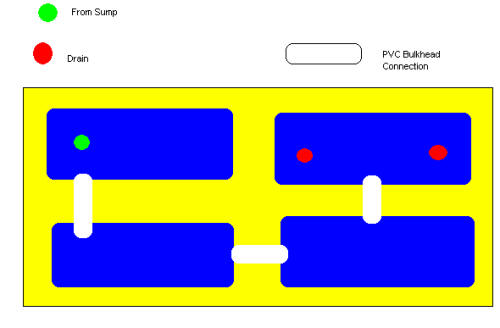
Possible? 01/18/09 Frag Tank Requirements. 3/16/2009 Frag Tank Follow Up 3/28/2009 Re: Holding system manufacturers? - 04/11/2006 Hello Bob, Very true, I'd rather have a scratched up el cheapo tank than pay a premium for the same tank unscratched, I'll contact some of the wholesalers and see if they have extra gear, thanks much for the tip. <Certainly welcome. Works to all's advantage for you to have/use...> In the meantime I'll also contact Alan Lem and Craig DeWalt to get some pricing on the raceways, thanks again for your time Sincerely, Miguel <Real good. Do please send along pix once all is in process. Cheers, Bob Fenner> Frag tank lighting 10/2/06 Hello WWM crew I have a 20 gal SPS frag grow out tank I am setting up plumbed into my main system. I have a 2X55 watt 6700k fixture I have considered using (the frags will be on a rack 8-10" below the water surface). Do you think this will work or should I go to option #2 which would be a 150 watt HQI Iwaki 6500k. Thank you very much for your opinion and all the information you have on you awesome site. Scott <I'd use the fluorescent... and make the grow out tank water depth adjustable... an inch or two above the frags is ideal. Bob Fenner> Re: Custom Frag Tank lighting -- a follow-up - 1/18/07 Thank you for your quick response. <No problems, my friend. I enjoy feeling helpful.> Okay, I'm going to go back to a standard aquarium as a sump so I can put in the refuge for the corals but I have a follow up in regards to the lighting. I would rather have MH than VHO, just my preference. <Fair enough, we all have our preferences. VHO would not be my choice either, in fact if I were to endorse any specific technology, it would likely be T5-HO, due to their smaller size, lower heat, longer bulb life, and good penetration, but I digress...> So if I went with MH lighting, being that that my tank is 3 ft wide, would something like a 2x250 HQI with PC actinic 48"x15"x3" centered over the tank give enough lighting to the edges. Or is their a different set-up you would recommend. <This sounds good to me, my friend. I think it will serve you well. -JustinN> Thanks again.
Conservatory Frag Tank...How To Control The Heat? -- 08/06/07 Hi There, <<Hello Karl>> I wonder if you could help or offer any advice on a system that I am setting up? <<I'm happy to try>> I want to setup a 55g frag tank (to grow pulsing Xenia, Metallic Green Xenia (Star Polyps), various other Zoanthids) in my conservatory (not sure if these go under the same name in the US - it is like a glass house with plastic roof built onto your house). <<Ah yes, I am familiar with these/this term (lived in Ipswich for 3 ½ years). The U.S equivalent is called a three-season room...or as they often call them here in the South East, a 'Florida' room (even though it may not actually be located 'in' Florida)>> Anyway, the conservatory does not get full sun, only afternoon sun. I would like to utilize this natural sunlight, as well as supplement this with a 250w 14k metal halide lamp (would you suggest this or a lower Kelvin globe as I am aiming for this to be a grow out tank). <<This is doable...and if 'growth' is what you are after I recommend a Kelvin temperature closer to natural sunlight (5500K -- 6500K)>> My question is this... Even though I get only afternoon sun (and I live in chilly old England) <<I do recall! [grin]>> the temperatures still soar once the suns starts coming through. <<Mmm, yes...I imagine with all those transparent walls/ceiling the solar gain would be quite intense, even at your latitude>> I am planning for this system to be open top, with 1 or 2 large fans blowing across the water. I also plan to extract heat from the metal halide out of the window with an inline extractor fan. Do you have any ideas on how else I can keep the temperature down during summer (winter is not a problem)? I really cannot afford to air-condition the entire room, or purchase a chiller. <<Hmm... The extractor fan will also likely pull some ambient room heat and may prove to be enough. You could also install a louvered ventilation fan in one of the windows that operates on a thermostat to pull excess heat from the room...much like those used in greenhouses to control temperature. Visiting a greenhouse may give you other ideas such as installing window or roof vents that can either be opened manually or controlled with a thermostat to open up when the temperature rises to help vent hot air>> Will evaporative cooling (automatic top-off using an Osmolator and Kalkwasser) <<I love those Tunze Osmolator top-off units>> be enough to keep temps within the acceptable range? <<Only testing will tell...but is worth a try. Evaporative cooling can be quite effective>> Any advice you could offer me would be much appreciated. <<I hope I've given you a few things to consider/investigate>> I have had a great deal of success with my nano and now that things are getting a bit crowded, wish to grow these frags out to sell/trade. <<Quite common>> Sadly, my conservatory is the only space I have available to setup a frag system... :O( Any advice would be much appreciated! Best Regards, Karl <<Good luck with your venture. EricR>> Coral Propagation/Home Business 3/7/08 Hey there crew! <Hi Ryan> This is a terrific site! I have not seen so much quality information on reefs anywhere on the web. Thanks you for your hard work. <You're welcome.> I have had aquariums my whole life. For several years, while I was in college, I bred African cichlids, angelfish, and discus for extra money. I still have many of the same LFS contacts so I think I will be able to develop a strong coral business too. My question is in regards to a 20 gallon long propagation tank that I am in the process of setting up. My plan is to start with some extra mushrooms that I have in my display tank. Profit is not an concern, <Good, since there won't be much.> I just want to develop a working system and gain an understanding of what I am doing before I increase my operation to a "large" scale home business. I just want your comments on any improvements I can make. My plan is to have a 2-3 inch substrate depth, two power heads with low gph (<150), Prizm skimmer, Penguin 150 filter, 130 watts of compact florescent lighting (dual bulbs 10000k/6700k). <The lighting should be fine for most softies.> I have ready Anthony's newest book and much of the information on this site that is relevant to what I am planning. Any help will be greatly appreciated!! <The profit margin on a home coral propagation business is usually just enough to offset the expense. Is done more for the love of the hobby and to offset hobby expenses. I would suggest the use of Rubbermaid Tubs for this purpose. One hanging MH fixture will easily illuminate the entire tub where all types of coral can be grown. Is best to keep coral families in separate tubs to reduce allelopathy. Most folks doing this use plastic eggcrate to place their frags on. Shrooms can be lightly rubberbanded to rubble rock until they attach. Aragonite plugs are now sold and hard coral frags can be super glued to the plug and placed into the eggcrate. Very efficient protein skimming is also recommended. Anthony's book should be of great help in this venture. Do continue reading/learning on this subject, learn as much as you can before starting this venture.> Thanks, <You're welcome. James (Salty Dog)> Ryan Frag tank 2/5/08 Hello Crew, Hope all is well with you. I have recently studied several books such as Anthony Calfo's book on Coral Propagation, and Bob Fenner's Conscientious Aquarist and have been overwhelmed and awestruck with the massive information. <Is an involved, involving hobby interest eh?> These books have been extremely worthwhile investments, and I have got an insatiable desire to start a small frag tank in our spare bedroom also known as the fish stuff room. <Jumping right ahead!> I have a 75 gallon aquarium and I would like to run my ideas by you for your input. I will build a egg crate rack with one 12 inch shelf at 12 inches below the waters surface and one 6 inch shelf 4-6 inches below the waters surface. Lighting will be natural sunlight through the window for about 5 hours a day and supplemented with T5HO (4x54) for about 5-6 hours a day. The targeted species of propagation would be primarily softies such as Zoas, Mushrooms, Sinularia, Leathers, and Xenias with some interest in less light demanding LPS. <Mmm, ahhhhh, I am encouraging you to read a bit more re which to cut up first... not to mix... to rinse thoroughly before placing...> My ideas for filtration are protein skimmers (HOB), <Mmm, a sump would be better... for quite a few reasons... flexibility...> a container or even 2, approximately 16 inches x 12 inches x 6 inches filled with sand and placed on the bare bottom of the tank. <I'd place this material in the sump...> This would be for the benefit of DSB and also cleaning issues with bare bottom. <What if pests become an issue? easier to find, isolate them...> I will place 20- 25 lbs of live rock for biological filtration in the tank. <This too...> I want to utilize a Mag 12 pump in the tank with a manifold placed around the rim "Calfo style". I don't want to utilize a sump with overflows on this tank and don't feel confident in glass drilling. <Not hard to do, have someone do for you... even the manufacturer...> I will utilize a refugium above the tank <Oh! Good> and allow water to gravity feed down to the tank for nutrient importation and exportation. Do you think this will work? If not where should I tweak this plan? Thanks for your time, Wade <This system can be made to work... but is not categorically what I would devise... Perhaps a bit more reading and reflection. Please start here: http://wetwebmedia.com/cnidreprofaqs.htm and the linked FAQs files above. Bob Fenner> Propagation Setup, Cnid. 2/1/08 I am thinking of setting up a small propagation tank using a 20 gallon long aquarium. My plan is to drill the bottom and have an overflow down into a 20 gallon sump/refugium. I am thinking of propagating mostly soft corals (Nephthea, Capnella), Zoanthids, and mushrooms. <Mmm, okay... best to do/use this small volume for just one of the three groups at a given time...> My first question is how much improvement would I get from having an upstream refugium vs. an in the sump refugium? <Mmm, about the same> I would have the refugium set up on a deep sand bed plenum and fill it with Chaeto algae. Furthermore, I would not use a filter screen on the return pump so hopefully all the copepods/amphipods will make it into the tank. <Mmm, the screen won't hinder their passing here... it's to prevent other, larger materials from damaging or clogging the impeller> This is how my 75 gallon reef is setup and I've had good results for over a year now. I was thinking of using a 600 GPH pump to run the sump and two 300 GPH powerheads with rotator deflectors in the display tank for additional circulation. Is this too much flow and if so what would your recommendations be? <Posted on WWM... see Circulation... and Systems and Propagation/Reproduction FAQs files for the Cnid. groups listed> As for lighting, I was thinking of using 2 T5's at 10000K and actinic with a total output of 48 watts. I specifically chose the 20 long for its shallow depth but with a decent size length for holding multiple specimens. Will the T5's be a good amount of light for my intentions? <Yes> Lastly, for feeding I was thinking of offering small amounts of Cyclop-eeze, oyster eggs, and liquid coral food every other day with no mechanical filter present. On the alternating day running the system with a mechanical filter to clean out whatever is left in the water. Does this seem like a good feeding regimen or is there a more efficient/better way of doing it? Thanks so much for your help. <For a home-hobbyist attempt this should work out fine. Bob Fenner> Frag tank... Mechanicals, reading -- 1/26/08 Hello there I was interested in setting up a tank to use as a frag tank mostly softies maybe a couple of LPSs and sps corals also . I have a tank spare tank I bought of my boos at the pet store I work at. <Spell checker...> The dimensions are as followed it is 60 inches long (5 feet) 18 inches (1.5 feet) wide and 12 inches deep(1 foot) deep . <A good size, shape> It was custom made by oceanic . It is drilled in four places all along the back . It also has a glass brace in the middle . I consider my self very lucky that I got that tank and another tank of around 50-60 gallons for 80 bucks . What I was wondering was your thoughts on lighting and filter choice if my budget is around 200 to around 400 dollars. Any other input would be greatly appreciated. Tom von Bargen <All posted... Read here: http://wetwebmedia.com/corlpropfaqs.htm and the linked files above... and a cursory (re)read of Anthony Calfo's newly re-done "Coral Propagation" book. Bob Fenner> Was: Cherub Angelfish Question... Now Skimmer op., Frag tank set-up Good day Bob, <Eric> Thank you for the quick response. I really appreciate it. I have another question. Well, actually, two questions. One is related to my skimmer. It has been up and running continuously for about 3 weeks, and is still creating about 1-2 cups of skimmate per day, however it's a lighter green to light-medium shade brown color. It's not the "dark coffee" colored, thick skimmate that I have been expecting. I have adjusted the height so that the skimmer cup is about as high as it can go (the O-ring is as low as it can go on said cup) and it's still producing the above colored skimmate. I don't think I'm too low on the stocking level.. Is this normal? I know that the skimmate production is different for different folks as well... Do you have any suggestions? <This may be about all that the given make/model skimmer can do with the present conditions in your tank... There are means to change this... by adding ozone for instance... But I would not be concerned> The second question is in regard to a "Frag Tank". I have been thinking of setting up a 20 Gallon Long tank to have some "easy" polyps and (mainly LPS) corals. I am in the exciting planning stage, and here's what I have so far: -Power Compact Lighting, somewhere between 80-100 watts, 60 (or so) 10,000K and (20 or so) watts 6,700K (or 20 watts Actinic). -An over sized filter (rated for 30-50 gallon tank) -An extra powerhead with rotating deflector. (Flow will be toward the filter. One will be on left side of the tank, the other will be on the right hand side) -plastic egg crating or similar, set up on different levels ( like a few stairs.. from West to East) so that I can have 2 or 3 different heights for acclimation and differing light requirements. -a few pounds of live rock set under the egg crating. - There won't be any fish (...If you think it will be "better" I could add a small goby or similar) Questions: How does the above sound so far? Should I add a sand bed? Would a 3-5 inch plenum type help here, or should I leave this out.. Maybe have a 1 inch sand bed if I decide to add some inverts? If yes, I will add part live sand and part "non live" sand to the mix. <Okay, I would and no... Please read here: http://wetwebmedia.com/corlpropfaqs.htm and the linked files above. Have you seen Anthony Calfo's (new 2d. ed.) Coral Propagation book?> Also, I am a bit concerned with the nitrification process, especially in the beginning, and will be reading more about that in the meantime. I am familiar with setting up a FOWLR or Fish-Only set up in this regard, but not a "coral/polyp only tank, with some inverts" <Best to fast-start with water, substrate from an established system, use make-up water from there...> Once again, Thank You for the Help! Eric <Welcome. Bob Fenner> Larger Scale Live Rock Alternative -- 07/09/08 Crew, <<Hey Ryan>> Thank you for providing such an extensive resource to our community, your service is second to none. <<Thank you much for the kind words'¦redeeming indeed>> I have read and re-read most of what has already been published here regarding different types of live rock "substitutes", (i.e. cinder blocks, lava rock, homemade, etc.), <<I see>> and our problem/situation is on a bit of different scale than those discussed thus far. <<Oh?>> We are in need of a much larger volume of rock, and due to the obvious costs, etc., are in search of ANY reliable alternatives. <<Mmm, I understand'¦but do realize there is no real 'alternative' to live rock, only poor substitutes of varying degree>> We currently operate a coral propagation facility with roughly 1,300 gallons and 1,000lbs of rock that has been in our tanks for years. Well-seeded, to say the least. <<Maybe so'¦but also likely in need of a 'boost'>> January 1st, we are expanding to a new location, with roughly 5,000g planned, and would like to get "whatever it is we are going to use" for rock/bio, to start seeding in our current system right away. <<Some of your existing rock will serve well as a start-up bacteria culture'¦but after 'years' is low in soluble bio-mineral content and alkaline reserve'¦as well as diminished bio-diversity>> We have the time and space now to start whatever "curing" process is going to be needed before introducing it into the current system, but we are concerned about the long term effects of items like cinder blocks, etc. leaching at the new shop. <<The biggest immediate concern is elevated pH (as high as 12.0 and above with new 'cement' products), but this is easily 'cured' down to acceptable levels'¦though the process can be lengthy (8 weeks or more). Long term issues in my experience with cement-based rock are excessive/problematic nuisance alga growth'¦and the fact that it provides no real bio-mineral content or buffer capacity/alkaline reserve>> So, my 2 questions are... Is there any truth to the different "soaking" methods (vinegar) to prevent this effect? <<The vinegar will not 'prevent' anything'¦rather, the Acetic Acid can be useful in 'speeding up' the curing process. I have no personal experience with this method as I have always just used a plain water-soak, and from what I have heard, the added cost/trouble is little worth it. But do feel free to give it a try and decide for yourself>> In dealing with something on this scale, has any rock substitute been proven reliable on a long term basis? <<Terrestrial limestone may well be your best choice here. It will be much more dense/heavy than good live rock, will not support as much bacteria load as live rock, and brings nothing to the table re bio-diversity'¦but can be bought cheaply in bulk, and is a more 'natural' source than the cement-based products (e.g. -- cinderblock)'¦and though you will need to test to be sure, it will not likely need 'curing.' With the limestone, do consider utilizing as much 'new live rock' as you can to provide those needed elements the limestone can't provide'¦perhaps as much as a fifth of the total volume (but the more the better!)'¦doing so will also make the limestone 'better'>> Thank you for all that you folks do. Ryan Haag <<We are happy to assist. Eric Russell>> Airlifts? 4/23/08 Good morning! I am doing research of airlifts for water circulation in large 4'x18'x2'deep tanks for coral propagation. <Oh, Dick Perrin uses this water-movement mechanism in his facility... Tropicorium > I have scoured the internet and WWM and have not found any places that show the functionality of a large scale airlift system. <Mmm, there's a bunch... in the engineering end for destratification systems for lakes, ponds... but you'll have to make a trip to a large (college) library> I know that many people have used them on systems similar to this. Thank you for your time. Andrew Lawing <Maybe a call or email to Aquatic Ecosystems... or Argent Chemicals (the first for general reference, glass airstones... the second for their large collection of in-print materials. Bob Fenner> Please forward to Bob Fenner. Thanks! Greenhouse coral farming 04/22/08 Bob, <Andrew!> I just wanted to write you a quick note to say thanks for coming down to give us that presentation here in San Antonio. <Welcome my friend> I enjoyed it very much and I do have to say you have had me researching an ozonizer as well. I was the guy that you met at the store on Saturday and my girlfriend worked at PETCO. <Ah yes, I recall. The NAV recruiter!> Thank you for you inspiration. Now on to the question. I have been researching the feasibility of greenhouse farming for about one year and I am very interested in it and your talk and my recent activities in the Hobby have excited me even more. I guess the biggest thing I have yet to plan out is overcoming the heat here in central Texas, but I am working on figuring that out. <Can be done in a few ways... best to shoot for redundancy, and the cheapest, most reliable means> This is a project that is still in the planning phases and nowhere near ready to build. I wonder might you have some advice on greenhouse farming? <A bunch... though unfortunately not put altogether in articles per se... but strung out by topic, e.g. cooling/chilling water, on WWM> So far I have searched around the internet and come up with some very good idea, however I could not find any information on Anthony Calfo's greenhouse. <Am pretty sure he's written quite a bit re in the vol. 1, first and second Ed.s of "Book of Coral Propagation"... have you seen this book?> Thanks for your time Bob and I look forward to you coming back to down Texas again. Andrew Lawing <Keep accumulating those plans Andrew... Bob Fenner> Re: Please forward to Bob Fenner. Thanks! Greenhouse reef farming 04/22/08 Thanks for the advice on the book I will pick it up ASAP, and once again thanks from MAAST! Have a good day <Thank you Andrew. I do hope to visit your operational facility come MACNA XXII in San Antonio. Bob Fenner> Greenhouse aquaculture 9/20/04 Hi Anthony, it was a real pleasure to get your reply. Your propagation book has been an inspiration to me. <ah, thanks kindly... very good to hear it> I am really looking forward to a greenhouse. I'm in the early planning stages- I'm going to take you up on your kind offer and will submit plans at some point for your thoughts, after the tour of Tropicorium and others- <I will help any/every way I can> One question- why would you want to heat the room rather than the water? <good question... always the air. You'll never see a productive/profitable fish room/GH run by heating the water... waaaay too expensive. Heat the air, and the tanks/water act like heat sinks. Very stable> It isn't that electricity is more expensive than natural gas? <depends on where you live... varies wildly all over the country. I have seen electricity from 4 cents to over 30 cents per kwh hour> I would think that heating a large volume to bring the water up to temp would be very inefficient-I suppose the cost of 10k watt water heaters for each 240 gallon sized receptacle would be prohibitive compared to inexpensive warehouse-type heaters? <it is most always best to simply use a hanging furnace to heat the room/air. You see these everywhere in industrial applications. There's a reason for it <G>> Thanks for your help, Anthony- Charles<always welcome.. best of luck/Life. Anthony> Coral Farmer Wannabe's Tank Conversion 4/14/05 Crew, <Cheers, Erik> First of all, WOW! Words (at least those in my vocabulary) simply cannot describe the overwhelming abundant wealth of knowledge I've obtained from your extraordinary site. I can't thank you guys (and gals) enough for the time you have invested in this endeavor and for sharing your experience and knowledge with those of us that surely can't be deemed worthy. <It is a labor of love :)> Secondly, WOW! I finally got my copy of the Book of Coral Propagation Volume 1 in the mail today and I have barely been able to tear myself away from it long enough to type this inquiry and get to work on my business plan. <Ahh, thanks kindly!> After a couple of years of reef keeping I got a superb deal on a very colorful, densely populated mushroom colony from a LFS. I thought to myself that I could successfully propagate these particular polyps equipped with what I have learned from the crew at WWM and easily turn a profit. <Yes - Corallimorphs are excellent candidates to start off with> Viola, the coral farmer inside me was awakened. For 4 months I've been pursuing this endeavor very slowly, not wanting to get in over my head and/or fail miserably. Things are going well thus far. Now that I'm armed with Mr. Calfo's excellent text combined with the WWM archives, patience, and uncommon business sense, I don't see how failure could even be within the realm of possibility. <There is money to be made here, indeed. And even more happiness/satisfaction in the work to be had> Finally, I'll get to my question. I have a heavily planted 55 gallon freshwater tank which, while a beauty in itself, will soon be converted to a coral farm tank. This tank already has a fine grain 3" sand bed (yes, I successfully grew beautiful, healthy freshwater plants in a sand substrate) leftover from the tank's previous saltwater fish-only existence. Is it feasible for me to maintain this sand bed and accentuate it with fresh live sand for the new coral farm tank or should I simply scrap it and start from scratch? <If the sand is free of any significant amount of solid detritus/sediments... then it will be fine after a good rinse. No worries> Thanks for your wonderful site and any advice you may have on this topic. Erik <Best of luck and life, Anthony> Lighting hardware 8.14.05 Hello Crew, <Howdy> What do you all think about PFO Lighting metal halide products? Dependable and reliable? I'm considering purchasing many units for coral farming and want to avoid known problems. <Hmmm... the bigger issue here is why you are using artificial lighting for coral farming if you intend to make any decent profits?> Also, PFO offers parallel and perpendicular reflectors. Sanjay Joshi's article indicates that the parallel reflectors are somewhat better than the perpendicular ones. <Sanjay is very reliable> These are going to go over 8ft x 2ft grow out troughs. Any advice? <Use skylights, light tubes, windows or a greenhouse if possible if you have any hope of actually making a profit> Thanks for your dedication to this industry! Regards, Jerry <Please take the advice to heart, my friend... not issued lighting here. Artificial lighting gobbles profits in coral farming. It's a charity ;) Anthony> Coral farming: natural vs. artificial light 8.15.05 Thanks, Anthony. I've considered quite heavily going the greenhouse route, even to the point of putting a bid on land, etc. However, I've concluded that I will go with artificial lighting because of the cheaper overall cost compared to purchasing land, greenhouse, and associated cooling/maintenance required. I can run 3x175w MH lighting over 24 8x2ft tanks for $100 per week. I'll spend roughly $6k on lighting, and can put all the tanks in my garage. <Is it possible to install skylights, windows and/or light tubes in this garage roof? If so... be sure to specifically find glazed products that admit maximum UV (contrary to the way most are sold/mfg). The good news is that such glass/products are cheaper. More importantly... they are better/necessary for corals. We'll filter UV as needed... not wholesale blocking by the panes on entry.> I'll spend far less this way than having to purchase land and building, plus the hassle of greenhouse maintenance (and the worry of a violent storm tearing the building down). <An insignificant concern... truly. Unfounded fear.> Am I missing something? Yes... huge here: you are presuming that you can get the same or good enough growth of corals under artificial light to absorb that additional expense. This could not be farther from the truth. Once you have grown corals under sunlight... you will see my friend. And, if you choose to go artificial, you will also learn some hard lessons. I talk to more than a dozen or so folks going this route year after year. Considering the scope of your project here... why not invest a small amount in a model to test. One tank in the garage under a single skylight/large window?> Regards, Jerry <Best of luck/life, Anthony>
Coral farm questions: UK 7/30/05 Hi all, My name is Russ; I own a company in the U.K. called Atlantis Aquatics along with my business partner Glyn. We are moving to a garden centre over the next few months and I will be building my second coral farm. <Fabulous to hear!> My first attempt is in my garage and lit by M/H and filtered with L/R and a large skimmer. <Yikes... very(!) difficult to do profitably. I presume you have crunched your numbers and realize this by now my friend?> There is currently about 500 U.K. Galls in the system. I have a few questions aimed at Anthony, but any help would be gratefully received. My method of lighting will be natural; <It has to be... otherwise the project will be closer to a charity than a profitable business <G>> I've got various ways of cooling, filtering etc but am confused about the material used for a Polly tunnel. I've read Anthony's book and did have 2 copies but alas they are now on my missing list. (lent out and not returned). I remember that a certain type of plastic was used to filter U.V. in naturally lit systems but I'm not sure what thickness or material was used? <most GH plastics and human habitat (atrium, skylights, etc.) do filter out a majority of UV which we do not(!) want done for corals. Instead we want to admit most all and filter as needed over specific tanks> Our intention is to open the facility to the general public once complete as there are none in the U.K. that I'm aware for people to gain knowledge. Also, I've visited various garden centres in the winter and found these tunnels to be very cold. <They are ... in fact, not hard to keep warm in large part because the standing pools of saltwater act as heat sinks. Any cheap household heating options (look to what the FW folks use in their free-standing Fishwise) will be enough my friend. You'll be amazed at how much heat the tanks of water hold at night> Is there a way to insulate the tanks used other than the usual methods? To heat the room itself will be very expensive to setup and run in this country, along with the fact that our winters are very long. <I am on similar lat with you in England (Pennsylvania) and have seen/consulted other folks north in Canada, Nova Scotia, Ireland with rough winters too. This is not so great a problem, rest assured. We should take some time to chat if you like. I'll be in Spain the first week of Oct 2005 for SIZOO.com If you can make the (cheap?) flight to Barcelona, I'll be sure to make the time to sit down and discuss your plans at length and help any way that I can, mate.> Thanks for your time in advance, Regards, Russ www.atlantisaquatics.co.uk <Best of luck/life. Anthony> Filtration For Propagation Tanks? - 10/08/05 Hello Crew, <<Howdy>> I am planning to set up (8) 8ft x 4 ft x 12 in tall propagation tanks in a greenhouse. <<neat>> I will have a protein skimmer in each. <<ok>> I am trying to avoid a sump for each tank if I can help it (simpler set up). For biological filtration, would you advise 1) 3" oolitic sand, 2) 200 lb live rock, or 3) some sort of sponge material. The sponge material would be cheaper, I believe, but I'm concerned about stuff that it would give off into the water. The sand would consume 3" of depth, leaving only 7-8" of water. The live rock would allow 'pods to develop. Pros and cons to each? Just looking for your advice. <<Well Jerry, my advice is this...I don't think any of these are very good ideas. The sand bed is too shallow and really needs to be employed WITH some live rock...the live rock, well, see my remarks about the sand bed...and the sponge material is just too inefficient/prone to trapping detritus. Don't set yourself up to fail by taking shortcuts...you won't be doing yourself or your livestock any favors. My advice is to build your tanks a bit deeper and utilize a 5"-6" sugar-fine aragonite DSB. I also suggest you employ a container (unlit) with live rock (e.g. - 100 gallon Rubbermaid). You will have the benefit of nitrate reduction from the sand bed...biological filtration of the live rock...and the (different) plankton production provided by both. If you elevate your tanks and place the Rubbermaid container underneath, plumbing to pump up to the tank which then overflows back to the Rubbermaid container is quite simple. Regards, EricR>> Regards, Jerry Frag tank set up question 12/15/05 Hi guys, hope all is well and you are having a good holiday season. <Yes... and the same wish for you and yours> I am starting to set up a frag tank to grow stock for my own tank as well as trade with my local clubs. <A nice/good project> I am going to stick with high-end meaning rare SPS corals and a few super colored Zoo's. I am going to have a three-tier shelf unit that would look something like this _____ [_____ [______ [ ________________[ Underneath and along the bottom I will have PVC caps that are flat and filled with small bits of live rock that the Zoo's can grow and spread to. <Sounds good> I currently have a 40 gallon breeder drilled and the stand is big enough to allow me to place two smaller tanks say a 20 gallon for a fuge with DSB and Macro) and a 30 gallon for a sump underneath both of which will have a standard fluorescent light above it. The plumbing is already set and the return t's off and some of the return water goes to the fuge. From there it flows into the sump then from the sump returns to the main tank via a Mag 7. The return comes into the main tank and forms a Y that goes to each of the sides and then each side points towards the middle. This was done to help increase the flow. In the sump I will also be running a skimmer along with a good amount of live rock rubble. If I need more flow I will probably add a Seio I will have to see what the Mag 7 does. <Okay> Lighting I was planning on going with either two 250 watt 6500K or one 400 watt 6500K. <I'd start with/run the lower wattage unit> The light will be in pendant form and the sump will be in the basement so heat will not be a problem as the basement is very cool even in the summer months. I am not sure about any livestock in the frag tank. I was thinking of a six-line wrasse and a few snails and a velvet Nudibranch in case any flatworms come into the system on new frags. I will still treat all incoming frags but one can never be to safe. <Agreed. I would quarantine all, suspended on a section of PVC pipe with a notch cut n the bottom... for a month... before mixing/placing in this facility> As far as dosing I am not going to be able to run a reactor (calc) and will have to dose via the hang above type, until I can sell some of the corals and recoup the costs to offset the reactor. No big deal, all good things to those who wait. <Sometimes, cases> My questions are about the light which would you go with the two 250's or the 1 400? <The former> What about the 6500 K? <Fine> What about the livestock (six-line & snails and a velvet Nudibranch) in the frag tank? <I would start with none...> Flow do you think the Mag 7 would be enough or would it be better to wait and see? <Wait> Sorry for the long post Thanks in advance - you guys are great. Bruce <Thank you for sharing, writing. Bob Fenner> Coral Grow-Out System...Bare-Bottom Or Sand-Bottom? 8/2/07 Hello Eric, <<Hello Faisal>> Hope you are doing fine. <<I am, thank you>> Unlike here in Kuwait, it is 50 degrees C (122 degrees F) but fortunately electricity here is almost for free to cool down the house (& the tank). <<Mmm, the perks of living in an energy rich country, eh...but still, 122F degrees!...youch! Guess I won't moan about the 95F degree weather here in South Carolina>> I have a question about fragment grow-out tank. <<Okay>> What is the difference between a bare-bottom grow-out tank & a fragment grow-out tank with live sand? I have seen both but which one is more preferable & why? <<Can be mostly a matter of personal preference/your sense of aesthetics... A shallow sand bed may harbor more fauna beneficial to feeding the corals than a bare-bottom tank, but the latter is easier to siphon clean of accumulated detritus if need be...and both may be mute points if a large in-line refugium is employed with the grow-out system>> All I know is that with sand you can get more light reflections. <<A good point...and may well be reason enough on its own>> Thank you & regards, Faisal Abbas <<Be chatting. Eric Russell>> Ocean Water? Hello there, I just found out about your site from the Nov. 2002 TFH magazine. <welcome, my friend!> I spent over an hour searching around and reading your FAQs and plan on spending more time there (great site!). <excellent... and do share your wisdom in kind with others> My question is the use of ocean water in polyp/coral production tanks I would like to set up. <it is very unlikely that I would ever recommend natural seawater for many reasons. The basics however are: very unreliable/seasonally fluctuating composition (pH, calcium, etc), the expense (time, space) of preparing it for safe use (ozone, bleach, filtration), the unlikelihood that you live in a remote coastal region and can draw pristine water from 5 to 10 miles out without effluent from dense coastal populations contaminating it, etc. Even if you get the water for free... it is unlikely to be worth it and almost certainly not as good for growing coral as a quality sea salt and its consistency. I would recommend Tropic Marin or Instant Ocean sea salts> I would like to propagate for trade with friends and local sales and trades. <excellent! Do let us know how we can help/advise> My questions are, with sea water available to me (central Cal. coast) how would I treat it for safe use in the system (e.g.. aging, U.V., etc..)? <bleaching and dechlorinating are inexpensive and fairly easy. Decant the top water and store dark for 2 weeks. Aerating and buffering 2 days before use too. That may be enough... but I still wouldn't bother. And I will say that it will eventually be dangerous (1-2 year picture) if you are taking water from within 3 miles of most any coast> Could I use a flow through type of system as this would be the easiest setup for me? <by flow through, if you mean raw, untreated... not recommended without massive micron filtration and ozone> If a flow through system is an option, how would heating the water be performed (I have heard of flow through heaters but have not seen them available)? <very expensive... if the scope of your operation is large enough we may be able to reckon the expense. For most aquarists, synthetic sea salt provides peace of mind, reliability, consistency, etc. Bets regards, Anthony> Thank you in advance for any help you can provide. Dan Sump/frag tank setup for dummies ? Bob, Anthony, and Steven, <cheers, Jeff... Anthony here> 1st, Melinda and I enjoyed meeting all of you guys at MACNA....We were very impressed with all of you (yes, even you Bob !) and greatly appreciate the time you spent with us discussing some of our ideas, and all of your work....Your openness to discuss these things is very helpful and we thank you. <our business and pleasure. Especially when you bring your charming wife <G>> Anyway, while we still play with potential ideas for a biz startup, we wanted to setup a mini op in our basement.... <a very good idea to start with a small model. Easier to extrapolate expenses from there. Go for it bubba> We have 3 100g Rubbermaid stock tanks available...I was thinking of just setting up 2 right now, with the ability to later add the 3rd.... <OK> Tank 1 would be the "grow out" tank, with about 5-6" sand, then raised acrylic racking above that (similar to the harbor tanks at MACNA)....lighting it, I think, will be a 36" MH/pc combo with 2x175w MH 10000k and 2x55w pc 6700k or 7100k...oh yeah, 2 sea swirls too <all very nice but it would be better to use equipment that will ultimately be used on the larger scale too... to work out the "bugs" so to speak. SeaSwirls are way too expensive to buy and operate in a commercial endeavor. Instead, use airlifts as much as possible and support with cheap recirculating pumps. Power heads are almost never to be recommended in commercial applications. The halides are very fine. The pc's are entirely unnecessary unless you just want them here for aesthetics. All halides have more than enough blue in their spectrum> Tank 2 would be the sump, or maybe, sump/refugium....here's where I need help..... <its not the only place you need help...heehee> I am thinking about an in sump bullet 1 skimmer, driven by the sen900 pump...a Gen x Mak 4 pump for the actual system flow...I'm planning on maybe 100lbs or so of LR in there as well, at the very least, and perhaps additional sand... <OK...cool> My problem is that I really have no idea on how do actually do all of this...I've never done anything like this before and want to do it right.... <no worries... the journey to enlightenment will be great fun here> ?'s are (other than "how do I do this ?!?!? ") can it all be plumbed with 1" line, or do the sump-tank and tank-sump lines need to be sized differently? <all one inch is likely fine... do check skimmer specs> 1 or 2 sump to tank pumps and lines, 1 or 2 returns ? <one pump and one return feeding a teed closed loop manifold. Did we discuss this at MACNA or do you need a crash course? If so... call by phone (number in my book) and we'll chat at length about this> what's the best/easiest way to return water from the sump to main tank (overflow) ? < a single dedicated pump to a manifold as per above. Simplest and most economical> how do I separate the skimmer area in the sump from the LR area....the problem is that the tank is not of uniform dimensions from top to bottom (the bottom footprint is smaller than the top footprint).... < a bucket or small inner vessel for the skimmer to catch raw water first is recommended> Does a refugium in the sump tank make any sense ? if so, how do I incorporate it ? <yes... its fine. Although I like an upstream refugium much better> Obviously, I am completely new to this, so be gentle with me please !!!!! <way too many jokes for that last comment... we'll let that one slide <G>> Again, it was great meeting all of you... Thanks for your time, Jeff Yonover Flossmoor, IL <our pleasure... be chatting soon. Do call if you need to. Anthony> Coral Propagation for Commercial Venture What would the best be to construct a green house? I live in west Florida, lots of sun. How could I do it, propagating corals that is? <These questions can not possibly be answered completely in a simple email. Before you begin this venture, please invest in a good book. Anthony Calfo's "Book of Coral Propagation" is explicitly intended for this purpose. You can find it here http://www.readingtrees.com/ along with various other online retailers.> Thanks a lot, Rob <Best of luck to you! -Steven Pro> Coral tips Thanks Anthony, I should peg my temp at 82 for SPS etc.? are there any other supplements you recommend for propagating? <there's no one best temp for corals. 76-82 is a comfortable range. I suggested 82 because of heat by pumps and light to make it easier for you to maintain stability. Indeed... stability in a safe range is more important than a specific number. The warmer temp will help growth of corals too but is harder on fishes (less O2). Aerate and skim aggressively. Water changes are the best mineral replacement for growing corals IMO. I use Kalkwasser, bicarb and iodine as well. Calcium reactors once tuned nicely are indispensable and can spare manual buffer doses and some Kalk. Best regards, Anthony> Mini SPS Frag Grow out System...Can It Work? Hello. <Hi there! Scott F. at the keyboard today!> I was wondering-would a ten gallon-size tank be ok to grow out some frags of SPS corals I recently purchased from my LFS? <I have seen/done this a number of times with different coral frags. As long as you're allowing some room for each frag to grow, and if allelopathy ("chemical warfare") is not occurring between specimens (easily avoided by not keeping SPS and softies together in such a system), you could do fine. Of course, you will need to supply high-quality water conditions, including brisk circulation and protein skimming. I'd do frequent small water changes with such as tank- like a gallon every other day- and use activated carbon and/or Poly Filter to really keep water quality high!> What type of lighting would be enough on a ten gallon to grow them ideally? <Well, with such a small tank, you could actually get by with power compacts, in my opinion. As long as you provide a level of light that is roughly equivalent to what the frags can expect in your system (accomplished easily, because of proximity to the light source afforded by such a shallow tank), you should do fine.> The tank has 10 pounds of live rock and 10 pounds of live sand, but is otherwise empty with a small skimmer attached with an Aqua Clear Mini. Thanks. <Sounds like a fun little addition to your hobby! You could possibly go to a more powerful outside power filter, or add an extra power head for more water circulation- but that's about the only other thing that you'd need for good results! Good luck with your efforts! regards, Scott F> - Coral Propagation Systems - Hi there, thanks for your time. <My pleasure.> I am starting a small coral propagation center in Oregon. I have four 180 gal, two 125 gal, and single 75 gal, none w/ water yet. I am still in the set up part of the project. I have nine 55 gal tanks I plan to stack in three's for frag tanks. Now my question's. I plan to try and keep each tank setup for the types of mother corals in it. I have light rails to go over each tank, do you think a light rail will work for coral or be beneficial? <Not especially so... would be much better to have lighting that is static and consistent.> My 180 gal tank's are 72x24x24. So what lighting would you use on your bright tank, the tank w/ mostly SPS corals. <400 watt metal halides.> Then what lighting for the LPS corals and species that don't need as much. <You might consider the new T-5 lighting that is finding its way onto the scene. Excellent light quality and very easy on the electrical bill.> Like I said I have four empty 180 tanks to set up. Each has a 37 gal sump, a 75 gal refugium. I am going to use a 1400 gph CPRs overflow. <I wouldn't recommend this for a production facility... too much can go wrong in the event of a power failure. Much better to have the tanks drilled.> I have Berlin XL skimmers each flows from sump into the refugium, then refugium back to sump. My water return to the tank is 1000 gph from sump. It returns to tank through a Ocean Clear canister filter then a lifeguard 40w u/v ster. I would appreciate any suggestions you may have. <I suggest you pick up Anthony Calfo's book, Coral Propagation - the contents are right up your alley.> I really am kinda new to this. I just sold my charter boat business in Alaska. I now am addicted and in love w/ corals, I have dove into this project ten fold. <Well, as they say, don't put all your eggs in one basket... the fish biz has yet to make anyone extraordinarily wealthy and there is some stiff complementation in the field of your pursuit. A savvy business plan will be your best ally.> Thanks again for your time, take care, Jason <Cheers, J -- > - Coral Propagation System Follow-up - Hi there thanks so much for the info. <My pleasure.> I was wondering what you meant concerning the CPR overflow's, you said to much can go wrong when the power fails. I will have them each hooked up w/ power heads to draw out the air and restart the siphon. <I have been witness to this system failing and producing an overflow in the tank it was running on.> I suppose if the power head didn't start up when the power came on it would be a problem, maybe I will put a tee in the airline and run two powerheads to the CPR's. <And if the airline behind the two powerheads clogs?> Also I am scared to have them drilled, the glass company wont guarantee the drilling and it voids the warranty on the tanks. <What is it that they won't guarantee?> I wanted to get them drilled from the get but didn't like the no guarantee thing. <I'd say this risk is much smaller than going with external overflow boxes. Especially because you are doing this all for business purposes.> One more thing, when you said I should use 400 metal H. lights, how many per 180 w/ SPS???? <Two, perhaps three.> What K bulbs would you use, and how would you add some actinic. <The temperature of the bulb is highly subjective. I'm a fan of the Aqualine-Buschke 10K, but some people think those are too yellow - this is all personal preference. As for the actinic, I'd use VHO fluorescents.> thanks for your time, J <Cheers, J -- > Re: Propagation Tank? So if I go with a 2 inch sand bed and as much live rock as I can fit in the 10 gallon that would be ok.<Yes, to the live rock, no to the 2 inch sand bed. You should use either less then 1" or more then 4". 2" will be more of a problem then anything.> If I go that route would it be better to have some type of lighting on it.<Sure, something small. Nothing really fancy. Hope this helps! Phil> Nano Propagation Tank? If I had a spare 5 1/2 gallon tank, do you think that would make a good propagation tank. I would use the MiniMight as a light, but I would have the frags on a stand so that they would be very close to the light. Thanks-Mike <Well, Mike, it is possible to compensate for lower light levels with more feeding and closer proximity to the available light...I'd go for it, with this in mind. Good luck with your little experiment! Regards, Scott F> Stealth Coral Propagation System Dear expert crew, <"Expert"- I dunno. Scott F. your Crew member tonight.> I'm planning to set up 6-8 coral grow-out and/or holding tanks in an extra apartment bedroom (don't tell the landlord!) and trying to figure out a cost-effective lighting system. <Ahh- let me know when you find one! LOL> I'm thinking of 30-40 gallon breeder tanks set on workbench tables so that they'll all be at a comfortable working height. Possibly two rows of two or three tanks set end to end, with the long ends of the two rows adjacent to each other. <Sounds good so far...> My current thinking is to use deep sandbeds on these tanks to minimize maintenance, which would also raise corals fairly high in a shallow tank. <A nice side benefit...one that is often overlooked> These will be mostly soft and LPS corals, Gorgonia, xenias, leathers, Zo's, mushrooms, etc., with a variety of lighting needs. <Sorted into dedicated tanks for each, I hope..?> Originally, I'd been thinking of ganging up PC, VHO or T-5 lights so that the light would spread over several tanks at once. However, today it occurred to me that I've got two 250 MH lights and ballast that could be used to light this group of tanks, perhaps using a Light Rail system to move the two lights over the tanks. If I use the MH lights that I already own, the only additional expense would be about $175-200 for the Light Rail system (hubby is too busy with other stuff to do a DIY system right now.) <Well, this idea would work nicely, but the intensity from 250 watt halides over very shallow tanks might be too much for some corals...> I also have two 20H tanks already set up, sharing one 48" Coralife PC hood. These two tanks could house lower light requiring corals such as Gorgonia and mushrooms so they wouldn't necessarily have to be under the 250 MH's. <Good thought!> I haven't bought the breeder tanks yet, so I can adjust my ideas about tank sizes, using smaller, taller tanks perhaps, such as the 2 20H tanks already running. I would somehow have to arrange the corals in the tanks so that those with lower light needs would be further away from the lights and those with higher needs closer to the lights. Can you give me any idea how high above the water and how high above the corals would be appropriate for using these bright metal halides on soft corals? Or is this idea even feasible. <Well, the height can vary, depending on the specific species that you're working with. The "conventional wisdom" states that 8 to 16 inches above the water surface is good for halides. Fluorescent and compact fluorescent lights can be mounted as little as 1 to 3 inches above the water surface.> Also, is there any need for actinics on holding/grow-out tanks if aesthetics are not a concern? <I don't feel that there is...> These would be coral-only tanks, with the exception of snails, hermit crabs, and perhaps one hard-working lawnmower blenny per tank. I want to segregate coral species to reduce toxicity problems, so more tanks is better than fewer tanks. <Absolutely!> Thanks for your help, your great web site and especially for Anthony and Bob's two awesome books. Suzanne Hathcock <If you don't have it- do get a copy of Anthony's "Book of Coral Propagation", which will provide you with a tremendous amount of information on coral grow-out systems and configurations...Good luck! I promise not to tip off the landlord, okay? Regards, Scott F> Coral Propagation Lighting 2/27/04 Last week in Seattle I attended a lecture by Anthony Calfo on coral propagation/farming. Thanks Anthony, I found the discussion very interesting. I enjoyed your articulate and humorous delivery. It's obvious from listening to you that you have a real love for marine life and the reefs. <thanks kindly my friend... I truly had a fun time! :)> In your discussion about your experience of propagation in Pennsylvania you mentioned that you used a green house and natural lighting. <yes... natural lighting almost exclusively> I am preparing for starting a propagation program myself but had planned to use artificial lighting (T-5) . <yikes! Well... I think its great you can afford to establish a charity <G>> Do you feel that an artificially lit aquiculture facility would not be able to be profitable due to cost of lighting? <I am certain of it. Personal experience, the shared wisdom of others... and above all: the numbers/statistics. Calc your rates of growth at present and salability of corals against what it costs you to buy and operate lights... plus replace those fluorescent lamps every 6 months just to try to maintain growth. You can indeed grow corals under lamps... but very little profit to be made. If you need/want to make money... you need to harness natural sunlight, my friend. Anthony> Greenhouse covering for coral farming 6/16/04 I have your "Book of Coral Propagation" and can't seem to find out exactly what I would like to know about a covering. I am looking for sheet to raise stony and soft corals both. <because of the very different lighting needs for so many corals (rather extreme in cases like deep water Zoanthids and Corallimorphs versus shallow water Acroporids), you will need to opt for the "highest common denominator" - essentially, get a covering that allows the most light AND the most UV into the greenhouse for your most demanding species, and then selectively shade over various grow out tanks with less demanding species as needed> I have contacted Stuppy's in Kansas city and atlasgreenhouse.com. both told me to contact their respective manufacturers. atlas.com and klerksusa.com. at said the best they had was a par light transmission of 91% and this was typical. <not bad... agreed> can you help me find a covering or tell me what I need. <they steered you right, my friend. With growers having such vastly different needs (tomatoes, poinsettias, orchids, mushrooms, corals, etc.)... you are responsible for researching your own needs and then examining the specs of mfgs to pick from them. As mentioned in the coral prop book, seek plastic that allows maximum light and maximum UV in. The latter is the hardest to find as most plastics and glazing try to block (!) as much UV as possible. Still... don't be surprised that the plastic you find is going to be one of the least expensive (yay!). The advantage to max UV admission is a disadvantage to plastic longevity/stability. No worries... changing the GH covering every few years is simply par for the course> I am aware that i will need shade cloth. <yes... several different grades. And a light meter to judge which to use when) I just what some plastic. most people have no idea of what i am talking about when i mention coral farming. <understood... hence my recommendation (again in BOCP 1 <G>) that prospective coral farmers need to advise their GH suppliers that their needs in hardware (fans, plastic coverings, heaters, shade cloths, etc.) are very similar to orchid growers. Take this advise my friend> please help me. thank you <best of luck! And do consider going to the MACNA conference in Boston this September where you can get a priceless education from industry folks like myself eager and waiting to chat with folks/friends like you all weekend long. There is info on the conference on the home page of reefcentral.com Anthony> Coral Propagation W, Very sorry about the delay getting back to you. I have been quite busy with family obligations this week. I have answered within the body of your message for our convenience. Anthony > I'm a little confused about starting of propagating corals. I would like > to set up 2 - 40 gallon tanks which sit on an 8 foot > long bench, each of the tanks are 3 feet long. <<They sound like a very nice shallow size. > > I have added the substrate, Less than 1/2 inch or more than 3" right? sugar fine and about 40 > to 60 pounds of Fiji > live rock. Cured (fully) Excellent, but do look for predators too. In a perfect world for coral farming, the rock would be in a separate in-line vessel (like refugia or sump) to reduce the risk of a predator coming out of the rocks. Small concern though. > > These tanks have a 75 gallon sump which is about 50% > full and runs and > ETS devil skimmer. I run no bio balls. > > <All the parameters are acceptable.> My next step is lighting and stocking, I buy and sell used tanks and have several tanks set up for breeding "clowns" see www.oceanaquatics.com, it has been about 3 months and my > success so far has come from Lysmata, none yet from > clowns. <Excellent... have you reared the shrimps beyond thirty days and what/which species? > > Anyways, I try everything, but am extremely patient. So when I purchased a 4 year old existing systems with 50 "corals", etc and > purchased your book I needed to set up a coral > section to my fish room. > <Very cool, my friend. > Onto lighting, I am setting up this system with 175 > MH and 2 by 3 foot > blue actinic at 30 watts, and have assumed, up to > now this is fine. > Confirm ?? > <Agreed. And do be sure to use Iwasaki 6500K lamps for first choice. Ushio or Aqualine Buschke close seconds. I have another opinion about most other MH lamps... some of which I wouldn't take for free. > I buy just about anything, and it seems to all > survive, but what's the > best to start with (coral wise) and is there > anything I should stay away > from ?? < If your goal is profitability, resist SPS corals and do pursue colorful sort coral (Xeniids top the list) > > Calcium Reactor ? Calcium levels are fine now. UV sterilizer ?> <Calcium reactor (two chambers in series) a big yes... UV shouldn't be necessary if you are properly quarantining all new entries, else you will eventually get burned. > Thanks for any input you may have. <Very welcome my friend. Anthony Calfo> Anthony Re: Frag setup Hello Anthony <howdy, partner!> I am so happy to have heard back from you soon I told my husband that you will lend an ear and an eye for our little project. He is now very eager to get started knowing that power tools will be needed soon. He demanded that I send you his drawings for the stand but I think we should talk about what we want to keep first. The drawings will come next if you do not mind. <my pleasure!> For one 20 gallon cube we like very much the idea of keeping Ricordea. Ones that are of rare and shocking colors. You spoke of the African Blue Cespitularia. Could they be kept in the same tank? I wanted to have xenia in each cube partly because we like them but also for nutrient export. <although they are hardly a natural mix... mixing a few species together is reasonably safe> The other 20 gallon cube would be for Montipora. Again with many desired colors. In our tank in the house we have a few Montipora digitations. We must frag them most often and people always seem to want them. We thought the branching and platting verities? <yes... there are so many wonderful and desirable Montipora species. They will be very marketable for a long time too because they are so hardy for beginners as a rule (as SPS go)> The 20 gallon long tank we are not very sure about. I like keeping coral that are heterotrophic where as my husband likes ones that are autotrophic. We will make a culture station so I thought why not put it to good use. Would you have any more suggestion or something we should think about? <the autotrophic animals need a dedicated system of their own. There is no way to practically feed an autotrophic display without ruining water quality for the heterotrophs or going to the poor house for money spent on water changes. A small system with frequent water changes for the autotrophs dedicated please> A few more questions about our setup. Each tank is made from acrylic and a have no holes drilled, they are independent of each other. I would like to keep it this way. It was my thinking that mixing water of different animals would not be good on such a small scale. <agreed on this point> Also I want to do frequent water changes and use xenia and some Caulerpa and nutrient export. <ditch the Caulerpa.... it will be a complete nightmare especially in this small system. Caulerpa does far more harm than good in most systems IMO> Using the live cultures and staying on top of water quality would allow us not to use a refugium. We do use one for our tank in the house. I just thought that it would not be as necessary for this setup. <refugiums are so helpful though. If you add any coral that feed more on zooplankton, do add a refugium (fishless). For now, the Montipora and Xenia will not each such prey and you are OK. The Ricordea need target fed anyway. Caulerpa in the display proper by the way (without a refugium) could be fatal for these coral... many reasons in the long run> Also I know you are big on heavy skimming. We have a euro reef in our home and have an extra one we could use for this setup. <excellent, but not necessary for the Xenia and Ricordea... may even be an impediment. Weekly water changes will be fine instead. Also use regular chemical filtration (carbon/Poly Filter)> Again I wonder how I would use this if each tank is independent of each other. Could we get away with out it if we are 100% on top of the water quality, or is that unrealistic. <very fine for the species listed... maybe different with a change (will be critical with the autotrophs!)> There would be no fish, at least I see no reason for them. I would use snails and have a DSB filled with animals. Could that be enough? <very fine indeed> I think that is enough for now. I thank you again! Lacy <best regards, Anthony> DSB info for coral propagation 3/16/05 Hello, I have enjoyed reading many of your informative articles in the past and hope that perhaps you can help shine a light on a number of questions that I have. <glad to do so :)> I am attempting to start a greenhouse grown coral farm. I have a number of personal tanks in which I have used DSBs to assist in environmental filtration. Presently I am setting up a 800 gal system and am investigating other sources for sand to use in these systems. I can purchase aquatic sand from my sources but have been reading a lot of literature that says if you are not buying "live" sand, you are over paying for basically playground sand. <not true... there is no need for so-called "live sand". Its not needed, and frankly... many of the products sold as "live sand" are really a joke. Carbonate sand is carbonate sand... period> I am concerned about this as I am not able to set the system twice but I have no need to spend unnecessary $. Hard enough to get started as a small business. <no worries... clean, dry sand is fine or better: can be inoculated as you wish. More control> If these substrates are indeed avail for proper use in these systems what do you recommend? I have inquired as to available sands and have the opportunity to purchase many types. <calcite or aragonite would be ideal. If you go for silica based sands... you need to compensate for its lack of buffer> I have heard the "play sand " available at many home improvement stores works well. <true... do see the many message boards posts confirming this through the years> I also wondered about something like masonry sand. <eh... rather dirty. Some concern for contaminants (river dredged)> I know that they use this type of sand for playgrounds. It has a sugar sand particulate size. Any recommendations would be appreciated. One further question, I have a great number of snails in my systems that lay eggs , but never does the population increase. <some species have complicated larval cycles that do not succeed in aquaria> Any ideas? <do try for Strombid snails from IPSF.com or Ceriths/Cerithium species from Florida for easy to breed marine snails> Thanks for your time and I look forward to your reply. <best of luck in your endeavors :) Anthony> |
|

|
Features: |
|
| Featured Sponsors: |