|
Related FAQs: Marine Life
of the Tropical West Atlantic, Tropical West Atlantic 2,
Related Articles: TWA
Invertebrates, Algae, Vascular Plants, Introduction to Fishwatcher's Guide
Series Pieces/Sections, Lachnolaimus maxiumus/Hogfish, Hogfishes of the Genus
Bodianus,
The Tropical West Atlantic:
Bahamas to Brazil, Part 8
To: Part 1, Part 2, Part 3,
Part 4, Part
5, Part 6, Part 7, Part 9,
Part 10, Part
11,
|
|
| Bob Fenner |
|
Parrotfishes, Family Scaridae. A few TWA parrotfishes are
employed in the trade, but most should not be. Most specimens adjust
poorly to captivity, dying from hunger and "depression" in
the corner of a distant aquarium. Of the few species of this
wrasse-related family that survive in any numbers in aquarium settings
(given the selection of a healthy, well-adjusted, small size
individual), two hail from our topic area. These are the Striped,
Scarus croicensis (3) and Princess Parrot, S. taeniopterus (3).
Unfortunately, good numbers of Redband, Sparisoma aurofrenatum (3), and
Stoplight Parrots, S. viride (3), among other "misc." colored
and not Caribbean Parrots are sold in the trade. These algae and coral
eaters should be left in the ocean.
Ecotype: Found swimming around rocks and the coral heads they scrape
for food.
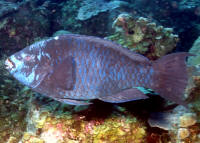
| Scarus coelestinus Valenciennes 1840, the
Midnight Parrotfish. Western Atlantic; Bermuda to Brazil. To thirty
one inches in length. A beautiful one here in Bonaire. |
|
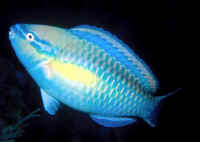
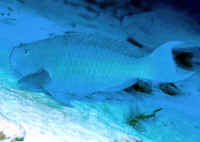
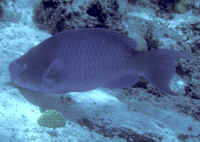
| Scarus coeruleus (Bloch 1796), the Blue
Parrotfish. Western Atlantic; Maryland to Brazil, West Indies. To
nearly four feet in length. Bahamas and Cozumel pix. |
|
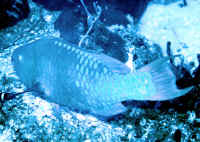
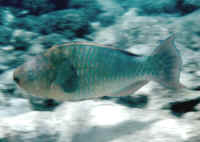
| Scarus guacamaia Cuvier 1829, the Rainbow
Parrotfish. Western Atlantic; Bermuda, Florida to Argentina,
northern part of the Gulf of Mexico. To nearly four feet in length.
Bahamas and Tobago pix of terminal males. |
|
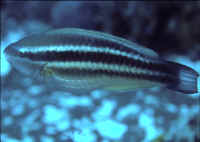
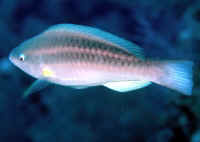
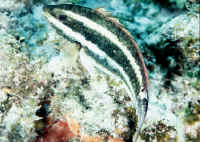
| Scarus taeniopterus Desmarest 1831, the
Princess Parrotfish. Western Atlantic; Bermuda to Brazil. To
fourteen inches overall length. Likely the most commonly utilized
species (of only a handful) used in the ornamental trade of this
family. Due to better collection, holding and shipping more arrive
in good condition and live. Though most are dead within a month of
collection. Juvenile, initial and terminal phase individuals in
Cancun (first) and Bahamas shown. |
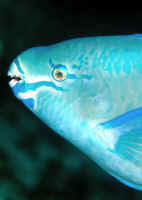
| Scarus vetula Bloch & Schneider 1801,
the Queen Parrotfish. Western Atlantic; Bermuda to Argentina. To
two feet in length. A smaller species that occasionally makes its
way into pet-fish markets. Bahamas pix of an initial phase and
profile of a terminal one. |
|
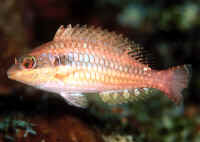
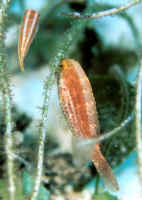
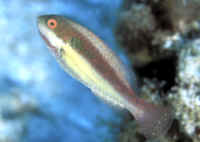
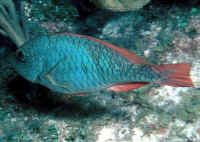
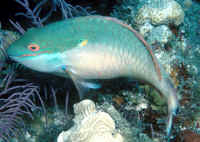
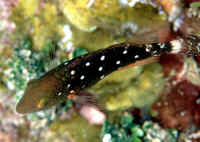
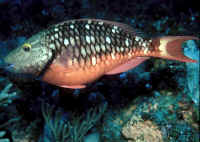
| Sparisoma aurofrenatum (Valenciennes 1840),
the Redband Parrotfish. Western Atlantic; Bermudas to Brazil. To
eleven inches in length. An occasional pet-fish import. Does as
well as any other Parrotfish... i.e. not well in captivity. Shown
below: juvenile, initial (and mottled one from Cozumel) and
terminal phase individuals from the Bahamas. |
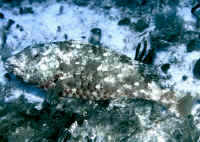
| Sparisoma viride (Bonnaterre 1798), the
Spotlight Parrotfish. Tropical West Atlantic; Florida to Brazil. To
twenty five inches maximum length. Pictured below, juvenile,
initial and terminal phase specimens in the Bahamas. |
Jawfishes, Opistognathidae, are abundant species in the TWA
(12 described species, plus 7 to be). Three of these substrate dwellers
are utilized in our interest. The Yellowhead Jawfish, Opistognathus
aurifrons (2); Dusky Jawfish, O. whitehurst (2); and Longjaw Jawfish,
O. macrognathus (2) all make suitable tankmates for any variety of
peaceful marine aquarium. Most are lost from JUMPING OUT; keep your top
entirely covered.
Ecotype: Sandy to gravelly substrate habitats.
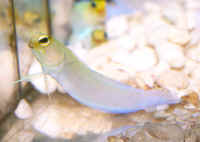
| Opistognathus aurifrons
(Jordan & Thompson 1905), the Pearly or Yellow Head Jawfish is
one of the most popular aquarium fishes collected in the tropical
west Atlantic. It deserves it's status as the most collected
and used Jawfish species; being a light blue anteriorly, grading to
creamy white and yellow toward the rear half, and spending more
time outside of it's tunnels than other jaws once established.
To four inches in length. Note gravel at wholesalers in this
image. |
|
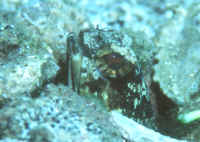
| Opistognathus macrognathos
Poey 1863, the Banded Jawfish. Tropical west Atlantic. To
eight inches in length. Here doing what the family does most all
the time. Lie in wait for a food item or territorial challenger to
come/happen by. Photo taken in St. Lucia, Caribbean. |
|
To: Part 1, Part
2, Part 3, Part
4, Part 5, Part
6, Part 7, Part
9, Part 10, Part
11,