|
Related FAQs: Seahorses
& their Relatives, Seahorses & their Relatives 2, Seahorse Identification, Seahorse Behavior, Seahorse Compatibility, Seahorse Selection, Seahorse Systems, Seahorse Feeding, Seahorse Disease, Seahorse Reproduction,
Related Articles: Seahorse Care Guide, Fresh to Brackish Water
Pipefishes, Solenostomidae
(Ghost Pipefishes),
/The Conscientious Aquarist
Indonesian
Basses, Fancy and Otherwise, Family
Serranidae
|
|
| Bob Fenner |
|
Basses, Groupers, Family
Serranidae:
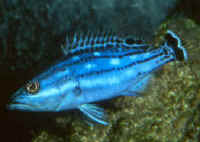
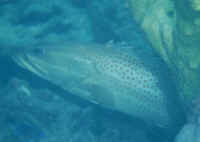
| Anyperodon leucogrammicus
(Valenciennes 1828), the Slender Grouper. Indo-Pacific, including
the Red Sea, out to the Marshall Islands. To twenty one inches in
length. This fish always draws stares for its streamlined predatory
good looks. An aquarium juvenile and one in the Seychelles.
Monotypic. |
|
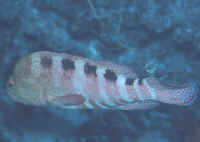
| Cephalopholis sexmaculata (Ruppell 1830),
the Six-spot or -blotch Hind. Indo-Pacific, down to South Africa,
over to French Polynesia. To nineteen inches in length. A secretive
species. One emerging toward nighttime in the Maldives to hunt,
another in Mabul, Malaysia. |
|
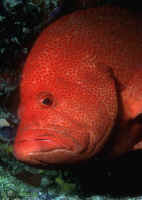
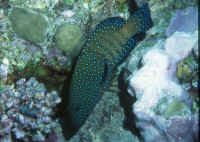
| Cephalopholis sonnerati (Valenciennes 1828),
the Tomato Hind. Indo-Pacific; east Africa to Australia and
southern Japan. Not found in the Red Sea. To 57cm. in length. Eat
small fishes and crustaceans. Mabul, Malaysia image. |
|
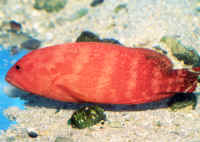
| Cephalopholis urodeta (Forster 1801), the
Darkfin Hind to science is the V-Tailed Grouper in the aquarium
interest. Indo-Pacific, down to South Africa, over to French
Polynesia. To eleven inches in length. Aquarium photograph. |
|
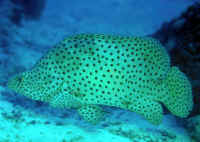
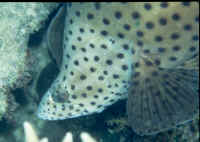
| Cromileptes altivelis (Valenciennes 1828),
the Panther Grouper to the hobby is the Humpback Grouper to
science. Western Pacific distribution. To twenty eight inches in
the wild. This eight inch individual in an aquarium. |
|
Genus Epinephelus:
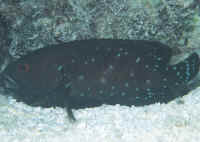
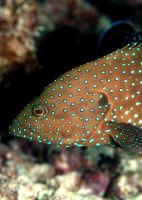
| Epinephelus coeruleopunctatus (Bloch 1790),
the White- or Smallspotted Grouper. Indo-Pacific. Often confused
and sold as/with, E. ongus, E. summana, E. corallicola. To
thirty inches in length in the wild. This one photographed in the
Maldives. |
|
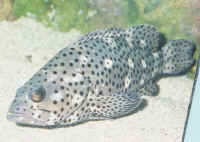
| Epinephelus corallicola (Valenciennes 1828),
the Coral Grouper. Western Pacific. To eighteen inches in length.
Aquarium image. |
|
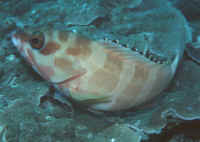
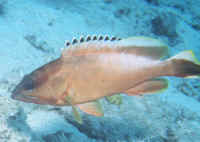
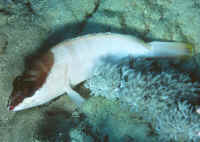
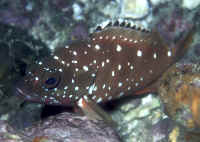
| Epinephelus fasciatus (Forsskal 1775), the
Blacktip Grouper. You might think "fasciated" might be a
better common name for this Bass, until seeing how changeable its
coloring is in the wild. Indo-Pacific. to sixteen inches maximum
length. At right, one in Nuku Hiva, Marquesas. Images below: first
taken at Australia, the other two in the upper Gulf of Aqaba, Red
Sea. |
|
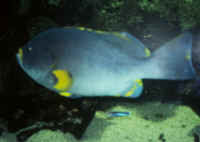
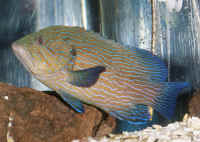
| Epinephelus flavocaeruleus (Lacepede 1802),
the Blue and Yellow Grouper. Indian Ocean, but not the Red Sea. To
almost three feet in length in the wild. This one photographed in
the Wilhelma Aquarium, Stuttgart, Germany at about two feet in
length. |
|
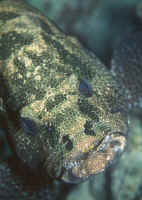
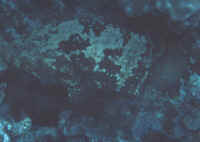
| Epinephelus fuscoguttatus (Forsskal 1775),
the Brown-Mottled Grouper. To more than thirty inches in length.
Red Sea profile and Fiji images. |
|
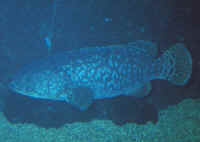
| Epinephelus lanceolatus (Bloch 1790), the
Lanceolatus or Giant Grouper. To eight feet and three hundred
kilograms. The largest bony fish found on coral reefs. Public
Aquarium image. |
|
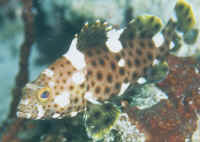
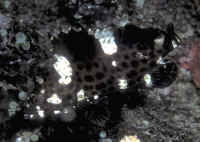
| Epinephelus maculatus (Bloch 1790), the
Spotted Grouper. Indo-Pacific; Cocos-Keeling through Micronesia. To
60 cm. A juvenile in Fiji and a larger one in N. Sulawesi. Eat reef
fishes, crustaceans and octopi in the wild. |
|
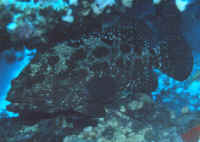
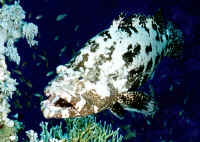
| Epinephelus malabaricus (Bloch &
Schneider 1801), the Malabar Grouper. Indo-Pacific, including the
Red Sea. To seven feet long. Happy ones in the Red Sea. |
|
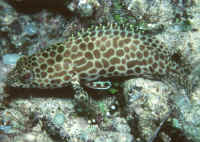
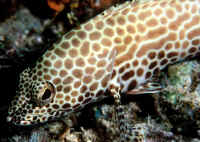
| Epinephelus merra Bloch 1793, the Honeycomb
Grouper. Indo-Pacific, but not the Red Sea. To about a foot maximum
length. A real beauty and common in the aquarium trade. Images from
Bunaken/Sulawesi/Indonesia and Fiji. |
|
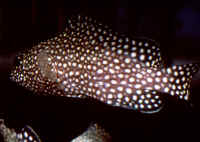
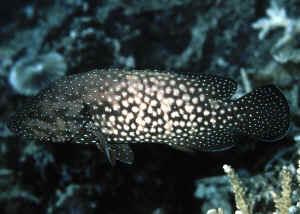
| Epinephelus ongus (Bloch 1790), the
White-Streaked Grouper. Indo-west Pacific. To about a foot long.
Fast learner in getting along, feeding in captivity. Aquarium and
Malaysian photos. |
|
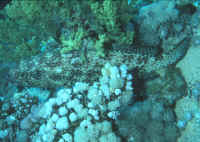
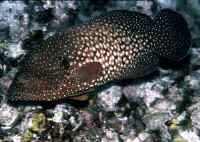
| Epinephelus polyphekadion (Bleeker 1849),
the Camouflage Grouper. Indo-Pacific, including the Red Sea. A
beauty, but grows to about three feet in length. Mostly feeds on
crabs and fishes in the wild. This foot and a half specimen in the
Red Sea. Formerly known as E. microdon. |
|
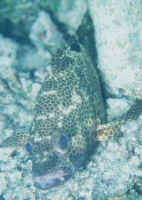
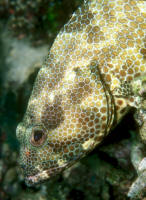
| Epinephelus spilotoceps Schultz 1953, the
Foursaddle Grouper. Indo-Pacific, but not the Red Sea, and
punctuated distribution in the west Pacific. To fourteen inches in
length. Periodically imported into the ornamental aquatics trade.
This one in a typical repose in the Maldives and N. Sulawesi. |
|
Genus Plectropomus:
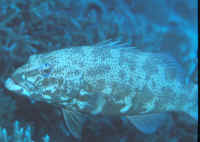
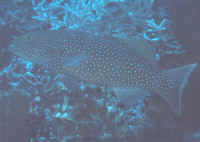
| Plectropomus areolatus (Ruppell 1830), the
Squaretail Grouper. Indo-Pacific, including the Red Sea but not
Australia. To twenty nine inches in length. Young one in
Australia/Heron Island, adult in the Bunaken, Indonesia. |
|
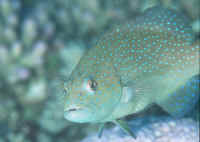
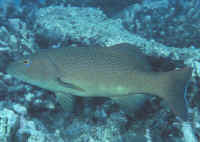
| Plectropomus leopardus (Lacepede 1802), the
Leopard Coral Grouper. Western Pacific. To forty six inches in
length. Juvenile (about six inches) in Australia and semi-adult one
in Fiji, from where they're occasionally exported. |
 |
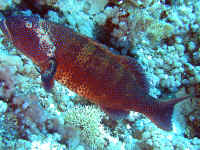
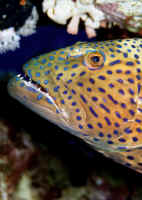
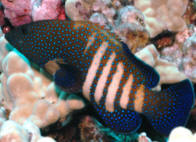
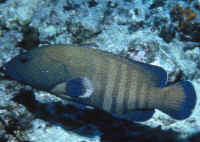
| Plectropomus pessuliferus (Fowler 1904), the
Roving Coral Grouper. Indo Pacific; Red Sea, Zanzibar Sumatra,
Fiji. Two subspecies. P. p. marisburi in the Red Sea, P.
p. pessuliferus in the rest of the Indo-Pacific. Here is the
subspecies of the Red Sea. |
|
Genus Liopropoma: Four Indo. species.
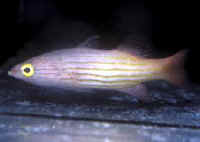
| Liopropoma susumi (Jordan & Seale 1906),
Meteor Perch. To 9 cm. Indo-Pacific; Red Sea to Micronesia. Found
on/in reefs to 34 meters depth. |
|
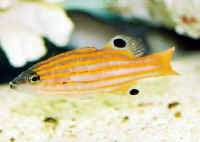
| Liopropoma swalesi (Fowler & Bean 1930).
To 5 cm. in length. Found near dense branching coral at about 25
meter depths. Western Pacific: Indonesia and New Britain.
Distinctive orange stripes. Aquarium photo by Hiroyuki
Tanaka. |
|
Fancy Sea Basses, The Subfamily
Anthiinae:
Genus Nemanthias; Threadfin
Anthias: One species:
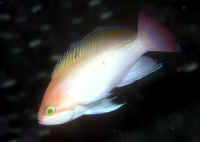
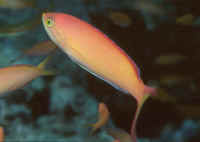
| Nemanthias carberryi Smith 1954, the
Threadfin Anthias. East Africa over to the Maldives. To four inches
in length. Best kept in a large system in a haremic setting, one
male, several females. |
|
Genus
Pseudanthias:
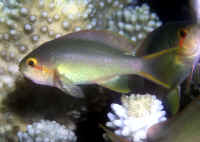
| Pseudanthias dispar (Herre 1955), the
Dispar Anthias. Indo-west Pacific. To almost four inches in length.
Hard to keep if not immediately trained to take food. Best fed a
few times daily. Females have slightly longer pelvic fins. A
gorgeous male in the Singapore Aquarium, Sentosa Island and N.
Sulawesi males and females from the last. |
|
|
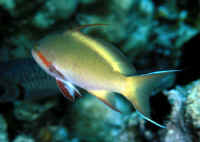
| Pseudanthias evansi (Smith 1954),
Evan's Anthias, Yellowback or Yellowtail Anthias. Indian Ocean,
eastern Africa coast over to the Maldives. To five inches in
length. A difficult aquarium species. Similar to the hardier
Pseudanthias bartlettorum, which
has a yellow dorsal fin. Below: Aquarium, Maldives and N. Sulawesi
images. |
|
|
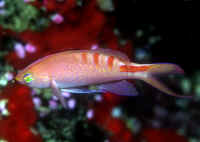
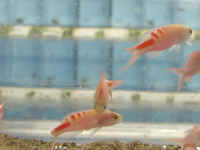
| Pseudanthias lori (Lubbock & Randall
1976), Lori's Anthias. To five inches in length. Indo-Pacific.
Close up of an individual in Mabul, Malaysia and in a
wholesaler's cubicle in L.A. |
  |
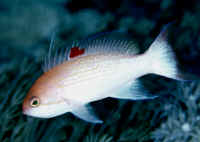
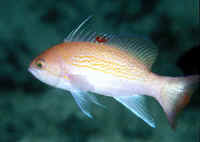
| Pseudanthias luzonensis (Katayama &
Masuda 1973), the Yellow-Lined Anthias. To five and a half inches
long. Males with three yellow lines and red spot on their dorsal
fin. Males off Gili Air, Lombok, Indonesia. |
|
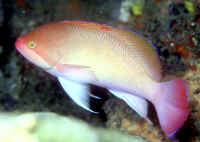
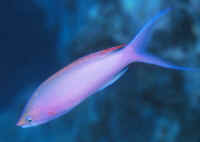
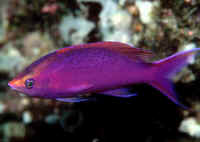
| Pseudanthias pascalus (Jordan & Tanaka
1927), the Amethyst Anthias. Tropical Pacific. To six inches in
length. Difficult to keep in captivity. Needs large systems,
live-meaty foods. One in the Cooks, the other in Fiji. |
|
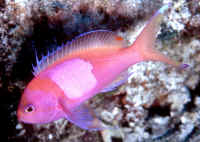
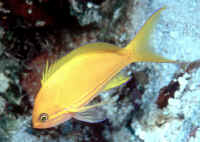
| Pseudanthias pleurotaenia (Bleeker 1857),
the Square-Spot Anthias. To eight inches in length. Western
Pacific. |
  |
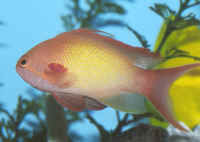
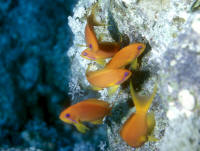
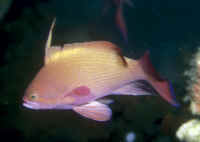
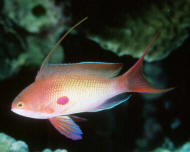
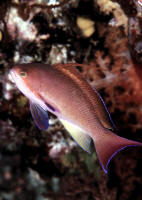
| Pseudanthias squamipinnis
(Peters 1855), the Lyretail Anthias. Red Sea to western Pacific. To
four and a half inches in length. A tough, but sometimes mean
aquarium species. At right: Male and females shown Aquarium and Red
Sea. Below, males in N. Sulawesi, Red Sea and Fiji. |
  |
 |
 |
 |
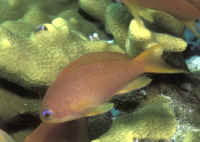
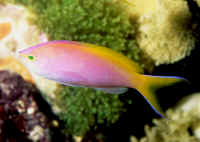
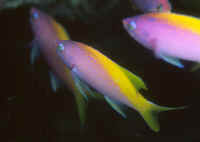
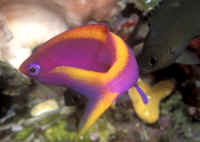
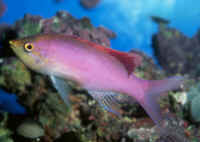
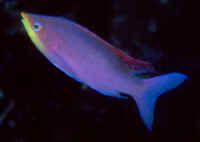
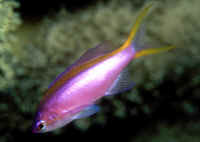
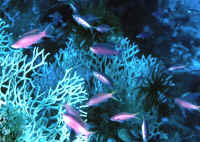
| Pseudanthias tuka (Herre & Montalban
1927), the Purple Anthias. Western Pacific. To five inches overall
length. Pictured: a group at right in Australia. Below are
males in captivity and Bunaken, Indonesia, and a female off
Australia. |
 |
|
|
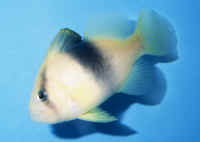
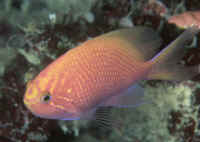
| Serranocirrhitus
latus Watanabe 1949, the Fathead or Hawkfish Anthias. Deep
bodied, and to about five inches in the wild. Shy... Resides in
caves by day. Need hiding spaces in captivity and peaceful
tankmates. Image taken in Bunaken, Indonesia. |
|
Soapfishes, Subfamily Grammistinae, or Family
Grammistidae:
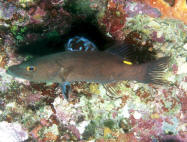
| Belonoperca chabanaudi Fowler & Bean
1930, the Arrowhead Soapfish. Indo-Pacific, far West Pacific to
East Africa. To six inches in length. Shy and retiring species
found singly under overhangs and in caves. |
|
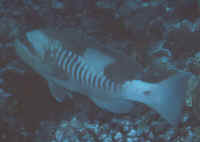
| Diploprion bifasciatum Cuvier 1828, the
Barred Soapfish. Indo-west Pacific. To ten inches long in the wild.
A shy, but beautiful addition to a reasonably peaceful aquarium
setting. Eats small fishes in wild. Hides in/around caves.
Below, light aquarium four inch juvenile, eight inch adult
light and dark phase Australian specimens of Diploprion
bifasciatum. |
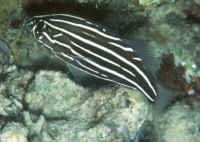
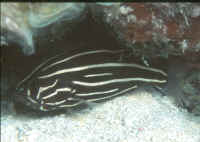
| Grammistes sexlineatus (Thunberg 1932), the
Sixline Soapfish or Grouper. Indo-Pacific, including the Red Sea.
To twelve inches in length. Juveniles in the Red Sea and
Maldives, and adult in captivity. Monotypic genus. |
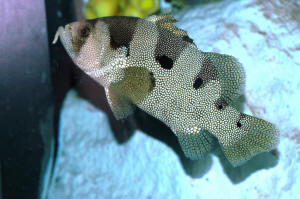
| Pogonoperca punctata (Valenciennes 1830),
the Clown Grouper. Indo-Pacific. To fourteen inches maximum
length. |
|
|
|


.jpg)
.JPG)