|
Related FAQs: Genus Genicanthus Angelfishes, Marine Angelfishes In General, Angelfish ID, Selection, Behavior,
Compatibility, Health, Feeding, Disease,
Related Articles: The family of Angelfishes,
Pomacanthidae,
Genus Genicanthus
Angelfishes, Swallowtails
|
|
|
By Bob Fenner
|
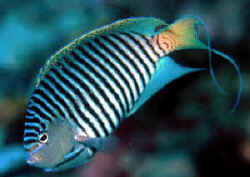
Genicanthus melanospilos,
male, Fiji
|
Angelfishes for Marine Aquariums
Diversity, Selection & Care
New eBook on Amazon: Available
here
New Print Book on Create Space: Available
here
by Robert (Bob) Fenner |
 |
|
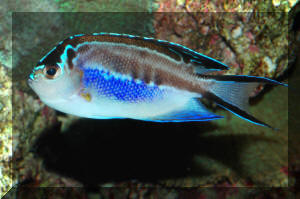
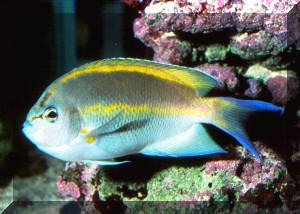
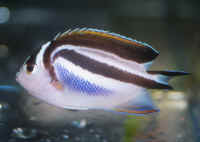
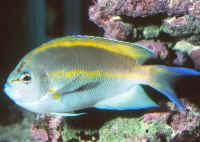
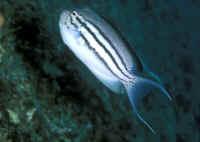
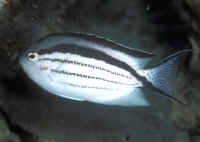
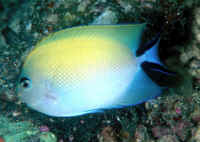
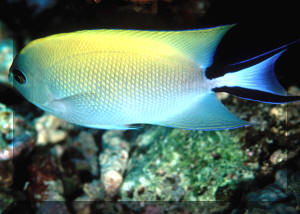
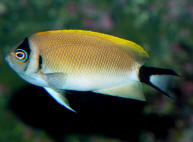
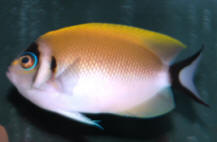
Genicanthus bellus Randall
1975, the Ornate Angelfish (3). Lives in small groups,
plankton-feeding up off the bottom. To six inches in the wild.
Western Pacific and Cocos Keeling in the eastern Indian Ocean.
Females and male shown. First pic by Hiroyuki Tanaka, last two by
RMF.
|
Bigger PIX:
The images in this table are linked to large (desktop size) copies.
Click on "framed" images to go to the larger size. |
%20MD.jpg)
 |
|
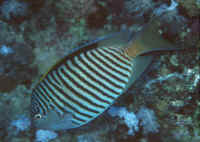
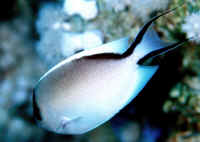
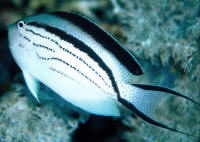
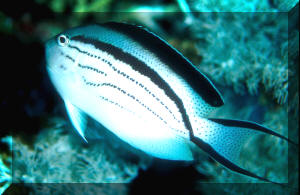
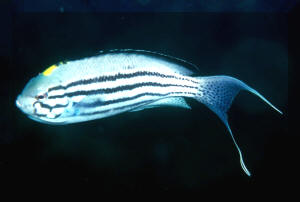
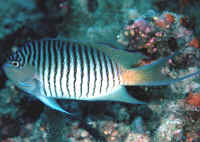
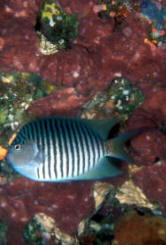
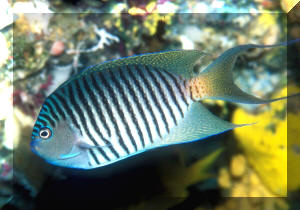
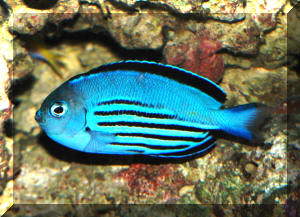
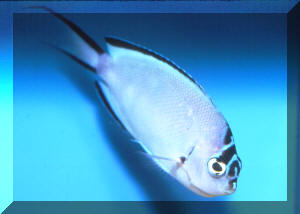
Genicanthus caudovittatus
(Gunther 1860), the Zebra Angelfish (2). Red Sea along the east
African coast, Mauritius and the Maldives. To six inches overall
length. Male and female shown.
|
|
Bigger PIX:
The images in this table are linked to large (desktop size) copies.
Click on "framed" images to go to the larger size. |
MD.JPG)
.JPG)
.JPG)
%20MD.JPG) |
|
Genicanthus lamarck
(Lacepede 1802), Lamarck's Angelfish (2). Indo-Australia
Archipelago. To seven inches in length. Probably the most common
member of the genus used in the trade. Male and female in N.
Sulawesi and female shown off of Gili Air, Lombok,
Indonesia.
|
|
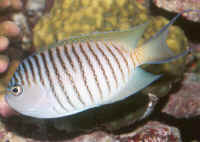
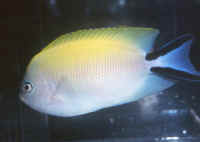
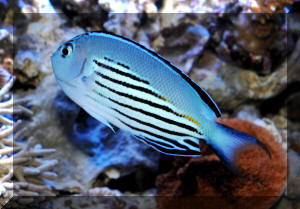
Genicanthus melanospilos
(Bleeker 1857), the Black-Spot Angelfish (2). Similar to G.
caudovittatus to the west, this species is found throughout
the tropical western Pacific. Also to about six inches long. Male
and Female shown in captivity. Below, male and female in
Fiji.
|
|
|
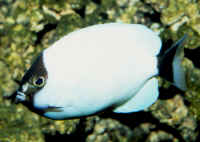
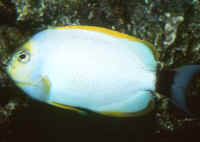
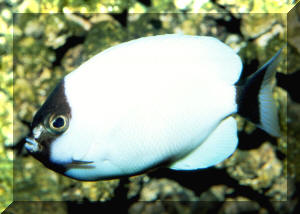
Genicanthus personatus
Randall 1975, the Masked Angelfish (1). Northwestern Hawaiian
Islands. Rare and cooler water animals, but can live in tropical
systems. Shy, need plenty of rock cover. To eight inches total
length. Male and female shown from Waikiki Aquarium.
|
|
Bigger PIX:
The images in this table are linked to large (desktop size) copies.
Click on "framed" images to go to the larger size. |
|

|
|
Genicanthus semicinctus
(Waite 1900), Half-Banded Angelfish (2). Known from Islands in
the southwestern Pacific. Rarely in the trade.
|
And rarer for me to lack a photo.
|
|
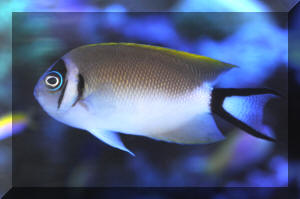
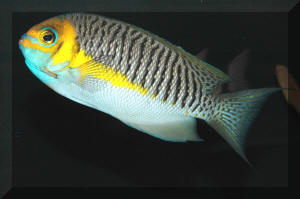
Genicanthus semifasciatus
(Kamohara 1934), Japanese Swallow Tail Angelfish (2). Western
Pacific, mid Japan south to the Philippines. Rare in the western
aquarium trade. Here, a female and male in Dallas
TX, and a male in CT.
|
Bigger PIX:
The images in this table are
linked to large (desktop size) copies. Click on "framed"
images to go to the larger size. |
 |
|
Genicanthus takeuchii Pyle
1997, the Spotted Angelfish (?). Known only from the Bonin
Islands in the northwestern Pacific.
|
This is getting ridiculous.
|
|
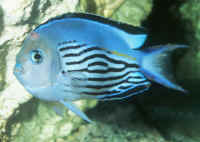
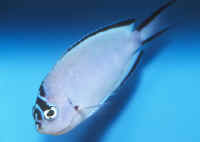
Genicanthus watanabei
(Yasuda & Tominaga 1970), Watanabe's Angelfish (2).
Amongst the hardiest of the genus (that makes it into pet-fish
markets). Western and central Pacific. To six inches total
length. Male and female in aquariums shown.
|
|
Bibliography/Further
Reading:
Angels in General
Allen, Gerald, Roger Steene & Mark Allen. 1998. A
Guide to Angelfishes & Butterflyfishes. Tropical Reef
Research/Odyssey Publishing, Singapore/San Diego. 250pp.
Allen, Gerald R. 1979. Butterfly and Angelfishes of the
World, vol.2. Mergus Publishers, W. Germany.
Burgess, Warren E. 1991. Two new genera
of angelfishes, family Pomacanthidae. TFH 3/91.
Emmens, C.W. Pacific angelfish. Marine
Aquarist 3(1):72.
Gonzalez, Deane. 1980. Angels of Hawaii. FAMA 7/80.
Hemdal, Jay. 1989. Marine angelfish;
color and style. AFM 8/89.
Ladiges et al. 1978. Marine fish,
angelfish. Aquarium Digest International #19.
Lobel, Phil S. 1975. Hawaiian
angelfishes. Marine Aquarist 6(4):75.
Moenich, David R. 1987. Angel Food; the
most important single factor in keeping marine angels is a varied diet.
TFH 6/87.
Moenich, David R. 1988. Breaking the
rules (marine angel compatibility). TFH 3/88.
Steene, Roger C. 1977. Butterfly and Angelfishes of the
World, vol.1. Australia. Mergus Publishers. W. Germany.
Stratton, Richard F. 1994. Practical
angels. TFH 10/94.
Thresher, R.E. 1984. Reproduction in reef fishes, part
3; Angelfishes (Pomacanthidae). TFH 12/84.
Toyama, Dean. 1988. The angelfishes) of Midway Island.
FAMA 11/88.
Genicanthus
Carlson, Bruce A.1982. The masked angelfish Genicanthus
personatus Randall 1974. FAMA 5/82.
Debelius, Helmut. 1981. Latest discoveries about the
angelfish Genicanthus caudovittatus. FAMA 4/81.
Howe, Jeffrey C. 1992. Original descriptions. The masked
angelfish Genicanthus personatus Randall, 1975. FAMA 2/92.
Michael, Scott W. 1997. Swallowtail angelfishes. The
Genicanthus species are a different sort of angelfish. AFM 4/97.
Pyle, Richard L. 1990. The masked angelfish Genicanthus
personatus Randall. FAMA 10/90.
Angelfishes for Marine Aquariums
Diversity, Selection & Care
New eBook on Amazon: Available
here
New Print Book on Create Space: Available
here
by Robert (Bob) Fenner |
|


%20MD.JPG)
%20MD.JPG)
MD.JPG)
MD.JPG)
%20M.JPG)
.JPG)
MD.JPG)
%20MD.JPG)