|
|
| Home | Marine Aquariums |
Freshwater Aquariums |
Planted Aquariums |
Brackish Systems |
Ponds,
lakes & fountains |
Turtles & Amphibians |
Aquatic Business |
Aquatic Science |
Ask the WWM Crew a Question |
| Please visit our Sponsors | ||||
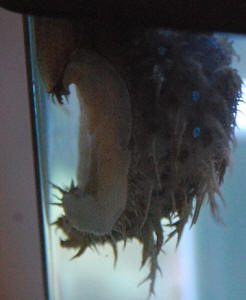
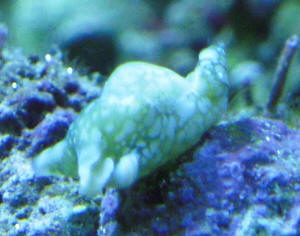
Hair algae and pistol shrimp aggression towards sea hare? Hello, I was wondering if you can offer some guidance. Before I begin, my tank info is as follows: 29g Nano reef (running 1 year); approx. 25 lbs. live rock; 5g RO water changes every 7-10 days pH 8.3/salinity 1.024/iodine 420/calcium .06 ammonia/nitrite/nitrate/phosphate = 0 water temp. fluctuates between 80-84° Corals: trumpet coral, toadstool leather (2), branching frogspawn, cluster of xenia, Ricordea florida 5 polyps, asst'd. Zoanthids (approx 6-8? wide cluster) Livestock: 1 percula clown, 1 yellow watchman goby, 1 Rainford's goby, 2 pistol shrimp, 2 lettuce Nudibranchs, 1 dwarf sea hare (deceased) Over the past few months, I've been battling a problem with hair algae covering the live rock and back wall of the tank. Some of the Zoas are starting to get suffocated by the stuff. I've tried blue leg hermits, Mithrax crabs, and Cerith, Astrea, and Mexican turbo snails at different points in time. The crabs hardly made a dent. With regard to the snails, they've all been extremely lethargic following acclimation (hardly moving around), then slowly die off. I took a water sample to my LFS to see if they could give me any clues. Their results were similar to mine above, and their only guess was that the water temperature could be a cause of the snail deaths. <Your nutrients are likely measuring 0s *because* of the hair algae growth. They are consuming them. As for the snail deaths, how did you acclimate them? These animals are very sensitive to changing water conditions (even more so than fish and corals). Please see here: http://www.wetwebmedia.com/snaildisfaqs.htm> I bought 2 lettuce Nudibranchs to help cut down the algae, but have had similar results as with the crabs. Then I was told by the LFS that sea hares were better for consuming hair algae. I bought one and for several days it seemed to be doing well, constantly scouring the live rock. One evening, however, I couldn't find it. After searching with a flashlight, I saw it in the back of a rock cave in the clutches of one of the pistol shrimp, which was going at it with its smaller pincers. I scooped up the alive but injured sea hare and tried to place it high on the glass, away from the shrimp, but it was too weak to stick. I submerged a perforated container and placed him inside so the shrimp couldn't get it. But by the next morning, it was dead. <A lot of the sea hares sold to the hobby are cold water animals that don't live long in tropical tanks. Please see here: http://www.wetwebmedia.com/seaslugsel.htm> The tank gets fed daily, and I often see the pistol shrimp come out to snatch flakes from the water column, so I don't believe they're malnourished. Your answers to other pistol shrimp FAQs on your website state that predatory behavior by pistol shrimps towards snails and crabs isn't uncommon. I read somewhere else that sea slugs and Nudibranchs taste bad, so they usually get left alone by predators. Your thoughts? <They might not all taste bad.> The lettuce Nudibranchs are unmolested and seem healthy, one even laying eggs often. Although I like the interaction of the watchman goby with the pistol shrimp, I'm inclined to trap the shrimp and remove them. <Hmm, I would not remove the shrimp in hopes of saving the sea hare. And I would not seek to solve this hair algae problem with invertebrate herbivores. Please see here: http://www.wetwebmedia.com/algaeconMar.htm> I really want to get this hair algae problem under control. Any suggestions? <Please see the link above.> Thanks, Chris <Best, Sara M Re: Hair algae and pistol shrimp aggression towards sea hare? 4/30/08 Sara, Thank you for your prompt reply. To respond to your follow-up questions: 1. A few posts within the FAQ on snails (that you referred to me) mentioned magnesium toxicity/overdose as a possible cause of snail death. One suggested poor quality salt mixes could be a source of high magnesium. Would ?Instant Ocean Salt? be considered acceptable quality in your opinion? <Usually, yes, but if you are having problems, you should measure the magnesium and consider trying a different salt (such as Reef Crystals, made by the same company, but generally a better salt)> With the exception of occasional doses of iodine (levels tested periodically), no other additives are put into the tank. Could anything else be the cause of elevated magnesium levels, based on the info provided? <Hmm, not that I can think of...> 2. The snails were acclimated by floating the plastic shipping bag in display tank (I acknowledge that using a QT is preferable, and admit I do not have one) in which they were shipped for 15-20 minutes, then opening the bag and pouring ½ oz. or so of tank water into the bag every 5 minutes until full, then discarding half of the water in the bag and repeating the cycle until bag is full again. Final step is placing the snails in the tank and discarding the bag along with the water inside. Total acclimation time is around 1 ½ hrs. In the same snail FAQ, there was a post where you suggested an acclimation method involving a bowl and wet paper towel; or in the alternative, placing the snail on the glass side of the tank above the water level, allowing it to lower itself into the water at its own pace. Do you suggest I use this method? <IMO, It's worth a try for future snails.> 3. If the sea hare was a cold water creature and the 80-84 degree water temperature was the cause of death - as opposed to predation - isn't it more likely it would have acted sick or lethargic from the start? The sea hare was active and seemed to be eating, scouring the rock and glass during the 5 days before I caught the pistol shrimp clawing? it. <It's hard to say. It could have been solely the shrimp's fault. But all the same, the slug would have likely begun to decline anyway.> 4. I read the algae control article you referred to me. The control methods outlined several factors, one of which was the amount of nutrients in the water. My existing 3 fish get fed flake 1x/day (food totally eaten in under 1 minute). Also, I do 5g RO water changes every 7-10 days. Is the above routine ok? <Normally, yes, but you have a problem...so, something needs to change. Your tank might be overstocked. Nano tanks can be especially touchy in this respect.> Water flow is handled by the ?stock? Bio Cube 29 pump, plus an additional in-tank powerhead. Lighting is by one actinic and one 10000k (72w total, bulbs replaced every 6-9 mo.) running between 9:30 a.m. and 5:30 p.m. daily. Would modifying this routine help combat the algae without affecting the corals? Mr. Fenner's article indicates that most runaway algae problems are due to excess heat and temperature fluctuations. I would hope to find a solution to the problem without spending several hundred dollars for a chiller or via higher monthly a/c bills. <If your temp is staying between 80-83F, that should be ok.> As mentioned, my water temp. is currently hovering near that upper threshold. Your thoughts? <I don't think this is a temp. problem as much as a nutrient control problem. Again, these things are all more difficult to deal with in small volumes.> Current filtration methods include live rock for biological, protein skimmer, bag of carbon/Purigen, and regular weekly cleaning of the filter pads of particulate buildup. The only other control methods are regular brushing/plucking/turkey basting of the rock and back wall of the tank. <I hate to have to tell you this, but if this just a little hair algae, you might just have to "deal with it." Algae is a part of the ecosystem in "real life." Changing salt mixes *might* help with the algae too...you never know.> Thank you again for your guidance, Chris <De nada and good luck, Sara M.> Sea Hare death(s) 04/14/2008 Thank you for a wonderful site. I apologize for asking a question when I'm sure the information I'm looking for is already posted but I seem to be handicapped in search engines as they always seem to return matches where every single word is accurate, yet somehow out of context. <Ah, yes... GIGO... a need/arena for learning the field/terms, use of Boolean logic... as it applies to such searching perhaps> I have a 90 gallon marine tank FOWLR containing a Yellow Tang, Blue Tang, Coral Beauty, Six line Wrasse, 2 percula Clowns and 3 blue/green Chromis. I started seeing string hair algae of the kind no fish eats (naturally) and by the time I recognized I had a "problem" rather than a simple "event" the algae had taken a pretty strong hold. I corrected the problem (phosphates and a bit of overfeeding) but the algae remained. On the advice of a local pet store I purchased two sea hares <Mmm, what species? Too often cold-water species are offered...> and they went to work immediately! Not only were they in the process of cleaning the tank nicely but I've decided that they are at LEAST as interesting as any fish, so I was looking forward to a long an happy relationship. I came home from work one day to find one of them dead .... with a huge split right up the center of his back, all the way from the vent hole to the neck. Without a picture the best way I could describe it would be if you could imagine a pressure split along the seam of a plastic bag as opposed to any sort of gash from an attach or contact damage. I took him back to the store to see if they could explain what went wrong and they said ... stop me if you've heard this before ... they've never seen that before, never heard of that before, can't imagine any animal or event that caused that and would I like to buy a replacement? <Mmmm...> (um ... not at this time, thank you). Two weeks later the remaining Hare was busy at work at 10 am and dead of the same cause at 2pm. The precision of the split (no rough edges at all) and the symmetry of it (right down the center of the back) as if sliced with a scalpel are very troubling. Do you have any suggestions? Thank you, Gil (not a pun!) <A need for a ready identification. Please read here: http://wetwebmedia.com/seaslugid.htm I suspect you have/had non-tropical species... that don't live in warm settings. Bob Fenner> Dead sea hare problem? -01/30/08 I have a large sea hare and I think it might have died because I have not seen it in about 3 days. Here is the real kicker the tank at this point no reaction as far as water quality. <It's possible it's not dead, possible it is dead but simply not toxic... maybe consumed by something else... hard to say.> Should I wait a while and give him a chance to show him self or should I go and look for him. <That's really up to you, but I would. Sara M.>
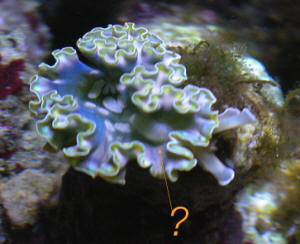
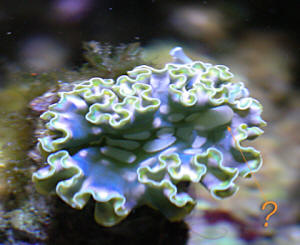
Lettuce slug hurt 2/14/07 Hi. I have had a beautiful Lettuce Slug for 3 weeks now in an 29 gallon. <Mmm, not easily kept... esp. in such small volumes> She was doing fine and eating algae. But I noticed last night that her back "flowery" section has a slight tear. She seems to be ok. I have a fire shrimp and a Short Spined brittle star. I don't think the Shrimp would do it. The Starfish? <Both, either could> Or, sometimes the current lifts her up and flies around into she can get hold of a rock or coral. We have lots of rocks and coral? <Maybe... the worst is to get "sucked up" against an intake...> Is she so fragile that that would do it? <Easily> And, is there anything I can do for her. I have grown very attached to her and love her as a pet. Any suggestions? Dana <What little I know is posted on our Opisthobranch areas: http://www.wetwebmedia.com/seaslugsopisthobranchs.htm and the linked files above. Bob Fenner> Sea hare growth ... no info. 5/4/06 My sea hare has a what I can only describe as a growth on the side of her head, it started off as a little growth but by the evening it has grown really long, part of it is long and thin and the end piece is bulbous and a pale blue green colour she is still alive, any ideas??? Thanks for your help Ellire <Perhaps a tumor of some sort... I'd be checking your water quality, moving the animal if you have another "clean" system... doing water changes, employing chemical filtrant/s if nothing else. Bob Fenner> Sea Hare Splitting? 10/23/06 Hi WWM crew, <Hello Ryan> I have a 35 gallon saltwater tank. There is a Coral Beauty, orange star fish, three crabs, and a Sea Hare. I woke up this morning and I saw my Sea Hare's skin splitting down the middle. There was something that looked like a white larva where the skin split. I took out the Sea Hare and moved it to a quarantine tank, because I heard they can kill your other fish when they die. <Indeed.> It hasn't moved around in the quarantine tank so I think it's dead. Do you have any idea of why it did this, or how I can prevent it in the future? <Most Sea Hares, if not all, are very difficult to keep. Should only be attempted by expert aquarists. They do not appreciate bright light and are algae grazers. I'm quite sure none of these conditions exist in your tank. Try something a little more easier to keep in the future.> Thanks for your reply! <You're welcome. James (Salty Dog)> Ryan Forsman |
|

|
Features: |
|
| Featured Sponsors: |