 |
|
| Home | Marine Aquariums |
Freshwater Aquariums |
Planted Aquariums |
Brackish Systems |
Ponds,
lakes & fountains |
Turtles & Amphibians |
Aquatic Business |
Aquatic Science |
Ask the WWM Crew a Question |
| Please visit our Sponsors | ||||
Seahare comp., fdg. Hi Bob Another new question for
you......Does a Sea Hare care what it has in its mouth? <Mmmm>
That may sound really stupid but I have a Zoanthus colony with a very
fine hair algae (green, massively invasive) encroaching and I believe
smothering. If the Sea Hare chooses to eat the algae, will it also eat
the polyps in the same mouthful? <I do think Aplysiids care... and
Zoanthids are very toxic... Do read here:
http://wetwebmedia.com/seaslugsopisthobranchs.htm and the linked files
above... many Seahares are misplaced in aquariums... and elsewhere on
WWM re Zoanthid comp.> Best wishes as always Sarah
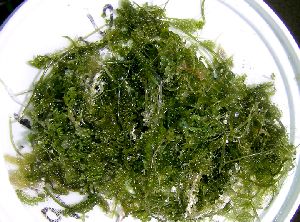
Aplysia feeding 11/6/07 Hello everyone, A friend of mine purchased a sea hare as an algae-eater, on the recommendation of her local marine aquarium store. The slug devoured the problem hair algae within days. The owner of the store says that she'll probably have to bring the sea slug back because there isn't any food left; it seems he sort of loans them out as biological control rather than sells them as pets! Anyway, my question: will Aplysia eat anything other than live green algae? I suggested Plec wafers and Sushi Nori, but is there anything better? Or is the store owner right, that these sea slugs shouldn't be kept in tanks once the green algae is gone? <Well, I consulted with my friend Mike G. (gastropod enthusiast) and he informed me that the Univ. of Miami raises them on Gracilaria sp. algae. However, please note that these animals don't live very long even if you do feed them right. Even in the wild, they only live maybe 2 years. And when they come into the aquarium hobby, they're likely already at least 6 months old (maybe older). So please don't be too crushed if it doesn't last long even if you find some Gracilaria to feed it.> Thanks, Neale <De nada, Sara M.> Sea hare?... pass 4/12/04 Hi There <howdy> My LFS has sea hares they are selling for which they claim is algae and Cyano control. I have heard before that the sea hares can consume Cyano. <some do> These dudes are real ugly rock like critters. Do they really help control red algae/Cyano?? <its likely a moot point. The few sea hares that make it into the aquarium trade are typically temperate species (cool waters). They are naturally short lived to begin with. Not a safe or recommended choice IMO. Furthermore, they would be treating the symptom (Cyano) and not the problem (nutrient control). Focus on the latter my friend... we have many recommendations for this in the archives. Do a keyword search from our home page at wetwebmedia.com for "Cyano", "sea hares", "nutrient control", etc. Anthony> See here... Sea hare 5/3/04 Tube Anemone Good evening my wonderful reefers! lol <live it, swim it, smoke it... er, well.. two of those things at least> I won a Aplysia dactylomela the other day at a raffle. I won it on purpose out of sympathy, I didn't want it to end up with some poor bloke w/out a clue where it would starve to death. <interesting... perhaps a polite mention to the club/donors to be more conscientious about submitting items of challenging needs for random win/purchase by others> After a bit of hunting around my tank for some red algae (which proved non-existent, the info on the specific type of algae these guys eat is rather lacking, a lot of authors say they eat red algae they just don't specify what kind! I think it must also take them a while to adjust their diet to green algae) <I do not spy it quickly at hand... but we have a link in our bibliography for our Reef Invertebrates book to a web page that lists the exact foods for many species of opisthobranchs> I tried putting in some red/purple Nori by Two Little Fishies (Julian Sprung & Co) and my guy started to chow down. Since then all it does is eat and sleep. hehe <Ahhh... good to hear> I was wondering if you could tell me approx how long this sea hare lives? I've read from 1-2 years is all. <hmmm... I am not certain, although I recall the larger temperate species living somewhat longer than the typical 24 months or less> Do they live longer if they don't mate? <nope... not to my knowledge. There is precedent to support this in other mollusks (like the famous octopuses with a defined lifespan, breed or no)> It's funny, I live in Miami and went snorkeling the other day and saw a mated pair of Dactylomelas. I didn't know mine was the same even though I've seen them many times when I snorkel. Also, treading into dangerous waters... are there any colorful Nudi's that can be easily kept in a reef tank or is this a lost cause? <hmmm... sort of. The key to any Nudibranch is identifying and supplying their food source. Many will keep and breed easily if you can do this. I keep an active colony (several hundred!) of beautiful blue Berghia (Aiptasia eaters). Other folks keep and breed Elysia sp algae eaters... some folks even dabble with the Zoanthid eating species. The problem with keeping in reef tanks is that most such systems have excessive powerheads and overflows. If you plan well though, you can keep some beauties> I always feel so bad when I see these really amazing looking, doomed Nudi's at the LFS. There should be a campaign on to stop the collection of specialized feeders such as these. <no formal campaign is needed. Educated aquarists simply vote with their dollars and do not buy them. They die in the dealers tank, and when it happens enough times, the dealer stops ordering them <G>. You might help this along with a polite mention of the reality (supported by a helpful list of web links or photocopied documents) that you give to the LFS. If that doesn't work... tell us their name and we'll post them on the wall of shame <G> Ha!> Oh, about how big will a tube anemone get in a reef tank? <it won't... because it does not belong in a reef tank and will never be placed there by a conscientious aquarist. If you know of anybody tempted to the contrary, please direct them to our extensive archives at wetwebmedia.com for an explanation why not <G>> Will I need meters of sand eventually? lol I hope not. ( <8-12" would work nicely... let it mature for 6-12 months before putting a Cerianthus in a species specific tank (no corals or other anemones unless you intend to sacrifice some)> Ah, the pot calling the kettle black I know, but I'm going to try and provide for it) It's only 3 inches long at the moment and eating fine. <sigh... disappointing> Thanks for all your help! Love you guys, Morgan <sob...sob... another anemone destined to be a statistic. Anthony :p> Feeding lettuce Nudibranchs <Hi Kerry, MacL here> I am wondering what
types of algae the lettuce Nudibranch eats? Elysia crispata nutrition/feeding 1/18/06 Hi my name is Beth and I just received an Elysia crispata as a gift. As interested as I was with this gift, I know it can spell disaster if I do not get enough information on him as quickly as possible. Basically I need to know if it will eat Caulerpa or not. ( I have heard contradicting answers). <Some do, but not exclusively, enough... and can be trouble> Also I do not have strong enough lighting for corals but my macro algae does great... maybe too great. If this guy needs a different environment let me know, and if the Caulerpa isn't appropriate please tell me what is ... along with the common name so that if I need to get some even the kids at the store will know what I am talking about. Thank you for your time... my lettuce slug thanks you to! <Mmm, more fine, filamentous greens. Please see here: http://www.seaslugforum.net/display.cfm?id=12310. Bob Fenner> - Beth |
|

|
Features: |
|
| Featured Sponsors: |
.JPG)
%20dactylomela.JPG)