|
Related FAQs: Tank
Troubleshooting1, FAQs 2,
FAQs 3, FAQs
4, FAQs 5, FAQs 6, FAQs 7, FAQs 8, FAQs
9, Treating
Disease, Puffer
Disease,
Related Articles: The
Three Sets of Factors that Determine Livestock Health,
Toxic Tank Conditions, Environmental Disease (incl. Lymphocystis), Nutritional Disease, Infectious Diseases, Parasitic Diseases, Wound
Management (/aquarists), A Livestock
Treatment System,
/The Conscientious Aquarist Series:
Tank Troubleshooting:
Livestock, Part 1 of 2
|
|
|
By Bob Fenner
|
|
Over to Part 2 of 2 of Tank
Troubleshooting
|
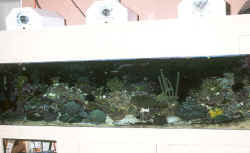
Many potential and real issues go into considerations of
"tank troubleshooting"... from selection, install,
maintenance of gear, controllers... But the vast majority of
questions and difficulties here deal with (though not starting
there necessarily) livestock. Their appearance, behavior.
For here, we'll limit our discussion of troubleshooting
tank problems that deal directly or ultimately with livestock
issues.
|
|
|
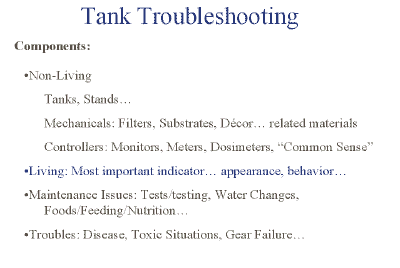
Many people are fascinated by gadgets to test and modify their
systems physical and chemical parameters (ex. of Marilyn at
Petco, transits for shooting levels...), but the single, most
valid measure of your system's viability (ability to support
life) are its living components.
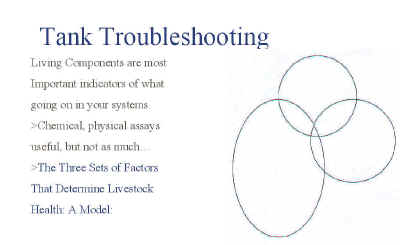
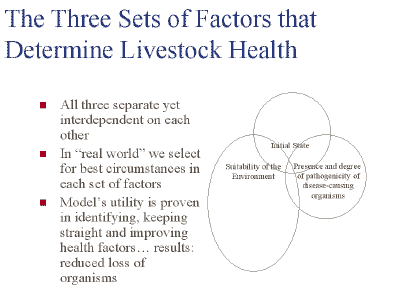
Here I will introduce a very useful model for understanding
the three sets of factors that determine (not influence)
livestock health. Credit Stan Sniezsko.
|
|
|
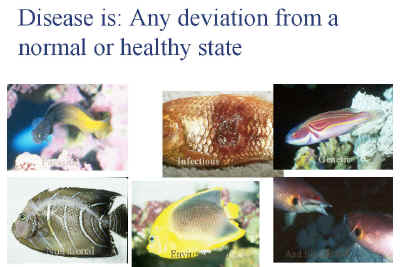
There are many different kinds of disease and ways to define
their sub-sets... by cause, appearance, susceptibility to
different modes of treatments...
Common categories of fish, invertebrate disease include,
parasitic (protozoans on up), infectious (bacteria, funguses,
viruses), genetic, nutritional, environmental, social... There
are many others.
|
|
| There are many things you can do as a "fish
god" in controlling, directing the small aquatic worlds you
create. Looking thoroughly into the species you intend to keep and
their environments, need. Knowing how to pick out the best
specimens. Doing your best to properly introduce the new livestock.
Developing and adhering to good upkeep procedures. Altogether being
careful to keep disease-causing organisms out of your systems. |

|
|
This model represents a way of looking at all aspects of nature
that contribute to the balance of health/disease in living
organisms.
Through an understanding in practice of this model you will be
able to keep your sanity by in turn knowing the "what"
and "whys" of how you can maintain an optimized system
for your aquatic charges.
Human examples of someone sneezing, cat run over...
|
|
|
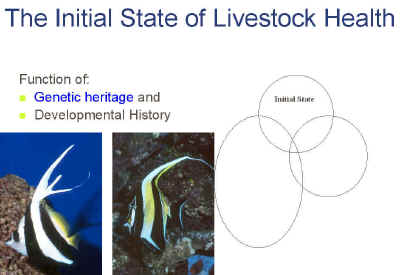
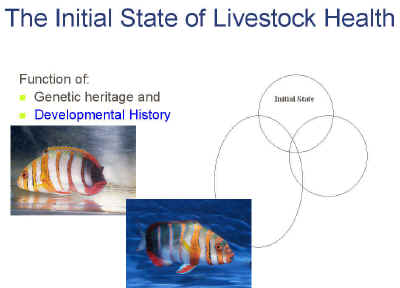
The initial state of health of livestock comprises two
components, their genetic background and ontogeny/development.
A basic "nature versus nurture" non-argument. Can
you become something more than your genes allow? By the same
token, can environment improve your DNA in one
generation?
Ex. species that look alike yet have very different
likelihood's of surviving in captivity. A "Poor
Man's Moorish Idol" and the real thing.
|
|
| It's well known that the same species coming
from different areas of the world have diverging rates of
survivability... How can this be? Collection practices, holding
facility standards, care in captivity during the holding
interval... so much more impact and impinge on the DOA and vitality
of received livestock at the wholesale distributors end... and
beyond. Ex. an P.I. and Australian Choerodon fasciata... |
|
|
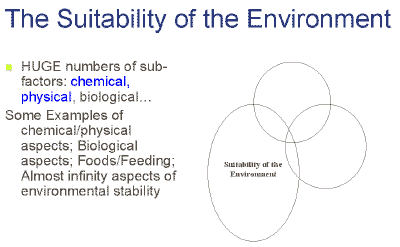
What to list here? Reduction oxidation potential? We measure
nitrogen in a few ways and soluble phosphates... but what about
potassium? Scatols, phenols, short-chain fatty acids?
Food formats, digestibility, palatability, when offered,
how... and more are all important aspects of nutrition.
Light duration, regularity, quality, intensity... and species
specificity.
|
|
|
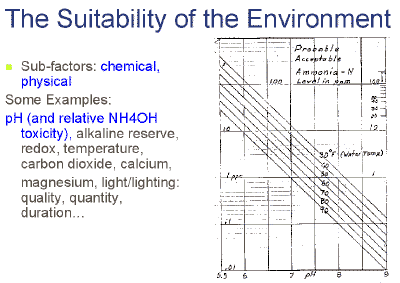
A pertinent example as the effects of metabolite build-up and
bottle-necking have been and still are the single-largest source
of stress, subsequent loss of aquatic livestock, is the
relationship between pH, ammonium and temperature. General
fundamental relationship is shown as pH increases slightly,
temperature goes up, ammonia/um toxicity increases
non-arithmetically.
Some products sold in the pet fish interest are valuable for
lowering pH alone.
|
|
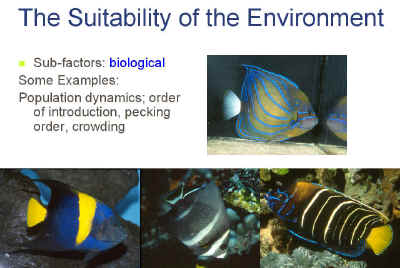
| Not often discussed is the types and extents of
social stress that exist in our aquariums. Who goes in when, at
what size, of what sex, in what numbers is often critically
important... Almost all systems are too small, too crowded for what
is thrown in together. |
|
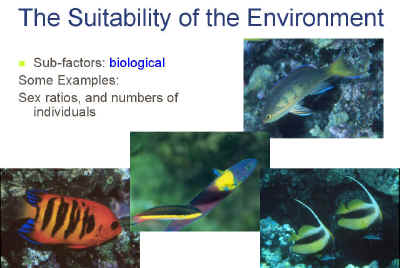
| Some illustration will serve to enforce these
ideas. Many species kept in our interest live in haremic settings,
with one male or female having a few to several cohorts of the
opposite sex. Some form pair-bonds for life. These relationships
should be recognized, emulated in captivity if possible. |
|
|
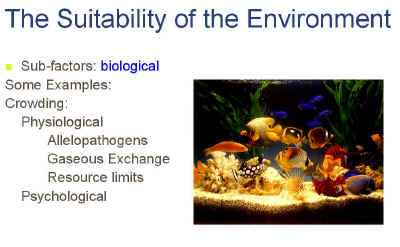
Crowding implies many ills, both metabolic and mental. Many
animals produce and release chemicals that delimit the life of
others of their own and/or dissimilar species. Example of
Alcyonaceans.
A very common cause of problems in crowded systems is gas
exchange, in particular in events of electrical loss and/or high
temperature.
Psychological ill-effects of crowding should not be
discounted.
|
|
|
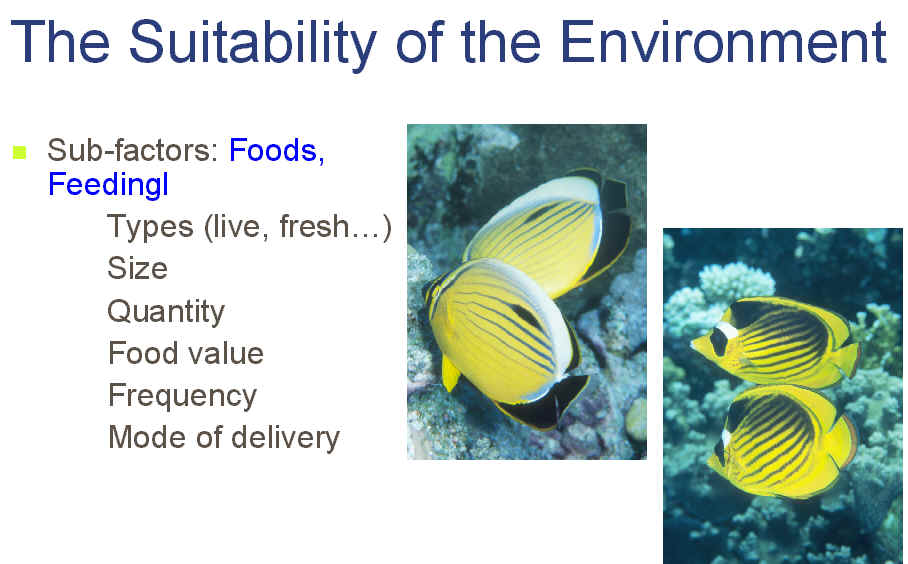
As touched on before, foods, feeding are of paramount importance
as "aspects of your livestock's environment"... So
much so that this question: "Are they feeding" is used
as a benchmark of selection.
Ideally foraging species would have something to seek out at
all feeding times... Hence live rock, substrates/interstitial
fauna and refugium use.
|
|
|
|

