|
|
| Home | Marine Aquariums |
Freshwater Aquariums |
Planted Aquariums |
Brackish Systems |
Ponds,
lakes & fountains |
Turtles & Amphibians |
Aquatic Business |
Aquatic Science |
Ask the WWM Crew a Question |
| Please visit our Sponsors | ||||
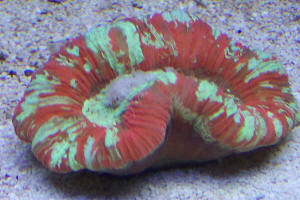
Trachyphyllia won't open or feed
2/19/10 Gut Rot! Trachyphylliid fdg. 10/8/08 Good afternoon Crew, <Yawn... howdy!> Hope all are well, <Yes, thank you Shawn> I have had an Open Brain Coral for some time, feeding his one and only mouth 3 to 4 times a week. I recently purchased a second Open Brain which has 3 different mouths. I have been searching your archives but can find nothing telling me if each mouth must be fed or if feeding 1 will sustain the coral. I hope this is not a silly question, but I would rather be safe than sorry. <Not silly, and a good idea to proffer some food to all mouths> I would also like to say that this is a fantastic site that has helped me through a multitude of problems. Thanks in advance, Shawn <Glad we have been of assistance. Bob Fenner> Re: Help with nitrates please!!! 9/22/08 I'll try smaller pieces. How much nutrition do brain corals get from photosynthesis - enough to make it solely on that alone? <These corals are photosynthetic. Feeding once a week or so is recommended, some do not feed at all and rely on the refugium/system to provide food. You will see better results with controlled feedings.> Thanks John <Welcome, talk soon, Scott V.>
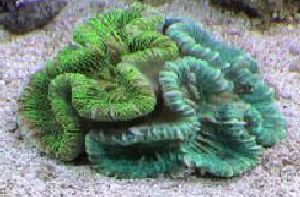
Trachyphyllia feeding - 1/24/08 Hello. I have a green "open brain coral" (*Trachyphyllia geoffroyi** *I believe) that I have had now for about 2 years. I feed it 2-3 times a week, usually a few Mysis shrimp or frozen reef zoo plankton and on occasion fish food (New Life Spectrum). I noticed that from time to time (maybe once or twice a month) that the coral looks very deflated and "skinny" and is expelling what looks like fish excrement into the water. From what I understand expelling waste back into the water is pretty normal, but I can't help but wonder if I am doing something wrong. The coral just looks pitiful and starved with all it's "skeleton" showing through it's tissue almost as if it's been slowly deteriorating and dying over time. I always get worried but the coral returns to its normal healthy "fluffy" self within a day or so. Is this normal for it to look this way or is it a reaction to something unfavourable in its environment or food? <Jon, it is a common misconception that Trachyphyllia need feeding often, true they benefit from feeding but this need only be every few weeks. It may just be overfeeding leading to excess waste, as most of the coral's energy will be gained from suitable lighting. It would also be interesting to monitor if the reaction is linked to a particular food source?! Frozen food is very high in Phosphate also and feeding unwashed food may lead to high phosphate concentration exposure in the digestive system of the coral. Many possibilities and unless the skeleton shows through fully i.e. white calcareous visible, then all should be fine (you've cared for it for two years so you're obviously onto a winning formula), just lessen the feeding and enjoy what are my favourite Genus of coral!> Thank you for help Jon <Olly> Feed Me Seymour!!! Trachyphyllia and torch coral feeding problem, 1/29/07 Hello guys, <Hi there Mark, Mich with you tonight.> Gotta say, I found your site a couple of weeks ago and have been reading through a lot of the FAQ's ever since and it's an amazing service that you provide! Great job!! <Welcome to WWM, glad you found us!> I have an open brain coral and a torch coral. The open brain seems to be doing just ok. We've had it for about 2.5 months now and it hasn't grown at all. It has these spikes (don't know the right word for it) that are all around the circumference and some of them are white now. The store told us to feed this phytoplankton powder stuff (please forgive the spelling if it is wrong) for all of our corals. <Less than ideal.> I've been reading on your site that we need to be feeding both the torch and brain corals with meat like krill or shrimp. Is this phytoplankton stuff sufficient? <Mmm, not really, there are better options out there.> I've been trying the meat at night about an hour after the lights go out but the little mouths aren't opening any more at night, and before the corals have a chance at the meat, the cleaner shrimp come along and steal the food. <Oh yes, been there, done that, and exercise in frustration so sure.> The torch coral is fairing less. It is turning white and the white is working it's way from the base of each torch and working it's way out to the end where the mouths are. I've been having the same problem with it since I've been trying to feed meat lately, the shrimp come along and steal it. Do you have any suggestions for how to feed these guys without the shrimp coming along and stealing it? <Yes, you will need to temporarily move these corals to try to rehab them. Frozen mysis shrimp soaked in Selcon would be a good food source. Use only the meaty parts, the liquid will just produce excess nutrients in your tank. They need to be somewhere that the shrimp can not steal the food, one way of doing this is to place them high in the tank and keeping vigil over them while you are feeding them, scooting the shrimp away if need be. I've also tried temporarily covering them during feeding time, but did not find this method terribly successful. These corals are not doing well, tissue recession is never a good sign. You will need to be pretty vigilant to bring them back to health. How are your calcium levels? Have you been doing frequent water changes? If not, now is the time to start.> Also, I've been reading that the open brain coral should be placed on the substrate, and it always has been, but the torch coral is placed on some rocks about mid way up the tank. We have a 90gal with VHO lighting, 2-40watt 10K blue actinic lights and 2-40watt 10K actinic white lights. <This is contributing to your problems. This is not enough light. Please read here: http://www.wetwebmedia.com/marine/setup/lighting/index.htm Please consider adding light to you tank if you plan on keeping corals. Your ballast should be able to handle bigger bulbs if you are truly running a VHO setup and not just a normal output system.> The blues come on an hour before the whites and stay on an hour after the whites. Is this placement all wrong for the torch coral, should it be on the substrate as well? <Not necessarily, at this point these corals need intensive care.> Also, just FYI in case, the tank params are: ammonia 0, nitrite 0, nitrates 25, <I hope you mean 0.25 ppm here.> phosphates .2, calcium 460, alkalinity 4.5, <Elevated, less than 3.5 meq is desirable.> and PH 8.1. Thanks for all of your help!! <You're welcome!> Mark Re: Feed Me Seymour!!! Trachyphyllia and Torch coral feeding problem 1/29/07 <Hello Mark, Mich with you again.> Thanks for the tips!! <Welcome! I hope they help, and if you figure out something better, please share!> Here's some clarifications/questions to your responses. I was incorrect on the lighting, they are not 40 watt, they are actually the 48" 110 watt Coralife VHO bulbs. I must have thinking of my garage lights, DOH!! <Heeheee! Something seemed inconsistent...> That should be enough for the size tank we have I would think... <Yes, much more appropriate.> We do frequent water changes, 90 gal. tank about 18-20 gals changed per every 2 weeks. <Very good.> For the alkalinity, the Sea Chem test kit we have says it should be between 4 and 6 meq. I've been buffering it up to just a bit into that range since it also says natural sea water is between 2 and 3 meq. I figure it shouldn't be at the other end of the 4-6 range. I can back off a bit, but then pH drops to 7.9-8.0, too low from what I've been reading. <Nah, keep doing what your doing.> I will give your suggestions a try on the feeding. It looks like the corals mouths are open tonight, so hopefully they will eat good! <And well too!> Thanks for your help!! You guys are great!! <You're welcome! Not great, just trying to make the world a little bit better. -Mich> Mark Response to Feed Me Seymour!!! Trachyphyllia and torch coral feeding problem, 2/16/07 Hey WWM, <Hi there Johnny! Mich here.> I was recently doing my nightly browsing of your site and came across someone's question Feed Me Seymour!!! Trachyphyllia and torch coral feeding problem, 1/29/07 and thought that I may be of some assistance. Pretty sure other people probably use this method, but in order for me to keep my fish and shrimp from stealing the food off my Trachy, I cut off the top of a Gatorade Bottle about 4 to 5 inches down from the mouth. I rinsed it thoroughly to get out all the additives and glue from the label. Now, my open brain is bigger than the bottle circumference but with a little coxing it will retract and allow me to put the bottle over him and allow me to drop the chopped Shrimp or silversides onto the mouths with out the thieves getting to it. Hope this Helps... <Thank you for sharing. -Mich> Johnny Droste
Re: Trachyphyllia.. nutrition, health... RMF career 7/22/05 Good day Bob or whoever I may be speaking to today....I hope all is going great today... I have several things to throw your way today...I'm sorry if I've got a repeat question thrown in here. In regards to my Trachyphyllia: When food is offered to it, the mouths close up. Except when I offered plankton. I haven't ever seen sweeper tentacles come out (even when it was doing normal cycles), Do you think it may be getting the nutrients it needs by me taking a plastic syringe and gently directing fine meaty foods at it... even without the presence of the tentacles? <Possibly, yes> The algae that is forming on small parts of the skeleton... could I try to gently remove it somehow or would this be advised against? <Directing a stream of water... as with a powerhead or small submersible pump is all I would do... don't physically touch> Is Iodide harmful to any marine animals or corals if used properly (that you are aware of)? <Not unless overdosed> I've got a rock that had several mushroom corals growing, a piece of the rock broke off leaving one of the mushrooms attached to the original rock as well as the broken off piece. Is it best to let it be (it is hanging, I've propped it back up but it wont stay) or someone recommended I should just tear it off the original rock :( sounds painful but I'm not sure it feels pain like that? :) <I would "tear it off", move it to someplace safe, stable> Thank you in helping me on my journey, I swear I'm not trying to be hand fed... I just need a little help with this predicament (the brain). And the other questions are just thrown in there... my main concern is my brain though! On a bit of a more social level...what is your favorite dive location? <Mmm, there's a bunch... overall, the Red Sea likely> Bob... do you go and speak at seminars <Almost every month... for the last few decades... to hobby groups mainly, in the pet-fish and dive/adventure interests> or am I interpreting some info wrong.... at one point in one of your responses to someone's questions it sounded like you do seminars, if you do...have you ever found yourself in Indiana? <I think so...> One more personal/social question... what is your career... How do you make it possible to go on all these wonderful diving journeys? Thanks guys!!! Codie S. <Good, friendly questions... I do five "things" for money, including two that are petfish related... am a content provider, selling writing and photography... But really, am retired in terms of having to "do" work... invested a part of what I earned, in stocks in good companies, real property... so I can/do travel about half the year. And I do encourage you to take up the dive, travel habit as well! Thank you for asking, sharing. Bob Fenner> Coral questions Hi, <Graham at your service.> I have a couple questions and can't find the answers in your FAQs. The first one: I have read about open brains and different scientific names. I have a Wellsophyllia; is this an open brain? <Yes. Most likely your brain coral is in the genus Trachyphyllia.> Also, does my Wellsophyllia need to be fed, and if so what? <The Brain coral will benefit from regular feedings, however, it's not needed. If you wish to feed your coral, you can try to feed the coral at night when its feeder tentacles are out. Once these tentacles are out, you can place several small pieces of krill within these tentacles and the brain should consume the food. Silversides and lancefish may also work.> Another quick question. What do you recommend to feed Fungia and what do you find to be the best method. <If you feed your fish regularly, most likely the plate will be catching food particles. You can also place small pieces of meaty foods (krill, silversides, squid, etc.) within the plates tentacles. The tentacles should then push the food towards the central mouth where the food is then consumed.> Do frogspawn need to be fed as well or is good lighting sufficient (I have 1 250 watt metal halide and two 36 watt actinic bulbs in a 75 gallon corner tank). <As I stated above, they will benefit from regular feedings, although it isn't necessary. If you choose to feed the coral, do so the same as you would as I described above with the plate coral.> Thanks!! <Take Care, Graham!> Andrew Coralline Algae Growth Hello Crew! <Hello, Ryan with you today> Just can't seem to find the answer to these in the FAQ's (sometimes TOO MUCH good information to find a specific question). <I know! It's a bit overwhelming at times> 1. I have an open brain coral that I feed meaty treats (shrimp, clam, squid) 3 times per week. I noticed that it has 3 mouth-like structures that I put the food directly into and it gets sucked in. I have to stand guard else my ever hungry clowns will snatch the food up. Is it necessary to feed each mouth? Can I just feed one or two of them and the nutrients will get shared to the entire organism? The third is a little hard to see/reach and this direct feeding method is the only way I have found to feed it without others in the tank (clowns, shrimp) snatching the food for themselves. <The more each mouth eats, the better the entire colony will grow. Corals grow in a very deliberate way; To make the most of a certain environment. This said, I would either move the brain so that you can feed the entire thing, or make the extra effort. As for snatching, it's highly frustrating. Will a fish feeding just before will keep them distracted long enough?> 2. On my live rock, I have tons of coralline algae growing. Colors of purple, maroon, red, green and pink. On my glass, pumps and base rock (Tufa), I only have one shade of purple growing. I would really like a mix of colors. Any ideas on how to encourage this process or why only one is spreading from the live rock to other areas? <One is outperforming the others at this given time. What's your calcium level? Some varieties of coralline won't grow unless high calcium levels are met. It's just a matter of luck, time and patience. Perhaps you could graft the variety you like to unclaimed territory before the more aggressive types have the opportunity?> Thanks a lot. You guys are a real credit to the hobby and I would be lost without you (or it least I would not have such a wonderful tank). <Great to hear! Hope this helps, and good luck- Ryan> -Ray Can I feed my brain too much? Hi there- May I say again how much I love your site? <Sure!...and Thanks!> I really appreciate the resource. I actually have five questions for you. My tank is about 5 months old, 46 gallon, protein skimmer, Eheim filter, halite lights. I do weekly 10% water changes. Ammon, nitrates, and nitrites are 0, salinity is 1.024. I have two perculas, one magenta Dottyback (eats my little Bristleworms, by the way), a cleaner shrimp, and various blue-legged hermits and snails. I have a frogspawn and a hammer and a brain and some star polyps. They have all seemed to have adjusted well, and colors and extension are good, and they have all grown a little bit. Here are my questions: 1) My brain coral is a pig. I feed the corals Mysis shrimp weekly, and I'm not sure how much the brain would eat at one sitting. It is about 4" in diameter, and I give it about a dozen shrimp. Should I keep feeding until it stops engulfing? It is growing the most. <I would err on the side of caution here, and underfeed. If it's growing, it's happy, and overfeeding can pollute your tank.> 2) I had not been feeding my star polyp shrimp because I thought it was a vegetarian. I accidentally dropped one on it a week ago, and it snatched it up, so I gave it about 3 more. Now it doesn't look so perky. Did I make it sick? <Doubtful. GSPs go through cycles of closing up for no apparent reason sometimes. If it stays closed up for long, then start to worry.> 3) My cleaner shrimp has molted 4 times in two months. Is this bad for its health? <Not at all. Good sign that it's growing and thriving.> I do supplement with iodine and the calcium level is about 600 (high, I know. Trying to solve) Should I be doing anything else for it? It eats like a pig, too. I thought these guys were supposed to by shy... <The iodine addition is completely unnecessary IME, but it could be helping. If paired with another shrimp these guys can molt as often as two weeks after they spawn. Just need to feed them well.> 4) The tank has developed a bad hairy algae problem. Do I have room to add something that would eat it, and if so, what would you recommend? <Rather than adding something to consume it, consider fixing the root of the problem--nutrients in your water. Do you use RO/DI for top off and water changes? What size skimmer do you have? Are you overfeeding?> 5) My tank evaporates almost 2 gallons a day (probably because of the hot lights). Does this replacement water count towards water changes, by chance? <Nope. Are you adding any type of calcium/alkalinity supplement?> Thanks again. By the way, my frog spawn continues to excrete brown goo after shrimp feeding day. (I asked earlier if it was coral excrement) It seems to be doing really well, too. My perculas have started to host with it. <Possibly 'coral poo', yes.> --Jill <Cheers, Matt> Feeding of open brain coral (Trachyphyllia) Hello, <Cheers, Anthony Calfo in your service> I purchased a nice green open brain coral this past Saturday. In going over the archives, I saw a recommendation by Mr. Fenner that they be expressly fed a few times per month. <not correct... reread, my friend. He suggests twice weekly/8 times monthly: "Foods/Feeding/Nutrition: I suggest no more than twice weekly feedings of Open Brain Corals... other authors/aquarists only advise one or two times a month. Meaty foods (fish flesh, crustaceans, shellfish) or chunky size can be placed at night right on the animals tentacles. Still other writers and hobbyists apply or rely on their systems, refugiums to produce sufficient planktonic food for their Open Brains... I encourage you to expressly feed yours."> I purchased a package of frozen chopped clams. Last night, around 10:00 PM, I cut off a piece of the chopped clams, defrosted it in a Dixie cup of water from my tanks sump, and drained it through a stainless steel strainer (used exclusively for my tanks). I then gently placed the chopped clam onto the brain coral, over where the tentacles are. The clam stayed put for about three minutes before water currents finally carried it away to the bottom -- where about five or six Nassarius snails had a banquet! <first of all...make sure all food is finely chopped... LPS coral will often regurgitate large chunks of meat in the night and die of attrition much to their keepers surprise who thought they were feeding well. Secondly, simply add a tiny bit of meaty juice fifteen minutes before feeding to get feeding tentacles to come out so that the brain can sting and draw food later> The tentacles were not open when I fed it. I have noticed that the tentacles are open during the day. They come out within minutes of my turning on the lights in the morning. If they do open at night, it may be at some ungodly hour when I am not awake. I do not believe that I can feed the brain coral during the day because if I do, the fish will undoubtedly go after the clams. <fine... use the juice feeding trick just prior to the organismal feeding> The coral is not on the substrate. I have it placed in a section of my Marshall Island rock about 4-5 inches above the substrate. <wow... most likely a very bad place. Unnatural, risks to soft tissue from daily polyp cycles and the animal also derives necessary nutrition from the microclimate on the substrate. Please place the skeleton in the sand as it no doubt occurred naturally> It is facing straight up. I placed it there to make sure that it was getting good lighting. The tank it came from at my LFS was much shallower than my tank. Did I do something wrong? Any advice on how to best go about feeding my open brain coral the frozen chopped clams? <please do feed a better variety of meats than just clams> My plan is to feed the brain coral once per week. <I believe the coral will starve to death in time on this schedule... Twice weekly feeding minimum IMO> Your help is, as always, greatly appreciated. Sincerely, Mark Schwartz <best regards, Anthony Calfo> Re: Feeding of open brain coral (Trachyphyllia) Anthony, Thanks for the reply. I tried again tonight and -- success!! <excellent!> It ate. I'm psyched! After it took in all the clams, there were more tentacles out than I have ever seen. It was pretty wild. <and so beautiful in a whole new dimension that many folks rarely see> I will place the clam on the substrate tomorrow morning. I will also be sure to feed twice per week, and I will make it a point to purchase other food items, chopped squid, etc. <yes...variety is the spice of life> Thank you *very* much for your assistance. <my pleasure> It's rather hard to believe that feeding a 5 inch wide green lump some clams could make me happy!? <your modesty is enviable> Sincerely, Mark Schwartz <best regards, Anthony> Feeding of Trachyphyllia radiata Gentlemen, <cheers> I purchased a Trachyphyllia radiata two days ago. My question concerns feeding. I have a red open brain that clearly exhibits feeding tentacles at night, <the deeper water variety... green is more shallow water. T. radiata and T. geoffroyi are now synonymous species> which is when I feed it (at least twice a week -- chopped clams and/or shrimp). <almost certainly not enough food for the coral to live 5+ years (although likely enough for a couple of years. 3-5 times weekly if not daily for most> The Trachyphyllia radiata is *much* larger during the day than at night. <it is more effectively photosynthetic (by variety not by virtue of its size)> In fact, I am amazed that the amount of 'flesh' that is exhibited by day can be successfully withdrawn into its skeleton at night. It's only been two days, but I have not seen any feeder tentacles. <much more time is needed for many corals to acclimate to new light and water quality... be patient> At a LFS, they have an Elegance coral that must be fed by day, as it closes up at night. <all such corals can be enticed to feed most anytime with the right food/attractant> Is the Trachyphyllia radiata the same way, i.e., <nit by nature at all. All of these LPS feed on zooplankton by night> I must feed it during the day while it is 'fleshy', or will it normally display feeding tentacles nocturnally, like my red open brain. <only the feeding tentacles will effectively sting and draw organismal matter. Careful not to feed large chunks of food either... very finely minced is critical else the coral will draw it in but regurgitate it later and still starve> I am anxious to make sure this specimen feeds on a good meal of clam or shrimp. <more variety in the diet too please: frozen Gammarus, mysids and Pacifica plankton for starters> Also, the clerk who sold me the Trachyphyllia radiata said that he uses a technique in his reef tank that consists of taking freeze dried shrimp pellets and soaking them in Selcon or Vita-Chem, and feeding these to his corals. <OK> Once fully saturated, they sink quite easily and stay in place quite well. I just haven't had any luck getting the Trachyphyllia radiata to take these or finely chopped clams. I was just wondering about your thoughts on vitamin soaked freeze dried <whatever> as a food adjunct to go along with finely chopped clams, shrimp, squid, etc. FD foods are strange fare to offer and the risk of air trapping is mild but worth mentioning. Soaking the food in Selcon is an excellent idea though. Rely on thawed frozen meats of marine origin> Sincerely, Mark Schwartz <best regards, Anthony PS: if it interests you... see the following article on Trach reproduction http://www.wetwebmedia.com/trachyreproart.htm> T. radiata brain coral Anthony, <cheers!> The other day I wrote in regarding my new T. radiata. I have been watching it at night, and I have noticed fine hair-like tentacles (?) coming out from it. At first I thought it was stringy feces, but I see it every night. <perhaps simply sweeper tentacles... released when stimulated by another coral nearby (guaranteed for those within say 6")> Last night I placed some finely chopped clams onto the "strings". They grabbed and pulled in the clam, but it remained tethered to the side of the coral -- it never actually tried to eat any of the clam. <hmmm... supports the sweeper (defensive not feeding) tentacle idea> I have had my red open brain for about 5 months, and I know what it's tentacles look like. I also have a tongue (plate) coral, and I know what it's tentacles look like. <understood... they are conspicuous> (Side note -- I will up my feeding frequency to 3 days per week, minimum. In your opinion, is squid any good as a food source? <squid is reasonable... but do include crustacea in the diet... more natural/necessary as like substitutes for zooplankton: Gammarus, mysids, Pacifica plankton, shredded krill, etc)> I can get frozen clams, shrimp, and squid quite easily. My only concern is that squid can be, or actually is, rubbery.) <no worries here... protein> Exactly what should I be looking for, feeding tentacle wise, with my T. radiata? If those stringy, hair-like 'things' are tentacles, how do you recommend feeding it? They look awfully delicate. <watch your hands too... if one of those modified tentacles finds a small wound (hangnail, paper cut, etc) it will light you up like a Christmas tree. Small risk of anaphylactic shock from repetitive hits> Sincerely, Mark Schwartz <kindly, Anthony> Re: T. radiata brain coral Anthony, I don't suppose you broke into my home and looked at my tank? :-) <yep... you are almost out of milk and there's no more minced garlic in the fridge, by the way> I noticed that as soon as the lights went off, two things happened: 1) My red open brain shrank back into it's skeleton. 2) Those long tentacles (of the T. radiata) were reaching and touching the open brain. They were spaced about 5" apart. <just familiar/experienced... The essence of an educated guess I suppose :)> I moved the red open brain out of range this morning. <very fine, my friend> You guys don't miss much -- which is good -- because I am quite sure that I have a few more mistakes left in me! <no problem... we can talk for hours> Anyway, are the feeder, not sweeper, tentacles of T. radiata similar to those of T. geoffroyi? <the two Types that you refer to are now classified as synonymous. The genus Trachyphyllia is monotypic... one representative: T. geoffroyi As you have noticed, though... two members of the (now) same species do not necessarily tolerate each other. In fact, most corals are not tolerant of a member from another colony> What should I be looking for? Appearance? Location? <just a matter of acclimation and time before it too puts out feeder tentacles. Acclimation to new light and water flow> I acquired a small eye dropper with which I can target feed Mysis shrimp and Sweetwater zooplankton. <very cool... remember to thaw food in saltwater and to feed from a distance (bursts of water scare some corals in)> Thanks a bunch. Sincerely, Mark Schwartz <best regards, Anthony> Green Open Brain Starving Hello there, My green open brain coral that I have had for about 3.5 months has taken a drastic turn for the worse. Up until about 2 weeks ago it was opening up and looking real good. As of tonight, it looks as though I can see the skeleton all the way around it. <this is a very common symptom with unfed brains... although they have symbiotic algae, they are one of the "hungriest" corals (they regular feeding several times weekly with VERY finely minced meats of marine origin) just to survive, let alone grow. Try mysids, pacific plankton or shred your own meats. They must be less than 1/4" in size (very fine)> My water checks good, ph@8.1, dKH@8.6, ca@400, specific gravity 1.025. My iodine level is at 0.06. <that pH needs to be higher if that is a daytime reading (drops even lower at night)> I looked all around the outside and didn't see any signs of gel or something that might be drilling into it. It is sitting about 1/3 of the way up in the tank, under 2 10000k metal halides (175w), and 2 40w florescent actinics. Don't know what's going on!!!! <although green open brains are higher light loving than red open brains (deep water), they are still a low to mid light coral. Still... yours has probably acclimated and if no paling or bleaching has occurred, please leave it where it is... a move right now might kill it (change in light: bad)> Any advice will certainly be appreciated. Thanks, Charlie Ehlers PS I started feeding it frozen Mysid shrimp at about the same time. It seemed to take the shrimp well. I only fed it 3 times in a period of 2-3 weeks. Did I feed to much? <there is the problem my friend. Not enough feeding by far. In a lower light aquarium, 3 times weekly might still not be enough food for this animal to survive (reach its compensation point). More feeding! Anthony> |
|

|
Features: |
|
| Featured Sponsors: |
/Lysmata/had%20a%20shrimp%20stealing.JPG)