|
Related FAQs: TWA
Invertebrates, Fishes of the Tropical
West Atlantic, Tropical West Atlantic
2,
Related Articles: Algae, Vascular
Plants, Introduction to
Fishwatcher's Guide Series Pieces/Sections, Lachnolaimus maxiumus/Hogfish, Hogfishes of the Genus
Bodianus,
Invertebrates, Algae and Vascular
Plants of The Tropical West Atlantic: Bahamas to Brazil, Part
11
To: Part 1, Part 2, Part 3,
Part 4, Part
5, Part 6, Part 7, Part 8,
Part 9, Part
10, Part 12, Part 13, Part 14,
Part 15,
|
/Periclimenes/Periclimenes%20pedersoni%20TCI%20vert.JPG)
|
| Bob Fenner |
Crustaceans
|
Shrimp:
| Lysmata grabhami (Gordon 1935), the Atlantic
White-Striped Cleaner Shrimp. Tropical East and West Atlantic
coasts. Generally gets along with all fishes and other crustaceans.
Best kept in pairs or small groups (no sexual distinguishing marks
externally). A hardy Cleaner species that accepts most all foods.
Conds: temp. 18-28 C. |
/Lysmata/Lysmata_grabhamiAQ.jpg)
|
| Lysmata wurdemanni (Gibbes 1850),
Peppermint Shrimp, Caribbean Cleaner Shrimp. Tropical West
Atlantic. Lives singly or in groups. Gets along with all aquarium
species. Commercially produced. A reclusive, sometimes
misidentified species (there are other shrimp from the area that
are similar) used in the fight to limit Aiptasia Anemones in
aquariums. |
/Lysmata/Lysmata_wurdemanniAQ.jpg)
|
| Periclimenes pedersoni Chace 1958, the
Caribbean Anemone Shrimp, Pederson's Shrimp. Should always be
kept with Anemone hosts. A great cleaner of fishes, but ships
poorly. Here in a Bartholomea anemone and on a sponge
in the Bahamas |
/Periclimenes/Periclimenes_pedersoniBAH.jpg) /Periclimenes/Periclimenes_pedersoniBAHVert.jpg)
|
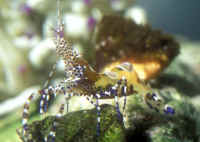
| The Spotted Cleaner Shrimp, Periclimenes
yucantanicus in its host anemone, Condylactis gigantea
off of Cozumel. 3/4-1 in. overall. Also found in association with
other tropical West Atlantic anemones. Cozumel and aquarium
images. |
|
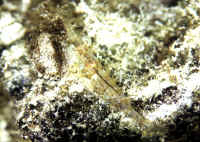
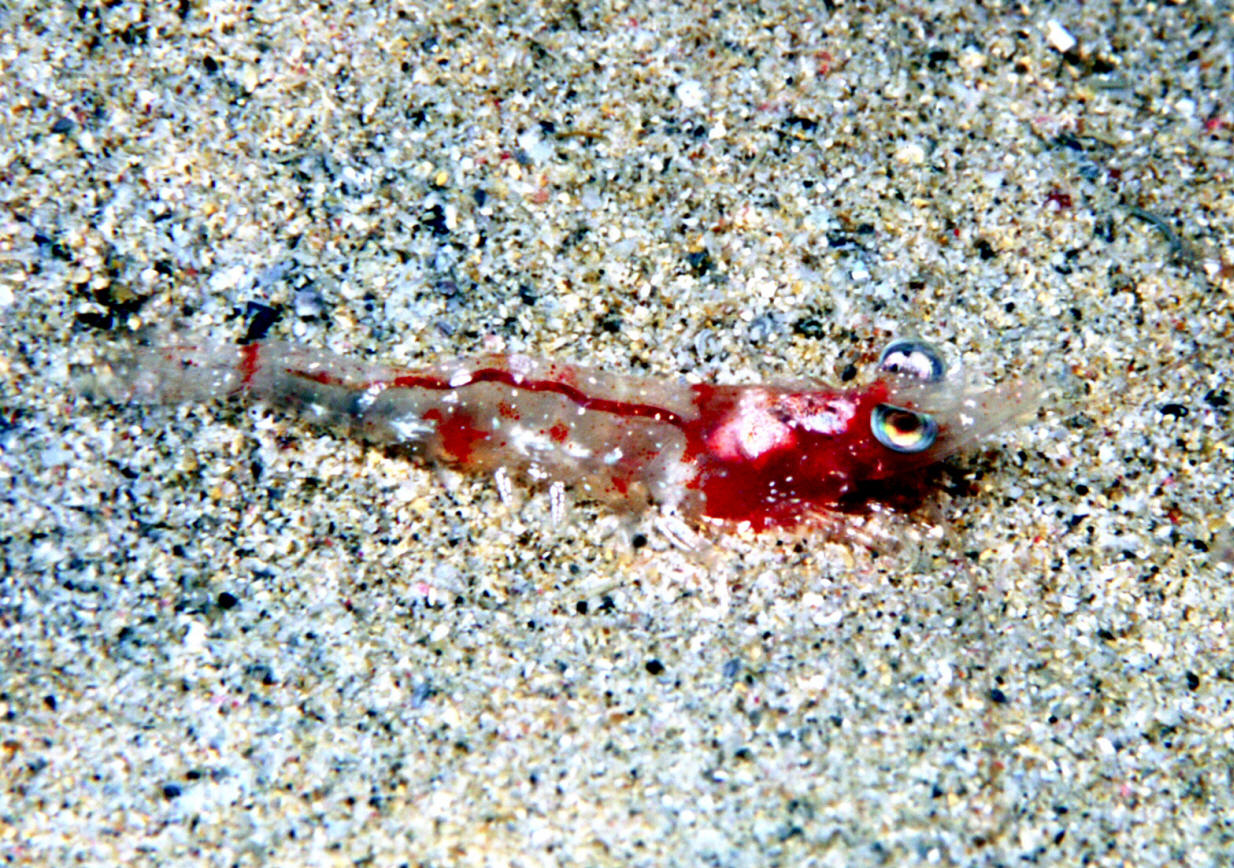
| Rhynchocinetes rigens, the Red Night Shrimp.
1 1/4- 2" length. Nocturnal... here tooling around at night in
front of Plaza Las Glorias, Cozumel, another burrowing in the sand
in Bonaire at night. |
|
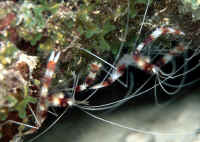
| Here's a pair of Stenopus
hispidus under a rocky ledge/cleaning station. "Next
customer, please", in the Bahamas. |
|
| Thor amboinensis (de Man 1888), the Squat
Anemone or Sexy Shrimp (in reference to its usually-raised tail).
1/4-3/4" long. Common in all tropical seas. Found in
association with Giant, Sun, Elegant Anemones. Here is one in a
Condylactis gigantea in Cozumel, Mexico. |
/Thor/Thor_amboinensisCOZ.jpg)
|
Crabs:
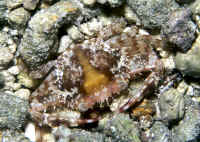
| Glyptoxanthus erosus, the Eroded Mud Crab. 1
1/4 to 2 in. Shell has eroded appearance. Tips of walking legs
yellow in color. Nocturnal. Picture at night off of
Cozumel. |
|
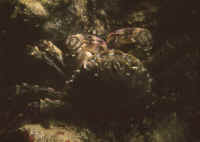
| Plagusia depressa. Both sides of the
tropical Atlantic. To four inches across. This one facing up on a
pier piling in Belize. |
|
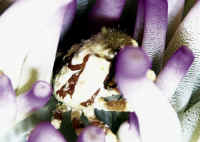
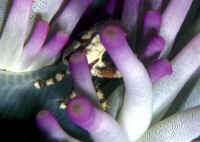
| Banded Clinging Crab, Mithrax cinctimanus in
residence in a Condylactis gigantea that
its commensal with. Cozumel pix. |
|
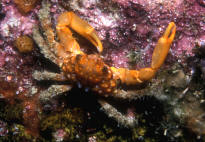
| Mithrax forceps, Red-Ridged Clinging Crab.
Family Majidae. Tropical west Atlantic. 1/2-1". Here clinging
to a piling at night off Bonaire. |
|
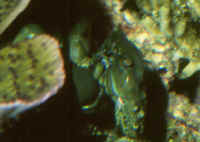
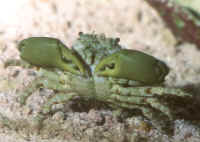
| Mithrax sculptus, the Green/Emerald Crab.
Tropical West Atlantic. A noted eater of algae (even
Valonia), but can turn into a fish eater... some references
state to 2.5 others to a maximum of four inches carapace width. Now
in its own genus Mithraculus. Family Majidae. |
  |
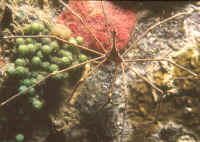
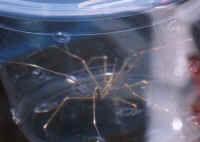
| Stenorhynchus seticornis (Herbst 1788), the
Caribbean Arrow Crab. Not to be trusted with small to medium fish
tank-mates (may spear with rostrum, otherwise consume). Safe with
hardy native corals and anemones, larger fishes. A small individual
in Belize and one at wholesalers shown. |
|
Spiny Lobsters:
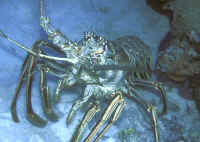
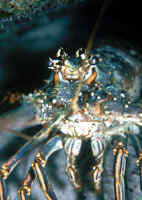
| Panulirus argus, the Caribbean Spiny
Lobster. Common in the tropical West Atlantic. To two feet maximum
length. One out during the day (protected and very BIG) in Cozumel
and another at night in the Bahamas. |
|
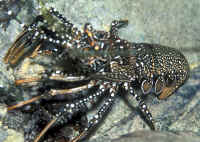
| Panulirus guttatus, the Spotted Spiny
Lobster. Most are 5-8 inches in length. Grow to 18 in. This one
walking about at night (typical) off of Cozumel. |
|
Slipper Lobsters:
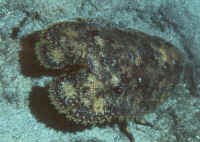
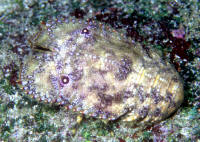
| Parribacus antarcticus, the Sculptured
Slipper Lobster. Circumtropical but mainly caught out of the
tropical West Atlantic for aquarium use. Nocturnal, and wary of
humans. Capable of great bursts of strength, speed in swimming
backward. One out at night in St. Lucia in the Caribbean, another
off of Hawai'i's Big Island. |
|
Hermit Crabs:
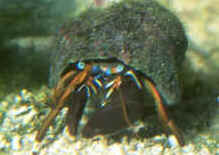
| Calcinus tibicen, the Orangeclaw Hermit
Crab, Family Diogenidae. Orange antennae and eyestalks. Eye tips
white, eyes with black pupils. Unequal size claws. 1/2 to
1". |
|
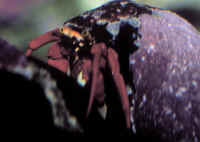
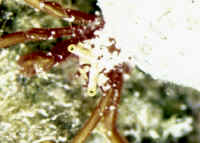
| Paguristes cadenati Forest 1954, the Scarlet
Reef Hermit. Tropical West Atlantic. To one inch in length. Red
carapace and legs, eyes green, on yellow stalks. Aquarium and
Cozumel photo. |
|
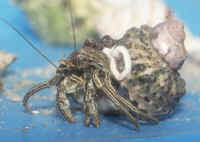
| Phimochirus holthuisi, the Red-striped
Hermit Crab. Tropical West Atlantic. To one inch in length. One
cheliped enlarged (usually right). Eyestalks white with dark band,
eyes grayish blue. |
|
To: Part 1, Part 2, Part 3, Part 4, Part 5, Part 6, Part 7, Part 8, Part 9, Part 10, Part 12,
Part 13, Part 14,
Part 15,
|
|

