|
FAQs on Algae as Food: Troubles,
Fixing Related Articles:
Algae as Food, Foods/Feeding/Nutrition, Culturing Food Organisms,
Culturing Macro-Algae;
Red Algae in General, Marine Algae, Algae Can Be Your Friend,
Related FAQs: Algae
Foods 1, Algae Foods 2,
Algae Foods
3, & FAQs on Algae Food: Rationale/Use, Sources, Culture, Feeding
Methods, Products, &
Foods/Feeding/Nutrition 1, Phytoplankton, Marine Algae, Coral Feeding, Brine Shrimp, Vitamins, Nutritional Disease, Frozen Foods, Coral
Feeding, Growing Reef
Corals, Culturing Food
Organisms, Red
Algae, See also the individual
groups of organisms feeding FAQs files
|
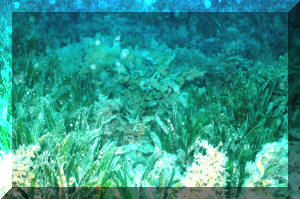 More algal growth, DSB, LR... More algal growth, DSB, LR...
|
 |
New Print and
eBook on Amazon
Marine Aquarium Algae Control
by Robert (Bob) Fenner
|
High Nitrate pollution source identified
12/22/08 Hi guys, <Chris> I just wanted to let you know
that I was able to locate the source of my Nitrate problem in my tank.
<Oh!> The source water was good (tap water No Nitrates), the
RO/DI water (taken from the tap)was good (no nitrates), the Instant
Ocean mixed with RO.DI water was good (also no nitrates). So I tested
the fish food in the clean RO/DI water and I use 2 types. 1) Ocean
Nutrition Formula 2 small pellet (this tested NO Nitrates) 2) Yaki
Sushi Nori by B&C consumer grade sushi seaweed (Off the chart High
Nitrate) Probably used nitrates on purpose as a preservative. This is
no longer in use and my Nitrate problem should be over here in a day or
two after 50% or more water change(s). <Ah yes> I just wanted to
make a post so that if anyone else has the same problem they will think
to test the food. <Is one of my resounding suggestions as well.. a
primary source... no matter what foods are employed> Also, with
regard to my green chromis behavior, turns out it was guarding eggs. I
noticed them on the side of the tank where he/she? was swimming. Thanks
for the heads up. Thanks Chris Edwards <"Who said heads up!?
I'll take some of that!" Thank you for the follow-up, input
Chris. You've helped many people down the line. Happy holidays,
BobF>
Gassy Tang 8/31/06 Hi
crew! First let me thank you guys for the response I got
last time it was a big help for a worried hobbyist. I just
had a question about my tang, I looked in the archives and
any reference that I found to gas was on gas bubble disease which
doesn't seem to me to match up with the difficulty my little guy is
having. When he defecates often it is accompanied by
gas. Is this normal? <Mmm, no... but have seen>
He eats a lot of dried seaweed, I also feed him formula one
but he prefers the seaweed. I am working on getting some
live rock I know that will be beneficial to his general
health. Could it be that the water has to high of a
saturation level? <Not likely... I think you're right to point
to the dried seaweed diet here> In this tank, which is a 110, I have
two Skilters which are each rated for supplementary filtration of a
hundred gallon, two powerheads one for seventy five gallons one for
forty five, a UV filter for up to one hundred and twenty five gallons,
and a wet-dry for one hundred and twenty five. There doesn't appear
to be too many bubbles in the tank but I am relatively new to the
keeping of marine systems. Also the tang seems as though he
feels good he swims around looking happy, appetite is voracious, and he
relieves himself quite often. I love him so much, I
don't want anything to happen to him. Any advice will be
much appreciated. Thanks for everything, I don't know
what I would do without your site. <I would try the live rock, maybe
culturing some live macro-algae... but otherwise not worry here. Bob
Fenner>
|
A Tale of Two Dead Naso Tangs - 09/17/06
Hello, <<Good Morning>> I am writing you and talking
to anyone else I could think off. <<Wise not to limit
yourself to a single source of information/advice/opinion>>
This past week I lost a pair of Naso tangs. <<Sorry to
hear...>> I am devastated over this for a number of
reasons, but mostly because I can't find an answer to why
they died. Before I ask you to give some thoughts on
what you think might of happened let me give you as many details
and variables I can. <<Thank you'¦always
helpful>> The tank is a 350 gallon fish/reef
tank. I keep a variety of angels and tangs, clowns and
damsels. There are also inverts like shrimp, snails
and crabs. There are not a lot of corals at this time
but the idea for the tank is to keep a number of corals with
larger variety of fish not usually kept in a reef. <<I
see...and researching re to assure/maintain compatibility
I'll assume...>> There are a few LPS and SPS corals
along with a few soft leathers. <<Mmm...with "variety
of angels"?>> I do have to be very careful in what
corals I choose because of the types of fish. <<Ah
yes!>> The larger of the tangs was a Hawaiian Naso the
other was a smaller Red Sea blonde. <<Hmm...ever considered
a "biotope" display?>> I know typically these
species are not kept together but they have done very well often
swimming side by side and staying together at
night. The tank has ample swimming room and the
aquascaping is such it gives the fish room to swim in a big
circle. <<Excellent>> The tank has been established
for 4 years. Only up until last year I started to get
into corals having spent the money to have a dedicated electrical
circuit for the lights and pumps. <<Reef setups are indeed
"power hungry">> Prior, the power options
didn't allow me to have the right lighting. I now
run 3 10K 250watt HQI de's with PC actinics. The
tank gets a weekly water change from RO/DI water and top-off is
from the same unit. I dose manually calcium and dKH
supplement as needed, parameters are checked weekly. <<Very
good>> The only issue I have which is not serious is
slightly elevated nitrates. <<...! I don't
know your definition of "slightly", but even so,
chronically elevated nitrate can/will have effect on your
livestock (and what about ammonia/nitrite?...these were/are
checked as well?). This may be a clue to the two Naso
tang's demise>> I use a refugium with grape
<Caulerpa> and Chaetomorpha macro algae. <<Mmm,
another issue (clue?) here in my opinion. Grape
Caulerpa is very noxious, even toxic to fish (many herbivorous
fishes won't eat it for this reason). Combining it
with Chaetomorpha in a refugium means the alga are constantly
waging war (alga compete just as corals do for space on the
reef), releasing chemicals/toxins to inhibit and/or kill each
other. Such constant and powerful chemical warfare
(Alga rates at the top of the list with some of the nastiest
corals for aggression/noxiousness) can't be "good"
for a system. Not to mention the loss of
usefulness/processes for having the algae in the refugium in the
first place due to the "energy" expended on
warfare>> The Chaeto is fed to the tank where the angels
and tangs feast. <<Hmm...wonder the possibility of the
Chaetomorpha being "tainted" from close exposure/battle
with the grape Caulerpa...>> The nitrate levels are
elevated, but don't cause any issues with nuisance algae, the
Acropora and Montipora orange cup coral are growing and doing
well so I use that as a measure since the nitrates don't seem
to cause any other problem. <<I agree it would seem the
corals you mention would show deleterious affects from elevated
nitrate before the fish would...but I'm still very curious as
to your actual nitrate reading(s)>> I do understand the bio
load may be a little high causing the elevated nitrates, however
I go to great lengths to make sure the water quality and
environment stay optimal. Of course the tank has a
large skimmer on it which is cleaned 1-2 times per week. Ok, with
that overview here is what happened over the last few
weeks. About three weeks ago I noticed the RO unit was
not producing any RO for the top-off. <<Raw RO water for
top-off? Not recommended...>> The unit being in
place a little over 6 months I thought it might just need to be
cleaned and didn't need new filters or membrane replacement.
<<Not likely, no..."should" get a couple to
several years out of the membrane, even with this size
tank...life of the filter cartridges will depend mainly on your
source water/how often they are rinsed clean>> The water
source is well water. After rinsing the filters in tap
water and putting the unit back together it did start to produce
some RO however the TDS was > then 0 and could not produce
enough for a water change. <<Again... I need specific
measurements to really be of much help>> At this point I
called the company to discuss my options. <<A good
move>> They agreed that the membrane should not have to be
replaced but agreed to send me a filter kit and new membrane
anyway. The unit is a 100gpd. <<As is
mine...>> I skipped my weekly water change that week
waiting for the filters. <<Um...not
seasoning/maturing/buffering your water before "and"
after mixing the salt?>> I received the filters and they
forgot to ship the membrane. <<Mmm...>> I waited
until that weekend to install the filters. After the
filters were installed, the unit still didn't make RO for my
water change. <<Strange...perhaps you should remove/gently
rinse the membrane...install a "flush" kit>>
Bottom line, by the time I got RO back online it was almost 3
weeks without a water change. <<Shouldn't have been a
problem>> I didn't think this was that critical as I
checked param.s and everything seemed to be ok. <<Would
agree>> I started to cut back on feeding slightly which is
usually done twice a day, every other day. <<I don't
agree with this, fish should be fed daily...preferably multiple
small feedings. If feeding daily causes secondary
issues with your tank then reevaluate your maintenance/husbandry
practices/stocking levels...but don't jeopardize the fishes
long-term health by "cutting back" on proper and
adequate nutrition>> I target feed the fish to make sure
everybody gets enough without over feeding the
tank. They get mostly pellets soaked with Vita-Chem.
<<A good product...and New Life Spectrum pellets I
hope!>> That is supplemented with frozen Mysis and the
macro algae. <<Ah good, variety is key...and the more the
better>> During this 3 week period, I added 2 fish to the
tank one of the fish was a replacement for a small saddle back
puffer that jumped out the tank some time ago,
<<Jumped!...? Was this fish stressed/harassed by
other fish? Perhaps another clue here as
well. Could be the puffer was stressed to the point of
releasing toxins (jumped to escape its own poison?) and the tangs
are merely victims of the long-term affect...and hopefully the
"only" victims>> and the other was a mandarin
dragonet. This is my first time keeping a mandarin but
given the size of the tank and amount of pods I see I thought I
would try to keep one. <<Sounds reasonable to me as well
considering the "mature" nature of this tank>>
During this time I also took a handful of the spaghetti algae
about baseball size and tossed it in the main tank during the
lower feeding period. Also something I have done many
times before. Now the blur of events I have been going
over and over in my mind trying to figure out what
happened. I can't say exactly when during this
period but, I did notice the larger Naso hiding a little
bit. He was still feeding and there were no other
signs of problems. I kept an eye on him and noticed
during the last week that he had seemed to have a sunken stomach,
stopped feeding and was staying at the top of the tank in a
vertical position. Shortly after the larger Naso
started to exhibit this behavior I noticed the smaller Naso also
with a sunken stomach. <<Were these fish treated with a
copper-based medication at any point prior to
this? Tangs treated in this manner will sometimes
suffer from loss of digestive microbes in their gut, preventing
them from digesting food/assimilating
nutrients. Another thought is the behavior of these
two fish is similar to those afflicted with internal parasites,
though many times such afflicted fish show absolutely "no
interest" in food>> I began to feed the tank everyday
in the morning and later in the day, both tangs showed interest
and slightly picked but were not near their normally aggressive
feeding behavior. Their breathing also seemed slightly
labored. The large Naso was the first to die, the
smaller died yesterday. Neither fish showed any signs
of marks, spots, no physical changes outside of the sunken
stomachs. Before disposing of the smaller tang I
lifted the gill flap and used a bright light to examine the
gill. The gill was bright red and showed nothing
abnormal. Both fish had labored breathing towards the
end but again didn't have any other visual indications.
<<May have been secondary to the stress of/weakening
by malnutrition>> No other fish in the tank
currently show any signs of abnormal behavior and continue to
feed normally. I have done 2 water changes last week
once the RO produced enough water hoping to save a least one of
the tangs. <<Not likely the issue...and possibly an
additional stressor (bouncing water parameters), especially if
the new salt mix is not allowed to mature/complete its chemical
processes before adding to the tank>> The smaller did
appear to be swimming around better the day before but refused to
eat. <<Never good>> As of now I am suspecting the
following; The RO unit; is it possible the filters contaminated
the water some how, either the exhausted filters or the new
filters? <<I'm doubtful of this>> Did adding the
puffer or mandarin bring something in the tank? <<More of a
possibility, yes>> BTW all my fish come from 2 places that
I trust and know. I never have any problems with their
fish or corals. <<Fortunate>> Did the puffer release
toxins in the water? <<Possibly>> The previous saddle
back was there for a year and never had any issues. Is
it possible that something was in the macro algae the tangs ate?
<<Another possibility I think, yes>> Again, the Nasos
eat this algae all the time and can eat a baseball size amount in
a day. <<Possibly a matter of toxic accumulation>>
Lastly, I dose the tank weekly with only Kent dKH
supplement. The product is added to my sump which is
connected to the refugium. <<If tested/added as needed this
should not be a problem>> I was thinking maybe the macro
algae could have contained concentrated levels of this? <<I
don't think so>> Other fish ate the algae, but mostly
the Nasos. <<Could be telling>> Lastly, the tank has
Euro-bracing and is open. The stand is over 4 feet
high, the tank total height is around 7-8 feet.
<<Cool>> This was done because of the kids and
placement of the tank. It is of perfect viewing in a
standing position. <<Indeed>> I thought I'd
mention this in the event something got into the tank that's
unknown? <<Anyone been "cleaning" around the
tank?>> I do find bugs every now and again in the sump that
must be attracted to the lights. <<Yes>> The only
other thing that I thought of was this past weekend my wife had
some people over to clean the house. I was not around
but always give my wife strict instructions that the cleaners
stay away from the tank. They were new people, so I
don't know if something was introduce through their cleaning?
<<Weren't the tangs displaying symptoms before
this?>> Sorry for the long email, <<No worries my
friend, I appreciate the detailed explanation (hmm...wonder if I
can make an article out of this some how?)>> <Likely so.
RMF> but I am at my wits end on this and can't begin to
explain how I feel. I have been in the hobby a very
long time and have never seen anything like this
before. Please help... <<Well Patrick, I have
been in the hobby more than 30 years myself, and "have"
seen this before. Unfortunately, knowing the exact
cause is usually very difficult without a necropsy of the
fish. I do have some thoughts/theories as I've
stated>> Thanks and regards, Patrick Mundt <<My
pleasure to assist. Do give thought to
separating/choosing a single macro-algae (my vote goes to the
Chaetomorpha) for the refugium...and do take a look on our site
re using RO water for top-off as well as making/mixing with salt
for water changes. Cheers, Eric Russell>>
Re: A Tale of Two Dead Naso Tangs --
09/18/06 Eric, <<Patrick>> Thanks for the
response. <<Quite welcome>> You do however raise more
questions, and also cause me to ask you to further explain some
of your answers : ) <<Certainly>> To
address some of your concerns, the RO water is made with salt a
day before the water change. Nothing is added to the
water outside of Tropic Marin Salt. <<An excellent salt
(would use it myself were it not so expensive), but, raw/newly
mixed saltwater is very irritating to your livestock...I
recommend you make it up far enough in advance to give it a few
days to a week to 'mature'>> The nitrate levels are
not 0 but range between 10 - 30 ppm. <<Too high for the
fishes (should be less than 20), and WAY too high for the corals
(should be less than 5)>> This is tested using only
Salifert test kits. <<A good line of test kits>> I
put the grape Caulerpa in the fuge about 2-3 months
ago. Both types of macro algae have grown much better
since adding the grape? Don't know why.
<<Hmm...likely coincidence...feeding off the source of your
high nitrates>> I only feed the fish the
Chaeto. I do remember having to remove to grape that
was tangled with the Chaeto before feeding that
day. The first puffer I had was a great tank mate,
very interesting and didn't bother anything. Other
fish left him alone he never appeared stressed never saw anyone
bothering him. In regards to his jumping out of the
tank, I have moon lights on the tank as well, and it did appear
odd to me to wake up for work and find him on the floor.
<<Indeed...not a fish that comes to mind when you think
'jumper'>> I thought the combination of lights and
perhaps him going after something to eat caused his death.
<<Don't know...but seems unlikely to me>> Usually
the puffer finds a perch and sets up for the night. To
the medicating the tank; Last year after being begged
by a fellow aquarist I agreed to take a powder blue tang from him
that was harassing his fish. Big mistake!
<<Indeed...a difficult/problematic species...probably best
left in the ocean>> The fish came with a gift and before it
was over wiped out half my tank. <<No quarantine
mate?>> As I mentioned before I have 2 very reliable LFS, I
have not used a second tank in years. <<A ticking time
bomb...>> Anyway, the Odin. or other parasite moved very
fast and as a desperate act I medicated the tank with Malachite
Green (I'm sure this is not spelled right
<<corrected>>). <<Yeeikes! Dangerous
stuff...very toxic (must be measured very carefully)...tends to
kill the 'good guys'>> Anyway, one of my LFS
sources assured me they have medicated their show reef tank with
this stuff with great success. <<(sigh)>> So to
answer your question, yes the tank was medicated but this was a
long time ago and the tangs in the tank died from the parasite,
the medication did get rid of the parasite and didn't kill
any of the corals. The feeding of every other day was
suggested to me, all the fish in the tank seem a litter over
weight, (I think), even the 2 Nasos were very thick and
clean. I do think they should eat every day, but I
think they have gotten used to this. << <grin> Would
'you' get used to eating every other day?>> I have
had a small passer that has grown into an adult with great adult
colors and has been with me since I started this tank. So what do
you think the downside of this may be? <<Can only wonder
how much 'better' the fishes would be with daily
nutrition...>> Next, having read through your site, I must
have missed the RO part, why not use RO for top off? <<Raw
RO water lacks any buffers/earth elements...these are
pulled/drawn from the tank water to reach equilibrium each time
raw RO is added, creating instability/ a seesaw effect on your
water chemistry>> I figured the weekly water changes would
replace anything the RO is missing for top off no? <<Likely
it does...but buffering the top-off water to reduce fluctuations
in water chemistry is a better solution and will reduce the
associated stress on your livestock>> TDS of the RO was
approx > then 150. <<A properly functioning RO membrane
should give you a reduction by a factor of 10 over the reading
from your tap>> Based on what you have said, I think I will
remove the grape macro algae. <<Super!>> After this
email, I think I am leaning more towards the algae causing the
problems as I know tangs more then other fish have to be handled
with care in regard to diet. <<Important to al fishes...the
more varied the better>> Please let me know what you
suggest for the water change water. <<I think I have...but
if not clear, just give a holler...>> I am always looking
to hear other experienced advice... <<As am I my
friend>> Thanks, Patrick... <<Be chatting
my friend, Eric Russell>>
|
Sea Vegetable'¦Nori -- 02/01/08
Having been involved with marine systems for many years, I have
accumulated a large selection of books on the subject. <<Me
too!>> Just want to say that Bob Fenner's book
'Conscientious Marine Aquarist' is positively outstanding and
my constant reference when contemplating adding another critter to my
collection. <<Indeed'¦ And at the risk of sounding like
a kiss-up'¦ Bob's experiences and knowledge across
virtually every aspect of the hobby lends to some very valuable
insights. And, after getting to know him, I can say he is truly 'in
it' for the hobby's sake. Also, I think Bob is currently
working on an update of the book'¦am sure it too will be well
worth owning>> I recently added a dwarf lion because I learned
from the book why my first one died (goldfish :< )
<<Mmm'¦>> Just one question... The book mentions
marine sea vegetables and so I went to my health store and purchased
Nori. My fish love it! <<And you are surprised? [grin]>>
What worries me though is on the list of nutrition facts Iodine is 70%.
<<Yes'¦as a 'natural' source>> Is this
safe for my fish? <<It is'¦and as a whole, this
'seaweed' addition to their diet will enrich their
health>> I could not find any reference to it on the FAQS.
<<Got one there now! [grin]>> Thanks for a terrific web
site! Carol <<Most welcome'¦is a collective effort.
Regards, EricR>> <Ah, yes. RMF>
Hair Algae problems Can Nori seaweed cause hair algae
problem. RGibson <Not likely... not much "fertilizer"
content (little nitrate, phosphate to it/dried, the Red Algae
Porphyra). Bob Fenner>
BGA in algae cultures The aquaculture facility I work for is
encountering problems with BGA in our batch culture
system. The water used is filtered down to .35micrometers
and it is UV'ed. BGA is predominantly in our T-Iso
cultures and is becoming a problem for the larvae it is being fed
too. Could you advise on how to eliminate BGA all
together? Any advice would be appreciated. <The S.O.P. is
to bleach/acid wash the contaminated cultures and start over with
Cyanobacteria-free culture media and Isochrysis... You likely know this
already... sorry to be the re-enforcer of not-so-good news. Bob
Fenner> Cathy
Phosphate in Nori and Kombu? No worries 2/16/04 Hi, I have
just acquired a Scopas Tang, for which I have bought some Nori,
and Kombu. My worry is that in feeding these, I will
probably be introducing phosphate into the tank, am I right
that these will contain phosphate? <no worries at all... nominal
indeed. The real problem with phosphate laced foods is from terrestrial
farmed/grown produce like lettuce/spinach, etc which is grown with
heavy doses of phosphate and nitrate based fertilizers> Is there
something I can do to reduce the phosphate content of these foods
before feeding? <focus instead on utilizing or exporting it in the
aquarium. Other sources of phosphate will enter and need addressed
anyways. Use of calcium hydroxide is great for this (precips
phosphate)> Also, can the Kombu be boiled to soften it without
destroying nutrients it contains? <like our/any foods... it will
destroy some/many nutrients. If you must, briefly blanch it instead>
Also, I bought this stuff at the Asian market, how can I know it has no
added preservatives or other chemicals? <honest list of ingredients
is the best I/we can hope for> Finally, do you have any other
suggestions for a balanced diet for a Scopus Tang? At present, along
with the Nori and Kombu, it gets the mussel and clam fed to the other
fish. <having a variety of 6-10 foods of random origin and
processing will likely be fine (FD, Frozen, pellet, fresh). Focus as
you have done on a heavy green component... and do consider growing
some Gracilaria (AKA "Tang Heaven" from IPSF.com) in a
refugium. Anthony>
Greens for tangs 5/10/04 Hi gang: <howdy!> Was at my
LFS today (the best of three with significant saltwater collections in
the area) and there was a note on the Gracilaria tank saying it
"won't contaminate tanks like romaine or Nori". <they
are half right... romaine is a poor choice. but the Nori is
fine/excellent> I've never fed my tangs romaine-based products.
. . but my understanding was that was primarily because it was
nutritionally inferior. <and the fact that they are polluted with
phosphates from the fertilizer used to grow. But this is not true of
Nori. Perhaps they lumped it in mistakenly> I DO use Japanese Nori
(available economically from a local organic foods supermarket) as the
staple for my tangs, supplemented with Formula 1 and live bloodworms.
Plus a refugium busy enough that everybody in the tank probably gets a
few live Mysis shrimp a week. Anyway. . . is Nori a problem?
<nope... a very fine food... please continue to use/promote> Last
question: I saw a note in Anthony Calfo's article on acclimating
inverts to captive lighting suggesting investment in a light meter. Um.
. . how does one operate these generally non-waterproof devices
underwater (or is a reading made from just outside the front pane?)
<they are not "generally non-waterproof" outside of
wherever it is that you shop <G>. Do seek models used by field
biologists and aquatics folks. Apogee makes nice, affordable ones>
and to what sort of reference scale does one compare them? <depends
on what info you seek to know/compare. If bringing a coral home from a
friend or pet store, take a reading from the depth at which it last
resided and adjust accordingly in your tank. For wild caught corals,
there is data on light readings for various species from various
locales: check the academic literature, libraries and databases for
this majority of info. Some hobby literature includes it too (like
Nilsen's articles from Aquarium Frontiers). And for species for
which there is no data, get a measurement of light at depth from
another similar coral in an aquarium before buying the new specimen.
You can/will also use the meter to take a reading on new bulbs and in
time to see how they age, stray. For this, seek a PAR meter instead of
just a lux meter. Apogee brand my friend ;) Keyword search the
'Net> Thanks in advance for your help on this. Chuck <rock on
my brother. Anthony>
Phosphate and phytoplankton Hello Adam C: << Adam C is
out right now, so I'm jumping in. >> Thank you for the
help. I have added both Rowa-Phos and a Poly Filter to the
sump. In addition, I will continue to do the 10% water
changes every third day until the phosphates become undetectable again
and then I will remove the Rowa-Phos and Poly Filter. In
your response, you stated one "live" phytoplankton brand has
good quality control to remove phosphates and nitrates, is this DTs
phytoplankton? << I don't know whom he was referring to, but
I think Mountain Corals and Phycopure are both great as well as DTs.
>> DTs was the brand I was using with no elevation in
phosphates. The brand which caused my phosphates to become
elevated was Instant Algae manufactured by Reed Mariculture in
California. Please let me know what you think. << I also like
Reed Mariculture and Florida Aqua Farms and I love Brine Shrimp
Direct's Tahitian Blend Algae. >> Thanks again
for your insight. Joe
<< Blundell >>
Ogo and quarantine 03/07/06 Hi, <Aloha> I
ordered some Ogo from Indigo <Hee! Will send to Gerald, Heslinga...
Indo-> Pacific Sea Farms about a week ago. It is currently in a 15
gallon qt tank. It is under 96 watts of PC light, and it is being
tumbled around by a powerhead which might be too
powerful. Salinity is 1.025, temp is 80 degrees, PH 8.3, no
ammonia nitrite or nitrate, calcium 400, and the water is RO/DI. My
problem is I don't know if it is doing all that well. The plants
<Algae> are still red, but the tips might be turning slightly
white. <Not atypical> Is this from two much light? <Likely
"just" shipping, stress> I would hate to lose the Ogo
before I had a chance to use it, so is it safe to add some to the tank
for food for my tangs, <Yes> or should I wait the two week
quarantine period. <Are you concerned re Aiptasia, or? I would
search through it, feed a bit off, move some to other quarters for
culture (if you have them)...> I contacted IPSF and they said
quarantine was not necessary, but I am still a little leery about
putting it in the tank. So do you think this okay, or should I wait?
Thank you, Aron <I wouldn't likely wait. Bob Fenner, who will
eating Gracilaria in po'kes on the Big Island in another day or
so>
|
|
New Print and
eBook on Amazon
Marine Aquarium Algae Control
by Robert (Bob) Fenner
|
|
|