|
FAQs on Banner Butterflyfishes
Stocking/Selection
Related Articles: Heniochus Butterflyfishes,
Related FAQs:
Banner
Butterflyfishes, Heniochus Identification,
Heniochus Behavior, Heniochus Compatibility, Heniochus Systems, Heniochus Feeding, Heniochus Disease, Heniochus Reproduction, Chaetodonts:
Butterflyfish Identification, Butterflyfish Behavior, Butterflyfish Compatibility, Butterflyfish Selection, Butterflyfish Systems, Butterflyfish
Foods/Feeding/Nutrition, Butterflyfish
Disease,
Butterflyfish
Reproduction,
|
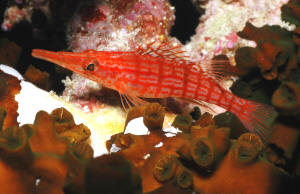
Henis are best kept with easygoing
tankmates.
|
 |
Butterflyfishes for Marine Aquariums
Diversity, Selection & Care
New eBook on Amazon: Available
here
New Print Book on Create Space: Available
here
by Robert (Bob) Fenner |
Heniochus chrysostomus 2 or 3?
5/17/17
Hi Crew,
<Corey>
Thank you for considering my question. In your information concerning
the Heniochus butterflies, it was suggested they are most comfortable in
a pair or more.
<Yes; depends on species... most as pairs>
I would prefer to get two, but would three be better?
<Of this species; two; placed at the same time.>
Specifically, if one were to die, there would be a large gap of time
before it could be replaced with regard to procurement and quarantine.
Would this time of solidarity for the surviving Heniochus be detrimental
after having
had a partner or would it adjust until I can get another? I am
interested in the Heniochus chrysostomus species specifically.
<All but H. acuminatus and H. diphreutes are best housed as duos/pairs
in hobbyist sized systems. And these two in larger numbers only in huge
tanks>
Thanks,
Corey
<Welcome. Bob Fenner>
Re: Heniochus chrysostomus 2 or 3?
5/19/17
Thanks again!
<Welcome! B>
Quarantine question
4/2/15
Hello,
<Steve>
I have a quarantine tank setup and have had terrible luck so far.
<Mmm?>
We have added fish in groups of 4
<What species? Some are not easily quarantined alone, let with incompatible
others in small volumes>
and by the time the six week quarantine period is up we are averaging
one survivor per group.
<Six weeks is a very long time. DO PLEASE READ on WWM re my/our stated preferred
S.O.P. here. Usually two weeks is about the zenith of benefit; turning point of
more damage than worth>
We are dosing with .5 Cupramine at the start of the quarantine period as
a prophylactic.
<.... this might well be too toxic; also killing off, forestalling
nitrification>
Should we wait to administer the Cupramine until a few days after introducing
the new fish?
<Depends on why you're adding the Cu>
Should we stop using Cupramine as a prophylactic?
<Unless there's a specific reason for its use, yes>
Any advise you have is very welcome.
Thank you in advance.
Steve DeFilippis
<Please do the reading and send along the data requested. Bob Fenner>
Re: Quarantine question
4/2/15
Thank you for your prompt response. I have read the quarantine articles on your
website and came away unclear about the use of copper as a prophylactic.
<Its use IS promoted and condemned by various parties... for varied reasons>
I believe some of the threads indicated that it was a good idea.
<Can be; but really.... should be done by folks "above" (as in before) the end
user (hobbyist/consumers)... Better for folks in the trade (collectors,
wholesalers, retailers) to employ simple dips/baths.... to "knock off" external
complaints (and not copper immersion)...>
The fish involved are: Longnose butterfly,
<Very touchy to Cu exposure>
yellow tang, flame Hawkfish, royal gramma, raccoon butterfly,
<Don't "like" quarantine>
hepatus tang, and Naso tang.
<REALLY don't like>
I hope to also acquire Heniochus but so far they have not been part of
this process.
<I'd just dip and place Heni's, actually all Chaetodontids>
After having the copper in the tank for 2 weeks we then do a complete water
change for the remainder of the quarantine period.
<Ammonia, nitrite need to be monitored... once, twice daily.... new water made
up, available for change out>
The first time we did the quarantine we did not add the copper and none of the
fish survived. That's why I decided to try using the copper as a prophylactic
measure.
<Please re-read my articles on Acclimation....>
Thank you again.
Ciao,
Steve
<Welcome. Bob Fenner>
Re: Quarantine question 4/2/15
Thank you again for such a prompt reply. I will follow your instructions and let
you know how things proceed.
Ciao,
Steve
<And you, B>
Re: Quarantine question
4/13/15
Update:
4/3/15 The QT tank was completely emptied and refilled with water from the main
tank and no further copper treatments will be administered. A Raccoon Butterfly
and Yellow Tang were added to the QT tank after a freshwater dip (BTW, I hire a
service to maintain my tanks and they supply the livestock).
Everything seemed fine. As of 4/7/15 both are eating well although the Raccoon
is exhibiting a little bit of scratching against the coral.
4/9/15 the Yellow Tang looks listless and the Raccoon is still eating well and
behaving the same. 4/10/15 the Yellow Tang is dead.
4/11/15 the raccoon Butterfly is dead.
<Yikes>
They are using water from the main tank when they do water changes on the QT
tank.
<A good practice>
The main tank has 6 Ocellaris Clowns and one Coral Beauty and they are all
thriving in the main tank. The Coral Beauty is the only fish that has made it
through quarantine into the main tank since we setup the QT tank on 12/30/14.
Since then we have lost the following fish in the QT tank: 3 Raccoon
Butterfly fish, 2 Royal Grammas, 1 Yellow Tang, 3 Long-Nosed Butterfly fish, and
1 Flame Hawkfish
<How large is this tank? It is monitored for ammonia; the copper daily?>
. I am really out of answers right now and feel terribly about how many fish I
have lost. I have had salt water tanks
since the 1970s and have never encountered anything like this. Any input,
comments, guidance you can provide is extremely welcome. Thank you.
Best regards,
Steve DeFilippis
<Something/s are wrong here.... very. I'd likely just use
preventative dips/baths and skip whatever routine you're presently using. Bob
Fenner>
Re: Quarantine question
The QT tank is 55 gallons
<A good size, shape>
and is monitored for copper, nitrate, nitrate, salinity, ph and ammonia. Are you
recommending that I bypass the QT completely?
<I would if I had the results history you describe; with the species involved;
particularly Chaetodontids. See my writings re BFs, their health, handling on
WWM>
Would it be advisable for me to get the fish directly from the service's
wholesaler before they put them into their tanks (prior to bringing them to my
house)?
<Possibly... do you know much re their procedures? May be that there adding to
morbidity here. BobF>
Thank you again.
Steve DeFilippis
Re: Quarantine question
4/14/15
Thank you again for your prompt response. I will keep you updated on further
developments.
Ciao,
Steve
<And you Steve. BobF>
Re: Quarantine question 5/9/15
Finally some success!
Last week my service provider brought me a royal gramma, flame Hawkfish, long
nosed butterfly fish and yellow tang directly from the wholesaler before they
were put into the system at their shop. We quarantined them for one day ( we
didn't want to over stress them since they had just been shipped from the
wholesaler) and then did the freshwater dip and put them
in the main tank. Here we are eight days later and all four fish seem to be
thriving.
<Ah good>
I'm hoping to add three small Heniochus, a blonde Naso tang, raccoon or
threadfin butterfly and hepatus tang to finish stocking the tank. We will repeat
the same process and hopefully be as successful as we were the first time. I
will keep you posted. Thank you again for all of your help.
Ciao,
Steve
<Thank you for the update. Bob Fenner>
Re: Quarantine question 5/29/15
Unfortunately, things have taken a turn for the worse. My service provider
brought three Heniochus acuminatus direct from the wholesaler on May 20. He did
a freshwater dip on all of them and then released them into the main
tank. He also brought a Hepatus tang which he place in the QT tank. On May 22,
he freshwater dipped the Hepatus tang and placed it into the main tank.
All of the fish were eating well. The Yellow Tang went after one of the
Heniochus but I figured he was asserting himself and after a while this behavior
would diminish. This Heniochus developed a bruise on its side.
On May 24 I noticed some white spots on the edges of the dorsal fins on the
Heniochus and their caudal fins. On May 25, the bruise on the one Heniochus
became an open sore (it looked like a red blotch and you could see where the
scales had separated.) I removed this Heniochus and put it in the QT tank.
Meanwhile, the Long Nosed Butterfly now had white spots on its caudal and
pectoral fins and the Hepatus tang had some on it's sides. All of these fish
were still acting normally and eating voraciously.
Today I found the Long Nosed Butterfly and the Heniochus in the QT tank dead.
One of the black Ocellaris Clowns now has some white spots on its sides.
All of the fish are behaving normally (no scratching) and eating voraciously. So
far, the following fish do not have any white spots on them: three orange
Ocellaris Clowns, Royal Gramma, Yellow Tang, two black Ocellaris Clowns, Flame
Hawkfish, and a Coral Beauty angelfish.
I phoned my service provider and he is coming out tomorrow to try to catch the
affected fish and give them a freshwater dip. Do you have any other (or
better) suggestions?
<Widely reading... on WWM, re all species here>
I am so frustrated. We seemed to have finally turned the corner and now this.
Any advice you have is greatly appreciated.
Steve
<Bob Fenner>
Re: Quarantine question; Heniochus esp. 6/13/15
Well, things are still spiraling downward. We removed the Yellow Tang and put it
in the QT as it was badgering the Heniochus (which ultimately died anyway) and
it is still in the QT doing well and showing no signs of Crypto. Meanwhile, we
treated the display tank with MetroPlex. I also starting soaking the food in
Garlic Guard. Since then, the three Heniochus are dead as well as the Royal
Gramma, the Hepatus Tang and one of the black Ocellaris Clownfish. Here are the
surviving fish today: two black Ocellaris Clownfish, three orange Ocellaris
Clownfish, Coral Beauty, Flame Hawkfish and Cleaner Wrasse (I know you recommend
against the Cleaner Wrasses but my service tech insisted the Cleaner Wrasse
would help with the Crypto even though everything I read said it wouldn't). The
Coral Beauty has one spot on its lip, the Flame Hawkfish has no visible spots,
each of the orange Ocellaris Clowns has around 5-6 spots and the black Ocellaris
Clowns seem to be spot-free.
All of these fish are eating very well and behaving normally (no flashing,
scratching or fast breathing). Today my service tech is putting carbon back in
the filter and turning back on the skimmer and UV. Is it possible that these
fish will just fight off the remaining Crypto and go back to normal?
<Yes; it is possible>
If so, how will I know when it would be safe to put the Yellow Tang back in
the DT and then add any new fish?
<Safe? As in completely? Never>
The other option would be to take them all out and put them in the QT with the
Yellow Tang and let the DT go fallow but that might cause more stress (and would
the QT be too crowded - it's a
55 gallon tank)? Any advice you can give is deeply appreciated.
<It's all posted/archived on WWM; over and over>
I have spent hours reading on WWM but sometimes the amount of information is
overwhelming and it is difficult to determine the correct course of action.
<Ahh! I have always hoped that having so much would lead folks to make their own
decisions>
Lastly, I have had nothing but bad experiences with Heniochus. Twice introducing
them has caused a serious problem in my tank resulting in massive casualties.
<Perhaps time to give them a pass. The two principal Heni species ARE
problematical at times. Look to others>
I know that your books and others describe them as hardy but my experience is
contrary to that. Needless to say, I have taken them off my list for restocking
in the future.
<Good>
Best always,
Steve DeFilippis
<Thank you for your update. Bob Fenner>
Reviewing ick treatment for
Bannerfish... some reading, review on WWM NOW!
7/8/14
Dearest Bob & Crew,
<Joe>
Hope that this email finds you in great spirits.
<Ah yes; thank you>
Just a quick question today. I ordered some schooling Bannerfish from
Kevin at Pacific Island Aquatics in Oahu (great guy!). Unfortunately my
son had to go in for surgery and I was forced to dip them and forgo the
quarantine. My entire fish population was wiped out!
<Yikes>
I was able to order some more today and plan on doing it the correct way
this time (tank has been fallow for over 2 months). Please let me know
how this procedure looks:
1) Acclimate fish to quarantine tank- pH, temp, salinity etc. taking
about 45 minutes.
<Mmm, are you based in Hawaii? I would follow the SOP for commercial
acclimation archived on WWM IF the fish have been bagged for hours>
2) Perform freshwater dip (pH and temp matched of course). Last time I
did 2 minutes. Some of banners showed some signs of discomfort. Perhaps
longer this time?
<See WWM... re dips/baths... I would add some formalin>
3) Add to quarantine tank and monitor.
<Ok>
4) If signs of ick appear, treat immediately.
<With... CP?>
Do you think that a copper treatment or hyposalinity would be better?
I'm leaning towards treating with Seachem's Cupramine.
<See... WWM... re quinine compounds>
The banners seemed to eat fairly well last time (although pickier then
others and slower to acclimate to captive foods). Any other suggestions?
<All sorts... See WWM re Heniochus period>
Thanks so much!!!
Joe
<Welcome! Bob Fenner>
Re: Marine Ich Procedures; Heniochus 8/7/14
Thank you so much Bob,
<Welcome Joe>
Just an update on this. I had forgot to mention that the ick had come
from 3 Schooling Bannerfish that I was able to get from Kevin at Pacific
Island Aquatics in Hawaii (great guy!).
<Glad to hear/read of good experiences>
I have since ordered 3 more and added to a cycled 20 gallon long
quarantine tank. Like a broken record, the Banners contracted ick at
almost exactly the same time (or at least displayed the symptoms), about
10 days into the quarantine period. I did not have Quinine available and
decided to use hypo-salinity, dropping the water to 1.012 while keeping
pH and alkalinity near natural level (I also monitored ammonia and
performed 20% water changes every 3-4 days. I also used the Seachem
product "Paraguard" as directions stated. The fish seemed like they were
tolerating it quite well, feasting on a mix of frozen and dried food,
although they were picky at first.
<Ah yes>
The spots seemed to be unaffected at first so I performed a second pH,
temp adjusted freshwater bath which seemed to alleviate the spots and
invigorate the fish (FYI, Kevin states that this was NOT a good idea).
<... did he state why this is his opinion?>
All seemed well and the Henis seemed well on the way to recovery. About
10 days into treatment I started finding the fish dead.
My belief is that the ick took out the fish, as opposed to stress
related to the hypo or ammonia problems due to feeding.
<Likely a combination of these... who can say which is greater?>
I'm perplexed why the same problem would occur twice in a row.
<... the Heniochus likely came in infested... Very common>
Perhaps a problem with shipment? I'm saddened that I did not have the
skills/tools to fix this common ailment but at least I was smart enough
to use quarantine this time.
Any suggestions? Perhaps I should avoid the Henis all together
in the future or even perhaps fish from Hawaii?
<Mmm; am a big fan of this genus (just put out a book on Chaetodontids
for aquariums)... and a huge fan of livestock from HI. See WWM re>
Lastly, should I bring the quarantine tank SG back up to regular levels
or keep them low to eliminate whatever ick may be left faster?
<Up to you. Some friends and just acquaintances are big stompers for
hypo... I am decidedly not>
Thanks Bob!
Joe
<Cheers, B>
Re: Marine Ich Procedures 8/7/14
Thank you Bob!
<Certainly Joe>
One of the reasons that I love the Henis so much is from your
recommendations via WWM and CMA as well as the fact that you don't often
see them in reef aquaria.
<Really neat, though at times quarrelsome, animals for large displays>
Kevin did not give a reason as to why he does not endorse freshwater
dips but I have been using them for years without problems. I do not
think that they would negatively effect the fish (although the second
dip was quite long, almost 10 minutes).
<Have done such procedures on hundreds of thousands of marine fishes
over decades in the trade; taught collectors, wholesalers re; made part
of fish disease presentations, writings.... VERY worthwhile>
The Henis seemed to tolerate the Hypo just fine, eating like crazy,
leading me to believe that it in itself did not overly stress them. I am
beginning to agree with you that they hypo is not effective. Do you
think that if I had used the Quinine that they could have been saved?
<Hard to impossible to say; would use CP instead though>
I have no experience with this medication and it does not seem to be
commonly available. I will go ahead and order it though to have in the
ol' arsenal.
Thanks so much Bob!
<A hu'i hou Joe. B>
Heniochus diphreutes; HI
1/29/14
Hello Bob & Crew!
<Joe>
Hope that things are well with you!
Just wanted to run a question by you since I know that you're quite
familiar with Hawaii. I've contacted Kevin at Pacific Island Aquatics
and he says that he is able to get Heniochus diphreutes quite easily
which I've long been searching for my reef tank. In regards to species
identification comparisons to H. acuminatus, he says that it
doesn't matter due to the fact that only H. diphreutes inhabits the
islands.
He says that it is impossible to find H. acuminatus there. I was not
aware of this and wanted to see if you agree or not.
Thanks so much!
Joe W.
<Tis so:
http://www.fishbase.org/summary/Heniochus-diphreutes.html
Bob Fenner>
Longfin Bannerfish For Beginner?/Heniochus
/Systems/Compatibility 5/2/2011
My first aquarium, a 65 gallon Red Sea Max 250 that is two months past
completion of cycling, now has 4 happy fish in it: a mated pair of
Ocellaris Clownfish, and a possibly mated pair of Banggai
Cardinalfish.
<Sounds good.>
They are all happy, healthy, and getting along well. Water quality is
flawless, with even nitrate at zero. So I am now looking to add another
fish, or ideally a pair (I like seeing pairs swimming around together).
So I've spent the last two weeks studying books, online sites like
this, and online fish stores, in my quest for a variety that is
interesting to look at, outgoing (as opposed to spending its life
hiding in a cave), and safe for a beginner like me.
I found my choice in "The Conscientious Marine Aquarist"...
Heniochus Acuminatus. It got good health and personality
recommendations there, with tank requirement of 15-20 gallons per fish.
Perfect.
To be sure, I checked my two favorite online fish stores. Both listed
it as "easy care" and one said minimum tank size 30 gallons,
the other 20 gallons. Great.
But then I checked other books and things fell apart. In "The
Marine Aquarium Problem Solver" the author Nick Dakin said of
Acuminatus, "Not for beginners but relatively easy for the
fishkeeper with some experience." In "The New Marine
Aquarium" the author Michael Paletta says of recommended species ,
"In my experience, none of the Butterflyfishes should be
considered a good beginners fish." Unfortunately, neither of these
authors said WHY this fish is not for beginners!
<Likely because beginner systems are "new", that is not
aged and the hobbyist has not attained enough knowledge to have some
degree of success with these fish. Heniochus species, as well as all
Butterflyfish, do not do well in newer systems but prefer aged systems
with plenty of developed live rock. This specie is not a difficult fish
to keep in an established system providing it's needs are
met.>
So... I don't want to kill an innocent fish because of my lack of
experience, but this fish really caught my fancy. What do you think?
Can I safely complete my stock with one of these. Or, ideally, a
pair?
<Sure, but hold off until you get some age on the system, 5-6
months. With continued reading/learning, you will also have acquired
more knowledge during this time.>
Thanks for any advice!
<You're welcome. James (Salty Dog)>
And of course, if you feel inclined to suggest an alternative that
would be interesting, outgoing, and easy care, I'll listen. One
thing that none of the books or online fish stores cover to my liking
is personality. I think that's the sort of advice best obtained
from experienced people.
<Yes, but you are seeking information, not
personality.><<Mmm, referring to the livestock? B>>
Tim
Re Longfin Bannerfish For Beginner?/Heniochus /Systems/Compatibility,
& LR "curing" 5/2/2011
James - Thank you! So the problem is age of the tank.
<Is one item along with some knowledge and a system capable of
supporting these fish.>
That is very useful information. I wish those two books that said
it's not a beginner's fish would have said that.
<Basically they did.>
This is especially true in my case, because on the advice of an
experienced aquarist whom I trusted (maybe or maybe not for the best!),
I dark-cured my live rock with no water changes. He explained that this
would kill anything harmful on the rock, leaving only the necessary
bacteria.
<Poppycock.>
Well, he was sure right! Although my tank has excellent biological
filtration, my live rock is about as dead as it gets.
<It should come back in time providing it was quality rock to begin
with.
Live rock is generally shipped moist to save on shipping costs and
there will be some die off of animal life due in part to the shipping
process and the high level of ammonia that will be present in the
curing tank.>
I also have no apparent micro-fauna, other than a few harpacticoid
copepods that I keep introducing from the breeding tank in my cellar.
They never seem to 'take' in my main tank. So this is a very,
very 'dead' tank right now. I'll hold off on these
Bannerfish until I see some life in the tank.
Maybe with my few small fish pooping in it, the rocks and substrate
will develop some micro life.
<You may want to re-seed your "dead" rock with a quality
piece of live pre-cured rock. Did you do any research on the process of
curing live rock before you attempted this?
Information can be found here.
http://www.wetwebmedia.com/ca/volume_2/cav2i3/Live_Rock/live_rock.htm
And here. http://www.liveaquaria.com/PIC/article.cfm?aid=47>
Thanks again! That was a big help.
<You're welcome. James (Salty Dog)>
Tim
Re Longfin Bannerfish For Beginner?/Heniochus
/Systems/Compatibility 5/2/2011
>> Did you do any research on the process of curing live rock
before you attempted this? <<
James - Did I ever! Before I began this hobby, I spent literally $400
on marine aquarium books and read them all. Highlighted. Took notes.. I
saw a huge variety of advice: Cure in the main tank. Cure in a separate
tank.
Cure with a lot of light. Cure with a little light. Cure with no
light.
Change the water completely in the middle of the process. Change 20
percent every few days. Never change it, because you want the ammonia
to spike really high.
Ultimately, I joined a small marine aquarium community for advice. (I
had not heard of WetWebMedia at that time. Wish I had!!!!) An old pro
there warned that lots of potentially dangerous critters such as
brittle worms, mantis shrimp, and Aiptasia anemones can come with live
rock, and you need a powerful ammonia/nitrite spike to kill them all as
well as build a huge population of nitrification bacteria. This made
sense to me, so that's what I did.
<The problem there is that you also kill all beneficial and/or
wanted organisms and is why you have none. There are other safe means
to remove unwanted animals, and Bristleworms are more beneficial than
they are dangerous.
Plenty to read here and related items found in the header.
http://www.wetwebmedia.com/polychaetes.htm>
I will say that he was correct as far as it goes. The rock came out of
the curing tank gray and lifeless but with fantastic biological
filtration capacity. But as I read here at WetWebMedia, I see that
problems with theses creatures are fairly rare, while the benefits of
microfauna are enormous.
<Bingo.>
I am considering getting a batch of quality live sand and putting it in
my now empty quarantine tank to cycle, and then moving it to my display
tank.
Maybe that would build my microfauna.
<Your money would be better spent on a few pieces of quality
"live" rock.
Organisms present on the live rock will eventually seed your present
substrate and your "dead" rock. It's very unlikely there
will be any interesting micro fauna found in live sand. Personally, I
think live sand is a waste of money for the very few benefits
gained.
James (Salty Dog)>
Tim
Re Longfin Bannerfish For Beginner?/Heniochus
/Systems/Compatibility 5/2/2011
>> Your money would be better spent on a few pieces of quality
"live" rock. <<
James - Okay, will do. Because I'm in no hurry, I'll buy
uncured rather than cured live rock, in the hope that more life comes
with it. I'll just throw it in my quarantine tank, cure it there
with skimming, frequent water changes, and a little light.
<Sounds good!>
The process of seeing what comes out of it may be as interesting as the
fish in my main tank!
<It can be interesting.>
Thanks again!
<You're welcome. James (Salty Dog)>
Tim
Heniochus problems 7/9/08 Dear Crew; i have been
reading your site for the past few months now and even though i
consider myself an expert in the keeping of fish i thoroughly enjoy
reading your articles.? <Me too> Well i do have one question
though and it pertains to the Heniochus species of marine butterflies.?
<?>?> While i have no problems with other members of the
family i cannot keep Heniochus acuminatus for anything and i am
told that they are one of the easier member of the family to keep.?
<Can be> The last set of three that i purchased only made it
three days.? <Mmmm> I purchased three medium fish approx 3-4
inches long and placed them in my quarantine tank. All was well, they
got along great, were very active and ate well.? I fed them mysis
shrimp, and frozen algae and they took both with no problems, that
night i fed them oc pellets soaked in SeaChem vitality and again they
ate like champs.? The next morning one of the three was not active and
hanging out near the tank bottom, i looked him over and could not find
any problems with the fish.? He did however take some mysis shrimp as
did they other two.? By the next morning the fish was dead and the
other two did the same thing as the dead one hanging out near the
bottom and not being active as before. Both were dead on the third
morning.? Now the particulars, i did a freshwater dip on all three with
HydroPlex, at different times.? They had no visible signs of parasites
or damage on their body and acted great, i treated the tank for
bacteria once the second two showed symptoms, i used ruby reef products
for that as well.? Water quality was 8.3 ph, 0 ammonia, nitrites and
nitrates.? I keep live rock in the quarantine tank and performed a
water change before treating.? What is the problem? oh yea the
quarantine tank is a 56 gal and had no other inhabitants except for
snails and a few hermits.? i have never seen a fish decay so quickly
from being active and eating to death as what happened to these three.?
Am i overlooking something? thanks in advance for you answer <I
don't think that these losses have anything to do with you, your
efforts... But cumulative stress, challenges of capture, holding, and
shipping of these specimens. I would try again... perhaps making sure
the new trials had some time to 'rest up' at your dealers for a
good two-three weeks before continuing on to your protocol listed
above. I have dealt with this species on many occasions... as a
collector, wholesaler/transhipper, retailer... and it is one of the
several species that "comes in good" or not... with little to
do to save it from dying anomalously. Bob Fenner>
|
Grouping requirements of H. acuminatus --
04/1/08 Hello to whomever is answering today, <<Hello,
Andrew today>> I am seeking your advice on adding a
Heniochus acuminatus, aka Black and White Bannerfish for those
reading FAQs. I've read all articles and FAQs on these fish
but am still unsure about grouping. I've read that the H.
diphreutes is the one that is a schooling fish. However, most
online and local sellers list the H. acuminatus for sale, saying
they do better in a pair or group. <<This is a common
observation>> Is it required that this fish be kept in
pairs or more, or will just one H. acuminatus be happy?
<<As with other schooling fish, they will always be more
active when in pairs or more>> My tank is just 92 gallons
and I don't want to put 2 in my tank and risk overcrowding if
one will be happy by himself (if there is room for one at all),
since they do grow to a decent size. <<About 10
inches>> I currently have 3 bluegreen chromis, 2 b/w
aquacultured ocellaris clowns, and 1 Cryptocentrus leptocephalus
(Pink and Blue Spot Watchman Goby). I would like to also add 1
Six Line Wrasse, 1 Coral Beauty and a Scopas Tang (last).
<<As it stands, room only for one in my opinion, however, I
would not suggest adding a single>> So, Would there be room
also for a H. acuminatus and are they required to be in pairs, or
is that just H. diphreutes? <<As above, a pair should be
added>> Thank you so much for your opinion/advice on adding
this fish. April <<Thanks for the questions, hope this
helps. A Nixon>>
Re: Grouping requirements of H. acuminatus
04/01/2008 Thank you for the response Andrew. I will leave
out the H. Acuminatus since there is not room for two. <<A
wise decision indeed>> I have another question. (I'm
sure I could come up with more but will leave it to one!) It is
actually the Longnose Butterfly, Forcipiger flavissimus, that we
were primarily interested in. I've read tons on them and
understand they are relatively hardy once acclimated. I've
had two die, however, and have never had a fish loss prior to
these two once they were acclimated. The first one was a heater
malfunction. The second one got ich really bad, very quickly and
died. I'm guessing my problem is that my QT tank is only 10
gallons. On one of the FAQ pages I read someone's opinion was
to do a freshwater dip (with Methylene? Malachite?) and place it
in the main tank because that size QT would stress them out too
much. Then also, someone else said no, definitely QT the fish. So
I'm unsure of what to do. I generally Qt all fish for 4
weeks, longer if they have a problem, but am having a difficult
time with the Longnose Butterfly. I would like this to be my
large fish for the tank and will leave out others in order to
have one I just can't stand the thought of having another one
die. So, what is your opinion, FW dip and place in main tank? Or
Run the full 4 week QT in a 10gallon tank? Thank you so
much!!*~*April*~* <<FW dip and a 4 week QT in the 10g,
certainly. Monitor closely>> <<Regards. A
Nixon>>
|
Heniochus Are Happening! Can you keep two black and
white Heniochus that are not a pair in the same tank? Are these fish
hardy? I am not experienced with these type of fish so I don't know
much about them. Thank you! <Heniochus are better kept in odd
numbered lots (3,5,etc.). They do tend to form a "social
hierarchy" in a captive system, so two may be a problem, with one
individual dominating the other. These are quite hardy in captivity,
and feed readily on a variety of foods. They do need a lot of space to
swim, however, as they can reach almost 8 inches in length. Do check
the wetwebmedia.com site for more information on this species. Good
luck! Regards, Scott F.>
Heniochus chrysostomus Hello, <Hi there> I have
question concerning the genus Heniochus, specifically Heniochus
chrysostomus. In reading the information on the site about Heniochus
under the behavior section, it said they are found in pairs to shoals
of hundreds and should not be kept solitarily. <H. chrysostomus is
almost always found in pairs... H. acuminatus and H. diphreutes (which
I saw today diving off of Hawai'i) are the species that mainly
occur in shoals> In dealers stores for freshwater tetras, they say
to have at least 3-6, but in actuality, you should have many more I
believe. <I agree with you> What would be the lowest number of
chrysostomus that would sufficiently promote a comfortable environment
for them. The tank size would be 750 gallons. <Very nice. A couple,
as in just two will be fine> Thank you for time and knowledge!!
Corey <And you for your caring. Bob Fenner>
Heniochus diphreutes Greetings! <Salutem dicit> I
have a quick question for you; I'm planning a new system, a
75gallon AGA tank. I would very much like to keep a small
school of Heniochus diphreutes. Would this be appropriate in
a tank of this size? How many would be feasible, if any?
<Actually a 75 gallon is a bit small for any more than about two of
these fish at adult size, and they are almost always
collected/available as mediums plus. Two will do though and allow you
to have maybe one more fish species of about the same size. Bob
Fenner> Thanks for your time! John
Re: Heniochus diphreutes Thanks for the quick response!
<Welcome> 2 would not make too much of an interesting
display. What other schooling fish could you recommend;
ideally id like to have 7 or so. Chromis are always popular,
and I hear that some cardinals school as well. <Some species do...
not all. The Chromis or other damsels are good choices, as are a few of
the hardier, available Fancy Basses ("Anthias")...>
Also, other tank inhabitants include a pearly Jawfish and
two false clowns. Thanks for your time! John <Glad to share John. Do
give a read over the marine livestock selection FAQs archived on
www.WetWebMedia.com for much more input re your possibilities here. Bob
Fenner>
H. acuminatus, sel. dis. 4/14/06 Hi
Bob, <Joseph> I have a quick question on my 2 newly acquired H.
acuminatus which I bought 2 weeks ago. I picked them up from my LFS as
soon as they were delivered from a wholesaler. <Mmm, generally
better to leave most all marines at a dealers a week or more... with
deposit if you "must have them"...> They are about 3
inches in size and both looked healthy. They have been in quarantine
since then and during that time I have noticed that one of them
absolutely loves every food I give it: brine shrimp with Spirulina, sea
veggies, flakes, tiny pieces of shrimp and squid, and Nori seaweed.
This one has maintained a healthy weight. The other fish, however, will
only eat the Nori seaweed and spits out everything else. I would like
it to start eating some fleshy foods. I have noticed that this fish has
slightly lost a bit of weight. Other than this both fish look healthy
and very happy. My question is whether I should be concerned about this
fish's eating habits ahead of it's release into the display
tank next week? <Ummm, a tough one... w/o seeing the actual
specimen. But I would very likely risk moving this/these
"Heni's" in the hopes of furthering the ones appetite...
and not worry re the small risk in disease transmission here> By the
way, this is the first time I have used a quarantine tank and I now
appreciate the benefits it gives to us in not only preventing disease,
but allowing us to observe the new animals in a much more tightly
controlled environment. <Ah, bingo!> It makes it so much easier
to acclimate the fish to the water chemistry and especially to new
foods, which would be a lot trickier in the display tank (i.e. size,
competitors etc.). Thanks for the informative articles on this topic!
Thanks in advance, Joe <Welcome Joe. Bob Fenner>
Heniochus in the Reef, and QT Clarification -
04/19/06 Dear WWM Crew: <Hi Sam.> I really appreciate what
you do to promote the hobby and to keep the world happy and healthy!
<You are welcome and thank you for the compliments my friend.> I
have been a good WWM user for months now, <Awesome!> totally
self-sufficient and amazed by how many times you've had just the
right answers ready and waiting. <Great.> Through all
of my research I put together a nice 75 gallon reef with fuge, sump,
all that good stuff. <Sounds fun.> The tank is very stable with
coral, live sand, live rock, cleanup crew--even a Borneman anemone that
hitchhiked on a frag. <Cool.> Now I'm finally permitting
myself to begin thinking about fish. <I admire your
patience.> A local reefer told me very matter of factly that the
ultimate fish to get would be a Heniochus diphreutes (pennant banner
butterflyfish). <Well they aren't my favorite by any
means, but they are attractive and a much better alternative to those
interested in Moorish Idols.> I have to agree that this is a
spectacularly beautiful fish, but I hear mixed reviews as to whether
they'd be reef safe (personality driven?) <My experience is that
they are quite safe with most stony corals (SPS) but can pick at easier
(meatier) targets such as Zoanthus. But I have seen them exist happily
and problem reef in many a reef tanks, but I still think they are a
slight risk.> and whether one would be happy in a 75.
<Well that would be the BARE minimum in my opinion for one of these
specimens.> What's the verdict on this from your perspective?
<See above.> Second, as a truly conscientious aquarist, I am
going to setup a QT. <I'm very glad to hear this.> Assuming I
can have a Heniochus diphreutes, what is the minimum size you recommend
for a QT? Would a 20 gallon work for this?
<Yes depending on the size of the specimen in question.> And how
does one cycle the QT with an HOB filter to prepare for the fish?
Should I run it first in my sump for a few weeks? If you
plopped it in there, I assume the ammonia would quickly
spike. You've never sufficiently answered how one gets a
QT ready for a new occupant. Please enlighten me! <Please read this
article by past-crew member Steven Pro, it isn't found on WWM but I
like it A LOT!: http://www.reefkeeping.com/issues/2004-10/sp/feature/index.php
.> Again, thanks for all the hard work and the brilliant answers!
<Quite welcome, anytime.> Sam
<Adam J.>
|
|
Butterflyfishes for Marine Aquariums
Diversity, Selection & Care
New eBook on Amazon: Available
here
New Print Book on Create Space: Available
here
by Robert (Bob) Fenner |

