|
|
| Home | Marine Aquariums |
Freshwater Aquariums |
Planted Aquariums |
Brackish Systems |
Ponds,
lakes & fountains |
Turtles & Amphibians |
Aquatic Business |
Aquatic Science |
Ask the WWM Crew a Question |
| Please visit our Sponsors | ||||
My Ritteri Anemone 8/16/19 Twisted Ritteri
10/20/12 Lighting Needs For A Ritteri/Anemone Lighting/Heteractis
Systems 8/11/10
GREEN CARPET ANEMONE HELP! 6/7/09 Re: 1" Overflow Woes/Ritteri Anemone
6/2/09
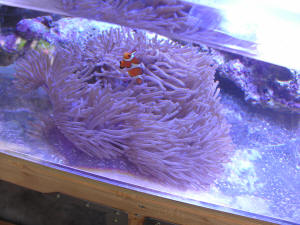
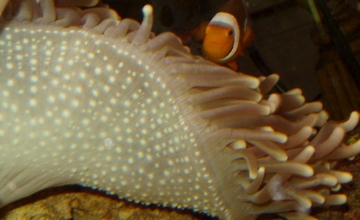
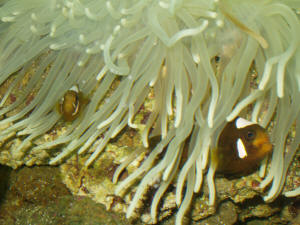
Light and Heteractis Magnifica 9/26/08 Hi guys Long time reader, third time writer, love your stuff. Just a quick question in regards to lighting for a magnifica anemone. We're trying to provide the best possible system for ours which we have had for about 10months now. Its in a 600 litre tank with a 250 litre gravity fed refugium, all parameters that we measure are stable and reasonable except nitrates hovers around 20ppm (mg/L). <Mmm, I'd be addressing this... needs to be low/er> Sadly it has started to decline, firstly by bleaching and it split the other day, too much food in one go I think (Krill, silverside(fish), and scallops every three days). On the site dedicated to the magnifica Bob recommends 400W metal halide lighting between 6000K and 10,000K but in discussions about metal halides in general some posts say its just a colour preference. <Within "reason", yes> At the moment we have 2x250W metal halides and 2xT5s. We're buying a clamp on 400w metal halide online and it doesn't appear to come in anything other than 20,000K. Will this be fine to give our magnifica a fighting chance? <Light-wise, likely so> P.s We've upgraded our protein skimmer, expanded the efficiency of our refugium and installed a canister filter just for activated carbon and mechanical filtration to improve clarity. Cheers guys, cant wait to hear from you. <Please read here re NO3 control: http://wetwebmedia.com/nitratesmar.htm and the linked files above... Do you have any idea what your RedOx potential is here? Bob Fenner> H. magnifica, Lighting, Feeding -- 7/3/07 Ok, here is the story: In the past I have lost 2, H. magnifica's that arrived in perfect condition. I kept them in my tank under T5 with independent parabolic reflectors. Many people will blame it on the light. However my light is keeping the most demanding SPS under perfect conditions. <I would have to agree this is not adequate lighting for this species. This anemone needs higher lighting than the most demanding SPS. I also don't recommend keeping corals with this anemone.> My LFS who build my tank and is a total expert, said that he kept an H. magnifica for 3 years under T8s! The anemone finally died because some idiot put in a fish that had been washed with a copper solution. <I'm not convinced this was the only factor involved in the anemone's death.> He said then the secret was not so much on the light but on the water quality and the diet. <Lighting, water quality, flow and diet are all huge factors in the survival of this anemone.> The diet consisted on mixing good brand of flake foods with water until it became liquid, then he would grab a syringe without needle of course, and pour the liquid food into the anemones mouth. <Ouch! Force feeding an anemone is not recommended. This can be very stressful on an anemone. Flake food is not an adequate diet for any anemone. They need small portions of meaty foods.> This seemed interesting because my H. Magnifica's never ate the pieces of shrimp I gave them, I placed them inside its mouth and it just threw it out. <Again, never place food in an anemones mouth. Their tissue is very delicate, if torn, your anemone may quickly parish. If your anemone won't willingly take the shrimp, try something different. Small portions of Silversides, Mysis Shrimp, Lance fish, etc. That syringe should only be used to get the food to the tentacles of the anemone, without actually touching the anemone. An anemone will regurgitate what it is unable to digest. Force feeding or too large of portions was likely the cause of it regurgitating. Start out with tiny portions and never feed anything bigger than the anemones mouth.> So has anyone tried to feed liquid foods into a delicate anemone's mouth?. Do they accept it this way? <I'm not aware of anyone force feeding liquid foods.> I blame their deaths on the fact they were rather large and never ate. <Anemones are considered difficult to keep. This anemone is considered most difficult to keep. Collection and shipping alone can be deadly for this species. It is probable that they wouldn't eat because of the stress caused from the collection and shipping. Many, including myself, believe this anemone should be left in the ocean. This anemone is dieing at a faster rate in captivity than it is reproducing in the wild. I hope this helps! Brenda> Ritteri update...info for others 12/16/06 Hello folks, <Hello Kevin, Mich here.> I know many people have difficulty maintaining healthy Magnificent Anemones, and I wouldn't recommend them for most aquarists. <Nor would I.> For those that try, I thought I would share my set-up that seems to be working (although it's been only 12 months). <Thank you for sharing. Success stories are always nice.> I have a 75 gallon LR set-up with 80 lbs. of liverock. Filtration is a wet-dry (w/out bio balls) w/ 750 gal/hr. pump and 2 powerheads for brisk water movement. Lighting is a 10,000K MH w/ reflector suspended about 8 in. above water surface (it should be noted that even with no hood on my tank, water temp during light cycle is at 80 degrees F.... try this with a hood or smaller tank you would likely need a chiller). Only other occupants in tank are a pair of Clarki clowns (who aggressively defend their Anenome during maintenance). Simply can't decide what else to get. <Sometimes less is more.> Diet is small slivers of fresh shrimp, no more than 1/2 the size of the mouth (occasionally substituted w/ slivers of fresh, non-greasy fish). Every other feeding is a processor made "paste" consisting of fresh shrimp, Mysis shrimp, and krill. I turn off the pump and powerheads and use a syringe to squirt a small amount onto the Anenome. Turning off water circulation is important here, as not doing so would likely degrade water quality and result in the Anenome getting very little. I only feed once every 10-14 days. I think many overfeed their anenomes. With the intense lighting and resulting zooxanthellae production, it seems little food would be needed. Water changes of 15-20 % are done every 1-2 weeks, at which time I also supplement with Iodine. This Anenome is of the tan/ pink variety and has grown from about 7 inches to a little over a foot in diameter when fully opened (I hear the brightly colored ones don't do as well?). Typical of Ritteri's, it has positioned itself at the top of the LR, directly under the MH, only about 12 inches from the bulb. Personally, I wouldn't try this species with less intense light (power compacts, for example), I don't know if it would be enough. Light cycle is on timer with 13 hours on, 11 off. I would like to reiterate the importance of covering powerhead intakes and your overflow. The only time this Anenome made significant movement was when my MH bulb burned out while I was at work. I came home to find my Ritteri had been sucked through my overflow, shriveled and in only about 1 inch of water. I quickly placed it back directly under the MH and replaced the bulb. It recovered and hasn't moved from his favorite spot since (that was 6 months ago). Lesson learned...I think I got lucky there. <Yes, a valuable lesson.> If anyone has kept a Ritteri for a long period of time (i.e, a couple years or more), I would like to here <hear> of your setup and husbandry. Also, if you don't have extremely intense light, water movement that turns over your tank volume many times each hour, or you don't maintain very good water quality, I would recommend you pick one of the easier maintained anenomes. <Yes, earlier is a relative term.> Sorry, would have sent pick but digital is in for repair. <Perhaps in a future update.> Lastly, read Bob's book, "The Conscientious Marine Aquarist"......the best book out there. <I absolutely agree with your sentiments here! An excellent addition to any aquarists' holiday list. Much success to you! -Mich> -Kevin Crowe Sebae/Ritteri Anemone Systems 6/6/06 Hello to all, <Hello Chris> I was wondering what are your thoughts on my ability to keep a Ritteri with my proper set-up. <A difficult anemone to keep for any length of time.> I have a 55 gallon aquarium that is only 15" deep, <Do better in larger tanks.> I have (2) 175 watt Metal Halide and plenty of actinics. I planned on placing the anemone on the top of my largest rock in the aquarium which is about 7" from the surface. My water quality is near perfect and I have excellent water flow (wave maker, sump return pump, etc..). <Wavemakers are a plus.> Or do you think that I maybe over killing my aquarium with so much light (although it never bothered my carpet anemone before in the aquarium)? <Lighting is fine.> I recently moved and don't have any livestock in it right now, but a saddleback clown, and wanted to start it up again with a Ritteri. <Chris, do read here and related articles above. http://www.wetwebmedia.com/marine/inverts/cnidaria/anthozoa/anemones.htm Thanks, <You're welcome. James (Salty Dog)> Chris Ritteri do I have it in me? 6/3/06 Good Afternoon, .....excellent site, you guys ( girls included, no offense) rule. I have a 50 gal aquarium that I have ran for many years as an exclusive anemone tank (no other creature but anemones.. not even clowns), and I just moved and I am starting it up again. I have kept just about every type of anemone (Bubble, Sebae, LTA, Carpet...for only a month though, quarantine situation for a friend), but the one that I have never kept was a Ritteri (the one that I always wanted to). I have a ton of experience with all types of anemones with everything that could go wrong to everything that goes perfectly. So I am not questioning my abilities or knowledge, just my lighting. I have (2) 175w MH....1 6500k and the other I think is a 10k or 12k, and (2) 65w actinics. I have learned through the years (and this lesson was costly) that if you have doubt, it best not to try, so I am asking the experts (yes you). And I know that even after my tank cycles again it will be at least 6 months before I can put one in. If you don't think I have the lighting for a Ritteri, what about a carpet long for the term? Thanks, Michael <<Michael: Many experts consider the Ritteri not only difficult to keep; but, due to their lifespans/infrequent reproduction they should not even be pulled out of the ocean. It would be a shame to get one and then lose it. Some people also think that clownfish are good for the well being of the anemones. As for me, I have RTBA, GTBA, LTA and a Condy under 400W MH lighting. I also have a RTBA, Condy and Green Carpet under VHO lighting. I feed the anemones every few days and they seem to be doing well. All the anemones came with tanks I bought. If it were me, I would stick with a clone of a RTBA or GTBA. That way, you're not experimenting on a critter that just got pulled out of the ocean. Best of luck, Roy>> Lighting/MH Bulb Problem 5/9/06 Hello, I have a 75 gal. LR tank (24" deep) with a ritteri Anenome and 4 Clarki clowns. My suspended MH bulb is mysteriously shutting off then restarting every 5 minutes or so. I've had the bulb for ~ 6 months. I know you recommend 10,000K spectrum. I'm going to buy a new bulb tomorrow, any specific brand you would recommend? This ballast requires a screw-in type, 250 watt bulb. I was using an Iwasaki Clean-Ace 250W, 18,000 lumen, 6500 K, and was going to look for a 250 W, 10,000 K. IYO, is this likely a bulb issue, vs. a ballast issue? (I know you're not electricians, just thought you might have experienced this with your own MH lights). I assume if the ballast was failing the light would not come on at all, do you agree? <I happen to be an electrician Kevin. If you have a standard (non-electronic) ballast the problem is generally with the bulb itself. An electronic ballast could be causing this problem as most have a current sensing device built in and will trip when excessive current is detected. A defective current sensor could trip prematurely.> I've always changed my MH bulbs while they were still functioning, so have never experienced this. The light is on a timer, set for 12 hours. Today, it kicked on, warmed up and got to it's natural spectrum (2-3 minutes), then dims and shuts off. Then, ~ 5 minutes later, it kicks on and does the same, it's been doing this all evening. Is this what MH's do when the bulb is failing? <Yes, if it isn't a ballast related problem.> My poor Anenome is getting a workout, opening and closing. It (Anenome) has always had the same 12 hour photoperiod. I hope this brief light screw up doesn't stress him out too bad. <Kevin, I'd just replace the bulb. If it is the ballast, then you have a spare bulb. I'd put my money on a defective bulb as the problem.> Thank you very much, <You're welcome. James (Salty Dog)> -Kevin Re: a question left out of my earlier MH email ... lamp choice 5/9/06 Sorry, one more. <Uh... of what? Where's the previous correspondence?> The choices I have found for a replacement 250 watt MH bulb are more numerous than I anticipated. Can you please recommend one of the following for my ritteri Anenome? Those in bold are labeled as aquarium bulbs: 1) Ushio/BLV 10,000 K (cri not listed) 2) Ushio 20,000 K (cri not listed) 3) "Standard" 10,000 K (cheapest, but I don't care) 4) MegaChrome 14,500 K (cri not listed) 5) MegaChrome 12,500 K (cri not listed) 6) Hortilux Blue 6,500 K, 90 cri 7) Eye 6,500 K, 90 cri The is in reflector, suspended 8 inches off the water. My Ritteri is doing very well, and I would like to keep it that way. Thanks again, -Kevin <I'd go with number 1... Good bulbs, about right temp. Bob Fenner> Magnificent Anemone Compatibility 4/27/06 Hello
folks. Thanks for all the wonderful info. <Hello and
you're welcome.> I think I know this answer, but want to make
sure. First, my tank and water parameters: -75 gallon with
75 lbs. of liverock, 1 open-end 250 watt MH (clean-ace 18,000 lumen,
6,500 K) in reflector suspended 8 in. above water, wet/dry filter made
for 125 gal tank (no bio balls), pump and 2 powerheads=1600 gal/hr.
water flow. -pH=8.3, temp=79 day (heat off MH), 77 night, specific
gravity=1.024, nitrite/nitrate=0, free ammonia=0, alkalinity=4meq/L.
All water is RO with 10- 15% water changed weekly.
Occupants are 1 magnificent anemone and 4 Clarki clowns....that's
all. Although I acquired this tank 3 months ago
with just a Clarki (the damsel, brittle star and coral beauty I
inherited were given good new home), it had been up and running with
previous owner for 3 years. I know Ritteri's are among
the most difficult of all anemones to maintain long-term but I'm
trying to provide everything it needs. I've only had it
2 months but I've never seen a healthier one- fed regularly with
small slivers of shrimp, squid, scallop, or non-greasy fish briefly
soaked in vitamin sol'n every other feeding, Iodine supplementation
with water changes, a robust body and thick, full tentacles,
rich pink-tan color, and has grown from ~6 to 8+ inches. My
question. I am considering making this tank a Clarki/anemone
tank, exclusively. Which I think could be quite
beautiful. <Yes, such systems are very
interesting.> Given the large amount of unpopulated space
in this tank, would a 2nd anemone still be out of the
question? I know that is normally a no-no due to the
likelihood of a "chemical battle" b/t the anemones, but most
don't have this much "unpopulated" space and I'm anal
<Anal??> about maintaining perfect water
parameters. Could 2 anemones (Ritteri or not) ever co-exist
in a setup such as this? <Your 75 doesn't have that much real
estate.> I forgot to add. I am about to move this setup
into a 125 gal and adding 50 lbs. more liverock, a 2nd 250 watt MH for
a 4:1 watt/gallon ratio with both lights suspended 8 in. over the
water. Just wanted you to know in case the extra room
influences your answer. <Don't think you would have a problem
here. Wouldn't get the second anemone until the tank
transfer is complete. I would get a Ritteri, would not mix
species.> To me, having a beautiful setup is secondary to the
well-being of the inhabitants. That's why I'm
asking. I'd rather have just one healthy anemone (I
know, that term is relative with a Ritteri) with multiple Clarkii's
instead of two anemones just "getting by" or
worse. But would love to have 2 if you think they could
co-exist with TLC. <I'd give it a shot.> I just
ordered Bob's book "The Conscientious Aquarist" and will
read it cover to cover. <Bob thanks you and do enjoy reading it.>
Thanks so much for your time. <You're welcome. James
(Salty Dog)> Regards,
-Kevin Anenome lighting....algae problem 4/21/06 Hello folks, Thanks for all your wonderful information, I've read your site for hours on end. I have a question if you don't mind. First, my water parameters: (pH=8.3, salinity=1.024, nitrite/nitrate=O, ammonia=0.15 mg/L, alkalinity=4.5 meq/L, temp=79). I recently (3 wks. ago) increased the lighting for my 75 gal. LR tank to a 250 watt MH (18,000 lumens, 6500 K) to provide adequate light for a newly purchased Ritteri Anenome, which has positioned itself on a perch only 12 inches beneath the intense light. I acquired this tank from a friend who only used weak fluorescents for years (no anenomes, obviously). I'm battling an algae problem now....looks similar to Cladophora sakaii on algaebase.org, sort of like a green moss, stringy, and obviously grows to several inches (I can send pic if needed). All of my water is RO and water parameters are good (is ammonia OK at 0.15?....surprised me). <Shouldn't be detectable. May be the test kit, try another.> I actually had to remove the LR a piece at a time into a saltwater-filled tub and scrub it with a toothbrush. <Could be a reason for the slight ammonia increase.> All I have in the tank is my Ritteri, a resident Clarkii, three-striped damsel and a Coral Beauty Dwarf Angel. I know acquiring a Yellow Tang or other algae eater would help, which I may do. <Tangs are selective in the type of algae they eat. Your fish (other than the clown) will always be at risk with an anemone present.> I thought the RO water would keep the algae minimal, I was wrong. The LFS didn't have any better ideas. Am I going to have to continually scrub algae off of my LR b/c of the intensity of the MH? Please say it will get better. Any recommendations? <RO water alone does not prevent algae growth. Dissolved nutrients, phosphates, nitrates all contribute to algae blooms. Do read here and related links, Kevin. http://www.wetwebmedia.com/algaeconMar.htm > How do other Anenome owners with MH's deal with algae? <By control. A protein skimmer will help immensely in this regard along with advice on the aforementioned link.> Any info is very much appreciated. On another note, I'm hoping to be one of the few to keep a Ritteri long-term........MH lighting, 10-15 % water changes weekly with Iodine supplementation, varied crustacean/fish diet, good water parameters, strong water flow, etc. I'll let you folks know if it's still thriving several years down the road. <I think a year will be all that is necessary as these animals do not live much longer than that in small captive systems. There are a few exceptions and hopefully you will be included.> Regards, <Good luck with the Ritteri. James (Salty Dog)> -Kevin (aka "tired of scrubbing my live rock") Heteractis magnifica/Anemone Systems - 04/11/2006 Hello
folks, <Hello Kevin> Thanks for your great
site. I tried but couldn't quite find the answer to my
questions. So here they are: I just bought a magnificent sea
Anenome (Heteractis magnifica). I have an ~80 gallon
liverock tank. The Anenome is positioned 20 inches directly
below my 250 watt clean-ace metal halide bulb in
reflector. This MH has ~15,000 lumens (18,000 new) and color
is at 6,500 Kelvin. This is the only light I'm
using. There's 45 lbs. of liverock, water quality if
excellent (frequent water changes....I kept freshwater Discus for years
and they require it!), pH is at 8.0, water temp is at 79 F, with 2
power heads and powerful pump intake providing good water
movement. I just fed it a small piece of peeled, de-veined
fresh shrimp, which it devoured. Future diet will be mix of
fresh crustaceans and fish. My Clark clownfish has already
taken up residence but I haven't seen it feed my Anenome
yet. I think I got a good specimen......good body condition,
balled up nicely when moved, nice long tentacles, nice pink/tan color,
fed aggressively, etc. <A good start.> My 3 questions
are: 1) Do you think my 250 watt MH (~15,000 lumen, 6,500
Kelvin) could be enough if kept directly above him? I know
it's low on wattage for this species but it's a great bulb and
directly above him. I have a 1,000 watt ballast and could
use a 1,000 watt MH but my energy bill would sky rocket and I'd
have to wear sunglasses in my own living room! <I think
the light is fine. Would change to a 14K when replacement
time comes.> 2) Is there anything about my setup that
seems wrong for this difficult species? <Not yet. Do
maintain 10% water changes weekly and supplement iodine.>
3) One of your articles said bio-balls in your wet/dry
shouldn't be used. <Isn't necessary with live rock.> I
have 45 lbs. of liverock, should I gradually remove the bio-balls and
allow the liverock bacteria to work alone? <Yes, but I would add
about 30-40 more pounds.> Thanks so much!! <You're
welcome. James (Salty Dog)> You're info on this
species blows away any info I've found elsewhere. The
LFS knows no more than I do.......please help. Sincerely, -Kevin
Crowe Lighting for H. magnifica anemones Hello! I've got a question about lighting my cube tank (27.5") in which I want to keep some clownfish and anemones (Heteractis magnifica). <Yes, I remember.> Now, I have 150 watt HQI 10,000 K made by Aqualine (Aqua-Medic after fusion) and some 20 watt actinic 03 made by Philips. <Ok> I've got a feeling that it wouldn't be enough light for anemones and I think I should upgrade. <It would be plenty for some anemones, but I think you are at the low end for H. Magnifica.> I'm thinking of adding 150 or 70 W of Aqualine 20,000 K and do my light cycle following: first starts 20 or 40 watts of TL 03 (last 12 hours), after 2 hours start 20,000 K and last for 10 hours and 10,000 K (150 watt) last 8 hours. What is your opinion about my plan? <It sounds fine.> Should I buy 20,000 K (what's the different between this and 10000K for anemones) <If you add a second lamp, I would use another 10,000 K.> or maybe I should stay with my 150 watt 10,000 K and TL03 (if so how many watts should I add to my 150 watt HQI) and don't spend money. <My concern for your anemone in the previous emails has centered around the tank's depth. I believe this anemone can and will survive under this lighting if it climbs and stays in the top half of the aquarium. To be sure you are getting the best light output from your fixture, do be sure not to use a glass canopy. These block out light. If you are concerned about fish jumping, please find and use some eggcrate. This is what we in the US hobby call it. It is found at most any hardware store. It's real purpose is for diffusing light on overhead fluorescent fixtures. It comes in sheets that measure about 2 feet by 4 feet. I would also urge you to purchase a few good books on anemones. Dr. Ron Shimek wrote a small pamphlet called "Host Anemone Secrets." it is really pretty good and he has good experience with H. magnifica getting his to spawn.> Best regards, Darek <Good luck! -Steven Pro> Anemones tank Hello! Thank you for the previous information. I'm planning an anemone tank and I'll be glad to hear your opinion on my system. My tank is70*70*70cm <About 27.5" cube, ~90 gallons.> an overflow is on the whole width of the tank. I want to use Turboflotor 1000 multi, 25 liters of bioballs, and ocean runner 3500 circulation pump. <I would probably forget about the bioballs and just use liverock.> I have also Kalkwasser mixer. I want to have Heteractis magnifica, 8 Clownfishes, <I would recommend just one pair of clownfish.> a Zebrasoma, and a few more fishes. My lighting is 150W 10000K and 40W TL03. <This maybe one of those instances I would recommend 250 watt metal halides. H. magnifica's love bright light. You maybe ok with your current light if the lamp is close to the water, about 6" or 15 cm.> Would it be ok? <See notes above> I wonder if I should add refugium with miracle mud but I want to have my water without yellowing. <I would investigate first what the purpose of the refugium is (nutrient export or plankton production) and then tailor the refugium to your intentions. Please search through www.WetWebMedia.com for additional tips.> Best regards, Darek <Good luck! -Steven Pro> Heteractis magnifica A species tank sounds like an interesting idea. I would think a relatively shallow tank would be enough since these guys like to climb high in the rock structure. <agreed, my friend> I would not need a lot of volume because it would be in series with my main 65G and my 29G sump and it would sit next to the tank. <whoa! That's not a species tank then. the shared water exposes the anemone to the same allelopathic and other noxious exudations from other invertebrates in the shared water. We need a dedicated tank here dude. Closed system... or... the 65 and 29 sump cannot have other cnidarians in them at which point the ancillary vessel is somewhat unnecessary> My skimmer is excessively oversized anyway. <excellent> What would be a suggested size for this Heteractis magnifica anemone and a pair of clowns? <for the long run, a 50gall breeder would work reasonably well 36X18x18> Thanks, Jeff <best regards, Anthony> Heteractis magnifica Lighting - 12/25/03 Hi, I am
a high school biology teacher who is filling in for the Marine Biology
teacher. <cheers, Jerry> My only experience with
saltwater aquariums was back in 1975-1980 when I had a 29 g aquarium
with an anemone (It looked a lot like a Heteractis crispa), <ahhh...
a fairly hardy species... even for the time, back then> a clownfish
(probably Amphiprion ocellaris), a
coral banded shrimp (Stenopus hispidus) and a blue tang (Paracanthurus
hepatus). This was in an aquarium that had 2-25 watt
incandescent bulbs and an under gravel filter. I guess the
weekly 25% water changes recommended by my LFS helped a
lot. <yes... helpful> This aquarium was also next to
a south facing window. <indeed the best help overall...
natural sunlight :) > I had to sell the system when it came time for
college (from what I have been reading, I should not have been
successful with this system). I have lots of experience with
freshwater systems. <no worries... times have changed and the
keeping of marines is much easier with regard for maintenance (less
than most FW), although still strict (water changes, stable pH,
etc)> I am thankful for the internet and a few good books (The
Conscientious Marine Aquarist was the first book I purchased and so far
has been the best reference ;)). <outstanding! And please do look at
our other works: "Reef Invertebrates" Calfo and Fenner,
"Fishwatcher's Guide" by Fenner... and "Book of
Coral Propagation" by Calfo (much on general reef/coral and
anemones keeping here... water chemistry, lighting, etc)> My biology
training has been genetics (BS), ecology (MS), and entomology
(Ph.D). After all of this I discovered I prefer teaching
high school. <you may be a candidate for sainthood <G>. Kudos
to you my friend> I inherited a Heteractis magnifica and A. percula
from a student who did not last long in the class (student brought
these in on a day I had a substitute and after I said no because of the
great amount of care required for the anemone. I told the
student to find a new home for the anemone. <yes... this
is one of the most difficult and expensive to keep species (requiring
brighter light than most any coral in the trade> Instead he
transferred out and left me the anemone). This class
interested me again in marine aquariums, and I had started putting
together a mini-reef system in a 20L (30x12x12) . I made a
custom canopy and lighting system with six 24 inch fluorescent tubes (3
actinics, 2 50/50's and 1-10,000K) and two 20 watt 6700K
mini-compacts. <alas... this is not even remotely close to being
able to keep this species. Without intense natural sunlight or metal
halide, I suspect your anemone will perish from slow attrition in less
than 2 years (perhaps much sooner)> It is a tight fit though the
bulbs are about 4 inches above the water. <good to hear of the
effort... but there is a rule that fluorescent lamps at 3" or
higher off the surface are nearly ineffective. They are indeed severely
reduced in intensity as revealed by a PAR meter. These lamps
need to be as close to the water as possible my friend> I have a
3-spot domino (Dascyllus trimaculatus), a blue velvet damsel
(Neoglyphidodon oxyodon) and a yellow damsel (Amblyglyphidodon aureus).
<heehee... tough crowd! <G> I do love those dominoes though
:)> I have about 20 pounds of LR and 30 lbs of live sand and crushed
coral. I also have a variety of snails and hermit crabs as
well as my first piece of coral, green star polyps. <please do
resist mixing corals and anemones... motile cnidarians mixed with
sessile ones are a recipe for disaster in the long run (no doubt when
away from the tank on school holiday/weekends)> This was the only
system I had for the rescued anemone and clownfish (several students
wanted the pair, but no other aquarium has the required
lighting). Interestingly, the domino now shares the anemone
with the clownfish, they each have their side. At first the
anemone immediately climbed the side of the aquarium. I did
some research and decide I did not have enough lighting.
<correct mate> I replaced one actinic and one 50/50 with 2-6700
bulbs with internal reflectors. <the problem here is
intensity and not (only) the color of the lamps> I built a rock
ledge for the anemone, and it is now doing much better. I
realize this is only a short term solution. I am already
dealing with some water quality problems (I have a penguin 330 BioWheel
filter and two powerheads connected to sponge filters (to protect the
anemone and provide a bit more filtration). I can keep the
system stable with 20% water changes every 2 or 3 days. I
will be getting a protein skimmer very soon. <good to hear> I
have decided to build an aquarium to house the anemone and clownfish.
(I do a lot of DIY in my free time). I am thinking of an
aquarium of 24x24x14 (about 35g). Is this a good size or
should I go larger? <it will serve you for several years
before the anemone outgrows it><<Ah, no. RMF>> I would
rather build the best size now than have to go bigger
later. I want to keep the aquarium short so it will be
easier (and cheaper) to provide the best lighting for the
anemone. <yes... shallow tanks will help here
significantly. Keep such anemones in the top 10-12" of water under
any fluorescents (PC, VHO or certainly HOs)> I would like to use PC
lighting so I do not need to deal with the heat of metal halides
(especially important in summer where I live where temps go above 100F
regularly, I do not need to add to the air conditioning
bill). <this is a big misconception Jerry. PCs and VHOs
close enough to the water and in an enclosed reflector/canopy produce a
similar concern re: heat. Or put another way... the heat from halides
is really a moot point. They are even easier to control heat with as
they are further off the water and heat is more readily dissipated or
exhausted (9 watt muffin fan)> Would 4-55 watt pc bulbs (2-10,000 k
and 2-50/50) be enough or should I have more lighting?
<still not enough for a magnifica... although it would easily keep
an Entacmaea quadricolor or a brown malu anemone (the 2 best anemone
choices)> I do not wish to provide the minimum, I want to
provide enough lighting to keep the anemone healthy and happy for a
very long time. <daily feeding will help to compensate
in part for the deficiency in light... but only for so long.> I will
be doing this project soon (my wife, also a teacher at the same school,
said I could bring home the 20 g mini reef at the end of the year, but
after watching the anemone and clownfish has given her ok to a second
aquarium, so I have to get it done before she changes her
mind). I am hoping that after I get this one going she will
let me have one more, I need a bigger FOWLR to house the domino and
blue velvet damsel as well as a yellow tang I have my eye
on. My son says that one can go in his room. It
does help that he desires to become a marine biologist and he has a
birthday coming up in a few months. Thank you, Jerry <you really
have your work cut out for you here, mate. As you seem to be aware
of... this is one of the most demanding and delicate of anemones... and
certainly even among all cnidarians in the trade. H. mag requires more
light than most SPS stony corals... and that means a light system of
many hundreds of dollars to have a fair shot at keeping this specimen
alive long term. I fear that even with good feeding under fluorescent
lights, it will still perish in the short term (1-3 years at most). To
make matters worse/more challenging... the tank is relatively small...
and the presence of any other stinging cnidarians (Starpolyp is in fact
one of the most competitive and chemically noxious of all corals)...
and this tank seems unlikely to prove fruitful. I wish I could share a
more optimistic opinion, but the animal is what it is... and has strict
needs. Wishing you the best of luck. Anthony> Heteractis magnifica lighting 3/22/04 Hi Anthony, <cheers> I thank you very much for your great advice on the care of the Heteractis magnifica I inherited. <always welcome my friend> Since I last wrote in December, I have been able to add a Sea Clone protein skimmer and 15 gallon refugium to the 20 gallon long aquarium that houses the H. magnifica and now mated pair of percula clowns. The water quality has greatly improved and for the past 6 weeks ammonia, nitrites, and nitrates have been undetectable. In another month or two I will have a 90 gallon aquarium ready to house the anemone and clownfish. I am taking care to set up and cycle the aquarium the right way to provide a permanent home for this anemone. <a wonderful story... very glad to hear this anemone is getting a good home. So very few do> My question has to do with lighting. I have just purchased a 175 watt metal halide pendant with a 10,000 K bulb. It will be delivered in a few days. What would be the best way to introduce this lighting so as to not shock the anemone too much. <place it 6-9 inches off the water... and place a stack of plastic fiberglass fly screen (like for windows) on top of the canopy between the lights and the water. About 12-15 sheets should do nicely. Remove a sheet every day or every other day for a few days to gradually acclimate the anemone to the new light over a couple of weeks> Currently I have 8 6700K NO fluorescent bulbs about 2 inches above the water. I replaced the glass cover with eggcrate to help increase the lighting intensity until I was able to get a metal halide. Right now the anemone has taken up residence on the front glass right at the water surface. <yes... common. Starving for light> Should I start with the metal halide several inches above the water surface then lower it a little day by day? <yikes... less than 6" is dangerous with MH here (6-9" is about right)... only fluorescents are to be 0-3" off water> Or should I start by cycling the lighting with the current lighting for 5.5 hours, then one hour of metal halide, followed by 5.5 hours of the current lighting? <too complicated... simply run the lights for the right time 7-10 hours at the right height, etc... and shade the light partly for a couple of weeks> Then I would slowly increase the amount of time the metal halide is on in relation to the current lighting. I thank you very much for your advice, it has prolonged the life of this anemone and has given me a chance to provide the right environment so it might live a very long life. Jerry <in agreement/shared admiration... Anthony> Heteractis magnifica Hello there! <Hi! Ryan with you today> Thanks in advance for the quick response and sound advice. <No worries> I have some questions regarding the magnificent anemone Heteractis magnifica. I am very interested in keeping this anemone. It's colors and size are amazing and I can't help but want to keep it. I've done plenty of research on this anemone and know it needs plenty of current and light along with excellent water quality. I can provide the water quality and current but I'm somewhat perplexed as to how much light I would need to keep this animal healthy. <The saturation point is a slippery devil> I would plan on using metal halide lighting along with some VHO actinics. <Sounds appropriate> My first proposal would be to use either 250 or 400w MHs of the 6500k or 10000k color spectrum. <400 is overkill unless you're planning on keeping photosynthetic animals in the lower portions of your tank. 250, with the animal in the upper 10 inches of water, with the bulb 8 inches from the surface.> I have read many times that 6500k gives quite the PAR rating as compared to most other MHs. <Truly an endless debate. I prefer 10k, with heavy VHO actinic.> IMO I think this would be the best thing for a magnificent?? I've also heard my people say they like to have the crisp white light given by the 10000k's. <Ahh, yes> Either way, I have a 70g tall tank (36w 18d 24h) which is quite tall and would need to be lit with the MHs. So I was thinking of going with the 400w 6500k MHs with 2-3 95w VHO actinics (this seems like a whole hell of a lot of light for my tank). <250 with your current VHO scheme is plenty.> With this lighting setup I'd have about 8-9 watts per gallon. I'm concerned that I won't have enough light so I've planned on going really big on the metal halide. <Proper feeding and water current are equally important variables> Along with this there will be a pair of true percula clowns to help with symbiosis if they take to the anemone (I think they will). <I would encourage you to allow the anemone to settle before allowing the clowns to "have at it."> With that I'll be feeding the anemone with Bob's homemade shrimp prep that he lists in CMA. <Nice staple, but mix it up> It'll be grated up with a cheese greater under Anthony's advice. He says this should help with digestion. <Yes> Through much of my research I've also noticed there are many color variants of this animal. Could you tell me why they are all classified as H. Magnifica? <Animals of this nature make the most of their environment. Growth is highly deliberate- The animal grows to take advantage of the current, light and available nutrients. If the anemone collected from point A is producing much of it's energy from plankton, and anemone B is producing most energy from photosynthesis, they're going to grow in very different ways.> Do the colors vary due to local or light levels? <Many variables- UV penetration, amounts of available light, etc.> I really want to know my stuff on this anemone and I've never heard anyone mention any info on that. <Not much has been written on that! This is an unexplored area in some ways.> One main reason why I ask this is because I would like to get an anemone that is suited for my Percs. Maybe one color variation is better suited for them? <Not likely. I would encourage you to look to other aquarists for "tank raised" animals. The shock of collection is seldom overcome by these animals. It's so sad to do everything you can as the steward, and watch the animal disintegrate nonetheless. Please please acclimate him to the light.> Like I said I've never heard any mention of this anywhere. So if you could give me some info it'd be greatly appreciated. Once again I want to thank you for your time and all that you guys have done. I am truly appreciative of your work and help!!!! <Great luck! Ryan> Chris - AKA - Fishtank Magnificent anemone requirements Hello, I was sold a magnificent anemone about six months ago. I was told it was an Entacmaea quadricolor. It looked like it in the store but I bought it the same day they got it and it must have looked like a bubble tip due to stress. I brought it home and it remained looking like a bubble tip at the top of my tank with 4-40 watt fluorescents (2-50/50 bulbs, 1-6500k,and 1 actinic). I changed lighting to 2-65 watt CF SmartPaq bulbs and 2-40 watt 50/50 no fluorescents. The tank is a 55 gallon (4 feet long, 21 inches tall, 13 inches front to back). << This sounds like very little light. I would not recommend any anemone under that lighting. >> The anemone has rooted itself in the top 9 inches of the tank and the lights all sit on the top of the open tank. I clean all salt off of bulbs/reflectors every week. I feed the anemone every other day with chopped squid. Everyday I feed a cube from a saltwater multi-pack and let everyone feed for about a half hour with all water flow stopped. The anemone has probably tripled in size within a month of being under the new lights. << Well this does sound great. Apparently they can do very well in those conditions. >> This thing seems to grow daily. It has a couple of Amphiprion frenatus as residents who are constantly spawning. Do I have to worry about the anemone outgrowing the tank? << No, if it ever gets that big I'm sure you could sell it. >> I also read that these anemones generally stay closed. My anemone is always open except for when it is getting ready to excrete waste. I've had to move it due to it's proximity to a hang on filter. You will probably give me heck but here is the system. ammonia 0 nitrates 5 nitrites 0 ph- 8.0 (hard to keep up without adding marine buffer bi-weekly) phosphates 0.25 power sweep 228 (use just to move water) penguin BioWheel 330 AquaClear 300 (no filter just small chunks of live rock in it) AquaClear 200 4" diameter and 10" tall protein skimmer [penguin and skimmer on left back, power sweep in the middle back and AquaClears on the right back] 2" live sand and crushed coral mixed 100 + pounds live rock 4 blue-green reef Chromis blue streak cleaner wrasse yellow tang dragonet (had a mated pair but the anemone got hungry) 2 Amphiprion frenatus bi-color blenny 2 blood shrimp 1 brittle star various mushrooms "blue" waving hand xenia (growing like a weed on everything, looks pinkish like the anemone) Platygyra brain moon polyps yellow tree coral feather duster (moved it and it lost it's feathers but has since regrown them) 20 astrea snails 2 blue legged hermits countless little white starfish I would love to add a sump/refugium but can't afford the time or money. I do not plan on adding anything else and want to know if anything has to go due to the setup or size of the aquarium. All seem to be happy and the cleaner wrasse is over a year old and always working on all the fish. The system has been stable parameter wise for a year. I would like to know how long I should leave my lights on. << I'd say between 12 and 16 hours. That is quite a range isn't it? >> I have the no fluorescents on from 7 a.m. to 5 p.m. and the CF's from 8 a.m. to 4 p.m. I feed once in the morning at 8:30. << Why don't you have your lights on in the evening? Most people would have their lights on until 10pm or so. >> I do have a little green hair algae in a corner and a little of the red slime in the opposite corner. My glass gets covered weekly in a green algae that is a little harder than the diatoms I had in the very beginnings of my aquarium. I clean all filters and do a 20% water change every other week. << All sounds good. Good luck. >> << Blundell >>
Lighting for Ritteri anemones II 11/28/04 Thank you Anthony for your quick reply. <always welcome my friend> I will order a warmer colored bulb to replace one of the 96-watt PCs and I will change the bulbs after 10 months as you suggest (and stagger their replacement). Thank you and all the crew for your invaluable wisdom and dedication to this wonderful hobby. Gary <wishing you the best of luck/life. Anthony> Ritteri Questions Hello, <How goes it, Michael here, though I should be studying...> Great site! <Thanks, I'm glad I can help out> I've read just about all the faq's in regards to anenomes and will adhere to your advice. I have a question as to the tank that I would like to set up, specifically looking for your expertise to alleviate any possible problems. Here is what I am looking at: 58 gal oceanic reef ready tank 30 gal sump euro reef cs6-1 protein skimmer Coralife Aqualight pro: 1 150 watt halide, 2 65 watt PC actinic <Not enough lighting for a Ritteri. You'll need at least 2 150 watt halides for a 48" tank, preferably 2 175 watts> 60-70 pounds of live rock 3-5 inches of crushed aragonite <Go with a DSB of about 6"> I plan to let the tank cycle for about 6 months before adding the ritteri and 2 clowns. <Sounds good, I let mine go fishless for four months> Does this set up seem ok? <up your lighting and you'll be fine> Would it be possible to add zoos + star polyps too? <yep, place them lower and they should be fine> Thanks in advance for your response, <Anytime> Kwon <M. Maddox> Ritteri Anemone Hello Mr. Fenner, <James here for Bob> I addressed this to you because my wife wrote you a while back ago about a Ritteri we purchased. It is still alive and of course did okay for awhile. The anemone is in a 29 gal with 2 Maroon clowns at this time. I am putting finishing touches on my 300 gal. (Let it cycle). I change water every week. Parameters are fine. There is 130 watt P.C. on it right now. It has attached to the side of the tank (Which I know this is normal) but it never did climb to the top like they do. It stayed in the main flow of the pump which is about 400gph. When purchased, it Had a good looking toe. No rips or tears or signs of healing from tears. When purchased It was on a flat rock. I wouldn't take it with out it. The mouth was tight and closed, no gaping. The mouth is still in great shape. I tried feeding it , it eats once in awhile for me, but the clowns spit Mysis, and Spirulina flakes in the middle. It closes up and digests and then opens up. Now here is the problem, The toe started to turn whitish, on the part that sticks to the glass. Then it got concave like ( In the middle it is detached from the glass, but the ends are still attached to glass). The past few days it has not fully opened and falls almost all the way off the glass. (Here is the funny part- not so funny) At night 30 minutes after the main lights are out, moon lights on, it re- attaches to the glass all the way. It stays there until the main lights go back on during the day time. It is almost like the light is too much for it, I did not think that was possible. Ammonia 0, Nitrite 0, Nitrate 20. I do add Iodine,<you need to test for levels of iodine. Too much can be harmful. It is hard to know how much of this the animals absorb.> Vitamins (To water) and Iodide. I have a sump rated for 180 gal. and a protein skimmer. I do notice the Maroon clowns, especially the female, really is very rough with it, but boy you stick your hand in there for cleaning and forget it. She broke my plastic spoon, and before she laid eggs last month she re-arranged the tank moving rocks 3x her size. I called my local fish store and they have no clue. They told me when it dies they could get me another one. That's a real great response!, how does that help this one. Anyway do you have any suggestions, I have never seen a anemone act like this. <I do think your lighting is borderline for this anemone. They do require strong lighting and water motion. They generally do poorly in the home aquarium but with care and proper conditions some have lived for years. What I would start doing is a 10% water change with an enriched salt mix such as Reef Crystals, make sure that iodine level is safe and keep the light on for 12 hours per day. Cut out direct feedings for a while since it sounds like the clowns are giving it enough. The anemone does provide a great deal of it's own food by photosynthesis providing the lighting is intense enough. What type of filtering are you using? James (Salty Dog)> Thanks, Scott Confused about Ritteri Anemone Thanks for Answering James, The filter is just a standard sump with a Euro-Reef Skimmer. I think this anemone has had it though. I came home from work, it was off the tank and on a rock. It 's toe was still sticky, and stays stuck, it does not smell but the mouth is wide open and gaping with a look that is starting to crumble. I do not thing it is going to last long though. <Scott, you need to get it out of the tank before it does die or you will have a mess my friend. Good luck. James (Salty Dog) Scott Ritteri anemone Bob, <Or M. Maddox, an admiring understudy of his> I just bought a beautiful Ritteri anemone about 7 days ago. First 2 days were great and since the animal has reduced in size, its tentacles are not holding water and it's mouth has become visible. At this point, its floppy but both true Percs are still in it. <Most don't fare well in captivity, mostly due to inadequate lighting\water motion> Using 2 96 W compacts and the specimen is about 6 inches from the top. It has not moved so I feel like the flow and water conditions are OK. All levels are zero, pH is 8.4. What should I do. I add iodine and "all in one" and water change regularly. Tank is 50 gallons. <Case in point. I've seen Ritteri's park themselves 8" under a 400w halide bulb. You've nowhere near the required lighting for this animal. They also need flow in the thousands of gallons per hour (no laminar streams either), and they get huge (1 meter across). I'm sure the clowns aren't helping it adjust, either> What is going on? I've had a hard time with anemone's in the past but that was before the new lighting. What is going on? Why? Is this specimen salvageable? How many hours of light per day? Do you recommend the actinic at night as well? <Feed small pieces of meaty foodstuffs twice daily until you can upgrade your lighting, and if you can't upgrade your lighting to some intense halide lighting within the next couple of days I doubt you will be able to save it. Next time, research before buying!> Thanks for your help. <You're welcome> Chris Woodson, Los Angeles, CA <M. Maddox, redneckville, TX> P.S. Love the site. <So use it!> Keeping Ritteri Anemones 8.14.05 Hello, I'd like to direct this question to Anthony. I have two Heteractis magnifica living side-by-side atop a large rock in my tank. The two have been in that position for several months now. Their tentacles actually touch. My question is, will this present any problems in the long range. <Hard to say... cnidarians are funny about tolerance. Some are isogenic, some not. That is to say... some will only tolerate clones of their own "parent" and act hostile to other anemones even of their own species. Other corals/anemones will also tolerate their own species.> I think I'm correct in my understanding that same species cnidaria are okay together in the same tank. <Not always the case> However, I want to check and make sure--I don't want any unpleasant surprises down the road. There are no other anemones or any type of coral. <Excellent to hear! This will work best long term indeed. Kudos to you> Just the two anemones and three small fish (one an ocellaris that has made the larger of the two ritteri its home for almost three years now). <It will make a magnificent display in time> In December of 2005 I purchased the smaller ritteri and eventually it took up residence on the same rock as the "old" one. The new one has probably doubled in size in the past nine months and appears healthy. I look forward to hearing from you. Keep up the good work WWM crew. <Seems like a fair/fine set up... focus on water quality with good water changes/skimming and/or ozone. Carbon use above all (changed weekly in small amounts ideally). Anthony> Heteractis magnifica 5/17/05 Hello crew, I was wondering about H. magnifica. I have had one for several months and it seems to be doing well but has not grown. I feed it Mysis once a week and it catches flakes and eats that. It has to clowns living in it and seems for the most part happy. For lighting I run 4 t5s and one 400w MH 14000k. So lighting should be good. for first 6 months it pretty well stayed in area now it has taken to wandering around the tank and going for rides on the current. <This anemone is very demanding. They require a lot of turbulent current and intense light. Even with 400w MH, they should be directly below the lamp. H. Magnifica also like to perch on the highest point that it can climb to. Constructing a tall, steep pillar right below your MH lamp will help keep in from going on the move.> Tank parameters are all fine: Nitrates and nitrites 0 am 0 ph 8.1-8.4 (depending on time of day) mag 1275 ca 425 alk 4 meq Tank is 90 Gallon 4-5" DSB 100Lbs live rock 45 gallon sump with 6 " DSB 20 Gallon Refugium with 3" sand bed <All of your tank conditions sound fine.> When I bought this anemone I was told it was a sebae, but does not look anything like one. My question is how often should I feed it and what should I feed it? <The answer to this question depends on a positive ID. See Delbeek and Sprung's "The Reef Aquarium" series, Fautin and Allen's "Anemonefishes and Anemones" for good info on ID. If your anemone is H. Magnifica, you are feeding it properly.> I would hate for the creature to waste away from starvation because after reading through the site I wonder if I am under feeding. <All host anemones need to be fed. If it is shrinking, I would suggest increasing the feedings. The anemone will reject food if it is being overfed.> Also I have taken Anthony's advice and started soaking foods prior to feeding in Vitamin B. Thanks Drew <This is great advice, although it is more to the benefit of your fishes than to the anemone. Good luck! AdamC.> Heteractis magnifica 5/24/05--Part 2 + Ozone Thanks for the info, does not seem to be growing and maybe a small amount of shrinkage so perhaps I should increase the feeding. <Sounds reasonable.> On a different topic, I emailed awhile back on ozone use and have not heard back. <Sorry about that... with the large volume of mail that we get, we occasionally lose one!> On your site you refer to hobbyist ozone generators?? Not sure what they are, also from reading through your site it is seems to be the general opinion to run ozone 24/7. What is best way? through skimmer or ozone reactor? the unit I am getting will do 100mg and hour. Is this safe to run 24/7 with out an ORP controller? <Ozone is used in many industries. Normal oxygen molecules are O2, ozone is O3. Forcing the extra oxygen on makes ozone a very reactive oxidizer. Small units are made specifically for aquarium use. In appropriate doses, ozone helps clarify the water by oxidizing yellowing compounds. In theory it also improves protein skimming by oxidizing organics. If overdosed, ozone can be very dangerous, oxidizing (literally burning) the tissues of living animals. I personally would not run ozone without at least an ORP meter if not an ORP controller. If ozone is run without a controller, I would suggest running it far below the recommended level. Also, carbon must be used inline with the skimmer or ozone reactor to ensure that any free ozone gas is removed before returning to the aquarium. Ozone reactors help create large air/water interface for the ozone to dissolve and react. They probably aren't necessary if the ozone can be introduced through a skimmer.> Thanks for all the great advice and information, it has helped me through a lot of different situations. Cheers Drew <Glad to!> <<Who answered this?>> Anemone & Lighting 9/19/05 Hi, <Hello, Michael here today> I am interested in keeping a Maroon Anemone (Ritteri). <To put it simply, don't try it> I have 2 Ocellaris Clowns, in a 75 gallon tank. My tank has a few 48" VHO bulbs that give the tank 6 watts per gallon. Is this enough light for this type of an anemone; and if not can you recommend an anemone that is well suited for this type of light. <You don't really have enough light for any anemone species> The setup in my tank is, an island of rock in the middle for the anemone, and then an outer circle of rock for corals, this is so that the anemone thinks less of traveling all the way across the sand (good idea)? Anyway, I have heard of the challenges of keeping a Ritteri Anemone and am looking forward to them, could you tell me an optimum flow rate for this anemone, and also how to feed it (supposedly eats mussel, fish, crustaceans, and frozen foods) and also the best meal to keep it healthy. <First of all, absolutely DO NOT mix anemones with corals. They do not come from the same habitats in the wild, and they do not fare well together in captivity. Second of all, a 75 gallon aquarium is way too small for a ritteri anemone, which can attain 2-3 feet across. You would also need 2 400w halide pendants to provide enough light, and at least two thousand gallons per hour of random, turbulent water flow to attempt a Ritteri. I highly recommend that you do not try it. As far as other anemone species, please see our archives for their respective care information. However, if you are going to keep corals, do not put an anemone in the aquarium as well> Thanks, <You're welcome> Christian <Michael Maddox> Anemone & Lighting 9/19/05 Hi, I am interested in keeping a Maroon Anemone (Ritteri). I have 2 Ocellaris Clowns, in a 75 gallon tank. My tank has a few 48" VHO bulbs that give the tank 6 watts per gallon. Is this enough light for this type of an anemone, and if not can you recommend an anemone that is well suited for this type of light. <Yes, if the proper color temp is there (6.5K and up)>The setup in my tank is, an island of rock in the middle for the anemone, and then an outer circle of rock for corals, this is so that the anemone thinks less of traveling all the way across the sand (good idea)? <Anemones will move where they think is a good place. Rarely will an anemone stay where you put it.> Anyway, I have heard of the challenges of keeping a Ritteri Anemone and am looking forward to them, could you tell me an optimum flow rate for this anemone,<750 gph minimum> and also how to feed it (supposedly eats mussel, fish, crustaceans, and frozen foods) and also the best meal to keep it healthy. <Here is a zillion articles on anemones for your reading. http://www.wetwebmedia.com/marine/inverts/cnidaria/anthozoa/anemones.htm Good luck. James (Salty Dog)> Magnificent/Ritteri Anemone Lighting 10/31/05 Hello,
<Hi Ben.> At the moment my lighting consists of 2x150w 10k
MH's and 1x150w 20k MH in between. Also a t8 blue for first on last
off. I have a Ritteri and wondered if this lighting was ok.
<Mmm, maybe. To be honest the only time I ever saw a healthy Ritteri
was directly under a 250 watt metal halide (single ended) but the
HQI's are quite efficient so it may be enough. Having said that the
lighting may or may not matter in this case as the anemone rarely
adapts to captivity anyway.> The lights are 9" off the
water surface and the anemone is 6" below the surface. I also have
50k bulbs which could be used instead of the 10k's.Which Kelvin do
anemones prefer? <Most photosynthetic organisms prefer
lighting in the 6500K to 10000K range.> any advice is great,
thank you. <Quite Welcome.> Ben Hustwayte |
|

|
Features: |
|
| Featured Sponsors: |