 |
|
| Home | Marine Aquariums |
Freshwater Aquariums |
Planted Aquariums |
Brackish Systems |
Ponds,
lakes & fountains |
Turtles & Amphibians |
Aquatic Business |
Aquatic Science |
Ask the WWM Crew a Question |
| Please visit our Sponsors | ||||
Eggs??? 4/5/20 Re: Eggs??? 4/5/20 Regarding Morays 1/23/20
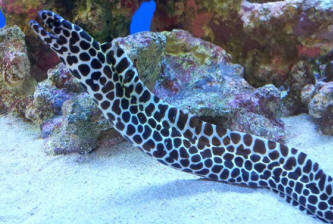
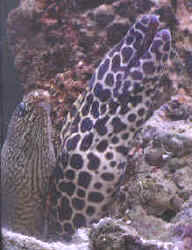
Berndt's Moray Eel (Gymnothorax berndti)
5/4/17 Marco Lichtenberger. Other Echidna spp.
7/12/16 Rare Morays Information 5/13/16 Moray Eel (juv.) Photographs 5/6/16 Info. on geometric moray eel (Gymnothorax griseus)
1/10/14 Norf'k Language 6/20/13 Moray eel questions for Marco: Gymnothorax isingteena --
12/01/09 Skeletor Eel -- 10/31/09 Skeletor Eel II -- 10/31/09 Re: Skeletor Eel -- 10/31/09 Re: Skeletor Eel -- 11/05/09 Arizona FRAG talk, Fdg. a moray 6/25/08 Dear Bob, Thank you for taking the time to talk with our group about corals. My brother wanted me to ask a question about his Hawaiian Dragon Eels. He has only been feeding them squid and wanted to know what else he should be feeding them for a healthy diet. Thanks! Craig <Hi Craig! This is one of my fave species... always looking for it UW in HI. Please have your bro read here: http://wetwebmedia.com/morayfdgfaqs.htm Cheers (and biers!), Bob Fenner Craig Smith I'm worried about my Goldentail moray - 05/19/08 She hasn't eaten in almost a month, exactly from the day I moved her from the 35 to the 75 gallon. <Moving is a typical situation when morays can stop eating for some time.> I have checked and rechecked the water, <Results?> lots of hiding places, companions are a blue hamlet, maroon clown, Niger trigger, green Chromis <The latter may become food with time, so may the hamlet when the moray is grown.> , and assorted snails and crabs. <Crabs may be eaten, too, without you seeing it.> So many water changes! And she still turns away, she used to eat a small amount every day <Likely does not eat every day in nature (some related species were subject to scientific Big Brother like monitoring), but rather every two or three days. Your eel may have stored a sufficient amount of fat to survive far more than one or two months without food.> , squid, shrimp, or silverside(favourite), but nothing. <Diet sounds okay. Needs regular vitamin additions if the food is frozen and thawed.> I even dropped in a couple of mollies to tempt her. I have had her for over a year, I am getting a little worried. <As long as there are no other symptoms of a disease like heavy breathing etc. and the water parameters are okay (e.g. nitrates below 25-35 ppm indicating only minor organic pollution) I would not be too concerned (I know easier said than done). You may want to test the water for copper to exclude a case of copper poisoning. I'm confident your eel will start to eat again if he does not show any other symptoms of a disease. Changing tanks can mean a lot of stress to them and I had several morays not eating for similar amounts of time, eventually none of them starved.> Thank you, Ed. <Welcome. Marco.> Moray Eel, not eating - 1/24/08 Hey Bob, I'm in a bit of a quandary. We have a Moray eel (species unknown), up until now has been eating and acting normal. We acquired him from poor conditions(9 months ago). His new home is a 300 gal FOWLR tank. His buddy is a 30 in Zebra & 10 in snowflake. <May eat these...> He is about 30 in., I think about 3-4 yrs. old. <... where are the spaces between your sentences?> His other tank mates are various fishes. Everyone has been cohabital. Lately he has stopped eating, about 3 weskit's breathing is off, like it's gasping. They all eat various enriched foods. Mostly human grade shrimp, raw. Outwardly there no signs of illness; color is good & eyes are clear. The others are fine! Are parameters are good also, typical of a FOWLR. WE have heating, timed lighting, live rock \ plenty of nooks, plenty of filtration(2 lrg protein skimmers) & regular feedings & water changes. If a picture would help, I'll send you one. I'm at my wits end! I'm the who feeds & Looks out for their well being. I can tell there's something wrong! Other advice I've inquired is mostly generic & no help at all. I read your articles in T.F.H. all the time, I hope your up to a challenge? Renee Jones <Read here: http://wetwebmedia.com/morayfdgfaqs.htm You need to determine the Muraenid to species... note its degree of piscivore-ness. BobF> Chainlink moray - a moray eel fan in the making, sel. - 01/09/2008 Hey, sorry. <No need to be sorry.> I have so many questions I'm kinda new to the whole aquarium thing (if 2 years is new). Anyways I was wondering about care for the Chainlink moray. I've looked and looked but all I can find are a few quick stats. <See WWM re Echidna nebulosa aka Snowflake moray eel. Lots of information available. The Chainlink (Echidna catenata) gets somewhat larger and is a little more reclusive, but generally they are very similar. > As I said before in another e-mail my pet store got in a chestnut moray and I was wondering if it would be possible to keep those species together or if they need to stay separated. <Would keep them separated. The Chainlink is more peaceful, but will easily outgrow the Chestnut and make a snack out of it someday. Just compare their adult sizes. I also would not place the Chainlink with your G. tile for the same reason.> I'm kinda a moray freak <Beware or you'll end up like me or Kirby Adams: http://www.wetwebmedia.com/ca/volume_3/cav3i1/eels/Eels.htm.> so any info would seriously help, those just happen to be two species I don't know much about. Thank you for your time. Fischer. <No problem. Marco.> Moray Eels Have Second Jaws Aliens-Style 9/27/07 http://www.technovelgy.com/ct/Science-Fiction-News.asp?NewsNum=1178 <Ah, yes. BobF> Moray eels' hidden jaws pack second bite 9/7/07 B Saw this, thought it was interesting... Jaws X2 M <Yes... will post. BobF> By Julie Steenhuysen Wed Sep 5, 1:07 PM ET CHICAGO (Reuters) - Moray eels, those snake-like predators that lurk in coral reefs, use a second set of jaws to pull prey back into their throats with deadly efficiency, researchers said on Wednesday. Biologists have known for some time that moray eels have a second set of jaws, known as pharyngeal jaws, as do many other bony fish. But until now, biologists had never seen them put to such unique use. "They spotted this outrageous behavior of the pharyngeal jaw thrusting way forward into the mouth, which was not suspected before," said Mark Westneat, who studies feeding mechanisms of coral reef fishes at the Field Museum of Natural History in Chicago. "The surprise and interest was the extent of the movement, and how it grasped the prey and yanked it back into the throat," Westneat, who wrote a commentary on the findings, said in a telephone interview. "It's one of these great 'Oh wow' stories in basic biology." Rita Mehta and colleagues at the University of California Davis discovered the moray's special feeding ability through high-speed digital cameras, that captured the second jaw as it jutted forward while feeding. Mehta, whose study appears in the journal Nature, said the jaws allow the eels to swallow large prey. Mehta had set out to understand the purpose of this second set of jaws in moray eels, a diverse group of some 200 species. ORAL GYMNASTICS She and UC Davis Professor Peter Wainwright used X-ray and other imaging equipment from the university's veterinary school to work out how the jaws could move. It turns out the moray accomplishes its oral gymnastics by elongating the jaw muscle, allowing the second set of jaws -- armed with large curved teeth -- to bite into the prey. When not in use, the moray's extra set of jaws rest behind the eel's skull. When in use, they move almost the length of the animal's skull. "What this enables moray eels to do is to grip their prey at all times," Mehta said. "It's definitely a good predator." Of the roughly 30,000 species of fish, most devour their prey by means of suction, or as in the case of sharks, by biting off large chunks. Mehta and Wainwright suspect moray eels may have evolved this fierce feeding method through hunting in tight spaces, such as the crevices of coral reefs. In the wild, moray eels can reach 10 feet in length. They are now looking into how the moray's jaws evolved. Other species of eel, such as the American eel Anguilla, feed by suction. <<Thanks for sharing, it just arrived after feeding time. That's very interesting, anyone interested in morays should read the article, the x-rays are great. I guess the occasional yawning without threatening anything else is some kind of gymnastics, too. The scientists had a look at Muraena retifera, just one of countless species you cannot get over here in Germany in my experience… Lucky scientists, keeping rare morays and getting paid for it. Nice job! Marco.>> Hawaiian dragon eel; searching for information 03/18/07 Hello all!! <Hi Brent. Marco here.> With all of your answers to my previous questions I go into this hobby with a lot of confidence! So thank you for your knowledgeable replies. <You are welcome.> I am starting up a 240g (96x24x24) aquarium. <Nice size.> My fish list is an emperor angel <This fish will get a little large for your system. Search WWM for Pomacanthus imperator. Provided you have a very good filtration and no other large fishes, it may work.>, clown trigger (I am aware of the trigger's tendencies and am financially prepared to move the trigger to another large system) and a snowflake eel. I was browsing over the Internet for different eel species and came across a Hawaiian dragon eel. I tried to find some info in the FAQs about this eel but couldn't find any. Maybe I was not looking in the right places. <Try WWM and also check Fishbase.org. Using the search feature at WWM I stumbled over several posts regarding this species. Also try searching for Enchelychore pardalis.> Would the Hawaiian dragon eel work in the setup I am getting? <If you can remove the trigger just in case and provide high water quality I'd say: yes.> If it does, I would replace the snowflake with the dragon eel. How big do the Hawaiian dragon eels get? <Size is posted. Will get about 1 m.> Are they aggressive? <They are predators that will eat smaller fishes. But be prepared they also may bite larger fishes. In that case you probably will not have any problems finding a new home for him.> Perhaps you would be so kind as to direct me to the proper link that could help me answer these questions? <As noted above please use the search feature>. I am sure that you have answered all of my questions a hundred times before and I don't want to waste your time. Thank you for all your hard work and dedication. Brent. <You are welcome.> Origins of Morays 1/25/07 Hi. I've been looking every where and I can't find the answer to my question. I wanted to know when did family Muraenidae appear on earth? <See here...: http://fishbase.org/Summary/FamilySummary.cfm?ID=56 Tertiary... RMF> Sick moray 1/16/07 Hello - I have a question about my white mouth eel. 1st of all, is it possible for a white mouth moray and a tiger moray to mate? <Mmm, no, as far as I'm aware there are no crosses in the Muraenids> The reason I am asking, we have had our white mouth moray for about 3 years now. Our tank is 175 gallons, and the only other fish is our tiger eel. ( I believe that the white mouth killed and ate everyone else about a year ago). Anyway, recently (about 2 weeks ago) my Whitemouth became severely bloated in his mid section and is breathing very heavily - seems to be in a lot <No such word> of stress. The tiger eel seems to be doing fine and the white mouth has been fasting for about 1 month now. All water parameters are fine. Any advice would be greatly appreciated, I am worried and hate to see my eel suffering. Thank you, Jennifer <? Please read here: http://wetwebmedia.com/moraydisfaqs.htm and the linked files above. Bob Fenner> Chain Moray prep 1/12/06 Hey crew! I've done quite some research and unfortunately, I haven't found much info pertaining to the care and habitat of Echidna catenata < http://fishbase.org/Summary/speciesSummary.php?ID=2609&genusname=Echidna&speciesname=catenata> or the chain moray. <A delightful small Muraenid aquarium species... just not often collected/used... I have only seen it in the wild on a few occasions... much less common than its congener E. nebulosa in the Pacific> Most of what I found is pretty much set in stone for the eels (tight fitting lid, lots of live rock, protein skimmer, etc...). So I just wanted to confirm some things on this particular fish. Does its diet include mainly other fish or crustaceans? <Almost exclusively the latter, but some small fishes as well> And from what I've gathered it requires a 125 gallon aquarium for an individual. Does that sound right? <Yes> And lastly has it been successfully bred in captivity? <As far as I'm aware, no Moray species has been bred, reared in captivity> Hope you can answer these questions and thanks a lot Kev <Welcome. Bob Fenner>
Richardson's Moray 6/10/06 Hello Crew, A local LFS has had a Richardson's Moray (Gymnothorax richardsoni) in their tank now for 3-4 months. Certainly not the flashiest looking of eels (now about 10-11 inches), <About as large as it will likely get: http://fishbase.sinica.edu.tw/Summary/speciesSummary.php?ID=6579&genusname=Gymnothorax&speciesname=richardsonii> but would look better under proper lighting. No one seems to be interested in him and he seems to leave the various tank mates he's had alone (triggers, puffers, angels, . Very little information is available on the web. His small adult size (13") is appealing. I can't find information about his demeanor. Will he be more like a zebra or a dragon eel? <Am only guessing, but I'd say more like the former> Why aren't these eels more talked about? <Of the two hundred plus species of Muraenids, only a handful make up ninety some percent of those offered in the trade. I have seen Richardson's in the wild (Cooks, Polynesia), but never in the industry> His relatively low price ($29) is also appealing and the LFS is willing to cut that in half because of the length of time in their tank and the relationship I have with them. Funny thing about him, I can't see any teeth like you would see on a normal Gymnothorax. Makes you wonder how "piscovorish" he would be. Thanks as always for the help Jeff <Again, am guessing, but I'd say this species is likely to be a general omnivore. Bob Fenner> Moray Eels resource 2/14/06 Dear Bob Fenner, we are looking for a scientist who ist working on moray eels. Can you give me names and e-mail-addresses? Best Regards Marlene Tesche (Tesche-Dokumentary-Film-Production) <Will ask Dr. Jack Randall if he knows of someone here. Cheers, Bob Fenner> Moray Eel article 1/8/06 I just read your article, both parts, on the idea of Moray Eels as pets. I just wanted to say that I have been fascinated with them since I was a little girl in Hawaii and on various aquarium trips (the one in Albuquerque, NM has several BIG Green eels in it. They attack the glass randomly). I thought it would be impossible to own one but your information has given me a little hope. The Banded Moray looks similar to the Green one and seems to be several feet less large. <Yes> Now I just have to figure out how to get a wall-sized aquarium through my front door. <Heee! A few strong friends> Thanks ever so much!! Kristene <Bob Fenner, who hopes to put up a public aquarium at NELHA (formerly OTEC) north of Kailua-Kona, on the Big Island... with a large (perhaps circular tank from Mitch Gibbs) display of Puhi (local morays).> Poorly Written Input of Poor Diet, Eel Shedding? - 12/20/2005 My name is Scott I seen <saw> an article a lady wrote you about her eel not eating, mine eats raw uncooked and shelled shrimp he's a pig. You get them at Wal-Mart or Albertson's for like 3 bucks. Mine loves them. And if their healthy do they shed when they grow like a snake? <No.> But I love my eel his name is Fat Freddy. Have a nice day and I hope I helped a little. Hope to hear from you soon. Scott Semore <Scott, Bob is away for now so you've gotten Josh. I understand that your intentions were good and we do appreciate all input. Your English however is abhorrent. Please in the future, take the time to spell/grammar check, use proper punctuation, real/appropriate words and capitalize. We do have to go through and edit these for posting. For Fat Freddy, vary his diet (especially if he's "shedding"). He'll get better nutrition from a variety of meaty foods as they contain different vitamins and minerals. - Josh> Re: Poorly Written Input of Poor Diet, Eel Shedding? - 12/20/2005 Ok...Josh after you hammered me on my typing, like a school teacher, you dient <didn't?> take the time to awnser. <answer?> So in the future take a little bit more time to look at the questions, instead of knocking how someone types. <I said nothing about your typing. Personally, my keyboard finesse could use some work.> The question was do eels shed? Scott <I recall. You asked if a healthy eel sheds when it grows, like a snake. Are you sure you read the whole response? I said no, hence the bit about the diet at the end. - Josh> Hunting for eels! 11/6/05 Hi, my name is William; I live on an island in the Caribbean. I live on the shore and lately have been chasing after what I believe to be chain-link morays. <Most common species in shallow water there...> It seems to be tougher than I expected. I was wondering if there are anyways of attracting these magnificent eels to a certain area. Just the other night I went to look for them since they are nocturnal, but I believe they went out to sea for feeding. The area I usually find them in is a small cove covered in spiny lobster, parrotfish, sea urchins, and green morays. Recently I have seen three of them in the span of two days. Two of them were large averaging about one and a half feet long. The third though was quite skinny and was about eight inches long. Any help would be greatly appreciated, thank you. <Can be caught in "minnow traps" incorporating a fyke on one/both end/s... with bait inside. Or with a barbless hook and line, with something meaty for bait... or via a small fence and hand net... Please read here: http://www.wetwebmedia.com/collmarsdvg.htm and the linked files above, and the accounts on moray eels archived on WWM. Bob Fenner> Gymnothorax miliaris - New Tank/Not Feeding 7/16/05 Hello, <Hi there> I recently added a Gymnothorax miliaris (Golden tail/Golden Moray) to my 155 gallon marine tank. According to the dealer whom I trust very much, he always was a good aggressive eater. After introducing him to my tank he displayed the expected tentative behavior so I used feeding tongs to feed him. Over a few days he did take a total of two or three quarter inch size bites of Krill. Approximately 4 weeks have past and he refuses to eat regardless of the method. He looks healthy and I have observed him swimming around the tank from time to time. Is he possibly scavenging for food in the evening? <Maybe> What do you think I should do? <Read, here: http://www.wetwebmedia.com/morayfdgfaqs.htm and expand the food selection... Bob Fenner> Thanks very much. Moray Eels Reproduction and Living Arrangements My second grader is doing a report on Moray Eels and we are having trouble finding two answers. First, how many eggs do they produce when mating (10, 100, etc)? <Many thousands> Second, do moray eels live alone, in small groups or large groups? <Most are solitary> Thank you for any information you can provide. Kathy <Welcome. Bob Fenner> Question regarding the Snowflake eel Hello Bob, I am trying to find some answers to some questions about the snowflake eel. I have a snowflake (6-9 inches) that lives in a 45gal tank. He will not eat any food since being placed in the tank 2 weeks ago. I try and Feed him Krill with a feeding stick and he still will not eat. I am trying to find out how to get him to eat. He is very active and swimming around constantly. Also, what kind of fish would go well in the tank along with the eel. Any help that you could give would be great. Respectfully, Tim Mosolino <Tim... read on WWM re the species, it and other Moray eel foods/feeding... Bob Fenner> Name That Eel - Much Easier Using Specific Names! Hey guys, I sent you all an email a few days ago regarding eels. <<Hi Chrissy, Marina here..>> I have a question about a gray moray eel Gymnothorax (Siderea) griseus. There really isn't much on this particular species in the forums and I was curious about its personality. <<This is also known as a "ghost eel", and back when I was working in the trade, was not commonly seen. As I recollect they're rather expensive.>> Can this eel be compared to the snowflake eel as far as personality goes? <<Um.. hee! I guess that depends on who you ask! The only moray that's ever bitten me were snowflakes, yet they're considered a "mellow" eel. I've also seen this "peaceful" species obliterate whole tanks-full of fish in a feeding frenzy. As for the ghost eel, I have never handled or kept this eel, neither have many others, thusly, the relative dearth of information. I would treat it like almost any other eel EXCEPT the zebra moray (Gymnomuraena zebra). These animals are the closest thing to a real pet as any other fish I've ever dealt with.>> I guess I just want a cool eel that has tons of personality and displays interesting behavior which is compatible with other fish and shows itself during the day like the snowflake. <<That would include the zebra, of course, one must remember that ANY fish is going to try to sample any OTHER fish that fits in its mouth. G. zebra is not at all aggressive, and the ones I've handled (and an old friend's eel in particular) don't mind handling, and some even *enjoy* being scratched and whatnot. Remember, though, don't ever try to feed them by hand, they are notoriously near-sighted and if they smell feed on your hands they may very well want some. Also, know that the G. zebra becomes very large. My friend ended up donating his to our aquarium shop to go into the 1,500gal. display system. 200 gallons would be about the smallest I'd go with this animal at adult size (we're talking thick as your thigh, here). Otherwise, I find them to be quite amicable. Have you checked this link? http://www.wetwebmedia.com/morays.htm>> Thanks, Chrissy <<You're welcome. Marina>> Ribbon Eels I have thinking about purchasing a white ribbon eel or (Pseudechidna brummeri). But have not found in any information on these beautiful animals. Is there any information you can give me on these animals esp. what are their chances of thriving in captivity. Any information will be greatly appreciated. <My friend, you are best to forget about these. Most don't live a month in captivity. They are a moray eel, maybe that is why you couldn't find anything on them. Here's a link for you. http://www.wetwebmedia.com/moraysii.htm. James (Salty Dog)> <<James... at least look up what you're referring to... RMF>> Moray Eel footage, TV Hey Guys, I saw a short clip on a nature show some time ago of a moray eel and large squid fighting and the Moray tied a knot in itself to escape then devour this squid. My question is Do you know of this footage and how can I get it? Many Thanks John White <Mmm, I think I did see this bit... about some Bay... in New Zealand? Don't know how such media are/can be searched... maybe visit a television production BB... ask there. Bob Fenner> Zebra Moray Eel Update <Hi, MikeD here again> Thanks for your reply<You're welcome>, the eel has not improved but I have since taken her to see my local exotic pets vet, they put her to sleep for a short time and gave her an ultra-sound scan this revealed that there was no tumor visible and no sign of constipation the vet also felt his body from head to tail and all was soft with no lumps.<Very good and a level of care far beyond that afforded most aquarium in habitants. Very well done!> She has since been returned to her tank and is recovering from the stress.<Good> The vet said he can only assume that she will spawn over the next couple of weeks?<Excellent. welcome to the world of people who supply the answers!> She will still not eat anything and does not take the slightest bit notice when food is introduced to the tank, how long can this go on before it will be a major concern it has now been over a week.<In relation to how long, that's impossible to tell. Eels are famous for weeks and months long hunger strikes, and if you have a female whose body cavity is full of roe she's probably simply to full to be interested in food, a very common occurrence.> Also how long should it be before she spawns it has only been 4 weeks since the two eels were introduced to each other, should I still be concerned of any other possible causes of this swelling etc.<From the check up you reported, I wouldn't be. It appears to be a matter of simply waiting it out and letting nature take its course.> One last question if she does spawn will it be worth keeping the eggs in another tank giving a regular change of mature water and see what happens??????<That's a tough question that only you can answer. Spawning, from what little is known, occurs with the pair intertwining for a period of anywhere from a few minutes up to several hours. Some lay the eggs on the bottom, with most appearing to rise in the water column and simply release the eggs and sperm. All information I can find indicates that the eggs are free floating, fairly large and hatch in roughly 4 days. After that period, the young are planktonic elvers, with morays reputed to transform into recognizable eels in 6-10 MONTHS (emphasis mine). Due to the long planktonic stage, as far as I know there have been no successful rearings in captivity, but this is an ever-changing area of the hobby always subject to change, with a dedicated hobbyist as likely to be the "breakthrough" as a commercial venture. If you feel up to the challenge, here's an opportunity for you!> Regards Darren Feather dusters and ParaGuard? Hi Bob.... <Howdy> I have ich in my tank and was wondering if feather duster worms can be carriers of this parasite and if they can stand the treatment of ParaGuard? <Am not so sure, but am inclined to say no. Here's a pitch re Seachem's product: http://www.saltwaterfish.com/m-dry-goods/Seachem-Paraguard.html The malachite green worries me enough to state that I would move either the treated animals or the worm/s.> One more quick question - how long can Moray eels live out of water and how much can they travel around on a carpet in the home (should they decide to leave their tank)? <There are anecdotes of morays living "moist" on shipped live rock for days! If one does discover theirs on the floor, it's best to pick it up in a damp towel, rinse off the dirt and dust in a bucket and place it in a marine system... even if apparently semi-stiff. Have seen some remarkable recoveries. Bob Fenner> Thanks so much.....Lana. Tesselata eel bit me - is he poisonous hello I have a foot and a half long Tesselata eel (Dragon) and he became a little aggressive during feeding time (didn't know where finger ended and food began) and sliced my finger with his teeth. I didn't know if they are poisonous or not. I am almost 100% sure they are not but please let me know!! thanks, Jessica <Ouch! Not poisonous or venomous, however moray mouths can be dirty microbially... best to wash the wound site with very warm water and disinfect with what you would for any open cut... Keep the wound clean and dry... and have it checked out if it seems to become infected. Bob Fenner> Gymnothorax melatremus and Gymnothorax miliaris Hello, <Hi there> My question pertains to the sexing of these to eels. I currently have one of each and would like to buy another of each. Is there anyway to tell the difference in sex so that I might be able to buy the opposite for a possible pairing? <No dichromic or dimorphic (color or structural) sexual differences that can be appreciated externally... as far as I know> Both are fairly docile eels, relatively speaking, so I'm not concerned about adding the same sex but I would like to avoid it. Also, is there any documented marine eel breeding in captivity that you are aware of? If so, could you elaborate? <See Ronald Thresher here as well as the Tesch review posted on WWM. Bob Fenner> Appreciate your help, Chris Gymnothorax funebris Hi, I am working on a children's book on zoo and aquarium animals, and I have been trying to track down an estimated lifespan for Gymnothorax funebris, the green moray. I found you moray information on the web, and was hoping that you might be able to help, Thanks! Michelle <Hello. This moray species has been kept by a few public aquariums in the U.S. (Key West, Tampa, Miami at least that I'm aware of). If memory serves this species has been maintained in excess of twenty years. You can get a better idea perhaps by consulting fishbase.org for their longevity info. Bob Fenner> Moray Eels (venomous, poisonous?) Hello! <Hi there> I recently got into a discussion with a person I work with, and would like to clarify whether or not moray eels are venomous. <Not venomous. Some have bacteria associated with their mouths, bites...> I have long believed that they do not produce toxins other than what they acquire through bio-accumulation. Any help on the subject would be appreciated. Thanks kindly! - David <Have seen, heard of Muraenids (Morays) associated with incidents of ciguatera (fish food poisoning... note, NOT venom)... Bob Fenner> Moray eels How does a moray eel reproduce and care for its young <Spawning has been observed in the wild with pairs swimming a sort of dance, releasing gametes into prevailing currents. Like all true eels morays have a bizarre larval stage (leptocephalus) with ribbon-like, transparent young....this is what I know...but you can always do a Google search to find more information, good luck, IanB> Eel stocking 10/5/03 Alright, I have a beautiful jewel moray in my 55 now; He's loving it compared to the 7 gallon he was in at the pet store; <good grief... a 7 gallon?! Shameful> But I have 3 questions for you: -First would he be alright with a white mouth or stout moray of his similar size? (if not please list a few he might get along with). <eels can be territorial with each other. More importantly... your tank is not big enough for an adult jewel moray in the 3-5 year picture... let alone a second eel. They need room to grow... else they will stunt and die prematurely> -Second is there any inverts that would be alight to keep with him, maybe something like cleaner shrimp. <possible... but a slight risk. You would be safe with echinoderms (starfish, cucumbers... perhaps urchins)> -Third I feed him 2-3 silver sides a night, and plan on switching it up with squid and other goodies... but do you think that is too much feeding, or is 2-3 silversides a night alright for a 16 - 17 inch jewel moray eel? <feeding just 2-3 times weekly is more appropriate... and please increase the variety of its diet with more prey items (krill, crayfish, fish meats)> Thanks for your time, I just want the best for my buddy to grow large, healthy and live a long happy life.... <it needs to be the only fish in this 55 gallon tank then, my friend. Do enjoy hardy sessile inverts in stead for tankmates. Try some low-light polyps (Zoanthids, Corallimorphs, etc). Best regards, Anthony> Eel Stocking II 10/5/03 Thanks for the advice... I wasn't planning on putting much in there, maybe a few wrasses, or clown grouper. I am getting a bigger tank probably within a 2-4 year period; Anything from 125 to 300, but that's strange you say a jewel gets too big for a 55; I've read countless articles about them saying anything larger then a 35 is perfect. You think a 125 would be good enough for a life time? Thanks again, and if you have any hints about keeping him in tip top shape, just send them this way... <the best you can do for this fish and any you keep is research their natural history and needs before buying them. In this case, keeping your eel in tip top shape would ask that you reckon its need for a rocky habitat, wide variety of natural foods [not just silversides or other gutted prey... do try to find whole items and also take advantage of vitamin supplements like (both) Vita-chem and Selcon]. Adding a few wrasses or a clown grouper would be a mistake. Please research the adult sizes of these animals and consider with common sense how realistic it is to handle them with your present aquarium. Go to fishbase.org if nowhere else for an unbiased and authoritative profile of fishes size, habitat, foods, reproduction, etc. There you will discover that your eel is slightly more than half of its adult size of 2 feet long. Good aquaristics if not common sense tells us that a 24" eel in a 13" wide tank is not only impractical... its conscientiously wrong. Even now... your eel is longer than the tank is wide. And the tank is not much longer than it is. Regardless of how many articles we read from "experts" and novices alike... none will change the fact that your eel presently cannot lay sideways in the tank without its snout and tail rolled up on the glass. Again, I say the 55 is too small for this sub- adult eel... and your tank has no more room for other large predators. Please refrain from buying them until (and if) you actually get that larger tank. Otherwise, your fish(es) will just be added to the statistics when they die prematurely. Longevity for this species is well over a decade. Best of luck, Anthony> Snowflake Moray Stopped Eating >Hi crew, >>Greetings Lorenzo, Marina today. >My snowflake moray stopped eating and hid away a month ago. My pH dropped below 7.9-8.0. >>OUCH! >Now the pH was restored to a normal pH range of 8.0+, but few days have elapsed and moray haven't yet started eating again. What can I do for it? Help me, please. Thanks a lot, Lorenzo >>Lorenzo, if the pH has bounced (changed up or down more than a tenth or two of a point) then this will not only SEVERELY stress the fish, it can kill it. I would do a large water change, and wait, then try again. If he's lived through the pH changes, he's probably just not "feeling well", and water changes will only help (do be absolutely certain the pH matched). Best of luck, Marina -Ghost eel?- I recently purchased a 'ghost eel', I was wondering if they are the same as the blue ribbon eel. <Could be the same genus. Is it this one: http://www.fishbase.org/Summary/SpeciesSummary.cfm?genusname=Pseudechidna&speciesname=brummeri > It is white/cream with a few black dots on its head. Are ghost eels as hard to keep as the blue ribbon eel? It has been eating frozen MYSIS shrimp, I've heard squid is also good, any other suggestions? <Sounds like you have a good one, getting it to eat is the most important part.> The eel seems to live under a rock all day and only come out at night, is this normal? <Could still be getting used to the tank, but keep in mind that these guys are nocturnal feeders. -Kevin> Thanks. Eel book I have read your articles on Moray eels. Any books you would recommend. Something that takes me beyond the basics. By the way I have dog eared two "Marine Aquarist" books, and have bought 3 as gifts. It is the best book to give someone who is starting up a reef tank. Any Eel articles or books you think I should read/buy? <The best and about only extensive coverage of Anguilliform fishes for aquarium use is in Scott Michael's "Reef Fishes" v.1, publisher: Microcosm/TFH.> Thanks in advance.....MZ Mike Zinn < Bob Fenner> Re: eels to bob no its a salt water eel thank you for trying I hope someone that you know can tell us what it is Maryanne <Me too. A beautiful juvenile of some sort. Bob F> - Gymnothorax favagineus Follow-up - Jason, when they are young are their spots (Tess eel) larger and when they get larger they stay the same size? <A better way to state that is, yes there is a difference in the juvenile and adult colorings... seems to vary in the pictures I've seen, but best way to explain is that the white lines get thinner.> You understand what I'm saying? I thought it was a Gymnothorax favagineus also, but their "spots" are quite more numerators than my lil guy here. <There's always going to be individual variations. Cheers, J -- > A Moray of Problems 6/11/03 I have a 125 gal tank with about 30 soft/hard corals and my 20 inch snowflake is not very nice to them so I am trying to remove him the question is how do I do it with out hurting my corals? maybe something I can make? please help me. thank you Joe Davis<Joe, Phil here to assist in the removal of the eel. Hmmmmm, so the eel is not being nice to the corals? In what way? Knocking them down? Has he taken a bite outta one of them? If you really wanta remove him I can think of a few options. First you could try feeding him out in the open, when he comes out have someone else come up behind w/ a net etc and get him. Second you could try a Google search on "eel traps", as that may be a way to go. Many companies sell traps that will trap the eel in a plastic "box", not a bad way to go, IMO. No matter what getting the eel will be no east task, but in the end it probably will be better for the tank/eel. Good luck and let me know how it goes!! Phil> - Big Eels - Hey Bob, <Actually, JasonC today...> Quick question - white spotted morays - what do you personally think? <Do you know the Latin name of this eel? The common description you give is unfamiliar to me.> My lil' bro works at a pet shop that has one. I have a 200 some gall tank. How big do these bad boys get and how aggressive? I have had a few eels in the past so I know how they are, never seen one of these for sale though. Just give me your personal opinion. <Well, if this is a Gymnothorax moringa, the spotted moray, then is not a good choice for an aquaria given a full size of four feet... you could keep it singly in this tank but anything else in the tank would likely become food and the overall room to roam would be too small. Do email me back with the scientific name and we can discuss other possibilities.> thanks <Cheers, J -- > Strange Bedfellows- Eel and Damsel HELLO crew! <Howdy> Hope everyone is well! <with hope for you in kind> You gotta hear this. Everyone I tell this to doesn't believe me till they see it. I even had the owner of a LFS come and check them out. hee hee... My snowflake eel and this one damsel I've had for years, have this weird relationship. They hang out together all day and live in the same spot in the rocks. The eel is big enough to eat him, but he doesn't bother him at all. In fact the damsel will rub himself against the eel sometimes. And the eel seems to enjoy it! LOL Any explanation or thought to this relationship. They've been doing this for about a year now. Which is how long I've had the eel. I can send pics. Thanks Again, Bill <such relationships are sometimes forged in the unnatural confines of aquaria. An artifact of captivity. Fascinating no less! Live and let live for all :) Anthony> Eels Hi, <Good morning, PF here in the bright and early, at least by my standards...> I am purchasing that book I have already ordered it. <I'm assuming Michael's book on sharks and rays.> I know a lot about epaulettes but no where can I find information on how well they do with eels, in particular a Hawaiian Dragon Eel or a Tesselata Eel. <Both eels are piscivorous, and if there is a substantial size difference, I imagine one would eat the other. That said, Tesselata eels reach almost 6' in length, that's a lot of eel. Hawaiian Dragon eels reach about 32" - 1/2 the length. Don't forget the square/cube law: double the size, 4X the mass. > I have read everything on your website about sharks and almost everything about eels but I didn't find any information on Hawaiian Dragon Eels or Tesselata Eels. <I would recommend you read Scott Michael's Reef Fishes Vol 1, there's an extensive section on eels.> I also am looking into the blue dot stingrays. I am not necessarily getting an eel or a stingray but I am definitely getting the sharks. I have read numerous books on marine aquariums that included information about sharks. I have also contacted the aquarium about epaulettes. I am smart enough to know not to get any kind of shark that is sharky-looking, like a nurse, lemon, white tip, leopard, shovelnose, or hammerheads, which are available from time to time. <Good for you, I can't believe someone would try to keep a hammerhead, well, actually, sadly I can believe that.> I have read lots of information about the sharks but I cannot find any information on how they behave with the Hawaiian Dragon Eels or Tesselata Eels or the blue dot stingrays. <The sting rays fair poorly in captivity, and need a very different setup than either the Epaulette or the Hawaiian Dragon eel - the ray needs a large, sandy area, while the shark and eel need rock work. For the sake of the ray (not to mention your wallet) leave it in the ocean, or go see one at a public aquarium.> So I need to know if they can all be housed together or with just an eel or just a stingray and sharks? <Think I already answered that one.> I also need to know some information about the Hawaiian Dragon Eel such as his behavior, what it eats, and if it is hardy? <It's an aggressive piscivore, like all eels prone to carpet surfing, and yes they are hardy animals. They are also known for going on hunger strikes. Do pick up and read Michael's book.> I also need to know if the sea life I listed above are compatible with a woebegone? <Not in my opinion. The woebegone gets over 10' long and is no more appropriate to keep than the hammerhead.> I know it is compatible with an Epaulette but I don't know if it is compatible with the other sea life I listed. Please help me. Thank you very much. Sincerely, Versusdude320 <Well, I hope this helps. Please do some more reading and research before making any final decisions. Have a good day, PF Golden Tail Eel tankmates follow-up - 3/19/03 Thank you for your response. <My pleasure indeed> I agree on the hermits but I should have clarified that I'm using the tiny little ones. <OK> The eels eye is bigger then most of them. I will definitely try a few of the snails you suggest. <Cool, Nerites, Ceriths, and Nassarius are all good choices in my experience> I was also thinking about a few brittle stars (not green) <Even green would be fine in this case as you have no fish. But, I cannot say for sure if the Moray might not muck with any brittle stars.>. Regarding other tankmates I don't know if there will be any. <I think a good idea> If anything I would consider a Harlequin Tusk or a Yellow or Purple tang and that's it. Bobs WWM section on the tusk says a 75gall min, <A person can live in a closet but it is definitely not the best habitat for a long happy existence.> and I remember somewhere Anthony saying that a 75gall was min for a yellow tang. <See the comment before> You think a purple is ok in a 75? <Could work but understand that they are a little less "hardy" as tangs go> I know that an eel and any one of these fish is more then enough bio-load <speaking of which, do not feed this animal feeder goldfish. Please!!!!!! There are many good and more nutritious foods out there to feed to omnivorous/carnivorous animals. Please look into it> but I feel like that since the eel doesn't move much, spatially (is that a word?) these fish would be ok in a 75. (only one of them that is) <Well, I believe you would be at the very minimum of the proper requirements but I believe it could be done. I am just not sure about all the fish compatibility with regards to Morays. There is always the individual personality to take into consideration. Definitely do some research not only on WetWebMedia, but also other sites as well as the many forums that exist in the ether that is the internet. Books also can and will provide excellent information on care and husbandry of various marine organisms. Also a local reef club is invaluable. A must have membership!!! Let me know how it goes. I always love to hear follow-ups and to help educate me (us) with what works and what doesn't.> Thanks for your help.......Rich <My pleasure Rich, and thanks for coming to WetWebMedia> Clean up crew for a 75 gallon - 3/19/03 Hey guys. <Howdy do! Paul here> I have a question regarding inverts/clean-up crew for my 75gall FOWLR. <OK. Go for it be aware that the Moray you have chosen has been known to get up to 28-30 inches!!!!> The tank currently has one golden tail moray aprox. 12-14in. Last week I replaced half of my crushed coral substrate (about 2 yrs old) with 3in of live sand. <Add another inch overall if you can afford to.> The other half will be done this Sat. <Good> I got the eel last Sat and gave away my old inhabitants as they were becoming crowded. <Hmmm. I would have waited to add the eel until after the change. Is he in quarantine? Also, overcrowding is a preventable issue =) Sorry, just had to make my Conscientious Marine Aquarist statement to meet my quota, I apologize (heheheh)> I also have about 15 small blue claw hermits but I feel like I need more "cleaner uppers". (also have about 70lbs of liverock too) I was hoping you guys could recommend some compatible and helpful inverts for this tank. Here's what I had in mind...2 cleaner shrimp, 30 more blue claws....then I'm lost. <Well, I would go with Nassarius snails (my favorite obligate detritus feeder of choice), some Cerith, but my concern comes from the fact that Morays in general are very opportunistic omnivores. Eating anything slow enough and without a good defense mechanism that they can catch with their great sense of smell (poor eyesight). So many invertebrates under the auspices of "cleaning crew" need not apply here. Unfortunately in my opinion, your choices are very limited not only for cleaning crew but also various fishy inhabitants as well.> I'd like some more diversity. <wouldn't we all? <VBG>> I guess the biggest problem is detritus from the eel...I don't feed much but as you know when they go...they go. <As with all in the animal kingdom> Also, should I wait until the sand bed is more established as I have just removed a 2 year old substrate? <I agree. Wait to see if you have algal and fecal matters and water parameters are in check. Adding anything to the tank now will only add to the "bio-load" so to speak.> Any ideas, comments, suggestions would be appreciated. <Well, to summarize, I would look through the FAQs: http://www.wetwebmedia.com/morays.htm and maybe pose this question to the many reef forums out there as to what has worked for others. Definitely crabs and shrimp could be on the menu although it is somewhat common for them to leave symbiotic shrimps (Lysmata, Hippolysmata, Periclimenes) alone. Other than that Try various snails and less hermits etc. Good luck. Sorry for the delay! Paulo> Thanks in advance. Rich Zebra Moray Eel and Snowflake Have a couple quick questions for you. I bought a 2 foot Zebra Moray Eel a little over a year ago and now is currently 3 feet long. I know generally eels are slow growers but isn't this a bit fast for eels? <Happens> I'm not complaining since he is one of my all time most favorite eels and was the first eel I ever owned. Then I know you say they can get 4 ft in wild and Scott Michael says 5 ft by specimens over 3.3ft are rare. So I can expect the eel to grow about a foot more then he's done right (it is in a 209G tank). <About this, yes> He has been eating fresh and frozen scallops, shrimp and crab. Is that good enough for them for the long term? <Yes> I have a Snowflake that eats anything (likes Formula One by Ocean Nutrition). Also just wanted to comment that I have the Zebra and Snowflake together and get along great and generally hang out together (it looks funny though since the Snowflake is only 16" long). Thanks for taking the time to read this. Kim <Thank you for writing. Bob Fenner> Re: green moray and honeycomb [favagineus] in same tank? WW Crew, the 24 inch green moray is temporarily in 100 gal tank. Just putting the finish work on a diy 500 gal tank [96x26x48] <Better that this tank is wider than taller... maybe this is what you mean (LHW instead of LWH)> that will be his permanent home. I also have a 24-30 inch honeycomb in his own 300 gal tank. His tankmates are a small Fimbriated and a small golden tail moray. They are living in harmony, but i fear for the smaller eels as the h.comb is very aggressive, hard to get food past him to feed the smaller eels. Thinking of putting the h.comb in with the green moray in the 500 gal tank. Wondering if they could coexist because of M.A.S. [mutually assured destruction]. Then again, is the 500 gal tank to small for 2 eels with their size potential even if they do get along. Both tanks have big EuroReef skimmers cs8 and cs12-2,and canister filters. Both these eels are growing fast, eating leftover bait, pilchards, ballyhoo, squid, QT. Thanks. Paul <Mmm, a gamble... but may be your best choice of circumstances. Bob Fenner> Pencil morays & nano reefs Hey gang, After reading a few articles on the subject, I'd like to start a nano-reef, probably 5 gallons I'd like to include a Gymnothorax melatremus, and I know that they only get 10" long and morays typically aren't very active fish, but anything less than 10 gallons still feels oddly unsuitable. Likewise, any thoughts on what corals would do well in such a tank? I've always lived by the rule that bigger is better in aquariums, but now that I've seen these tanks work, I'd love to try one. Thanks, -Jacob <This tank is too small for that eel. As for coral you have many choices, Please read here for more info: http://www.wetwebmedia.com/marine/inverts/index.htm Cody> Re: moray eels hey WWM people, i own a moray eel, right? well anyway i do not know how to take care of it or know what to feed it. even though this is probably gonna end up being the shortest question you ever got asked, i would like it so much if you could send me or something some information on my questions. i have gone to many websites but they never give me what am asking for! thank you so much, Lexi <Please read: http://www.wetwebmedia.com/morays.htm and the links (in blue, above) re feeding, care... Bob Fenner> dragon eel I looking for a eel that called a dragon eel. My friend said its yellow has a horn on top of it head. If you can tell maybe when I can get this eel from or maybe help me find a location that sell them. I'm in the New York area. Thank you. <Likely Enchelycore pardalis. Please see here: http://www.wetwebmedia.com/morays.htm Can be special ordered through LFS or check with The Marine Center (linked at top of page). Bob Fenner> Sexing Hawaiian Dragon Moray Eels Dear Mr. Fenner, <Hi Ronald> I currently have one Hawaiian Dragon Moray Eel and now have an opportunity to purchase a second specimen. I would most appreciate any information you could provide relative to determining the sex of Dragon Moray Eels as well as breeding information. I recognize that this would be a difficult challenge and am prepared to do whatever is required. I am currently in the process of setting up a 437 gallon tank to hopefully house these two Morays. Your anticipated response is most appreciated. <Have looked through my print references and fishbase.org... No external differences between the sexes. Have seen (rarely) morays in "pairs" (and on occasion more than one, two species in a hole/cave) while diving, but never Enchelycore pardalis. Bob Fenner> Kindest regards, Ronald Allard Moray communication I am a 7th grade student and I am having difficulty finding information on how moray eels communicate. There is plenty of information about everything else on morays but not much about their forms of communication. Your article gave me the fact about the lateral line only being on their heads, but I would like to have more for my project. Do they use pheromones? <I'd bet these chemical messengers do play a role in communication> What about visual signals like color? <Not so much color or markings... most morays have very poor vision> If you could help me I would appreciate it. Thank you Andy <Likely smell, other than pheromones is important as well as pressure sense (the lateralis system and proximal/touch). Bob Fenner> Anemones And Eels! Hey guys, <Scott F. your guy tonight> Thinking of changing my crushed coral substrate to live sand. My LFS guy told me it can be done but to be very very careful of spiking levels. Would one of you be so kind as to give me a very brief idea of how to go about this in the safest possible way? <I'd gradually (like over a week or two) remove some of the crushed coral and replace it with the live sand...I'd do this lengthwise, about a quarter or a third of the tank at a time, and wait about 3 days or so between removal/replacements. Monitor nitrite and ammonia regularly during this process> Secondly, I am going to upgrade to a power compact light so i can have some anemones. I'd like to mix a few different types of anemones but I've read your section and seems there can be some war. <I would not mix anemones of different species in all but the largest aquariums. There certainly can be "chemical warfare", even with the same species, in many instances> Any particular recommendations of species that could co-exist in a 75? Numbers? And do the tiny blue claw hermits pose a problem to them?? <Quite frankly, I'd limit your selection to one anemone in this sized aquarium. Do study up on the species that you intend to keep. Remember, the vast majority of all anemones in the hobby are wild-collected, and their removal from natural habitats directly affects the wild reefs. It's changing slowly-but the long-term success with anemones is really not that common at this time. If you are starting with an anemone, make sure that it is either one of the hardier, more abundant wild-collected species, such as the Atlantic Condylactis, or a captive-propagated species, such as Entacmaea quadricolor ("Rose Anemone"). Really make sure that you provide for their needs in every way; these animals may have extremely long wild lifespans (possibly over 100 years!), and we must be responsible when attempting to keep them. I have not seen the small hermits that you mentioned posing a problem with anemones> Lastly, I'd like to put a small eel into the tank. This may seem silly bc I'm sure eels in the wild don't just ram into anemones and die, but then again, I've seen some stupid eels! Would an eel just carelessly run into an anemone and get killed?? <Well, it's entirely possible. Do take into account the appetite of morays and the effect of their metabolic products on the water quality...anemones require very good water quality...!> Thanks so much guys. Rick <Our pleasure, Rick! Just do some studying on the wetwebmedia.com site about these animals...I'm sure that you'll be successful if you proceed with caution! Good luck!> Titan Trigger... titan tank I do not believe the Tesselata eel gets that large. <this fish is Gymnothorax favagineus FYI> <Hmmm... You do not believe the measurements taken in the field or that we as aquarists have the potential to realize the lengths observed and measured in the field? Do trust fishbase.org as a reliable and objective database. Not perfect for sure... but reliable> From the many aquarium books i have read they said the size is about 6-7 ft in the wild 4 to 5 ft in captivity. <Please keep in mind why fishes do not grow as large in aquariums as they do in the wild... it is an artifact of confinement: the aquarium. Stunted growth, poor development, unnaturally high concentrations of DOC, etc, quality issues in general. The abbreviated size is not natural or even healthy.> I am planning on getting a large tank built in my basement that will be over 1000 gallons. <I am very grateful to hear you say it, good sir> i would not put any of my animals in jeopardy and if they grew to large I would take the appropriate measures. <OK> I am actually looking for someone that builds large tanks that would be able to assemble it my basement. <agreed and wise... look up the folks at some regional public aquariums for advice on regional builders of such large vessels. I would hope that you can find an aquarist or docent on staff that admires your ambition and can hook you up with a contact> I will eventually get a 10 ft long tank by 4 feet wide and 4 feet long. or something of similar size. <cool... but indeed it is better to buy the tank before you buy the fish> and i would not keep any dog larger than a German shepherd in a 180 gallon. <G>. Best of luck in the endeavor and education. Anthony> Re: which eel? Hi there again! <Hello> Can you help me
determine which eel I have? I was under the impression I had
G. Permistus. But more and more I wonder...do I really have
G. Favagineus? More importantly I guess is: is
there really a difference? <Mmm, no. This is actually one species,
Gymnothorax favagineus> My Dr. Burgess Atlas says there is...other
websites (Fishbase for one) say there isn't. How can I
tell which eel I have? My LFS sold it as G. Permistus...but
they couldn't answer my question, so I'm now not trusting their
labeling. For the love of GOD, can't there be some sort
of regularity to naming fish species? <There is. The International
Congress of Zoological Nomenclature... and other
"conventional" scientific determinations done by individuals,
groups... Please see here: http://www.wetwebmedia.com/morays.htm>
Am I going to have a 6 foot moray on my hands rather than the 3-4
footer I expected? If so, good thing I've got a 300g
planned for spring. HELP ME! I've attached a pic for you, if that
does any good.... <Likely one in the 3-4 foot range... in time>
Thanks! Vicki
Mixing crustacean-eating moray species Thank you for making your site it has helped me a lot with moray keeping. I have a snowflake moray at the moment and would like to mix it with a zebra can you please give me your advice if 2 small specimens can be mixed and grow up together. Thank you, Nick <These two species can be kept together. Do make sure both are receiving food. Bob Fenner> Re: eels/stingray cohabitants? Hello! <Hi there> I currently have two tanks housing a 9-10" Bluespot stingray and 2 eels (20" Tesselata and 15" Blackedge) respectively. I would like to create a habitat for both the eels and ray to live together. Am thinking of establishing one 300g tank to do this. <Ahh, a good size system> Have already solved the cave, substrate, surface area and water flow issues on paper and am about to begin creating a working prototype. What I need to know is: can these animals live together without menacing or trying to eat each other? <Yes... given attention to feeding, general husbandry (big skimmer, large water changes...> Some folks say yes, others say "good luck with that!" Would very much appreciate your expert opinion on the viability of such a venture. Thank you in advance! Vicki <Should be a spectacular exhibit... given one or two "piles" of caves, soft, deep substrate for the ray, attention to getting foods to all, a secure top to prevent eel escape... Bob Fenner> Re: eels/stingray cohabitants? Hooray, hooray! I'm relieved to know I won't be putting my animals at risk (especially my ray). I should have the new system ready to go no later than the start of summer then. THANKS for the fast reply. Vicki <And you, for your earnest involvement, enthusiasm for our hobby, life. Bob Fenner> Golden Dwarf Moray Eel About 6 months ago The Marine Center had an eel called the Golden Dwarf Moray. It grew to only 10 inches, and had the diameter of a small pen. You guys have any info on this eel, I e-mail the Marine Center and never received an answer back. They now have a few in stock and I may be thinking of adding one to my 29 gallon, it would be the first and one of the only creature in the tank. Eels don't make a good community animal, my aunt learned that the hard way. Any info you have is important to my as I ALWAYS value your input! Thanks <Phil... this dwarf eel is generally collected in Hawaii and is a magnificent creature. I have kept them personally. Very hardy and adaptable... quite typical eel behavior... rather a frisky eater I should say. Offer a wide variety of shell on foods including chopped raw gulf shrimp and krill, Pacifica plankton... perhaps even some mysids. Live ghost shrimp are also quite good. Stack rockwork strategically (not to excess) and keep moderate illumination. Tight cover on tank, never medicate with copper, other metals or organic dyes. Do references them on fishbase.org and in Hawaiian species survey books. Highly variable in color... rarely bright yellow. Best regards, Anthony>
Moray Havoc and Mayhem Hi Bob and Crew, I have a moray eel that I had confused with another eel, at least that's what I have concluded. I bought what I thought was a snowflake eel, but actually is not. I am quite afraid for all of my other fish for it seems to have torn some of then to pieces. I was wondering how I could be able to catch it. It would really help if you could give me an idea. Thanks! <The best route is to systematically drain the water about half way down, remove all decor and carefully scoop the eel out by using a large plastic bag... pouring as much of the water out of the bag, watching the strain on your back... placing the bag, water, eel, in a large cooler or fish box... sealing the bag with large bands. Bob Fenner> An expensive Moray Eel Gamble hey guys- I've got a 265g set up for about a week now. There is a sale at my LFS that has a healthy 2ft. Hawaiian dragon moray for $600 (good deal, for me any way). am getting a shipment of 90lbs of live rock in on Tuesday, but if i get the eel, i have to get him tomorrow (before the live rock). is this a hardy fish, do you think he will fare well and survive my tank or is this fish to risky to gamble that money? please let me know your opinions and quick, like i said, i have to act on this tomorrow. thanks, Justin <I caution you to wait here... though this species is tough, it will likely suffer tremendously being placed in such a new system... AND then suffering through live rock curing... better by far to be patient... another such "deal" will come along in time... when your system is well-enough aged and stable. Wait. Bob Fenner> Re: recently acquired Brazilian Golden Eel..... Gobble-gobble guys, I recently acquired a Brazilian Golden Eel (which I hear is quite rare and commands a hefty price tag) this was a gift. He or she is quite stunning and is getting along fine w/his new mates. Porc. puffer, Volitans lion, Pinkface wrasse and 7 Fiji blue damsels. My question to you is: What have you heard about this eel ? <Is this the same as the Goldentail Eel of the tropical West Atlantic, Gymnothorax miliaris? Please see here http://www.wetwebmedia.com/morays.htm> And would he be compatible w/ a zebra eel ?? <Should be if the system is large enough... filtration, aeration can accommodate all> I've checked your eel archives and had no luck finding any info on Brazilian Goldentails. <Mmm, please check on fishbase.org... they don't list anything for the common name... but you can run a "country report" and re-sort by family... and look up the Muraenids (moray family), species by species for what is recorded from there> OH !! btw: all these creatures are juveniles, including the eel. Thanks Mr. Fenner and crew for making this hobby rewarding ! Happy Thanksgiving !! Lenny Fohrer <Thank you my friend. Happy T-day, holidays to you. Bob Fenner> Forgot to tell you: I have a 140 gal. FO w/Protein skimmer Peace out! Lenny <Mmm, will need something bigger eventually should you acquire the Zebra Moray. Bob Fenner> Southdown DSB and Eel Biotope Hey guys! I am back with a couple more questions. And by the way, thanks for the help in the past and the awesome site! <our pleasure> I recently asked about setting up an eel biotope in my 125 Gal. Would it be wise to go with a DSB for possible future grow into a reef tank when I get more cash? I am worried that the eel will dig to much and destroy and stir up the sand bed. <few if any eels will damage the infauna of the sand... just an occasional clouding of the water from scavenging activities/prowling> Is there anything I can do to avoid this? <a little bit of course sand on the top layer (no more than 1/4 needed)> Oh, and I found a Home Depot in my area that regularly stocks South Down Tropical sand ;) Actually the CEMEX plant that makes it is in Easton, PA and I live 30 minutes outside Easton. <very cool> The other question I have is on interior decoration. I want to go with a similar look as the tank on the aquascaping section of your sight (http://www.wetwebmedia.com/aquascaping.htm). I like the look of the dim light peaking through and the dark brown stone. Where would I acquire dark live rock or rock in general that is like that and still safe for a marine tank? <hmmm... not quite sure, although many folks have used black lava with little concern other than a possible flare of algae from imparted elements of the lava> I am not interested in reef at this point and want the tank to look as natural as possible and still look menacing and creepy. Any ideas there? <yep... you should have seen the eel display I did in my last shop. I described the basics of it in my Book of Coral Propagation in the front chapter on concept aquariums/systems. The gist of it was a subterranean plumbing system with clear tubes siliconed below the sand and against the front glass to see the eel swimming down below. The tank above the DSB had no rock or anything on the sand proper short of a little bit of rubble around the mouth of each hole in the sand where the tubes met the sand surface and the eels popped up. However, there were two stalactites of rock coming down from the ceiling (live rock below water, dry rock above with air plants cultured on them). The peaks of these hanging pillars dipped down into the tank almost to the sand bottom (the eel loved to slither throughout this rockwork when it wasn't hiding below). Just below each Stalactite in the sand I sealed a large PVC collar into the sand to the glass bottom (at the same height as the sand bed so it wasn't too obvious of a well). From underneath the tank, spotlights were shone up through these light wells up the length of the rock pillars and the eel would lay his face over the well with the light shining up around to catch the warm radiating water! An awesome sight> Thanks again! You guys rock, glad I found this site..... Tim Turner, Reading, PA <How close is Reading to Lancaster? I'll be there with Steve Pro perhaps in April for That Fish Places anniversary sale. Say Hi! if you are close. Best regards, Anthony> Goldentail Moray evaluations Craig - Thanks for your help. I have a few follow-up questions. First can you expand on the type (any models you like?) of wet/dry filters and the sump I might need? <Bob F. here... I suspect this msg. forwarded to me for comment below, but our collective input on wet-dries is posted here: http://www.wetwebmedia.com/wetdryfaqs.htm on WWM> I'm still attracted to the big/messy guys I guess. This is the spot where the literature has me the most confused. If I got one of the EuroReef skimmers is one filter/sump unit all I would need? <More the merrier, but one would do> For a 125 gallon tank I am assuming 2 heaters are appropriate? <Yes> Finally, I was looking at your articles on Morays and I thought I spotted a small conflict. In the general article on Morays it said the Goldentail was a good choice for aquarium use as it is one of the smaller eels. In another article that was detailing marine life around the Bahamas (I think) it included a comment that suggested to me the Goldentail was on the "not ready for prime time players" list. Any thoughts, as the Goldentail is certainly one of the most attractive of the Morays. Is it more aggressive than the Zebra/Snowflake/Leopard? <Mmm, hope I didn't generate both/conflicting opinions... this is an appropriate (small, not overtly aggressive, adaptable) Moral species IMO.> Thanks for your help David <Cheers, Bob Fenner> Gymnothorax funebris Hello! <Hi April!> I was wondering if you thought a large (about 7") starfish would live with my 2 ft. Gymnothorax funebris? Presently, he shares his tank with several pieces of coral and two cleaner shrimp. Thank you, April <Hmm, more than likely okay, but eels are individuals too! These guys eat fish so it's not really on the menu, but one never knows. probably not a problem. Make sure the star is friendly to your other inhabitants. Some, like Choc. Chip stars will make quick work of your soft corals, polyps, anemones, etc. Craig> Eel ID Hello, I know it is difficult doing an ID off a description but I hoped you may have some ideas about an eel that arrived in a Bali shipment. The pattern and colors are almost identical to the Kidako moray but the head profile is much blunter. Any ideas? Regards, Graham Hannan. <Hello Graham, the chances of this being a Gymnothorax Kidako are pretty rare. Most likely what you have is a young chain link moray (Echidna catenata), they are very common and have a highly variable pattern. If you can get a pic please feel free to send it along. Best Regards, Gage> Moray eats crabs (and Octopus? News at 11:00) Will the snowflake eel eat a octopus? <It could, given a lack of room to get away. Eels are one of the big octopus predators.> & how big of a tank does it need? <It which? The eel or the octopus? A snowflake could probably do well in a 75, a 55 at a bare minimum. An octopus could do fine in less space, but no matter what you choose, you would need a top that it pretty much nailed onto the tank. Both the eel and octopus are expert escape artists, but the octopus is perhaps a genius when it comes to getting out of tight places.> thanks <Cheers, J -- > Eel eats Octopus Read all about it! Luc again. Will the octopus eat the eel?? Thanks <Hello, I just replied to your original email. Again, my answer is a qualified yes - eels do eat octopi in the wild. Can it/will it happen in a captive system - depends if the octopus has room to get away, although if it deploys it's ink as a get-away mechanism, you will have some problems on your hands. I wouldn't house these two together. Cheers, J -- > Moray eats crabs (and Octopus? News at 11:00) Oh boy... did I screw that up? I was sure I had read somewhere, and seen video footage of an eel spinning around and around while it bit off an octopus tentacle. Octopus lived, but eel got food for the effort... <Saw the same footage I think... Australia if memory serves...> Am I wrong? I'll gladly post a disclaimer... <Not wrong at all... these animals are as compatible together as you and I living in a pizzeria! B> J -- Breeding Salt water moray eels Hello Bob, <Anthony Calfo in your service> I e-mailed you the other day about breeding the bamboo cat sharks. With what you said it completely turned me off. <a wise choice my friend> I don't have the kind of money to set something like that up. So I have turned to my second love. Moray eels. I am currently looking at 3 species of morays. The snowflake, leopard, and zebra morays all of which on wetwebmedia.com said are good for aquarium use. <agreed... with the Snowflake being the hardiest, smallest and easiest to feed. The Zebra is peaceful but sometime tricky to feed and often requires live crayfish and crabs, and the leopard is great but bigger and a little more risky> I don't know if they have ever been bred in captivity but I would like to try but I know I am most likely going to fail. <please do try! You will do our hobby a great favor... begin with snowflakes... they mature faster sexually> Is there any ways to distinguish between sexes? <alas, none that we know of at all> What kind of set up would I need. <dense rockwork for Snowflakes> I am currently considering pair's of those 3 species in 55g set-ups. They will be the only things in the aquarium. Any and all info would be greatly appreciated as I would like to set them up soon. I currently keep green tree pythons and Amazon basin emerald tree boas so I guess it's the snake-like appearance that gets me. Well thanks a lot! <an awesome endeavor! Best regards in your efforts. Do look into the TFH book "reproduction in Reef Fishes" for possible field data/observations that may help illuminate husbandry techniques that you'll need to apply. Kindly, Anthony> John |
|
|||||||||||||||||||||

|
Features: |
|
| Featured Sponsors: |
.jpeg)