|
|
| Home | Marine Aquariums |
Freshwater Aquariums |
Planted Aquariums |
Brackish Systems |
Ponds,
lakes & fountains |
Turtles & Amphibians |
Aquatic Business |
Aquatic Science |
Ask the WWM Crew a Question |
| Please visit our Sponsors | ||||
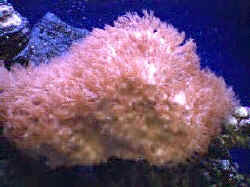
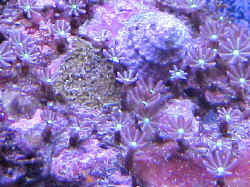
Green button polyps 12/4/03 hello, I have read many of the articles on the green button polyps but I am not sure that my question has been answered. <good heaven's... I did not know that there was even one article on green button corals <G>> I have a rock of about 25 that I put in my tank about 1 month ago. My water parameters are good. <good... As in...?> I have 220 watts power compacts on my tank. I have the polyps about half way down in the tank. My polyps look like they are light blue. they have faded and are curled up at the ends. some look ok. but others not so good.. I don't know if they are not getting enough light. <I wish I could help/comment... but all I know is that they are half way down in a tank of undescribed height/size... sitting in water of undefined parameters <G>. Heehee... through me a bone here please> I recently have been adding 3 Kent products. <that's OK... we all make mistakes> the calcium, iodide and the other is a two part name in a green bottle, can't recall it. Any ideas... <yes... be more specific> I have not been feeding them. After reading your articles I will start. <very good... once or twice weekly will be enough here> the guy at the local fish store said they didn't need additional feeding... <he was mistaken... almost all corals need to be fed. There are very very few that are wholly autotrophic> Thanks, Reese Webber <regards, Anthony> Green button polyps III Anthony, I apologize for being very new to this hobby. <no need to apologize for that... you have just begun a wonderful journey. Our aquariums are so much more than a hobby... indeed they are learning centers> A simple answer of you did not supply enough information for me to answer your question would suffice. <agreed... will do then> I am actually not having a bad day. It is just having asked so many questions to people online about this hobby it is amazing to see how many people reply with answers that seem to make them look all knowing and if someone has a question them look stupid. <let me strongly advise you not to solely use me or anybody on the internet as your primary source of information. Rather, use books (my published works and the works of so many others) and other authoritative sources. Internet communications are often casual and quite variable in quality as you have experienced. But published hobby and science literature is verifiable information. Starting with a good (or not) bibliography. For coral identification, let me suggest Eric Borneman's "Aquarium Corals" and for reef husbandry and coral health/propagation... let me suggest (immodestly if so) my "Book of Coral Propagation: Reef Gardening for Aquarists". If you are further interested in non-Cnidarian invertebrates (sponges, shrimp, crabs, clams, starfish, etc), Bob and I have just released "Reef Invertebrates". But don't just take my word for it on these references... do visit Amazon and the big message boards for independent reviews of these texts> I have enclosed a pic of my polyps. My water parameters are fine. I do not have them with me at the moment. My main question is why would they fade out? <I still cannot say... I need more information, respectfully requested as you have outlined above. What is your Alkalinity (carbonate or general hardness)... this is underrated as a stressor on non-scleractinians. Has there been any salinity or light shock (did you quarantine the animal properly for 3-4 weeks before tossing it into the display). Hmmm... many possibilities here> I guess one of the things that pissed me off your response to this: "I have read many of the articles on the green button polyps but I am not sure that my question has been answered. <<good heaven's... I did not know that there was even one article on green button corals <G>. Heehee... through me a bone here please>> what does the above mean? <it means that people write into us all the time claiming to have exhausted all leads... but yet they cannot even name the species of their animal (listed in all the references and so helpful for us know what you are talking about)... and they cannot recall any pertinent data. In this case, I have a collection of over 1000 periodicals and many hundreds of books on aquatic science... and I cannot name one hobby article specifically on "green button polyps". As such, I thought you were looking for an enabling easy answer from us. With this being your third e-mail without even basic information as requested in my last reply, I'm still not sure this isn't so> and... "I recently have been adding 3 Kent products." <<that's OK... we all make mistakes>> <after many years in the hobby, we each develop brand preferences or have certain regard for other products/brands based on their collective track record> I guess u can't see where the above statements would bother somebody. Thanks, Reese <Absolutely, yes... understood and agreed. And I hope that you too can be mature enough to understand that I cannot help you because you have yet again asked "why" your animals are not fairing well... yet still have not provided the requested info. You said you don't have the water tests on hand? I wonder if you even did them... else, how could you not recall "fine" water quality with zero ammonia, zero nitrite, zero nitrate, etc. And what of my request last time to know your lights, depth and size of tank, placement of coral, etc to help diagnose your question/problem. Please don't waste my time or anybody's. Respond politely with information to help us to help you if you'd like another reply. Best of luck, Anthony> Another satisfied customer - WWM mind-reading services 12/5/03 Anthony, What the hell did u reply to my email for since u did not answer a single thing. <hmmm... are you simply having a bad day, Reese? I cannot see how I failed you. You wrote in asking about why your button polyps looked "under the weather"... but you provided no water quality parameters, said you started using a product supplement but didn't recall the name of it or state how much you are using. You didn't tell us the size of your tank, depth of the coral in question, color of the lamps being used, their age or any other thing about your system or hardware. You gave me no possible way to help diagnose your problem and are now disappointed that I could not mind read? Please reconsider that you may be unrealistic if not unfair here> I am disappointed to know that the site someone recommended to as being a good site to learn about reef tanks is run by a smart ass or are u just an employee? <we are all volunteers working many hours each week out of empathy and shared admiration.> I must say that I would rather not have an answer than the one that you gave. <bear in mind that you got exactly what you paid for. Or rather... got out of it what you put in. If you would care to enlighten us with more (any) information to be able to help you regarding this problem, we would be delighted to help you... even if you are still grumpy :) > Reese Webber <peace and long life to you. Anthony> Star Polyps Vs. Anemone! Hey there! Thanks for all that you do, it's a great help to the entire community. <Glad that you enjoy it! Scott F. at your service today!> I set up a 55 gallon tank about 4 months ago and have been going very very slow. Added about 40 lbs of live rock over time and have concentrated on letting the tank cycle. <Great! Patience really helps!> All seems to be excellent so I was excited to buy my first animal for the tank today, a metallic green star polyp soft coral. <A great coral to start with! One of my favorites!> I placed it on the best spot I could find for it, with moderate light, and a decent current. I am happy to report that it has already started extending its polyps. <Excellent...> But from beneath the base of this same rock comes something my LFS called a starlight anemone I believe.. it consists of very thin and very long pink translucent tentacles. These tentacles stretch all over the place crawling along the gravel and climbing around on the rocks. <Hmm...hard to say what it might be. Not the dreaded Aiptasia, huh?> I am concerned about whether this anemone (if that is what it is) could sting my coral? It has been "feeling" all over the coral for the past hour but I would expect that if it was harmful to the coral, the coral would pull back the polyps that are out. Is that correct? What should I do? <Hard to say...Star coral (Pachyclavularia) is a very aggressive, but it's never good to mix anemones and corals in the same tank, if you can avoid it...Or, at least provide them with sufficient space to avoid physical contact> Sincerely appreciate your assistance! John Parrish <Well, John, I would not be overly concerned. However, do keep an eye on the interactions, and be prepared to relocate one of the animals if this becomes a problem. Good luck! Regards, Scott F> -Unhappy yellow polyps- First thanks for having an awesome site full of info hey best place for a 15 year old to get some answers <Great, starting off young!>, well anyways I had purchased a 29 gallon tank, filled it with live rocks and cycled it and its been running great for the last 2 months. So I decided to add some Yellow Polyps to make a great decoration for my tank ,so I figured it was easy and all so I brought a rock with ton of polyps on it added it to my tank and they looked great! about a week later I started noticing that some were turning gray and some were shriveling up hey and some are perfectly healthy so I don't know what's the deal I got one 50/50 light <A single normal output lamp is not enough to keep these guys happy and healthy> do I not have enough light <You don't but you wouldn't notice any bad effects in a week.> maybe or is it my fish I have a yellow tang <Unless this is a very tiny tang ( 2" or less) it's too large for this tank. They need ample swimming room, please provide it!> and two common Clownfishes one time I saw a red centipede looking worm around the polyps it was about 5-6in. <Sounds like a bristle worm. If it was eating your polyps they would simply disappear.> long water quality is great to so if you could please tell me what you think is wrong with my polyps that would make me feel better. <Run ammonia, nitrite, pH, and carbonate hardness tests (have them verified by another kit as well) first off. They may be diseased, however unlikely, but from your description it's hard to tell exactly what's going on. Can you get a picture? -Kevin> Thanks, Chris Cyano, Surface Scum, and Unhappy Polyps >Dear WWM Crew, It's been a while since my last inquiry, and I've since encountered a couple of problems. Here are my tank specs: 45 Gallon tank (36"x 12" x 24") Aqua C Remora w/Maxijet 1200 Whisper 3 powerfilter (for carbon / water movement) 1 x 250 gph powerhead 1 x 80 gph powerhead 75 lbs live rock (50/50 Tonga/Florida Gulf) 4+ inch DSB (sugar fine aragonite) 4 x 55 W power compacts (2x10K / 2 actinic) Current inhabitants: 1 yellow tang (3") 1 coral beauty (2.5") 1 solar fairy wrasse Cirrhilabrus solorensis (3") 3 Mexican Turbos 7 blue leg hermits 7 scarlet reef hermits 1 small colony of green polyps The tank has been running about 10 months. Nitrates, Nitrites, Ammonia = 0 pH is a little low at around 8.0 - 8.1 KH - 9 About 2 months ago I began to notice some Cyano growing on my DSB. My water change regiment is 5 gallons (11%) weekly and I have always been very careful about not overfeeding. The foods I use are Formula 1 and 2 as well as some marine flakes/pellets and Nori for the tang and angel. I alternate between these. I had been using tap water for water changes aged/aerated 1 week and decided that since all or most other factors were ruled out (overfeeding, under skimming, infrequent water changes, inadequate water flow) that it must be the tap water. So I purchased a 6 stage RO/DI unit and have since used this water for all top off and changes. About the same time I got the RO/DI unit, I began to add as per manufacturers recommended dosage some Seachem reef calcium for my coralline algae growth, and Iodine for the inverts. These are the only supplements I have ever used in my tank and am pretty sure that they are not a contributing factor to my algae problems (I have discontinued their use for 2 weeks to confirm). >>I agree, but you have yet to mention any phosphate/phosphorous testing. >Well the coralline is growing beautifully, however the Cyano is getting worse. If I stir the surface it is back the next day. I realize that my tank is tall, and that this is not necessarily ideal for nutrient export in that there is more vertical space in the water column before the debris and detritus can reach my mechanical filtration, however by placing one powerhead on the bottom left front about 2 inches above the sand bed and one in the middle right rear of the tank I believe I am getting decent water movement. With the skimmer and Whisper in addition to my 2 powerheads I have about 15X turnover. >>I generally agree, but let's say your change water is phosphate-free, then I would tend to lean towards insufficient water changes when compared to your bioload. >I am considering the purchase of some Nassarius snails an Archaster starfish, or an Amblygobius phalaena goby as I'm not quite sure what else to do. >>I will encourage the sea star, along with a serpent (Ophioderma squamosium.. sp?) sea star for detritus cleanup. I'd also try making some large water changes, but first test at least for phosphates and nitrates before adding to the tank. (Yep! The Cyano may be "fixing" what's in the tank.) >This stuff is very irritating, and as far as I know I'm doing everything right. >>Indeed, my only other suggestion would be to add a refugium to the setup. I'd also like to note that the yellow tang will quite soon outgrow that tank. Woefully. >My next issue is the clear/whitish film on the top of my water. This too is a reoccurring problem which I cannot seem to shake and would seem to indicate water flow issues as well, but as per above I think this can't be the problem. I have tried placing a powerhead near the top of the tank pointing up to disrupt the surface, but this simply pushes the scum to the other side. I purchased the surface skimmer box for the Remora, however this design is poor in that the evaporation in a day is enough to disrupt the supply of water to the intake pump and needs constant adjusting in order to function properly, so I removed this in fear of burning out my pump. >>Ah, yes, unless you set up an automatic top off system. However, a surface skimmer box is the ONLY way I know of to actually remove this very common occurrence. >I also remove the scum manually on a daily basis with a net but the next day it's back. >>Yes, I wouldn't spend the time, myself. This stuff is very unsightly and I'm concerned it is disrupting my gas exchange and light penetration. >>Doubtful it's significant. >Finally, my green polyps which I purchased knowing are a very hardy are not opening fully and seem to be less than flourishing. I have them placed about 6 inches below the surface and my lights are about 2.5 inches above the surface, so I do believe I have plenty of light. The strange thing is that at night they seem to fully open and look much happier. Could they be too close to the light? >>Not so strange, listen to what they're telling you. Try moving them lower in the tank, or towards the ends of the lights/tank (assuming fluorescents are being used). >I don't feed them anything directly, however when I feed the fish flakes and the Formula foods small bits of food settle on the polyps. >>I don't think it would hurt them to be target fed every once in a while at LEAST. I would find a good coral food, do a search on feeding polyps on our site. >All my other inhabitants are in excellent condition. Hopefully you have some answers for me, as I have worked very hard and patiently to set up a successful aquarium and am not getting the results I expected. I have researched endlessly, and have tried most all the recommendations I have come across to no avail. >>And thus you learn that it's not all science, but often an art. >Best Regards, Jesse Canizio >>Try the testing, etc. mentioned, and hopefully you'll find some answers with the results. Marina - Green Star Polyps - I started up a 10-gal mini reef about two months ago. After having all but mastered freshwater over the past ten years or so and maintaining a 29-gal marine saltwater fish aquarium for just over a year with only two casualties, I decided to give reefing a try. I run a 10 gal tank with a hang on the back power filter outfitted with a protein skimmer (both of which are rated for a 30 gallon tank) and live rock for filtration. The temperature is maintained at 74-76degrees. The power strip I believe is a 30 watt 50/50 (the light was retro fitted by my local retailer for me who have been <strange characters that appeared in place of this word edited out, gotta love the info age> with everything else I have ever done in my tanks), which is on for about 14 hours a day. <That's a might too long, try not to push it over 12 hours> I began with an initial cycle crew of 2 small common hermits, a small tomato clown and a small four-striped damsel. After about three weeks, with my water chemistry good, I added a small red-collared turbo snail to help with a small algae problem and a small green star polyp colony (about 2.5 inches in diameter) and a tiny yellow polyp colony (only seven polyps). Everything seemed fine and beautiful. That was two weeks ago. Two days ago I had noticed that the algae was getting a little heavy, so instead of turning the light on before I went to work at 6:00a.m., I waited until I got home at around 4:00 p.m. and turned the light on. The green star polyp hadn't exposed itself and didn't all that night. It still hasn't. The yellow polyps are fine though. I am really beginning to worry. <This is likely because of the change in photoperiod, it's just a little peeved with you, no worries> My water chemistry is all good with the exception of a reading of 11 dKH, a calcium reading of 350, and a phosphate level at .25 ppm. <That explains the algae, your phosphate level should be undetectable. Any measurable phosphate means that you have a TON even though it may be the lowest level on your test kit.> Am I in trouble? Is there anything I can do? Is the green star polyp lost? <The polyps are not lost, but you do need to increase the lighting over this tank (a single normal output lamp just isn't going to cut it). I would suggest either a pair of 28 or 32w power compacts or Custom Sealife's 96w "Power quad". Both of these units described can come in a 20" unit to fit your tank. Hope this helps! -Kevin> Please help! Scott Charleston, SC -Purple stuff in star polyps!- Hi Crew, <Hellllooo there, Kevin here> This has happened twice in the last couple of weeks. I come home from work and there are literally hundreds of tiny, purple, spherical things stuck in a colony of green star polyps. They seem to be embedded among the polyps with some type of a mucus substance. They are a light purple color probably the size of the head of a pin, maybe a little larger and perfectly round. Nothing in the tank is interested in eating them, even when one breaks away in the current, so I didn?t think they were anyone's eggs. The only fish in the tank right now are a pair of tank raised Ocellaris and a royal Gramma. There?s a daughter colony on the other side of the tank that has the same thing in lesser quantities. I?m hoping some pics might come out but for now do you have any thoughts? <Sounds like they may be parasitic, since they are the same color as the closed mat of your coral. If possible, I'd shake all those things off in a bucket or try to siphon them off. But then you say that they're spherical, so I really don't know. I'd just get them off because it's definitely not normal. -Kevin> Doug Star Polyp problems 7/16/03 Hey, Thanks for the excellent site! <quite welcome :) > I have a question related to the health of my Green Star polyps. I am starting slow and this is the second frag of GSP's I've gotten. <actually a very good and hardy choice for beginners. The most common problem with it is lack of adequate water flow... or... inappropriate water flow (laminar is bad, as from an outlet or powerhead)> I'm starting slow as I want to make sure I can keep this frag alive before I try anything else in the coral world. Anyway, the first frag slowly deteriorated over about 1 month as the polyps extended less and less often. Removed when they appeared to be all dead. Some hair algae had grown on them and that may have bothered them but if I tried to clean the mat it would fall apart. <a classic sign of lack of water flow... enough detritus settles among the exaggerated calyces of this tube coral... allowing algae in turn to grow and suffocate/kill the coral> This latest frag started fine for a few days but now the polyps are not extending again. There is no algae growth on them. My water quality couldn't be much better but I am wondering what is wrong. <random turbulent water flow (not laminar again) produced by converging effluents would be ideal. A turnover in the tan of 10-20X times per hour is needed in most reefs. Leaning toward the higher end for these corals> My tank is about 5 months old and things a generally going well with a few learning curve difficulties. Fish, cleaner shrimp, snails are doing well and algae is not much of a problem. Here are the specifics: 29 gal tank Eclipse 3 w/BioWheel 1" aragonite substrate 30 lbs base rock w/small live rock pieces 1 canary wrasse 2.5" 1 perc 2" 1 engineer goby 4" 1 cleaner shrimp2" 4 small turbo snails IO salt w/10% weekly water changes Non RO sediment and resin DI filter for makeup/changes Daily filter pad cleaning and continual Polyfilter use 65W SmartLamp 50/50 retrofit kit for lighting on 13 hours per day custom cooling fan to maintain temp at 79F even when light is on 2 PH's for additional circulation No skimmer but additional in-tank carbon filter w/weekly changes SG 1.023 Ph 8.2 Ammonia 0 Nitrite 0 Nitrate 0 Calcium 380 Alk 10 dKH Here are my ideas/questions. Please tell me what you think is most likely to the problem: Placement-I've put them about 10" off the bottom maybe 12" from the light. Could this be too much? <not even... the contrary is anything. Even the best fluorescent technologies are challenged below 8-12" of water. And that's assuming superb water clarity (weekly water changes, weekly carbon use, etc)> I think water movement is Ok, enough to randomly move the polyps and not direct. <good to read of your awareness... seeking 400-600 GPH here> Do I need to supplement iodine or anything else? <nothing significantly... regular water changes and fish feeding will be sufficient> Is the carbon removing too much? <very doubtful> Is zero nitrate too low? <true... we need at least a few ppm to feed coral. Yet still not the primary cause here> Does there need to be some Nitrate in the tank for absorption by the zooxanthellae in the polyps? <correct> I have no reason to suspect any metal contamination. Any help would be appreciated. Thanks! Rob Douglass <hmmm... you do seem quite aware and well-read. It's difficult to say what else it might be sight unseen. Do be sure your corals are established colonies and not fresh frags or imports for best success. Best regards, Anthony> Green star polyps not opening >Greetings from Anchorage, Alaska. >>Greetings from Marina in north Orange County, California. I bet you're having better weather than we are. >I have a concern about the green star polyps I placed in my tank. First let me give you the vital information. I have a 30 gallon tank with a long spined sea urchin, 3 hermit crabs, 4 snails (2 turbo, 1 Astrea, 1 Trochus), 2 peppermint shrimp, a Sebae anemone, an unknown crab (live rock hitchhiker, likes to hide), a sand-sifting starfish. The tank has 2 damselfish, 1 cinnamon clown, and a potter's angel. The tank is working quite well, as far as I can tell, the fish eat vigorously, and all the animals are growing. The purple algae is spreading. >>Eee...this is a 30 gallon tank? Please know that the fishes alone will soon outgrow this system. Please also know that, of the vertebrate inhabitants, the Centropyge presents the most difficulty in husbandry. I can tell you right now that having the anemone in the tank is highly problematic as well. Of the desirable anemone species, the Sebae is not the easiest to keep, and is far better placed in a 60 gallon tank *minimum*, and that tank should be dedicated to the Sebae. >For filtration / skimming I have a newly modified (airstone) Skilter 250 and three powerheads positioned left, center, and middle. The water tests in the normal range, pH is about 8.1, ammonia and nitrite are 0 and the nitrate is about 15 ppm (a little high but should be acceptable). >>Aahh, my friend, (another Marina saying here), what should be and what is are two different things. It should be acceptable to you, but for many animals it is not. The anemone is one of them. >I also have 2 compact fluorescents for a total of 110 watts. >>When sorting out lighting issues I find it easiest to sort by output and Kelvin ratings. I'm not sure that this is sufficient light. >So here is the problem, I have had the star polyps about 3-4 weeks and they refuse to open. Once in a while they open very small and inconsistently, but they never make a mat or open wide. I have started (in the past 10 days) adding trace element and carbonate in addition to my calcium additive at the suggestion of my local fish store. It did seem to help a little. I test calcium and it sits about 370 mg/L. I have moved the polyps all over the tank, they remain dark purple, so I don't think they are dying, but they just won't open. I notice incidental hermit crab, urchin movement over the polyp rock, but they never stay for more than a half hour eating algae. The Potter's angel doesn't pick at them either. I read your message boards and I feel like I have exhausted the possibilities. By the way, the anemone is on the other side of the tank. Hope you can help. >>The anemone may be on the other side of the tank, but I still feel it's a problem being housed with sessile invertebrates. Two things, either the lighting is significantly different from what the GSP's were harvested/grown with, or these things are HUNGRY. I still find the anemone to be problematic, but I can't say that it's releasing anything into the water to cause the GSP's only to remain closed. Please go through all pertinent links on this page for copious information http://www.wetwebmedia.com/marine/inverts/index.htm >>I would purchase some invert food (many invertebrates require direct feeding) before these things simply starve out in your system. It may take a while to get them to get the idea. Then, look up lighting within the link I gave you, that could be a problem, too. Best of luck, Marina
Green star polyps not opening up... Know its Flow 4/24/03 Hello there! As always, thanks for a great site! My green star polyps have all of a sudden stopped emerging from their mats. <most often a lack of water flow... sometimes enough to allow a slight suffocating sheen of brown diatom algae or simply detritus. Briareum needs very strong random turbulent water flow> It has basically looked like a skeleton for the past two days. All of my other corals are doing fine. About a week ago, my daughter turned off my power strip that all of my power heads, lights, etc. are connected to. It was off for about 12 hours. No circulation, no nothing!!!! OUCH! Anyway, things seem back to normal except for the star polyps. Any ideas? Thanks, Bryan <indeed the above contributed... it may take some days/weeks of pouting by the coral before polyps come out again... be sure they are not being encroached by algae... and get good water flow now. All in good time. Best regards, Anthony> Closed Green Star Polyps? Crew, <Scott F. your Crew Member today> I e-mailed the attached question to you guys a couple of days ago. I was wondering if you guys were real busy and just haven't come across this message yet. Maybe it was just a stupid question, as I am new to invert keeping. <Sorry for the delay...Every once in a while, we have one that may fall through the cracks... Yours just showed up in my inbox today, and it is certainly not a stupid question at all! In fact, there are really no "stupid" questions, IMO> I did study literature on these snails as well as green star polyps before purchasing them and found nothing that would suggest there would be a problem keeping them in the same tank. <There really is no problem, IMO. In fact, even though it may cause the colony to close up for a couple of days following an "incursion" by the snails, it's probably not a bad thing. One of the "enemies" of green star polyps is algae and detritus settling on the tissue, which can eventually smother the colony if allowed to accumulate for any significant period of time. Algae eating snails may be of help, so I wouldn't be overly concerned. Also, if provided with proper conditions, these corals can really take off, so they are pretty tough, as far as I'm concerned! They are also one of the more aggressive corals, from a "chemical warfare" aspect, so keep this in mind when placing them, and allow enough room for them to grow without destroying any other colonies> Anyway, the polyps are back to full extension and are looking fabulous, so I guess patience answered my question. I have really have found this site to be a wealth of knowledge and I am grateful for your devotions. Many Thanks, Jeff <Glad to hear everything is back to normal, Jeff. And I am sorry that it took a while for us to get back to you! We appreciate your thinking of us, and hope that you'll feel free to contact us any time with future questions! Regards, Scott F> Clean up crew killing star polyps? - 3/21/03 Guys, <Paul here> Last week, I bought a small colony of green star polyps and three margarita snails for my 6 gallon nano. <likely two too many snails, but otherwise no problem> Everything has appeared to be normal until yesterday morning, I noticed that two of the three margarita's and both of my Astrea snails, <Make that three too many snails> cruising over the star polyps. They were on top of the colony most of the day. They quickly closed and have not opened yet. Here are my tank parameters and livestock: Ammonia = 0 Nitrite = 0 Nitrate =approx. 5 Phos. = 0 PH = 8.2 in morning; 8.1 evening (Drip very diluted Kalk at night) KH = 11 Calcium = about 400 2 Astrea snails 3 margarita snails 1 emerald crab 1 rock with 3 green mushroom polyps 2" layer of sugar sized live aragonite 6.5 lbs. premium Fiji live rock I feed the tank lightly with Spectra Vital, 15 min. before the lights go off, every night. <Why? Although I applaud your effort, I can't see a single reason in your setup as to why you would waste money on feeding a tank that a) does not need it as there is not one animal that will benefit from it and b) this is a marginal product at best for feeding corals and invertebrates their necessary nutritional profile. c) in this case see a) =) Read through our FAQs before feeding corals or attempting to, and see what I mean. There also many helpful coral and reefkeeping books out there with environmental information on various corals and their feeding habits and methods.> Is it possible that the snails are a predator to the colony? <Big negative. At least none of the animals you mentioned are known to be predatory to corals (except maybe he emerald crab). However, There are a great many predators to corals. Check out the web for "reef pests" or "coral predators" or "coral hitchhikers" Some ideas regarding possible unsolicited predatory additions are tiny starfish (Asterina anomala) or predatory snails (Rapa Rapa). Here is a link: http://www.anchofish.com/_paletta/mp_apr01_predators.htm many more sites out there with pictures. Do a search on google. Hope this helps. Take care, Jeff. >Thanks, Jeff
Polyps and low PH - 2/23/03 I decided I wanted to try Corals out, I set my tank up with proper Lighting, water specs were good zero's, 1.025 SPG, 480 Calcium (a little high but not horrible) my watts per gallon are 4, and ph is 8.2. I bought a small Brown poly frag with 5 small polyps for $5 just to see how my tank would handle the coral, It took a week for them to open up, and only 2 did, the other 3 are dying I think, because they have shrunk considerably, should I pull this out? or since the 2 "live" ones seem to be doing fine now is it salvageable? <I say definitely! I would leave them in the tank. Part of the problem could have been the many adjustments they were put through from shipping to destination point, then wholesaler to retailer, and lastly, from their tank to your tank. Leave them where they are and let it go for about month, They will survive...... > Or could this hurt the tank? <I don't think they will hurt the tank. Keep an eye on the other inhabitants, and maybe add some carbon if you are not already. Increase water changes as well> also what is the best way to raise Ph? <Many to choose from. Check here: http://www.wetwebmedia.com/marphfaq2.htm> I am having a hard time keeping it at 8.2 it will sometimes drop to 7.8 for no apparent reason. <Possible the difference between your light cycle (not the Tron type) but maybe when your lights are off vs. when your lights are on? That type of difference is somewhat normal. See what you can find from the faq link above. In any event, leave the coral in the tank and give it time to adjust and recover. Good luck. Paul> Moving mushrooms and Starpolyps I'm moving my 37 gal reef into a 115 gal tank I just acquired at an amazing price (rich guy, got bored, sold very nice system for $500!). The new tank came with a lot of nice-looking live rock and hundreds of small, light yellow mushrooms all over the place. <Hmmm... no such thing as light yellow corallimorphs (mushrooms). At least not healthy ones. These creatures are bleached of zooxanthellae from neglect (aged light bulbs, aged water blocked light from yellowing agents, poor water quality, etc). Some will survive, some may not. All will require feeding to recover> After browsing through your FAQ /articles I still have some questions and need your expert advice. 1. Is it possible for hundreds of mushrooms between dime and quarter size, all pale yellowish, to be healthy specimens of something? <good intuition on your part. These are stressed mushrooms> This does not sound like mushrooms anyone else describes, nor have I ever seen such a thing in a store. (Their tank had SG 1.024 pH 7.8 NO3 15 KH 6 when I took it apart, lighting is six VHO bulbs, 3 actinic, 3 white, can't read wattage but incredibly hot, ballast is 2 120V Ice Caps, guy said they were 6mos old.) <Hmmm... take a good look at the lights... 6 month old lights are already getting too old for coral care (change fluorescents every 6-10 months). If the lamp ends are darkening noticeably, they may be older. More importantly... then pH of 7.8 and the dKH of 6 indicate old water likely that hasn't seen a water change in a long time (no doubt part of the neglect of the system)> 2. They were out of water for about 2-3 hours during the moving process 24 hours ago (simply too many to keep submerged, though I did keep them wet). Most look ok, some have brown sections. Are these likely to die? <not that big of a deal... most all can take it. Dying ones are unmistakable... they slough a lot of mucus and appear to melt> If they are dying, should I remove them? <ASAP... could get infectious to others> (I seem to remember reading something about dying mushrooms producing something terribly toxic, but can't find it today). Do I need to run a PolyFilter for a while if a lot of them die? <indeed... PolyFilters, carbon and water changes will all be very helpful> 3. The live rock/mushrooms are in a heated, circulating tub in my bathroom while I am waiting for the tank to settle (very fine silty substrate) and generating enough RO water to fill the tank so it can run. <understood... be sure to aerate the water before buffering it and then before salting it> This will probably take another couple of days. Will they be ok in the dark in the bathroom without significant lighting or am I creating an emergency? <nope... food is more important right now for these creatures. If you can do water changes you may feed them a little. Else simply wait for the tank to be set up> If this is not ok, what do you suggest in the meantime? <cheering for the Pittsburgh Steelers today> 4. Non-mushroom question: I have lovely green star polyps growing all over the back of the tank in my little reef (I like this so much it has made me put off getting a new tank for months!). When I move out of that tank, can I peel them off and stick them to something (of course I can, but is there any hope of survival?) <they will easily survive. The underside of the stolon mat can be superglued to a temporarily dry wall of the new aquarium (drop water level... glue coral... wait a few minutes and refill). They can also be glued or tied to PVC pipe or anything else you might like. Slashing or nicking the underside of the stolon mat with a blade will also spur growth and reattachment (mentioned in my Book of Coral Propagation)> or do I just have to let them die? <absolutely not my friend... they will almost certainly live. Very hardy> Thanks in advance Tracy :) <best regards, Anthony> Ugg, Slug problems on corals Good Afternoon Mr. Fenner, <Anthony Calfo in your service> Having tried to find some info on the WWW with not too much luck, I was wondering if you could advise me on what to do with a slug problem, I am having in my tank. I live in the UK, and am quite new to marine fish, having kept tropicals for years. My tank is 60 UK gallons, I have live rock, live sand and coral sand as a substrate, >> Livestock >> 1 fox fish >> 5 green Chromis >> 2 percula clowns and bubble tip anemone >> 1 orange spot goby >> 1 small blenny >> 1 dwarf cherub angel and an assortment of soft corals, also have 2 cleaner shrimps, 1 blood shrimp. And a clean up crew of critters i.e.: blue and red hermit crabs, and turbo snails. All of which are doing very well. I am running an Deltec APF600 Protein skimmer,1 UV Sterilizer. I also have 2 large Eheims, plus an internal filter for the filtration, and 2 power heads for the moving of substrate. And my problem is I have star polyps which are currently infested with these slugs ! they are small and white, and have completely decimated 1 coral, and I am now afraid they will start on the other one. So do you have any advice on how to dispose of them, without using chemicals in the tank, as I am against using anything in the tank, is there a fish or something I could put in that will happily munch on them. <yes... you can use a wrasses species like the six-line wrasse. There are in fact many other species that will work well. The best bet if to move this coral(s) to the quarantine tank while you QT the new fish for 2-4 weeks in isolation. This will force the new fish to eat more and do so faster while the stranded slugs in the display starve without a host> I also use an R/O Unit to make my own water, and I am about to change my salt to tropic Marin, after using Kent sea salt, as I was advised this was a better quality. <A VERY wise move in my opinion> Hope this isn't too long winded ! but I felt if I were to ask an expert, such as yourself you would need to know all the statistics. <you've done an excellent job of providing background information my friend> The tank has been up and running for 7 months now and no losses. Hope to hear soon. Yours Sincerely, Sue Coveney <Sue, to avoid these problems in the future... please be sure to QT all new corals, live rock, etc for 2-4 weeks just like fishes. Else you take a great chance with every piece of livestock added fresh to the display. Best regards, Anthony> Cleaner shrimp, polyps, Heniochus Hello again, I recently added a cleaner shrimp (Lysmata grabhami, I think) to my 75 gal. Setup which includes some yellow polyps and green button polyps. I've seen the shrimp "sampling" the polyps several times, causing them to close up. Do you think this causing harm to the polyps? <The shrimp is probably bugging them more than anything else, I doubt they are in any danger.> On a similar note, I'm interested in Heniochus Bannerfish. I've read that H. diphreutes is reef safe, but H. acuminatus is not. Do you agree? <yes> Would a pair of H. diphreutes be suitable for a 75 gal. that is otherwise lightly-loaded? Thank very much, and thanks for maintaining such a valuable site. John H. <Thank you for the kind words, and I promise, the site is only going to get better. A pair of the H. diphreutes would be much better suited than the H. acuminatus. You can find more information on butterflyfishes at the link below. Best Regards, Gage http://wetwebmedia.com/BFsBestWrst.htm> Starpolyps not opening Hi Robert; <Anthony here again> Well, now that you mention it... I had a stalk of Xenia (which I forgot to mention) near the Star Polyps which has now morphed into 3 stalks and each stalk is splitting again. It isn't necessarily impeding the polyps, but it is about 4 inches from the polyp colony. Could this be why they are shut tight?? <alas no... Xeniids are passive. Most all coral though should not touch and even 6 inches is too close for many (shedding invisible chemical warfare). Has your skimmer been poor lately. Daily skimmate collection is necessary or concentrations build over days/weeks to inhibit some corals> Thanks! Ed <best regards, Anthony> Starpolyps not opening Hi; I have written in the past, hopefully you will remember me by my Subject: line. : ) <cheers!> I have a small patch of Green Star Polyps, that was given to me a few months ago by a fellow club member. In all of that time, I had never experienced any problems with them. Over the past 3 days, they have not opened... at all (day or night). The polyps are still a nice purple color, but closed tight. I have them in a 60 gallon hex, about 3/4 of the way up the tank, under a 175 W 10,000K Ushio. My tank parameters are as follows: SG: 1.0244; Temp: 80; pH: 8.3; Alk: 3.5; Ammonia: 0.00; Nitrite: 0.00; Nitrate: 0.00; Calcium: 400. <if they haven't been moved lately and another coral hasn't been moved (or grown) near them lately... then a lack of turbulent water flow may be the case. Moderate to strong random flow is necessary. Be sure there is no brown diatom algae growing on them... very irritating> I also have some mushrooms and a Green Finger Leather, and all are doing very well and without any incidents. I also have 2 Cleaner Shrimps, Blue Hermits, a Coral Beauty, 2 Green Chromis and a Tomato Clown in the tank. Any help would be greatly appreciated!! Ed <best regards, Anthony>
Pale patch on wrasse and sick polyps Hi WWM Crew, my wrasse's caudal peduncle seems to have faded on both sides and lost it's pink coloration normal of a Lubbock's fairy wrasse. The spot is not white (typical of a parasite infection), but clear, and looks like it has lost pigment. <symmetrical changes in color indeed usually are not pathogenic indications alone> There is also a place on the pale patch where it looks raised in places, almost like the skin has peeled up. <Hmmm... do look at pictures of fishes in the archives and beyond with "dropsy" like symptoms (bacterial)... a possibility here.> I've had the wrasse for about 6 months, and this condition has been here for about 3 weeks. I don't know if this helps, but ever since I have had the fish there has been a very small red cut or scar that has never fully healed. This scar is right next to the fading patch of skin. <ahhh... indeed an easy entrance for bacteria... do look hard. Consider QT with broad spectrum antibiotics (Furan/Nitrofuran drugs possibly... no Maracyn please for this)> The only other fish, a cherub angel, is healthy as usual. All invertebrates are doing well (snails, GSP, mushrooms, shrimps, crabs, brittle stars), with the exception of a colony of button polyps that are succumbing to some unknown infection (They are also fading in patches and shriveling up one by one). Have you ever heard of a condition like this? <ironically may be bacterial as well... but certainly unrelated> Should I be worried? Any way to reverse it? <take out and scrub with a soft bristled brush like a toothbrush... rinse (discard water) and return to tank with stronger water flow. Feed weekly if they are larger polyps (Palythoa or Protopalythoa species). Perhaps a little iodine in the tank if you have been lax> Thanks for any help! |
|

|
Features: |
|
| Featured Sponsors: |