 |
|
| Home | Marine Aquariums |
Freshwater Aquariums |
Planted Aquariums |
Brackish Systems |
Ponds,
lakes & fountains |
Turtles & Amphibians |
Aquatic Business |
Aquatic Science |
Ask the WWM Crew a Question |
| Please visit our Sponsors | ||||
|
quarantine, maint. - 01/27/2013 Re: Treat with copper before getting another fish? Comb w/.,
Now quarantine set up, maint. 6/11/12 Problem with QT water
quality 12/31/10 Re: 30/01/2010 Velvet &
Quinine 2/8/10 Re: Recommendation for fish
illness 1/8/10 Milky water in quarantine tank,
12/31/09
Treating for Ich vs. Ammonia
Spike Question 10/20/09 Nitrites in QT tank: Regal Tang\Crypt
4/8/2009 Quarantine Tank 1/3/09 Dear Sirs, <Jeff> My question in regards quarantine. I have a 10 gallon tank that I am using as a quarantine tank (after learning the hard way how important quarantine is.) I am quarantining one (perhaps two small) fish at a time which means a buildup of ammonia quickly. I have been performing 50% water changes daily to keep the ammonia down. I know it is not possible to alleviate these water changes, but is there a method/routine that I might implement to perhaps cut down on the water changes a bit? Could I get my with a lesser water change, say 25% daily? I was also thinking on the line so perhaps using Prime or Amquel to detoxify the ammonia. If so, how often would I use these products, and how much/how often should I perform water changes? <One method is to get an inexpensive air operated sponge filter. You can then run this filter in your main tank for a few days to seed it with denitrifying bacteria and then move into the quarantine tank. Read here and related articles/FAQ's for more information/answers to your question. http://www.wetwebmedia.com/QuarMarFishes.htm> Page <?> greatly for your help, <You're welcome. James (Salty Dog)> Jeff Re: Nitrites In Quarantine Tank 1/10/09 Thanks for your reply, however, I am unclear with the reply. Will the high nitrites (around 0.3mg/L) harm the blenny? Should I move him to the display tank rather than having him exposed to the high nitrite levels? I have been testing for ammonia for the past couple days and have shown no traces of ammonia. <Forgive me for my insight. Your QT may not have been running long enough to complete the denitrification cycle. This generally takes about three weeks to complete. You are at a stage where nitrites would be present, which is the second stage of the process. I'm thinking there may not have been enough denitrifying bacteria on the sponge filter for a smooth takeover. Keep in mind that the denitrification cycle cannot take place without a waste source. Your blenny that is now in the QT is providing that source. I'm thinking by now your nitrite level should have dropped some. As long as there is no ammonia present, the blenny should get through this just fine. Depending on the quality of the test kit you are using, you may be reading the residual level of the test. You can confirm this by testing a sample of distilled or RO water, there should be no color in the test sample.> Thanks again for all your help. <You're welcome. James (Salty Dog)> Melanie Ammonia 11/24/08 Hello again WetWebMedia crew, I just have a few quick questions regarding ammonia that I could not seem to find the answers to on your site. My city's tap water has ammonia levels at about 3 ppm. I have been using Prime to neutralize it and it has worked in the past, but now with a quarantine tank with no biological filtration, I cannot keep the ammonia levels in check (even after large water changes) and fear I may lose my fish. How can this ammonia be removed from the water? I realize RO or RO/DI water should be utilized, but does the reverse osmosis process even do anything to remove ammonia (i.e. would purchasing RO water from a local fish store who uses the same city tap water be useful)? Is the Prime I'm using helping or hurting my water quality/fish in quarantine? Also, I have read about your promotion of making water ahead of time and storing for about a week; does this liberate ammonia, and if so, how? Any advice on how to save my fish from this deadly toxin while in quarantine for ich (waiting for approval on Chloroquine phosphate, as suggested) would be greatly appreciated. I thank you for your time, Quincy <Reverse-osmosis should indeed remove ammonia from tap water. However, do check with your water supplier about the levels you have: 3 ppm is an extraordinarily high amount. In England at least, the maximum safe amount is 0.50 mg/l, and anything above that level is considered potentially toxic, at least over the long term, and not sufficient quality to be supplied as drinking water. Note that ammonia test kits can detect chloramine as well as ammonia, and if you don't use a chloramine-safe dechlorinator, you can release that "locked" ammonia into the water, which will stress your fish. If you're using a dechlorinator that treats chloramine and free ammonia, you should be fine. Aerating tap water releases chlorine rather than ammonia. It isn't essential to make water ahead of time, and was more of a big deal before people used dechlorinator. Bob Fenner may have a different opinion on this, particularly in the context of marine fish, but so far as freshwater fish go, there's no particular reason to make/store water prior to use. Just treat with an appropriate water conditioner prior to use. Cheers, Neale.> Re: Ammonia (RMF?) 11/24/08 It is indeed for use in a marine aquarium; sorry for not specifying that. Does your advice still apply here? <<BobF in double <<>> carats now>> Hello again WetWebMedia crew,> I just have a few quick questions regarding ammonia that I could not seem to find the answers to on your site. My city's tap water has ammonia levels at about 3 ppm. <!? Dangerous... to humans, pets...> I have been using Prime to neutralize it and it has worked in the past, but now with a quarantine tank with no biological filtration, I cannot keep the ammonia levels in check (even after large water changes) and fear I may lose my fish. <<A reasonable assumption>> How can this ammonia be removed from the water? <<Can be done in a few ways... but must be done before this water is used, the livestock is exposed to it>> I realize RO or RO/DI water should be utilized, but does the reverse osmosis process even do anything to remove ammonia (i.e. would purchasing RO water from a local fish store who uses the same city tap water be useful)? <<Yes... these processes remove all ammonia>> Is the Prime I'm using helping or hurting my water quality/fish in quarantine? <<If it is the only method being used, rather than nothing at all, it is helping>> Also, I have read about your promotion of making water ahead of time and storing for about a week; does this liberate ammonia, and if so, how? <<Dissipation as a gas mostly, complexing with other materials in solution secondarily>> Any advice on how to save my fish from this deadly toxin while in quarantine for ich (waiting for approval on Chloroquine phosphate, as suggested) would be greatly appreciated. <<Sponge filter use, re-use and large water changes, careful feeding...>> I thank you for your time, Quincy> <Reverse-osmosis should indeed remove ammonia from tap water. However, do check with your water supplier about the levels you have: 3 ppm is an extraordinarily high amount. In England at least, the maximum safe amount is 0.50 mg/l, and anything above that level is considered potentially toxic, at least over the long term, and not sufficient quality to be supplied as drinking water. Note that ammonia test kits can detect chloramine as well as ammonia, and if you don't use a chloramine-safe dechlorinator, you can release that "locked" ammonia into the water, which will stress your fish. If you're using a dechlorinator that treats chloramine and free ammonia, you should be fine. Aerating tap water releases chlorine rather than ammonia. It isn't essential to make water ahead of time, and was more of a big deal before people used dechlorinator. Bob Fenner may have a different opinion on this, particularly in the context of marine fish, but so far as freshwater fish go, there's no particular reason to make/store water prior to use. Just treat with an > appropriate water conditioner prior to use. Cheers, Neale.> <<I concur with Neale's statements... do look into your type/test kit (OTO, DPD...) I suspect you are measuring more/different than NH3/NH4OH... But/these other "ammonia" sources must need be treated, dealt with as well... Do please read here: http://wetwebmedia.com/ca/volume_4/V4I2/Water_Makeup/makeup_water.htm and the files linked below, and: http://wetwebmedia.com/ammmarcontr.htm and the files linked above. Bob Fenner>> Medication for quarantine 07/24/2008 <<Hello Barbara, Andrew today>> I would like your recommendation as to what would be the best medication for treating marine fish in a quarantine tank before adding them to my display tank. I have used Metronidazole by Seachem in the past and have had mixed results with it. Jungle Lab's parasite clear seems to have a really good mix of meds in it and also API's General Cure. What is your recommendation for a good all round treatment for new fish before adding it to my reef tank? <<In my opinion, I would not use any bottled chemicals like have been unless your specifically treating an issue with a fish. Simple dips and baths are your best friend. Please review the following link including articles and linked FAQ's on this subject. http://www.wetwebmedia.com/dipfaqs.htm >> Tanks a lot!! Barbara <<Thanks for the questions, hope this helps. A Nixon>> Quarantine Maintenance - 6/10/08 Hi nitrites in a Quarantine tank Hi crew, <Hello there!> A quick question: I have a 10 gallon saltwater quarantine tank set up with a small canister filter (mechanical filtration only), a heater and a nano hydrolia. I used it to quarantine 5 blue green chromis 4 weeks ago with no problems. It has been running empty now for two weeks, that is until I introduced 2 ocellaris clowns on the weekend. Since then nitrites have been going sky high (between .2 and close to 1). I have done several water changes which helps a little but not enough....any advice? <Well, part of this is the two fallow weeks. During this time your nitrifying bacteria have diminished. Many quarantines are run with little biological filtration, relying on frequent cleaning of mechanical filters and water changes to maintain water quality. I would advise water changes to maintain low nitrite levels until you biological filter stabilizes.> Is it too much of a risk to move them into my large tank yet? <Yes. Quarantine should last at least 2 weeks, preferably 4-6.> They seem to be quite alert, active and eating well, though one did seem quite lethargic this morning. I'm new to this game and am probably making rookie mistakes but I don't recall reading much on managing a quarantine tank in any of the books I've read, only how to set it up. <This is a flaw with much literature. Quarantine methods are diverse, however. If your quarantine is unmedicated and stable, biological filtration will improve over the quarantine period. Until then do continue daily water changes to keep the nitrite low- and understand that should your fish require medication that wipes out this biological filter the water changes will become your only method of water maintenance.> Thanks, Robert from Newmarket Ontario. <No problem! Benjamin> Percentage of QT Water Changes - 6/3/08 Dear Mr. Bob Fenner <Hello Akila, you've got Benjamin today.> I am quarantining my Blue Tang in a 10G QT. <Glad to hear you're QTing> I am not using water from my main tank in the QT so I have to deal with Ammonia built up each day for two weeks. I just want to know what percentage should I replace my QT water with new water every day to keep Ammonia and Nitrates at safe levels for two weeks? <Akila, I would recommend doing at least a 25% change with good, aged water. For the first days, I would also be testing for ammonia and nitrite to make sure that covers it. If it doesn't, you may want to consider a 20% or 25% change twice daily.> Thanks in advance for any advices, <You're certainly welcome.> Best regards, Akila <Benjamin> Quarantine, Water Quality 4/5/08 Hi, <Hello> I recently had to quickly move my fish from my saltwater display tank into quarantine tanks due to an ich problem. The QTs were set up quickly without any time to properly let them cycle, so I thought putting live rock from the main tank would help with any ammonia problems. <It might, but it will also make treating difficult.> Apparently this isn't working for some reason. I had the tanks running just a few days before putting fish in and it has been about a week or so total. I am battling ammonia in both QTs (each 10 gal) and am wondering what I can do to help get the bacteria population going. <Not much, most treatments for Ich will wreak havoc with your bio-filter.> For now I am trying to keep up with it by doing water changes and using an ammonia de-tox medication, which doesn't seem to help much. <About the best you can do, most likely needs to be done daily or more.> Questions: Shouldn't the live rock have enough nitrifying bacteria living in it to act as the bio filter? <Not necessarily, and if you are treating the tank most likely the medication is killing off most of the life on the rock compounding your problems.> Should I try adding some of the over the counter jump starters for cycling tanks? <Could, but only a few actually work, like Bio-Spira, and this will be killed off by copper or hyposalinity.> Is there any real ammonia de-tox medications that actually work? <Most work, but you will still read ammonia on most test kits, which may be what is happening here.> Thanks for any help you can give. Tim <Chris> Questions about my quarantine tank -- 07/24/07 Hi, I was going to post this in the chat forums but having trouble with it, so I'm writing here and will have to find out what I'm doing wrong over there. I have a couple of questions about a new fish in quarantine. Q1) I just got a 5 inch adult Emperor Angel. My quarantine tank is only a 10 gallon which is small for a fish this size. Concerned with so much fish in little water, I asked the shop owner about water changes and he suggested 10%. After the first day I decided I better bump it to 20%. Yes, I am getting water from my display tank which I acclimated this guy to. Considering this size fish in a 10 gallon tank, should I bump the water changes up, or would 20% daily (10% every 12 hours) be enough? My display tank is 180 gallon, so if needed I can increase the quarantine water changes to whatever amount sounds reasonable. Feedings with this fish are going well. He's not leaving any leftovers. I offer very small amounts and he is consuming all foods offered. I'm a big fan on lots of variety, so I'm very pleased to see he will get his share when it's time to move him to the display tank. I am only running a sponge filter on the quarantine tank so my strategy is to use the water from my display tank to keep the quarantine tank stable. Q2) About medication. Because this fish has shown no signs of ill health or stress and is eating well I thought it would be ok to go light on medication, thus I dosed the quarantine tank by half. Does this sound like a reasonable decision? I'm hesitant to full dose medication if it's not needed. Thanks, Debi >>>What are you dosing the tank with Debi? You should only be medicating of there is a reason for it. As for water changes, 10% daily should be fine. Keep in mind however that this fish will NOT be fully acclimated until a few months after you have him in your display. This means his immune system will not be in full swing for a while, so keep on top of things. Cheers Jim<<< Questions about my quarantine tank 7/29/07 Jim, in the 10 gallon quarantine tank I treated 4 gallons of the water with Coppersafe and 4 gallons of the water with Maracyn-Two. Before you write back I did stop the medication. The shop that sold me the fish suggested I medicate. I wasn't comfortable with it, so that's what prompted me to medicate by half and see what I could research on the subject. I honestly couldn't find an answer and since the fish looks healthy and I wasn't comfortable with it, I quit putting in the medication. This post should help others out there. There's plenty of information on the importance of quarantine tanks and how to set one up, but I couldn't find any suggestions about feeding, medicine, and water changes. Thank you for getting back!!! My husband and I are looking forward to attending Bob Fenner's speaking engagement at the OC Fairgrounds event August 18th. >>>No problem, feel free to write back with any further Q's Jim<<< Quarantine... op. 4/13/07 Hi, after reading your forums, I was unable to find an answer to my question about quarantining. I had a marine tank many years ago and have decided to get back into it, the right way. Only now do I realize the horrible mistakes (wrong foods, wrong species, wrong everything!) I made the first time! I don't know how my puffer lived 8 years! All the other fish I had died! I have taken a vow to do everything in my power to ensure the survival of fish going into my tank. So, my 75g tank w/86lb LR and 20G fuge has finally cured (it took 2 weeks of diligent 2xwk 50% water changes) and I am SO glad it is finally coming together. Now I am getting antsy <?ready/anxious?> to get some fish and have already put 2 hermit crabs and 2 snails in the fuge to help clean up the mess (and to calm my nerves about the LR "really" being cured: amm 0 nitrite0 nitrate0 from a major spike about a week ago I am 99% sure it's cured!). <You're continuing tests will determine if it has cured sufficiently. I personally wouldn't include hermit crabs in my refugium, as they will likely deplete many of the 'animals' -- copepods, bristleworms etc -- that you wish to sustain for nutrient/detritus removal> Anyway, I am planning on getting some fish this weekend to put into my 10g QT, 3 green reef Chromis (I want to have 5 total since they school and I figured I would do 3 in one shot and 2 in another). Is this too many for that size QT? I am running a mini BioWheel in it and will be placing the wheel that has been in my main tank for about 2 weeks into it for the bio filter. No gravel, just the filter, heater, airstone and big PVC elbow for them to hide in, all the normal QT stuff. How often/how much water should I be changing with this set-up? Thank you for the wonderful forum and for answering my questions! <I am not that familiar with the 'Bio-wheel' as in the UK it isn't commonly used, but I would run your quarantine with the established Bio-wheel for a few days without fish and check the nutrient parameters as if this has been used in a curing tank then it may have a lot of excess nitrates 'locked in'. This quarantine size should be fine and I presume you will let the main tank run for the 4-6week period your fish are held, as this would be a more suitable cycling time. Finally, I would do a routine 20% weekly change on the Q' tank, of course with aged water> Shan <Hope all goes well, Olly> P.S. I have to tell you I have been reading your forum for quite a while and just now realized that the name BFenner sounded familiar to me somehow. Duh, you wrote the book I have been using as my bible! <Smiles'¦. I'll leave Bob a space on this query to prophesize to his disciples'¦. > <<Heee! I fully suspect the sun will come up about once a day! RMF>> Quarantine Tank 4/3/07 Hello WWM crew! <Hi> First off, thank you for your replies on my previous questions! <Welcome from whomever got them.> Now, I wish to setup a quarantine tank for my 125 gallons reef display. I've just found a deal on a 30 gallons tank (48"x12"x12") that I will use for QT. I plan to add some tangs in my reef (a hippo tang, a desjardini sailfin tang and maybe an achilles tang). Do you think this tank will be enough for quarantining these fishes (once at a time)? <Yes, should be ok, but 3 tangs in a 125 may not be.> Also, I have been going through articles on Reefkeeping.com and WWM (and will continue to do so) about QT and from what I've read, I should at least keep my new additions in my QT for 4 weeks. Do you think this is enough? <I prefer 6-8, 4 weeks if definitely the bare minimum in my opinion.> Would you recommend a longer quarantine time? <Yes.> About treatments. Would you recommend that I always use hyposalinity as a prophylactic measure? <No> Steven Pro, in his article in Reefkeeping.com recommends using it only for fishes that are known to have parasites (such as tangs), but since any fish can bear parasites, wouldn't it be safer just to use hyposalinity every time? <Unnecessary in most cases, I would follow Steven Pro here.> Here is the protocol I would use (for fish) : First, after introducing my new fish, I'd observe it for a couple of days, maybe a week, to see if there are any signs of any disease. During that time, I'd also entice the fish to feed on prepared foods (I know a week is not long). <Depends of the fish, may work or may need much longer for this.> If I can identify a disease, I would use the proper treatment (copper, formalin or other). After that treatment is done, I would do a hyposalinity treatment (how long do you recommend that I keep the salinity low and at what SG should I keep it?). <2 weeks at 1.009 in most cases, then slowly bring it back up.> After that, I would let the fish in the QT for at least 2 or 3 weeks, to notice if there are any signs of any disease. During this time, I should be able to entice the fish to eat prepared foods and it should at least fatten up a little. What do you think of this method? <Would work, although I'm not a fan of treating without diagnosed illness first in most cases.> Also, do you consider that hyposalinity is stressful to fishes? <Yes.> Is there anything in particular that I should avoid doing hyposalinity treatment? Can I use a medication during the hyposalinity treatment? <I would not, too hard on most fish, this is the downside to treating without cause.> Regarding filtration, I think I have an Aquaclear hang-on tank filter collecting dust somewhere (if not, I'll find one easily). Do you think this will be a good filtration for my QT? <Should work.> I would let a sponge in my sump and always have some fresh seawater ready for use so that when I need to quarantine something, I will only need to do a water change in my display, throw the sponge in the filter and voilà , my QT is ready! <Yes, but remember that the bacteria will die off when treating the tank so be ready for lots of water changes.> About lighting. I could put a small T5 NO fixture (which is quite inexpensive) that would be well enough for fish, but if I need to quarantine corals, what should I use (something not expensive)? <Really depends on the requirements of the corals, some would be fine for a while under the T5, some would need much more.> Could I use Mini-Compact fluo lamps (such as the Coralife ones), maybe 4, with a reflector for each. Would that be sufficient for corals for the time of the quarantine (remember my QT will be only 12" tall)? <Most would do ok under this for a few weeks.> Water circulation now. I would put 2 Maxi-jet MJ1200 in there, I think that should be enough, don't you? <Yes> Furthermore, how would you recommend that I quarantine my corals? Should I only let them in my QT for 4 weeks, like Steven Pro suggests in his article in Reefkeeping.com? Then if I see some kind of pest, deal with it? <That's pretty much it, for hardier corals I might stretch that time out another week or so.> Another thing, I was thinking of keeping the salinity in my QT low, at the same level that the LFS I usually buy stuff from (they keep it at 1.019 SG). Then, at the end of the quarantine, I would slowly bring it up to the same level as my display (1.026). Do you think it is a good idea as I have read that fish usually have little problems adjusting to lower salinity, but have a harder time adjusting to a higher salinity? <Yes, but I would start raising to normal sooner, unless treating with hyposalinity of course.> Again, thank you very much for your hard work! Marc <Welcome.> <Chris> Water Changes in QT 3/21/07 Good Evening, <Hi Jackie, Pufferpunk here> It is with great sorrow that I write to you. I purchased a Kole Tang (4 inches) on Sunday. I drip acclimated the Tang to a 5 gal QT tank that I filled with water from my main tank. Everything seemed fine on Sunday. The Tang was eating and seemed happy. On Monday morning when I went to check on him I noticed quite a bit of water on the floor under the tank. I assumed the tank was leaking. However, to my dismay I discovered that the water on the floor was a direct result of the Tang sloshing around in the tank. When I finally took a look, I discovered that the Tang was breathing rapidly and covered with ich. I immediately began preparing my 24 gal tank to transfer him and start copper treatments. On Tuesday he was still breathing rapidly, but the white spots were not as prevalent. He stayed that way for most of the day. This morning when I went to check on him, he was dead. Where do you think I went wrong? <5 gallons is quite small for a fish, even if it's a juvenile. Water parameters can go bad very quickly. You didn't mention how often you changed the water or if there was any filtration on the QT. Unless you were doing 90-100% daily water changes on that tank or had an established filtration system from another tank on there, the fish was probably stressed out by the ammonia/nitrite buildup, which caused it's immune system to fail. Also, copper is a very dangerous chemical to treat with. The levels need to be monitored very closely or the fish will become poisoned. ~PP> Thanks, Jackie Re: Clownfish Growth? 3/18/07 Bob: <Michael> Thanks for the reply. <Welcome> One last question - Did you mean that you are not a fan of low salinity quarantine or that you're not a fan of your book? :) Michael <Heeeee! Just not hyposalinity during quarantine. BobF> Quarantine water changes - 3/7/07 Hello Crew! <Hi Wayne!> I'm currently quarantining an emperor angel. I have a 210 FOWLR with 210 lbs of LR and some softies. I'm doing daily 10-15 gal water changes in the QT. Having trouble keeping up with ammonia. <If you add some filter media from the display tank it will help with the ammonia spikes. Continue to test the ammonia and nitrite daily and feed sparingly. A piece of live rock could work too, to be removed in the event medicating was needed.> I'm using water from my display to fill the QT tank, and adding freshly mixed saltwater to fill my display. <Best to use aged saltwater, at least 24 hours. Freshly mixed water would be best diluted in the large display than in a smaller QT.> In essence, I'm doing 10-15 gal water changes daily on my display. I plan on running my QT for at least 2 months, as I plan to buy a Sohal tang after my Emperor is introduced into the display tank. Is this bad for my display if I do 10-15 gal water changes daily for 60 days? Or is this a good thing? <A good thing. If your source water and salt mix are good quality/aged.> Can I use tap water (Well water that measures 45ppm of TDS) to mix saltwater for the QT water changes instead? <I would stick with the current plan, as the established display tank water is better for the QT than freshly mixed. If the "softies" seem unhappy, reconsider. Read more here: http://www.wetwebmedia.com/bestquarfaqs.htm> Thanks for all you guys/gals do! <You're welcome! Thank you! Alex> Wayne Quarantine tank Questions - 02/09/2007 Good afternoon crew, We have a 90G display tank, a 29g QT and a 10G 'pod breeder. The 90's current denizens are a Coral Beauty Angel, 2 Sebae Clownfish, a Lawnmower Blenny, 2 Lysmata cleaner shrimp, a serpent star, a dozen or so zebra hermit crabs and a large assortment of snails, an umbrella mushroom coral, 2 small Fungias and a small Ricordea. In the attached 3.5G 'fuge there are some snails, small feather dusters and 3 cleaner clams. <Neat> NH3, NO2, Phosphate are 0. NO3 is less than 5ppm. We have a 30X turnover of water every hour. In the QT (above chem. numbers apply there too) we have a golden damsel as a permanent resident and a soon to be moved Kole Tang and Royal Gramma. It has bare glass for a bottom and some 4" PVC pipe for hiding places. Nobody in the QT has shown any signs of sickness or required any treatment since arriving 2 weeks ago. Assuming that stays the same for 2 more weeks (when the Tang and Rocket Propelled Gramma are moved), how long should I wait before adding new fish to the QT (after a 10G water change)? <Mmm, no time really> Our next occupants (for 4 weeks) will likely be a Copperband Butterfly and Six Line Wrasse with an egg crate divider if you think that's a good idea. <Likely not necessary> Following them will be 50# of uncured LR (for 4 weeks followed by a complete WC) <Likely a few during as well> to augment the display tank and lastly either 2 or 4 Banggai Cardinalfish (for 4 weeks). In Bob's CMA (my bible) he talks about needing a mature tank with LR to supplement the BC's feeding. Should I bring LR from the main tank for them (the only light on the QT is ambient room light)? <Mmm, not a bad idea> Will weekly additions of 'pods be sufficient? <Should be yes... as long as the fish don't start "too thin"> Also, given the bioload for the main, can we get away with 4 BC's or should we just do 2? Thanks for your terrific support, -Ed <I would go with four here... enough room, and will give you much more to enjoy behavior-wise. Cheers, Bob Fenner> QT Maintenance, Ick Prevention 12/4/06 Dear Mr. Fenner <Hi, Chris with you today.> Please help me I have a major problem going on in my tank. <Ok> I encounter protozoon (white spots) often in my tank and I am sick and tired of it. Now my tank has been running without fish for a month. I only have some snails, one camel shrimp & small feather dusters on my rocks just to keep the cycle going. <Ok> Can you please give me some advice for future? When can I introduce fish again? <Preferably at least 6 weeks after the fallow period has started.> Please let me know some tips for the quarantine process. When should I change water in the QT tank? <Often, need to watch the water closely, test often. When in doubt, do a water change.> I use natural seawater because it's pretty easy to find from where live but can I use natural seawater in the QT tank. <Can but may be more work that it is worth. http://www.wetwebmedia.com/seawater.htm > Is there anyway to test the Tank water for protozoon by giving it to a laboratory or something? <Hmm'¦ Probably not readily tested for, and very costly. Best bet would be a favor from a student/teacher at a local University.> Hope to hear from you soon. Happy holidays, Thanking you, Best regards, Rachel <Chris> QT Help - 11/13/06 I have encountered an ICH outbreak. I used "Kick-Ich" before using your site. <<Mmm...a waste of money and precious time>> I took your advice and moved all my fish to 2 Qt tanks. <<Ah, good>> They consist of the following: 29-gallon tank, puffer, tang, marine Betta, 2 pieces of pvc for hiding, Fluval 104 w/media from canister on main tank. <<I would provide a section of PVC for each animal>> 29-gallon tank, 2 pygmy angels, cardinal, 2 clowns, 1 piece pvc for hiding, Fluval 104 w/media from canister on main tank. <<Same here...more hiding places>> I cannot keep the ammonia down. Ammonia is 1.0. <<Yikes...water changes need now!>> Any suggestions? <<Start reading here ( http://www.wetwebmedia.com/QuarMarFishes.htm) and do follow the associated links in blue at the top of the page>> I don't know if they can make 4 weeks to allow the main tank to run fallow. <<Do frequent water changes to get the ammonia level down...now>> I change 8 gallons of water daily and use Kent Ammonia Detox. <<Hmm...are you certain of the accuracy of your test kit?>> I have had them in the Qt for 1 week with CopperSafe. There are no signs of white spots, should I stop adding the CopperSafe when the water changes are made? And let them recoup in regular water now? <<Two weeks of treatment is best>> Can I add the Chemi-Pure back to the filter? <<Not yet>> Would the use of Cycle help any? <<Not so much during the copper treatment>> I was once told once you use copper it stays in your tank permanently, is this true? <<Indeed...it can/will be absorbed by any calcareous material...and it is even thought to pervade the silicone used in the construction of the tank>> In my main tank I use 2 canister filters and a skimmer. It is not pre-drilled, would you advise a sump w/overflow to replace them? <<To replace the canisters but not the skimmer, yes>> If I kept them what would you advise to accompany them? <<Assuming this is a FOWLR system, I would use the canister filters for chemical filtration only, and add a fluidized-bed filter for additional bio-filtration if needed>> I'd like to enhance the main tank for when they can return. <<Spend some time here: http://www.wetwebmedia.com/marineSetUp.htm>> Your advice is very much appreciated. <<Regards, EricR>> Proper Quarantine/Treatment Procedure... Or Lack Of... -- 10/19/06 Hello all, <<Hey Jackie>> I have a 70 gallon with a regal tang (4 in), yellow wrasse, lawnmower blenny, Naso tang (3 in - the tangs will be moved to a larger tank when they are larger), <<Mmm, should be moved now...these fish suffer developmentally when 'raised up' in too small systems>> and a purple fire fish. Unfortunately, after living in peace and harmony for a few months (with a couple of clowns) I added a piece of live rock and about 30 minutes later out came a scissor tale dart fish (now dead) with ich (so I assume this came out of a tank with ich and the rock held plenty of the little spawns). <<Yet another point for Anthony Calfo's argument to quarantine everything 'wet'>> I pulled the fish out when I could finally catch him, fresh water dipped him, but the regal began to show ich. <<Would have been my guess as the first to fall victim...>> At first I lowered the SG a little (1.018) and raised the temp and gave the regal freshwater dips. <<Careful with this...a good strategy but these dips are very stressful...best to do a dip on the way in to quarantine and a dip on the way out of quarantine and leave it at that. I also don't like the use of hypo-salinity for long periods, especially in the display tank (can easily kill your inverts). Hypo-salinity adds more stress with little benefit in my opinion to already weakened animals>> Unfortunately, the fish became more stressed due to my catching him and dipping him and he seemed to be near death (laying on the bottom of the tank and not eating for 2 days - his eyes clouded over). <<Indeed...you're killing this fish with the added stress>> I treated with some organic stuff (ich attack) for a period of time and it proved worthless. <<Mmm...a bit of research before hand would likely have saved you the trouble...ionic copper called for here...and a quarantine/hospital tank>> Unfortunately, while waiting for the organic stuff to work, I awoke to find two clowns that had been ich free (to the eye anyway) the night before covered in ich. <<All the fish in this tank need to be removed to a treatment tanks(s) and treated with a copper-based Ich treatment and the display tank needs to sit fallow for 6-8 weeks>> I decided to take the day off; I set up a second tank, and pulled all of my live rock and inverts. <<...?>> I decided to do this because the fish were so sick that I was worried about pulling them. <<No...they need to be moved to a treatment tank, not left in the display tank>> I also felt the small tank would be too small for the tangs. <<Then get a larger tank...it is your 'responsibility' to provide the proper care for your fish...or don't keep them at all>> Anyway, I pulled everything except the substrate and some plastic hiding places and treated with CopperSafe and an antibiotic (the clowns didn't last long enough to even receive treatment they were dying when I woke and dead by the time I returned with the treatment). <<Yikes!!! Why the antibiotic? What reasoning do you have for adding this? NEVER use the 'shotgun' method for treating your fish...and the fact you have done this in your display tank...>> Within a couple of days, all of the fish dropped any ich they had and all were eating. <<Proper treatment usually entails a couple weeks of medication>> A couple days after that - the regal looked good, was swimming at warp speeds and eating anything he could (he still is). So after all of that, this is my question: I already knew the ich would make a comeback, and a week or so later (a few days ago) a few spots appeared on the regal (no one else). <<All the fish in this tank 'have it'>> I have been slowly lowering the SG (about 1.014 right now - read with refractometer), I did add some more copper with water changes, and the ich fell off within a day. <<Still don't like/agree with the hypo-salinity...think this will cause you problems>> Although everyone looks good, my levels are crazy and I show nitrites, thus I've been conducting daily water changes. <<No surprise here...you 'nuked' all your nitrifying bacteria with the copper/antibiotic cocktail you administered to the tank. Daily water changes are your only alternative at this point>> My dilemma right now is - should I continue to lower the SG? <<Not in my opinion...will be healthier for the fish to bring this back up to NSW levels>> (I am not adding any more copper right now and the levels are low) <<Did you/are you following the manufacturer's instructions?>> Also, I want to put my live rock back in the tank in a month (that would mean the rock sat in a fallow tank for 6 weeks). So, should I just scrape all of the substrate out of the 70 and dump it? <<What you should 'do' is move the fish to hospital tanks and add the live rock back to the display and let it sit fallow for six weeks while the Ich runs out its life-cycle and the bacteria in the substrate recovers. Short of this you will likely be on the 'Ich merry-go-round' for a while>> I am worried about the copper in it - I am also worried about the ich it may be harboring. <<You can replace the substrate...but the Ich is on 'all' the surfaces in the tank...thus the need to let the tank sit fallow>> Or should I pull it, rinse it, and let it sit for a while (but then what about the copper, would the substrate still contain enough to harm my live rock?)? <<This is up to some debate, but if you are going to the trouble to remove the substrate you may as well replace with fresh for the added/increased buffer capacity>> And finally, I don't feel the copper levels ever stayed high enough because of the substrate. <<Not an issue in a proper treatment tank>> So, if I do remove the substrate should I go ahead and treat with a steady level of copper for 14 days or just continue to lower the SG? <<I can't (won't) recommend you treat the display tank (are you aware the copper can infiltrate the silicone in your tank?)...please research our site and implement proper treatment procedure>> Basically I want to do what will work and will cause the least amount of hell for these fish. <<Already 'behind' on this>> I will be QT-ing all fish AND live rock from now on. <<No time like the present...>> Thank you, Jackie <<Regards, EricR>> Sick after quarantine 8/16/06 Hi again, <Hello> I am hoping you can help me here. <Me too> I have had my fish, (A queen Angel, a purple tang, a Flame Angel, and 2 clowns in quarantine after an ick outbreak after i disconnected my Ozone Generator due to a tank upgrade. <Okay> I treaded <Heee, likely treated as well> with copper for about 10 days and then removed it with carbon and water changes over the next few days. Everyone seemed ok and have been eating well for about a week since the QT tank treatment stopped. <The operative word here is likely "seemed"> I came home today, and found my queen listing to the side with very little strength and my Flame rapidly losing color in splotches. My tang and the clowns seem to be ok. <Here's that word again> I check the basics (Ammonia and Nitrites) and they are almost at 0. There was ammonia in the tank during the copper treatment (Unavoidable?). <Hard to avoid... takes diligence in testing, water changes galore> And I tried to keep it low with 25% water changes each day. (Quarantine was a 35 gallon tank) I cannot imagine that this could be a parasite or anything since nothing new was introduced to the tank. <Mmm, likely this is "just" lethargy, reaction to the previous treatment, isolation experience> I decided to get them all out of QT and into the main tank (This is all new rock etc, so nothing carried over from the old tank.) as a last ditch effort. I do not think my queen will make it though. She is very listless and is getting knocked around by the water flow but looks otherwise fine from the outside. Can you offer any ideas what might have caused this and what I should do different in the future? (Shorter Quarantine)0 I am a big advocate of Quarantine but I tend to lose more in QT than I did before I started. Thanks! <I do hope all will be well... really, just "better" treatment tank and/or quarantine system make-up, maintenance. Please read here: http://www.wetwebmedia.com/quarsysfaqs.htm and the linked files above. Bob Fenner> Medication and Water Quality in a Quarantine tank - 08/14/06 Hey Crew, <Hi there Jeremy, you have Leslie in for the crew today.> I was reading the FAQ's the other day and a question popped into my head and I didn't see the question/answer I was looking for. When a fish is in the QT and medicine use is required, what is the best way to keep the water quality high? <Personally I like to use some fully cured LR from my main tank as well as daily water changes. I feed sparingly, usually live food and siphon or turkey baste out any waste as soon as I notice it.> Let's say the treatment requires antibiotics... A while back I crashed my main tank using erythromycin to kill Cyanobacteria and now I am confused on how to use it effectively and not crash the system. <Sorry to hear that. It is never a good idea to place antibiotics directly into your display tank.> That has me nervous to use it in the QT because it is generally much smaller and therefore doesn't have the strength of the bio-filter (LS/LR) or stability of large amounts of water to handle as much. Since antibiotics kill off the nitrifying bacteria as well as cure the fish, what is the best route to go? Have plenty of saltwater on hand for water changes re ammonia/nitrite spikes? <Yes, perfect.> Would that new water need to be cultured with some BioSpira? <No, a very minimal amount of the nitrifying bacteria reside in the water. Your bio filter is mainly on the surfaces within your tank'¦ LR, substrate, bio media and other décor.> Do I add some directly into the tank? <No don't use it al all.> Does one add more medicine to keep the level at the recommended dosage or let it dilute and wean the animal off it gradually? <If medication is needed there are a couple of ways to go. Different meds call for different dosing schedules, most are not daily and if they are they do not necessarily call for a water change. Changing water daily in a medicated tank will dilute out the medication resulting in under dosing. Instead additional medication could be added so the concentration is not diluted by the water change. Since most meds call for dosing every other or every third day you potentially risk overdosing according to the manufactures recommended dosage. However in my experience most manufacturers of aquarium medications list dosages that are much less than those recommended in the aquarium disease and treatment references books many of us use like Noga's for instance. So the addition of medication to the change water should not be a problem in most cases. I would however stick with the manufacturers recommended dose per gallon when adding the medication to the change water. Some medications lose strength with time in the water. So, another way to handle water changes in a medicated Q tank is to mix an additional batch of clean saltwater, which is medicated according to the directions on the package as the Q tank was. This is done about the same time the meds are added to the Q tank, but it is left aside with a pump for circulation and is used for daily water changes, until the next dose is due. When the next dose is due do the same thing. This method should allow for any dissipation or loss of strength the medication might under go with time in the water. The strength of the medication in the Q tank and the medication in the change water should be similar at the time of the water changes, since the medication was added to both about the same time. I hope this is clear and makes sense.> Or am I over-thinking this? <No, not at all just being thorough and cautious, a good thing.> If I missed the FAQ section on this, I apologize. <No worries. I am not sure if it is there or not.> Fortunately, my QT is empty right now! Regards, Jeremy <Hope this was helpful, Leslie> To Continue Quarantine or Not 8/3/06 Crew, <Paul> Thank you for your awesome site and time. <You're very welcome. Thank you for the kind words of appreciation.> My Powder Brown Tang has been in a 10 gal. Q tank for 5 days. He looks healthy (active, eating, no white spots, etc.). However, despite two 25% R/O saltwater changes in last 2 days, my readings in the Q tank are worrisome: Nitrite is 2.5 mg/L and Nitrate is 5 mg/L. Luckily, free ammonia is zero, but there's 4 mg/L of total ammonia, which I understand is the lesser of the 2 evils? < Total ammonia, is the combination of highly toxic ammonia molecules (NH3) and relatively harmless ammonium molecules (NH4+). Toxic ammonia is a percentage of the total ammonia measured. That percentage is based on the pH and the temperature of the water. For more info and how to do the conversion see this article Total Ammonia vs. Toxic Ammonia by Chris Burns here http://www.syngnathid.org/articles/ammonia.html.> Normally I'd quarantine him for 2 weeks but am wondering whether it's better to: 1) put him in main tank immediately or 2) do a large water change in the Q tank where I remove say 50% or more of the Q tank water and replace it with main tank water. <My preference would be for larger water changes and longer quarantine. A minimum of 3 weeks with 4 to 6 being optimal.> I'm thinking new water will not help as quickly here so better to use the main tank water - do you agree? <No, tank water is not necessary. There are really very little beneficial bacteria in the water; it is on the surfaces within the tank. What would help would be a couple of pieces of fully cured live rock and larger water changes.> If option 2 will get levels down, it seems same as acclimating him to the main tank water with + of being able to keep him separated for another week or so to ensure no ich so I'm guessing that's the way to go? If so, what % of the Q tank water should I change out with main tank water? And, any + or - to doing it in say two increments (1/2 total recommended % ea. time) over the next day or just 1 change of the recommended %? And, how many days? (assume until levels normal ?) <As long as you are matching the pH, temp and specific gravity to the water the fish is living in, in the Q tank you can change as much as necessary to keep the fish from being exposed to toxic levels of nitrates and ammonia. I keep seahorses. The fry are fairly delicate and we do large daily water changes frequently as much as 100% without harm to the fry, so you should be able to change quite a bit of water if necessary to keep the levels safe in your Q tank. Some live rock would help quite a bit and it would minimize the amount of water you need to change.> Thanks for your guidance. Paul <You're most welcome. Hope this helps, Leslie.> - Need help with infected QT! 6/24/06 - Dear all, First of all I would really like to thank you all perhaps the very best single repository of information. Your site is a gold mine of information, really. You would think that even after spending countless hours on your site going through tons and tons of FAQs and articles, one would not do stupid things. But you know we're all human I guess. So here goes. I've been running a full time QT tank ever since my main tank got hit with Ick. And now my golden rule is, never ever put anything in my display unless it's been QT'ed for at least 3 weeks. So two weeks ago I got a Kole Tang, a horseshoe crab, a pulsating xenia, a BTA and a clown from a couple of local LFS. Put them all in the QT (acclimated all animals between 45 min - 2 hours based on needs). Put them all in over a period of 3 days. Well, I lost the BTA to an accident. It found it's way into the intake of the powerhead I had running in the QT and the rest is history. Tried to sustain some pieces of it in a separate container, changing it's water for 4-5 days. But after I saw no movement whatsoever, finally decided that there was not much more I could do anyway. So I let that go. <Let me first point out that you're taking this quarantine thing in a direction it should not go. If you plan to quarantine invertebrates AND fish, you should do this in different tanks OR purchase these animals at different times and quarantine them separately. Quarantine is not necessarily about treating disease, but it often becomes such. If you have invertebrates mixed in with your fish, you won't be able to treat properly for disease without removing or killing the invertebrates. Also, this is a lot of stuff to put in a quarantine tank... too many animals.> To clean the QT, I changed about 70-80% of the water over a period of 3-4 days (making sure that salinity, temp and ph are close to the QT tank's - SG 1.023, 78 and 8.2). Everything was fine after that. The Xenia's would open up very day, though they would not pulsate very actively. I figured that were not as active because the light was not that strong. Other fish were fine until the day before yesterday. That is when I noticed that there were blotches on the Kole Tang. All fish were eating heartily even then. I though that the fish had possibly injured her self against some lace rock that I had put in the tank to make the fish feel secure. <Or more likely, a reaction to water quality and environment.> Sadly, when I came to inspect the QT yesterday, the Kole Tang had died. Tested the water and Ammonia and Nitrite were at .25 ppm each. <Are you surprised?> Did not test for nitrates. Ph temp and salinity were at 1.023. I have been struggling with Ammonia and nitrite ever since I setup the QT. The tank just does not seem to want to cycle. And now the clown too died yesterday. I've been changing the water in the QT every 2-3 days. Even started putting water and some substrate from the main tank to see if I can get the bacteria. But to no avail. The clown too had the same tell tale signs of botches/skin decay. <A reaction to poor water quality in this case.> I'm going to keep my water changing routine until I know what else to do. <I'd go ahead and place your invertebrates in your display tank and then start the quarantine tank over from scratch. Empty, bleach, rinse, and start over.> Maybe start changing it everyday. However, my questions are : 1. If I'm dealing with some bacteria, how do I get rid of it. <You are actually dealing with a lack of bacteria - specifically nothing to act as a biological filter.> Esp. how do I ensure that the bacteria/parasite does not transfer to my main tank on the xenia/horseshoe? <Typically, bacteria/parasites that infect fish are not transported by non-fish and vise versa.> 2. I intend to leave the QT fallow for an additional 3-4 weeks. Would that crash the bacteria/parasite? <Well... will certainly do that... would be better to just tear down, bleach, rinse, and return to service.> 3. Should I dip the xenia over the next few day in Kent Marine's Tech-D Coral Dip and Conditioner? <If you want.> 4. Can crabs etc. be dipped in anything? <Nothing that I can think of.> 5. What can I do to get rid of all that's infected my QT? <Nothing is "wrong" with your quarantine tank except for the way you are using it.> What are my options. <Will outline below.> Since I don't have any more fish, how will I identify if I have any parasite? <Chances are very good that you don't have any fish parasites in your quarantine tank at this point.> Any help at this point will truly be appreciated. I don't want to loose anything else (the xenia/crab). Please let me know what can be done, or if you could point me to some place where I can get some answers, I'd truly appreciate it. Sorry for the long email, but I wanted to share all the facts! And oh, btw, the QT is setup in a Rubbermaid Tub. It has some crushed coral (for the crab) and has a HOT bio-wheel type of filter. Thanks again for putting together such a great site. Looking forward to your replies. Gurvinder <Ok... much to discuss and so little time. In my opinion, quarantine tanks should be set up and torn down, not kept running between individuals. Also, as I mentioned before, you really should come home with one thing at a time - fish or invertebrate, if you're going to quarantine it, it should be done all by its lonesome. My suggestion is that you keep the BioWheel (just the wheel) always in your main tank, ready to go. When you plan to purchase something, set up the "tank", fill with water from your main system, and get the filter running with the BioWheel that has been cooking in your main tank. Then, place the animal and begin testing the water. If you see even the slightest change in ammonia or nitrite, you need to do at least a 25% water change. If you are quarantining a fish and you have to treat for some parasite, then you don't even need to test for ammonia or nitrite - just start doing water changes every day and re-treat for the water you are replacing. For example: if the tank is 10 gallons and you change out two gallons, replace the medicine at the recommended dose for two gallons. When the animal is ready to move on, tear down the tank, bleach all the components, rinse well, and get ready for the next time. More for you to read here: http://www.wetwebmedia.com/clnornart.htm - refers to decor but works on tank and components too. http://www.wetwebmedia.com/quaranti.htm http://www.wetwebmedia.com/quarinverts.htm Cheers, J -- > Quarantine Tank Question 6/24/06 I have had a breakout of itch in my 55 gallon tank. I have decided that going fallow is my best option. Is it possible to keep the fish healthy and well in the QT tank using StressZyme to control nitrite and ammonia levels. <In my opinion no, it would be best to control the water quality with daily water changes.> Also, is aggression going to pose a problem in the QT tank? I am a little worried with that my fish will not be happy in the limited confines of the QT tank. <Depends on the number and type of fish as well as the size of the tank.> Thanks. <Your most welcome, Leslie> New enthusiast and a new QT 5/19/06 Hi, <Hi> I love your site and I have looked for the answers to my questions, forgive me if I am repeating a question. I am new to salt tanks, I have a 55 gal which has been up 2 mos. I just set up a 10 gal hospital tank, which is a Wal-Mart type. I bought "biospiral"? <Bio-Spira> to start the biological process, and I received several "creatures" which I quarantined in this tank. Before they were added the ph was 8.2, ammonia 0, nitrates and nitrites were 0, temp 78, and saline 1.022. I added a red tree sponge, a hermit crab, emerald crab, flower anemone, two small corals, and a shrimp. There are no live rock or sand The anemone died a day later (I think he was sick or injured in shipping) <Typically don't ship well>, and now my ph and all levels are too high, ammonia is 1.5 nitrites are .50, nitrates are 20, and ph is 8.6. I removed the anemone ASAP, and I have looked for any debris or food. I have made partial water changes 3x from my bigger tank <Good> I don't know what to do now, suggestions? I have called the aquarium store I use and they will take the sponge if that might be what is causing the problem. <Basically you have too much life for a little tank. Even with the Bio-Spira your tank can not keep up with the livestock. Often with Bio-Spira it is incorrectly stored (not refrigerated) and ineffective as a result. As a general rule I QT one thing at a time, this allows for better water quality and less chance of missing disease. Keep up with the water changes and maybe return some of the livestock for the time being.> <Chris> QT cross contamination to main tank I have been a loyal reader to your site. Follow QT procedures always. This time I somehow managed to cross contaminate my QT (which had crypto) to my main tank. <Bunk! Hard, but necessary to keep ALL gear duplicated, separated...> I caught my powder blue tang and Naso tang from my 120 gallon main tank and have now started a 2nd 33 gallon QT tank. My Naso is not showing any signs of crypto but my powder blue is. <Very common...> I presume I now have to wait 4 weeks to let my main tank go fallow. The problem I have is that in my first QT I have a box fish, mandarin and scooter blenny. Which have been in QT for 10 days. The box fish is no longer showing any signs of crypto and the blenny and mandarin never showed any signs of having it. Do I need to leave them there another 4 weeks while my main tank goes fallow? <Unfortunately yes> I just can't see how the scooter blenny and mandarin will survive. Should I maybe risk it and simply move the blenny and mandarin to the main tank in a few days? Thanks for all your help. <I would not... is there a friend who would take these fishes for the month? Bob Fenner> Lisa QT Tank ... filtration - 04/11/2006 Great site! <Thanks James!> I've been reading about setting up a QT tank. Many of the recommendations speak of keeping an extra sponge filter in your main tank, so that it can easily be used in a QT tank. My question is--if you have to use a copper based medicine in the QT tank--will this medicine contaminate this sponge filter--and then contaminate your main tank once it's placed back in there? I've read that copper is really really bad for reef tanks. <I wouldn't interchange the foam if you are using any time of chemical treatment in either tank. If the QT is going to be a permanent structure you can seed it with foam from the main tank, but I wouldn't go back and forth if you are using treatments. Have a great one, Jen S.> Many thanks, James Maintenance/Vacuuming Substrate QT 3/29/06 Crew, <Norb> I would like to "vacuum" out my QT tank every once in a while (every day sometimes). I have a nice little pump and thought an inline filter (so cleaned up water could go right back into the tank) would be a good idea. A cylinder with media and charcoal. Are there any plans for such a device and is it a good idea or no? <The Magnum HOT Deluxe comes with a gravel cleaner and works the way you describe. There are ways to conger up something like this. One way is using a hang on plastic box such as dealers use to put fish in after netting. Drill a few holes in the bottom, place filtering media inside, hang on a pail, and syphon the water into the box, then pour cleaned water back into the QT. You could also rig something up with PVC pipe/fitting.> Thanks, <You're welcome. James (Salty Dog)> Norb Schulz Quarantine Quandary! Maint. 3/23/06 Hello All, <Scott F. in tonight!> I can thank you enough for the FAQ's and responses that you have given me (and others) as I learn about marine aquariums. <We're thrilled to be of service! We have a great group here!> My question today relates to a QT tank. I just am finishing a QT on a Rabbitfish that had Velvet. During the 4 weeks that I treated and quarantined him, the tank finally has gotten cycled. Here's my quandary... Id like to not have to tear down the tank and reset up every time I need it and keep having to fight the cycling. Could I just let the QT tank run fallow, add carbon to get out the copper and be ready in a month to use it again? <Ahh, a commonly asked question; one for which I'm afraid the answer is the "tough one". A quarantine tank is really not meant to be permanent feature. You simply set it up as needed and break it down when you're done with it. The potential for disease organisms to remain in the QT, even when fallow, is a risk that's simply not worth taking, IMO. Remember, even the "fallow tank technique", which I am a huge proponent of, is not infallible.> If I were to break it down and put the Aquaclear filter on one of my display tanks, wont there be a risk of infecting it? (since I can't clean and disinfect it or I'd lose the cycle) <True. My advise, in this instance, is to break down and sterilize the quarantine tank and its components. Ditch the filter media/ You should be in the habit of always keeping a spare filter cartridge or foam block for your quarantine tank in your display tank's sump. This way, you'll always have a "colonized" set of media ready to go at a moment's notice.> Sorry if this is a dumb question, just trying to make sure I don't make a mistake Thanks G Walker <Not a dumb question at all! A very useful one! Hope this clarifies things a bit! Regards, Scott F.> Unstable Chemistry in QT (5/25/04) My Valentini Puffer has ich. I have placed him in a 10 g. QT and am treating with SeaChem's Cupramine. So far my other fish (flame angel and neon goby) are unaffected. If they begin to show signs I'll add them to the QT (I know it will be tight in there, I don't have room for another tank) <Ho about a nice big Rubbermaid bin on the floor?> The puffer is still a fussy eater; he only responds to large pieces of food (an entire clam, a whole piece of krill), and then he shreds it up and it spits it out. A real mess. <Yup> He doesn't really seem to eat anything else. I'm worried about nutritional deficiency, so I soak the food in Selcon and add Selcon to the water as well. <I'd just soak the food. It is questionable if adding it to the water helps the fish, but it certainly contributes to the organic load in the water.> All this excess food, although I remove as much as I can, is increasing ammonia levels. It's reaching a dangerous .25. The real dilemma: My tap water has chloramine and even when treated with Prime and Amquel, it still reads .25 (even after several days aeration). <And you drink that stuff?!> According to SeaChem, the ammonia is bound up in the water, making it non-toxic for 24 hours, at which point more Prime needs to be added. <But it is bad to just keep adding more chemicals. Most products recommend a large water change after 2-3 doses.> Do I use this freshly made .25 ammonia reading water or siphon water from the main tank (which has a zero reading?) for water changes. <By doing that, you may just be adding more ich to the QT.> Please help! <Spring for RO water. IN fact, if I lived in your house, I'd buy an RO system and would only drink RO water and would only use RO water in the tank. Tastes great, works great. I wonder where the proof is that chloramine is safe for human consumption. And people around here (Salt Lake City) fret about fluoride.> As an aside: I tried adding a cleaner shrimp to the main tank to clean up the flame angel in case it gets infected and even after slow acclimation, it died in 5 min. I bought another one the next day and it too died within 2 hours. Any suggestions here? I drip acclimated for 45 min as I had done with my snails and they still died. <Longer acclimation. Any shrimp I have ever acclimated over less than 2 hours was dead within 24. They seem more sensitive than snails, but perhaps less so than echinoderms, which I drip acclimate over 4 hours.> I've never medicated the main tank. <Smart> Thanks greatly -a <Hang in there. You'll get through this. You out to check out Steven Pro's multi-part ich article at www.reefkeeping.com . I agree 1,000% with Scott that the person who told you that marine fish always have ich is ignorant. If that were the case, why aren't all the fish on the reef covered with it. This constant struggle is a product of the artificial, mostly closed, too small ecosystem we call an aquarium. Keeping it out in the first place is best. Having the patience to let it die off is the next best, though a distant second. BTW, Kick-Ich cures cancer too. Hope this all helps, Steve Allen.> Treating Fish In Quarantine Hi WWM Crew, <Scott F. here tonight> I am hoping you can resolve a QT dilemma for me. I have spent countless hours reading through the FAQs and information on your site and I am very grateful for all of the terrific information you provide! I am still a little uncertain about medicating my quarantine tank though... I have read several responses, stating we should not use medications in our tanks with knowing specifically what disease / parasite / fungus we are dealing with --that we should QT new fish for four weeks and observe for any outbreaks or odd behavior. <Correct on both counts...You do not want to medicate unless you are certain what you're dealing with. And, I cannot think of a better place to medicate a sick fish than a quarantine tank. Never, ever medicate in the display tank.> I have also read that Cryptocaryon is nearly always present on fish but that it is just not typically visible or does not become a problem unless the fish is stresses or has a compromised immune system. <Lots of differing opinion on this...And the jury is still out...> If this is the case, it seems probable that no outward symptoms would be noticed while keeping new fish in a QT for four weeks but these fish could be carriers of ich. <Well stated...> Introducing these fish into our display tanks would then be introducing ich...Just waiting for a stressful opportunity to take advantage of weakened fish. <True, if you subscribe to this theory. I like to think that the parasites are present in the tank, rather than on the fish, where they can be in a "dormant" phase, waiting for the proper conditions before striking. Typically, if the fish's resistance is high, and the population of parasites is low, the fishes should be able to resist infection. This is one of the main reasons that I recommend that a quarantine tank not be set up as a permanent feature. There will be no parasites waiting for the next opportunity this way.> After recently purchasing a purple tang that looked perfect at my LFS but appeared as if had been "sugar-coated" the following morning, I feel inclined to always keep Cu in my QT. To copper or not to copper... that is my question. <Well, copper is a beneficial anti-parasitic medication, it should not be used unless required. Many fishes do not take well to continuous copper exposure. Plus, you need to test continuously to assure a proper therapeutic level of medication. I'd recommend a freshwater dip prior to placing the fish in the quarantine tank. Then, if medication is necessary, you can safely medicate in this tank, and enjoy a greater measure of control.> By the way, all crypto disappeared from this purple tang within a day of adding Cu to my QT but, as the life-cycle goes, I woke up two weeks later to find this fish covered in ich again. I gave the tang a freshwater bath (pH/temp adjusted) and added formalin & malachite green to my QT in addition to the Cu. All white spots have now been gone for about a week but, since I had this second outbreak only one week ago, should I keep the fish in the QT for another four weeks (a total of six weeks)? <Yep...I would. In my opinion, I would have followed the full course of treatment with copper, rather than "hit and run" with copper, then move on to the next medication...Just a thought> If so, should I be concerned about the extended exposure to Copper? Greg Wyatt <Yep- as above...If you are using copper-or have been keeping it in the tank continuously- be sure not to use the malachite green/formalin product on top of that. Just too much for a fish to handle for extended periods...I'd check your copper level to make sure that it is at a proper therapeutic level....Be sure, also, to employ regular small water changes in the tank...All things to consider... Good luck! Regards, Scott F.> Quarantine/Hospital Tank Water Quality I'm sure the water changes are making a difference, but only temporarily. The test kits aren't great, but I know they work because the readings are all perfect on the main. I guess I'm just saying that it seems like the biological filtration can't keep up (though, it shouldn't be a problem with only two fish and a seeded filter). <Unfortunately, it simply takes time for the biological filtration to establish from a "cold start" situation...You could use one of the commercial bacterial preparations to help> The QT is not tied into the main, but I put water from the main into the QT to replace what I remove. I was merely stating that the replacement water tests perfectly. <Good procedure> There are two fish in there now that have been in there for a month and a half with no signs of disease. I know I shouldn't put QT water in the main (and I don't), but the other way around should be OK because the main is OK. I've even heard it suggested on this site that it's a good idea. <Absolutely- it is...You're doing it right> New development, the fish might have the beginnings of ick. I know... good thing I didn't put them in the main. But quite frankly, I think it's the water quality in the QT that's causing the problem to show itself. <Could be- but, nonetheless, it's important to embrace this process...It's much easier to treat the illness in the QT tank instead of the main aquarium> Anyway, I can't treat an angel with copper, so are there any other meds I can use? <Formalin preparations work when you cannot use copper. They are often just as effective> Is it OK to put a cleaner shrimp in the QT with the fish? Is the shrimp going to be very sensitive to the water problems here? Will it be sensitive to a lower SG if I wanted to go that route? <I would avoid placing a cleaner shrimp in there, particularly if you may be performing environmental manipulations or administering medications> Plus, if my chemical levels are causing the problem, then the QT is doing more harm than good! I guess the only other thing I can do is add a skimmer, but it's really not in the budget right now. I guess that's what credit is for, huh? <I can understand you concern, but I really think that you are better of for embracing the quarantine process. It's important to remember the "big picture", and realize that new fishes are often carrying parasites and other diseases, regardless of whether they spend time in quarantine or not, so it's always better to quarantine. Small, frequent water changes in the quarantine tank are simply a way of life...It will take some time to get the system stabilized, which is why we always recommend running a sponge filter or other media in your main system's sump, so the filter is always "charged" and ready to go. Hang in there; if you keep on top of things, it should work out fine. Good luck! Scott F> QT duration I'm back. Haven't had to bother you for a while, but I have a quick question. I bought a Purple Tang at my LFS 20 days ago. He is thriving in my 18T QT and eating voraciously (various algae foods). I am having a hard time with ammonia in the tank--requires 25-50% water change every other day. This despite the fact that is has been running 3 months with internal power sponge & external power/BioWheel filters. Have run a few fish through in that time. <Okay> Anyway, I am concerned about the effects of this small amount of ammonia coming & going on my tang. Tomorrow is 3 weeks in QT for him. Is that long enough with him looking great? I've heard so many different durations. <Folks get 95 some percent of what can be gotten from a two week time frame... 98 plus from three weeks> Thanks for all of your advice over the past couple of months. My fish and I are far better of for having followed it. Steve Allen. <Be chatting, Bob Fenner> Re: QT duration Thanks. Does one get 100% at 4 weeks--seems to be the most commonly recommended time frame on WWM. I think I'll go with three on this on (unless you think that's really risky) because I think the tang will be healthier & happier in my display tank (plenty of room & LR & all parameters perfect). Steve Allen. <Ah! Don't know if you're joshing... considering your name... but that 100% is elusive as approaching the speed of light. Now should be fine. Bob Fenner> QT Water Changes 3/3/03 Guys<Joe> I have 2 QT's set up but since I'm running the display tank fallow I have not seeded a sponge filter nor did I transfer any water from the display to the QT's. Do you have a feel for how much of a water change I will need to do?<In the 10g, change 2 gallons of water every other day. In the 20g change 4 or 5 gallons of water every other day. By not using the water from the main tank you stop the risk of infection to the fish.> I have 1 angel in each (10 gal and 20 gal tanks). I will test the tanks but I'm looking for a feel so that I know how much water to prepare and how big a job it will be.<Best thing to do is to go to Home Depot and buy a 55g garbage can. Use this for all water changes, this way you always have saltwater that is aged whenever you need it!> Thanks as always.<No Problem! Hope this helps! Phil> pH woes in QT tank Hey, I bought a 10 gallon tank to use for quarantine and was trying to set it up this weekend so I could pick up a tomato clown. Unfortunately, things didn't go too well. I took about 5 gallons from the display tank and added another 5 or so of premixed salt water. After adding a bit of baking soda to the water I checked the pH which was about 8.1. Since this was a little low, I started adding baking soda. <Did you mix and aerate the new water for 12 - 24 hours? Was this RO/DI water? Baking Soda is only sodium bicarbonate and will throw ionic balance well off. It should kick the pH in the pants, but it sounds like you have some source water acidity/aeration issues that you should resolve before adding anything. Also, unless you are raising the pH of fresh water for dips, use a good balanced marine buffer to raise and maintain pH and carbonate alk. NOT baking soda.> The pH then dropped to below 8.0 (checked with two different test kits) and no matter how much baking soda I added, it wouldn't come back up. <Now completely out of whack, ionically. Try again, aerate for 12-24 hours, and then test pH before adjusting. 8.1 on new water in the AM isn't a problem.> Now there's so much baking soda that the water is really cloudy and still it's reading below 8.0. My question is: I use baking soda to raise the pH in the display tank (a 35gal) and that works fine - what could have gone wrong here? <Stop doing this! Are you adding carbonates and Boron with your baking Soda? If not you are not doing your tank any favors. Use a good balanced marine buffer. Poor ionic balance will come home to roost sooner or later and wreak havoc on your carbonates, pH calcium, etc.> The QT tank has just a heater, a powerhead with filter attachment (cycled in the 35gal) and one piece of PVC pipe. No sand, rock, or other stuff. I'm assuming at this point all I can really do is empty it all out and try again later. <That's what I would do.> Thanks in advance for any suggestion you can give, Derek <Hope this helps, please do test all of your water params, including alkalinity, boron, magnesium to see if this isn't the up front cause being that half of this water is from the main, and that could be part of the problem. Craig> Water Changes And Quarantine Hey all, <Hey! Scott F. here!> I have a few questions regarding tank maintenance. First off, I'm glad I found your website, otherwise I would not have known anything about QT's or fresh water dips etc. <Glad that it is so helpful for you! Lots to learn!> But all this info leads me to some questions about water changes both in the main and hospital tank. Being a 29 gallon, I've read where smaller, frequent changes are best. <Yep- I'm a full-on water change "junkie"! I advocate small (5% of tank volume) water changes twice a week...really work well to help dilute organics before they get a chance to accumulate> I was initially gonna use treated tap water for water changes, but I took a visit to the pet store last night that offered RO water in 5 gallon and 1 gallon jugs. The dude said all I had to do is add salt to this stuff? <Well, not really. With RO water, you need to do a little prep work before it's ready to go. Be sure to aerate it for about 24 hours prior to use. This will help drive off excess carbonic acid present in the water. Remember, RO water has little, if any hardness, and should be buffered before mixing with salt. There are a number of buffering and "reconstituting" products out there to do the job.> I figured if I bought the five gallon jugs, then it would be easy to keep consistent, making maybe 2.5 gallon changes every two weeks (5 gallons / month). Is this enough for a tank that will have roughly 15 or 20 lbs of live rock, 15 hermits, 3 crabs and 5 shrimps some snails and one fish (flame angel)? I'm trying to get up some kind of schedule here to start with. <That's a decent schedule, but I'd try to go for those 5% changes twice a week. The labor involved would be minimal...I don't think it would be too costly, either...Consider it, okay?> About the QT. I have an old ten gallon, heater, and the filter that used to be on my 29 gallon (some kind of whisper), but I haven't set it up yet. What is required as far as maintenance goes for this tank? (If all is going well in the main tank). I didn't initially plan on having a QT, and still aren't really sure if I need it being that I'm only planning on having 1 fish or any fish at all. The thing is, I know it's a good idea, but the wife isn't too thrilled about the main tank being in the dining room in the first place, which is the only place suitable in the house, and I have no place to put the QT. How important is one if you mainly have inverts and not any fish......we'll maybe one! Thx in advance! <I can understand your wife's concern! However, you do need a quarantine tank, even for inverts, IMO. The good news: A quarantine tank is not a permanent feature! You simply set it up when you need it, with water from your main tank, and break it down when the 3-4 week quarantine period is up. Easy! As far as the filter and cycling are concerned, just keep the filter media in the sump or somewhere else in the main system, where it will constantly be colonizing beneficial bacteria. Then- when you need the quarantine tank- just fill it up (with some water from those frequent water changes..) and you're ready to go in hours! Great for those "impulse buys" that always seem to arise when we visit the LFS! Use water from your changes in the main tank to replace water changed in the quarantine tank. Don't neglect the quarantine process- it's so easy to do, and it can really make a huge difference in the long-term success in the hobby! Good luck! Regards, Scott F> Sterilizing a QT tank Ok, you have changed my plans. (although I have no idea where I'm going to keep ANOTHER tank) How then, do you sterilize a quarantine tank after use? <many ways to do this. Running fallow for 4 or more weeks is helpful for reducing parasitic organisms while allowing beneficial organisms to linger. Else, High levels of copper (.5 ppm for 7 days) works... or my favorite: 1/4 cup of chlorine bleach and then an overdose of dechlorinator the next day to neutralize. Personally... I simply return the sponge filter form the QT tank to the display when a healthy fish is pulled from QT. This allows the filter to remain colonized (running in the display) and waiting for the next animal to be isolated (at that time the sponge filter and some aged water will be taken to QT). The QT tank itself will simply be drained, rinsed and dried in wait. Best regards, Anthony> Quarantine Tank or Sardine Can? I have a 100 gallon reef tank, just cycled with sand and rock. I am going out to get a QT tank. I have plenty of space. Is a 30 gallon large enough or should I go bigger? <30 sounds fine, unless you are quarantining a lot of fish at once, or some huge specimens (and I know that you're not doing that for your 100gal tank, right?) that would be cramped in this size tank.> Is it better to leave dry until needed as stated in several of the articles or can you take water and sponge from my 100 gallon sump and then leave it running all the time or will it loose the cycle if it has no fish etc in it? <Frankly, I empty the QT after each use, put the sponge filter (or other filter medium) in my main system's sump to recolonized bacteria, and only fill the system when I need it.> Also how many new fish should or can you QT at what time. Obviously size tank and size fish will matter but say a 30 gallon tank and I will be getting medium sized and small fish (IE: Purple Tang, Fox Face, Flame Hawkfish, Goby, Etc) Thanks, Randy <My personal rule of thumb is no more than about 6 inches of fish for 10 gallons of water. Now, this is very arbitrary, and a 6 inch tang certainly releases more metabolic products than 3- 2 inch neon gobies...so common sense has to apply here. Since you are dealing with a limited volume of water, and the object of quarantine is to help reduce stress on the animals, I'd take a very conservative approach here. For example- I'd do maybe the tang, flame hawk, and a goby in the 30, if they are all "reasonable" sizes. I'm thrilled that you are embracing the quarantine process, and I have no doubt that you will experience a higher degree of success and enjoyment with your fishes than you ever thought possible! Good luck! Regards, Scott F> - Quarantine - <Greetings, JasonC here...> First of all, let me say that I have learned quite a bit from CMA, and I recommend it to everyone I talk to, along with the website. <Exciting.> I'm new to the marine hobby, but have a fair amount of freshwater experience. my only problem is that I keep forgetting to not trust anyone about anything. I'm cycling a new tank, and already have 2 clowns in a 'friend's' tank awaiting their new home. <They would be better off in your own quarantine system.> the issue is, he said (and a sadly cursory exam showed) that his water was good, etc, his other fish in that tank were fine, etc. cut to a week later: one other recently introduced fish crashes out inexplicably, and my clowns developed what looks kinda like (from what I can tell) marine velvet: i.e. they have a kinda spotty/fuzzy film over parts of their bodies, although it seems to be a kinda purple/brownish film, rather ragged... a few whitish spots around their mouths. also, some discoloration (lightening) on their flanks. for lack of the proper marine term...) <Yeah, you're friend's intentions I'm sure were in the right place, but if he is introducing fish along with yours... it's just begging for problems.> I tested the water myself, and the nitrites were 0, nitrates were detectable but low, no ammonia, pH of 7.9, but... the salinity was off the scale. roughly 1.035... ish. <Did you test this with a swing-arm hydrometer? These can be notoriously inaccurate and you're better off with two of them to compare against each other.> I took a couple of days to bring it down (it's 1.021 now...) but the stuff is still on my fish. <Well... the salinity being off would induce stress, and prolonged stress will weaken the immune system which is why your fish is now sick. Taking care of the salinity alone will not solve this problem at this point.> his knee jerk reaction (with which he has killed fish even more recently than this incident!!!) was: stuff on fish? medicate!! throw undissolved penicillin pills in 20 gallon tank now!!! <Ugg... it is wise to know what the disease is before treating with what may be the wrong thing. Is like taking cough medicine for a sprained ankle.> my head hurts so badly at this going, and in asking detailed questions, I've since discovered that this person has zero business keeping marine fish, and has coasted this far on sheer luck. <Not uncommon.> (in answer to the 'how often do you do water changes' question, I got: "pretty much never, cuz my levels are ok"!!!!!!!!!!!!! <Woot! Have met others like him... sad but true.> he'd also been replacing the water in this (smaller... 20gal... I know...) tank with water from his larger setup, raising the salinity slowly, so his damsels seemed alright. (no water changes at all in this smaller tank, apparently. I feel soooooooooo stupid at this point, and I'm freaking out about my fish. he seems to think it's only money, but I don't care if I got it for free, a life is a life here!) <I agree with you.> also, someone apparently told him (and he believes) that the acceptable pH range goes as low as 6.0!!!! <That is quite far from the truth. 8.2 - 8.4 is where it needs to be... 6.0 is acidic and will kill those fish in time.> in light of raging (and at this point, even with my comments quite willful) ignorance I've instilled a strict 'hands off' policy for him on the tank with my fish in it, and so far they haven't deteriorated any more. what do you think I should do, if anything other than more water changes/bringing down salinity a little bit more...? <Salinity is fine... the ocean is about 1.025 so... lower isn't much use at this point. Go out and get a 20 gallon tank along with a simple sponge filter and start your own quarantine tank. Don't be so concerned about cycling it and instead do 25% water changes every other day for a couple of weeks. It will require some work on your part, but it sounds like leaving them where they are now is only asking for trouble. If you need to medicate these fish, you can do it in the quarantine tank without damaging the biological filter in your friends tank or the display tank you are starting up. There's much more to read up about quarantine tanks here: http://www.wetwebmedia.com/quaranti.htm > thank you for your help, and I'm sorry if I gave you the screaming heebie-jeebies too. :( <No worries.> sb <Cheers, J -- > Permanent QT Hello Bob and Anthony and all you wonderful folks at WWM, <Howdy> you've provided invaluable advice setting up our first (FO) marine tank, and of course I'm asking for more. our tank is a 45 gallon tall with trickle filter, and has been stable and healthy for 7 months now. the current livestock is one maroon clown, one neon goby, four hermit crabs and three voracious turbo snails. the diatoms have dropped off and there's a healthy green and even purple algae growth established. <Good> I've learned my ich lesson the hard way, and have setup what I'd like to be a permanent 10 gallon QT for new additions. it has substrate, and a small AquaClear hang on filter. it was seeded with 5 gallons of water from the main tank, and we have been keeping an extra sponge filter in the sump of the main to swap out weekly. the goal was to take advantage of the bacteria populations in the main tank to break in and maintain the QT's biological filter. <Okay> the QT has been going for about a month, and just received a fresh dose (1 gallon) of water from the last main tank change. it has no livestock, but every couple of days gets a pinch of flake food to stoke the ammonia levels. it has an appreciable bloom of diatoms. my problem is that I'm not picking up any significant levels of ammonia, nitrites or nitrates in any tests. this is consistent with the chemistry of the main tank, but I was expecting a similar break-in process as we encountered with the initial tank setup. <Not necessarily> we'd like to get some more livestock, I have my eyes on a pretty, healthy hippo tang the LFS has had for a couple of months. I understand these fish are predisposed for ich, and require a careful quarantine period before introduction into the main system. I don't want to put the fish into an unstable system for an extended quarantine period. <A good idea... along with an initial pH-boosted freshwater dip/bath on the way to QT> previously I had used a bare QT that required I-weekly water changes and vacuuming to maintain a reasonable quality of life for the livestock, and I'm trying to avoid that level of maintenance. having an established QT would be a huge benefit long-term. <Yes> could it be that we have successfully seeded the QT with bacteria from the main system, and it already has a stable biological filter established? <Yes> how can I find out for sure, short of tossing a cheap and hardy damsel in to see how it fares? <You do this analogously already, with the flake food additions> a related question pertains to SG. we've been keeping the tanks at 1.021, which is where the LFS keeps their FO tanks. they've assured me that level is best for the fish; my reading and research has suggested that may be true for a supplier, but a higher (like 1.025) level is better long-term for the clown and invertebrates. should I (slowly) raise the level in the main tank? <Yes. I would. The reasons the store does this are not valid for you, their long-term care> I'm assuming the QT should stay at the level the LFS keeps their fish and gradually be raised to the SG of the main tank to acclimate new additions if that's the case. <Yes, no more than 0.001 in a day> your advice on this matter would be much appreciated; I've been receiving it from many sources and have found yours to be the most authoritative based on our experiences applying it. <And ours as well> thanks in advance for any help you can provide, Peter French <Be chatting, Bob Fenner> Re: Quarantine Tank Steven, Thank you for your reply. A couple of follow up questions. On adding biological filtration, should I add some that is already seeded or start with some bio-balls that have not been in my system? <Seeded please> I keep some rock in my sump in case of emergency. What is the effect of copper on biological filter? <It will damage the beneficial bacteria.> and it sounds like you would like me to try dipping and other means to combat ich besides copper. <Copper is just not my first option. I will use it in more extreme cases, but I start with other treatments first.> I am concerned about emperor angel and copper. <Me too, not to mention your Butterflyfish.> If I use rock from sump will I be introduce ich to Q tank? <Yes, but so our your fish.> (Much less set up Q tank with system water). I assumed copper would take care of any ich from water. David Stanley <You are introducing Cryptocaryon into the QT tank with the infected fish. The point is to eradicate it from the fish and QT tank over sometime while allowing the main tank to go without a host and therefore die out in there too. -Steven Pro> QT Issue Dear WWM crew, I was instructed by a LFS on how to set up and quarantine, I was putting the new animal in the QT, if and when the new animal showed signs that needed to be treated, I was to take the bio-wheel from the QT and then place it in the main system, <This would then contaminate the main system, very bad protocol.> to keep the bacteria alive (made sense at the time). <Various treatments can damage your biological filtration, but when dosed properly, they should not completely kill off all the bacteria.> After placing the bio-wheel in the main system, demise was brought to every fish in the main tank, very rapidly, seems I didn't even have time to diagnose the symptoms. <Yes, exactly my concern.> I believe I know the answer, but I would like to confirm it through you. The demise brought to the fish in the main system was more than likely transferred via the bio-wheel from the QT. <IMO, quite possible. Moving things from QT to the main display at the very onset of symptoms negates the QT.> I realize the importance of quarantining, I was a little confused on the proper way to carry it out. My issue with quarantining is this, if your QT is set up and cycled and you have added your new animal, and it shows symptoms that need to be treated, so the medicine is added, thus killing all of your bacteria in the tank, <Again, not completely killing. Can damage, but should be ok.> how do you keep the animal in the tank (after medicating is done), while the tank cycles again? I hope this makes sense, I think this is the one part of quarantine I don't understand. Please help me understand, so I can better quarantine and next time save the animals in my main system. Thank you SO much for all of the excellent knowledge on your site and in your book!! Sincerely, Jen Marshall <Have a nice weekend. -Steven Pro> Re: quarantine / hospital tank And just to virtually pat you all on your backs, I did buy CMA from a local LFS Monday. Paletta's book is ordered, too. <excellent... your money is never wasted on education> Say I just can't wait to get our 'real' setup - 60-75gal FO /FOWLR. Does it make sense to get a 30 g Eclipse-type, no other biomedia, to be used eventually as the QT? Or should one really buy the QT with or just after the 'main' tank? <the QT should be ready before the main display and can simply be a plain aquarium with a glass cover, sponge filter, and heater> And is there much harm in using the 30g as FO for 2-3 months, then transferring those fish to the bigger tank later? I would not consider it as a main tank long-term. <I suppose if it was truly temporary> Since CMA doesn't recommend live rock in QT, just cycle with sm fishes? <nope... no need to ever keep fishes in QT to maintain cycle... it is even problematic. Simply run a discreet sponge filter in your main tank at all times (sump even) so that it is fully conditioned ready and waiting. Drop it down to QT only when necessary. Best regards, Anthony> A status update, and question about quarantine Hello Bob. Even though I haven't emailed you in a bit, it doesn't seem as if your daily volume has dropped much (would this be your personal bio-load?). I sure appreciate your help and insights. <Happy to grant/share them> Before my question, a little status update. I did lose my powder blue and clarkii to the ich, and (as you may recall) because I had not quarantined those fish before introducing them, it got into my main tank. I've read your thoughts on Kick-ich and decided to go ahead and try to clear up any residual parasite infestation I may have in the tank and on the survivors (who, with the exception of one, don't appear to have any at this point). <Ah, good> I have also invested in a sub-micron filter and will be putting this on shortly, just to remove what I can in the free-floating stage. Naturally, I will not be running this continually, since I have filter feeding organisms and planktivores. I would appreciate any thoughts you might have about this, as well. <Worthwhile, agreed it can't be run continuously> Overall, I have worked to increase the stability of my reef (though I did have a short hiccup during a recent water change, and subsequently learned a great deal about the relationship between pH, Alkalinity, and Calcium!!). <Yes? Good> I hope to introduce some more livestock in the near future, and am putting my quarantine system together, now. Rather than risk there being any infectious agents in my current tank water, I'm using "from-scratch" synthetic. I will still go through the initial quick dip in the fresh-water brew, and my big question is... <Not such "quick"... better to be a few minutes "baths" as detailed, chatted about on WWM> When I place my newcomers into the quarantine tank, should I always use copper (and maybe an antibiotic) for two weeks at that point, or should I observe the fish first, to see if anything develops during that two-week window, and then treat with copper if necessary. My concerns are: a) if I start off with copper, that treatment can be a bit hard on the fish, who will already be adjusting from their previous stresses, and I would hate to kill them by having too-high levels; but b) if I don't start off with copper, the fish may be a carrier, but have enough resistance to not show any signs during the observation period. Right now, I'm leaning toward initial copper use. <Please read over the WWM site here... FAQs on marine quarantine> By the way, I have been reading what may be a bit conflicting information in some of your answers regarding RO-DI vs. RO water. I currently use RO for all my make-up and water changes, but had purchased the DI unit which attaches, and just haven't put it on, yet. My desire was to eliminate the silicates <Aspirin? Likely silicates, Si02...> over a period of time, but now I understand (partially) that the RO-DI water has some markedly different behavior due to the ratios of ions, cations, <These> and other stuff I'm going to have to remember from my college Chemistry classes. Current plan is to keep status quo 'til I understand things better, but if you had a good "overall reference" document to which you could refer me, that would be helpful, too. <Have none... wish I did... if you come across in your searching, please send this on... Would spend a while on the Net, search engines...> Bless you, once again, for your service to this community. Jim Raub <Glad to be of service, help. Be chatting. Bob Fenner> Re: A status update, and question about quarantine Hi Again, Bob. Thanks for your quick response. I only spoke about a "quick" dip as in comparison to the multi-week quarantine. <Ah, I see> I have read your articles on quarantine, acclimation, diseases, and many, many others multiple times, and the question I have (obviously) missed (sorry for my denseness) is... <Mass over volume? No worries> Do you believe that it is (almost) always appropriate to use copper on incoming livestock before introducing them to your main tank, or should it only be used upon observation of a probable parasite? <No... as a routine I don't encourage it/copper use prophylactically> Thanks again for your patience with me. Jim Raub <And you for yours with me. Bob Fenner> Quarantine Hi Bob, <Howdy> I purchased two fish last Friday (a small flame angel and an orange diamond goby). Based on past bad experiences and reading the daily questions on your website, I decided to quarantine the fish before placing them in any of my display tanks. I have placed them both in a 20 gallon tank with a heater, a power filter, and one powerhead, and some pvc for cover. Half the water is from one of my main tanks while the other half was new water. I took the foam insert from my 30 gallon established aquarium and put it in the powerfilter of the quarantine tank to have some bacteria to deal with ammonia and nitrite. I am also feeding them very little. <Sounds good thus far> Here is the problem. The ammonia levels are uncomfortably high for me (close to 1 ppm). <This is too high> I did a 25% water change and added some Kent Ammonia Detox (don't know if this stuff is any good). I am doing something wrong with my setup? Are the two fish too much for the 20 gallon tank. <Maybe too much for the "settled in" amount of nitrifying bacteria... I would add a bit of cured live rock...> If too much, maybe I should risk placing one of the fish in one of my main tanks or get another quarantine tank. Should I be so concerned about the ammonia levels or just let it take its course? <If concerned... I'd move the Goby first... going through a pH adjusted freshwater dip as proscribed on WetWebMedia.com enroute> Should I continue partial water changes and use of Detox? <Worth trying> Also, should I have done a pH balanced freshwater dip before I added the fish to the quarantine tank? <Yes> Would it be better to do this before adding to main tank? <Yes> Thanks a lot! Jeff J <You're welcome. Bob Fenner> Quarantine questions Dear Bob, A couple of quarantine questions. How long would you advise one should quarantine new livestock (fish) if using copper (SeaCure) in the quarantine tank? <Two weeks in general (most species of fishes)> Reading WetWebMedia the general recommendations seem to be two weeks to ensure no parasites are present when introduced to the main display tank. Does it have to be this long when quarantining using copper? <Does not have to be... but this is S.O.P.... anything shorter may not be enough, stipulated a "hyper" infestation present... of multiple generations.> Is it necessary to quarantine any invertebrates, not because they might die from transport, but for parasites and other diseases? If so for how long of a time (obviously without copper!)? <Variable by species... best to isolate most species, specimens for a few days for observation, allowance for "resting". Bob Fenner> Thank you very much, Patrik Fredrikson, London Quarantine Time Period Bob, <Anthony Calfo here wondering where I am going to find a funnel cake with strawberries after midnight> I have taken my small Hippo Tang and Royal Gramma from my display tank and placed them in a separate tank to treat what we believe to be Ich. I am treating it with CopperSafe. How long should they stay in there before placing back in the main tank? <full quarantine 4 weeks... but minimum is two weeks and either way the rule is for 7 days after the last symptom is gone (assuming the fish stays clean for those seven days.> Thank-you in advance, John Kummer <quite welcome. Kindly, Anthony> Quarantine Problems Greetings, <Salutem dicit> I'm into my third month of the marine world and all is well with my display tank. 40G Eclipse 3 system with 30lbs LR and 30lbs substrate - 3-4" deep, skimmed well, 2-4oz skimmate every day. About two months ago I added dead Lace Rock. Today I noticed the start of coralline growth on it! <Ahh!> I cycled my display and quarantine tanks with Allen Damsels and one feisty Humbug damsel. I daily read WWM, reference TCMA before making a move, quarantine fish for two healthy weeks and generally I am cautious regarding my set-up. However, I'm about to throw caution to the wind and yank my Kole Tang from quarantine and put him in the display tank after just six days. Here's the problem: I had used a small Eclipse System 6 (6 gal w/o skimmer) to quarantine my first "keeper" fish, a Royal Gramma. It did great - It loved the tank and the numbers stayed good (ammonia 0, nitrite 0, nitrate 5-10, PH 8.3, SG 1.021, Temp 77 - all same as display tank). After two weeks without any problems into the display tank goes the Royal Gramma making room for the Kole Tang I'd been eyeing. The Kole Tang had been at my LFS for three weeks - too small was the complaint from most customers (2.5"). I watched the Tang feed at the LFS on Formula 2 and decided to bring him home. Immediately he became Roscoe P. Kole Tang (a poor joke I know). <Was going to mention your use of "eyeing"... as the most common name for this fish is the "Yellow-Eye Tang"... ouch!> I offered it three different foods, Formula 2 frozen - quarter block or less, omega one veggie flakes literally two flakes offered, and a small 0.5" x 1" Ocean Nutrition seaweed select. The Tang picked a little at each. After being in the quarantine tank for 48 hours the ammonia was 1.0! I tried replacing the filter with poly filter - 48 hours later - no reduction in ammonia. I decided at this point that 6 gallons isn't nearly enough for a quarantine tank and purchased a 20 gal tank. Taking 20 gal from my display tank replaced with aged water) I filled up the quarantine tank and added 2 in-tank air powered filters for mechanical filtration along with about 1" activated carbon in each. Salinity 1.021, ph 8.3, ammonia 0, nitrite 0, nitrate 10, temp 77). I offered the veggie flake and seaweed selects - nibble nibble was it. <Sounds about right> After 24 hours I had 20 gallons of 1-2ppm ammonia water. Roscoe looks good (no ich or velvet) but his breathing appears labored. I did a 50% water change and now 24 hours later back to 1-2ppm ammonia. I am ready to chuck the towel on this one and move him to the display tank, however, that goes against the grain. <Not necessarily... how to state this... Aquariums are "like life" in that they present "alternatives", rarely choices between "right/wrong"... I would freshwater (pH adjusted, dechloraminated) dip/bath this specimen and place it in your main system. The better (not best) of both possible worlds> Plus, I don't know what needs to change to successfully quarantine a fish as big as this smallish Tang. <Mmm, perhaps some/more conditioned biological media (like a sponge) from your main system> I know I need to get the ammonia down but there isn't any biological filtration going on in there yet (also very little material for the bacteria to develop onto). I could move the tang back to the 6 gallon tank which has its ammonia back down to zero but I'm concerned about handling, reoccurrence of the ammonia spike, restarting the clock on his quarantine time. So what do you think - leave him in the quarantine tank at 1-2ppm ammonia, back to the 6 gal tank, or off to display? <The latter> I end with this - If I didn't have the team at WWM to ask I'd be at a loss for where to turn - I haven't met any other Marine Aquarists yet in the area. I greatly appreciate the time that it takes to read and answer the many questions that you get daily. It must be some satisfaction that every question is someone's pursuit to do the right thing and WWM is a very deep well of answers. <It is indeed my friend. Be chatting. Bob Fenner> Thanks, Kinzie Quarantine Problems Part 2 Greetings Again, <I say a greeting again> Couldn't take the Ammonia any longer - I moved the Kole Tang back to the 6 gallon tank that is running at 0 ammonia and 0 nitrites. When I moved the tang his gills were slightly red. <Good observation... from the chemical instability, ammonia, stress of moving, small confines...> From the info. below I'm betting that my food stuffs are the problem. I skipped a key step in removing the food after a short period of feeding. The excess food leading to the ammonia. Kole already appears to be more active. The smaller tank probably isn't going to handle this for too long but it will have to do until a better solution is available. Kinzie <Do consider still moving the specimen through a freshwater bath, into your main system. Little chance of biological disease transmission and greater chance of the Kole improving. Bob Fenner> Quarantine & Copper Hello, another question. Thanks for the advice the other day. I e-mailed about a clown with "pop eye," we took our LFS advice and quarantined him and TX with copper, our first time every quarantining and TX with copper so we were a little nervous. But we're happy to report the little guy is doing great and seems to have almost 100 percent resolved. But, the problem is, the ammonia in the q- tank is almost 1.0 which is a little worrisome. There's no filter running in the tank due to the copper and worry of taking all the copper out. There's only one fish in there and it's a 10 gallon tank. What should we do? <Get a seeded biological filter on there as soon as possible and perform a water change, then redose copper for removed water only. You should also have a copper test kit to be sure of your levels.> I suggested a water change but that would probably dilute the copper and screw up everything we're trying to do. <You can always add more.> What do you think? We could put the filter back on the q-tank (it's a hang on the side filter, the filter has been in the main tank sump for bacteria consumption for 1 month. Not sure what to do. <Put the filter back on.> Any help would be great. One other question. We bought a red lipped blenny on Saturday. He's in the main tank and doing great, but he's not eating the food we feed. We feed flakes in the am and frozen brine in the PM. We do have 100 lbs of live rock in a 90 gallon tank and a lot of algae growth and he seems to be going nuts picking at the algae on the rocks and on the back and sides of the tank. Is he getting enough? <Probably, I have never seen my algae blenny eat any prepared foods.> He certainly seems happy. Also, would a night watchman goby and the red lipped get along?? <Should be ok.> Ok, enough for now. Thanks again, I find all of your info sooo helpful!! So thankful the clown is better!! Thanks soo much!! Katie <You are welcome. -Steven Pro> Post TX QT cleaning Now, my problems turn to my QT which I need to strip down and clean. What do you recommend using to clean out the system and make sure that none of these diseases survive to re-infect my next quarantined fish? Also what should I do to clean all of my nets, siphons and filter equipment used on the QT? I tried searching your site for this info but just could not find the kind of info I needed. Thanks for the reply, John < everything (nets and all) in the running QT tank with a 1/4 cup of bleach for 24 hours will do the trick. Then drain, rinse, and refill with FW and add a generous overdose of plain dechlorinator (cheap "Dechlor" brand will be fine) and continue to run for another 24 hours. Should be no smell of chlorine after that. Air dry all to be certain (chlorine dissipates easily). That's it...48 hours and short and sweet. Anthony> Re: Bugs! (Quarantine, copper) Wow! Thanks for the quick reply. I do have one more question, hope you don't mind. I have had my fish in QT for three weeks but just started with copper because these fish I moved showed no sign of ich. <agreed... never medicate unless necessary> I had already lost three fish, but the remaining fish showed no signed until last week. That is why I delayed in treating w/copper. I hope I didn't endanger my fish even more by waiting. <I would have made the same call...4 week QT with hopefully no meds... if needed, an additional 2+ weeks with meds> Sorry for the long post, here is my question do I continue to QT these fish for another four weeks? <The rule is a minimum of seven disease free days after last symptom is gone. Likely 2+ weeks and four more would be better> Very much appreciated! Lori <kindly, Anthony Calfo> Quarantine Follow-up Don't worry... 2 week quarantine (that's what I thought you folks always recommend - I don't think I've seen you suggest 4 weeks before). ~Jes <Two weeks is the absolute minimum. That is what you can get away with if your fish was in perfect health and eating when you purchased it and remained that way for two weeks. If you have any problems, feeding or disease, the fish must remain in quarantine for two weeks after returning to complete health. For most people, it takes a few days to discover and diagnosis the problem, a week or more for treatment, and then two weeks of observation - total four weeks. -Steven Pro> 1st Quarantine Tank Hi WWM crew! I am about 10 days through my first quarantine experience and I would like to have you comments on what happened. In addition, by documenting what I did, others may be able to avoid my anxiety and their livestock can suffer less stress. <Yes, we all learn from one another.> After reading the site's FAQs and the CMA on QT I chose a 10G tank, heater, small sponge filter, and a couple lengths of 1.5" PVC joined by a T. <All good.> I planned on two Firefish Goby - Nemateleotris magnifica about 1.5" each that my daughter was giving me as a father's day present. I was going on vacation for 6 days and she was going to purchase the fish from the LFS she works at and place them in the QT for me. This was OK with me because she was taking care of my main tank while I was gone and probably has more experience with this than me. I setup the tank with RO/DI water that I added IO salt to and "cured" with a powerhead for about 48 hours. Well, like all good plans, this one didn't follow the script and she decided to wait until I got back to buy the fish. I acclimated the fish to the QT tank (didn't have the guts to do anything but a freshwater dip, but otherwise followed your instructions for acclimation). Day 1, the fish seemed OK and were swimming in the tank and spending time in the tube structure. They both immediately took food. I did the 20% water change each day. On day 3, one of the fish was having a difficult time swimming upright, was in the tube (sideways near the top) and its mouth was constantly open. When I checked the ammonia, it was between 0.5 and 1.0 PPM. The other fish seemed OK, but was staying in the tube as well. I immediately did a 60% water change and within 15-20 minutes, the stressed fish came to. I did the most unscientific thing possible, but at the same time as the water change, I added a small power head at the surface to help with gas exchange. I don't know which had the better effect, but felt the fish was in serious trouble. Now we are in day 8 and all seems well. I have increased the water changes to 30% daily. Now to the questions: I was vacuuming the uneaten food from the tank after feeding but maybe I missed some thing? <I am unclear about something. Was this sponge filter run in your main display to become seeded with beneficial bacteria? That may be the missing key.> Was the 20% water change sufficient for this many fish in a 10G? <Sufficient for something's (cysts and detritus removal, promoting immune system response, etc.), but not for reducing ammonia if this is an un-cycled tank.> Would it be more effective to split the water changes to 10-15% morning and night rather than all at once? <I would just do one first thing in the morning. Easier for me to schedule and to make up more water for tomorrow.> Was allowing the QT to run without livestock for nearly a week a contributing factor? <Unsure> I am certainly happy that I chose a hardy fish for this first experience, for I would have killed a more delicate species. Thanks, Don BTW, Mr. Fenner, if you are reading this, thanks for the CMA and for all the WWM crew, thanks for this web site. <Thank you for the kind words. Be sure to tell your friends. -Steven Pro> 1st Quarantine Tank II The sponge from the filter was floated in the main tank for 4 days before placing the filter in the QT. But then the QT was left unused for 6 days. The filter was new and had never been run before. Next time I will actually run the filter in the display tank before using it for QT and eliminate the delay in stocking the QT. <You will need to run the filter in the display tank for one month to become fully effective.> Thanks again. <You are welcome. -Steven Pro> Hospital/Quarantine Tank Hi, I have a few questions about a Hospital/Quarantine Tank. First of all would I have to keep the tank up and running all the time? <No> Would it be possible to not have to keep it running unless needed, by keeping a extra filter on the main tank and when ready to use the tank, fill it up with 80% of water from the main tank plus new water and then just take the filter off the main tank and put it on the hospital tank? <Exactly what I do and recommend.> Thanks for your advice. <You are welcome. -Steven Pro> Constant Medicating of Quarantine Tank? First of all, I want to say thanks for writing 'Conscientious Marine Aquarist'. It's an excellent reference and I highly recommend it. I particularly liked how you highlighted certain fish that do WELL in the aquarium instead of touching upon every fish in the ocean! Great book. My question is about quarantine: Do you advocate medicating the Q tank from the beginning? Should I already have copper in the tank when I add the fish - then maintain it for a month or so before transferring it to the display? <Cliff, thanks for your kind and encouraging words re: CMA. Regarding quarantine and treatment, as in chemicals, I recommend that NO chemicals be used for most species. I would simply give new arrivals a freshwater dip, with or without a buffer and place them in the quarantine system for a good two weeks. If obvious parasitic and/or infectious disease evidences itself, then I would consider medications. Bob Fenner> Cleaning Crews Bob, I have a 30 gallon tank that I routinely use as a quarantine, hospital or penalty box tank. The tank has been in use for 8 years and has a few original fish that I haven't moved. Over the last year of so I have been getting an increased growth of algae. I do use copper in this tank as a preventative with new fish and have had good results. My question is what if any "Cleaning Crew" species can I add that will not be harmed by the occasional use of copper. Thank You, JD <Good question, and great to "hear" what you are inferring: You've had the quarantine tank up for eight years! Yes, you are a successful aquarist! The average marine keeper has been in the interest under a year.... why? Lack of "success" due to??? Lack of information? Not adhering to clear, easy principles of new livestock introduction? Or maintenance? Or? Anyhow, delighted to make your acquaintance... and no, there are no clean up organisms that will tolerate the occasional dose of copper... I'd stick with your current routine. It's obviously a winner. Bob Fenner> Quarantine Tank Bob, I currently have a 10 gallon quarantine tank setup with 3 fish housed in it. I am ready to transfer the fish into my main tank. At the present time I am not looking to add any additional fish so my quarantine tank will be empty of any livestock. My 10 gallon setup includes a Marineland Mini filter, heater, and a small powerhead. There is only a couple of pieces of PVC pipe. Should I keep the tank setup? What will happen to the biological filtration if there are no tank inhabitants? Any suggestions? I really appreciate your advice and insight. Thanks! Bob Wrigley <Thank you for your query. If it were me, I'd drain the tank, unplugging the gear first... and leave it in reserve, just empty... and you can quickly fill it with your existing system water... and the media can/will "reboot" (good gosh, computer terms!) very quickly on refilling... if you need to hospitalize, separate old livestock, or fall prey to the "just one more" hobbyist addictive behavior! Bob Fenner> 37 Gallons. Hello, I have set up a 37 Gallon Tank, my filter is and Eclipse 3, my skimmer is a Seaclone, my lights are 1 50/50 Actinic Blue, and 1 10,000 K bulb, both 20 watts, and for circulation I have a Rio 1700 Pump. Well, my plan for my tank is to get 2 Tomato Clowns, 1 Blue Yellowtail Damsel, 1 Flame Angel, and maybe one other fish, I'm not sure. Well, yesterday I purchased one of the clowns, and I did not put it in a quarantine tank. Is this ok? <No. Hopefully you won't live a worse scenario result of this exception.... Is it okay for you to have an entrenched parasitic and/or infectious disease problem in your system as a consequence of such laxness? Did you at least dip/bathe the Clown?> I know that I'm supposed to quarantine my fishes, but I didn't get to with this one. I have maybe 20-30 pounds of live rock, 5 Hermits, some mushroom coral, some Caulerpa and a coral skeleton. This means that if I do encounter problems, I'll need to use reef-safe medication. <This is a misnomer. There are no, zero, zip "reef safe" medications...none> Still, is it necessary to quarantine my fish? I know it's much safer that way, but I'm not really sure I want to do it. I spent 20 minutes in the fish store selecting my clown, however, and picked a medium sized one from Australia. I plan to get my second clown, a smaller one so they'll pair off, as soon as the ammonia and nitrite spike goes away. <What? No, please don't tell me... you bought/placed fish livestock... w/o quarantining them AND your system isn't cycled? You seem like an intelligent, thoughtful person from your writing... I hope you stay in the hobby, after dealing with the self-induced problems you're soon to very likely suffer...> I got the fish yesterday, should there have been a spike? <Not necessarily> I tested today, and found that I have no nitrite or ammonia. Also, when I put in my live rock, I didn't see any evidence of cycling, there were no toxins in there. Is this bad? <Again, not per se... maybe your rock was of such quality/cleanliness that your system auto-cycled...> Or does this mean that my skimmer and filter are doing really well? <Probably the former happened, not the filter, skimmer> Also, after I get my second clown, I plan to add the Flame Angel. Will the Clowns bother it, or will it be too soon to add the angel? <Wait a good month, but these should be fine to place together> Also, do I have to quarantine it? (It's $50.00, I'm not taking any chances) <You already have... as I state, hopefully this whole system/project won't turn out to be an expensive and drawn out lesson in epidemiology. Yes, quarantine all new fish livestock> Also, I know that anemones are practically impossible to keep for any extended amount of time, will my tank ever be able to support one with my lights? <The lighting is sufficient, the tank marginally large enough... do wait a good three months to further consider an anemone... once you know a little more about these systems, livestock, you will know better if/how to proceed> Or will I need more? Well, I guess that that's enough questions out of me today, and I have your book, The Conscientious Marine Aquarist, and have found it to be very informative. Thank you for all your help. <And I know we'll be chatting further. Please take a look at the pieces stored at the URL: www.wetwebmedia.com for more input on the animals you list, acclimation, dip/bath, and quarantine procedures. I wish you well. Bob Fenner> 37 Gallons. Sorry to not have compiled these into one e-mail, but I keep thinking of new things after I've sent the original message. Well, this is how I went through my tank. First, I decided what fish I'd get. I then set up my equipment, and put the sand in the bottom of my tank, I used two bags, so I'd have a larger sand bed, one made it too thin. Then I got some of the live rock, and my skimmer. (The person I bought it from was really nice, and gave me the hermits, the mushroom coral, and had sea squirts growing in the skimmer.) After I placed in the live rock, I hooked up the skimmer, and ran a couple of tests, ammonia\nitrite zero. I got another 11 pounds the next day, and placed it in as well. I tested again, ammonia\nitrite, none. Oh, and my pH was 8.2 and my salinity 1.024. Throughout the week I tested a couple of times, and still found no traces of ammonia\nitrite. A week after I put the rock and such into the tank, I still found no toxins. I guess that yesterday was my first blunder, with the clown. If I'm lucky it will be ok, I haven't bought anything else. If I did manage to set up a quarantine now, and actually got it in would it be too late? <Actually, yes... if, for instance, your clown had one of the more specific protozoan infestations to the group, or the twin scourges of common reef fish disease (Cryptocaryon, or Amyloodinium) they would be/are now in your SYSTEM, not just hanging on the fish itself... And the further stress, damage involved in moving the specimen is too much, not worth it> I haven't added anything else. I guess I was stupid. <No, just temporarily ignorant>. My LFS said that it would be ok, and that it would be better financially for me to just put it in, rather than set up another tank. <Hmm, well, you could have gotten 90 some percent of the benefit of the quarantine from effecting the simple dip/bath procedure... have you taken a look at those articles and book sections posted at www.wetwebmedia.com yet?> I guess I shouldn't have listened to him. I was anxious, and my parents, sister, and friends were bugging me to get a fish. Sigh. I have a limited budget <all but the gov/t do> but I guess I should have considered the cost of having to sterilize everything and start over because my first fish had some Amyloodinium or something. <Ah, yes, see, I told you you sounded intelligent>. Sigh. I feel really bad about messing up, and I just hope that my luck held out enough to give me a clean fish. Also, when I was at the store my dad's back hurt, so he made me hurry up a little and get the fish now or never <Hmm, are you looking for commiseration?> Sigh. I did, however, follow some of your book's advice. (I should have followed it all! I do feel like an idiot!) I checked out every clown in the store first, and when I was deciding which clown to pick I also checked the other fish in the tank to make sure that they were in good condition too. Oh well, I guess I'm just trying to cover for my mistakes. Is there anything you recommend I do? <Study up (but don't beat yourself up), and make a vow to not commit simple errors in future, and pledge to me to help two others avoid this error... Bob Fenner> 37 Gallons. Ok, will help two others avoid this error. <Ah, good> Hmm, by the time I'd be getting another fish, I'll have my quarantine tank ready and raring to go! I'll have a thermometer, pvc piping, a heater and a whisper power filter to filter. Is there anything else that I should get? <Maybe a cover...> I'm supposed to use water siphoned from the main tank, right? <Yes> I leave the fish in for two weeks, and make sure it's ok? <Indeed> If it's sick, then I get the medication and treatments, right? <Yes, unless the organisms show definite signs of infectious, parasitic disease in the meanwhile> Also, my LFS medicates its tanks, is this a good thing or a bad thing? <An "expedient" thing... a "necessary evil" many outlets avail themselves of... not good for the livestock particularly... Continuous copper "medicine" exposure is not a good thing> I forgot to mention it before. Could I get it to quarantine for me, I remembered one of the FAQS saying something about a deposit. <Again, you are right, tienes razon> Also, the other day (before I got the fish) I noticed that my coralline algae was disappearing, could my hermit crabs be doing it? <Yes... maybe they will leave off with this removal with the insertion of fishes and their feeding.> Many thanks to you for your help so far. <You're certainly welcome, Bob Fenner> Algae Control in Quarantine What do you recommend for algae control in a hospital tank. I know when I use copper it will kill it, but I don't plan on even buying a fish for a couple of months. I use a water purifier and feed my one fish very little. I haven't changed any water yet because tank hasn't cycled yet. Ammonia dropped to zero today. I'm getting some brown and a little green. Tank is a 55 w/wet dry and two Vita Lites. Lights on 12 hours daily. Maybe some additional water movement? Maybe some snails to be moved into main tank later? Thanks, Steve <Leave it, and leave the lights off. Bob Fenner> Copper or not To start, I'd like to thank you for your quick response to my previous question regarding the loss of my Perculas. <You're welcome> My question now concerns the use of copper in a quarantine tank. Most if not all livestock pet stores run copper continuously in their tanks. Livestock turnover varies by species and price, so many fish are exposed to copper for extended periods of time. <Many do... for expedient (how I dislike that term at times) prevention of infectious and parasitic disease... and too long is too long... after two weeks or so (depending on just the factors you could list... species, health...)> I have recently purchased a Foxface, a Percula, and a Cleaner Wrasse. All three are in my 10 gallon quarantine tank. They appear to be healthy so I am reluctant to add copper. Is it better to wait until parasites are spotted before adding it to the system, thus risking a full blown infection, or should I add it prophylactically and risk overexposure along with the accompanying ammonia/nitrite problem. I'd appreciate any information you can offer. Thanks. <In almost all cases, for almost all pet-fish species it is far better to "just wait" the quarantine period without using copper... I would/do only use it if/when you see definite signs of disease that are treatable with copper... Oh, if only the industry, from collectors to penultimate end-users were as conscious and caring as you... Simple dips and quarantine would save (actually) millions of organisms shortened, poisoned lives/deaths, and extend the more than annual turnover in "customers"/aquarists> <Thank you for asking, and please do read over the parts of the marine index on www.WetWebMedia.com on quarantine, copper use... and related FAQs files. Bob Fenner, hop-scotching off'n his soapbox> Quarantine Tank Question?? Bob, I recently lost two fish in my quarantine tank. Both fish (1 Royal Gramma, 1 Blue Sided Fairy Wrasse) were placed in the tank at the same time. I went away on a trip for several days and when I returned the Royal Gramma was dead. The Wrasse looked alright at first, but upon closer inspection seemed to have very fine powder on several parts of its body. <Like Velvet... Amyloodinium?> I immediately started treating the tank with copper sulfate. The Wrasse seemed to improve until about 9 days after treatment started. Then the fish got very lethargic and started laying around on the bottom of the tank. <Yikes... maybe from the copper alone.> Anyway, this morning (10 days after start of copper treatment) the Wrasse was dead. I'm pretty sure both fish died from Marine Velvet. <Sounds like it/this> My question is, what the heck to I need to do to my quarantine tank before I can safely put anymore fish in there. <The quarantine system? I would "nuke" it with bleach (don't spill!), dump, refill with water from a good/clean source... like your main tank. A protocol for doing this sort of thing is posted: http://wetwebmedia.com/clnornart.htm> It is a 20 gallon tank with in-tank sponge filters, pvc for hiding places and a small amount of gravel on the bottom. Do I need to tear the tank down completely (something I'd obviously rather not do!) or can I use a heavy dose of copper for some period along with absence of fish for some time?? Any help will be greatly appreciated. Thanks for your help, again, Phil in San Diego <Really, I would do the carte blanche biocide wash/rinse/refill here... run the bleach water through all the filter gear, the nets used... Bob Fenner> Sterilizing q-tank Greetings Bob. . .I have a quarantine tank that was used for several weeks to house a couple of fish that had a terrible case of velvet. Copper was also used in tank. Now I would like to use the tank as a hospital/quarantine tank for new fish and corals. I currently have the tank and equipment soaking in a strong mixture of household bleach (like a cup of bleach to 10 gallons). How long should I let it soak to assure myself the equipment will not infect my main display tank? <An hour will do it> He do I get rid of the bleach? <Carefully (so you won't stain anything by spilling), siphon the water/bleach to waste (down the toilet), refill with fresh, dump...> I did search WWM before e-mailing, but I could not find the answer. <Please see here: http://www.wetwebmedia.com/clnornart.htm> Keep up the good work! Thanks, Dave <Be chatting. Bob Fenner> Ich and Quarantine At first sighting an ich problem... if you place the infected fish into QT how long does it need to be in quarantine. <Please see here: http://www.wetwebmedia.com/quaranti.htm and the links beyond> About a year back, when I lost almost all my fish to ich... I QT'd the remaining fish and let my tank go fallow for one month. That fixed the problem. So I understand the whole ich lifecycle thing. <Ah, good> This time, I regretfully introduced a porcupine puffer w/o QT and once I spotted the ich, I setup the QT tank and moved the puffer. In hindsight, I truly regret my laziness in not following proper procedure. <Yes, perhaps you didn't really "understand" before.> Anyhow, ich only lives on the host fish for a max of 3 or 4 days right? <Mmm, no, more variable... depending on many factors, principally temperature... might be a week or two... perhaps more> Once it's off the fish in a properly "copper" treated QT, the ich theoretically dies. Does this mean that a fish can be moved from QT after 7 days or so? <Two weeks at elevated temperature is better, more "safe"> My understanding is that the fish cannot/should not become reinfested with "next generation" ich if the copper levels are proper. <Mmm, generally so, yes. In the case of hyperinfective states, have seen re-infection occur> What is the reasoning, if any, for keeping the fish in QT for longer periods, unless you're allowing the main tank to go fallow for a whole month? <A matter of "percentage likelihood" that the ich is gone, the fish livestock "rested" enough... Bob Fenner> Thanks in advance. Quarantine, Fighting Ammonia Levels Bob, <<JasonC here, filling in while Bob packs for his upcoming dive trip.>> Wrote you last week with some questions about my quarantine tank set up. I have since setup a 10 gallon tank, so now I have two large butterfly in 20 gallon and another in 10 gallon. I am constantly fighting ammonia. <<I bet...>> Doing water changes every other day and using a lot of Kent Detox. Any suggestions or is this an overcrowding problem? <<it partially due to overcrowding, yes>> My 10 gallon is experiencing the same. Also I have added copper (Cupramine) per their dosage and did a freshwater bath. Fish are doing well, but parasite did show hence the copper. I have very little experience with copper. How will it effect biological filter and test for Ammonia? <<won't affect the Ammonia [NH3] test at all, but will potentially damage/stunt/stall any biological filtration that was being built>> I do feed a little every day, my way of seeing how fish are doing. <<may want to make this every other day, just to help with the accumulation of NH3>> My immediate problem is the Ammonia and did I make matters worse (killing bacteria) with the copper? D. Stanley <<not necessarily worse as this is the nature of quarantine tanks - adding of medicine, time between inhabitants, etc - that make NH3 control one of the big chores of running fish in quarantine. Be patient, your hard work will pay off in the long run. As you already know, you should probably have one butterfly per tank, or perhaps a larger quarantine system - this would at least keep the social stresses to a minimum. Good luck, J -- >> Re: A quarantine question Hello, Thanks for that quick reply. :) I have been reading WWM for weeks now learning about ich and parasite infestation. I started that when the goby spotted up on me. A question I wanted to ask is if it was a wise idea for me to have put my fish in quarantine. <Was... yes> I do want to nip this in the bud, for the health of my fish. When I saw that the ich was getting worse and that it looked like it was causing them harm, that was the point when I felt a copper treatment would be for the best. Letting the main tank go fallow for over a month and so on. I know that a pound of prevention is worth a pinch of cure (or however the saying goes) but even quarantining them before hand did not help. I fully understand the need for quarantining livestock before bringing them into a main tank! I still will use that for any new fish. I guess I am just sad that I have to be in the percent of "sometimes, not always" cases. :) <Yes... a lesson for all... the universe is far more often like calculus than arithmetic... things "becoming" more/less rather than thus> After this is done, and I hope all of my fish pull through (yellow tang, neon goby, 2 clowns, 5 Chromis) would their ever be a chance of ich again? <Yes> Thank you so much Mr. Fenner. Your help and web site have kept me sane this past month. Josie <Glad to have the company. Bob Fenner> Questions about the shipment I received today Hello Bob. Thought I'd try you, and see if you happen to be reading your emails. (Actually, you probably get tired of reading your emails.... I do hope your diving trip was refreshing and inspirational). <Yes... intermittently> Today's been a tough day. When the shipment arrived, they all looked pretty healthy, though a bit dazed. I started following the acclimation process (using the same stuff in either salt or fresh water: pH down, Novaqua, Methylene Blue, Maracyn-II (they were out of I), and Maracide. As discussed, I put the cleaner shrimp, the peppermint shrimp, the bubble anemone, the Indonesian red Ricordea and the fire shrimp in the salt solution. I put the powder blue tang, the convict tang, the bar goby, the Firefish goby, the orange spotted blenny, the orchid Pseudochromis, the yellow Jawfish, the clarkii clown, and 4 Dispar Anthias into a couple of containers of fresh- water solution. (Actually, as per instructions, I poured in their own water, and added the solution. <Okay...> I tried to match things up w/SG, pH, and temperature, and was reasonably close (as you stated, the bags varied so over time I suspect that I was reducing the pH by a smaller and smaller amount). <All right> Anyway... I understood that I should leave them in the solution between 15 minutes and an hour. Somewhere in that time span (probably half an hour), I noticed that several were starting to list a bit on their sides, and all were looking a bit sluggish, so I decided they all had had enough treatment, and should be put in the big tank. <With aeration I trust while in acclimation.> This I did, and most managed to swim away, though the clarkii, the Jawfish, and the Anthias all just kinda just sank and stayed put, though their gills were moving. The Firefish, gobies, Pseudochromis and blenny all disappeared from sight in very short order. I kept the lights very low for a while longer (you'll know why in a moment), and then turned them off completely. I haven't seen any of those fish for the past 6 hours. The fire cleaner shrimp was virtually dead when I took him out of the acclimation solution, though the other shrimp seem to have managed to get away, climbing on the rocks, etc. There are several other happy residents of this 150 gal. tank, including a small school of Chromis (8), a Solomon isl. damsel, a red scooter blenny, a yellow Hawaiian tang, an ocellaris clown, a pajama cardinal, a blood red Hawkfish, a couple of stars, a coral banded, and a bunch of snails/hermits. I also have a dozen soft corals growing well. So, the next phase of this day ensued: the adjustments with the other members of the tank. The Hawkfish (who has been pretty mild with the current residents) started in on everything that was new, chasing them out of all his favorite places. So, I tried to intimidate him a bit by putting in some nets and not allowing him to gain easy access to the fish which were not able to hide easily. In one section of the tank, I have a lot of branching coral and small pieces, along with some macroalgae, so that's where the Chromis hang out and the Anthias seemed to find some solace. And even there, though the hawk can't enter those smallish places, he would come down from above, and poke his nose in just to "flush out" the little fish. (As beautiful as he is, I'm starting to have some angry feelings towards him). <I'll bet> Meanwhile, Timothy (the yellow tang), started harassing the powder blue and convict tangs, backing in to them with his caudal fin/ spiky thing flipping back and forth. Naturally, they moved out of wherever they were. Eventually, though, the powder blue seems to have found a nice ledge under which he is staking out some space. The convict tang, on the other hand, seemed to get pushed around a lot, and eventually wound up over by the filter intake and has just now expired. The Jawfish was really looking like he was on death's doorstep, so I tried to build a cave for him myself, but he didn't want to be covered up. Eventually, I was able to scoot him over to a very small crevice under a large piece of live rock, and last I saw him (4 hours ago) he was still in there with his mouth open, gasping, but alive. The clarkii (who was quite a good size) got nudged out of his spot right away by the hawk, as well, and has disappeared back into the rocks. <Mmm> Please accept my apology for the length of this note, and for the somewhat somber tone. I'm just feeling bad and responsible for all these fish. <Yes> Now, to my questions. At this point, is there anything you can think of that I should do immediately to help my new arrivals? <Put them in a separate tank... hospital, quarantine...> I am willing and actually have tried (to no avail) to catch the Hawkfish and return him to my LFS, where they said they would accept him ... he had been there for months, and was very docile to his tankmates, including smaller Chromis and damsels. Would an aquarium-level dose of the Novaqua be valuable at this time? <No> Is it possible that most of the other fish are safe and in hiding, or are they more apt to be dying off in some corner where I can't see them? <Hopefully the latter> Does anything stand out as the most likely source of my troubles... as in, maybe the length that I kept them in the solution, or using Maracyn-II vs. the original ??? <None of what you did, but what wasn't done... again... is there some reason for not having/using a separate system to let the new livestock "catch their breath"?> Truth be known, I hadn't done anything at all comparable to this acclimation process with the other fish I have brought home from the LFS, reasoning that they were only out of their environments for 1/2 an hour or so, and they all appeared very healthy before I bought them. I just gradually added my system water into their bags, and then netted them out into my tank. But, with mail order, I naturally wonder whether the specimens are as healthy, or might be contaminated, etc., so I reasoned that a more thorough acclimation would be good for everybody. However, my observations at this point were that the fish acted spunkier before putting them into the solution, than when I took them out. Naturally, medicating an animal can have an impact on its system, so it may be a little while for them to recover just from that. <Yes> Sorry to ramble on. Thanks so much for all your help, and for any insights you might be able to offer. Your appreciative friend, Jim Raub <Hopefully tomorrow will show the new fishes not so harassed, alive and well. Bob Fenner> Update on the fish Good Morning, Bob. <And you my friend> Thanks for listening and being gentle in your correction. As you asked, I *was* aerating the acclimation kitty-litter trays through the whole process. (I just forgot and left it out in my earlier email). <Ah good> Just before I headed to bed, I peeked into the fish tank with a flashlight, and here's a quick update on the fish: The Jawfish has moved himself to another cave, and backed out of sight when the light was on him. The orchid Pseudochromis had hidden himself in a little space under some liverock, and was breathing peacefully. The orange spotted blenny was seen in several places, and appeared to be fairly happy. All four Dispar Anthias came out when I shone the light over in their hiding place, and I also spotted the clarkii who seemed to be breathing much better and not listing at all -- even came up a bit towards the light. The powder blue still seems to be staying under that little overhang, though he has been out a bit. Still MIA: the Firefish and the bar goby. <They will be out later.> As for your quarantine question... well (sheepish face) I (mistakenly) thought something like, "I'm doing all this acclimation stuff, surely that should be enough..." (I did go up into our attic looking for an old 20 long I had, but couldn't find it.) <Keep searching> Bob, I will make getting a proper quarantine system set up my number one aquarium priority. Thanks again for your encouragement. I would certainly enjoy meeting you some day at one of those conferences you occasionally mention in your FAQs. Are they for aquarists, or divers (or both)? <Both. Hope to see/meet you at one soon. Up to L.A. on 12/15... Bob Fenner> Sincerely, Jim Raub A quarantine question Hello yet again Mr. Fenner, I received some help from JasonC some days ago. He did a wonderful job helping me deal with a stressed out white spotted neon goby. Yesterday and the day before he (the goby:)) was looking wonderful! I thought he would pull through just fine. No such luck. Today it is like he is covered in snow. Now two other fish (true clowns) show spots. I had the temp at 81* and SG 1.019 form the first time I saw the goby's spots (four weeks ago), but it only put off the inevitable I think. <The parasite involved is "cycling" through its life cycle... the infective stage is at hand> I put all of my fish in a quarantine tank and am treating them with copper. I will let the main system go fallow for about 5-6 weeks. I hope that will do the best for the fish and main system. I have been asking around about treating ich, everyone said that I should have quarantined my fish before putting them in my main tank. I did!! For four weeks each fish. <Hmm.> I did not put them in there without knowing they were eating well, active and healthy. I have kept these fish for months and months. It took one power outage and WHACK ich. What was the purpose of quarantining to treat possible infestation then? <To aid (not absolutely assure) the initial health, diminish (not absolutely exclude) the likelihood of infectious and parasitic hyperinfec/festation> Should all quarantining be done with a treatment of copper? <Mmm, not all...> What about coral? Can they bring ich to a system? <Unlikely> Or live rock? <Again, not usually... coming/transferred from a "problem" system this is possible> I've never quarantined them before. I am just wondering if I should have done something different that would have prevented this. Besides having a generator. :) No rush on a reply. I know you have just returned from your trip and there is no need to get back to me right away. Josie <Am fully back... and concerned... there are less expensive back-up systems available for fish tanks (with a need for thermal insulation nonetheless during bad weather, extended periods...). Be chatting. Bob Fenner> |
|

|
Features: |
|
| Featured Sponsors: |
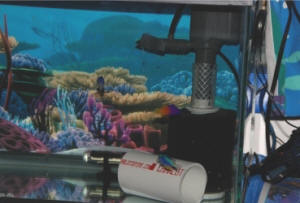
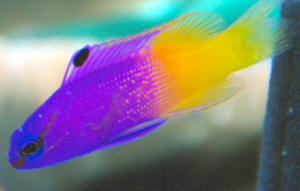 Tales of the Crypt