|
|
| Home | Marine Aquariums |
Freshwater Aquariums |
Planted Aquariums |
Brackish Systems |
Ponds,
lakes & fountains |
Turtles & Amphibians |
Aquatic Business |
Aquatic Science |
Ask the WWM Crew a Question |
| Please visit our Sponsors | ||||
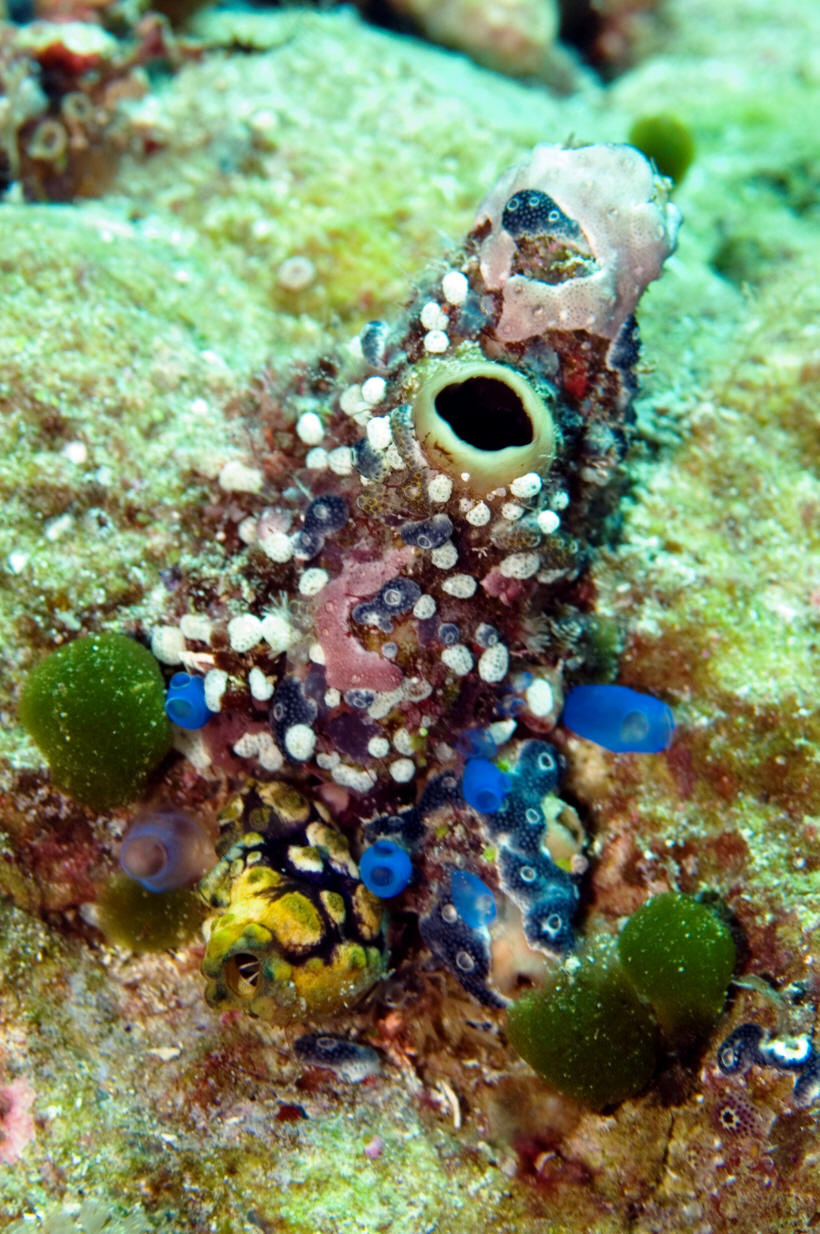
Polycarpa aurata 6/5/06 Hi Crew My tank is 100 gallon with 80 gallon refugium 1.5 years old. The parameters are all ok I just acquired 7 Polycarpa aurata <Neat animals> and I put it in my refugium full of kelp (the brown one) <More, much more than one...> and the light is not intense. Everyday I shake the kelp so the detritus fall on them and pour the Nanochloropsis. I heard people says it is very difficult to maintain in aquaria. So my question is how long the life span of this species actually?. <In the wild, years> I've also read the Steve Tyree's comments about the zonal required for the tunicate <Not "the"... there are many species of ascidians, of highly differing habitats...> and I think my refugium is semi cryptic. <Polycarpa spp. are not cryptic by any measure...> And also I've consulted Gretchen Lambert about this species and she said it is not difficult to maintain them so now I'm confused. So, today in the morning several of them didn't want to open the excurrent opening and I saw the mucus around the body, is that a sign that they will die? Is this species are highly toxic? <Not necessarily and not as far as I'm aware> Thank you for your input and your help Best regards Ignatio <Perhaps a search of literature at a large college library... Bob Fenner> Smart tunicates and hairy crabs 3/21/03 Good evening, I hope you guys are doing great and still learning cool things. I'm the girl with a bi-color blenny, Japanese wrasse, canary blenny, and new addition of a zebra blenny (both of which are fat and healthy on their special diet of live brine shrimp). My Nerites are also happy and breeding much faster than rabbits. ;] I went snorkeling out on Key Biscayne today, it was great. Its not Bonaire, but nice nonetheless. Last time I collected some tiny bright orange colonial tunicates (not glass tunicates) on a blade of turtle grass. Then I glued them to an under ledge on my rock. <interesting> Well, I've always thought that they're very interesting creatures?, since they have a spinal column and all. <sort of> But did you know they're pretty smart too?! <do tell> When I looked at them today there seemed to be less of them (maybe the hermit crabs got munchy), but when I took a really good look later I noticed that they had actually moved!! In a matter of days half of the colony has moved onto my LR and off of the grass blade. I had no idea they could do this, especially since they're colonial. Super cool! Well, that's my bedtime story, just thought I'd share. ;] <very cool... there are a handful of motile species... and among them, most do not move that quickly. Maybe yours recently ate spicy food> By the way, when I collected some stuff today a very small hairy (most likely decorator) crab hitchhiked with some stuff. I like to save any creature that accidentally comes with LR or during collection, but I'm afraid that when this crab gets big it won't be reef safe. Your advise? <unsafe almost certainly in time if not now. Most crabs are opportunistic predators> After a fair bit of research the other day we did decide to save a tiny pistol shrimp (one cm) that came with some frag rock. He's in our show tank and won't really harm much even when it gets bigger (hopefully not really big) since this is a temporary tank. Are most pistol shrimp fairly reef safe if the tank is well fed? <agreed> We do flake, plankton, brine shrimp, pellets, etc (mind you not all in the same day) ;] Nitrates at 0 I swear! Well good night! Love, Morgan <its all good... thanks kindly for sharing my friend. Anthony> Sea Squirts Hi Bob - I was wondering if there was any truth to this quote a friend of mine sent. Do some sea squirts actually eat their brain once they've attached themselves to the rock? If you have web links to the info that would be great. Thanks John <Interesting thought... Don't know re their brains, but much of the body of metamorphosing ascidians does indeed change in unfolding into a sedentary life form from a free-swimming "tadpole" younger phase. Bob Fenner> > Hey John, is there any way you could find out something for me about the "juvenile sea squirt". I have this quote: > From Consciousness Explained by Daniel C. Dennett (Little, Brown and Company, Boston, 1991): > The juvenile sea squirt wanders through the sea searching for a suitable rock or hunk of coral to cling to and make its home for life. For this task it has a rudimentary nervous system. When it finds it's spot and takes root, it doesn't need its brain any more so it eats it. It's rather like getting tenure. > In a footnote, Dennett writes: > The analogy between the sea squirt and the associate professor was first pointed out, I think, by the neuroscientist Rodolfo Llin¡s. > K. Tunicate Slime (4/4/04) Hello, thanks again for this fantastic resource. <A pleasure to participate.> I just bought this The Blue Lollipop Stalked Ascidian from my LFS a week ago. It had been doing great! Last night, one of my Astrea snails was climbing on the stalks for about an hour and a half. It did not do any visible damage on the stalks, it didn't look like it was eating them. Immediately afterwards, the heads at the end of the stalks, got a mucous covering over them. This morning, more of the heads now have this covering. I was wandering what your input is on this, were they stressed and will recover, or is it not looking good? This is a beautiful animal, I would hate to lose it plus it was expensive! Thanks! Steven O. Garcia (Ascidians are actually very difficult to keep alive in aquariums and have a short lifespan (months). The ones that come free on live rock are much hardier than the ones you buy. It could be that the snail just irritated it and it will recover. Then again, survival in aquariums is uncommon. I'd suggest you read the chapter on ascidians in "Reef Invertebrates" by Anthony Calfo & Robert Fenner. It will tell you how best to care for them. Hope this helps. Steve Allen.> Please no! The Blue Lollipop Stalked Ascidian 4/5/04 Hello, thanks again for this fantastic resource. <thanks kindly :)> I just bought this The Blue Lollipop Stalked Ascidian from my LFS a week ago. It had been doing great! <Ughhh! please, no. This animal is not "doing great". Its simply still alive and yet still doomed to starve to death in weeks/months. They really should not be collected or sold perhaps. Not until we are able to understand their needs and keep them alive. Many ascidians are bacteriovores. We do not have enough or enough of the right kind of foods to keep these animals alive. Yours will die soon, alas> Last night, one of my Astrea snails was climbing on the stalks for about an hour and a half. It did not do any visible damage on the stalks, it didn't look like it was eating them. <and I assure you it was not... the tunics of ascidians are very toxic, by and large> Immediately afterwards, the heads at the end of the stalks, got a mucous covering over them. <this is the sloughing of a stressed animal. It can/will regrow a new "head"/zooids... but it is using limited reserves to do so. Still starving to death.> This morning, more of the heads now have this covering. <a common occurrence> I was wandering what your input is on this, were they stressed and will recover, or is it not looking good? <please do read more about this animal in our wetwebmedia.com archives or in our Reef Invertebrates book. It was not a wise or conscientious decision my friend. Please do live and learn here. Do not buy an animal that you do not know how to care for (what it eats/needs, etc)> This is a beautiful animal, I would hate to lose it plus it was expensive! <this will be a hard lesson for you and especially the Ascidian> Thanks! Steven O. Garcia <to better days, Anthony> Re: Oxycorynia/Neptheis lollipop "coral" (Ascidian/Sea Squirts 4/6/04) Very, very disturbing news. I always take a look at your site before I buy anything! There was no information on the blue lollipop, so I took a chance. <you are on the right path... do research before you buy. But no site can be wholly comprehensive and regardless, buy nothing that you do not know how to feed/care for. Your chance taken in this case not only cost the life of this animal, but others that will be collected/killed in transit to fill your merchant's re-order of this sold specimen. A dreadful cycle. Not to berate you at all my friend... most of us have done this at some point. But it does cost animals lives. And it is an error that should not be repeated.> Looks like this might be the first post. Hopefully this will deter anyone else from buying these beautiful animals! thanks again, Steven Garcia <this creature is also shipped as blue lollipop "coral" and is usually cited as an Oxycorynia or Neptheis species. Steve Tyree gives better coverage to this group than any other hobby reference I know of at: http://www.dynamicecomorphology.com/publishsquirtseries.htm best regards, Anthony> Colored sea squirt dead or alive? 4/13/04 If you could, I need some help please. I have a 125gal saltwater aquarium. It has been set up for almost 2years. The nitrates are 2.5, nitrites 0, pH. 8.4, Alk. 3.6, Ammonia .25, Phosphates .5 and Calcium is 400. <all good> I have a Naso tang, a yellow tang, a tomato clown, fancy red serpent sea star, tiger sand sifting star, about 10 little crabs and a whole bunch of snails (mainly baby snails because they keep reproducing). I recently added a blue Linckia star, a possum wrasse , a derasa clam and a colored sea squirt. Everything is fine except for my sea squirt. It looks as though the black part (exhaust/intake) is falling off. Does this mean he is dead or dying? Has one of my other animals harmed him? PLEASE HELP. Thank You. <although they can/do slough their tunic (naturally and under stress, but survivable), they also have a very short natural lifespans... months to just a couple of years. Do be careful when it dies, they are highly noxious. Be prepared with a water change and close attention to water quality for some days afterwards. Anthony> |
|

|
Features: |
|
| Featured Sponsors: |