|
FAQs about Hippolytid Cleaner Shrimps,
Identification
Related Articles: Hippolytid Cleaner Shrimp,
A Few Common Shrimps for the Marine Aquarium by James W.
Fatherree,
Related FAQs: & FAQs on: Hippolytid FAQs 1, Hippolytid FAQs 2, Hippolytid Behavior, Hippolytid Compatibility, Hippolytid Selection, Hippolytid Systems, Hippolytid Feeding, Hippolytid Disease, Hippolytid Reproduction, & by species:
Atlantic Cleaner Shrimp (L.
grabhami), Blood/Debelius Shrimp
(L. debelius), California
Cleaner Shrimp (L. californica), Pacific Cleaner Shrimp (L. amboinensis),
Peppermint Shrimp (L.
wurdemanni), Saron Shrimps,
Sexy Shrimp (T. amboinensis),
& FAQs on All Cleaner Shrimp
1, Cleaner
Shrimp 2, All Cleaner Shrimp
Identification, Cleaner Shrimp
Behavior, Cleaner Shrimp
Selection, Cleaner Shrimp
Compatibility, Cleaner Shrimp
Systems, Cleaner Shrimp
Feeding, Cleaner Shrimp
Disease, Cleaner Shrimp
Reproduction, & Coral Banded
Shrimp, Dancing Shrimp,
Harlequin Shrimp, Pistol Shrimp, Saron Shrimp, Shrimp Identification, Shrimp Selection, Shrimp Behavior, Shrimp Compatibility, Shrimp Systems, Shrimp Feeding, Shrimp Reproduction, Shrimp Disease, Crustacean Identification,
Crustacean Selection, Crustacean Behavior, Crustacean Compatibility, Crustacean Systems, Crustacean Feeding, Crustacean Disease, Crustacean Reproduction,
|
/Periclimenes/Periclimenes%20brevicarpalis%20IZOO%2008%20(8).JPG)
|
|
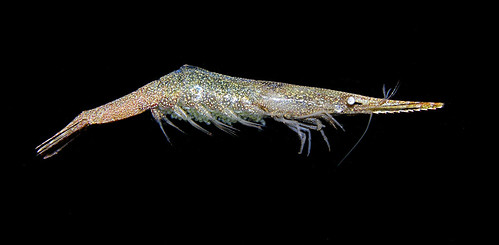
Shrimp ID 7/4/19
Thank you,
Henry C. Schultz, III
<Hey Henry! Looks to be a Gnathophylliid of some sort; though not one of
the Gnathophyllum species one sees (if you are lucky and look REALLY close)
in the Caribbean. Am going to share this w/ friends on FB for better input.
Thank you for sharing. Bob Fenner>
<<According to friend Ellen Muller (on Bonaire), "Looks like a Roughback
Shrimp, Trachycaris rugosa.">>
|
 |
|
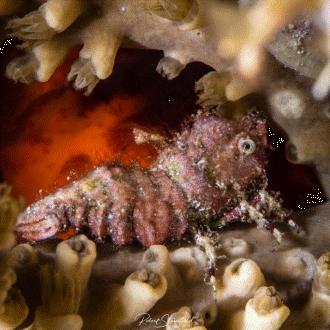
Shrimp ID 2/8/17
Hi crew
<Hey Cathy>
Thanks for the great resource
I received this shrimp from lfs instead of emperor shrimp I ordered. I
speculate possibly a marbled Saron?
<Yes; and very nice pix!?
What do you think ?? Is it possible to tell if male or female from photo, I know
I'm pushing?
<Is possible. Here's my spiel from WWM Re: "Saron marmoratus Olivier 1811),
Marble or Saron Shrimp. Found throughout the tropical Indo-Pacific. Usually
collected out of Hawai'i for the U.S., the Red Sea for European markets.
Usually found in pairs in the wild. Will fight to the death if same sex
individuals are placed together. Males with much longer first pair of
walking/fighting legs. Get along fine with fishes, other crustaceans.
Female shown. Eat all types of food, reclusive, nocturnal." This is a female>
Tried to give you idea of size. Is this reef safe as I have sexy shrimp and
mandarin fish which I don't want it to decide is food. Putting it in QT tank for
the moment.
<IF there's room, and this shrimp doesn't get hungry... Thank you for sharing.
Bob Fenner>
|
/Saron%20PIX/image3%20(1).jpeg)
/Saron%20PIX/image1%20(2).jpeg) |
|
Shrimp ID 2/8/17
Hi crew
<Cath>
Further to email just sent about ID'ing this shrimp sent to me by mistake
Managed to get photo from above as well hope this all helps
<Ah yes; same response! BobF>
|
/Saron%20PIX/IMG_1951.JPG) |
|
Lysmata wurdemanni ID 6/1/12
Can you please confirm or deny that this is indeed a Lysmata wurdemanni?
<Confirmed.>
Since I have gotten this shrimp I have lost six fish.
<The shrimp played no part in the deaths.>
Some of them I can not find in the tank at all and others I have found him
eating?
<Shrimp eat decaying material- it's what they do.>
I don't want an ammonia problem to start because of unfound decaying
fish and while moving rocks to find their bodies the shrimp will try to
attack our hands.
<More cleaning than attacking.>
The shrimp seems darker red than other I have seen or had. Also his
markings seem slightly different than other pictures I have looked up
for comparison. Your site is a wealth of knowledge I have found to
be vital and I thank you all for that.
<Always good to hear.>
Jenni
<Jordan>
|
/Lysmata/L.%20wurdemanni/peppermintshrpid.jpg) |
|
Bullseye Sargassum Shrimp 11/9/09
Hello. Thanks for the knowledge that you share with us! It's
much appreciated.
<Welcome!>
I have a bit of a mystery I'm hoping you can help me
with.
<Will certainly try>
I have a wild caught Sargassum Shrimp
<Latreutes fucorum>
that is different than the others I have, and different from any
that I can find in any online or book literature or photos. I
realize that doesn't mean it's a new shrimp, but I just
want to check anyway. She's reproducing in my tank. All of
them are. It's a bit of a sudden shrimp baby boom actually.
But anyway, if this one is a special shrimp, then I feel I should
try to get her somewhere that can save the babies.
Otherwise, my Sergeant Major is proving to suck up anything that
moves, so baby shrimp of course don't stand a chance. I tried
a baby cage but they still disappeared overnight. If this is just
an ordinary Sargassum Shrimp with some unique markings, then
we'll just enjoy her beauty and let the Sergeant Major enjoy
some yummy snacks.
Background: She was "rescued" in the shallow waters at
Surfside Beach, TX in June '09 in a clump of Sargassum
seaweed. It washes ashore and dries up in the sun and all the
little creatures in it die or get consumed by birds or crabs. We
have several Sargassum Shrimp so I'm not sure if she was
alone on her clump or if she had friends with her. We didn't
notice her uniqueness right away.
Her description: She has two very distinct bull's-eyes on her
profile and both sides are symmetrical (total of 4). In all other
ways her coloring is like the other Sargassum Shrimps. Although
her tail is fringed in what looks like a foil like shine to it.
And she has three spots on her tail too, but those are only
visible when her tail is flared out. She can change colors from
transparent with a tinge of beige to a deep cola color, and is
sometimes bright red or orange. Sometimes she will be half one
color and half another, the rear always being darker. One time
she turned almost neon green for about a week after I added some
fake plants. But the bull's-eyes are always visible. She also
has, like the other Sargassum Shrimp, the white dotted lines
along her back and across her tail and I can see a faint
variation in color on her legs and antennae too, as if
they're striped. The bull's-eyes themselves have more
than one color to them. There are at least two distinct rings,
and the dot in the middle is darker on the edges.
I've put some photos of her into my Flickr account in several
poses and sizes. Here is the link to the set.
http://www.flickr.com/photos/bunnyfrogs/sets/72157622765058102/
<A beaut!>
And I've attached one of the smaller sized photos.
So is this a new shrimp? Should I report this one to someone?
<I don't know... and I would send these pix around.
Possibly to Texas "fish and game" agencies for their
input>
Thank you so much for your time, and let me know if you need more
information.
<Thank you for sharing. Bob Fenner>
|
/sarg%20shrimp.jpg) |
|
"Green stick shrimp" 8/3/09
Hey Bob or other wonder-crew!
<Andy>
It's Andy from lovely Colorado here.
I have a 90 gal. macroalgae tank connected to my large system
with many types of macro (including a couple different types of
Sargassum), five Dartfish, a pair of Banggais, and a lovely pair
of seahorses
along with cleaners of the snail variety (Columbellids, Ceriths,
Nassarius, etc.). I've had someone offer me some "green
stick shrimp," supposedly collected in the Gulf of Mexico.
As near as I can tell, they look like a type of Latreutes sp. or
Sargassum shrimp. It looks like it might be a fun,
not-something-you-see-everyday type of addition that could go
with the theme of the tank (well somewhat: it's certainly no
biotope, but it feels like a theme).
<Is a Latreutes; I believe Latreutes parvulus>
But, I can find nothing on these shrimp aside from a few larval
development papers, and a couple of oblique references to them by
Bob on your site.
Can you tell me what the expected mature size might be? What they
might eat? Whether they might be threats to the other members of
the tank? Please consider that I don't want anything that
might upset the
horses. They are a regularly breeding pair of Hippocampus comes
and I'm trying to help get a captive-bred breeding population
established here.
Thanks for the help! Photo attached.
Andy Berry
<Unfortunately I know nothing re the biology or captive
husbandry of this genus. Bob Fenner>
|
/Green_shrimp[1].jpg) |
|
Re: "Green stick shrimp"
8/3/09
Thanks for the ID and thanks for your time, Bob. I hope you have
a good week!
<Let's not limit ourselves Andy... I heartily wish you a
great life time... even a here after!!! BobF>
|
|
Help with Shrimp ID: Likely Tozeuma spp. --
2/24/09 Hi there! <Hi Tom!> I know that your site
is primarily dedicated to aquarium keepers, but you also seem
incredibly knowledgeable about aquatic life in general, so
I'm hoping you can help me ID this creature I saw today while
snorkeling in Jupiter, FL in the Intercoastal Waterway (Blue
Heron Bridge, some of the best snorkeling in FL). <Lucky you
-- wish I was there! It was in the forties and raining here today
in the Seattle area!> I am 98% sure it was a species of
shrimp, but I've never heard of anything like it. <Yep,
it's a shrimp alright. It's most likely a species of
Tozeuma, possibly Tozeuma carolinense (aka an Arrow Shrimp). They
vary in color, from bluish purple, to green, or gray, depending
on habitat (Gorgonians, sea grasses, etc). Their ability to blend
in and flatten themselves out along slender branches or within
seagrasses makes them very difficult to spot by predators and
divers alike.> I've spent the past two hours Googling with
a variety of keywords, mostly involving "green" and
"shrimp", and nothing's come up at all. <Try
Tozeuma. Also, see the following links for examples:
http://www.wetwebmedia.com/hippolytidae.htm Tozeuma carolinense:
http://farm4.static.flickr.com/3098/2869225708_64b58f2eff.jpg
> At the time, I was observing a small group of pipefish that
were hiding in some plants. <Neat> The pipefish were bright
green, and I saw what I initially mistook for a juvenile pipefish
in the midst of them, only he was bent in the middle. Curious, I
moved my hand toward him. He moved backward! <I bet he did!
Beware the giant hand!> Eventually I caught the animal in my
hand out of curiosity (I know, you're not supposed to touch,
but I couldn't help it!). It was bright lime green, about
three inches long, <Are you absolutely sure it was that long?
The reason I ask is that T. carolinense only gets to about half
that length (just under 4cm/~ 1.5').> ...and as big around
as a thick toothpick. It had legs like a shrimp, and a tail like
a shrimp, but it had a VERY long proboscis, with two yellow eyes
close to the middle of its body. It didn't bend its entire
body to move, like a shrimp usually does, but instead whipped the
very end of its tail. Unfortunately I was not able to snap a
picture of it, but I made a pretty bad yet accurate MS Paint
rendering of it (best I could do, I'm sorry). <No worries,
Tozeuma spp. have a distinctive body shape with a neat little fan
tail that you did a good job of portraying.> If you guys can
help, that would be awesome! If not, no big deal, I'm going
to keep looking. -Tom <I'm fairly certain that what you
saw was an Arrow Shrimp/Tozeuma spp. of some sort, but do take a
look around the 'net for confirmation. Take care and happy
snorkeling! --Lynn>
|
/Tozeuma/mystery_shrimp[1]%20toz.jpg) |
|
Re: Help with Shrimp ID: Likely
Tozeuma spp. -- 2/24/09 <Hello Tom> Thanks for the
swift response! <You're very welcome!> The picture of
the Tozeuma was close, that's for sure, but I'm not 100%
certain, if only because the eyes in the picture are set much
further forward than the shrimp I saw. But it's the right
length and shape! <Good. I'm pretty sure it's a
Tozeuma spp. of some sort.> And yes, I'm pretty sure about
the size. I know that the water distorts your perception, but
this time around I had a bit of a guide. When I held it in my
hand, nose to tail it was almost the width of my palm, and I have
very large hands. <Good reference, indeed.> But like I
said, going by the picture, the Tozeuma shape is close, so now I
have that for a keyword to help in my Googling! <Yay! Let us
know if/when you find the little fellow.> Thanks so much! -Tom
<You're most welcome! - Lynn>
Follow-up Re: Help with Shrimp ID:
Likely Tozeuma spp. -- 2/24/09 <Hi Tom> Aha!
Confirmation! <Yay!> Though a tiny bit more confusion. I
did a Google Image Search for Tozeuma, and I have identified what
I saw. It was a Tozeuma armatum. There's no mistaking it.
This is very exciting, because they are apparently very rare!
<Neat!> I wish I knew who I could report my finding to.
<Perhaps someone at the Florida Fish and Wildlife Research
Institute in St. Petersburg. Here's a link to their site with
more information:
http://www.floridamarine.org/features/view_article.asp?id=30903
> However, further Googling makes me wonder what the heck it
was doing in Florida!! Though in the area I snorkel, I'm not
entirely surprised. There are Sea Robins everywhere, and
they're not supposed to be found outside of China and
Indonesia. So we have all sorts of wacky things! <Heheee!>
Once again, thank you so much for your help! -Tom <You're
very welcome and thanks for letting us know which little shrimp
that was! --Lynn>
|
| Shrimp ID -- Lysmata --
08/28/08 Hi! My name's Andrew and I've been
an avid reefer for 3 years =) In that time, you guys have
helped me tremendously, and I have pointed friends to your
site and we were all very pleased with the vast amount of
accurate information you have on your site. At my LFS a
friend and I came across two shrimp that we've never seen
before. The store said they have never had them either and
this was the first time they saw them on their suppliers list
so they picked two up. I know impulse buying without research
is generally not advised, but this is a shrimp and it's
going in a nano tank that has very limited inhabitants. The
shrimp was labeled as a Striatus Shrimp. However, when I look
this up online I find the common name is the Striped Hinge
Beak Shrimp, and the pictures don't look like what I
have. <The common common name problems.> The striped
hinge beak shrimp looks very close to a peppermint shrimp,
however my "Striatus" is very different. It is the
same size as an adult Skunk Cleaner. However, it does not
have the white stripe cleaners have, and instead of being red
he is very pink...almost fluorescent or neon like. At night
time/early mornings the pink becomes very pale/clear, and a
few stripes appear. He also isn't very active like
cleaner shrimps, he hangs out in one spot sometimes for hours
on end, and looking closely it doesn't seem like he's
doing anything. He is always out in the open and doesn't
really hide ever. Please set me on the right path to figuring
out what I have, there are pictures attached of him at the
store, in the early morning, and in my tank during normal
hours. Thank you for all the help and please let me know if
you need any more info! <Origin (in terms of part of the
ocean they came from) of the shrimp would be helpful.>
I'm not really sure how to view your response, do you
post this online and then email me telling me where to find
the reply? Do you just email me the response? <Both. The
reply is sent by email and later posted on the site.>
Thanks again. Andrew <Welcome. Marco. Wait... you wanted
to know the ID of these shrimps. There are two species with
this type of coloration. Lysmata galapagensis comes from the
Eastern Pacific. Lysmata kuekenthali from the Western Pacific
and the Indian Ocean. Therefore, the origin of the shrimps
can be a species indicator for you. Also see:
http://www.wetwebmedia.com/hipshrpid.htm and search for L.
kuekenthali, which I believe is what your shrimp might
be.> |
/Periclimenes/0822082126[1]%20shrimp%20id.jpg) 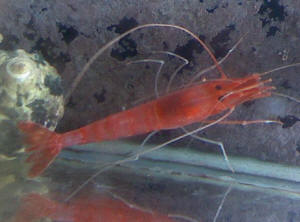
|
Real shrimp ID? -- 06/04/08 Hello, <Hello
Pete.> I'm wondering if anyone there knows about Galapagos
cleaner shrimp. <Yes, rather rarely imported compared to other
cleaners.> At least that is how they are name at my LFS (they
couldn't provide much information). I cannot find any information
about them on-line, but I have found them for sale at
http://www.thatpetplace.com/pet/prod/217855/product.web and
http://floridapets.tripod.com/shrimp.html Neither source has much
information on them, but I like the picture from the second source
because it shows their striping and blue color. That is what the one at
my LFS look like. Does anyone know their scientific name? <If it is
the real Galapagos cleaner shrimp, it is Lysmata galapagensis. There is
at least one similar Lysmata species from the Indian and Western
Pacific Oceans with transverse stripes: L. kuekenthali. The origin of
the shrimps can be a species indicator for you, the real L.
galapagensis occur only in the Eastern Pacific.> Are they really
cleaners? <Yes.> Do they play well in a reef tank? <There are
reports of L. kuekenthali eating pest anemones, but also some desirable
anemone species.> Thanks, Pete. <Cheers, Marco.>
Cleaner Shrimp Question Bob, Can you tell me a positive way
to tell the Indo-Pacific Cleaner Shrimps from the Atlantic variety?
<Of the genus Lysmata? Yes... differences shown, link provided to
more... on the Cleaner shrimp files, FAQs... on our site:
www.WetWebMedia.com> I had one cleaner shrimp in my tank and decided
to buy a second so they would possibly produce fry for fish and coral
food. I am suspect as to whether the two that I have are actually the
same species. The only difference between the two of them is the
coloration on their tail. I have read on several web sites that the
Indo-Pacific variety has the inverted "T" at the base of the
tail and the Atlantic variety is supposed to have the white stripe go
all the way from head to the end of the tail. I am assuming that the
Atlantic variety is not supposed to have the inverted "T". Is
that correct? <Yes...> I have been looking for pictures of both
of the species on the Internet to try and find a definite answer, but
all of the pictures I have found look the same or don't show the
tail area good enough for a positive identification. <See our site
or Baensch Marine Atlas v.1...> Also, if one is Indo-Pacific and the
other is Atlantic will they still mate or did I just waste my money?
<They will not produce viable young as far as I'm aware... you
may want to posit your question to the folks at "The Breeder's
Registry" as well... link on WWM. Bob Fenner> Thanks for your
help. Chad N.
Re: Cleaner Shrimp Question I have seen the pictures on the
" http://www.wetwebmedia.com/cleaner.htm"
age on your site. However, it appears as if both pictures of the
cleaner shrimps on that page have the inverted "T" shape at
the base of the tail and start of the tail fin. That is what's
confusing me. And yes we are talking about Lysmata cleaners. Thank you
for your fast response! <Sorry to seem so daft... but is this
Lysmata grabhami and L. amboinensis you're trying to discern? And
the telson markings shown on the above link unclear? Or are you sorting
through wurdemanni et al. from the tropical Western Atlantic... and
something like californica from the Pacific? Bob Fenner, still
jet-lagged from yesterday night>
Re: Cleaner Shrimp Question Yes I am trying to discern
Lysmata grabhami and L. amboinensis. The markings on that link are at
least unclear to me anyway. It appears in the picture as if both
species have the inverted "T" mark where the tail and tail
fin meet. I had assumed that grabhami was not supposed to have the
"T" mark, but it looks as if it does in that picture.
<Ah... Hmm, perhaps I should suggest stressing the markings on the
"tail" itself... notice the four distinct white dots on L.
amboinensis... and connected "U"s on the tail of L. grabhami?
This is definitive difference and one easily seen. Bob Fenner>
Re: Cleaner Shrimp Question Thank you very much. That's
what I was afraid of. I was hoping it was only a matter of whether the
"T" shape was present at the end of the tail (before the
telson). But apparently that is not the case. Thanks for your help. I
will try to return the one I bought today and find one that is a match
for the one I already had. <Ah, good. Sorry again for the confusion.
Do take a further look at the references listed on the
"Cleaners" and "Shrimps", and "Cleaner
Shrimps" files for more. Bob Fenner>
Cleaner shrimp species check Hi Mr. Fenner, Sorry to bother
you, but I couldn't seem to get the right info from any other
source, and you are unusually responsive and knowledgeable. We have
Aiptasia cropping up, which at first seemed pretty until we realized
exactly what kind of a tank dandelion it was. <Very lucidly put>
I decided to use the natural approach and find something which would
munch it before subjecting them to lethal injection. Already have a
Pacific cleaner amboinensis (Whiskers), which is great at free-loading
on the fishies, but not much at cleaning Aiptasia. So I got several
peppermint shrimp from the LFS. I couldn't get a good look at them
in the store tank, as they took a bit of capture and things got stirred
up. Once in my tank, they disappeared. I spotted one under an overhang
a few days later and it didn't look like ones on the WetWebMedia
site. <Then probably not...> I have never seen the other one.
Another LFS (I use about 4 to bounce questions off) <Good idea>
suggested that for my size tank, I could use 5-6 of the peppermints. So
I bought 4 more wurdemanni (Groucho, Harpo, Chico, and Zeppo) from a
very clean tank where I could identify them. When introduced, they
acted very much different than the first two, being much more visible
and active. <Yes... do a sort of side to side dance> Could the
first two be a different species entirely? <Definitely... there are
a few others that are very similar in static appearance> Tank specs:
55 gal, 40 lbs Fiji LR, 1.5" crushed coral bed Livestock: Domino
damsel (very small), (2) Firefish, Fiji damsel, Valentini puffer,
Orange Clown (percula or ocellaris - I can't tell), Pajama
cardinal, Pacific cleaner shrimp, Condy anemone, (4) peppermints, and
(2) suddenly unidentified shrimp. All species are small and
non-aggressive (except occasional outbursts from the Fiji). Questions
(at last) 1. What could the first two shrimp be? From peering into
their hidey-hole, they are red with no markings. <Many choices
still... do you have access to a large college library?> 2. Is it a
mistake to have small cleaner shrimp at all with the Valentini?
<Hmm, not usually... if enough space, food for the Toby, hiding
spaces during molts for the shrimp...> They are supposed to like
shellfish - does that include the wurdemanni and the poor missing
variety? <In the "right/wrong" circumstances assuredly
yes> 3. If peppermint shrimp do indeed eat Aiptasia, how many is
appropriate for a 55-gal tank and how quickly do they get around to it?
<A couple or three... a few weeks to a couple of months or so> 4.
I'm sure the Valentini would like Nori. Does leaving it in the tank
muck up your conditions, or do you remove it when he is done feeding?
<Puffers don't eat much of this sheet algae... should be removed
after an hour or so> 5. Is the Marine Conference you are speaking at
this summer in Baltimore appropriate for the home hobbyist, or just
marine professionals? <For home hobbyists specifically... There are
"scientific" and "business" associations as such...
the hobby groups ones are for hobbyists in particular.> Thank you so
much in advance. Kevin. West Virginia <Be seeing you my friend. Bob
Fenner>
Re: Cleaner shrimp species check Dear Bob, Oh me, oh my.
Thank you so much for the info on peppermint shrimp and other topics.
Why can't I learn to do my homework before purchasing, as I am not
yet familiar with the subtleties of species ID. Judging from the
pictures I now found, my latest were 4 Candy shrimp (Rhynchocinetes
uritai), not the peppermint shrimp (Lysmata wurdemanni) I was
expecting. They are definitely clever little things, but now I have my
doubts whether they will eat the Aiptasia. <They won't> Thank
you so much for your patience and wisdom. Kevin Milne. West Virginia.
<All attainable through study, discipline my friend. Bob
Fenner>
|
|