 |
|
| Home | Marine Aquariums |
Freshwater Aquariums |
Planted Aquariums |
Brackish Systems |
Ponds,
lakes & fountains |
Turtles & Amphibians |
Aquatic Business |
Aquatic Science |
Ask the WWM Crew a Question |
| Please visit our Sponsors | ||||
Seahorses in HOB refugium; using WWM 12/12/14
seahorse 2/13/14 Seahorse idea, system
6/23/13
Seahorse <habitat>
biodiversity 4/12/12 Seahorse tank - need more hitching posts. sys.
f' 2/8/12 Seahorse Tank 2/25/12 New setup for Seahorses 2/7/12 Zooxanthellate symbiotic corals and other
tank set up questions... Seahorse sys. f'
1/18/12 Dwarf Seahorse tank
10/21/11 DSB with seahorses
10/2/11 Refugium Help, hang-on
f' 7/12/11 Sea Horse, sys., sel. --
03/20/10 Question For My New Planted Marine
Tank/Pipefish/Systems 2/2/10 Seahorse in SPS Tank?!? Seahorses system:
8/30/2009 Refugium true viability/Seahorse breeding 11/9/08 My name is Lawrence Lucero and I am very interested in setting up a refugium system for rearing seahorses and clownfishes. I've looked over many of your articles regarding copepods, plankton, and refugiums and was very pleased to find so much information. Thank you very much. <Hello Lawrence, glad the site has helped.> My first question concerns what set up would be better for producing copepods on a large scale. I have a 125 gallon tank as well as multiple 55 gallon tanks and 20h tanks at my disposal. Option 1- Should I set up the 125 gallon as a separate refugium complete with a deepsand bed (I'm thinking 8-12" w/ plenum as well as varying sizes of coral "gravel" and sand) along with live rock raised on a grid off the live sand. From this refugium I was planning at least three different overflows each to an individual 55 gallon tank which would house the seahorse fry and clownfish larvae separately. Would this supply enough food for the fry or should I limit the number of fry rearing tanks? <It will feed them to a point, do look at direct feedings also.> For option 2 I was thinking of using the 125 gallon as the rearing tank and adding (4-6) 55 gallon tanks as refugiums. This would involve setting up different refugiums with the hope that different types of copepods would emerge. I was thinking of a deep sand bed only tank (3/4 of tank height), a DSB with macroalgae tank, a live rock only tank, a live "rubble" tank, and a floating macroalgae tank (ulva, etc.). Is this overkill or could I get a greater diversity and quantity of plankton and copepods? <The diversity in setup is good, but you can do all of this in the 125, then use the 55 to keep your livestock at different stages separated.> My final option would be to do the same thing as the 125 gallon tank in option 2 with the 55 gallon tanks. I would add (4) 20h tanks for the refugiums on a 55 gallon tank. Again with different types of refugiums on each of the rearing tanks. My only concern is if 80 gallons of refugium volume is enough for each 55 gallon tank? <The larger refugium setup option would be better.> The rearing tanks are going to be bare for ease of maintenance. The refugium tanks would be supplemented by natural sunlight and lit by power compact fluorescents (for those which are less than 12" in height with DSB) and metal halides on the live rock tanks. <Really no need for such intense lighting here.> I would be doing reverse daylight photosynthesis on set ups with more than one refugium to stabilize pH and oxygen availability. The other option is 24/7 illumination on the single refugium system to achieve the same stabilizing effect. <Alternate, give each a �rest� period.> I was planning on adding no supplemental filtration except a return pump since these are only larvae and fry in what I believe to be large volumes of water. I was concerned with the plankton being crushed but after reading your articles I have since loss that concern. Should I add additional filtration? From all that I could gather RDP, live rock, and live sand should be sufficient. <Should be.> If so, would you see any problems with using a fluidized bed filter. I like the fact that it would supply CO2 to the macroalgae and in conjunction with reverse daylight photosynthesis or 24/7 illumination the extra CO2 shouldn't be a problem. <I would not, negligible benefits. Your live rock will already serve as a biofilter, the fluidized bed will have little to nothing to do.> I have just one more question regarding the return pump. I could find no information on larvae "safe" methods of returning the water to the refugium. My plan is to have a submersible pump sectioned off in the rearing tank. Would a baffle system, a divider with sponge (partition off whole tank section with glass 3/4 of height; add sponge along bottom), or a full sponge partitioned area (whole section blocked off with sponges- hopefully reduce concentration of intake) be sufficient to prevent damaging the clownfish larvae. I am most concerned with them because I have used a sponge covered overflow with seahorse fry successfully (very large sponge). <The larger sponge area, less concentrated intake will be better.> Thank you so much for your assistance as well as for taking the time to amass such a wealth of knowledge on your website. <Welcome.> Mahalo, Lawrence Lucero <Do check out some of the seahorse specific sites on the net re feeding the fry. Many very good, informative resources out there. One in specific linked below. Scott V.> http://www.seahorse.org/library/articles/artemiaGuide.shtml
Novice cycling new tank for Seahorses - need some reassurance and a question on brown spots 06/24/2008 Many thanks to the wonderful advise from of Mr Nixon in recent replies --- Andrea from Australia here (once again) needing some reassurance from you wonderful people. <<Hello again Andrea, nice to hear back from you>> Just an update: <<Great>> I am cycling a 25G all-in-one type aquarium with the hope that I may some day soon have a couple of seahorses. The tank was in its 2nd week when Andrew was able to assist me in getting the cycling process moving a little faster with the addition of a raw prawn. The tank went hazy and a little on the nose - Andrew reassured me that was normal. All seemed to move along from then when the ammonia moved to what I thought looked like the 0.4 range within about 6 days and that was when I removed the prawn (as suggested). Tank is clear again and smells fine. All this was almost 2 weeks ago. <<Sounds fine>> What I am not sure about is that not much has happened since then. I test every 2nd day. The ammonia result seems to be hovering at that same 4.0 level. I guess it's *possible* that the result is getting a tad less dark (green) but it just seems to be pretty much the same. The nitrite and nitrate seem to be at a standstill too. I assume these won't change until the ammonia does? Question - should I be seeing some changes to ammonia by now? <<Provided the tank is at the correct temperature, about 78f, the process should continue under its own steam, and you should start to see the ammonia decline as nitrite starts to rise>> The other thing I wondered was ...well it would help me if I could compare the test from the one I did a couple of days ago ... just to reassure myself that something is happening. How long can you keep the test for reference - or is it really a case of the '5 minute' use-by time? Another dumb novice question - is that 5 minute test time fairly strict ... in other words, should I be using an alarm to base my results on? LOL I'm so sorry ... but this colour testing does my head in. <<I could not give you a time scale in which the results are good for, after the 5 minutes are up. However, when doing the same myself in the past, i have found it useful to keep a photo diary through the cycling process. This allows me to go back and compare colour changes in the tests, as the cycle moves forward>> I have also noticed these brown spots forming (have looked into archives and think it is diatoms). They started as little spots on the white pebble and they're growing daily and spreading to other items in the tank quickly. Based on the WWM info, I see these are normal and not really harmful right? <<That's correct, these will be diatoms, and you will experience a lot more, all over the tank. But, it shall pass as the tank settles down>> They are multiplying rapidly though. Because the tank is cycling, I've been leaving the lights on 1/2 overnight (for no real reason other than its a handy night light when going for a glass of water at night - didn't think it would matter). <<Unless you have had any photosynthetic corals arrive in on the live rock, i really do not se any need to have the lighting running while a tank is cycling>> My confusion stems from - some comments suggest leaving lights on and letting diatom grow itself out ?? Others say limit light. I guess that depends on whether you have inhabitants does it? What's my best plan of action? <<If it was me, leave the lights off. The diatoms will come whether the lights are on or off, its just the extent in which they grow. Either way, it shall soon recede in time>> I'm just a bit worried I could end up with a diatom plaque. Given that they are still at a level where the glass isn't covered yet, can I control this to a manageable level now or is it best to let them go? Let it go, let nature do its job. Providing there is adequate flow and filtration, it will be fine>> We have used plain tap water - and I read WWM comments about the link between silicates and diatoms. I have no idea if they exist in our Aussie water or not - I'll have to look into that but the question now is, should we be running our water through a filter system anyway ... this would be when I get to a point of doing water changes? <<Buying yourself a reverse osmosis water filter is your best route forward. Tap water is "normally" high in phosphates and nitrates, metal content, all of which will contribute to plague algae growing in the tank. As your tap water quality, for marine purposes is unknown, i certainly would not rely on tap water to run your tank on.>> Gosh this is really complex stuff. I'm glad I started basic. I'm so sorry to bother you about these mundane questions <<Nothing is ever mundane to me, if a question arises, ask away, and we'll do our best to answer all of them. That's what we enjoy and are here for.>> ... I did try to find the answers but it seems like I need some hand holding here. :o( <<Consider your hand held :O) >> Regards Andrea South Australia <<Thank you for the follow and extra questions, i hope this has helped you. Regards and good day. A Nixon>> Seahorses and urchins 6/23/08 Hello Bob and Crew! <Connie> I currently have a 20g seahorse tank with one Hippocampus erectus, one Pom Pom Crab, a few snails, and a few very small mushroom corals propagated from my 55g reef tank. Since there aren't many critters that can be housed with seahorses I am having an algae issue. The snails don't seem to do that great of a job, and don't last very long. <Mmmm, a few possibilities here... covered on WWM> I was wondering if there are any types of urchins that can be housed safely with my seahorse and teeny tiny little crab? <Oh yes...> I would be extremely upset if anything happened to either one of them. I have done plenty of research, but am very frustrated with all the completely conflicting information! <Perhaps a Mespilia... likely the more commonly available, small genus/species of use here> I currently have one power filter and one power filter with surface skimmer. I have recently installed a nano skimmer, which I only run at night so the seahorse does not ingest any bubbles. I alternate changing filter media in the power filters each week; one gets replacement media one week, the other the next. The nano skimmer has done a great job of getting the greenish tint out of the water, but I still have a problem with algae on glass, rocks, etc. I only have a few pounds of live rock, as the tank is set up mostly with items the seahorse can hitch to. <Mmm... see my comment/summation below please> I also have a shrimp hatcher in the tank, and feed vitamin-soaked mysis shrimp (sparingly) every 2 to 3 days. I occasionally give the crab his favorite and exciting treat, a small soft Spirulina pellet or two. I am hoping within the next couple months (when I can afford it!) to set up a 20g refugium/sump <Oh! This was going to be my comment/sugg.!> for the tank since the stand will hold two 20g tanks. I'll be getting a companion or two for my seahorse after that, and will have somewhere to put pesky critters also. I would also like to replace the power filter without surface skimmer and the nano skimmer with a Skilter Filter which will be placed in the sump. The Skilter Filter I have on my 55g tank does a very good job and does not put anywhere near as many bubbles in the water as the nano skimmer does, so my seahorse will not be exposed to bubbles he might ingest and I can run it full time. Plus, I'm sure a nano skimmer would not be very useful in a nearly 40 gallon set-up. I'll also be getting more live rock to place in the sump. <Good> I thought I would get some lettuce Nudibranchs if there are no safe urchins for my tank. <Mmm, nah. These only eat a few of the less common, more palatable algal types> I have done research on them also, and apparently they do well in tanks as long as they don't get sucked up into filters. I was thinking of screening off the intakes with a filter media bag to prevent this from happening. What is your opinion? Thank you so much! ~Connie~ <I would get the small urchin and "shoot" for the refugium... a DSB there, perhaps some alternating light cycle, macro-algal culture... Will likely greatly improve algae situation and much more. Cheers, Bob Fenner> Setting up a new tank 05/29/2008 Thank the Lord I found you all! <<Good evening, Andrew with you today>> I have a 100L (about 25 gallon) tank in progress. VERY new to marine aquariums but have for over 15 years wanted to keep a couple of seahorses...and now with captive breeding this seems possible at last. <<Sounds like a good plan to me, however, depends on what species you have in mind>> I have a mix of shells and gravel (4") and am still in the process of decorating the tank. I am considering the rubber type coral (Penn-Pax) as I have read that Seahorses need smoothish surfaces to hang onto. I have no live rock and am not really sure what it is (complete novice here) ... help? <<Smooth stalk type features are certainly needed for seahorse to clasp on too. Live rock is simple terms, is just a build up of calcium carbonate skeletons (dead corals) in the water, and it forms in the rock shapes we see when cultured.>> 1. I am a little unsure about the 'spike' in the water tests. The tank is only 2 weeks old. So far the results have been very stable - salt levels are spot on, Nitrate and Nitrite '0' - PH is 8.2 but the ammonia seems to be hovering at 1.0 ... am I on the right track? Should I be adding anything? The shop suggested some fish (fresh water species) so that they will die and rot down. I'm not sure I like the idea (yes I am a hopeless animal lover - even fish) so wondered if there was a kinder way that won't mean I have to wait 2 months for the tank to reach its 'ready' level. <<I really hate that fish shops / hobbyists even still mention the route of cycling a tank with fish, as its very inhumane. Your best bet is to cycle the tank by adding a small - medium sized raw (uncooked, no preservatives) shrimp or prawn, wrapped up in fine mesh material, drop this in the tank, and monitor the water. This will rot away and produce the much needed ammonia. When the ammonia reaches 4ppm on the test kit, remove the wrapped up carcass as its job is done. This is one of the spikes which is commonly referred too in cycling. When the ammonia spikes, nitrites starts to be generated which will convert the ammonia, and cause the ammonia to drop back down to zero. Now, the nitrite will spike and then nitrate will start to form, which will convert the nitrite and take the nitrite level down to zero. Finally, nitrate will spike, and eventually fall down to around 5 - 10ppm. At this point, when its stayed this way for a week, your cycle is done, and you can do a nice large 50% water change. That's the cycle in a small nutshell>> 2. Companions ... had my heart set on a Branded Coral Shrimp but am not sure if this species will be too aggressive? <<I would not chance it personally>> 3. The Yellow Watchman Goby is another I like but I read that you also need to have a blind shrimp as they need each other for survival. Would this combination work? <<A yellow watchman would be fine to keep as they are very peaceful species. You can happily keep a shrimp goby without a pistol shrimp>> 4. My tank is an all in one type - I was really keen to put some active decoration in the tank but now I am not sure. I was going to put in an air curtain to ensure good oxygen but have been told not to (I think there is no issue with oxygen in tank). <<Air bubblers / air curtains have no real place in the marine tank. Gas exchange is carried out at the surface, so, just ensure surface water agitation is there via a powerhead etc>> Does this mean no bubble of any kind in the tank? <<No, however, it does not do any harm, unless a large amount of bubbles stick to corals an agitates them, fish, it does not really bother>> Truly it was just that I wanted some interest in the tank so its not a big deal but just need clarity. The problem is some say bigger bubbles are ok and others suggest none in best. <<I always prefer to say none is best>> Regards Andrea (Australia) <<I hope this helps, please do read more here http://www.wetwebmedia.com/tube-mfi.htm and here http://www.seahorse.org/library/articles/SeahorseFactsAndInfo.pdf ( a .PDF file )>> <<Regards, A Nixon>> Attn: Sara (or whoever)- seahorse care 05/21/2008 Hi Sara (or whoever takes this question), I was out fishing last night, and attempting to catch squid (I didn't do as well I as I wanted). I dropped a minnow net in the water, pulled up several young squid (inch long), and a seahorse! <cool> Nonetheless, the seahorse no resides in my 29g BioCube. I've never had a seahorse before. Can you point me in the right direction as to caring for it? and possibly even identify exactly what kind of seahorse it is? (Other than "small" and "dark green") <Well, you can start here: http://www.wetwebmedia.com/tube-mfi.htm and here... http://www.seahorse.com/> Also, if I wanted to keep an aquarium with squid in it, what would I have to do? or is it one of those things that not worth the hassle? <Squids can be tricky... please see here: http://www.wetwebmedia.com/cephalop.htm> Thanks much! DJ <De nada, Sara M.>
Sea Horse Newbie... sys., comp. 2/2/08 Hello, <Hi there> I have added a "Great Seahorse" Hippocampus kelloggi to a 30 Gallon bowfront reef tank. The setup is 18 months old with LPS corals <Mmm... may be trouble with the seahorse... consuming> and two feather duster worms and a derasa clam. Their are two powerheads for circulation <Keep their intakes screened> in addition to the flow generated by a BAKPAK Filter/skimmer combo and on Eheim canister filter. My question relates to the circulation regarding seahorses. I have read contradicting info regarding too much vs. too little circulation. For the most part it seems the circulation I have fits the bill. Good circulation throughout with areas he can "relax" in and get out of the way. <Well-stated> Here's where I need clarification. He seems to like to get in the current which is fine with me but he looks out of control and bangs up against the glass or rocks. <Not good> Is this normal? <Mmm, not healthy> Does his "armor" take this into account? <Only to a degree... is too stressful> He can wrap his tail in various places but I want to make sure he's in an environment that's not going to be too rough on him. Thanks, FJ <The powerheads flow needs to be subdued in some way... or removed. Bob Fenner> Lighting and seahorses 01/13/2008 Hi <<Hello, Andrew here>> I was wondering I'm starting up a new saltwater tank in my room and its a 28 gallon euro bow front. I want to do corals and I was confused on how much lighting would be needed to do a wide verity of corals. I know the rule is the more the better but how much more is best for the money? I was looking at two different options, a 130 watt PC lighting set up or a 1x250W HQI, 2x65W CF light. Witch do you think would be better considering I want some mushrooms brains and open brains, and plate corals, things like that. Is the 130 watt good enough or should I go for the 380 watt light? <<Simple answer is go the Metal Halide route. This will give you more options on what corals you want to keep and MH is far superior to PC lighting>> I also wanted to know with the 28 bow front tank could I do dwarf seahorses? I'm going to be running a Magnum H.O.T.. and some kind of skimmer (don't know what kind just yet, more reading to do any recommendations?). at least 30 lbs. of live rock maybe 40. and some corals. I think they will be fine but it doesn't hurt to hear from someone with more experience! <<Dwarf seahorses are fine in that size tank. What you will be up against is flow. Some of the coral suggested above require good flow, where as dwarf seahorses require flow as these are very lethargic and slow eating. Your best bet would be to keep the seahorses in a species tank>> Thanks for your time! <<Thanks for the questions, A Nixon>>
Hippocampus erectus Tank -- 11/17/07 Hello, I am looking to change one of my existing reef tanks into a seahorse tank. <Okay> I have already kept dwarf seahorses, so I know the basics of marine fish keeping and seahorses but I do have a few questions and concerns. -The tank is a 36 gallon bowfront tank. -It has a Corallife protein skimmer for 65 gallons. -It has a emperor filter - not sure what model, but it only has one Biowheel, and takes cartridge E. -It has over 40 lbs of live rock in it now - I am looking to redesign it, by creating 2 pillars on the sides of the tank. I want to create a large bed of various macro algaes in the middle between the 2 pillars. For this re designing, I will need to take out some rock, and return it to my LFS because I will not have enough room, so in the end there will probably be just under 40 lbs of live rock in the tank. <Mmm, would be great if you could use this rock... in a tied-in refugium elsewhere> -I am looking to start with either erectus, or reidi. I am leaning towards getting erectus because there are some amazing batches on Seahorse.org, with some very good breeders taking care of them but the species is not set in stone. <Both good aquarium species... if tank-bred> Here are my questions and concerns: ?? -Chiller - I most definitely want a chiller, even if I need to lower the tank just a few degrees to get the tank around 72*. But my question on the chiller is, which should I get, a 1/10 hp, or a 1/15 hp? <Depends on your "draw down"... if the temp. in the room only gets into the mid 80's F., you can likely get away with the smaller unit. The price differential being what it is though, I'd get the 1/10> The tank is running about 74 right now without a fan, but in summer it can easily get up to 80, so I need a chiller. <Mmm, not really> Just which one? Also, what external pumps are good to use for a chiller that requires a 300 - 600 GPH? <See here: http://wetwebmedia.com/marsetupindex2.htm the third tray down...> Have any of you had a Current USA prime chiller - 1/15 or 1/10 before? <Not I> Are they good quality? <I'd ask on the various specialty BB re gear evaluations...> I have heard of using a canister filter for pushing water through a chiller, it is just that they can be expensive, as can the chiller. I think though, it would have added benefits to my tank be providing more filtration. Do you recommend any of the less pricey, yet efficient canister filters? <... also posted> I was looking at the RENA series. Can you make your own canister filter? <I would not> ?? -Flow - right now I have the protein skimmer, the HOT filter, a maxi jet 900 and a maxi jet 1200. This will most definitely be too much flow for the seahorses I think, especially along the back wall where the maxi jet 1200 is. Should I just stick with the chiller pump, the HOT filter, and the protein skimmer, or should I also utilize a smaller power head? <I would, yes> If I do choose to use another powerhead along the back of the tank, which spot should I put it in? <Along the back, near the bottom> In the top right corner, pushing the water along the back surface of the tank. The middle back, for pushing the water along the middle of the back of the tank, or at the bottom, to push it along the substrate at the back of the tank? I would like to put it in the place where the seahorses do not swim the most, most likely the top area, but since I have never seen any of the larger seahorses in an aquarium, I am not positive on their swimming habits. ?? -I hope I would never need any, but what would you say are the 3-4 most important medicines to always have on hand? <None> ?? -Reidi vs. Erectus - which do you think are easier or do you like better? <Either> ?? -How do you drill rocks, if I want to thread them over a PVC stand to make my pillars? Do you just use a regular drill? <With a carbide et al. bit, yes> ?? -I think I will only add 2 horses to this setup. I would like to keep the bioload low, and allow the seahorses more room to move around in a smaller setup. Do you think water quality would be much of a problem with only 2 horses, around 40 lbs of live rock, a protein skimmer, a HOT filter, lots of macro algae, and 5 gallon water changes every 2 - 3 weeks? <I think this will work out fine> ???-A Sump - I would, at all costs, like to avoid using a sump or refugium or something along those lines. It seems much too complicated for me at this point, and plus, I like the space for my supplies under the tank. Do you think my plan can work without without a sump? <Yes, but would be better... reduce maintenance hugely> ?? -I absolutely do not have enough time, space, or money to raise fry right now. I was thinking of getting 2 seahorses of the same sex. I have heard that same sex seahorse tanks sometimes have lots of sickness and disease due to the seahorses not having a partner or a friend. I would hate to have to kill all the fry from the parents every two weeks, but, I also don't want to raise any. Is there any safe way around this? If I do get a pair of the same sex horses, which would you suggest, 2 males, or 2 females? <Two females> Last thing: ??? -I have a bubble wand on the side of the right side of the tank, in order to keep my O2 levels up because I was having pH problems in the past. The pH was always on the low side, while the dKH was fine, or even high due to too much buffer being added in the tank. Now my pH levels are perfect so I would like to keep the bubble wand in there but... I also have the protein skimmer which gives of a few bubbles during regular operation, but a TON after a water change or feeding (at least with the food I feed now). My question is, if I get 2 males, will they flush their pouches still if there are no females in the tank? <Don't know> Is there any way for them to get the bubbles lodged in their pouches even if they are not mating or showing off their pouches? <Mmm, no, not likely> The bubble wand creates medium - large bubbles, but the ones that escape the protein skimmer are, obviously, very small. Thank you for your time and advice in advance! Marc <To increase your knowledge and enjoyment, I would join in or at least become a regular browser of the couple most prominent seahorse BBs... Their URLs and more can be found by reading here: http://wetwebmedia.com/tube-mfi.htm and the linked files above. Bob Fenner> Ignorance included, manual not Marine Set-Up 10/29/07 <Hi Amber> I'm attempting the best I can to make sure that I'm aware of what I want to ask exactly before I send this email to you as I clearly read the very angry and obviously Bryna in your search area. Here is my best disguise at having studied your forum for 3 1/2 hours in the middle of the night for my newest hobby and step toward the marine biology degree I wish to get someday... <Best of luck in your endeavor.> I bought a 28 gallon tank for my first salt water tank. I'm aware most aqua fiends insist on 55 or above, but as I wish to have a seahorse tank, I've been insisted that it's entirely large enough. <Yes.> I read about cycling and felt that while I read plenty on how to do it myself, live rock seemed the most natural and safest way to go, keeping the chemistry mostly out of my incapable hands. <Live rock is a good method of bio filtration.> I realize I still have regular testing to do but for the most part, live rock, being natural and all, seemed the best way to go to keep the environment as "natural" as possible for the future inhabitants. I called the "LFS" or for those of us who don't know as I have just learned today...the "Local Fish Store", which was recommended by my father who's been doing his tank for 15 years and more now having visited all the stores and this being the best with the most knowledgeable human inhabitants. As I spoke with the very friendly man on the other side of the phone, he said that there were many ways to do my tank to keep it natural and affordable, especially for first starting out. Instead of mixing my own water for the first time, he said he could inexpensively sell me premixed water, which I thought was nice, and then I'll make sure to have him teach me how to maintain it myself and mix it as well after this. <Mmm, no need for the extra expense, very easy to do. Read here. http://www.wetwebmedia.com/ca/volume_4/V4I2/Water_Makeup/makeup_water.htm> He recommended certain take mates rather than the tang I'd been informed was not aggressive which was then explained to be an aggressive eater. <Your tank would be much too small for a tang.> Then, when I mentioned how I wanted live rock aka LR as the one thing I knew I wanted and needed, he recommended little or no LR in order to minimize the expense along with the possibility of getting unwanted creatures who could harm the seahorses I intend to inhabit this tank. He then recommended live sand and base rock. I didn't know what base rock was and after hours of finding little info online, I finally found a nice site, not yours unfortunately at the time, but rather wikipedia.com which explained how LR came with bacteria and other such things and then when I searched BR it explained it came with none at all. If BR comes with none at all, does that not defeat the purpose of getting it in general? I'm not getting this for my own aesthetic desire, but rather for a true habitat which may be peaceful and enjoyable to its inhabitants. I understand that most people are looking for aesthetics, but I find the seahorses to be the enjoyment, not a rock so much as I can find plenty in other places. Which would you recommend, or would you recommend both LR and BR and in what percentage if you could explain please. I don't intend to have many in habitants, as I read it's not so much the amount of rock but the number of inhabitants in one of your other responses. <Live rock will contain beneficial bacteria which will develop to the levels required by the bio load in the tank. Base rock is generally dry when you get it and is generally used to build up areas to place live corals and such. It saves money in this regard as it is much cheaper than live rock and in time the base rock will be populated with beneficial organisms.> That sounded like a true enough answer. Keeping that in mind, I thought I'd let you know what I DESIRE to have. Keep in mind that doesn't mean it will work as I continue to research this more. I desire to acquire 2, at most 3 seahorses of medium size, 2 Mandarin Dragonet as tank mates, <For these fish, live rock is most essential along with live food supplements in the form of copepods. Do read here. Mmm, here we go again, our web site not responding, but do search Callionymids on our site. You may be able to get through, and if not, try later.> and 1 Chocolate Chip Starfish...unless otherwise informed that this is a bad decision and an explanation as to why since these are the only things I've found that consistently go together. <I'd like to paste a link here on these but cannot display the page. Do search the starfish on our site and read before deciding.> Also, I would actually get 1 Mandarin Dragonet, but I fear having 1 fish by itself as I don't wish it to get lonely...do you know if it does better in 1 or 2 as some are not happy together and others are unhappy alone. <Better to go with one, males generally fight in such small quarters and no guarantee you will get a male/female.> I honestly haven't found much on them other than about how "beautiful they are". <Yes they are but require proper feeding as above. Very difficult to acclimate them to prepared foods.> The LFS also said he'd give me a small protein skimmer free since he had an extra, as I asked about them since I HAVE been doing my reading and was noticing how these seahorses are about as messy as my 4 year old while eating. Is a small one a good idea or should I find a larger one in your recommendation. <If it is free, I'd try it before buying one.> Also, I have a filter which is 150 gallons per hour aka gph. Do you feel this is sufficient or should I upgrade or even downgrade as I've learned that they need a filter which does its job, but doesn't blow them around. <Exactly, food needs to come to the seahorses as they aren't very speedy at catching food. Also search our site on seahorses and their care.> So far from your site I've learned a lot about LR and BR placement, stabilizing and keeping the flow of water. I've read plenty about feeding and I'm ecstatic that I can include my abalone shell as a feeding trough and am happy to learn of the feeding tubes as I'm sure that just saved the carpet of which I felt was likely going to be sacrificed. I've learned that Mysis is enhanced with nutrients, likely to keep from having to starve the seahorses trying to get them to eat krill with their 2 year old like diets and picky behavior. I'm reading up on the importance of monitoring pH levels and how to do so, but was hoping that while my email was likely full of ignorance and simplicity, that you would take pity on a woman with a dream and a goal and help me out or at least point me into the right directions as to links to specific areas. <Do search "ph and alkalinity"> I've been sifting through your masses of emails, and finding them enjoyable, knowledgeable and humorous all in the same moment. I've utilized your search link 3 times already, that's not including my least 2 days of research or my last couple years with oceanography and marine biology books I read on hobby. I just...find the way you approach things rather easy to understand in its breakdown. I appreciate all your help, even if the email is discarded as I'll just learn to be more specific...or keep my emails a bit more brief. Thank you for your help in advance. ;) <Amber, keep reading/learning on the animals you want to keep before making the plunge, make sure you can provide what they require and also compatibility issues. I'm sorry I could not paste the links, but having trouble today getting the page content to appear. James (Salty Dog)> Amber P P.S. Do you think seahorses won't do as children do when given a choice of go hungry or eat what is given? I ask because if Krill are so much better for them, should I attempt to force it more than enhanced Mysis or keep to what is already known? <The Mysis is fine, and you may also mix with adult brine shrimp fortified with vitamins. Krill is a little too large for seahorses in my opinion.> Seahorses/refugiums/flow rates etc., sys. 8/7/07 Hello Crew, <Jerry> I've done a lot of reading and have found most of what I've been looking for, but I need your help a couple things. Here's the plan so far. Until I can afford my dream tank, I've decided to set up a 37T glass tank that I have, it's not drilled. I plan on a DSB, live rock and seahorses. This tank does have a small footprint so I plan on stacking up the live rock without taking up to much of the floor space, SH need a little room to roam. I've figured out the lighting and plan on a Remora skimmer. A sump/refugium in the stand is out. I'm not willing to take the chance of the tank overflowing and by the time you add an extra over flow for backup and the skimmer box for the remora, there just isn't much room around the edge of this tank. I do plan on buying a HOB refugium from CPR, I have read many times that something was better than nothing. So here is what I couldn't find or just needed more clarification. <Okay> 1. Have you heard of anyone having trouble with the extra weight on a glass tank from a HOB refugium? <Not an issue with commercial tanks... the compression strength of glass is sufficient...> 2. Any thoughts on whether I should go with the biggest AquaFuge2 on the back and put the Remora on the side, or CPR does make a AquaFuge2 with a skimmer built in. Does anyone like this all in one set-up? Or should I stick with the two separate unites? <Mmm, well, "bigger is better"... and these particular all-in-one units are fine...> 3. There is a lot of talk of the importance of water flow in the tank, but with seahorses, I have read that you don't want to have too much flow. <Correct> I've read on Seahorse.org that people have seahorses with live rock but no one address the water flow issue. Do you think the flow from the AquaFuge2 and the Remora will be enough for water circulation? <I do. You may find that a small submersible pump placed near the bottom will be of benefit though... in keeping "dust, dirt" stirred up for ready removal> I'm just not sure how to balance the two out. Thank you for your help and any other suggestion are appreciated, Jerry <Sounds like you're well on your way... Bob Fenner> Can I keep a Seahorse? - 8/1/07 Hello. <Good Morning, Brenda here!> I have a 37 gallon tank (I know awkward size) <Not really.> I have a Lawnmower Blenny (2 inches) A pair of Ocellaris Clowns (1 inch each) and a Banggai Cardinal fish (1 inch) I have 10 Blue leg hermits and a few snails. I have a very small set of star polyps only like 5 or 6, but there population is growing, and one mushroom. I also have about 15 pounds of live rock and 2 inches of live sand. <This is not enough rock for a reef tank. It is recommended to have 1 ½ to 2 pounds per gallon.> All my fish are thriving, living peacefully for about 1 month now. <Your tank is still new, and likely going through mini cycles.> My question is could I add a seahorse, of any sort into a tank like this? <No, a Seahorse should be kept in a species only tank. They are very poor swimmers and can not compete for food. They are also very delicate creatures. Some also have different temperature requirements than the fish that you keep.> I've read up on your sight in numerous different spots but this question was never really asked. <I have found that the best place to find information regarding seahorses is located here: http://www.seahorse.org/> Thank you for you time. Ryan <You're welcome! Good luck to you! Brenda> Seahorse hitching post height 7/31/07 I have been doing a bunch of reading on seahorses and their care to prepare for the arrival of my seahorses. In all my reading I seem to remember reading (I should have taken notes!) that hitching posts are best in the lower half of the tank. Is this a correct statement? <Mmm, yes> I would love to put some tall decorations in my tank to add height to the decor, but I don't want to set up an unhealthy situation. Thanks for the help, Laurie <Not likely to be a problem wherever these fish/es "hitch up" in captivity... in the wild, most all such material is, of course, attached near the bottom. Cheers, Bob Fenner> Re: Seahorse homicide, hlth, sys -- 07/18/07 <Hey Bill, sorry about the delay in response. Unfortunately life is kicking me in the pants lately.> I didn't think of that but the only tank that has a heater is the 55 which is the tank I put her in when I was doing the move but the heater barely ever turns on and my other seahorse is always attached it and nothing has happened to him. <I always recommend not having internal heaters or having the heater placed behind something with a seahorse because all it takes is one time for it to turn on while the seahorse is holding on and they are just such tempting things for the ponies to grab onto.>(knock on wood). Can it be something else or do you think she was more sensitive than the other seahorse? <I really believe it turned on and got her. I'm sorry for your loss. But on the bright side that is something that is very correctibly for your tank and the safety of your babies. Good luck, MacL> Seahorse tank set up/sand sifting gobies 7/17/07 Hi! I am in the process of setting up a 56 gal. tall tank for seahorses. I am in the cycling stage right now and only have the substrate (CaribSea Arag-Alive Indo-Pacific black ) a protein skimmer and a refugium with live rock on the tank (will add algae end of the week). I also added Turbo Start 900 to help seed the tank and speed up the cycling process. <The LR will do this...> After my water is correct I will begin to add copepods to the tank and refugium and then livestock. How long should I wait to add the livestock after the copepods? <A week, few weeks> I am planning on adding snails (Cerith and Nassarius) and dwarf blue legged hermits to be a clean up crew, and I would like to add a sand sifting goby to keep the sand nice and clean. <Mmm, not much surface area here... will likely keep the system "too clean" of the copepods...> I am not planning on putting any live rock in the tank-just some fake corals to be used as hitching post for the seahorses. What would be the best goby to use and when is the best time to add it to the tank? I like the V. sexguttata <http://www.saltcorner.com/sections/zoo/fish/gobies/Valenciennea/Vsexguttata.htm>Sixspot Goby, and V. strigata <http://www.saltcorner.com/sections/zoo/fish/gobies/Valenciennea/Vstrigata.htm>Yellowheaded Sleeper Goby, but I am not sure if either of these are the best choice for my tank. <I would not place a genus Valenciennea goby here... again, too big for the amount of substrate...> I've read that you should keep a pair (M/F) of both of these species of goby as they do better, how can you tell what sex they are? <Much happier in pairs... but you don't have enough room> Thanks for the help. Your site has been a great help to me in the past. Laurie <Likely the Hermit, Nassarius species will do about all that can be done to turn, clean the gravel here. Bob Fenner> Re: seahorse tank set up/sand sifting gobies 7/17/07 I forgot to mention that the skimmer is not running right now. I will turn it on with the addition of livestock. <Real good. BobF> Zulu - lulu Seahorses 7/14/07 Hello Bob, Leslie, or anyone else who happens to be taking questions today, <Mmm, methinks Leslie only looks over on WWM occasionally, so you're unfortunately "stuck" with me for now... I can/will place this missal in her in-folder for later review, response however, as she knows immensely more re this groups husbandry> I have a few questions? and concerns.......... actually many? about keeping Zulu - lulu seahorses after reading the FAQs here, Pete Giwojna's work here and on seahorse.com, Bob's work here and just Googling them and trying to get as much information as I can because they can be quite an expensive mistake! <Am out in HI/Kona currently, know Carol and Craig's biz, OceanRider, which produces this variety...> 1) I have another 36 gallon reef tank that is set up with live rock, and live sand that has no major problems. But the pH does seem to drop quite often and quite quickly. <Mmm, what sort of buffering mechanism do you have/provide? Perhaps the addition of more-more readily soluble substrate here...> It has had no major negative effects yet on my hardy corals and fish since it was set up in 06 but it could? definitely cause problems in the tank I would like to set up for a pair of Zulu - lulu seahorses, due to it's small size (10 gallons) and the fact that seahorses are a? "tad" bit more sensitive to fluctuations than damsels and clownfish. I was thinking about adding crushed coral to the 10 gallon tank? mixed in? with live sand,? I have heard this helps keep the pH at a more stable level?? Is this a good choice and? does the coral have this? effect on the pH? <Yes, yes, and yes> I may even add some to the 36 gallon if it seems to keep the pH up. 2) It is possible for me to get RO/"DI" water from a friend for free instead of buying it from my LFS, although it does seem to have a tid bit of phosphate in it. I do not plan on keeping any corals in my Zulu - lulu tank so that being said, can the seahorses handle that little bit of phosphate, after adding water due to evaporation and after water changes before the granular phosphate remover in my internal filter (the kind that sticks onto the glass completely under the water) is able to take it all out? Or will the constant fluctuation of phosphate stress my ponies? <Mmm... I would try other methods of phosphate control... macroalgal culture... AND I would buy/install my own RO device... not expensive and much easier (and cheaper) than lugging RO from away> 3) This one is a tough one for me. I read on various sites that Zulu - lulu's prefer lower temperatures, due to them being temperate seahorses, that they cannot stand temps over 75F and they can become very stressed. I read that at seahorse.com, in? a couple of Pete's articles? and FAQs there, and I believe here in a couple of FAQs. But then I read over more FAQs at seahorse.com and it was said that they can stand temps all the way to 77F, that they should be kept at temps ranging from 75F - 77F, and that the higher temperatures seem to bring out their most beautiful and bright colors such as oranges and yellows. Yet the care sheets on seahorse.com says to keep them at temps from 68F - 72F. ?????!!!!!????? What is your opinion? My tank is set up and cycling with live rock, ready to get live sand and a clean up crew and it is about 77-78F now, during the summer. Is this an OK environment for my little ponies? <Mmm... this is Hippocampus capensis: http://fishbase.org/Summary/speciesSummary.php?ID=6303&genusname=Hippocampus&speciesname=capensis a temperate species... the higher the temperature, the more stressful, and shorter these animals life spans will be... I would not allow the temperature to get much higher than those stated> 4) I have also read conflicting opinions on this area also, so Leslie, since you have dealt a lot? with seahorses you could maybe help. I have read that Zulu - lulu's, in their natural habitat locate themselves in areas where freshwater meets saltwater, causing the specific gravity to go down. Different sites, such as seahorse.com say that they should be kept at the normal? specific gravity, around 1.023. As long as the specific gravity remains stable is the number as important? <Mmm, IMO, yes... I would keep the spg constant as is practical and NSW strength... likely 1.026 with a floating type hydrometer at this temp.> 5) I have heard that hydroids can kill dwarf seahorses and seahorse fry, but are they of much harm to Zulu - lulu's? <Yes> 6) Pete explains in one of his articles on seahorse.com that if you are not ready, or able to care for Zulu - lulu fry, it is possible to keep them in the tank, give no special care to them, and sometimes the lucky and strong survive while most die off. The ones that do die, if they are left in the tank, wouldn't that create water quality problems? What if one gets wedged between rocks and dies, and you don't know about it, then what? <Likely a slight rise in organic contamination... but given good care, maintenance, not likely problematical> 7) Is it necessary to adjust the amount of time the tank light is on, to simulate the seasons with seahorses? <Yes> I think it is the same with regular fish, it is just more natural, but not completely necessary, am I correct? <Correct> FINALLY!!!!!! THE LAST QUESTION 8) I have read just about everything I could find on the Internet about keeping Caulerpa but it just seems to not work for me. I tried one type of Caulerpa, the grape type in my 36 gallon reef tank. All values were 0, pH was as usual on the low side, maybe about 7.8 <This is actually quite low... the pH scale is base 10 logarithmic... akin to the Richter Scale for earthquakes... a small difference in numerical value denotes a large change in chemistry, biological implication/s> but after about a day and a half of being in my tank, it got all white and slimy and died. I now know that the grape stuff leaches poisons if that happens, right??? <Can, yes> BAD.? I tried it again but it did not work so I gave up. But in my Zulu - lulu tank, I would like them to have more natural hitching posts than just rocks, and plus it looks nice so I want to give it another shot. If I am able to keep my pH at about 8.2-8.3 (I do not know if that was the reason my other attempts at keeping it were unsuccessful in my 36 gallon), could you tell me which of the following would be more likely to live in my tank with a 15 watt regular fluorescent bulb? Or will they all grow successfully? ? -Caulerpa ??? ~Prolifera ??? ~Taxifolia ? -Hawaiian Ogo ??? ~Gracilaria sp. ? -Chaetomorpha <I would try the last two first here> (It is usually used in refugiums right? but I saw pictures of someone hang it on the side of the tank in a little plastic like basket with little holes for the horses to poke around and hunt in. I though that was a creative idea. Like a little in - tank refugium) If I do keep the tank at a lower specific gravity for the Zulu - lulu's, will the algae still survive, hopefully thrive? <Hopefully> AND I have read many articles on trimming Caulerpa, but I have never got the fact that you don't cut it, you pluck it. And not at any strand?? <Yes... this genus, family has some unusual physical properties in the internal make-up of its cellular material... by tearing strands, much "leaking" is reduced...> You have to find certain ones??? If you could clarify that would be nice. But it may not even grow because I was unsuccessful at freshwater planted tanks, and now saltwater planted tanks. <Best to buy/use material that is "local", well-established...> If for any reason you believe my tank is not suitable for Zulu - lulu seahorses, feel free to tell me, and if it is not the best environment for the Zulu - lulu's, is there any other species I can keep in my empty 10 gallon, aside from the dwarf seahorses? <There are other small species...> Thank you so very much! I appreciate you reading this huge book of an E - mail! Feel free to give me links, in order to save time,? that will help to guide me to success, and so that you can answer other peoples questions because I am sure I am not the only one in this hobby who has a question or two!! (Many more on the way) <Oh yes!> Thanks for all of your help, and you all run a greatly informative site. It is so nice of what you guys do! Thank you again! <Welcome! Bob Fenner> Re: Zulu - lulu Seahorses, sys. fdg., sel. 7/15/07 Dear Bob, Thank you for responding to my email quickly. I just came up with another question or two. 1) What did you mean when you said this? "I would keep the spg constant as is practical and NSW strength... likely 1.026 with a floating type hydrometer at this temp". I realize that I may not get a correct reading if I have the hydrometer with the swinging pin because of the temperature, is that what you were partly getting at? I just don't understand the bolded portion. <Mmm doesn't show up as such on our webmail... Likely the area you're referring to is related to the calibration of such devices. My point is I would NOT keep your spg artificially low, but akin to Natural Seawater strength... which on these hydrometers reads about 1.026... and that such readings do vary by temperature, but that this reading is about where you want to be at this part. temp> 2) I have read about getting rid of hydroids with Panacur. Could you guide me to a place on your site with this solution? Or anywhere else for that matter. <Mmm, do just try the Search Tool embedded on the site with these terms: Panacur Hydroid Control. There may be little...> 3) Can female seahorses get bubbles caught in their bodies as well, or is it just males with the brood pouch? <Much less common, but there are some similar complaint/symptoms... Please see OceanRider's archives. PeteG's input here> 4) Can a full grown Zulu eat Hawaiian red shrimp? <Mmm, I think these may prove to be too large. Mysids would be a better choice> I am thinking about getting my ponies from Ocean Rider, but they are real expensive...... all seahorses are. <Mmm, yes... a good deal of time, handling goes into these captive raised animals> My LFS didn't really know much about this species and it wasn't in the book they had of marine fish! <See fishbase.org... there are tens of thousands of species likely not in "their book"> I am thinking I will have to buy them from Ocean Rider despite the expensive price, but I hear that seahorses from Ocean Rider are of really good quality and that they will always eat frozen food. A big plus in my book!! <Ah, yes> Thank you very much Bob. <Welcome! BobF> Hippocampus capensis aka Zulu Lulu Seahorses 7/31/07 Bob did a great job with your query. There are just a couple of things I would like to add and reinforce. 10g is to small for all the usual reasons small tanks are not recommended as well as I believe they need more space. 20 would be good and 30 even better. They seem to be bottom dwellers and love to cruise around along the substrate and IMO a bigger footprint would be better for them. Since they do spend so much time on the substrate a softer finer sandy substrate would be best for them. Anything rough or sharp is not a good idea, because they actually drag their tails and bellies on the substrate. The information about capensis doing well at higher temps and showing prettier colors is dated information. The pretty colors are not worth the risk of their health IMO. Please do not attempt to keep them at 77 to 78 degrees. This is a certain death sentence for them. They are adorable little creatures no matter what color they display. They do not do well at warmer temps it will more than shorten their life span. Everyone I know of including myself who attempted this quite a while ago lost their capensis to tail infections and as a matter of fact some of those people were able to "cure" them for a while by lowering the temps. They are indeed a temperate species and need a chiller. They should be kept in the 66 to 69 degree range. I would not even attempt 72, which is the upper end of the range for them. I hope this helps. Leslie> Hi Crew, Sump + Seahorse question 7/10/07 Thanks for your support, it's difficult out here! <Hello Asher> Ending my month long cycle of a LR & sand in a 55gl , I am also adding my SUMP with protein skimmer, filter sock. <These steps should be done first. The protein skimmer is an excellent device to help raise oxygen levels and remove dissolved organics from the water column> I would really like to have a Seahorse tank, I like the fact they are tank bred and peaceful. wondering if there is any preference to the type of SUMP setup in regards to the seahorses quality of life: Miracle mud? plants? LR? DSB? Berlin? Shrimp? <Lots to talk about here. Let me try to address them one at a time. Seahorses...There are several species, however a H. kuda would probably do best for you. Seahorses should have tall tanks to breed in but can be housed in shallower tanks for viewing. Seahorses also require frequent feedings and do best being isolated from other species. I personally would set up a 30 gallon tank next to your 55gallon tank and plumb the 30g and 55g to the same sump. You could Tee of from one pump or use 2 Hagen 70 powerheads for flow or the type submersible return pump. Keeping seahorses separately in the 30g would be much better than keeping them in the sump. This set up would afford you up to 80-90gallons of systems water which would be an added benefit. The sump design is limited by it's size. A larger sump can have more equipment, combined fuge, etc. however a smaller sump may not be possible to combine equipment and refugium. For the sake of conversation will assume a 3 foot long sump. If you have the skimmer mounted in the first chamber of the sump then you can use the rest say 20 inches) of the sump's length for a refugium. (external pump assumed, shorter second chamber if pump is submersible type). You can then add a DSB (Deep Sand Bed) here with some Chaetomorpha Caulerpa and some cerith snails. This would handle the Mud/plants/DSB question. Macro algae in the main tank can prove difficult to remove later if you choose to ever do so. For that reason it is best grown in the refugium area of a sump. The Berlin system would be a system that uses no substrates, a large protein skimmer, and lots of live rock. Many people now use anywhere from 1 inch of sand (not crushed coral) to several inches of sand as a substrate, protein skimmer, and live rock. I would also recommend this approach rather than a traditional "Berlin" set-up. Shrimp, hermit crabs, and other invertebrates should do well in this setup.> Thanks in advance, I just want to create the best biosphere for them... <your welcome, Rich aka Mr. Firemouth> Asher <here is some more reading... http://www.wetwebmedia.com/reeffilt.htm http://www.wetwebmedia.com/refugium.htm http://www.wetwebmedia.com/livesand.htm http://www.wetwebmedia.com/seahorsecare.htm> <Hi Rich aka Mr. Firemouth>< Sump+Sea
horse question>-- 7/10/07 Thanks for the detailed answer,
I'm sorry I left my specific details out of original question.
<No problem!> The main tank is a 55gl high with 100lb rock and
about 2-3'' LS. I have one extra, a 25 gallon long tank, will
make it into sump, I bought a mag drive 9.5 and a AquaC urchin (space
is tight). I will run a Y return on both sides of the tank with 2 U loc
on each return , one pointed at substrate one at surface. The return is
an overflow box, not drilled, with a little power pump to help flow. I
have a power filter working meanwhile on the LR cycle, I wish I had
more time to setup sump promptly but working full time as a cook and
going to school are also demanding (not to talk about cat and
girlfriend). <I know the feeling of a busy schedule!> in the sump
i planned to have a protein skimmer in first compartment than a deep
mud, some live rock, extra crushed coral etc, than pump in last
compartment. <This refugium will work fine and will allow for plenty
of copepods and small Mysis shrimps> I have was wondering if it
would work to have a shrimp colony in sump, or other food source for
sea horses, and try to feed horses through sump, I would like to keep
4-6 horses in display and maybe a fish that is compatible. <Having
the seahorses in the main display tank will be beautiful! Small gobies
and maybe a small cleaner shrimp will be good tank mates. In a mature
system a mandarin is also possible but your system is new and pod life
will be low. Booster kits are available from places like Seahorse
Source and other similar seahorse vendors. It is best to Train the
horses to eat frozen Mysis Shrimp so live food will be a treat but not
a necessity. Try to wait 30 days before stocking so tank fully cycles
and some pods have the chance to reproduce.> Sorry if not making
total sense just got off work...tired... Gracias, Asher
Stocking Density for Dwarf Seahorses 2-16-07 Hi Guys, <Good morning! You actually have one of the gals here, Leslie at your service this morning.> I have a question regarding dwarf seahorse. I have six saltwater tanks. <Wow, you must be pretty busy.> Four of which are seahorse tanks. <They are my favorite sea creatures!> The smallest is 2 gallons. The largest is 110 gallon. I have just about every seahorse that I can get. My question is.. I have dwarf seahorses in my 2 gallon set up and they are over populating this set up. There are now 51 seahorses in there plus 2 tiny hermit crabs. They keep having babies. <Yes, they certainly do. You are obviously doing a great job with them.> The youngest babies are 2 weeks old now.<Congratulations!> I was going to get a six gallon nano cube for these guys and gals. Would this be an appropriate size for these little guys. <I think you should go a little bigger.> I feel a 12 g would be to big for them. <Actually 12 g would be a perfect size if they were at zero population growth. Since you are doing so well with them it would be safe to assume that they will continue to reproduce so you should probably go a little bigger, perhaps a 15g for a while. > I still might need to get the 12 g in a years or so. How many pairs per gallon for these little guys? <2 pairs or 4 individuals per gallon is usually recommended which is a conservative stocking density.> I bought 4 pairs 2 years ago, and now there are 51 seahorses. <They are quite prolific little creatures, aren't they? Their life span in captivity is about 2 to 3 years, so you may be seeing some losses due to old age soon with your population stabilizing a bit. > Will a nano cube have good water circulation for them? It will not be to much for them, or will it? <It most likely will be, unless you can control the flow.> I currently have a sponge filter in with them now, plus a small piece of live rock (1/2 #) and plants. Would I be better off with a regular 5 g aquarium and my sponge filter? A sponge filter will be just fine but as mentioned above you need more than a 5 gallon for that size herd.> I think I have done GREAT with this small 2 gallon. <Yes, you certainly have. > I heard it is much harder to keep a smaller tank. <Yes, it most definitely is. Larger tanks are much more stable.> I have 9 years experience in saltwater and about 7 of those years were devoted to seahorses! Sounds like you are doing a great job.> If you have not already seen it you might want to consider having a look at Alisa Abbots book The Complete Guide to Dwarf Seahorses in the Aquarium. It is available at Amazon.com> Please HELP! <I hope I have, Leslie.> Genus name Caulerpa confusing... like this title. Seahorse tank use 12/31/06 I am wondering if I could impose on you to clarify a seemingly endless argument on the use of Caulerpa prolifera. Often I read about Caulerpa pros and cons. It seems there are several suggestions that Caulerpa prolifera is great for a seahorse tank. <Mmm... remember the ancient Egyptian measure or moderation, "Ma'at"...> I remember reading that they have a slime that can be problematic to ponies. <Yes> I have been setting up a sea horse tank attached to my reef tank. I have Caulerpa prolifera in my sump and tons and tons of organisms. Can I use the prolifera in the seahorse tank? thanks for any info you can offer Cathy <I would seek out other algae to use here, OR be careful to keep this species of Caulerpa trimmed back (weekly) to just a few strands. Bob Fenner> Re: genus name Caulerpa confusing 1/2/07 Sorry thanks so much but I still do not understand why. There is lots of room for Caulerpa prolifera of which I have tons and a small bunch of Chaetomorpha of which I know you prefer. I use the Caulerpa in refugium. Should I actually remove the bunch? <Mmm... well... the genus/family has largely fallen out of favor due to its propensity for rapid growth... and production of allelopathogens... But the species C. prolifera is one of my faves... is less toxic... A Halimeda species would be beautiful/similar... and less noxious... I would just keep the Caulerpa trimmed back myself...> I would love to read more but can't find the specifics. thanks for any info you can send. Cathy <There's a bunch written about the genus in books... not that much on the Net. Bob Fenner> Re: genus name Caulerpa confusing 1/3/07 sorry I recently replied and then found this response on Seahorse.org. (pasted it below) Just thought it would help explain my confusion. I wonder sometimes if people are using the correct species name and I am just checking before my horses come in. thanks again Cathy <Is likely correct, accurate Cathy. Bob Fenner> Try Caulerpa prolifera, its very popular with the horses, safe can get it from several online sources just be careful to check for unwanted hitchhikers. Pref do a hypersalinity bath before you put it in the tank. All macros will need decent light but don't go crazy, don't need reef lighting. Just try a variety, mostly about what looks good to you. Red feather kelp on a rock from Live Aquaria is also nice looking but not good for hitching. Halimeda is also a good choice, more like a bush very sturdy leaf but sometimes seems to just die out, slow growth. Juwel Compact Filter Powerhead Pump 11/24/06 Hi Guys, <Hi Dorian - Tim answering your question today!> I'm a newbie to the WWM and would like to issue a big thank you for the help and advice you give to all Aquarium hobbyists. <It is a pleasure - welcome to the hobby!> I have a Juwel Vision 180 Marin/Reef Aquarium and have a question about water turbulence, for want of a description. I got my reef about a month and a half ago and have awed at it's wonder. Anyway, I have been running and maintaining various devices and tests, and have come across an issue that I would like some professional advice. The powerhead on my Juwel Compact Filter, has been running constantly thus causing a good tidal effect, the anemone loves it but various other fish hide especially the Yellow Tang, Green Chromis and Yellowtail Damsels. The Copperband tries constantly to escape the tank at the opposite end to the powerhead and the Seahorse hangs on the water extraction tube (to pump). <The seahorse is, in my opinion, inappropriate for this mix of fish. Seahorses require low water flow and time to get to the food as they are very weak/slow swimmers. The seahorse will likely die of starvation as the fish will be much quicker to eat the food you feed. I would return this. <<Also... it will very likely be "blown" into the anemone here and consumed. RMF>> Also, if your tank has been running for only a month since you first set it up, then this is a large number of fish to be adding to an aquarium of that size in such a short time span. Do keep a very close eye on your ammonia and nitrite levels! Are you using proper quarantine procedures?> Today 24 Nov 06 I fed the fish as normal, turning off the main Pump/Filter and the Powerhead which has an air diffuser attachment to increase Oxygen in the tank. <I am afraid I do not fully understand - I was of the belief that it is the powerhead in the Compact filters that drives the filter?> After most of the food had been scoffed, I turned on only the Pump/Filter and forgot to put on the Powerhead. I have only noticed this now that all Fish seem peaceful with the powerhead off, my Copperband was picking about on the reef very peaceful not trying to perform an escape from the tank, the Yellow Tang comes out of hiding and damsels were all going about their daily business very well. My question is that does the powerhead have to be constantly run or would it still be beneficial to run a timed tidal flow ? <It is very possible to run your powerhead on a timer, assuming that the powerhead does not run the filter. In fact, this is encouraged in some situations where the powerhead is very powerful, and it is thus possible to reduce overall circulation during the night (e.g. the larger Tunze stream pumps adopt this approach). In your situation, however, I would not expect the powerhead to be a problem. If anything, the powerhead supplied with the standard Juwel aquariums is inadequate for marine purposes where the aquarium houses anything more than a fish-only system. Do have a read through the articles on marine circulation and the brilliantly written article on powerheads found on this site. A quick search will guide you there...> Thanks again for your great help and if this question has already been asked, I do apologize and what is the link. Dorian Re: Juwel Compact Filter Powerhead Pump 11/24/06 Hi Tim and thanks for returning my reply so promptly. <I do what I can :o)> First of all the tank is a 5 year mature tank <I apologize for the misunderstanding - when you said you had the reef for just over a month, I thought you meant it was a new tank...> I purchased from a friend and is quite stable. Yes the powerhead does provide internal filtration support through nitrate sponges, carbon pads etc. I was always suspicious of the seahorse after reading various articles on fish mixes. I was taking advice off my friend but it is a catch 22 situation, do I listen to my friend or a pro ? Well, I will take your advice as the odds are against my friend (Don't tell him ! Hee Hee). <Who is this pro you speak of? Surely not me... But seriously, in marine aquaria for every yes you receive in response to a question you can expect a no from someone else. And this is true not only of the blatantly controversial issues, but also what at first might seem like no brainers. Ultimately it comes down to the fact that what works for some fails miserably for others... And so whilst a seahorse may survive long term in your current set up, I think the odds would be against you...> Anyway, you mentioned that a timed powerhead would be ok but yes it does power the Compact Filter so this would mean that the compact filter would also be timed, is this acceptable ? <I would not have the filter running only periodically. Whilst it should not impede the functionality of the carbon or nitrate sponge you use, it will be detrimental to the extent that it may damage the biological filter currently covering your filter media (the bacteria would eventually be starved of oxygen when the pump is not running). Instead, keep both running constantly but if you find that the flow is causing distress amongst your inhabitants, consider redirecting the output flow, perhaps to bounce off of a glass pane, creating a wider and more turbulent flow as it is reflected.> I have a Eheim canister filter as well, do I really need to use the Compact filters well ? <Not necessarily. You could just run your nitrate sponge and carbon in the Eheim filter. But to avoid stagnant water in the filter compartment, you would have to remove the whole filter which, speaking from personal experience, is a very tedious task involving a long razor blade and the loss of much needed skin from your finger tips as you try to cut through the black silicone holding the filter. To do this, you would have to empty the tank and the stress on the residents does not seem justified. I would continue using it, especially if the system has been successful for the last five years! As always, I wish you the best of luck!> Thanks Dorian Current in a Seahorse Corral 8/8/06 Hello Crew- <Hi Micahel, Leslie here for the crew this afternoon.> I have been keeping a 120 Gallon reef tank for over a year with good success. <Wonderful> I have just gotten spousal permission to set-up a seahorse tank (captive bread). <The only way to go in my opinion.> I have a 70 gallon tank which I am setting up (36x18x25 tall, with an overflow box, sump/refugium). <Sounds great, 70g is a nice roomy size system for seahorses.> I am planning on getting about 70-100lbs of live rock and a 4" live sand bed. I plan to run the tank for a few months, cycling and setting up a clean-up crew and getting the refugium going - while using the time to see which Oceanrider seahorses to get. <Great plan. Oceanrider seahorses are a wonderful choice. I would recommend you start with erectus, which go by the Oceanrider trade names of either Mustangs or Sunbursts. They are a great starter seahorse.> I am trying to figure out what pump would be best and how to set up the return. I know flow is supposed to be less than in my reef for seahorses. I have read a fair amount in books and this and other web sites but am still confused. <I can understand that, flow in a seahorse system is not straight forward and really needs to be adjusted according to a few factors listed below.> I plan on having the pump in the sump and the stand is 30" tall. I would also like to get a pump that is quiet as possible (a spousal requirement). Any thoughts would be greatly appreciated. Thanks Micahel <I have never used a sump or refugium myself so asked for some assistance from the rest of the crew. In addition I can share with you some information on current in a seahorse system from Pete Giwojna. Some of this is from his up and coming book and some from correspondence with him'¦.. 'I would say that the filtration system should turn over the entire volume of your tank a MINIMUM of five times per hour. It's difficult to quantify the water flow beyond that because the optimal flow depends to some extent on the dimensions of the aquarium, particularly the height, and largely upon what type of water return the filtration system uses. For example, if the filtration system features a waterfall return or a spray bar return positioned above the surface of the water to provide better surface agitation and oxygenation, both of which effectively diffuses the discharge from the filter, you can easily use a water pump that turns over the entire volume of the tank 10 times per hour or even 20 times per hour without generating too much turbulence or water flow for seahorses. (Heck, Jorge Gomezjurado insists on turnover rates of over three times the volume of the aquarium even for the delicate Seadragons, which are suspended in the water column and lack prehensile tails altogether. The ability of seahorses to anchor themselves to objects with their tails allows them to tolerate much more current than the dragons.) Time and time again I find that home hobby tanks have far too little water movement. In my experience, most seahorse setups are chronically undercirculated, a serious mistake for small, closed-systems aquaria, and our pampered pets often suffer as a result. Many hobbyists are overly conscious of the seahorse's inactive life style and limited swimming ability, and have adjusted their flow rates accordingly, resulting in less water movement than desirable. In actuality, seahorses prefer moderate water movement, including some areas of brisk current, providing there are also sheltered spots and some areas of relatively slack water they can move to when desired. Slack water means comparatively low flow, NOT stagnant conditions! Avoid dead spots and stagnant areas at all costs. I have often discussed this matter with professional divers and collectors who regularly encounter seahorses in the ocean, and they report that the horses are often found where you would least expect them -- well offshore and thriving in areas with powerful currents. For example, here is how Paul Baldassano, a commercial diver in New York who makes his living collecting sea urchins, describes the behavior of his local seahorses: "In regard to seahorses in the wild, I occasionally see Hippocampus erectus in the wild while SCUBA diving but never in the places where they are supposed to be. I see them in the open sea far from shore and also in areas with large rocks and very strong currents. The last one I saw was in a channel off the south shore of Long Island New York in water about 12 feet deep. The current was so strong that I had to hold on to the rocks so as not to be swept away. This Hippocampus erectus was having no trouble staying there munching on the abundant plankton. Apparently they find places near the rocks where there is no current because as you know they are lousy swimmers. There is also a large population of seahorses in a similar area in another part of the New York shore, but I think it is best not to divulge that location for obvious reasons (Baldassano, pers. com.)." Neil Garrick-Maidment, a very successful seahorse breeder in the UK, reports much the same thing: "Whenever I have dived on Seahorse sites I have always been amazed by the currents and tides that this very fragile looking Seahorse lives in. We often find Seahorses in flat muddy/silt areas nowhere near rocks or weed. These areas are often scoured by strong currents and the Seahorses do well in them and seem completely unperturbed by the current. In setting up a tank for them I try to remember the feeling I had in those areas and replicate them. (Garrick-Maidment, Jun. 2002)." Likewise, David Warland, a fish farmer and commercial seahorse breeder in Port Lincoln, Australia, reports he often finds Hippocampus abdominalis perching on the tuna net enclosures at the farm in deep water: "The Horses that are around the farms have traveled vast distances over plain sand/mud to get to the farms, which are in at least 20 meters of water, and are miles from the nearest land or shallow water (Warland, pers. com.)." And Jorge Gomezjurado, the Senior Aquarist at the National Aquarium in Baltimore, recommends the following when it comes to water movement: "I personally believe that current and water dynamics are very important for Syngnathids. In nature they live in areas with active water movement. (i.e., tides in mangrove lagoons and estuaries, coral reefs, kelp forests, etc.). Why don't give them the same environmental conditions in captivity? Our small tanks (90 gallons) also have large turnovers on an average of 5 gpm (or 300 gph). It is very important that the current is steady and directional constant, which allows the animals to find a good spot to hold and they will not be pulling in different directions all the time." The point is that, as long as slack-water retreats are available, the greater seahorses can tolerate far more current than most folks suspect and good circulation is as important for a seahorse setup as any other aquarium. I cannot emphasize that enough. For example, in addition to an external power filter, my SHOWLR system also has a 200 gph powerhead with a sponge pre-filter positioned right near the top for surface agitation and extra water movement, with additional small powerheads used as needed to eliminate any dead spots along the substrate or behind the rockwork. I like to give my seahorses as much current as they can handle without getting blown around. In short, if your filtration is not turning over the entire volume of the aquarium a MINIMUM of 5 times per hour, your seahorse setup is undercirculated. With a spray bar return raised above the surface of the water to diffuse the outflow, you can achieve turnover rates of up to 10-20 times the volume of your tank every hour without producing too much turbulence or current for seahorses. A waterfall return is another good way to diffuse the output from your filter, and also works well for seahorses. There will be an area of relatively vigorous water movement at one end of the aquarium underneath and nearby the waterfall, while the other end of the tank is a relatively low flow area. But as with anything, too much of even a good thing can be undesirable, and too much current can overwhelm the limited swimming ability of Hippocampus. One indication that you may have too much water movement in your seahorse tank is if the seahorses are getting buffeted around by the currents, and whisked away uncontrollably when they tire of fighting the current. Or alternatively, they may stay perched in one place all the time and refuse to swim around and explore their tank for fear of getting swept away by the current if they relax their grip on their hitching posts. So you can get a pretty good gauge of how well the seahorses are able to cope with the water movement than their tank by observing how the current affects the swimming ability. Likewise, if a mated pair of seahorses is consistently spilling eggs during the copulatory rise, that's another pretty good indication that there may be too much turbulence or water movement in the upper reaches of their aquarium. If the seahorses are having difficulty tracking their prey and eating because the current whisks the frozen Mysis past them too quickly to target it accurately and slurp it up, that's another red flag. Often that situation can be corrected simply by adjusting the output from your filter to reduce the current during feeding time or turning it off altogether while a seahorses are eating. But as long as your seahorses aren't getting buffeted around, aren't routinely dropping eggs during disrupted mating attempts, and aren't having difficulty targeting their prey and eating, there's really no such thing as too much water movement. In general, the stronger the water flow, the more important it is to keep the water currents steady and unvarying so the seahorses can establish holding areas in the sheltered spots and low-flow zones down current without getting blindsided by unpredictable currents. Just make sure your seahorses are not getting trapped against overflows and be sure to screen off the intakes for any powerheads. Powerheads can be switched off at feeding time, if necessary.' Eric one of my fellow WWM crew members offered the following advice in terms of pump recommendations and plumbing'¦. 'You didn't mention the size/type overflow on the tank, so assuming a 1" gravity drain I think a MAG-7 pump with a gate-valve plumbed on the output side should work fine. The size/type overflow really determines the amount of flow and the gate-valve will allow the hobbyist to temper that flow as needed; if for instance the tank has a smaller/less efficient overflow than assumed. In fact, at that head height the MAG-7 may even produce "more" flow than a single 1" gravity drain will handle easily/quietly, but it's my opinion it's best to go with a slightly larger than needed pump to allow for the increased resistance/head-loss as the bio-film builds in the plumbing lines and use the inline gate-valve to make adjustments to suit. If the Mag-Drive pump is not available/wanted, then any good submersible pump with a flow rate of 600-700 gph "before" head-loss should serve fine.' For additional information and guidance with your seahorses please do check out the Oceanrider forums at www.oceanrider.com as well as www.syngnathid.org. Sorry for the tardy reply I needed to do a little research and get permission from Pete to use the information from his up and coming book. HTH and best of luck to you with your new venture, Leslie> Seahorse Sel., Systems 8/2/06 Hello <Hi Alex> I am from Wisconsin and I have had a saltwater aquarium for about a year and a half. I have gotten my fish through Drs. Foster and Smith in Rhinelander. My question is about seahorses I have been looking into getting them for about three years. I was just wondering what you thought about dwarf seahorses for a person that is just starting with them or even which seahorse would be the best. <Well, I personally think that Dwarf seahorses are more difficult for a few reasons. They require a smaller tank, which is more difficult in terms of maintaining a stable environment. They require two daily feedings of live food which one needs to culture, namely newly hatched brine shrimp. Last but not least they are highly susceptible to hydroids. All in my opinion making them more difficult to keep. Aquacultured erectus are a large species that make a very nice beginner seahorse. They are a hearty and healthy species, available from Ocean Rider under the trade names of Mustang and Sunburst.> I have a thirty gallon aquarium that is sitting empty because my tank got a disease that killed all the fish but my inverts survived. <So sorry to hear that. Dwarf seahorses are not really suited to a 30 gallon. In my opinion you would be better off with one of the larger species, like erectus.> I have a few questions that have had contradictory answers. Like what substrate do I need? <I like fine sand.> How many seahorses can be housed per gallon? <Depends on the species, but if you go with erectus in your 30 gallon I would say 2 pairs to start off.> What plants are best? <Caulerpa. There are many beautiful varieties.> Is it safe to have multiple pairs in an aquarium? Sure depending on the species and size of the tank.> Which dealer is best and yet affordable? There are quite a few. I personally like Ocean Rider www.oceanrider.com.> I found a site in TFH (tropical Fish Hobbyist) it is www.seahorsefarms.com. One source said that you should have a tank no bigger that 10 gallons for Dwarf seahorses? (I know that the water parameters are harder to stabilize in small aquariums and it did not make sense to me), <Well, for starters they are really tiny. I will never forget the first time I saw them. I was shocked. It's hard to imagine until you actually see them. They are all of 1.75 inches max and half of that is their tail. They would be lost in your 30g unless you planned to keep a very large heard. Smaller tanks are recommended for dwarf seahorses because of their size, their need for live food and their activity level. They can be fairly sedentary. They tend to sit and wait for food to pass by rather than swim after it, so in order for the food to be concentrated so that they can eat efficiently they need smaller quarters. Food density in a larger tank is hard to maintain without sacrificing water quality.> I just do not know which source to follow that is why I have waited so long to even think about getting seahorses. <Check out www.syngnathid.org and www.oceanrider.com. Both sites will supply you with all the information you need to make an appropriate choice. If you are definitely interested in dwarf seahorses please do look at Alisa Abbott's guidebook called The Complete Guide to Dwarf Seahorses.> I would greatly appreciate your help even if you give me more sites to look at!! Thank you for your time and I look forward to hearing back. Sincerely, Alex <Your most welcome, hope this was helpful, Leslie> <P.S. In the future would you be so kind as to capitalize your "I's and the first words in your sentences. It makes for easier reading for all and saves editing time which could be used to answer additional queries. Thanks.> Help with a query, please... Pump sel. for a refugium/sump 8/6/06 Hi fellow crew members, This query ended up in my inbox because it is seahorse related however part of it is asking for a sump pump recommendation and I have never had a sump or refugium so I am at a bit of a loss. I know the head pressure has to be taken into consideration but I have no idea about how to figure it out. I am fine answering most of it.... if anyone can recommend a quiet brand pump. The pump will be in his sump and is for a 75g tank on a 30" tall stand. As for how much flow the horses can deal with the most current (that wasn't an intentional play on words it just sort of slipped in there) thinking is that it a good deal more than the old 3 to 5x the tank volume that was previously recommend. Those tanks were very under circulated and had all sorts of problems. As long as the horses have some quiet places to get out of the current, are not being blasted from one side of the tank to the other and have a quiet place to eat (feeding stations are great) so their food is not being blown all over the tank, they do quite well and can often be found playing in the current. Any pump suggestions would be greatly appreciated so I can pass it on in my reply. Something adjustable would be ideal so it could be turned down a bit if it was to much. Thanks so much, Leslie Hi Leslie, You don't mention the size/type overflow on the tank, so assuming a 1" gravity drain I think a MAG-7 pump with a gate-valve plumbed on the output side should work fine. The size/type overflow really determines the amount of flow and the gate-valve will allow the hobbyist to temper that flow as needed; if for instance the tank has a smaller/less efficient overflow than assumed. In fact, at that head height the MAG-7 may even produce "more" flow than a single 1" gravity drain will handle easily/quietly, but it's my opinion it's best to go with a slightly larger than needed pump to allow for the increased resistance/head-loss as the bio-film builds in the plumbing lines and use the inline gate-valve to make adjustments to suit. If the Mag-Drive pump is not available/wanted, then any good submersible pump with a flow rate of 600-700 gph "before" head-loss should serve fine. HTH- Eric Seahorses anyone? 8/2/06 Hi there once again. <Hi Linda in GA, Leslie in CA here with you> I have a new adventure and need your help. <Sure, I will do what I can.> I have just transferred my 3 fish from my 29 gal. acrylic tank into my new 90 gal. tank. <Lucky fish.> I would like to put seahorses in my 29 gal. <Oh how fun. My favorite. Welcome to the wonderful world of seahorses.> I have a choice of two hang on filters for the 29 gal. tank ( Aqua Clear 110 and Emperor 400) but I also have been given a wet/dry filter system with a Rio 2100 pump and a protein skimmer for the sump. I really would like to put this wet/dry (without bio balls) into works, but am questioning whether this filter system or pump would be too rough on seahorses or for that matter, for a 29 gal. tank. <Sounds like a bit much for seahorses in a 29g. I would use the Emperor 400. Really would appreciate someone's help on this subject. I've researched on Seahorses.com and have not an answer. <That's too bad. There are a couple of additional web sites where great advice is readily available'¦ www.syngnathid.org and www.oceanrider.com.> Thank you for all your help. Linda in GA. <Your most welcome, best of luck with your new adventure. Leslie> (Coldwater) Seahorse feeding and housing 7/12/06 Hello Wet Web Media Crew, <Adam> I recently purchased a beautiful pair of captive bred southern knight seahorses (Hippocampus abdominalis) from my local petshop. They have been raised on frozen mysids but I thought it would be a nice treat if I gave them some amphipods and isopods which I collected from the local estuary. The seahorses absolutely loved them and have spent two solid days hunting around the tank and eagerly snapping up every one they could find and I was amazed with the change in colour and behaviour they displayed after consuming live crustaceans, the male has even begun to court the female. I was happy about this until I attempted to feed them some frozen mysids which were completely ignored in favour of the living crustaceans present in the tank. Have I completely sabotaged myself by offering live feed? Will they eventually go back to frozen foods when all the live food has been consumed or will I have to supply them with live foods from now on? <Likely will revert to the frozen> Also, the tank is "aquascaped" with pieces of local live rock with Sargassum and various other macrophyte algae attached. Will this algae survive in an aquarium or will it deteriorate over time and cause pollution issues? <... depends... are these species coldwater? You are "chilling" this system I take it/hope> The southern knights care page suggests that only sterile rock and plastic plants be used for decoration but they seem much happier in these more naturalistic surrounds than in the comparatively sterile setup they came from. Any suggestions on how to best maintain these fish would be greatly appreciated. Yours Sincerely Adam Harbeck Mandurah, Western Australia <I agree with you re the naturalistic approach, appearance... and would try to keep all going together... including the occasional feeding of wild-collected small crustaceans... Perhaps you can/could culture these? Bob Fenner> Seahorse compatibility ... and sys. - 05/20/2006 I am currently starting a 265 gallon reef tank. My objective is to create a seahorse and pipefish tank centered around other reef compatible fish. My question undoubtedly is what other fish I can put in this type of tank. I have a few ideas and I wanted to see if you agree with my arrangement. My tank would include: 4 seahorses 6 pipefish 5 blue reef Chromis 6 shrimpfish 1 six- line wrasse 1 yellow candy hogfish 1 green mandarin 1 long nose Hawkfish 1 Tassled filefish ( this is the one fish I am not sure about) <Gets too big to "fit" with the other fish livestock here> 1 purple tilefish I appreciate any help you can give me. Thank You. <Better to house syngnathids in smaller systems... to "keep track", assure they're getting sufficient nutrition... Can/do get "eaten up" by many types of Cnidarian life commonly kept in "garden" reef aquariums. If you do go forward with mixing pipes, horses here, do make provision for moving them. Bob Fenner> Macroalgae for a seahorse tank - 5/19/2006 Hello crew! I have read a ton of your FAQ pages, and I can't quite find what I'm looking for. I have a seahorse tank that is 30" tall. I would like to add macroalgae for hitches and looks, but I can't figure out what kind to get. I only have a 50/50 (15 watt) bulb on my tank. It seems that every alga that does well in low-light needs high-flow, which I can't have in my seahorse tank. Any suggestions for low-light low-flow macroalgae will be greatly appreciated! Thanks for all you do. C. <Mmm, this is posted on WWM, please see there... there are a number of browns, reds and green algae that are offered in the trade that would do here. Beware of coldwater varieties... but most all can be cultured in low-flow settings. Bob Fenner> Temp. Swing! Hey crew, <Scott> I'm stumped! I don't really expect you guys to fully diagnose my issue because of all the factors involved but here goes. The problem is temp swings from 78 to 80 - 81 degrees during the course of a day. I have a 55 gallon seahorse tank. I have a slightly oversized sump with a Mag 9.5 inside the sump as a return. I have a Hydor inline 300 watt heater that has truly been great. It's been cycled and very stable and consist for about 3 - 4 months. At one point my skimmer crapped out, and I purchased a My Reef Creation MR1 with a Mag 12. That's the only change I made to the tank. All of a sudden temp started rising one day. <Mmm, think about this... isn't the gear listed... as it runs continuously... what doesn't? The lighting and ambient, diurnal temperature changes...> Wasn't a terribly hot day outside. The heater wasn't kicking on from what I could tell. I thought it might be the addition of the Mag 12 which was at first placed inside the sump. I plumbed the Mag 12 outside the sump but still had the temp swings. Next I thought the heater might have malfunctioned so I unplugged it for a few hours. Still the temp rose. I thought maybe the digital thermometer was bad or the battery was going but the strip therm on the side of the tank read the same. I've tried keeping the light off, no luck. Most times it makes it through most of the day and then around late afternoon the temp raises. I am truly stumped. I know a simple solution is getting a chiller. I just have no reason why all of a sudden the temp would raise. My concern is for the pair of ponies. From what I read (Seahorse.org) the species of seahorse I have don't care much for temps above 78. Any suggestions would be greatly appreciated. Thanks, Scott (Sorry for the long email) <No worries... here at all likely, the daily swing of 2-3 degrees F., even with this species is not a problem. I would not necessarily buy/use a chiller, but might change the "lighting period" to more in the evenings, off during the midday hours... as the season warms. Bob Fenner> Pipefish and reef tank Hello I have a question is it possible to keep a few pipe fish in 30 gallon SPS tank with just pipe fish and six line wrasse. The tank will have a total of about 500 gph. I like the dragon pipe fish but witch one would you recommend I would like only to have 1 or 2 if possible. <See WWM re... a thirty gallon is small for these...> And the tank is now 2 weeks old with live sand and has 10 pounds of rock I will eventually have 30 pounds. Thanks for the help. <Keep reading. Bob Fenner> Keeping Weedy Seadragons - 04/04/06 Hi Bob & team, how's life? <<Going well, thank you...EricR here>> I am interested in trying to find out how to keep Weedy Seadragons (Phyllopteryx taeniolatus) & can't seem to find a thing about them. The reason that I ask is the Veterinary hospital that I work in the other day a man came in who breeds them & then me in my excitement when I told him that I've always loved them & would love to have one (or a pair) he told me that he's got babies at the moment that would be ready to go to their new homes in about 4 weeks & he'd let me know then. <<Neat!>> He's got a breeding pair of Weedy's & a breeding pair of Leafy's in a 4'x2'x30" tank. All his dragons are trained onto frozen Mysid. <<Excellent>> At the moment I've got a spare 4'x20"x18" tank that's been used as a predator tank for the past 2 years (the Volitans lion & snowflake eel are moving into their 6x2x2 in a couple of weeks), he thought that that would be sufficient & if they go well then I'll sell my 3x2x2 reef & set up a bigger tank for the dragons. <<Cool!>> The tank "stats" are as follows: 4'x20"x18" with a corner overflow to a sump (60L) return pump is an Ocean Runner 2500, I also have a Teco TC-15 chiller. The skimmer that was on the system was a Turboflotor-Multi but that's gone onto the larger tank so I wasn't sure whether to replace the skimmer with another Turboflotor or something not quite as "powerful" (was looking at a RedSea Prizm). <<My vote, between the two, would be for another Turboflotor.>> In the tank there's approx. 20-30kg reef sand & there may be about 20kg LR (I'm not sure how much will be going into the other tank). I was also thinking of collecting some temperate rock with some local macro on it for camouflage/nutrient export. <<Mmm, do be cautious of introducing parasites...use proper quarantine.>> I'm not planning on any other fish, just clean up crew of various snails, shrimp, & maybe hermits. I've been looking everywhere to see if I could find any info relating to keeping these beautiful dragons but can't find any until once again I struck on your site (should have looked here first but didn't even think of it seeing you're on the other side of the world from me!). I hope that you can offer me some assistance, I know that I can just ask the guy when he comes back in to work but I want to be ready & give my babies the best chance possible. <<I share your excitement! My Google search re these creatures revealed a number of hits providing some info on environment, locale, etc., but not much/anything on captive care/husbandry as you state (though I did not spend much time looking...just to be fair). I have to say...I think the chap who has reared these amazing animals is truly where you need to go for information. Obviously he's familiar with their needs/requirements. I think you would be safe to model your setup for now after one typically for seahorses/pipefishes. Have you perused our articles here? (http://www.wetwebmedia.com/tube-mfi.htm) And the links at the top of the page?>> Cheers, Wendy <<Good luck with your adventure my friend! Regards, EricR>> Keeping Weedy Seadragons II - 04/05/06 Thanks heaps for the help Eric, <<You're welcome...such as it was <grin>.>> I'll keep you posted & send you some pics when the babies arrive. <<Sweet!>> I've got 4 pieces of various macro in a tank at the moment & I'm going to collect some more on the weekend so all the "greebies" should be out of them before the "kids" arrive. I'll pick up another Turboflotor on payday. Glad you share our excitement :o) <<Indeed! All sounds great...I look forward to updates.>> Cheers, Wendy <<Kind regards, EricR>> |
|

|
Features: |
|
| Featured Sponsors: |
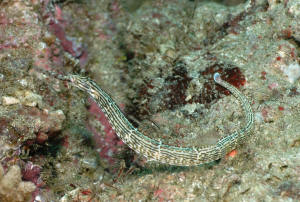
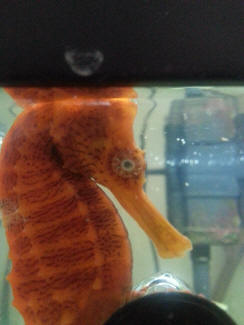
.JPG)
.JPG)